
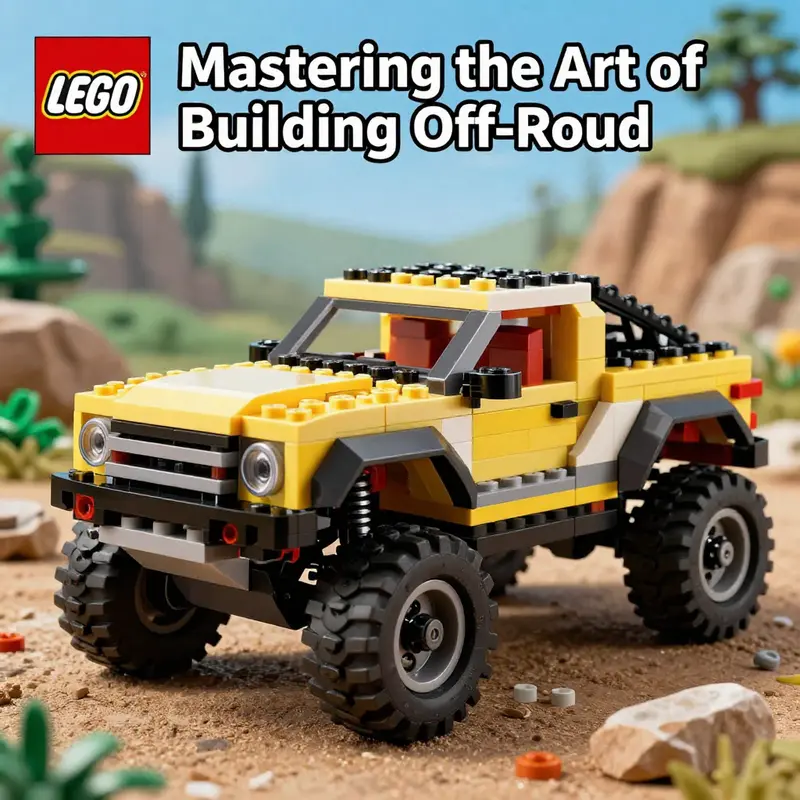
Crafting an off-road LEGO truck allows you to blend creativity with functionality, appealing to off-road enthusiasts, rural landowners, and mod enthusiasts alike. Whether you’re an avid racer, a passionate off-road adventurer, or simply someone who appreciates the engineering behind a rugged vehicle, this article will inspire you to create your own off-road masterpiece. From walk-throughs on building custom models to exploring official sets that embody the spirit of off-roading, and understanding the key features necessary for true off-road capability, you’ll find the knowledge and inspiration needed to tackle this exciting project.
null
null
Beyond the Box: Official LEGO Sets as Springboards for Real-World Off-Road Builds
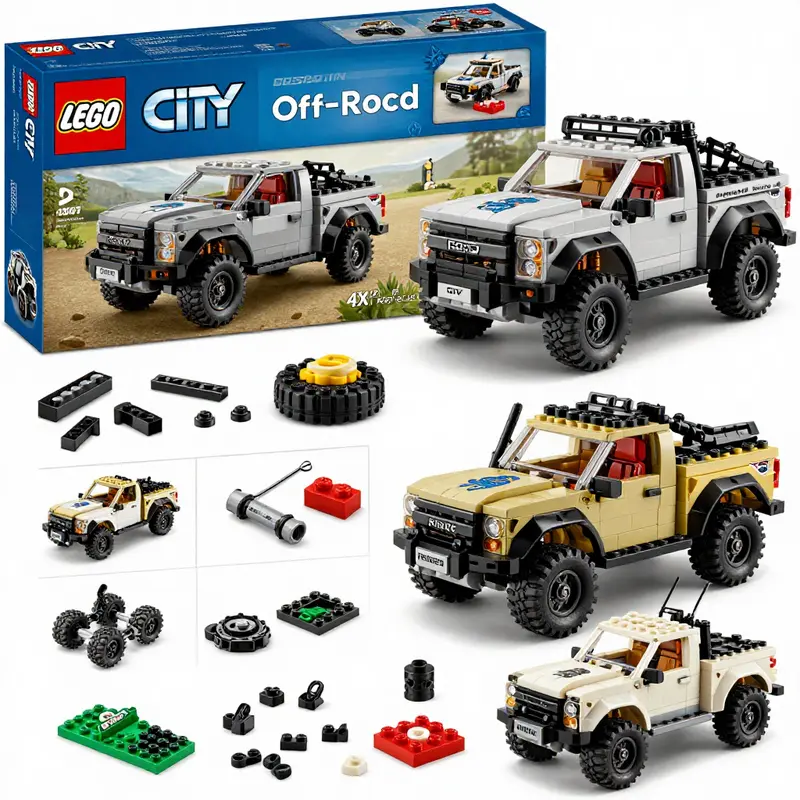
A practical guide to using official LEGO sets as foundations for real-world off-road builds begins with a simple premise: start from a proven baseline, then expand with your own experimentation. Official models give you a dependable chassis, a tested drivetrain, and a framework that handles torsion and loading in ways that are hard to beat for a first serious build. Treat them as a springboard rather than a ceiling, and you’ll discover that the most exciting creations often grow from a solid, shared language of parts and geometry.
When you study a good off-road set, look for a few consistent strengths: sufficient ground clearance, capable tires, a robust yet flexible chassis, and a straightforward steering or front-end linkage that communicates how the wheels are invited to turn. With these features as your starting point, you can explore modifications—changing wheelbase, swapping tires, tuning suspension travel, or adding modular accessories—without losing the model’s fundamental stability.
The value of official sets isn’t just in what they build, but in what they teach. Observing how linkages interact, how suspension arms articulate, and where weight is placed helps you translate real-world mechanics into brick-friendly solutions. You don’t need to copy a mechanism exactly; you’re learning the vocabulary of motion, clearance, and balance that you can then adapt to your own designs. A well-chosen kit becomes a repeatable learning environment: dismantle, reassemble, test on carpet and tile, and record what worked best for ground contact and stability on uneven surfaces.
A practical approach is to pick a kit designed to be modular. Some sets invite you to swap tires, swap panels, or detach gear racks to experiment with different silhouettes and center of gravity. The ability to reconfigure one model into several variants mirrors how engineers think about platforms and mission-specific bodies in the real world. By treating the kit as a toolbox rather than a finished sculpture, you extend the life of your build and deepen your understanding of suspension behavior and chassis stiffness.
As you progress, you’ll start to integrate elements from your own MOC ambitions—longer wheelbases for stability, more articulation at the axles, or a lightweight body tuned for speed over rough terrain. The core idea remains: maximize grip, preserve control, and ensure the vehicle feels responsive to the driver’s input. When you depart from the exact features of the official design, you’re not abandoning its lessons—you’re applying them with your own aims in mind, guided by the same principles that kept the baseline model reliable in the first place.
Finally, keep the practice social. Share builds, compare suspension geometries, and seek feedback on wheel articulation and weight distribution. A community of builders can reveal how seemingly small changes—adjusting shock lengths, changing steering angles, or adding a simple winch—can dramatically improve performance and storytelling. With that collaborative spirit, your official set becomes less a finished product and more a living toolkit for ongoing experimentation, iteration, and invention.
Off-Road LEGO Trucks: Engineering in Miniature
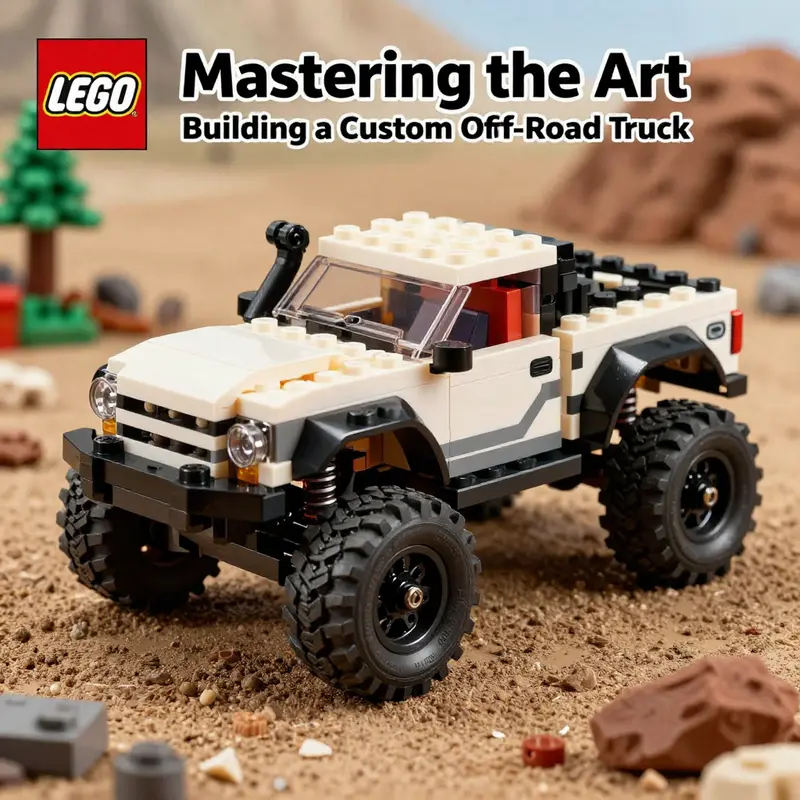
Off-road LEGO trucks blend imagination with real vehicle dynamics. Builders balance play value with the study of weight distribution, traction, articulation, and suspension to create models that climb, grip, and recover on varied surfaces. A well designed chassis remains rigid enough to resist flex while offering the subtle movement that makes driving feel believable, and the drivetrain should distribute power smoothly to all wheels for predictable handling. Large tires, reinforced frames, and thoughtful ground clearance communicate capability even before the vehicle moves. By planning, testing on different floor coverings, and iterating designs, builders learn to optimize gear layouts, center of gravity, and connector placement. The result is a modular, durable platform that teaches engineering concepts through hands-on play and storytelling. For further context, patterns observed in rugged trucks can guide chassis staging and reinforcement to enhance realism without compromising playability.
Final thoughts
In building an off-road LEGO truck, the choice between custom designs and official sets allows for a unique blend of creativity and engineering. Understanding the key features such as suspension, tires, and modular designs enhances the authenticity of your build, evoking the true thrill of off-roading. Whether you are part of the adventure racing community or an agricultural landowner looking for a fun project, your off-road LEGO truck represents a blend of imagination and functionality that can inspire others. Set out on your building journey today, and turn your off-road dreams into a reality.