

For those passionate about adventure and adrenaline, building an off-road race truck is not just a project; it’s a thrilling journey towards mastering rugged terrains. From navigating the dusty deserts to conquering rocky trails, the right setup and engineering precision can make all the difference in performance. This guide is crafted for off-road enthusiasts and industry participants, emphasizing the critical steps of defining your goals, crafting an innovative design, selecting robust components, and integrating powerful engine and drivetrain systems. Each chapter will equip you with the knowledge to transform your vision into a reality, guiding you through the complexities of creating an off-road race truck that’s capable and reliable.
Blueprints Before Brakes: Defining Goals and Requirements for an Off-Road Race Truck

When engineers step up to the task of building an off road race truck the first move is not picking tires or choosing a engine, it is clarifying purpose. The project thrives or withers based on how clearly you answer a simple set of questions about where you want the truck to perform and under what conditions. This initial stage becomes a living contract with the build itself. It determines every later decision about chassis, suspension, drivetrain, cooling, and safety, and it shapes your budget and schedule far more than any clever fabrication technique could. In practice, that clarity looks like a disciplined definition of goals and requirements tailored to the discipline you pursue. Without it you end up chasing gadgets, chasing performance numbers that don’t align with terrain, or building a machine that looks capable on the shop floor but collapses under real competition demands.
The spectrum of off road racing is wide. Some crews chase the roar of desert endurance events where thousands of miles across rough, rolling terrain demand reliability and efficient cooling. Others target the tight, punchy demands of short course racing where the track is a mix of jumps, banked turns, and artificial obstacles. And a third path exists in technical trail challenges where articulation and low end torque are king. Each path has a distinct signature on the vehicle you need to build. A desert racer benefits from a chassis that can endure constant abuse, a cooling system that keeps a high compression engine within safe temperature limits, and a driveline that balances torque with fuel efficiency over long legs. A short course truck leans toward robust suspension and rapid, repeatable damping to survive heavy impacts and a chassis that resists fatigue from repeated jumps. In contrast, a rock crawler or technical trail truck demands gearing that can crawl over obstacles, suspension that negotiates rock faces with a high degree of articulation, and a cabin that remains usable after hours of boulder-strewn corridors. Your goals map directly onto these profiles, and they should be written as measurable targets before any bolt is cut.
To translate purpose into performance, start with a precise inventory of the discipline you intend to compete in and the terrain you will most often face. This is not a wish list; it is a design brief that anchors every subsequent choice. For example, you might specify that the truck will participate in a long distance desert event and therefore must maintain stable weight distribution and efficient air flow around the radiators. Alternatively, if short course is the target, you might push for maximum suspension travel and a chassis that tolerates rapid loading and unloading from hard landings. If rock crawling is the aim, you will emphasize torque delivery, low speed control, and wheel articulation. The clarity you gain at this stage flows through to the numbers that govern your build: the ground clearance you must maintain across rough surfaces, the allowed track width and wheelbase for stability, and the suspension travel needed to absorb big hits without losing control. The goal is to convert abstract ambition into a spec sheet that can be checked off during design reviews, procurement, and fabrication.
With discipline defined, you can translate goals into concrete performance targets. What speed do you realistically expect on the open flats, and what torque is needed to maintain traction on a steep climb? How much weight can you manage before the handling becomes unacceptable or the tires lose grip? These questions force you to consider power, weight, and balance as a connected system. A desert racing truck typically negotiates a delicate compromise between forward momentum and cooling reliability. It requires a chassis robust enough to tolerate a hot engine bay and a cooling system that can shed heat as the speed varies and endurance stretches the limits of the fuel load. A short course machine, meanwhile, prioritizes immediate throttle response and quick, consistent steering geometry through a crowded track. A rock crawler concentrates on low end torque and the ability to keep traction while the chassis flexes and the tires bite into uneven ground. Each route yields different numbers for horsepower, torque curves, gearing, tire choice, and suspension spring rates. The aim is to capture these numeric targets in a way that makes sense across the entire build, so you can compare options without ending up with a vehicle that looks great on a whiteboard but performs poorly in real life.
Establishing targets also means articulating practical constraints like budget and timeline. A competitive off road race truck is expensive by any standard, and the most ambitious goals tend to escalate the budget quickly. Build this into a realistic plan that recognizes the cost of a purpose built chassis, safety systems, high quality suspension components, reliable powertrains, and the electronics that keep everything working under duress. A well defined budget helps you decide where to invest for the most impact and where to compromise without sacrificing safety or reliability. Timeline discipline keeps you from drifting into an endless loop of improvements you cannot afford to fund. This is not simply about finance; it is a test of your project management capacity. When you set milestones tied to measurable performance checks—like a suspension travel target achieved within a range of operating temperatures, or a cooling system that sustains peak power for a given duration—you gain a practical framework for decision making that doesn’t rely on guesswork.
Equally essential is honesty about your own expertise. Off road truck building asks for a breadth of skills: mechanical engineering, materials science, fabrication, chassis design, and systems integration. If you lack that mix of know how, the project should be scoped to a stage where you can learn safely or align with a mentor who can guide you through the rough patches. This is not a failure; it is a prudent recognition that a high speed vehicle engineered to operate in extreme environments must be built with a respect for safety and structural integrity. The defining goals should therefore reflect not only what you want to achieve in competition but also what you can safely and reliably assemble within your current capability. In practice this means starting with a clear risk assessment and a plan to mitigate the biggest unknowns. It means acknowledging gaps in fabrication capacity, tool access, and measurement discipline, and then seeking solutions that preserve safety margins while allowing for iterative learning.
The practical route to a reliable goals and requirements statement is to draft a live spec sheet. A good spec captures discipline, terrain, target performance, safety standards, and build constraints in a single document. It should be revisited after every major decision and refined as new information becomes available. The act of writing is itself a diagnostic process; it reveals contradictions, reveals overambitious targets, and clarifies where you may be over or under engineering for the chosen path. In the spec you will want to lock in at least a few non negotiables, such as the minimum ground clearance to clear common obstacles, the maximum allowable vehicle width for the race environment, and core safety elements that will govern the roll cage and harness system. You may also set aspirational targets for weight distribution and suspension travel, but those should be annotated as goals to achieve rather than fixed constraints at this early stage. This approach keeps the project agile while maintaining a north star that all future design decisions can align to.
As you map engine and drive train decisions into the spec, consider how the different platforms perform in different regimes. A strong, reliable engine is not helpful if the cooling system cannot sustain its operation on a desert stage. Similarly, a perfectly tuned suspension is wasted if the chassis geometry cannot translate that motion into controlled tire contact on rough ground. This is where the concept of balance becomes essential. Each element of the build is a lever that shifts the overall dynamic of the truck. The front to rear weight balance influences steering feel and traction distribution; ground clearance interacts with approach and departure angles; suspension travel affects how the truck negotiates rocks and ruts without unloading the tires or inducing chassis bottoming out. The spec should reflect this interconnectedness: it should not treat subsystems in isolation but as a system of forces and interactions that determine real world behavior. You will begin to see how the goals you set at the outset will steer mechanical choices, such as whether to pursue a rigid tubular frame or a more flexible space frame, whether to adopt independent suspension with long travel or a solid axle arrangement with selective articulation, and how aggressive a differential locking strategy you want under various conditions.
With the goals and targets pinned down, you begin to explore the material and manufacturing implications. The chassis will often be a primary driver of cost and durability. A tubular frame, for example, offers strength and stiffness but demands a skilled fabrication workflow and precise alignment. If your discipline demands a high level of safety certification, you will need to plan for an integrated roll cage that not only protects occupants but integrates with the chassis and body panels in a way that preserves access to critical systems. The safety requirements are not a mere afterthought; they actively shape the design of the interior and the location of mounting points for seats, harnesses, and fire suppression. Even windscreen angles, dash placement, and seat positions can shift depending on how the safety cage is integrated and how easy it is to evacuate the cockpit under stress. The same logic applies to the electrical system. Dual battery configurations with robust isolation, well protected wiring routes, and a reliable kill switch all contribute to reliability in the savage environment of off road racing. The goal is to anticipate potential failure modes and build the vehicle in a way that reduces risk without creating prohibitive complexity.
The single most powerful outcome of this early stage is alignment. When the team agrees on what success looks like and accepts the tradeoffs necessary to get there, everyone can work toward a shared vision. The spec becomes a communication tool that keeps suppliers, fabricators, and drivers on the same page. It helps to avoid scope creep, ensures that testing plans are realistic, and clarifies what constitutes a win during early test sessions. In practice, you will find yourself revisiting the spec often, updating it as you learn more about the behavior of the chassis and as terrain data from practice rounds comes in. It is a living document, not a fixed contract, and it is the most practical antidote to the inevitable uncertainties that come with high performance engineering in unforgiving environments.
As you embed these ideas into your process, you might find a natural invitation to explore practical references that illuminate the path. For instance, the broader literature on powertrain selection and integration offers structured guidance on matching engine output, exhaust routing, cooling capacity, and transmission durability to the demands of off road competition. A useful starting point for those who want to deepen their understanding is to explore how power and torque profiles influence transmission choices and driveline layout. For a practical, hands on primer on diesel powered performance, you can consult resources that explain the foundations of diesel mechanics and how they apply to robust, high torque applications. Mastering Diesel Mechanics: Your Step-by-Step Path to Success is a helpful anchor for readers seeking to connect theory with the realities of engine selection and reliability planning. This reference can guide you as you weigh options like turbocharged versus naturally aspirated configurations, and how fuel systems, cooling, and electronics must be integrated to support extended race durations. Your own spec will, in short, reflect a measured synthesis of event requirements, vehicle dynamics principles, and the practical realities of building and testing a machine that must perform under harsh, highly variable conditions.
The work of defining goals and requirements is not a one person or one team job. It benefits from a cross disciplinary perspective that includes engineering intuition, fabrication skill, and the feedback loops of testing. Even if you do not yet have access to a full workshop and a complete tooling set, you can begin by articulating a clear vision, sketching out a basic chassis concept, and identifying the key performance targets that must be met for the project to progress. A concise but thorough spec will anchor your initial procurement and guiding choices, from the kind of chassis tubing and joint hardware you will trust to the type of electronic control modules that must survive vibration and immersion. It will also help you decide how ambitious to be with your suspension strategy and how to allocate time for alignment, cornering tests, and endurance runs. These steps are not mere paperwork. They are the design discipline that saves money, reduces rework, and raises the probability that your truck will not only survive in competition but also deliver consistent, predictable behavior under pressure.
In the next part of the journey you will turn this defined goal set into a concrete design and engineering plan. The decisions about chassis layout, suspension geometry, differential strategy, and powertrain integration will begin to take shape in a CAD model, and you will be ready to move from concept to reality with a clear, validated set of requirements. The process you have followed—conscious goal setting, rigorous target definition, budget and timeline discipline, risk awareness, and iterative testing—will continue to guide every choice you make. It is not glamorous, but it is the backbone of a build that can actually compete and endure. As you prepare for the hands on work ahead, remember that a well crafted start is the difference between a fantasy of speed and the real, tested confidence of a race proven machine.
External resource for further reading on powertrain planning and performance in off road contexts can be found here: https://www.off-road.com/powertrain-selection-guide/
Engineering the Edge: Designing an Off-Road Race Truck for Maximum Terrain Mastery

Designing an off-road race truck begins long before the first weld lands. It starts with a clear, uncompromising understanding of purpose. Desert sprint, rock crawling, rally raid, or short-course stadium racing each demand a different balance of speed, durability, and articulation. The engine, the chassis, the suspension, and the safety systems must be tuned not just for straight-line speed or rock-scrambling prowess, but for a coherent dialogue between all systems under heavy load and unpredictable terrain. The design phase is therefore a synthesis of mechanical insight, material science, and vehicle dynamics, informed by simulation and grounded in practical fabrication realities. In this sense, engineering an off-road race truck is less about chasing a single magic specification and more about orchestrating a set of interdependent choices that collectively deliver predictable handling, controllable momentum, and durable endurance across the unforgiving environments it will face.
To begin, a meticulous definition of performance goals anchors every subsequent decision. The truck’s weight distribution, ground clearance, suspension travel, tire capability, and even cooling capacity must converge toward the mission profile. A desert racer may prize high-speed stability and heat resilience, while a rock crawler requires articulation and throttle modulation at low speeds and steep angles. The chapter’s aim is to map these priorities into a chassis geometry and a drivetrain philosophy that can be realized in the shop. In practice, decision-making hinges on three pillars: the chassis concept, the dynamics of suspension, and the integration of powertrain and drive systems into a rugged, serviceable whole.
The CAD and simulation phase follows this conceptual clarity. A tubular spaceframe—crafted from high-strength steel tubing—offers a balance of rigidity, crashworthiness, and ease of fabrication that is well aligned with the demands of off-road racing. The chassis not only holds components but determines how forces propagate through the vehicle when traction is challenged by ruts, rocks, and off-camber slopes. Within the CAD model, the layout of the roll cage becomes a safety imperative as well as a structural element that influences stiffness and crash energy management. A well-executed design keeps the roll cage integrated with the chassis rather than bolted on as an afterthought, and it adheres to recognized safety standards so that the driver’s protection remains constant across rough terrain.
Weight balance is a critical lever in control and stability. A near-even front-to-rear distribution helps the truck maintain predictable steering response as grip shifts between surfaces. The CG (center of gravity) should be kept low enough to resist tipping under abrupt lateral loads but not so low that ground clearance is compromised. This balance is achieved not merely by placing heavy components low but by distributing weight strategically—placing the fuel, ballast, and cooling hardware to manage pitch and roll tendencies. Attending to geometry also means precision in caster, camber, and toe. In off-road environments, small misalignments amplify when shocks cycle and tires scrub against uneven terrain; a geometry that keeps tire contact consistent with steering input is essential for predictable behavior in the most challenging sections of a course.
Chassis construction sits next to this geometrical discipline. A tubular frame—constructed from robust, weldable tubing—forms the skeleton. The frame’s layout must accommodate a robust roll cage, mounting points for a heavy-duty locking-differential strategy, and a drivetrain that can tolerate high angles of articulation. The safety cage is not a cosmetic layer; it must meet rigorous standards because a crushing impact can occur at any point along the course. The interior surrounding the driver should then be configured to integrate a restrained environment where quick egress is possible and where fire-safety measures can be activated rapidly.
The powertrain and drivetrain integration sit at a pinnacle of design complexity. The engine choice isn’t about chasing the most horsepower in a vacuum; it’s about thermal stability, torque delivery, packaging, and reliability under sustained high-load operation. High-output V8 configurations or turbocharged six-cylinders are common in this class, chosen for their balance of power, durability, and tunability. The transmission must withstand the torque output while delivering reliable shifts under vibration and dust. A robust, reliable automatic or a heavy-duty manual with appropriate torque capacity is often favored because sequential gear changes can be performed quickly and with less driver fatigue under demanding race conditions. The drivetrain must be integrated into a four-wheel-drive layout with a transfer case capable of maintaining traction across varied terrains. Heavy-duty driveshafts, robust universal joints, and a thoughtful approach to front and center differential locking are essential for maintaining momentum through sand, mud, and rock.
Cooling and intake strategy plays a central role in maintaining engine health. The engine bay should be organized to deliver adequate airflow, with carefully routed ducting to feed both the radiator and the intercooler (if turbcharged) while avoiding re-ingestion of hot air from the exhaust. In high-load, extended-duration events, overheating is as much a mechanical risk as a suspension or tire risk. A well-designed cooling system, augmented by selective oil cooling and transmission cooling where necessary, prevents thermal creep that can degrade performance. This facet—cooling architecture—often defines the upper limits of sustained performance on hot deserts or rocky canyons where ambient temperatures push thermal margins.
Suspension geometry and the associated track record of wheel travel define the truck’s contact with the surface under extreme articulation. Long-travel suspension systems, employing coilover shocks and double-wishbone or A-arm configurations, offer the best combination of wheel control and travel. The objective is to maintain tire contact with the ground while absorbing rocks, ruts, and whoops without unloading the wheel that carries the most traction. Independent suspension is common because it improves grip on uneven terrain and reduces the transient load on any single wheel. However, the ultimate choice often comes down to packaging, weight, and the intended balance of ride quality versus resilience. The suspension system must be harmonized with the chassis geometry so that shock travel is not simply a passive absorption but a controlled interface that preserves steering feel and braking stability.
Differentials complete the driveline strategy. Locking front and rear differentials are standard in this realm because they unlock the terrain’s potential by distributing torque to wheels with the best grip. A selectable or automatic differential lock mechanism simplifies control when a driver is entering variable traction zones. Interfacing these locks with a precise control system, and ensuring the powertrain can deliver torque without binding under axle articulation, is part of the engineering discipline. The drive shafts and CV joints must be rated for extreme angles and high torque, with careful attention to fatigue life and ease of service in the field. In practice, this means a design that tolerates the dust and heat of maintenance intervals and enables quick inspection and replacement when needed.
Bodywork and the interior emerge as functional components of safety and efficiency rather than mere aesthetics. Lightweight panels—often aluminum, fiberglass, or carbon fiber—protect vital components and contribute to a reduced weight footprint without sacrificing rigidity. The interior is a controlled environment where the roll cage becomes a structural element that also shapes driver ergonomics. A five- or six-point harness system, racing seats with containment features, and fire-safety materials create a cockpit that can withstand a rough ride and still keep the driver secure. Instrumentation becomes more than gauges; it becomes a real-time map of engine health, temperatures, and torque delivery, allowing the driver and crew to make informed decisions on the fly. A central kill switch, fire suppression controls, and easily accessible emergency tools are not luxuries but essential features that influence race-day outcomes and safety margins alike.
Electrical and safety systems tie everything together. The power system must be both robust and modular. A primary battery and a secondary, isolated battery provide redundancy for critical functions. The wiring harness should be shielded against environmental hazards and protected from potential damage by routing and protective conduits. Lighting is more than visibility; it is a safety system that informs teammates and officials of the truck’s status in low-light conditions. The electrical layout should support data logging, with sensors for oil pressure, coolant temperature, boost pressure, wheel speeds, and G-forces during testing. In addition, a reliable communication system, such as a weatherproof transceiver, ensures the crew can coordinate across long desert stages or remote canyons. The interconnection of sensors, trimming of software maps, and calibration of the ECU are as strategic as the mechanical build because they translate raw data into actionable control signals during a race.
From the standpoint of process, testing and iteration drive learning and performance gains more than any single specification. On-road checks validate alignment, braking consistency, and steering response on predictable surfaces. Off-road trials reveal the real surprises—the truck’s behavior in mud versus sand, its negotiating angle on a rock face, or its ability to maintain pace through whoops without fatiguing the suspension. The data collected during these sessions—speed, steering angle, tire load, wheel slip, and suspension travel—forms the basis for iterative tuning. Suspension preload, spring rates, and damper characteristics are adjusted against actual track feedback. Tire pressure may be altered to accommodate the prevailing surface and temperature. Gear ratios are revisited if the engine lacks the torque to accelerate cleanly from low-speed sections while not spiking in the top end. The goal is to reach a stable envelope where the truck remains predictable under all expected load scenarios while still leaving room for the driver to exploit the terrain’s opportunities.
Compliance and certification frame the practical boundaries within which a design must operate. Sanctioning bodies prescribe safety inspections, weight limits, and sometimes emissions considerations that shape what a truck can race. This isn’t a constraint to be viewed as a barrier; it is a discipline that ensures every build remains within a tested and transferable standard. The best teams treat these rules as design constraints from the outset; they bake compliance into the fabric of the build rather than chasing it as a late-stage afterthought. The result is a vehicle whose performance, reliability, and safety are aligned with the realities of global off-road competition, from desert classics to multi-day rallies.
In a broader sense, the engineering logic of an off-road race truck also resonates with the iterative ethos of smaller projects and educational demonstrations. A LEGO MOC sand dune truck, for instance, illuminates core principles in a tangible way: raising ground clearance, expanding wheel travel, upgrading differential behavior, and pursuing iterative refinements. While the scale is different, the mindset is the same—start with a concept, test it, observe how it performs, and revise. This mindset—iterative design under real constraints—transforms theory into a vehicle capable of conquering the harshest terrains and completing demanding events with consistency.
For readers seeking a deeper dive into engine and drivetrain fundamentals, a practical companion resource is available that emphasizes hands-on mastery of diesel and other powertrain concepts. It offers a structured path through mechanical fundamentals, troubleshooting, and performance tuning that complements the design narrative here. As you explore the realities of engine builds, remember that the powertrain is not a standalone unit; it is inseparable from the chassis, the suspension’s behavior, and the vehicle’s thermal and control systems. A coherent, well-integrated design is more than a sum of parts; it is a system whose components harmonize under load, in dust, and across heat and fatigue cycles.
The path to a successful off-road race truck is a long arc of disciplined decisions, careful fabrication, and rigorous testing. It begins with explicit purpose, advances through disciplined design and engineering, and culminates in a vehicle that can be tuned to a course’s unique demands. The process demands a mindset open to data, feedback, and continuous improvement while staying grounded in safety and practical feasibility. While the specifics of each build will differ, the underlying discipline—clear goals, robust design, careful integration, and relentless iteration—remains constant. This approach, when executed with patience and attention to detail, yields a race-ready machine that not only withstands the harsh demands of off-road competition but also delivers consistent, controlled performance when the terrain under the tires refuses to be predictable.
Internal link: For a deeper dive into engine and drivetrain fundamentals that complements this chapter, explore mastering diesel mechanics—your step-by-step path to success. mastering diesel mechanics—your step-by-step path to success
External reference: For authoritative, up-to-date guidance on off-road race truck engineering, consult SCORE International’s Technical Rules 2026, which codify the standards and procedures used in major events like the Baja 1000 and Mint 400. SCORE International – Technical Rules 2026
Blueprints of the Backbone: Chassis and Suspension for Off-Road Race Trucks
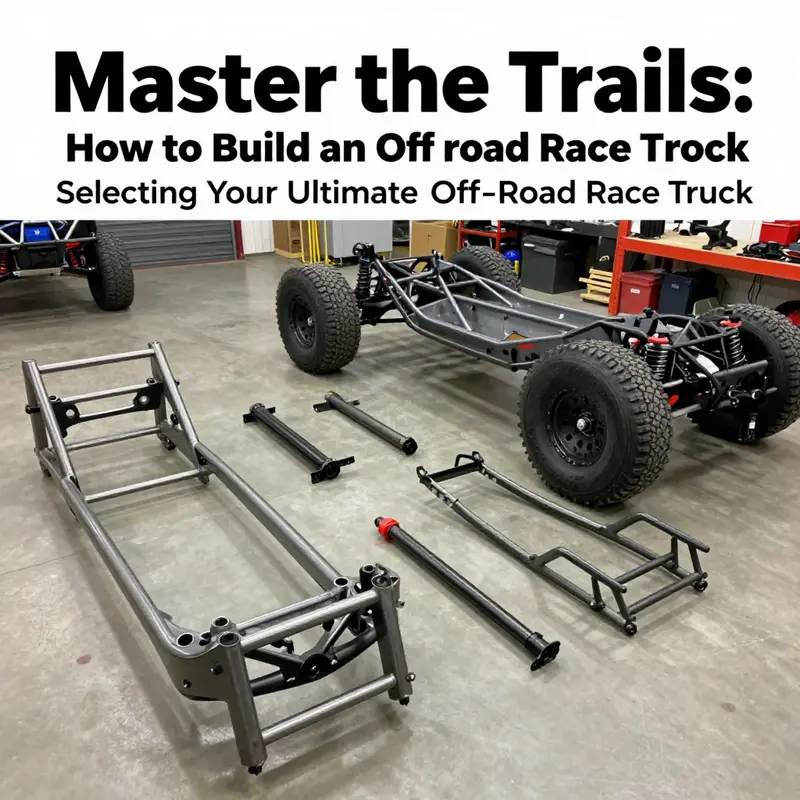
This chapter covers the core considerations for choosing a chassis and suspension for off-road race trucks. It explains the trade-offs between body-on-frame and tubular chassis, as well as independent versus solid-axle suspensions, and how wheel travel, geometry, and durability shape performance. The goal is to guide a builder through making choices that balance strength, weight, and serviceability while keeping reliability in punishing terrain. Concepts such as ground clearance, rigidity, articulation, dampers, and alignment are framed in practical terms, with emphasis on how the chassis and suspension interact with terrain, rules, and budget.
How to Build an Off Road Race Truck: Engine and Drivetrain Integration
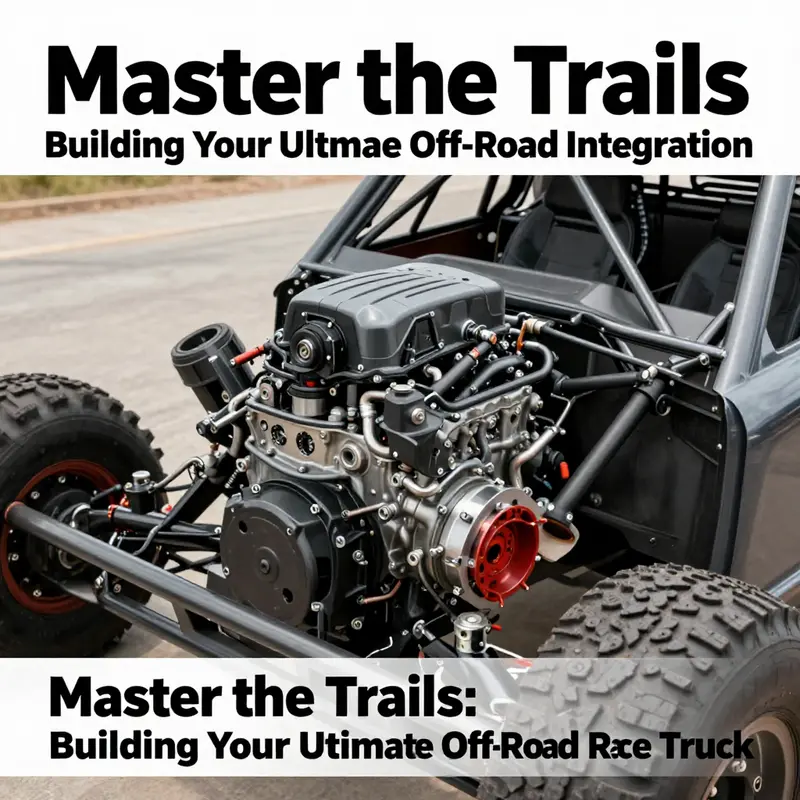
The engine and drivetrain are the beating heart of any off-road race truck. They translate raw power into controlled motion and survive relentless punishment from desert, rock gardens, dunes, and mud. When you design an off-road racer, you don’t start with a polished paint job or a fancy body shell; you start with harmony between the heart of the machine and the limbs that carry it. The integration of engine, transmission, driveshafts, axles, and differential systems is not a series of isolated choices. It is a single, continuous discipline of alignment, balance, and resilience. In practice, this means selecting a powertrain that delivers the right torque at the right RPM, then shaping the chassis, mounts, and electronics so that the power can reach every wheel without distortion or lag. The result is a machine that accelerates with purpose, negotiates uneven ground with composure, and returns to rhythm after every bounce rather than rattling apart at the first sign of rough terrain.
Choosing the power source is the first conscious decision in this chain. For a serious, gasoline-powered off-road truck, the engine should be light enough to keep the overall weight distribution favorable while delivering high-rev performance and steady torque. The exact displacement is less important than the engine’s ability to deliver strong, usable torque across a broad range of RPMs. A high-performance gasoline V6 or V8, tuned for reliable, repeatable power, is a common starting point. A turbocharged or naturally aspirated setup can be chosen based on how you want the truck to behave under load, but the underlying principle remains the same: the engine must respond predictably to pedal input, with clean throttle mapping and manageable heat output. If you are exploring alternative approaches, consider the potential of a purpose-built, lightweight, high-output engine that minimizes unnecessary mass while maximizing thermal efficiency. The engine’s weight distribution should be planned to maintain a near 50/50 balance between the front and rear axles, or adjusted to favor traction on the terrain you expect most—desert flats, rocky climbs, or sandy soils. The seal between engine torque and chassis flexibility is the mount system; it must isolate vibration and absorb micro-malformations during landings, such that the drivetrain stays precisely aligned with the transmission input and the drive shafts maintain consistent angles throughout travel.
The mounting strategy is neither an afterthought nor a home for temporary brackets. It is a core element of reliability. A robust engine mount system that dampens vibration and compensates for dynamic forces is essential. A well-designed mount tolerates the occasional off-axis shock from a heavy landing yet keeps the crankshaft, transmission input, and driveshafts in perfect coaxial alignment. When misalignment creeps in, you begin to see a cascade of issues: vibration at high RPM, shaft harmonics that erode U-joints, and differential gears that scatter their loads in unpredictable ways. The mount’s role extends to maintaining the proper spacing for the bellhousing, ensuring the pilot bearings stay centered, and preventing stress concentrations at the engine block. In parallel, the transmission must be matched to the engine’s torque curve and RPM envelope. A gear-driven, robustly built manual or an automatic with a stout torque converter can both serve well, but either choice requires careful consideration of gear ratios, gear mesh, and the ability to sustain peak torque without overheating. The goal is a seamless powertrain interface where throttle response, clutch engagement, and gear shifts feel linear and predictable, translating into confidence when the truck faces a rock garden or a steep dune climb.
The heart of the drivetrain is the transmission and its connection to the wheels. A well-matched transmission must translate engine torque into usable wheel torque across a spectrum of speeds. In a high-performance off-road truck, a robust, gear-driven transmission with a wide, stable torque curve can handle abrupt load changes that occur when scrubbing through rock, stabbing the throttle in sand, or negotiating a steep incline. The choice between manual and automatic is often influenced by driver preference and the competition rules you intend to race under; manual gearboxes reward precise timing and direct feedback, while automatics offer repeatable shifts under load and can simplify control in chaotic terrain. Regardless of the type, the transmission requires an appropriate input shaft angle, a bellhousing that can accommodate the selected engine and transmission combination, and a mounting plan that keeps the entire assembly rigid yet isolated from chassis flex. The drivetrain’s rival in this integration is the transfer case. A well-chosen transfer case provides the necessary low-range gearing for crawling and the ability to distribute torque effectively to axles via transfer mechanisms. The transfer case must be chosen with an eye toward reliability in harsh environments and ease of maintenance, since a failure in the field can instantly halt a race. A precise, robust transfer case also governs the relationship between front and rear driveshafts, ensuring that torque can be modulated to each axle without exacerbating wheel slip.
Driveshafts and axles are the connective tissue of the system. Heavy-duty driveshafts with properly engineered slip joints and universal joints prevent catastrophic failure when the suspension cycles through its travel, and the axle assemblies must withstand sudden surges of torque with minimal deflection. In a four-wheel-drive setup, locking or selectable differentials become central to traction management. The decision to use locking, selectable, or limited-slip differentials should be driven by the terrain you expect to conquer. Limited-slip units can provide predictable traction on loose surfaces where gradual torque buildup matters, while locking differentials excel when you need maximum grip on rocks, hard-packed dirt, or muddy obstacles where one wheel may lose contact. In any case, the differential geometry, pinion and ring gear sizing, and the overall gear train must be designed so that the differential torque split remains stable at high load, keeps wheel speeds within safe limits during extreme articulation, and avoids unsprung weight penalties that degrade ride quality.
Beyond the mechanical fit, the engine and drivetrain are bound to the vehicle’s cooling and fuel systems. A high-performance powertrain can generate significant heat, especially when the truck is forced to crawl in sand, climb rough terrain, or sprint through a desert stage. A tailored cooling system—radiators positioned to maximize airflow, fans sized for sustained cooling at low speeds, and coolant routing that prevents hotspots—will keep power output consistent. Fuel delivery further complements cooling and power by ensuring stable air-fuel mixtures under dynamic conditions. A pump and regulator arrangement that keeps fuel pressure steady during intense throttle changes, combined with well-planned fuel lines and protective shielding, helps avoid fuel starvation when the truck is bound to heavy loads or long, dry runs. Electrical access to the engine management system also deserves attention. A reliable harness, waterproof connectors, and protected sensor circuits help prevent misreads and unplanned shutoffs during a race. A kill-switch, an emergency shutoff, and a clearly accessible battery disconnect are standard safety features that can save a build when systems overheat or a crash occurs.
In practice, the integration process is iterative. You begin with a theoretical layout, then mock-fit in CAD to verify clearances and alignment. When you move the parts into the real chassis, you test for flex, vibration, and the potential for interference with suspension components. This is where the design philosophy must embrace adjustments rather than stubborn stubbornness. You will likely swap a set of mounting points, alter a bracket configuration, or re-route a fuel line to minimize exposure to heat sources or rubbing surfaces. The more you validate your choices with simulated and real-world checks, the less you find yourself chasing late-stage misalignments. The goal is to build a system that behaves predictably under load and in rough terrain, and that can be serviced quickly in the pit after a demanding stage.
One practical way to approach this integration is to view the force paths as a single chain: engine torque travels through the clutch or torque converter, enters the transmission, moves through the driveshafts, and finally powers the axles to rotate the wheels. Each link in that chain should be designed to handle the same stress level without becoming the weak point. Tolerances matter; a tiny misalignment or an unexpectedly tight joint can multiply effects through the system, producing vibration, accelerated wear, and potential failure during a race. That is why attention to the detail—proper alignment fixtures, vibration-damping mounts, precisely balanced driveshafts, and consistently measured intervals for lubrication and inspection—pays dividends in reliability and performance when the going gets tough.
To support this integrated mindset, it helps to study peer-builds and to document your own progress with care. When you look at why some trucks perform with exceptional smoothness while others cede control under stress, you often discover that the best performers are the ones where every substitution, every bracket, and every line has been considered through the lens of reliability and ease of maintenance. They are not simply optimized for peak horsepower. They are optimized for the endurance of a long race, the repetitiveness of multiple stages, and the ability to sustain performance after hours of exposure to heat and dust. In this spirit, a blend of theoretical modeling and hands-on testing—the kind that includes disassembly after a test run, re-checking torques, and confirming alignment against a fresh blueprint—yields progress that is both measurable and repeatable.
As you push the envelope, you will find that one of the most valuable lessons lies in balance. A high-output, aggressively tuned engine that delivers loud, dramatic power is exhilarating, but not if it destabilizes the truck’s weight distribution, spoils traction, or introduces harshness into the ride. Likewise, a drivetrain that looks rugged on the bench but becomes unreliable under heat or dust is a compromise too far. The chapter you are building is about creating a system in which power delivery is smooth, drivetrain angles are kept within safe, durable limits, and the chassis plays nicely with the suspension to keep tires in contact with ground as much as possible. It is about confirming that every inch of the drivetrain, every line in the fuel system, and every bracket in the engine mount has earned its keep by adding to the truck’s stealthy resilience rather than merely adding mass.
The value of doing this with a global perspective is clear when you consider how the approach translates to real-world practice. You are not only assembling components; you are orchestrating a symphony of motion. This means keeping the front and rear weights balanced as you tune spring rates and dampers, ensuring the drivetrain is free of binding, and confirming that the engine’s exhaust, intake, and cooling demands do not fight with the vehicle’s aerodynamics or with the geometry of the suspension. It also means planning for serviceability, so that a field repair can be completed with a minimal toolkit and a clear method. The best teams design with pit-side maintenance in mind as much as they design for speed in the dunes. They know that in the middle of a race, the ability to diagnose and fix a misalignment, a leaking line, or a failing mount is as critical as raw power.
To reinforce the practical, iterative nature of this process, consider a learning path that mirrors the way a seasoned builder evolves a project: begin with a sound powertrain concept aligned to the chassis’ weight, then refine the installation through controlled testing, and finally tune the system by observing how it behaves across terrains. Each iteration should yield measurable data—vibration spectra, thermal profiles, fuel delivery stability, differential slip characteristics, and shaft angle metrics. The data guide subsequent design changes, bringing you closer to a truck that performs consistently, not only in one scenario but across the range of conditions a race course presents. This disciplined approach is the true engine behind a reliable off-road racer, and it turns a collection of parts into a purposeful machine.
As you integrate, you can also draw inspiration from broader mechanical disciplines that emphasize robust systems and redundancy. The linked learning resource offers a perspective that, while not about full-size off-road trucks, still champions the principle that mastery comes from translating theory into reliable practice. Mastering Diesel Mechanics: Your Step-by-Step Path to Success
When the powertrain and chassis finally meet a highway test, you want to feel the unity rather than friction. The steering wheel should respond with immediate feedback, the ride should not punish the driver for every ripple in the terrain, and the tires should sing when the truck is in its optimal range of travel rather than scream at the limits of traction. The engine should idle smoothly and ramp up without delay when the throttle is pressed, while the transmission shifts with predictability under load. The differential locks, if engaged, should do so decisively and without causing an abrupt change of vehicle attitude. In short, the integration should create a sense of confidence: a platform that is secure enough to tackle the most demanding sections of a course, yet forgiving enough to allow drivers to push deeper into the unknown without fear of breaking the truck.
For builders, the path is long but navigable. Start with clear goals for weight distribution, tire contact patch, and overall balance. Map the torque path carefully and design around a mount system that isolates the engine’s vibrations while keeping the drivetrain in precise alignment. Choose gear ratios and lubrication strategies that stand up to heat and dust, and design cooling and fuel systems with headroom for peak performance. Test relentlessly, capture data, and let the feedback guide every refinement. The end result is not a showpiece of horsepower alone, but a well-tuned, mission-ready machine that can endure hours of rough terrain and recover quickly when it parts ways with the ground and lands again. The journey from concept to execution is as meaningful as the finished truck, because every decision in the engine and drivetrain integration stage shapes the truck’s ability to grip, accelerate, and survive under the most demanding conditions.
External references and further guidance can be found in established manuals and communities that support high-stakes off-road engineering. For a broad spectrum of practical information and official reference material, consult established sources in the field: https://www.traxxas.com/.
Final thoughts
Constructing an off-road race truck is an ambitious endeavor filled with excitement and challenges. Each phase—from defining your objectives to engineering various systems—forms a cohesive strategy that breeds success on any trail or track. With careful planning, design proficiency, and expert component selection, you’ll not only build a truck but also cultivate the spirit of adventure that off-roading embodies. Remember to share your achievements with the off-road community and continue exploring the vast possibilities that await you on and off the beaten path.