
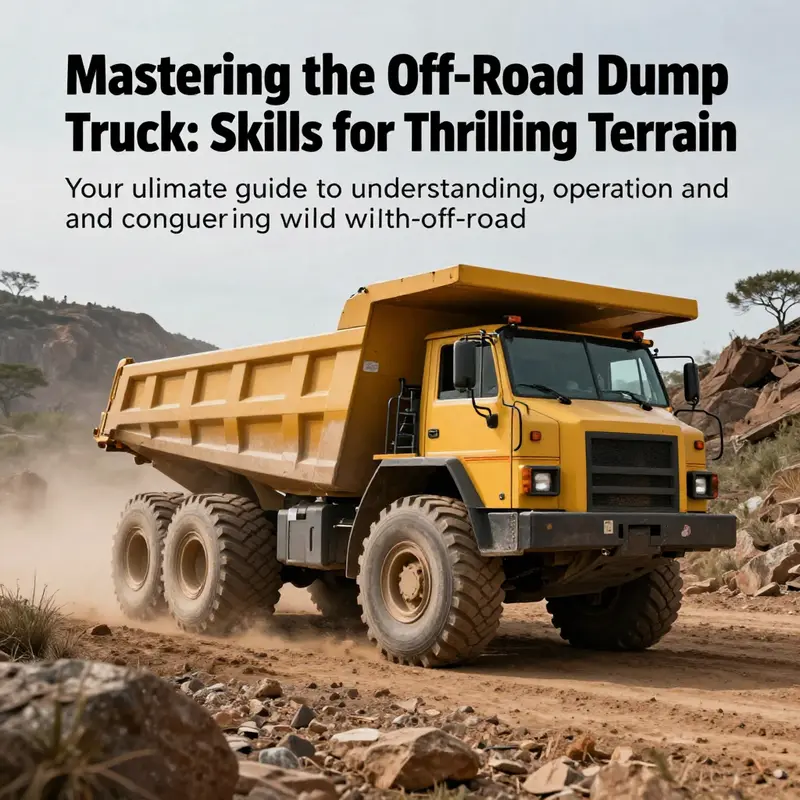
Off-road dump trucks are the rugged champions of uneven terrain, combining immense power and flexibility with a hefty dose of thrill for off-road enthusiasts. Whether you’re navigating steep hillsides, hauling heavy loads through mud, or racing across rugged landscapes, understanding how these mighty machines function is paramount to mastering their operation. This guide aims to equip adventurers, racing fans, and landowners with the in-depth knowledge needed to drive an off-road dump truck confidently and safely. You’ll explore the mechanics of these impressive vehicles, essential pre-drive inspections, efficient starting and operation techniques, strategies for navigating challenging terrain, and critical safety considerations. Strap in as we journey through everything you need to know to excel in this type of driving and unlock the full potential of your off-road dump truck experience.
Rugged Terrain, Steady Hands: Integrating Mechanics, Mastery, and Momentum in Off-Road Dump Truck Driving
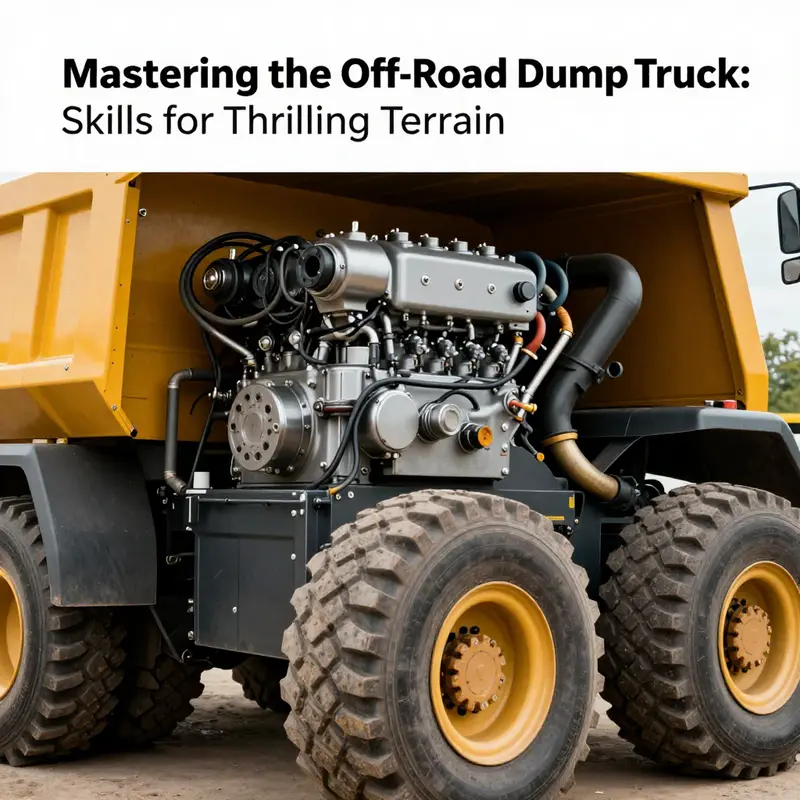
The off-road dump truck is more than a loud, dust-choked machine. It is a mobile worksite, a platform that demands respect for its size, weight, and the uneven ground it travels. Driving it well means more than steering and pressing pedals. It requires a clear sense of how the machine’s design—its frame, drivetrain, suspension, and ballast—shapes every decision you make behind the wheel. When you begin from this footing, you move from mere operation to controlled technique, turning rough ground into a manageable stage for your cargo and your crew. The truck’s reinforced, high-strength frame is not just a frame; it is a reaction to every bump, flex, and impact you encounter. The cross-section of steel in the chassis is built to resist shock and torsional stress while carrying heavy loads. That durability grants you a margin of safety, but it also invites a bias toward smoothness. If you drive as if you are handling a lighter vehicle, you will test that frame in ways it was not intended to be tested. So the first discipline is tolerance: you must cultivate movement that is deliberate, restrained, and predictable, especially on rocks, ruts, or frozen ground beneath a layer of thawed soil.
The terrain you traverse is the second teacher. Off-road environments demand four-wheel-drive or even multi-axle traction, plus ground clearance that keeps the undercarriage out of scrapes. This combination expands your options but also amplifies a misstep. On mud, gravel, or soft shoulders, traction is moment-to-moment dependent on weight distribution, tire contact, and throttle entry. You learn to read the ground like a field map—spotting where soft patches turn to sinkholes, where a rut hides a rock, where a slope can bite if you misjudge. The truck’s suspension—often a hybrid of dual push rods, rubber shocks, and extra leaf springs—transforms that terrain into a ride you can manage. The goal is to protect tires, avoid excessive body roll, and keep the ballast centered so weight does not shift abruptly to one side. When you respect the dynamics of that suspension, you gain a margin for error that lets you negotiate a rock outcrop or a washout with confidence rather than fear.
Understanding these mechanics informs your control principles. First is throttle discipline. In rough soil, you want steady, modest inputs rather than aggressive gas. A sudden surge in power can spin wheels or break traction when the surface cannot support it. Conversely, too little power on a steep incline can stall you or leave power available for only weak progress. The sweet spot is slow, deliberate acceleration that matches the ground’s grip. Engine torque becomes your ally here. With heavy loads, the engine provides the bulk of the drive, while the transmission’s low-range gears translate that torque into manageable wheel speed. Practicing smooth clutch engagement—especially on manual transmissions—reduces wheel spin and stalling risk. Even in automated systems, the same principle holds: ease into gear shifts, avoid abrupt throttle changes, and let the drivetrain stay in its comfort zone where it can deliver steady torque without surging or stalling.
A second rule centers on speed and momentum. It is tempting to press toward the horizon on a straight dirt road, but the right pace on rough terrain is deliberately slow. Low speed gives you time to spot obstacles, gauge traction, and react before a wheel buries itself or a tire hooks on a rock. Momentum matters, but it must be controlled momentum. When you crest a rise, you should not suddenly accelerate. Instead, roll into the incline, then apply steady throttle as the surface allows, watching for wheel slip and adjusting with small throttle changes. When you descend, engine braking should be your principal tool. Downshifting into lower gears uses the engine’s resistance to hold back speed, reducing reliance on the foot brakes that overheat and fade on long grades. This is not pure power management; it is a choreography between engine, transmission, and the grade that preserves braking capacity for emergencies.
Turning and cornering on uneven ground demand another level of awareness. The instinct to cut tight lines can be dangerous when the ground is uncertain. Wide, slower corners help maintain traction and keep the center of gravity within a safe envelope. You monitor the truck’s tendency to lean, especially when the bed is raised or when the payload shifts on buffed surfaces. The dump body itself is a heavy mass that can influence stability, so you only operate its movement when the vehicle is level and stopped. Raising the bed on a slope invites a shift in weight that can threaten tipping. The correct habit is to position the truck so the load’s weight remains balanced across the axles, resisting any sudden diagonal tilt caused by uneven ground or a sudden steering input. These practices aren’t just about machinery; they safeguard people working around the truck and preserve the machine for the next shift.
Terrain awareness remains a steady thread through every mile. You scan ahead for hidden holes, soft patches, and rocks that may lurk beneath a veil of dust or mud. You use lights and signals when visibility is poor, and you aren’t shy about re-evaluating a route if the ground looks uncertain. Smart operators do not chase a path that promises speed at the cost of safety. They choose the longer, firmer route if it minimizes exposure to risk. The engine’s health and the transmission’s longevity are at stake in these decisions, and you learn to treat the machine as a partner that needs respect and time, not a tool to be pushed to the limit.
Pre-drive preparation anchors all of this. Before you turn the key, inspect tire pressure and tread depth with the same precision you would apply to a bridge inspection. Check brakes, lights, fluid levels, and hydraulic circuits. Confirm the dump body is securely locked and that there are no creeping wear patterns on linkages or hinges. The pre-check is not mere formality; it is a safety gate that keeps you from discovering a fault at a dangerous moment on a slope. As you settle into the seat, the habit of calm enters your hands. A secure seat, a backrest that supports posture, and a properly set parking brake place you in a position of readiness. The ignition is the signal that the careful work of inspection becomes controlled motion, not a rush to operate under compromised conditions.
In practice, the driver’s mind becomes a cockpit of continuous judgment. You balance the mechanical facts—the frame’s stiffness, the suspension’s limits, the drivetrain’s torque—with the human elements: reaction time, risk tolerance, and situational awareness. You learn to feel the ground through the pedal and the wheel, translating vibration patterns into predictions about traction. This is where the comparison to training devices—like miniature simulators or RC models that emphasize balance and control—helps in a broader sense. They demonstrate the universal truth: small, precise inputs yield the greatest stability on challenging surfaces. When you approach a rough descent, you picture the path, not just the truck. You imagine how each wheel will meet soil, rock, or water, where weight shifts will occur, and how engine braking will complement braking pressure to maintain control without overheating components.
This chapter also invites a practical reminder about knowledge beyond the immediate wheel. A solid foundation in diesel mechanics or general heavy-vehicle fundamentals enriches decision-making on the ground. If you want to deepen your intuition for how a heavy machine responds under load, consider resources on diesel systems and their behavior in heavy equipment. For a detailed, step-by-step exploration of diesel mechanics, you can explore Mastering Diesel Mechanics: Your Step-by-Step Path to Success. This deeper understanding helps you tune expectations, diagnose subtle problems early, and maintain smoother operation over long shifts. Mastering Diesel Mechanics: Your Step-by-Step Path to Success
The drive, then, becomes a disciplined dialogue among the machine, the terrain, and the operator. You balance torque and traction, speed and stability, and the payload’s weight with the vehicle’s geometry. Each small choice—how quickly you downshift, when you slide into a wider turn, whether to bypass a tempting shortcut—builds a pattern of safe operation that protects people and preserves equipment. And because off-road work rarely offers a second chance, your training emphasizes consistency and patience. The best operators practice on controlled courses, refining throttle modulation, gear selection, and steering inputs until they become second nature. They test routines on stable, predictable terrain first, then progressively tackle more challenging slopes and rocky channels. The payoff is not merely a smoother ride but a clear reduction in incidents, longer component life, and steadier production in the field.
Finally, the ethical dimension of operating such machines must be acknowledged. The truck’s sheer mass and power demand a culture of safety around the worksite. Clear communication with ground personnel, strict adherence to safe unloading procedures, and a disciplined approach to shutdowns are as essential as the driving technique itself. The operator becomes a steward of a significant asset, and that stewardship extends to everything from tire conservation to proper fuel use and routine maintenance checks. In this way, the act of driving off-road dump trucks transcends individual skill. It embodies a structured care for people, payload, and place, and it aligns technical prowess with a conservative, proactive mindset.
As you move through the terrain, you carry forward the thread of best practice: start with a thorough look at the machine, honor the terrain with patient, deliberate control, protect the payload by balancing weight and motion, and commit to ongoing learning through practice and study. The ultimate goal is not just to reach the destination but to complete the journey with the truck intact, the crew safe, and the material delivered with predictable consistency. To weave these ideas into daily work, you can incorporate a single, powerful habit: treat every movement as a measured decision, not a reflex. In doing so, you honor the complex dance between machine design and human judgment that defines off-road dump truck operation.
For further reading on diesel-heavy platforms and the mechanics that underpin control, you can explore external technical insights that expand on this balance of power and precision: Howo 8×4 Dump Truck Guide: Performance, Technical Features, and Applications Explained.
Before You Roll: The Essential Pre-Drive Inspection That Keeps Off-Road Dump Trucks in Command
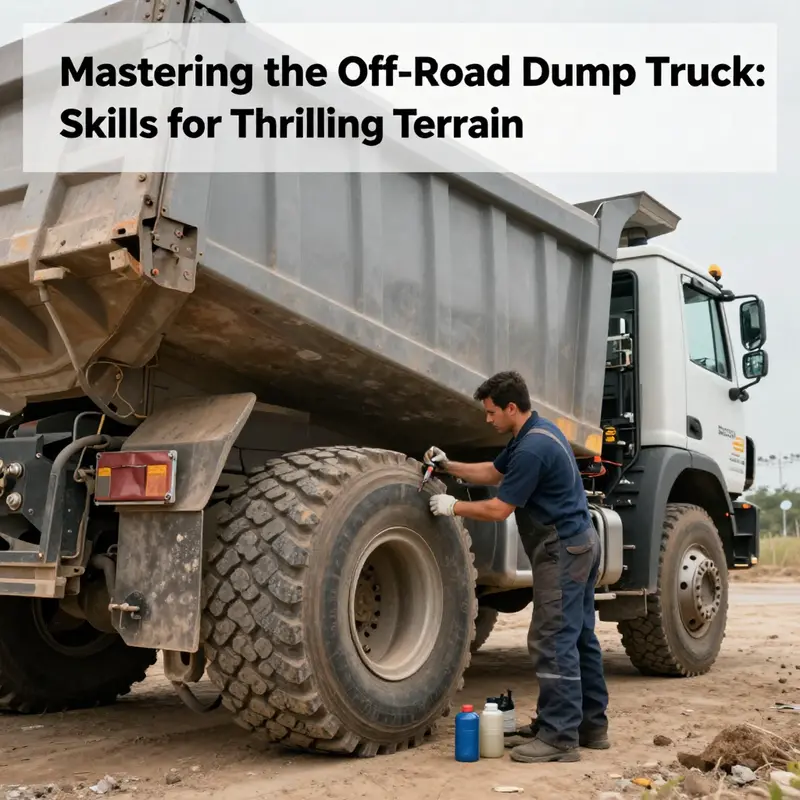
Rugged work sites demand machines that respond with predictability, and nothing tests a truck’s reliability like the moment you toggle the key and the first signs of life appear. In off-road environments, where mud can blanket a tire, rock can bite into a frame, and grade can tilt unexpectedly, the pre-drive inspection is not a bureaucratic ritual—it is the first line of defense between a controlled maneuver and a hazardous mistake. The routine is simple in theory: walk around, listen, touch, verify, and document. In practice, it becomes a disciplined habit that shapes the entire shift. The truck is a partner on the course, not a passive tool; treating the inspection as a moment to anticipate trouble turns ordinary mornings into reliable performances on downhill grades, through rutted stretches, and across unsettled ground where traction is a fragile currency. A careful pre-drive check is where the operator translates the terrain’s uncertain whispers into confident action, and in the harsh logic of off-road work, confidence is a form of safety as tangible as a properly inflated tire or a correctly locked dump body.
Begin with a calm, deliberate mindset. The jack-of-all-trades capability of an off-road dump truck—its high ground clearance, heavy suspension, and powertrain—depends on every system performing within its designed thresholds. The inspection should be seen as a single, continuous flow rather than a checklist stapled to a clipboard. You walk the perimeter of the vehicle, you confirm its core systems, you listen for unusual sounds, and you verify that the vehicle’s own safety devices work as intended. This approach places you in a posture of readiness; readiness is not luck, it is routine alignment, and routine alignment is the bedrock of safe off-road operation.
Tires and wheels form the first line of contact with the ground and the most visible indicator of readiness. Start by checking inflation with a reliable gauge, ensuring pressure matches the manufacturer’s specifications for the load and the terrain you expect to encounter. Uneven inflation can disguise internal damage or lead to a delayed response when you need traction most. Next, inspect tread depth and look for irregular wear that might suggest misalignment or suspension issues. A gouge or puncture may be a subtle ticket to abrupt immobilization; a tire with embedded objects demands careful removal and a professional check if accessibility is limited on site. While you’re down at the tire level, scroll your eyes across the wheels for damage, corrosion, or loosened lug nuts. Tighten only to the torque spec you’ve trained for and never rely on “feel” alone when dealing with heavy wheels on off-road roughness.
Hydraulic systems reveal themselves in quiet failures—hidden leaks and subtly dropping fluid levels can degrade lift performance, causing slower bed movement or unpredictable dumping. A quick visual sweep around the hydraulic lines, cylinders, and hoses is time well spent. Look for signs of fluid seepage, stains, or chafed hoses that could crack under pressure. Check the hydraulic fluid level in the reservoir and the transfer circuits, and confirm there are no signs of contamination or air bubbles in the sight glass or on the dipstick. The dump body’s own movement should feel damped and steady; excessive play or jerky operation often points to a hose, fitting, or cylinder that needs attention before a heavy lift or a rough ride in uneven terrain.
The steering and braking systems deserve close attention not because they operate in the same way they do on a highway truck, but because their behavior under load and on loose ground dictates control and stopping power in unpredictable conditions. With the engine off or at idle, test the steering for smoothness, freedom of movement, and any unusual stiffness or binding. A misaligned steering column or a sliver of play in the wheel can magnify steering errors on a slope or in a wash of dust. Brakes should feel responsive and even; listen for grinding, squealing, or a spongy pedal. On off-road surfaces, braking becomes a balancing act between throttle control, weight transfer, and tire grip. If the pedal sinks too far or the vehicle pulls to one side when braking on level ground, it’s a red flag that requires professional assessment before you engage rough terrain.
Lights and warning devices are not decorative—on a construction site or in a quarry, visibility saves lives. Check headlights, taillights, brake lights, and hazard lights, ensuring each functions as expected. Verify the backup alarm and any audible indicators used to communicate with nearby workers. In dim or dusty environments, a failure in lighting can turn a routine maneuver into a misperceived obstacle. The backup alarm, in particular, serves as a crucial signal to ground personnel; if it does not sound or reach the correct decibel level, you should not proceed until you’ve corrected it. The inspection should also confirm that warning devices are loud enough for the site’s ambient noise and that all safety interlocks and backup beepers operate in the intended modes.
The dump body and its mechanisms deserve a careful, almost tactile, check. Inspect the structural integrity of the dump bed, looking for cracks, deformations, or signs of steel fatigue that could worsen under load. Latches, hinges, and locking pins should move freely without binding and should engage fully when the bed returns to the down position. If you hear unusual noises when the bed moves—groans, creaks, or metallic rattle—trace the source and assess whether a pin, hinge, or mounting bolt is loose or worn. Confirm that the bed raises and lowers smoothly on its cycle and that the hydraulic controls synchronize with the bed’s motion. Any obstruction in the bed’s travel path, or any hesitation in the lift sequence, must be resolved before operating on uneven ground where a sudden dump could put bystanders at risk.
Cab and operator controls complete the intimate circle of safety around the operator and the machine. Ensure that all gauges are readable and that switches and indicators match the truck’s configured controls. Seat belts must be present, functional, and comfortably accessible; the most advanced machine becomes a hazard if the operator’s restraint system is compromised. A fire extinguisher should be in place, charged, and within easy reach in case of a hydraulic fire or electrical emergency. The driver’s seat should offer proper support for long shifts; a worn seating surface can lead to fatigue, distraction, and compromised reaction times on difficult terrain. The overall ergonomics of the cockpit—visibility, reach to controls, and intuitive layout—play a critical role in how effectively you respond to an approaching obstacle or a sudden grade change.
Industry standards and guidelines reinforce the seriousness of thorough pre-drive procedures. In mining and heavy construction, operators often follow a documented pre-entry inspection checklist that spans axles, steering, hydraulics, and braking to guarantee consistency across shifts and sites. Standardization reduces human error and supports accountability should a machine be returned to service after a fault. The importance of a documented approach becomes even more evident in project-specific contexts where the same truck is used across different sites, each with its own hazards and operating procedures. In some regions, regulatory bodies require a roadworthiness or equivalent inspection before vehicles receive licensing, underscoring that these checks are not merely best practices but formal compliance steps. A parallel emphasis appears in documented post-trip inspections as well, ensuring that any issues identified during operation are logged and acted upon by maintenance personnel, with a signed confirmation of follow-up. The continuity between pre-drive scrutiny and post-operation reporting creates a safety net that prevents recurring failures and aligns maintenance with real-world use.
The practical effect of this disciplined approach extends beyond safety. When you enter a remote hillside or a slick, muddy trench with confidence that the truck is sound, you conserve time and reduce the risk of immobilization. You also set the stage for more precise control over power, steering, and traction. A well-executed pre-drive inspection translates into a quieter engine start, steadier lifts, and smoother bed operations. It is not about pretending that every day will be perfect on rough ground; it is about creating a reliable baseline that minimizes surprises and keeps the job moving. For operators who want to deepen their readiness, the narrative of inspection becomes a personal practice: check, verify, and document with the same care you apply to your throttle and your braking on a grade. The ripple effect of this habit spreads to the entire crew, who learn to respect the truck as a system rather than a collection of isolated components.
In practice, this means integrating the inspection into the shift rhythm rather than treating it as a separate chore. A calm walk-around, a careful touch of every critical point, and the quick, precise confirmation of status combine into a ritual that becomes as automatic as starting the engine. When you reach this level of familiarity, you are not merely following a protocol—you are cultivating situational awareness that informs every decision on the ground. As the vehicle settles into its stance for the first climb of the day, you can anticipate how a mild tire pressure adjustment, a tightened hose clamp, or a minor correction to lighting brightness might influence your ability to navigate a treacherous slope. You are, in effect, translating the terrain’s rough promises into a controlled, confident approach.
For readers seeking deeper, technical reinforcement, consider exploring resources on diesel mechanics and system diagnostics as a complement to site-specific procedures. Mastering Diesel Mechanics: Your Step-by-Step Path to Success provides a practical foundation for understanding how each component interacts under load and in challenging conditions, which further enhances the value of the practical pre-drive checks described here. Mastering Diesel Mechanics: Your Step-by-Step Path to Success
As a final note, remember that pre-drive inspection is not a one-off task but a continuous safeguard that accompanies you from the first light of the shift to the final movement back to the yard. If a single issue is identified, the correct course is straightforward: rectify it before you proceed, or halt operations and escalate to maintenance. The goal is not to push through problems but to prevent them from becoming the incident that disrupts the entire operation. In the rough country of off-road work, accountability matters. A well-documented, thorough inspection sets the tone for the day, the crew, and the machine, ensuring that when the truck meets the terrain, it meets it on its own terms—safe, predictable, and strong enough to carry the load, whatever that load looks like on any given mile of dirt, rock, or mud.
External resource for broader context on low-speed, torque-aware driving and navigation through slippery surfaces is available for readers seeking additional perspectives: Off-Road Driving Tips for Beginners (external reference).
Steady Ground, Safe Start: Mastering the Start-Up and Smooth Operation of Off-Road Dump Trucks
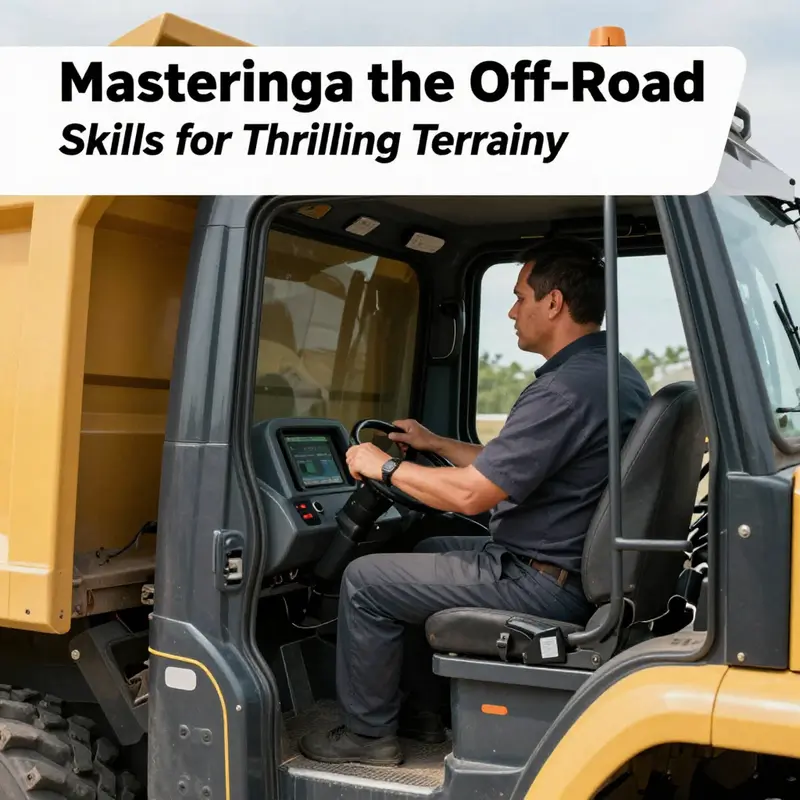
When you stand at the edge of a worksite with an off-road dump truck waiting to move material uphill, the difference between a productive shift and a wasted one comes down to how you start, control, and finish each maneuver. This chapter threads together the practical routines that turn rough terrain into manageable work, focusing on a disciplined sequence from pre-start checks through to post-operation care. The goal is not merely to move payloads but to do so with consistent control, minimized wear, and a heightened sense of safety for everyone on the site. The operator’s art here rests on translating engine torque, hydraulic power, and four-wheel drive traction into quiet, deliberate motion rather than sudden bursts that unsettle the vehicle or topple the load. A steady approach—from the moment you climb into the cab to the moment you roll away at the end of the shift—builds reliability into the machine and confidence into the operator.
Begin with the basics as a single, unbroken habit. The pre-start inspection is more than a checklist; it is a ritual that anchors your entire operation in a safe, predictable rhythm. You start by verifying fluid levels—engine oil, coolant, and hydraulic fluid—because the integrity of the oil film, the cooling system, and the hydraulic circuits directly affects how smoothly the truck transmits power and how reliably the dump mechanism responds. Tire pressure and tread condition come next. On rugged ground, underinflated tires can sag and pinch, while overinflated ones can crack the sidewalls or reduce traction on loose surfaces. Look for cuts, bulges, or uneven wear that might hint at alignment or suspension issues. A careful sweep beneath the chassis for leaks—fuel, oil, coolant, or hydraulic fluid—prevents slipping into a potentially dangerous situation later in the day. Safety systems demand equal attention: lights, alarms, mirrors, wipers, horn, and any warning devices should function as expected; the absence of a single alert can mask a developing fault or a blind spot on a busy jobsite. The dump body, too, must be in its locked, travel-ready position, free of obstructions or signs of misalignment. If the bed or its hardware feels loose or uneven when you move it, you pause to address it before you proceed. In sum, pre-start checks create a baseline of reliability that pays off as you plunge into the day’s terrain.
With the machine checked, the start-up sequence becomes more than turning the key or pressing the start button. It is a conscious commitment to a controlled, deliberate pace. Fast starts in rough terrain invite wheel spin, sudden clutch engagement, and unnecessary heat buildup in the drivetrain. A calm, patient ignition—allowing the engine to idle for a brief warm-up—helps the oil and hydraulic systems reach their operating temperature. In this moment, you feel the truck come alive with a measured, almost studied steadiness. You engage the parking brake, settle into the seat, buckle in, and adjust the mirrors to frame a clear view of the path ahead. If you must operate on a slope, ensure the wheels are pointed in a straight line and the brake holds level ground before you release the clutch or apply throttle. The goal is to cultivate a sympathetic relationship with the truck: it should respond to your inputs with predictable, linear motion rather than a jolt or a lurch.
Once the engine settles into a steady idle, you select the appropriate gear for the terrain. In uneven ground or on steep grades, low-range gears are your primary ally because they maximize torque and provide precise throttle control. Smooth clutch engagement is essential; it prevents wheel spin that can scrub traction on loose surfaces or trigger a stall if you’re starting from rest on a grade. For manual transmissions, this means coordinating the clutch, throttle, and gear shift with a surgeon’s calm—tiny, proportional movements rather than abrupt releases. Even with an automatic or two-pedal system, you’ll notice the difference when you anticipate the surface, road, or incline and let the terrain dictate your shift points rather than chasing speed. The aim is to keep the truck crawling forward with the smallest possible throttle input that maintains momentum. A steady, measured approach reduces wear on the driveline, keeps tires biting, and preserves your ability to react to sudden obstacles without losing control.
As you move, speed becomes the servant, not the master. Rough terrain rewards patience; a low, steady pace gives you time to notice ruts, rocks, and soft patches that can flip a load or snag a wheel. Engine braking plays a pivotal role on grades. Rather than riding the foot brakes, you downshift to leverage the engine’s own resistance to the wheels. This technique reduces brake fade and helps maintain tire grip by keeping the weight balanced and the braking forces distributed through the drivetrain. The balance you seek is between restraint and momentum: you want to avoid creeping too slowly, which invites a stall, and you want to avoid pushing too hard, which invites wheel spin or a loss of traction on loose or uneven ground. In practice, that means a smooth, continuous throttle that slides the truck forward without surging, coupled with thoughtful gear choices that keep the engine in a region where torque is available yet the wheel’s demand for acceleration stays modest.
Turning on rough ground requires a slightly different discipline. Wide, gradual turns help preserve stability and keep the center of gravity centered over the chassis. Sharp turns at speed are never a good idea on dirt, gravel, or mud because they can tilt the body toward the outside tire and risk rollover. You monitor weight distribution by keeping the load as centered as possible and avoiding eccentric loading—shifts in weight that can unexpectedly change grip. The way you steer matters as much as where you drive. When visibility is compromised, you reduce speed further and use your mirrors, lights, and signals to communicate intentions to crew members, maintaining a predictable cadence that others can anticipate and respond to. Terrain awareness becomes your constant companion. You read the surface ahead—where it’s dry and firm, where it’s soft and yielding, where hidden holes could swallow a wheel—and you adjust your path accordingly. A well-timed horn or light flash can prevent unintended encounters with workers or equipment around you, reinforcing a culture of safety on the ground.
Hill climbs and descents demand a separate but integrated set of practices. On climbs, you accelerate gently before you reach the incline to prevent lugging the engine and to keep the drivetrain in its efficient torque band. If the surface doesn’t support higher gears comfortably, you stay in a lower gear and modulate throttle to maintain traction without stalling. If you fear you’re losing grip or if the truck begins to stall, back up slowly and re-approach the hill from a different angle rather than forcing a risky pass. Descents require a controlled cadence and the deliberate use of engine braking. You shift to a lower gear before you begin the descent, letting the engine absorb speed rather than letting gravity drive the truck into brake fade. The brakes stay cool and effective as you apply them in short, intermittent touches rather than a long, continuous hold. In both cases, keep your steering smooth and deliberate. Let the truck’s weight settle through the center rather than fighting with it—this is how you maintain traction and prevent a rollover on a steep grade.
The dump bed itself is a critical piece of the system that requires disciplined handling. Raise and lower only when the truck is completely stopped and on level ground. Surroundings matter here more than anywhere else: verify the area is clear of people and obstacles, and ensure material won’t spill onto a worker or into a trench. When unloading, raise the bed fully and slowly to clear the load and avoid bounce that could shift center of gravity. After dumping, lower the bed gradually to avoid jolts that could jar hydraulic lines or loosen the payload. Remember that vibration is not a trivial consequence but a sign of excessive load movement or improper stowage. If the bed must be moved while the truck is still in motion—such as in special, guided operations—this should only occur under a tightly controlled protocol with clear communication and safety oversight; otherwise, the operation should wait until stationary.
Beyond the mechanical and procedural specifics lies a broader, more human skill: practice. Operators who succeed are not those who rely on instinct alone but those who rehearse, observe, and refine. A controlled practice course—whether on a test track or a controlled segment of the jobsite—helps you tune throttle response, clutch feel, steering sensitivity, and the interplay between vehicle dynamics and payload behavior. It also builds intuition about how different soils, moisture levels, and payload sizes change the truck’s response. As you gain seat time, you’ll discover the subtle cues that indicate your tires are gripping or slipping, how much engine braking you can rely on before you need to touch the brakes, and where your blind spots lie when negotiating narrow paths between equipment and trenches. In this sense, the operation becomes a continuous feedback loop: you observe, adjust, and move forward with greater confidence and slower, safer rhythm.
A final thread binds all these practices: a mindset that places safety and stability at the heart of every decision. It’s tempting to push the truck to meet a deadline, especially when material must be moved to a certain point under time pressure. Yet the most efficient operators are those who recognize that efficiency arises from predictable, repeatable actions, not from sudden bursts of speed. The disciplined routine—comprehensive pre-start checks, patient start-up, measured gear choices, gentle throttle control, thoughtful cornering, prudent hill work, careful dump bed handling, and ongoing terrain assessment—creates a reliable, durable workflow. If you want to glimpse the underlying mechanics that support these routines, you can explore diesel-dynamics and maintenance concepts in this detailed guide: Mastering Diesel Mechanics: Your Step-by-Step Path to Success. As you accumulate hours behind the wheel, you’ll find that the road to efficiency in off-road dump truck operation is paved with steady habits, patient decision-making, and a constant commitment to safety for yourself and everyone around you. For deeper reading on practical driving techniques for challenging surfaces, an external resource provides useful, field-tested tips that complement this chapter: https://www.offroad.com/guides/off-road-driving-tips-for-beginners
Taming the Rough: A Cohesive Guide to Driving Off-Road Dump Trucks Across Rugged Terrain
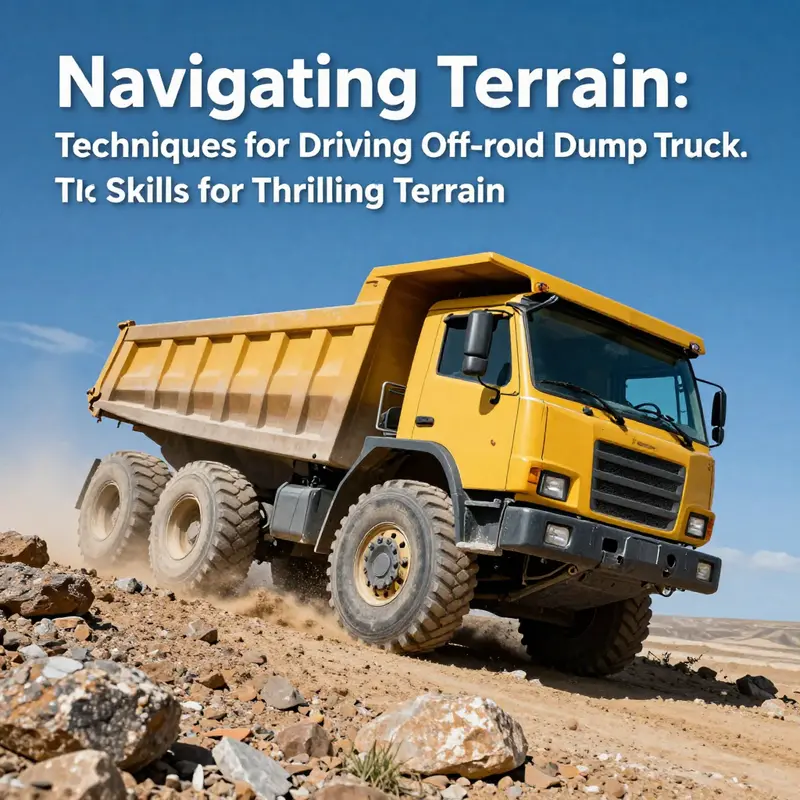
Driving an off-road dump truck is as much about discipline as it is about muscle. The vehicle’s raw power is undeniable, but the real skill lies in reading the terrain, modulating torque, and honoring the machine’s limits. In rugged fields where rock, mud, and rutted tracks conspire to test balance, an operator becomes both pilot and steward, guiding the truck with a measured hand and a quiet respect for the ground beneath. The chassis, suspension, tires, and drivetrain are engineered to conquer harsh conditions, yet they demand a driver who can weave through obstacles without inviting trouble. The chapter that follows threads together the practical steps and the mindset you need to drive off-road dump trucks safely and efficiently, without turning a routine task into a costly mishap.
A solid understanding of the vehicle is the starting point. Off-road dump trucks usually rely on four-wheel drive or even six-wheel drive to maintain traction when surface grip is uneven. High ground clearance and heavy-duty suspensions cushion the bounce and twist of irregular terrain, but they also create a higher center of gravity. That combination means the driver must stay vigilant about weight distribution, tire contact, and the line chosen across the landscape. Before the first mile, a thorough pre-drive check anchors safety and performance in place. Tire pressure becomes a study in balance: low enough to maximize flotation on soft ground, but not so low that heat builds in the tire carcasses or tread wears unevenly. Brakes, lights, and fluid levels—oil, coolant, and hydraulic fluid—receive the same careful scrutiny, and the dump body itself should be locked securely in a neutral position. A truck that leaves the yard with a loose bed is a truck that invites an awkward tilt or a dangerous shift in weight on a slope.
When the engine stirs to life, the ritual matters. The operator sits squarely in the seat, fastens the belt, and engages the parking brake before addressing the controls. In newer machines, power-assisted systems ease some of the effort; in older or simpler models, the driver shoulders more manual effort, especially when shifting through gear ranges. The transition from at-rest to moving should feel deliberate, not rushed. The cue is control, not speed. The moment you begin to move on rough terrain, the goal is steady progress at a pace that allows time to observe, assess, and react to the subtle shifts in surface—whether a hidden rut, a slick patch of clay, or a loose patch of shale that could throw weight outward.
Gear selection and clutch control form one of the most critical junctions in off-road operation. Low-range gears are employed to maximize torque and to heighten the truck’s sense of tactile feedback on the ground. Smooth engagement is essential; abrupt clutch release can spin wheels, stall the engine, or launch the truck toward an unseen obstacle. In manual transmissions, the coordination of clutch, throttle, and gear selection is a learned rhythm, built over hours of practice on forgiving terrain before venturing into more challenging environments. The aspirational aim is to move as if the ground were a mirror: let the engine and drivetrain reflect and respond to the surface without jolt or slide. The truck should feel like an extension of the driver’s intentions rather than a stubborn machine fighting against you.
One of the most enduring principles of off-road driving is not speed but momentum—an economy of motion that keeps the vehicle centered and in contact with the ground. The golden rule remains: slow is smooth, smooth is fast. On rough, uneven surfaces, maintaining a low, steady speed—typically just a few kilometers per hour—allows the suspension time to absorb impacts and keeps tires engaged with the substrate. Engine braking becomes a powerful ally on descents; staying in a lower gear preserves control and prevents the brakes from overheating. Relying solely on foot brakes can generate fade and reduce stopping power when the surface is loose or steep. The driver’s right foot learns to time throttle input and gear changes so the truck settles into the terrain rather than pounds into it.
Turning and cornering demand a blend of geometry, restraint, and anticipation. Wide turns mitigate the risk of tipping or losing traction on the outer wheels. Sharp turns at speed, even on dirt, threaten stability. The operator keeps weight within the chassis’s base, avoiding the temptation to oversteer or steer aggressively through obstacles. A calm, centered posture helps: hands near the 9 and 3 o’clock positions, elbows relaxed, and body supported by the seatback. This position reduces fatigue and improves reaction time when a bump jolts the wheel or a rock sends the truck slightly off line. Fluid steering, rather than muscle, is the goal. In terrain features such as rocky steps or sudden cambers, reading the line ahead becomes a habit—checking ground clearance, selecting a path that keeps both front and rear axles engaged, and preparing to back up and reassess if the chosen line proves unworkable.
Climbing and descending hills are among the most demanding tasks. On a climb, the approach matters: gather momentum before the ascent if the surface supports it, otherwise move with a cautious, continuous throttle so the engine stays within its torque envelope. If the truck begins to lose grip, a gentle back up and a different approach angle often yield a better grip. Downhill segments call for controlled deceleration through engine braking and a deliberate selection of lower gears before encountering the slope. The instinct should be to economize on service braking, applying it in short, intermittent taps rather than a long, constant application that risks overheating the discs and pads. A successful descent feels like a controlled glide rather than a forced slide—the truck’s weight acting under the discipline of the engine and gears rather than the brakes alone.
The mechanics of dump bed operation intersect with terrain and safety. The bed should only rise when the truck is fully stopped and the ground is level. Unnecessary motion with the bed up or down while the truck is on a slope multiplies the risk of a tip or an unexpected shift in weight distribution. Before unloading, the operator surveys the vicinity, ensuring that people, vehicles, and obstacles are clear. The return to bed-down should be slow and deliberate, with the operator monitoring for any shifting of load that could tempt a misbalance somewhere along the frame. A well-timed dump cycle, followed by a controlled retraction, preserves both the payload integrity and the truck’s structural longevity. In the field, such discipline translates to fewer mechanical complications, fewer injuries, and fewer delays waiting on repairs.
Terrain awareness remains the invariant. Off-road environments hide hazards that a routine highway glance would miss. Holes, rocks, soft ground, and cambered surfaces all threaten stability, traction, and the possibility of a rollover if the truck is misaligned with the grade. Operators train their eyes to scan well ahead, not just for immediate obstacles but for the topology that indicates where the ground might fail under load. Lights and hazard indicators become essential tools in low visibility, guiding line choices and warning others of the heavy machine’s presence. The more you know your path, the less your decisions become reactive and the more they become deliberate. A steady routine of checking the surface, maintaining a constant velocity, and adjusting line as necessary helps the truck to traverse difficult patches with minimal drama.
Practical skill grows through deliberate practice. Many operators recommend mastering controlled courses before entering active sites. A measured, repeatable approach to throttle modulation, brake use, and the interplay of gears yields a deep reservoir of muscle memory. Even from small-scale demonstrations, the core lessons resurface: balance, timing, and restraint. These ideas translate to the field as a quiet confidence—one that keeps you from forcing progress and instead invites the terrain to reveal the best route. To expand practical understanding beyond the day-to-day, consider resources that address throttle control and low-speed maneuvering for heavy machinery. For example, this expert guide on off-road driving tips for beginners captures techniques that sharpen your sense of pace and precision: https://www.offroad.com/guides/off-road-driving-tips-for-beginners.
An operator’s ongoing education includes both tools and tactics. A robust foundation in mechanical systems, such as diesel powertrains and hydraulic operations, strengthens the operator’s ability to diagnose and respond to issues in the field. A practical way to deepen this foundation is to study diesel mechanics in a structured path, which can be summarized in resources like Mastering Diesel Mechanics: A Step-by-Step Path to Success. The content emphasizes not only maintenance but also the integrated mindset of diagnosing, preventive care, and disciplined operation. You can explore this approach here: Mastering Diesel Mechanics: A Step-by-Step Path to Success. Integrating such knowledge with hands-on practice creates a durable skill set that pays dividends when confronted with unexpected terrain or weather conditions.
Finally, safety and self-preservation dictate the broader context in which off-road dumping operates. Working in rough terrain often means facing water crossings, varying moisture levels, and the potential for ground collapse beneath the track. When water is present, test the depth before entering and avoid traversing deeper than the vehicle’s axle height. Enter at a slow, steady pace, maintain momentum through the crossing, and dry the brakes after exiting to restore optimal stopping power. In every scenario, the operator keeps the mission in view: move respectfully, protect the asset, and return the truck to base with the load intact and the crew safer than when they started. The discipline of off-road driving, therefore, rests less on bravado than on a careful, informed choreography of throttle, steering, and gear selection that honors the terrain and the truck alike. If you want to extend your understanding of terrain-specific strategies, SafeTravel’s Off-Road Driving Manual offers additional context and safety considerations to complement the fundamentals discussed here: https://www.safetravel.com/offroad-driving-manual.
Steady Hands, Safe Ground: Navigating Off-Road Dump Trucks with Precision and Caution
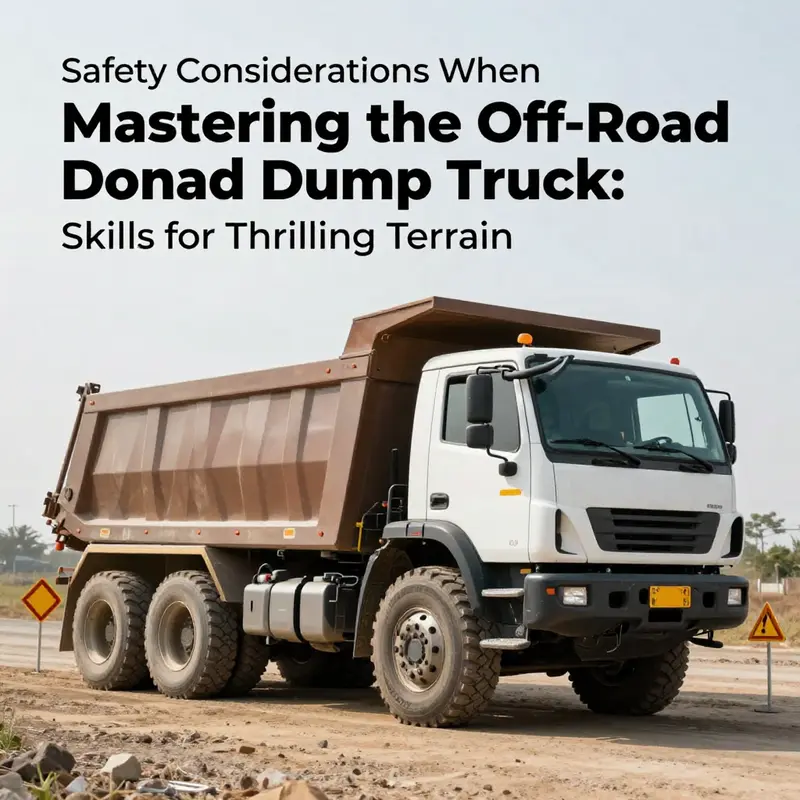
Operating an off-road dump truck is a test of balance, timing, and judgment as much as it is about raw power. These machines are built to haul heavy loads over uneven, unpredictable terrain, and their size, weight, and center of gravity demand a disciplined approach. The road is rarely smooth, and the consequences of missteps can be severe. A reliable safety habit, therefore, is not a set of isolated tricks but a continuous mindset that threads through every action—from the pre-dawn inspection to the final, careful parking on level ground. In this environment, safety is the practical baseline that lets you respect the machine, the terrain, and the people nearby, including the crew who work with you and the bystanders who could be affected by a miscalculation on a slope or a blind corner. The vehicle you drive is more than a means of moving earth; it is a dynamic system whose performance hinges on how well you understand its capabilities and how consistently you apply that understanding under changing conditions. The landscape you traverse can be forgiving one moment and unforgiving the next, so the core philosophy is straightforward: drive slowly, think ahead, and use every tool at your disposal to stay in control. The practical manifestations of this philosophy begin with preparation, extend through every maneuver, and culminate in a disciplined routine that keeps you and your team out of harm’s way while you accomplish the task at hand. A strong safety culture also hinges on a clear understanding of the vehicle’s design. Off-road dump trucks typically feature high ground clearance, robust suspensions, and powertrains capable of delivering torque at low speeds. Many configurations rely on four-wheel drive or six-wheel drive to maintain traction on mud, sand, rock, or slick clay. That capability is a boon, but it also invites a temptation to push the truck harder than the terrain will allow. The safety discipline is the antidote: operate within the limits of traction, braking, and load stability, and use technique to compensate for imperfect ground. The most fundamental habit is a meticulous pre-operation routine that begins with the engine off and the job site quiet. A thorough inspection before each shift is not mere protocol; it is a practical investment in reliability and safety. Check engine oil and coolant levels, paying particular attention to any signs of overheating or leaks. Inspect tire pressure and tread depth, because uneven ground and varying loads exaggerate the consequences of worn rubber. Verify the integrity of the brake system, including service brakes, parking brake, and any secondary braking mechanisms that may be present. Confirm hydraulic fluid levels, especially around the dump mechanism, where fluid loss can degrade control. Ensure all lights, horns, and warning devices function properly, and confirm the dump body is securely locked in place with no signs of wear or damage that could lead to a sudden release or misalignment on a slope. This is the moment to quiet the mind and prepare the senses to notice small but consequential details—the subtle change in tire grip on damp soil, the faint sound of a hydraulic line, the feel of the steering wheel as you test steering response at very low speed. The pre-trip ritual anchors confidence for what follows, and it is equally important to look for environmental cues that might influence the day’s work. Weather shifts can turn dry tracks to slick surfaces or create puddles that hide ruts and holes. A routine walk around the truck also helps you detect loose tools, fallen debris, or signs of ground instability near the work wedge where you will operate. The goal is not to catalog every variable but to create a mental map of the truck’s capabilities and the terrain’s tendencies so that every decision you make is grounded in awareness. Once the machine is started, the dialogue with the machine begins anew. In many off-road environments, the throttle and clutch require a smooth, deliberate touch, especially during starts on uneven ground. Low-range gears are the ally for steep or uncertain terrain because they deliver maximum torque at controlled speeds. Smooth clutch engagement avoids wheel spin, stalling, or an abrupt transfer of weight that could unsettle the truck. The habit of deliberate, gradual movement continues through all shifts and throttle adjustments. Speed is the silent variable that governs safety in rugged conditions. The instinct to hurry is a common source of mistakes, so the guideline is simple: travel at a pace that allows a full, continuous scan of the path ahead and enough time to react to unseen hazards—holes, soft ground, rocks, or sudden changes in grade. Engine braking is a practical counterpart to the pedal brakes on downhill stretches; downshifting into appropriate gears to convert engine torque into controlled deceleration reduces the risk of overheated brakes and helps maintain a stable chassis attitude. For steering and turning, the rule is to anticipate the truck’s momentum and the effects of its weight shift. Wide, gradual turns reduce the likelihood of tipping and preserve traction on uneven surfaces. Sharp turns, especially with a load shifted toward one side, can magnify the risk of rollovers. The operator must keep the truck as level as possible, with weight balanced through careful load distribution and avoidance of aggressive cornering. When it comes to climbing or descending grades, the emphasis remains on control rather than propulsion. On ascent, a patient approach is essential: accelerate gently to maintain momentum but avoid aggressive throttle input that could cause wheel spin or loss of traction. If the truck seems to slow or stall, back up slowly and attempt the incline from a different approach angle rather than forcing a stubborn path. On descent, the vehicle should stay in a gear that provides engine braking, and the brakes should be used only to supplement that natural control—applied in light, intermittent pulses to prevent overheating. This disciplined approach to throttle, gear, and brake interaction is central to safe operation on rough terrain, and it becomes a habit that pays dividends as a routine rather than a one-off technique. The dump body itself adds a layer of complexity to safety planning. Raising and lowering the bed is a task that must occur only when the truck is stationary and on level ground. A clear area around the vehicle is non-negotiable; if people or obstacles are nearby, the risk of injury or equipment damage rises sharply. Lowering the bed should be performed slowly after unloading to avoid jarring the chassis or the payload. The moment to unload is never a moment to improvise. The operator must be certain that the bed is completely lowered and locked, with no risk of the load shifting unexpectedly or the bed lifting at an angle that could destabilize the truck. Beyond the mechanical discipline, a broader safety posture involves situational awareness. Terrain awareness means watching for soft ground, hidden holes, or rocks that can alter the truck’s trajectory or traction. In many off-road sites, the terrain itself becomes a dynamic adversary; a strip of mud can suddenly transform into a slick trap, and a shallow rut may exist where a wheel is expected to find solid footing. Lighting plays a crucial part in safety, especially in early morning or late in the day when shadows obscure hazards. Front lights and hazard indicators help to delineate the truck’s footprint and to alert nearby crews of movement. The safety conversation also extends to people and processes beyond the truck. Operators should be trained and certified to handle the specific truck and site conditions, and they should maintain high levels of concentration at all times. Blind spots demand more than a glance in the mirrors; they require visual checks and, where available, the supplementary cues from camera feeds or other monitoring devices. The best safety systems are not used in lieu of judgment but rather in support of it. That is why many operators pair traditional techniques with modern safeguards like radar-based proximity warnings. Evaluations conducted by safety research bodies have shown that these systems can detect people, smaller vehicles, or terrain changes in the truck’s blind spots, which significantly reduces collision risk when paired with cameras and operator vigilance. No technology should replace the need for careful driving, but when used properly, these tools extend an operator’s awareness and create a layered safety net. The practical implementation of safety technology depends on proper calibration, regular testing, and a culture of skepticism about alarms that might prove to be false positives. Operators should learn to verify alarms through multiple sources of information and to treat every alert as a genuine sign to slow, reassess, and proceed with caution. The environmental aspect of safety cannot be overlooked. Surface mines and rugged field sites can present fatal hazards if the operator becomes complacent. Ground conditions can deteriorate rapidly after weather events, and the consequences of a misjudged turn or a failed braking sequence can be severe. In these environments, the best practice is to pair caution with continuous improvement. Regular training, refresher courses, and simulated drills help operators stay sharp, especially when conditions change or a new piece of equipment is introduced. Practice, however, should be purposeful and safe. A controlled course that highlights throttle control, steering under load, and precise bed operation can reinforce the muscle memory needed for real-world work, without exposing workers to unnecessary risk. For operators seeking deeper hands-on guidance, a practical maintenance perspective can be invaluable. Maintenance knowledge—such as understanding engine systems, hydraulic circuits, and braking performance—helps operators identify signs of wear before they become problems. This is where a solid maintenance practice complements step-by-step routines on the job site. For deeper maintenance guidance, see Mastering Diesel Mechanics: Your Step-By-Step Path to Success. The synergy between meticulous maintenance and disciplined operation is what sustains performance and safety over the long haul. The narrative of safety here is not about fear but about accountability—to the crew, to the environment, and to the machine itself. It is about choosing to slow down when the ground is uncertain, to verify a warning rather than rushing through a critical maneuver, and to treat every shift as a continuous test of judgment and control. It is about recognizing that the real skill in off-road dumping is not the ability to push the truck to its limits, but the ability to read the terrain, to apply the vehicle’s capabilities with restraint, and to keep everyone on the site intact while you complete the task. In this sense, safety is the work itself—the condition of mind that keeps the truck moving forward without compromising the well-being of those who share the ground and the sky with it. To support this practice, operators should keep a living awareness of the process: a moment to review, a habit to reinforce, and a system of checks that evolves with experience. The path to safer off-road dump truck operation is continuous, and its rewards are measured not only in avoided incidents but in the steady progress of safe, efficient work across challenging terrain. External resources provide further depth for those who want to broaden their safety toolkit. For more details on the evaluation and use of proximity warning systems and related safety practices, refer to the following external resource: https://www.cdc.gov/niosh/docs/2024-125/default.html
Final thoughts
Driving an off-road dump truck is as exhilarating as it is challenging. The blend of mechanical prowess, operating skill, and land awareness can transform any off-roading adventure into a thrilling experience. As you’ve learned, from understanding the mechanics of these vehicles to mastering the necessary safety protocols, each aspect plays a crucial role in ensuring a successful journey. With practice and attention to detail—from pre-drive inspections to adept terrain navigation—you’re now equipped to take on the wild with confidence. Embrace the excitement of off-road driving while prioritizing safety and skill development.