
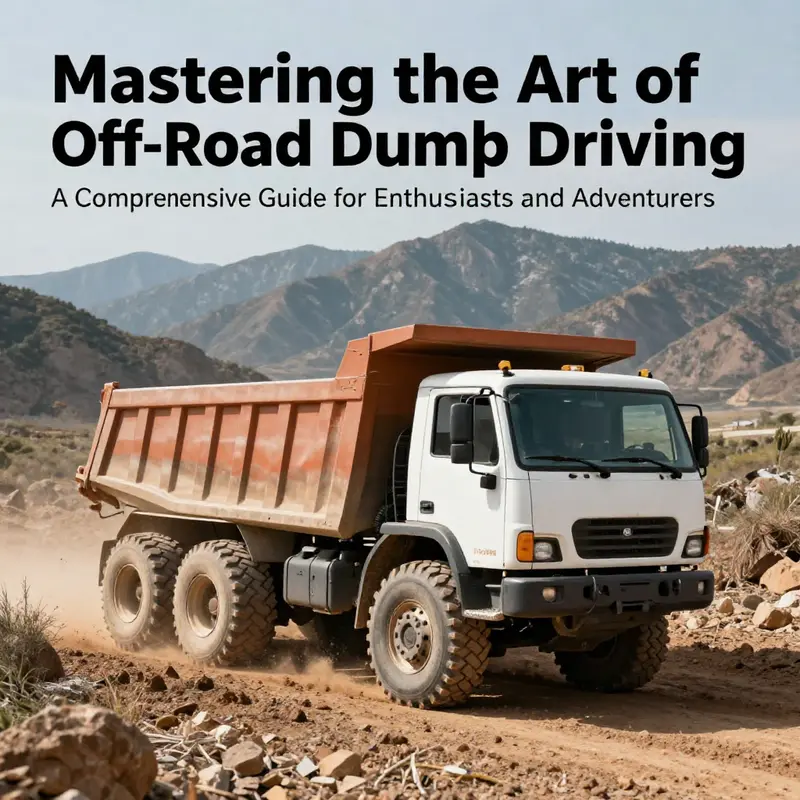
Driving an off-road dump truck isn’t just a task; it’s an exhilarating adventure requiring a blend of skill, intuition, and mastery over powerful machinery. For off-road enthusiasts, rural landowners, and those with a passion for rugged terrains, understanding how to navigate these behemoths is not merely advantageous—it’s essential. This guide delves into the nuances of driving off-road dump trucks, starting from pre-drive safety checks to mastering steering and movements on difficult terrains. Each chapter is designed to provide key insights and practical techniques that enhance your driving experience, ensuring every trip is not only successful but also safe.
Rolling Ready: Pre-Drive Safety Foundations and Engine Start Techniques for Off-Road Dump Trucks
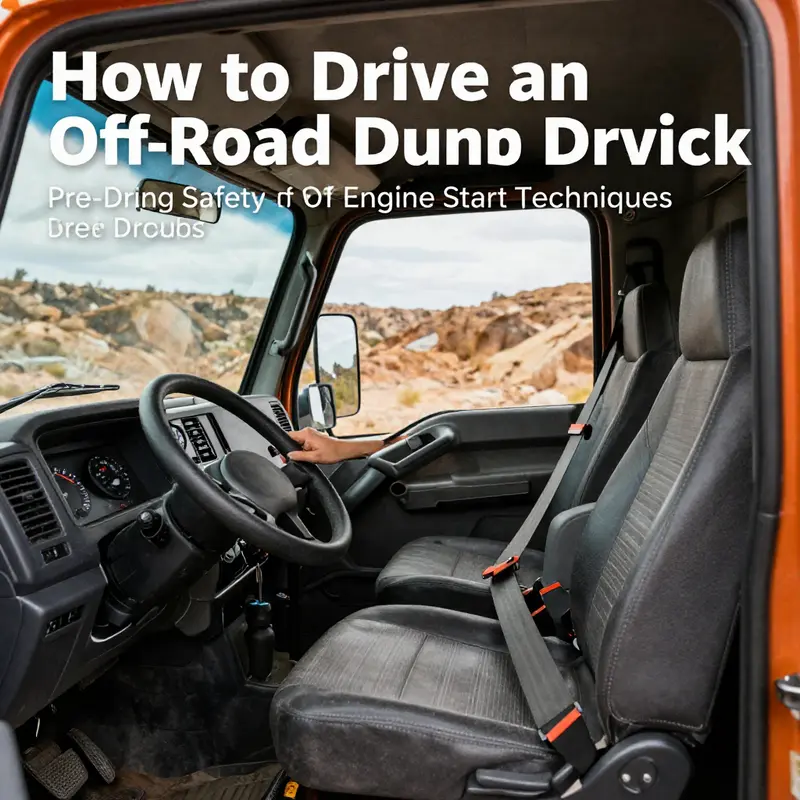
Rolling up to an off-road dump truck, you don’t just flick a switch and go. You enter a world where weight, momentum, and terrain collide with gravity and fatigue, demanding a careful choreography of preparation, awareness, and deliberate action. This chapter focuses on the heartbeat of safe operation before the truck ever leaves the parking spot: the pre-drive safety checks that ground your confidence, followed by the engine start techniques that set the vehicle’s systems humming in harmony. The goal is a seamless transition from stationary stability to controlled motion, where every lever, gauge, and gauge glass becomes part of a single, responsive system rather than a cluster of independent tasks. The emphasis rests on method, not rush, because the terrain you will encounter does not forgive haste born of nerves or hurry.
Begin with the fundamentals that separate a cautious operator from an inattentive one. The pre-drive safety checks are not a ritual to be completed for appearance alone; they are a shield against failure that can creep in through simple wear and overlooked detail. Tires are the first line of defense against slip, loss of traction, and puncture. You want to verify that tire pressures are appropriate for the terrain you expect to encounter. On soft surfaces, a deliberate, lower pressure can improve grip and floatation, helping the tire to bite rather than sink. But there is a balance to strike: underinflation relentlessly damages tires and increases heat buildup, which can lead to structural failure when you push up a steep grade or blast through rough rock. In the same breath, inspect the tires for cuts, bulges, or embedded debris that could spell trouble when you least need it. A single nail can become a stubborn hazard once you’re already loaded and off the beaten path.
Beyond the tires, the mechanicals carry their own weight in safety. The suspension, brakes, and drivetrain should reveal no signs of fluid leaks, odd noises, or excessive play. A hose with a tiny crack or a loose clamp can become a major headache when you’re climbing or descending, where the truck’s weight exaggerates every imperfection in the system. Lights, horns, and communication devices deserve the same attention. In low-visibility environments or when you’re coordinating with a crew, a functional horn and reliable radios aren’t mere conveniences; they’re essential for avoiding collisions or missteps that can escalate into expensive, dangerous accidents. The dump body itself must be securely locked in place when you begin any movement. A bed that shifts unexpectedly or droops under its own weight is not a nuisance; it’s a risk to balance and sightlines for anyone nearby.
As you step into the cab, you assume a posture that translates into precision and control. The seat should support the spine in a way that keeps your shoulders relaxed yet alert, with your arms extended so you can reach the steering wheel at roughly the 10 o’clock and 2 o’clock positions. This posture isn’t about comfort alone; it is about maintaining a stable contact with the vehicle through every inch of travel, from millimeter micro-movements to the long sweep of a wide turn. Fastening the seatbelt is non-negotiable during normal operation. It keeps you anchored against the truck’s vaulting tendencies on uneven ground, and it becomes indispensable during extreme maneuvers or sudden shifts in grade. In some extreme, controlled scenarios, experienced operators may loosen the belt slightly for a momentary flex during severe slope navigation. But that is a highly specialized technique that requires training, and for ordinary work, the seatbelt remains firmly fastened.
Before you turn the key, confirm that the transmission is in Neutral or Park as appropriate for your vehicle. This step may seem obvious, yet it prevents unintended movement during the crucial moments when the engine comes to life and the systems begin to wake up. Depress the brake pedal fully, a simple act that modern trucks use as a safeguard when the engine demands engagement of the drive system. With the brake pressed and the transmission in the correct position, you may turn the ignition, letting the key or push-button start coax the engine to life. A smooth, quiet start is the signal that the machine is ready to participate in your plan rather than fight against it. Allow the engine to idle briefly; this moment of stillness isn’t wasted time but the micro-warmup period during which oil pressure stabilizes and the coolant and electrical systems synchronize their rhythms. In a real-world setting, you’re listening for the faint, steady hum that marks a healthy start, not the rattling afterthought of a rough ignition.
The moment after the engine settles is when your awareness tightens its focus. Observe the dashboard gauges and warning indicators as you monitor for any anomalies—a flicker of a needle, a blinking light, a drop in oil pressure. If a warning light remains on after startup, you do not proceed to move the truck. Instead, you pause to diagnose or call for service. This is not hesitation; it is the discipline of ensuring that the machine is not only operational but reliable for the road you intend to travel. Idle time matters here, too. A brief idle lets the alternator and battery settle into their roles, and it ensures that the hydraulic systems, if powered by the engine, are ready to respond with full authority when you command the bed to rise or the brakes to bite.
With the engine confirmed healthy and the cab’s micro-ecosystem stabilized, you perform the transition to drive or reverse with the same calm, measured approach that defined the pre-drive checks. The brake remains engaged as you shift into gear, offering a safety margin against creeping movement as your hands and feet coordinate the vehicle’s first steps into motion. The world beyond the cab is not a smooth highway; it’s a slice of terrain that can harbor loose gravel, slick mud, rock faces, and unpredictable ruts. Your control inputs should be deliberate and gentle, especially on uneven surfaces where abrupt throttle or braking can unsettle the chassis and unsettle the load. The classic guidance—use the accelerator to gauge speed with restraint, apply the brakes gradually to slow or stop, and let the steering wheel respond without overcorrection—holds true here as it does on any other road you may navigate. Yet the stakes are higher: the vehicle’s mass amplifies every misstep, and the risk of tipping increases when the load shifts or a sudden turn is taken on a slope.
A crucial dimension of safety that often travels in the background is how you handle the load itself. The dump bed is not merely a structure for transporting material; it is a dynamic force that shifts weight distribution as the bed tilts and the material moves. The best practice is to keep the load centered and evenly distributed within the bed, with no cargo that can shift or settle in a way that compromises balance. When you travel across grades, you throttle and brake with the same restraint you would use on a narrow, twisty road, but the consequences of misjudgment are magnified by the vehicle’s geometry. The same restraint should govern gear selection: lower gears—typically first or second—provide the engine torque necessary to climb or descend gradually, maintaining control and avoiding sudden surges that could destabilize the truck. This approach to speed, grip, and weight is not about keeping a slow pace for its own sake; it is about preserving traction, steering feel, and line of travel in conditions that are rarely forgiving.
The pre-drive and start sequence also invites you to consider the broader practice of training and preparation. Real-world operators cultivate a careful checklist that becomes second nature, ensuring that nothing is forgotten as the truck moves from maintenance bay to worksite. This habit is reinforced by the use of training tools and simulations that recreate terrain, load dynamics, and control responses in a controlled environment. Although simulations cannot fully replace the tactile feedback of real ground, they offer a valuable, focused rehearsal that hones instinctive reactions without exposing people or equipment to risk. It is through such deliberate practice that an operator learns to sense a slight vibration, a subtle shift in the steering wheel, or a change in pedal effort that signals a developing issue long before it becomes visible on a gauge or leak under a pinhole. In this way, pre-drive safety becomes not a static checklist, but a living discipline that grows with experience.
As you approach the practical edge of the day’s work, you might seek a deeper perspective on the diesel systems that power these machines and the way they twist into practical function on the ground. For a deeper dive into diesel mechanics, consider exploring related paths that illuminate the inner workings of engines and their reliability. This broader understanding complements your hands-on pre-drive routines and helps you interpret what you observe in the cab when you hear an unfamiliar ping or feel an unusual resistance in the pedal. Mastering Diesel Mechanics: Your Step-by-Step Path to Success offers a comprehensive, accessible framework for diagnosing and maintaining the heart of the machine you depend on. It anchors your skill in a broader engine- and drivetrain-centric mindset and can be a valuable companion as you refine your own pre-start rituals and post-start checks.
The chapter’s practical wisdom is not merely about performing a sequence of actions; it is about cultivating a disciplined mindset that treats safety as a continuous, evolving practice. Before stepping out, you recognize the truck’s size and personality. You acknowledge the terrain’s variability and the way it demands constant, quiet attention rather than flashy, impulsive moves. You expect the bed to respond obediently when commanded, yet you also prepare for the moment when the ground itself forces an adjustment to your initial plan. In other words, the pre-drive and engine start routine is the bedrock of responsible operation. It protects you, your crew, and the equipment, ensuring that the vehicle’s capability is realized without compromising safety or efficiency.
If you’re looking for a practical tie-in that brings together these fundamentals with broader methods of terrain management and gear selection, consider supplementing your study with a focused external resource that explores terrain handling and drive-line behavior beyond the basic startup. For instance, an external guide on off-road driving techniques provides a spectrum of scenarios—from gentle incline corrugations to rocky approaches—that test your understanding of momentum control, traction management, and line selection in ways that general safety knowledge cannot. It’s a way to extend the conversation beyond the checklist to a more nuanced appreciation of how a loaded off-road dump truck behaves in the real world. Remember, the real value of this chapter is not merely the steps outlined here, but the intent behind them: to create a resilient operator who can read terrain, anticipate shifts in grip, and respond with measured, deliberate action when it matters most.
To reinforce the written guidance with a concrete example, you can explore additional learning through the linked resources that discuss system maintenance, safe operations, and the practical realities of field work. For example, a focused entry on diesel systems can be a helpful companion as you diligently apply the pre-drive checks and engine start techniques described above, connecting the theory you study with the hands-on tasks you perform on the ground. And while you absorb this knowledge, keep in mind that the goal is not to memorize a rote sequence but to develop a reliable habit: a quiet, deliberate, and safe approach to every start, every movement, and every transition that follows.
For a broader context that ties these concepts into a wider spectrum of truck operation and fleet readiness, you may explore related internal resources. A practical, field-tested pathway to understanding the mechanical foundation behind the vehicle you drive is to consult Mastering Diesel Mechanics: Your Step-by-Step Path to Success. This resource emphasizes the mechanics behind the engine and powertrain, reinforcing the observation that a well-started engine is only the beginning of a careful day on rough ground. The combination of sound pre-drive checks, controlled engine startup, and disciplined driving forms the triad of safety and efficiency in off-road dump truck operation. When you integrate these ideas with a steady commitment to practice, you’ll find yourself moving from merely starting a machine to orchestrating a reliable, responsive performance that meets the demands of demanding terrain.
Finally, the days you work will test your capacity to adapt while maintaining your core discipline. You’ll learn to read the ground beneath you and to anticipate how response changes when you add the load, the sun’s angle, or a shifting breeze. The most capable operators don’t merely know the steps; they know the cause behind each step and the consequence of ignoring it. They move with intention, always testing and refining their approach, always checking the bed lock, the lights, the gauges, and the feel of the pedals as they roll from one site to the next. They understand that the difference between a smooth, efficient shift and a costly misstep often comes down to this quiet, pre-emptive care. In practice, that is the essence of mastering off-road dump truck operation: a continuous loop of preparation, awareness, and controlled execution that starts long before the truck leaves the yard and continues long after it returns with the day’s payload.
Internal link note: For a deeper dive into the diesel systems that power these machines, consider exploring Mastering Diesel Mechanics: Your Step-by-Step Path to Success.
External resource: For practical technique and terrain handling beyond the checklist, refer to a comprehensive external guide on off-road dump truck driving: https://www.offroaddrivingacademy.com/off-road-dump-truck-driving-tips
Ground Rules for Giants: Mastering Movement and Steering on Rugged Terrain with an Off-Road Dump Truck
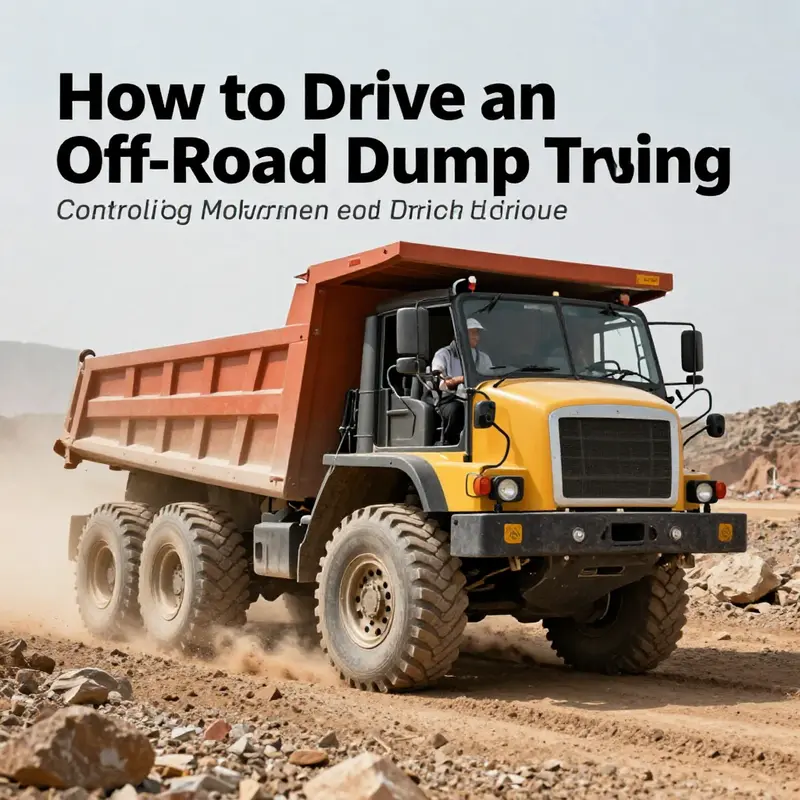
Driving an off-road dump truck is a study in patience, precision, and the quiet power that comes from understanding weight, traction, and terrain. These machines are built to haul heavy loads over irregular ground, yet their size demands respect for the forces at play when the ground shifts under them. The chapter that follows threads together the core competencies needed to move a behemoth with confidence: controlling movement through deliberate gear management, brake timing, and throttle application; and steering with restraint, anticipation, and a keen sense of balance. It is a pathway from the first adjustment of the seat to the careful descent from a steep grade, where one wrong move can unsettle both truck and load. The thread tying all of this together is not speed or bravado but a disciplined approach to physics in motion. You learn to read the ground as a living partner, not a backdrop for the truck’s might. Each terrain type—sand, mud, rock, and slope—asks for a slightly different rhythm, a different balance of grip and momentum, and a different set of decisions about weight distribution and line choice. To walk that line well is to become not merely a driver but a steward of the truck’s safety and efficiency on the job site. In practice, the journey begins long before engine ignition, with a careful sequence of checks that centers comfort, visibility, and readiness. The seat is adjusted so that the mirrors capture the far edges of the dump bed and the edges of the path ahead. The driver’s posture matters; a seat that locks you into a rigid, unresponsive position makes it harder to sense subtle shifts in balance as the truck treads over a rock or a rut. A simple, universal precaution underlines everything: buckle up, keep the handbrake released, and ensure the transmission is in neutral or park until the moment you intend to move. These are not mere formalities; they are the first line of defense against an unexpected surge or an unplanned roll. When the engine finally cranks, it should settle into a stable idle, a brief warm-up to allow all systems—hydraulics, transmission, braking, and cooling—to align. The job is not to hurry the vehicle into motion but to coax it into readiness, the clarity of the dashboard lights guiding the way. The moment you touch the throttle is the moment you start to negotiate weight transfer. A gentle, progressive application of power is essential on uneven or loose surfaces, where a sudden push can break traction and spin wheels. The same care applies to slowing and stopping. Sudden braking on gravel, mud, or wet clay can cause the tires to slide sideways or the load to shift forward, lifting the front wheels and threatening steering control. The key is to anticipate changes in the grade or surface texture and to adjust speed before the change becomes critical. In many fleets, the control schema mirrors what you might find in off-road simulations: accelerator for speed, brake for stopping, steering wheel for direction. The simulation world mirrors reality in important ways: it teaches you to map forward and backward movement to real-world terrain, to respect the truck’s tendency to understeer on loose ground, and to practice smooth, deliberate inputs rather than abrupt actions. Yet the bridge to the real world lies in the responsible transfer of those lessons into field practice, where the environment is not a game and every decision has real consequences for safety, the load, and the work schedule. As you move from the shop to the track, the timing of your gear engagement becomes a central thread in your control of the vehicle. For steep or slippery inclines, the transmission is often best kept in a low gear to maximize torque and keep wheel spin in check. In many off-road setups, 4L (four-low) and first gear offer the most predictable traction by delivering consistent, controlled power to each wheel. When you face rough, high-speed terrain, second gear can be a practical compromise, balancing momentum with stability and reducing the likelihood of wheel spin on wet or muddy slopes. The overarching aim is to avoid the sensation of fighting the ground with brute force. Instead, you want to synchronize the engine, transmission, and wheels so that the vehicle feels composed and deliberate, not frantic or reactive. Throttle management is a core skill. A gradual increase in throttle builds traction progressively, while a sudden jab tends to overwhelm grip, especially on sand or slick clay. Engine braking—downshifting to lower gears before descending—offers a reliable way to reduce brake temperatures and maintain control. It’s a discipline that rewards patience; you are training the brakes to stop a moving mass with a steady, predictable cadence rather than a flood of pedal pressure that could heat brakes and shorten their life. The geometry of the truck, particularly the dump bed, adds another layer of consideration. A heavy bed can shift the center of gravity and magnify the risk of tipping, especially when the load is not evenly distributed or when you take a corner too quickly on a slope. The rule that emerges is straightforward: keep the load centered in the bed and, on inclines, consider the weight transfer that occurs when the bed tilts or when you angle the truck through a bend. If the objective is to climb a slope, you want the weight distribution to favor stability. That can sometimes mean adjusting the load toward the downhill side to improve balance and reduce the likelihood of rollover. It’s a subtle art, requiring you to anticipate how a move in steering or throttle might shift the payload’s influence on the vehicle’s balance. Turning on rugged ground is a study in smoothness. The steering wheel is your primary instrument, and its use should be deliberate rather than abrupt. A steady, controlled input reduces the chances of the vehicle catching a rut or losing traction in a corner. For slopes and tight turns, the body position becomes equally important. A slightly upright posture allows your torso to move with the truck, giving you feedback through the seat and the steering wheel. In extreme conditions, some training readings acknowledge that a very controlled moment of loosened seatbelt tension can assist body movement, though this is not a recommendation for normal operations and should be weighed against safety policies. The intent is to describe an experiential reality: when balance is precarious, your body is part of the control system, and you need to feel the truck’s tilt and movement rather than rely solely on the mechanical systems. The hands on the wheel naturally gravitate to the 10 and 2 positions, a habit that promotes stable, quick response in emergency situations while keeping the arms loose enough to absorb bumps. When you encounter a side-slope, countersteering becomes a prudent tool. A gentle correction toward the uphill side helps to stabilize the vehicle and prevents rollover by balancing the lean. On soft ground such as sand, early, wider steering inputs can prevent the dump truck from digging into soft ruts and becoming stuck. The driver’s gaze must always travel ahead, not just to the front bumper. Looking where you want to go keeps you out of the habit of chasing the vehicle and helps you forecast subtle terrain changes—hidden rocks, sudden holes, or a patch of slick mud. Visual anticipation allows you to arrive prepared: you negotiate the next obstacle while your hands manage the current one. In addition to physical technique, there are practical do’s and don’ts that reinforce safe operation. If you drive a manual, you should avoid rapid clutch engagement in loose terrain, where abrupt bite can wheelspin you into a stall. In an automatic, keeping the left foot flat on the floor can help stabilize your posture and maintain consistent steering inputs, especially through uneven ground where reflex corrections are frequent. These micro-adjustments contribute to a larger pattern of safe, predictable operation, which is essential when you are transporting a load that can shift and dynamic forces that can surprise you on a slope. The terrain itself deserves respect. Sand and mud demand light, steady throttle and the willingness to back off and re-apply if wheels spin. If the tires begin to spin in place, the best course is to stop, back up slightly, and re-approach with a measured, even throttle. On rocky or uneven ground, the priority is careful line selection and slow progress, with the aim of avoiding direct impact on the undercarriage that could invite damage. Slopes require planning: approach angles of 30 to 35 degrees for descents, and favor driving up the slope rather than down whenever possible to maintain traction and minimize risk. When you do descend, keep weight toward the downhill side so the load remains stable and the vehicle does not pivot unexpectedly. That said, a lesson learned in practice is that real-world terrain often forces adaptation rather than a written rule. Each moment presents a chance to refine your line, adjust your speed, and re-center the load. This is why practice remains the quiet backbone of competence. Start with straightforward routes and progressively introduce more challenging terrain as your sense of the truck’s balance grows. The most valuable lessons come from observing how a truck responds to small changes in throttle, braking, and steering—and then choosing a plan that preserves momentum, prevents wheel spin, and protects the load. The simulators mentioned in the research literature play an important educational role, offering a risk-free environment to explore these relationships between throttle, gear, and ground. They can reinforce the discipline of slow inputs and teach you to anticipate how the truck will react to different terrain, surface moisture, and weight distribution. For readers who want to dig deeper into the mechanical side while applying these driving principles, there is a path to understanding the engine, drivetrain and maintenance that underpins reliable performance. A helpful note for those curious about the mechanical side is to explore diesel engine basics and maintenance for a deeper sense of how power and reliability are kept in balance on demanding work sites. This kind of knowledge makes the discipline feel tangible rather than abstract, tying together the physiology of the truck with the physics of its movement. In the end, the art of driving an off-road dump truck is not about showing off or chasing speed. It is about cultivating a quiet confidence born from understanding the truck as a system: a heavy, powerful machine whose behavior is predictable when treated with respect, attention, and deliberate technique. The driver becomes a conductor who coordinates an orchestra of components—the engine’s torque, the transmission’s gear ratios, the brakes’ heat management, and the bed’s shifting center of gravity—so that each move advances the work without compromising safety. Between each shift, every turn, and every descent, there is a moment of assessment: Is the line chosen the safest, smoothest, and most efficient? Is the load still centered as the bed tilts and the terrain changes? Is the braking response measured and anticipatory? These questions guide action in lieu of impulse. And while simulators offer valuable training, the synergy between training and field practice is what truly yields mastery. The road from classroom technique to on-site execution is paved with repeated, attentive practice and an honest appraisal of each drive. The chapter closes where it began: with the understanding that the off-road dump truck is a tool that demands respect, a weighty partner in the terrain, and a contributor to a productive workday only when guided by discipline, awareness, and a prepared mindset. For those who commit to that path, the rewards are not merely the successful dumping at the site but the confidence to move with balance, to read the ground with precision, and to deliver the load safely to its destination. This is the essence of driving an off-road dump truck—the quiet mastery of movement and steering on the rugged stage where weight, traction, and terrain converge. For a practical, simulated practice environment in a controlled setting that mirrors these dynamics, explore a high-fidelity off-road truck driving simulator here: https://apps.apple.com/app/elevated-dumper-truck-drive/id1598765432
Balancing the Beast: Mastering Stability and Control for Off-Road Dump Trucks on Rough Terrain
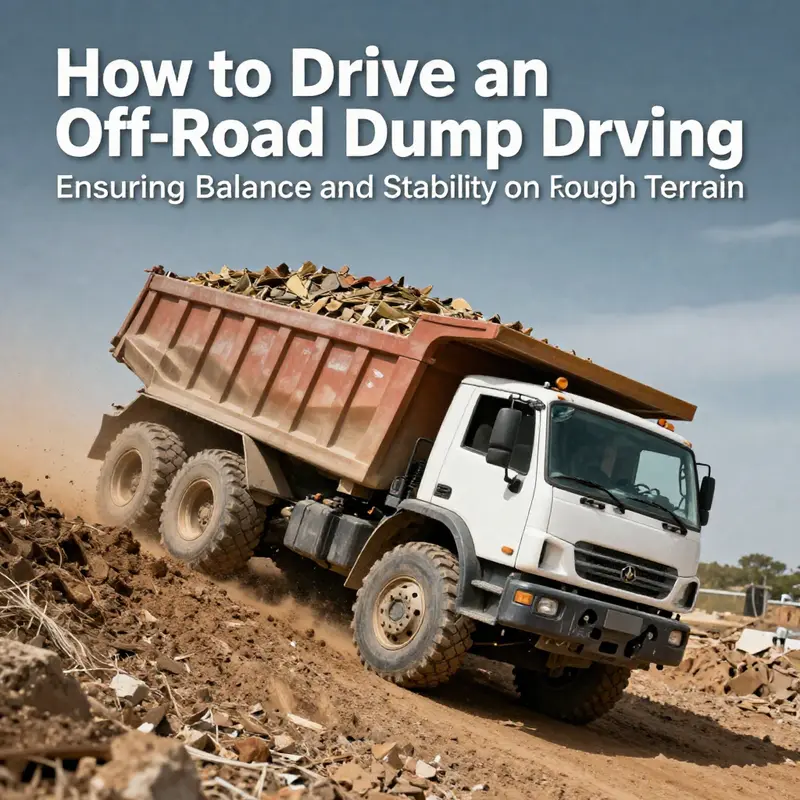
Driving an off-road dump truck is as much about feel as it is about technique. The vehicle’s size, weight, and the uneven ground beneath demand a deliberate, patient approach. The core goal is balance—keeping the load centered, maintaining traction, and foreseeing every obstacle before it becomes a surprise. Across hills, ruts, mud, and water crossings, the driver’s decisions determine whether a route becomes a controlled expedition or a risky tilt toward an unstable moment. The journey to mastery begins before you touch the pedals. Before the engine roars to life, you set the stage for a stable, controlled ride. Sit in a position that gives you both visibility and comfort. Adjust your seat so you can see the front tires and the far edges of the dump bed. A proper seat height improves your sense of the truck’s attitude—its pitch on a slope and its roll as you navigate a rock step. Buckle up, always. The seatbelt is your first line of defense, not a constraint to be negotiated on rough ground. Once seated, scan the dashboard for warning lights, fluid levels, and the status of the hydraulic system that lifts the bed. The handbrake should be engaged only when parked; once you’re ready to move, release it and select neutral or park according to the manufacturer’s guidance. The first moments set the tone for the rest of the drive. A smooth start reduces the risk of a sudden load shift that could unsettle the chassis. When you start the engine, let it idle briefly. This quiet interval lets the systems initialize—transmission, pumps, and the hydraulic lift—so they respond predictably when you need power.
Once you’re rolling, the control sequence becomes a dialogue with the terrain. The accelerator is your means to modulate speed. On rough ground, speed should be deliberate and restrained. A light touch keeps torque available to the wheels without overwhelming the surface. The brake, too, must be used with care. Sudden, hard braking on loose gravel or a muddy grade can send the tires into a skid. A progressive squeeze is safer, giving you a chance to feel the traction come back as you slow. Steering demands equal attention. The wheel should be held with steady hands, especially on steep embankments or narrow paths. Oversteering can pitch the truck, while understeering can trap you in a trench or washout. In many training environments, operators learn to anticipate turns by slowing early and applying a smooth, consistent steering input. The goal is a calm, predictable arc rather than a quick, reactive turn that unsettles the load. The braking and steering discipline you build here translates directly into stability on the roughest sections.
Weight management is where theory meets reality. The dump bed is only as stable as the distribution of its mass. Heavy cargo near the downhill side on a slope can help counterbalance the tendency to tip toward the uphill edge. Conversely, on an ascent, shifting the heavier part slightly toward the downhill side can lower the center of gravity and dampen sway. The exact balance depends on the truck’s geometry, the slope angle, and how the ground is supporting the tires. Avoid loose, unsecured items in the bed; a shift during a bump can destabilize the truck’s rhythm. On uneven terrain, it’s prudent to approach with a loaded-down center of gravity that remains within the safe envelope of the chassis. This is especially true when climbing hills or negotiating ruts that suddenly change the load’s orientation. When the slope is steep, engage lower gears—typically a low-range setting—so the engine can provide steady torque. Engine braking helps slow the truck without relying solely on the brakes, reducing wheel spin on soft surfaces. The goal is to keep wheel slip to a minimum while maintaining momentum that the tires can grip.
Position and posture play a subtler but essential role in stability. Some drivers adopt a slightly upright posture or even a light stance with the shoulders relaxed. This posture makes it easier to sense the truck’s movements as you roll over large obstacles or descend steep grades. The body acts as a natural sensor, feeding back through your hips and spine about the angle of the ground. A flexible, responsive torso helps you make minute adjustments in balance without overreacting. The discipline is to stay relaxed yet focused, letting your hands and feet respond to the truck’s attitude rather than forcing a corrective sequence from the start. It’s not about heroic maneuvers. It’s about maintaining harmony between the driver, the load, and the terrain.
Smooth inputs are the mirror of balance. Jerky throttle, abrupt steering, or sudden braking can topple stability far more reliably than a momentary misstep on foot pedals. The practice is to apply gradual throttle changes, especially when approaching a curve on uneven ground. Maintain a steady throttle through the turn, then ease off gradually as you exit. If you sense a loss of traction, ease up on the accelerator and steer in the direction of the skid. Counterintuitive as it sounds, steering into a skid helps regain control rather than fighting the tiger. The same principle applies to braking. On soft surfaces, you may need to reduce speed well before a change in surface condition—enter a turn with a light throttle, ease through the bend, and accelerate out only when the truck feels settled.
The terrain itself teaches the driver to read the ground. Rocks, ruts, mud, and shallow water crossings each present a different set of constraints. A rock acts as a sudden hit to the suspension; a rut can trap a wheel and pivot the truck; mud invites wheel spin, while water may conceal a hidden drop. The driver develops a habit of scanning ahead, mapping the safest route, and adjusting speed to the grade and the surface texture. When approaching a potential water obstacle, depth becomes a critical question. A pole can help gauge depth, or you can observe the tracks of previous vehicles to gauge where the ground offers better support. If water depth risks submerging intake or components, you should reroute rather than push through. Under no circumstance should you restart a diesel engine that has been submerged; water in the cylinders can cause catastrophic damage. In such a scenario, leave the vehicle where it sits and seek professional assistance.
Preparation for the long road ahead includes regular inspection and mindful maintenance. The tires are the single most important contact patch with the earth. Check for cuts, embedded rocks, or severe wear that could compromise traction. The suspension deserves equal attention; a damaged spring or worn shock can amplify body roll on a slope. It’s prudent to carry spare tires, repair tools, and a reliable communication device to call for help if you become stuck. An ounce of prevention saves many pounds of trouble when you’re navigating a stretch of rough ground. You should also plan for contingencies—knowing where the nearest help is and having a plan to signal for assistance broadcast across any radio channel you use.
In practice, novices should begin with straightforward routes that reinforce stable habits before attempting the more treacherous terrain. The aim is not to thrill but to build a predictable, repeatable rhythm. Each successful passage through a rock field or a clay bed adds to the driver’s confidence and the truck’s stability. The learning never truly stops. Real-world practice is complemented by simulations, which offer a controlled environment to rehearse balance, tone, and throttle response. In such experiences, the core lessons remain consistent: keep the load centered, control speed with intent, and read the ground ahead with a calm, observant eye. While simulations can’t capture every variable of a real site, they provide valuable debugging of your instinctive responses—what to do when the vehicle begins to lean, where your hands should move first when a wheel loses traction, and how to stabilize the machine without overcorrecting.
As you advance, you’ll begin to see how the dump bed itself interacts with the vehicle’s demeanor. Lifting the bed changes the center of gravity and can raise the risk of a tip if performed too quickly or at an improper angle. Position the truck so the dump site is accessible from the most stable approach path, and engage the hydraulic lift deliberately and slowly. When the bed rises, you should observe the surroundings carefully to ensure that no obstacles or people are in the lifting arc. Lower the bed only after the cargo has been released. The sequence—approach, lift slowly, confirm clearance, release—is a groove you want to lock into memory. The operational discipline carries forward into every site, from a quarry bench to a remote stockpile location.
In this broader frame, the chapter’s practical recommendations cohere into a simple philosophy: balance is earned through measured decisions, not bold improvisation. It’s a philosophy that respects the truck’s mass, the ground’s texture, and the forces acting on the vehicle as it traverses a landscape that offers little mercy. You become the translator between steel, gravity, and terrain. You learn to stage the drive, position the body, and pace the power until the machine behaves as an extension of your intent. In time, the roughest routes feel less like trials and more like controlled steps—each step a reassurance that the truck will stay put, grip, and move forward with predictable poise.
For readers seeking broader context on how infrastructure and evolving power options influence heavy vehicles, consider this resource on the topic of charging infrastructure and its implications for fleet design and maintenance: Electric fire truck charging infrastructure. This inclusion underscores a growing recognition that stability and readiness hinge not only on driver skill, but also on how support systems—power, maintenance, and logistics—are arranged around the vehicle. The takeaway is practical: plan for uptime, anticipate the terrain, and practice the craft of balance with the same seriousness you give to a safety checklist.
In closing, the path to mastery on rough terrain is a blend of disciplined technique and careful judgment. The off-road dump truck is a beast that demands respect and a measured hand. When you listen to the ground, adjust your speed before you suspect the surface is changing, and keep the load kept low and centered, stability becomes less a matter of luck and more a skill you cultivate. The blend of control, awareness, and patience transforms challenging terrain into navigable territory. Every successful crossing strengthens your sense of balance and reinforces the understanding that a steady hand and a thoughtful approach are your most reliable co-pilots on any demanding job site.
External resource for further practice and understanding of physics-based handling in driving simulations can be found here: https://apps.apple.com/us/app/crazy-offroad-truck-challenge/id1539872605
Ground to Dump: Safe Dumping and Terrain Mastery for Off-Road Trucks
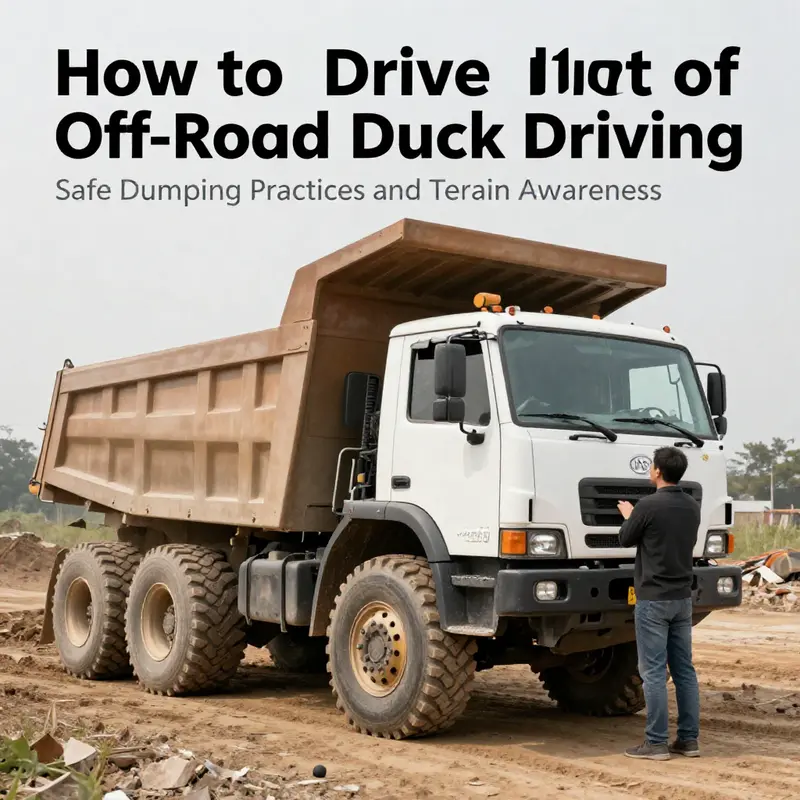
Off-road dump trucks demand discipline, awareness, and a methodical approach to both dumping and terrain. Safe dumping is not a single action but a sequence of checks and deliberate motions that protect people, loads, and machines. Terrain mastery means reading ground conditions, adjusting speed, and choosing paths that preserve stability. With a calm, patient routine, you set the stage for a controlled transfer of material and a predictable ride back to travel speed.
Before you lift, verify stable ground, clear the area, and confirm that the bed will rise without introducing danger to nearby workers. Center the load, avoid abrupt lift, and monitor the center of gravity as the bed moves. During motion, keep a light touch on throttle, smooth steering, and predictable braking. On slopes, use appropriate gear and engine braking, minimize sudden direction changes, and keep the bed down until you have a safe stance.
After dumping, return the bed slowly, recheck the area, and proceed with caution. The best operators treat the dump cycle as a controlled transfer of weight rather than a reckless release. Training, but especially experience in varied ground conditions, builds the intuition needed to predict grip, weight shifts, and traction. In short: safety, terrain awareness, and disciplined technique are the same coin, flipped as you move from ground to load to ground again.
Final thoughts
Mastering off-road dump truck driving demands respect for both the machine and the terrain. By adhering to the best practices of pre-drive safety, controlled movements, and a profound awareness of balance and surroundings, drivers can effectively navigate even the most challenging pathways. Embrace the rugged adventure of off-road driving, ensuring safety and skill go hand in hand as you conquer mountains of dirt, mud, and stone.