
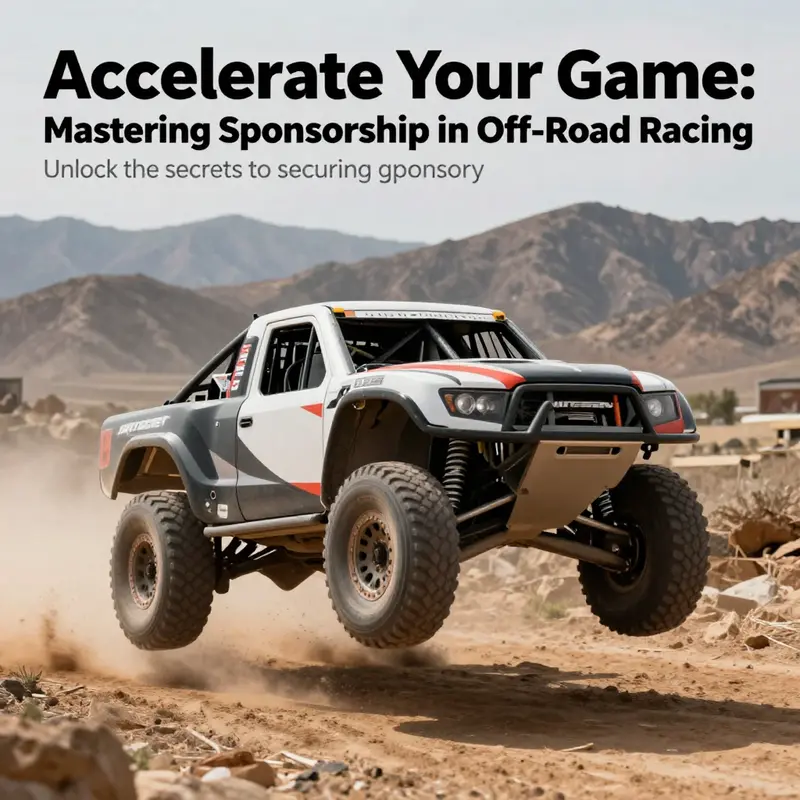
Sponsorship is the lifeblood of success in off-road truck racing games, transforming your virtual team from underdogs into champions of the dirt tracks. Understanding how to effectively attract sponsors can elevate your gameplay and enhance your team’s potential. Throughout this article, we’ll navigate the essential strategies to secure sponsors effectively from the initial career milestones to unlocking achievements, maximizing team reputation, utilizing game mechanics, and progressing through engaging storylines. Each chapter will provide actionable insights tailored to off-road enthusiasts, adventurers, and racing aficionados keen on advancing their gaming experience and sponsorship success.
Fuel, Fame, and Finances: Securing Sponsors by Completing Career Milestones in Truck Off-Road Games

In the realm of off-road truck racing games, sponsorship isn’t a lucky break handed at random. It is the outcome of a deliberate, game-long narrative where performance, consistency, and branding fold into a sponsor’s decision to back a team. The pathway to sponsorship is built from a sequence of career milestones, each milestone acting as a rung on a ladder that leads from obscurity to credibility, from anonymous livery to recognizable team identity, and from basic upgrades to advanced resources. The beauty of this design is that it mirrors the real-world logic of motorsport funding, where visibility is earned through repeated success and professional discipline. Within a single career, players learn quickly that sponsors are not trophies you chase after a single spectacular finish; they are partners who grow closer as you demonstrate reliability, showcase your brand, and consistently push the envelope on a mix of speed, technique, and endurance. The arc begins with characteristic career objectives—wins, high placements, and a demonstrated ability to complete events without costly mistakes—and it unfolds as you add layers of branding to your operation and broaden your track record across diverse venues and conditions.
In practical terms, the first set of sponsor opportunities typically unlocks as you advance through the early chapters of the campaign. These early sponsor campaigns are designed to test three core attributes: results, consistency, and adaptability. You might be asked to win a certain number of races, finish in the top three a specified number of times, or accumulate a streak of solid performances across different track types. Each objective is paired with a reward that makes the next tier of sponsorship accessible: a new liveried vehicle, a slightly larger budget for upgrades, or access to sponsor-specific events that offer prestige and additional practice opportunities. The mechanism is straightforward, yet powerful. You prove you can deliver, and the game rewards that proof with doors opening to more lucrative campaigns and more ambitious challenges.
A central element of this progression is performance spread across the season. Sponsors like to see a team that can win on multiple fronts: short sprint events that demand explosive pace, long endurance rallies that test stamina and reliability, and technical courses that reward precise handling and strategic tire and fuel management. The more you diversify your results, the more you demonstrate value to potential backers who want to be associated with a team that can deliver in varied conditions. This diversification also reduces risk for sponsors. If one type of event is weather-bound or track-specific, a broad performance record signals that the team is resilient and adaptable, two qualities sponsors instinctively translate into continued investment. The in-game reward system reinforces this logic by tying sponsorship opportunities to measurable outcomes, so a player who maps out a strategy around both speed and reliability will see more doors open as the season progresses.
Beyond the raw results, the credibility of a sponsorship bid is often tied to how you manage the team’s reputation and brand presence. In many games, upgrades, liveries, and special equipment become increasingly available as a sponsor’s confidence grows. A sponsor may grant you an exclusive skin for your vehicle, premium parts that improve performance on certain track surfaces, or access to a branded pit crew setup. These rewards do more than simply beautify the vehicle; they contribute to a professional image that resonates with sponsors who want to advertise through a polished, high-visibility operation. The combination of performance and presentation matters. A team that not only wins but also shows up with a cohesive, marketable look—consistent color schemes, clean logos, and a narrative about the team’s identity—appears more marketable to brands seeking to extend their reach through motorsport storytelling.
The storytelling aspect is rarely incidental. In many racing titles, a sponsor’s campaign is embedded in the narrative arc: you progress through a sequence of missions tied to a brand’s identity, and completing those missions unlocks exclusive opportunities—special events, unique vehicle unlocks, or a new tier of sponsorship that promises greater exposure. This structure teaches a player to think beyond the next race and toward a portfolio of sponsorship assets that can be leveraged across the entire career. It’s a reminder that sponsorship is as much about consistency as it is about peak moments. A few dramatic wins are valuable, but sponsors respond most when a team demonstrates sustainable momentum—an unbroken thread of solid finishes, flawless pit strategy, and a professional approach to maintenance and upgrades. In this sense, the sponsor pipeline becomes a driver of behavior: it nudges players toward careful planning, disciplined practice, and disciplined resource management.
The real-world analogy is instructive and comforting. Professional off-road teams attract funding not only through winning but through a stable, well-branded, media-savvy operation. They cultivate partnerships with brands, manage public perception, and build a story that a broader audience will engage with. In the game, you can mirror that model by prioritizing three intertwined strands: performance, branding, and exposure. Performance is the engine that powers sponsorship opportunities; branding is the visible promise you offer sponsors; exposure is the tangible reach created by your results, your race geography, and your in-game media presence. When you align these strands, you create a compelling case for a sponsor to invest in your team, to share in the thrill of future wins, and to contribute to a longer-term partnership.
A practical, actionable approach emerges when you treat sponsorship progression as a multi-phase plan rather than a single sprint. Phase one is about establishing reliability: you focus on finishing races, minimizing DNFs, and building a track record that demonstrates you can deliver consistent results under pressure. Phase two expands the scope: you begin to diversify your campaign portfolio by targeting events that showcase your brand and by completing missions that require not only speed but also precision and restraint. This is where you learn to manage your vehicle upgrades and maintenance with future sponsorship in mind. Upgrades can be tuned to maximize your results on specific surfaces or weather conditions while maintaining an overall balance that keeps you competitive across the board. The aim is to create a driver and a team profile that sponsors perceive as a safe bet for ongoing exposure and reliability.
Phase three is branding consolidation. You refine your team’s look so that every race, every tweet, and every post-race report reinforces a coherent image. The liveries you choose, the logos you display, and the messaging you present in-game should tell a story of professionalism, ambition, and teamwork. A sponsor-friendly operation also includes a view into the team’s day-to-day health: the in-game metrics show a stable budget, a well-maintained fleet, and a plan for ongoing upgrades. When those elements align, sponsorship offers feel less like a one-off reward and more like the expected outcome of a carefully managed program. It is at this stage that more seasoned sponsors may enter the fold, attracted by proven performance and a mature, market-ready brand identity.
To connect these in-game milestones to practical steps you can take, consider a structured approach that begins with a simple, documented plan. Map out the season with a calendar of events that align with sponsor campaigns. Track your finishes, points, and the occasions when you reach top-three finishes, as these are the kinds of benchmarks that trigger new opportunities. Maintain a log of your upgrades and maintenance milestones so you can demonstrate how you allocate resources to maximize performance without compromising reliability. This approach makes it easier to present a compelling case when a new sponsor comes into view, and it helps you decide which opportunities to pursue based on how well they align with your current trajectory. As you gain confidence, you begin to weave in the branding and exposure components, ensuring that your team’s identity grows in lockstep with your results.
The bridge between gameplay and real-world strategy is not a leap; it is a carefully taught continuity. Sponsors in games reward not only the glory of victory but also the discipline behind a well-run operation. They back teams that show up with a clear plan, a believable brand, and a track record that proves the ability to deliver, again and again. When you adopt this mindset, the doorways to higher-tier sponsorships begin to appear naturally as you accumulate achievements, build a broader performance record, and demonstrate marketable branding. The consequence is a virtuous loop: better results fuel more sponsorship opportunities, better branding enhances exposure, and enhanced exposure invites more ambitious campaigns that, in turn, raise your performance ceiling. In short, completing career objectives to secure sponsors in truck off-road games is not about chasing a single trophy; it is about cultivating a credible, marketable program that grows with your skill, your strategy, and your story.
For readers who want to explore the broader landscape of how sponsorships unfold in racing games, and to see how progression can connect to larger opportunities, consider resources that discuss sponsor campaigns and unlock conditions in well-known off-road racing titles. A helpful starting point is a sponsor-focused overview from an official game page, which outlines how completing events and challenges opens doors to new partners and vehicles. This external perspective reinforces the idea that sponsorship is a structured, game-wide system rather than a series of one-off rewards. In addition to game-specific guidance, real-world articles and case studies on racing sponsorships emphasize the same core themes: performance, branding, and media exposure, all coordinated through a deliberate strategy and a capable team.
For those who want a practical, real-world frame of reference while playing, a commonly cited resource discusses the value of investing in people as a cornerstone of fleet and team success. This idea—centered on building a capable, motivated behind-the-scenes team—parallels the game’s sponsor progression, where people, processes, and performance co-create opportunities. See the article linked here for a broader view of how people power organizational growth, which can inform your in-game sponsorship strategy: Invest in People: Key to Fleet Management Success.
As you continue to navigate the career ladder within your preferred off-road trucking game, keep this frame in mind: sponsors are more likely to back a team that demonstrates consistent excellence, a clear and presentable brand, and a narrative that resonates with fans and brands alike. Your road to sponsorship is your road to credibility, and credibility, in turn, makes sponsorship feel like a natural extension of your hard work and strategic planning. The process rewards patience, iteration, and a steady expansion of both capability and visibility. When you master the balance of performance and presentation, sponsorships don’t just follow; they become a sustainable, mutually beneficial partnership that carries you farther, faster, and with more resources to push the next big milestone.
External resource for further context on sponsor progression in racing games: https://store.steampowered.com/app/638900/DIRT-5/
Unlocking Sponsors Through Achievement Progress in Truck Off-Road Games

Across the arena of off-road truck simulations, sponsorship is not a static prize but a living consequence of how you drive, compete, and present yourself. In career modes that simulate the endurance of a season, sponsorships are earned through a sequence of achievements that map to a sponsor’s appetite for exposure, reliability, and story value. Early milestones are usually straightforward: win a handful of races, reach podiums, or post standout results on a variety of courses, all while maintaining control on unfamiliar surfaces. As you accumulate experience and refine timing, more ambitious sponsor campaigns appear. They come with defined milestones and stricter expectations, such as maintaining a high finish rate over a season, achieving a streak of clean runs, or earning a specified amount of sponsorship-driven revenue. The design rewards persistence, because sponsors want teams that can deliver both speed and consistency across the calendar, not just in a single breakthrough event. The progression system, then, is less about luck and more about building a narrative of reliability and improvement that sponsors can invest in over time.
Championship belts act as a visible signal to sponsors that a player or team can endure a full season and still perform. In the game’s economy, belt victories translate into sponsor cash that applies across events, smoothing the financial roller coaster that often accompanies a long campaign. This cash isn’t confined to a single race; it informs the broader strategy for the entire season. With that reserve, you can push upgrades that matter for survival and speed alike: tougher tires that bite in slick mud, smarter suspension to handle uneven rock sections, and engine tuning that preserves power without amplifying the risk of mechanical failure. The effect is twofold: the improvements on the vehicle translate into better results, and the branding around those results reinforces the sponsor’s belief in your team’s capability. It becomes a mutually reinforcing loop where success on the track creates more opportunities off it, and each new opportunity offers the resources to raise the bar again on the next event.
Upgrades sit at the heart of how sponsorship actually translates into performance. Sponsor cash, once earned, becomes a practical tool for shaping a season. A stronger engine increases top-end speed and improves acceleration out of tight corners. Enhanced tires and suspension raise grip across a spectrum of terrain, from loose gravel to slippery clay, reducing the chance of costly mistakes. Better brakes and chassis refinements tighten control in late-race scrambles where margins are razor-thin. Yet upgrades are not mere hardware; they are a narrative device that signals seriousness to sponsors and fans alike. A well-presented truck with a clean, legible livery communicates a disciplined approach and respect for the partner’s identity. Telemetry dashboards and branding placements reinforce the message that you treat the sponsor’s investment like a professional asset, not a vanity add-on. When you couple performance gains with a consistent brand story, sponsorship feels less like a one-off windfall and more like a sustained collaboration that grows as your season unfolds. The gameplay loop makes this blend of speed, durability, and presentation not only possible but essential to climbing to higher tiers of sponsor involvement.
The progression system itself rewards breadth as well as depth. A driver who only shines on one surface may be celebrated for a moment, but sponsors seek versatility and resilience. To attract meaningful sponsorships, you must demonstrate competence across a range of terrains and conditions, from hard-packed dirt to treacherous mud and uneven rocks. This requires a disciplined approach to practice, maintenance, and resource allocation. It means balancing the line between pushing for faster lap times and protecting the car from unnecessary wear. It means building a repertoire of safe, repeatable setups that let you string together clean runs even when the course changes around you. The more you can show that you can handle diverse environments, the more sponsor campaigns you unlock, and the more valuable the rewards become. In practical terms, this means expanding your performance footprint while maintaining a narrative that centers on reliability and professional execution. The result is a sponsorship ladder that resembles a carefully designed career path: each rung reached opens the door to new opportunities, greater funding, and more prestigious campaigns—and those campaigns, in turn, push you to broaden your mastery and cement your reputation.
Brand campaigns are where sponsorship becomes a storytelling device rather than a simple revenue stream. In the game, sponsors present structured arcs tied to their brand identities. You might work through endurance-oriented campaigns that reward stamina and steadfast speed even when fatigue and track conditions threaten your rhythm. Alternatively, you may engage in campaigns that emphasize precision and clean execution, rewarding runs with minimal contact and optimized lap consistency. Completing these narratives yields more than cash; you gain access to exclusive rewards, such as special events, unique vehicle variants, or limited-time trials that expand your gameplay options. The storytelling element matters because it gives players a reason to pursue longer, steadier campaigns rather than merely chasing the next race victory. It also builds a sense of continuity—fans and sponsors alike can follow a season-long arc that reflects growth, not just results. When the narrative and the performance mesh, sponsorship becomes a natural extension of the player’s identity and career trajectory.
A practical sponsorship strategy for players is to view campaigns as a portfolio of opportunities rather than a checklist. Start by surveying the available campaigns and aligning your objectives with your strengths. If your team flourishes on technical sections and maintenance efficiency, pursue campaigns that reward durability and consistent pace. If your style favors bold lines and decisive overtakes on tight tracks, aim for campaigns that test your risk management and reward high reward with careful execution. Your approach must be supported by data: monitor track times, lap stability, the rate of repairs, and the ability to rebound after setbacks. Let the sponsorship funds guide upgrades that lift your average speed on the most demanding sections, while still preserving reliability across the season. Because sponsors care about visibility, you should cultivate a professional on-track persona and a coherent branding story that fans can follow across events. This means more than a single slick livery; it means a predictable performance narrative that you can consistently convey through streams and social posts, showing that you are building a brand as you build a team.
To deepen the understanding of how upgrades influence performance, players can consult a practical guide on diesel mechanics that illuminates how powertrain decisions affect reliability and speed across a season. See the resource titled mastering-diesel-mechanics-your-step-by-step-path-to-success. It offers a concrete look at how the choice of engine, turbocharging, and fuel strategy can translate into real in-game advantages, reinforcing the link between mechanical choices and sponsorship outcomes. The chapter on upkeep and optimization shows how careful maintenance becomes a sponsor-facing asset—the more you prove you can keep the machine healthy under pressure, the more sponsors believe in your long-term viability.
In closing, sponsorship in truck off-road simulations is not about luck; it is about cultivating a persona and a performance record that brands want to be associated with. It is about building a season-long story that demonstrates capability, professionalism, and growth. If you align your objectives with the cadence of the career progression, manage your upgrades with an eye toward endurance and speed, and nurture a consistent, marketable identity, sponsorship will follow as a natural consequence of the journey rather than an isolated windfall. The endgame is not just more cash or better gear; it is the ability to sustain a competitive campaign year after year while expanding your audience and your influence in the sport’s virtual landscape. This is how you transform a string of victories into a sponsorship portfolio that mirrors the ambitions of real-world teams, grounded in track achievements, brand storytelling, and the discipline to perform at the highest level across every mile of off-road grit.
https://apps.apple.com/us/app/trucks-off-road/id1632879450
Raising the Wheel: Building a Sponsor-Ready Reputation in Truck Off-Road Games

A sponsor’s eye in a truck off-road game is not just about the color of your livery or the speed of your lap times. It is about the reputation your team cultivates over countless events, across streams, and through the way you handle the car, the media, and the audience. In the digital arenas where performance is measured in seconds and branding is measured in impressions, reputation acts like currency. It signals reliability, marketability, and influence—the three pillars sponsors want to see before they open their checkbooks. When you understand that, sponsorship stops feeling like a one-off payoff for a lucky season and starts to feel like a strategic, ongoing partnership that grows with your team’s visibility and your track record on track and off it.
Media exposure sits at the heart of this reputation. In real-world rally ecosystems, the strongest partnerships are built on robust media plans. The World Rally Championship demonstrates how official broadcasting and well-integrated media platforms can propel a team from regional notoriety to global recognition. The broadcasts create a dependable stage where sponsors’ logos are seen in high-velocity moments, on close-ups during crucial overtakes, and in the replay reels that rally fans devour long after the checkered flag. Contrast that with domestic circuits where broadcast reach may be uneven. The lesson is not that some leagues are better than others, but that the quality and reach of media partnerships magnify a team’s value to sponsors who crave consistent, scalable exposure.
In a truck off-road game, you translate that logic into your own digital media strategy. Seek opportunities to generate consistent streams of content that showcase your team’s identity and your driving philosophy. Keep highlight reels of your most aggressive passes and clean lap sequences, and share them with the audience through your own channels or via in-game mirrors of real-world platforms. Sponsors want to be visible during moments that feel authentic to off-road grit—mud-slinging launches, wheel-in-air bounces, and the precise moment a line is carved through a treacherous bend. The more high-quality footage you produce, the easier it becomes for sponsors to imagine their brand alongside your on-track performance. The key is alignment: the sponsor’s market positioning should echo your team’s narrative. If you project a rugged, high-performance image, you’ll naturally attract brands that want to speak to adventurous, action-oriented fans. If your branding communicates precision and reliability, you become attractive to sponsors seeking steady, long-term association.
Brand transformation is another essential pillar. A team on the rise in a video game can become a recognizable entity by developing a coherent brand story and a set of tangible branding assets. This is not about slapping a fancy logo on a truck; it’s about curating a full-brand ecosystem that fans can identify with and aspire to join. In practice, that means a distinctive color palette, a memorable logo, a clear mission statement, and a consistent visual language that persists across liveries, pit boards, and promotional materials. When a team appears on screen with a deliberate, cohesive look, sponsors perceive it as lower risk and higher return. They see a brand that has already invested in itself, which signals discipline, forward planning, and an understanding of audience engagement. A powerful branding approach also creates opportunities beyond the race track. In-game, that can translate into merchandise concepts, digital collectibles, or limited-edition liveries tied to milestones. Sponsors are drawn not only to what you win but to what fans will celebrate and share when they see your brand in motion.
Alongside media and branding, a skilled sales mechanism is indispensable. Teams frequently secure sponsorships through in-kind support—equipment, services, or expertise—that can be converted into real financial backing with a focused sales strategy. In a game context, this means designing a sponsorship program with clear value propositions and a system to track assets, deliverables, and returns. A professional approach might involve a dedicated sponsorship liaison or a small in-house commercial team that handles outreach, proposals, and reporting. The objective is to convert every asset—from on-car branding and pit-area visibility to event activation and digital content rights—into tangible value for sponsors. This requires a disciplined process: a sponsorship deck tailored to each potential partner, a calendar of activations aligned to career milestones, and a transparent method for measuring reach, engagement, and impact. When a team demonstrates not only performance but also capacity to manage and maximize sponsorship assets, it becomes easier to secure multi-year deals that fuel long-term growth.
The path to sponsorship in a truck off-road game also rides on the narrative of progression. Sponsorship campaigns in many racing titles are unlocked as you complete a sequence of objectives and milestones. This progression mirrors real-world sponsorship pipelines, where brands become more engaged as a team proves itself through performance, consistency, and marketability. In-game, you might encounter sponsor campaigns that unlock after achieving a series of race wins, achieving top-tier standings, or completing story-driven missions tied to a sponsor’s identity. Each milestone not only opens new opportunities but expands the scope of sponsorship assets. The moment you realize that sponsor campaigns are earned rather than handed to you, you begin prioritizing the behaviors that sponsors value: consistency, clean racing, and a coherent brand story that fans can rally behind. In this sense, the game models a sustainable funding approach: it rewards teams that cultivate a strong reputation, not those who rely on a single lucky season.
Real-world inspiration often laces these in-game strategies with a broader sense of purpose. Professional off-road programs frequently sustain themselves through media exposure, strategic brand partnerships, and self-branded product lines that extend a team’s reach beyond the race itself. The underlying principle is simple: exposure plus credible branding plus a monetizable asset base creates multiple paths for sponsorship revenue. In your game, that translates to a triad of practical actions. First, amplify exposure by seeking steady media partners for streaming and highlight packages, even within the game’s ecosystem. Second, invest in a brand that fans can recognize and trust, and then extend that brand into merchandise or digital products that fans can connect with. Third, build a disciplined sales capability that can negotiate and activate sponsorships, converting non-monetary support into real funding while maximizing the sponsor’s return on investment. This integrated approach makes sponsorship feel like a strategic dimension of your team’s growth rather than a one-off achievement.
To anchor these ideas in concrete practice, consider how a well-managed sponsorship program unfolds in-game. A team that begins with a strong, consistent media presence will attract interest from sponsors who value reach. That interest becomes more compelling as the team demonstrates brand cohesion, a clear sponsorship proposition, and a track record of delivering on its commitments. A sponsor is more likely to sign a multi-year partnership when they can see a clear activation plan, with in-game and real-world benefits that translate into measurable outcomes. Your sales process matters here: a well-prepared sponsor deck, a defined set of sponsorship assets, and a demonstrable history of engagement. The goal is not merely to secure cash but to establish a symbiotic relationship in which the sponsor’s brand is presented in authentic, value-adding contexts. In turn, that partnership can sustain your team through lean seasons, enabling you to invest in better cars, more rigorous training simulations, and more ambitious branding campaigns.
An important but often overlooked aspect is the moral and ethical framing of sponsorship within the game’s world. Teams can and should pursue partnerships that align with their values and the fans’ expectations. A sponsor who supports social initiatives or environmental stewardship can enhance a team’s appeal, particularly if the game environment allows fans to participate in related activations or community events. In the real world, such alignment often compounds reach and engagement by broadening a sponsor’s appeal beyond the core racing audience. In-game, this might manifest as branded charity events, community challenges, or partnerships that encourage players to contribute to social causes. A well-aligned sponsor carries more trust, and when fans trust the team, they become advocates; that advocacy translates into more fans, more engagement, and more sponsor interest.
All of these threads—media exposure, brand development, and a robust sales apparatus—converge to form a practical, repeatable blueprint for sponsorship readiness in truck off-road games. The blueprint isn’t about chasing the biggest deal in a single season; it’s about building a durable, brand-centric organization that sponsors want to be associated with for years. It involves storytelling, professional execution, and a willingness to invest in the team’s public-facing identity. It also requires a healthy respect for the game’s narrative arc: sponsorship grows as your career grows, and a sponsor’s confidence grows as your brand becomes a reliable, recognizable force on the digital stage. In this sense, sponsorship in a truck off-road game is less a one-time payoff and more a long game of reputation-building, media strategy, and strategic partnerships that endure across seasons.
As teams experiment with these ideas within the game world, they also reflect a broader industry truth: sponsorship success blends performance with personality. Fans rally behind teams that win races and tell compelling stories; sponsors back teams that demonstrate traction, consistency, and a clear path to scale. The stronger your reputation, the easier it becomes to attract partners who share your ambitions and your values. And the more you align with a sponsor’s brand narrative, the more credible—and profitable—the partnership becomes. This is not merely about logos on a digital car. It is about building a living, breathing brand ecosystem that can thrive alongside the game’s evolving career ladder. For teams looking to connect more deeply with their audience, the game offers not just a proving ground for speed but a studio for reputation, storytelling, and sustainable sponsorship strategy.
To illustrate a broader point about how sponsorship ecosystems evolve in the industry, consider the ways teams leverage social responsibility and community engagement as activation channels. Some teams and brands pursue partnerships around social initiatives that communities value. This is another lever for sponsorship: fans respond to teams that contribute beyond the race, and sponsors see this as a multiplier for their own image. In this way, sponsorship becomes part of a team’s identity map, helping it stand out in a crowded field and creating a virtuous circle of exposure, credibility, and funding. Teams that master this approach tend to attract longer-term commitments, enabling them to invest in better simulations, more structured sponsorship outreach, and more sophisticated activation plans.
For readers seeking a real-world frame of reference, broader motorsport sponsorship practices offer guidance about the kinds of partnerships and media strategies that tend to yield results. You can explore official industry resources and case studies to deepen your understanding of how sponsorships evolve in professional contexts. As you implement these ideas in-game, you’ll see how the same principles translate into digital practice: consistent exposure, a compelling brand story, and a proactive, metrics-driven sales approach.
Internal link note: collaborative initiatives and broader industry examples can be found in real-world case studies that highlight how teams leverage brand partnerships for social impact, including programs that aim to align racing with community development. For an example of such an initiative in the trucking sphere, see the concept behind the Trucks for Change program: Trucks for Change: Supporting Habitat for Humanity.
External resource: for broader context on best practices in motorsport sponsorship and team branding, the official World Rally Championship site offers detailed insights and frameworks that can inspire your in-game strategy: https://www.wrc.com
Sponsorship by Design: Harnessing Game Mechanics to Attract Brands in Truck Off-Road Racing Games

Sponsorship in truck off‑road video environments isn’t merely about slapping a logo on a virtual livery and calling it a day. It’s about weaving brand presence into the very fabric of the gameplay so that sponsorship becomes a natural extension of skill, strategy, and community engagement. When done well, sponsors gain meaningful visibility, participants experience enhanced immersion, and the entire ecosystem becomes a living promotional engine. The core idea is to treat game mechanics as the sponsor’s collaborative toolset rather than a one‑sided billboard. By designing sponsorship opportunities that align with how players race, evolve, and interact, organizers can deliver campaigns that feel organic, measurable, and worth the investment for brands that care about return on engagement as much as they care about reach.
A practical way to start is by building tiered sponsorship packages that map directly to in‑game actions and milestones. Think of a Finish Line Sponsor whose branding appears prominently during the final stretch when anticipation peaks, or a Speed Boost Partner whose in‑game challenges unlock only after players complete stages quickly or with precise, collision‑free laps. This structural approach mirrors real‑world sponsorships, where brands attach themselves to distinct moments in a race or a season. It’s not simply about being visible; it’s about being synonymous with performance. By tying sponsor exposure to concrete achievements—like time trials, endurance mileage, or a streak of clean runs—the partnership feels earned rather than imposed. The sponsor becomes part of the race narrative, announced in progress bars, on-screen banners during clutch moments, and even in celebratory post‑race overlays that highlight the sponsor’s thematic cues without interrupting the flow of play. The effect is subtle yet powerful: players feel the sponsor’s presence as a natural facilitator of their own progress, and brands receive a conduit to reach an active, performance‑driven audience.
Within this framework, the environment itself becomes a canvas for branding that respects the player experience. Instead of intrusive pop‑ups, think strategic placements and performance‑aligned opportunities. In‑game banners along the track, branded pit boards during key laps, and vehicle liveries that evolve with sponsorship milestones help teams showcase partners without derailing the race. For a sponsor concerned with performance technology, the campaign can emphasize data‑driven progress; for a lifestyle brand, the emphasis can be on team identity and fan engagement. The tactical beauty of this approach is that it scales with the game’s progression system. As players unlock more challenging circuits and tougher trials, sponsors can escalate their involvement—introducing limited‑edition in‑game items, exclusive vehicle cosmetics, or special sponsors’ challenges that reward both in‑game currency and real‑world collateral like digital memorabilia. Doing this not only deepens the partner’s association with the sport but also creates natural hook points for social media content, streams, and community events that sustain long‑term interest.
To maximize engagement beyond the single screen, gamified social features become a powerful amplifier for sponsor value. Live polls and fan voting can empower the community to influence team names, vehicle designs, or color schemes that bear sponsor branding. When communities feel ownership over a sponsor‑backed aesthetic, the exposure becomes participatory and shareable. Co‑branded campaigns emerge when players are invited to redeem codes for exclusive in‑game items or limited runs of branded cosmetics that are tied to real‑world rewards. These mechanics generate content that is ripe for clips, streams, and social conversations, producing a ripple effect where fans champion the sponsor, then invite their friends to participate. The loop is self‑reinforcing: more fan participation affords more sponsor visibility, which in turn fuels more content creation and viewer interaction.
The data story is equally critical. Sponsors increasingly demand clear value propositions that bridge in‑game activity with tangible outcomes. The data you collect from sponsor campaigns—player demographics, session lengths, peak engagement windows, and item redemption rates—lets brands quantify awareness, intent, and action. A well‑structured dashboard can show how many unique players interacted with a sponsor’s challenge, how often they achieved the goal, and whether those interactions translate into social shares or in‑game item redemptions. By presenting metrics such as follower growth during campaign periods, engagement rates across streams and clips, and direct consumer actions like digital redemption codes, you deliver a credible, business‑facing narrative. The beauty of a data‑driven approach is that it aligns with how modern sponsors evaluate ROI: not just impressions, but a measurable lift in audience connection and brand recall.
Industry trends echo these principles in increasingly visible ways. The most successful events in related extreme sports spaces have moved beyond static sponsorships to dynamic, interactive experiences. Real‑time statistics, streaming‑friendly formats, and branded mini‑games during broadcast segments have produced measurable lifts in brand recall and partner value. The emphasis on digital and interactive elements means sponsors can observe how audiences respond in real time and adjust campaigns to maximize resonance. While these insights come from broader sports sponsorship literature, they translate well to the truck off‑road gaming world where the audience is highly engaged and highly vocal. The objective isn’t to convert every play session into a sponsored infomercial; it’s to create moments where brand messages blend with skill, strategy, and competition so that sponsorship feels like a natural extension of the sport.
A crucial design principle is transparency and alignment. Sponsors want to know what the campaign promises and what counts as success. A clear, co‑branded narrative helps players understand why a sponsor matters—whether it’s supporting safer, higher‑skill play, enabling community events, or elevating the prestige of certain race tiers. When a sponsor’s identity aligns with a team’s narrative—say, a brand known for reliability backing a team delivering consistent, high‑precision laps—the partnership feels authentic to players. This alignment also guides creative decisions, from the color palettes and branding placements to the kinds of challenges that resonate with the sponsor’s audience. It’s essential to avoid clutter; instead, aim for a few high‑impact exposure points that can be repeatedly seen across broadcasts, streams, and social posts without breaking immersion.
The operational side of sponsorship in a gaming ecosystem deserves careful attention. Organizers should think beyond the race day and toward a sponsorship lifecycle that includes onboarding, activation, measurement, and renewal. Onboarding should simplify how teams apply for campaigns, define what each tier entails, and establish the expectations for both sponsor and player. Activation involves integrating sponsor elements into race modes, timing boards, and social features in ways that feel organic, not forced. Measurement requires reliable data trails—logs of which challenges were completed, how quickly, and under what conditions. Renewal hinges on demonstrable outcomes, the kind of data story that shows sustained engagement or a meaningful spike in community activity during the campaign period. By framing sponsorship as a mission‑driven partnership, organizers cultivate long‑term relationships that yield recurring sponsorship opportunities and more ambitious campaigns over time.
For teams and organizers who want to bridge the in‑game world with real‑world operations, consider how sponsorship partnerships can compliment logistical needs. The practical point is straightforward: sponsors benefit when teams are well organized, predictable, and communicative. That is where tools and processes—such as dispatch software for fleet management—play a quiet yet essential role. They enable consistent scheduling, performance tracking, and reliability that brands value in a sponsorship ecosystem. dispatch software for fleet management offers a practical lens for how teams can package their operational rigor as part of the sponsorship value proposition. When teams demonstrate disciplined logistics alongside track performance, sponsors receive a holistic narrative of professionalism and potential growth that extends beyond a single race or season.
In closing, the design of sponsorship within truck off‑road games should feel like a collaborative game itself—one that rewards skill, timing, strategy, and community participation. By aligning sponsor exposure with meaningful in‑game milestones, embedding nonintrusive branding into the racing experience, expanding reach through gamified social features, and grounding everything in data‑driven ROI, organizers can create a thriving sponsorship ecosystem. It is a model that mirrors how premium brands engage with extreme sports in the real world while adapting to the digital, interactive realities of modern gaming audiences. When done with care, sponsorship becomes not just funding for events but a catalyst for richer gameplay, stronger communities, and measurable, persuasive brand storytelling that resonates with players long after the final lap is finished. For readers seeking further context on how game mechanics shape sponsorship strategies, a broader industry perspective can be found in recent analyses of the field.
External resource: How Game Mechanics Are Reshaping Sponsorship in Extreme Sports.
Branding on the Trail: Earning Sponsors Through Story Progression in Truck Off-Road Games

In the world of truck off-road simulations, sponsorship is more than a cosmetic flourish. It acts as a real-world parallel to how teams attract funding: through steady demonstrations of skill, reliability, and marketability. The path to sponsors in career modes is built on a disciplined arc of story progression, where each chapter of the campaign tests different facets of your team—driving finesse, strategic decision-making, and the consistency that sponsors crave. As you advance, sponsors appear as part of a tiered ecosystem, not as one-time bonuses. They are gatekeepers who want to see you prove you can carry their brand through the grit of rough terrains, the heat of a tight race, and the scrutiny of a public profile that grows with each victory and each setback overcome.
The foundational logic is straightforward: as your in-game reputation rises, more sponsor campaigns unlock. These campaigns aren’t just about flashy rewards; they are a narrative ladder. Early in the story, sponsors offer modest objectives—finish in the top quartile a few times, complete a handful of races without significant incidents, or achieve steady lap times on standard tracks. Completing these objectives does two things at once. First, it gives you steady financial support that translates into practical upgrades or maintenance bonuses. Second, it signals to the game’s social economy that your squad is reliable and marketable enough to warrant a longer-term relationship. In practice, you’ll see sponsor sections populate the menu as you progress, each banner representing a distinct campaign with its own milestones and rewards.
A key mechanic behind sponsorship is not merely raw speed but a combination of performance and branding consistency. When you win, the sponsor’s visibility metrics rise. When you post clean laps, minimize crashes, and show resilience on the most punishing tracks, you accumulate credibility that translates into more lucrative deals down the line. This dynamic mirrors the real-world principle that sponsors invest in teams that can deliver on and off the track: on-track results, plus off-track discipline—media presence, branding alignment, and a predictable competitive narrative. In the game, that credibility shows up as sharper objective thresholds and the ability to unlock additional branding opportunities, such as new livery options that visibly feature sponsor logos and taglines. The visual footprint matters; brands want to be associated with a team that looks the part and behaves consistently under pressure.
Story progression in these games often weaves sponsor campaigns into the fabric of the campaign’s larger arc. You don’t simply chase a string of solo races; you navigate missions that are framed by a sponsor’s identity and long-term goals. Some challenges emphasize endurance—logging mileage on grueling routes, racking up fast lap times on technically demanding circuits, or completing a series of events without collisions. Others stress discipline—managing tire wear, selecting the right equipment for variety of terrains, and executing precise pit-stop strategies within tight time windows. Completing these sponsor-driven missions does more than unlock a vehicle or a cosmetic upgrade. It builds a track record that makes you a more attractive partner when the sponsor looks at media exposure, fan engagement, and the potential for cross-promotional content.
The progression system rewards consistent excellence. It’s not enough to win a single race; sponsors reward a habit of performance. That means showing mastery over difficult terrains, adjusting to evolving weather conditions, and sustaining a competitive edge across multiple race formats. The game’s tuning tools—drivetrain settings, suspension stiffness, and tire selection—become part of the sponsorship dialogue. A team that can tune its vehicle to extract maximum traction on muddy grades or sand dunes demonstrates practical value to a sponsor who might want a reliable showcase vehicle for campaigns, media shoots, or demo days. The in-game narrative rewards careful experimentation, offering a learning curve that mirrors the real world: a sponsor will back you more readily if you show you understand how to balance speed with control, always keeping the machine reliable and the operation within budget.
In addition to performance, branding and story alignment play a critical role. Sponsors want alignment between their brand identity and the team’s story arc. A campaign that emphasizes endurance might reward you with challenges that test your ability to maintain pace over long hours and across multiple stages. A branding-focused arc could award you a return of resources for creating cohesive and professional liveries, stage-ready logos, and promotional videos. The game nudges you toward thinking in terms of a complete brand package—narrative coherence across the vehicle, sponsors’ digital banners, and the team’s media footprint. The result is a more immersive loop: improve on the track, polish your presentation, capture clean, sponsor-friendly footage, and then watch as the in-game world responds with higher-tier sponsorship opportunities and unique content unlocks.
A practical approach to leveraging story progression for sponsorship is to anticipate the sponsor’s lifecycle. Early on, identify objectives that establish credibility: consistent top finishes, careful driving with minimal incidents, and a track record across different terrains. As you unlock more challenging tracks and longer campaigns, shift toward objectives that highlight endurance and reliability. Position your team as a dependable partner who can deliver under pressure. This doesn’t require sacrificing pace; the aim is to win with a sustainable, repeatable approach. Your in-game upgrades should reflect this philosophy: durable tires for mud, balanced suspension for uneven desert roads, and power curves that favor steady acceleration rather than abrupt bursts that risk control. When sponsors see you adapting your setup to fit the mission profile, they gain confidence that you’ll reflect their values in real-world operations and promotional activities.
The narrative also invites players to think about community and media exposure as a sponsorship catalyst. In many simulation ecosystems, teams grow their audience by sharing behind-the-scenes clips, commentary on race strategy, and stories of problem-solving under pressure. When your story mode reveals a sequence where your team navigates both the podium and the press circle with poise, sponsors recognize the marketability of such a package. They see a team capable of delivering not only results but also engaging, consumable content that can be repurposed into ads, social media posts, and sponsorship reels. This is where the game’s branding and sponsorship mechanics intertwine with storytelling to create a realistic coaching ground for what real teams pursue beyond the track. A strong, consistent narrative makes the partnership more than a line item on a balance sheet; it becomes a collaborative platform for content, fan engagement, and credibility.
As you build toward longer-term sponsorship commitments, it’s useful to treat story progression as a portfolio. Each completed sponsor campaign adds a new page to your team’s story, a new line in your promotional bio, and a new credential that you can point to when negotiating future deals. The objective is a denser, more attractive portfolio that demonstrates progress, resilience, and a clear value proposition for brands. A well-structured portfolio helps when you face the next wave of campaigns, especially those that demand a broader media reach or a more pronounced alignment with a sponsor’s mission. The shared through-line—the ability to perform, adapt, and present—becomes the backbone of your sponsorship strategy in the game. This is how the narrative and the mechanics reinforce one another, turning a sequence of objectives into a credible, marketable identity for your team.
To connect these ideas with a tangible in-game tie-in, consider how branding and sponsorship mirror real-world campaigns: sponsors seek visibility, credibility, and alignment with a team’s story. The more your story mode demonstrates your ability to navigate challenges while maintaining brand integrity, the more sponsorships will surface with meaningful benefits—financial support, vehicle upgrades, and exclusive content. The visuals of your livery, the professionalism of your media segments, and the consistency of your on-track performance converge to build a convincing case for future collaborations. The beauty of this approach lies in its seamless integration: you don’t chase sponsorship as a separate goal but cultivate it as a natural outcome of mastering the story arc, the track, and the team’s narrative voice.
For readers exploring broader parallels, the real-world takeaway remains straightforward. Sponsorship thrives where skill meets storytelling, where a team presents a compelling, believable narrative that brands want to be part of. This fusion of performance and presentation is what keeps sponsorship discussions dynamic and ongoing across seasons in the game world. If you’re curious about an authentic, real-world glimpse into how such dynamics unfold, a related exploration of community-linked sponsorship strategies offers depth and context. See the concept in action here: Trucks for Change: Supporting Habitat for Humanity.
External resource: Cargo Offroad Truck Simulator on the App Store provides a practical, real-world mirror of how progression, branding, and sponsor alignment can play out in mobile ecosystems. It offers a compact example of how a campaign-driven career mode can sustain engagement and revenue through evolving sponsorship opportunities. For more reading on a comparable mobile experience, visit https://apps.apple.com/us/app/cargo-offroad-truck-simulator/id1467358052.
Final thoughts
Sponsorship in off-road truck racing games is not just a goal but a pivotal element for enhancing your gaming experience and unlocking new potentials. Whether you’re crossing the finish line first, or beating previous achievements, the road to securing sponsors is paved with strategy, skill, and dedication. By mastering the career objectives, unlocking achievements, enhancing your team’s reputation, fully utilizing game mechanics, and progressing through story mode, you can elevate your team and performance in the competitive landscape. Remember, each step taken in pursuit of sponsorship will not only enrich your gameplay but also build a community of support and camaraderie among fellow racing enthusiasts.