
For off-road enthusiasts, the thrill of conquering rugged terrain is irresistible. The journey of creating a custom off-road truck is both challenging and rewarding, providing you with a machine that embodies your spirit of adventure. This guide is tailored for adventurers, racing fans, and landowners, aiming to equip you with the foundational knowledge needed to embark on this exciting project. From defining your goals and designing your truck to selecting the right chassis and suspension, each chapter will provide insight into the integral components of building a high-performing off-road vehicle. Get ready to dive into the essential elements that elevate your off-road experience!
Charting the Terrain: How Clear Goals Shape an Off‑Road Truck from Frame to Fuel
Defining goals at the very start is more than a planning step; it is the compass that steers every decision, from the heft of the frame to the whispers of power that turn terrain into progress. The moment you set out to build an off‑road truck, you decide what terrain you will conquer, what constraints you will tolerate, and what performance you will demand from the machine. Will this vehicle survive long days in rocky canyons, or sprint across desert washboards for endurance over remote routes? Will it haul tools and spare parts up a cliffside embankment, or quietly ferry a crew through thick mud to a forest jobsite? These questions define the blueprint, even before a single tube is welded. In practical terms, they translate into measurable targets: maximum payload, ground clearance, approach and departure angles, suspension travel, and eventually endurance range or charging capacity. The goals you articulate shape the entire build, because they set the tone for the chassis geometry, the choice of powertrain, the type of drivetrain, the suspension architecture, and the selection of tires and braking systems. Without clear goals, you risk a vehicle that excels in one corner of the trail while faltering on another, or a heavy, overbuilt machine that sips fuel like a luxury sedan while offering limited utility on rugged work sites. The objective is not to chase the flashiest spec but to harmonize capability with reliability, maintainability, and real‑world mission profiles. This realism matters because off‑road work rarely affords time to recalibrate mid‑trip. In remote or disaster‑response settings, a truck must perform predictably under fatigue, dust, rain, and the intermittent abuse of uneven ground. It must tolerate heat and vibration, and it should be serviceable with on‑site improvisation when shop access is limited. The independence that off‑road trucks promise—operating far from hydrants, power grids, or paved roads—adds another layer of complexity. The research that informs this stage highlights how such independence drives engineering choices that may seem counterintuitive in a street‑car world. You may, for instance, decide that a lean, high‑torque engine is essential for mountains and mud, or you may embrace an electric drivetrain for its instant torque, compact footprint, and quiet operation in sensitive environments. Either path demands careful alignment with the mission profile and logistics plan. Many builders find that the most consequential early decision concerns endurance and payload balance. If your goals tilt toward long-range exploration, you must anticipate fuel or battery needs, charging methods, and the logistics of replenishment on the road less traveled. If you plan to support field operations such as mining or forestry, you’ll weigh payload capacity and rugged reliability above top speed, and you’ll expect the vehicle to winch, shelter, or store tools as part of its daily routine. The variation in goals also reframes your budget. A realistic figure for a custom build tends to sit in a broad range—often $20,000–$50,000 or more—depending on how far you push into specialized components, materials, and fabrication. That budget, in turn, dictates the sophistication of the chassis, the choice between donor frames and bespoke constructions, and the extent of engineering validation you can afford. The frame is where the conversation begins. If your goal prioritizes torsional rigidity and lightness, a tubular steel or aluminum frame becomes the preferred path, enabling aggressive suspension geometry without bending under load. If you require a longer wheelbase for stability on soft ground or for carrying heavy gear, you may lean toward a design that positions the center of gravity favorably while preserving approach angles. Either approach hinges on the first principle: the chassis must withstand extreme forces while maintaining predictable handling. The powertrain choice follows, and here the stakes of goals rise again. Internal combustion engines with high torque at low RPM offer robust hill climbing and towing power, which suits rock‑crawling or heavy load scenarios. Electric drivetrains, by contrast, deliver instant torque and quiet operation, which can be invaluable in tight trails or exploratory missions where stealth and precision matter. The transmission and transfer case must be matched to the system, ensuring reliable four‑wheel drive with the right balance of durability and weight. The drivetrain, in turn, informs the suspension strategy. If your goals demand long travel and exceptional articulation to climb over large rocks and through ruts, you will design around a suspension system capable of absorbing impacts without losing traction. Independent front suspension or solid axles with modern coilover setups each have their advocates, and your choice will be guided by the terrain you expect and the maintenance you can reasonably sustain in the field. The tires and wheels you select mirror these decisions. Aggressive tread patterns and high‑clearance tires are essential for grip in mud, sand, or rocky surfaces, and beadlock wheels can prevent bead separation under low‑pressure operation on rough terrain. The braking system must be scaled to the vehicle’s weight, speed range, and environmental conditions. High‑end, vented disc brakes at all corners, with attention to heat management and line quality, become non‑negotiables when traversing long descents or technical sections that demand repeatable stopping power. The body and interior are then clothed to support the mission. You will want durable, water‑resistant materials, reinforced seats, and a cockpit layout that keeps essential controls within quick reach. A roll cage and fire suppression system are standard safety contemplations for anyone pushing into demanding terrain. But the chapter is not simply a list of features; it is a meditation on how these features cohere into a system. Each choice—chassis geometry, powertrain, suspension, tires, braking, and safety—must be evaluated against the same yardstick: will it help the truck perform reliably when it is most needed? Will it reduce the risk of failure in the middle of nowhere? Will it ease the maintenance load after a tough trip? This is why the goals phase deserves as much attention as any later fabrication step. When you articulate endurance, you define battery sizing or fuel logistics; when you define payload, you inform the pick of additional reinforcement and the placement of tools and recovery gear. If you decide to pursue electrification fully, you should consult resources on charging infrastructure tailored to heavy, off‑road use to anticipate the realities of field recharge and downtime. For a focused discussion on charging infrastructure in this context, you can explore electric‑fire‑truck charging infrastructure. electric-fire-truck-charging-infrastructure. This link is a practical prompt to consider how power strategy evolves as goals evolve, and how you plan for the inevitable overlap between mission needs and energy availability. In the end, the aim is to marry ambition with feasibility, transforming a blank sheet into a vehicle that can be trusted in the most demanding environments. As you sketch the initial goals, you also map the testing and validation plan, recognizing that the chassis and drive system must survive countless cycles of stress testing, shake‑downs, and on‑trail refinement. That iterative loop is where theory gives way to reliability. You test alignment, you confirm steering feedback, you verify brake feel under varied loads, and you measure suspension travel with real payloads mounted. It is in these moments that the project earns the right to call itself a true off‑road truck rather than a collection of clever parts. The process is as much about discipline as it is about imagination. You resist the temptation of chasing a single high spec and instead pursue a harmonious package designed around concrete, mission‑driven goals. This approach keeps the build focused, affordable, and, most important, usable—so that when the trail opens up, the truck is already prepared to respond with confidence rather than improvisation. External resource: https://www.firetrucknews.com/8×8-off-road-truck-types-standards-manufacturing/
From Blueprint to Beast: Designing and Engineering Your Off-Road Truck
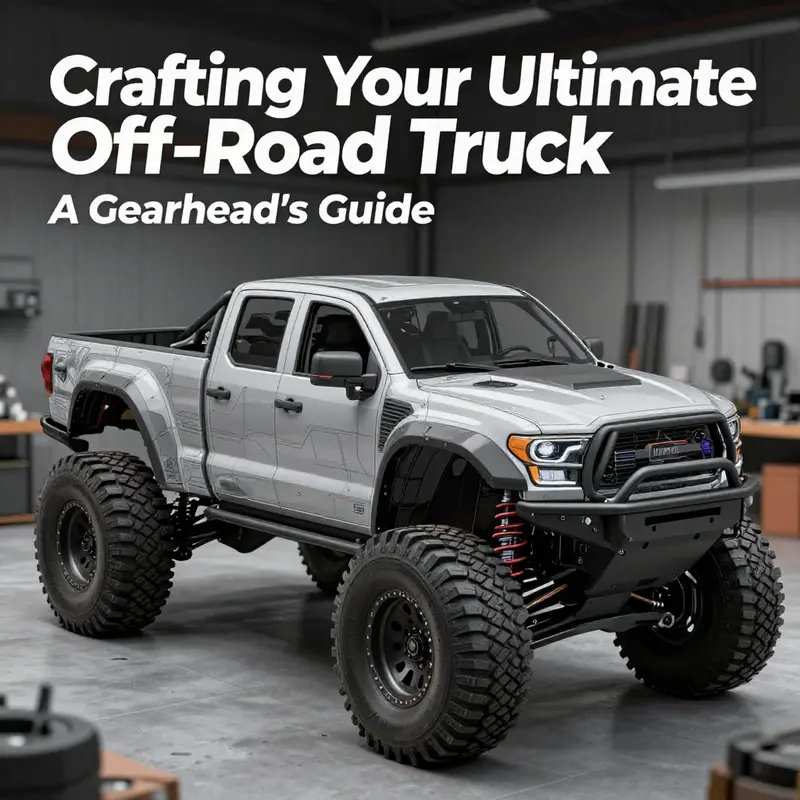
Designing and engineering an off-road truck is not a single leap from sketch to street. It is a sequence of deliberate decisions where every choice echoes across weight, strength, and reliability. In the earlier chapter, you laid out goals, budget, and milestones. This chapter translates those aims into a performance envelope that can survive extreme terrain while remaining serviceable and safe. The journey begins at the chassis, because no amount of horsepower or fancy suspension will compensate for a weak foundation. The chassis defines how forces flow through the vehicle when tires claw over rock, mud, or sand. It sets the geometry for steering, suspension travel, and weight distribution, which in turn governs traction and control. A robust chassis is not merely strong; it is torsionally rigid and geometry-conscious, designed to absorb shocks without letting the whole vehicle twist into a compromised handling character. In off-road environments, every hit is an impulse that travels through the frame, and the frame must dissipate that energy without buckling or yielding in unpredictable ways. The design choice between a traditional welded frame and a tubular, high-strength structure becomes a question of efficiency, serviceability, and weight. Tubular frames, when engineered with proper cross-bracing and joints, offer exceptional stiffness-to-weight ratios. They also enable more flexible placement of suspension points, which is crucial for long-travel systems and for maintaining tire contact through uneven terrain.
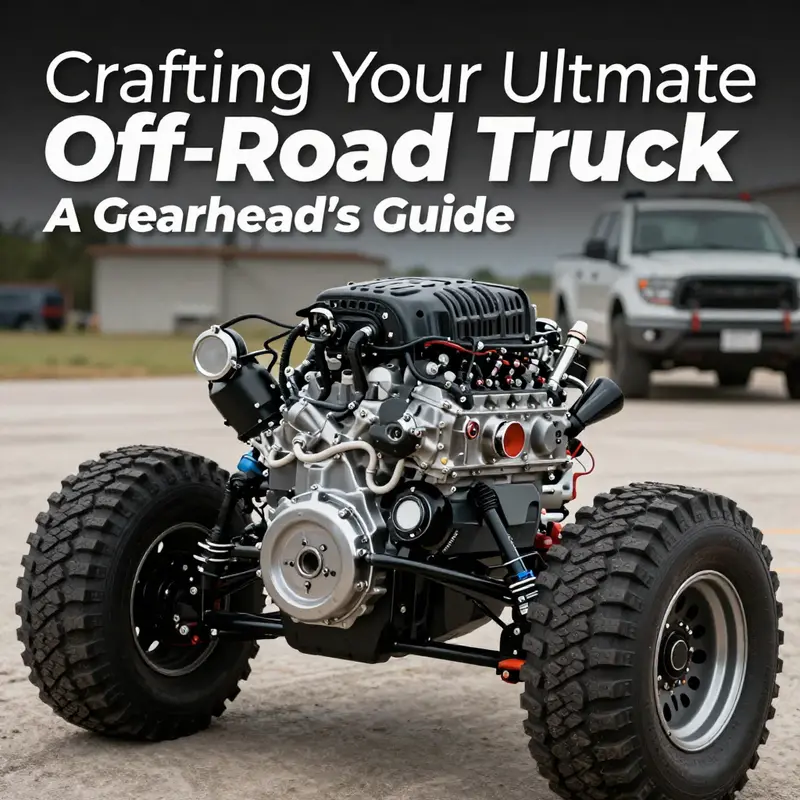
The heart of the build, however, is the powertrain, and here the design must harmonize with the chassis rather than fight it. Internal combustion engines bring raw torque and a broad operating range, which makes hill climbs and rough pulls manageable, but they demand robust transmissions, cooling, and exhaust routing to handle the harsh conditions. Electric drivetrains, by contrast, supply instant torque and a compact footprint, with fewer moving parts and lower maintenance in theory. The trade-offs are nuanced: weight distribution shifts with large battery packs, charging infrastructure becomes a constraint in remote terrains, and thermal management takes on new dimensions as electric motors and batteries heat up under load. Regardless of propulsion type, the drivetrain must integrate with a reliable transfer mechanism for four-wheel drive, because traction on loose or vertically challenging surfaces hinges on the ability to route power to the wheels with minimal lag. The selection of a transmission, whether a heavy-duty manual, an automated unit, or a modular electronic system, should reflect the anticipated demand cycles, including climbing steep grades, negotiating rocky steps, or crawling through mud. In all cases, the coupling to the chassis must avoid excessive driveline angles, unwanted driveline wind-up, and heat buildup in critical components.
Suspension design is the bridge between the rigid frame and the variable ground beneath. It must translate the surface into tire contact while keeping the vehicle controllable and predictable. Long-travel systems give the tires room to articulate over obstacles, which preserves traction when the terrain refuses to cooperate. The choice often boils down to a balance between independent front suspension and solid-axle configurations in the rear, or a fully independent setup across the axle lines. Independent suspension can offer better wheel articulation and smoother ride over rocky textures, while solid axles can deliver consistent, rugged geometry under heavy loads and simplify the drivetrain layout. In either case, the suspension components should be able to withstand repeated impacts without compromising alignment or bump steer. The shocks, springs, control arms, and linkages must be engineered for durability in dusty, muddy, and heat-intensive environments, where seals can wear and lubrication can degrade swiftly. As with the chassis, the geometry matters: track width, wheelbase, approach and departure angles, and ramp travel degrees all sculpt the truck’s ability to keep tires planted and to recover quickly from a misstep.
Material choices vie for the dual goals of resilience and weight efficiency. The frame and critical structural members benefit from high-strength steel alloys or aluminum that resist corrosion and fatigue. Protective coatings become part of the design, not afterthoughts, because exposure to salt spray, mud, and water accelerates deterioration. The cab, body panels, and protective skid plates demand a balance of toughness and weight, with surfaces that resist denting and abrasion but still allow for straightforward repair in the field. In addition, materials must tolerate temperature swings and vibration without transmitting discomfort to the operator or compromising accelerating performance. This is not a cosmetic decision; it dictates maintenance intervals and the ease with which a driver can diagnose issues on a remote trail.
Safety is woven into the fabric of every design decision. A robust off-road truck behaves as a shelter for its occupant, particularly when the terrain turns treacherous. A roll-over protection structure must be integrated into the cab architecture, with harnesses positioned for quick release and redundancy. Ergonomic cab design matters as well, because the operator needs visibility, intuitive controls, and a seating position that minimizes fatigue over long, demanding runs. Safety systems extend beyond passive structures to active measures: reliable electrical grounding, well-protected fuel systems, and clearly accessible shutoffs for critical components. The interplay between safety and performance is a constant check: reinforcing a component should not massively increase weight, yet a slight increase in mass can be justified if it meaningfully improves protection and control.
Thermal management becomes a central theme once the vehicle leaves the showroom and enters the desert heat, high-altitude chill, or dust-choked canyons. Engines and electric powertrains alike generate heat that must be carried away efficiently. Radiators, air-to-air or liquid cooling loops, fans, heat exchangers, and ducting all need precise routing to avoid hot spots that reduce performance or shorten component life. In hot climates, a well-engineered thermal strategy can be the difference between a strong climb and a limp stall. For electric platforms, battery cooling is not optional; it protects capacity, longevity, and performance under sustained load. The cooling strategy must also consider ambient dust and moisture; sealed channels, filtration, and rugged connectors keep the system functioning in harsh conditions.
Electrical systems deserve equal attention. The more you push a vehicle’s capabilities, the more you rely on electronics to fuse power, telemetry, and safety. Electrical harnesses should be shielded and protected against dust ingress and vibration; connectors must resist corrosion and be easy to service. A modern off-road truck benefits from onboard diagnostics, GPS navigation for route planning, and perhaps telematics that relay health data back to a base station. Yet all these features eat into space and weight, so the architecture should prioritize critical circuits first and add features that enhance field practicality without compromising reliability. A well-planned electrical backbone reduces the risk of dead-in-the-wild incidents and makes pre-run checks more efficient.
Beyond the pure mechanics, designers must consider the vehicle’s specialized applications. A mining or forestry context demands frames and suspensions engineered for heavy payloads, rugged terrain, and often slow, deliberate movements rather than speed. This requires reinforced structures, protective enclosures for sensitive machinery, and simplified maintenance routines that can be performed with limited tools. In contrast, a desert racer will prioritize lightweight construction, rapid heat dissipation, and rapid-access components for quick pit-side service. Even within a single build, balancing payload capacity with agility remains a core challenge. The design process then becomes a dialogue between application, expected terrain, and the driver’s skill set, not a one-size-fits-all blueprint.
Design and simulation complete the pre-build toolkit. Engineers now turn to computer-aided engineering tools to test ideas without expensive prototypes. Finite element analysis helps reveal stress concentrations and potential failure points under simulated loads. Computational fluid dynamics guides cooling and aerodynamics, while virtual ride tests expose handling quirks before any metal hits a cutting blade. Prototyping follows, and field testing across mixed terrains validates the model. The aim is to iterate quickly, catch misalignments early, and refine the system’s harmonies so that the final product behaves as a coherent machine rather than a collection of parts.
Innovation and sustainability push the design forward. Hybrid-electric powertrains are becoming more capable, combining torque with efficiency. Regenerative braking can reclaim energy during descents, easing thermal loads on the friction brakes and extending range for electric components. Connectivity and data analytics enable real-time health checks, predictive maintenance, and remote diagnostics. In a world where compliance matters, designers also consider emissions and road-use rules. The goal is to maintain formidable off-road capability while reducing the environmental footprint and improving long-term reliability. For builders just dipping their toes into this field, a practical pathway is to start with a smaller-scale platform such as a RC truck or a UTV to gain hands-on experience before tackling a full-size design.
As you translate these principles into your build plan, keep a steady focus on integration. Each subsystem—chassis, powertrain, suspension, materials, safety, thermal, electrical, and control systems—must be designed to complement the others. The design should remain adaptable; terrain and driver preference can shift, and a flexible architecture is more forgiving when late-breaking ideas arrive. If you are curious about how engine interfaces and mechanical integration are handled in depth, consider consulting hands-on resources that tackle diesel mechanics with a step-by-step approach. Mastering Diesel Mechanics: Your Step-by-Step Path to Success. This resource can provide practical insight into interfacing engine, transmission, and transfer components in a rugged environment without getting lost in abstractions.
For those seeking broader theory plus field-tested realism, a respected external reference lays out the landscape of 4×4 off-road truck design, including substantial discussion of chassis rigidity, powertrain durability, and the push toward sustainable solutions. It emphasizes the integration of modern engineering tools with real-world testing and field validation, underscoring how prototypes evolve into reliable machines that can perform across mining, construction, or forestry settings. The insights from this resource help frame decisions around materials, safety, and thermal strategies within the context of evolving regulations and environmental expectations. To gain a comprehensive sense of the spectrum—from heavy payload capabilities to nimble mobility—readers may find it a useful anchor as they finalize their own design choices. External reading: A Complete Guide to 4×4 Off Road Dump Truck: Specifications, Types, and Applications.
Internal link reference: For a practical, hands-on pathway into engine integration and mechanical interfaces, explore Mastering Diesel Mechanics: Your Step-by-Step Path to Success.
Not every builder will start with a clean sheet. The guide suggests a prudent approach: begin with a smaller platform to learn the fundamentals, then scale up as confidence and competence grow. This incremental strategy reduces risk, increases the probability of a successful, safe, and legal build, and helps ensure that the final truck not only conquers rough ground but remains serviceable in the long run. The essence of turning a concept into a capable off-road vehicle lies in disciplined design, rigorous testing, and relentless attention to how a machine behaves when the world turns against it. As you move from blueprint to beast, the focus stays on a coherent architecture that balances power, control, durability, and safety, all while keeping the path to completion both practical and inspiring.
null
null
null
null
Suspension as the Soul of Traction: Building an Off-Road Truck That Grips Every Surface
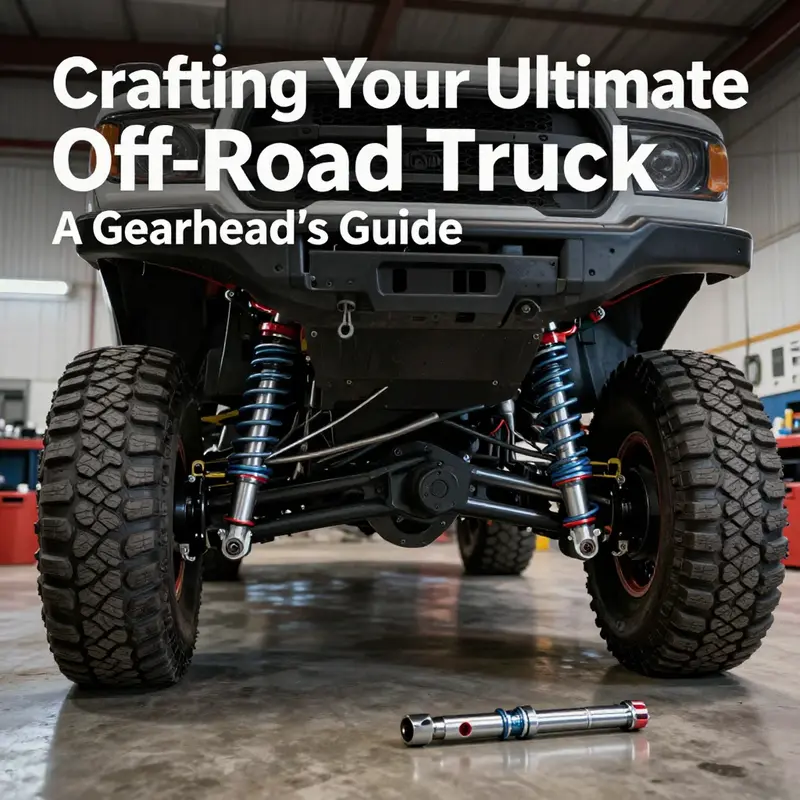
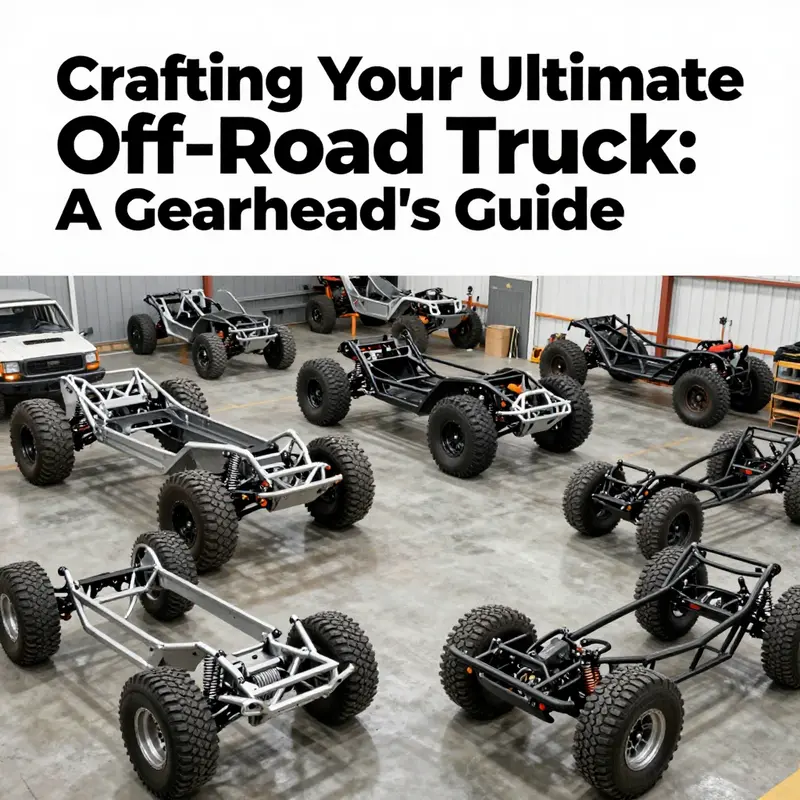
The suspension system is more than a set of parts under the truck; it is the sensory organ that translates terrain into usable motion. On rough terrain, the wheels must stay in contact with the ground, absorb the shocks of rocks and ruts, and deliver steering input with precise, predictable feedback. Getting suspension right is what separates a truck that can crawl up a ledge from one that bounces, wallows, and loses control. In the design process, suspension is the bridge between chassis rigidity and drivetrain power, a deliberate balance between rigidity for strength and flexibility for articulation. The decision matrix begins with your predicted use. Will the truck be a rock crawler, a desert climber, or a rugged expedition vehicle? That choice dictates how much travel you need, how much load the system must bear, and how tolerant you are of ride harshness when you’re miles from the nearest shop. The goal is to craft a system that protects the drivetrain while delivering traction, steering feel, and predictable behavior across a spectrum of off-road conditions.
At the heart of the suspension are a handful of core components: shock absorbers, springs, control arms, and anti-sway bars. Each plays a distinct role, yet their performance hinges on integration. Shocks convert the vertical energy of impacts into heat and regulate how quickly the suspension responds after a disturbance. Springs carry the vehicle’s weight and set the baseline ride height and wheel travel. Control arms position the wheels in relation to the chassis, guiding camber and toe through the suspension’s travel. Anti-sway bars limit body roll, preserving some steering feel when the truck leans into a bend or dips across a rumble strip of terrain. The trick is to size these elements so that they work in concert, providing enough flex for vertical terrain and enough damping for stable transitions between surfaces.
When you choose between coil springs and leaf springs, you’re weighing ride quality against durability and packaging. Coil springs typically yield smoother ride and better articulation, which matters when you’re negotiating switchbacks or climbing over granite slabs. Leaf springs, with their simple geometry and ruggedness, can offer long service life in harsher environments but may trade some ride comfort for load-bearing reliability. The debate between independent front suspension (IFS) and solid axles also shapes the build. IFS tends to deliver crisper steering and a more comfortable ride on rough, uneven surfaces, making it appealing for trail riding and long-distance hauls. Solid axles, by contrast, excel in terrain where wheel articulation and rugged durability are paramount, especially when carrying heavy loads or facing sustained side slopes. The decision isn’t purely academic; it’s about how you want the truck to behave when the ground beneath you becomes unpredictable and unforgiving.
Lift decisions introduce a different layer of complexity. A modest 1–3 inch body lift can create clearance for larger tires and help with ground clearance without altering suspension geometry, preserving the factory feel for daily driving. But a body lift does not improve suspension travel or articulation. For serious off-road capability, a full suspension lift—replacing or lengthening coils, springs, and control arms—provides additional wheel travel and more predictable geometry through rough terrain. The trade-offs are real: higher lifts can induce driveline angles that complicate maintenance, increase the risk of bump steer, and alter steering geometry. Before you commit to any lift, map out the alignment work, driveline angles, steering box geometry, and the potential need for longer shafts or upgraded U-joints. In other words, the lift should be a planned movement, not a bolt-on afterthought.
Within the spectrum of suspension technologies, air suspension presents an intriguing option for certain builds. Air systems offer ride-height adjustability and the promise of a smoother ride by varying spring rate through air pressure. They can adapt to different loads or terrain dynamically, a boon when the truck doubles as a carrier of sensitive cargo or when you need to lower the vehicle back down for highway fuel economy. Yet air suspensions add complexity and a susceptibility to leaks, a practical concern in environments where dust, mud, and temperature extremes thrive. In a battlefield-inspired or expedition context, torsion-bar suspensions can offer compact packaging and robustness, with fewer moving parts exposed to the elements and less maintenance. Their torsional nature provides solid lateral stiffness and predictable handling, especially in space-constrained designs where weight and simplicity are valued. Each approach has its place, and the best choice emerges from aligning the suspension philosophy with the vehicle’s mission, the terrain profile, and the builder’s comfort with service and maintenance.
Engineering a suspension system also means acknowledging the materials and environmental realities that govern durability. Components must resist corrosion, fatigue, and temperature swings that can warp clearances and degrade joints. Materials selection and treatment matter as much as geometry. In military-grade and rugged commercial applications, reinforcement and fatigue resistance come first, with attention to how parts perform under extreme loads, dust infiltration, and moisture. The most reliable builds anticipate these conditions with reinforced chassis connections, long-life joints, and protective coatings. The aim is not to create a suspension that only shines on a pristine test course but one that remains predictable and repairable after miles of harsh usage.
From a design perspective, suspension no longer lives in isolation from the rest of the drivetrain. A well-tuned suspension must harmonize with the powertrain, transmission, and four-wheel-drive system. It requires a thorough plan for how lift, travel, and axle geometry influence steering and driveline angles. A CAD-driven approach helps map how changes in wheel travel affect bump steer and drive shaft alignment. It also facilitates a better understanding of how weight transfer during aggressive climbs or sudden braking affects traction. The best builders test extensively on pavement to verify steering authority and braking response, then perform a controlled shake-down on moderate off-road terrain to observe articulation, axle binding, and component clearances under real conditions. Only after these checks can you start fine-tuning dampers, air spring pressures, and the distribution of weight across the axle set, ensuring the chassis, suspension, and bodywork stay in harmonious balance.
For readers seeking deeper, hands-on mechanical context that complements this design-oriented view, consider this practical resource: Mastering diesel mechanics: your step-by-step path to success. It offers a sturdy foundation in how basic mechanical principles translate into reliable, serviceable performance on rough roads and trails. As you refine the suspension, it’s helpful to keep the broader system in mind—the way the suspension interacts with the chassis, the tires, and the powertrain to produce traction where you need it most. The result is a truck that can absorb the shock of a deep rut, hold stable position while crossing a shelf of granite, and deliver accurate steering feedback at the edge of grip. The journey from concept to trail-ready suspension is iterative, demanding, and deeply rewarding when the truck finally responds as an extension of your intent rather than a source of surprise.
In sum, building a capable suspension system for an off-road truck requires balancing travel, load, and stability with practical constraints like maintenance, space, and cost. It demands a thoughtful choice between coil or leaf springs, IFS or solid axles, and the level of lift that best serves the terrain you intend to conquer. It calls for an understanding of how materials behave under heat, dust, and impact, and for a disciplined process of CAD-driven design, rigorous testing, and careful integration with the rest of the build. When done well, the suspension becomes more than a mechanical system—it becomes the fundamental grip that lets you move with confidence across rocks, sand, mud, and mud-soaked trails.
External resource: For a rigorous technical grounding on materials, stress analysis, and dynamic performance testing of off-road suspension systems, see the SAE paper On-Road Suspension Systems: Engineering Principles and Material Selection. https://www.sae.org/publications/technical-papers/content/2024-01-1567/
Final thoughts
Building your own off-road truck is not just a project; it’s an adventure that fuses engineering with passion. Each chapter of this guide has laid the groundwork for planning and constructing a powerful vehicle that meets your adventure-ready needs. From the initial goal-setting to the intricate details of suspension and chassis design, embrace each step and make your creation a reflection of your off-road ambitions. As you navigate this process, remember that the most significant journey starts with a single build.