

Operating an off-road dump truck is more than just a task; it’s a rugged adventure that combines machinery mastery with a deep understanding of safety and operational techniques. Whether you’re a passionate off-road enthusiast, an adventurous racer, or a rural landowner needing to maneuver heavy loads, understanding the nuances of dump truck operation can enhance your experience and efficiency significantly. This guide unveils the protocols necessary for safety and maintenance, optimal loading procedures, and effective dumping techniques. Each chapter distills vital practices ensuring not only safety but also the long-term functionality of your heavy-duty vehicle, so whenever you hit the dirt, do so with confidence.
Solid Ground, Safe Load: Mastering Safety Through Pre-Operation Checks for Off-Road Dump Trucks
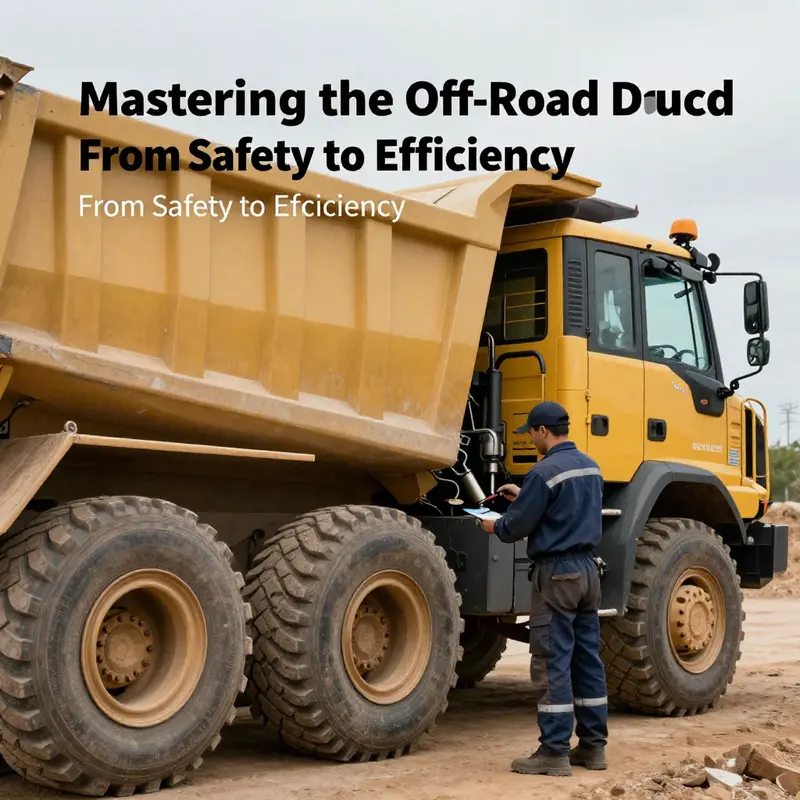
Safety on an off‑road worksite starts long before the engine roars to life. It begins with a disciplined mindset that treats every shift as a chance to protect lives, preserve equipment, and keep the job moving smoothly. The backbone of that mindset is a thorough, methodical pre‑operation check paired with a safety culture that rewards careful planning as much as quick work. When the cab doors close and the engine settles into a quiet idle, the operator is not just starting a machine; they are initiating a series of safeguards that shield crew, cargo, and the terrain itself from harm. This is where the chapter on safety and pre‑operation checks finds its rightful place in the larger guide on operating an off‑road dump truck: not as a tedious ritual, but as the quiet ramrod that straightens the line between efficient production and preventable accidents. The checks that follow are not cosmetic; they are concrete controls that align with what the industry expects and what OSHA standards require. A well‑performed pre‑shift inspection reduces the chance of hydraulic leaks, wheel failures, or a misbehaving brake system that could spell disaster on uneven ground or during a steep descent. They are the first line of defense against red‑flag signs of wear and the subtle cues that a system is growing brittle under harsh service conditions.
Central to this practice is a careful inventory of the truck’s safety features. Braking systems, for instance, must be more than present; they must function as a coordinated trio that the operator can rely on. A dump truck can carry heavy loads under challenging conditions, so verification that multiple braking mechanisms are in sound order is non‑negotiable. Service brakes should respond promptly and evenly when pressure is applied, the parking brake must hold the vehicle securely on grade, and an emergency or secondary brake should be detectable and operable in a failure scenario. The operator’s tactile and auditory feedback during a quick brake test—performed with the machine stationary—offers a practical read on overall brake health. If any hesitation or irregular bite is detected, the truck cannot be cleared for operation. The same vigilance applies to lighting and warning devices. Functional lights illuminate the path ahead and the sides of the truck, while tail lights and turn signals communicate intentions to others nearby. Audible warnings, horn integrity, backup beepers, and any cab alarms must all be confirmed as active. The absence of a single indicator can disrupt visibility and situational awareness, particularly in dusty environments, at dusk, or on slick, uneven surfaces.
Beyond visibility, protective features play a decisive role in operator safety. A properly installed protective cab or canopy adds a shield against falling debris and weather exposure, while seat belts are not optional accessories but essential safety devices mandated by OSHA regulations to restrain occupants during sudden stops or rollover risks. The pre‑operation check, then, must explicitly verify the integrity and availability of these protective components. The seat belt latch should engage smoothly, retract without sticking, and hold under a firm tug. If a belt frays or a buckle binds, the machine is not cleared for service until those issues are addressed. The cab or canopy system must be undamaged with no compromised mounting points, and the steps and handrails leading to the cab should be secure and free of corrosion or excessive play. This is not merely about comfort; it is about stability, control, and the operator’s ability to respond to unexpected conditions on harsh terrain.
The core checklist for a pre‑shift inspection can be framed as a practical conversation between the operator and the machine. First, fluids are checked with an eye toward consistency and levels. Engine oil should appear clean and fill lines untroubled by emulsions or contamination, while hydraulic oil should be at a stable level appropriate for the load and ambient temperatures. Coolant must be at the correct level to prevent overheating, particularly in demanding working environments where heavy loads and rough trails multiply heat generation. The fuel tank should be topped up enough to complete the planned tasks without frequent refueling on the job site, yet not so full that expansion could risk spills on sloped ground. A quick look at the hydraulic lines surrounding the dump body lift mechanism is essential to confirm there are no signs of seepage, leaks, or worn hoses that could fail under load.
Tire condition is another non‑negotiable area. Off‑road trucks demand robust tires with deep treads, sidewall integrity, and proper inflation to match the terrain. A tire inspection should identify cuts, bulges, or embedded objects that could lead to a sudden puncture. Tire pressure is calibrated to support the lifting loads and to maintain traction on loose or uneven surfaces. The suspension, while built for rough ground, must not exhibit unusual sag, leaks, or abnormal noise when the truck is rocked or rocked gently by the operator’s hand test. A visual pass around the chassis and undercarriage can reveal loose mounting bolts, damaged guards, or debris that could interfere with the hydraulic system or track the way through the lift cycle.
The dump body itself requires careful scrutiny. The hydraulic cylinders and lift arms must be free of cracks, leaks, or abnormal movement. Pins and connections should be free of wear and corrosion, and any play in the lift mechanism should trigger a halt to operations until tightened or replaced. The operator’s approach to the bed’s geometry matters because even a small misalignment in the lift mechanism can translate into uneven dumping or failure to empty completely. The safety philosophy here is straightforward: verify before you lift, and never assume that a system operating yesterday will perform flawlessly the next shift. The pre‑operation check must actively look for deviations, not pretend they don’t exist.
A comprehensive test of lights and signals completes the visibility and communication matrix. The operator will test headlights for night schedules or low‑light conditions, brake lights for signaling intention when the truck stops or slows, and hazard lights to warn surrounding personnel of a temporary hazard. The windshield, wipers, and defogging systems should also be checked to maintain clear visibility, especially in climates that swing from dust to dampness. The safety devices that produce audible cues—alarms, horns, beepers—must be tested in a controlled manner to confirm they alert others without creating confusion on the site. In the same breath, the operator should verify that warning decals and load‑level indicators remain legible and functional, as these cues often guide decisions about whether to proceed or to pause for maintenance.
From the standpoint of regulatory compliance, the protective cab, canopy, and seat belts emerge as non‑negotiable protections. OSHA regulations emphasize operator protection from injury during operation, and the pre‑shift check is one of the practical mechanisms by which that protection is operationalized. The operator’s ritual of walking around the machine, touching points of control, and confirming the legal safety features is an explicit concrete action that translates policy into everyday practice. If any defect is found, the machine must be removed from service until it is repaired, tested, and cleared. This policy helps keep maintenance cycles tight and ensures that minor issues never fester into major failures mid‑task.
Starting the engine and conducting pre‑driving checks is the next phase of the safety sequence. The operator sits squarely in the seat, adjusts the position for optimal visibility, and confirms that the parking brake is engaged and the transmission is in neutral. The engine is started following the manufacturer’s guidelines, and the machine is allowed a brief warm‑up period to reach stable operating temperatures. A quick control test is performed while stationary: brakes, steering, and the hydraulic system are exercised by gently raising and lowering the dump body. This confirms that the system responds smoothly and that there are no delayed reactions that could escalate when the bed is fully raised in operation. The test is a micro‑drama in which every part must perform its role without hesitation. If any irregularity is detected—such as unusual noises, binding, or jerky motion—the operator stops and secures the truck, documenting the anomaly for maintenance before any further movement is attempted.
The principle of look‑before‑you‑lift anchors several precautionary routines in the chapter’s core. A careful scan of the area around the truck is done to ensure that no personnel are in the risk zone. A palpable sense of responsibility accompanies the lift procedure; the operator knows that an invisible chain of events can unfold if a momentary distraction, misaligned load, or an overlooked obstacle triggers an unexpected motion. The load itself must be evenly distributed, and the bed must be raised slowly and in a controlled manner. The safe sequencing of lifting and dumping depends on the integrity of the hydraulic system and the operator’s discipline in controlling the lever with steady, deliberate movements. The moment the bed begins to rise, the operator is mindful of the site’s dynamic environment: other equipment, pedestrians, and uneven ground can alter the dump’s trajectory, so the system must be monitored continuously until the load is safely discharged and the bed is returned to its resting position.
The chapter also notes the broader professional context of pre‑operation safety. Training requirements emphasize that operators hold a valid off‑road vehicle operator certification and complete a minimum of 120 hours of hands‑on training. This standard is not a ceremonial credential but a practical guarantee that the operator has spent substantial time practicing essential skills—from hazard identification to precise control of heavy payloads on challenging terrain. The training path underlines the integration of theory, simulated scenarios, and real‑world drills that build confidence and reduce the likelihood of negligent error under pressure. In practice, the best operators do not rely on luck; they rely on routines that have proven effective across countless sites and conditions.
As technology and site practices evolve, so too do the safety features on modern off‑road dump trucks. The chapter acknowledges advanced features such as automatic weighing systems, hydraulic tilt sensors, GPS tracking, remote diagnostics, and collision avoidance systems. While these tools can improve safety margins, they do not replace the core discipline of a thorough pre‑operation check. A well‑equipped truck with a meticulous operator who conducts the checks will outperform a high‑tech machine operated with complacency. The pre‑shift routine remains the compass by which all other safety practices are measured. It is the moment when the crew’s confidence solidifies, when the truck’s readiness becomes a shared responsibility rather than a single person’s task, and when the job’s progress begins to flow with predictability rather than improvisation.
The practical application of these principles extends to loading and site management as well. Loading procedures, while often discussed in different sections, echo the same safety logic at the moment of pre‑operation. The guidelines call for avoiding overloading, using a loader or excavator to distribute material evenly, and keeping the load level. The aim is not to maximize speed but to stabilize the vehicle’s center of gravity and preserve traction on rough, often slippery surfaces. In terms of site management, the operator’s awareness of surroundings, including the proximity of other vehicles, workers, and potential pinch points, is a direct extension of the pre‑operation safety rituals. The look‑around habit translates into a proactive approach to prevent injuries and equipment damage during the crucial transfer of material from bed to destination.
To tie these practices to continuous improvement, consider the value of reference materials that deepen the operator’s knowledge. For a deeper dive into diesel systems and their maintenance—an underpinning skill that supports reliable performance—the resource Mastering diesel mechanics: a step‑by‑step path to success provides practical guidance that reinforces the pre‑operation emphasis on mechanical integrity. This reference aligns with the broader principle that strong foundational knowledge reduces on‑the‑spot improvisation and enhances safety on the job. Such knowledge becomes especially important when diagnosing subtle issues like hydraulic fluid condition, unusual noises during lift cycles, or minor steering irregularities that may presage more serious faults if left unchecked.
The operator’s desk drawer of safety statements is not populated with slogans but with checklists, logs, and a habit of documenting defects and repairs. Post‑operation procedures then pick up where pre‑operation routines leave off: the bed must be lowered, the engine shut down, and the parking brake engaged; the truck should be parked on a firm surface with wheel chocks if on a slope. The machine should be cleaned to prevent abrasive material buildup in the undercarriage and around the dump bed, and a brief maintenance log should capture any anomalies observed during the shift. The documentation is not a bureaucratic chore; it is the traceable record that ensures a fault does not vanish into the night, enabling a smoother transition into the next shift and a clearer picture for the maintenance team when inspecting wear patterns and fatigue points in heavy components.
Finally, safety is inherently communal on the job site. Clear communication with supervisors, spotters, and nearby operators reduces misunderstandings and creates a predictable rhythm of work. A well‑trained crew will anticipate hazards, call out potential conflicts, and coordinate turnouts and dump operations with measured timing. This collective discipline amplifies the effect of individual pre‑operation checks, turning them into a safety net that catches mistakes before they become injuries. In the end, the most reliable off‑road dump truck operation rests on a simple truth: a complete, honest, and thorough pre‑operation check is not a barrier to productivity; it is the most cost‑effective investment in uptime, equipment longevity, and human safety.
For those who want to connect this chapter’s emphasis on practical safety routines with broader technical understanding, further reading on diesel systems is available. Mastering diesel mechanics: a step‑by‑step path to success provides a detailed perspective on engine and hydraulic subsystems that complements the pre‑operation checks described here and supports informed decision‑making when components show subtle signs of wear. When safety and performance are aligned, a site runs more smoothly, and the risk of breakdown or accident diminishes. As you move to the next stage of the chapter, you will find the discussion shifting toward loading procedures and on‑road/off‑road dynamics, continuing to balance safety with efficiency and ensuring every move on the job site is deliberate and controlled.
On the topic of safety standards and regulatory guidance, always align practices with the latest official standards. The broader framework guiding these checks is maintained by regulatory bodies and safety agencies that publish ongoing updates about equipment operation, protective features, and required procedures. Staying current with these guidelines reinforces a culture of safety that reduces risk and enhances reliability over the long term. For ongoing reference, consult the official sources that shape the rules of the road for off‑road heavy equipment operators. In particular, the core safety focus described in this chapter mirrors the standards outlined in OSHA’s dump truck safety guidance, which you can review at the external link below. Keeping these standards in view helps ensure that daily work remains compliant and accountable, even as site conditions evolve and new technologies emerge on the fleet.
External reference: OSHA Dump Truck Safety guidelines: https://www.osha.gov/dump-trucksafety
Loading and Transporting Materials with an Off‑Road Dump Truck: Balancing Loads, Navigating Rugged Terrain, and Precision Unloading
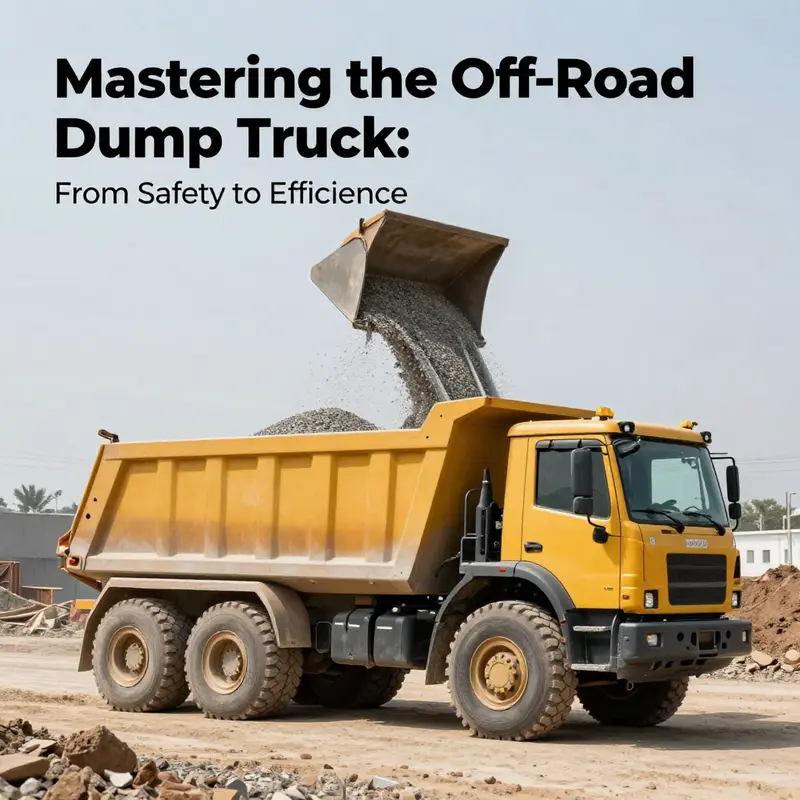
Loading and transporting bulk materials with an off‑road dump truck is more than simply filling a bed and driving away. It is an integrated process, where the loader’s placement of the material, the truck’s balance and suspension, and the driver’s control inputs come together to form a safe, efficient, and productive cycle. The goal is to move earth, rock, gravel, sand, and similar payloads with minimal downtime, reduced wear, and the lowest possible risk to people on site. The operation begins long before the cab door closes. It starts with a clear understanding of how the bed, axles, and tires interact with rugged terrain and how each load affects the vehicle’s center of gravity. It continues through the loading point, the transport route across rough ground, and the unloading area, where the bed is raised to discharge the material in a controlled manner. This flow, when executed with discipline, translates into steadier productivity and fewer maintenance penalties on the equipment, which in turn sustains safe operations over the long haul. For operators seeking broader mechanical grounding, see Mastering Diesel Mechanics: Your Step-by-Step Path to Success.
The loading phase is the first critical hinge in the cycle. At a designated loading point, a loader or excavator fills the cargo bed. The objective is to achieve full utilization of the bed without overloading any single section or creating an abrupt, high-high load that could shock the hydraulics and frame. Even distribution is essential; a bed that is loaded more heavily toward one side or toward the rear can cause a dangerous tilt when the truck begins its journey. The operator should avoid loading the bed to the point where the load exceeds the manufacturer’s rated capacity, a guideline that protects both the hydraulic system and the structural integrity of the truck. A spread pattern, where the loader cushions the load along the bed evenly, helps to keep the bed level. If the site permits, the loader should smooth and level the load so it does not peak at the tailgate or along one side. In many operations, the loader will spread the material from the center outward, ensuring that the initial fill creates a balanced base that remains stable as the truck gains momentum or encounters side slopes.
The operator’s awareness of load balance continues through to the bed’s final state. The goal is a level, compacted appearance that avoids excess height at the center of gravity. A level load reduces the risk of tipping, especially on uneven surfaces or when encountering a slope. The request to “look before you lift” is not merely a safety cliché; it is a practical habit that reduces the chance of backflow or material spilling during minor bumps or transitions on the route. A tarp may be used to prevent loss of fine materials or dust, but only when appropriate and compliant with on‑site dust-control practices. The key is to control dust and material spillage without compromising the truck’s balance or the loader’s ability to deposit the material cleanly into the bed.
As the filled truck leaves the loading point, the operator reassesses balance and clearance. The truck should be in a stable mode with the parking brake engaged and the transmission in neutral if the crew is performing checks or if the engine is warming. A brief, stationary test of the brakes, steering, and hydraulics—rising and lowering the dump body in a controlled manner—provides a quick confirmation that the system remains responsive under load. This procedure reinforces the understanding that the hydraulic system will be asked to move not just the bed, but the entire mass of the payload, including the inertial load that develops with terrain irregularities. The operator must remain mindful of any signs of hydraulic or structural distress during these checks.
With the load secured and the vehicle ready, the travel phase begins. Off‑road journeys require deliberate, slow movement and careful gear selection. Lower gears deliver steady torque while preserving traction on loose or wet surfaces. Sudden acceleration or abrupt braking can destabilize a heavy vehicle that carries a tall, heavy load. The driver should keep a generous following distance and anticipate changes in the terrain—ruts, soft ground, unexpected dips, or sudden wet patches. When traversing hills or soft ground, engine braking plays a vital role in maintaining control. Relying on the engine to manage deceleration reduces the risk of overheating the service brakes, which is a frequent concern when a loaded truck negotiates declines or long grades. Safe trucking on rough ground depends on maintaining a predictable rhythm and avoiding abrupt steering inputs that could unsettle the load.
Tire condition and suspension response are central to maintaining stability on rugged terrain. The operator should be alert to any unusual bounce, a loss of grip, or tire deformation that could indicate underinflation or damage. Off‑road tires require attention to tread condition and correct pressure for the terrain. Correct pressure helps ensure even contact with the ground, distributes weight across the tire surface, and reduces the chance of tire damage or uneven wear. Suspension components must absorb the irregularities of the terrain without transmitting excessive shock to the truck’s chassis. The open cargo bed is not simply an empty space—it is a mass that changes how the vehicle responds to bumps and hills. A balanced payload allows the truck to handle slope transitions more predictably, and it minimizes the likelihood of side-to-side tipping on uneven ground.
The route itself is as much a part of the operation as the truck and bed. Operators select routes that maximize traction and minimize exposure to soft ground and obstacles. Clear communications with ground crew help to maintain a safe corridor for the truck’s passage. On narrow or winding paths, the truck’s steering geometry—whether standard or articulated—plays a decisive role. Articulated steering, when present, can improve maneuverability in tight spaces, but it also requires the operator to adjust steering inputs to the vehicle’s pivot points. Regardless of steering type, the driver should maintain a conservative pace and anticipate how the load’s momentum reacts to any steering input. The ultimate aim is stability, not speed.
Unloading the cargo marks one of the most dynamic moments in the cycle. The unloading area should be prepared in advance: a flat, stable surface, clear of personnel and equipment, with a known dump direction that aligns with the site’s configuration and compaction requirements. The operator should perform a final look‑around—checking for anyone within a safe radius and verifying that there are no overhead hazards. The bed is raised gradually using the hydraulic controls. A controlled, deliberate lift reduces the risk of sudden material movement that could injure nearby workers or cause a splash of debris. Some loads discharge rearward; others may discharge to one side or, in some models, to both sides. The choice depends on the dump truck’s capabilities and the site’s layout. The operator must be mindful of the bed’s movement and the potential for material to shift as it exits. A steady, controlled dump encourages clean unloading and helps the material settle evenly at the destination.
A well‑executed dump is followed by a careful return to neutral and a complete retraction of the bed once unloading is finished. The operator should not drive away with the bed elevated; doing so can cause damage to hydraulic components and increase the risk of material loss. After the bed returns to the resting position, a brief check of the bed seals and hydraulic lines ensures there are no leaks or drips that could indicate emerging problems. The post‑dump routine is also an opportunity to verify that the same loading sequence can be repeated with consistency on subsequent cycles. This consistency is the backbone of efficient material handling, ensuring that every pass contributes to predictable cycle times and stable wear patterns on the truck.
The chapter’s emphasis on a disciplined approach to loading, transporting, and unloading reflects broader industry practices designed to safeguard people and equipment. Modern off‑road dump trucks often incorporate features that contribute to safer and more efficient operations. Electronic control units (ECUs) coordinate engine, transmission, and hydraulic actions to synchronize movements and optimize power delivery. Onboard diagnostics monitor key components for health status, enabling pre‑emptive maintenance before a fault evolves into an operational interruption. Telematics systems track fuel efficiency, route adherence, and maintenance needs, turning field data into actionable insights for supervisors and operators alike. Some models also use articulated steering to improve maneuverability in tight spaces, a feature that becomes especially valuable on rugged sites where space is at a premium. These technologies do not replace the operator’s judgment; they augment it, providing information and feedback that helps the crew anticipate problems and respond quickly.
The environmental and regulatory context continues to shape how loading and transport are conducted. Dust suppression measures may be mandated in sensitive areas, and noise control remains a consideration near communities or habitats. Operators should stay current with local guidelines, training requirements, and certification standards that govern off‑road mining and construction operations. The practice of safe loading and transport thus integrates technical proficiency, situational awareness, and an ongoing commitment to environmental stewardship.
When the cycle completes, the operator records the day’s checks and maintenance notes, signaling the end of the shift or a transition to the next task. A daily log that captures fuel usage, hydraulic performance indicators, and any unusual noises or vibrations can be invaluable for predicting wear patterns and planning preventive maintenance. The habit of meticulous documentation reinforces accountability and supports continuous improvement. The operator’s role is not merely to move material; it is to manage a system—an integrated set of interactions among the loader, the truck, the terrain, and the crew. Each successful load reinforces a culture of careful planning, deliberate action, and shared responsibility for safety.
In practice, the rhythm of loading, transit, and unloading becomes almost second nature to experienced operators. It is a rhythm that prioritizes balance, control, and precision over speed. It is a rhythm that recognizes that a heavy payload does not excuse sloppy handling or unsafe shortcuts. It is a rhythm that aligns with the broader goals of responsible operation: protecting workers, extending equipment life, and delivering materials where they are needed with reliability and predictability. The result is a more resilient performance on difficult sites and a more predictable path to project milestones. As operations evolve, operators who embrace this integrated approach—one that harmonizes loading technique, terrain navigation, and careful unloading—will continually improve efficiency while maintaining the highest safety standards.
For readers seeking a broader perspective on the mechanical underpinnings of heavy equipment, this chapter aligns with industry guidance that emphasizes structured training and hands‑on practice. A robust training pathway, including at least the required hours of hands‑on operation, ensures that operators build a repertoire of skills that extend beyond the basics discussed here. The aim is to cultivate a professional mindset that treats every load as a test of balance, control, and judgment. The next chapter will continue this exploration by turning attention to site coordination, scheduling, and how to integrate dump truck operations with other earthmoving assets to maximize overall site productivity.
External resource and acknowledgments: the field benefits from industry associations that codify safety and performance standards for heavy equipment. See the Association of Equipment Manufacturers for broader context on heavy‑duty vehicle design and safety standards. https://www.aem.org/
Precision Dumping on Rough Terrain: Safe Techniques for Off-Road Dump Truck Operation
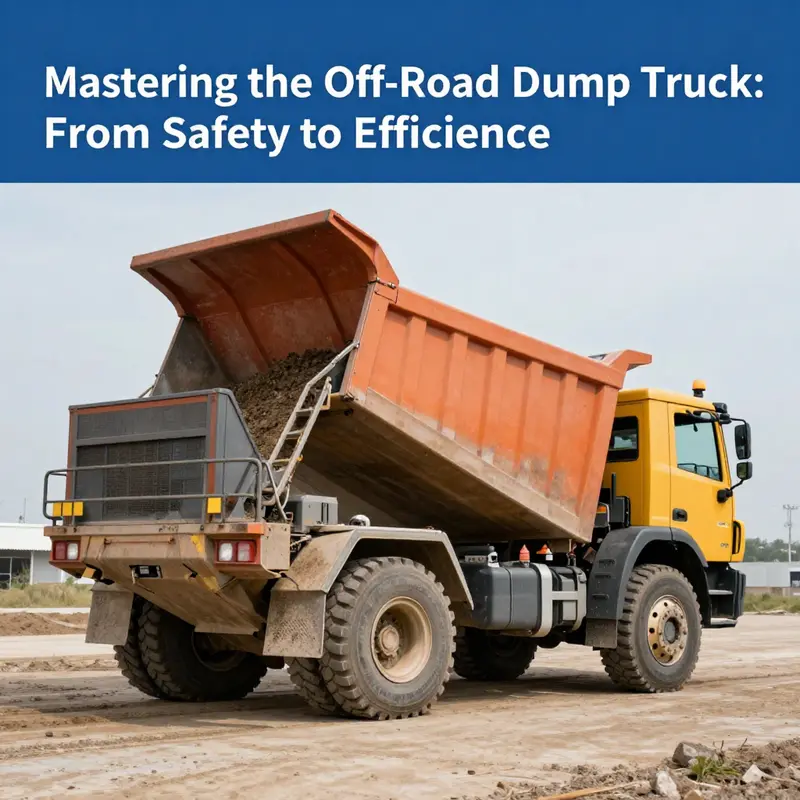
In the world of off-road construction and extraction, how a dump truck releases its burden matters as much as how it carries it. Effective dumping is not a chore to rush through; it is a culmination of controlled motion, situational awareness, and disciplined operating technique. The goal is to place material precisely where it is needed while protecting the machine, the crew, and the surrounding environment. When the terrain is uneven, the loads heavy, and the edges steep, the difference between a clean, efficient dump and a hazardous complication often comes down to a handful of core practices that keep the process smooth from the first lift to the last drop. This chapter threads together those practices into a fluid narrative of technique, emphasizing safety, longevity, and productivity in equal measure. It is a natural continuation of the broader guide to operating an off-road dump truck, focusing specifically on how to dump with care and control on rugged surfaces. The advantages of mastering these techniques extend beyond a single cycle; they compound over a shift, a week, and a project, reducing wear on hydraulic systems, preventing tip‑over risks, and supporting a culture of deliberate, considerate operation. As with all heavy equipment work, the principles start long before the device begins to move and linger long after the bed returns to rest. They begin with choosing the right dumping location, proceed through careful vehicle positioning, and culminate in a controlled hydraulic lift, a mindful dump, and a thorough post-dump check that feeds back into preventative maintenance.
First, the choice of location sets the stage for a safe dump. Operators should scan the site for a stable, level area—a surface free of rocks, holes, soft ground, or debris that could undermine footing or compromise stability. On rugged sites, even a small irregularity can transform a routine dump into a dangerous moment. The rule of thumb is simple: avoid slopes and edges. A tipping truck is far more susceptible to a shift in balance when ground beneath it is uncertain, and the consequences of dumping on compromised ground can be severe. In field practice, this means prioritizing a flat, firm patch that offers predictable support for the whole chassis as the load is released. When a slight grade cannot be avoided, the grade must be gentle enough to keep the center of gravity within safe limits throughout the lift and drop. The graphic detail—often described in training manuals as a permissible slope threshold—exists to prevent tipping and to guide the operator toward a safer alternative dumping spot if conditions worsen.
With the location secured, positioning the vehicle becomes the next decisive step. The operator should align the front wheels straight and ensure the rear wheels rest firmly on solid ground. Engaging the parking brake before initiating the dump cycle locks the truck in place, reducing the risk of creeping or unforeseen movement as the bed rises. The cab and the bed operate as a coordinated system; any misalignment or slack in the drivetrain during the tilt phase can amplify instability, especially on uneven surfaces. The emphasis here is not simply on getting the dump off the truck bed but on ensuring the truck remains still enough for the operator to monitor the lift arc, the load’s movement, and the surrounding area. In this context, the articulating design of off-road dump trucks—where the cab and the body pivot independently to accommodate rough terrain—demands a patient, deliberate control approach. The operator should anticipate how the articulation interacts with the hydraulic lift and adjust the lift rate accordingly, avoiding any sudden or jerky motion that could destabilize the vehicle or throw material toward the cab or nearby personnel.
The lift itself must be executed with restraint and precision. Use the hydraulic lift slowly and steadily, allowing the lift arms to rise in a controlled cadence. Sudden movements risk stressing the hydraulic cylinders, releasing material in an uncontrolled arc, or causing the load to shift abruptly inside the bed. A measured lift is especially important when the truck is perched on contour or near an edge, where even a modest acceleration in tilt can shift the load’s center of gravity toward a precarious side. The operator should maintain awareness of the load’s behavior as it approaches the release point, watching for any unexpected tilting or hitching that could indicate binding in the lift mechanism or a fault in the hydraulic system. The goal is to achieve a level, predictable dump rather than a rapid, dramatic unload. This approach helps protect the bed, the hydraulic components, and the payload, reducing the risk of spillage, leaks, or damage to the truck’s structure.
A critical constraint during the dump cycle is not to overload the truck. Exceeding the rated capacity invites excessive stress on the chassis, suspension, and hydraulics, elevating the probability of discarding the load improperly or inducing a structural failure. In practice, this means strictly adhering to the manufacturer’s load rating and recognizing that the safe payload can vary with terrain and temperature. A common reference point in the industry is the 15-ton class, which provides a useful mental ceiling for planning loads. Even when the numbers permit a heavier payload on paper, practical field considerations—such as uneven ground, compaction, and vibration from a rough surface—often demand a more conservative approach. Overloading can also worsen tipping risk by amplifying the load’s inertia as it shifts during unloading. The operator’s discipline in this area is a direct investment in equipment longevity and in personnel safety.
Terrain and load characteristics are inseparable in the dumping process. On mud, loose soil, or highly textured surfaces, the truck can experience differential traction that manifests as subtle, dangerous movement when the bed tilts. The operator must ensure the load is evenly distributed within the bed prior to lifting. An unevenly loaded bed creates an imbalance at lift and release, increasing the likelihood of a twist in the truck’s frame or a swing of material toward ground or obstacles. A well-distributed load reduces the likelihood of a wallowy ascent, a wobble in the bed, or a sudden shift that could compromise the truck’s stability. Traction is also a live factor during dumping. Even with robust tires, soft ground can cause the vehicle to settle or sink. In such cases, the operator should reassess the ground’s firmness and consider a repositioning to a more solid patch before lifting. The overall aim is to maintain a stable support at all times, so the dump occurs on a foundation that will support the weight and the dynamics of the lift without inviting a risky imbalance.
Throughout the process, the operator must also stay alert to the surrounding area. The best practice is a “look-before-you-lift” mindset: scan for people, equipment, and obstacles within a safe perimeter before raising the bed. In field operations, a 5-meter buffer around the dump zone is a practical standard to avoid inadvertent contact with personnel, equipment, or power lines. Even a momentary miscalculation can turn a routine dump into a safety incident. After the bed has lifted and the load begins to release, the operator continues to monitor both the load trajectory and the environment. If anything seems off—unusual noises, shifts in vibration, or unexpected movement—the lift should be paused, the area re-scanned, and a course correction made before proceeding. This iterative check is not a trivial courtesy; it is a fundamental safeguard that ensures every dump is executed with caution and accountability.
Once the payload has successfully emptied, the sequence moves toward a careful return to rest. Do not drive with the bed still raised; lowering the dump body in a controlled manner minimizes mechanical strain and reduces the chance of material rebound. After the bed is fully lowered and locked, the operator should visually inspect the dump area for any leftover material that could pose a trip hazard or an environmental concern. Cleanliness in this phase is more than cosmetic; it prevents abrasive buildup in the bed and undercarriage that could accelerate wear or interfere with future dumping cycles. A clean machine is also easier to inspect during post-cycle checks, making it simpler to spot leaks, cracks, or pin wear that may develop after repeated loading and release cycles. The post-dump routine, though often brief, is essential to sustaining performance and reliability over the long term.
In practice, this sequence is not a rigid script but a rhythm that operators internalize through training, experience, and ongoing feedback from the machine itself. Modern off-road dump trucks may incorporate advanced features that assist or automate aspects of this rhythm, including weight-sensing systems, tilt sensors, GPS-enabled guidance, and remote diagnostics. These tools can help track load distribution, confirm the bed’s position, and alert operators to anomalies in hydraulic performance. However, technology does not replace judgment. A well-trained operator still relies on core principles: choose a solid location, position the vehicle securely, apply a gradual lift, respect load capacity, monitor terrain and load behavior, perform look-before-you-lift, and complete a thorough post-dump check. The most robust operators integrate device feedback with personal situational awareness to maintain safety and efficiency across a workday.
To support ongoing reliability and readiness for the rugged conditions described here, consider the broader context of training and maintenance. Operators should hold a valid off-road vehicle operator certification and accumulate substantial hands-on experience before attempting complex dumps on challenging terrain. In addition, the equipment’s health becomes a constant companion in the operator’s decision-making. Regular checks of hydraulic lines, cylinders, pins, and the lifting mechanism, along with attention to tire condition and suspension, ensure that the dump cycle remains predictable and safe. An attentive maintenance routine, tied directly to dumping cycles, creates a loop of feedback: the operator learns from each dump, maintenance records reflect those learnings, and the machine becomes more predictable over time. For operators who want to keep their maintenance knowledge sharp, a practical reference is available online that distills diesel mechanics into an actionable, step-by-step path to success—an important companion for keeping the truck running smoothly between more formal service visits. Mastering Diesel Mechanics: Your Step-by-Step Path to Success.
Environmental stewardship remains an ongoing duty, especially in sensitive settings such as mines or conservation zones. Dust suppression efficiency, noise control, and adherence to local regulations are integral to dumping operations. Where heavy work intersects with protected environments, operators must adjust their dumping practices to minimize environmental impact while preserving productivity. This may involve selecting dump locations with careful regard to surface regrowth, using dust suppression methods where appropriate, and coordinating with site management to ensure dumping activities align with broader environmental plans. The techniques described here are not only about personal safety and equipment longevity; they also reinforce responsible stewardship of the sites where off-road dumps operate.
In sum, the effective dumping techniques for off-road dump trucks rest on a disciplined sequence: choose a solid dumping site, position the vehicle with care, execute a controlled hydraulic lift, maintain respect for load limits, remain vigilant about terrain and load behavior, perform a cautious look-before-you-lift, and complete a thorough post-dump check and cleanup. When these steps are practiced consistently, operators build a reliable rhythm that enhances safety and efficiency, reduces unplanned downtime, and extends the service life of the truck. The result is not only a smoother dump cycle but a safer workday for everyone nearby and a more productive project overall. As you prepare for the next dump, remember that precision in small moments—how you sit in the seat, how gently you raise the bed, how attentively you scan the horizon—adds up to tangible gains in safety, efficiency, and peace of mind across the site. This approach lays a solid foundation for the next stage of operation and points the way toward more advanced capabilities that follow in subsequent chapters. External reference: 15-ton off-road dump truck technical overview.
Final thoughts
Operating an off-road dump truck combines the thrill of mastery with stringent safety protocols, enhancing both the user experience and the longevity of your vehicle. By understanding and practicing comprehensive safety checks, loading and unloading techniques, you can transform the often-arduous tasks of transporting materials into a seamless part of your adventure. With this guide, you are not just equipped to handle an off-road dump truck—you are prepared to tackle any terrain with confidence and authority, whether you’re racing across rough landscapes or serving your agricultural needs.