
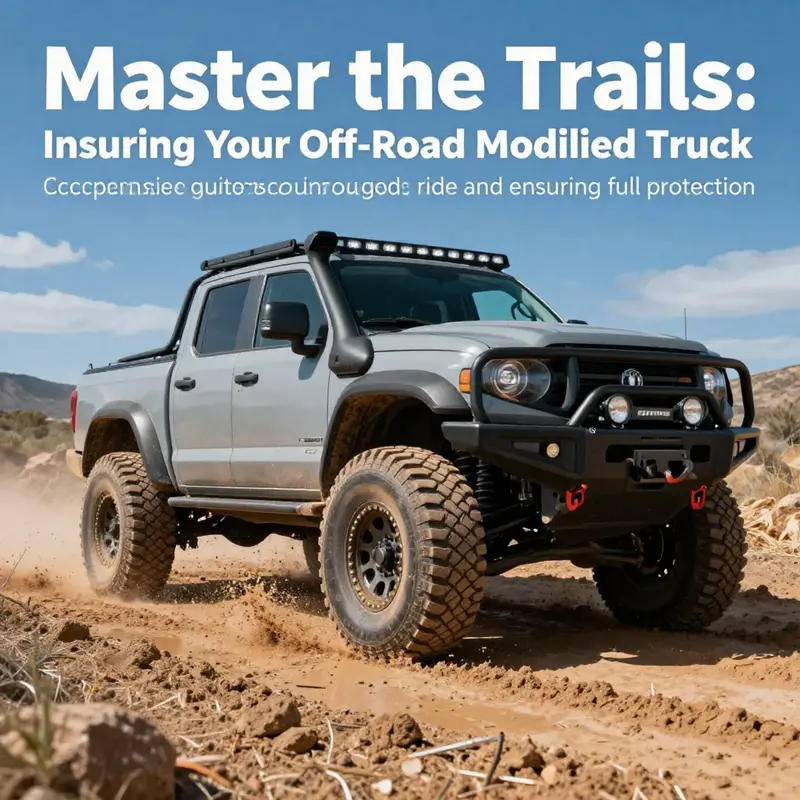
For off-road enthusiasts, a modified truck isn’t just a vehicle—it’s a manifestation of passion, adventure, and freedom. However, insuring these machines requires a unique approach. Understanding legal and insurable modifications is paramount; insurers need to be notified before any modifications are made to ensure coverage. Additionally, selecting the right insurance package is crucial in safeguarding not just your truck, but your adventures. This guide delves deep into these aspects, providing essential insights on how to successfully protect your off-road pride and joy.
Beyond the Lift: Navigating Legal and Insurable Modifications for Your Off-Road Truck
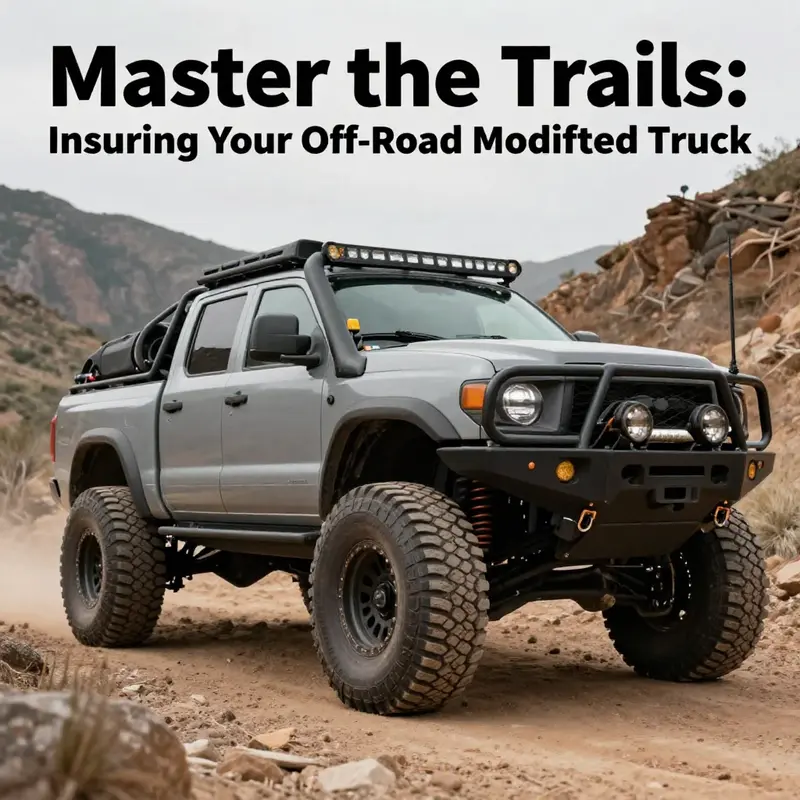
Modifying an off-road truck to conquer rough terrain is a shared language among enthusiasts: it speaks of capability, resilience, and a hands-on approach to vehicle performance. Yet once the work begins, the terrain shifts from passion to paperwork. The same upgrades that increase grip on a rock trail can complicate insurance coverage if they aren’t approached with a clear eye for legality and risk. This chapter binds those threads together into a cohesive understanding that helps you plan, execute, and insure modifications in a way that preserves your safety, your legality, and your financial protection. The journey starts with a basic reality: not every bolt or badge you add will be treated equally by lawmakers, regulators, or insurers. Some modifications are readily accepted because they align with safety standards and emissions requirements. Others, despite their popularity, slip into gray zones or outright disallowed territory in certain jurisdictions. Understanding where your truck sits on that spectrum is essential, because an insurance policy is not a passive shield that automatically covers every aftermarket part. It is a contract that reflects the real, measurable risk your vehicle represents when it leaves the showroom floor and enters the backcountry. A thoughtful approach to modifications—one that foregrounds legality, disclosure, and documentation—yields a policy that travels with you, not a letter that cancels a claim after a misstep. The practical path, then, is to view modifications as a negotiation with two partners: the regulatory environment that governs what you can legally drive on public roads, and the insurance ecosystem that prices risk and provides protection when things go wrong. As you plan upgrades, keep in mind three guiding questions: Will this modification be legal where I drive? Will it be insurable under a typical motor-vehicle policy, or will I need a specialized program? What documentation will I need to prove compliance and sustain coverage when I need it most? The answers begin with the most visible and consequential arena: the modifications themselves. In most regions, the modifications that are commonly embraced by off-roaders—upgraded suspension components, larger tires, protective skid plates, bull bars, winches, roof racks, and sturdy recovery points—tend to be within the realm of legality when they are properly registered and do not push the vehicle beyond established limits. But the line moves with each jurisdiction. Lift height, tire diameter, and how far those tires extend beyond the wheel arches can trigger a cascade of regulations. Some places cap how much your total vehicle height may exceed factory specs, others limit how much larger a tire can be in relation to the original size. Lighting upgrades are another area where rules can bite hard. Bright auxiliary lights, when improperly mounted or colored, can conflict with rules about front-facing light color and brightness. Emissions, too, remain a stubborn constraint in many regions. If a modification affects the exhaust system, the combustion process, or the emissions-control components, you may be stepping into territory that requires certification, testing, or even a prohibition on certain changes. The practical upshot is clear: legality is not a luxury; it is a prerequisite for credible insurance. Before any bolt goes on, you should verify that the intended modification will be recognized as legal in your state or country and that it will be properly registered and documentation-backed. This is where the DMV or its equivalent becomes a reliable ally. A common misstep is assuming that a modification is automatically compliant because it is popular in the off-road community. Popular does not always equal legal, and legality varies widely from one jurisdiction to another. A small lift, a slightly larger tire, a new set of LED lights, or a different bumper may be perfectly fine in one state and restricted in another. The key action is proactive verification: check the official channels, confirm that the modification is legally registered, and obtain any necessary approvals before you begin the installation. In the same breath, you should prepare for the insurance journey by recognizing that coverage depends on disclosure. Insurance is fundamentally about risk. If a modification increases your vehicle’s risk profile—think higher center of gravity, altered aerodynamics, or changes that affect braking, steering, or fuel efficiency—you have a duty to tell your insurer before the change is made. Many insurers require written notification, and some specify a lead time—often as much as ten days—so they can adjust your policy terms, premiums, or exclusions in advance. The perils of delay are real. When a modification is filed after the fact, insurers may treat it as a material non-disclosure that undermines the entire policy. In worst-case scenarios, undisclosed modifications can void coverage when you need it most, even if the incident was unrelated to the modification. The reason is simple: insurers price risk based on the vehicle’s actual configuration and operating profile. If that configuration changes, the risk profile changes too. The prudent course is to treat disclosure as a normal, routine step, not a last-minute bargaining chip. With legality and disclosure in place, you then choose the insurance package that aligns with an off-road truck’s unique exposure. Core protection remains familiar to most drivers: third-party liability and comprehensive coverage. Yet off-road vehicles commonly require additional layers that acknowledge the value and vulnerability of aftermarket parts and performance upgrades. Additional Equipment Insurance, sometimes called New Equipment or Equipment Coverage, is not optional for high-value add-ons. Winches, heavy-duty bumpers, aftermarket lighting systems, upgraded sound systems, premium seats, roof-mounted solar panels, and other enhancements can command significant repair or replacement costs. Without this rider, you may find yourself reimbursed only for the base vehicle in a total-loss scenario, leaving the upgraded components to absorb the financial hit. If you’ve invested heavily in an engine upgrade, a turbocharger, or drivetrain enhancements, Engine Special Protection, sometimes labeled Powertrain Insurance, becomes a sensible safeguard. These policies acknowledge that the core powertrain has been altered from factory specifications and carries different risk dynamics than a stock engine. They help bridge gaps where standard coverage would either deny or significantly undervalue a claim. For those who take their modified truck into legitimate off-road exploration or sanctioned events, an Off-Road or Racing Use Endorsement becomes an essential consideration. It recognizes that the vehicle is used in environments and conditions beyond routine street driving and may alter coverage boundaries or require different driver behavior stipulations. In many cases, this endorsement clarifies what types of activities are permitted, what evidence is needed to support a claim, and which repair networks are approved when you are out on a trail, desert, or track. The practical pathway to securing these protections begins with comprehensive documentation, which serves as the backbone of your insurance negotiation. Collect itemized purchase receipts and invoices for every modification. Store installation photographs, ideally with the VIN visible, and keep manufacturer specifications and installation manuals at hand. Certifications for lift kits, if applicable, demonstrate that the modification has passed relevant standards. Maintain a copy of updated vehicle registration and any DMV approval letters, if required. This archive acts as your proof file when you approach an insurer, and when you need to demonstrate your vehicle’s configuration after an accident or a claim determination. The days of “hope the insurer doesn’t notice” are behind you. When you approach an insurer with a well-documented modification history, you communicate responsibility, reduce uncertainty, and position yourself to receive the level of protection you expect. The choice of insurer matters, too. Not every company offers a program tailored to modified or off-road vehicles, and not every program is equally generous in its coverage of aftermarket parts. A specialist insurer—one that maintains a dedicated “modified vehicle” or “off-road vehicle” program—will typically have a network of approved repair facilities that understand aftermarket parts and the particular constraints of off-road use. They will also be more likely to recognize the value of your specific upgrades and to price coverage in a way that reflects reality, rather than fitting your vehicle into a one-size-fits-all policy. When searching for the right partner, look for experience with specialty trucks and SUVs, a willingness to review detailed modification lists, and access to a repair network that can handle aftermarket components. In discussing these aspects with potential providers, consider the practical outcomes you want: protection for accessories and build-out, fair valuation in the event of loss, predictable premiums that reflect your actual risk, and clear terms that specify what is and isn’t covered during off-road use. This is where an informal conversation can reveal crucial differences between offers that appear similar on paper. A cautionary note accompanies this guidance: don’t assume that a premium or coverage level from a generalist policy will automatically extend to customized parts. Standard policies often exclude or depreciate aftermarket components, even when you’ve paid extra for comprehensive coverage. In many cases, the missing piece is the Additional Equipment Insurance rider, which warranties replacement value for the high-cost add-ons rather than the vehicle’s base price. If you anticipate frequent trail runs, desert expeditions, or participation in sanctioned events, the Off-Road Endorsement or a similar rider can prevent gaps in liability and collision coverage that would otherwise leave you exposed. As you build this structure, you might be tempted to defer negotiation or to delay disclosure until you’ve finished your build. The opposite approach is wiser. Engage with your insurer early, outline every planned modification, and request a formal quote that reflects your build as it evolves. Several of the changes you plan may shift your premium, but you’ll gain predictability and the confidence that your policy will travel with you through the life of your vehicle. For drivers who want additional guidance in the mechanics of making modifications responsibly, there is value in turning to practical, results-focused resources that address engine tuning, component compatibility, and the practical realities of off-road performance. If you’re weighing engine work or performance upgrades, consider exploring the broader knowledge base behind responsible powertrain work, such as Mastering diesel mechanics: your step-by-step path to success. This resource can offer a grounded, methodical perspective on how engine enhancements interact with durability, fuel economy, and reliability, all of which feed into risk assessment and insurance considerations. In the end, the goal is to harmonize your off-road aspirations with a clear-eyed understanding of what is legally permissible and financially protected. A well-documented build, disclosed to a specialist insurer, aligned with the laws of your jurisdiction, yields a policy that is more than a formality. It becomes a dependable partner for the times you push the truck to its limits and the occasions when your vehicle sits safely in a garage, waiting for the trail to call again. The mental model you want to carry into every modification is simple: legality, disclosure, documentation, and a tailored insurance package built around your actual needs, not just the next big upgrade. With that frame, you can pursue rugged adventures with the assurance that your coverage will follow the truck you’ve built rather than leaving you exposed to gaps that could complicate a claim, dispute, or repair. External resources can further illuminate this path. For readers seeking a broader, field-tested perspective on what’s permissible and what isn’t, a detailed overview from an automotive publication offers practical guidance and scenario-based insights you can apply to your own build. This external reference complements the guidance above by translating regulatory language into actionable, road-tested considerations for off-road enthusiasts who care about both performance and protection. As you move forward, remember that every modification is a negotiation not only with the regulator but also with your insurer. Approach that negotiation with a clear record, a conservative plan for future upgrades, and a willingness to align your ambitions with the requirements of your policy. The payoff is a truck you’re proud of, a policy you can rely on, and the freedom to explore terrain with confidence rather than fear of a claim denial or coverage gaps. Internal link note: for readers exploring how to responsibly tune and upgrade powertrains while keeping a clear eye on reliability, a practical guide is available under a focused discussion on diesel mechanics—Mastering diesel mechanics: your step-by-step path to success. This resource, referenced as an internal link, links to a detailed, stepwise approach to engine work that complements the broader insurance considerations outlined here. External resource: Legal Off-Road Modifications: What’s Allowed and What’s Not. https://www.autoblog.com/2024/07/25/legal-off-road-modifications-what-is-allowed/
null
null
Shielding Power and Purpose: Crafting the Right Insurance Package for Your Off-Road Modified Truck
The moment you begin packing for a rugged trail or a desert dawn run, the value of your off-road modified truck shifts from purely mechanical to highly financial. The lift, the oversized tires, the winch bolted to the bumper, the reinforced frame, the upgraded interior—each modification changes not only performance but also risk. Standard auto policies often stumble when confronted with the cost and complexity of bespoke builds. They may underestimate the replacement value of specialized components, overlook the increased risk of particular use cases, or fail to account for the way a lifted vehicle behaves on uneven terrain. That is why selecting an insurance package tailored for modified, off-road capable trucks is not a luxury so much as a necessity. The right package should do more than indemnify you after a mishap; it should recognize the unique profile of your truck, reflect the real value of every add-on, and align with how you actually use the vehicle—whether that use is a weekend trail run, a desert endurance event, or a routine commute that doubles as a probing test of performance. In crafting this chapter, the aim is to weave together practical steps, clear guardrails, and a narrative about risk management that keeps pace with the way you push your truck to its limits and then bring it home safely. A key principle runs through all of this: don’t treat insurance as a static purchase. It is a dynamic agreement that should evolve with your modifications, your driving patterns, and the landscapes you traverse. Your goal is a policy that not only guards against damage to others and to your own vehicle but also preserves the tangible and intangible value of your build when the unexpected happens. The core idea is straightforward, even if the terrain is not: insure for what you have, insist on proper documentation, and involve the insurer in the process before changes are made. This may require a conversation that feels more technical than casual, but it pays off in smoother claims, fair valuations, and a policy that finally mirrors the reality of your modified truck. You will begin with how to frame the risk profile of a modified off-road vehicle, then move into the structure of a robust insurance package, and finally translate the process into everyday practice—so that your build remains a source of pride rather than a point of friction when you file a claim or renew coverage. Along the way, you’ll find practical milestones—disclosures, appraisals, and endorsements—that keep your coverage aligned with your truck’s evolving identity. And if you want a concrete touchstone for maintenance that supports valuation and reliability, consider resources that bridge the gap between mechanical care and insurance outcomes. For a comprehensive look at how maintenance decisions can influence your policy and its valuation, you can explore relevant guidance that links mechanics with coverage through a practical, example-driven approach presented in Mastering Diesel Mechanics: Your Step-by-Step Path to Success. Mastering Diesel Mechanics: Your Step-by-Step Path to Success. While the road you take is uniquely yours, the guiding framework for choosing the right coverage remains consistent: build a clear, documented picture of what you own; align that picture with a provider who understands modifications; and maintain a transparent, proactive relationship with your insurer so that the policy grows with your truck rather than lagging behind it.
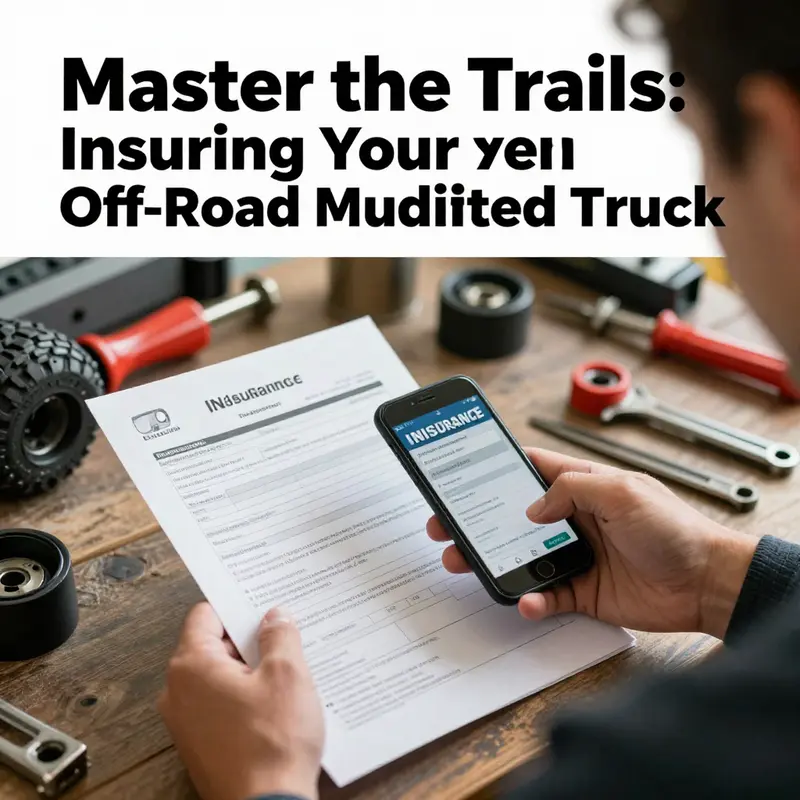
The most fundamental step is to acknowledge that your truck’s modification history creates a distinct risk profile. A lifted suspension, for instance, changes the vehicle’s center of gravity and its dynamic behavior on uneven terrain. Larger, aggressive tires alter braking distances and traction, while high-output lighting and heavy bumpers introduce different repair costs and replacement paths. When you step outside the boundaries of stock specifications, you step into a space where the replacement costs can rise sharply, and the criteria for collision or comprehensive coverage shift as well. Insurance underwriters see that every connector, mounting bracket, and control module carries a value that is sensitive to wear, impact, and environment. That sensitivity translates into how premiums are shaped, how deductibles are applied, and how a claim is valued. This is not a trap but a clear signal: you must articulate the complete modification profile with precision. A thorough disclosure not only satisfies regulatory and contractual requirements but also prevents post-incident disputes that hinge on whether a particular part was listed or valued correctly. In many jurisdictions, the law requires the vehicle to be properly registered with the modifications reflected in the official records. An unregistered lift kit or a non-listed aftermarket component can trigger a denial of coverage or a contested claim when a loss occurs. The up-front diligence of registration and disclosure becomes a practical form of risk management, reducing the likelihood that a future claim will be complicated by questions about what was or wasn’t legally accounted for in the policy. The importance of disclosure extends to the timing of changes. Insurers typically require notice before modifications are installed. The rationale is simple: a modification that raises risk—such as a lift that raises the vehicle’s center of gravity or a tire upgrade that pushes the profile into a category for which repair costs are higher—changes the risk calculus. Some insurers request written notice at least ten days before the modification, while others may require a formal pre-approval process. If you proceed without that notice, you risk not only a claim denial but an erosion of trust in the policy relationship. This is the moment where risk management and policy design intersect. By engaging your insurer pre-emptively, you allow them to calibrate coverage terms, project the right replacement costs, and outline any special conditions that will govern coverage for the modified components. You are not seeking permission to modify; you are seeking a partnership that ensures the vehicle you have is adequately protected against the way you use it. The practical result of early disclosure is twofold: you secure coverage that better reflects the full value of your modifications, and you avoid the post-loss complications that arise when a claim includes parts or modifications the policy did not anticipate. As you move from disclosure toward a formal coverage package, you will encounter a set of core protections that anchor the policy in the way you drive and the terrain you navigate. At the heart of any robust offering are the standard protections that ensure you are not exposed to unmanageable liability and that your own vehicle is covered for a wide range of perils. The first two pillars are straightforward: third-party liability and comprehensive coverage. Third-party liability protects against damage to others’ property and injuries for which you are at fault. Comprehensive coverage expands protection to non-collision events, including theft, fire, vandalism, and natural disasters. When your truck carries a significant aftermarket investment, these core protections exist not merely as a checkbox but as a baseline valuation that informs how losses are calculated and how deductibles are applied. Yet for a modified off-road vehicle, core protections can be insufficient without targeted, additive protections that recognize the specialized nature of the equipment and the risks associated with off-road use. This is where add-ons become non-negotiable, not optional niceties. One of the most important add-ons is Additional Equipment Insurance, sometimes labeled as New Equipment Loss Insurance. This coverage is designed to protect the high-value add-ons that are most exposed to loss on rugged trails and in remote settings. Think of winches, heavy-duty bumpers, aftermarket lighting systems, premium interior upgrades, roof-mounted equipment, and even unique storage or fuel solutions that you have installed. The policy must reach beyond the standard coverage to account for the increased cost of replacement and the availability of aftermarket parts. Without this protection, the added components can become a exposure item—a potential gap where a loss is reimbursed on a depreciated basis or not at all because the policy failed to recognize the new value. Engine protection is another crucial layer for modified builds. If you have upgraded the engine, turbocharger, or drivetrain, the reliability and repair costs can surge. Engine Special Protection, or Powertrain Insurance, is designed to provide coverage that aligns with the incremental risk of these upgrades. It acknowledges that a higher-performance engine has different failure modes and repair costs than a stock unit, and it compensates accordingly. For some drivers, an Off-Road or Racing Use Endorsement is essential. If you use the truck for competitive events, trail challenges, or high-speed desert runs, you encounter conditions that are beyond the scope of ordinary everyday driving. An endorsement tailored to extreme terrain uses helps ensure that the policy addresses the specific hazards associated with those activities, including the potential exposure to liability for bystanders, environmental conditions, and track or trail-specific risks. In practice, this package structure requires careful documentation and transparent valuation. To determine the appropriate coverage and premium, insurers will ask for a detailed inventory of modifications, including part numbers, approximate install dates, and the cost basis for each component. They may request copies of installation manuals, certification documents for lift kits or safety devices, and proof of compliance with local regulations. A well-prepared documentation file becomes a critical ally in the underwriting process. It serves not only as a record for the insurer but also as a tool for you to avoid disputes during claims. You should assemble a comprehensive proof file that blends purchase receipts and invoices, itemized with the part names, the vendors, and the exact costs. Installation photos with visible VINs and serial numbers help verify the exact configuration. Manufacturer specifications and installation manuals provide technical context that supports the stated values. If your modification includes a lift kit or any chassis or frame alterations, obtain any available certification documents that confirm compliance with safety standards. An updated vehicle registration or DMV approval letter, if required in your jurisdiction, rounds out the documentation you will need to present when applying for or renewing coverage. A thorough proof file reduces the risk of post-loss disputes by ensuring your insurer can quickly verify the scope and value of the modifications. When you are ready to select the right insurer, prioritize specialty programs that cater to modified or off-road vehicles. Not all underwriters offer coverage for these builds, and the policies that do exist are often part of a broader specialty insurance framework. Seek providers that have a demonstrable track record with modified vehicles, a network of approved repair shops that understand aftermarket parts, and a willingness to conduct an inspection or pre-approval process when required. A specialist approach ensures the coverage aligns with how you plan to use the truck. For some drivers, this means additional roadside assistance designed for remote locations and challenging conditions, a feature that can be a lifesaver when you’re miles from help and facing the unique demands of off-road travel. It is also worth noting that the type of off-road activity you pursue—recreational trail riding, desert racing, or endurance events—will shape the risk profile and the policy’s pricing. High-risk activities may justify higher limits on liability or even a separate loss forecasting model that captures the likelihood of events such as rollovers, environmental damage, or collisions with natural obstacles. In other words, the policy should be as flexible as your schedule and as precise as your use case. When you communicate with an insurer about modified vehicle coverage, you should discuss potential discounts for safety features that enhance protection, such as roll cages or fire suppression systems, along with opportunities for earning credits by completing recognized off-road driving courses or by maintaining an unblemished driving record. These factors, while not universal, can meaningfully reduce the cost of care for a high-value build and reflect the commitment you bring to responsible off-road operation. An important dimension is the ongoing review of coverage. As you add or change components, upgrade power, or shift between on-road and off-road use, you should revisit your policy. A well-managed process includes annual reviews and, if needed, mid-year updates when major modifications are installed. The goal is to prevent mismatch between what you own and what is insured. It also helps avoid the common pitfall of assuming that “comprehensive” automatically covers all aftermarket parts. In many cases, a policy will cover the vehicle as a whole but will exclude certain modified components unless you have an explicit Additional Equipment Insurance rider. The principle is simple: the more off-road you go, the more you need to be explicit about what is covered and how it is valued. This is why a proactive, transparent approach with your insurer is crucial. It reduces the friction that can accompany a claim because the insurer understands the full context of your build and can apply the correct valuation to each part. The last layer of consideration involves how the policy responds in the event of a total loss or a partial loss where aftermarket components are involved. The presence of high-value add-ons can complicate depreciation schedules and replacement timelines. A carefully structured policy will specify how aftermarket equipment is valued in a total loss scenario and how repairs are funded when a portion of the vehicle is damaged. It is not unusual for a claim to require specialized repair networks or for certain parts to be sourced outside standard channels. By anticipating these realities and negotiating language that ensures access to the right repair resources, you protect not only the vehicle’s physical integrity but also the ownership experience—the pride you have in maintaining and upgrading your build. In sum, choosing the right insurance package for an off-road modified truck is less about selecting a single policy feature and more about assembling a coherent, coalition-like set of protections. Core liability and comprehensive coverage form a necessary foundation, while add-ons address the unique costs and risks of a high-value, off-road-oriented build. Documentation turns a potential dispute into a straightforward valuation. A specialist insurer with a proven track record for modified vehicles helps ensure coverage remains aligned with your evolving build and use. And ongoing reviews keep the policy attuned to the reality of your driving life. The combination of proactive disclosure, precise valuation, and tailored endorsements creates a resilient safety net that lets you enjoy the power, the scenery, and the satisfaction of a well-loved, well-protected machine. The road may be unpredictable, but your protection doesn’t have to be improvised. With the right insurance package, your off-road modified truck can be ready for any challenge and ready to come home intact after every adventure. For further reading on off-road insurance options and claims considerations, you can explore additional resources such as a dedicated off-road coverage page from a major insurer, which provides detailed guidance on how activity type influences coverage and pricing. External reference: https://www.progressive.com/insurance/auto/off-road/
Final thoughts
Navigating the world of insurance for your off-road modified truck is not merely about compliance—it’s about embracing the spirit of adventure safely and responsibly. By understanding which legal modifications are insurable, ensuring your insurer is notified ahead of changes, and selecting a package that meets your unique needs, you set yourself up for success. Equipped with the right information, you can hit the trails with confidence, knowing you have the protection you deserve.