In today’s rapidly evolving automotive landscape, particularly within the trucking industry, the discussion around the role of artificial intelligence (AI) in fleet management and automation often revolves around the impressive capabilities of digital tools. However, a crucial aspect that deserves equal attention is the significance of investing in people.
As fleets adopt cutting-edge technology aimed at enhancing efficiency and productivity, industry leaders are increasingly advocating for a balanced approach that prioritizes workforce training technologies and employee engagement strategies. Investing in people not only cultivates a more adaptable and skilled workforce but also fosters a positive workplace culture that can effectively leverage the advantages of automation.
The call to action resonates especially in light of generational shifts in the workforce and the need for holistic views of roles. This introduction sets the stage for an in-depth exploration of why investing in people in the trucking industry is just as essential, if not more so, than the latest digital innovations.
By examining how to harmonize technology with human capital, fleets can navigate the challenges of modern operations, ensuring sustained success amidst a wave of digital transformation.
Insights from Industry Leaders on Balancing Human Capital with Digital Tools
As the trucking industry deals with the quick adoption of automation and AI, experts stress the need to balance human capital investment with technology. This balance is not just a trend; it is a strategic necessity for building resilience and growth in the industry. Here, we explore insights from industry leaders that highlight the importance of this dual investment strategy.
Technology as an Amplifier of Human Potential
Industry leaders say that technology should not replace human work but should enhance it. Ryan Schreiber from Metafora explains, “Done right, technology will allow brokers to have greater price flexibility, solve problems more effectively, and even hire better people.” This shows how using technology effectively can improve company outcomes and empower the workforce.
Dan Cicerchi, from Descartes, believes that leading brokerages are smart about how they use technology. This means they focus on how technology can support their staff rather than replace them.
Investing in a Future of Integrated Growth
The call for investing in human capital alongside digital tools is echoed across many sectors. Tom McLeod of McLeod Software suggests, “Invest in your company. Invest in the future.” This advice emphasizes the need to focus on both technology and the training required for workers to use these tools effectively.
Research shows that businesses with combined training for employees and technology see much higher returns on their investments. A World Economic Forum report notes that while automation may lead to the loss of about 85 million jobs worldwide, it is expected to create around 97 million new roles that require advanced skills.
This shift demonstrates that combining automation with workforce development is a strategy for creating better, more fulfilling jobs.
Addressing Integration Challenges
However, using automation comes with challenges that require human insight. Reports show that 47% of executives struggle to integrate new technology with old systems. Skilled workers are essential in finding solutions that make these systems work together.
As automation faces technical challenges, such as navigation errors, human operators are key. Their real-time problem-solving skills ensure smooth operations and turn potential problems into manageable ones.
Enhancing Return on Investment through Human Capital
Investing in both people and digital tools also leads to bigger financial gains. A study of logistics automation found companies achieve a fourfold return on investment through AI and improved workforce capabilities. This is due to not just higher efficiency but also improved work processes facilitated by skilled staff. Characteristics like proactive maintenance and effective asset use are crucial for integrated approaches.
In summary, industry leaders agree that balancing investments in human capital and automation is essential for the trucking industry’s success. By fostering a culture that values skilled employees and technological advancements, companies can navigate modern logistics challenges and lead in shaping the future of the industry.
In conclusion, investing in both workforce and technology is crucial for a resilient logistics ecosystem, promising competitive advantages and a stronger economic landscape.
Automation as an Enabler of Employee Growth
Experts agree that automation expands employee capabilities and should not just be about reducing staff. This perspective encourages fleets to use technology to empower employees, enhancing their effectiveness.
When implemented correctly, automation can reduce repetitive tasks and free employees to engage in higher-level responsibilities requiring creativity and critical thinking. This shift improves job satisfaction and strengthens innovation within teams.
AI Usage in Fleet Operations: Streamlining Onboarding and Reducing Training Times
The introduction of artificial intelligence (AI) into fleet operations has dramatically transformed the landscape of workforce training. Companies leveraging AI technology are finding that it not only simplifies the onboarding process but also significantly diminishes the time required for employee training. For instance, Purolator has reported a remarkable reduction in training duration, with onboarding times shrinking from weeks down to just hours. This swift transition allows new hires to become productive members of the team much quicker than traditional training methods would permit.
AI systems, through customizable and dynamic training modules, offer fleets a means to adapt training to individual learning paces. This personalized approach not only ensures that employees are educated on necessary operational protocols but also allows them to engage in real-world scenarios through simulations. Such interactivity facilitates mastery of new technologies and processes, fostering confidence among new recruits in their roles.
Furthermore, AI aids in the provision of ongoing support post-training. Intelligent systems can identify when employees may need additional assistance or resources, ensuring that knowledge retention is actively monitored and addressed. This is especially beneficial in a sector experiencing rapid technological changes, as ongoing training and support are essential to keep the workforce engaged and competent.
As younger workers, who often seek a more holistic understanding of their jobs, enter the industry, the integration of AI in training processes becomes even more pertinent. By creating an efficient onboarding process that values individual learning experiences, fleets not only enhance operational efficiency but also strengthen employee engagement and satisfaction.
Summarizing Generational Shifts in Workforce Expectations
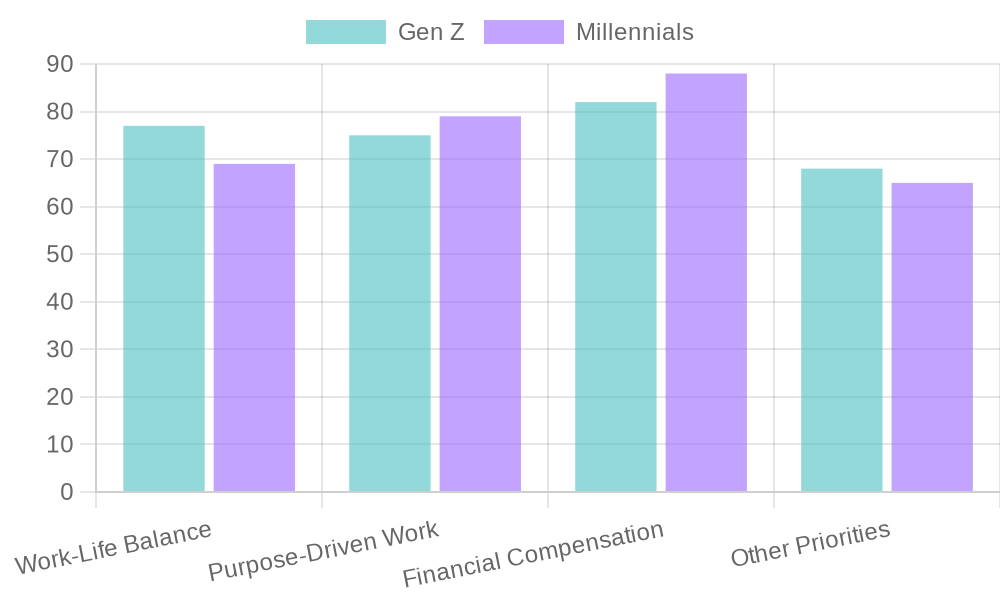
The contemporary workforce is undergoing a profound generational transformation, primarily driven by the evolving expectations and priorities of Gen Z and Millennials. These younger generations are not merely adapting to existing workplace norms but actively reshaping them, demanding a more holistic, purpose-driven, and human-centric employment experience. This necessitates a paradigm shift in organizational strategies from mere adaptation to proactive design.
Key Generational Priorities and Statistics
Younger generations exhibit distinct priorities that diverge significantly from traditional career paths, as illustrated by the following statistics:
| Priority | Gen Z | Millennials | Source & Year |
|---|---|---|---|
| Work-Life Balance (Top Reason for Choosing Employer) | 25% | 31% | Deloitte 2024 |
| Learning & Development (Top Reason for Choosing Employer) | 21% | 21% | Deloitte 2024 |
| High Salary/Financial Benefits (Top Reason for Choosing Employer) | 19% | 22% | Deloitte 2024 |
| Leadership Position as Primary Career Goal | 6% | 6% | Deloitte 2025 |
| Work-Life Balance (Most Important Aspect of Job for Gen Z) | 38.7% | N/A | Self.inc |
| Making Friends (Most Important Aspect of Job for Gen Z) | 38.2% | N/A | Self.inc |
| Company Culture (Most Important Aspect of Job for Gen Z) | 37.7% | N/A | Self.inc |
| Purpose Important for Job Satisfaction/Well-being | 89% | 92% | Deloitte 2025 |
| Turned Down Employer Due to Environmental Impact (Gen Z) | 20% | N/A | Iuslaboris citing Deloitte 2024 |
| Prefer Remote Work (Gen Z) | 49.3% | N/A | Self.inc |
Unlike previous generations, Gen Z and Millennials prioritize work-life balance along with the integration of work and personal values. A Deloitte 2024 survey indicates that 25% of Gen Z and 31% of Millennials prioritize good work-life balance when choosing an employer, consistently ranking as one of the highest priorities.
This challenges conventional notions of ambition; only 6% of Gen Z and Millennials view reaching a leadership position as their primary career goal. A significant 89% of Gen Zs and 92% of Millennials consider a sense of purpose important for job satisfaction, demanding roles that contribute positively to society.
Shifting Priorities: Work-Life Balance and Holistic Roles
The demand for well-being and mental health integration is paramount, with work-life balance being a significant aspect of job satisfaction. Younger generations are increasingly acknowledging the importance of making friends at work and being part of a positive company culture, highlighting that the workplace experience should contribute positively to their overall mental health and social interactions.
Influence on Workplace Culture and Leadership Styles
As more Gen Z and Millennials enter the workforce, their values are shaping workplace culture toward greater collaboration, empathy, and authenticity in leadership styles. Organizations are encouraged to rethink traditional hierarchical models and embrace more inclusive practices that foster a supportive environment conducive to vibrant and engaged teams.
Strategic Imperatives for a Multigenerational Workforce
To adapt to the changing dynamics caused by generational shifts, organizations must:
- Re-architect talent strategies to focus on skills-based hiring.
- Cultivate human-centric cultures prioritizing employee well-being and mental health.
- Design flexible work models that integrate personal values with professional obligations.
- Ensure alignment of organizational purpose with societal contributions.
By embracing these imperatives and investing in both employee development and holistic workplace environments, companies can better attract and retain talent while enhancing overall engagement and productivity.
Generational shifts in workforce expectations are not mere preferences; they are powerful drivers compelling organizations to adopt more human-centric approaches. As Elizabeth Faber, Deloitte Global Chief People & Purpose Officer, notes, “As Gen Zs and Millennials navigate a rapidly changing world of work, they are reevaluating the capabilities they need to succeed and the support they want from their employers.”
The evolving expectations of Gen Z and Millennials present not only challenges but also opportunities for creating a more engaged, fulfilled, and productive workforce capable of thriving in the future of work.
Case Studies in Implementing AI for Training and Onboarding
The integration of artificial intelligence into employee training and onboarding is fundamentally reshaping how organizations develop talent and facilitate integration. Key case studies highlight the methodologies adopted by companies like Purolator and others, illustrating the power of AI in enhancing operational efficiency, employee engagement, and retention.
Purolator’s Innovative Approaches
Purolator has implemented several AI-driven initiatives to enhance their training processes:
- AI in Candidate Evaluation: Purolator uses an AI solution to streamline candidate screening for positions like Financial Analyst II and Manager, Retail Channel Partner. This automation improves efficiency and objectivity in candidate selection processes, crucial for effective onboarding.
- Hybrid Learning with Augmented Reality: In collaboration with The Learning Network, Purolator developed a hybrid learning strategy employing Augmented Reality (AR) for training in its new facility. This innovative approach combines traditional methods with immersive AR experiences, allowing multiple participants to explore and engage within complex sorting and shipping operations, ultimately boosting knowledge retention.
These initiatives reflect Purolator’s commitment to embracing technology while improving employee experience.
Success Stories from Other Organizations
IBM
IBM’s proprietary AI platform, Watson, organizes personalized learning pathways based on employee data, leading to reduced training times and higher satisfaction rates from completion of courses.
Walmart
Walmart partnered with STRIVR for AI-powered VR training, achieving a 15% improvement in performance and a remarkable 95% reduction in training duration. This resulted in a more proficient workforce capable of handling customer interactions with confidence.
Amazon
Amazon developed AI-enhanced training modules for its warehouse staff, adapting content to individual progress and supporting them in navigating interactions with robots. This led to a 75% increase in employee engagement and a substantial 40% increase in task completion times.
Unilever
Unilever’s AI assistant, Unabot, built on Microsoft’s framework, aids new hires by addressing HR-related queries, which promotes quicker integration into the company culture and processes.
McDonald’s
McDonald’s employed AI-powered training simulators that provide step-by-step guidance for operational tasks. This initiative led to a 65% reduction in the time-to-hire and significantly streamlined onboarding processes.
Collectively, these examples illustrate the transformational impact of AI on onboarding and training practices. Companies employing AI tools see significant improvements in retention rates, reduced training durations, enhanced employee satisfaction, and optimized operational efficiency. As firms like Purolator pioneer these methodologies, they set a benchmark for others aiming to navigate the evolving landscape of workforce training in the era of artificial intelligence.
Analyzing the Impact on Employee Engagement and Workplace Culture Due to AI and Automation in Fleet Operations
The integration of Artificial Intelligence (AI) and automation is fundamentally reshaping fleet operations, presenting a complex and multifaceted impact on employee engagement and workplace culture. This transformation offers significant opportunities for advancement alongside notable challenges that demand strategic management.
Positive Impacts on Employee Engagement and Workplace Culture
AI and automation are streamlining routine and repetitive tasks, substantially boosting productivity and freeing employees for more strategic work. In fleet management, AI automates functions such as route optimization, scheduling, and compliance monitoring, significantly reducing the administrative burdens on fleet managers and drivers. This allows staff to concentrate on higher-value activities and more complex aspects of their roles.
AI-powered systems enhance fleet safety by identifying risky driving behaviors, preventing accidents, and providing real-time alerts. Fleets utilizing comprehensive AI safety solutions have reported substantial reductions in crash rates, fostering a culture of care that supports driver safety and loyalty. Moreover, AI provides granular data on driver performance, enabling personalized coaching and recognition programs that enhance employee engagement.
The adoption of AI necessitates new skill development, creating opportunities for employees to learn and grow. Training on AI tools facilitates initiatives that empower employees and open new career paths. Additionally, by automating scheduling and optimizing routes, AI can lead to more predictable work arrangements and potentially improve work-life balance, a crucial factor in employee satisfaction.
Negative Impacts and Challenges on Employee Engagement and Workplace Culture
A primary concern is the potential for AI and automation to displace human jobs, leading to anxiety and insecurity among employees. This fear can erode trust in leadership and result in a resistant workplace culture. Furthermore, employees may exhibit skepticism toward AI due to perceived invasiveness of monitoring systems and concerns about over-automation.
AI-powered monitoring systems can be viewed as intrusive surveillance, potentially fostering a negative workplace culture where employees feel micromanaged. Moreover, an over-reliance on AI tools can lead to information overload and confusion, adversely impacting mental health and overall employee experience. Poorly implemented systems can also initially increase stress, leading to frustration and disengagement.
Addressing the Impacts for Effective Integration
To maximize the positive impacts and mitigate the negative ones, organizations must adopt a strategic and human-centric approach to AI implementation. This includes transparent communication about the rationale for AI adoption and involving employees in the implementation process. Comprehensive training programs are crucial for equipping employees with the necessary skills to work alongside AI, ensuring they see the technology as a transformative tool rather than a substitute.
Implementing ethical guidelines for AI systems and ensuring a balance between monitoring and employee autonomy are vital for maintaining trust. Strong leadership is indispensable in championing AI adoption, demonstrating its value, and cultivating a workplace culture that embraces innovation while prioritizing employee well-being and engagement.
Comparison of Investment Costs in Digital Tools vs Workforce Training Programs
| Company | Digital Tools Investment | Workforce Training Programs Investment |
|---|---|---|
| Innocon | $250,000 | $100,000 |
| TFI | $300,000 | $150,000 |
| Purolator | $200,000 | $120,000 |
This table provides insight into the comparative costs associated with investing in digital tools against workforce training programs for various companies in the trucking industry. As seen, while the digital tools represent a significant investment, workforce training also entails substantial financial commitment, emphasizing the importance of balancing both approaches to strengthen overall operational effectiveness.
Conclusion
In today’s rapidly changing landscape of the trucking industry, the need for an adaptable fleet is more critical than ever. As companies navigate the dual pressures of technological advancement and shifting workforce expectations, investing in people alongside technology emerges as a strategic imperative. The insights shared by industry leaders remind us that digital tools should enhance, rather than replace, the vital roles played by skilled employees.
Fleets that prioritize workforce training cultivate a workforce adept not only at leveraging advanced technologies but also at tackling the complexities these tools introduce. This investment fosters a sense of belonging and empowerment among employees, leading to enhanced engagement and job satisfaction. The dual investment in human capital and technology is not merely an operational necessity; it is a powerful driver of workplace morale and innovation.
Moreover, as younger generations enter the workforce, their emphasis on purpose-driven work and holistic job experiences highlights the importance of a workforce that feels valued and supported. By creating a culture that recognizes the integral role of both technological capabilities and human potential, organizations can drive resilience and adaptability in an era dominated by automation and AI.
Ultimately, companies that embrace this balanced approach—investing equally in their people and technology—will cultivate a more sustainable and successful future for all stakeholders involved. The call to action is clear: integrate human capital into the technological landscape to ensure a thriving, adaptable fleet architecture that meets the challenges of tomorrow head on.

As advancements in AI facilitate more efficient training processes, they also pioneer changes in workforce expectations, specifically among younger generations who prioritize personal growth and meaningful engagement in their roles.
Given the ongoing integration of AI into fleet operations, it becomes essential to understand how these technologies intersect with the increasing desire for job fulfillment evidenced in the generational shift within the workforce.