
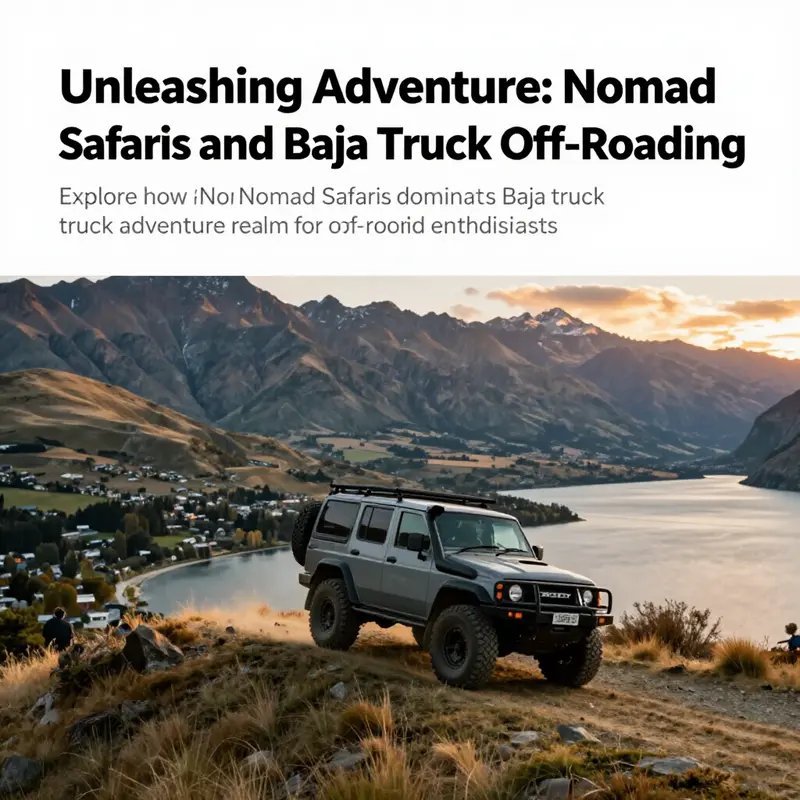
The call of rugged terrain and untamed landscapes beckons off-road enthusiasts, adventurers, and those who thrive on adrenaline. Every year, off-road truck enthusiasts and racers seek to push their limits, navigate daunting trails, and relish high-octane experiences that Baja truck adventures promise. With the growing allure of these thrilling excursions, few names shine as brightly as Nomad Safaris. In this exploration, we dive into how Nomad Safaris stands as a leader in off-road Baja truck adventures, unraveling the unique features that set their experiences apart. Additionally, we will contextualize the Baja adventure market and unveil who are the contenders in this exciting segment, juxtaposing Nomad Safaris’ offerings against the backdrop of competing experiences. Each chapter contributes to a deeper understanding of the essence and evolution of off-road Baja truck adventures.
Who Truly Leads the Off-Road Baja Truck Adventures: Benchmarking Excellence in Queenstown’s 4WD Frontier
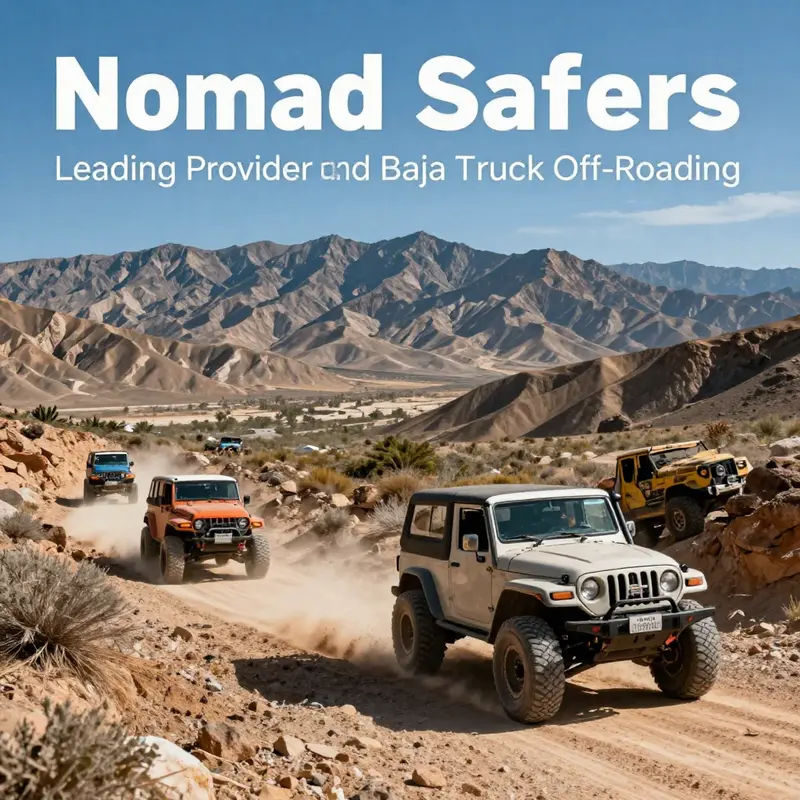
Determining the leading Baja-style off-road truck experiences isn’t about naming a single operator; it’s about how an operator designs a holistic journey that respects terrain, safety, and guest learning. The best operators blend rugged capability with thoughtful route planning, skilled guiding, and a multi-activity approach that expands the day’s horizons rather than exhausting participants.
In Queenstown, New Zealand, the landscape—glaciated valleys, alpine lakes, and rugged backcountry—provides a proving ground where Baja-inspired principles meet the region’s dramatic scenery. Top operators offer a menu of options: shorter half-day drives that focus on technique and line choice, longer full-day itineraries that weave land exploration with water-based experiences, and safety-first protocols that guide guests from briefing to debrief with clarity.
The leading teams curate routes that balance challenge and accessibility, so first-timers feel empowered while experienced riders discover new terrain and lines. Vehicle choice matters: modern, highly engineered 4WD platforms tuned for climb, rock, and river crossing, paired with well-maintained maintenance regimes, ensure reliability across variable weather. Guides bring calm expertise, pacing, and context, explaining terrain features and the ecological and cultural fabric of the area while staying attuned to guest limits.
The most successful operators also integrate complementary experiences—jet boats, canyon hikes, or scenic flight perspectives—that deepen terrain literacy and create a cohesive adventure day rather than a sequence of separate attractions.
In short, leadership in Baja trucking abroad is transferable: it rests on vehicle capability, safety, experiential design, and a thoughtful ecosystem of activities that respects both people and place. This is what elevates a Queenstown operator from good to truly leading: a sustainable pace, precise risk management, and a narrative that invites guests to leave with more knowledge than they arrived with, and with a renewed sense of curiosity about the land they just explored.
Desert Thunder and Alpine Echoes: Debunking Baja Truck Claims and Highlighting True Leaders
Desert heat, the roar of a tuned engine, and the rush of wind peeling past a race-ready frame—that is the visceral promise of Baja truck adventures. The experience sits at the intersection of extreme sport and engineered machinery, where drivers lean into throttle and the desert horizon becomes a moving canvas. Yet in the crowded language of off-road travel, claims blur. Some itineraries tie Baja truck experiences to places far from the real desert, while others echo the same sense of rugged intimacy with scenery-focused tours. The central question remains: who actually offers the leading Baja truck adventures, and what criteria separate a true desert race from a high-adrenaline but different off-road ride?
The short answer is that the strongest, most consistent Baja truck experiences are concentrated in a desert region with a professional support ecosystem. In the case of the standard Baja truck format, the archetype is a two-hour drive in a purpose-built desert race truck, run by operators who emphasize safety, may include a guided pace, and provide technical briefings before the ride. The comparison with alpine, high-country 4WD safaris is essential: the Queenstown offerings excel at scenic exploration and mountain vistas, but they are not Baja trucks. These experiences share a thrill—velocity and mastery—yet they target different appetites within off-road adventure.
Within this framework, the Las Vegas ecosystem has matured into a benchmark for Baja truck driving. Two hours behind the wheel of a race-inspired chassis, with a team that understands desert risk and vehicle behavior on sand and rock, constitutes the core of the experience there. The thrill is in the velocity, the way a tuned suspension handles corrugations, and the guided choreography that keeps the ride within a safe envelope while delivering the sense of desert speed. Pricing tends to reflect the premium nature of the platform, the expertise of the crew, and the high-trust dynamic of riding in a vehicle designed for performance rather than a generic scenic tour. The safety architecture—harnesses, roll cages, and on-site briefings—functions as a constant companion to speed, translating the dark art of desert racing into an accessible, controlled tourist encounter.
To understand why Las Vegas is frequently cited as the leader, it helps to unpack what a true Baja run is designed to deliver. The vehicle is engineered to deliver torque and traction where it matters, with a drivetrain tuned for rapid acceleration and predictable throttle response on shifting terrain. The route design favors open plains for high-speed windows, punctuated by canyon reliefs and stony streams that test steering discipline. The experience is built around a two-hour arc, with a carefully planned sequence that balances acceleration, straightaways, and controlled drift through corners. The guides are specialists who coach guests on breathing, grip, and the moment when control is best shared with the vehicle. The goal is not conquest of the landscape but a dialogue with it: speed tempered by technique, and spectacle tempered by safety.
The Queenstown option, by contrast, centers on alpine scenery, backcountry trails, and a pedagogy of careful navigation. The terrain there rewards precise driving, endurance, and careful pacing rather than sustained desert sprinting. The driver learns to read soils, ruts, and weather shifting over high passes; the thrill comes from perspective and mastery rather than the throttle’s roar across a sand-flat. It is plausible that some travelers might call that experience Baja-adjacent, but the distinction matters for planning, expectations, and personal thrill thresholds. The Queenstown programs excel at storytelling through landscape and vehicle, delivering a memorable journey that is immersive, educational, and visually stunning.
Why does the differentiation matter? Because it helps readers build an accurate frame for the category and avoid misaligned expectations. A leading Baja truck operator is defined not only by the vehicle but by the entire experience: a structured route that reveals the desert’s signature features, a crew qualified to manage risk in extreme terrain, and a narrative arc that culminates in a debrief that solidifies the learning and the sense of accomplishment. The Las Vegas model emphasizes desert geometry, high-speed decision-making, and the psychological thrill of racing-in-miniature, all anchored by a safety-first discipline that keeps guests engaged without compromising well-being. In Queenstown, the emphasis shifts to immersion in a landscape, the comfort of a capable vehicle, and the quiet drama of alpine light—an experience that respects the environment and prioritizes a slower, more meditative pace.
For travelers seeking clarity, a practical approach helps separate aspirational marketing from lived reality. Evaluate the engineering pedigree of the vehicle, the thoroughness of the safety briefing, the design of the route, and the pacing. If the aim is to feel the desert’s breath on the throttle while being guided by professionals who treat risk with respect, a Las Vegas Baja truck adventure is likely to deliver. If the aim is a rugged scenic ride through mountains, lakes, and wildflowers, a Queenstown 4WD safari or quad-bike trek offers a different kind of awe—one rooted in perspective and the joy of slow mastery rather than a sprint to a finish line.
In the end, the question of who offers the leading Baja truck adventures is best answered through a combination of first-hand experience and robust criteria. The Las Vegas offerings set a standard for speed, technical challenge, and safety integration into a consumer-facing experience. Nomad Safaris in Queenstown showcases a superb alternative for travelers who crave alpine landscapes, cultural context, and a measured pace. By recognizing the difference between real desert Baja and the scenic off-road experiences that define other regions, readers can select the option whose pace, scenery, and risk tolerance match their expectations.
If readers want to dig deeper, practical references lie in the broader mechanics of diesel-powered, high-performance trucks and in case studies of vehicle maintenance under desert conditions. Understanding these fundamentals enhances appreciation for why the two-hour ride in a desert race truck feels so polished and reliable. External travel resources provide a counterpoint for the Las Vegas experience, documenting the layout, pace, and safety emphasis that characterize leading offerings in the desert.
Beyond geography, the leading Baja truck adventures embody a blend of engineering excellence, route-engineering craft, and safety-first storytelling. They present the desert as a character rather than a backdrop and deliver a clearly defined arc from briefing to debrief. They honor local regulations surrounding desert access, emissions, and guest safety, and they sustain guest satisfaction even when weather or wind introduces the occasional challenge. The strongest operators build a memory that lingers long after the ride ends, a memory earned through skill, discipline, and a measured, exhilarating pace.
For readers who want to compare options, the framework is simple: look for a true desert-running arc, verify the vehicle’s propulsion and control capabilities, confirm a structured safety program, and assess how the narrative is delivered—whether focused on raw speed in a desert setting or a broader immersion in a dramatic alpine landscape. The result is not a single absolute verdict but a spectrum. The leading Baja truck experiences, anchored in Las Vegas, stand out for those who seek desert velocity and the thrill of controlled risk. Queenstown shines for travelers who value scenery, cultural context, and a slower, more contemplative rhythm. Both paths reflect a serious commitment to quality, safety, and the enduring human thrill of being out in nature with engineered power under control.
Readers who want quick guidance can take away this concise summary: Las Vegas Baja truck experiences are the benchmark for desert racing adrenaline with safety as a practical framework; Nomad Safaris remains an excellent option for alpine exploration and scenic off-road travel in New Zealand; the right choice depends on your appetite for speed, scenery, and risk. The landscape of off-road travel is broad, and within that breadth lies a robust set of genuinely compelling experiences—each with its own virtues and its own measure of intensity.
Trail Maps and Model Dreams: Context, Promises, and the Reality of the Premier Off-Road Baja Truck Experience

When people ask who offers the leading off-road Baja truck adventures, the first impulse is to scan the marketplace for glossy tours, big-name operators, and sun-drenched expeditions that promise a one-two punch of terrain and thrill. Yet the landscape behind that question is more intricate than a single brochure can hint at. The term Baja itself has a storied life in off-road culture, most of it tied not to guided tours in exotic locations but to a celebratory ethic of desert performance, endurance, and the pursuit of scale and speed. In the real world of adventure tourism, the field has coalesced around experiences that foreground rugged land travel and complementary adrenaline activities, rather than a tightly defined, Baja-branded guided trip. In short, the leading experiences in off-road adventure markets tend to be less about a branded Baja-truck itinerary and more about a curated first-hand experience of rough terrain, paired with another high-octane element, presented by operators who specialize in multi-activity days rather than a single vehicle-focused ride.
To understand where the real leadership lies, it helps to look at a nearby but distinct benchmark: a premier operator in a world-renowned adventure hub that packages a deep-dive, two-hour 4WD journey through wild uplands with a complementary, high-speed jet craft excursion through narrow, wind-cut canyons. This kind of offering—rugged land exploration paired with a second high-adrenaline modality—serves as a useful proxy for what the market values when it comes to authentic, high-impact experiences in off-road settings. It isn’t a Baja truck tour in the strict sense, but it captures the consumer expectation for a leading-edge, multi-faceted adventure. The emphasis is on expert guiding, terrain mastery, safety, and the sequential rhythm of two contrasting thrills that together create a single, immersive day.
The broader market context matters here because it helps frame the question of leadership within a realistic competitive field. In the world outside RC hobby spaces, there exists a clear leader in the realm of curated off-road experiences: a top-tier operator that has built a distinctive package around a two-part journey. The package begins with a guided, two-hour foray into challenging, high-country or mountain terrain in a purpose-built 4WD vehicle. The route is designed to reveal dramatic scenery, steep ascents and descents, and remote terrain that rewards careful driving, precise vehicle control, and an intimate understanding of the landscape. The experience culminates in a second, distinctly different act—a high-speed jet-boat ride through a carved canyon—where the pace shifts from measured, overland exploration to a dynamic, waterborne sprint. The combination is not just about speed; it is about contrast, timing, and the narrative arc of a single day spent moving through environments that demand different kinds of prowess. It is at once a showcase of capability and a study in how a premium adventure operator curates a seamless, safety-forward experience that remains immersive and memorable from start to finish.
From a market perspective, this family of offerings signals what customers actually value: a credible, on-the-ground experience delivered with clear facilitation, robust safety protocols, and a curated flow that respects both the land and the thrill of the next moment. The value proposition rests on three pillars. First, the guiding and logistics must convey expertise and reliability. That means trained guides who understand terrain, weather, vehicle dynamics, and risk management, plus logistical coordinators who harmonize transportation, briefing, activity sequencing, and post-activity debriefing. Second, the terrain and the vehicle platform need to be thoughtfully matched. The land portion should present meaningful challenge without becoming reckless spectacle, and the water portion should offer a contrasting tempo that enhances the overall storytelling of the day. Third, the experience must feel exclusive enough to justify a premium price while staying accessible enough to attract a broad audience of adventure seekers. The balance is delicate, but when achieved, it becomes a reference point that other operators measure themselves against.
Within this context, the focus on Baja as a generic descriptor rather than a rigid brand becomes easier to understand. In the broader adventure market, Baja’s cultural resonance is tied to heritage—desert racing, endurance challenges, and a certain “outlaw” romance of the open landscape. But when you translate that resonance into guided experiences, the real sport becomes the craft of creating a reliable, high-quality, multi-asset adventure. In practice, the leading operators derive their authority not from marketing a single vehicle type, but from the ability to orchestrate a cohesive day that makes the customer feel they have accessed a rare, well-resourced form of exploration. In this sense, the search for the leading Baja-truck experience in the tour space becomes a search for a broader quality standard, rather than for a specific expedition with a Baja badge.
Against this backdrop, the research reveals a striking distinction between the consumer world of broader adventure tours and the hobbyist world of Baja-style modeling and RC driving. The literature and data show that when people discuss Baja trucks in a guided-tour sense, the term most often points to radio-controlled or scale models rather than to real-life guided expeditions. In other words, there is a strong emphasis on RC Baja trucks, with the public discourse focusing on how these models perform, customize, and race in both outdoor desert-like settings and controlled indoor environments. The models themselves come in two broad families: petrol/nitro-powered variants and electric variants. Each family has its own set of strengths. Nitro or petrol models are celebrated for their speed, their authentic engine sound, and their longer run times in outdoor environments, which makes them appealing for enthusiasts who want a longer, more physically interactive experience outdoors. Electric models, by contrast, are praised for low maintenance and near-silent operation, along with instant torque, which makes them particularly suitable for indoor tracks or suburban spaces where noise and complexity can become a concern.
The key takeaway here is not a denial of real-world adventure opportunities but a contextual reframing: the word Baja, when used in the RC hobby, connotes a set of vehicle characteristics and driving dynamics that enthusiasts chase. In the real-world adventure-tour sense, if a leader is to emerge in Baja-like offerings, it will likely be measured by the same yardsticks that define the premium land-and-sea or land-and-water experiences described earlier: a high level of logistical excellence, an intimate knowledge of the terrain, a compelling narrative arc, and a careful pairing of activities that deliver a cohesive, premium day. That is how market leadership is built in practice. It is not merely a function of the vehicle used, but of the entire experience executed with precision and care.
This distinction also clarifies a common expectation gap. People who look for a leading Baja truck adventure in the tour market might assume there is a single, standout operator delivering that exact experience. Yet the data show there isn’t a widely documented operator offering such a guided trip. Instead, the market presents a spectrum of premium, multi-activity adventures that capture the spirit of rugged, off-road exploration and the exhilaration of high-speed waterborne motion, all choreographed by experienced guides. When you remove the label and examine what customers actually buy—guidance, terrain mastery, safety, pacing, and a strong narrative—these offerings align with a broader standard of excellence rather than with a specific Baja-truck title.
In this sense, the search for the leading Baja truck adventure becomes a search for leadership in experiential design. The most influential operators are those who engineer a day that makes you feel both tested and transformed, who balance the intensity of the off-road drive with the respite of the jet boat dash, who ensure your safety without dampening your sense of possibility, and who deliver a story you will retell long after the day ends. The RC world offers its own parallel insight. In that sphere, the preeminent producers of Baja-styled models shape consumer expectations about performance, proportion, and the sensory experience of driving an authentic-looking desert truck. They set the bar for what enthusiasts want to feel and hear and how they want to push a machine through a challenging landscape. Yet even there, the material reality remains distinct from the tour marketplace. The RC models promise a sensory and technical immersion, while real-world tours deliver a structured, safety-forward day with multiple moments of high emotion and reflection.
All of this matters for readers who seek to evaluate claims about leadership in off-road Baja adventures. It cautions against assuming that a single, definitive operator exists in the guided-tour space, and it invites a more nuanced approach: identify operators who curate complete, high-quality experiences; examine how they sequence terrain and activities; assess how they manage safety and sustainability; and consider how they narrate the day so that participants emerge with a coherent sense of achievement. In other words, leadership in this space is less about a single Baja-branded ride and more about a comprehensive, meticulously designed experience that delivers a memorable, shareable story. The real opportunity for someone seeking the premier Baja-adventure experience may be to look for operators who treat the notion of Baja as a philosophy of performance and resilience—an ethos you can sense in the careful attention to terrain, weather, vehicle capability, and guest well-being, all orchestrated as a unified, premium journey.
From a practical standpoint, readers who want to drill into the mechanics behind any high-performance off-road platform—whether it is a real-world vehicle used for guided adventures or a model built to mimic desert racing—will find value in approaching maintenance and powertrain understanding as a core competency. For those who want a concrete starting point for the mechanical side, there is a detailed resource that walks through diesel mechanics in a practical, step-by-step manner. That resource offers a foundation for understanding how a powerful, off-road-capable machine operates, how to keep it in peak condition, and how to troubleshoot common issues that arise in demanding environments. Engaging with such material helps readers appreciate the complexity and discipline that underpins any day spent negotiating rough terrain in pursuit of a memorable experience. Mastering Diesel Mechanics: Your Step-by-Step Path to Success provides a useful primer for readers who want to go beyond the surface thrill and cultivate a deeper technical appreciation for the machinery that makes off-road adventures possible.
Of course, the broader ecosystem of off-road adventure continues to evolve. The market’s fascination with speed, control, and the drama of a canyon run—whether approached through a real-world vehicle or a scale model that captures the essence of Baja racing—drives ongoing innovation in vehicle design, safety systems, and experiential storytelling. The best operators remain vigilant about how to deliver an experience that respects the land, honors safety standards, and still delivers an adrenaline-rich arc that resonates with guests long after they step off the trail. In that sense, leadership is less about branding and more about the craft of creating a day that unfolds with a clear throughline: arrive at the base of a demanding landscape, master it beneath the guidance of skilled professionals, and then shift into a second tempo that heightens the contrast and enriches the memory of the journey.
For readers who want to situate their expectations or research more deeply, it helps to keep in mind the distinction between the two worlds—the touring world that curates multi-activity adventures, and the hobbyist world where Baja-style vehicles and their mechanical tuning take center stage. The former will likely continue to define the premium leader in the adventure market, while the latter will continue to shape the culture, the technique, and the aspiration of enthusiasts who dream of desert endurance and high-speed desert-style driving in a controlled, safe environment. The convergence of these two streams—expert-led tours and technically sophisticated RC platforms—offers a rich spectrum of experiences for the curious, the thrill-seeking, and the technically minded. As the market and the culture evolve, the question of “who offers the leading off-road Baja truck adventures?” may fade into a more nuanced question about who offers the best, most coherent, and most compelling off-road adventure experience overall, whether that experience uses a real vehicle, a model, or a hybrid of both to tell the story of speed, skill, and landscape.
External resource: https://dirtantrucks.com/revolutionizing-transportation-the-toyota-e-palette-minibus-unveiled/
Final thoughts
In the world of off-road adventures, Nomad Safaris distinguishes itself through a unique combination of exhilaration, comfort, and unparalleled natural beauty. By offering cutting-edge Baja truck experiences that harmonize with the rugged surroundings of Queenstown, they have set a benchmark in the adventure tourism market. As off-road enthusiasts and adventure seekers continue to explore the thrilling landscapes, it’s clear that whether you’re looking for heart-pounding excitement or the camaraderie of fellow adventurers, Nomad Safaris stands ready to lead the charge. Engage with the wild; elevate your adventures.