

Embarking on an off-road adventure is more than just a thrill; it’s a test of your truck’s capabilities and your driving skills. For enthusiasts, the quest to find the perfect trails that challenge both man and machine is relentless. From rugged mountains offering exhilarating drives to community support networks sharing hidden gems, this guide illuminates the best spots to take your truck off-road. Whether you’re navigating the thrilling coasters of Climbing Mountain in Suzhou, tackling the daunting roads of Jinan’s Mountains, or exploring the rugged terrain around Kunming’s Jiaozishan, each chapter unveils opportunities that cater to diverse off-road experiences. Get ready to explore, conquer, and connect with the off-road community as you gear up for your next adventure.
Climbing Mountain and Beyond: Navigating Suzhou’s Off-Road Truck Trails and Nearby Regional Alternatives
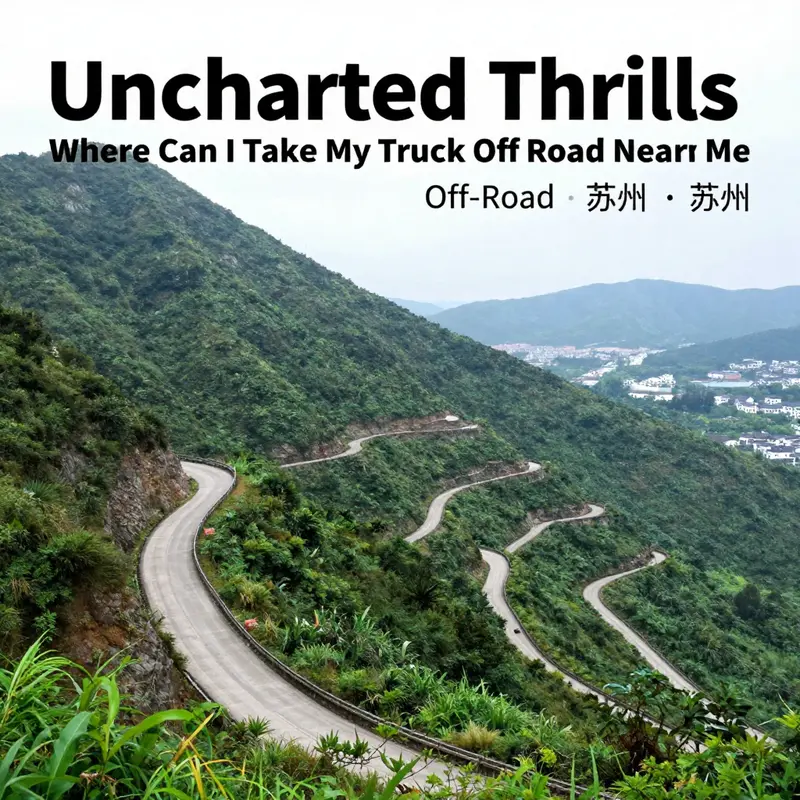
Suzhou sits at a crossroads of urban life and rugged landscapes. A truck owner can swap city streets for dirt roads, rocky patches, and climbs that test both vehicle and driver. The question of where to take a truck off road near Suzhou isnt a single answer but a path that starts with a practical gateway and grows with curiosity and capability.
In this region, a short drive from the city to a mountain base reveals a tapestry of trails that reward planning and careful driving. One of the most accessible entry points is Tianchi Mountain, located near the end of a metro line. The area hosts an off-road club that offers guided experiences focused on safety, camaraderie, and learning through practice. The walk from road to trailhead keeps the experience practical; you can dip into rougher terrain without a long trek. The thrill comes from feeling the ground change under the tires and from learning what your truck and you can handle.
The scenery around Tianchi Mountain includes steep contours and patches of woodland, with occasional glimpses of the city. With the right mindset, the experience becomes cumulative: more tire contact, better traction, and greater confidence; the ability to read slope, soil, and moisture; and a progression from easy sections to slightly more challenging terrain.
Beyond Tianchi Mountain, Suzhou and nearby districts offer a spectrum of routes reflecting the region’s topography and growing off-road networks. Trails weave between hills and ridges, giving scenic views and technical opportunities. Nearby areas such as Jinan feature mountains with a mix of narrow lanes and broader paths that reward careful line choice and throttle control. The Jinxiu Chuan Scenic Park may offer elevated views from the summit and roads that invite measured navigation. Qianfo Mountain presents a steeper ascent that rewards deliberate line selection.
The practical framework for these trips rests on three pillars: vehicle readiness, trail discipline, and local rules. Vehicle readiness means tires suited for mixed terrain, sufficient ground clearance, and a drivetrain capable of handling uneven surfaces. Recovery gear, a basic toolbox, and a plan to communicate with a partner are essential. Trail discipline means staying on established tracks, preserving the terrain for others, and avoiding erosion. Local rules require respect for private lands and posted restrictions, as some parks have access windows or seasonal constraints.
If you want to broaden your scope beyond Tianchi Mountain, regional notes help map the landscape. Jinan’s mountains offer a different flavor, with routes requiring careful speed management and line choice. Kunming’s Jiaozishan area adds a rugged alternative and a chance to practice on rough surfaces near the summit. This regional mosaic shows that the question of where to take a truck off road near you becomes a layered journey, starting with an accessible gateway and gradually exposing the vehicle and driver to new textures and elevations.
The end goal is to cultivate a driver mindset and a reliable vehicle, as much as a sense of place. The broader conversation about off-road readiness can include practical considerations such as planning for longer trips and thinking about power and charging infrastructure for electric trucks in remote terrain. See the ongoing discussions and local guides for Tianchi Mountain to learn more about accessibility, trail conditions, and visitor experiences. For a direct look at Tianchi Mountain’s options, you can visit online resources that detail the terrain and accessibility.
Jinan’s Mountain Trails: Pushing Boundaries with Off-Road Trucks and Intelligent Mobility

Jinan sits at a crossroads of rapid urban growth and rugged terrain, a city whose future as a national transportation hub is matched by an equally compelling invitation to explore beyond the pavement. The mountains that ring this capital are not just scenic backdrops; they offer a testing ground for a new generation of off-road capability. In this landscape, the line between adventure and enterprise blurs. For truck enthusiasts and professional operators alike, the surrounding peaks present more than a weekend escape—they suggest a platform for evaluating durability, traction, and autonomy under real-world, remote conditions. The unfolding story of Jinan’s mountains is thus not only about scenery; it’s about how rugged terrain can inform smarter design, safer navigation, and more resilient logistics networks that extend far beyond the city limits.
Among these mountains, Xiezi Mountain in the Shizhong District stands out as a prime example of opportunity meeting proximity. Located a mere 700 meters from the Second Ring South Road, this summit sits near a corridor that already channels heavy traffic and high-speed planning into the heart of the city’s infrastructure. What makes Xiezi especially intriguing for off-road testing is its balance of accessibility and challenge. The familiar approaches and the untouched, rocky shoulders create a controlled environment where a truck can be put through its paces without venturing into remote frontiers that raise safety and regulatory concerns. Hikers have long cherished Xiezi as a secret haven, yet its terrain is sufficiently varied to support a broader purpose: piloting intelligent off-road platforms that require robust traction, steady control, and adaptive suspension.
In this light, Jinan’s mountains become a living lab for the next wave of mobility. Off-road truck campers and other rugged platforms are no longer mere weekend contraptions; they are potential test beds for autonomous navigation, remote diagnostics, and real-time adaptation to changing ground conditions. The discussion around intelligent off-road mobility is not abstract. It is anchored in the practicalities of how a vehicle senses rock, mud, ruts, and loose gravel, then adjusts throttle, braking, and wheel articulation to maintain momentum and safety. The terrain around Jinan offers a spectrum of cases—from compact switchbacks that demand precise steering at low speeds to gravel stretches and shallow slopes where traction control must cooperate with a careful throttle hand to prevent wheel spin. This spectrum is precisely what a serious operator looks for when calibrating a vehicle’s performance envelope.
To appreciate the full potential of these mountains, one must consider the feedback loop that connects field conditions with intelligent design. An off-road truck camper or a similarly rugged platform benefits from durable tires with predictable sidewall behavior, adequate ground clearance to clear obstacles, and a drivetrain tuned for low-speed torque rather than high-speed highway acceleration. The mixed-terrain reality surrounding Jinan—where mud can cling to treads after a light drizzle, rocks can expose themselves after a freeze-thaw cycle, and steep grades demand controlled descent—maps directly onto the kind of data that engineers crave. In this sense, Xiezi Mountain is more than a destination; it is a proving ground for a philosophy of rugged mobility that emphasizes resilience, not spectacle.
The practicalities of testing and using off-road trucks in this region also intersect with broader strategic aims. Jinan’s push to strengthen cross-border logistics and smart infrastructure signals a future where rugged mobility coexists with digital oversight. The city’s evolving role in transport corridors—rail, air, shipping, and road—creates a backdrop in which intelligent off-road platforms can be integrated into remote work sites, mobile workshops, or expeditionary teams that need to reach dispersed points of operation. A telling illustration is the recent achievement of a truck arriving from Jinan to Moscow via TIR transport, a milestone that underscores how the city’s logistical ambitions are widening the scope of what off-road platforms can support. While the Moscow route is a long, international one, the underlying message is clear: robust mobility, supported by smart coordination and reliable equipment, matters wherever the work takes you.
In the mountains themselves, the focus shifts to capability and discipline. Off-road operations demand more than raw horsepower; they require a balanced package: tires tuned for mixed surfaces, a chassis with adequate articulation, and a driver who understands how to read the terrain. The possibility of deploying intelligent off-road vehicles introduces new layers of capability. Imagine a fleet of truck campers traversing Xiezi’s shoulder trails, guided by sensors that detect grip variance and by control algorithms that maintain stability as ground conditions shift under heat or rain. The appeal is not purely technical; it is practical. For operators, the prospect of remote operation, route planning that accounts for time of day and weather, and the ability to predict maintenance windows before a challenge becomes a failure is transformative. These mountains thus become not just a stage for adventure but a laboratory for reliability.
Yet, as with any exploratory activity—especially in commercial and industrial contexts—there is a need to balance ambition with prudence. The terrain around Jinan calls for respect for environmental stewardship and for the regulations that govern outdoor testing. Trails that welcome cyclists may present unknown segments that can surprise a vehicle with sudden ruts or loose gravel. A seasoned operator treats such moments as opportunities to refine technique rather than as excuses for risk. The process benefits from knowledge exchange within local off-road communities, where experienced drivers share routes, seasonal conditions, and practical tips for staying within trail boundaries while still pushing a platform toward its limits. That social dimension—shared knowledge, caution, and curiosity—helps create a sustainable ecosystem where both the landscape and the vehicles can improve together.
From a maintenance perspective, the mountain environment reinforces the value of fundamentals. Regular checks on tire integrity, suspension travel, and braking performance become part of a routine that mirrors the cadence of travel planning in the city. If the goal is to reliably translate the thrill of off-road exploration into productive, field-ready capability, then operators must anchor their practice in the core discipline of mechanical readiness. For readers who want a concrete starting point on the technical side, there is a practical path to follow that emphasizes the core skills every rugged vehicle relies on. Mastering diesel mechanics is foundational for any truck that spends time outside paved roads; it equips operators to diagnose powertrain quirks, manage fuel and cooling demands, and maintain the mechanical integrity needed for long days on uneven surfaces. Mastering diesel mechanics: your step-by-step path to success.
As a broader narrative, the mountains around Jinan point toward a synthesis of endurance and intellect. The same terrain that tests a vehicle’s grip also pushes designers and operators to think about autonomy as a complement to human skill. Intelligent off-road platforms can compensate for uneven conditions by integrating sensing data, trajectory planning, and adaptive control, reducing the cognitive load on a driver while enhancing safety margins in rugged environments. This toward-a-smarter-off-road ethos dovetails with the city’s strategic aims: to prove that the same landscapes can host both traditional rugged driving experiences and modern, data-informed mobility. Such a pairing has implications not only for enthusiasts seeking a weekend challenge but also for companies that rely on work sites located far from urban centers, where dependable access and predictable performance are essential.
The potential for scalable use touches on economic and environmental considerations as well. By fostering responsible testing and operation in regions like Xiezi Mountain, Jinan can attract a cadre of engineers, operators, and researchers who want to study how intelligent mobility performs in real-world, off-road contexts. This ecosystem—spanning equipment, expertise, and ever-evolving terrain—helps create a feedback loop that accelerates learning and reduces risk for future deployments. It also aligns with the broader idea that rugged terrain, when paired with smart infrastructure, can become a strategic asset rather than a limiting constraint. In practical terms, that means better planning for remote work sites, more resilient supply chains, and a safer, more capable class of vehicles that can handle the unpredictability of the outdoors while delivering results when it matters most.
For readers who want a broader lens on this topic, the literature on off-road truck campers and their industrial applications offers deeper technical detail and case studies that illuminate many of the questions raised by Jinan’s mountain landscape. External resources explore the technical specifications, features, and industrial implementations of these platforms, helping practitioners translate mountain testing into real-world deployments. External resource: https://www.example.com/offroad-truck-campers-explained.
In sum, Jinan’s mountainous surroundings invite a thoughtful blend of curiosity, caution, and technical curiosity. They are a reminder that off-road driving is not merely about conquering obstacles; it is about understanding how terrain, vehicle design, and intelligent control can work in harmony to expand the reach of trucks and truck-equipped platforms. As cities push toward smarter logistics and as enterprises seek remote, flexible work capabilities, the mountains around Jinan stand ready to show what is possible when rugged terrain meets careful planning, robust hardware, and informed experimentation. The journey from a near-city trail to a scalable, real-world solution begins with the willingness to learn from the land, to respect the road, and to invest in the basics that keep machines and people safe when the ground goes from firm to unpredictable. The mountains are listening, and they offer a clear invitation to engineers, drivers, and planners alike: test, adapt, and carry the lessons home to the road you travel every day.
Jiaozi Mountain Trail: Navigating Rugged Terrain with a Truck Near Kunming

Jiaozi Mountain, known locally as Jiaozishan, rises above Kunming with a quiet, austere grandeur. Its alpine scenery—shimmering ridges, a belt of year-round snow, and highland meadows swaying under cool air—draws tourists who ride the cable cars and drift along scenic routes. Yet the rugged belt that wraps the mountain’s flanks is a different story. That outer rim, where dirt turns to shale and mud, where switchbacks bite into the hillside and gravity tests a vehicle’s grip, is the realm where a truck can truly meet the mountain. Unlike the well-paved paths that lead to viewpoints and lodges, the surrounding terrain demands more than enthusiasm; it requires grit, preparation, and a respect for the land that hosts you. For anyone asking where to take a truck off road near Kunming, Jiaozishan offers a compelling, cautionary case study about access, capability, and the delicate boundary between adventure and regulation.
From the city to the foothills, the travel narrative begins with access. Travel resources describe a practical, low-stress route: most visitors reach Jiaozishan from Kunming by taxi, a journey that unfolds in roughly three hours and costs in the neighborhood of 410 to 500 yuan. This route blends paved highways with gravel segments, guiding travelers toward the scenic area while preserving a boundary between tourist infrastructure and the more demanding backcountry. For those who want to push beyond the tourist perimeter, guided tours—often including transport in purpose-built vehicles equipped for mountainous conditions—provide a pathway that respects safety while granting access to areas where the terrain becomes genuinely austere. Yet even with such arrangements, the summit or the innermost reaches of Jiaozishan remain outside the reach of ordinary private vehicles. The mountain’s higher elevations and remote pockets are girdled by constraints that protect both visitors and the delicate alpine environment.
The terrain itself tells a clear story. The surface around Jiaozishan oscillates between loose gravel and shale, with exposed grades that demand precise throttle control, deliberate braking, and a patient reading of the road. Steep gradients test hill-climb capability, while narrow, winding stretches require careful line selection and a calm, practiced hand on the wheel. In wet or snowy conditions—an ever-present possibility in highland climates—the risk of sliding or bogging down increases. It’s a landscape that rewards trucks with robust powertrains and confident suspension setups, yet it also punishes complacency. Good tires, ample ground clearance, and solid approach and departure angles aren’t luxuries here; they’re prerequisites. The practical takeaway is straightforward: Jiaozishan’s rugged approaches are not a playground for casual off-road runs. They are a reminder that access to extreme terrain, even in a region famed for scenery, is a controlled proposition governed by safety, environmental stewardship, and local frameworks.
That context helps explain why, despite Jiaozishan’s allure for off-road truck enthusiasts, the most reliable way to experience the area’s rougher aspects is through guided arrangements. The tourism ecosystem around Kunming has learned to balance the thrill of rugged exploration with the responsibilities of conservation and public safety. For those who want to push beyond the familiar, a guided transport option can ferry a capable, purpose-built vehicle toward viewpoints or lodges where staff can support basic needs and ensure staying on designated tracks. Even then, the actual act of driving rough terrain will be tempered by the conditions of the day and by the mountain’s own rules for access. In practice, the highest-visibility access points are designed for service and logistics—supporting mountain lodges, infrastructure projects, or select tour operations—rather than for spontaneous, private ventures. This distinction matters for anyone who imagines a private truck conquering Jiaozishan’s secluded corners: the reality is that deeper entry remains tightly coordinated, and the safest path often travels through a guided framework rather than a solitary expedition.
Preparation becomes the bridge between desire and viability. Vehicle capability is more than horsepower; it’s a composite of tires with tread that can bite into loose surfaces, suspension that can absorb sharp irregularities, and a robust drivetrain that can endure repeated climbs and descents without overheating or glazing. In practical terms, this translates into a checklist: verify tire condition and pressure appropriate to the terrain, confirm adequate ground clearance for anticipated obstacles, and ensure recovery gear is on hand and accessible if the environment allows for it. A well-prepared truck should also have a ballast of common-sense equipment—tools, spare parts for quick fixes, and a plan for shelter in case weather closes in. The emphasis here is not merely to conquer but to stay safe and able to navigate out of trouble if the road suddenly tightens or the surface betrays a wheel with a momentary misstep.
Beyond the mechanical, the human element matters just as much. Local off-road communities—networks of drivers who trade notes on trails, conditions, and best practices—often illuminate paths that aren’t visible on official maps. They can point to lesser-known tracks, seasonal gates, or the subtle quirks of a particular ascent that only repeated visits reveal. For Jiaozishan, such collective knowledge helps casual visitors transform a potential drive up the mountain into a controlled, informed exploration that respects both the environment and any regulatory boundaries. The social fabric around off-road driving in this region isn’t just about speed or challenge; it’s about shared observation, cautious experimentation, and a culture of stewardship. As you weigh a trip to Jiaozishan or similar highland terrains, consider connecting with experienced local drivers, guides, or club networks. Their insights can turn a potentially risky day into a well-planned, memorable experience that aligns with local norms and safety practices.
Carrying that sense of community into practice, the actual on-road opportunity around Jiaozishan reinforces a broader lesson: when you ask where to take your truck off road near Kunming, the answer isn’t a single trail or a single lane. It is a corridor of possibility that opens only when you match capability with permission, weather, and a respect for the landscape you’re traversing. The mountain’s rugged edges push the limits of what a truck can do, but they also remind us that the most meaningful adventures often come with a caveat: plan with care, drive with discipline, and recognize that some of the most compelling terrain remains out of reach except through the right channels and with the right partners. For a truck owner who wants to grow in skill and understanding, Jiaozishan offers a proving ground in miniature—an alpine wedge that separates caution from ambition, and a reminder that the joy of off-road exploration is inseparable from the responsibility to protect the very ground that makes the journey possible.
If you’re curious about how to approach truck maintenance and the fundamentals that support off-road reliability in environments like Jiaozishan, a practical guide to diesel mechanics can provide useful grounding. Mastering Diesel Mechanics: Your Step-by-Step Path to Success offers a structured overview of keeping a diesel-powered truck in fighting form, which can be especially valuable when venturing into rugged, remote areas where assistance may be limited and reliability is paramount. While Jiaozishan’s higher reaches require careful coordination and respect for local guidelines, the spirit of the journey—testing a truck’s capability against a demanding landscape—remains essential for anyone who wants to understand what off-road exploration near Kunming entails.
And for travelers seeking context beyond the route itself, consider the broader sensory and practical experience Jiaozishan offers. A recent traveler’s review highlights how the region’s scenery feels almost otherworldly against the stark, wheel-wearied truth of the backcountry routes. While the summit itself remains largely inaccessible to private vehicles, the surrounding terrain presents a layered portrait of highland beauty and the realities of mountain logistics. This juxtaposition—the lure of pristine alpine views against the constraints of access—frames the core tension of off-road travel in this part of Yunnan. It’s a reminder that every successful expedition into Jiaozishan’s rugged terrain begins with listening to the land, aligning with local guidelines, and preparing a vehicle that can meet the mountain’s demands without compromising safety or the ecosystem that makes the route distinct.
For readers who want to explore similar highland challenges while staying connected to practical resources, Jiaozishan serves as a model of how off-road opportunity is sometimes found not in a single trail but in a network of possible routes, guided access, and the shared knowledge of a community that understands the mountain’s temperament. The experience isn’t simply about the thrill of the drive; it’s about learning to read the terrain, to anticipate changing conditions, and to engage with the landscape in a way that honors both curiosity and caution. In that sense, Jiaozishan isn’t just a destination; it’s a reminder that the best off-road adventures near Kunming arise where preparation, permission, and patience converge, turning a rough, challenging road into a meaningful encounter with one of Yunnan’s most striking highland environments.
External resource: https://www.tripadvisor.com/AttractionReview-g293738-d1069182-Reviews-JiaoziSnowMountain-KunmingYunnan_Province.html
Beyond the Pavement: Vehicle Readiness for Safe Local Off‑Road Truck Adventures

When you set out to explore off‑road lanes that begin where pavement ends, you’re entering a space where planning, patience, and a well‑tuned machine matter as much as nerve and pace. Local routes often thread through mountain passes and forested corridors that reward careful preparation with a sense of discovery that no asphalt strip can match. The question of where to take your truck near you is less about chasing a single destination and more about building a practical framework that keeps you moving, safely, through mud, dust, rocks, and steep climbs. It’s a framework that begins with the most honest guardrail of all: knowing what your vehicle can do and what it cannot. The materials you’ve studied—and the conversations you’ve had with other enthusiasts—point toward a shared understanding: off‑road driving is less about bravado and more about balance between capability, terrain, and restraint. That balance is achieved through deliberate choices about tires, clearance, suspension, and the gear you carry, and it unfolds as you learn to read conditions the moment you roll onto a trail that you’ve never driven before. This is the kind of local exploration that rewards incremental progression, not reckless speed. It’s about choosing routes that match your truck’s limits while offering opportunities to practice line choice, momentum management, and recovery techniques under a variety of surfaces.
In practical terms, the first pillar is traction and ground clearance. Off‑road tires designed for all‑terrain or mud‑terrain use deliver the grip needed on uneven surfaces, where slick stones, rutted grooves, and slick clay can suddenly turn admiration into a difficult moment. Ground clearance—often ten inches or more—acts as a shield against undercarriage contact with rocks, roots, or dropped obstacles that show up where the trail narrows or climbs. The next pillar rests on the suspension system. A robust, long‑travel setup lets the vehicle absorb disturbances without losing control, letting you maintain steering and braking authority as wheels climb over rocks or dip into ruts. Enthusiasts frequently upgrade shocks and lift a truck to better tolerate the unpredictable geometry of rough trails. The drivetrain, too, is central. Four‑wheel drive or all‑wheel drive systems are the standard here, because they distribute power to all wheels and preserve traction when one corner finds grip where others lose it. These mechanical choices feed into a chain of decisions you’ll make on every stretch of dirt you encounter: how aggressively to throttle, how slowly to pick a line around a tight bend, and when to slow down to avoid a rock garden that exceeds your clearance.
Alongside this mechanical readiness sits a toolkit of safety that keeps trips from turning into misadventures. Recovery gear is not optional; it’s essential. A winch or a capable pull system, traction boards, a sturdy shovel, and a spare tire are fundamentals you should pack and know how to use. Communication is equally vital. In remote pockets of terrain, cell service can vanish, leaving you with two reliable options: satellite messaging or a rugged two‑way radio that works beyond the reach of towers. Packing a compact medical kit with basic trauma supplies, a first‑aid manual, and a plan for who to call when something goes sideways completes the safety net. Beyond gear, responsible driving is a discipline you practice before you ever turn onto a rough lane. Understanding your vehicle’s limits, respecting trail etiquette, and adjusting expectations to match the day’s conditions—these habits keep you and others on the trail safer and more comfortable. The goal is not only to reach a given peak but to finish with a clear head and a vehicle that remains ready for the next leg of the journey.
Terrain comes in many flavors, and the decisions you make should reflect that diversity. Some trails resemble muddy farm lanes that washboard under heavy tires yet yield to careful throttle modulation. Others resemble stone stairways where the grip is uncertain and momentum must be preserved without forcing a wheel over a rock that could bend a control arm. A few routes weave through narrow corridors whose turns demand precise wheel placement and a measured pace. The research I drew on notes that certain areas offer a mix of conditions—roads that allow access to summits via small mountains, with terrains ranging from compact gravel to jagged rock and slick soils—each demanding careful line choice. In one region, a mountain road might be accompanied by a scenic coaster or other attractions that blend view and challenge, while in another, the ascent presses the truck’s limitations with steep grades and tight switchbacks. The common thread is clear: the best local adventures reward patience and practice more than raw power, and they invite you to test a well‑prepared vehicle against the obstacles you expect to encounter, as well as those you don’t.
To navigate this landscape wisely, many drivers turn to communities that share trails, tips, and warnings gleaned from their own trips. Local groups often become your most reliable resource for discovering lesser‑known paths, understanding seasonal constraints, and learning about the specific characteristics of nearby mountains. These networks sustain a practical, ongoing exchange of knowledge that keeps driving for recreation both accessible and responsible. A practical way to deepen your mechanical confidence within that community is to study accessible guides and technical primers that demystify the internals of truck maintenance and performance. For instance, a comprehensive, step‑by‑step resource on diesel mechanics can be a valuable reference, helping you understand engine behavior, fuel delivery, and simple diagnostic steps that can prevent a roadside breakdown. You can explore concepts like this in depth through resources such as Mastering Diesel Mechanics: Your Step‑By‑Step Path To Success, which anchors practical knowledge to real‑world scenarios you’re likely to encounter on rugged trails. While the mechanics of the engine are only one part of readiness, they underpin a more fluid and reliable experience when you’re miles from the nearest service bay.
Even with a well‑prepared vehicle and a solid knowledge base, the practical act of choosing a trail near you benefits from a thoughtful appraisal of the terrain and a realistic plan. You’ll learn to balance ambition with prudence, recognizing when a route calls for the right time of year, the right weather window, or even a different approach altogether. For many drivers, this means starting with a route that is gentle enough to cultivate confidence, then gradually expanding to more demanding landscapes as skill and comfort grow. It also means remaining mindful of obligations to the environment and to fellow trail users: stay on established paths, pack out what you bring in, and avoid creating new routes that could damage soil structure or local habitats. The point is not to conquer every rough incline in a single season, but to build a track record of safe, enjoyable experiences that can be repeated and shared with others who are exploring near you.
When you’re ready to translate this readiness into concrete decisions about where to go, you’ll find that the landscape offers a spectrum of options. Some destinations feature mountain road systems with accessible routes suitable for trucks, delivering a blend of scenic vistas and the hands‑on engagement of off‑road driving. Others present steeper, narrower passages that demand precise machine handling and measured throttle control. The best practice is to approach each outing with a clear plan, a conservative cell of backup options, and the humility to turn back if conditions threaten safety. In cases where a trail’s grade or surface proves too challenging for the day, you can still experience the sense of discovery by stopping to observe the landscape, testing your vehicle’s approach angles in a safe area, and learning from the data you’ve gathered about your own limits. This approach keeps your exploration aligned with a long‑term objective: to enjoy local off‑road driving responsibly while building knowledge and skill that will pay dividends on future excursions.
As you map out your season of local adventures, remember that the practical framework described here—traction and ground clearance, a robust suspension, a reliable drivetrain, and a well‑stocked safety kit—serves as the core of your planning. It is complemented by a network of fellow enthusiasts who help you read the terrain, anticipate seasonal changes, and share navigational insights that aren’t always apparent from a map. The integration of maintenance knowledge, practical recovery skills, and a respect for the environment creates a cycle of improvement that makes every trip safer and more rewarding. And while the lure of a distant, dramatic peak remains compelling, the most enduring victories are earned on trails that teach you to listen to your tires, your engine, and the ground beneath your wheels. For a deeper dive into the hands‑on fundamentals that keep you moving, consider the practical guide linked above and the broader resources that tireless communities curate. If you’re seeking a concise, field‑tested checklist to anchor your trip planning, a comprehensive external resource offers a detailed, actionable framework you can adapt to almost any local landscape: https://www.offroad.com/technical-guides/off-road-truck-prep-checklist.
Where the Trail Begins: Local Networks and Real-World Grounds for Off-Road Truck Adventures Near You

Finding a place to take your truck off road near you starts with more than a map. It begins with people who share your curiosity, a willingness to learn from each other, and a willingness to explore responsibly. The idea of a local off road community is not just about finding a rugged stretch of dirt; it is about tapping into a living network of guides, clubs, and informal trail systems that together shape safe, fulfilling experiences behind the wheel. In practical terms, this means seeking out local clubs that host trail days, online forums where routes are discussed and updated, and regional groups that publish seasonally adjusted itineraries. When you combine these resources with a clear sense of your own vehicle’s limits, you create a foundation that makes a nearby hill climb or a forested byway more than a weekend whim. The most enduring adv entures arise not from paying for the longest trail, but from the shared know-how that lets you read the land, read the weather, and read the lines of your truck as you negotiate mud, rock, and grade with steady confidence.
Communities come in many forms. Some are real-world clubs that host guided rides, safety briefings, and volunteer work days to maintain trails. Others live online, in forums and chat rooms where veterans and novices swap practical tips about tires, approach angles, and recovery gear. The digital layer is not a substitute for hands-on learning; it is a way to surface cautions and opportunities before you lace up your boots and roll to a nearby trailhead. The balance between in-person camaraderie and online exchange is what makes a local off-road scene sustainable. It is also what helps you feel connected to a broader culture of responsible exploration, even when you are driving far from any well-trodden route.
In this landscape of shared knowledge, there are tangible destinations that illustrate how local terrain can shape a community. Consider a mountainous region that offers accessible roads alongside a mountain coaster or scenic byways. A setting like this demonstrates two truths at once: the thrill of a challenging drive and the beauty of a landscape that rewards careful navigation. Accessible roads functioning as a backbone for trucks can provide family-friendly viewpoints where passengers can savor panoramic vistas between tight sequences of ruts and ledges. The lesson is not simply to push harder, but to read the terrain with a confident calm, letting your truck and your crew breathe in the moment without forcing the line. The trail becomes less about showing off and more about reading the weathered map that lives on the land and in your mind.
There is something equally instructive about mountains that demand a degree of technical finesse. When you encounter narrow gullies, tight switchbacks, or a road that climbs at a sharper pitch than you anticipated, the experience teaches restraint. It is here that the community aspect shines: you learn from others’ close calls, hear about the best tire choices for loose rock, and hear stories of how to pick the safest line when traction is uncertain. The broader point is that off-road driving, especially with a heavy truck, is as much about patience and planning as it is about power. The right approach is to know when to back off, find a safer alternative route, or wait for a more favorable weather window. The knowledge you gain through local conversations and shared trip reports is a compass you can lean on when you are miles from the nearest paved road.
Within this framework, real-world examples from around the globe illuminate the range of terrain that communities often discuss. In one well-known progressive setting, a mountain region features roads that are usable by trucks, yet the experience is enriched by a mountain coaster that provides a separate thrill and a logistical reminder of the area’s multiuse landscape. The contrast between a rough gravel lane and a controlled ride down a mountain slope highlights how accessibility and adventure can coexist. Other communities celebrate mountains where the road to the summit becomes a proving ground for a vehicle’s capability, emphasizing careful throttle control, steady steering, and the correct choice of gears to manage steep, loose surfaces. The key takeaway is not simply to visit a high point, but to understand how the elevation, the texture of the ground, and the surrounding scenery shape a responsible, memorable outing for both the driver and passengers.
From a planning perspective, the most practical path to those nearby off-road opportunities involves tapping into regional knowledge streams. Local clubs often publish trail calendars that align with seasonal conditions, road closures, and maintenance work on shared lanes. While some routes are clearly designated for vehicle access, others inhabit a gray area where permission and courtesy are essential. In such places, the community’s tone—announce your presence, respect posted signs, and yield to areas that require slower, more deliberate driving—creates a safer environment for everyone. The right approach is to begin with a reconnaissance run, ideally with an experienced member who can point out potential obstacles, offer alternative lines, and teach you how to park and extract without damaging sensitive terrain. This method reinforces the idea that off-road driving is a shared responsibility that strengthens as a group activity.
A further layer of depth comes from recognizing the terrain diversity that makes the near-me promise so compelling. Some regions offer gentle forest lanes with occasional rocky stretches, while others present a firmer challenge with mud and rutted hills that demand careful throttle modulation and precise wheel placement. There is something educational about the presence of mixed surfaces near a trailhead because it teaches adaptability. You learn to switch your approach as you move from damp clay to shale, from soft humus to a shelf of exposed rock. And you learn to evaluate the risk-reward balance in real time: how much risk you are willing to assume, and how much recovery time you can budget if conditions shift. This awareness—the ability to modulate ambition and caution—becomes a hallmark of a mature off-road community.
The social texture of this culture extends beyond the trail itself. Off-road communities often function as informal mentorship networks. They share maintenance tips, such as tire choice, proper air pressures for different surfaces, and the importance of ground clearance and approach/departure angles. They swap practical recovery strategies for when a vehicle gets stuck, including how to deploy traction boards, winch setups, or simple mechanical leverage techniques without escalating danger. They also exchange trip planning methods, including how to choose routes that suit the vehicle’s capabilities and the group’s experience level, and how to align a schedule with local weather windows. In short, a well-tended local scene is a living map that grows with every expedition and every new member.
As you anchor yourself in a local network, you also begin to see how the online dimension complements the physical world. Dedicated discussion boards, Reddit communities, and social media groups provide a day-to-day pulse of what is possible nearby. They offer route suggestions that are vetted by locals who know the subtleties of the land and the local regulations. They provide safety briefs and gear recommendations long before you ever set foot on the trail. The digital layer helps you avoid overcommitting to a route that your truck cannot safely handle and helps you time the trip to avoid weather hazards. It also invites a wider community to share their adventures, injecting fresh perspectives into the local scene and helping newcomers feel that they belong from their very first ride.
For those seeking practical anchors, a useful starting point is to develop a basic toolkit for the road that aligns with local terrain. A reliable set of tires with tread appropriate for mixed surfaces, solid ground clearance, and recovery gear that you and your crew can deploy efficiently are indispensable. Understanding your vehicle’s limits—such as how far you can lean into a corner on slick mud or how much you can press the throttle on a loose rock surface—transforms fear into curiosity. This is where the internal resource of hands-on experience becomes valuable. For readers who want a focused, pragmatic path to self-improvement, consider the practical guide to vehicle maintenance and mechanical know-how titled mastering diesel mechanics, which can be accessed here: mastering diesel mechanics. The guidance here helps you keep your truck in peak condition as you explore more challenging routes with greater confidence and fewer breakdowns.
With that foundation, the question of where to go next becomes less about chasing novelty and more about building a balanced itinerary that respects the land and the people who safeguard it. Real-world networks connect you to trails that suit your truck and your crew while offering the safety margins of experienced guides and updated route information. They also connect you to a broader culture that values responsible stewardship of trails, sharing with you the spirit of adventure while reminding you that the best trips are often those shared with peers who can teach you something new on every outing. The interplay of local knowledge, online dialogue, and a willingness to learn from every obstacle creates a robust, lifelong habit of discovery. It is this habit—more than any single location—that defines a thriving off-road community near you.
As you search for nearby opportunities, remember that the real reward is the people you meet, the skills you sharpen, and the landscapes you come to understand through repeated, considerate exploration. If you crave a further horizon that blends terrain play with immersive simulation-inspired terrain challenges, an external resource worth noting is the official Expeditions: A MudRunner Game site, which captures the spirit of navigating remote and rugged environments in a collaborative, community-driven format: https://www.mundfish.com/expeditions
Final thoughts
The allure of off-road driving goes beyond the thrill; it’s about camaraderie, skill, and the exploration of breathtaking landscapes that only off-road trucks can reach. From the exhilarating heights of Climbing Mountain in Suzhou to the challenging pathways of Jinan’s Mountains, and the ruggedness of Kunming’s Jiaozishan, the opportunities for adventure are boundless. Equip your truck, embrace the challenges, and immerse yourself in the vibrant off-road community that’s eager to share experiences and knowledge. Your next off-road journey awaits—are you ready to conquer the trails?