
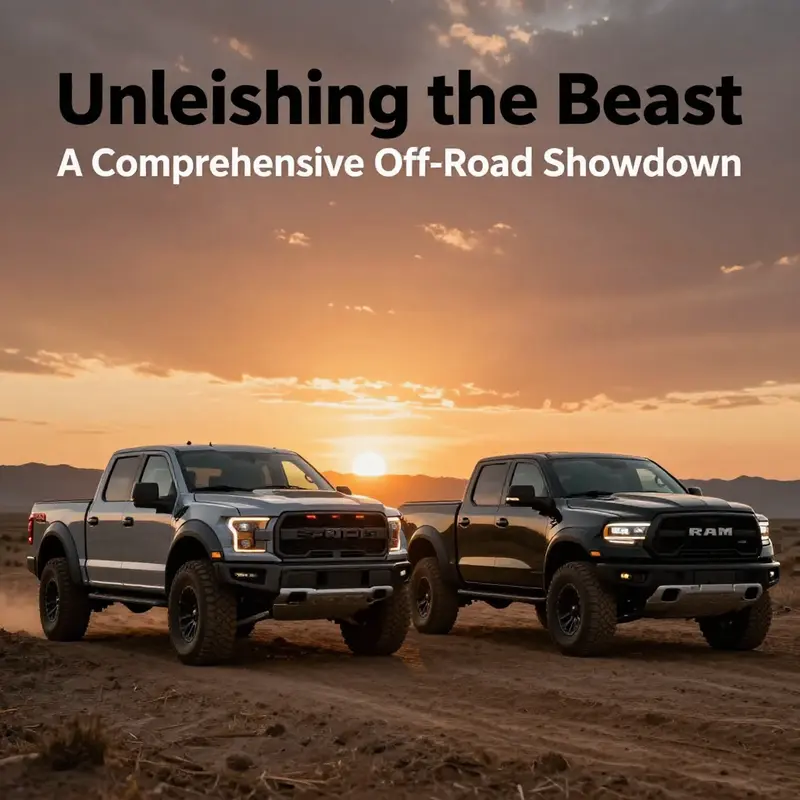
In the world of off-road trucks, the Ford F-150 Raptor and Ram 1500 Rebel are titans designed for those who refuse to be held back by terrain. While both showcase robust engineering and formidable presence, they cater to different off-road philosophies and experiences. The Raptor is a high-performance beast, built to conquer the harshest environments, while the Rebel strikes a balance between rugged ability and everyday comfort. This exploration dives deeply into their capabilities, spotlighting aspects such as suspension, engine performance, terrain management, and real-world testing, allowing off-road enthusiasts to make informed decisions about which truck reigns supreme in rugged terrains.
Rugged by Design: How the F-150 Raptor Edges Out the Ram 1500 Rebel in Extreme Off-Road Performance
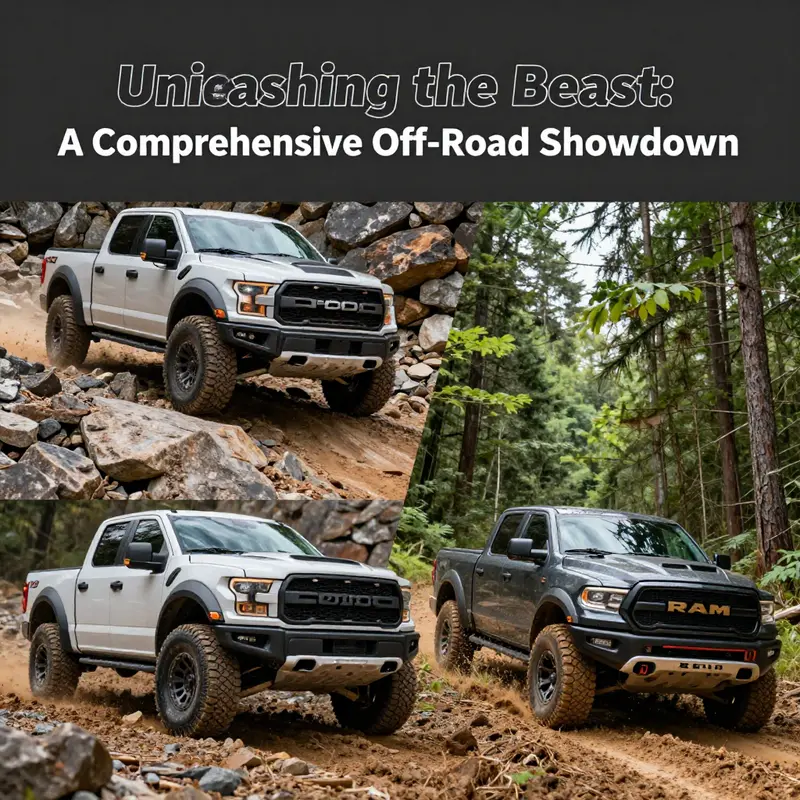
In the world of off-road pickups, capability is a conversation between engineering intent and the realities of the trail. When you line up two popular players on rugged terrain—the Ford F-150 Raptor and the Ram 1500 Rebel—their differences reveal not just a preference for style but a deliberate choice about how to attack demanding environments. Both trucks are built to handle dirt, rocks, and sand, yet their design philosophies diverge in ways that matter when the trail tightens, the angles steepen, or the speed picks up on a long desert run. The Raptor is conceived as a purpose-built off-road machine, a vehicle tuned from the ground up to conquer harsh settings with high-speed confidence. The Rebel, by contrast, advances a more balanced equation: the same rugged underpinnings as the standard Ram 1500 but with off-road upgrades that improve capability without sacrificing on-road civility. The result is a pair of trucks that reflect two strains of American truck culture—one laser-focused on extreme performance, the other optimized for a broader, more versatile mission.
The chassis architecture already tells a story. The Raptor uses an aluminum-intensive frame that sheds weight while preserving structural integrity in the roughest segments. This is not just about chasing a number on a spec sheet; it translates to real-life handling where a lighter, stiffer frame helps the suspension react quicker to uneven ground. Add to that the Fox Racing Shox suspension with 3.5-inch monotube dampers and a system that actively adapts in real time, and you begin to understand the Raptor’s obsessive approach to wheel travel and control. The result is a vehicle that can fund high-speed desert sprints yet still absorb a rock garden without yawing into the terrain. The engine augments this deliberate setup: a twin-turbo V6 that outputs power in a way that feels both immediate and controllable, delivering about 450 horsepower and a stout 510 lb-ft of torque. The drivetrain math is tuned for traction as much as speed, with an electronically controlled locking rear differential and a Terrain Management System that tailors the steering, throttle, and suspension to modes that cover sand, mud, rocks, and more.
On the Rebel side, the story shifts toward a robust, go-anywhere capability that leans on proven Ram architecture while layering in dedicated off-road hardware. The Rebel’s suspension is strengthened with Bilstein shocks and a reinforced frame, and it receives a set of off-road-oriented components—skid plates, hill descent control, and all-terrain tires—that extend its utility beyond standard pavement duties. Yet the Rebel does not sport the same adaptive suspension language as the Raptor. Its ride benefits from a tuned balance that favors comfort and composure on mixed surfaces but relies on more conventional damping strategies than the Fox Live Valve system in Ford’s flagship. The Rebel’s engine lineup remains strong, but it sits a step below the Raptor in the horsepower war: a 5.7-liter V8 or an eTorque mild-hybrid V6 option can deliver around 395 to 400 horsepower, with torque that keeps pace for everyday and light-trail use but doesn’t eclipse what the twin-turbo V6 can do at peak output.
What this translates to in the dirt is a nuanced but important divergence in how each truck approaches a tough trail. The Raptor’s powertrain-to-suspension integration makes it feel more confident at high speeds over uneven terrain. The adaptive suspension constantly communicates with the chassis to maintain wheel contact and stability, allowing the vehicle to plant its tires more effectively on jagged surfaces. In practice, that means the Raptor behaves with a steadier float over rocky shelves and exposes a sharper edge when negotiating steep ledges, ruts, or quick transitions from hardpack to looser material. The result is a rig that asks to be driven with courage, and it rewards the driver with a sense of control that remains intact even when the trail’s rhythm changes without warning.
The Rebel, meanwhile, excels in the middle ground. It feels sturdy and capable through tighter switchbacks and moderate obstacles, where the Bilstein-tuned suspension and reinforced frame keep the ride controlled and predictable. It is simply less likely to surprise you with abrupt chassis changes at the wrong moment, a quality that has broad appeal for those who want off-road prowess without sacrificing daily comfort. This is the kind of vehicle that can do weekend dirt without turning the drive to work into a daily scavenger hunt for a repair shop. The tire choice—carefully selected all-terrain tires—helps with traction across a variety of surfaces, from loose sand to compact rock. Yet the Rebel’s approach angles, while strong, do not chase the extreme measurements that a purpose-built desert racer demands, nor do they replicate the aggressive wheel travel that the Fox-equipped setup can deliver.
In terms of real-world discipline, the difference this time around isn’t merely the engine or the tires; it’s how the two vehicles manage traction through a multi-rulebook landscape of terrain, speed, and fatigue. The Ford Raptor uses a more aggressive approach to control a vehicle that is designed to push beyond the comfortable edge of traversal, where the suspension remains active while the driver guides the front tires with surgical precision. The Ram Rebel offers a more forgiving, modular approach that makes it reliable for improvised trail routes and long weekend trips where the terrain shifts from one type to another with little warning. This is not to say one is categorically better at every off-road challenge; it is to say that their optimization targets different kinds of courage on the trail.
To anchor these observations in testing, consider how independent reviews have viewed the two. When a vehicle is asked to perform in harsh environments, the quality of the suspension system often becomes the difference between confident negotiating and conservative, stop-and-scout tactics. The Raptor’s adaptive suspension translates rough terrain into controlled motion, with precise steering response that keeps the vehicle centered in its lane of travel rather than fighting the chassis. The Rebel, with its heavy-duty underpinnings and hill descent control, presents a strong case for those who frequent mid-level obstacle courses or who need a dependable platform for exploring remote backroads without the stress of fighting a more aggressive, race-ready setup. This framing aligns with actual hands-on testing where the Raptor demonstrated superior handling on rocky, uneven terrain thanks to its real-time damping and refined steering feedback.
Power, of course, matters, but the story isn’t only about raw numbers. The Raptor’s 450 horsepower and 510 lb-ft of torque feed an engine that is tuned to deliver sustainable performance in off-road conditions where you must accelerate out of a corner or climb a slope while still preserving momentum across a technical section. The Ram Rebel’s sub-400-horsepower range reflects an engine architecture that prioritizes broad torque delivery and efficient, reliable performance. On a long trail, that translates into a different pacing: steady, manageable power that supports endurance rather than the burst needed for high-speed desert runs. The comparison should also consider the electronic differential and the terrain management capabilities. While the Raptor actively controls torque distribution and uses locked rears to maximize traction on specific obstacles, the Rebel relies on its chassis, suspension, and traction aids to keep the vehicle moving, particularly where the trail leans toward moderate challenge rather than extreme speed.
The broader implications of these differences extend beyond the sheer thrill of a rock crawl or a dune dash. They shape daily usability, maintenance practices, and ownership experience. The Raptor’s advanced suspension and powertrain tuning can demand a more engaged maintenance cadence and a willingness to push the envelope when approaching rough surfaces. The Rebel, by contrast, often offers a more forgiving ownership experience, with simpler, proven components that can be easier to service and still deliver a compelling off-road capability when the terrain becomes rough but not brutal. That said, both trucks share a robust foundation: a long-standing commitment to off-road capability, reinforced frames, and components designed to tolerate the bumps and scuffs that trails deliver. The choice between them, then, becomes a question of where a driver’s priorities lie: high-speed desert performance and aggressive obstacle negotiation, or balanced, all-terrain versatility with on-road comfort as a constant companion.
The conversation around capability is not merely academic. It intersects with lifestyle, mission, and even community engagement. For readers who value a broader picture of rugged work and recreation, it’s worth recognizing how these trucks fit into a larger ecosystem of tough vehicles that support diverse tasks—from weekend exploration to real-world labor. This chapter nods to the wider culture of rugged trucks and the ways they contribute to communities and adventures alike, as explored in the Trucks for Change initiative. Trucks for Change initiative reminds us that the appeal of these machines goes beyond raw performance; it encompasses responsibility, utility, and the relationship between people, machines, and places they explore together.
For readers seeking a definitive, third-party snapshot of how these two machines compare on the trail, the best source remains an independent, in-depth evaluation that tests them side by side in the environments where off-road capability is truly measured. In a detailed review, the Ford F-150 Raptor and the Ram 1500 Rebel are pitted against one another to reveal where the edges lie and how each truck handles the roughest sections of desert, rock, and mud. A careful reading of that analysis reinforces the conclusion that the Raptor delivers the greater high-speed desert capability, primarily due to its adaptive suspension and tuned powertrain, while the Rebel remains a compelling option for mixed-terrain use that values comfort and reliability in equal measure. For a detailed, authoritative comparison of these two trucks’ off-road specifications and real-world performance, refer to the official MotorTrend review. Ford F-150 Raptor vs. Ram 1500 Rebel: Off-Road Showdown.
Under Load and Over Rock: How Suspension Architecture Determines Off-Road Courage in Pickup Trucks
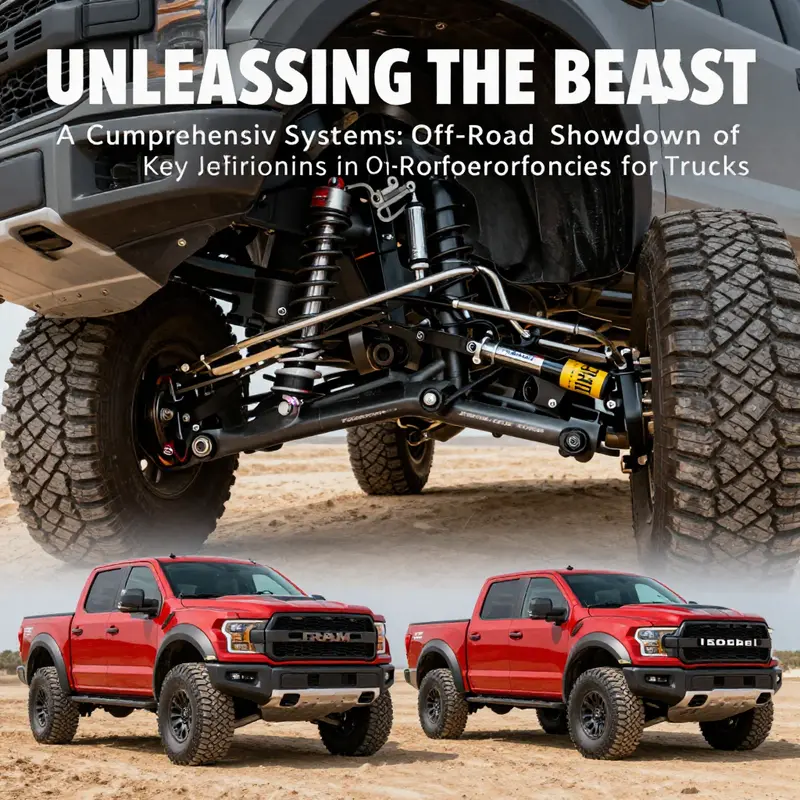
Suspension systems are the quiet engines of off-road capability. They do more than smooth the ride; they translate power into momentum, keep wheels in contact with uneven ground, and shape a vehicle’s willingness to press on when the going gets gnarly. In the world of pickup trucks built for rugged trails, the suspension is the hinge between raw torque and controlled progression. It is the dynamic interface that absorbs impacts, manages axle articulation, and preserves tire grip as the wheel encounters rocks, ruts, sand, or mud. The success of any off-road mission hinges on how well that interface works. When the surface disappears beneath the tires, a well-tuned suspension helps the driver stay forward-focused rather than fighting the vehicle, and it makes the difference between a slog and a confident crossing of obstacles.
At its core, off-road suspension performs two interlocking tasks: it keeps the tire planted on the terrain so traction can be developed, and it maintains the vehicle’s chassis stability as the ground climbs, drops, or shifts under load. The tires are the point of contact with the earth, but those contact patches are only as effective as the suspension’s ability to preserve them. A good system manages spring stiffness so the wheel can follow the terrain without bouncing out of contact, and it damps the motion so the chassis remains controllable. Too stiff a setup and the wheel jumps over lumps, losing contact and sliding across rock edges. Too soft, and the vehicle wallows, losing directional precision and risking bottoming out on a large obstacle. The art lies in balancing these forces so the truck can strike a steady compromise between compliance and control.
One of the most telling design decisions in off-road suspension is the choice between independent suspension and a solid axle with trailing arms or leaf springs. Independent suspension allows each wheel to react to its own patch of ground, preserving tire contact even when one wheel encounters a sudden dip or rock. This yields smoother ride quality and often sharper handling through complex terrain. A solid axle with robust linkage, meanwhile, tends to offer exceptional durability and higher fender-to-ground clearance, which can be advantageous on loose, abrasive surfaces and in situations where the truck must carry heavy payloads while maintaining drawbar pull. Each approach has its own strengths, and the most capable off-road platforms often blend the best of both worlds, using geometry and selective articulation to maximize traction where it matters most.
The heart of the suspension’s performance lies in how it tunes spring rates and damping. Springs set the system’s stiffness, controlling how the wheel rises and falls in response to bumps. Damping controls how quickly that motion settles after a disturbance. In the harsh cadence of off-road terrain, the ideal spring rate is not a single number but a relationship that shifts with load, speed, and terrain type. Adjustable or adaptive dampers can alter their valving in real time, allowing the same truck to ride smoothly on a highway and aggressively on a rock-infested trail. When damping is intelligently varied, the system minimizes the energy transferred to the chassis while maximizing tire contact with the ground. It is this adaptability that often marks the difference between a machine that can chase a goal across dunes or cliffs and one that simply follows a slow, uncertain path.
The geometry of the suspension matters as much as the springs and dampers. Suspension geometry governs how a wheel moves through its travel arc, how the steering axis aligns with the tires, and how much body roll occurs as the truck corners on rough surfaces. A thoughtfully designed geometry reduces bump steer, maintains alignment, and preserves predictable steering response even when the terrain pushes the suspension in unintended directions. In advanced configurations, engineers use concepts like increased wheel travel, optimized anti-squat behavior, and careful camber control to keep the tire contact patch stable as the axle flexes and the chassis tilts. These details—often invisible to the casual observer—materialize as steadier traction, steadier steering, and a greater sense of confidence when a vehicle must confront a shelf of rock or a churned-up rut.
The role of wheel travel cannot be overstated. When a wheel climbs over a rock or drops into a trench, the suspension must allow enough travel to keep the tire on the ground. Insufficient travel forces the tire to leave the ground, breaking traction and requiring the driver to compensate through throttle, braking, or steering input. Excessive travel, while not inherently harmful, can increase component exposure to hazards and raise weight, so engineers aim for a sweet spot that marries ground clearance with durability. In practice, the most capable off-road platforms offer substantial travel without compromising on on-road behavior, a balance achieved through careful tuning of spring rates, bump stops, and damper characteristics.
The interaction between suspension and surface is further intensified by the tire side of the equation. Tires are not passive elements; their design, tread patterns, and compound interact with the suspension’s response to translate ground reality into traction. A suspension tuned for smooth desert sand, for instance, benefits from lower damping to allow the tire to adapt its footprint as it sinks and floats with the shifting dunes. In rocky terrain, stiffer damping helps prevent the chassis from beating the driver and the payload while allowing the wheel to settle into crevices and maintain contact with protruding edges. The synergy between tire behavior and suspension response is what unlocks traction when grip is scarce and the terrain is unyielding.
Beyond the purely mechanical, the modern off-road ride increasingly relies on data-driven control. Sensors monitor motion, velocity, axle rate, and wheel position, feeding a control system that determines how aggressively to damp or stiffen. Some platforms can actively adjust ride height to optimize ground clearance for particular obstacles or to stabilize the vehicle during steep ascents or descents. In more sophisticated setups, the suspension becomes part of a broader terrain-aware strategy. It collaborates with steering, traction, and braking controls to maintain momentum through challenging sections. This is not about removing the driver’s skill; it is about extending it. The driver can commit to a line with greater assurance when the vehicle’s underpinnings are reliably following the trail, absorbing the shock, and maintaining tire contact where it matters most.
The practical upshot is that suspension is a determinant of off-road capability that intersects with every other system in the truck. A powerful engine and a robust transfer case are of little use if the suspension cannot translate that power into forward motion across a jagged surface. A sophisticated electronic terrain-management suite can guide the vehicle through a broad range of conditions, but without a suspension that can react quickly and predictably, the guidance becomes a sheet of instructions that the vehicle cannot physically follow. Conversely, a well-tuned suspension can unlock capability even when other systems are modest, because it ensures that the tire remains the limiting factor in traction rather than the chassis. In this sense, the suspension is not merely a component; it is the craft that enables the vehicle to approach its limits with confidence.
For readers seeking a concrete lens on how these ideas play out in practice, a practical primer on how mechanical details translate into performance can be found in Mastering diesel mechanics: your step-by-step path to success. This resource underscores how a methodical approach to mechanical tune-ups—covering springs, dampers, and linkages—builds a foundation for off-road reliability and performance. While the primer speaks generally to diesel platforms, the discipline it promotes—systematic inspection, thoughtful tuning, and careful balance between load, terrain, and speed—resonates with any off-road truck where suspension work is a primary driver of capability.
When we return to the central question of which truck has better off-road capabilities, it becomes clear that the answer is not a simple comparison of numbers on a spec sheet. It is a narrative of how suspension architecture supports traction, stability, and momentum through the most demanding conditions. A platform with advanced, adaptive damping and high wheel travel can negotiate technical rock crawling and rapid desert crossings with a degree of poise that a more conventional setup can only aspire to, even if the latter carries similar powertrain fundamentals. Yet that advantage hinges on the integration of the suspension with the rest of the vehicle’s systems: chassis rigidity, drivetrain geometry, tire selection, and the driver’s familiarity with the terrain. The takeaway is nuanced: suspension quality is a principal determinant of off-road capability, but its impact multiplies when paired with a drivetrain, a frame design, and a set of tires that are aligned with the intended mission profile.
In the end, off-road mastery emerges from harmony. The chassis must stay upright enough to deliver steering inputs and throttle without the driver fighting the vehicle. The springs must neither snap the wheel into violent vibrations nor leave it unemployed in the cradle of a hole. Dampers must absorb the energy without stalling the tire’s grip as the ground shifts beneath. And the system must be intelligent, adjusting to the terrain while keeping the driver in command. This is how suspension becomes a determinant of capability rather than a cosmetic feature. It is the engineering mindset that recognizes the trail as a dynamic, living obstacle course rather than a static test track. When this mindset informs the design and tuning of a pickup, the resulting machine can traverse a broader range of terrain with greater assurance and deliver a more compelling driving experience, both on the trail and on the highway you use to reach it.
External reference: Optimization of Suspension System of Off-Road Vehicle
Torque Under Pressure: Engine Mastery as the Compass of Off-Road Capability in Modern Pickups
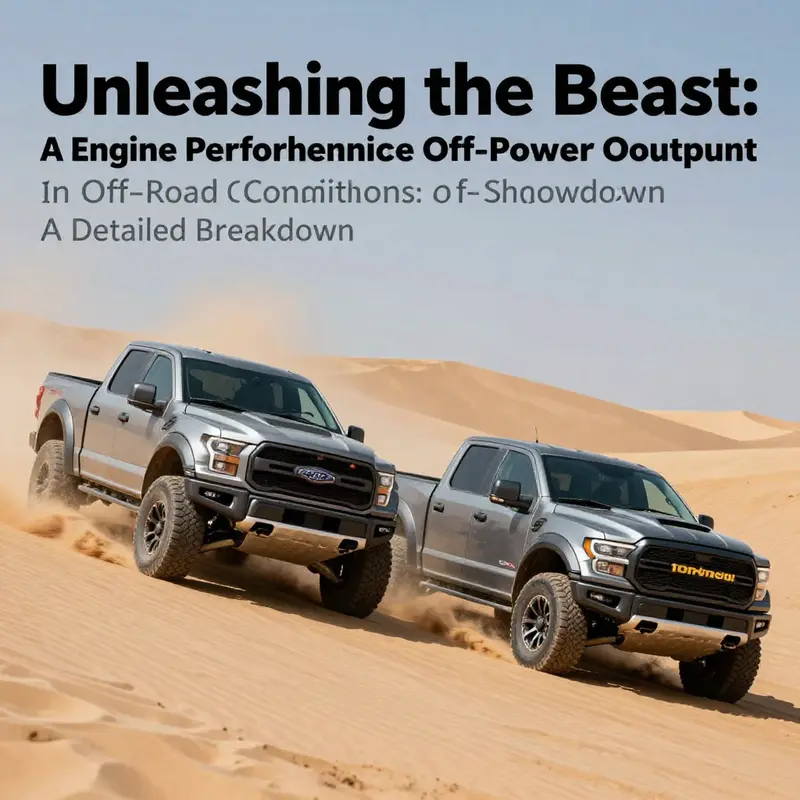
Engine performance under off-road conditions is not simply a matter of peak horsepower; it hinges on how torque is delivered, how heat is managed, and how advanced control systems respond to terrain. In rough terrain, power is a tool that must be wielded with precision. A truck may boast a high-output engine, yet if that power arrives in abrupt bursts or heat is allowed to soak into the drivetrain, traction suffers and the driver fights the vehicle rather than steering it. The heart of off-road capability lies in the engine, cooling system, and control software acting as a cohesive unit to sustain grip, momentum, and control when surfaces and angles change.
Torque delivery at low and midrange RPM is the first line of defense. On loose dirt, steep grades, or jagged approaches, you need usable torque to break away from adhesion and maintain forward motion without a dramatic lull in thrust. Modern engineers shape torque curves that stay robust as revs vary, preserving usable pull where tires meet ground and avoiding throttle lag that invites wheel spin or stall. For drivers, predictable torque translates to confidence, and confidence translates into speed over terrain that would slow a less composed powertrain.
Alongside torque shape, reliability becomes a design priority. Off-road engines endure hours of sustained stress while maintaining stable temperatures and steady oil flow. Robust cooling—oil coolers, well-placed radiators, and pathways that resist mud or water intrusion—helps prevent heat soak during climbs and slow crawls. A disciplined cooling strategy keeps bearings and pistons within a safe window, reducing thermal fatigue and preserving performance under load.
Engine, chassis, and suspension operate as a single system. When the drivetrain must deliver power across undulations, the transmission and drivetrain collaborate with the suspension to keep tires connected to ground. Adaptive torque management and smart fuel mapping respond to terrain input—reducing boost or retiming fuel when slip threatens grip, then restoring surge as traction stabilizes. The result is a powertrain that feels anticipatory, damping the urge to break traction while still delivering enough torque to clear a rut or climb a step when required by the line of approach.
Real-time control algorithms monitor wheel speed, throttle position, vehicle attitude, and load, then adjust injection, ignition timing, and boost to maintain momentum without overtaxing tires. These adaptive strategies bridge the gap between raw numbers and practical drivability across elevation changes, surface variations, and unpredictable loads. The aim is to preserve a constant sense of control, even when the surface is anything but predictable.
In the broader vehicle context, engine performance cannot be isolated from suspension geometry, chassis stiffness, and drivetrain configuration. A well-tuned suspension accommodates wheel travel and keeps contact with the ground as the engine delivers torque to each axle. The most capable setups couple durable engine architecture with thermal resilience and intelligent control to respond to terrain with minimal driver input beyond steering and throttle intent. Ultimately, engine performance on rough ground is the product of harmony among powertrain, cooling, and chassis—read terrain, command torque, and stay balanced as you move forward.
Smart Terrain, Hard Trails: How Drive Modes Shape Off-Road Mastery in the Ford F-150 Raptor and Ram 1500 Rebel
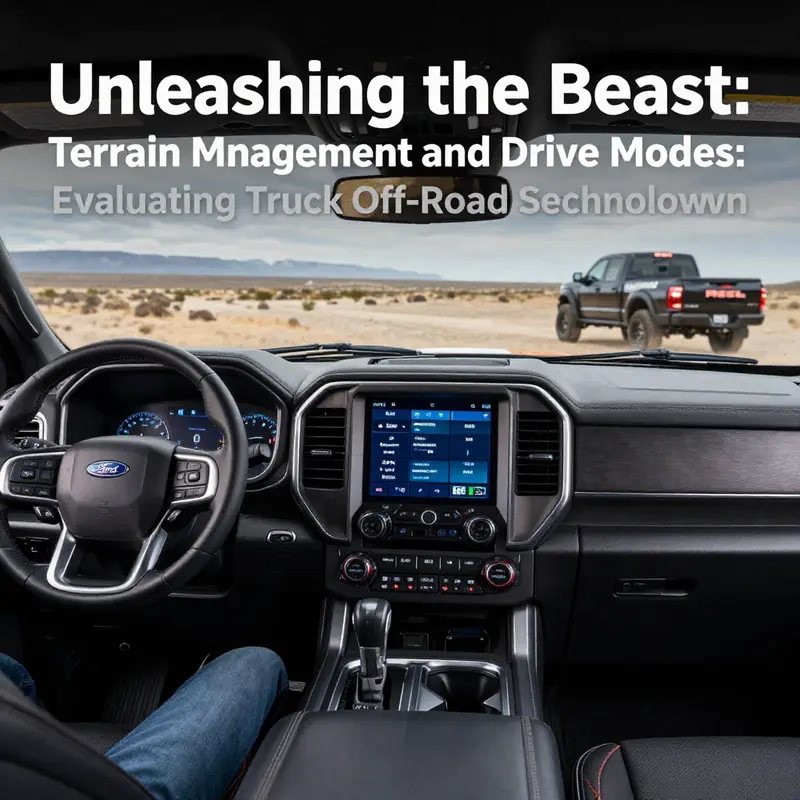
Terrain management has quietly become the invisible engineer behind modern pickup truck capability. It is not just the sum of horsepower or the heft of a beefy axle; it is a carefully choreographed dialogue between software and hardware that decides how much grip, how little wheelspin, and how steady a hand your drive system can offer you when the surface beneath you behaves like a jumbled argument between sand, rock, and water. When we evaluate two archetypes—the Ford F-150 Raptor and the Ram 1500 Rebel—the terrain-management conversation reveals itself in immediate, tangible ways. Both trucks are built to brook punishment off the beaten path, but they pursue off-road prowess through different design philosophies. The Raptor leans into a monosyllabic creed of peak performance on extreme surfaces, while the Rebel promises a balanced, less intrusive integration of off-road capability with everyday comfort. The outcome of this divergence is not simply who can crawl rockier trails or spray more mud; it is a study in how drive modes, suspension architecture, and vehicle electronics cooperate to translate driver intent into controlled motion across challenging terrain.
The Ford F-150 Raptor represents a purpose-built off-road machine rather than a tricked-up family truck. Its terrain management is a deliberate blend of active suspension and tuned power delivery designed to absorb the abuse of high-speed off-road runs while preserving momentum in the most demanding sections. The Fox Live Valve shocks, an advanced adaptive damping system, read ground condition signals in real time and adjust damping on the fly. In practice, that means the chassis can stay flatter over uneven rock and rutted tracks, while still offering compliant ride quality when the surface smooths out. The suspension is not merely softer or stiffer; it is dynamically shaped to manage weight transfer, limit wheel tuck, and preserve tire contact through abrupt transitions. Pair this with the 3.5-liter twin-turbo V6, which is tuned for immediate torque delivery, and you have a vehicle that can sprint out of a dune trough, or maintain steady, controllable traction on a serpentine rock garden, rather than simply inch forward.
On the control side, the Raptor’s Terrain Management System runs through multiple modes that tailor throttle response, transmission shift points, traction control behavior, and, crucially, stability parameters to the surface. A mode optimized for sand, mud, rocks, or mixed terrain serves as a pre-emptive recalibration rather than a reactive tweak. The electronically controlled locking rear differential further reinforces traction by distributing torque to the wheel with the most grip, ensuring that a single loss of grip doesn’t become an immobilizing moment. In dynamic testing, outlets like MotorTrend have noted the Raptor’s superior handling on rocky and uneven terrain, attributing much of that performance to the fusion of adaptive suspension, steering feedback, and a powertrain tuned to keep the wheels planted when the trail grows menacing. It is a vehicle that tends to reward the driver who commits to the line and trusts the chassis to interpolate grip and stability when the surface refuses to cooperate.
The Ram 1500 Rebel, by contrast, carves out its terrain niche with a different emphasis. It foregrounds a rugged, durable platform built for authentic off-road work without forsaking on-road civility. Its off-road upgrades—a heavy-duty suspension with Bilstein shocks, skid plates, hill descent control, and a well-chosen all-terrain tire package—provide a formidable platform for straightforward, able-bodied traverses of demanding trails. Yet the Rebel does not employ the same level of active suspension sophistication as the Raptor. There is no real-time, electronically commanded damping system that can reinvent the ride character on the move in the same granular way. That absence is noticeable in high-speed desert runs or truly technical rock crawling, where adaptive damping and the ability to tailor ride stiffness to the exact contour of a slope can translate into meaningful seconds of advantage. The Rebel remains more than capable on moderate trails and rough backroads, and it often feels like a more practical, versatile daily-driver that happens to be particularly adept when the road disappears. Its lift, approach and departure angles, and skid-plate protection are robust, and the chassis underpinnings have been engineered to tolerate protracted abuse. However, where the Raptor can keep a line even as terrain interventions intensify, the Rebel tends to rely on its proven mechanicals and a slightly more forgiving suspension package to carry you through.
What emerges from comparing the two trucks is not a simple contest of who can tackle rock crawling better. It is a study in how drive modes translate driver intent into action, and how native hardware and software integration determines how that intent feels at the wheel. The Raptor’s drive modes are not merely “on/off” toggles; they are predictive and adaptive programs that change throttle mapping, downshift logic, traction control thresholds, and suspension behavior in a coordinated fashion. A Baja or Rock Crawl setting, for instance, anticipates the need for more aggressive throttle control, slower steering response, and a wider suppression of electronic intervention when you’re carving through a cliff-line of shale or negotiating a steep ledge. The suspension breathes with the surface, maintaining grip by adjusting damping characteristics across the axle and steering system in milliseconds. In sand or loose debris, the controls may encourage gentle accelerator input to minimize wheel spin while maximizing the chance of forward momentum through the unstable layer beneath the tires. In contrast, the Rebel’s approach is to provide a more traditional suite of terrain assist features with tactile, predictable feel. The Bilstein-equipped suspension and protective platework are excellent for the grit of off-road travel, but the absence of an adaptive, rolling damping system can become a constraint when the trail demands rapid, nuanced control of weight transfer through sweeping, continuous terrain features.
This difference in philosophy reflects a larger trend in the field: the most effective off-road technologies today are those that seamlessly blend software intelligence with mechanical robustness. The goal is to reduce the cognitive load on the driver while expanding the envelope of where the vehicle can operate safely and confidently. In that sense, Ford’s package functions almost like a precision sport system for off-road conditions, with the suspension and drive controls tuned to respond with minimal input while the terrain itself changes. The Ram Rebel, meanwhile, offers a more straightforward interaction: rugged hardware paired with a set of well-chosen terrain aids that assist when needed but do not overwhelm the driver with a cascade of adaptive responses. For many users, this is not a deficit but a matter of preference—some drivers value the more linear and predictable feel that comes with a less aggressively adaptive system, especially when operating in uncertain, multi-surface conditions where one expects variable traction across wheel pairs.
Beyond the immediate hardware and software, the broader implication of these systems lies in how drivers choose their line through a given environment. The Raptor invites an aggressive, high-consequence approach: you trust the system to absorb irregularities while you steer with confidence and apply power in controlled bursts. The Rebel invites a steadier, steadier-pedal approach: you let the chassis find traction through weight transfer and careful throttle, reserving the more dramatic torque delivery for when the surface supports it. The practical upshot is that the Raptor tends to excel in environments that demand high-speed capability without sacrificing grip on technical sections, such as desert washes or rocky shelves where the terrain management system actively maintains stability through rapid changes in surface condition. The Rebel, while still competent, shines when the goal is to maintain momentum on longer, rough forest trails or snow-covered grades where patient, capable control and solid protection against bottoming out matter more than outright speed.
As the software layer grows ever more sophisticated, it is worth noting how other industry players approach the same challenge. The text’s exploration of examples from other segments—such as advanced SUV terrain modes that adjust traction and stability control in real time, to even electric trucks featuring auto-guided descent control—highlights a shared trajectory: intelligent, driver-assist features that do not replace skill but amplify it. These trends underscore the central takeaway for evaluating off-road capability: the best systems are those that integrate smoothly with the vehicle’s mechanical reality, anticipate terrain demands, and reduce the cognitive load on the driver without removing the sense of control. The Raptor’s combination of adaptive suspension, a torque-rich powertrain, and a comprehensive terrain-management suite offers a textbook example of this integration in action. The Rebel’s configuration, while less aggressively adaptive, emphasizes durability and practical, all-terrain performance that remains robust across a wide range of conditions.
For readers who want a deeper dive into how engine and drivetrain management interact in demanding powertrains, see Mastering Diesel Mechanics: your step-by-step path to success. This resource provides a practical look at how sophisticated control strategies translate into real-world performance, especially under off-road stress. And as the landscape of off-road technology evolves, the next frontier is clear: software that not only responds to but predicts terrain demands in real time, even in non-traditional powertrains. Electric platforms, with features like Trail Assist and Overland mode, push these ideas further, aiming to keep the vehicle balanced and the driver comfortable as surfaces grow unpredictable. For a detailed look at Trail Assist and the Overland approach, see Tesla’s official documentation. The integration of such features marks a shift away from passive robustness toward proactive, intelligent capability.
In practice, then, the question of which truck has better off-road capability does not hinge on a single statistic. It rests on how well the vehicle’s terrain-management system translates driver intent into controlled motion across a spectrum of surfaces. The F-150 Raptor demonstrates how aggressive, adaptive suspension and a tuned drive-mode suite can deliver high-speed, technical-proficiency performance where the surface demands constant adaptation. The Ram 1500 Rebel demonstrates the value of a rugged, well-protected platform that can handle tough conditions with a measured, forgiving approach. For many off-road enthusiasts, the choice between them will hinge on how they like to drive and the conditions they expect to encounter most. In that sense, the terrain-management story is not simply about who has the better button layout or the flashiest feature tier; it is about which system best aligns with the driver’s goals and the paths they intend to pursue off the pavement.
Trail-Tested Truths: Real-World Off-Road Assessments and Expert Judgment
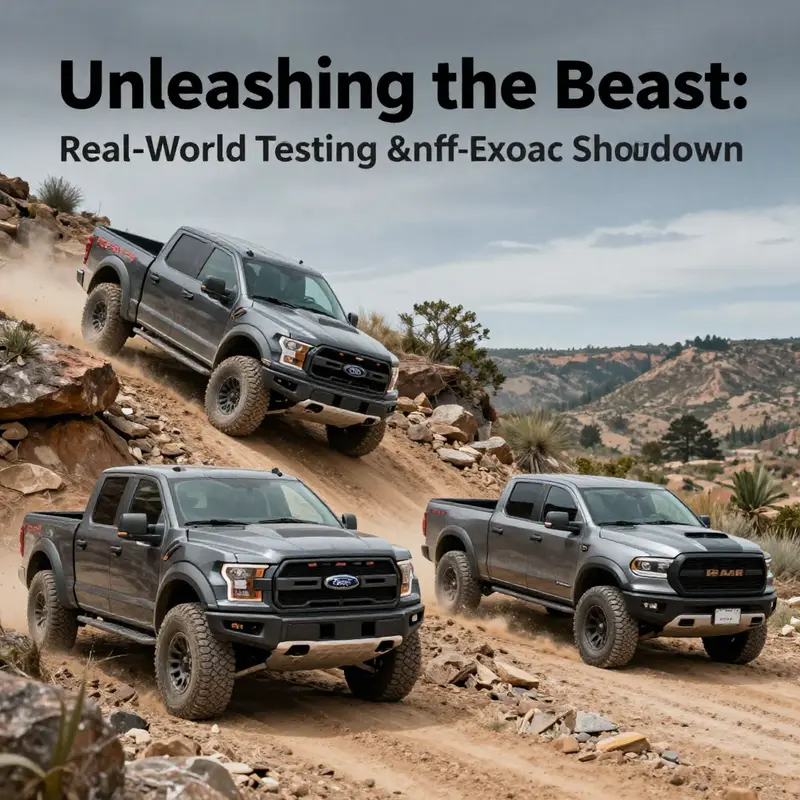
Real-world field testing and expert reviews translate manufacturer claims into usable knowledge on the trail. Specs matter, but how a truck behaves when a rock pries at a skid plate, sand swirls into wheel arches, or a steep grade demands torque is what separates marketing from capability. Journalists and engineers evaluate chassis durability, suspension travel, ground clearance, traction system behavior, and the way the vehicle communicates with the driver during slow, torque-heavy maneuvers. It is a blend of tactile feel and measurable data, a synthesis that cuts through bravado to reveal genuine off-road character.
Durability of the underbody and chassis tops the list. A robust protection system, reinforced structures, and wear-resistant materials help keep essential components intact after rough days on the trail. Long-term testing across varied terrain and repeated abuse exposes whether a platform can sustain torque delivery without driveline or suspension fallout, and whether armor or guards survive continuous scrapes.
Suspension tuning matters as much as hardware. Adaptive or active systems that maintain ride height, maximize wheel contact, and modulate damping enable sustained traction when the surface changes. Reviewers look for a coherent dialogue between control systems and the chassis, not a choreographed, over-complicated response. Real advantage comes from a setup that preserves tire contact through ruts, rocks, and washboards while delivering a predictable, controllable ride.
Powertrain, drivetrain architecture, and helper technologies are scrutinized for how they translate into grip and progress. High torque with well-matched gearing and well-calibrated electronic aids can help a vehicle crawl, launch, or climb with confidence, while overzealous aids can mask driver intention. The best reviews acknowledge that electronic helpers extend capability but do not replace skill or proper vehicle setup.
Ultimately, consistent off-road performance rewards predictability, balance, and driver confidence. A vehicle that maintains a steady rhythm, clean lines, and measured throttle response tends to outperform one that relies on raw power alone. The overall verdict emerges from tests conducted across multiple terrains, under varied conditions, and over extended time—a practical map of where each platform shines, where it requires care, and how ownership realities like maintenance, durability, and operating costs influence long-term value.
Final thoughts
Navigating the rugged terrains and off-road challenges of today requires more than just raw power—it demands a harmonious blend of performance, technology, and driver experience. The Ford F-150 Raptor stands as the pinnacle of off-road engineering with its sophisticated systems and unparalleled capabilities, making it the go-to choice for adventurers seeking to conquer harsh landscapes. Meanwhile, the Ram 1500 Rebel offers a commendable balance for those who appreciate a versatile truck that doesn’t compromise on comfort. After examining the distinct advantages each truck offers, the decision ultimately narrows down to personal preferences—whether prioritizing sheer off-road dominance or versatile performance across varied terrains.