
The rugged terrain beckons the true adventurer, and the right fuel is essential for conquering it. As off-road enthusiasts and adventurers, knowing if off-road diesel could harm your trusty truck is paramount. Not all fuel is created equal, and understanding the risks associated with using off-road diesel — from engine performance to legal implications — can save you from headaches down the road. This exploration will dive into whether off-road diesel is harmful to your truck, compare it with road diesel to highlight critical differences, and assess the effects it may have on your engine. Finally, we will guide you on avoiding potential legal pitfalls. Brace yourself for an insightful journey into the gritty world of diesel fuel and your vehicle’s wellbeing.
Understanding Off-Road Diesel: Potential Benefits and Risks for Your Truck
When considering the use of off-road diesel for your truck, it is crucial to understand both the context of its application and the specific characteristics of the fuel itself. Off-road diesel, often referred to as non-road diesel, is tailored for use in heavy machinery and vehicles that operate outside the bounds of public highways. This distinction leads us to significant questions about its suitability for trucks that may venture onto public roads. The purpose of off-road diesel is largely to serve agricultural, construction, and other industrial applications where strict regulations on emissions and fuel quality are often relaxed compared to those governing on-road diesel.
The chemical composition of off-road diesel is usually quite similar to that of on-road diesel; both are derived from crude oil refining and contain similar hydrocarbons. However, the primary difference lies in the additives included in the fuel. Off-road diesel does not contain the necessary components required to meet road fuel taxation standards. As a result, it is often less expensive, making it an attractive option for operators of machinery that do not regularly traverse public roadways.
Benefits of Off-Road Diesel
For those using trucks in non-highway environments, off-road diesel can provide several benefits that optimize performance and engine longevity. First and foremost, off-road diesel tends to undergo more stringent refining processes, resulting in a cleaner fuel with lower levels of impurities and contaminants. This characteristic aids in maintaining a clean fuel system, reducing the likelihood of carbon buildup on injectors and other engine components. As any truck owner knows, a clean fuel system is vital for ensuring optimal performance and efficiency.
Moreover, off-road diesel is often formulated with better lubrication properties compared to standard road diesel. This improved lubricity can protect the intricate fuel systems of modern diesel engines, particularly the fuel pumps and injectors, which are crucial for performance. Enhanced lubrication leads to reduced wear and tear, ultimately extending the life of various engine components. For trucks working in demanding environments, this can be a critical factor in maintaining operational availability and minimizing downtime due to repairs.
Another significant advantage of off-road diesel is its performance in low-temperature conditions. Many formulations include additives designed to prevent the fuel from gelling in cold weather. This ensures reliable starts and consistent power delivery even under challenging conditions, preventing the dreaded diesel freeze-up when temperatures drop. For operators who rely on their trucks in diverse climates, this capability can be an essential aspect of operational planning.
Despite these benefits, caution must be applied when considering the use of off-road diesel in trucks that also utilize public roads. The primary legal caveat concerns taxation; off-road diesel is tax-exempt, which has led to strict regulations regarding its use in highway vehicles. Operators faced with this scenario risk significant penalties if caught using off-road diesel on public roadways. This risk is compounded by the rigorous enforcement of fuel regulations in many jurisdictions, including potential fines and confiscation of equipment.
Potential Risks and Downsides
Moreover, not all off-road diesel fuels are created equal. While many meet high-quality fuel standards, there are instances where poor-quality off-road diesel is sold, often under the guise of being suitable for off-road use. Such fuels may have higher sulfur content or contain a mix of undesirable contaminants that can harm engine performance over time. Engines with advanced emissions systems—such as those equipped with Diesel Particulate Filters (DPF) and Selective Catalytic Reduction (SCR)—can suffer from severe malfunctions when exposed to subpar fuel. Incompatibility with infused technologies required for modern diesels can lead to increased maintenance costs and decreased reliability.
Additionally, operators need to be vigilant about the potential for using off-road diesel incorrectly. The differentiation between on-road and off-road diesel shouldn’t be underestimated. If a truck equipped for public use is fueled with off-road diesel unknowingly, it could lead to substantial costs in both legal repercussions and damage repair. Serious considerations must also be given to the specific fuel requirements outlined in the manufacturer’s manual. Non-compliance with these requirements can void warranties and result in significant expense when repairs are necessary.
Conclusion
In conclusion, off-road diesel presents both beneficial and risky aspects for truck owners. The higher purity, better lubrication, and cold-weather performance are tangible advantages for trucks that operate off the beaten path; however, the potential legal issues and quality disparities of the fuel raise crucial flags. Users should always source off-road diesel from reputable suppliers and check compatibility with their specific engine specifications as outlined by the manufacturer. When managed correctly and used within the intended legal frameworks, off-road diesel can indeed deliver significant operational benefits without compromising the health of your truck. However, when using off-road diesel in any capacity, it is essential to remain informed about the local laws and the specific performance needs of your truck to avoid adverse consequences.
For additional information regarding the standards applied to off-road diesel and its implications, refer to the U.S. Department of Energy guidelines.
Understanding the Crucial Distinctions Between Off-Road and On-Road Diesel: What It Means for Your Truck
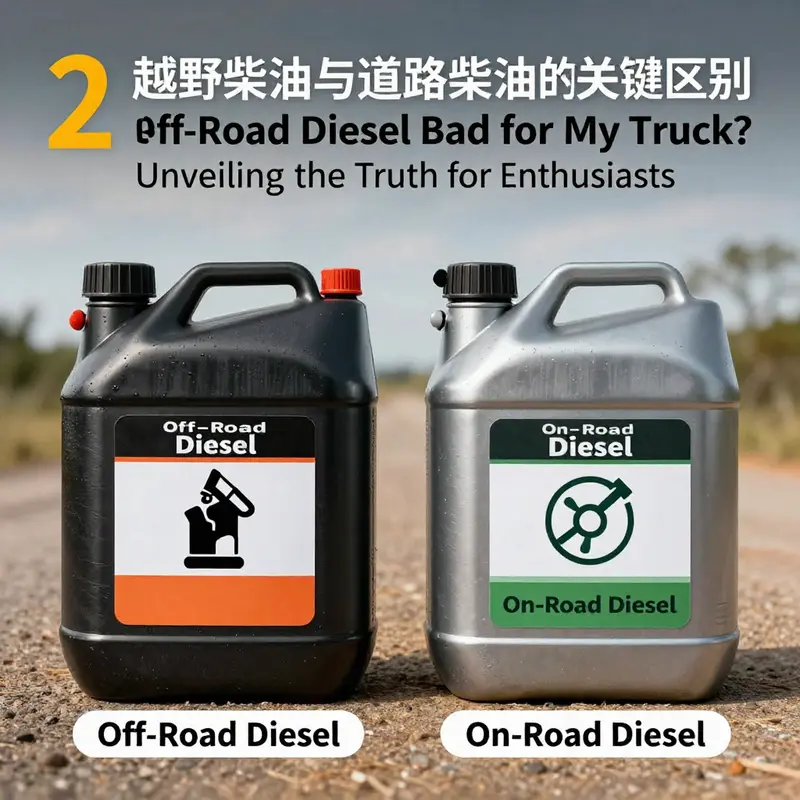
在选择为卡车加油时,理解越野柴油与道路柴油之间的关键区别至关重要,尤其是当安全、合规性和经济性成了卡车运营者关注的重点。从燃料的使用方式到法律影响,这些都能显著影响卡车的整体性能与运营成本。
越野柴油,通常被称作非道路用柴油,专为在农业机械、建筑设备及工程机械等非公路场合使用而特别配方。其与道路柴油虽有相似之处,然而在诸多方面呈现出显著区别,主要体现在用途、税收政策、化学成分及使用限制等方面。理解这些区别,不仅能帮助卡车驾驶者做出明智的加油选择,还能避免法律风险与潜在的发动机损坏。
用途与适用范围
首先,越野柴油与道路柴油在其基本用途上区别明显。道路柴油是专为在公共道路上行驶的车辆设计,包括轿车、卡车和公共交通工具。这种燃料须遵循严格的环保排放标准,以符合城市和国家的法律法规。而越野柴油则主要用于不能在公共道路上行驶的机械和设备,例如农用拖拉机、施工起重机及其它重型机械。由于其使用范围的局限,该燃料没有同等严格的排放要求,实际上可以降低特定行业的燃料支出。
税收与价格
税收政策是理解两者差异的另一个重要方面。道路柴油的价格通常包含全额的燃油税,这是其价格较高的一个原因。而越野柴油则因被限定于特定用途,政府对其征收的税费相对较低,因此其市场零售价格通常较便宜。在许多地区,越野柴油的价格每升甚至比道路柴油低出0.3元至0.5元。这样的价格差异对于大多数需要大量能源消耗的行业(如农业与建筑)来说,是非常重要的经济考虑因素。
颜色与染料的区别
为了加强监管,越野柴油通常会添加红色染料,使其呈现明显的红色或紫红色。这种添加剂不仅可以帮助管理机关识别该燃料的合法用途,还能实现对非法使用的有效监控。相对而言,道路柴油则多为无色或淡黄色,因此在视觉上也可以通过颜色来区分这两种柴油,避免商业用户通过错误加油而引发法律问题。
化学成分与硫含量
在化学成分方面,道路柴油必须符合超低硫柴油(ULSD)标准。特别是国家及地区对柴油的硫含量有严格法规规定,例如中国要求道路柴油的硫含量不能超过10 ppm(百万分之一),这有助于减少尾气排放带来的环境污染。尽管越野柴油近年来在硫含量上有所降低,但整体上依然可能高于道路柴油的标准。因此,对于某些较老的发动机而言,较高的硫含量在长期使用后可能造成喷油嘴积碳及发动机效率降低,对发动机的寿命产生负面影响。
法律限制与合规性
然而,使用柴油不仅仅是经济因素的考量,法律责任同样至关重要。许多地区都对柴油的类型有明确规定,限制其用途。例如,在中国,使用越野柴油在公路上的车辆是违法的,任何违反此规定的行为都可能导致高额罚款,甚至车辆被扣押。这种法律风险不仅会给卡车驾驶者带来经济损失,还有可能因机动性受限而影响业务运营。由此,确保所用燃料合规,是每一个卡车司机及经营者必须高度重视的事项。
使用建议:何时该选择越野柴油?
基于以上分析,卡车驾驶者在选择合适燃料时需明确其行驶环境。如果您的卡车主要用于非公路作业,例如矿山、施工现场或农业作业,那么选择越野柴油是合理且经济的。在这种情况下,使用越野柴油不仅合法且有助于降低运营成本。然而,针对在公路上行驶的卡车,绝对应避免使用越野柴油,而需专门选用符合国标的道路用柴油,以保护发动机和排放系统,确保自身及他人的合法权益。
总结
综上所述,越野柴油与道路柴油之间的区别不单是表面的价格差异,而是在用途、税收、化学成分及法律责任等方面更为深刻的应用。为了保护您的卡车发动机与合规经营,做出明智的选择至关重要。对于在非公路环境中用作重型设备的驾驶者们,越野柴油是一个安全的选择;而对于公路行车者,务必只装备符合标准的道路柴油。通过充分了解这两者之间的区别,可以在促进商业活动时,避免可能的法律问题,实现经济效益最大化。如欲了解更多关于越野柴油的应用及影响,请参考美国能源部的资源页面这里。
3. The Impact of Off-Road Diesel on Your Truck’s Engine Performance
Understanding the potential risks associated with using off-road diesel (also referred to as non-road diesel) is critical for truck owners and operators, particularly those who might be tempted to utilize this fuel type in vehicles designed for road use. The differences between off-road diesel and on-road diesel extend beyond tax implications and legality; they also intersect with the fundamental mechanics of diesel and the specific operational requirements of trucks. This chapter delves into the significant impacts of off-road diesel on truck engines, addressing the operational contexts in which such fuel may be utilized without adverse effects, as well as the dangers associated with its improper usage.
Off-road diesel is designed for specific applications, typically in heavy-duty, non-road equipment. It contains no road taxes, making it generally cheaper than on-road diesel, which is heavily taxed to fund infrastructure projects. Consequently, in scenarios where trucks are used exclusively in off-road environments—such as agriculture or construction sites—fueling with off-road diesel can be a practical and economically sensible choice. However, the legalities become more complicated when such fuel is introduced to vehicles intended for public roads. In many jurisdictions, including China, the use of non-road diesel in road vehicles is strictly prohibited and subject to hefty fines.
For owners of trucks and vehicles that are frequently driven on highways or city streets, it is essential to understand the direct implications of misusing off-road diesel. While off-road diesel shares similar chemical properties with on-road diesel, it is crucial to note that it may contain higher sulfur levels and lacks the necessary additives intended to help clean the engine and reduce emissions. These differences can lead to numerous issues when off-road diesel is used in on-road vehicles, specifically regarding engine performance and longevity.
The primary concern regarding the use of off-road diesel in on-road trucks lies in its higher sulfur content. While noxious emissions from diesel engines have been significantly reduced over the years due to stringent regulations, vehicles equipped with advanced emission systems like diesel particulate filters (DPF) and selective catalytic reduction (SCR) are particularly sensitive to fuel quality. High sulfur content in off-road diesel can cause serious damage to these components, leading to premature failure and requiring costly repairs. Not only are these systems crucial for meeting environmental standards, but they also enhance the overall efficiency and performance of diesel engines. Regularly using fuel that does not meet regulatory standards may result in blockages and failures that compromise the capability of these emissions control technologies.
Moreover, the transition from off-road to on-road use can exacerbate engine wear and tear. Modern diesel engines are designed to operate within specific parameters, relying on cleaner fuel to sustain optimal performance. Using off-road diesel could lead to carbon buildup in injectors, increased engine deposits, and potentially harmful corrosion. Each of these factors contributes to reduced efficiency, increased fuel consumption, and a higher likelihood of engine malfunction.
The next critical risk involves the blend and content of cleansing agents within diesel fuels. On-road diesel is often sophisticatedly formulated with detergents and dispersants that function to mitigate sludge and varnish build-up within the engine. Conversely, off-road diesel lacks these essential chemical additives, leaving the engine more susceptible to performance issues over time. If an operator has used off-road diesel in their truck intermittently, they may begin to notice sluggish performance, reduced fuel economy, and higher emissions—signals that they are flirting with potentially serious mechanical problems.
Another significant concern is the potential for fuel system contamination. Off-road diesel fuel is often deployed in environments where it may pick up dirt, moisture, and other contaminants. When this contaminated fuel is used in a truck’s fuel system, it can lead to multiple complications, including clogged fuel filters and damaged fuel pumps, exacerbating maintenance costs and headaches for truck owners. The complexity of diesel fuel systems means that even minor impurities can have outsized impacts on performance. Regular servicing of fuel filters and the use of quality diesel are paramount to ensure that a truck remains operational and efficient.
As if these issues weren’t enough, illicit use of off-road diesel can potentially invite legal ramifications. Aside from the fines and taxes that could emerge from an improper fuel choice, a truck operating on off-road diesel may be subject to confiscation or penalties that impact the driver and operator’s merriment and reputation in their industry. Regulatory bodies monitor the usage of non-road diesel closely, thus making it crucial for truck owners to adhere strictly to legal standards governing diesel types.
To summarize, while off-road diesel is not inherently harmful to trucks designed for its use, significant risks arise when it is misapplied in vehicles intended for road transportation. From the potential for engine wear and damage due to higher sulfur content to the legal implications of improper fuel usage, drivers must tread cautiously. If you are operating in an environment where it is permissible, off-road diesel can be an economical choice for maintaining machinery and equipment built for that purpose. However, for trucks traversing public roads, relying on fuels that meet the appropriate regulatory standards is non-negotiable.
In the realm of diesel mechanics, it is vital to ensure that fuel types align with the specific applications and requirements of each engine. For navigating the complexities of diesel fuel compliance and maintenance best practices, resources such as the U.S. Department of Energy’s insights on off-road diesel fuel can provide invaluable guidance. Keeping informed about these nuances ultimately safeguards your investment and ensures that your truck operates smoothly for years to come.
Navigating the Legal Maze: The Risks of Using Off-Road Diesel in Your Truck

避开非法使用越野柴油带来的法律陷阱,是每位卡车车主必须面对的重要课题。越野柴油,作为专门为非公路用途设计的燃料,虽在某些特定环境中可被视为经济有效的选择,然而若不慎在公路上使用,却可能陷入重重法律麻烦。
在大多数地方,越野柴油的主要特征是其免征燃油税。这意味着,在不标准或不监管的渠道中获取的柴油,与市面上正规的道路柴油相比,其成分可能存在较大差别,尤其是在硫含量方面更是常常超标。虽说旧款柴油发动机对这类燃料的适应性相对强,但在现代经济与环保日益受到重视的背景下,选择合法且符合标准的燃料,显得尤为关键。
首先,法律风险是使用越野柴油最大的隐忧之一。在中国,使用越野柴油作为公路行驶燃料是明确被禁止的。在您车辆的登记证书中,出厂时的燃油类型已经被登记,任何未经许可的改装,或者将非道路请输入柴油用于公路行驶,都可能被认定为违规行为。一旦被查实,车主不仅可能面临高额罚款,车辆还可能被扣押,甚至因为严重违规而影响驾驶资格。
法律对柴油的严格监管,不仅仅限于使用。运输和储存柴油若不遵循相关法规,也同样可能触犯法律。在实际操作中,部分车主可能由于贪图便利,选择在没有危险化学品运输许可证的情况下运输柴油,只要被执法部门发现,便可能要承担十万元以上的罚款。在轻重不一的问题上,如果因合规运输引发事故,车主还可能因“重大责任事故罪”而面临刑事责任。
为此,避免法律风险成为了每位越野车爱好者所需遵循的基本原则。在改装发动机时,坚定抵制进行燃油类型的非法改装,保持车辆原来的合法配置;其次,只使用经过认证的正规加油站的柴油,切忌接触黑加油点。对于需要运输柴油的情况,务必合法办理危险化学品运输资质,确保运输车辆的合规,并选用符合标准的专用容器。定期检查车辆的排放系统和油路安全,避免因管理不善而导致的法律责任,是每位卡车车主在享受越野乐趣的同时,所应必然遵从的底线要求。
在使用越野柴油的问题上,最为关心的莫过于其对发动机及排放系统的潜在影响。高硫含量的柴油可能导致柴油颗粒过滤器(DPF)及选择性催化还原(SCR)系统的堵塞、失效,而这些系统的正常运转对于现代卡车的环保和性能至关重要。选择符合国家标准的道路柴油,不仅能保护发动机,降低磨损,也能有效避免在环保方面的违规。
另外,针对不同层级的柴油发动机,您所需关注的不是单一的燃料质量问题,更是在于如何做到合法合规。在技术不断更新换代的今天,车辆所用的油品标准也在不断提高,以适应国家的最新环境法规。如果您的卡车是通过正规渠道购得,服务商或加油点应当具备賦予您信息的义务,与其讨论有关柴油质量与合规性的问题,确保您的车辆能够持久安全地运转。
最后,法律的约束虽让人们感觉到压力,但只要遵循法规,合法合规使用燃料,便能保护自身与公共安全。享受越野的同时,把握安全与合规,这不仅能让车辆保持最佳的工作状态,更能在无意间维护了自己的合法权益。它是,对于每一位热爱越野的卡车车主,遵守法律与安全驾驶的相辅相成。如果您还想要了解更多法律规定,建议查看【中华人民共和国公安部交通管理局 – 机动车登记规定】(https://www.mps.gov.cn/n2254697/n2254708/c2725225/content.html),以更好地引导您的车辆使用与管理。
总之,越野柴油的使用绝非是一个孤立的问题,它是科技与法律相交于车辆管理的一部分。每一步决策都影响着您驾驶的安全与合法性,真正做到合法合规,才能享受每一次自由越野的快乐。
Final thoughts
Navigating the world of diesel fuel requires an understanding of choices that ultimately protect both your vehicle and the legal standing of your adventures. Off-road diesel holds merit for vehicles designed for non-road use but poses significant risks for those hitting the highways. From potential engine damage to legal entanglements, weighing the pros and cons is vital. Make informed decisions tailored to your vehicle’s needs and the terrains you conquer. Keep your truck running strong and comply with regulations as you forge ahead into the wild.