

Off-roading is more than just a pastime; it’s a lifestyle steeped in adventure, exploration, and the thrill of conquering challenging terrains. Central to this exhilarating experience is your truck, and the fuel that powers it plays a pivotal role in its performance and reliability. Off-road diesel, or red-dyed diesel, has gained a foothold in the off-road community, promising both cost savings and enhanced power. However, the context is crucial—while off-road diesel might seem appealing due to its lower cost, using it in on-road applications is illegal and fraught with potential consequences. This article will delve into four critical aspects of off-road diesel: its impact on your truck’s performance, the legal ramifications of its use, the mechanical considerations related to engine health, and the economic factors influencing your choice of diesel fuel. Each chapter aims to equip off-road enthusiasts, racers, rural landowners, and modification shops with the necessary knowledge to make informed decisions, ensuring that your adventures remain both thrilling and compliant.
Unleashing Off-Road Diesel: How It Impacts Your Truck’s Performance and Capability

When considering the relationship between off-road diesel and a truck’s performance, it is essential to understand both the engineering behind diesel trucks and the specific qualities of off-road diesel fuel itself. Diesel engines inherently deliver power and durability optimized for heavy duty applications, and off-road diesel fuels are formulated and taxed with distinct regulatory requirements in mind. This nuanced dynamic shapes how your truck responds to different operating environments and how the fuel’s properties support performance under demanding conditions.
The fundamental advantage of diesel engines in trucks lies in their ability to generate substantial torque at low engine speeds. Torque is the twisting force that helps a vehicle start moving from a stop, tow heavy trailers, or power through challenging terrain such as mud, sand, or steep inclines—all of which are common in off-road scenarios. Unlike gasoline engines that rely more on high engine revolutions per minute (RPM) to deliver power, diesel engines facilitate better control and force that is crucial for tasks requiring consistent pulling power over extended periods. This makes diesel trucks highly valued for construction sites, agricultural work, and outdoor adventures where performance under load is non-negotiable.
Moreover, the design of diesel engines contributes to their endurance and efficiency. With a higher compression ratio than gasoline engines, diesel combustion processes produce greater energy per unit of fuel. This means improved fuel economy and longer engine life under the strain of heavy use. Off-road excursions often involve prolonged operation without the convenience of frequent refueling, and diesel’s efficiency supports reliability in these situations. The combination of torque and fuel economy becomes an invaluable asset for off-road enthusiasts, contractors, and businesses relying on rugged machinery.
Beyond the engine itself, trucks intended for off-road use are structurally engineered to withstand the rigors of harsh environments. Reinforced frames, often constructed with heavier gauge steel, add resilience against impacts, jolts, and torsional stress encountered off the beaten path. These frames act as the backbone, supporting heavier suspensions and drivetrain components designed to absorb shocks and maintain stability on uneven surfaces. Advanced suspension systems in many diesel trucks offer higher articulation and durability, enabling wheels to maintain contact with the ground for superior traction and control. These features collectively endow a diesel truck with the ability to maneuver over obstacles that would challenge or damage lighter, less robust vehicles.
Integral to off-road capability is the presence of sophisticated four-wheel-drive (4WD) systems. Contemporary diesel trucks frequently include advanced 4WD technologies that distribute power dynamically among wheels, optimizing traction on slippery, loose, or unpredictable terrain. Differential locks, terrain management systems, and electronically controlled traction aids allow drivers to tailor performance characteristics to specific conditions. When coupled with the torque advantages of diesel engines, these systems greatly enhance a truck’s capability, safety, and drivability off road.
It is important to distinguish between the physical qualities of the truck and the fuel used. Off-road diesel, commonly known as red-dyed diesel due to required additives for identification, shares many chemical traits with on-road ultra-low sulfur diesel (ULSD). Both fuels meet strict sulfur content limits that reduce emissions and protect modern engine components. However, off-road diesel may contain additives intended to meet storage or engine cleanliness standards appropriate for non-road equipment. These additives might include biocides or stabilizers that are not optimized for on-road truck engines. While off-road diesel is generally safe and effective in machinery meant for off-road use, using it in highway vehicles can introduce complications.
When an on-road diesel truck runs on off-road diesel, the engine management system may detect differences in fuel composition that trigger fault codes or reduce performance. This can manifest as reduced power output, increased emissions, or inefficient combustion. Over time, the unintended additives in off-road diesel might contribute to deposits or wear that compromise injectors, sensors, or emission control devices. The mechanical impact coupled with the strict fuel tax laws prohibiting off-road diesel in on-road vehicles makes its use a risky proposition both legally and mechanically.
In contrast, when using the appropriate diesel fuel and operating within the intended application, trucks designed for off-road use can capitalize on the synergy of their engines, fuel, and structural design. The uninterrupted delivery of torque, combined with resilient chassis and drivetrains, translates into superior capability for work and recreation. Whether hauling construction materials, maneuvering through farm fields, or navigating rugged trails, the performance advantages of a diesel truck powered by suitable fuel are clear.
For truck owners and operators, understanding these dynamics helps inform fuel choices and maintenance practices that align with both legal requirements and performance goals. Selecting the correct diesel type ensures optimal engine health, compliance, and operational reliability. While off-road diesel is an excellent match for machines whose use is restricted to private land or worksites, on-road trucks benefit most from fuels formulated and taxed for highway use. This balance sustains the performance benefits of diesel engines without inviting regulatory or mechanical issues.
For more detailed insights into diesel engines and their off-road applications, including engineering perspectives on types and key features, consider this comprehensive resource: New Diesel Cars Sale: Types, Key Features, and How It Is Applied in Engineering.
Navigating the diesel landscape also intersects with evolving vehicle technologies and sustainable practices. Although it is a separate frontier, the developments in heavy-duty electric trucks and alternative fuel systems hint at a future where diesel’s role may transform. Trucking fleets and industry stakeholders increasingly explore comprehensive fuel strategies to optimize cost, performance, and environmental impact. For those invested in diesel trucks and their current capabilities, understanding how off-road diesel integrates with engine design and vehicle application remains a vital foundation amid such innovation. For more about how emerging technologies are reshaping truck fleets and infrastructure, you might find useful insights in discussions on heavy-duty electric truck support and adoption.
Red Fuel, Real Consequences: Navigating the Legal Tightrope When Off-Road Diesel Meets On-Road Trucks
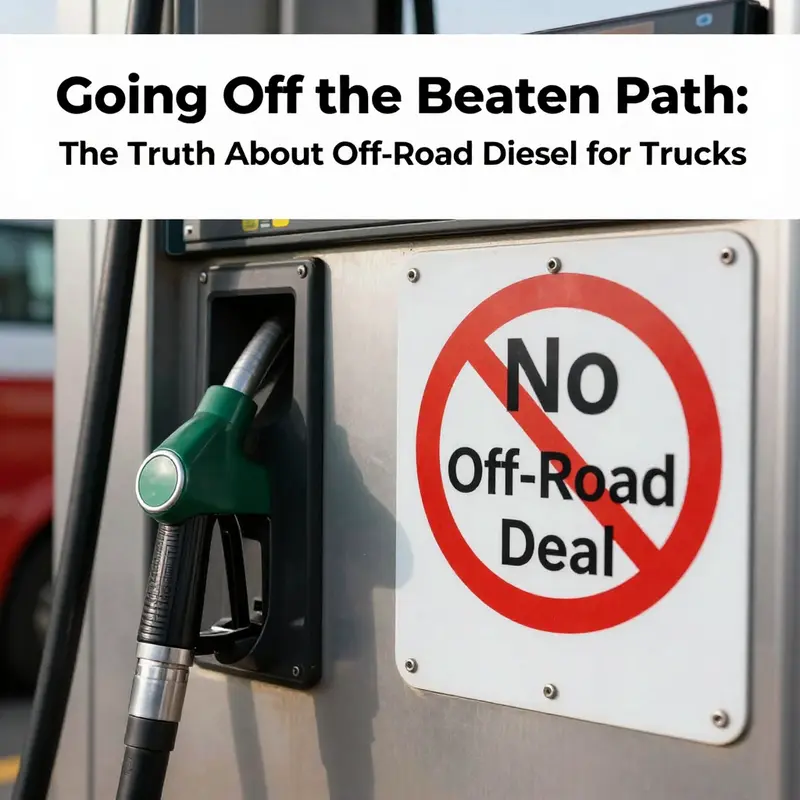
Fuel decisions in trucking sit at the intersection of performance, economy, and compliance. Off-road diesel is legally and practically distinct from highway diesel: it is dyed red and taxed differently for non-public-road use. Using it in on-road trucks can trigger tax penalties, audits, and regulatory enforcement. Federal rules establish a higher highway tax rate and require fuel to meet on-road specifications, while off-road fuel is intended for equipment that never travels on public roads. The consequences of misfueling range from fines to potential criminal charges, and state regulators may impose additional penalties. Practically, off-road diesel can affect emissions-control systems and warranty coverage if used improperly. The prudent approach is to use the fuel type specified by the vehicle manufacturer for on-road operation, keep meticulous purchase records, and stay compliant with both federal and state requirements. If misfueling occurs, documentation and prompt corrective action can mitigate penalties. For deeper understanding, consider reviewing official EPA and IRS guidance on diesel fuel taxation and compliance. In short: match fuel to use-case, comply with tax rules, and maintain robust documentation to protect your operation.
Mechanical Considerations: How Off-Road Diesel Shapes Modern Truck Engines
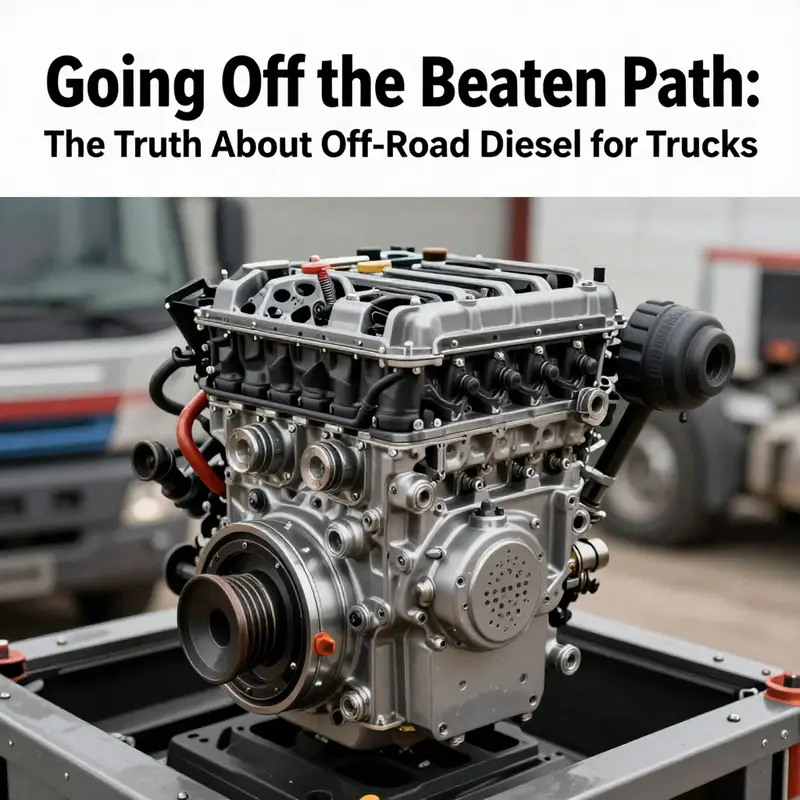
Mechanical Considerations and Practical Realities weave through the everyday questions truck owners ask when they hear about off-road diesel. The short answer remains nuanced: off-road diesel is designed for non-road equipment, and using it in a vehicle that travels public roads introduces legal, technical, and maintenance challenges. Yet within that nuance lies a practical narrative about fuel quality, engine design, and how modern engines respond to fuels that differ, even slightly, from what the manufacturer specifies. For any reader seeking to understand whether off-road diesel is “good” for a particular truck, the anchor truth is not a universal yes or no. It is context, compliance, and the way fuel properties interact with your engine’s sensors, after-treatment systems, and maintenance schedules. The conversation cannot be reduced to a single trait like color or colorless dye; it is a dialogue about chemistry, mechanics, and regulation.
From a practical standpoint, off-road diesel, often called red-dyed diesel in many markets, is chemically very close to on-road diesel. Both are ultra-low sulfur diesel (ULSD) by design, formulated to minimize sulfur emissions and to work with modern exhaust after-treatment systems. The critical distinction resides in additives and regulatory purpose. Off-road fuels may include biocides, stabilizers, and other proprietary additives intended to preserve fuel quality in storage tanks found at work sites, rather than optimize performance in a highway-driven engine. Those additives can interact with fuel rails, injectors, and sensors in ways that on-road formulations do not. The implications are not merely theoretical; they manifest in how the engine management system reads fuel characteristics, whether the fuel system tolerates a wider range of contaminants, and how the after-treatment devices respond to unexpected chemical profiles. In short, the chemistry of off-road diesel matters because modern engines rely on precise fuel quality to maintain optimum timing, combustion stability, and emissions control.
Fuel quality and sulfur content sit at the heart of many mechanical considerations. In older generations of off-road diesel, sulfur levels could be higher or less tightly regulated than those found in on-road fuels. Even when sulfur is controlled at the refinery, regional supply chains, storage conditions, and long-haul transport can introduce variability. For a high-energy-demand engine, this variability translates into real-world consequences: more rapid wear on fuel injectors and pumps, and greater stress on exhaust after-treatment devices designed to scrub pollutants. Injectors, in particular, are sensitive to fuel contaminants and to sulfur-related byproducts that can alter spray patterns, atomization, and combustion efficiency. When spray is uneven, cylinders may not seal perfectly, combustion becomes less predictable, and the lower end of the temperature distribution in the combustion chamber can lead to soot formation. A buildup of carbon deposits on pistons, valves, and injectors slowly erodes efficiency and power, and it can escalate into more noticeable issues such as reduced fuel economy or surging behavior during acceleration.
The combustion characteristics of off-road diesel further shape engine response. Inconsistent fuel quality can provoke incomplete combustion, especially under load when engines rely on precise timing and robust heat release. Incomplete combustion leaves behind carbonaceous deposits that accumulate on piston crowns, injector nozzles, and the back side of valves. These deposits alter heat transfer and can create hot spots that degrade piston rings or valve seats over time. The resulting soot production contributes to exhaust system loading and makes after-treatment systems work harder. In applications where emissions controls are already pushing the envelope—such as high-efficiency, low-emission engines—the presence of unexpected contaminants or additives can disrupt the delicate balance these systems strive to achieve. The end result is not just higher emissions in some tests, but a possible rise in backpressure and a subtle but persistent erosion of performance margins.
Engine design decisions in off-road equipment speak to another layer of complexity. Off-road engines are built for durability and long service intervals in harsh environments, often prioritizing torque, rugged reliability, and fuel economy under heavy duty rather than the refined emissions profiles seen in on-road predecessors. Because of this orientation, some off-road engines have had earlier generations of emissions control systems or, in certain markets, fewer capabilities for regenerating particulate filters or maintaining tight control over oxidation catalysts. As environmental rules tighten, many regions require retrofitting with emissions-control technologies such as diesel oxidation catalysts (DOCs), selective catalytic reduction (SCR), and diesel particulate filters (DPFs). When retrofits are applied, the fuel’s quality and additives matter even more, because these devices respond to exhaust chemistry that can be altered by unusual fuel compositions. If a fuel contains stabilizers or biocides, those substances can interact with catalyst surfaces or influence how quickly a passive regeneration process occurs in a DPF, potentially diminishing efficiency or triggering warning codes.
The engine management system itself plays a central role in how off-road diesel interacts with a truck. Modern engines monitor variables such as sulfur content, cetane or ignition quality indicators, fuel temperature, and pressure in delivery lines. When fuel quality deviates from the expected norm, the engine might adjust timing and fueling in protective ways, sometimes at the cost of peak performance. In some cases, the control system can initiate fault codes, reduce power, or limit RPM to protect components from abnormal operating conditions. That automatic safety net is valuable for preventing acute damage, but it can be surprising for a driver who expects consistent performance. The possibility of derating or smoother but less aggressive power output is one more reason many manufacturers and service professionals insist on sticking with the fuel type specified for the vehicle. Even a well-maintained engine under normal drive cycles can show subtle changes if the fuel characteristics differ enough to trigger sensors and calibration routines.
Another mechanical reality to consider is the impact on maintenance schedules and fuel-system integrity. Off-road diesel fuels may carry different storage considerations; for example, additives designed to preserve fuel in outdoor storage tanks could alter viscosity or lubricity in ways compatible with some systems but not others. Part of the maintenance implication is ensuring fuel filters and injectors stay in peak condition. Biocides, if present, can kill microbial growth in storage tanks but may also interact with the lubrication properties inside the fuel system, affecting deposits or wear patterns over time. The risk of varnish formation, and the potential for deposit buildup in high-precision fuel systems, becomes more pronounced if fuel stalls, sits in tanks for extended periods, or is subjected to temperature fluctuations common in work-site environments. Routine fuel-system inspection, injector testing, and timely replacement of filters become even more critical when off-road fuels have a wider variance in composition.
For engines designed for off-road duty, these concerns still apply but within a different threshold. Off-road machines typically tolerate higher headroom in torque delivery and may not be as constrained by the same exhaust-treatment complexities found in on-road trucks. Yet when those same machines are adapted or repurposed for on-road use, the gaps between what the fuel provides and what the engine expects widen. In such cases, the risk profile rises: potential damage to sensors, increased soot loading, and accelerated wear on fuel-system components. It is not a matter of one fuel being universally “better” than another; it is about alignment. The engine’s design, the regulatory framework, and the owner’s maintenance discipline converge to determine whether off-road diesel remains appropriate for a given vehicle in a given operation.
One practical takeaway emerges clearly: if your truck is intended for on-road use, follow the manufacturer’s fuel specification without compromise, and avoid blending different diesel grades simply to chase marginal gains in cost or availability. For equipment that truly operates off-road, where the fuel supply is consistently managed within a defined ecosystem, off-road diesel can be a practical choice so long as the fuel quality is managed, storage is prioritized, and the engine and emission-control strategies are compatible with the fuel’s additives. In either case, the story remains grounded in the interplay between chemistry, mechanics, and policies that shape how we fuel our machines.
For readers who want to dive deeper into diesel fundamentals and how to navigate the practical mechanics of fuel and engine interaction, see Mastering Diesel Mechanics: Your Step-by-Step Path to Success. This internal resource can provide a structured overview of fuel system maintenance, injector behavior, and common fault scenarios, grounding the discussion in concrete techniques rather than abstract theory: Mastering Diesel Mechanics: Your Step-by-Step Path to Success.
When considering the broader implications, it is essential to balance the mechanical realities with the legal framework. Using off-road diesel in on-road vehicles is illegal in many jurisdictions and can attract fines, penalties, and insurance complications. The red-dyed identification is not merely a color cue; it is a regulatory signal tied to fuel taxation and road-use compliance. The consequences extend beyond the engine, touching warranty coverage, registration status, and safety compliance. If a truck’s fuel supply chain involves on-road use, the safer path is to adhere to the fuel type recommended by the manufacturer and to respect the surrounding regulatory environment. In this sense, the mechanical questions and the legal questions are two faces of the same decision: choosing the right fuel for the right job, within the rules that govern road and work-site operation.
To close the loop, consider that the mechanical story of off-road diesel is not about a simple equation of power versus emissions or cost versus durability. It is about recognizing the sensitivities of modern engines to fuel chemistry and to the complex ecosystems of sensors, catalysts, and exhaust treatment. The more pristine the fuel specification alignment, the more predictable the engine’s performance, the longer its life, and the easier the maintenance path. When the fuel does not align with the engine’s design, the risk is not an immediate catastrophic failure but a progressive, cumulative impact on efficiency, emissions control, and reliability. The legal framework adds another axis to the decision, reminding us that good mechanical practice and good policy practice often travel together.
External resource: For a more technical exploration of how off-road diesel interacts with engine systems and the evolving standards for emissions controls, readers may consult the technical literature at https://www.sciencedirect.com/science/article/pii/S2352467723001458.
External resource: https://www.sciencedirect.com/science/article/pii/S2352467723001458
Fuel Economics in the Real World: The True Cost of Off-Road vs On-Road Diesel for Your Truck
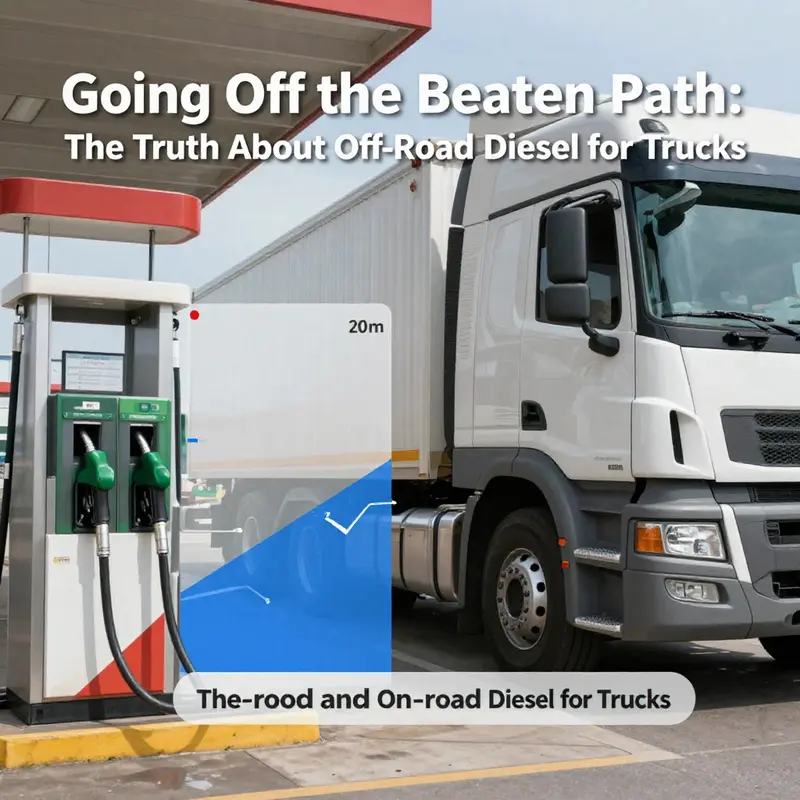
The question of whether off-road diesel is a smart choice for a truck is rarely settled by a single factor. Price matters, but the economics of fuel stretch beyond the pump. In the logistics of maintaining a fleet, every mile driven and every hour of use has a cost attached to it. The distinction between off-road diesel and on-road diesel runs deeper than color and tax codes; it maps onto a set of regulatory rules, potential engine health implications, and a broader calculus of risk versus reward that fleet operators must navigate. When you weigh the economics of fuel, you should look at total operating costs rather than chasing the lowest sticker price. The legal framework that governs fuel use, the tax structure that funds road infrastructure, and the potential mechanical responses of modern diesel engines all have a bearing on whether off-road fuel truly pays off in the long run for a truck that operates on public roads, even if the cheaper fuel seems tempting at the bowser.
Taxes and regulations create and sustain meaningful price differences between on-road and off-road diesel. On-road diesel is taxed at federal and state levels, with the corresponding revenue directed toward maintaining highways and building new transportation infrastructure. That tax component gets built into the price you see at the pump and, in turn, into the operating cost per mile. In contrast, off-road diesel—often labeled as red diesel or simply off-road diesel in many regions—is designated for non-highway uses, such as construction equipment, agricultural machinery, and generators. Because the fuel is intended for off-road use, it is taxed at a much lower rate or, in some jurisdictions, not taxed at all. This tax treatment is the central lever behind the familiar price gap between the two fuels.
From a regional perspective, the price gap can vary widely, and that variation is a function of how aggressively a given jurisdiction applies fuel taxes and how effectively it enforces dyeing or tracking mechanisms. In the United States, the color dye is a practical enforcement signal: off-road diesel is dyed red to discourage its on-road use. While the dye itself is not a technical performance modifier, the regulatory framework is. When you drive an on-road truck, you’re expected to refuel with on-road diesel because failing to do so exposes you to penalties—from fines to a more substantial removal from service if the issue triggers a compliance audit. The legal risk is real, and the economic risk compounds quickly if a violation leads to back taxes, penalties, or the loss of warranty coverage that could be affected by the fuel type used.
The observable price delta between the fuels is not trivial. As of mid-2025, industry snapshots placed the average on-road diesel price around $4.35 per gallon. Off-road diesel, depending on the region and supplier, could be priced roughly $0.50 to more than $1.00 per gallon cheaper. That difference sounds modest on a per-gallon basis, but in a fleet that logs hundreds of thousands of miles annually, the annual savings can be substantial. The math looks even more favorable for operations that run heavy off-road equipment and long-haul routes through remote or rural areas where off-road diesel supply chains are well established. Operators in mining sites, large construction projects, and industrial facilities relying on diesel-powered equipment can benefit from the cost gap, simply because the scale of consumption makes the per-gallon savings materialize into meaningful annual savings.
Yet the economic picture does not stop at per-gallon price. A crucial factor is how fuel quality, additives, and engine-management systems interact with fuel formulation. On-road diesel and off-road diesel share the broad category of ultra-low sulfur diesel (ULSD), but some off-road formulations include additives—such as biocides or stabilizers—that may not be optimized for on-road engines. Modern diesel engines rely on precise sulfur content, specific detergent packages, and well-muited lubricity characteristics. Deviations in these parameters can confuse engine management systems, potentially triggering fault codes, unusual fuel-air mixtures, or in some cases, reduced performance. The risk of a mechanical or electronic diagnostic event matters not just for immediate performance but for warranty considerations and the cost of downtime during preventive maintenance windows. For a fleet, even a small uptick in fault codes or a transient performance dip can ripple through maintenance scheduling, service bay capacity, and driver productivity.
To the informed operator, the purchase decision becomes a question of total cost of ownership rather than the lowest price per gallon. The economics should account for potential downtime, diagnostic cycles, and the possibility of reduced fuel economy caused by mismatched fuel characteristics. In a truck that spends substantial time across public highways, the safest approach is to align with the fuel type specified by the manufacturer and to comply with the local tax and regulatory framework. The penalty of getting it wrong—whether through fines, legal exposure, or warranty disputes—far outweighs any short-term savings from a cheaper pump price. If you operate a fleet that includes both on-road and off-road missions, you may discover that diversified fueling strategies make sense only when carefully planned with regulatory compliance in mind and a thorough risk assessment conducted for each route and duty cycle.
Another layer to consider is evolving regulation and its impact on the economics of fuel. Regulation can alter the total cost of operation even if the price difference between fuels remains constant. For instance, jurisdictions contemplating adjustments to in-use heavy-duty diesel rules for off-road equipment may influence the overall cost of compliance for operators who rely on off-road fuel for their non-highway machinery. A relaxation of certain rules could lower maintenance or emissions-compliance expenditures in the long run, shifting the relative attractiveness of off-road fuel in mixed-duty fleets. While this does not directly change the pump price, it changes the price of doing business, which is ultimately the measure that matters when comparing fuel strategies.
The practical takeaway for truck operators is straightforward: treat fuel choice as a component of a larger, continually updated cost model. The model should include current and projected tax rates, regional price ranges, and the probability and cost of regulatory changes. In this model, the attractiveness of off-road diesel rises or falls with the level of regulatory burden that accompanies on-road fuel usage. If compliance costs for on-road diesel rise due to tighter reporting, higher taxes in a state, or expanded fuel-supply restrictions, off-road diesel might appear more attractive on paper. However, those gains can be offset by the penalties of noncompliance, the risk of engine management alarms, and the operational fragility of using a fuel in a way that diverges from the manufacturer’s specification.
For operators who want to better understand the mechanics of diesel fuel and its role in engine health, a deeper dive into the diesel system is worthwhile. A practical resource that explores the mechanics of diesel fuels and the steps toward sound maintenance is a comprehensive guide on diesel systems and fuel-handling practices. Engaging with such guidance can help fleet managers translate the price delta into a robust maintenance plan and a disciplined fueling protocol. This is especially true for teams that must balance the realities of remote job sites with the need to stay aligned with on-road fuel regulations. The relationship between fuel choice and maintenance schedules often reveals itself in unexpected ways—through driver reports of performance changes, through diagnostic trouble codes, or through subtle shifts in fuel economy that only show up over months of operation. In those moments, a solid understanding of diesel behavior becomes a competitive advantage rather than a compliance risk.
Operationally, the decision to use off-road diesel for on-road trucks is not just a matter of price. It involves a web of legal constraints, engine compatibility considerations, and the potential implications for warranty coverage. For a truck intended to operate on public roads, the manufacturer’s specifications generally dictate a specific fuel grade and formulation. Deviating from that specification invites not only legal exposure but also a set of mechanical uncertainties. In practice, many fleets find that the short-term savings from off-road diesel are offset by the longer-term costs of penalties, warranty disallowance, and unplanned downtime. Conversely, for fleets whose operations are primarily off-road—such as construction sites away from the road network—the cost differential, combined with the absence of road taxes, can be a defining factor in total cost of ownership. In those scenarios, off-road diesel can be a rational choice when it aligns with the mission profile and regulatory allowances.
What does all this mean for the individual truck owner weighing the daily decision at the pump? It means recognizing that price is only one piece of a larger equation. If your vehicle is certified for on-road use, the responsible choice is to fuel with the on-road variant, ensuring compliance with tax laws and avoiding potential engine-management concerns. If your work requires off-road machinery that seldom or never touches public roadways, the economics can tilt in favor of off-road diesel, provided you stay within the legal boundaries and the equipment’s designed duty cycle aligns with off-road fuel use. In mixed-use scenarios, it becomes a careful balancing act: you might assign off-road diesel to dedicated non-road equipment and reserve on-road diesel for vehicles that regularly traverse highways.
The path to clarity in this landscape lies in data, not assumptions. Track your fuel costs by vehicle and duty cycle, compare not just price per gallon but price per mile driven, and factor in downtime and potential regulatory changes. Use a forward-looking forecast to test how sensitive your total cost of ownership is to shifts in tax regimes or regulatory posture. In other words, build a scenario where you can see, over the course of a typical operating year, whether the perceived savings from off-road diesel truly translate into real dollars saved after all factors are considered. If the numbers still favor off-road fuel, then you’ve found a niche where the economics align with the mission profile. If not, the safer, compliant, and often simpler choice remains on-road diesel.
For readers seeking a practical, field-tested understanding of diesel systems and fuel-handling practices—an essential companion to the economics discussed here—there is a resource that dives into the mechanics and decision-making around diesel performance. The chapter on diesel mechanics offers a step-by-step path to mastering fuel management, a cornerstone of any robust fleet strategy. For readers who want to explore this further, you can follow this link: mastering-diesel-mechanics-your-step-by-step-path-to-success.
In sum, the economic factors surrounding off-road diesel versus on-road diesel for trucks are real and meaningful, but they must be weighed against legality, engine health, and the broader cost of ownership. The price gap can be attractive, but it is not a free pass to ignore regulatory structure or manufacturer guidance. When approached with a holistic view—one that accounts for tax treatment, regulatory developments, fuel quality considerations, and the true cost of downtime—the decision becomes clearer. The world of diesel fuel economics rewards disciplined, data-driven planning, not impulse buying at the pump. When fleets design fueling strategies around this discipline, they position themselves to weather price volatility, regulatory shifts, and maintenance challenges with greater confidence.
External resource for pricing trends and regulatory context: U.S. EIA Diesel Prices
Final thoughts
In the world of off-roading, fuel choice is more than a mere economic decision; it’s a matter that intertwines legality, engine health, and performance optimization. Off-road diesel may offer certain advantages in dedicated applications, but its use in on-road vehicles opens a Pandora’s box of legal and mechanical challenges. Understanding the implications of each type of diesel and recognizing which fuel your truck truly needs will empower you to make better choices that enhance your off-road adventures while ensuring compliance with the law and safeguarding your engine. Embrace the thrill of the terrain, but do so wisely.