
Many off-road enthusiasts and truck owners ponder the implications of using off-road diesel in their vehicles. This specialized fuel, designed primarily for agricultural and construction machinery, raises questions about legality, engine performance, and cost-effectiveness. As you navigate the rugged terrains and thrill of off-road racing, understanding the nuances of off-road diesel use could greatly influence your experience. In the following chapters, we’ll delve into the legalities surrounding off-road diesel, explore its potential effects on your truck’s engine, weigh the economic advantages against legal risks, and provide best practices for using this fuel responsibly while protecting your vehicle.
When Cheap Fuel Becomes a Legal Liability: How Off‑Road Diesel Rules Affect Truck Owners
Legal risk starts where price appeal ends. Off‑road diesel often looks attractive because it costs less. The lower price exists for a simple reason: tax rules. That cheaper fuel is intended for machines that never travel public roads. Using it in a road‑going truck changes a cost decision into a legal and operational risk. This chapter examines how regulations treat off‑road diesel, how enforcement works, and what truck owners and fleet managers should do to avoid heavy penalties and operational headaches.
Lawmakers treat fuel classification as a public policy tool. Off‑road diesel carries a different tax status. That status is limited to non‑road equipment—think construction gear, farm machinery, and other units that operate off public highways. The tax distinction exists to reflect both intended use and emissions control frameworks. When a diesel truck that operates on public roads uses off‑road diesel, it effectively bypasses the tax regime. That makes the use unlawful in many jurisdictions. The practical result is a strict prohibition backed by fines, seizure risk, and reputational damage.
Enforcement begins with detection. Regulators and inspectors rely on several straightforward techniques. The most visible is dyed fuel. Red dye is widely used to mark off‑road diesel. It is easy to spot with simple tests. Officials use black lights and chemical reagents to reveal traces in tanks and filters. Even small amounts leave residues that are difficult to remove. This means short‑term attempts to switch fuels before inspection rarely succeed.
Beyond dyed fuel, enforcement agencies check documentation. Fuel receipts, delivery records, and supplier invoices form a paper trail. Inconsistent or missing paperwork raises suspicion. Inspectors may ask for purchase records that match the volume consumed by a vehicle. Discrepancies provide probable cause for deeper investigation. For fleet operators, consistent recordkeeping substantially reduces legal exposure.
Penalties for misuse are intentionally steep. Lawmakers structure fines to remove the economic incentive to cheat. Penalty levels vary by region, but they can reach thousands in local currency per vehicle. In some places, authorities may order seizure of the vehicle or suspend operation until the fuel issue resolves. Repeat offenses attract harsher consequences and can trigger criminal investigation in extreme cases. The financial exposure includes the fine itself, administrative costs, lost operating time, and the potential need to remediate emissions systems if contaminated fuel caused damage.
Regulations also link to emissions standards and equipment certification. Road diesel must meet specific national standards for sulfur content and other properties. Even when off‑road diesel appears chemically similar, regulators often classify it as noncompliant for on‑road engines. That classification is not only tax‑driven. It ties directly to efforts to control urban air pollution. Enforcement therefore serves both fiscal and environmental goals. A truck owner who uses off‑road diesel may also face claims related to emissions compliance if the fuel harms aftertreatment systems or causes visible smoke.
Operational risk extends beyond fines. Diesel quality and storage practices matter. Off‑road diesel is sometimes stored in different settings than road diesel. Poor storage increases the chance of water and contaminants entering the fuel. Those impurities can clog filters and harm high‑pressure fuel systems. While the off‑road label itself does not inherently mean inferior chemistry, the contexts in which it is handled often raise mechanical risk. That risk hits fleets through unplanned maintenance and downtime.
There is a second layer of consequence for fleets that try to treat off‑road diesel as a simple cost play. Insurers and leasing companies typically require compliance with law. Evidence of illegal fuel use can void coverage or breach lease agreements. That exposure compounds the problem. A single enforcement action may lead to denied claims for an incident, higher premiums, or contract disputes. Fleet managers must weigh these indirect costs against apparent fuel savings.
To manage risk, adopt a compliance‑first mindset. Start with procurement. Work only with vetted suppliers who provide clear documentation. Contracts should include clauses that specify fuel type, tax status, and delivery conditions. Insist on signed delivery tickets and maintain a central repository for all fuel receipts. When possible, align purchases with usage logs so volume matches mileage and operational patterns. Routine reconciliation of fuel purchases to vehicle consumption helps detect anomalies early.
Fuel handling practices reduce both legal and technical risk. Use dedicated tanks and clear labeling at sites where different fuels coexist. Train staff to recognize dyed fuel and the legal restrictions that apply. Implement inspection checklists for fuel quality, including visual checks for water and sediment. Regularly drain water separators and replace filters according to manufacturer guidance. These steps reduce the mechanical problems that stem from poor fuel quality and demonstrate a proactive compliance culture.
Recordkeeping deserves emphasis. Keep accurate logs for every delivery. Note vehicle IDs, odometer readings, supplier contact details, and invoice numbers. If regulators inspect, these records form your primary defense. They show intent to comply and that you purchased lawful road diesel for on‑road use. Digital systems help. A central fuel management platform or a simple spreadsheet with scanned receipts is far more defensible than ad hoc paper notes.
If you suspect an incident—say, a supplier delivered dyed diesel or a driver filled a tank from an unverified source—act immediately. Isolate the vehicle to prevent further use on public roads. Document the date, time, and personnel involved. Take fuel samples for lab testing. Notify your supplier and request corrective action and documentation. If the incident escalates to an inspection, early transparency often mitigates penalties. Authorities may reduce fines when they see good faith efforts to correct the problem.
For commercial fleets, a compliance audit closes many gaps. An audit reviews supply contracts, storage, labeling, and fuel reconciliation. It should include random fuel sampling. An internal audit highlights weak points before inspectors find them. Audits also create an opportunity to update internal policies and staff training. They pay off by reducing the chance of costly enforcement actions.
Regulatory variation matters. Different provinces, states, or municipalities impose different fines and enforcement priorities. Some jurisdictions emphasize visible emissions. Others target tax evasion. Understand the local legal landscape where your vehicles operate. For vehicles that cross regions, ensure procurement and documentation meet the strictest relevant requirements. Operating under the least strict standard is a risky approach.
The presence of dyed fuel complicates attempts to hide misuse. Red dye is intended as a reliable marker. It binds to components and leaves traces. Cleaning may remove surface dye, but traces often remain in filters and sumps. Labs can detect dye residues long after a tank appeared clean. This technical reality makes detection durable. Enforcement therefore relies less on chance and more on deliberate checks.
An often overlooked area is de‑dyeing myths. Some operators believe flushing tanks or using additives will remove evidence. These practices are unreliable and create new risks. Additives may damage fuel system components. Flushing without proper filtration risks pushing contaminants into precision fuel pumps. Attempting to circumvent detection is both unsafe and legally reckless.
Finally, think strategically about cost. The low price of off‑road diesel can tempt short‑term savings. But compare the math to likely enforcement scenarios. A single fine can erase months of savings. Add downtime, repair bills, and potential insurance or lease consequences. For fleets, model worst‑case outcomes and set procurement policies that make legal fuel the default. When budgets are tight, reduce consumption through route optimization, idle reduction, and preventive maintenance—not through illegal fuel choices.
For those who operate legitimately in non‑road contexts, off‑road diesel remains an appropriate option. Use it where permitted and keep strict segregation from on‑road fuels. Proper signage, separate storage, and supplier agreements are essential. For road‑going trucks, the safe and legal choice is road diesel that meets national standards and is fully taxed for public use.
If you want practical technical guidance for managing diesel systems and fuel handling, consult a step‑by‑step mechanics guide. That resource helps align maintenance with compliance and reduces mechanical risk when fuels vary. mastering-diesel-mechanics-your-step-by-step-path-to-success
For a legal anchor and the specific regulatory language referenced earlier, see the local emissions regulation that sets these standards and penalties. The Beijing ordinance clarifies prohibited uses and fines, and it is widely cited in enforcement practice. https://www.bjrd.gov.cn/xxgk/zcfg/202409/t20240918_3765624.html
Engine Reality: How Off‑Road Diesel Shapes Truck Power, Economy, Emissions, and Longevity

Understanding how off-road diesel affects a truck goes beyond legality. The fuel you choose becomes part of the combustion process, and it directly sculpts engine behavior, operating cost, and durability. This chapter unpacks that connection in practical terms, showing why off-road diesel is not inherently “bad,” but how its quality and proper use determine whether it helps or harms your truck.
The most immediate way fuel influences a truck is through combustion dynamics. Diesel chemistry determines ignition quality, burn rate, and residue formation. Two measurable traits matter most: cetane number and contaminant content. A higher cetane number shortens ignition delay. That yields smoother, more complete combustion. For trucks working under heavy loads, such as hauling or towing, a stable combustion cycle translates into steadier torque and more reliable acceleration. Conversely, low-cetane or contaminated fuel introduces irregular combustion. The result is reduced power, hesitation, and a sensation drivers describe as “chugging” or “surging.” That loss of usable power affects cycle times, payload handling, and driver confidence.
Fuel quality also dictates thermal efficiency. Clean, well-formulated diesel burns more completely. More of the fuel’s chemical energy becomes mechanical work. That reduces specific fuel consumption, meaning fewer liters per ton-kilometer. Field studies show that upgrading fuel quality within regulated standards can cut fuel burn by measurable margins. Those savings compound over months of heavy use. On the flip side, poor-quality off-road diesel wastes energy. Incomplete combustion produces soot and unburned hydrocarbons, which not only lower efficiency but also increase the load on emission control hardware.
The relationship between fuel and emissions is tight. Modern diesel engines rely on aftertreatment systems like diesel particulate filters (DPF) and selective catalytic reduction (SCR). These systems assume the engine is fed clean fuel with predictable sulfur and additive content. High sulfur levels promote sulfate particulate formation. These particles accelerate filter loading. Contaminants and excessive soot from low-quality diesel cause more frequent DPF regeneration cycles. Those extra cycles raise exhaust temperatures and stress components. In worst cases, a clogged DPF can force derating or require expensive cleaning. Thus, poor off-road diesel can indirectly disable emission control hardware and escalate repair bills.
Mechanical wear is another long-term consequence of fuel choice. Contaminants, water, and dissolved acids shorten component life. Water in fuel fosters microbial growth inside tanks and lines. Microbial colonies produce acids and biomass that corrode metal and clog filters. Abrasive particulates accelerate wear in high-pressure pumps and injectors. Over time, injector spray patterns degrade, causing further incomplete combustion and more deposits. Deposits build on injector tips, piston crowns, and intake valves. Those deposits reduce volumetric efficiency and change compression characteristics. Small changes compound into notable power loss and increased oil contamination. Ultimately, these effects shorten engine overhaul intervals and raise life-cycle costs.
Not all off-road diesel is equal. The term covers fuels intended for non-road use and often denoted only by tax status or a dye. Chemically, compliant off-road diesel meeting modern standards can match on-road diesel in cetane and sulfur levels. When it meets a regulated specification, performance differences fade. Problems arise when off-road diesel is sourced from nonstandard supplies or stored poorly. Long storage times at construction sites, exposure to water, and repeated topping off from multiple sources magnify contamination risks. Therefore, the key question is quality control, not the label “off-road.”
Cold-weather performance also hinges on fuel properties. Pour point and cold filter plugging point (CFPP) matter when trucks operate in low temperatures. Off-road diesel that lacks proper winter treatment can gel in filters and lines. This starves the engine in cold starts and can damage lift pumps. Operators must ensure arctic-grade or winterized fuel when needed, regardless of whether the diesel is on-road or off-road rated.
Economic impacts are immediate and long-lasting. Lower-priced off-road diesel appears attractive to fleet owners, but any savings must be weighed against potential increased maintenance and reduced uptime. A single damaged injector, or a blocked DPF, can offset months of fuel savings. Conversely, when off-road diesel meets quality standards and is used where allowed, its lower tax burden can reduce operating costs legitimately. The calculus requires disciplined sourcing, proper storage, and strict operational boundaries to avoid legal exposure.
Operational context determines risk. Trucks that never leave a private worksite, like quarry haulers or dedicated construction units, can run off-road diesel without compromise if fuels meet technical specifications. For mixed-use trucks, the risk rises. Using off-road diesel in vehicles that travel public roads exposes operators to legal penalties. That legal risk compounds mechanical risk when fuel quality is inconsistent.
Maintenance practices mediate many fuel-related problems. Regular fuel filtration, water separation, and scheduled inspection of filtration elements catch contaminants before they cause damage. Fuel polishing and tank cleaning remove sediments and microbial layers. In systems with DPFs, monitoring differential pressure and regeneration frequency reveals fuel-related soot trends. These maintenance steps reduce the negative impacts of lower-quality fuels and preserve engine life.
Diagnostic vigilance is equally important. Early signs like increased smoke, reduced low-end torque, and higher fuel consumption flag combustion issues. Responding promptly prevents deposit formation from escalating. Periodic fuel sample testing provides a definitive check on cetane, sulfur, water content, and particulate load. For fleet managers, establishing a routine sampling protocol turns an invisible risk into a manageable metric.
Regulatory alignment matters as well. Non-road emission standards have tightened, and jurisdictions sometimes restrict the use of older standard fuels or older engines in urban zones. Ensuring fuel complies with current local standards reduces the chance of noncompliance. Using fuel that meets the emission strategy of the engine protects both hardware and regulatory standing.
Choosing the right off-road diesel is a matter of specification, storage, and use. Prioritize fuels that meet national or regional quality standards. Check cetane and sulfur values. Verify that suppliers maintain clean transfer practices and store fuel in dry, sealed tanks. Avoid long open storage in dusty, water-prone environments.
When you cannot guarantee fuel quality, employ safeguards. Install multi-stage filtration, use water separators, and schedule shorter filter change intervals. Keep a closed system for fuel transfer, and train staff to detect fuel contamination signs. Protecting injectors and the high-pressure fuel system prevents a cascade of problems.
For maintenance teams, expanding diesel system knowledge pays dividends. Hands-on guides and training programs for diesel mechanics help teams identify early signs of fuel-related wear. Those resources improve diagnostic speed and reduce mistaken repairs. For practical repair and maintenance training, see a comprehensive guide on mastering diesel mechanics for step-by-step system understanding: mastering diesel mechanics.
In summary, off-road diesel is not categorically harmful to trucks. Its effects depend on quality, storage, and application. When the fuel matches modern standards and stays clean, performance, economy, and emissions remain acceptable. When fuel is contaminated, aged, or mismatched to climate, the engine bears the consequences. The difference between harmless and harmful often lies in a few controllable practices: source verification, proper storage, routine testing, and vigilant maintenance.
Understanding this reality reframes the debate about off-road diesel. The fuel itself is a tool. Used correctly, it performs well and reduces legitimate costs. Used carelessly, it becomes a source of mechanical failure and regulatory trouble. That pragmatic perspective leads fleet managers and operators to focus on systems and processes, not myths. Treat fuel quality as an integral part of engine care, and the choice of off-road diesel will support truck performance rather than undermine it.
For local regulatory details on non-road equipment and fuel restrictions, see the relevant government notice linked below.
https://www.linyi.gov.cn/zwgk/xxgkml/gzjg/202003/t20200301_659848.html
成本、法规与未来的路:非道路用柴油对卡车经济性与合规性的全景解读
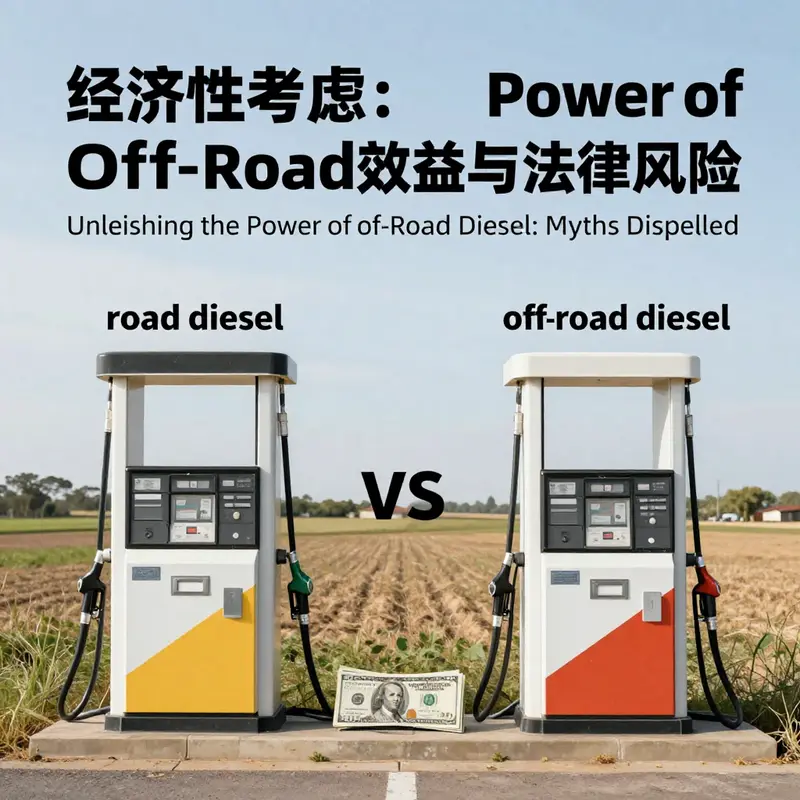
当谈论“非道路用柴油是否对卡车有害”时,很多人会下意识地寻找一个简单的是非答案。然而,真正的答案往往藏在成本、法规和技术演变的交汇处。非道路用柴油,顾名思义,是为工程机械、农业设备等非公路用途而设计的燃料。它在化学成分上与道路用柴油极为相近,最大差异通常体现在税务处理和是否被染色以示区分。这两个因素本身就决定了在现实世界中的使用边界:在合规场景下,它可以成为一种成本导向的选择,但一旦跨越到公共道路,就会触及法律红线与潜在罚则。对于车队管理者而言,这种看似简单的燃料选择,其实是一个需要对法规、成本结构和资产价值进行综合评估的管理议题。
在法律与合规性方面,核心的事实很清晰:非道路用柴油在公共道路上的使用通常被严格禁止。把它用于行驶的车辆可能面临罚款、扣留车辆,甚至影响保险与合规记录。这些直接的法律风险在短期内就能对运营产生实际冲击,尤其是当路权、运输合同和年检制度与燃料类型紧密相关时。相较之下,非道路燃油的价格优势来自于它不包含道路燃油税,这一点对成本敏感的车队具有明显吸引力,但收益也伴随约束——它只能在规定的非公路用途场景中使用,任何跨界使用都可能引发合规链条的断裂与经济惩罚。对许多企业而言,理解这一点,是避免未来潜在风险的第一道防线。
从发动机与燃油系统的角度看,非道路用柴油本身并不必然对卡车发动机造成额外损害。研究者指出,若车辆专门用于非道路作业,如矿山、工地、农场等场景,燃料本身的成分与道路用柴油基本相同,硫含量和燃烧特性并无本质差异。这意味着在技术参数层面,单次燃烧效率、喷射系统的磨损水平等,并不会因为“非道路”标签而本质改变。但现实世界的风险点在于燃料质量控制——若非道路柴油质量不合格,含水、杂质过高、储存不当等情况都可能引发燃油系统腐蚀、喷油器堵塞或燃油供给不稳。这些问题往往与燃料质量管理实践、供应链稳定性以及现场储存条件高度相关,而非“非道路身份”本身造成的直接损害。换言之,非道路柴油本身并非天然的危害源,关键在于其质量与使用场景的严格匹配。
这一点也与成本效益分析紧密相连。成本层面的核心在于燃料价格差异以及税务结构。非道路柴油通常具备价格优势,因为它不承担道路燃油税,理论上可以在短期内降低单位燃料成本,提升单位作业里程的成本效益。更重要的是,经济学研究在不同情景下揭示了一个更广的趋势:随着新技术的推进,非道路领域的能源成本结构正在向更低碳、低维护成本的方向演变。特别是在高利用率场景,电动非道路机械展现出更显著的长期经济性——能源成本下降幅度在50%到86%之间,在矿区、港口等需要长时间连续作业的环境尤为突出。此类研究不仅点明了未来的成本走向,也揭示了在资金与资源允许的情况下,向电动化转型的潜在收益。换电模式的应用进一步缓解了电动设备充电时间带来的生产力损失,保障了作业的持续性与效率。
但不可忽视的是,电动化并非一夜之间就能全面替代传统柴油机。初始采购成本的上升、充电基础设施的布局以及现场能源管理的复杂性,都是企业在做出转型决策时必须权衡的现实因素。更重要的是,文献中多次强调,未来的监管走向和市场激励将显著改变非道路燃料的成本—收益结构。若从长期视角观察,电动化不仅能在能源成本上实现压降,还能通过更简单的维护需求、较低的故障率和更长的运行寿命来降低总维护成本。这些因素共同推动了“未来趋势”的强烈信号:在高利用率、对排放与能耗要求较高的场景,电动化正逐步成为更具吸引力的长期经济选择。话虽如此,当前阶段的现实仍然需要企业做出权衡:是否在现阶段继续利用非道路柴油的成本优势,同时为未来的转型做出准备。
另外,宏观层面的供应链与能源安全风险也不可忽视。研究显示,中国的柴油供应高度敏感于国际市场波动,进口依赖度高企,价格波动会直接传导到运营成本与预算管理之上。在这种环境下,减轻对单一能源路径的依赖,成为企业资产配置的重要考量。非道路柴油的吸引力,往往在于它能够在短期内降低燃料支出,却也可能在能源结构调整、进口政策变化以及区域性排放标准升级时,暴露出新的成本与合规压力。换言之,成本与法规始终是并行的两条路,一条带来直接的短期现金流优势,一条则潜藏着未来合规、合约与资产价值的长期风险。
这一切并非要否定非道路柴油的现实价值,而是要将其视为一个需要动态管理的要素。企业若能在清晰的法规边界内运作,且对燃料质量进行严格控制,就能够在短期内实现运营成本的优化,同时将未来的转型成本分散到更可控的时间点。这也解释了为何一些行业实践会强调“正确使用”的重要性:在非道路环境中使用非道路柴油是合法且经济的选择,但绝不能被误用到公共道路上。为避免误解,企业应建立严格的内部操作规范,确保燃料的采购、储存、运输与使用过程都处于可追溯、可审计的框架内。
在评估长期资产价值时,合规风险与政策导向往往被低估。最新的发展路径显示,排放法规正日益趋严,非道路移动机械的排放控制成为政府关注的重点。国家层面关于分阶段提升排放标准的政策目标,意味着老旧、排放高、油耗高的设备将面临淘汰或被限制在特定区域内运行的现实压力。如果企业坚持高排放、高油耗的传统柴油机,并继续在政策过渡期后维持不变的使用方式,资产可能会因为无法通过验收、无法上牌、进入限行区域而迅速贬值。反之,早日布局的企业在新标准与新能源政策的引导下,往往能通过政策红利和市场需求的双重推动,获得更好的竞争力。
除法规与成本外,供应链的韧性也是决定是否长期坚持使用非道路柴油的重要因素。对柴油的高度进口依赖,使能源价格对经营成本的敏感性大幅提升。国际市场的波动、货物流通的不确定性、区域性供应中断等因素,都会在短期内放大燃料成本的波动。因此,企业在考虑非道路柴油时,往往需要把“供应稳定性”嵌入到成本模型中,以评估在不同情境下的现金流与利润波动范围。将来,随着新能源电力在非道路领域份额的提升,能源结构的多元化将成为缓解价格波动的有效手段,也是提升运营抗风险能力的关键路径。
就职业化运营的角度看,所有这些讨论的核心目标是一致的:在确保合规的前提下,最大化运行时效与资产回报。非道路柴油的成本效益要点不再是一张简单的“便宜燃料”标签,而是一个需要与合规成本、维护成本、未来投资成本和政策导向共同打分的综合矩阵。对于管理者而言,最重要的并非盲目追求最低燃料成本,而是在合理风险敞口下实现总成本的最优化,并为未来的转型留出缓冲空间。这意味着,在短期内,继续在非道路场景下利用非道路柴油的价格优势是可以接受的,但必须把“合规边界、燃料质量控制与长期转型计划”放在同等重要的位置进行管理。
在实践层面,一个有益的策略是将燃料选择与设备、维护、耗材与能耗策略整合起来。通过建立严格的燃料质量门槛、完善的储存与运输流程,以及对燃料供应商的持续评估,企业可以在保留成本优势的同时,降低因燃料质量问题带来的维护成本与停机风险。此外,企业还应密切关注行业转型信号,将部分投资转向可再生能源驱动或电动驱动的非道路设备,以实现更可控的长期成本结构与排放合规性。这一转型不仅有助于降低长期的运营成本,还能提升企业在未来市场中的竞争力与声誉。
作为对这一章节内容的延伸参考,读者可以进一步了解柴油机维护与燃料管理的系统性知识,参考资源之一为对柴油系统的深入解析与维护路径的综合指南。此类资源强调在不同燃料条件下对发动机与燃油系统进行诊断与优化的重要性,帮助车队在现实运营中实现更高的可靠性与效率。与此同时,外部的法规与技术趋势研究也提示,非道路设备的能源策略正在从“成本导向”向“合规与可持续性”共同推进。正是这种多维度的驱动,使得今天的非道路柴油既不是简单的“好”或“坏”,也不是一成不变的答案,而是一个在法规、成本与技术变迁中不断调整的现实选择。
最后,企业在制定燃料与能源策略时,应将国家与区域性政策变化、行业发展趋势、供应链韧性以及资产组合的长期价值都纳入考量。综合以上分析,非道路柴油在当前阶段对卡车并非天生“有害”,而是在特定情境下具备明显的经济优势,同时也承载着明确的法规与未来转型风险。只有在清晰的边界条件和系统化的管理框架下,才可能把短期成本优势与长期资产价值和合规性提升结合起来,走出一条与未来能源格局相吻合的可持续发展路径。
Off-Road Diesel and Your Truck: Safe Use, Legal Boundaries, and How to Protect Your Engine

In the life of a trucking operation that touches both city streets and rough terrain, one fuel question tends to resurface with predictable frequency: does off-road diesel have any negative effect on a truck’s performance, or is it simply a cheaper option that must stay within a narrow set of legal boundaries? The answer is nuanced, and it rests as much on where the fuel is meant to be used as on what is in the tank. Off-road diesel, by design, is engineered to serve a different regulatory purpose than fuel intended for on-road vehicles. The chemistry may be similar, but the rules are not. You will hear about dyed fuel, tax exemptions, and the penalties that follow if the dye is discovered where it isn’t allowed. All of this matters because it frames the risk—not just to the engine, but to the entire operation. Reading the landscape of regulations and fuel quality can spare a fleet both costly fines and avoidable wear on metal parts that keep a truck moving. The core idea to keep in mind is simple: off-road diesel is not inherently bad for your engine, but its use is deliberately constrained by law, tax policy, and quality-control practices. When you stay inside those constraints, the fuel itself behaves the same as any compliant diesel in the engine’s life cycle. When you step outside, you invite a cascade of consequences that can ripple through maintenance schedules, reimbursement records, and even insurance coverage. In other words, the problem is not the chemistry in a working fuel, but the context in which it is applied. If your operation is built around off-road tasks—earthmoving, mining support, large-scale farming, or generators on a remote worksite—then off-road diesel serves a legitimate and economical purpose. If your fleet needs to traverse public roads to reach the next job site, you must bring in the fuel that the law recognizes as road diesel. The distinction is not merely theoretical; it is the difference between compliant practice and illegal activity. The practical implication is straightforward: legality and tax policy set the boundaries, while engine design and fuel quality determine how well a truck runs within those boundaries. This is not a discussion about whether a truck’s engine is fragile or robust; it is a discussion about how fuel fits into the broader system of compliance, maintenance, and cost control that governs modern trucking. The engine, in turn, responds to what it receives as pure fuel and a clean delivery system. If the fuel is clean, free of water, and free of contaminants, the engine’s fuel system can perform as it was designed to. If the fuel carries water, particulates, or microbial growth, even the most well-built fuel system can show signs of stress. That stress, over time, may manifest as clogged injectors, reduced lubrication properties at the high-pressure pump, increased filter changeouts, or reduced combustion efficiency. The reason is simple: water in diesel and dirt can alter the fuel’s properties, promoting corrosion in metal parts or lodging in tiny passages that your fuel system relies upon to maintain steady pressure and precise injection timing. This is not an indictment of off-road diesel per se; it is a reminder that any diesel quality problem will reveal itself in the context of the system to which it is delivered. This is why legitimate suppliers stress the importance of storage conditions and handling practices. In many off-road contexts, tanks are outdoor, exposed to temperature swings, moisture, and occasional contamination from sediment. If a fuel supply is intercepted by water, moisture, or sediment before it ever reaches the engine, the impact is measurable long before a warning light comes on. The on-road diesel that a truck is designed to burn undergoes the same test of quality—improper storage can degrade any fuel, and the consequences can mimic those of a fuel that is not ideal for the engine. The difference with off-road fuel lies in the context: the use case, the point of sale, and the legal framework governing its sale and use. The spectral question—whether off-road diesel will harm an engine if used in a truck—is answered with a conditional yes-and-no. If a truck is operating on a legitimate off-road site, and the fuel is supplied under recognized non-road channels, there is no inherent harm to the engine; the fuel’s burn characteristics, sulfur content, and energy density can be comparable to that of on-road diesel. The sulfur content, for example, is a critical factor for emissions control systems. In the United States, for instance, both on-road and off-road diesel must meet stringent specifications, but the tax and labeling regime separate them. The practical upshot is straightforward: if your vehicle is properly tagged as a non-road equipment mover, and the operation is within the statutory use-case, the engine won’t suffer simply because the dye marks the fuel as off-road. The trouble emerges when quality breaks down or when the fuel crosses into the public road network, not from the dye itself or from some intrinsic defect in the diesel sinew. Modern diesel engines tolerate a spectrum of fuel quality, but they are not immune to the sip of poor-quality fuel that carries water, rust, or residual contaminants. When water condenses in a storage tank or infiltrates a supply line, the consequences are not felt immediately as a misfire or a sudden failure. Rather, they accumulate over time: more frequent maintenance cycles, the need for more frequent filter changes, and the potential for fouled injectors that require professional cleaning or replacement. It is worth noting that the risk profile shifts when a vehicle is used on public roads. The legal framework around road-use diesel is designed to prevent cross-subsidization where off-road fuels avoid road taxes. The dye serves a practical enforcement purpose—when authorities scan for compliance, the red-tinted dye in off-road diesel can reveal illicit road usage. The penalty is rarely trivial: fines rise quickly, and repeated offenses can trigger more severe sanctions, including potential fleet shutdowns or impoundment. A chart of consequences exists in many jurisdictions, and drivers and fleet managers often feel the sting not just in direct fines but in ripple effects across registrations, insurance, and warranty coverage. These legal realities are not mere bureaucratic hurdles; they are the backbone of a fuel economy that is aligned with a broader environmental and fiscal policy. The regulatory dimension also instructs a careful approach to who can legally supply off-road diesel and for what purpose. In some countries, the same dye that marks off-road fuel also indicates a different tax treatment; thus, purchasing, storing, and unloading must occur in contexts that preserve that distinction. The consequence of mislabeling or misusing is not only a financial penalty; it can create environmental liabilities as well. Storage and handling, in particular, require discipline. On a construction site or at a farmyard, the fuel supply is not just a commodity but a part of the infrastructure. It interacts with the storage tanks, the filling hoses, and the quick-connects that service multiple machines. Improper sealing can invite moisture, which then leads to microbial contamination in the diesel. Microbial growth is a less common but not unheard-of problem in diesel storage when water is present. In such cases, the fuel color is not the only indicator; a musty smell or a visible emulsion can betray the problem. The engine’s fuel system, with its precision tolerances, does not forgive that kind of contamination quickly. The remedy is straightforward but practical: keep tanks sealed, maintain clean storage, and avoid cross-contamination between different types of fuel. The best practice is to treat off-road diesel as a fuel for off-road machines only, and to reserve road diesel strictly for roads. Three practical safeguards help implement this approach without turning the operation into a detective story. First, maintain strict separation of tanks and lines, ensuring that a transfer line or a pump does not inadvertently feed a road vehicle with off-road fuel. Second, verify that storage containers and fueling equipment are clearly labeled and that staff are trained to avoid mixing. Third, schedule regular quality checks and use filters that are appropriate for the expected contaminants in an off-road supply. These steps are not optional. They reflect an understanding that fuel is not just a necessity but also a risk management tool. For owners and operators who must balance cost and compliance, the most reliable route is to focus on the basics: use the right fuel for the right vehicle, buy from compliant suppliers, and maintain rigorous fueling practices. If your fleet includes trucks that must travel on public roads as part of their routine, the baseline rule is to use road diesel whenever the vehicle is on the public network. The cost advantage of off-road diesel on a per-gallon basis quickly erodes when penalties, lost time, and maintenance costs are added to the ledger. Moreover, using off-road diesel in a road vehicle can undermine warranty coverage. Manufacturers typically design engines and fuel systems with a particular specification in mind, and substituting another fuel—even one with the same chemical backbone but different regulatory status—may void warranty provisions or complicate service agreements. The engine itself is a robust device, engineered to tolerate a range of conditions and fuels, but it is not an exception to the reality that compliance matters. A fleet that remains vigilant about regulatory boundaries plus consistent fuel quality will typically experience fewer surprises. In this sense, the story about off-road diesel is less about harming or insulating an engine than about aligning operations with a legal framework that governs how fuel is taxed, dyed, and tracked. For readers seeking a deeper dive into fuel-system principles and maintenance that can help a truck run reliably on the right fuel, there is value in exploring practical resources on diesel mechanics. For example, one can consult materials that walk through the fundamentals of how diesel flow, injection timing, and filtration interact with fuel quality. A path worth considering is to explore a comprehensive guide that outlines the step-by-step journey of diesel mechanics and maintenance practices. It can provide a practical mental model for technicians and fleet managers alike, reinforcing how even well-meaning fuel choices must be coupled with disciplined maintenance routines. In sum, the question of whether off-road diesel is “bad” for your truck rests on the context of use. When used in the intended non-road environment and sourced from legitimate suppliers, with proper storage and handling, off-road diesel does not carry an intrinsic penalty for the engine. The hazard lies in legality, not engine wear. The real challenge is to prevent cross-border fuel use on public roads, because that is where penalties knit together with environmental and fiscal policy. The wise operator keeps into account the full picture: if you drive on a public highway, you fuel with road diesel; if you operate on a construction site or in an agricultural setting, you may legitimately use off-road diesel under the appropriate rules. This dual reality means your truck’s longevity is less a question of fuel chemistry than of fuel ethics and compliance. For those who want to sharpen their understanding further and link the mechanics to broader practice, a good next step is to explore a detailed guide on diesel mechanics and maintenance. It provides a structured take on how fuel delivery, filtration, and injector behavior align with engine design, and it emphasizes how proper fueling interplays with routine maintenance to maximize uptime. Mastering diesel mechanics: your step-by-step path to success offers such a pathway, connecting the dots between theory and hands-on practice. As with any careful operation, the approach to off-road diesel should be framed not by fear of the fuel itself but by disciplined use, clear boundaries, and ongoing attention to fuel quality and legal compliance. If there is one overarching message for readers grappling with whether to embrace off-road diesel in a truck that sometimes shares road duty, it is this: respect the purpose of the fuel, respect the law, and keep the focus on clean storage, precise fueling, and regular maintenance. When these pieces align, the engine’s life is less about the pigment that marks the fuel and more about the discipline that governs its use. For readers seeking authoritative confirmation of the regulatory and environmental framework that underpins off-road diesel, the U.S. Environmental Protection Agency provides a formal overview of off-road diesel fuel, detailing where and how this fuel should be used and what the penalties are for misuse: https://www.epa.gov/otaq/road-diesel-fuel.htm
Final thoughts
In the world of off-road adventures and agricultural challenges, off-road diesel presents unique advantages that can enhance operational efficiency without compromising engine performance. Understanding the legal implications and taking care to use quality diesel can preserve the durability and reliability of your truck. As you embark on your off-road journeys or cutting-edge racing events, keep these insights in mind. With responsible use and compliance with regulations, off-road diesel can serve as a valuable tool in your automotive arsenal.