

As off-road enthusiasts and adventurers gear up for their wild escapades, it’s crucial to understand the role of off-road diesel in their trucks. While off-road diesel holds the promise of rugged performance and convenience, it also comes with significant legal, economic, and environmental considerations. This article navigates the multifaceted landscape of off-road diesel, starting with the legal implications and engine compatibility, then moving into the taxation impacts, environmental concerns, and practical insights for enthusiasts and operators alike. By the end, readers will be well-equipped to make informed decisions about integrating off-road diesel into their off-road vehicles.
Red Dye, Real Penalties: The Legal Price of Using Off-Road Diesel in On-Road Trucks

In the world of trucking, every gallon of fuel carries more than energy. It carries a ledger, a line in the tax code, a moment of regulatory attention, and a potential risk that can ripple through an entire fleet. Off-road diesel, commonly known as red-dyed diesel, wears its color like a flag. It signals that the fuel is taxed differently and reserved for equipment that never travels on public roads. The legal and practical consequences of using this fuel in a truck that does operate on the highway go far beyond a simple warranty issue or a maintenance note. They touch on taxes, law, insurance, and environmental responsibility, all rolled into one for anyone who ignores the distinction. From the outset, the distinction is not technical in isolation; it is a matter of governance, fiscal policy, and public trust.
From a regulatory perspective, the key difference between on-road and off-road diesel is taxation. The chemical composition of the fuels is largely the same; both meet the same quality standards for cetane, lubricity, and sulfur content. Yet the dye change marks them as different in the eyes of regulators and inspectors. This is not a mere cosmetic trick. It is a visible and legally enforceable sign that the fuel’s tax status has been altered, with consequences that can be swift and severe. The dye is both a signal and a tool for enforcement, enabling inspectors to distinguish streams that should contribute to road maintenance funding from those that should not. The practical effect is that someone filling or transporting off-road diesel into an on-road truck risks more than a short-term disruption; they risk a regulatory encounter with serious financial and legal repercussions.
Federal law in the United States anchors the penalties in the Internal Revenue Code. The commonly cited line is that knowingly using untaxed fuel in a taxable vehicle can trigger penalties under the code. The consequences can be steep. Fines can reach up to ten thousand dollars per violation, and that is before any civil penalties or interest. In cases of repeat offenses or larger operations, prosecutors can escalate the matter to criminal charges. For multi-vehicle fleets engaged in what regulators might characterize as organized evasion, the risk shifts toward criminal prosecution and potential prison time for individuals or corporate officers. The legal language is strict, but the practical effect for fleets is even more immediate: enormousfinancial exposure, disruption of operations, and a crash course in regulatory compliance. The penalties are designed not only to punish but to deter patterns of behavior that undermine the tax system and the funding of critical infrastructure.
States mirror and intensify the federal framework. Roadside inspections have become a common enforcement tool, often using ultraviolet (UV) lights to reveal the telltale red dye. When off-road diesel is detected in an on-road vehicle, authorities can issue immediate fines, impound the vehicle, or require repayment of back taxes plus penalties. The penalties are not only financial; they frequently trigger administrative actions such as vehicle hold, licensing restrictions, or compliance orders. And because state programs vary in their sophistication and scope, the consequences may differ from one jurisdiction to the next. California, with its stringent environmental and air-quality standards, stands out as a model of rigorous enforcement. The California Air Resources Board has explicit provisions against improper diesel use, and violations can intersect with emissions compliance actions in addition to fuel-tax enforcement. In practice, that can mean audits, penalties, and additional regulatory actions aimed at reducing pollution and ensuring legitimate fuel taxation. The broader message is clear: the compliance landscape is layered, and missteps can cascade across agencies and programs designed to protect air quality, road safety, and fiscal integrity.
There is more at stake than the immediate fine. When fuel safety and regulatory compliance collide, fleets face broader exposure that can affect insurance coverage and civil liability. Binding insurance contracts often include terms that void coverage if the vehicle operates outside permitted fuels or if the operator is found to be in breach of applicable laws. In the event of an accident, the lack of insurance defense can leave operators financially exposed to third-party claims, medical costs, and environmental cleanup obligations. Environmental compliance matters can also trigger penalties if improper fuel use results in emissions violations or contamination, leading to a cascade of investigations and remediation requirements. The Department of Transportation’s Hazardous Materials Regulations add another layer of risk for anyone transporting fuel in a noncompliant manner, increasing the likelihood of regulatory action, fines, or even restricted mobilization in certain areas. The penalties extend beyond the box of the courtroom; they can touch the financial stability of a fleet and the trust customers place in its reliability and integrity.
The practical risk management question for any fleet is not merely whether the engine can tolerate off-road diesel, but whether it should be used in vehicles that someday will be inspected on public roads. Technically, most modern diesel engines will run on off-road diesel in a pinch, because the fuels share properties essential to combustion and lubrication. Yet “technically” is not a defense when the operation is illegal. The cost is not just the potential dollar fine; it is the erosion of trust with customers, regulators, and investors who expect operations to adhere to tax and fuel rules as a baseline standard. The penalties can accumulate quickly. A single violation may carry a heavy fine, but a fleet that faces multiple incidents can see penalties compound with back taxes, interest, and the costs of compliance audits. In states with aggressive enforcement, the penalties may also include immediate vehicle seizing or temporary licensing suspensions, creating operational downtime that can ripple through delivery windows and maintenance schedules. The experience of fleets in these environments shows that what begins as a paperwork misstep can quickly become a strategic disruption.
Given these stakes, the best path is clear: use on-road, taxed diesel for vehicles that operate on public roads; reserve off-road diesel for equipment that stays off the public highway. For fleets that operate in mixed environments—construction sites, agricultural operations, or on-site logistics—separation of fuel streams is more than a best practice; it is a regulatory necessity. The risk of human error remains significant. A misfuel incident can occur with a simple mistaken pump selection, an ambiguous fueling location, or a misunderstanding of local requirements. In such moments, the most responsible response is to pause operations, report the situation, and cooperate with authorities to correct the problem and recover back taxes or penalties. The immediate step of isolating the vehicle and preventing further use helps contain liability and environmental risk while pave a path to compliance.
Inside fleets, governance and compliance culture can be built around traceability and accountability. Clear fueling procedures, training for drivers and fueling personnel, and strict card controls can help prevent cross-contamination of fuel streams. Record-keeping is essential: keeping receipts, fuel cards, and fueling logs that distinguish on-road and off-road use can reduce the risk of misclassification during audits. Regular reviews of fueling vendors, and a preference for outlets that clearly indicate fuel type and tax status, can further mitigate risk. When a misfuel event does occur, rapid containment measures are essential: isolate the vehicle, document the incident, notify the appropriate regulatory or legal team, and arrange for a compliant fuel source or disposal as required by local rules. Proactive insurance discussions and a robust environmental response plan can also soften the financial and reputational impact of such events.
A note on the broader legal context helps frame why this topic matters beyond the immediate fines. Fuel tax evasion is a crime because it obstructs the legitimate flow of public revenue used to fund roads and infrastructure. The scale of potential penalties grows with the scale of operations and the degree of intentionality. If there is any question at all about whether a particular use of fuel is legally permissible, the answer should be no until it is verified by the right authorities. This precaution extends to all drivers, dispatchers, and shop personnel who handle fuel. The legal landscape can change with new regulations or enforcement priorities, so ongoing education and access to current regulatory resources are essential for fleets that want to stay compliant. The takeaway is simple: compliance is a continuous discipline, not a one-time check.
For readers who want a practical pathway to aligning operations with the law, a few concrete steps can anchor compliance efforts. First, insist that every vehicle used on public roads fuels with on-road diesel, obtained from licensed outlets and recorded with proper receipts. Second, dedicate separate fueling infrastructure and storage for on-road and off-road fuels to prevent cross-contamination of streams. Third, implement auditing procedures that regularly verify that fuel purchases match vehicle use patterns, and train staff to recognize the red-dyed fuel indicators and the legal implications of misfueling. Fourth, establish a clear incident protocol for misfuel events that includes notification, containment, and cooperation with authorities. Fifth, maintain a robust insurance and risk-management plan that accounts for fuel misuse, potential environmental cleanup costs, and legal defense expenses. These steps cannot guarantee immunity from penalties, but they significantly reduce exposure and build a culture of compliance.
Within the broader arc of this article, the legal implications of off-road diesel use in on-road trucks serve as a reminder that fuel choice is never just a technical decision. It is a governance issue—one that intertwines regulatory obligation, fiscal stewardship, and social responsibility. When fleets think about efficiency, range, engine wear, or maintenance costs, they should also weigh the legal costs of non-compliance. The tax and compliance dimension should be treated as an integral component of total cost of ownership, not as an external afterthought. In that light, the moral and practical imperative becomes straightforward: respect the tax structure, respect road-use laws, and keep off-road diesel in the locations and applications for which it is intended. The engine may not thank you for the dye, but the fleet’s balance sheet and future prospects will.
For readers seeking further technical context about how fuels are regulated and how enforcement translates into daily operations, consider the deeper discussion found in diesel fuel regulations resources and technical guidance. In practice, a well-informed fleet will integrate legal compliance with mechanical compatibility, ensuring that engines operate on fuels they are designed to use and to tax. The alignment of policy and practice in this area not only avoids penalties but also supports safer roads and cleaner air in the communities where trucks roam.
External resource: For authoritative details on the regulatory framework and enforcement practices in California, see the California Air Resources Board Diesel Fuel Regulations page. https://www.arb.ca.gov/regact/2023/diesel/dieselreg.htm
Internal link: For a practical exploration of diesel system fundamentals and maintenance that underpins responsible fuel decisions, see Mastering Diesel Mechanics: Your Step-by-Step Path to Success. https://dirtantrucks.com/mastering-diesel-mechanics-your-step-by-step-path-to-success/
Engine Compatibility Under Legal Light: When Off-Road Diesel Meets On-Road Trucks

Off-road diesel, often called red diesel, sits in a gray zone that matters as soon as a truck rolls onto public pavement. Chemically, it is very close to on-road diesel. The dye is mostly a tax marker, signaling that the fuel is intended for off-highway equipment such as construction machinery, farms, and other non-highway applications. That marker carries legal weight, not technical weight, in most jurisdictions. The engine itself is usually willing to burn the fuel if it is delivered into the tank, but the consequences of doing so in a vehicle operating on public roads extend well beyond the engine bay and into regulatory compliance and financial risk. In practical terms, a modern diesel engine may happily run on off-road diesel for a while, yet the broader picture makes the practice unwise and often illegal for on-road use. This tension between what engines can tolerate and what laws permit creates a careful balance for fleet owners, owner-operators, and everyday drivers who want to maximize uptime without courting penalties.
The compatibility question begins with a straightforward premise: if the fuel can enter the injection system, can the engine burn it without immediate failure? For many modern engines, the basic combustion process will proceed on off-road diesel. The fuels share most of the essential properties—volatility, lubrication, lubricating oil compatibility, and the cetane rating required for reliable ignition. But the devil is in the details: sulfur content, fuel cleanliness, and additives differ between on-road and off-road products. Off-road diesel can carry higher sulfur levels or different contaminant profiles because the fuel quality controls and tax incentives are not aligned in the same way as on-road fuels. Sulfur, in particular, has a long memory in diesel exhaust systems. When the sulfur content is higher than what an emissions control system expects, the sulfur can poison catalytic components over time, reduce the effectiveness of selective catalytic reduction (SCR), and increase regulatory risk for fleets that rely on closed-loop aftertreatment to meet stringent on-road standards. Contaminants, including trace metals and water, can also loom large. They can degrade fuel filters, corrode injectors, and accelerate wear in high-pressure fuel systems. In engines without sophisticated emissions controls, the immediate risk may be limited to poorer combustion and reduced efficiency, but as vehicles age or operate under heavy load, the cumulative effects become more pronounced.
Even when the engine tolerates off-road diesel’s basic properties, advanced emission control systems demand stricter fuel quality. Engines equipped with SCR units, diesel particulate filters, and precise fuel metering strategies are tuned to a narrow window of on-road diesel specifications. These systems depend on consistent cetane values, minimal sulfur content, and clean fuel with predictable lubricity. When off-road diesel enters the fuel stream in a on-road truck, the risk is not an explosive failure but a slow, steady erosion of system efficiency and a greater chance of triggering fault codes. A truck that relies on real-time feedback from sensors to regulate exhaust gas recirculation, catalyst temperature, and aftertreatment regents can be nudged off its optimal operating envelope if the fuel temperature or composition diverges from expectations. That drift may manifest as higher operating temperatures, more frequent regen cycles, or reduced power during heavy hauls, all of which translate into higher fuel costs and potential downtime, especially on long routes where reliability is paramount.
Legally, the line is drawn not by what the engine can tolerate but by what the vehicle is allowed to do on public roads. In many countries, using off-road diesel in on-road trucks is illegal because the fuel is taxed differently and intended for non-highway use. Enforcement is not a rumor in the field; inspectors and weigh stations routinely check fuel documentation and, in some cases, the fuel itself. Penalties can include substantial fines, vehicle impoundment, or disqualification of a vehicle from revenue service. The practical implication is simple: if a truck will regularly travel on public roads, the safe, compliant path is to use on-road diesel. If the job requires non-highway work only, a fleet can contemplate off-road fuel under strict operational boundaries and tax compliance, but even then it is imperative to confirm local regulations and any exemptions that might apply to industrial equipment or specific vehicle classes. The legal landscape is not a static backdrop; it shifts with policy changes, regional tax adjustments, and the evolving sophistication of emissions enforcement, so what holds true today might differ tomorrow.
From a fleet management perspective, the decision to deploy off-road diesel hinges on risk assessment and governance rather than engine capacity alone. A thoughtful approach begins with the vehicle’s mandate: is the vehicle truly restricted to off-road use, or does it enter public roads for part of its mission? If the answer is the latter, the prudent recommendation is to avoid off-road fuel entirely and maintain a strict on-road diesel supply chain. If the mission is off-road only, the fleet can structure its procurement, storage, and logistical practices to ensure compliance with tax and regulatory requirements. A crucial element is documentation: fuel purchase receipts, fueling location records, and route logs that demonstrate non-highway use and adherence to exemptions. Even when legal allowances exist, operators must remain mindful of the long-term impact on maintenance intervals and emissions systems. Fuel quality, filter changes, and sensor diagnostics all interact with the fuel’s chemical profile. A small change in cetane, lubricity, or contaminant load can ripple into more frequent maintenance cycles, higher lifecycle costs, and, in some cases, warranty concerns if a manufacturer perceives a mismatch between fuel and engine expectations.
In practical terms, for many operators, engine compatibility enters the conversation as a secondary concern to legal compliance and lifecycle cost. The engine’s design can tolerate a broad spectrum of fuels, but the system’s protections—injectors, sensors, exhaust aftertreatment—often expect a standardized supply. This is especially true for newer engines with sophisticated electronics and aftertreatment. In these units, even minor deviations from the expected fuel profile can degrade performance or trigger faults that require dealer support or fleet maintenance. The result is a counterproductive outcome: fuel that seems to work in the short term can lead to more frequent repairs or downtime down the line. The philosophy that emerges from this analysis is conservative: prioritize regulatory compliance and predictable maintainability over the temptation to stretch the fuel’s tax advantage for a few miles or days of off-road operation.
For readers seeking deeper technical grounding, a broader exploration of diesel fuel behavior and engine interactions can illuminate why these fossil samples behave as they do in the engine’s stomach and on the exhaust line. For a deeper dive into diesel fuels and engine systems, consider the diesel mechanics knowledge base that walks through fuel chemistry, cetane, lubricity, and injection dynamics. See Mastering Diesel Mechanics: Your Step-by-Step Path to Success for a comprehensive look at how fuels interact with modern diesel architecture. This resource helps contextualize the nuanced relationship between fuel quality and engine performance, reinforcing why the safest path remains alignment with manufacturer guidance and local law.
From an overarching perspective, the most defensible stance is pragmatic and law-driven: off-road diesel can power certain off-highway applications with proper procurement and compliance, but it is not a universal substitute for on-road diesel in trucks that operate on public roads. The engine may accept the fuel, but the legal and maintenance consequences can erode any short-term gain. When the vehicle is destined for highway duty, the route with the least friction is the one that aligns with tax rules, emissions requirements, and the vehicle manufacturer’s specifications. In contexts where off-road work and non-highway transport intersect, fleets can build fuel-use policies that reflect a clear separation between job sites and public corridors, ensuring that each vehicle’s fueling strategy supports its intended use. The result is a fleet that runs efficiently, avoids penalties, and preserves the long-term integrity of its engines and exhaust systems.
For readers who crave a more granular technical framework, the dialogue surrounding diesel fuel quality, sulfur thresholds, and aftertreatment resilience remains essential. The central takeaway is stability: predictable fuel profiles support predictable engine behavior and reliable emissions performance. When that predictability is disrupted by fuel that is not intended for on-road use, the risk matrix shifts in ways that touch safety, compliance, and total cost of ownership. As technology advances and policy evolves, the balance between technical possibility and legal mandate will continue to shape how trucks are fueled in mixed-use landscapes. In the meantime, the simplest path toward reliability is to match fuel type to vehicle use, follow manufacturer guidance, and respect the tax and regulatory boundaries that keep fleets compliant and customers confident.
For additional context on the broader technical landscape of diesel engines and fuel compatibility, see the external resource on diesel engines for a more expansive treatment of how fuel properties influence performance and aftertreatment dynamics: https://www.sciencedirect.com/topics/engineering/diesel-engine.
Duty, Tax, and the Road Ahead: The Taxation and Economic Impact of Off-Road Diesel in Trucks
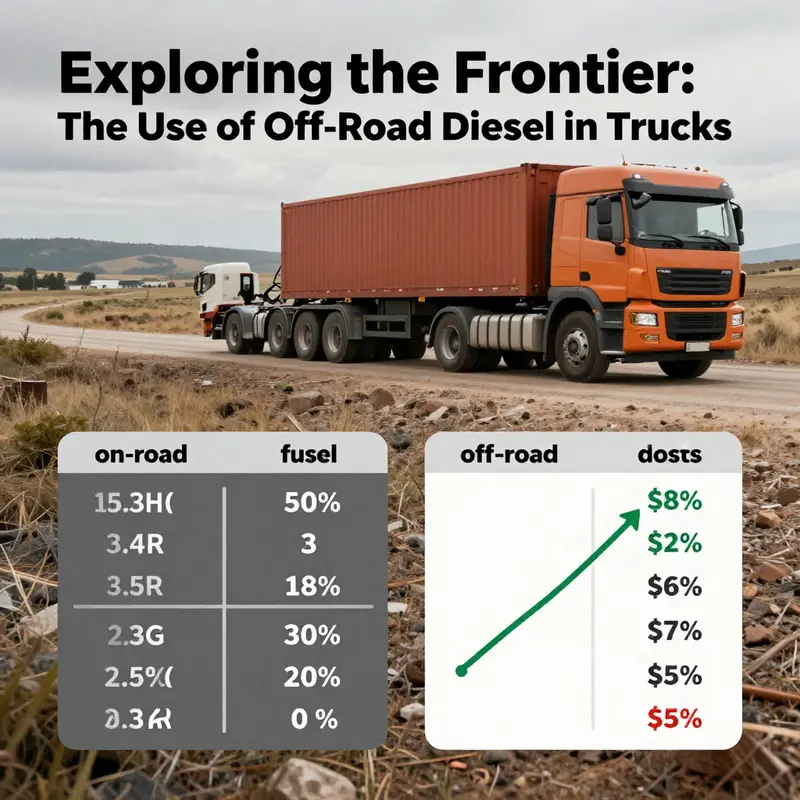
Tax policy and the economics of fuel sit at the heart of how trucking operates, even when the mechanics of an individual engine seem straightforward. Off-road diesel, often distinguished by its intended use in construction sites, mining yards, or agricultural work, shares the same chemical makeup as on-road diesel. The difference shows up in the ledger: taxation, reporting, and the legal boundaries that govern where and how the fuel moves. For heavy trucks that spend most of their life on public roads, these boundaries are not abstract; they translate into tangible costs, compliance obligations, and even strategic decisions that ripple through fleet budgets and maintenance plans. In countries like Australia, the Fuel Tax Credit (FTC) system for heavy vehicles represents a crucial mechanism to balance the cost of energy with the realities of work on the ground. The FTC allows businesses to reclaim a portion of diesel costs, but the claim is not simple arithmetic. The credit is reduced by the Road User Charge (RUC) to the extent that fuel powers travel on public roads. The consequence is clear: operators must apportion their diesel—fuel used off-road, in yards and worksites, versus fuel used for trips along the highway network—so that only the legitimate off-road portion benefits from the FTC. Read another way, the rule asks for meticulous accounting rather than broad brushes of cost recovery. The apportionment, whether derived or actual, becomes the hinge on which the economics of off-road diesel turn. The derived method multiplies total kilometres by a fixed proportion, commonly 98.4 percent, to estimate the share that is effectively off-road. The actual kilometres method, by contrast, relies on precise origin-destination data that documents the journey from origin to destination. Either method requires thorough record-keeping, including logbooks, odometer readings, or other verifiable distance data. The aim is to prevent overclaiming and to safeguard the revenue that underpins infrastructure and public services. These administrative details are not mere paperwork; they define the grant’s size and, in turn, influence how fleets structure their operations. The economic footprint extends beyond the mechanics of credits and charges. Research into heavy-vehicle fleets reveals that trip-averaged fuel consumption varies widely by work type, duty cycle, and terrain. A line-haul truck is not a mirror image of a vocational vehicle operating on a construction site. Each wheel-turn has a tax shadow and an energy cost attached to it, and those shadows shape decisions about route planning, maintenance scheduling, and whether to invest in more efficient tires, engines, or alternative powertrains in the long run. The broader policy context makes this point even sharper. Fuel taxation functions as a price signal. It nudges operators toward efficiency, mode shifts, or, in some cases, the adoption of alternative fuels. In analyses that span transportation sectors, modest fuel tax increases tend to yield small short-term reductions in travel—often 1 to 3 percent for a sizable tax hike—yet the longer-term effects can be more meaningful as fleet replacements and route choices adjust to new relative costs. Politically, there is risk in large, sweeping tax increases that directly affect every trip. This has led policymakers to experiment with more targeted measures, such as road-use charges that reflect the wear and tear of heavy vehicles on specific roads or bridges, rather than a flat rate applied to all kilometres. The practical implication for fleets is pragmatic: if the policy intent is to fund road infrastructure and deter unnecessary movement, then the design of the tax and credit system matters just as much as the numbers themselves. For fleet managers, this means that every dollar saved on fuel through an FTC must be weighed against the corresponding reduction—or potential reduction—in credit if some of that fuel is deemed to have powered on-road use. In other words, the economic calculus is not simply “more credit equals cheaper fuel.” It is a balance between on-road costs, off-road credits, and the administrative burden of maintaining compliant records that satisfy inspectorates and tax authorities. Within this framework, the decision to use off-road diesel in trucks that occasionally operate on public roads becomes a matter of compliance risk and opportunity cost. Legally, off-road diesel may only be used in contexts that align with its designation. Engines that are certified for on-road use can tolerate a broad range of fuels from a technical perspective, but the legal risk of misusing off-road diesel on public highways can be severe. The penalties for misclassification are not solely financial; they can disrupt operations and erode trust with suppliers, regulators, and customers. Thus, the question of whether to run off-road diesel in trucks is never about engine compatibility alone. It is about whether the operation is primarily off-road, how kilometres are tracked, and how the tax framework is applied. The financial logic of FTC and RUC depends on diligent record-keeping and clear delineation of use cases. This is not merely a tax compliance exercise; it is a strategic discipline that informs fleet composition, maintenance planning, and capital budgeting. When fleets contemplate long-term investments, the cost of fuel is not the only variable. The expected credit, the anticipated RUC charges, and the reliability of distance data all factor into total ownership costs. In some market contexts, fleets have observed that the economics of fuel choice are shifting as energy markets evolve and as electricity-based logistics models mature. In discussions across transport segments, there is growing attention to how broader fuel transitions may influence future FTC frameworks and the incentives for off-road operators to pursue more efficient paths, perhaps through electrification of certain vocational tasks or through improved asset utilization. This broader conversation, while not focused on a single fuel type, underscores a central principle: policy design matters as much as fuel price. A well-calibrated FTC-RUC regime can lower the operating costs of off-road work while preserving the integrity of road funding. It can encourage better route planning, more accurate kilometre tracking, and smarter fleet deployment. It can also steer the industry toward maintaining a robust financial baseline that supports road maintenance and safety investments without encouraging unsustainable fuel practices. For readers exploring the intricate dance between tax and trucking economics, a real-world inference emerges. The credit mechanism, coupled with usage charges, creates a structured incentive to optimize the mix of workloads that occur off-road versus on-road. Operators may effect this optimization by improving off-road productivity while ensuring that on-road activity remains compliant with tax obligations. The outcome is a fleet that is not only cost-aware but tax-compliant and policy-savvy. In the end, the bottom line is straightforward in principle, complex in practice: off-road diesel can play a legitimate role in trucking operations that are predominantly off-road, but it must be managed within the legal framework, with precise apportionment of usage, accurate distance records, and a clear understanding of how FTC and RUC interact. The chain of consequences—from record-keeping to credit calculation to road funding—requires disciplined administration and strategic foresight. For operators aiming to optimize costs without compromising compliance, the path lies in building robust data systems, choosing workloads that align with permitted fuel use, and staying attuned to policy developments that could reshape FTC and RUC dynamics tomorrow. And as the transport sector continually reassesses fuel strategies, readers should consider how broader shifts—such as growing interest in electrification alongside ongoing diesel usage—may recalibrate expectations and drive new forms of efficiency across the entire heavy-vehicle ecosystem. To explore a broader trend in fuel economics and its relevance to fleet choices, see the discussion on electric deliveries surpass diesel.
External resource: https://www.ato.gov.au/Business/Other-tax-issues/Fuel-tax-credit-(FTC)/Basic-method-for-heavy-vehicles/
Rethinking the Fuel Footprint: Environmental Realities of Off-Road Diesel in Trucks

Fuel choices shape not just operating costs but the broader environmental footprint of a trucking operation. Off-road diesel, long used in non-highway equipment and some specialized heavy trucks, sits at the intersection of economics, law, and ecology. The color dye and tax scheme that separates off-road fuel from highway diesel is a practical signal, but it also signals a responsibility: when off-road diesel ends up in a vehicle that travels public roads, the consequences ripple beyond the pump. This chapter looks at the environmental implications of that fuel choice, not merely the mechanics of engine tolerance. It asks: what should a conscientious operator consider when contemplating off-road diesel for trucks, especially when the mission profile includes long hauls on public right of way?
One of the central environmental questions is sulfur. Historically, off-road diesel carried higher sulfur, which worsened exhaust composition and deposition even with advanced after-treatment. Over time, many regions adopted ultra-low sulfur standards for non-road fuels to narrow the gap with on-road ULSD. Yet older stock and certain markets still present a sulfur burden. Sulfur is not just a number on a spec sheet; it changes how engines burn fuel, influences the performance of catalysts, and alters the formation of particulates and nitrogen oxides in the exhaust. When a truck engine operates on higher-sulfur fuel, the likelihood of producing soot and acidic compounds in the exhaust increases, challenging after-treatment systems and increasing the potential for localized air quality impacts in the operating environment.
We can translate sulfur correlates into real pollutants. The emissions from diesel combustion include nitrogen oxides, particulate matter, carbon monoxide, and a spectrum of volatile organic compounds. In urban or semi-urban settings, a fleet of off-road diesel-powered units can contribute to elevated ground-level ozone and PM concentrations, with direct consequences for respiratory health and cardiovascular risk among nearby workers and residents. In forested or agricultural landscapes where off-road machines often work, the localized exposure becomes a political as well as a public health concern: communities and ecosystems are placed in close proximity to heavy emission sources without the same level of emission controls that highway vehicles routinely face. Even when the fuel itself meets general quality standards, the absence of comprehensive on-road limits for non-road engines can magnify the per-unit environmental burden. Operators and regulators thus face a dual challenge: ensuring that engines are efficient and clean while using fuels that align with broader air quality goals.
Beyond air, there is water and soil to consider. Diesel spills during refueling or storage can contaminate soil and migrate into groundwater or surface water systems. The ecological risks are not limited to immediate spills; diesel hydrocarbons can persist in the environment, forming long-term hot spots that affect aquatic life and plant communities. In many off-road settings, trucks and equipment work near watercourses, wetlands, or sensitive soils, increasing the stakes of any mishap. Responsible handling—secondary containment, regular integrity checks on tanks and lines, rapid spill response plans—helps mitigate these risks. From a lifecycle perspective, the environmental calculus of off-road diesel includes not only combustion emissions but the potential for leaks, soil remediation costs, and regulatory penalties that may accompany accidents or improper storage.
Mitigation is not simply about one fuel choice; it is a package of policy, technology, and practice. Many jurisdictions are phasing out high-sulfur fuels and promoting cleaner-burning alternatives for non-road engines. In the European Union, for instance, stringent emission standards push manufacturers to adopt Euro VI-compliant engines and modern after-treatment. In the United States, the EPA’s Tier 4 standards for non-road engines drive the integration of diesel particulate filters and selective catalytic reduction systems, effectively narrowing NOx and PM releases even when the fuel is burned under tough operating conditions. The environmental argument for cleaner fuels aligns with a broader trend toward cleaner powertrains—electric, hybrid, and hydrogen-powered off-road equipment—or at least engines equipped with robust after-treatment and optimized maintenance. For operators, the implication is clear: the cheapest fuel today may bring higher total environmental costs tomorrow if it complicates compliance, maintenance, or remediation. The smarter approach weighs fuel cost against emissions performance, maintenance schedules, and the probability of regulatory changes that could redefine what is acceptable in a given geography.
From a practical perspective, engine compatibility remains a separate question from legality and ethics. Technically, off-road diesel is strikingly similar to on-road diesel; modern engines tolerate a wide range of fuels without immediate mechanical failure. But compatibility does not confer permission to deploy off-road diesel wherever it suits the mission. The legal framework around taxation and use still requires that on-road operations rely on on-road fuels, and misusing off-road diesel brings penalties that can dwarf any fuel savings. For operators who work primarily off public roads—such as mining fleets, construction sites, or rural forestry operations—the environmental calculus shifts again. In those contexts, higher sulfur may be less of a concern relative to the broader environmental safeguards in place, as long as fuel sourcing is transparent and spills are prevented. The reality is that environmental stewardship and regulatory compliance must be part of the same decision framework used to select a fuel.
To support cleaner outcomes, stakeholders emphasize maintenance as a crucial lever. A well-maintained engine burns fuel more efficiently, reduces unburned hydrocarbons, and ensures after-treatment components perform as designed. Even with ULSD and advanced catalysts, neglect or improper operation can negate the environmental advantages. For readers seeking practical guidance, the literature emphasizes a holistic approach: match fuel use to the mission, maintain cooling and air systems to prevent excessive fuel use, and implement routine checks that catch leaks or degraded seals before they become environmental liabilities. The relationship between fuel choice and environmental output is not a fixed prescription; it is a dynamic calculation dependent on operating patterns, load profiles, idle times, and maintenance discipline. For those looking to deepen their understanding, practical maintenance strategies tied to diesel knowledge can provide a pathway to lower emissions without sacrificing reliability. See how this translates in hands-on practice in resources aimed at mastering diesel mechanics, which offer step-by-step guidance on keeping engines clean and efficient over the long haul. mastering diesel mechanics: a step-by-step path to success.
Ultimately, the environmental considerations of off-road diesel in trucks are not only about whether a fuel can be used legally or technically. They are about how choices align with public health, air quality, and ecosystem integrity in environments where diesel exhaust settles and spends time. The case for cleaner non-road fuels and cleaner powertrains grows stronger as climate and air quality concerns intensify and as communities demand more sustainable forms of transport and work. In weighing the trade-offs, operators should think beyond today’s pump price and consider how fuel behavior interacts with emission controls, spill risk, and regional policies. The bottom line is nuanced: off-road diesel can be part of a truck’s fuel landscape in specific non-road contexts, but its use on public roads, or in fleets that rely on on-road operations, carries environmental, economic, and legal costs that must be understood and managed. Compliance, maintenance, and a forward-looking view toward cleaner technologies shape a more responsible path forward for both operators and the landscapes in which trucks move.
External resources for deeper context on regulatory frameworks and non-road emissions are available for readers who want to explore further. For regulatory context and non-road emission standards, see the EPA Nonroad Engine and Equipment Emissions portal: https://www.epa.gov/nonroad.
Red Dye, Real Consequences: Navigating Off-Road Diesel in On-Road Trucks
The question at the heart of this chapter cuts to the core of how fleets think about cost, legality, and engine longevity: can off-road diesel truly be used in trucks that travel public roads? The straightforward answer is both simple and nuanced. Yes, technically, off-road diesel can power many diesel engines, including those in on-road trucks, because the fundamental chemistry is similar. No, not if the truck travels on public highways. The sticker price on a tax break or a lower per-gallon cost is eclipsed by the risk of fines, impoundment, or worse if authorities catch a vehicle using red-dyed fuel. The nuance lies in tax rules, dye indicators, and the subtle differences in fuel formulation that can affect modern engines over time.
From a purely mechanical standpoint, the fuels are closely related. Most off-road and on-road diesel meet similar standards for energy density, cetane, and sulfur content. In other words, an engine that can burn one can often burn the other without catastrophic failure in the moment. Yet, the practical realities of modern diesel technology introduce subtler concerns. Off-road fuels are sometimes formulated with additives tailored to the equipment they were designed to serve—attachments, detonation resistance, or lubricity profiles that align with surviving a stationary engine in a cold shop rather than the sustained oscillations of a heavy highway duty design. In some cases, these fuels may lack the more advanced detergent packages that high-pressure common-rail systems rely on to prevent injector varnish, deposits, and spray pattern changes over thousands of miles. The result can be a quiet risk: longer-term injector wear, occasional fuel-system deposits, or reduced cold-flow performance in extreme weather. It’s not a guarantee of immediate damage, but it is a reminder that engine health is a long game, and fuel choice matters in that game.
Emissions control systems add another layer of complexity. Modern trucks are engineered around ultra-low-sulfur diesel (ULSD) and a chain of sensors and catalytic converters designed to minimize tailpipe emissions. Officially, many off-road fuels also aim to meet stringent standards, but the formulation differences—whether in lubricity, detergent additives, or cold-flow properties—mean that using off-road diesel in an on-road truck can over time influence injector cleanliness, fuel-line resistance, or the effectiveness of soot filtration systems. The risk isn’t about a sudden failure; it’s about gradual performance drift that appears as reduced fuel efficiency, uneven idle, or sporadic firing events that technicians may notice during routine maintenance. The bottom line is pragmatic: the engine can tolerate a broad spectrum of fuels, but the vehicle’s operational domain—on-road versus off-road—shapes which fuels maximize reliability and minimize risk.
Why do authorities and fleets remain so conservative about this issue? The taxation angle is the most visible reason. Even when a truck driver is enticed by a lower-per-gallon price at a remote fuel stop, the consequences of misfueling can be severe. Fines in many jurisdictions scale with the degree of evasion, and in some cases, repeated offenses can trigger penalties or regulatory enforcement actions that go beyond a simple cash fine. The risk calculus for a fleet manager includes not only the immediate economic cost but also potential downtime, vehicle impoundment, or the administrative burden of proving compliance in a post-incident investigation. This is where clear labeling at the pump, reliable vendor practices, and internal fuel-control protocols become part of the maintenance ecosystem rather than an optional moral precaution. The legal framework is not a cork to be popped for a few cents per gallon; it is a robust structure that keeps long-haul trucking funded and roadways fair for everyone.
Operationally, the decision to use off-road diesel should be guided by the vehicle’s operating context. If a truck is strictly a worksite vehicle that never enters public roads—or is assigned to controlled routes where legal allowances exist—it may be feasible under strict compliance measures. In such cases, the fleet should meticulously document fueling sources, keep receipts, and ensure the fuel is compatible with the engine’s specifications for sulfur content and cetane. Even then, it remains critical to avoid any mixing with on-road diesel and to prevent cross-contamination. If a misfuel occurs accidentally, the recommended approach is not to drive the vehicle onto public roads. Draining or purging the fuel system in a controlled maintenance window is essential to avoid downstream damage to injectors, fuel pumps, and emission controls. The environmental and legal stakes are high enough that a conservative approach—use the correct fuel for the intended use—typically yields the best long-term outcomes.
For fleet operators, the decision framework often begins with a simple policy: on-road vehicles use on-road diesel, off-road equipment uses off-road diesel, and policy deviations require written approval and clear risk mitigation. This policy supports compliance audits and reduces the cognitive load on drivers who must make split-second fueling decisions in remote locations. It also aligns with best-practice maintenance, where fuel quality issues can masquerade as injector faults or fuel-system leaks, complicating diagnostics. When vehicles are doing multi-purpose work, the policy should include explicit steps for verifying fueling options at the point of sale and for recording fuel lot numbers or station identifiers in maintenance logs. In practice, this means training drivers to read pump labels, understand the color coding of fuels, and resist the temptation to blend fuels to save time or money. It also means procurement teams negotiating fuel contracts or working with vendors to ensure consistent supply of on-road diesel where required, and to document exceptions with an auditable trail that can stand up to a compliance review.
The practical recommendations from research and regulatory guidance converge on a single, clear stance: prioritize on-road diesel for on-road use. This is not a scare tactic but a risk-managed approach that reduces the chance of legal penalties and minimizes the uncertain long-term effects on engine durability. If a vehicle must operate on off-road fuels due to a particular job site or regulatory exemption, do so with full awareness of the constraints and with a readiness to revert to compliant fueling as soon as possible. Additives can play a role in cold climates or to restore lubricity in fuels that may lack certain protective components, but they do not negate the legal requirements. In cold weather, for example, a cold-flow improver can help prevent fuel gelling in on-road diesel, but it should never be used as a workaround to justify off-road fueling in on-road applications. The emphasis remains on compliance, consistency, and clarity of fueling practices across the fleet.
A reflective way to anchor this discussion is to view fuel choices as part of a broader safety and reliability culture. The fuel system is not an isolated component; it interfaces with the engine, the emissions system, and the vehicle’s overall performance envelope. When a driver begins a long journey, the fuel in the tank becomes a proxy for compliance, readiness, and responsibility. The channel for accurate information is not only the fuel pump but also the maintenance bay, the fleet’s policy documents, and the guidance provided by regulatory agencies. Engineering teams recognize that even small changes in fuel composition can propagate through the system and manifest as subtle shifts in combustion efficiency or injector wear. Those shifts compound over thousands of miles, which is why the industry’s stance favors on-road diesel for on-road operations and insists on strict separation of fuels based on the vehicle’s use-case.
For readers seeking a deeper technical perspective on diesel fuel standards and how they interact with engine design, a foundational resource explains diesel fuel behavior, especially in high-pressure injection systems and modern emission controls. It is a reminder that the core science remains the same—diesel fuels are designed for predictable combustion and reliable lubrication—but the policy framework and field practices shape how that science is applied in the real world. If you are curious about the fundamental mechanics and want a guided path to sharpen your practical knowledge, explore the accessible guide on diesel mechanics and fuel-system fundamentals. Mastering Diesel Mechanics: Your Step-by-Step Path to Success.
In practice, the best path for most truck operators is straightforward. Use on-road diesel for all on-road activities. Keep off-road diesel for non-transport operations where legal allowances exist, and never drive on public roads after filling with red-dyed fuel. Label checks, pump labels, and station practices should be part of daily fueling rituals. If a misfuel occurs, do not start or drive the vehicle; arrange a purge or tow the vehicle to a service facility where the fuel system can be drained and inspected. Where cold weather is a factor, pay attention to anti-gelling strategies for on-road diesel rather than relying on off-road formulations as a workaround. Fleet managers should also consider broader fuel strategy improvements, such as route optimization, idle reduction, and driver training, to minimize fuel costs without compromising compliance.
Ultimately, the topic is about more than a single fuel dip or a one-time price delta. It is about building a responsible, legally compliant, and technically sound fueling culture across the fleet. By prioritizing compliance, leveraging reliable labeling and supplier practices, and maintaining a thoughtful approach to fuel additives and cold-weather performance, operators can preserve engine health, protect emissions systems, and avoid the penalties that make misfueling a costly misstep. The road question, then, becomes an opportunity to reinforce prudent decisions that honor both the law and the vehicle’s long-term reliability. For readers who want to explore broader implications and related fleet-management considerations, the wider body of resources on diesel and energy use offers valuable context while reaffirming that the cleanest, simplest answer remains: fuel according to where the vehicle will travel. External guidance from agencies provides the authoritative framework that underpins every practical choice a fleet makes on the ground.
Final thoughts
The versatility of off-road diesel in trucks offers exciting possibilities for off-road aficionados, yet it demands a thorough understanding of legal, economic, and environmental dimensions. While the compatibility of modern diesel engines with off-road diesel fuels can pave the way for enhanced performance and reduced operational costs, users must tread carefully to remain compliant with local laws. The insights shared in this article equip passionate adventurers with the knowledge they need to harness the full potential of their trucks. Armed with this understanding, you can now navigate your off-road journeys with confidence and pride.