
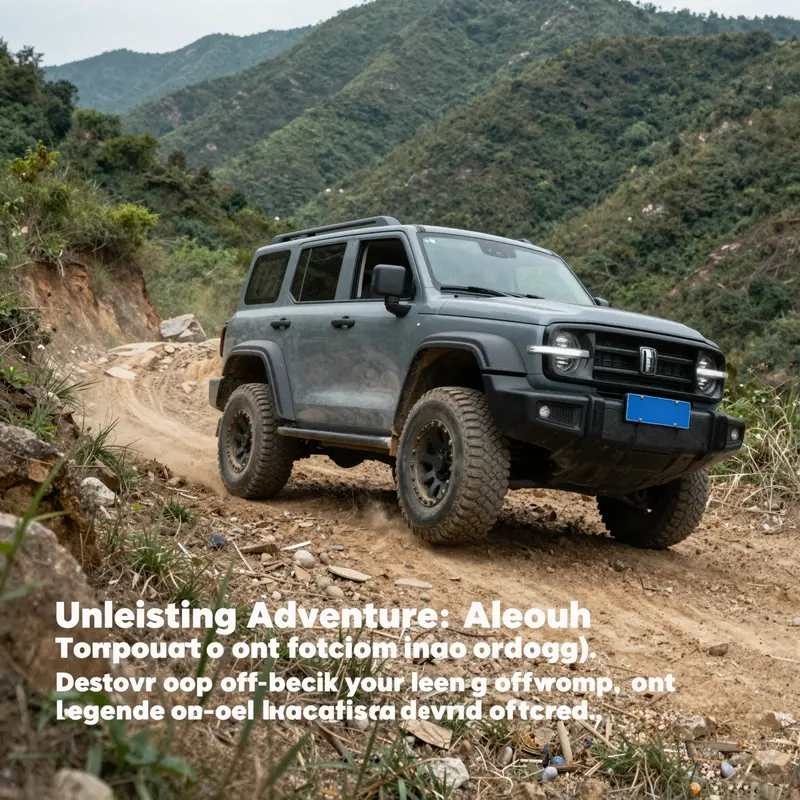
For off-road enthusiasts and adventurers, the thrill of driving on rugged terrains is unmatched. Near Beijing, a treasure trove of off-road locations awaits your discovery, each offering unique landscapes and driving challenges. Whether you’re a seasoned off-roader or a first-time adventurer, understanding where to find these captivating venues is essential. This guide explores the top off-road locations, delves into crucial safety regulations, prepares your vehicle for the wild, and connects you with like-minded communities. Embark on a journey that goes beyond mere driving; it’s about embracing adventure and nurturing a passion for the great outdoors.
Trailbound in the Northern Corridors: A Driver’s Guide to Off-Road Trails and Scenery Around Beijing
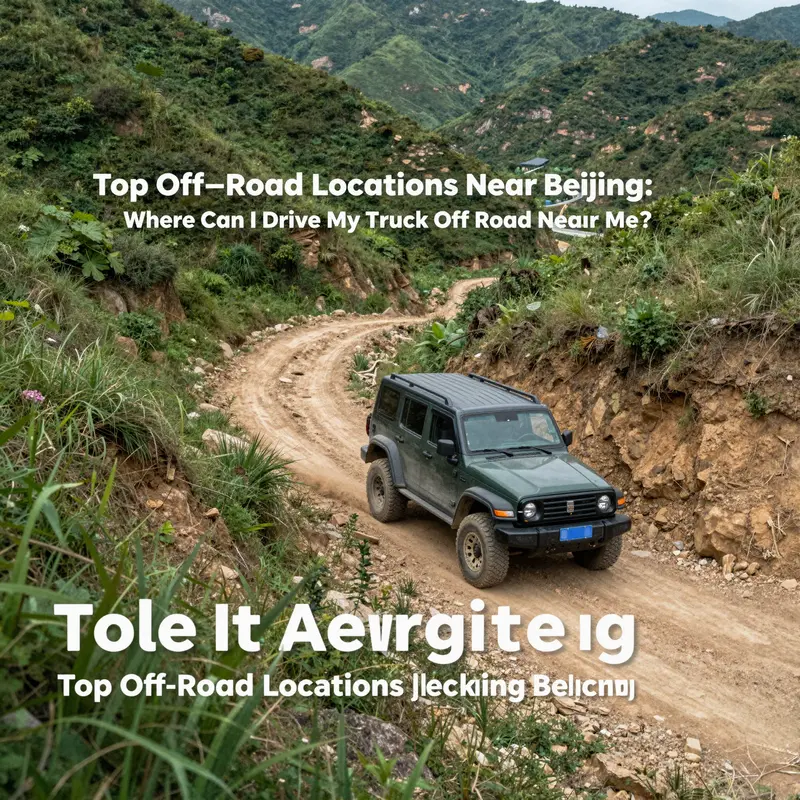
The lure of off-road driving near Beijing isn’t just about conquering a dirt path; it’s about stepping into a landscape where every turn reveals a different face of the region’s gravity-defying clay, granite outcrops, and wind-sculpted hills. For a truck owner who wants to test the limits of horsepower, torque, and suspension, the northern corridors offer a continuous invitation. The routes unfold in a way that rewards careful planning, respect for the terrain, and a steady discipline to drive with your crew rather than alone. What begins as a Monday-morning fantasy on a map can become a full-day ritual of precise driving, lunch under pines, and the quiet thrill of a vehicle that handles mud, dust, and grade with equal poise. In this landscape, the journey itself becomes the teacher, and the vehicle a trusted partner that you learn to listen to as you navigate the road’s variable moods.
Begin with the Yunmeng Hills, a zone that is especially friendly to drivers who are still mastering the art of off-road control. The routes here have earned a reputation for being well established, with dirt paths that weave through rock formations and gradients that keep your attention sharper than the canyon winds. It is the kind of terrain that invites a confident throttle and deliberate steering, a combination that yields both skill development and a sense of security as you learn where to place your tires on loose gravel or compacted dirt. The grade transitions are manageable enough to push your 4WD just enough to feel the responsiveness of the drivetrain, but they don’t punish you for a momentary misjudgment. The rocks, meanwhile, act as a kind of natural classroom—soft enough not to intimidate a curious driver, yet firm enough to demand a line that respects the vehicle’s geometry. The scenery rewards patience: natural arches, talus slopes, and views that unfold in layers as you gain elevation. ATVs share the terrain with trucks here, but the rhythm remains gentle but purposeful. Beyond the drive, the area poses an easy invitation to pause and observe, to notice birds picking through underbrush or a distant cloud bank crawling along the rim of a valley. In short, Yunmeng Hills creates the most forgiving environment among Beijing’s immediate surroundings while still delivering a satisfying off-road experience that builds competence without overreaching.
From there, the mind drifts toward the Longqing Gorge, a corridor carved by water and time that sits roughly 70 kilometers northwest of the city. The gorge is renowned for its canyon scenery, a reminder that off-road driving isn’t only about crossing rough patches but also about threading a path through a landscape that takes your breath away. The access roads leading to the backcountry trails are negotiable for most 4WD setups, and in the dry season they reveal a rhythm that makes the driving feel almost choreographed—one where the dust settles into a pale veil behind the tires and the rock walls close in with their own ancient stories. The backcountry routes offer a steady test of line choice and momentum management; you’ll encounter stretches where a cautious approach—gently guiding the vehicle over a ledge or across a shallow rut—yields the most fluid progress. The interplay of light and shadow inside the gorge creates a cinematic backdrop for a day spent exploring, a reminder that off-road driving is as much a way to connect with a place as it is a test of a vehicle’s capabilities. When you pause on a crest to take in the canyon walls, it’s easy to imagine the routes of ancient travelers who would have faced their own decisions about when to push forward and when to bide their time for better light or safer footing. Longqing Gorge’s trails reward planning, and they reward restraint—two principles that stand at the core of responsible off-roading.
Close by, the Mutianyu section of the Great Wall adds another layer to the off-road experience, a reminder that this region is a tapestry of cultivated heritage and wild backcountry alike. While Mutianyu is steeped in hiking lore and world-known scenery, nearby off-road trails are accessible to 4WD vehicles, offering a parallel thread to the more storied stone steps that engineers and artisans built centuries ago. The key here is to stay on designated paths and to recognize that local regulations may require permits or adherence to specific routes. The wall’s proximity to modern safety standards isn’t a contradiction but a guide: it pushes you to bring the same level of discipline you’d apply to a day on the wall itself—discipline that translates into careful speed management, steady throttle control, and a readiness to stop for a moment to assess conditions after a rain or a rising wind. In this zone, the objective isn’t simply to push deeper into the unknown but to enjoy a balanced day that blends a quiet sense of adventure with a well-defined boundary between exploration and preservation. The result is a driver’s day that feels like a dialogue with history and geology, a chance to measure your truck’s prowess against a landscape that has evolved through patient layers of rock and human intention.
The collective map of these routes—Yunmeng Hills, Longqing Gorge, and Mutianyu—frames a continuum rather than a menu. They reveal the region’s breadth: a spectrum that ranges from gravelly, forgiving grades to narrow, rocky passages that demand precise steering and thoughtful planning. It is this spectrum that makes the Beijing area’s off-road options particularly appealing to truck owners who value both challenge and scenery. The terrain shifts with the seasons, and the same route can offer a very different experience depending on recent weather, dust levels, and even the time of day. A dry morning can yield a clean ride with predictable traction; an afternoon shower can transform a line into a glazed mirror that requires patience and a slower, more deliberate approach. These aren’t merely variables to tolerate; they are operational elements to learn how to read, to anticipate, and to adapt to with a calm, careful demeanor that separates a good day from a perilous one.
Beyond these core areas, the broader catalog of research highlights a variety of other venues that add texture to the region’s off-road culture. In Zhangjiakou, Laoshangou (Old Palm Gully) is singled out as beginner-friendly, with a terrain that includes loose gravel, shallow streams, and soft sand. It’s the kind of environment that invites a more modest vehicle and confidence-building practice, while still offering camp-friendly scenery along the stream. The emphasis on environmental preservation and regulatory compliance in these areas cannot be overstated; the best skill you can bring to a day’s outing is respect—for the terrain, for wildlife, and for the local rules that protect the very places you came to explore. Similarly, Dongdiziliang in Zhangjiakou offers a higher ridge of rugged adventure, with high-altitude grasslands and roads that challenge even seasoned drivers. Its more remote character adds a sense of solitude and a slower pace that can be restorative in contrast to the city’s pace. The combination of high-clearance vehicles and sturdy tires becomes essential here, as does a willingness to accept the road’s occasional unpredictability. In Shunyi, the Chaobai River Off-Road Park presents a more nature-centric day, with unpaved roads that hint at mud and forested dry stretches. It is well-suited for those who enjoy a day of camping, barbecuing, and fishing, with the mud and uneven ground supplying just enough resistance to make a casual drive feel rewarding. Linhai UTV Off-Road Park in Dalian represents a different flavor altogether: it’s a specialized environment where UTVs—compact, nimble, and designed for rough-off-road work—can provide a different kind of thrill. It underscores the broad ecosystem of off-road activities available within reach, from four-wheel-drive trucks to purpose-built utility vehicles.
The breadth of this map—ranging from beginner-friendly gullies to high-altitude ridges and river-edge parks—invites drivers to adopt a layered approach to planning. The practical side of this approach includes vehicle readiness, route selection, and time management, but the experiential side is equally important. Off-road days become a way to tune your senses: you feel the road’s texture under your tires, listen for subtle changes in engine note as you ascend a grade, and notice the way your truck’s weight shifts when you crest a berm or dip into a shallow trough. The social dimension matters too. These zones thrive when drivers share their routes and safety insights, when teams drive with a buddy system, and when the group respects wildlife and other visitors. It is easy to romanticize the raw challenge, but the most enduring aspect of these trips is the reliability of the plan and the confidence you gain in your own ability to judge risk and respond calmly if a situation demands it.
For those who like to blend a guided experience with independent exploration, planning resources like TripAdvisor offer curated tours and 4WD adventures in Beijing’s broader area. If you want a practical starting point for finding trusted operators, check the TripAdvisor Off-Road Activities in Beijing for options that align with your experience level and comfort with backcountry driving. This kind of planning remains essential because regulations, access, and seasonal conditions can shift, and a day’s itinerary is far more enjoyable when it arrives with local insight rather than pure improvisation. As you map a season’s worth of trips, you’ll likely find that the most satisfying drives come from treating the vehicle as a partner rather than a machine to be commanded. The truck’s suspension becomes a conversation, the tires a vocabulary, and the route an evolving story about how you, your crew, and your machine work together in concert with the land.
As you prepare for a day on these northern corridors, consider a few practical anchors. First, select a vehicle that suits the route’s flavor. The beginner-friendly gullys invite a standard SUV with four-wheel drive, with a note that more capable off-road hardware will reduce the need for perfect line selection. The high-altitude routes demand a sturdy, high-clearance vehicle that can tolerate rough road surfaces and occasional rocky patches. For river-adjacent trails and muddy stretches, any vehicle capable of mud-taming and stable throttle response will perform well, provided the driver maintains momentum and reads the surface. If you’re drawn to specialized experiences, a UTV can offer a different tempo and a more compact footprint on trails designed for lighter machines. Beyond the drive, you’ll need to plan for safety: carry recovery gear, spare parts, a first-aid kit, water, snacks, a map, and a compass or GPS device. In the event of unexpected weather, you’ll want to be prepared to switch routes or pause in a safe, designated area, especially near fragile ecosystems along the gorge and river behind the hills.
The day’s rhythm also includes environmental stewardship. These regions extend a promise of preservation that’s tied to the local regulations, and any responsible driver honors that promise by staying on established tracks, avoiding sensitive zones, and packing out what you carry in. It’s not just about personal safety but about ensuring that these landscapes remain accessible for the next driver who will come looking for a similar sense of discovery. When you’re ready to trade the open air for a campfire or a riverside lunch, you’ll understand why the best days come with shared stories and a sense of camaraderie that is as old as the routes themselves.
For the curious driver who wants to extend this knowledge beyond instinct and experience, a reliable resource for engine maintenance and reliability can augment the practical trip planning. Mastering Diesel Mechanics: Your Step-by-Step Path to Success offers a structured lens on keeping your powertrain in top condition for backcountry travel, whether you’re cruising a dirt road or negotiating a steep ascent. Mastering Diesel Mechanics: Your Step-by-Step Path to Success.
In the end, the question of where to drive your truck off road near Beijing resolves into a tapestry of places that cater to every level of appetite for adventure. Yunmeng Hills invites you to learn and grow behind the wheel with forgiving terrain and dramatic scenery. Longqing Gorge rewards the patient driver with canyon views and backcountry possibility, a place where light and rock compose a living photograph. The Mutianyu zone tests discipline and compliance as well as curiosity, reminding you that the past and present share the road here. And beyond these pillars lie Laoshangou’s camp-friendly streamside nights, Dongdiziliang’s high-altitude grit, Chaobai River’s forested mud and family-friendly grounds, and Linhai UTV’s dedicated thrills. Taken together, they form a map not merely of places to go but of a practice—the practice of driving with awareness, of choosing the right vehicle for the terrain, and of embracing the land’s quiet, often humbling, power.
If you’re planning a first or a frequent foray, approach the day with a calm expectation. Check local conditions, confirm access with the park or land manager, and communicate your route with a companion who can assist or provide a second perspective on risk. The best days unfold when you’ve anticipated contingencies and kept a close eye on the weather’s mood. With the right preparation, a few hours behind the wheel become a meaningful dialogue with the land—an exchange that leaves you with greater skill, deeper appreciation, and a story worth repeating.
External resource for planning and inspiration: https://www.tripadvisor.com/Attractions-g293851-Activities-c46-t10-Beijing.html
null
null
Gearing Up and Mapping Trails: A Practical Guide to Driving Your Truck Off Road Near You

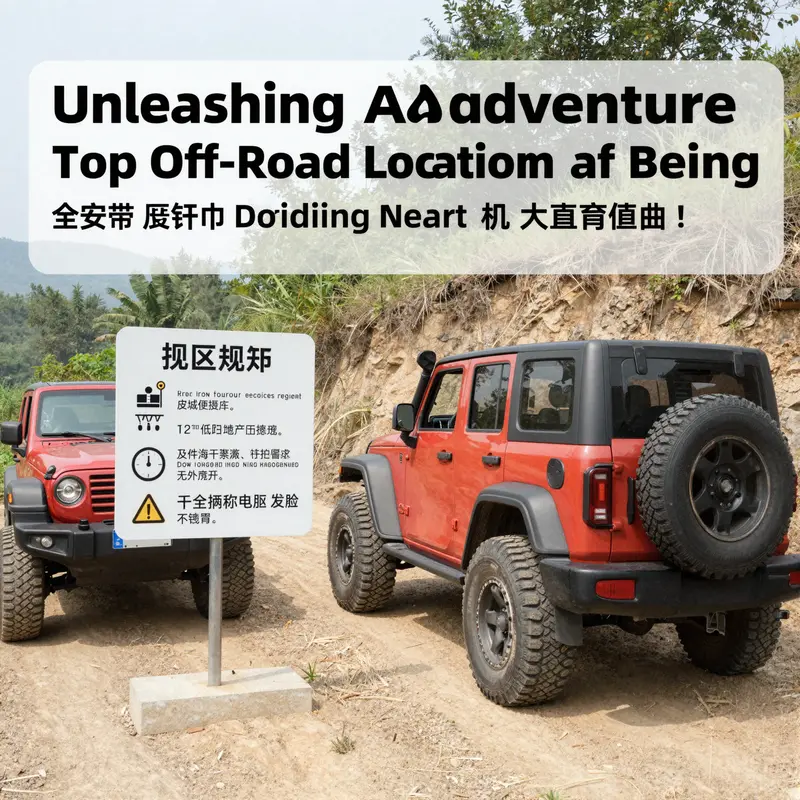
Leaving paved roads behind opens a different pace of travel, where the world narrows to horizons, tracks, and the breath of engine heat under your seat. The thrill isn’t only in the speed or the scenery; it’s in the steady rhythm of preparation, planning, and respect for the landscape that greets every turn off the highway. Before you point the tires toward the dirt, the most important work happens in your head and on the map. You build a route not just for fun, but for safety, learning, and responsible exploration. The goal is simple: test your truck’s limits without compromising the environment, other people’s experience, or your own. That starts with locating the right places nearby—terrain that aligns with your skill level and your vehicle’s capabilities, and regulations that keep both drivers and nature safe.
Among the most accessible and varied options near major off-road corridors are sites that blend beginner-friendly practice with opportunities for real learning and growth. Take Laoshangou, often described as a gentle entry point into off-road driving. The terrain here—loose gravel, shallow streams, soft sand—provides a forgiving environment where new drivers can build confidence in wheel control, throttle modulation, and the instant feedback of a vehicle responding to the grip underfoot. It’s the kind of venue where families and friends can plan a day that includes a bit of driving, a little camping along the stream, and a shared sense of discovery. Yet even in a beginner-friendly setting, the rules matter. Local regulations around vehicle access and environmental preservation shape how you move through the space, reminding you that permission to use the land is earned through adherence to the rules and a mindful presence in nature.
For those seeking a step up, the rugged charm of places like Dongdiziliang offers a different kind of challenge. Here the allure is the high-altitude grasslands and the scenery that stretches to the horizon, but the paths are rough enough to demand more precise steering and sustained focus. The county and township roads can be uneven and washed with moisture after rain, demanding a high-clearance, durable chassis that can tolerate longer stretches of uncertain grip. This is the kind of drive that rewards careful pacing, assisted by planning that anticipates potential washouts, loose rocks, and the occasional wildlife encounter—a reminder that the trail is a shared space with its own rhythms and residents.
Then there is the Chaobai River Off-Road Park, a natural playground that challenges even seasoned drivers with its muddy dirt paths and dense forest corridors. The pleasure here comes from mastering traction in mud, choosing lines through narrow stands of trees, and combining that with a day of camping, barbecuing, and fishing along the riverbank. It’s a reminder that off-roading isn’t purely about speed or technical finesse; it’s also a social experience—a way to connect with friends or family through shared gear, stories, and the patience that comes from waiting for the ground to give you the grip you need. The recommendations are simple: any off-road vehicle capable of handling mud and uneven surfaces can enjoy this space, but the real skill lies in merging technique with respect for the forest and the river that frame the route.
If you’re drawn to a more specialized thrill, Linhai UTV Off-Road Park in Dalian points toward a different dimension of the sport. UTVs, with their compact frames and purpose-built terrain, offer unique sensations on trails designed to test balance, throttle control, and bounce tolerance. This venue underscores a principle that runs through every off-road expedition: the tool you choose should fit the task and the terrain you intend to conquer. It’s not about owning the most capable machine on a given day; it’s about choosing the right tool for the right trail and the right company.
The underlying thread across these varied venues is the same: off-road exploration rewards thoughtful preparation as much as it rewards courage. The terrain can change with the weather, the hours, and the level of use by other drivers. That reality elevates the value of using reliable mapping and up-to-date information to guide your decisions. A practical approach begins by identifying potential trails through widely used platforms that offer maps, reviews, and real-time updates from fellow adventurers. These tools not only locate trails but also filter them by difficulty and by the type of vehicle that can safely navigate them. In this sense, the hunt for a nearby off-road venue becomes a learning exercise itself, a process of calibrating expectations to the truck you drive and the day’s conditions.
As you search for trails near you, the emphasis should gradually shift from “where can I legally go” to “how can I go well.” The map is a starting point, not a rulebook. It’s essential to check current conditions—seasonal restrictions, access limitations, or permit requirements—before you head out. Local clubs and forums often serve as a practical bridge between the map and the ground, offering insider knowledge about access windows, preferred routes, and the best times to avoid crowds. These communities also reinforce a safety-first ethos: trips are more enjoyable when you’re not navigating alone, when you have a sounding board for route ideas, and when you can call in help if something goes sideways.
To build that grounding, many off-road drivers turn to online resources that aggregate trails, share recent experiences, and provide GPS coordinates for trailheads. One widely used platform allows filters by difficulty, length, and vehicle type, which can simplify the early stages of trip planning. It’s especially useful because it includes real-time updates from the community, which helps you avoid unexpectedly closed trails or poorly maintained sections after heavy rain. If you’re still unsure where to begin, you can start with a broad search and then narrow down to spaces that fit your skill level and your truck’s setup. The goal is to move from curiosity to confidence, from a rough idea of a route to a concrete, well-mattered plan.
When thoughtful preparation meets good sense, you begin to see how a single day of off-roading can also be a day of learning. The best sessions blend practical driving with the kind of problem-solving that your vehicle teaches you in real time: throttle management on a slick patch, selecting an appropriate line in a forest corridor, and the discipline to pause when the ground is uncertain and the risks are high. You might encounter a sudden rise in mud, a stream crossing that is wider than anticipated, or a stretch where the ground underfoot looks deceptively firm until your tires sink a little. In those moments, the most valuable tool is not the most aggressive modification or the loudest exhaust note, but a calm mind, a plan, and a buddy or two who can help recover grip and keep the crew safe.
Preparation for these moments is where the practical, almost ritual, side of off-roading comes into view. A well-rounded approach begins with a vehicle check that encompasses tires, fluids, and basic recovery gear. You want tires with sufficient tread for mud and loose surfaces, a bias toward protection—skid plates and appropriate underbody shielding—to spare your drivetrain from rocks and ruts, and a reliable means of recovery such as a winch, a shovel, and a trusted tow strap. While it can be tempting to assume your truck will forge ahead through anything, the reality of off-road terrain is that rules of traction can flip in an instant. You’ll learn to read the ground beneath you, anticipate how a change in elevation will alter traction, and adjust your speed to suit the moment rather than your impulse.
In the spirit of steady practice, it’s worth integrating a brief, practical reference into your planning routine. For drivers who want a deeper dive into the mechanical side of keeping a truck reliable on rough terrain, a detailed guide on diesel mechanics and maintenance can be a valuable companion. It helps you anticipate what to inspect after a day on the trail and how to address common wear patterns before they become problems. Mastering Diesel Mechanics: Your Step-by-Step Path to Success offers a grounded, practical framework for approaching routine maintenance with confidence, ensuring your engine and drivetrain stay healthy as you explore more challenging routes.
Equally important is connecting with the people who share your interest. Local off-road clubs, online forums, and social groups often exchange route ideas, seasonal alerts, and permit information that isn’t always published on official sites. They can also provide safety briefs, practice runs, and companionship that makes the experience more meaningful and less risky. When you join these communities, you’ll gain access to a repository of experience—stories about the best lines during wet seasons, cautionary tales about sensitive wildlife areas, and tips for managing group dynamics on longer treks. The advantage is clear: you don’t have to learn every lesson the hard way; you can learn from those who have turned rough ground into reliable memories.
All of this considered, the decision about where to drive near you becomes a balance between curiosity, capability, and care. You weigh terrain types against your truck’s configuration, you respect local rules as a sign of shared stewardship, and you choose companions who align with your safety values. The variety of options—from accessible stream crossings and sandy stretches to high-altitude meadows and technical forest trails—ensures there’s a fit for almost every driver and every season. The core idea remains straightforward: treat every outing as a chance to learn, to test your limits with patience, and to return with stories of what worked and what taught you to adjust. This is the heart of responsible off-road exploration—the combination of preparation, humility, and curiosity that turns a simple drive into a meaningful adventure.
For those who want to expand their knowledge beyond their immediate neighborhood, remember to check official resources and seasonally updated guidance. Even if a particular area is open today, weather and erosion can quickly change conditions, impacting accessibility and safety. The best explorations are those that honor the land and the locals, that leave behind more than tire tracks and stories, and that deepen your appreciation for the balance between vehicle capability and terrain resilience. The next time you ask, “Where can I drive my truck off road near me?” you’ll not only name a place, but you’ll also understand how to prepare, whom to call, and how to read the trail ahead with a driver’s calm and a caretaker’s patience.
External resource: https://www.alltrails.com
Finding Your Lane: A Cohesive Path to Driving Your Truck Off-Road Near You Through Community, Tools, and Respect for the Land
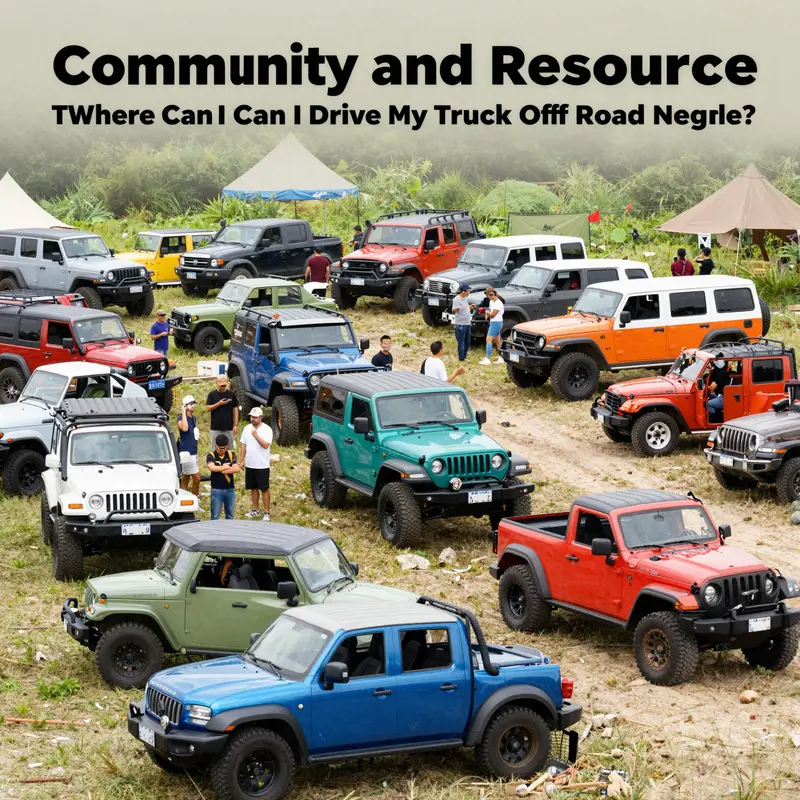
The thrill of taking a truck off the pavement is not just about the terrain beneath the tires. It is a practice of noticing, planning, and sharing—an activity that thrives on a community of fellow drivers who trade tips, map trails, and hold each other accountable for safety and stewardship. When you ask where you can drive your truck off road near you, the answer isn’t simply a coordinate or a single park. It is a web of knowledge that grows from trusted voices in online forums, tested tools that translate rough sketches of trails into actionable routes, and the quiet conversations with land managers who balance access with conservation. The most reliable path to satisfying both curiosity and responsibility is to lean into the ecosystem of resources built by and for off-road enthusiasts. This ecosystem treats driving as a meaningful engagement with landscape, weather, and fellow travelers, rather than a one-off escape or a reckless dash through scenery. In that context, locating nearby opportunities becomes a practice of listening, comparing notes, and choosing routes that respect people and places as much as the machines you operate.
To ground this approach in concrete experience, look to places that illustrate the range of terrain and accessibility you might encounter within a reasonable distance of home. In the Beijing region, for example, Laoshangou (Old Palm Gully) in Zhangjiakou represents a gentle introduction: loose gravel, shallow streams, and soft sand offer a forgiving classroom where beginners can learn throttle control, braking, and proper line choice without creating consistent high-risk situations. The environment is designed to be safe, and the camping along the stream adds a layer of immersion that makes a day trip feel like a proper expedition rather than a grind through obstacles. Then there is Dongdiziliang (East Dianzi Liang), also in Zhangjiakou, which moves the experience to higher altitudes and rougher roads. Here the drive unfolds across grasslands and county and township routes that demand more attention to vehicle clearance, tire choice, and pace. It rewards preparation with sweeping vistas and a sense of scale that tests rather than tires you out. For families and mixed experience levels, Chaobai River Off-Road Park in Shunyi offers a different rhythm: unpaved tracks winding through dense forests, mud that clings to tires, and the river’s edge as a constant presence. It is a place where you can ease into more technical challenges while still enjoying the glow of a campfire or a night under starlit skies. And for those seeking a distinctly different thrill, Linhai UTV Off-Road Park in Dalian points toward specialized terrain—an arena where purpose-built UTVs carve through trials designed around nimble, lower-profile machines that emphasize agility and precise handling. Taken together, these locations highlight the spectrum of what “near me” can mean: there are beginner-friendly fields that teach the basics, high-altitude routes that demand endurance, river-adjacent parks that test grip and mud tolerance, and dedicated parks that push you toward a more specialized form of off-road play.
What all these examples share, beyond the changing topography, is a culture of shared knowledge. The digital layer of off-road exploration is as important as the physical layer, because the terrain you will meet next week or next season is not exactly the same as what you encounter today. Online communities have grown around this variability, offering a living map of local trails, seasonal access, and evolving rules that govern when and where you can drive. The Off-Road Enthusiasts Forum stands out as a prominent hub for this kind of knowledge. It is less about a single trail and more about a network of regional conversations, where members post trail guides and candid reports about current conditions, access constraints, and the character of each route. The value of such a forum lies not only in the information itself but in the way it invites respectful debate about how best to approach a given landscape. Enthusiasts discuss what gear worked, what line to take, how to recover a stuck vehicle, and how to minimize environmental impact. This lineage of shared experience is what turns a casual drive into a meaningful, repeatable practice that respects both the landscape and the community around it.
Beyond forums, modern technology adds a practical backbone to the hunting-and-hiking instinct that motivates off-road driving. Apps designed specifically for off-road vehicle owners offer a way to discover nearby trails, track gear performance, and connect with others who are exploring the same patch of earth. A dedicated off-road app provides user-friendly interfaces and real-time trail condition updates that can reduce the guesswork that often accompanies weekend plans. The ability to filter trails by vehicle type or rig—whether you drive a stock pickup with a standard four-wheel-drive system or a more capable platform with additional clearance—lets you tailor a route to your truck’s strengths. Importantly, these tools also transmit safety tips and navigational guidance that are essential when you are stepping into rugged terrain. With a quick glance at a map, you can gauge the feasibility of a route, plan safer ascents over slick sections, and anticipate grade changes that might require a different driving approach. The result is a more confident experience, where preparation translates to smoother progress and an easier recovery if the unexpected arises.
For those who want a broader, more globally minded toolkit, AllTrails and Gaia GPS remain trusted resources. AllTrails excels at coupling maps with user reviews, so you can gauge how a route feels in practice rather than solely from the satellite image. Gaia GPS, meanwhile, offers robust mapping and offline capabilities that are especially valuable when you drop into signal-limited zones where a stored map becomes your lifeline. Both platforms support filtering by difficulty, vehicle type, and accessibility, which is vital for matching a route to your truck’s capabilities and your experience level. When you combine these digital tools with in-person experience—whether from a local club, a weekend run with friends, or a guided outing—you begin to assemble a contingency plan that is both practical and resilient. You learn which trails tend to stay dry after rain, which parks enforce seasonal closures, and how crowds shift across the year. You pick up little details, like the best places to pull off for a quick lunch break that won’t damage vegetation or disturb wildlife. In short, you move from simply wanting to drive to actively planning ways to drive better, more responsibly, and more enjoyably.
Planning a foray into off-road terrain should always begin with a clear assessment of your vehicle’s capabilities and your own skill level. A prudent approach is to start with routes that match your comfort zone and gradually push the envelope as you gain confidence. Consider your tire choice, suspension travel, recovery gear, and the ability to communicate with a team in case of trouble. The best days often come from teams where each member brings a piece of the puzzle—someone with recovery gear, someone who knows how to read terrain, someone who can manage nav and communications, and someone who can keep spirits steady when a track proves harder than expected. This is not just about handling a vehicle; it is about cultivating a shared sense of responsibility for the landscape and for the people who will follow after you. The longer you drive in harmony with the terrain and the people around you, the more you learn to read the land. The soil tells you when it’s sticky and slow, when the grade suddenly steepens, and when a line that looks good on a map will actually get you stuck in reality.
With that mindset, you begin to see beneath the surface of the question, where can I drive my truck off road near me, to the deeper answer: you find the right communities, and you learn how to tap into the practical tools they use. It is about listening to locals at trailheads and in online threads, testing a route with small ambitions, and logging observations that future you will thank current you for. It also means respecting local regulations and boundaries. It is easy to get caught up in the thrill of a new route, but the most lasting satisfaction comes from moving through places with permission when needed, obeying closures, and leaving the ground as you found it—perhaps a bit cleaner after a deliberate cleanup stop, perhaps a little more quiet because you parked and walked rather than idled. The balance between exploration and restraint is not a constraint; it is the foundation of sustainable access that allows these experiences to endure.
The social dimension should not be undervalued. Local off-road clubs and organized events are more than social gatherings; they are practical schools in disguise. They teach about trail etiquette, local trails’ quirks, and the weather patterns that can alter a route within hours. By joining a club or attending an event, you sit in a circle of people who share your interests and your respect for the land. You hear about which trails tend to hold up after a rain, how best to approach a steep descent, and what to bring for a longer overland day. You also come to understand that your truck is part of a wider ecosystem. It shares the road with hikers and cyclists, it depends on well-maintained drainage and drainage infrastructure, and it is a participant in a landscape that should be cherished, not merely conquered. In that sense, the question “where can I drive my truck off road near me?” dissolves into a broader practice: how to live with curiosity while acting with care, how to honor both the adventure and the land that makes it possible, and how to contribute to a culture that sustains the very places you come to explore.
For those who want to see how these principles translate into concrete outreach and community action, consider the ways trucks can contribute beyond personal recreation. There is value in collaboration that extends to broader social goals, sometimes framed through charitable and community-building initiatives. One example of such positive impact is the effort described in the initiative Trucks for Change: Supporting Habitat for Humanity, which demonstrates how the mobility and utility of trucks can support collaborative projects and community resilience. This kind of outreach strengthens the bonds among drivers and communities, reminding everyone that the road can be a conduit for good as well as an avenue for exploration. You can explore the idea further here: https://dirtantrucks.com/trucks-for-change-supporting-habitat-for-humanity/. As you integrate these ideas into your own practice, you’ll find that your trips become richer not just because of the miles you accumulate, but because of the connections you nurture along the way, the knowledge you share, and the respect you extend to the landscapes you pass through.
To close the loop between curiosity and responsible action, keep a steady eye on the broader context in which off-road driving occurs. Local land management policies and boundaries matter. Whether you’re in or near a metropolis or driving into public lands beyond city limits, always check for permits, closures, and seasonal advisories. And remember that the best routes emerge from a blend of personal skill, community guidance, and technological tools that map, monitor, and mitigate risk. The combination of hands-on experience with the terrain, a network of fellow drivers, and reliable digital resources is what will consistently guide you to opportunities that feel right for your truck, your experience, and your respect for the natural world. If you want to deepen your navigation capabilities and stay connected with a broad ecosystem of off-road knowledge, you can consult external resources that discuss best practices in off-road navigation and terrain assessment. A comprehensive overview from Gaia GPS highlights how to approach navigation in rugged environments and apply it to your own driving plans. See the external resource for more on safe and informed navigation here: https://www.gaia.com/guides/best-off-road-navigation. This external insight complements the specific local knowledge you gather from forums, apps, and clubs, helping you chart a course that is as thoughtful as it is exhilarating.
Final thoughts
In the pursuit of off-road adventure, knowledge is as essential as skill. With captivating destinations just a drive away from Beijing, coupled with the right preparations and an understanding of regulations, you can enhance your driving experience significantly. Engage with the off-road community, share your adventures, and prepare your truck for the untamed paths ahead. Embark on this rugged journey, fostering your passion for off-roading and experiencing the great outdoors like never before.