

Off-road racing is a blend of strength, speed, and resilience, where the heart of every truck lies within its powerhouse engine. Off-road trucks thrive on durable engine designs built to withstand extreme environments, from treacherous mountain ranges to sandy desert trails. To truly appreciate the performance of these racing machines, it’s vital to delve into the engines that propel them to glory. This exploration sheds light on the heavyweight champions of the off-road world: large-displacement V8 engines known for their raw power, the increasingly favored diesel engines known for their durability, and the advanced forced induction technologies that amplify performance and reliability under demanding conditions. By understanding these engine types, off-road enthusiasts, racers, and landowners alike can better appreciate the finely-tuned machines that conquer the wild.
Power Without Compromise: Large-Displacement V8 Engines as the Backbone of Off-Road Racing Trucks
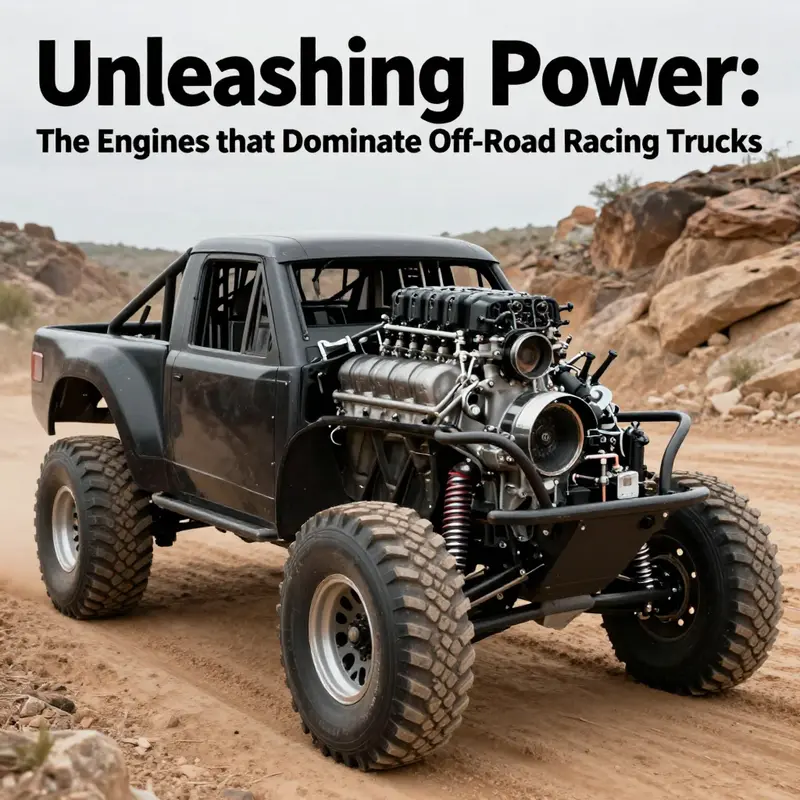
Off-road racing trucks operate at the edge where terrain, heat, and time collide. The demands of mud, desert, rocks, and dust require more than speed; they require a powerplant that can endure hours of brutal operation without faltering. In this demanding environment, large-displacement V8 engines have earned a place of prominence. Their blend of brute torque, rugged reliability, and straightforward mechanical behavior makes them a natural choice for teams chasing endurance and consistency as much as raw sprint potential. These engines are designed not merely to roar but to endure, to deliver steady, controllable power when the surface underneath is shifting unpredictably and when momentum is the single most valuable currency on the clock. The torque curve of a big V8 is its own weather pattern: a broad, forgiving sail of twist that can pull a truck through a sand trough, climb a rock outcrop, or haul a heavy payload across a long, unforgiving straightaway. In desert endurance events or brutal short-course formats, this sustained grunt can be more decisive than peak horsepower, because at the scales of off-road competition, it is the ability to keep moving that often determines the winner rather than a single, dramatic burst of speed.
The displacement range most commonly associated with these mighty powerplants sits roughly between 5.6 liters and 7.3 liters. The arithmetic is simple but meaningful: more displacement generally translates to more low-end torque, more peak torque, and a broader usable rev band. In practical terms, teams use that capacity to their advantage by designing drivetrains and cooling systems that can absorb and transmit this power reliably. A large-displacement V8 makes torque early, so a vehicle can pull away from obstacles, break traction cleanly, and maintain forward motion even when tires are fighting against slick sand, sticky mud, or loose gravel. That capability reduces the risk of getting bogged down or stalling in the middle of a treacherous section, which in turn reduces wear on driveline components that bear the brunt of sudden, high-torque loads.
Performance in extreme conditions goes beyond raw numbers. The engines are typically paired with heavy-duty transmissions, reinforced drivetrains, and carefully engineered cooling and lubrication systems. The goal is not just power, but power that can be sustained with minimal risk of overheating or oil shear when the ambient temperature is sky-high and the engine is operating near its limits for extended periods. In desert endurance contexts, fuel strategy and cooling efficiency are as critical as the torque itself. Teams tune air-fuel mixtures and cooling circuit layouts to ensure that combustion remains stable under the dual stresses of high ambient heat and the mechanical heat generated by constant high-load operation. When the engine breathes cleanly and the cooling system keeps temperatures steady, the vehicle can stay in the dance of forward motion rather than slipping into a desperate crawl or, worse, a costly failure.
A central feature of large-displacement V8s is their torque production profile. The broad torque plateau afforded by substantial displacement means the engine remains in its most efficient operating window across a wide portion of the rpm spectrum. This is particularly valuable in off-road racing, where gear ratios, tire behavior, and surface traction can force rapid shifts in load. Rather than hunting for torque with the throttle, drivers can stay engaged with the line and maintain momentum with steadier throttle input. The rugged, linear response of a big V8 translates to predictable handling and a more intuitive feel in the cockpit, attributes racers prize as they respond to variable terrain, from a sudden dip to a cliff-face climb.
Engine displacement is not the sole determinant of capability, of course. The design philosophy that threads through most successful off-road V8s emphasizes durability as a primary objective. Block and crankshaft casting, forged internals, robust valve trains, and resilient pistons all contribute to a platform that can absorb repeated, high-tower loads without obvious fatigue. These engines are built not for a single victory lap but for long-distance campaigns where the same truck must survive several days, multiple fuel stops, and hours of punishing driving. The objective is consistency: to deliver dependable power for time after time, lap after lap, across a cross-section of terrain that can quickly erase any edge created by a momentary surge of horsepower.
In the broader landscape of off-road racing, the choice of displacement and configuration interacts with class rules, vehicle weight, and terrain. The decision to run a large-displacement V8 often reflects a calculated compromise: heavier engines demand stronger suspensions, more robust cooling, and carefully tuned aero and chassis geometry to keep weight considerations in check. Yet when set up properly, these engines can deliver a practical, predictable surge of torque that grants a vehicle the ability to maintain speed through rough sections where lighter powerplants may stall or struggle to sustain momentum. The balance between weight, fuel capacity, and power becomes a conversation about endurance as much as about outright speed, with the engine acting as the core around which the rest of the chassis and drivetrain are engineered.
Within this framework, the engines are more than engines; they are components of a larger system designed to tolerate the harsh realities of off-road racing. They are paired with transmissions engineered to handle the torque without sacrificing response, sometimes featuring reinforced clutches and gears that survive repeated engagement under high load. Drivetrains are reinforced to resist the pounding of rock gardens and the jolt of sudden impacts when a wheel breaks contact with the surface, only to land with a force that can unsettle a delicate balance. Cooling systems, radiators, and oil-cooling strategies are optimized not merely for peak performance but for staying within safe temperature envelopes across long legs of a race. Fueling strategies are tuned to maintain a generous power margin while managing the practicalities of field maintenance and fuel logistics in remote environments. The net effect is a powerplant that can survive the course and deliver the traction and speed needed to compete at the highest level.
One illustrative path toward achieving this balance involves deliberate integration with chassis and suspension systems designed for durability and control. For endurance-focused setups, teams often pursue long-travel suspension with components capable of withstanding repeated cycles under heavy load. Portal axles and high ground clearance are common features in these configurations, allowing the vehicle to traverse rough terrain while preserving drive reliability. The interaction between engine torque, drivetrain strength, and suspension travel determines how well the truck can maintain acceleration through rutted sections and how quickly it can regain speed after a crest or dip. In this context, the engine’s torque delivery becomes a partner in a larger mechanical choreography, where every system is tuned to absorb and redirect energy in a controlled way rather than translate it into bumps and heat. This synergy is the essence of off-road engineering: a big engine not as a solitary beacon of power, but as a component that harmonizes with a suite of protective and performance-enhancing systems to keep the vehicle moving when others would falter.
The example of a high-displacement V8, such as a 7.3-liter configuration, helps crystallize these ideas. In modified off-road platforms, this kind of engine is not simply bolted into the chassis and left to its devices. It is integrated with a set of supporting upgrades—engine management tuned for rugged duty, reinforced mounting points to resist harsh vibrations, and cooling strategies that maintain steady temperatures even when airflow is unpredictable. In some builds, the engine breathes through forced-induction equipment that raises power output while staying within reliability targets—turbocharging or supercharging can extend the usable power band without pushing the engine into unsustainable heat or mechanical stress. The net result is a tractable, predictable, and immensely capable powerplant that can carry a truck through the most challenging horizons.
Engineering for off-road dominance is not a matter of chasing the biggest number on a dyno; it is about translating power into survivable performance. Teams that succeed understand that torque, heat management, drivetrain resilience, and chassis integrity are as critical as peak horsepower. The 5.6L to 7.3L range represents a sweet spot where torque is ample, the engine remains physically robust, and the power can be effectively controlled by a driver who must negotiate variable traction and shifting terrain. In practice, this means the truck can accelerate with purpose from a standstill, maintain speed up and down dunes or through rough rock sections, and reach the next checkpoint with fuel, fluids, and components in healthy condition. It is a holistic approach, one that treats the engine as a crucial but integrated part of a larger machine designed to endure, rather than as a one-off performance gadget.
The narrative of large-displacement V8s in off-road racing, then, is not one of simple horsepower dominance. It is a story about reliability under duress, about a power curve engineered to assist a vehicle in staying on its intended line when the ground refuses to cooperate. It is about teaching the driver to read torque and temperature together, to use the power investment wisely while maintaining control across a course that can change in a heartbeat. It is about the engineering culture that prioritizes longevity and consistency, using large displacement not for flash, but for the quiet confidence that comes when the truck can be counted on to deliver the necessary grunt at the moment of need, through mile after mile of harsh conditions.
For readers who want a windows-down, road-tested glimpse into how these engines perform in practice, consider the broader conversation around diesel-powered endurance platforms. While the specifics of fuel type and tuning differ, the underlying philosophy shares a common thread: durability, torque-rich delivery, and a design that can operate in rugged field conditions without frequent intervention. Diesel configurations often emphasize torque at low to mid rpm, an advantageous trait in slow-speed, high-load sections where engine speed remains modest but the torque requirement stays high. The core lesson across both gasoline and diesel V8s is that the chassis, powertrain, and cooling systems must be designed as a cohesive unit, with each part contributing to a dependable ability to navigate a demanding course.
In sum, large-displacement V8 engines occupy a central position in the toolkit of off-road racing trucks. Their strength lies not only in raw torque but in the way that torque is delivered, cooled, and sustained across a route defined by relentless surfaces and time pressure. They embody a philosophy of robustness and predictability, a commitment to keeping the machine moving even when terrain and temperature conspire to slow it down. The engines become a kinetic axis around which the rest of the race vehicle is framed, a power source that, when paired with a well-conceived chassis and a disciplined approach to maintenance, can translate potential into consistency across the brutal, beautiful world of off-road competition.
Internal resource note: For a deeper look at how diesel-heavy approaches contribute to reliability in harsh environments, explore this related discussion: mastering-diesel-mechanics-your-step-by-step-path-to-success.
External resource: https://www.rtrperformance.com/vehicles/bronco-73v8
Diesel Power on the Rough Edge: The Enduring Case for Diesel in Off-Road Racing Trucks
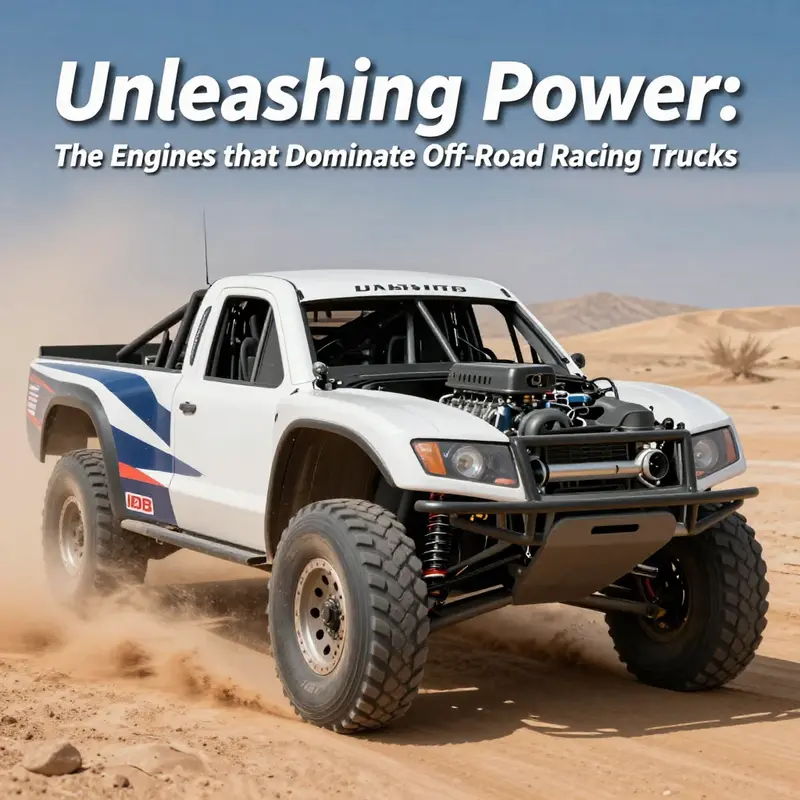
Off road racing trucks operate at the edge where traction, durability, and controlled aggression meet. In the harsh world of mud, sand, rocky washouts, and ever shifting weather, engines are not just power plants; they are engines of endurance. Over the decades a core truth has crystallized: diesel engines deliver a steadier, more controllable form of power that suits the demands of long, punishing events. While gasoline V8s can sprint with high peak numbers, diesel units win more often when the race stretches into hours and nights under a harsh sun. The reasons go beyond raw torque. They hinge on torque curve, reliability, fuel economy, and the way a diesel breathes at low revs into the difficult terrain that defines off road racing. Diesel power is not merely about bigger numbers; it is about sustainable momentum when every shift, every wheel plant, and every line through the ruts matters more than the final lap time alone.
Low end torque is the cornerstone of a diesel powered race truck. In mud that clings to tires, in soft sand that refuses to yield, and on steep, broken climbs where momentum must be kept without bogging the engine, the ability to pull from a low rpm makes a real difference. A diesel engine delivers substantial torque at relatively modest engine speeds, which means the driver can hold steady throttle and let the drivetrain work with the terrain rather than against it. This is especially valuable in endurance style formats where the crew aims to minimize gear changes and conserve momentum across long stages. Torque becomes a living tool in the hands of a capable driver, converting soil shear into forward motion with a patient, almost surgical, economy of movement. Engines designed for this purpose learn to pair the torque curve with a transmission and a final drive that keep the tires gripping long enough to extract every ounce of forward thrust from the ground beneath.
The other side of the story is durability. Diesel engines are built to survive rough handling, high dust loads, and the occasional water splash that can occur when a race dives into shallow rivers or deep mud pits. The simple, rugged layout of many diesel designs, with heavy blocks, robust connecting rods, and piston rings that resist wear under harsh loading, translates to a long service life between overhauls. Even though modern diesels incorporate sophisticated electronics and high pressure fuel systems, the underlying ethos remains straightforward: fewer fragile points, more margin for error, and a power source that keeps turning when the dust settles and the tires grind. In this sense, diesel engines are less prone to the cascading failures that can shut down a race at a critical moment. The ability to recover quickly from a rough moment, to keep the engine alive after a brutal landing or a deep rutted section, is a practical advantage that racers and teams factor into their strategy.
Fuel economy also plays a decisive role in endurance events. In races defined by long distances and narrow windows for refueling, every gallon saved translates into real time saved on the course. Diesel fuel carries higher energy density than gasoline in many formulations, which means more usable energy per gallon. That translates into longer stints between pit stops and more consistent lap times as the crew avoids the inevitable delays of reloading, checking fuel lines, and topping fluids. In a sport where pit lane performance and strategy can determine the outcome, this range extension is a quiet, persistent edge. It is not a flashy advantage, but it matters when the clock is counting the margins between victory and a long, hot wait on the pit apron.
The performance envelope of diesel in off road racing is often extended by forced induction. Turbocharging and, in some setups, intercooled, turbocharged diesels push air into the cylinders to boost power while still leveraging the engine’s inherent torque characteristics. A well engineered turbo diesel can deliver broad, usable power across a spectrum of terrain without inviting the drama that can come from overreliance on peak revs. The result is a power delivery that feels forgiving in the rough, yet fierce when the track opens up. In practice, teams tune engine maps to emphasize torque under the throttle rather than peak horsepower at the redline. This approach keeps the truck predictable in the most challenging sections of the course, where driver confidence translates directly into faster lines and more controlled acceleration through uneven surfaces. The turbocharged diesel also tends to respond well to changes in altitude and air density, important factors in long desert events where elevation can shift dramatically from start to finish.
For readers seeking a deeper mechanical dive into diesel reliability, there is a practical path in mastering-diesel-mechanics-your-step-by-step-path-to-success. This resource outlines the emphasis on robust component selection, systematic maintenance, and predictable operating envelopes that keep trucks rolling through the toughest segments. The essence is not a tale of secrecy but of disciplined engineering practice: selecting a block and rotating assembly that can run cleanly on a wide range of fuel properties, controlling temperatures through efficient cooling and lubrication, and maintaining fuel delivery systems that tolerate dust and water ingress without losing performance. A skilled team leverages these principles to sustain a truck through back-to-back stages, often with limited downtime between sessions. The result is a chassis that feels fused with the engine in its resilience, rather than a delicate balance that can fail at the first sign of trouble. For many teams, this is the quiet backbone of competitive endurance racing, a philosophy that aligns with the demands of off road courses where the terrain never stays friendly for long.
The choice of engine is never purely technical. In practice it reflects a balancing act among weight, power, reliability, and the specific demands of the race class. In some scenarios a heavier, torque rich diesel can offer more predictable performance in the slow crawls and rough sections, while another class with lighter weight and a focus on sustained drive might benefit more from a compact, high torque diesel paired with a tuned transmission and a strategic gearing ratio. Endurance tracks like the long desert routes test not just a single phase of a run but the entire chain of propulsion, cooling, and drivetrain performance over many hours. A diesel setup is less about momentary thrill and more about the confidence to maintain momentum across hours of sapping endurance. This makes diesel engines an attractive default in many professional programs where the aim is to minimize unscheduled downtime and maximize time on track rather than simply achieve the highest peak number on a dyno.
The broader ecology of the sport also shapes how diesel engines are used. In heavy duty classes, where the vehicle weight is high and the terrain punishes light designs, diesel power becomes a natural fit. The engine is paired with heavy transmissions and reinforced suspensions to handle the torque in a way that preserves wheel contact with the ground through rock gardens and washboards. The vehicle can press forward with a steady cadence that keeps tires loaded and helps the suspension manage impact without echoing up the chassis as harshly as a high revving gasoline engine might. Conversely, in some sprint races that emphasize quickness and hot lap times, teams might bend toward gasoline powerplants to chase a higher peak power and a lighter overall weight. The spectrum exists because off road racing is not a single discipline but a family of events, each with its own rhythm and constraints. Diesel maintains a central place in the spectrum precisely because it aligns with endurance and reliability, two traits that repeatedly prove decisive when the course becomes a test of consistency as much as raw speed.
In this space the engine is just one part of a holistic package. The diesel is often paired with a heavy duty transmission, a robust cooling system, and a suspension setup tuned to exploit the torque availability without inviting mechanical chatter or excessive wheel spin. Proper air handling and filtration become crucial when the environment throws dust at everything; the engine must inhale clean air despite the swirling grit, a task made easier by sealed intakes and robust filtration. A well integrated powertrain keeps the driver in a rhythm that suits the terrain: throttle inputs that translate into measured acceleration rather than abrupt surges that destabilize the vehicle on a loose or rocky surface. In the hands of skilled engineers and drivers, this rhythm shows up in faster line choices and smoother transitions between sections of rough ground.
Diesel engines also tend to facilitate simpler maintenance during a race weekend. Although modern diesels bring sophisticated electronic controls and high pressure fuel systems, the core philosophy remains aligned with practicality. A diesel block is built to last from one event to the next, with components designed for straightforward access in a workshop or service area. Even when the course drops into deep silt or the truck is bathed in spray, diesel platforms are designed to tolerate a degree of neglect and still perform when called upon. This reliability is not about avoiding checks but about a design reality where routine maintenance can be scheduled during planned downtime rather than in the middle of a race. The crew can focus on tune, fuel strategy, and tire choice, knowing the engine will hold together through the hours of exposure to heat and dust. It is this interplay of power, endurance, and serviceability that keeps diesel as a persistent choice in the toolbox of off road racing teams.
The operational reality of using diesel in off road trucks cannot be separated from the realities of the race environment. Baja style events and desert racing strips demand engines that can sustain high load for long periods, where fuel pickup systems and filtration must be robust enough to tolerate sand ingestion and occasional water exposure. The best diesel configurations in this space often incorporate a blend of rugged mechanicals with tuned fuel delivery and effective cooling strategies. When the tires grip the ground, the engine delivers the torque necessary to maintain speed through turns and over obstacles; when the truck becomes light on a crest or hits a washout, the engine responds with the kind of torque that keeps the vehicle from stalling or bogging. The driver experiences a linear and predictable response to throttle input, a trait that translates to confidence and, ultimately, faster times across the course. In the end, the diesel is more than a power source. It is a partner in a grueling physical contest against terrain and time, a reliable ally in the long haul that defines the soul of off road racing.
As the sport continues to evolve, teams approach diesel power with the same careful pragmatism that guides every other high endurance field. They weigh the tradeoffs of block design, piston geometry, and lubrication strategies against the realities of the track and the race schedule. They consider how best to deploy turbocharging to maximize torque while controlling temperatures and avoiding late race failures. They plan for the inevitable dust and water intrusions with filtration and sealing strategies that protect the most vulnerable points in the fuel system. They design cooling circuits that sustain stable temperatures across shifting loads and adverse conditions. In short, diesel engines in off road racing trucks are not simply about getting from start to finish; they are about getting there with a margin of safety, a buffer against the unknowns of a brutal course, and the capability to sustain a pace that edges toward victory over the long haul.
For readers who want a broader view of how diesel engines continue to shape off road racing, external resources offer a technical panorama of the evolving technology. A detailed overview can be found at the external resource linked here: https://www.racecar-engineering.com/diesel-engines-in-off-road-racing/ . This article surveys the ongoing development of diesel power for off road competition, including advances in fuel delivery, cooling, and reliability that keep these engines relevant as courses push duration and difficulty higher than ever before. If you are seeking a practical path to building and maintaining diesel power for off road trucks, you may also explore practical guides that focus on the mechanics and maintenance routines that sustain these engines under the stress of long desert work and rugged terrain. The combination of torque, durability, and efficiency gives diesel a lasting seat at the table of off road racing weaponry, ensuring that while the landscape of propulsion evolves, diesel power remains a trusted choice for teams chasing endurance and consistency across the roughest tracks on the planet.
Forced Induction Unleashed: Turbocharged and Supercharged Power Driving Off-Road Racing Trucks
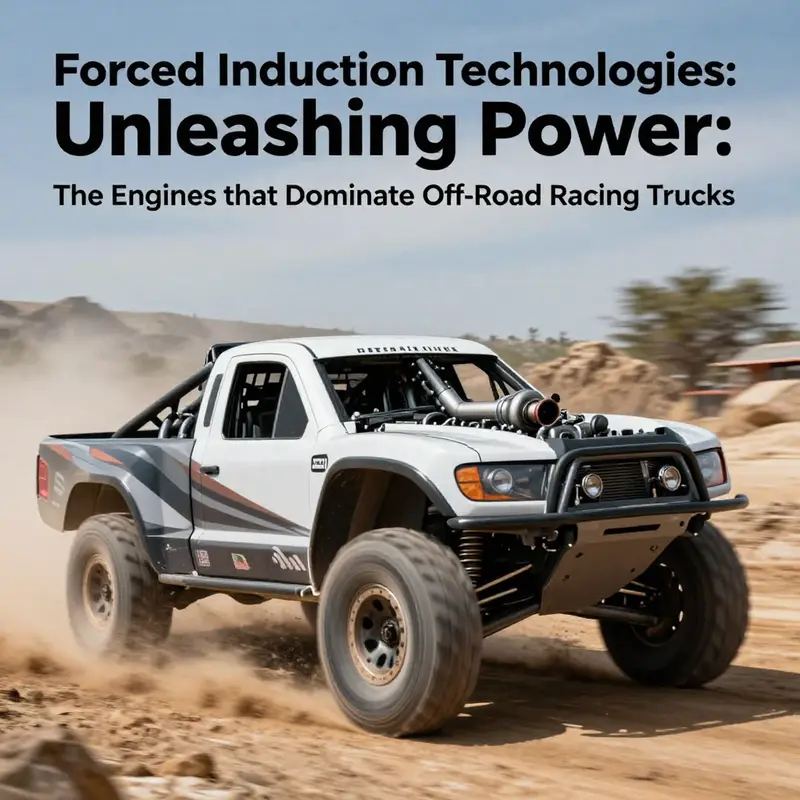
When we peel back the shell of an off-road racing truck, we find more than metal and tires. We find an engine architecture pushed to the edge of reliability, engineered to convert brutal terrain into forward momentum. Across mud, sand, rock, and frost, these machines rely on a high-strength core that can not only survive but thrive under repetitive high-load stresses. Within that core, forced induction technologies—turbocharging and supercharging—stand out as the most consequential levers for unlocking power while maintaining the endurance demanded by long, punishing courses. In this arena, the engine isn’t just a source of speed; it is a calibrated system designed to deliver torque and horsepower precisely where the chassis and tires can exploit it. The choice between naturally aspirated configurations and forced induction often narrows to a single question: how can power be delivered in a controlled, repeatable fashion under extreme heat, dusty air, and relentless vibration? Forced induction answers that question with a clarity that naturally aspirated engines rarely achieve on the same scale. The lineage of engine design in off-road racing leans heavily toward large-displacement V8s and diesel platforms precisely because they provide the stamina to absorb shock and the torque curves that keep a truck moving through resistance rather than stalling into it. But once you add forced induction, you invert the problem from simply making power to delivering sustained, usable power when every second and every throttle input matters. In the most demanding events, such as endurance desert rallies or rugged short-course formats, the added air mass from turbochargers or the instant pressure of a supercharger translate into a measurable advantage. The decision to employ forced induction is not a binary leap; it is a careful, ongoing negotiation between intake pressure, exhaust energy, cooling capacity, and the oxygen-rich environment those engines inhabit. The result is a powertrain that can spurt into a steep rock climb or punch through a long, sandy expanse while keeping the risk of heat soak and mechanical stress in check. To understand why forced induction has become a cornerstone, it helps to first consider the core differences between turbocharged and supercharged implementations and what each brings to the table in off-road conditions. Turbos exploit exhausted gas energy to drive a turbine that compresses intake air. The appeal is efficient use of exhaust energy to boost power without a parallel draw from the crankshaft, which means better fuel efficiency and higher peak outputs as boost ramps up with RPM and turbine speed. For off-road trucks, this translates into a broad, high-end surge that can help claw back momentum when a course challenges the truck with long straights followed by sudden climbs. Yet turbo systems carry a trade-off. Turbo lag—the delay between requesting more fuel and the boost arriving—has historically been a concern on uneven surfaces that demand immediate throttle response. In modern racing applications, engineers minimize lag with techniques such as refined turbine geometry, twin-scroll designs, and advanced boost management strategies. Even so, the inherent delay of exhaust-driven compression means that part of the power response is tied to the engine’s rev range and the turbo’s speed, which can be a factor during tight, technical sections where throttle modulation is critical. On the other hand, a supercharger is mounted on the engine and driven directly by the crank via a belt, providing immediate boost without any turbo lag. This instantaneous delivery is invaluable when a truck needs to respond to a sudden obstacle, a steep, rocky ascent, or a quick break over a dune. The instant torque profile of a supercharged setup supports predictable throttle response and linear power delivery, which translates into safer, more controllable acceleration on tricky terrain. However, this immediacy comes at a price. Because a supercharger’s energy draw is proportional to engine speed, it consumes a portion of the engine’s available power to drive itself, effectively reducing net efficiency and increasing thermal load. In return, though, the driver experiences a steady, predictable shove of torque from the moment the pedal moves. The decision to lean on turbocharging, supercharging, or a hybrid approach is tied to the race class, vehicle weight, and the terrain mix a team expects to encounter. In endurance formats that punish equipment for long periods, a blended strategy often proves prudent: turbocharged portions of the engine deliver high-end power when the course allows, while selected mechanical or electrical systems temper boost to keep the engine within safe thermal and mechanical envelopes during sustained climbs or hot desert runs. Across both approaches, cooling and reinforcement become central pillars of reliability. The extra air that comes with forced induction also carries extra heat. Compressing intake air raises its temperature, which reduces air density and counteracts the very power gains sought. Ingenious cooling strategies—robust intercooling systems, high-capacity radiators, oil coolers, and reinforced cylinder heads and pistons—are not optional luxuries but essential components of a reliable forced-induction package. At the same time, engine builders must consider the metallurgy and structural integrity of critical parts that must withstand higher peak pressures and the repeated heat cycles of desert heat or cold nights. The conversation about engines in off-road trucks thus often centers on a balancing act: how to maximize the usable power band and maintain a safe, repeatable operating window over many hours of racing. Diesel engines are increasingly common in the heaviest classes and ruggedest courses precisely because their durability and thermomechanical characteristics complement forced induction well. The immense low-end torque of a diesel means that even before boost builds, a truck can maintain traction and momentum on steep grades or through sticky mud. When turbocharged, a diesel’s torque curve can be exceptionally favorable for maintaining grip and climbing ability without the same fuel-rate penalty that electrical or highly tuned petrol engines might incur under heavy boost. The disciplined use of boost, fuel timing, and air handling becomes the engine’s discipline. In practice, teams often tune for a wide, flat torque delivery that can flatten the course’s most punishing segments into a more controllable ride. It’s not just about raw horsepower; it’s about how that power is delivered—how quickly, where in the rev range, and under what temperatures. The off-road environment imposes unique thermal cycles and dust challenges that demand robust management of boost pressure, intake air temperature, and exhaust gas temperatures. Real-time data streams from sensors across the intake manifold, intercooler, turbo housing, and exhaust can guide the driver and the vehicle’s ECU in maintaining a safe, optimal boost window. This level of monitoring is not merely a modern convenience; it is a survival factor when the difference between finishing and breaking down can hinge on a few tenths of boost held under a scorching sun. The engineering community has learned to integrate the entire system into a coherent whole. It’s not enough to bolt a turbocharger onto a big-displacement engine and call it a day. The engine must be robust enough to withstand the demands of boosted operation, the cooling system must be sized to reject the heat created by higher air density and increased combustion, and the lubrication system must maintain oil pressure and viscosity under higher loads and more aggressive thermal cycles. In many teams, this means thicker-walled engine blocks, strengthened crankshafts and connecting rods, specially designed pistons, and optimized valve trains that can survive repeated valving events at elevated pressures. It also means refining the intake and exhaust plumbing to minimize backpressure while maintaining the desired boost characteristics. The ultimate objective is to convert the promise of forced induction into a reliable, track-ready capability. In practice this translates into an engine that can sustain high boost for long durations without overheating, that can manage boost with precision through the hairpin turns and whoop sections, and that can be serviced efficiently between checks. It also means an understanding of how to tune a powertrain for the narrow window offered by a race course: the balance of max power at the right speed, with enough torque in the lower gears to keep momentum through obstacles. The human factor—driver feedback, pit crew adjustments, and on-the-fly ECU mapping—remains a decisive complement to the hardware. A well-tuned forced-induction setup gives the driver a wider envelope of control, enabling more aggressive lines across a rough section or a measured, conservative approach when visibility is compromised. This is crucial in endurance contexts, where a small advantage in acceleration can compound into hours of strategic distance traveled. The broader takeaway is that forced induction is not merely a power multiplier; it is a comprehensive approach to power delivery that harmonizes engine construction, cooling capacity, and control architecture with the real-world demands of off-road racing. The choice between turbocharging and supercharging, or a combination, is guided by how teams want the truck to respond under varied terrain and how they plan to manage heat and reliability across grueling stages. It is a discipline of trade-offs, optimized through extensive testing, data logging, and a culture of meticulous maintenance that recognizes how quickly a boost spike or a mismanaged cooling loop can ripple into a race-day setback. Those who master this discipline tend to exhibit a level of predictability that turns difficult courses into manageable challenges. They can chase the line through a corner with confidence, knowing the engine will deliver power when the truck needs it most and that the system is designed to endure the punishment that comes with high-speed articulation of a vehicle across a rough expanse. The result is not merely faster lap times or longer stints between stops; it is a coherent philosophy of performance that aligns the engine, the vehicle’s weight distribution, the suspension, and the tires with the terrain and the pace of competition. For enthusiasts and engineers alike, the sense that power can be harnessed—consistently, safely, and predictably—through forced induction is a reminder that off-road racing is as much about clever engineering as it is about fearless driving. The stories of endurance races—where a well-tuned turbo-diesel or a carefully managed petrol engine with a forced induction setup can push through fatigue, heat, and dust—underline a fundamental truth: the race is won not only by speed, but by the endurance of the machine powering that speed. The engines in off-road racing trucks thus serve as living tests of a broader engineering ethos. They prove that when air is pressed into the combustion chamber and heat is kept in check, performance grows not just as a peak, but as a sustainable capacity. And in the long, dusty miles of a desert chase or the rocky corridors of a canyon road, sustainable power becomes the decisive edge. Internal link for deeper engine mechanics: you can explore a detailed, field-tested approach to diesel engine upkeep and tuning in Mastering Diesel Mechanics: Your Step-by-Step Path to Success. This resource offers practical insights into how heavy-duty diesel powerplants are maintained under demanding conditions and how disciplined maintenance supports boosted performance without sacrificing reliability. For readers who want to connect theory with practice, the relationship between disciplined maintenance, robust cooling, and reliable boost becomes a practical framework for engineering decisions as much as for race-day tactics. External resource: For a comprehensive overview of how forced induction technologies, including turbocharging and supercharging, enhance performance in high-stress environments like off-road racing, refer to this authoritative article from Off-Road Business: https://www.offroadbusiness.com/forced-induction-technologies-in-off-road-racing
Final thoughts
The engines powering off-road racing trucks exemplify the perfect fusion of technology and raw strength, tailored for the unforgiving environments they tackle. Understanding the distinct characteristics of large-displacement V8 engines, the robust and high-torque diesel engines, and the power-boosting capabilities of forced induction allows racing enthusiasts and participants to make informed choices. As the off-road racing landscape evolves, the innovation behind these engines continues to push the boundaries of performance, reliability, and adventure. Whether you’re an avid racer, a rural landowner seeking performance, or a modification shop expert, the insights gleaned here will fuel your passion for off-road excellence.