
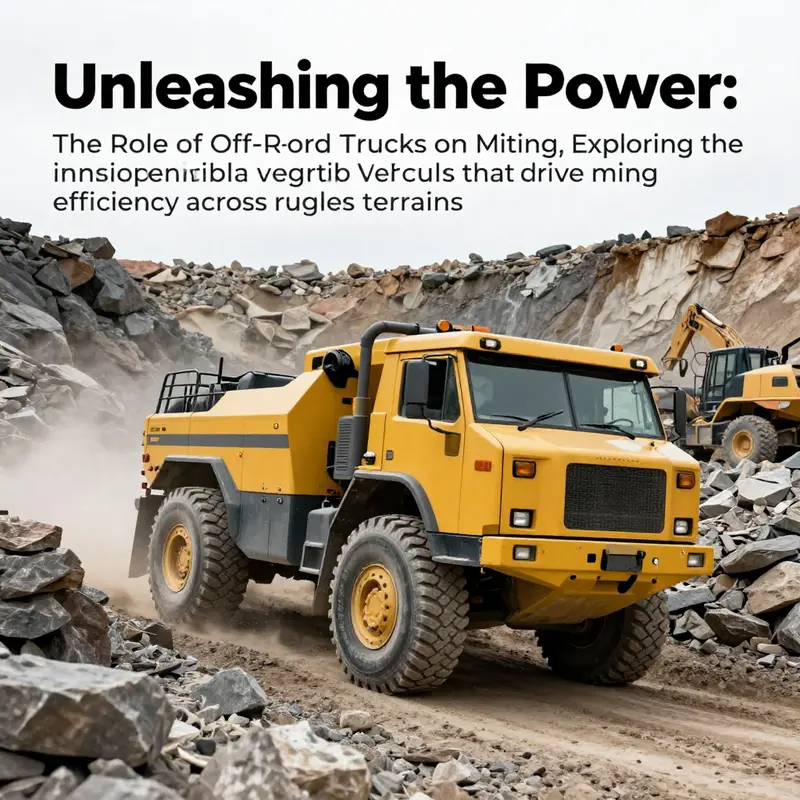
In the rugged and demanding environments of mining operations, off-road trucks stand as the backbone of material transport and efficiency. These specialized machines are not merely oversized vehicles; they are engineering marvels designed to navigate harsh terrains and carry immense loads. This article delves into the definition and purpose of off-road trucks in mining operations, providing insights into their technical specifications, economic impacts, applications, and the future of these vital vehicles in the industry. From high payload capacities to advanced technologies, every aspect of an off-road truck contributes to its critical role in mining operations. Join us as we explore these powerful machines that drive productivity deep within the earth.
Carrying the Burden: The Real Meaning and Purpose of Off-Road Trucks in Modern Mining
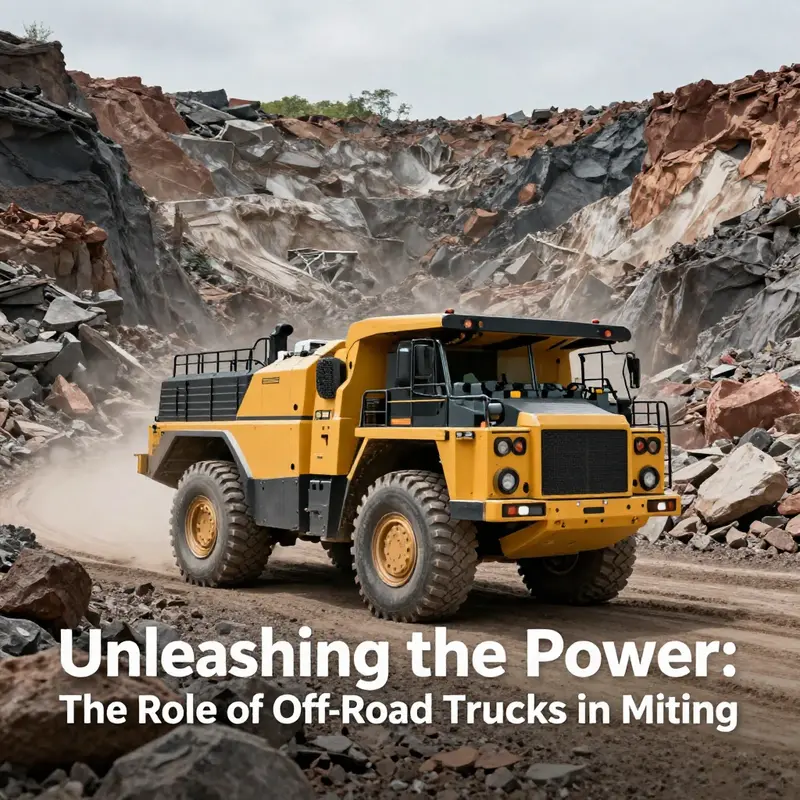
When people ask what an off-road truck means in mining, they are really asking about a vehicle that serves as the backbone of material movement in places where conventional roads do not exist. These machines are not weekend haulers or city delivery trucks; they are heavy-duty, purpose-builtベworkhorses designed to survive the most demanding open-pit and surface mining environments. Their job is simple in aim, colossal in scale: move ore, rock, coal, and overburden from extraction zones to processing plants, stockpiles, or disposal areas with as few interruptions as possible. The reality is that every load carried by an off-road mining truck translates into more material being processed, more ore reaching the mill, and fewer trips across treacherous ground. In that sense, the off-road truck is not just a vehicle; it is a strategic instrument that sustains the rhythm of a mining operation.
The landscapes these trucks inhabit are unforgiving. Open-pit benches rise and fall, ground can be loose and dusty, weather can alter traction overnight, and the routes between blasting faces, crushers, and stockpiles require both endurance and precision. In such settings, standard road trucks would quickly fail. The off-road truck is engineered to cope with extreme loads while enduring repeated starts, stops, and climbs along unpaved, often unstable ground. It features a robustness that begins with a heavy-duty frame and a high-torque drivetrain, typically configured in a 6×4 pattern that delivers traction to at least two axles on uneven surfaces. The powertrain is designed to deliver sustained torque at low speeds, which is essential when climbing steep haul roads or traversing rocky shoulders where momentum is intermittent and ground conditions are variable.
Payload is a defining characteristic. These machines range from tens of tons to several hundreds of tons, with dump bodies sized to standard mine practices and specialized for different deposits. In common practice, many fleets operate trucks with dump bodies that hold roughly 30 to 75 cubic meters of material, but the actual payload capacity—what the truck can legally and safely carry—often sits in the tens to hundreds of tons. In the largest configurations used around the world, there are models capable of transporting well over 400 tons in a single cycle when paired with an efficient loading system and well-planned haul routes. This scale matters because it directly affects the frequency of trips, the size of the fleet required to meet production targets, and the cadence of the entire mining schedule. Each truck represents a lever that can be pulled to shave minutes from the cycle time, accumulate hours of productive uptime, and minimize the downtime that comes from frequent relocations of heavy loads.
The dump body itself is a carefully engineered component. It must withstand the impact of loaded material, resist abrasion from hard rock, and align with a predictable dump pattern that suits the crushing and milling process downstream. The geometry of the bed, the speed of the dump, and the reliability of the hydraulic or electric release mechanism all influence how quickly material can be placed where it is needed. Materials can span from fragmented rock and ore to sticky clay or wet debris, and the body must perform across this spectrum without jamming or excessive wear. Beyond capacity, the design also considers tipping stability, with anchorage in mind for the moment when the truck reaches full tilt on uneven ground. The tires themselves—often massive, with specialized treads and reinforced casings—contribute to stability and grip. They must withstand the hazards of rocks, debris, and abrasive dust while supporting the weight of fully loaded bodies.
The tires and suspension are not merely about comfort; they are about survivability and productivity. A typical off-road mining truck employs tires with significant diameter and load-rated stiffness, capable of absorbing shocks from rutted haul roads and coping with sudden changes in grade. Suspension systems are tuned to keep the body within safe operating limits, preserving steering control and minimizing the risk of material spillage. In certain operating scenarios, regenerative braking or energy-recapturing systems may appear on more modern configurations, contributing to energy efficiency on long downhill stretches. While not every fleet uses this feature, it illustrates the ongoing evolution toward more efficient and responsible mining practices without compromising reliability.
To describe what these trucks do in practical terms, imagine a mining operation where new material is removed to reveal a mineral-bearing horizon. As blasting cycles finish, crews load the broken rock and ore into the haul truck’s bed. The truck then climbs a bench road to a crushing station, or travels to a stockpile for temporary storage before the ore is conveyed to mills or ore processing facilities. Each load represents a link in a chain: the loader, which digs the material; the haul truck, which transports it; and the downstream processing or disposal sites, which complete the cycle. The efficiency of that chain is what determines the mine’s throughput—the amount of ore moved within a given period—and that throughput has a direct bearing on profitability. A fleet that minimizes idle time, reduces dozer-assisted rework, and optimizes loading and unloading cycles lowers unit costs and improves predictability in the face of fluctuating ore grades and weather.
Describing the purpose of off-road mining trucks also means acknowledging their operational context. In open-pit mining, these trucks operate alongside excavators, shovels, and loaders that are tuned to extract and load efficiently. The trucks are the mobile link that makes a surface mine operate as a cohesive system. They must be resilient enough to run for long shifts—often 12 hours or more—without frequent service, while still accommodating routine maintenance during planned pauses. This combination of endurance, high payload, and adaptability is what allows a mine to transform raw earth into saleable commodities while maintaining a schedule that supports downstream processes and customer expectations.
A practical aspect of their design is customization. Mines differ in the rock types, topography, weather patterns, and desired material flow. Because off-road trucks contend with such diversity, manufacturers and fleets tailor configurations to specific sites. Customizations might include different bed geometries, reinforced containers, load-stabilizing devices, or modifications to the hydraulic systems that control dumping height and speed. Operational teams also adapt the cab and control systems for driver comfort and safety, recognizing that the truck’s crew may spend long days inside the cabin. The ability to tailor a truck to meet site-specific demands is a key reason why these machines are so deeply integrated into mine planning. They are not generic vehicles repurposed from highway use; they are the result of iterative engineering designed around the unique rhythms of a particular mine.
In this light, the off-road mining truck embodies a philosophy of reliability over novelty. It is designed to endure punishment and deliver consistent performance under a wide range of conditions. The technology inside is oriented toward stability, control, and efficiency rather than flashy speed or on-road aesthetics. Yet that does not mean the trucks are dull. They carry a large, visible footprint on the landscape, and their performance is closely watched by operators who track payload, cycle times, fuel use, and maintenance costs. From the loader to the dump bed to the wheel and frame, every element is chosen to endure the harsh environment and to keep the material moving.
Maintenance is the quiet backbone of this system. Because these machines operate in remote, dusty, and sometimes extreme conditions, on-site serviceability matters as much as raw strength. A well-planned maintenance program minimizes unplanned downtime by ensuring fuel, lubrication, filters, and cooling systems stay in balance. Operators and mechanics work together to monitor tire wear, hydraulic pressures, and the integrity of joints that transmit torque and load through the drivetrain. In many mining operations the maintenance strategy blends routine service with predictive diagnostics that monitor vibration, temperature, and hydraulic performance. This proactive approach reduces the risk of large-scale failures that could halt production for days in difficult-to-reach locations. For those who want to delve deeper into the craft of keeping these megasized trucks running, there is a practical guide on diesel mechanics that offers a step-by-step path to success, which can serve as a valuable companion to the operational realities described here. Mastering Diesel Mechanics: Your Step-by-Step Path to Success.
Viewed through the lens of strategy, off-road mining trucks deliver more than raw horsepower. They unlock the possibility of larger scale mining, where the volume of material moved per hour, per shift, or per day directly correlates with the mine’s output and profitability. The very existence of such vehicles reflects a broader shift in mining—from small, manual, labor-intensive methods to integrated, process-driven operations that emphasize uptime, data, and disciplined logistics. The truck becomes a line item in a production plan, a lever that mining engineers pull to balance blasting schedules with crushing throughput and conveyor capacity. And as mining operations expand or migrate to more distant seams, the role of the off-road truck becomes even more strategic, demanding a blend of durable engineering, practical maintenance, and thoughtful integration with the broader fleet management ecosystem.
For readers seeking a broader technical context, a comprehensive external overview offers deeper insights into how off-highway mining trucks work and why they matter in modern extraction. This resource discusses the purpose, performance, and top considerations for these behemoths across different mining environments. https://www.equipmentworld.com/what-is-off-highway-mining-truck-uses-how-it-works-top/
Sizing the Giants: Understanding What Off-Road Trucks Really Do in Mining
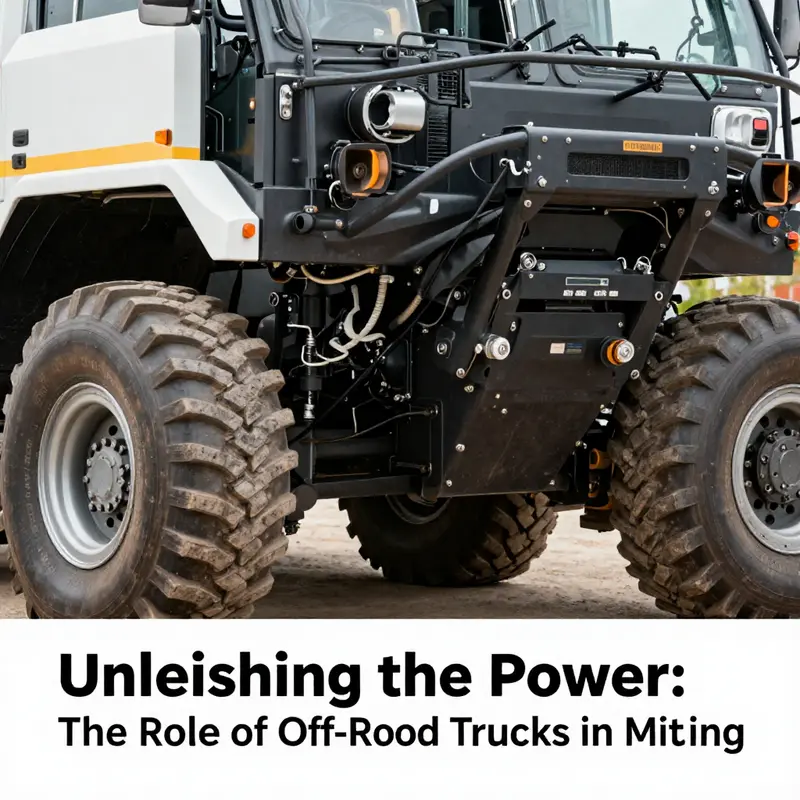
In mining, the term off-road truck evokes a specific image: a hulking, purpose-built workhorse that carries tens to hundreds of tons across terrain. The chapter treats these machines as central to large-scale surface mining operations. Their design, capability, and reliability affect production pace and crew safety in dusty, uneven environments. To understand what an off-road truck means in mining is to look beyond data sheet numbers and into the daily choreography of a site where speed is measured in tonnes per hour and downtime translates into opportunity cost. These trucks connect the blast plan, face advance, stockpile strategy, and the question of mine profitability into a continuous cycle of loading, hauling, dumping, and returning for more.
Payload capacity remains the most conspicuous specification. In open-pit and surface mines, trucks are selected to balance high volume with roadless terrain, steep ramps, and abrasive material. While some models carry payloads in the lower tens of tonnes, the most capable mining trucks routinely exceed 100 tonnes and push toward 200, 300, or more tonnes per load. Across the industry, nominal payloads around 136 tonnes or higher are cited for the largest units, with gross vehicle weights climbing toward 240 tonnes or more. The implications are clear: a single loaded trip displaces hundreds of tonnes of material over a day, which dictates the cadence of loading cycles, the number of trips required to meet a shift targets, and the sizing of ancillary equipment and backup systems. A truck that can deliver consistent payloads reduces trips, lowers fuel burn per tonne moved, and improves site-wide energy efficiency and throughput. This is why fleets gravitate toward rigid-frame designs for high-load, steady-state hauling in massive open pits where terrain is challenging but often more predictable than in smaller operations.
Chassis construction and drive architecture form the backbone of durability in terrain that ranges from hard rock to loose, rutted benches. A robust chassis built from reinforced frame materials resists bending and fatigue under continuous loading. The mechanical framework must withstand repeated shocks from rough terrain, heavy wheel loads, and the dump cycle. In many off-road trucks the drivetrain emphasizes high torque and reliable traction, realized through multi-wheel configurations. The emphasis is on delivering power where it matters most on steep grades, through soft surfaces, and across uneven ground. Engine and turbocharger systems are engineered for high torque at low to mid-range RPMs, ensuring the truck can move from rest and climb grades that would stall a lesser machine.
The powertrain has evolved to emphasize efficiency and uptime. A direct-drive system transmits power efficiently to the rear axle with minimal losses. Fewer moving parts mean fewer failure points, lower maintenance, and better fuel economy under heavy loads. Engine technology has advanced to deliver high torque while managing heat and fuel use. A well-tuned powertrain minimizes energy losses during heavy hauls typical of open-pit mining. The result is a machine that can sustain long shifts with fewer refueling stops and less downtime for engine issues. This is critical when the goal is to maximize tonnes moved per shift while maintaining predictable maintenance windows.
Articulated vs rigid-frame is often discussed in terms of terrain and mine geometry. Articulated dump trucks offer maneuverability on tighter routes, steep ridges, and uneven ground where a rigid-frame would struggle to turn and align with loading points. The trade-off is that articulates can carry slightly smaller payloads and may require more complex maintenance for the articulation joint. Rigid-frame trucks excel in high-throughput scenarios with long straight runs between loading and dumping points. Their fixed structure supports the heaviest payloads and predictable behavior on level benches. In practice, fleets deploy both configurations across sections of a single operation, matching the truck type to the mine geometry. The choice is rarely about a single best design but about aligning strengths to the mine layout.
Maintenance and monitoring are essential. Onboard diagnostics and telematics transform how fleets operate. Real-time data from engine sensors, transmission temperatures, hydraulic pressures, tire wear, and fuel usage enable maintenance teams to forecast failures and schedule interventions without interrupting production. Predictive maintenance reduces unplanned outages and stabilizes hauling cycles. Operators gain visibility into machine health and can adjust driving styles, load limits, and cycle times to optimize performance. This digital layer complements the physical design, turning a mechanical workhorse into a fleet asset that signals when parts near the end of life and when planned exchanges will minimize downtime.
Operationally, tire technology and ground contact matter. Large-diameter tires are designed to withstand abrasion, cuts, and punctures while maintaining stability on soft or breaking ground. Tire choice interacts with haul road design, slope, and material hardness. A well-matched tire and road system reduces rolling resistance, improves traction, and lowers tire downtime. The synergy extends to braking systems, where advanced features can recover energy during descent or deceleration, contributing to fuel economy and thermal management. The practical outcome is a fleet that remains productive over long shifts, even as terrain throws its challenges.
The core insight is not just raw capability but how these capabilities are orchestrated to sustain mine performance. The mix of payload, chassis, powertrain, and technology must align with ore grade, bench geometry, distance between loading and dumping points, and haul road quality. A highly capable truck that cannot sustain uptime becomes a bottleneck. Conversely, a well-integrated vehicle with predictable performance, tight maintenance windows, and precise monitoring can reduce cycle times, stabilize production, and enable a more flexible mine plan. The result is a holistic assessment of how a truck behaves on the site terrain and how digital systems support proactive maintenance and fleet optimization. This systems thinking separates a good fleet from a truly productive one.
For practitioners, reference models remain diverse, with several manufacturers offering heavy-duty solutions tuned for open-pit realities. The field is dynamic, with advances in materials, energy efficiency, and telemetry that tighten the link between operation and maintenance. In practical terms, choosing a truck means weighing site constraints such as bench height, ramp steepness, road width, dust levels, and other equipment against capacity, uptime history, and cost per tonne moved. The most effective fleets curate a balanced mix that maximizes uptime, minimizes non-productive cycles, and uses data-driven maintenance to extend life of tires and chassis. In the end, the off-road truck embodies a mining operation’s ambition: to move earth with precision, speed, and resilience in unforgiving ground.
To see how principles translate into concrete specifications, consider a model like the SANY SET150S. It demonstrates substantial payload and a robust GVW, illustrating the scale of modern mining trucks and the emphasis on durability and efficiency. The exact configuration varies by mine, but the design philosophy stays consistent: maximize load per cycle, minimize non-productive time, and enable reliable operation across harsh conditions. For a technical baseline, refer to manufacturer datasheets and technical guides detailing chassis construction, engine performance, and payload figures. This collective knowledge supports operators as they tailor equipment choices to their site challenges and production goals. For readers seeking concrete parameters, consult primary sources such as the SANY SET150S datasheet for official payload, GVW, and performance characteristics that anchor comparative analyses.
As fleets evolve, one theme remains constant: off-road trucks are not merely transporters but the critical link between mine design and production reality. Their success hinges on a careful synthesis of capacity, robustness, and intelligent monitoring. The most effective fleets see each heavy vehicle as part of an integrated system that uses real-time data to anticipate maintenance, optimize routing, and sustain a steady rhythm of loading and hauling across challenging ground.
Moving Heavy, Moving Markets: The Economic Engine of Off-Road Trucks in Open-Pit Mining
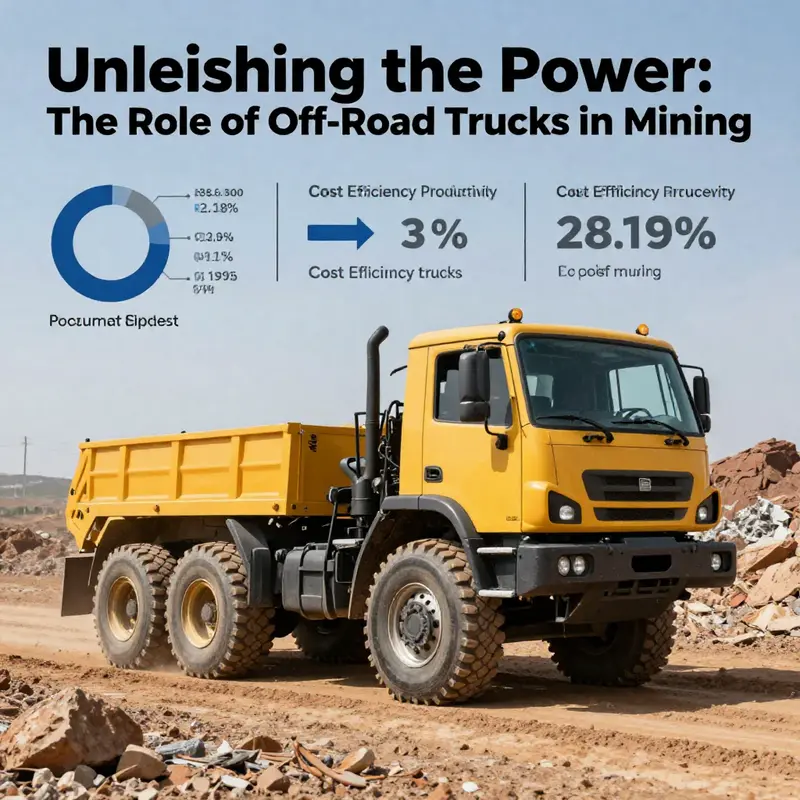
In the vast, mineral-rich landscapes of open-pit mines, the off-road truck is more than a utility vehicle; it is an economic engine. These behemoths are purpose-built for a single purpose: to move enormous quantities of ore, rock, and overburden across stretches of uneven, dust-filled terrain where conventional road vehicles simply cannot operate. Their design reflects that imperative. They feature rugged frames, high-torque drivetrains configured for challenging inclines, large-capacity dump bodies, and reinforced tires capable of carrying heavy payloads over long shifts. This combination is not only about raw power; it is about reliable, predictable performance in environments that demand continuous operation and minimal downtime. In mining, where every minute counts, the off-road truck translates raw material into revenue by sustaining high throughputs and lowering the cost per ton hauled from face to plant or waste dump. When we ask what an off-road truck means in mining, we are really asking how a single class of vehicle helps define the economics of a mine—from capital expenditure and operating costs to productivity and long-term asset value. That broader view requires unpacking the way these trucks are engineered to endure, how they consume energy, and how innovations in powertrains are reshaping the cost curve over the lifecycle of the mine.
At first glance, the obvious attributes of off-road mining trucks read like a features list: heavy frames designed for long service life, robust transmissions, and engines that can sustain extreme torque output while rolling up steep grades. The dump bodies are capacious, designed to maximize payload without sacrificing cycle times, and the tires are double- or triple- reinforced to absorb the shocks of rocky surfaces while preserving traction. In practice, these specifications drive cost efficiency by enabling longer operation windows and faster material movement per cycle. A mine that can maintain high truck availability, minimize unscheduled maintenance, and optimize the load-discharge cycle will see a substantial impact on unit costs. This is how the economics of open-pit mining are tightly coupled to the performance envelope of its hauling fleet.
The economic value of off-road trucks emerges most clearly through their influence on fuel consumption, load efficiency, and the reliability of the hauling loop. Fuel remains one of the largest operating costs in surface mining. Any marginal improvement in fuel efficiency, sustained across a fleet of dozens or hundreds of trucks, compounds into significant savings. The research community has begun to quantify these savings through models that compare different electrified powertrains and conventional diesel setups. A 2025 study outlines a framework for calculating fuel savings, productivity gains, and energy costs associated with electrified powertrains in large mining trucks. The gist is that technology-driven reductions in energy use can be translated into measurable financial returns, especially when paired with gains in payload utilization and cycle efficiency. In practice, electrification—whether in hybrid forms or full electric configurations—targets the twin levers of cost and carbon. The payoff is not simply a lower price per liter of fuel; it is a broad shift in operating economics that improves availability, reduces heat and wear on mechanical components, and lowers maintenance expenditures tied to fuel handling and engine stress.
The market backdrop for these dynamics has been robust and increasingly favorable toward modern, electrified fleets. Global demand for off-road mining trucks has grown in step with mining output and the expansion of large-scale operations. The market value, reported at several sources around 2025, sits in the multi-billion-dollar range and is projected to grow at a healthy pace through the early 2030s. A key signal here is not merely a rising price tag for new equipment, but the acceleration of investment into electrified and hybrid solutions as operators seek to flatten the total cost of ownership. When a mine replaces or expands its fleet, the financial calculus often shifts from a one-time capex decision to a longer horizon that includes fuel savings, maintenance cost trajectories, and the residual value of end-of-life assets. The market’s upward trajectory reflects not only capacity and demand but a confidence that these trucks will deliver predictable productivity across a range of geological settings and management models.
Innovation in powertrains is a central thread in this economic narrative. Hybrid and electrified mining truck technologies are increasingly viewed as strategic levers for reducing operating costs while supporting broader sustainability goals. In the wake of economic downturns that tightened margins, operators have prioritized cost discipline: reducing energy use, cutting emissions, and lowering maintenance intensity. Hybrids and electrified configurations address all three, offering lower fuel bills, regenerative features that recover energy during braking, and fewer moving parts that suffer from heat and vibration. The economic implications extend beyond the cost lines on a quarterly report. They influence planning horizons, with capital budgets balanced against anticipated energy savings, maintenance depreciation, and the potential for favorable tax or subsidy treatment for cleaner equipment. Importantly, the economics of electrification must be weighed against the mine’s electrical infrastructure readiness, the availability of charging solutions, and the capital cycle for battery or energy storage components. As the technology matures, the model for total cost of ownership evolves, and the decision to electrify becomes a strategic choice about long-term productivity, resilience, and environmental performance.
Beyond fuel and powertrains, the lifecycle value of off-road trucks casts a longer economic shadow that extends into urban mining and resource recovery at the end of a vehicle’s life. End-of-life trucks become potential sources of recycled metals, steel, and other materials, feeding a circular economy that reduces raw material demand and creates job opportunities in urban mining and recycling ecosystems. This broader value proposition—recovering materials from retired fleets—adds a layer of economic resilience to mining operations. It also reframes the asset lifecycle from a linear path of deployment to a more circular model in which the material dividend from scrapped components contributes to a mine’s capital recovery. The integration of end-of-life considerations into procurement and maintenance planning can thus improve the overall financial performance of a mining operation while aligning with social and environmental objectives.
The practical implications for mine operators are substantial. A fleet composed of capable, reliable off-road trucks supports higher throughput, but it also raises the bar for maintenance discipline and asset management. Operationally, the efficiency gains hinge on fleet availability, fuel management, and the ability to optimizeHaul cycles through data-driven scheduling. In this vein, the monetized value of efficiency includes not only the savings from reduced fuel burn per ton moved but also the throughput gains that come from shorter cycle times and reduced downtime. A well-integrated fleet-management approach—combining telematics, predictive maintenance, and optimized assignment of trucks to benches or pits—enables operators to squeeze more productivity from the same physical footprint. The synergy between truck design, energy strategy, and maintenance discipline exemplifies how capital investments translate into sustained performance gains across the mine’s life cycle.
The broader economic significance also emerges in the way off-road trucks shape the energy and labor market around mining operations. Electrification pushes demand for electrical infrastructure, charging solutions, and skilled technicians who can manage high-voltage systems and energy recovery technologies. The job implications ripple through supplier ecosystems and local economies near mining sites, highlighting how capital-intensive mining activities interact with regional development and urban economies. Taken together, these dynamics illustrate why off-road trucks are more than carriers of ore; they are central to the profitability, competitiveness, and sustainability of modern mining operations. The figures referenced in contemporary studies reaffirm this view, linking fuel savings, productivity uplifts, and lifecycle value to the strategic health of mining enterprises. For readers seeking deeper methodological detail on electrified truck economics, the Sustainability journal article from 2025 provides a rigorous framework for evaluating these trade-offs and translating them into decision-ready insights. It is a valuable resource for operators who want to quantify the potential returns from powertrain modernization and for policymakers considering how to encourage cleaner, more efficient mining practices.
To connect this broader narrative with on-site realities, consider the way a mine’s hauling plan is designed around the capabilities of its trucks. The payload capability, the drive configuration, the energy profile of the fleet, and the maintenance window all determine how quickly ore and waste can be moved from extraction face to processing or disposal. The most successful miners treat the fleet as a single system with a shared objective: maximize ore delivery while minimizing cost per ton. That systems view makes the off-road truck not just a vehicle but a capital asset that can lift productivity and reduce risk. The economic case for upgrading or expanding an hauling fleet becomes more compelling when set against longer project horizons, where upfront costs are offset by decades of energy savings, reduced emissions, and strengthened asset resilience.
For readers who want to explore the electrification and economic modeling aspects in more depth, a foundational resource on feasibility and economic modeling of electrified mining trucks offers detailed methodologies and scenarios that illuminate how small changes in powertrains can shift the entire cost curve. Additionally, industry discussions around electrification often reference case studies and cross-site comparisons that help translate theory into practical planning. To connect with broader industry perspectives on related shifts in equipment technology, the discussion of electrification in construction equipment—illustrated in industry analyses such as the Volvo electric construction equipment revolution—offers a relevant lens for understanding how similar technology drivers play out in mining. You can read more on this topic here: Volvo electric construction equipment revolution.
As the mining sector continues to navigate cyclical pressures and emerging sustainability mandates, off-road trucks stand out as a focal point for both cost optimization and environmental stewardship. They are the convergence point where energy economics, asset management, and productivity meet, translating a mine’s geology into reliable cash flow. The economics they enable are not merely about reducing fuel burn or increasing tonnage per hour; they encompass a broader transformation in how mines plan, operate, and retire equipment in a way that sustains communities and ecosystems alongside the ore bodies that sustain them. For further reading that grounds these conclusions in formal analysis, the Sustainability article cited above offers a detailed framework and empirical findings to support decision-making around electrified mining fleets. In that sense, off-road mining trucks are increasingly understood not only as transportation workhorses but as strategic levers for long-run mine profitability and responsible resource management.
Rolling Giants of the Pit: How Off-Road Trucks Move Ore, Overburden, Waste Rock, and Coal

In the quiet hours before dawn, the pit wakes to the steady rumble of heavy wheels and the slap of tires against rough ground. Off-road trucks are the beating heart of large-scale mining, engineered not for public highways but for the brutal geometry of open-pit production. They glide across uneven ground, swim through dust, and climb ramps that would challenge any standard truck. Their job is simple in aim—move massive amounts of material from extraction zones to processing plants, stockpiles, or disposal sites—but the physics behind that simplicity is complex. These machines must endure high loads, extreme temperatures, and continuous cycles that stretch days into weeks and weeks into months. In that sense, off-road mining trucks are less about speed and more about resilience, reliability, and the timed choreography of material flow. They represent a blend of brute force and disciplined engineering designed to keep a mine productive even when ground conditions shift, ore grades decline, or seismic events redraw the landscape.
A mining operation typically relies on heavy, dump-body trucks with substantial payloads. The dump bodies are designed to swallow bulk material, often ranging from roughly 30 to 75 cubic meters, translating to tens of tons per trip. The chassis must support that mass repeatedly, day after day, rise after rise, across rutted roads and frozen or sticky surfaces. To achieve such stamina, manufacturers build with rugged frames, high-torque diesel engines, and powertrains configured for off-road demand. A common setup uses a multi-axle drive with four or more axles in a 6×4 arrangement, a layout chosen for traction and stability on loose rock, steep grades, and uneven ground. Tires are a crucial part of the equation, selected to tolerate punctures, carry heavy loads, and maintain grip in dust and mud. Reinforced tires, large in diameter, keep the vehicle afloat on rough surfaces and protect the heavy wheel and suspension systems from repeated impacts.
The materials that travel these roads shape the truck’s role and its design. Ore, the valuable rock or mineral-bearing material that must be processed to extract metal or refine energy resources, is hauled from the mining face to crushers, concentrators, or stockpiles. Transporting ore efficiently reduces congestion at the pit exit path and minimizes the time ore spends exposed to weathering or contamination. Overburden—the layer of soil and waste rock that lies above the ore body—is moved so the mine can access deeper seams or blocks. The relentless cycle of stripping, digging, and hauling overburden is what keeps a mineral seam exposed, and the trucks are the mechanical counterweight that makes that exposure financially viable. Waste rock, which includes non-mineralized rock produced during blasting, must be moved to designated dumps, away from active excavation zones to maintain clear, safe working areas and to prevent the ore from being contaminated by non-valuable material. Coal presents a parallel challenge in coal mining operations, where raw coal is loaded from the face, carried to preparation facilities, and readied for transport to rail points or processing plants. Each material type demands different handling considerations, from the truck’s load profile and body geometry to its dust control, vibration management, and fuel strategy.
Behind every steel shell and hydraulic cylinder lies a design philosophy that prioritizes longevity and predictability. The engine must deliver consistent torque across a broad speed range to negotiate benches and ramps while carrying heavy loads. The drivetrain must survive both the shock of sudden blasts and the slow, grinding tension of long-haul hauling within the mine. A robust frame resists fatigue from repeated flexing as the truck traverses uneven ground, while the suspension absorbs the jolt of each uneven waypoint so the load remains secure and the operator retains control. Regenerative braking, found in some advanced configurations, converts kinetic energy into stored energy or uses it to assist braking, improving efficiency during downhill runs or on long declines. Such features reduce wear on the traditional braking system and help manage heat buildup in the brake assemblies, an essential consideration when thousands of tons of material move through a single mining day.
A key attribute of these off-road machines is their adaptability. Mines differ in geology, weather, and blast patterns, and the hauling fleet must reflect those differences. The same basic platform can be configured in ways that meet mine-specific needs: different dump-body lengths and capacities, hydraulic hoist arrangements, and suspension tuning suited to a particular ground condition. Operators value high ground clearance to cross rough terrain and to avoid sticking on unlevel ground or in damp, soft surfaces. The tires themselves are a major investment and a critical safety feature; their size, stiffness, and tread are chosen to resist punctures and deliver stable traction across dusty, uneven, or submerged soils. In many mines, the choice between a high-ground-clearance chassis and a lower-profile, maneuverable unit comes down to the mine’s topography, traffic density, and the desired balance between payload and cycle time.
The cycle itself becomes a dance of logistics. A truck must depart the face, travel to the processing plant or stockpile, unload efficiently, and return for another load, all while other trucks and shovels operate in the same space. This choreography hinges on precise scheduling, driver skill, and maintenance discipline. The larger the payload, the higher the potential productivity, but the heavier the load also places more demand on brakes, tires, and the hydraulic systems used to lift heavy dump bodies. Operators must manage dust suppression and engine cooling, especially during peak operating hours when ambient temperatures rise and equipment sits in the sun. Dust can abrade components, infiltrate air filters, and degrade visibility, so dust control measures—ranging from water spraying to enclosure systems—play a part in extending the life of critical components.
Maintenance emerges as a constant companion to field operations. A truck in the pit is a moving workshop; technicians must anticipate wear before it becomes failure. The reliability of these machines depends on a disciplined maintenance program, excellent lubrication practices, and a quick-turn repair culture that minimizes unscheduled downtime. Given the heavy loads and rough environment, components such as bearings, hydraulic cylinders, coolant systems, and drive lines require periodic inspection, timely replacement, and sometimes on-site reconditioning. The most effective mines couple routine technical training with robust parts pipelines, ensuring that skilled technicians can diagnose and repair issues in a timely fashion to keep the fleet moving. The role of maintenance extends beyond immediate repairs; it informs the planning of future capital decisions and influences the overall reliability profile of the mine’s extraction and processing chain.
In the broader context of mine productivity, the material these trucks carry shapes the strategic value of the fleet. Ore, being the prize, dictates how aggressively a mine should push for higher throughput and faster cycle times. Overburden influences the sequencing of blasts and the excavation rate, since a heavier burden on the trucks means more fuel and more wear, yet is necessary to reach richer ore. Waste rock movement, though not directly contributing value, is essential to maintain access and safety, requiring disciplined routing and disposal planning to prevent pile-up and allow clean access to ore. Coal adds its own tempo, where the reliability of loading and the avoidance of contamination with non-coal material become critical quality controls. Thus, the off-road truck is not merely a transporter but a critical element of the mine’s extraction strategy, a movable asset that converts geological opportunity into processed ore, a clean separation of valuable material from unusable rock.
The conversation around these trucks also touches on a tacit, practical knowledge—the craft of keeping the machine healthy. Operators learn to read the terrain, anticipate soft spots, and adjust speed to minimize wheel slip while maximizing load continuity. Technicians, in turn, cultivate a deep understanding of diesel systems, hydraulic circuits, and drivetrain integrity. The synergy between operator skill and technical maintenance is what keeps a fleet productive across shifting geologies and changing weather. For those looking to deepen their practical understanding of powertrain reliability and diesel systems, consider resources that guide the fundamentals and the troubleshooting steps that keep these 75-ton giants running. mastering diesel mechanics: a step-by-step path
As mining sites evolve with deeper pits and more complex ore bodies, the role of off-road trucks will continue to adapt. Yet the core purpose remains steadfast: to turn the terrain’s roughness into a reliable flow of material, driving productivity and cost control through robust engineering and disciplined operation. The materials themselves—ore, overburden, waste rock, and coal—frame the truck’s daily mission. They demand payload, traction, and endurance; they demand stability and precise timing in a harsh, consequential environment. The trucks are the visible, rolling proof that a mine’s most important decisions are often made long before the ore reaches the crusher, in the quiet calculations of ground conditions, haul routes, and maintenance schedules written into the mine’s daily plan. In that sense, the off-road truck is the ground truth of mining: a machine built to meet the earth where it is, carry what it contains, and move relentlessly toward the next stage of processing—and perhaps toward the next pit, where another cycle of extraction awaits.
External reference for further technical overview: https://www.minequipments.com/mining-truck-price-overview-composition-grades-and-how-it-supports-industry/
Green, Autonomous Giants: The Next Chapter for Off-Road Mining Trucks
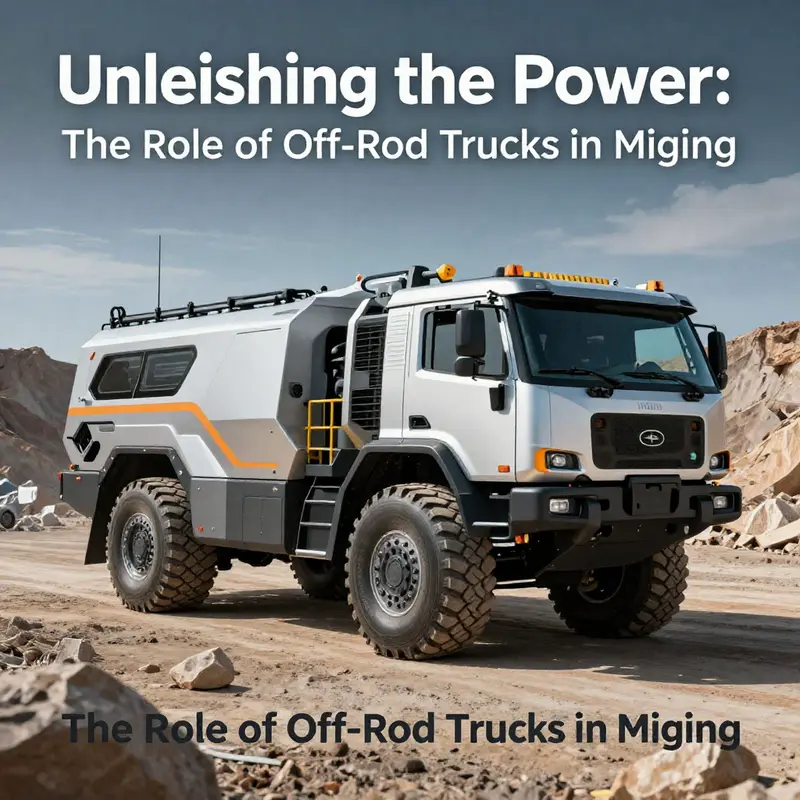
In mining, the off-road truck is more than a road-going vehicle adapted to rough terrain; it is a purpose-built workhorse designed to traverse open-pits, haul heavy loads of ore, rock, and overburden across dusty, uneven ground. As environmental pressures, economic realities, and digital technologies converge, the meaning of that “off-road” designation is evolving. The trucks of tomorrow are not only bigger and tougher but smarter, cleaner, and more integrated into the broader rhythm of a mine. This chapter traces how electrification, autonomy, and digitalization are rewriting what it means to operate a heavy-haul vehicle inside a mine site, and why those changes matter for the entire mining operation. What begins as a shift in powertrains and control systems ripples outward, reshaping logistics, safety, and the pace of ore extraction itself.
Electrification sits at the heart of this transformation. The move from diesel to electric drive systems is no longer a niche experiment but a strategic imperative driven by emissions limits, operating costs, and the desire for quieter, cleaner mining sites. The most visible face of this trend is the rise of pure electric mining trucks that store energy in large battery packs and deliver high-torque performance across long shifts without refueling downtime. These machines reduce direct fuel costs and dramatically cut exhaust emissions, a boon for both regulatory compliance and community relations at mining towns near extraction sites. Where electrification makes the biggest difference, however, is in maintenance profiles. Electric drivetrains typically feature fewer moving parts in the powertrain, which translates to lower routine maintenance, reduced oil and filter changes, and less frequent component replacements. That set of advantages compounds the capital cost of the vehicle and battery over its lifespan, creating a compelling economic case for many mining operators seeking predictable operating expenses.
But electrification in mining is not limited to pure electric propulsion alone. Hydrogen-electric hybrid configurations are emerging as a practical bridge in applications where long range, rapid refueling, and minimal downtime are critical. These systems can offer the best of both worlds: quick refueling with hydrogen supports longer duty cycles at remote sites, where limiting downtime is crucial. In environments where power availability is intermittent or where mine layouts demand rapid cycle times, hydrogen hybrids can keep the haul trucks moving while batteries recharge during mandatory pauses or idling periods. The environmental payoff of electrified and hydrogen-enabled fleets is substantial when scaled to the size of modern mining operations. If widespread adoption continues, the reduction in carbon dioxide and other emissions could be measured in millions of tonnes annually, translating environmental benefits into tangible community and regulatory wins.
Electrification, however, is only the first layer of a deeper shift toward smarter powertrains and smarter operations. The electric and hybrid powertrains of off-road mining trucks are typically built to withstand extreme temperatures, dust, and heavy vibration. Advanced thermal management systems are essential to keep batteries and motors within optimal operating ranges, especially in cold climates or in open-pit layouts with long travel distances. This is not merely a matter of heat pumping; it is about maintaining battery life, sustaining peak torque, and ensuring predictable performance across a shift. As batteries continue to evolve with higher energy density and improved durability, the operating window of a mine truck expands, enabling longer cycles between charges and fewer interruptions for rearming energy. The pace of battery technology development, coupled with smarter charging infrastructure—fast charging, opportunity charging at loading and dumping points, and on-site energy storage—will determine how quickly electrified fleets reach parity with or surpass diesel-only fleets on total cost of ownership.
Alongside electrification, autonomy is redefining the social and operational fabric of off-road mining trucks. The shift from driver-assist features to fully autonomous fleets marks a transition from single-vehicle optimization to networked optimization. In practice, autonomous haulage systems coordinate dozens of trucks across large sites, balancing load distribution, fuel consumption, and cycle times with precision that is hard to achieve with human drivers alone. The result is a potential lift in productivity—an increase in equipment utilization and a reduction in idle time—paired with enhanced safety. Driverless operation minimizes exposure to hazardous conditions and reduces the risk of human error during critical maneuvers in steep or uneven terrain. The broader implication is that the truck becomes not just a point-to-point hauler but a node in a digital, autonomous mining ecosystem.
This ecosystem approach is reinforced by advances in digitalization and simulation. Modern mines increasingly rely on digital twins—virtual replicas of physical assets—to test, validate, and optimize performance. Engineers and operators can run thousands of simulated scenarios to stress-test new powertrains, control algorithms, and battery management strategies before committing hardware to the field. Predictive maintenance has progressed from a nice-to-have to a core capability, enabled by real-time monitoring of hundreds of parameters: battery health, motor temperatures, drivetrain wear, payload variations, and ground conditions. The practical outcome is not only reduced downtime but smarter scheduling—anticipating service sooner, aligning spare parts inventories with anticipated needs, and avoiding bottlenecks that ripple through the entire mine schedule.
The trend toward larger, more specialized trucks also continues. As mining operations scale up—driven by ore grades, open-pit geometry, and the need to move material efficiently—there is a clear move toward higher payload capacities and heavier, purpose-built frames. The new generation of off-road trucks is engineered to carry tens of thousands of tonnes of material per day, and the design ethos increasingly emphasizes not just raw mass but resilience in extreme environments. This means more robust frames, reinforced tires and rolling gear, and suspensions that can endure long-haul cycles over rough ground without compromising safety. Yet the goal is not only to make bigger machines; it is to tailor fleets to the specific contours of each mine. Narrow, winding road segments, steep benches, and limited ramp space demand customized configurations that optimize every meter of movement. In this sense, the off-road truck of the future is a tool of precision as much as it is a symbol of power.
All these trends—electrification, autonomy, and customization—feed a broader redefinition of what an off-road truck means within mining. It is no longer merely a heavy-duty vehicle designed to haul payloads from pit faces to crushers; it is an intelligent node that senses, decision-makes, and acts within an integrated, data-driven network. The truck becomes part of a coordinated sequence from drilling and blasting through loading, hauling, and processing, culminating in port or rail transfer. In this light, the off-road truck transcends its traditional boundaries and assumes a central role in the digital mine of the near future. The operational discipline required to manage such a fleet—energy management, autonomous routing, safety protocols, and data governance—becomes as important as the mechanical robustness of the truck itself.
As operators move deeper into this era, the importance of supportive infrastructure grows. Electrified fleets require reliable charging or refueling options within the mine, and the layout of the pit must accommodate energy-efficient routing and charging cycles. Autonomous fleets demand resilient communications networks, robust cyber-physical security, and well-defined safety zones that protect workers while preserving throughput. Digitalization demands data standards, interoperable platforms, and skilled technicians who can interpret sensor streams and translate insights into actionable maintenance and logistics plans. The combination of these factors—not just the performance of the truck itself—will determine the pace and success of adoption across different mining contexts. The off-road truck, in its modern incarnation, is thus both a physical asset and a digital capability, a heavy vehicle that carries not only ore but the weight of a new industrial paradigm.
For readers who want a broader lens on how electrification is reshaping heavy equipment and fleet strategies, this trajectory is well illustrated in the broader conversation about industrial electrification and equipment revolution. For a perspective that situates this shift within the wider ecosystem of off-road machinery, you can explore the discussion on the Volvo electric construction equipment revolution. The link below offers a concise view of how electric powertrains are becoming the standard for serious earthmoving work and how this transition threads through maintenance, safety, and productivity on job sites: Volvo electric construction equipment revolution.
The chapter closes with a reminder that the off-road mining truck is not a static symbol of power but a dynamic instrument of efficiency, safety, and sustainability. As the industry harnesses electric propulsion, automation, and digital tools, these trucks evolve from isolated beasts on a bench to integral components of a smart, connected mining system. The implications extend beyond the truck yard: planning, capital allocation, and workforce development must all reflect the new tempo of autonomous, electrified, and highly customized mining operations. The future of the off-road truck is inseparable from the future of the mine itself—a coordinated, greener, more intelligent enterprise that moves material as efficiently as possible while safeguarding people and the environment.
External research reference: https://www.sohu.com/a/798217645_120017917
Final thoughts
Off-road trucks have become synonymous with durability and efficiency in the mining industry. Their exceptional engineering allows for immense payload capacities and the ability to traverse the toughest terrains, making them crucial for transporting materials from deep within the earth. As technology continues to evolve, we can expect these trucks to integrate even more advanced features, enhancing their productivity and sustainability as they play a pivotal role in the future of mining. Understanding their capabilities not only aids mining operations but also empowers off-road enthusiasts and professionals to appreciate the intricacies of these powerful vehicles. Embracing the advancements in off-road truck technology could very well shape the future of mining, pushing the boundaries of what’s possible in the harshest environments.