
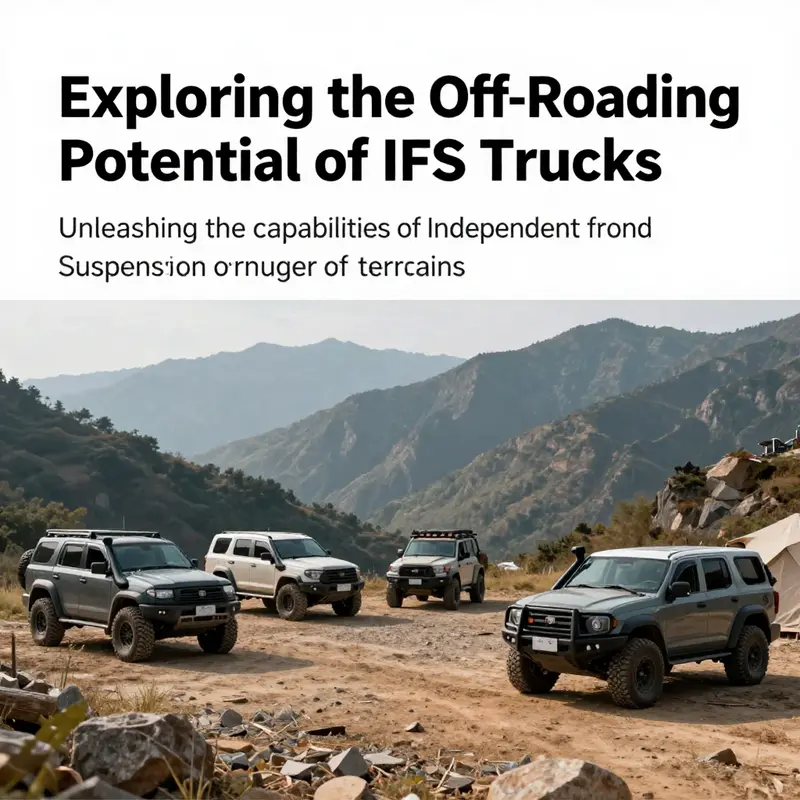
For off-road enthusiasts and adventurers, the debate around off-roading with Independent Front Suspension (IFS) trucks generates intense discussions. These vehicles offer a blend of comfort and performance that many appreciate, but do they have what it takes for the rugged, unforgiving landscapes? This exploration dives deep into the true off-roading potential of IFS trucks, revealing how their unique suspension design, ground clearance, articulation, and durability impact their capabilities. Each chapter sheds light on a different aspect critical for anyone considering pushing an IFS truck to its limits, ensuring a comprehensive understanding of how to safely traverse the wild with these vehicles.
Beyond the Paved Line: Real-World Off-Roading with Independent Front Suspension Trucks
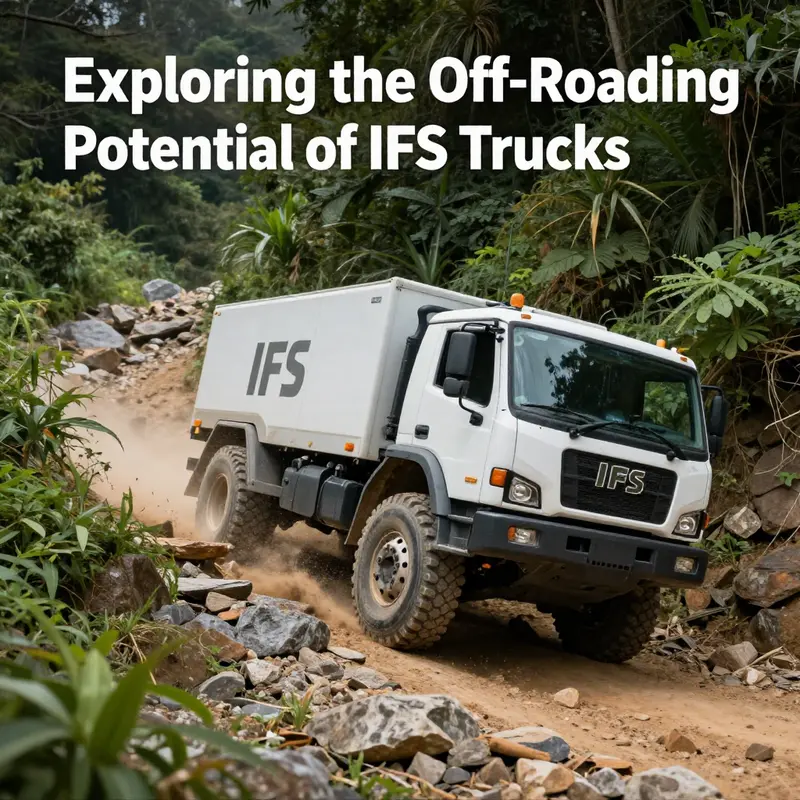
Can you off-road an IFS truck? The short answer is yes, with a careful plan and a clear understanding of the system’s limits. Independent front suspension, by design, isolates each wheel’s movement, delivering a comfortable ride on highways and city streets. That same sophistication, however, introduces a trade-off when you venture into rough terrain. This chapter treats the reality of taking an IFS-equipped truck off the asphalt: how the suspension behaves, where its vulnerabilities lie, and how a driver can maximize capability without courting chaos. It’s a narrative that respects the engineering while acknowledging that off-roading always asks more of a vehicle than simply cruising along a gravel road. In practice, off-roading an IFS truck is less about chasing extreme rock-crawling performance and more about balancing everyday usability with measured, purposeful navigation of manageable obstacles. When approached with that mindset, an IFS setup remains a versatile platform for weekend explorations, forest tracks, and dune runs, provided the driver recognizes the art of restraint and the science behind the hardware.
Suspension design and ground contact are the first chapters in this story. An IFS front end makes each wheel its own independent hinge, allowing one side of the vehicle to soak a pothole or a sharp edge without transmitting every jolt to the other wheel. The benefit on paved roads is undeniable: fewer shudders, less body roll, and crisper steering response in everyday driving. But that same arrangement translates into a more intricate web of components—control arms, ball joints, tie rods, and linkages—that bear the brunt of uneven terrain when the surface suddenly drops away or rises up in a jagged step. In the rough, the system’s complexity becomes a point of vulnerability. A single impact can strain multiple points along the front suspension, potentially cascading wear into steering and alignment issues if not addressed promptly. This reality does not condemn IFS trucks to fragility; it simply reframes off-roading as a discipline of care – driving within limits, choosing lines with a plan, and inspecting after every trip for signs of stress that could compound over time.
Ground clearance figures and the geometry of approach, breakover, and departure angles also shape how far an IFS truck can go before the traction chain snaps. On many IFS platforms, the front end sits relatively high, and ground clearance may look generous at a glance. Yet the angles created by how the bumper, frame, and underbody components meet the ground can be less forgiving than a solid-axle setup when you encounter steep ledges, sharp rocks, or rutted climbs. The risk is not only bottoming out but also pinching the undercarriage against obstacles in a way that forces a vehicle to back away rather than crawl forward. In practice, this requires not just broader range but smarter selection of lines. It means choosing to approach steep climbs at an angle that reduces the likelihood of catching a rocker or skirting the underside on exposed rock. It means recognizing when a line is too aggressive for the vehicle’s ground clearance and tire placement, even if a few inches of wheel travel might seem available on paper. These decisions, while seemingly conservative, keep a capable IFS platform from becoming a one-way ticket to body damage or immobilization.
Articulation—the dynamic dance of wheels staying in contact with the ground as the truck contends with irregular terrain—plays a pivotal role in traction. A solid front axle can pivot with generous wheel travel, maintaining contact across drastic changes in ground level. An IFS system, by contrast, often manages wheel travel through linkages that may limit how far both wheels on the left or right can independently travel while maintaining geometry. The practical effect is that one wheel might lose contact with the surface sooner than a comparable solid-axle setup. Traction can waver as a result, especially in uneven terrain with large rock steps or deep ruts. This is not a verdict that says IFS trucks cannot climb or traverse challenging landscapes; it is a reminder that the driver must anticipate differential wheel behavior and pace control so that one wheel does not ‘float’ while the other fights for grip.
Durability concerns rise from a different angle. Components such as control arms and joints in an IFS system are often designed for a balance of on-road comfort and off-road resilience. When exposed to repeated impacts, twisting forces, or sharp torsion from aggressive lines, those parts can wear faster or become misaligned if regularly abused. That doesn’t condemn IFS trucks to fragility, but it does underscore the value of proactive maintenance and a conservative approach to terrain. A routine inspection after a day on rough trails – checking ball joints, tie rod ends, bushings, and the mounting points for signs of play or cracking – serves as preventive insurance against a breakdown that could lead to a difficult recovery in a remote area.
The promise of modern technology helps soften these rough edges. Advances such as reinforced underbody protection shield critical components from rock strikes and stumps that would otherwise brutalize a low-slung front end. Advanced locking differentials can reclaim traction when one wheel in the struggle refuses to grip, distributing torque more evenly to the wheel with the better bite. Features like crawl control automate the interplay between braking and throttle when navigating rocky sections or long ascents, letting the driver concentrate on steering lines rather than the micro-management of brake pressure. These technologies don’t erase the intrinsic limits of an IFS front end, but they do raise the floor of attainable capability for drivers who want a comfortable daily driver with a reasonable chance of progressing through moderate off-road terrain without heavy modification.
When it comes to practical environments, the general rule remains: IFS trucks excel on surfaces that demand steady speed control rather than extreme articulation. Smooth-to-moderately uneven surfaces, such as corrugated tracks and lightly washboarded surfaces, reward the responsible driver who uses the suspension as a buffer rather than a weapon. On grades and inclines, the predictable, controlled contact between tire and ground often proves more important than aggressive wheel travel. The emphasis, then, shifts from heroic wheel movement to careful torque management, steady throttle inputs, and the right approach angle to minimize energy losses and hook-ups that can snap a wheel into air.
For the driver who wants to push a bit further, a measured approach to upgrades can widen the practical envelope without sacrificing daily comfort. Tires with a robust sidewall, appropriate traction compounds, and a cautious lift height – kept within the design tolerance of the front suspension – can improve the truck’s ability to hold lines on rough surfaces. Skid plates and reinforced shields protect the underside from rocks and stumps that would otherwise nick critical components. Reassurance comes from understanding that these modifications are not about turning the IFS platform into a pure rock crawler; they are about extending its comfort zone into light-to-moderate off-road adventures while preserving on-road manners.
From a maintenance lens, the driver’s post-ride routine becomes as essential as the ride itself. After a trail, a careful walkaround to check for bent control arms, worn bushings, or leaking joints is prudent. A quick but thorough inspection of tie rods and steering components helps catch early signs of fatigue caused by twisting forces frequently encountered on uneven terrain. Keeping the suspension geometry in check preserves steering feel and prevents the cascading effects that could degrade control. That mindset – continuous awareness, gentle driving, and timely checks – transforms off-roading from a potential test of endurance into a disciplined exploration.
In sum, IFS trucks carry a meaningful off-road potential, especially for drivers who value everyday comfort with the flexibility to explore moderate terrain. They are not inherently limited to the smoothest back roads; they simply require a different calculus than solid-axle vehicles. A deliberate approach to line selection, speed control, and the intelligent use of modern traction aids can unlock a surprising range of adventures without forcing the truck to sacrifice its on-road character. The result is a balanced capability that suits a broad audience: those who want to roam off the grid occasionally, yet still return home with a smile and a quiet seat-time memory of the trail. For the curious reader who seeks practical guidance on engine reliability and front-end maintenance in diesel-powered platforms, deeper exploration into the topic can be found in resources that cover mechanical fundamentals and hands-on care. Mastering diesel mechanics offers a grounded look at how these engines and their supporting systems endure the rigors of rugged use. External reading that complements the overview of off-road performance in light-duty trucks can be found here: https://www.ford.com/trucks/f-150/.
Suspension Realities: Navigating the Off-Road Potential and Limits of IFS Trucks
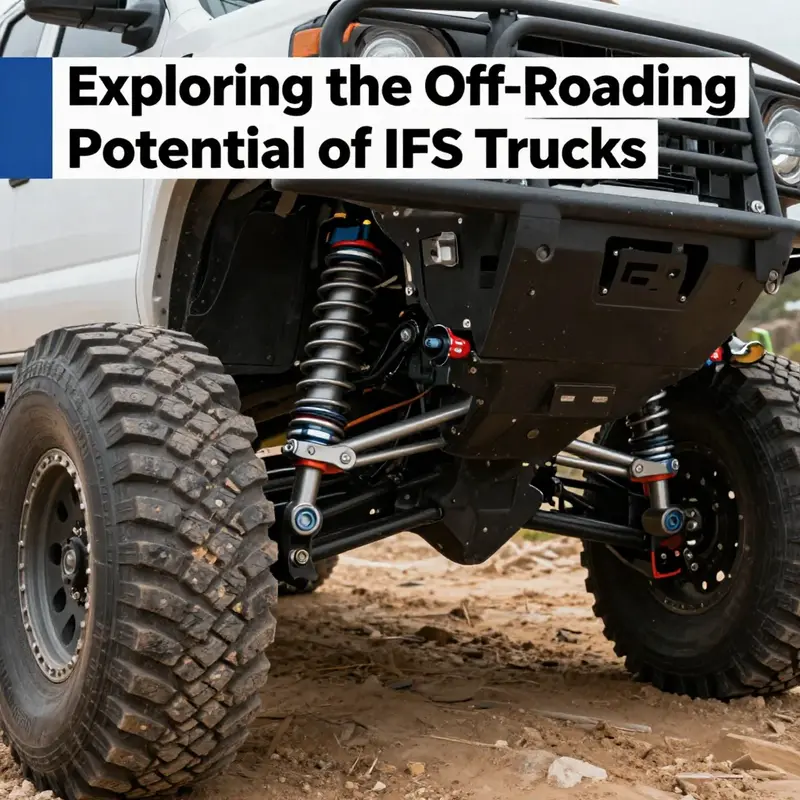
Off-road questions about Independent Front Suspension (IFS) trucks often hinge on a simple equation: comfort on pavement versus capability on obstacles. An IFS setup promises a smoother ride, predictable handling, and steady traction on uneven ground. It erodes a little of the rugged ferocity associated with solid front axles, yet it delivers a different kind of capability. The topic deserves a careful, unflinching look because the decisions you make with an IFS truck on rough terrain are not just about what you can conquer, but how you approach it in a way that respects the system you are relying on. The advantage of an IFS system is clear from the outset: on smoother surfaces, the wheels move independently to absorb bumps, keeping the ride comfortable and the steering responsive. This feature translates into better tire contact with unpredictable ground during mixed driving conditions, where a wheel might encounter a patch of mud, a rock, or a rut while the other wheel sees something different. In many everyday situations, that separation translates to a more confident, controlled drive. The same advantage, however, becomes a variable once the terrain takes a turn for the extreme. On rock gardens, steep ledges, or deep ruts, the same independent motion that smooths the ride can also limit how each wheel stays planted on the ground. The result is a dynamic that favors finesse over brute force, with a tendency to lose a bit more ground contact on the truly demanding sections of a trail. This is not a universal shortcoming, but it is the heart of the trade-off when you consider on-trail performance with an IFS front end.
What follows is a more integrated view of how suspension design translates into off-road behavior. IFS systems excel in the realm of ride quality and traction on uneven but not brutally demanding terrain. The articulation—the front axle’s ability to bend to keep tires on the ground—still matters, and IFS can offer substantial wheel travel, especially when engineered with modern geometry and damping. Yet, compared with solid front axles (SFA), IFS designs generally restrict axle articulation under the same brutal conditions. The practical implication is that, on a rock-studded slope or in a deep rut, one wheel may lift away or spin without the other compensating as effectively as a solid axle would. In that sense, the technology favors careful line choices and strategic speed control over raw grit when the going gets gnarly.
Durability is another piece of the puzzle. The components that enable precise steering and predictable handling in an IFS layout—control arms, ball joints, tie rods, CV joints, and mounting points—are all exposed to twisting forces and impacts that can be unforgiving in harsh terrain. A single hard impact can ripple through several parts, leading to a cascade of wear or damage that would feel different in a more forgiving front-end arrangement. The potential for damage increases when wheels are guided by complex kinematics over jagged rocks. It is not that IFS is fragile by design; rather, its vulnerability is different. A beam-axle system can sometimes shrug off twisting inputs that would trouble an IFS setup, while an IFS system might demand more frequent checks and a slightly more disciplined approach to how you tackle severe obstacles. The conclusion here is practical: the same reason IFS delivers a refined ride on smoother roads is the reason it calls for a more nuanced strategy on demanding trails.
A significant part of the conversation centers on how to address, or at least mitigate, the design limitations of IFS in off-road contexts. The most straightforward lever is wheel travel and ground clearance. Modern engineering has worked to increase both through thoughtful geometry and robust lift strategies. Lift springs, in particular, play a crucial role. When designed with high-tensile steel and tuned for durability, lift springs can extend wheel travel and raise ride height without compromising ride quality on the highway. The kind of spec you would see in a contemporary IFS setup includes a lift that adds roughly four inches of ground clearance and adds travel that can make a meaningful difference on rough terrain. This is more than a simple height increase; it is an alignment of suspension geometry to create more room for the wheel to negotiate obstacles without pinching or binding. The aim is to preserve the smooth, comfortable ride that makes IFS desirable for daily driving, while gently expanding the envelope of what the truck can handle off-road. It is this dual achievement—maintaining on-road comfort while expanding off-road capability—that represents a practical response to the inherent constraints of IFS systems.
But the arithmetic of off-road capability is not reduced to springs alone. The approach to driving plays a decisive role in how effectively an IFS truck makes use of its suspension. The guidance is consistent: know your limits and you will go farther with fewer problems. The core principle is straightforward yet essential: drive slowly and smoothly. Sudden bursts of throttle, abrupt steering, or aggressive braking can overwhelm the suspension’s capacity to absorb irregularities and can amplify the risk of chassis or component damage. The technique matters as much as the hardware. When negotiating obstacles, a methodical, slow and steady pace tends to yield traction and preserve control more reliably than speed or brute force. Rock crawling, for example, benefits from choosing a careful line, using low gears, and employing moderate tire spin to maintain traction rather than forcing the vehicle over a barrier. An approach to the obstacle; enter at an angle, read the ground, and allow the suspension to articulate gradually; which helps keep tires in contact with the ground as conditions change beneath each wheel.
These practices extend beyond the moment of ascent or descent. Pre-trip checks and post-trip inspections become part of the ritual of off-road IFS use. After a rugged outing, a careful examination of control arms, ball joints, tie rods, and associated mounting hardware is prudent. Early detection of wear or misalignment can prevent more serious failures down the line. The discipline of inspection reinforces the message that off-roading with an IFS system is not a free ride; it is a controlled, iterative process that respects the complexity of modern suspension architecture.
The conversation about IFS off-roading is never about absolutes. It is about balancing a set of trade-offs with intention and craft. IFS is not inherently bad for off-road use, but it is, by design, more naturally aligned with moderate to light off-road experiences. Forest service roads, mild rock gardens, and forgiving dunes can be well within the reach of an IFS-equipped truck when paired with thoughtful setup and prudent driving. For the toughest, most technical terrain, the door remains open, but the approach shifts: it relies more on careful line choice, patient execution, and strategic use of suspension travel rather than sheer momentum.
For readers who want to deepen their understanding of how suspension components affect performance, a broader mechanical perspective is helpful. A comprehensive guide to suspension fundamentals and practical mechanics offers useful context, and it can be paired with the insights above to build a fuller picture of how to optimize an IFS truck for off-road use. A deeper dive into diesel mechanics and systems maintenance can also support more confident, proactive upkeep of front-end hardware, aligning with the philosophy of careful, informed driving. See further resources linked below for a broader technical lens on related suspension topics, along with practical maintenance steps that complement the driving discipline described here.
In sum, IFS trucks can certainly be taken off-road, and with the right balance of suspension tuning and disciplined driving, they can handle more than a casual dirt road. The key lies in recognizing the system’s limits, expanding the envelope with thoughtful lift and wheel-travel improvements, and embracing a driving style that respects the suspension’s articulation and durability envelope. These elements work together to keep the balance between on-road comfort and off-road capability intact. As design continues to evolve, the line between city comfort and trail capability grows ever more nuanced, which is exactly the kind of progress that makes modern IFS trucks capable as long as the operator remains mindful of the underlying physics at play. For those charting a path into moderate-to-light off-road exploration, the IFS approach remains a viable, rewarding option when paired with prudent preparation and technique.
Raising the Bar: Ground Clearance Realities and Off-Road Tactics for IFS Trucks
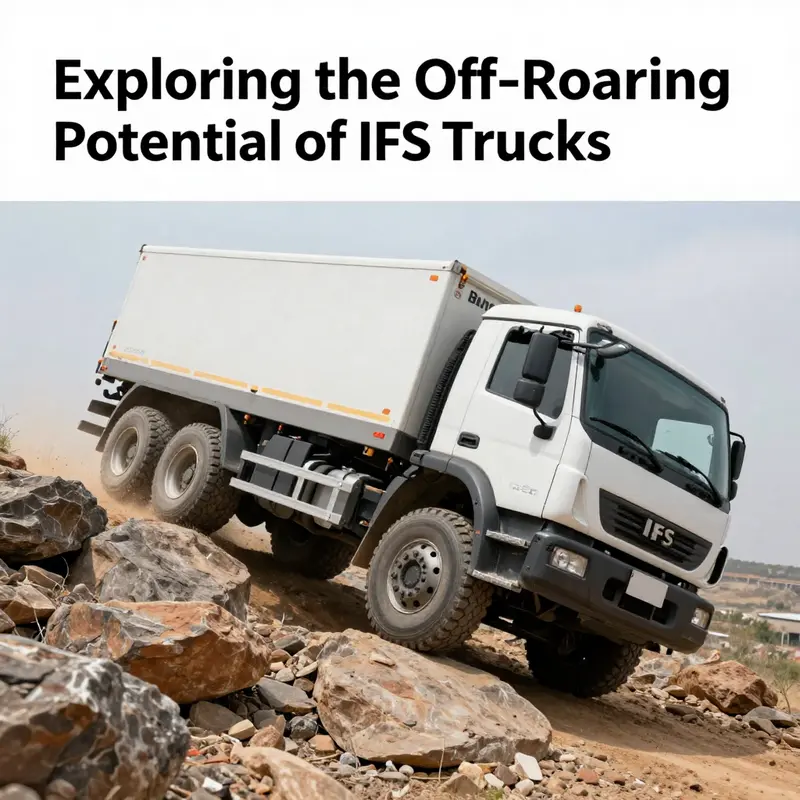
Ground clearance sits at the crossroads of capability and risk for any off-road excursion, and on trucks equipped with an independent front suspension (IFS) it becomes a defining constraint. The ride-quality benefits that make IFS shine on paved roads can translate into a meaningful compromise when the terrain turns rugged. To understand how to approach off-roading with an IFS setup, it helps to first grasp what sets these systems apart. In a solid-axle or live-axle design, the wheels share a common mounting point that tends to keep the undercarriage higher on rough terrain. With IFS, each front wheel is mounted on its own control arm, often with the differential tucked closer to the ground and key links that hang a bit lower than their axle-mounted cousins. The result is a smoother ride in everyday driving, but when you meet a jagged rock, a steep ledge, or a deep rut, that independent movement can become a liability. The front differential, the control arms, and the steering knuckles often occupy spaces that are more exposed than on a solid axle setup. A single, sharp impact can reverberate through multiple components, testing tolerances that are kept in check by careful alignment and solid mounting points in a more rigid system. This is not to say IFS vehicles are destined for trouble; rather, it is a reminder that ground clearance is a spectrum rather than a fixed number, and the spectrum leans toward caution on technical terrain. The front end may clear a rock ledge in one pass and still cling to the ground with a lower-loaded wheel on the other side, which can briefly rob traction. In practice, the layout translates into several concrete realities that shape how, where, and how far you should push an IFS truck off the beaten path. The first of these is the overall clearance envelope, the package of gaps and angles that determine whether you’ll kiss the undercarriage or glide over a rock without a second thought. Ground clearance encompasses more than the height between the ground and the lowest critical point; it includes approach, breakover, and departure angles. On many IFS-equipped trucks these angles are not as forgiving as those on traditional solid-axle designs. The angle at which you meet an obstacle matters as much as the height itself. A shallow approach angle can cause the front bumper or lower control arms to strike before the wheel can begin to climb, while a poor breakover angle can trap the center of the truck on a rock while the wheels on either side remain clear. In practice, this translates into a measured, almost chess-like approach to line selection. The terrain isn’t merely a test of power; it’s a test of geometry and timing, and IFS trucks demand disciplined wheel placement and careful momentum management. The control arms, which connect the steering knuckles to the frame, often extend downward enough to become the first point of contact on uneven ground. When the terrain rises sharply under the vehicle, the arms and the associated joints take on the brunt of the load. If the ground is particularly uneven or if the truck is lifted beyond a certain threshold, the geometry can shift in ways that alter steering feel and caster, subtly changing how the front wheels track in the ruts. This is why many drivers approach IFS-equipped rigs with a conservative mindset on aggressive obstacles, even when they know the truck is capable of more. Another practical consequence of the IFS geometry is the relative limitation on articulation. Solid-axle setups can articulate far more aggressively, allowing both wheels on a given axle to remain in contact with the ground through significant deflection. IFS systems do flex, but the independent movement can create a point where one wheel remains perched on a rock or drop while the other drags, momentarily reducing traction on the obstacle. The risk is not merely losing traction on one wheel; it is the cumulative effect of reduced ground contact and altered weight transfer as the suspension cycles. It is here that the decision to tackle a given trail becomes a process of risk assessment and respect for the system’s boundaries. If you choose to lift an IFS truck to gain clearance, you introduce a new dimension to the equation. Lift kits designed for IFS are available, and they can raise the front-end geometry to improve approach and breakover angles. Yet these lifts are not magic bullets; they require a careful, holistic approach to suspension geometry. Heightened modifications can alter steering geometry, caster, and camber, and they place additional stress on driveline components, particularly those that run through altered angles. As the lift increases, the risk to steering components and tie-rod ends grows, and the need for compatible alignment and steering geometry corrections becomes essential. Beyond the suspension itself, other accompanying upgrades can help offset low clearance. Skid plates, when installed with careful attention to ground clearance and belly protection, can be a protective layer that reduces the odds of catastrophic undercarriage damage on rocky trails. High-clearance fender flares and protective rock sliders can mitigate side impacts and prevent rock contact from steering knuckles and lower control arms. However, these protective additions should be considered part of a broader strategy rather than quick fixes. In many cases, the most effective upgrade package blends a cautious lift with finer details: extended or braided brake lines to maintain adequate flex, upgraded track bars or adjustable control arms to preserve alignment through increased articulation, and precise alignment work to preserve steering geometry after a lift. The interplay between lift height and steering geometry is particularly crucial. If the lift is not matched with corrected or upgraded steering linkage, drivers can encounter shimmy, reduced steering feel, or vague return-to-center behavior. It’s a nuanced balance: you want more clearance without sacrificing the predictable, confident steering a driver relies on. The weight and center of gravity of the truck are also shifted with any lift, and the additional unsprung mass can alter how the suspension reacts to hits, ruts, and troughs. These realities are not unique to IFS systems; they simply become more pronounced when the goal is to gain precious millimeters of clearance without letting the geometry drift into the realm of instability. This is why many enthusiasts view ground clearance as the product of a well-planned, multi-part strategy rather than a single bolt-on upgrade. For drivers who want to deepen their knowledge and approach modifications with a solid foundation, there are resources that describe the mechanical principles underlying these choices. For example, exploring how diesel-engine fundamentals intersect with drivetrain loading can offer a more complete understanding of how dynamic loads affect off-road performance. A helpful resource along these lines is Mastering-diesel-mechanics-your-step-by-step-path-to-success, which provides practical mechanics insights that can inform decisions about how much load a suspension and driveline can absorb during off-road twists and turns. This kind of knowledge supports safer, more deliberate planning rather than ad hoc upgrades. When it comes to deciding whether to pursue a suspension lift for an IFS truck, the questions you ask matter as much as the tools you buy. Do you regularly encounter terrain with aggressive obstacles that threaten to contact the undercarriage? Is your driving style disciplined enough to maintain slow, controlled movements that respect the suspension’s limits? Do you have the budget to address the ancillary elements—driveline angles, brake lines, alignment, and steering geometry—that a lift demands? If the answers lean toward cautious, moderate, and well-planned off-roading, the IFS system remains a capable partner on trails that demand finesse rather than brute force. It is not that IFS trucks cannot handle technical terrain; it is that they require forethought, patient technique, and a willingness to tailor modifications to the actual demands of the terrain you wish to conquer. There is value in choosing a path that respects the inherent design while still expanding its practical envelope. For many drivers, the right combination is a carefully chosen lift, protective upgrades, and a deliberate approach to line selection on the trail. In the end, ground clearance becomes less about a single measurement and more about how the suspension and chassis interact with the terrain at hand. And on that front, IFS trucks can excel—provided the driver stays mindful of the system’s strengths and its constraints. As you prepare to hit the backcountry, keep the terrain in mind, plan your route, and calibrate your expectations to the geometry you’re navigating. A thoughtful plan paired with measured, deliberate driving will often outperform sheer speed and audacity on terrain that tests the limits of ground clearance. For readers seeking a broader technical perspective on how lift and geometry affect IFS performance, the following external resource offers a thorough look at lift-kits and alignment considerations: https://www.offroadwarehouse.com/blog/ifs-suspension-lift-kits-guide. And as you refine your approach to maintenance and safety, remember that the most resilient off-road setups treat impending obstacles as problems to solve rather than battles to rush. If you want to deepen the mechanical background behind these decisions, you can also consult Mastering-diesel-mechanics-your-step-by-step-path-to-success. This blend of practical driving discipline, thoughtful modification, and foundational mechanical understanding helps ensure that your IFS truck can rise to the occasion on challenging terrain without compromising reliability or control.
Riding the Edge: Articulation Realities of IFS Trucks in Off-Road Conditions
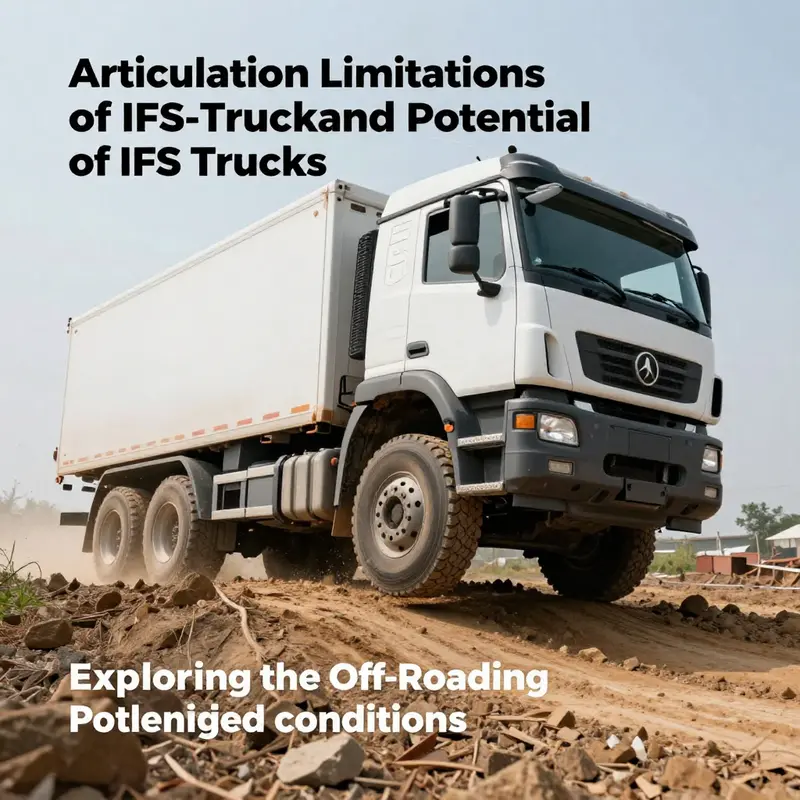
On a narrow forest trail where roots grab at the tires and gear noise fades into the hush of leaves, the truth about off-roading an IFS (Independent Front Suspension) truck lands in the subtle geometry of motion. Articulation—the way each front wheel moves up and down relative to the other as the terrain rises and sinks under the chassis—becomes the focal point of capability. An IFS setup promises a smoother, more composed ride on smooth pavement. It is, however, a design born of compromise. The same brilliance that soaks up highway irregularities also defines its performance when the ground turns rugged. In off-road scenarios, the geometry that keeps tires in contact with the ground on irregular surfaces is both a strength and a constraint. Understanding that dual nature is essential if you plan to take an IFS truck beyond the graded trail.
The core of the IFS promise rests on a network of control arms, links, bushings, and tie rods that connect each wheel to the frame. This arrangement allows each wheel to respond to bumps without forcing the other wheel to follow in lockstep. The result is superior ride quality and more predictable steering on smooth surfaces. But the same arrangement imposes a ceiling on how far the wheels can travel independently before the geometry itself blocks further inward or outward motion. When a wheel climbs a rock and the other sinks into a rut, the suspension is tasked with a precarious balancing act: it must maximize wheel travel while preserving alignment and preventing bottoming out or binding. In practice, this means the tire contact pattern on extreme terrain tends to be less forgiving than the far more forgiving contact pattern of a solid front axle in similar conditions. The wheel that remains on the higher ground can quickly become the limiting factor, because the suspension’s geometry will not always allow that wheel to droop enough to keep both tires planted for traction. The result is a moment of compromised grip—one tire in the air or perched on a projection, the other trying to find traction in a challenging surface.
That articulated reality becomes more evident as terrain ramps upward or tilts sideways. In rock crawling or deep ruts, the ideal scenario is simple in theory: both tires should independently find their own ground, maintaining contact as the vehicle tilts and rocks carve new lines under each wheel. In practice, the IFS system’s limits often manifest as reduced total articulation. The wheel travel is curtailed by the control arms’ geometry and the mounting points near the frame and engine bay. When one wheel is lifted significantly higher than the other, the other wheel’s travel may be choked by the angle limits of the arms, preventing full contact with the terrain. The practical consequence is a potential retreat from the grip that a truly unrestrained, long-travel setup might achieve. This gap in traction becomes most visible when a vehicle faces a combination of incline, rock, and a sudden drop, where the better part of a tire’s contact is sacrificed to a bent path through the suspension’s angular constraints. The risk is not merely reduced traction; it is the possibility of rapid, sit-backsome loss of control if the tires cannot maintain predictable contact or the drivetrain is loaded in a way that interrupts smooth torque delivery.
From a durability standpoint, the IFS front end presents a dense cluster of components that must survive the shock and torsion common in punishing off-road environments. Unlike a simpler solid axle, where the axle beam itself bears much of the input energy, an IFS front end channels energy through control arms, crossmembers, ball joints, and bushings. Each of these elements is a potential stress point under heavy articulation and high-impact terrain. The consequence is a greater demand for robust components and protective measures. Dirt, rocks, and twisting forces can accelerate wear on joints and mounts, and a single hard impact can cascade into misalignment or accelerated wear across several parts. Trailered by the extra complexity, the IFS front end often requires more meticulous inspection after a day on rough trails to catch wear before it compromises performance or safety. This is not to cast a shadow over the design; rather, it is a reminder that the ground truth of off-roading is a dialogue between terrain, suspension geometry, and the vehicle’s ability to absorb shocks without losing control.
Considering these realities, one naturally asks where IFS trucks sit on the spectrum of off-road capability. The chapter’s research makes a clear distinction: IFS is well-suited to moderate off-road use—forest service roads, mild rock gardens, or sandy dunes where terrain does not punish the suspension’s limits with vertical walls and severe twists. For extreme, technical terrain, the IFS system’s articulation limits and the risk of wheel hop or loss of traction become limiting factors. In industrial or remote settings where vehicles must still navigate punishing and unpredictable surfaces, the same articulation limits can affect performance and safety. For those situations, a heavy-duty solid axle or a purpose-built long-travel suspension can offer improved wheel-to-ground contact over more punishing terrain, delivering a more forgiving platform when the surface demands the most.
If you plan to use an IFS-equipped truck off-road, the practical path forward emphasizes disciplined driving and preparation. First, know your limits. Trails are rated for specific vehicle classes and skill levels; staying within them is a guardrail against overreaching a truck’s articulation capacity. Second, drive slowly and smoothly. The instinct to “power through” a rough section invites rebound and sudden steering corrections that stress the suspension and can propagate through the rest of the drivetrain. A measured approach—let the suspension absorb the bumps, allow the tires to find their own ground, and avoid abrupt throttle or brake inputs—keeps the system in its comfort zone. Third, maintain low speeds across rocks, logs, or deep ruts. The goal is traction, not speed, and a momentary gain in momentum is rarely worth it if it invites a harsh impact to the frontend. Fourth, use techniques that minimize stress on the suspension. Approach obstacles at a careful angle to reduce the axial load on the control arms; if rock crawling, engage low gears and use controlled throttle to modulate wheel spin. Finally, routinely inspect the suspension after any significant outing. Check for wear on ball joints, tie rod ends, control arms, and mounting points; look for signs of bending, looseness, or misalignment that could worsen under subsequent outings.
An essential aspect of managing expectations with IFS is acknowledging the nuance of articulation in relation to load and payload. The moment you attach a heavy load or trailer to an IFS front end, the forces over the control arms and joints shift, sometimes more than the driver anticipates. The increased load not only changes geometry but can magnify the consequences of a miscalculated line or an abrupt steering input. In such cases, even day-to-day off-road efforts could push the system toward the edge of its comfort zone. Here lies a practical reason to invest in reinforced components, protective skid plates, and carefully chosen tires whose sidewall architecture complements the vehicle’s articulation behavior on uneven surfaces. All these choices come with weight penalties and cost considerations, but they are the tangible tools that help the driver stay within the realm of safe, predictable performance when the terrain refuses to stay still.
While the debate about the ideal suspension for off-road conquest will continue, this chapter’s message is straightforward. IFS trucks can, indeed, traverse off-road terrain, but their articulation is bounded by geometry and the complexity of their front-end architecture. They offer a refined ride, not a limitless range of wheel travel. The decision to use an IFS front end off-road should be anchored in a clear assessment of terrain expectations, personal skill, and a readiness to accept the trade-offs—better on modest trails and mixed use, more caution on extreme landscapes. The path to success is not to pretend the vehicle is a long-travel, purpose-built off-road machine, but to respect its design constraints and to drive with the restraint and technique that keep the suspension’s travel where it performs best: within the margins of predictable grip and durable components.
For readers seeking deeper, practical grounding in the mechanical side that underpins these choices, consider the broader mechanical context in on-vehicle maintenance and diagnostics. A useful resource to sharpen those fundamentals is Mastering Diesel Mechanics: Your Step-by-Step Path to Success. It provides a grounded perspective on how the engine and front-end interactions influence overall off-road performance, including the implications of suspension load and component wear on reliability and safety. This kind of knowledge helps a driver interpret what the tires, arms, and joints are telling them on a rough trail, translating sensations into informed decisions about speed, line, and when to retreat to easier ground.
As the trail winds toward new obstacles and the forest opens into open terrain, the continuing conversation about IFS versus solid axles in off-road contexts remains relevant. The chapter’s exploration of articulation limits is not a verdict that condemns IFS roads to failure; it is a candid portrait of what the system can and cannot do under duress. By aligning expectations with physics, by practicing disciplined driving, and by committing to proactive maintenance, an IFS-equipped truck can still be a capable companion on a broad spectrum of off-road experiences. The difference lies in choosing the right terrain, the right techniques, and the right level of preparation—an approach that turns the edge of articulation from a potential hazard into a navigable boundary, one that can be respected and occasionally negotiated with confidence.
External resource: For a broader technical perspective on off-road suspension technology and its implications in demanding environments, see Off-Road Technology: https://www.offroad-technology.com/
Rugged by Design: Navigating Durability and Limits of IFS Trucks When Off-Roading
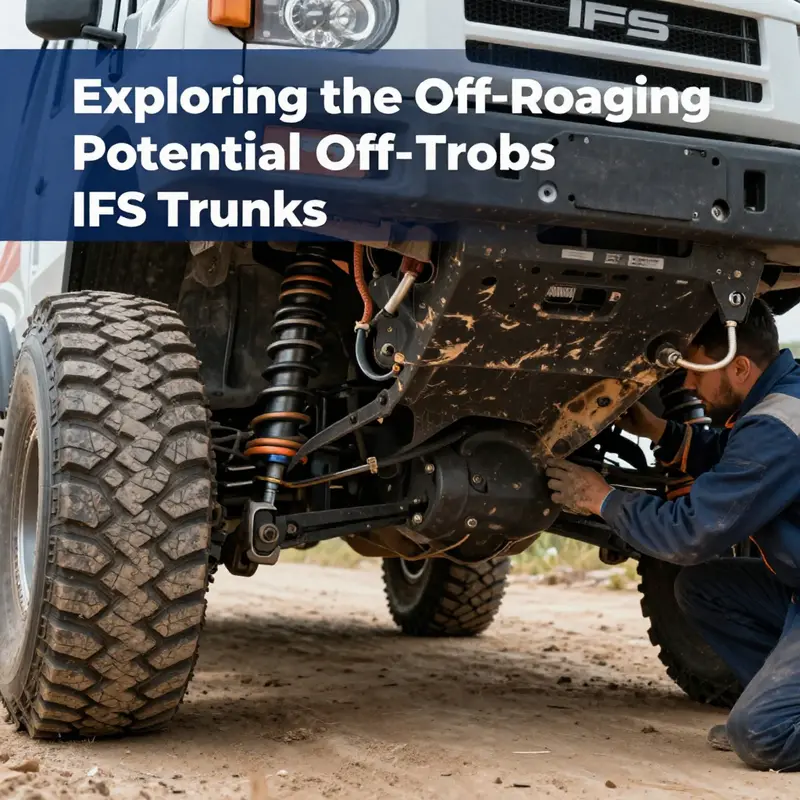
Off-road adventures with a truck that uses an independent front suspension are a study in contrasts. The same design that delivers a smoother, more controlled ride on paved routes can become a careful negotiation with rough terrain when the stakes rise. For drivers considering off-road use of an IFS vehicle, durability isn’t a guess or a mood—it’s a physics problem. It comes down to how the suspension, the drivetrain, and the vehicle’s thermal systems behave under real stress, not how they perform in a showroom or on a smooth dirt road. In this light, off-roading an IFS truck is not a matter of denial or decree but a disciplined conversation with limits, load, and the terrain itself. The electric propulsion layer adds another dimension to that conversation, raising the temperature of the components that live closest to heat and vibration, and pressing engineers to prove endurance under conditions that rarely appear in city streets or light logging trails.
The durability story for IFS trucks off-road starts with the way the suspension is built and how it is used. Independent front suspensions isolate each wheel’s motion, which is excellent for road comfort and steering feel. But on rough trails, where rocks, roots, and ruts can wedge the wheels into unplanned angles, IFS geometry faces more twists and shocks per mile than a solid axle. The consequence is not that the system cannot flex, but that the extent of articulation is more distributed toward a few joints rather than shared across a single robust axle. That distribution matters when you push through whoops, ledges, or deep ditch crossings. A single impact can ripple through control arms, ball joints, tie-rod ends, and steering knuckles, accelerating wear that might otherwise be amplified by a solid-axle setup where a single joint takes more of the brunt. The result is an ecosystem of components that, while individually fortified, must work in concert under conditions they were not always indoor-coated to handle.
Material fatigue sits at the heart of durability concerns. When the front suspension components endure repeated high-load cycles, micro-cracks form long before the driver notices a problem. Over time, those micro-cracks propagate under the influence of repeated impacts, cornering loads, and the jarring effects of hitting a rock garden at modest speed. In a harsh off-road environment—think rough forest trails, desert washboards, or mined-road surfaces—these cycles accumulate with surprising speed. The fatigue life of control arms, ball joints, steering knuckles, and bushings becomes a decisive factor in whether the vehicle can continue to operate safely after a handful of traverses or a single aggressive run. The consequence of overlooked fatigue is not only reduced steering precision but a higher risk of sudden joint failure that can leave a vehicle immobilized at a critical moment.
The electric drivetrain layer introduces thermal and mechanical stresses that previously lived just behind the engine bay. Electric motors and battery packs generate substantial heat during heavy use, and the proximity of cooling needs to the suspension hardware is not incidental. In extreme or desert-dust environments, thermal expansion and contraction can affect seals, fasteners, and hydraulic lines that some IFS configurations rely on for dampers or height adjustment. Even when a vehicle is only lightly loaded, sustained off-road operation can push temperatures into ranges where lubricants thicken or seals begin to leak. This is not a hypothetical risk; it is a design constraint that engineers actively address through robust mounting, heat management strategies, and materials chosen for their resilience in hot, abrasive environments.
Thermal management in electric off-road trucks compounds the challenge. Unlike conventional internal combustion engines that boast a fairly predictable heat profile and a roomy engine bay, electric systems demand dedicated attention to where heat is generated and how it can be removed without compromising suspension motion. Passive cooling, liquid cooling, and strategic venting all play roles in keeping motors, inverters, and battery packs within safe margins. The consequence for the suspension is that any added cooling hardware must be integrated without restricting articulation or movement, lest it becomes another point of snag or a source of new vibration paths. The industry is responding by designing more compact, rugged cooling loops that can survive hammering through rocks and dust while still delivering steady thermal relief to the powertrain and adjacent components.
Dust and debris ingress is another perpetual enemy of durability in off-road IFS systems. Sand and grit find their way into ball joints, bearings, and bushings with far greater ease than on clean, smooth surfaces. The wear they induce can accelerate joint play, reduce steering precision, and shorten service intervals. That reality has driven designers to pursue abrasion-resistant materials and tighter tolerances, alongside protective shields and seals that resist dust penetration. It is not enough to build a joint that lasts on a test stand; the real test is how well it resists the daily barrage of dirt kicked up by tires and suspended in wind and vibration.
To meet these ongoing durability challenges, manufacturers are leaning on a suite of material and design innovations. High-strength steel alloys are used in critical load paths, while titanium-reinforced joints and polymer-based bushings offer a balance of stiffness and resilience under repeated shocks. Engineers also rely on advanced simulation tools, like finite element analysis, to model worst-case loading scenarios and validate the lifespan expectations of suspension components before a single prototype is built. Real-world field testing complements laboratory work, exposing designs to conditions that are hard to replicate in a shop. In fact, makers are actively conducting rigorous field trials with electric off-road platforms under simulated mining and military conditions to assess long-term reliability and identify failure modes that only appear after months of continuous operation. This holistic approach helps ensure that durability improvements in the lab translate into real-world resilience, even when the vehicle is asked to perform beyond casual driving on rough surfaces.
Amid these engineering efforts, standards and guidelines provide a shared language for evaluating off-road durability. SAE International outlines comprehensive testing protocols under the Off-Highway Vehicle Durability Testing framework, with procedures that cover the harsh endurance demands of heavy off-road machinery and electric configurations. These standards are not mere bureaucratic hurdles; they are practical roadmaps that help manufacturers design for predictability, serviceability, and safety in the most demanding environments. In parallel, industry observers watch how new architectures in electric propulsion and suspension respond to the mud, heat, and load that define off-road work. The broader evolution is visible in the way the sector frames durability not as a hurdle but as a measurable design target that guides both engineering choices and field practices.
In practical terms, drivers who want to push an IFS-equipped electric truck into moderate off-road terrain should anchor their approach to a few core principles. First, know your limits. Trail selection matters as much as driving skill; choose routes that fit the vehicle’s capability and your experience. Second, drive slowly and smoothly. The mantra of off-roading with an IFS system is to let the suspension absorb the terrain rather than fighting it with abrupt steering, heavy braking, or sudden throttle changes. Low speeds reduce peak loads on joints and dampers, and they give the tires more time to maintain contact with the ground, preserving traction in tricky sections. Third, adopt proven techniques such as slow-and-steady progress, deliberate rock crawling through low gears, and approaching obstacles at an angle to minimize the shock transmitted to the suspension. These techniques aim to keep wheels in contact with the ground, stabilize the chassis, and reduce the likelihood of a sudden joint overextension that could precipitate a failure.
Maintenance becomes a central, ongoing discipline in this context. After an off-road session, a careful inspection of the suspension is essential. Look for loosened fasteners, abnormal play in ball joints, or signs of seal leakage and wear in the dampers. Debris buildup around joints and in protective shields should be cleaned out, and any unusual noises or handling changes should trigger a deeper check. The habit of regular inspection helps catch fatigue or damage before a minor issue becomes a costly repair or a safety concern. It is the counterbalance to the temptation to treat the vehicle as invulnerable and the terrain as forgiving.
The narrative around off-road IFS durability, especially in electric applications, is not a fatalistic one. It is a measured understanding that, while IFS trucks can handle a broad range of terrains, they demand respect for their architectural realities. They excel in comfort and control on moderate trails and in soft-surface environments like sand dunes or forest service roads. They excel less when confronted with extreme, highly technical rock crawling or punishment-rich landscapes that tax joints, seals, and thermal systems in ways that a more robust solid-axle setup can tolerate with fewer compromises. This is not a denunciation of IFS as a concept but a call to align driving expectations, maintenance practices, and selection of hardware with the terrain you intend to conquer.
As the industry continues to adapt, the language of durability grows more precise. The move toward more rugged, resilient electric suspensions is echoed in related industry discussions and research, including the volvo-electric-construction-equipment-revolution. Such developments signal a broader trend: the next generation of off-road capable, electric IFS platforms will be designed with durability at the front, not as an afterthought. They will combine stronger materials, smarter thermal management, and more robust sealing strategies with software that helps monitor wear, predict maintenance windows, and optimize load distribution across the front axle. For readers who want a clear anchor in the engineering community’s thinking, the standards published by SAE—particularly the J2169 Durability Testing framework—provide a robust, recognized benchmark for how these vehicles are evaluated under real-world conditions. See https://www.sae.org/standards/content/j2169_202503/ for more detail on what constitutes rigorous assessment and how results translate into safer, longer-lasting off-road performance.
In the end, off-road capability for an IFS truck is a negotiation between design intent and field realities. With careful driving, disciplined maintenance, and a willingness to work within known limitations, an IFS-equipped electric truck can venture beyond the pavement into forest tracks, sandy flats, and moderate rock gardens. It may not match a purpose-built solid-axle machine in every extreme scenario, but it can still deliver dependable, controlled performance in the environments that many users actually encounter. The durability conversation, when framed this way, becomes not a constraint but a driver’s guide—a map that directs how to maximize both capability and reliability without compromising the vehicle’s long-term integrity.
For readers seeking a concise takeaway: the question of whether you can off-road an IFS truck hinges less on whether it can, and more on how well you respect the system’s limits and prepare for its unique wear patterns. The result is a vehicle that remains a capable partner on a wide range of trails, provided that the journey is planned, the pace is modest, and the ongoing maintenance is prioritized as a core part of the off-road routine.
Final thoughts
The exploration of IFS trucks’ off-roading capabilities highlights their potential and limitations. While these vehicles can conquer moderate terrains, understanding their suspension dynamics, ground clearance, articulation, and durability is vital for safe operations in rugged landscapes. Drivers should leverage this knowledge to navigate effectively, ensuring enjoyable and risk-free excursions. With careful driving and the right techniques, IFS trucks can be cherished companions in the world of off-roading, opening up exciting possibilities for all who dare to tread the less traveled path.