
Off-roading isn’t just a hobby—it’s a test of skill, machinery, and mindset. Driving a truck off the beaten path demands more than horsepower and guts; it requires an intimate understanding of your vehicle’s mechanics, the right gear at your fingertips, and meticulous planning of your route and terrain. From overcoming rocky outcrops to navigating muddy trails and sandy dunes, every element plays a critical role in your safety and success. This guide lays the foundation by dissecting three core pillars: mastering your truck’s capabilities, gathering essential tools and preparations, and intelligently studying the terrain ahead. Each chapter builds your expertise and confidence, empowering you to tackle rugged landscapes with authority and passion.
Reading the Backbone: Understanding Your Off-Road Truck Before You Hit the Trail
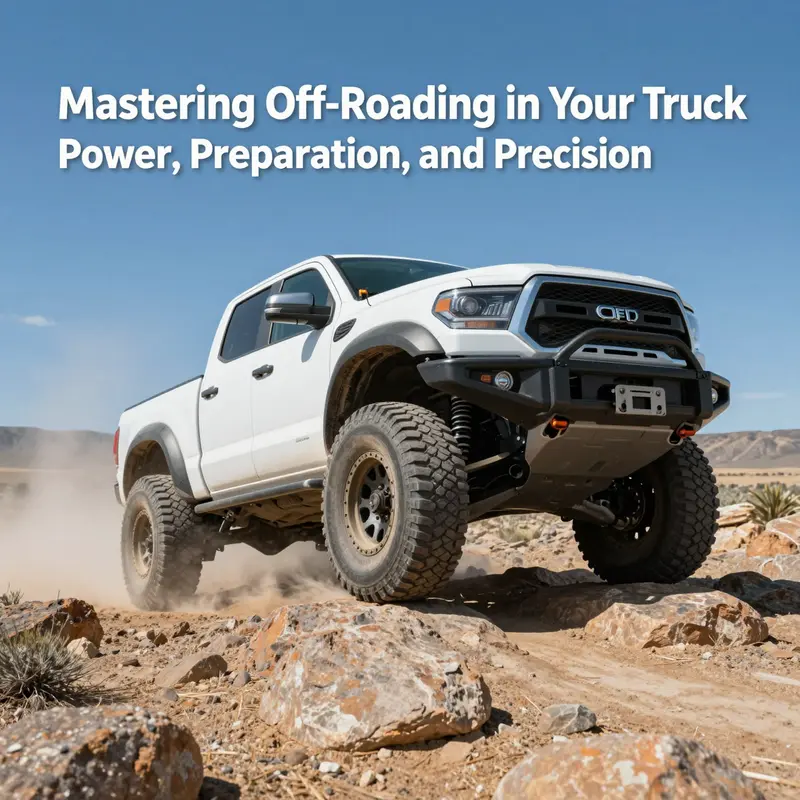
When you head into rough terrain, the journey begins long before you press the accelerator. It starts with reading the backbone of your truck—the chassis, the drivetrain, and the geometry that determines how the vehicle will interact with rocks, ruts, sand, and water. A truck designed for pavement with a gentle ride is not automatically a capable off-road partner. True off-road performance emerges when you understand the vehicle as a connected system, not as a single punchy engine or a flashy surface appearance. The first step is to recognize what this system is built to do and how its core components work together to keep you moving, even when the world beneath your tires turns unpredictable.
At the heart of any capable off-road truck lies a body-on-frame chassis. This design, often described as a ladder frame with a separate body perched on a robust steel skeleton, is not merely a historical preference but a practical choice for durability. When you drive over rocks, through washouts, or across uneven ground, the frame must absorb and channel impacts without transferring every jolt to the passenger compartment. A body-on-frame configuration distributes torsional forces more evenly, reducing the likelihood that a single hard strike will twist the vehicle or crack a unibody structure. In this sense, the chassis becomes the primary skeleton that keeps the truck intact on trails where a road-going chassis would fatigue quickly and fail. The difference is not abstract; it translates into sustained reliability when your truck is faced with repeated shocks and high articulation across rough terrain.
Equally critical is the drivetrain. The four-wheel drive (4WD) system is not a mere option but a foundational necessity for off-road work. What distinguishes a true off-road truck is the driver’s ability to control traction across a variety of surfaces. A part-time 4WD system is especially well suited to dedicated off-road use because it allows manual engagement and disengagement of the front axle, balancing fuel efficiency on paved roads with the traction needed when the trail turns slippery. Central to the 4WD capability is the differential lock, or diff lock. Found in mechanical transfer cases with low-range gearing, the diff lock forces both wheels on an axle to rotate at the same speed. This lock is crucial when one wheel encounters mud, sand, or a rock gap with little grip. Locking the differential preserves the torque needed to free the truck by engaging both wheels and ensuring you don’t lose traction to a single spinning tire. In practice, engaging the lock at the right moment—when you sense a wheel spinning freely and a wheel with traction absent—can mean the difference between getting stuck and edging forward with control.
The next layer of capability is ground clearance, a seemingly simple measurement that has huge implications for trail viability. Ground clearance is the distance between the lowest point of the undercarriage and the ground, and it directly influences the truck’s ability to clear rocks, logs, ruts, and sudden dips without damaging critical components. For serious off-roading, many seasoned drivers look for a minimum threshold around 220 millimeters. While the precise number is a moving target depending on the vehicle and terrain, the idea remains clear: more clearance means fewer scrapes, fewer underbody repairs, and more confidence to approach obstacles without a mental countdown to derailment. This clearance works in concert with geometry—the approach angle, the breakover angle, and the departure angle. The approach angle is how steep a ramp or rock you can crest before the front end contacts the ground; the breakover angle is the maximum angle the truck can travel over a peak without the chassis contacting the ground in the middle; the departure angle determines how steeply you can descend without the rear undercarriage hitting. Vehicles with larger angles can span uneven ground more smoothly, reducing the risk of getting stuck by a low-hanging bumper or exhaust system.
Suspension is the bridge between clearance and stability. Off-road capable trucks typically rely on long-travel suspensions that allow each wheel to move up and down far more than a standard road setup. The reason is simple: longer travel keeps the tire in contact with the surface longer, maintaining grip across large bumps and holes. It also helps absorb impacts that could otherwise unsettle the vehicle and throw you off balance. Some rigs use independent suspension to improve ride quality and articulation, especially on uneven trails, while others favor solid axles for their durability and predictable behavior under severe loads. Either configuration serves the same goal: more travel means more wheel contact, which translates into traction and control when the terrain refuses to be flat.
Tires, of course, are the last link between your truck and the ground. A rugged off-road tire is designed to bite into loose surfaces—sand, mud, gravel—and to resist punctures when rocks or hard-edged obstacles appear. The tread pattern, sidewall strength, and overall construction determine how well a tire digs through soft ground, how reliably it returns to a usable state after flexing under load, and how many miles you can cover before a repair becomes unavoidable. It is not enough to rely on a single feature like aggressive tread; the tire must work in harmony with the suspension and chassis to maintain contact and allow controlled movement across varied surfaces. A stock highway tire will not deliver the needed grip or resilience, and the mismatch can lead to faster wear, spindly steering, or a failed rescue attempt on a stubborn dune.
The conversation about capability would be incomplete without acknowledging newer design approaches that have broadened ground clearance without sacrificing other metrics. Portal axles, sometimes called doorway axles, lift the axle centerline above the wheel, increasing ground clearance and improving torque delivery in certain conditions. While not universal, these designs illustrate a growing understanding that a truck’s off-road performance is not reduced to a single feature but is enhanced by a measured combination of geometry, drivetrain engineering, and body clearance. The principle remains consistent: raise the critical interfaces from potential contact with terrain while preserving predictable steering and weight distribution. Whether a given truck relies on portal axles or more conventional layouts, the objective is the same—clearance without sacrificing control or reliability.
All of these aspects—frame design, drivetrain architecture, ground clearance with its angular limits, suspension travel, and tire construction—interlock to define how a truck behaves when the surface beneath it shifts from asphalt to earth, water, mud, or rock. Understanding this interdependence is the first practical step toward responsible off-roading. It helps you anticipate how the truck will respond to a given obstacle, what speed or approach will maximize the chance of a clean passage, and where you should avoid progress entirely if the terrain is beyond the vehicle’s current capabilities. The goal is not to chase raw power or higher speeds on rough ground, but to translate your truck’s strengths into calm, deliberate, controlled motion under pressure. In that sense, the vehicle becomes a partner rather than a challenge, a dependable tool whose limits you know and respect.
As you build this understanding, you may discover that certain upgrades or adjustments are worth pursuing to align the truck with your preferred terrain. You might consider enhanced protective skids to safeguard the underbody, or a more robust suspension setup to extend travel and maintain tire contact. You could explore tires with tougher sidewalls or reinforced bead bundles to resist punctures when cutting through rocky sections. You might also consider a transfer-case with a selectable low range and a properly rated differential lock, recognizing how each feature expands your options for surmounting slippery slopes or deeply rutted sections. Yet modifications are not a panacea. Each change shifts weight distribution, affects steering feel, and can alter braking performance. Any adjustment should be approached with the same disciplined mindset you apply to choosing a line through a difficult obstacle—calm assessment, conservative testing, and a clear plan for retreat if the risk increases.
For readers seeking a deeper, more technical grounding in the mechanical underpinnings that sustain off-road reliability, a deeper dive into engine and drivetrain fundamentals can be invaluable. In particular, a comprehensive guide to diesel mechanics and powertrain reliability can illuminate how torque translates into momentum across uneven ground, how fuel delivery and cooling interact under load, and how maintenance cycles influence long-term performance in harsh environments. If you want a deeper, more practical exploration of those mechanics, consider the resource titled Mastering Diesel Mechanics: Your Step-by-Step Path to Success. It provides a structured path to understanding essential systems that keep a rugged truck on the move when the going gets tough. Mastering Diesel Mechanics: Your Step-by-Step Path to Success
Even with a well-understood vehicle, your success depends on using the right approach to terrain. A solid grasp of the chassis and drivetrain informs your route choice and your driving technique. It tells you when you can confidently choose a line that minimizes risk and when you should walk away rather than force progress. It guides the way you monitor temperatures in the transfer case and differentials, how you manage heat while descending a long grade, and how you balance throttle with steering inputs to preserve traction. It helps you recognize when a noise is just a normal part of rough-road operation and when it signals a real problem that warrants inspection before continuing. In short, knowing your vehicle’s capabilities creates a foundation of confidence that makes every off-road trip safer and more enjoyable.
To weave this understanding into practical, on-trail decisions, you’ll need to translate the theory into action without overcomplicating the process. When you approach a rough section, scan ahead for the line that keeps the truck’s center of gravity as stable as possible while allowing for the least amount of wheel lift. If you must cross a rock ledge, approach at a shallow angle to keep the belly from contacting the ground. If you face a slick clay patch, feather the throttle and let the tires find grip rather than slam power into the surface. The technique is a careful balance of line selection, momentum, and controlled torque—an equilibrium your vehicle’s design should quietly support. In practice, this means you do not rely on brute force, but on the combination of structural resilience, drivetrain capability, and a well-tuned suspension that communicates clearly with your hands and feet.
The journey from understanding to execution is not about memorized checklists but about a feel for the vehicle and its environment. It is about recognizing the limits of your truck and yourself, and about choosing to pause when the risk of damage or injury rises above the possibility of success. It is about respecting the landscape you travel through—avoiding delicate ecosystems, avoiding erosion-prone trails, and understanding the local conditions that can alter a route from feasible to impassable in minutes. That respect begins with knowledge, and the knowledge begins with reading your truck as more than a machine and more as a partner—one that offers you traction, stability, and confidence when the trail throws its best punch.
As you anticipate the next chapter in your off-road education, hold to the idea that capability is a spectrum. It exists along the continuum of chassis robustness, drivetrain sophistication, suspension geometry, and tire choice. Your ability to navigate this spectrum responsibly will determine not only your success on a single trip but the long-term health of your vehicle and your enjoyment of the sport. By reading the backbone of your truck—the way it carries itself over a rut, the way it remains planted as you crest a dune, the way its tires bite into a muddy exit—you begin to internalize a more intuitive sense of what is possible. And with that intuition comes a steadier, more deliberate hand on the wheel, a clearer plan for each obstacle, and a stronger bond with the vehicle that stands between you and the trail.
In sum, understanding your vehicle for off-roading in a truck is not a single revelation but a layered realization. It starts with the frame and the 4WD system, moves through ground clearance and geometry, and culminates in suspension, tires, and the disciplined, route-aware driving that transforms a rough road into a navigable path. This is the bedrock upon which every successful off-road excursion rests. The more you study this foundation, the better prepared you are to read the trail, choose a line with confidence, and keep your truck intact and you safe as you push farther into the wild.
External resource: https://www.motortrend.com
Gear Up for the Trail: Essential Equipment and Preparation for Off-Road Truck Journeys
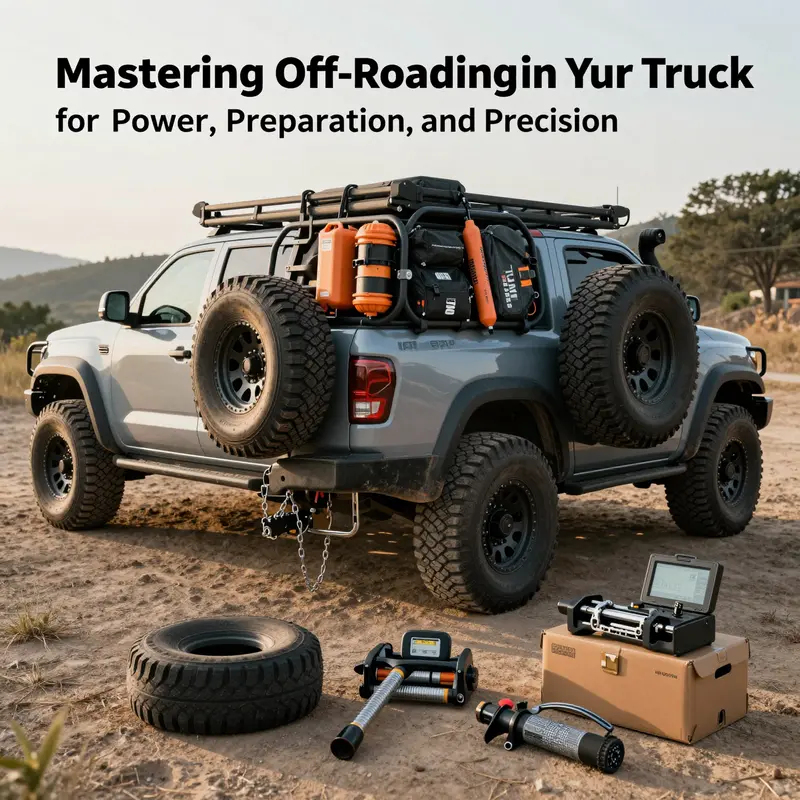
A reliable off-road experience starts long before the engine coughs to life. It begins with the gear you carry, the way you set up your truck, and the habits you bring to the trail. In the harsh world beyond the asphalt, equipment is not a luxury. It is a lifeline that keeps you moving, protects you from surprises, and helps you recover gracefully when things don’t go as planned. This chapter threads together the practical essentials with the mindset you need to stay safe and in control as you push into terrain that demands more than power. The goal is not simply to conquer obstacles, but to understand how every piece of gear and every preparation choice boosts your chance of returning home intact, with stories to tell rather than malfunctions to fix on the roadside. A truck-sized partner deserves a careful plan, and the trail rewards thoughtful preparation with confidence that comes from knowing you can adapt when the surface under you changes its mind.
Tires sit at the heart of any capable off-road setup. They are not just a contact patch but a system with air, pressure, sidewall strength, and tread geometry that together determine traction, puncture resistance, and the truck’s ability to slide, bite, or float through different surfaces. Serious off-road work often relies on mud-terrain tires because of their aggressive tread and reinforced sidewalls. The emphasis is on flexibility at low pressures—the tire deforms to increase the contact patch and improve grip on uneven ground, then regains shape when the surface hardens. A practical range to start with is roughly 15 to 20 psi, depending on load and the terrain you expect. It is essential to have a portable air compressor so you can reinflate once back on firmer ground, and a compact tire repair kit to handle slow leaks without scrambling for help.
Beyond the tire itself is the broader planning around how you’ll manage grip. Your prep should include a plan for quick pressure changes as you roll from rock to soft sand or into muddy patches. The right mindset is to balance aggression with restraint: go prepared to drop tire pressure when needed, and be ready to bring it back up before highway speeds. A resilient off-road kit also includes recovery equipment—thin but sturdy winch lines, recovery straps rated for the load you’re likely to encounter, and a few robust shackles. These tools are not signs of weakness but clear demonstrations of foresight. The objective is to avoid getting stuck in the first place, or at least to ensure you can extract yourself without calling for a crew and a tow truck on a remote hillside.
The truck’s suspension and chassis play equally critical roles in how you experience a trail. A suspension lift kit, typically in the range of three to four inches, is more than about the look. The extra clearance and wheel travel improve obstacle negotiation and reduce the chance that the undercarriage will meet a rock or a sudden rut in an awkward way. A higher ride height also helps when crossing washouts or rough patchwork, though it changes the vehicle’s center of gravity and requires a recalibration of how you approach angles and descents. In tandem with a lift, an upgraded set of shocks and, if feasible, extended brake lines, helps maintain control through long, uneven stretches. A sway bar disconnect system can be a critical addition, allowing the front end to flex independently and keeping all four wheels in contact with the ground as you traverse irregular slopes. While these components improve capability, they also demand attention to alignment, steering geometry, and bump steer to avoid new issues caused by modifications.
Cargo management is not merely about cramming gear into the bed. It is about distributing weight to preserve stability and protect items from shift. An organized bed liner provides durable protection for the truck’s deck, but the real gain comes from a dedicated cargo management system—a combination of tie-downs, organizers, and secure racks that keep tools, recovery gear, and spare parts readily accessible yet firmly fixed. When loads shift, the vehicle’s handling changes in subtle but noticeable ways. Secure cargo reduces the risk of loose gear becoming a projectile in a sudden maneuver or a harsh jolt. For long trips into bear country or remote highlands, a robust bed rack system expands the possibility for carrying essentials such as extended fuel carry, recovery boards, or extra fuel cans in a way that does not compromise payload limits or center of gravity.
Safety and visibility are not optional add-ons on rough terrain; they are foundational. Auxiliary lighting increases the window of safe operation after dusk and in dense conditions like fog, dust, or forest shadows. A dependable winch can be the difference between a successful self-recovery and a long, exhausting wait for assistance. A simple roll cage or reinforced cab structure adds a margin of safety, especially on steep slopes with the risk of rollover. While these elements are valuable, it’s essential to avoid overloading the truck with gear and to maintain a balance between protection and maneuverability. The goal is to enhance your ability to respond to emergencies, not to create new hazards in the form of protruding parts or excessive weight.
The toolkit you carry, and the way you carry it, is as important as the items themselves. A basic toolkit tailored for off-road work should include sockets and wrenches sized for the common fasteners on a rugged pickup, pliers, screwdrivers, and a robust utility knife. The spare tire is your silent partner on a long, isolated trail; ensure you have a jack that is up to the task, along with wheel chocks and a breaker bar to prevent slip when loosening lug nuts in rocky soil. Carry a compact shovel, a sturdy pry bar, and a small hammer for rock work or tamping down rough patches. Duct tape, zip ties, and a sealant for hoses or air leaks can save the day in a pinch. A reliable multi-tool with integrated pliers can be worth its weight in small fixes, from bent tie-down hooks to dislodging a stuck bolt. Never overlook the simple but vital addition of a good flashlight with extra batteries and a way to signal for help if you find yourself off the grid.
Spare parts can be the line between a day excursion and an expensive tow. Carry basic consumables such as belts, hoses, and fuses appropriate for your model, along with a few spare clamps and clamps’ bolts. A selection of fuses and a portable power source can make a big difference if an electrical issue surfaces on the trail. If you rely on specialty fluids for your truck’s system, keep a small, clearly labeled supply with you. The aim is not to turn your truck into a fully stocked service shop but to close the most common gaps that would otherwise force a longer, riskier stop on the trail.
Maintenance habits deserve emphasis in any preparation. Before you head out, inspect the drivetrain and chassis with a careful eye for worn bushings, cracked hoses, and loose fasteners. Check the steering linkage for play, and test the brakes at low speeds to ensure proper response before you encounter uneven ground. It is easy to overlook something in a routine garage check, but the remote environment does not forgive complacency. A routine walk-around stocktakes your confidence and helps you notice wear that would otherwise go unnoticed until a worse moment on a slope or across a rock garden. If you approach maintenance with a methodical mindset, you will notice wear patterns earlier and you will schedule timely service instead of reacting to a breakdown.
A broader perspective on equipment and prep invites you to consider the mechanics behind your truck’s reliability in the rough. Even if you are not a professional mechanic, grounding yourself in the fundamentals of diesel or gasoline powertrains—and how a rugged topography challenges the system—will pay dividends. For readers who want to deepen their mechanical fluency, consider Mastering Diesel Mechanics: Your Step-by-Step Path to Success. This resource helps bridge the gap between field readiness and a deeper understanding of how powertrains behave under high-load off-road use, enabling smarter maintenance decisions and timely diagnostics while you are miles from the nearest shop.
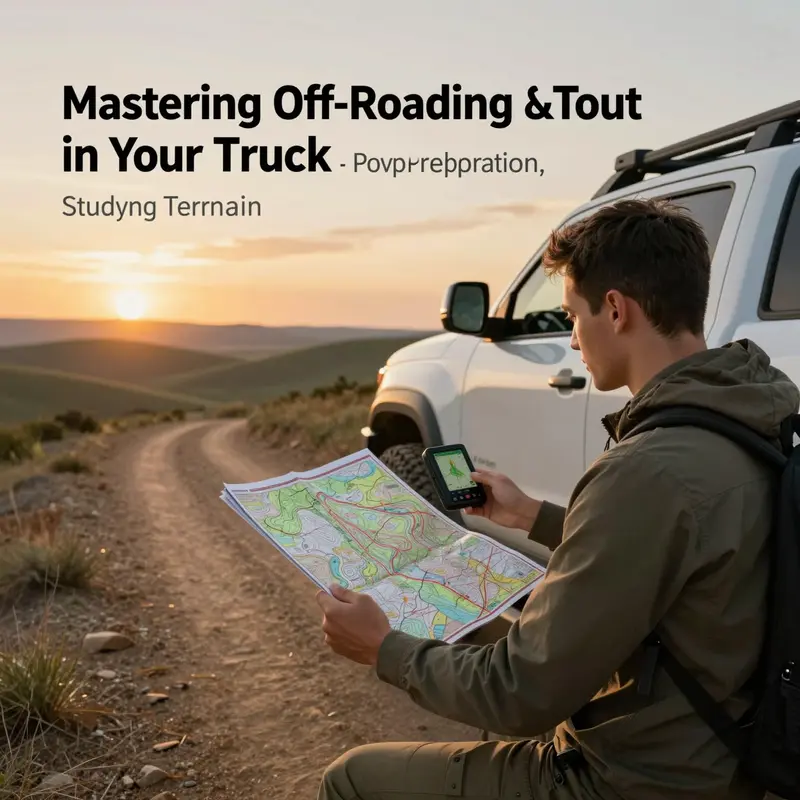
Route planning and terrain study should complement your gear decisions. A detailed route plan that anticipates water crossings, rock features, and potential washouts helps you choose the correct approach and line. Tools like topographic maps and offline navigation apps provide the terrain texture you need to visualize elevation changes and identify spoon-shaped passes or flat meanders where the truck can recover momentum without straining components. Don’t rely on luck or memory alone; cross-check your planned route with local off-road communities or trail reports. They can reveal subtle hazards that aren’t obvious on a map, such as hidden holes or recent ruts that could surprise you once you’re committed. A good habit is to identify safe pull-offs, emergency exit routes, and staging areas in advance, including refueling points and recovery anchors. A thorough approach to route planning reinforces the idea that preparation is a continuous cycle, not a one-time checklist that gets filed away the moment you strap in.
The interplay between equipment and driving technique becomes most evident when you put the two together on the trail. The line between control and chaos is often a momentary misjudgment, a brief misinterpretation of a rutted track, or a wheel that finds a rock edge at just the wrong angle. When you combine the right tires, an appropriate lift with compatible suspension, secure cargo, and robust safety gear, you enter a state of readiness where your decisions matter more than brute force. In this context, four-wheel drive systems and rock-crawling strategies need to be understood not as mystique but as a practical set of choices: when to lock differentials, how to use low-range gears, and how to modulate throttle and steering to maintain traction without digging deeper into mud or sand. You develop a feel for your truck, your tires, and the terrain, and you learn to read the surface at a glance—whether it’s a glistening rock face or a sunken rut ready to steal your momentum.
As you cultivate this skill, you will notice how preparation reshapes your relationship with risk. The practice of inflating or deflating tires, selecting a line that minimizes exposure to sharp rocks, and ensuring you have adequate recovery gear turns what could be a margin for error into a margin for safety. It is not about becoming invincible; it is about becoming more deliberate, more aware, and more capable of turning a challenging moment into a controlled maneuver. The trail rewards the driver who respects the terrain and the gear equally. When you are well prepared, unexpected events become teachable moments rather than costly mistakes.
Finally, a word on environment and responsibility. Preparation also means leaving the trail better than you found it. Pack out what you packed in, minimize litter, and stay mindful of wildlife and fragile habitats. Respect for the terrain is not a political stance but a practical discipline that preserves the very conditions that make off-road exploration possible. The preparation you invest in your gear and your approach has a direct correlation with how cleanly you can navigate obstacles and how efficiently you can recover if something goes awry. In other words, the more you prepare, the more you enjoy the ride—and the more reliably you can share the trail with others who come after you.
For readers seeking a succinct, practical wrap-up, remember that equipment and preparation are not separate tasks but a single, ongoing practice. The goal is to create a buffer of competence around every trip. This buffer extends beyond the vehicle itself into your planning, your mindset, and your ability to adapt when conditions change. When you treat preparation as a core discipline, you reduce the odds of getting stranded, you speed your return to the trail, and you keep your crew safe. If something feels off before you start, pause, reassess, and adjust. The trail is patient, but your plan should be precise. With the right gear, the right approach, and a calm, methodical mindset, you can turn rough terrain into a canvas for confident, controlled exploration. The road back to the trail is paved by thoughtful prep, and that pavement is made of tires, gears, and good judgment rather than sheer horsepower.
External resource for deeper prep insights: https://www.4wheeldrive.com/offroad-truck-prep-guide
Trail Mapping Without Getting Lost: Planning Routes and Reading Terrain for Off-Road Trucking
Planning a route for off-road trucking is more than picking a trail. It is a holistic rehearsal of your truck’s limits, the land you’ll cross, and the pace at which you’ll move through potentially unforgiving conditions. The most reliable path from start to finish begins long before you turn the key. It starts with a clear picture of what your vehicle can do, what the terrain will throw at you, and how weather patterns could tilt odds in your favor or against you.
When you approach route planning this way, you treat the drive as a mapping problem with real stakes. You create safety margins where the landscape naturally creates hazards, and you build in contingencies that keep momentum from becoming momentum in the wrong direction. The process is deeply practical, but it also remains a craft of intuition—an awareness that comes from studying how rock, sand, water, and wind interact with mass and momentum.
To begin, you must assess your truck against the terrain you intend to tackle. The most critical baseline is your vehicle’s capabilities, not the trail’s romance. Ground clearance, four-wheel drive effectiveness, suspension travel, tire type and pressure, and engine power all shape what is possible and what remains risky. A truck with generous ground clearance and a robust suspension can tolerate uneven rock faces, rutted tracks, and soft surfaces better than a highway-driven pickup. But no truck is invincible, and the terrain never respects bravado. The planning phase therefore demands a candid match between route difficulty and the truck’s actual capabilities. A high-clearance vehicle with strong suspension is well suited for rocky corridors and steep exits, yet it can still be stymied by a wash of deep mud or a water crossing that exceeds intake or exhaust tolerances. You must translate your vehicle’s theoretical potential into a practical plan, which means identifying constraints you will honor when you encounter obstacles.
As you weigh capability, you will also consider terrain features that can transform a simple path into a test. Approach and departure angles, breakover angles, and curb-to-body geometry matter just as much as horsepower. The more aggressive the line you plan to run, the more you must respect these limits. In practice, this means marking zones on your mental map where ground clearance could become binding, where a washout could swallow a wheel, or where a slope might outpace engine braking. It is not enough to say a route is doable; you must know where the undercarriage will clear, where the tires will grip, and how you will manage torque delivery as you climb or descend. The real art is to anticipate those moments before you reach them, to adjust your plan before a misjudgment becomes a mechanical headache.
Terrain analysis then becomes a disciplined exercise in reading the land through maps and imagery. Modern planners rarely rely on guesswork. They study topographic maps and satellite views to understand elevation changes, slope gradients, and potential obstacles. Apps such as Gaia GPS, Komoot, and Google Earth render contour lines and soil types in ways that reveal pinch points, narrow chokepoints, or broad, forgiving paths. You learn to spot patterns—where a dry riverbed may become a muddy trap after rain, where a dune field could demand persistent momentum and careful tire pressure management, or where a granite outcrop might require a precise line to avoid damaging the undercarriage. The process also involves recognizing seasonal shifts. A dry trail in late spring can turn slick in the early rains; a forest road that carries you safely in summer might be marsh in a wet early fall. The lesson is not simply to avoid danger but to align your timing with terrain behavior. Timing is as much a part of planning as route selection.
Weather cannot be treated as an afterthought. If you study terrain without watching the forecast, you invite surprise. In desert environments like the Mojave, sand shifts with the heat and wind, and a route that feels solid in the morning can become a sink with the afternoon sun. In the Pacific Northwest, spring rains can transform forest tracks into quagmires that swallow a tire, while higher elevations can lock trails in snow well into late spring. The planning process must incorporate not only probability but also consequence. A route that is manageable on a dry day may become a long, slow recover if storms cut across the mountains or flood a desert wadi. You respect the weather because you respect the land’s memory. This means monitoring forecasts from reliable sources, but also consulting local knowledge. Contacting a local club, reading recent trip reports, and checking ranger advisories gives you a more robust sense of what the land is likely to tolerate, which you translate into your plan.
Safety and navigation merge as you build a route that respects your limits while preserving the opportunity to enjoy the journey. You outline primary, secondary, and contingency paths. The primary route is your chosen path with the best balance of challenge and manageability. The secondary route is a backup in case you encounter an unexpected hurdle—be it fresh water, a washed-out bridge, or a fallen tree. The contingency is your last resort: a wider loop, a turn back to a known point, or a safe stop to reassess with fresh eyes. The more you know about the area, the more you can incorporate these choices while maintaining progress. With offline maps and a dual-frequency GPS device, you can keep your navigation grounded even if signal lines disappear under dense canopy or canyon walls. You mark key waypoints: trail junctions, campsites, water sources, and hazard zones. You do not only map where you will go but also where you will stop, refuel, or recover if a tire splice or minor mechanical snag requires attention. The aim is not to avoid risk altogether but to manage risk so you can recover quickly if something goes wrong.
To bring the planning to life, you imagine the day as a sequence: you begin with a warming of tires and a field check that your tires are suited to surfaces you will encounter. You consider gear for changing conditions—how tire pressure might need to shift from hardpack to soft sand or snow. You visualize a descent, a climb, and perhaps a river crossing, and you rehearse your approach in your mind before you roll. This mental rehearsal is essential, because in off-road driving even a small misread of the grade can produce a loss of momentum or an unplanned stop. You prepare for such moments by choosing a line with generous radius and a surface that offers predictable grip. You may choose the widest, flattest path across a slope to reduce the risk of scraping the front bumper or grinding the undercarriage on a rock. You also consider how to use vehicle features properly. Differential locks, terrain modes, and traction control can be powerful allies when used with discernment. They are not magic; they are tools to be deployed with a clear sense of purpose and a good sense of timing. When used carelessly, they can sap momentum, cause unwanted wheel slip, or mask a mounting problem that would better be addressed by a change of plan.
The human element remains central. Planning a route is a conversation with your future self, a way to ensure that decisions made in the heat of motion reflect the long view of safety and vehicle preservation. You will want to inform someone about your planned route and expected return time. You will want to travel with a companion or in a convoy when possible. You will carry a recovery kit, a spare tire, a shovel, and the basic tools necessary to make minor repairs. You will have a first-aid kit that is appropriate for the number of people in the party and the environmental conditions you expect. The objective is a journey that respects the land while preserving the ability to come home safely. Even as you chase the thrill of a difficult line, you maintain a discipline that prioritizes safety. In many ways, good route planning mirrors good driving technique: it reduces risk, it makes recovery possible, and it keeps the journey enjoyable rather than perilous.
As you integrate all these elements, you may find the planning process feels almost scientific. Yet it remains ultimately practical and human. You learn to balance challenge with prudence, to respect terrain without surrendering curiosity, and to treat maps as living documents that respond to weather and new information. You will likely get to a point where you trust your project plan as much as your driving skills. You will know that a certain ridge line offers a satisfying line in a trial, but you will also understand when to choose a safer bypass. You will recognize that a trail marked as green on a map might become a bottleneck when rainfall returns. The aim is not to guarantee success in every case, but to ensure you have the best possible odds to complete your journey with minimal risk and maximum learning. This is the core of effective route planning in off-road truck travel: a careful synthesis of vehicle capability, terrain reading, weather awareness, and prudent decision-making.
In contemplating the future of your own trips, you might consider building a personal archive of routes you have attempted, with notes on what worked and what did not. You could catalogue your preferred times of day for certain terrains, the tire pressures you used, the gear settings that delivered the most reliable grip, and the places where you needed to pause and reassess. That record becomes a companion guide for future adventures, a living document that evolves as your experience grows. It is the quiet, steady accumulation of knowledge that eventually shapes you into a more capable, safer, and more considerate off-road traveler. And as you share stories with peers or mentors, you contribute to a culture of planning that protects people and preserves landscapes for years to come.
If you want to deepen your understanding of how vehicle health and mechanical readiness influence route planning, you can explore further resources such as Mastering Diesel Mechanics: A Step-by-Step Path to Success. A robust awareness of engine and drivetrain behavior will sharpen your judgments about when a route presents an acceptable risk and when it demands a safer alternative. You will learn to listen for the telltale sounds that signal wear or impending failure, and you will know how to adjust your plan before those signs become excuses to abort a trip. This integration of mechanical literacy with terrain knowledge makes your planning not just a precaution but a form of stewardship—protecting your truck, your crew, and the environments you explore.
In the end, effective route planning is a discipline built on three pillars. First, you map the terrain with accuracy, calibrating topography, surface conditions, and potential hazards against what your truck can tolerate. Second, you align timing with environmental realities, recognizing that weather, light, and season transform risk into opportunity or vice versa. Third, you embed safety into every choice, from who travels with you to what you carry and how you communicate. When these pillars are in place, planning ceases to feel like a chore and becomes the quiet confidence you carry into the trail. You stand ready to adapt, to read the land in real time, and to move forward with certainty that your route is sound. The road ahead is never guaranteed, but with a well-planned route, the odds tilt in your favor—and you arrive on the other side with stories to tell and lessons that deepen your craft for the next expedition.
Final thoughts
Off-roading in a truck demands a fusion of machine mastery, meticulous preparation, and strategic foresight. Understanding your vehicle’s unique capabilities transforms it into a trustworthy partner, capable of handling whatever wild terrain throws at it. Equipping yourself with essential gear doesn’t just prepare for the unexpected—it ensures resilience in the face of every challenge. And by planning routes with precision and studying the landscape deeply, you don’t just survive the trail—you own it.
When these three pillars come together, off-roading transcends into an art. You achieve control, safety, and the unfiltered thrill of conquering the untamed. Whether you’re an adrenaline-fueled racer, a landowner managing rugged terrain, or a shop customizing trucks for off-road dominance, the path forward is clear. Equip, understand, and plan—then break ground with confidence.