
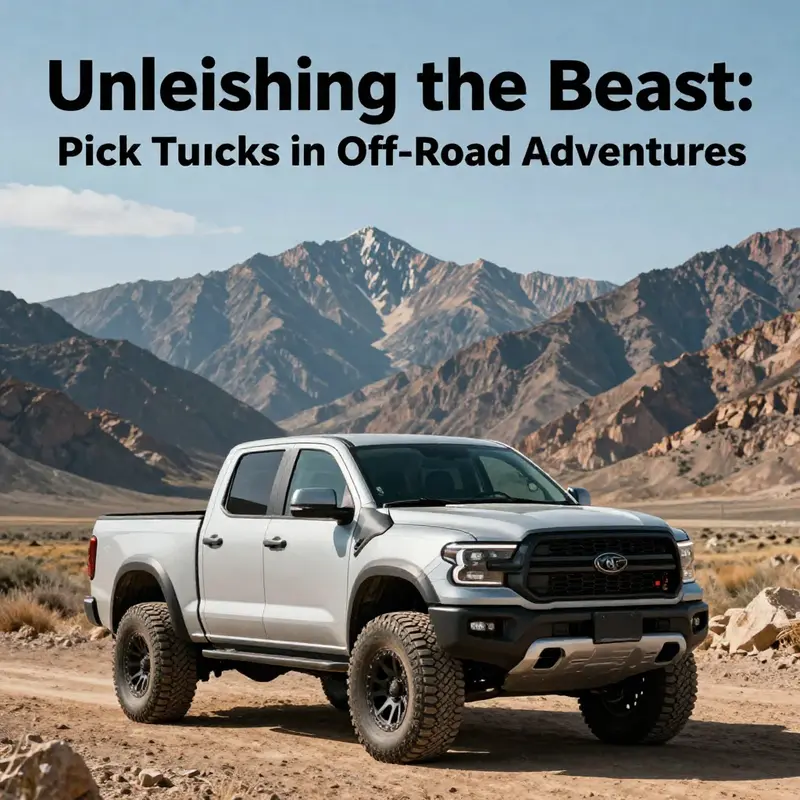
Pickup trucks have gained a reputation as formidable contenders in the off-roading landscape, garnering admiration from off-road enthusiasts, adventurers, and farmers alike. With their strong chassis, powerful engines, and an array of off-road enhancements, they are purpose-built to conquer the wild. As we dive deeper into this exploration, we will first examine the inherent off-roading capabilities of pickup trucks. Next, we will highlight the key features that elevate these trucks beyond mere utility vehicles, making them champions in off-road situations. Finally, we will compare popular pickup models to see how their off-road performance stacks up, ensuring you find the perfect truck for your adventures.
Trail-Tested and Torque-Driven: Why Pickups Excel at Real-World Off-Roading
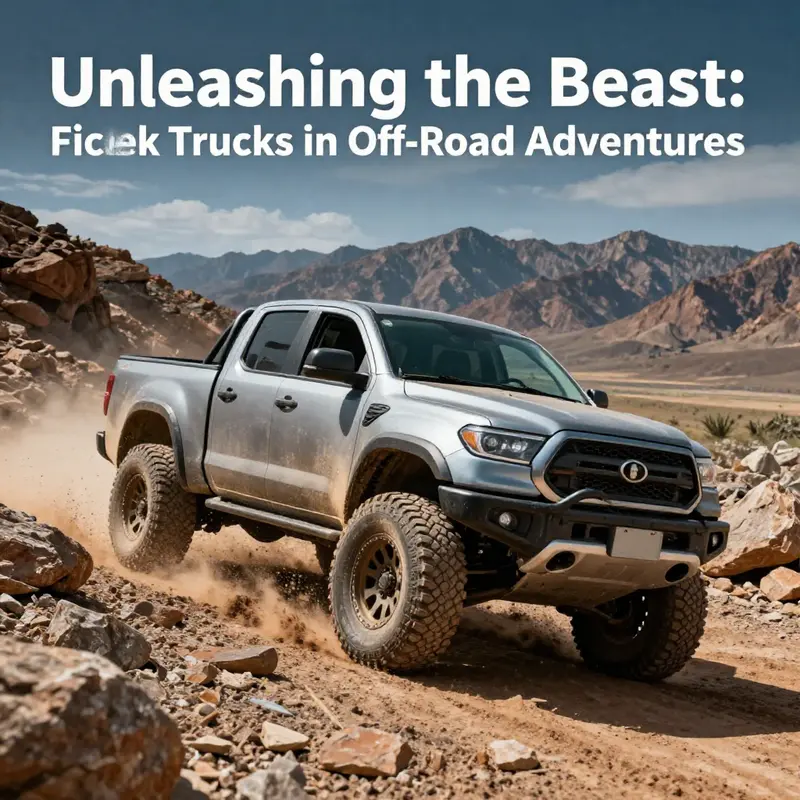
On a rough trail, a pickup’s strength comes from a deliberate blend of chassis, suspension, tires, and driver intent. Off-road pickups are built to absorb impact and keep tire contact, so traction isn’t lost when the surface changes beneath the wheels. A well-designed suspension provides controlled articulation, letting each wheel follow the terrain without unloading grip from the tires. High ground clearance translates into better approach and departure angles, allowing the truck to clear obstacles without undersides contacting the ground. Four-wheel drive with a low-range gear and well-tuned traction control helps distribute torque to the wheels that have grip, reducing wheelspin on mud or loose sand. Skid plates, rock rails, and reinforced frames protect critical components, enabling bolder lines through rough terrain with fewer surprises. Tires chosen for the environment—aggressive all-terrains, mud tires, or rock-oriented compounds—frame the truck’s real-world off-road capabilities and predictability. Traction aids such as locking differentials and selectable terrain modes give drivers tools to adapt to mud, rock, snow, or sand, turning a crawl into a controlled ascent. Inside, a driver-focused cabin and clear readouts help maintain awareness of pitch, roll, tire status, and traction without distraction. When payload and weight distribution are balanced with off-road shaping, the vehicle remains stable and capable, whether it is carrying gear or negotiating a tricky ascent.
Maintenance and protection matter most on rough trips. Routine checks of fluids, drivetrain components, and brake lines pay off after long days off the pavement. Protective gear—skid plates and splash guards—helps keep essential hardware safe from rocks and water. The result is a platform that can log longer trips with fewer failures, while keeping occupants confident and comfortable.
Rugged by Design: How Pickup Trucks Are Engineered for Off-Road Mastery
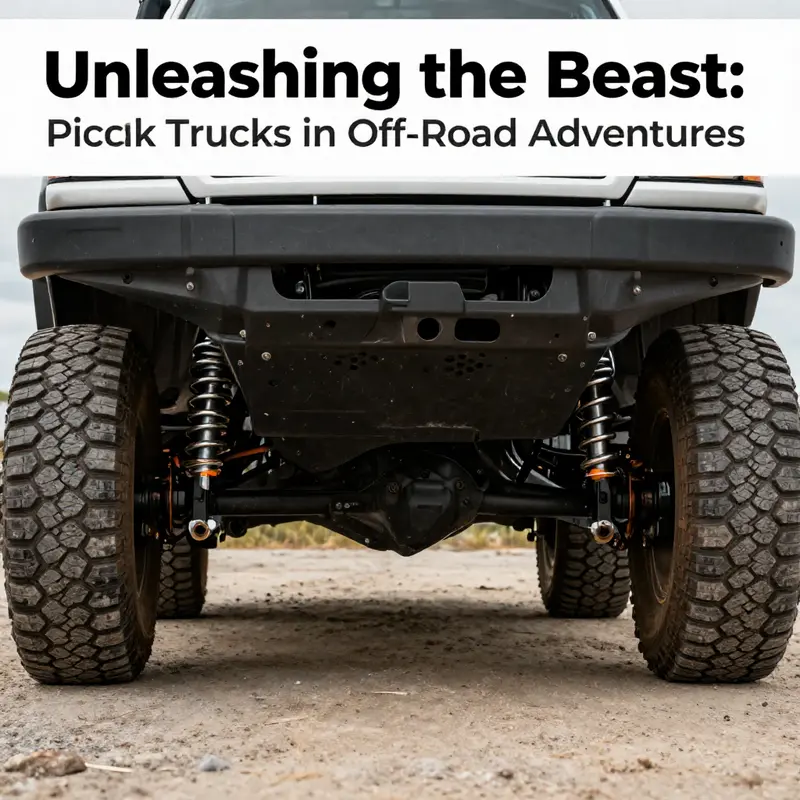
Pickup trucks have long carried the dual burden of workhorse and adventurer, and the best modern examples meet that challenge with a remarkable blend of toughness, practicality, and controlled capability. They are not just lifted vans with bed space; they are purpose-built platforms that balance durability with everyday usability. The core reason they perform well off-road is not a single feature but a coherent architecture that prioritizes three interlocking goals: protection of vital components, traction in variable surfaces, and measured control at low speeds when the terrain demands finesse as much as power. When you consider these trucks as a single system rather than a collection of parts, their off-road competence makes more sense. They gain from strong frames, robust suspensions, and the ability to adapt to conditions that would challenge smaller vehicles or lighter-duty pickups. The result is a vehicle that can straddle the boundary between weekday practicality and weekend exploration without asking for a compromise on either side.
Durability, in this setting, begins with the underbody. Off-road paths throw rocks, ruts, and hidden drops at the underside, and the most dependable trucks shield the fuel system, the transmission, and the differential with steel or alloy skid plates and a carefully considered layout. The protection is not merely about keeping the truck intact; it is about preserving the ability to traverse beyond the paved road without mounting a costly repair bill. Skid plates reduce the risk of puncture or plate deformation in rocky trails and muddy lanes alike, ensuring that a long excursion can continue rather than ending at the next obstacle. This is not a showpiece feature set; it is a practical, reliability-forward approach that keeps a vehicle available for use when the weather shifts, the trail deepens, or the ground becomes slicker than anticipated. In this sense, protection becomes a form of freedom, letting drivers push a little farther with confidence.
Traction is the second pillar in the off-road equation. Modern pickup trucks offer a variety of drivetrain configurations that maximize grip in unpredictable conditions, but the real value comes from how those drivetrains integrate with tires and differentials. Locking differentials are the classic enabler of traction in stubborn sections. They ensure that when one wheel loses grip to mud, rock, or a slippery ledge, the other wheel on the same axle continues to receive power. That equal distribution of torque can be the difference between crawling forward and being stuck. The trick, of course, is using it judiciously. In rock gardens or deeply rutted trails, a locked axle can pull a vehicle through a pinch, but on high-traction surfaces or pavement, it can complicate steering and cause tire scrubbing. The modern off-road package often includes electronic or mechanical means to engage locking differentials smoothly and in the right contexts, so drivers can gain traction without sacrificing steering quality on smoother sections. The result is a chassis that can negotiate uneven ground with a calm, predictable feel, allowing the driver to focus on line choice rather than fighting a lack of grip.
Equally important is crawl control, a feature that products in the heavy-duty segment have popularized. Crawl control is essentially a guided low-speed mode that modulates throttle input and braking to maintain a steady, controlled pace. On very steep grades, in deep mud, or while addressing a rocky path, crawl control relieves the driver of micro-management demands and reduces the chance of stalling or sudden torque surges that could unsettle a vehicle. This is not a crutch, but a safety and control aid that complements human judgment. It lets a driver prioritize path selection and momentum management at low speeds, rather than wrestling the throttle or pressing the brake excessively in a tricky section. Together with a capable transfer case or a well-calibrated electronic control system, crawl control transforms muddy switchbacks and scree-covered ledges into navigable challenges rather than insurmountable barriers.
Beyond the mechanical bits, the driver’s view plays a pivotal role. A higher driving position naturally provides a better preview of the terrain ahead, letting the operator spot loose rocks, ruts, or hidden water crossings earlier and plan a safer route. This visibility is not a luxury; it is a practical advantage that reduces the likelihood of last-minute steering corrections that could destabilize the vehicle. Large windows, supportive seating, and a well-placed dead pedal for foot position all contribute to an observer-friendly cockpit. This combination of sightlines and ergonomic controls makes the experience of off-road driving more intuitive, especially on trails that demand constant adaptation rather than a single plan.
The cargo compartment is another quiet strength of pickup trucks. A big bed and a flexible interior mean it is easy to bring along an array of recovery gear, spare parts, and expedition essentials. Recovery straps, a portable air compressor, traction boards, a high-lift jack, and a compact compressor can be stowed without cramping cabin space. We are not talking about a showroom display here; we are talking about a practical inventory that makes a long day on the trail more manageable. When traveling with friends or family, the ability to carry extra provisions such as water, food, and clothing for changeable weather becomes a real factor in how far a trip can push into remote terrain. The cargo system, in other words, is not merely about capacity; it is about facilitating the kind of spontaneous, self-reliant exploration that makes off-roading rewarding rather than risky.
All-weather capability seals the package. Off-road driving thrives on traction, but it also demands traction versatility across damp, muddy, snowy, or sandy surfaces. The four-wheel-drive or four-wheel-lock system offers the groundwork, but the tires themselves must be able to grip varied material. All-terrain tires provide a compromise between on-road manners and off-road bite, and some trucks offer dedicated off-road tires that sacrifice a bit of on-pavement quiet for improved traction and durability in rough conditions. The combination of 4WD hardware and a tire strategy that favors traction over wear characteristics in harsh environments is what keeps a capable pickup from spinning in place or washing out in a muddy ramp or a sandy wash. The all-weather capability is not a single feature but a coordinated approach to environmental resilience that keeps the truck usable in rain, snow, mud, or sand—and that is precisely what many buyers seek when they decide to head beyond the driveway.
Owner and passenger comfort is not an afterthought in this design philosophy. Modern pickup interiors feature a surprising level of refinement and safety technology, at times blurring the line with sedans or crossovers in terms of cabin ambiance. A ride that can absorb rough terrain without becoming punishing is essential for longer trips when fatigue becomes a factor. A well-insulated cabin, accessible storage nooks, and intuitive infotainment systems reduce the cognitive load of a demanding drive. In other words, a truck that can handle rough trails while still serving as a daily driver opens the door to more frequent, more capable outings. The blend of comfort and capability makes off-roading more accessible to a wider range of people, and that, in turn, broadens the appeal of pickup trucks as true multi-use vehicles rather than specialized tools used only on weekends.
Choosing a truck for off-road use is not about chasing the flashiest package or the strongest torque figure. It is about aligning the truck’s capabilities with the intended terrain and the driver’s skill set. For someone who intends to explore rocky paths and muddy lanes with a goal of climbing a steep ascent, the right off-road package can deliver the traction, protection, and control needed to keep momentum under control. For urban explorers who slip into seasonal trails only occasionally, a more balanced setup with a capable four-wheel-drive system, solid ride quality, and robust protection can provide the confidence to venture into places that would otherwise require a dedicated off-road vehicle. The approach is practical: understand the terrain you want to tackle, assess how a given truck’s off-road components interact with your driving style, and choose a configuration that emphasizes reliability and predictability over raw numbers.
In reflecting on the broader landscape of modern pickups, it becomes clear that their off-road prowess rests on a philosophy of integration. A chassis and suspension that can travel through irregular surfaces, a drivetrain that can deliver power where it matters, and protective elements that shield critical systems from damage all work in concert. This is not about a single trick feature; it is a holistic design that anticipates the demands of real trails, where traction is often variable, obstacles are common, and the margin for error is slim. The result is a class of vehicles that feels capable enough to treat rough terrain as a playground rather than a risk, while still delivering the reliability and convenience that make them practical for everyday life. The modern pickup, in short, is built to handle the drift, the drop, and the downhill slide that trail enthusiasts encounter, without surrendering the everyday comforts that keep it usable as a family vehicle or a weekend workhorse.
For those who want a deeper dive into the technical underpinnings of off-road performance, broader readings on truck standards and application can offer valuable context. As with any complex machine, the more you understand the standards that govern design choices, the better you can interpret a given configuration’s strengths and limitations. This kind of knowledge helps explain why certain trucks feel more confident on technical trails than others and why some setups excel in mud but struggle on rock. Understanding the interplay between protection, traction, and control clarifies what to look for when evaluating an off-road capable pickup and helps set realistic expectations for what a stock vehicle—and its possible upgrades—can accomplish on challenging terrain.
To link these ideas to practical decision-making, consider how an off-road package aligns with your typical usage. If you often drive on pavement but anticipate occasional excursions into rougher environments, you might prioritize active safety features, a balanced suspension setup, and durable tires that resist punctures while remaining civil on city streets. If your plan is to push into serious terrain, a more aggressive approach—with reinforced skid plates, locked differentials, and crawl control—becomes attractive, provided you are prepared to manage the trade-offs, such as increased weight, fuel consumption, and on-road stiffness. Either path benefits from a thoughtful test drive that probes steering feedback, throttle response at low speeds, and the ease with which a driver can navigate obstacles without overcorrecting. This experiential testing, paired with an informed read of the vehicle’s documentation, often yields the most reliable sense of how well a given pickup will respond to the adventures envisioned.
If you are curious about maintenance and reliability under heavy use, a practical resource exists that can deepen your understanding of engine longevity and mechanical resilience; Mastering Diesel Mechanics: Your Step-by-Step Path to Success offers guidance that can translate into better off-road readiness. Mastering Diesel Mechanics: Your Step-by-Step Path to Success. Such resources help demystify the routines that keep a rig in peak form after long days on rough terrain, from oil care and cooling system attention to torque management and drivetrain lubrication. While the chase for performance on trails is exciting, it is the disciplined, proactive maintenance that ensures that excitement translates into many successful, enjoyable adventures over time.
In sum, pickup trucks are well suited for off-roading because their design champions resilience, traction, and control across a spectrum of challenging conditions. The durability of their underbody protection, the usability of locking differentials, the precision of crawl control, the advantage of elevated visibility, the practicality of large cargo capacity, and the versatility of all-weather capabilities all converge to produce a driving experience that is both capable and approachable. They invite enthusiasts to test their limits while offering the reassurance of a sturdy platform that can handle unexpected obstacles and changing weather. The result is a class of vehicles that is not merely capable in theory but consistently dependable in the messy, unpredictable reality of off-road exploration. And for those who want to explore further, the broader landscape of truck standards and off-road performance provides a framework for evaluating how a given configuration will perform in the wild, reinforcing the idea that the best off-road pickup is the one that aligns with your terrain, your ambitions, and your willingness to learn as you go.
External resource for deeper technical insights: https://www.autoblog.com/2025-truck-specs-off-road-performance
Rugged by Design: How Modern Pickup Trucks Master Off-Road Challenges

Off-roading with a pickup truck is less about sheer top-end power and more about the careful orchestration of a vehicle’s hardware, software, and courage underfoot. A modern pickup built for rough terrain is a study in balance: a chassis that can bear heavy loads in the yard and still articulate its wheels across jagged rock, a drivetrain that can deliver traction where grip is scarce, and a suspension tuned to soak up ruts without transmitting every rock through the seat. When you step back from the folklore of horsepower and consider the subtler forces at play, you see why many full-size and mid-size pickups are well suited to off-road exploration. They pair sturdy frames and robust suspensions with intelligent technology, creating a platform that can handle muddy tracks, sandy crossings, and rocky ascents without flinging the driver into a crash course with the terrain.
A primary determinant of off-road competence is the drivetrain configuration. Four-wheel drive systems with a low-range gear set are not mere marketing features; they are the tools that let a driver convert torque into controlled movement on uneven ground. The ability to transfer power to an axle with a lower gear ratio means the wheels can grip challenging surfaces without spinning away momentum. A modern off-road-oriented pickup often includes a transfer case that can be engaged for low-speed crawling climbs or stubborn traction on slick surfaces. Some models offer locking differentials—where the center, front, or rear differential can be forced to lock roles so both wheels on an axle turn at the same speed—reducing the risk of one tire spinning uselessly while the other remains motionless. This capability is especially useful on rock-strewn trails, where a single wheel may lose contact or encounter a void of grip. The presence of such a feature can transform a challenging trail into something that a cautious driver can manage with confidence, particularly at low speeds where precise throttle control matters more than outright acceleration.
But traction is not only about the drivetrain. Ground clearance plays a critical role in keeping the underbody out of harm’s way and preventing a wheel from dropping into a rock or ruts that could upset balance. A pickup’s stance—how high it sits and how the tires relate to the bodywork—has a direct bearing on approach, breakover, and departure angles. If a truck sits too high or too low without the right geometry, it can snag on ledges, rock edges, or sharp off-camber ruts. The best off-road pickups give you a blend of sufficient clearance with a geometry that minimizes the risk of front or rear bumper contact on rough terrain. The suspension is the next big piece of the puzzle. A well-tuned system provides enough travel to keep wheels in contact with the ground while absorbing the impact of irregular surfaces. Heavy-duty pickups often employ robust suspension designs that can tolerate payloads and towing demands while still offering meaningful wheel articulation. This emphasis on travel and damping helps maintain traction through uneven rock gardens, fallen branches, and sudden ruts that would jar a less capable setup.
Tire choice remains a central decision for off-road readiness. All-terrain tires offer a versatile compromise, delivering traction on loose dirt, gravel, and light mud while remaining reasonably quiet on pavement. Mud-terrain tires push further into soft ground and deep mud but typically sacrifice noise levels and on-road manners. The tire’s sidewall strength and tread pattern are not decorative; they determine how a tire can grip when the surface changes abruptly—from sticky clay to loose sand to slick rock. Proper tire pressure is a practical lever an experienced driver can use to optimize contact with the ground. Lowering pressure to increase the contact patch can help in sand or soft soil, while returning to a higher pressure on firmer surfaces preserves cornering stability and reduces risk of bead slip at low speeds. The combination of tire type, size, and pressure interacts with the vehicle’s suspension geometry to shape how smoothly the truck negotiates obstacles and maintains forward momentum.
Underbody protection is another quiet hero in the off-road pickup story. Skid plates, rocker-panel guards, and transfer-case shields help guard critical components from rocks, stumps, and abrasive surfaces. A sturdy chassis, reinforced with protective elements, reduces the likelihood that a rock or root will bend a vital element or cut a fuel-line or brake line during a difficult climb. The protection package becomes more meaningful when the vehicle is tasked with repeated crossings of rough terrain or when recovery scenarios demand that the truck keep moving under less-than-ideal conditions. These protective features are not mere armor; they enable drivers to push a little further into the unknown while maintaining repairable wear rather than catastrophic failure.
The technology stack in contemporary pickups also plays a pivotal role in off-road success. Terrain-management systems, designed to sense the environment and automatically adjust throttle response, transmission shift points, and traction control, help maintain momentum across mixed terrain. In essence, terrain management systems act as a co-pilot that tunes the vehicle to whatever surface the driver encounters, from sticky mud to loose scree. Combined with traction-control strategies that modulate braking and power delivery to individual wheels, these systems help prevent wheel spin and preserve grip. In many trucks, the driver can select modes that emphasize rock crawling, mud, or sand, and the vehicle adapts accordingly. This intelligent adaptation is not a substitute for driver skill, but it does reduce the cognitive load and keeps the vehicle from wandering off course at moments when a misapplied throttle could spell trouble.
A recurring theme in off-road discussions is the value of specialized equipment and robust construction. The strongest argument for a pickup built with off-road intent is the confidence that comes from a chassis and drivetrain designed to endure. Heavy-duty frames, substantial engine torque, and reinforced drivetrain components contribute to a truck that can sustain controlled, low-speed progress through harsh terrain while maintaining the ability to perform work tasks when necessary. It is not about choosing between work and play; it is about choosing a platform that can do both at a high level. The best examples in this category emphasize durability without sacrificing the ability to tow or haul when the situation calls for it. A vehicle can be both rugged and versatile, offering a high-torque character for slow, intentional progress and enough refinement to make daily driving comfortable.
When you widen the lens beyond the hardware to consider the ownership experience, a few practical truths emerge. Off-road capability does not live in a vacuum; it interacts with payload, towing demands, and daily usability. A vehicle that can conquer rough terrain but feels unsettled on asphalt becomes a compromise that weighs on the owner’s mind every day. Conversely, a pickup that handles highway cruising with composure yet can step into a rocky trail with adequate protection and traction is a rare blend. This balance is why manufacturers increasingly install robust underbody protection and trail-ready tires on trucks marketed as workhorses or adventure-ready platforms. It is also why potential buyers should evaluate not just the lowest price of admission but the total package: frame strength, suspension travel, protective hardware, tire strategy, and the intelligent systems that help the driver stay in control when conditions deteriorate.
There is also a practical math to consider. Off-road capability usually coexists with a trade-off in payload and sometimes fuel efficiency. A pickup that prioritizes harsh-terrain performance may carry less payload or experience a modest fuel economy penalty when driven in mixed-use modes. The cost of upgrades—whether protective plates, larger tires, or a locker installation—adds to the total ownership experience. Yet for many drivers, those trade-offs are well worth it. The vehicle becomes a tool for work and a gateway to exploration rather than a single-purpose machine. The philosophy behind modern off-road pickups treats capability as a spectrum rather than a binary choice: some trucks offer more traction; others provide more travel; some emphasize protection; others prioritize low-speed precision. The most capable rigs give you options: to switch drive modes, to alter tire pressures, to engage a differential lock, or to crawl with a measured throttle. The driver remains the variable that determines how effectively the vehicle is used, but the vehicle itself offers a forgiving, capable framework to support that decision-making in difficult conditions.
For buyers trying to separate hype from practicality, the guidance is straightforward. Start with the off-road package content and verify what you actually gain. Are there rocks guards, skid plates, reinforced suspension components, and a differential locker you can trust under load? Do you have access to a robust terrain-management system and a user-friendly crawl-control feature that keeps you moving at low speed when traction is scarce? How is the approach angle when the front end lifts over a rock, and does the rear axle have enough travel to keep the wheels on the ground on a steep descent? How do the tires respond to changing ground conditions, and what is the recommended tire pressure for your typical terrain? These questions guide the buyer toward a platform that fits both the adventurous, off-road use-case and the more routine, highway-driven tasks. The aim is not to have a vehicle that is superb at one thing and mediocre at the rest, but to secure a balanced compromise that respects the realities of off-road driving while preserving the day-to-day practicality many owners also require.
In the broader arc of the market, the latest 2025 models reflect a trend toward integrated off-road technologies that extend beyond raw mechanical capability. Locking differentials, crawl-control systems, and terrain-adaptive electronics are becoming standard in more vehicles across the pickup spectrum. The result is not a revolution but a maturation: a generation of pickups that can confidently climb over obstacles, shed mud from tires with a managed rhythm, and return to highway speed with refined steering and predictable handling. It is this maturation—the combination of rugged frames, tuned suspensions, protective hardware, and smart drive systems—that makes modern pickups robust choices for off-roading while still serving as reliable work partners on paved roads and in daily life. The best way to understand their potential is to imagine each journey as a negotiation with terrain. The truck provides the tools; the driver applies them with skill and care. Together they form a reliable duo that can transform rough terrain into a navigable, enjoyable experience.
For readers seeking deeper context on how these performance attributes translate into real-world measurements and comparisons, detailed manufacturer documentation and trusted automotive reviews can offer objective data. They help illuminate the nuanced differences between models that seem similar on the surface but diverge in how they handle traction, protection, and control at low speeds. The overarching takeaway is clear: when evaluating pickup trucks for off-roading, focus on the integral suite of off-road technologies, durable construction, and the specialized components that matter most on rough ground. The modern off-road pickup, with its four-wheel drive, ground clearance, skid protection, and intelligent traction aids, is designed to deliver confidence and capability across a spectrum of challenging environments, from muddy trails to rocky ascents and sandy dunes. As these platforms continue to evolve, the line between a practical work vehicle and a capable off-road adventurer becomes increasingly blurred, inviting more drivers to explore beyond the pavement with a machine built to take the journey in stride.
External resource for further reading: https://www.caranddriver.com/trucks/features/p39683718/2025-pickup-truck-off-road-performance-comparison
Final thoughts
The conclusion becomes clear: when it comes to off-roading, pickup trucks emerge as formidable allies in conquering nature’s challenges. Their robust construction, advanced features, and varied performance capabilities offer unparalleled advantages. Whether you are navigating rocky trails or tackling muddy backroads, these vehicles provide the durability and adaptability needed for any adventure. By selecting the right model tailored to your specific needs, you ensure a thrilling experience that balances power with practicality. Embrace the great outdoors with confidence, knowing that your pickup is ready to take you where others cannot.