
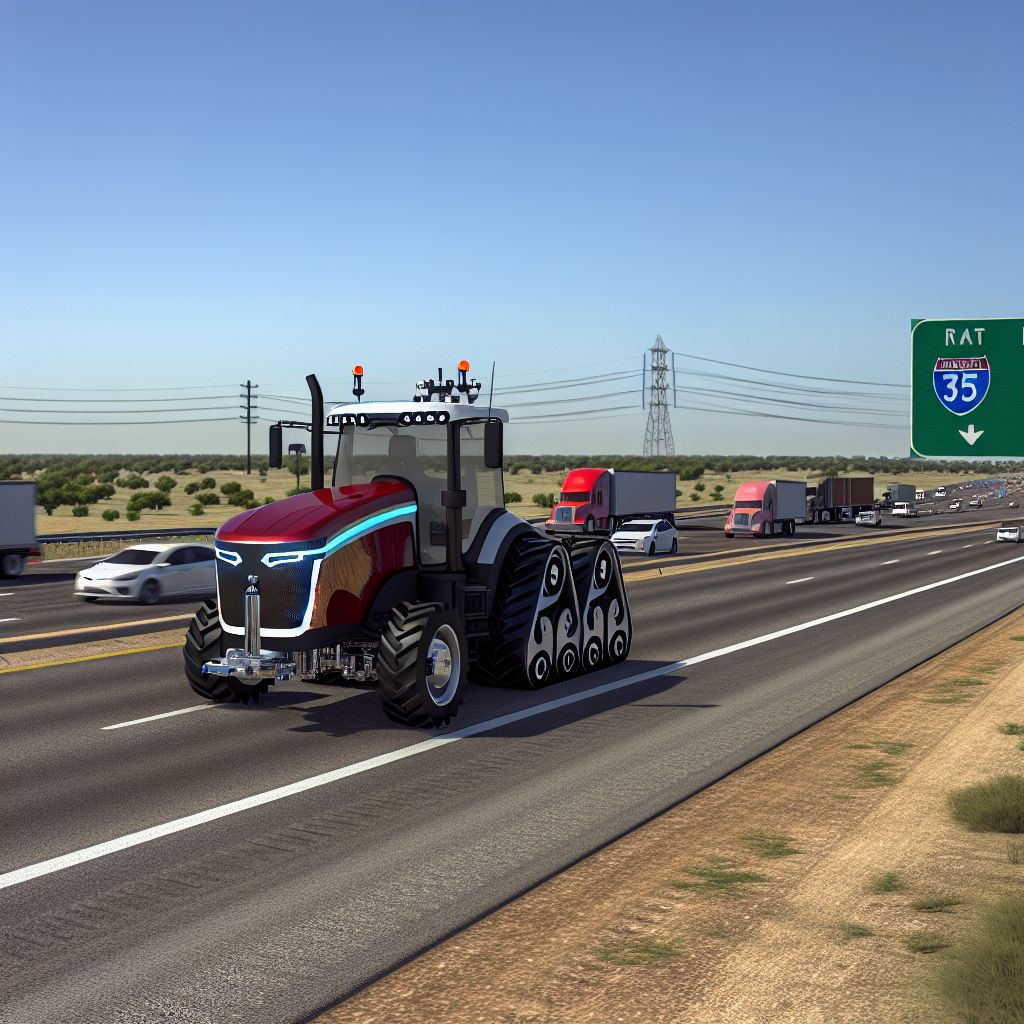
The trucking industry is on the brink of a revolutionary transformation, largely spurred by the advent of autonomous technology. At the forefront of this evolution is the autonomous LT Series tractor pilot, a groundbreaking initiative by International and PlusAI. This pilot represents a significant leap forward in how goods are transported, promising enhanced safety, efficiency, and operational excellence.
As fleets are tested along the bustling Interstate-35 corridor in Texas, the autonomous LT Series tractor showcases a new era of digital operations designed to optimize logistics and improve the overall customer experience. With innovations such as advanced sensors and AI-based SuperDrive software, this autonomous solution is set to redefine the standards of trucking, inviting stakeholders to rethink the future of transportation.
Join us as we explore the implications of this pioneering pilot and what it means for the future of the trucking industry.

Key Features and Technology of the Autonomous LT Series Tractor
The autonomous LT Series tractor is designed with cutting-edge technology to ensure safety and efficiency. Its key features include a robust sensor suite, AI-driven SuperDrive software, and a multimodal sensor kit. Each of these components plays a crucial role in the performance of the tractor during fleet trials.
Updated Sensor Suite
The updated sensor suite is vital for the autonomous operation of the LT Series tractor. This suite includes advanced technologies like imaging radar, lidar, and strategically positioned cameras to facilitate 360-degree awareness, which is crucial for navigating complex environments safely. By integrating these sensor types, the LT Series can effectively monitor its surroundings to avoid obstacles and make informed driving decisions.
SuperDrive Software
The SuperDrive software is an AI-based driving program that enhances the tractor’s decision-making capabilities. Trained from extensive real-world driving data, this software optimizes performance under various driving conditions, allowing the tractor to operate with greater autonomy and reliability. The intelligent algorithms of SuperDrive adapt continuously based on real-time data, enhancing operational efficiency.
Multimodal Sensor Kit
The multimodal sensor kit is a combination of different sensor types that work together seamlessly. Imaging radar and lidar provide depth perception and obstacle detection, while cameras enhance visual recognition and classification of objects. This integrated sensor approach contributes to safer navigation, ensuring the LT Series tractor can operate effectively in diverse environments.
By combining advanced technologies such as the sensor suite, SuperDrive software, and multimodal sensors, the autonomous LT Series tractor represents a significant advancement in autonomous vehicle technology, set to transform the logistics and transportation sectors.
| Feature | Traditional Tractors | Autonomous LT Series Tractor |
|---|---|---|
| Technology | Basic manual controls | AI-driven SuperDrive software |
| Safety Features | Limited to driver intervention | 360-degree multimodal sensor suite |
| Operational Efficiency | Dependent on driver performance | Enhanced through AI and real-time data |
| Adaptability | Manual adjustments required | Self-learning algorithms for dynamic conditions |
| Fleet Management | Manual monitoring and control | Centralized and automated fleet management |
| Cost Efficiency | Maintenance costs can be higher due to inefficiencies | Optimization reduces long-term operational costs |
| Data Utilization | Minimal data insights | Extensive data collection and analytics |
Pilot Program Logistics and Management
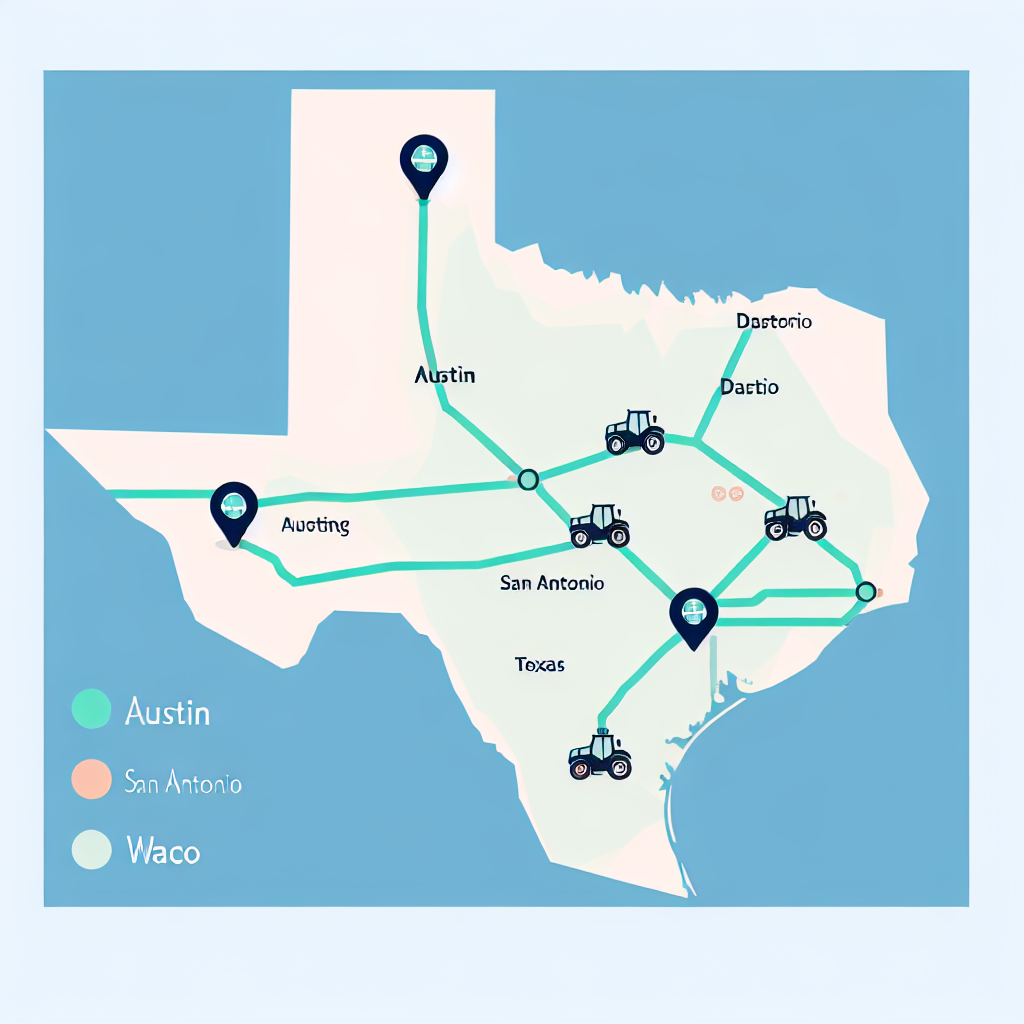
The pilot program for the autonomous LT Series tractors is meticulously managed from the International Motors hub in San Antonio, Texas. This location serves as a strategic point for coordinating operations along the Interstate 35 corridor, which runs between Dallas and Laredo, ensuring that the complexities of logistics are handled effectively. By leveraging this logistical hub, the program can benefit from direct collaboration with fleet operators, allowing for real-time adjustments based on operational feedback.
Key Management Strategies
- Integration of Advanced Technology
The autonomous LT Series tractors are equipped with an advanced sensor suite that includes imaging radar, lidar, and multiple cameras providing 360-degree visibility. Coupled with PlusAI’s SuperDrive software, which is trained on real-world driving scenarios, these technologies enable the vehicles to adapt to various road conditions seamlessly. This adaptability minimizes downtime and enhances the overall efficiency of fleet operations. - Collaborative Customer Engagement
By managing trials from San Antonio, International can maintain a close working relationship with customers. This collaboration facilitates continuous feedback, which is critical in refining the autonomous solutions deployed. Integrating feedback helps to optimize fleet routes, enhances safety features, and reduces operational costs, creating a more efficient logistics operation. - Focus on Scalability and Viability
The pilot program is designed with scalability in mind, aiming to develop factory-installed solutions that are viable for larger-scale commercial deployment. The lessons learned from these trials along the I-35 corridor will inform the expansion of autonomous freight operations across other key trucking routes in the future.
These strategies collectively ensure that the autonomous LT Series tractors not only operate safely but also contribute significantly to improving logistical efficiency. The San Antonio hub plays a pivotal role in managing these operations, harnessing advanced technology, direct communication with fleet operators, and a commitment to scalability that will shape the future of autonomous trucking.
Vision from Key Personnel
Tobias Glitterstam, Senior Vice President and Chief Strategy and Transformation Officer at Navistar, leads the corporate strategy aimed at integrating cutting-edge technologies into the logistics landscape. His leadership position underscores a commitment to creating a transportation ecosystem that emphasizes safety, efficiency, and enhanced customer experiences.
He commented on the importance of projects like the autonomous LT Series tractor pilot by stating that this initiative represents a substantial leap toward ‘seamless digital operations designed to deliver an exceptional customer experience.’ This sentiment captures the essence of what autonomous technology can provide to the logistics industry, reinforcing the relevance of autonomous trucking technology and logistics automation.
By reducing complexities in operations and utilizing real-time data for decision-making, the industry can significantly enhance its service offerings, ultimately leading to safer and more reliable transportation methods. For further insights into the implications of these innovations in the trucking industry, please visit Truck News.
Glitterstam’s vision resonates with the broader implications of integrating autonomous technology within logistics. Every innovation is aimed at streamlining processes and improving the interaction between companies and their customers. As the pilot program evolves, it reflects a transformation not only in how logistics operate but also in how technology and human collaboration can redefine the future of transportation. This focus on collaboration will be critical as the industry navigates the shift towards greater autonomy, ensuring all stakeholders remain aligned on the common goal of delivering optimal solutions in a complex environment.
To learn more about the latest developments in autonomous technology and logistics automation, check out our articles on Maersk and Kodiak Robotics and AI-Powered Predictive Analytics.
Overall, the implications of this pilot extend far beyond immediate advancements in vehicle technology. They signal a fundamental shift towards a more efficient, customer-centric logistics model that future innovations in autonomous technology will continue to expand upon.
User Adoption Trends in Autonomous Trucks
The autonomous trucking market is on a rapid growth trajectory, with significant projections for the future. The market size is expected to increase from USD 7.71 billion in 2024 to USD 149.9 billion by 2035, representing a compound annual growth rate (CAGR) of 30.97% from 2025 to 2035 [Market Research Future]. Similarly, other estimates show the market expanding from USD 39.51 billion in 2025 to USD 65.72 billion by 2030, at a CAGR of 10.70% during this period [Mordor Intelligence].
In line with these promising trends, International Motors and PlusAI have launched customer fleet trials of the autonomous LT Series along the I-35 corridor between Dallas and Laredo, Texas. The pilot program utilizes an updated sensor suite and AI-based SuperDrive software to enhance safety and operational efficiency in logistics [PR Newswire]. While specific customer feedback from these trials has yet to be made public, the overarching industry trend reveals a surge in adoption for autonomous trucking. For example, Aurora Innovation’s partnership with McLeod Software signifies a step towards simplifying access to autonomous freight technology for customers [Reuters].
Forecasts indicate that autonomous heavy-duty vehicles could represent approximately 13% of U.S. trucks by 2035 [Axios]. This anticipated growth is propelled by advanced AI algorithms, improved sensor technologies, and burgeoning demand for more efficient logistics solutions. Ultimately, the LT Series aims to be a pivotal entity in facilitating this shift, reinforcing the industry’s focus on safety, efficiency, and a superior customer experience.
Conclusion
The pilot program for the autonomous LT Series tractor is more than just a stepping stone; it is a profound indicator of the future direction of the trucking industry. As International and PlusAI explore the capabilities of these state-of-the-art vehicles, we witness a significant evolution in logistics aimed at unprecedented levels of safety and efficiency. The integration of AI-driven SuperDrive software and a comprehensive multimodal sensor suite is set to redefine operational protocols, significantly reducing the potential for human error and paving the way for a new standard in transportation.
Looking ahead, the expected contributions of the autonomous LT Series tractor extend far beyond initial pilot trials. The long-term implications for freight transport are promising, with the potential for enhanced productivity, reduced operational costs, and greater sustainability in logistics. As the industry continues to embrace this technology, it not only transforms the mechanics of trucking but also reasserts a commitment to innovation that prioritizes safety and reliability for all stakeholders involved.
As autonomous vehicles become a more common sight on highways, the foundation laid by programs like this will not only help to streamline operations but will also foster a culture of trust in automation within the freight sector. Moving forward, it is crucial for stakeholders to remain engaged in ongoing developments, ensuring that the benefits of autonomous technology are fully realized in a way that enhances the trucking industry as a whole.
In conclusion, the journey towards a fully autonomous logistics landscape is underway, and with it, a future where autonomy plays a central role in reshaping transportation will flourish. The autonomous LT Series tractor is poised to be at the forefront of this revolutionary change, marking a pivotal shift that will elevate safety and efficiency as core components of modern trucking.
Revolutionizing the Trucking Industry with Autonomous LT Series Tractors
The trucking industry is on the brink of a revolutionary transformation, largely spurred by the advent of autonomous technology. At the forefront of this evolution is the autonomous LT Series tractor pilot, a groundbreaking initiative by International and PlusAI. This pilot represents a significant leap forward in how goods are transported, promising enhanced safety, efficiency, and operational excellence. As fleets are tested along the bustling Interstate-35 corridor in Texas, the autonomous LT Series tractor showcases a new era of digital operations designed to optimize logistics and improve the overall customer experience. With innovations such as advanced sensors and AI-based SuperDrive software, this autonomous solution is set to redefine the standards of trucking, inviting stakeholders to rethink the future of transportation.
Join us as we explore the implications of this pioneering pilot and what it means for the future of the trucking industry.
Image of Autonomous LT Series Tractor
Comprehensive Overview of the Autonomous LT Series Tractor
Key Features and Technology of the Autonomous LT Series Tractor
The autonomous LT Series tractor is designed with cutting-edge technology to ensure safety and efficiency. Its key features include a robust sensor suite, AI-driven SuperDrive software, and a multimodal sensor kit. Each of these components plays a crucial role in the performance of the tractor during fleet trials.
Updated Sensor Suite
The updated sensor suite is vital for the autonomous operation of the LT Series tractor. This suite includes advanced technologies like imaging radar, lidar, and strategically positioned cameras to facilitate 360-degree awareness, which is crucial for navigating complex environments safely. By integrating these sensor types, the LT Series can effectively monitor its surroundings to avoid obstacles and make informed driving decisions.
AI-Driven SuperDrive Software
The SuperDrive software is an AI-based driving program that enhances the tractor’s decision-making capabilities. Trained from extensive real-world driving data, this software optimizes performance under various driving conditions, allowing the tractor to operate with greater autonomy and reliability. The intelligent algorithms of SuperDrive adapt continuously based on real-time data, enhancing operational efficiency.
Multimodal Sensor Kit for Enhanced Performance
The multimodal sensor kit is a combination of different sensor types that work together seamlessly. Imaging radar and lidar provide depth perception and obstacle detection, while cameras enhance visual recognition and classification of objects. This integrated sensor approach contributes to safer navigation, ensuring the LT Series tractor can operate effectively in diverse environments.
By combining advanced technologies such as the sensor suite, SuperDrive software, and multimodal sensors, the autonomous LT Series tractor represents a significant advancement in autonomous vehicle technology, set to transform the logistics and transportation sectors.
Comparison Table: Traditional Tractors vs. Autonomous LT Series Tractor
| Feature | Traditional Tractors | Autonomous LT Series Tractor |
|---|---|---|
| Technology | Basic manual controls | AI-driven SuperDrive software |
| Safety Features | Limited to driver intervention | 360-degree multimodal sensor suite |
| Operational Efficiency | Dependent on driver performance | Enhanced through AI and real-time data |
| Adaptability | Manual adjustments required | Self-learning algorithms for dynamic conditions |
| Fleet Management | Manual monitoring and control | Centralized and automated fleet management |
| Cost Efficiency | Maintenance costs can be higher due to inefficiencies | Optimization reduces long-term operational costs |
| Data Utilization | Minimal data insights | Extensive data collection and analytics |
Pilot Program Logistics and Management
The pilot program for the autonomous LT Series tractors is meticulously managed from the International Motors hub in San Antonio, Texas. This location serves as a strategic point for coordinating operations along the Interstate 35 corridor, which runs between Dallas and Laredo, ensuring that the complexities of logistics are handled effectively. By leveraging this logistical hub, the program can benefit from direct collaboration with fleet operators, allowing for real-time adjustments based on operational feedback.
Key Management Strategies
- Integration of Advanced Technology
The autonomous LT Series tractors are equipped with an advanced sensor suite that includes imaging radar, lidar, and multiple cameras providing 360-degree visibility. Coupled with PlusAI’s SuperDrive software, which is trained on real-world driving scenarios, these technologies enable the vehicles to adapt to various road conditions seamlessly. This adaptability minimizes downtime and enhances the overall efficiency of fleet operations. - Collaborative Customer Engagement
By managing trials from San Antonio, International can maintain a close working relationship with customers. This collaboration facilitates continuous feedback, which is critical in refining the autonomous solutions deployed. Integrating feedback helps to optimize fleet routes, enhances safety features, and reduces operational costs, creating a more efficient logistics operation. - Focus on Scalability and Viability
The pilot program is designed with scalability in mind, aiming to develop factory-installed solutions that are viable for larger-scale commercial deployment. The lessons learned from these trials along the I-35 corridor will inform the expansion of autonomous freight operations across other key trucking routes in the future.
These strategies collectively ensure that the autonomous LT Series tractors not only operate safely but also contribute significantly to improving logistical efficiency. The San Antonio hub plays a pivotal role in managing these operations, harnessing advanced technology, direct communication with fleet operators, and a commitment to scalability that will shape the future of autonomous trucking.
Route Image on I-35
Vision from Key Personnel
Tobias Glitterstam, Senior Vice President and Chief Strategy and Transformation Officer at Navistar, leads the corporate strategy aimed at integrating cutting-edge technologies into the logistics landscape. While specific quotes from Glitterstam on autonomous technology in logistics are sparse, his leadership position underscores a commitment to creating a transportation ecosystem that emphasizes safety, efficiency, and enhanced customer experiences.
He commented on the importance of projects like the autonomous LT Series tractor pilot by stating that this initiative represents a substantial leap towards ‘seamless digital operations designed to deliver an exceptional customer experience.’ This sentiment captures the essence of what autonomous technology can provide to the logistics industry. By reducing complexities in operations and utilizing real-time data for decision-making, the industry can significantly enhance its service offerings, ultimately leading to safer and more reliable transportation methods.
Glitterstam’s vision resonates with the broader implications of integrating autonomous technology within logistics—where every innovation is aimed at streamlining processes and improving the interaction between companies and their customers. As the pilot program evolves, it reflects a transformation not only in how logistics operate but also in how technology and human collaboration can redefine the future of transportation. This focus on collaboration will be critical as the industry navigates the shift towards greater autonomy, ensuring that all stakeholders remain aligned on the common goal of delivering optimal solutions in a complex environment.
Overall, the implications of this pilot extend far beyond the immediate advancements in vehicle technology; they signal a fundamental shift towards a more efficient, customer-centric logistics model that future innovations in autonomous technology will continue to expand upon.
User Adoption Trends in Autonomous Trucks
The autonomous trucking market is on a rapid growth trajectory, with significant projections for the future. The market size is expected to increase from USD 7.71 billion in 2024 to USD 149.9 billion by 2035, representing a compound annual growth rate (CAGR) of 30.97% from 2025 to 2035 (Market Research Future). Similarly, other estimates show the market expanding from USD 39.51 billion in 2025 to USD 65.72 billion by 2030, at a CAGR of 10.70% during this period (Mordor Intelligence).
In line with these promising trends, International Motors and PlusAI have launched customer fleet trials of the autonomous LT Series along the I-35 corridor between Dallas and Laredo, Texas. The pilot program utilizes an updated sensor suite and AI-based SuperDrive software to enhance safety and operational efficiency in logistics (PR Newswire). While specific customer feedback from these trials has yet to be made public, the overarching industry trend reveals a surge in adoption for autonomous trucking. For example, Aurora Innovation’s partnership with McLeod Software signifies a step towards simplifying access to autonomous freight technology for customers (Reuters).
Forecasts indicate that autonomous heavy-duty vehicles could represent approximately 13% of U.S. trucks by 2035 (Axios). This anticipated growth is propelled by advanced AI algorithms, improved sensor technologies, and burgeoning demand for more efficient logistics solutions. Ultimately, the LT Series aims to be a pivotal entity in facilitating this shift, reinforcing the industry’s focus on safety, efficiency, and a superior customer experience.
Conclusion
The pilot program for the autonomous LT Series tractor is more than just a stepping stone; it is a profound indicator of the future direction of the trucking industry. As International and PlusAI explore the capabilities of these state-of-the-art vehicles, we witness a significant evolution in logistics aimed at unprecedented levels of safety and efficiency. The integration of AI-driven SuperDrive software and a comprehensive multimodal sensor suite is set to redefine operational protocols, significantly reducing the potential for human error and paving the way for a new standard in transportation.
Looking ahead, the expected contributions of the autonomous LT Series tractor extend far beyond initial pilot trials. The long-term implications for freight transport are promising, with the potential for enhanced productivity, reduced operational costs, and greater sustainability in logistics. As the industry continues to embrace this technology, it not only transforms the mechanics of trucking but also reasserts a commitment to innovation that prioritizes safety and reliability for all stakeholders involved.
As autonomous vehicles become a more common sight on highways, the foundation laid by programs like this will not only help to streamline operations but will also foster a culture of trust in automation within the freight sector. Moving forward, it is crucial for stakeholders to remain engaged in ongoing developments, ensuring that the benefits of autonomous technology are fully realized in a way that enhances the trucking industry as a whole.
In conclusion, the journey towards a fully autonomous logistics landscape is underway, and with it, a future where autonomy plays a central role in reshaping transportation will flourish. The autonomous LT Series tractor is poised to be at the forefront of this revolutionary change, marking a pivotal shift that will elevate safety and efficiency as core components of modern trucking.
Implications of Autonomous Technology in Logistics
As the logistics industry embraces autonomous technology, the implications stretch far beyond the mere introduction of robotic systems.
Enhanced Operational Efficiency
One of the most notable benefits of autonomous vehicles (AVs) in logistics is their capacity to enhance operational efficiency. TuSimple, for example, documented a 10 percent fuel saving in its cross-country testing by employing precise following distances. This kind of efficiency directly impacts operational costs—making logistics more economically viable. Amazon also demonstrated the potential of autonomous technology with its prototype yard trucks, which achieved a remarkable 50 percent reduction in trailer loading times during trials in Seattle. These advancements not only streamline operations but can potentially lower C02 emissions, aligning with global sustainability goals.
In warehouse contexts, autonomous systems are optimizing task allocation and inventory processes. A recent study proposed a framework utilizing reinforcement learning to autonomously manage warehouse tasks, realizing a 95 percent optimization rate and a 60 percent decrease in processing times compared to traditional methods.
Improved Safety Protocols
Safety is another critical area where autonomous technology shines. Human error accounts for a substantial percentage of logistics-related accidents, and AVs provide a significant solution. For instance, Aurora’s autonomous trucks have reported a staggering 98 percent reduction in collisions during controlled highway testing through their predictive hazard modeling techniques. Furthermore, insurance providers have begun to recognize the safety benefits, offering 15 to 20 percent discounts for fleets equipped with autonomous technology.
Similarly, in factory logistics, the introduction of autonomous vehicles has led to a 50 percent reduction in workplace injuries over two years, underscoring their potential to foster safer working environments.
Strategic Supply Chain Reconfiguration
The arrival of autonomous technology heralds a transformation in the logistics supply chain framework. McKinsey proposes a phased adoption strategy for autonomous trucks, guiding their integration into logistics operations. The strategy allows for a gradual transition, starting with manned platooning that achieves fuel savings and progressively moving toward fully autonomous freight transport solutions. The phases are:
- Platooning with Drivers (3-5 years) – Leading to a 1 percent reduction in total cost of ownership (TCO).
- Driverless Platooning (5-7 years) – Further cutting TCO by an additional 10 percent.
- Constrained Autonomy (7-10 years) – Allowing unmanned trucks in specific conditions, reducing TCO by approximately 20 percent.
- Full Autonomy (10+ years) – Achieving a potential 45 percent reduction in TCO.
These advancements compel logistics operations to rethink their route planning and fleet management strategies, driving significant investments in infrastructure. As the logistics landscape adapts, organizations must align their operations with the new dynamics introduced by autonomous technology.
Conclusion
In conclusion, the advent of autonomous technology in logistics presents a paradigm shift characterized by increased operational efficiency, improved safety measures, and a reimagined approach to supply chain management. By leveraging the benefits of autonomous systems, logistics providers stand to improve profitability while contributing to a more sustainable and reliable transportation network.
Vision from Key Personnel
Tobias Glitterstam, Senior Vice President and Chief Strategy and Transformation Officer at Navistar, leads the corporate strategy aimed at integrating cutting-edge technologies into the logistics landscape. His leadership position underscores a commitment to creating a transportation ecosystem that emphasizes safety, efficiency, and enhanced customer experiences.
He commented on the importance of projects like the autonomous LT Series tractor pilot by stating that this initiative represents a substantial leap toward ‘seamless digital operations designed to deliver an exceptional customer experience.’ This sentiment captures the essence of what autonomous technology can provide to the logistics industry.
By reducing complexities in operations and utilizing real-time data for decision-making, the industry can significantly enhance its service offerings, ultimately leading to safer and more reliable transportation methods.
Glitterstam’s vision resonates with the broader implications of integrating autonomous technology within logistics. Every innovation is aimed at streamlining processes and improving the interaction between companies and their customers.
As the pilot program evolves, it reflects a transformation not only in how logistics operate but also in how technology and human collaboration can redefine the future of transportation. This focus on collaboration will be critical as the industry navigates the shift towards greater autonomy, ensuring all stakeholders remain aligned on the common goal of delivering optimal solutions in a complex environment.
Overall, the implications of this pilot extend far beyond immediate advancements in vehicle technology. They signal a fundamental shift towards a more efficient, customer-centric logistics model that future innovations in autonomous technology will continue to expand upon.
Pilot Program Logistics and Management
The pilot program for the autonomous LT Series tractors is meticulously managed from the International Motors hub in San Antonio, Texas. This location serves as a strategic point for coordinating operations along the Interstate 35 corridor, which runs between Dallas and Laredo, ensuring that the complexities of logistics are handled effectively. By leveraging this logistical hub, the program can benefit from direct collaboration with fleet operators, allowing for real-time adjustments based on operational feedback.
Key Management Strategies
-
Integration of Advanced Technology
The autonomous LT Series tractors are equipped with an advanced sensor suite that includes imaging radar, lidar, and multiple cameras providing 360-degree visibility. Coupled with PlusAI’s SuperDrive software, which is trained on real-world driving scenarios, these technologies enable the vehicles to adapt to various road conditions seamlessly. This adaptability minimizes downtime and enhances the overall efficiency of fleet operations.
-
Collaborative Customer Engagement
By managing trials from San Antonio, International can maintain a close working relationship with customers. This collaboration facilitates continuous feedback, which is critical in refining the autonomous solutions deployed. Integrating feedback helps to optimize fleet routes, enhances safety features, and reduces operational costs, creating a more efficient logistics operation.
-
Focus on Scalability and Viability
The pilot program is designed with scalability in mind, aiming to develop factory-installed solutions that are viable for larger-scale commercial deployment. The lessons learned from these trials along the I-35 corridor will inform the expansion of autonomous freight operations across other key trucking routes in the future.
These strategies collectively ensure that the autonomous LT Series tractors not only operate safely but also contribute significantly to improving logistical efficiency. This operational excellence ties directly to the visionary leadership exemplified by stakeholders like Tobias Glitterstam, Senior Vice President and Chief Strategy and Transformation Officer at Navistar. His commitment to leveraging cutting-edge technology for enhanced customer experiences is foundational to the future of autonomous logistics. Glitterstam points out that the transition to autonomy represents, “a substantial leap toward seamless digital operations designed to deliver an exceptional customer experience.” This vision underscores that effective management is not just about technology, but about creating a responsive and efficient ecosystem that aligns with industry needs, thereby paving the way for broader acceptance and adoption of autonomous trucks.
User Adoption Trends in Autonomous Trucks
The autonomous trucking market is on a rapid growth trajectory, with significant projections for the future. The market size is expected to increase from USD 7.71 billion in 2024 to USD 149.9 billion by 2035, representing a compound annual growth rate (CAGR) of 30.97% from 2025 to 2035 (Market Research Future). Similarly, other estimates show the market expanding from USD 39.51 billion in 2025 to USD 65.72 billion by 2030, at a CAGR of 10.70% during this period (Mordor Intelligence).
In line with these promising trends, International Motors and PlusAI have launched customer fleet trials of the autonomous LT Series along the I-35 corridor between Dallas and Laredo, Texas. The pilot program utilizes an updated sensor suite and AI-based SuperDrive software to enhance safety and operational efficiency in logistics (PR Newswire). While specific customer feedback from these trials has yet to be made public, the overarching industry trend reveals a surge in adoption for autonomous trucking. For example, Aurora Innovation’s partnership with McLeod Software signifies a step towards simplifying access to autonomous freight technology for customers (Reuters).
Forecasts indicate that autonomous heavy-duty vehicles could represent approximately 13% of U.S. trucks by 2035 (Axios). This anticipated growth is propelled by advanced AI algorithms, improved sensor technologies, and burgeoning demand for more efficient logistics solutions. Importantly, studies highlight that building trust is crucial for adoption. For instance, a recent study showed that public trust in autonomous vehicles significantly increased after direct interactions with them, suggesting that real-world experiences can effectively alleviate fears regarding safety and reliability in autonomous technology. The McKinsey report indicates that tech-savvy individuals who multitask during commutes are likely to be the early adopters of this technology (arXiv), reinforcing the notion that targeted communication strategies will play an essential role in driving user engagement. Ultimately, the LT Series aims to be a pivotal entity in facilitating this shift, reinforcing the industry’s focus on safety, efficiency, and a superior customer experience.