
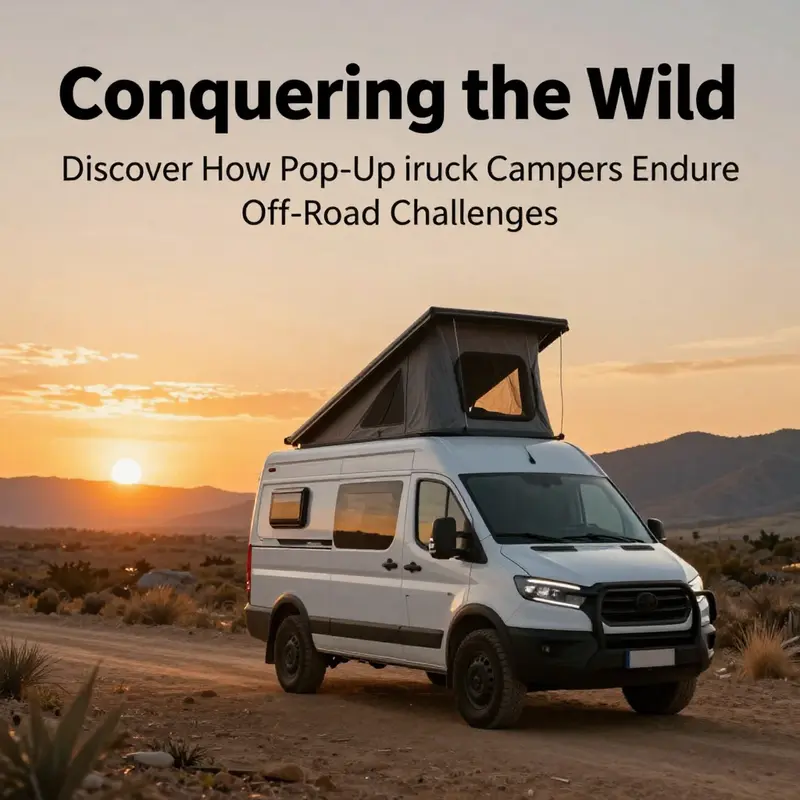
Embracing the spirit of adventure often leads to untamed terrains, where off-road enthusiasts seek scenic beauty and the thrill of exploration. Pop-up truck campers have emerged as a favored choice among these adventurers, adeptly bridging the gap between ruggedness and comfort. With their lightweight design and smart construction, these campers are engineered to withstand diverse off-road conditions. In this exploration, we will dive deep into the five types of environments where these campers shine, discussing their unique capabilities in rough terrain, mountainous regions, sandy deserts, muddy landscapes, and low-clearance areas. Each chapter will unravel the inherent qualities that make pop-up truck campers the ultimate companions for off-road escapades.
Endurance on the Edge: Rough-Terrain Pop-Up Truck Campers Surviving Dirt, Dust, and Elevation
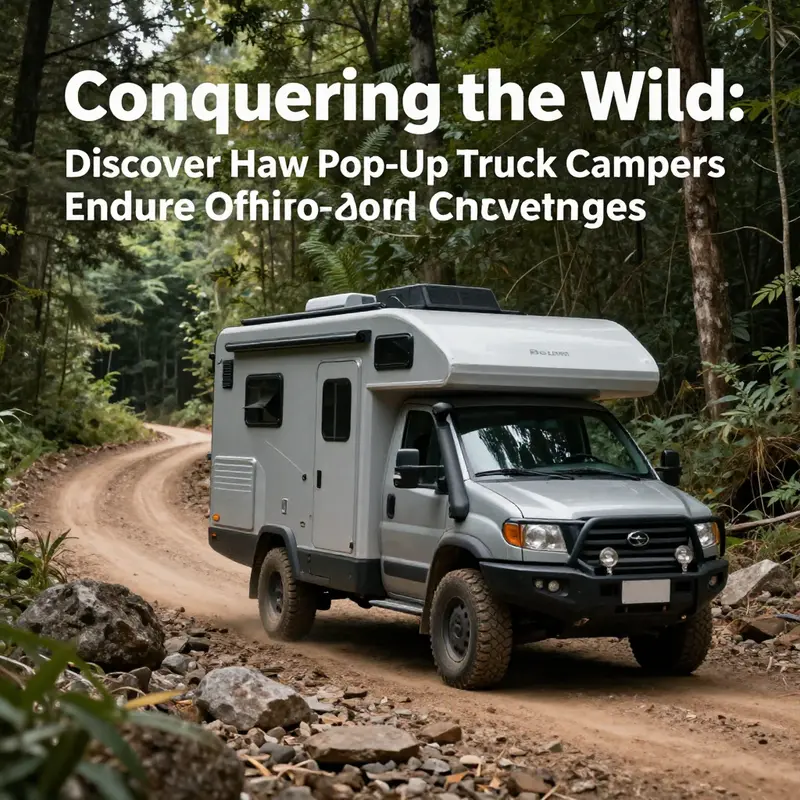
Rough terrain does not merely test a vehicle; it tests the entire concept of mobile shelter. For pop-up truck campers, the challenge is to combine a light touch with sturdy credentials. These rigs aim to ride over dirt roads, gravel trails, and forest paths without becoming an obstacle in their own right. The beauty of their design lies in a small footprint that remains formidable under pressure. When folded, the camper sits flush with the truck bed, carving a low silhouette that cuts through brush, reduces wind drag on long crossings, and keeps vulnerable components tucked away from rocks, roots, and rutted tracks. The trade-off is a balance between weight, rigidity, and weatherproofing. In rough terrain, the lightweight advantage translates into less load on the suspension, better traction, and more predictable handling. Yet the same lightness can magnify the consequences of hard hits if the chassis or shell is not built to absorb them. The result is a craft built for restraint rather than brute force, one that demands respect for the terrain it traverses.
A core distinction in rough-terrain performance is how the shell is constructed. Hard-sided pop-ups—typically aluminum-framed with solid walls—offer superior weather resistance and insulation compared with fabric-topped variants. That rigidity, however, carries a cost: it tends to transmit more vibration and shock from the road into the living space. The payoff is protection against weather, moisture intrusion, and wind gusts that can otherwise batter softer enclosures. In practice, engineers design these campers with reinforced frames and strategic bracing to dampen the impact without sacrificing the low-profile, collapsible form that makes them so versatile. The upshot is a shelter that holds its shape when splashed by spray on muddy backroads, yet can fold into a tight package that tucks neatly into a truck bed when the drive is long and the route is tight.
Rough terrain also exposes maintenance as a daily craft. The hardware—the hinges, latches, and sliding components that allow the roof to rise and the sidewalls to extend—receives stress from vibration and exposure to dust, grit, and moisture. Regular inspection is more than prudent; it becomes part of the adventure routine. Lubrication, sealant checks, and fastener torque become as important as fuel management or tire pressure. A well-tuned system reduces the risk of something sticking or failing at a remote outpost, where improvisation is possible but not always ideal. The suspension, too, deserves attention. Modern pop-up configurations sit atop a truck chassis or a custom frame that must accommodate off-road travel. Enhanced suspension aids in smoothing out the roughness and protecting the camper from the worst jolts while the vehicle itself maintains control on uneven surfaces. Without it, a sudden pothole or rock bed can transfer more energy into the living space than a traveler might be prepared to tolerate.
The speed at which a traveler can move through rough terrain is as much about technique as it is about equipment. The low profile when folded down does more than reduce drag; it reduces the probability of catching on overhanging branches or brush that line narrow forest corridors. The compact height helps in low-clearance parking spots at trailheads, a common scenario for off-road explorers who want quick access to remote peaks or river valleys. Still, the setup time matters. In environments where shade is scarce and storms can roll in quickly, the ability to deploy shelter with confidence becomes essential. Modern pop-up systems integrate electric or manual raise mechanisms, and even with efficient hardware, the process requires a pause in the plan. In harsh weather or when the terrain demands a rapid shelter, the mental calculus shifts toward readiness. Travelers learn to stage their approach: pick a stable, dry spot, uncoil and align carefully, and then raise the roof with deliberate, steady motion. This approach minimizes the risk of misalignment, which could lead to leaks or structural binding in salt-scrub winds or sleet.
Desert and sandy environments present another layer of nuance. The light weight of many aluminum hard-sided pop-ups makes them well-suited for long hauls across open terrain where fuel economy matters as much as comfort. A streamlined profile reduces drag, and the rigid shell protects occupants from heat and dust intrusion. Yet sand imposes its own demands. Shifting dunes, soft sand, and sudden transitions from firm ground to lose substrates require deliberate driving—an art that emphasizes tire choice, momentum, and recovery readiness. The vehicle should be equipped with appropriate towing gear, traction aids, and a plan for deploying near-firm surfaces for setup or escape. Even here, the camper’s role is protective rather than celebratory: it offers a dry, climate-controlled refuge after a long, sun-baked day.
Wet and muddy conditions elevate the conversation to moisture management. Aluminum-framed pop-ups resist rust and corrosion better than cloth-only tents, thanks to sealed joints, insulated roofs, and air gaps that limit condensation. A robust enclosure helps maintain interior dryness during heavy rain, which is particularly valuable in regions where tropical storms or persistent coastal moisture intersect with forested trails. The flip side is clear: prolonged exposure to mud and wet ground can eventually take a toll on fabric components, and care is required to prevent damage. In the most demanding scenarios, hard-sided configurations offer the best protection, with their reinforced cores standing up to sticky mud and frequent immersion in damp conditions. The critical lesson is to treat rough terrain as a full-spectrum test—weight, rigidity, sealing, and maintenance all interlock to determine how long a shelter can endure without compromise.
Low-clearance areas, another staple of off-road exploration, illustrate a unique advantage of pop-up campers when they are collapsed. The ability to slide along a narrow trailhead or into a shaded grove without fear of scraping the undercarriage is a practical boon for anyone who wants proximity to remote scenery rather than clearance for a grand parade. In forests where branches reach out and the path narrows to a single lane, the compact, folded form keeps the journey alive. Of course, this advantage comes with an engineering caveat: the load path from the truck bed to the spring and wheel assembly must still be robust. The camper, even when tucked away, must not compromise steering, braking, or cornering. A well-balanced setup distributes weight evenly, keeps a low center of gravity, and ensures the vehicle remains responsive to steering input even on rutted dirt or slick clay.
All of these considerations come into sharper relief when you consider the broader strategy of off-road travel. Pop-up campers are not intended for extreme, rock-crawling expeditions or high-speed desert roadrunners. They are designed for moderate to rugged travel where shelter, reliability, and adaptability hold equal weight to velocity. The research on rough-terrain performance points to a practical conclusion: these units excel when paired with vehicle modifications that enhance grip, stability, and resilience. A capable four-wheel-drive setup, appropriate tires for the terrain, and a drivetrain that can negotiate steep grades without straining are essential companions. Regular maintenance cannot be skipped, especially for components tied to the raise-and-collapse mechanisms. In colder climates or long-term off-grid adventures, hard-sided models shine because they resist weather-related stress and keep interior conditions consistent, even as the outside temperature vacillates. In harsher environments, travelers should also plan for extended stays, carry spare parts for hinges and seals, and adopt a mindset of proactive care rather than reactive repair.
The practical takeaway is clear. Rough terrain imposes a test of resilience that blends design, technique, and preparation. A well-conceived pop-up camper provides shelter that holds up under vibration and weather, while its collapsible architecture keeps you moving through tight spaces and over uneven routes. It rewards those who balance light weight with structural rigidity, who respect the limitations of the shell, and who enter rough terrain with a plan that includes recovery gear, spare fasteners, and an eye for maintenance. The experience becomes less about bravado and more about disciplined adventure—a philosophy that underpins every hour spent on a dirt road, a gravel climb, or a forest trail. For travelers curious about deeper off-road performance and the nuances of shelter in demanding environments, broader reading offers a complementary perspective on how the off-road world continues to evolve and how campers fit within it. The Adventure Journal explores these themes in greater depth, providing a wider lens on how pop-up truck campers endure rough terrain and what that endurance says about modern, mobile shelter. The Adventure Journal – Popup Truck Campers Off-Road Performance
Rugged Peaks, Narrow Passages: Mastering Mountainous Off-Road Living With Popup Truck Campers
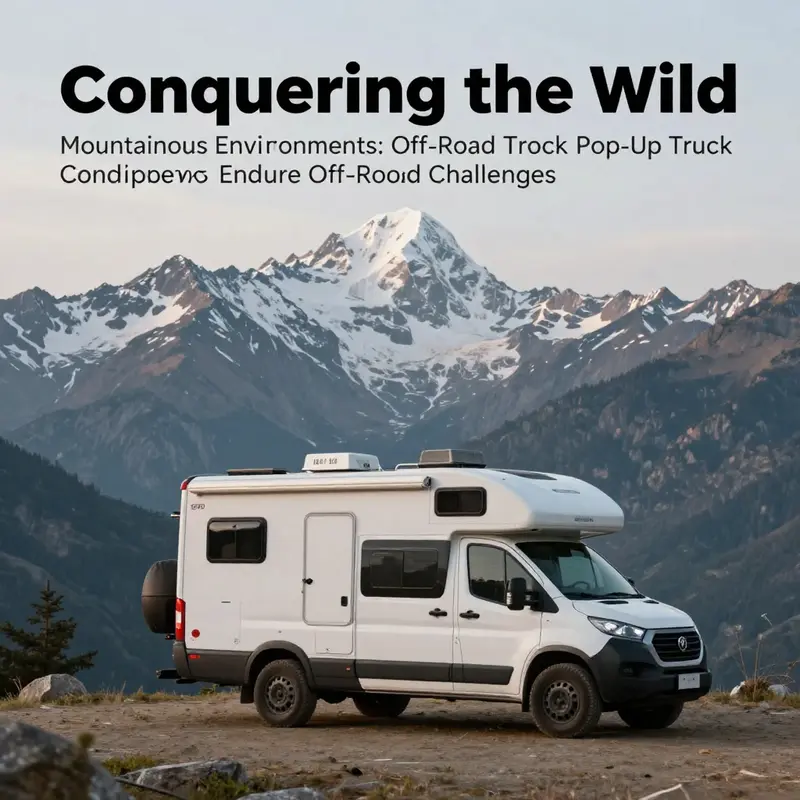
Mountains pull the horizon tight and test every mile with wind, rock, and weather. For off-road travelers, a popup truck camper is more than a shelter on wheels; it is a compact expedition base that must endure shifting grades, freezing nights, and the crusty grit of remote trails. In these elevations, the challenge is twofold: reach a remote campsite and stay safe, comfortable, and self-reliant while the world beyond the ridgeline remains quiet and distant. The beauty of a pop-up design lies in its dual personality. When folded, the camper sits low and streamlined, preserving the vehicle’s stability and nimbleness on narrow switchbacks. When deployed, it unfolds a livable volume that still emphasizes lightness and balance. The mountains reward rigs that harmonize mobility with rugged livability, because the terrain does not care for elegance alone; it demands systems that endure, adapt, and provide warmth and shelter when conditions tighten like a fist around a wind-chilled canyon road.
Mountain environments test the architecture of pop-up campers in ways that flat ground never does. Aluminum framing, weather-resistant skin, and well-insulated roofs are not merely desirable attributes; they are prerequisites for reliability at altitude. In the high country, temperature swings are dramatic and frequent. The interior systems—plumbing, electrical circuits, heating elements, and the refrigerator—must operate with steadiness as the barometer dives and climbs with the weather. A robust frame supports more than load; it carries the confidence that a camper will protect its occupants from alpine drafts, snow, and the kind of dust that rides in on gusty afternoon squalls. The careful alignment of panels, seals, and joints becomes a shelter’s first line of defense, keeping moisture out and warmth in when the wind harshens and the evening drops below freezing.
To navigate steep grades and uneven ground, the engineering of the camper and the vehicle beneath it matters as much as a driver’s intuition. A lightweight, four-wheel-drive platform helps the setup feel responsive rather than ponderous when the road narrows and the grade steepens. In practical terms, this means reinforced frames that resist flex, all-terrain tires that grip loose scree, and leveling systems that can react quickly to a tilted pad. The lift mechanism—whether hydraulic or manually operated—must translate practice into space without creating a wobble that unsettles the sleeper or strains the ceiling when the roof is raised. Mountain trails expose every vibration and minute movement, so the strongest systems are the ones that stay quiet and steady, letting the occupants focus on the journey rather than the rig itself. A top-tier approach here leans toward aluminum campers with flip-style or tilt-style roofs; the combination delivers a resilient shell, improved headroom, and a field-ready balance between compact transport and extended living space.
Accessing remote alpine clearings often means threading through tight corridors where branches and rocks seem to converge around a single line. In those moments, the camper’s folded profile is a tangible edge: it reduces the chance of snagging, minimizes leverage against the undercarriage, and lowers the risk of scraping essential components during maneuvering. Yet the moment you decide to stay, the real work begins. Deploying the roof to gain living space, extending stabilizers for a solid footprint, and coordinating water, warmth, and power within a compact envelope require deliberate, practiced moves. Mountain trips also force a careful calculus of weight and balance. The extra mass of water and fuel must be managed so that steering remains precise and braking remains predictable on steep descents. The optimal setup is not a stand-alone win; it is a choreography that occurs every time the vehicle pauses and the wheels settle on uneven ground.
The livability of a pop-up camper in mountain zones is inseparable from its capacity to resist the elements while staying energy-efficient. Integrated heating and insulation make the interior feel livable when frost clings to the exterior or a storm slides over a saddle and into a valley. Sealed joints and an insulated roof help minimize condensation, a frequent adversary at altitude where humidity changes with the wind and temperature breaks. The roof rack and its interaction with the lift must be reinforced so that snow loads or gusts do not stress the assembly or compromise seals. In high-altitude exposures, even modest vibrations can loosen connections if maintenance has not kept pace with the terrain. Regular inspection of hinges, latches, and leveling legs is not a luxury but a necessity. Dust and pine needles can accumulate around moving parts and prevent smooth operation, so routine cleaning becomes as important as fuel in a long climb. When the storm clears, the sense of relief comes not only from reaching a summit but from having a shelter that quiets the world and shields occupants from its harsher moods.
The design emphasis on rugged, reliable performance is not a speculative preference; it is a practical imperative for mountains. Aluminum-centered construction with reinforced frames offers sturdiness without excess weight, an essential combination on a grade where every kilogram affects traction. The lift systems—one of the more dynamic features of pop-up campers—are engineered to transform a compact base into a roomy sleeping zone without unduly stressing the vehicle’s suspension or the roof structure. For those who roam remote ranges for days at a stretch, this arrangement provides a welcome balance between mobility and comfort. The guidance from seasoned designers consistently points toward flip-style or tilt-style roofs because they maintain rigidity and weather resistance while unlocking interior headroom that makes cold nights more bearable and sleeping more civilized on uneven ground. This synergy between portability and livability is the core reason these models earn a place on the mountain checklist, right alongside all-terrain tires, reinforced frames, and a dependable leveling system.
Maintenance in rugged terrain is not a routine for a spare afternoon; it is an ongoing discipline that preserves safety and comfort. The lift mechanism, hinges, and latches endure repeated cycles of deployment and retraction, often in climates that foster dust ingress, moisture migration, and temperature-induced expansion. Regular lubrication and inspection reduce the risk of a sudden failure on a windy ridge or a snowstorm break. The roof reinforcements, the seal between panels, and the strength of anchor points for equipment must stand up to the march of seasons and the demands of a high-altitude trail. A disciplined maintenance habit translates to fewer surprises when the route becomes a long, lonely stretch of track with no easy off-ramp. For travelers who want to keep the camper in top form, a quick, daily check of the mechanicals—hinges, latches, and leveling legs—can prevent minor irritants from becoming major headaches after a long day on rock and gravel. The practice of combining careful inspection with clean, preventive lubrication becomes a quiet partner to the loud rap of tires on a rough road. In this context, maintenance is not a burden but a practical expression of respect for the mountains and the people who travel them.
Among the configuration choices, aluminum pop-ups with flip or tilt roofs stand out in mountainous terrain for their blend of resilience and space efficiency. The raised interior footprint provides generous headroom while preserving a compact, stable base when the roof is down. That combination—the lightness of a pop-up and the robustness of a reinforced frame—delivers reliable shelter where weather can turn on a breath and the trail can twist into a challenge. For adventurers who orbit remote alpine zones for days, this is more than a design preference; it is a strategic decision that supports both mobility and endurance. The mountains reward a rig that disappears into the landscape when needed and reemerges with security and comfort when a campsite matters. It is this balance between agility, protection, and livability that makes the range of mountain-ready pop-up campers not just capable but essential for the path less traveled.
External resource: Detailed exploration of how light truck bed campers integrate performance, technical features, and applications can be found in a comprehensive guide that analyzes these systems in depth and offers practical scenarios for off-road use. https://www.truckcampers.com/light-truck-bed-camper-guide-performance-technical-features-applications
Internal reference for maintenance basics: for practical guidance on keeping the chassis and mechanicals in top shape while traversing rough terrain, see mastering diesel mechanics.
Desert Dunes and Dust: Enduring the Sandy Frontier with Pop-Up Truck Campers
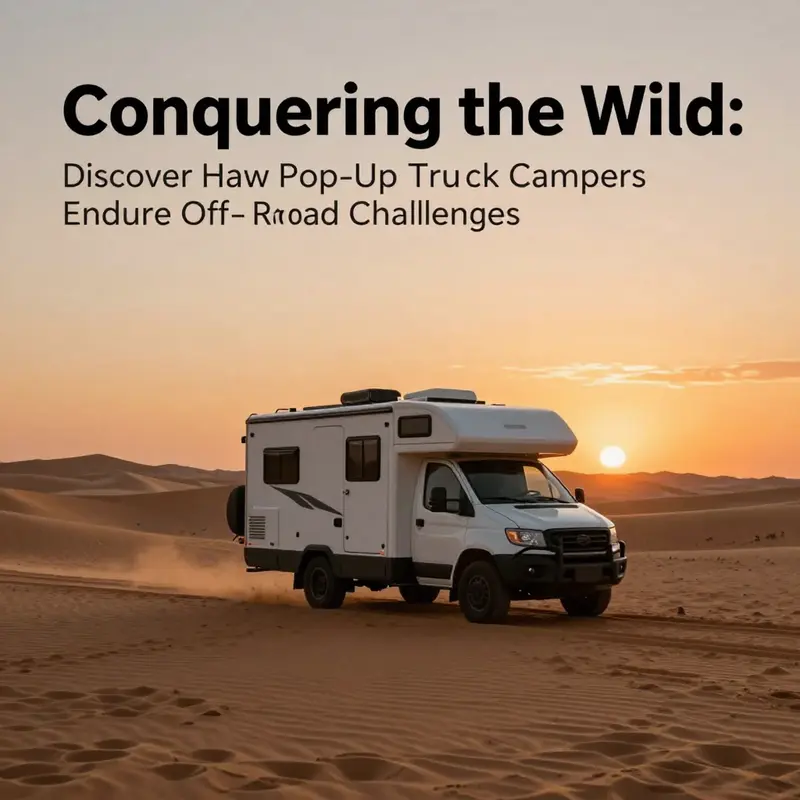
Desert travel tests a vehicle and its shelter in ways that few other environments do. The heat, the glare, the dust, and the ever-shifting ground make a reliable off-road setup essential. Pop-up truck campers have carved out a niche here by pairing a compact, lightweight profile with enough interior versatility to turn a rough day on a remote trail into a comfortable night under the stars. The core advantage is simple but powerful: when folded down, the camper sits flush with the truck bed, creating a streamlined silhouette that minimizes wind resistance and reduces the chance of snagging on rocks, sagebrush, or uneven terrain. In a landscape where even small obstacles can become major headaches, that quiet, unassuming profile translates into tangible advantages on long desert routes. The aluminum frame and durable joints common to these designs further reinforce that advantage, delivering a rig that can withstand exposure to sun, temperature swings, and rough handling without soaking up the kind of maintenance headaches that often plague more fragile tents or fabric-sided options. Rather than relying solely on the tent-like flexibility of soft sides, many pop-up systems for desert work lift the bar with rigid walls and reinforced construction, ensuring that even in a stiff crosswind or a sudden gust along a canyon floor, the structure remains steady and dry inside. The interior is a different kind of desert tool—compact and efficient when folded, yet surprisingly roomy once the roof rises. The ability to hydraulically or manually raise a pop-top offers an immediate upgrade in headroom and living area after a day chasing distant horizons. In practical terms, that means you can stand up to cook a simple meal, stretch your legs, or simply sit and watch the sunset without feeling crowded or claustrophobic. The air inside benefits from a well-sealed roof and joints that resist the penetration of dust and moisture, a crucial feature when the sky is clear at dusk but sand grains still swirl in from the trail. Grounded in a desert context, the combination of a low-profile base and a robust, weather-sealed shell becomes a practical philosophy: the vehicle remains a mobile shelter, not a fragile tent, and it does so without imposing excessive weight or complicating the drive. The weight considerations matter here more than in many other environments. On desert trails, a lighter rig can be easier to maneuver through narrow channels or over softened patches of sand. A carefully balanced rig distributes weight more evenly over the tires, reducing the likelihood of digging in and creating a deeper rut. This is particularly relevant when the ground changes from hard-packed ruts to loose patches, where momentum and traction must be managed with care. In that sense, a desert-friendly pop-up is less about brute horsepower than about thoughtful engineering—an arrangement that respects traction, balance, and the subtle physics of sand. The insulation and moisture-control features play a supporting role, too. The desert cool of dawn can quickly turn to searing midday heat, and a well-insulated roof helps maintain workable interior temperatures. Sealed joints and moisture barriers keep the interior dry during unexpected squalls or rare desert storms, ensuring that gear and electronics survive the exposure that comes with long days on the road. While fabric-topped models have their place, aluminum-framed pop-ups excel where dampness and corrosion could otherwise erode a shelter’s resilience. That resilience matters most when you’re miles from a workshop or a showroom and depend on your home-on-wheels to perform reliably every day. The roof’s raise-and-settle dynamic is more than a convenience; it’s a design choice aligned with the desert’s demand for flexibility and efficiency. Raised height offers better ventilation, more room for cooking and changing, and a more comfortable sleep area once the night air cools after a day of sun-scorched travel. The ability to lower the unit for transit helps protect air vents, seals, and wardrobe doors from the kind of prying sand that can accumulate around a campsite and complicate a quick setup. Even with this flexibility, the engineer’s aim remains constant: minimize fatigue for the traveler while maximizing reliability on the trail. To navigate the dunes and the open flats, the vehicle requires a smart pairing with a capable drivetrain. A four-wheel-drive pickup, properly tuned for desert conditions, helps transmit torque to the ground without excessive spinning of the tires. Low-range gearing and appropriate tire pressures become small but critical levers that individual drivers must learn to operate. The desert’s grain shifts quickly; what worked in the shadow of a canyon can falter on a dunescape. In practice, that knowledge translates into preparation: carry a basic recovery kit, understand the route’s elevation profile, and have a plan for shade and water as a simple safety net between long stretches of open terrain. The pop-up’s advantage in this environment is reinforced by its travel economy. The streamlined shape reduces air resistance and fuel consumption on long desert drives, allowing explorers to cover more ground with less stress on the engine. The lighter construction also means the vehicle’s suspension and brakes aren’t taxed to the same degree as heavier, more rugged campers, contributing to a more predictable and controllable handling feel when the horizon line stretches to infinity. It’s also worth noting the design intent that underpins these systems in desert settings: a balance between compactness for tight lanes and the versatility to expand when you reach a camp that invites a longer stay. The internal footprint can sustain a comfortable living setup after a difficult day’s travel, with enough kitchen, seating, and sleeping space to keep fatigue from building into irritability. In desert terrain, that balance becomes not just a matter of comfort but a safety feature. When days run long and the trail is punishing, having a dependable, insulated shelter makes the difference between retreat and resilience. In a landscape where fuel stations and repair shops can be days away, the camper’s lightweight, efficient routing across sandy soils, coupled with a robust aluminum frame and sealed joints, gives travelers a trustworthy platform for exploration rather than a precarious risk. The concept of rugged practicality is reinforced by the broader industry trend toward hardy, modular designs that can be adapted to harsh conditions without a major sacrifice in mobility. Some suppliers promote off-road mobility with considerations that echo desert realities: the need for low windage, corrosion resistance, and reinforced corners that endure the spray of fine dust kicked up by a rapid crossing of a dune. The practical upshot is that desert travel becomes less about fighting the vehicle and more about listening to the landscape and letting the design do the heavy lifting. For those who crave long-distance desert exploration, the model’s raised interior space creates new opportunities for living comfortably between treks, cooking on the move, and stargazing after the sun finally dips below the horizon. The desert’s demands do not demand more gear so much as it require more thoughtful design, a principle that pop-up campers embody well. When the ground is soft and the wind is sharp, a well-built, lightweight unit that folds flat during transit and expands when parked proves to be a dependable companion. It offers a template for what off-road travel can be: a paired simplicity of a shell and a truck, with the interior becoming a compact but capable refuge rather than a fragile tent. The desert, with its austere beauty and rough edges, invites travelers to respect the environment and to rely on a shelter that balances durability with mobility. In this balance lies the core promise of pop-up truck campers in sandy terrain: endurance without surrender, efficiency without sacrifice, and the quiet confidence that a well-engineered shelter can bring to journeys that push the limits of distance and grit. External resource for further reading: https://www.fusotruckcamper.com/technical-overview-fuso-truck-camper/
Mud, Rain, and the Folded Frontier: Weathering Wet Off-Road with Popup Truck Campers
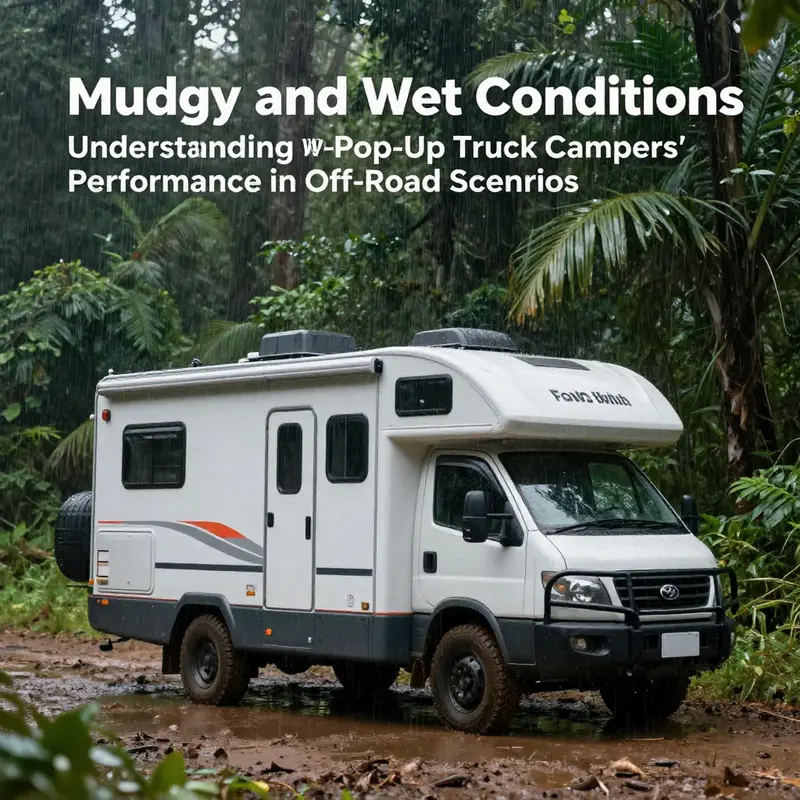
Mud and rain reshape backcountry travel, and popup truck campers sit at a testing crossroads. Their compact, low-profile footprint lets them slip through narrow trails, yet weatherproofing and seals become a critical test when drizzle turns into a sustained downpour. A well-sealed shell, reinforced gaskets, and robust electrical connections help keep the interior dry, while a rigid-walled design resists water entry more effectively than soft-sided fabrics. Maintenance matters: inspect hinges and latches, recheck seals after rough trips, and keep the roof mechanisms free of mud so they rise smoothly. Ground protection like a tarp under the truck bed reduces splash that can compromise seals and electrical panels. In practice, readiness and design quality together determine resilience in wet conditions, more than any single feature. The broader lesson is simple: prioritize dependable sealing, practical moisture management, and disciplined setup to turn rain-soaked outings into reliable, livable adventures.
Under Low Bridges and Through Narrow Passages: The Low-Profile Advantage of Popup Truck Campers
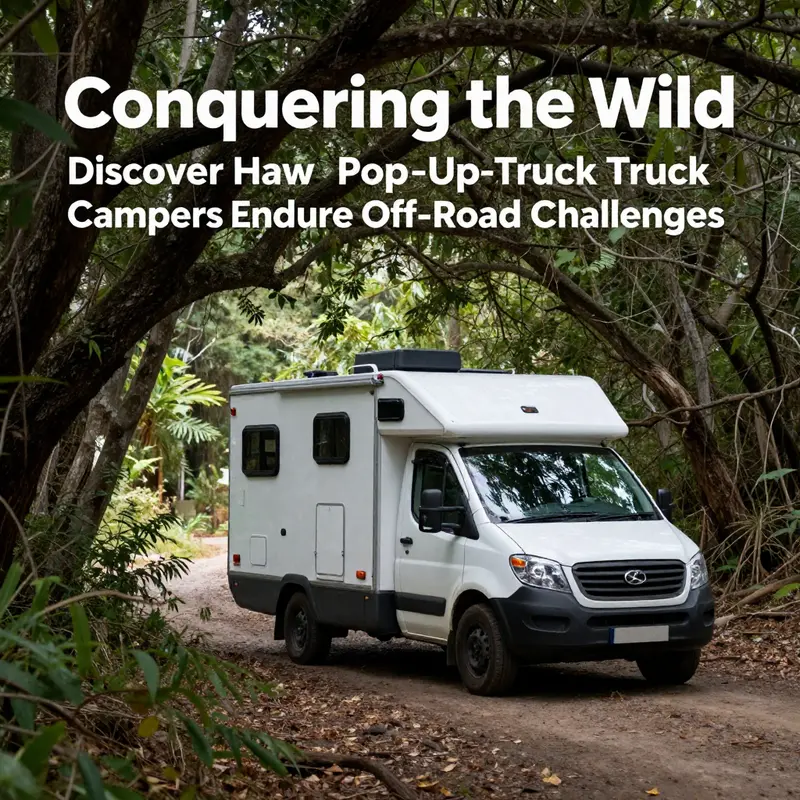
The appeal of a popup truck camper in tight terrain begins with height. When folded, the shelter sits almost invisibly close to the truck bed, its profile a quiet, unassuming line against the landscape. Drivers quickly learn that this low clearance isn’t a limitation so much as a key to access. Less height equals more options, allowing a range of routes through forests, canyons, and trailheads that would challenge bulkier rigs. The low profile is a stealthy advantage, inviting routes to reveal themselves rather than retreat behind warnings about height and clearance.
What sets popup truck campers apart in low-clearance environments is their collapsed silhouette and the way the design balances light weight with structural resilience. An aluminum frame, a roof that folds down, and a fabric or rigid shell that locks during transit create a unit that behaves like a single, well-balanced load. This integration reduces the moment arm and keeps the truck-camper system stable on winding forest roads. A lower footprint reduces wind resistance and minimizes the risk of snagging on overhanging branches or protruding rocks.
In practical terms, the lowered height translates into an ability to pass through gateways and archways that would otherwise block progress, a boon for explorers who prize access over spectacle. The moment the roof lowers and the interior settles into a more compact envelope, the landscape around the campsite takes on a different rhythm. The sleeper can be stowed with minimal intrusion into the truck bed, and the surrounding area gains efficiency: a clearing becomes available for a quick setup, a shade canopy drops into place with fewer alignment errors, or a tent unfurls within a footprint that respects the surrounding flora. This efficiency matters in remote environments where every inch of real estate matters and the compact stance reduces the likelihood of accidental scrapes on rocks, stumps, or fallen branches.
Maintenance is an integral, often overlooked dimension of thriving in low-clearance scenarios. Hinges, latches, and the folding mechanisms must be kept smooth and responsive; a sticky hinge can complicate setup and feed uncertainty on a remote trail. Regular inspection of fittings, seals, and the roof’s locking systems ensures the collapsed state stays compact and the full expansion remains secure when needed. Aluminum components deserve attention to moisture and salt exposure, especially in marshy or coastal environments. The interior’s insulation and seal integrity matter too; a dry, well-sealed cabin keeps condensation and heat loss at bay, preserving comfort during rapid weather shifts along mountain passes or desert canyons.
Beyond mechanics lies a philosophy of movement. The ability to slip into spots that taller rigs cannot reach invites a broader, more intimate relationship with the landscape. The independence afforded by a low-profile, pop-up design supports longer stints in remote places where days blend into long scouts and the stars become the only ceiling. It is not simply about saving height; it is about expanding the repertoire of routes, the tempo of exploration, and the patience to wait out a storm beneath a tarp or compact shelter. The traveler learns to read the terrain with caution and audacity, confident that the rig will respond with predictability when the next fork in the trail appears. When height restrictions disappear, the mind widens with the possibilities of where to go next, and the journey becomes a more personal conversation with the land.
Final thoughts
Throughout this thorough exploration, we’ve delved into the various off-road conditions where pop-up truck campers excel. From their prowess on rough terrain to their unrivaled adaptability in tight spaces, pop-up campers stand as stalwart companions for every adventurous spirit. Their lightweight design, resilient materials, and thoughtful construction make them well-suited for the many challenges posed by nature. By understanding their diverse capabilities, off-road enthusiasts can make informed choices, embarking on journeys that promise excitement and the comfort of home on the wild frontier.