
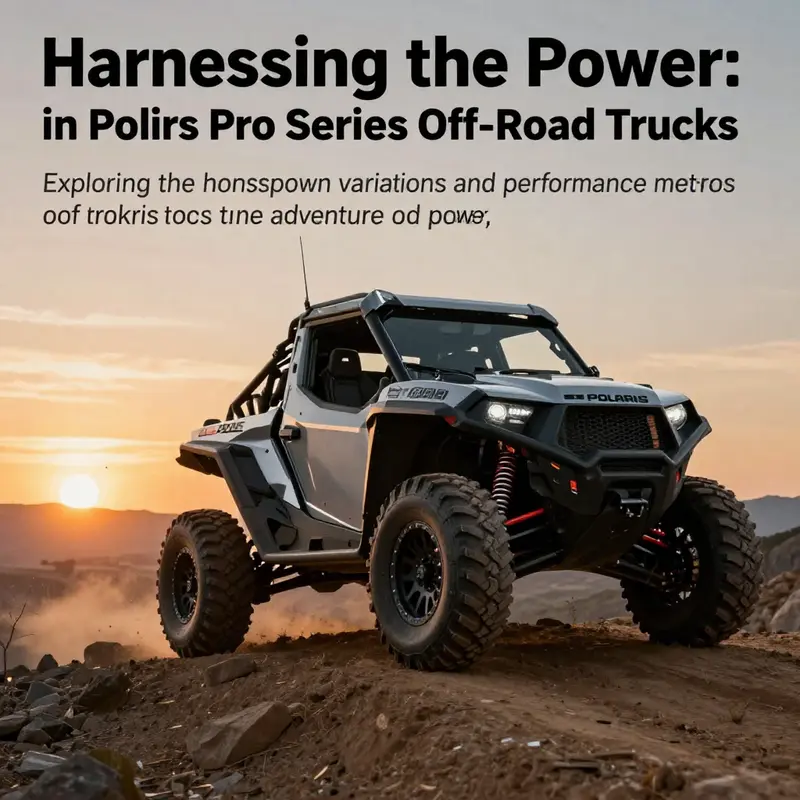
For off-road enthusiasts, horsepower is more than just a number; it’s the pulse of performance that fuels adventure. The Polaris Pro Series off-road trucks exemplify this passion, offering a range of horsepower across their various models, designed to conquer rugged terrains and meet the demands of both racing and utility. Throughout this journey, we will delve into the horsepower analysis of specific models, compare power outputs, explore the factors influencing these ratings, scrutinize performance metrics beyond horsepower, and gaze into the future trends that promise to reshape off-road adventure yet again. Each chapter builds upon the last, providing you with a robust understanding of how horsepower plays a crucial role in your off-road experiences.
Unleashing Power in Pro Series Off-Road Trucks: A Cohesive Look at Horsepower, Weight, and Real-World Performance
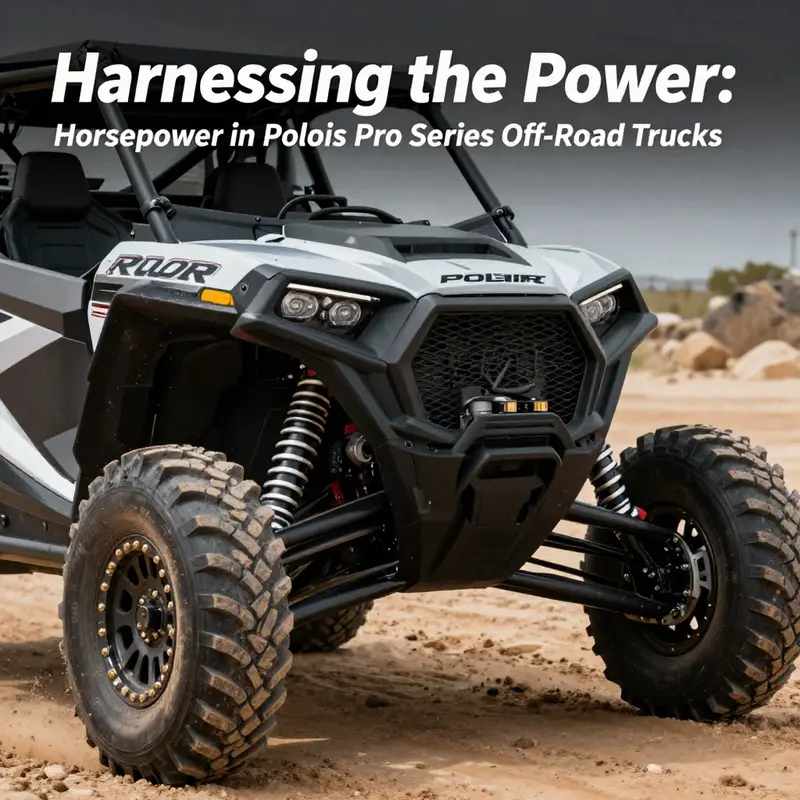
Horsepower in Pro Series off-road trucks is not a single fixed figure. It is a property that emerges from a balance among weight, drivetrain design, cooling, and the terrain the vehicle is built to conquer. In practical terms, horsepower is the engine that propels momentum through rough ground, but it only proves useful when paired with torque at the right revs, efficient power delivery, and the ability to keep traction on uneven surfaces. In the top tier of these machines, the goal is a high power-to-weight ratio, a measure that matters far more than raw horsepower alone. A lighter, well-tuned chassis can exploit a similar number of horsepower more effectively than a heavier counterpart with the same peak figure. The result is a machine that remains controllable, predictable, and capable across dirt, mud, gravel, and rocky trails rather than simply being fast on a smooth stretch.
To understand how horsepower translates into real-world capability, it helps to look at the design philosophy that underpins Pro Series off-road trucks. Many of these machines strive to minimize weight wherever possible while maintaining structural integrity and reliability under heavy use. The powertrain, whether it relies on a traditional internal combustion engine or an advanced electric motor, is calibrated to deliver a broad, usable torque band rather than a brief surge of power that peaks at a single rpm. That approach translates to better traction when climbing, more confident handling on loose surfaces, and steadier acceleration through twisty or technical sections. In tandem with this, the drivetrain and suspension are tuned to keep the wheels planted rather than spinning away on dune dust or gravel. The combination of power, weight management, and compliant handling is what allows horsepower to become a practical advantage rather than just a headline number.
A real-world reality in this space is that models within the Pro Series lineup can vary widely in their horsepower outputs. Upper-end configurations in this class are capable of delivering power in the vicinity of a hundred or more horsepower relative to the vehicle’s overall weight. This level of output, paired with a compact, rigid chassis and robust cooling, gives a performance envelope that can handle steep climbs, rutted tracks, and demanding sprints alike. Yet horsepower on its own is not the whole story. Torque delivery, gearing, and drive-system architecture shape how that power translates into forward momentum and how quickly the power is available when the ground bites, which is the essence of off-road capability. A well-balanced machine will feel strong in the middle of a climb and maintain speed through a rough patch rather than bog down or wheel spin aggressively. It is this balance that keeps a Pro Series truck moving where lesser setups stall or lose control.
For enthusiasts who obsess over power, there is also the reality of after-market and tuning opportunities. In many cases, owners can adjust gearing, cooling efficiency, and electronic control to extract more usable horsepower from an existing platform. However, this is a double-edged sword. Increasing peak horsepower can push the system toward heat buildup and less stability if other components are not upgraded in tandem. The best configurations advance horsepower while preserving reliability, which means designers and drivers must respect the interdependence of engine, transmission, cooling, and chassis suspension. In this sense, horsepower becomes a tool with to-and-fro leverage: more effective torque at the wheels can deliver traction where it matters most, while excessive surge without control can hamper stability on fast, loose surfaces.
Parallel to the real-world machines, the spectrum of power in the high-performance remote-control (RC) segment presents a different perspective on horsepower, yet the core physics remain the same. In these compact rivals, a powertrain often consists of a brushless motor paired with an efficient electronic speed controller. In stock form, a leading model in this class can deliver roughly twenty to twenty-five horsepower equivalent when scaled to its diminutive chassis. The horsepower figure is not directly comparable to a full-size truck, but the concept remains: a highly efficient drive system on a light frame can produce remarkable acceleration and speed relative to weight. Battery voltage, typically provided by a high-discharge pack around a practical voltage, tuning choices, and gear ratios all influence how the power translates into motion. The standout capability of these RC rigs is their extreme power-to-weight ratio, which yields rapid acceleration and high top speed for their scale. At the same time, the engineering emphasis stays on durability and control: robust suspensions, tightly engineered drivetrains, and components designed to withstand repeated hard driving on rough surfaces.
The fascination with horsepower in Pro Series off-road trucks thus centers on how well a machine converts a given power output into usable, predictable movement under challenging conditions. The interplay of power, mass, and gearing defines the vehicle’s ability to navigate obstacles without losing momentum or control. In a well-tuned real-world Pro Series model, the driver can modulate throttle, choose a gear that keeps torque available at crucial moments, and rely on traction-augmenting systems to maintain forward progress when the surface suddenly shifts from compact dirt to loose gravel or rock. The result is a vehicle that can maintain a confident line, reel in a lead on a straight path, or accelerate smoothly through a transition without overloading the tires or destabilizing the chassis. This is not solely about how big the horsepower figure is, but about how intelligently that power is managed through mechanical and electronic systems.
As readers explore these ideas, it becomes clear that horsepower is best understood as a property emerging from a systems conversation. It is the outcome of a design philosophy that prioritizes control over raw velocity, a philosophy that values thermal management, weight distribution, and drivetrain efficiency as equally important to the peak number on a specification sheet. In practice, that translates to real trucks that can climb, crawl, and traverse a variety of terrains with a driver who remains confident and in command. It also means that a given horsepower figure may look different across models depending on how the rest of the vehicle is built, tuned, and set up for the intended course. The proactive approach—designing for the terrain, not just the number—produces a more capable and reliable machine that can hold its performance across repeated laps or miles of rugged ground.
The broader context includes a sense of responsibility and community that extends beyond speed. Enthusiasts and builders often share performance data, tuning tips, and field experiences to help others understand how horsepower behaves in different environments. This collaborative knowledge helps shape set-up choices, from tire compounds and tread patterns to throttle response and stability controls. Even in community-oriented discussions, the emphasis remains on safety, durability, and sustainable operation. The conversation about horsepower, in other words, is as much about how a vehicle interacts with its surroundings as it is about the raw number that appears on a spec sheet. This holistic view aligns with the ethos of the Pro Series itself: power is a means to an objective—efficient, controlled, and repeatable performance on difficult courses—rather than an end in itself.
To place these ideas within a wider context, consider how this discussion interacts with related sectors that are also moving toward smarter, more efficient power usage. Electrification and lightweight design are reshaping performance across heavy machinery and construction fleets, just as they are prompting a reevaluation of what horsepower means in practice. Across these domains, the central principle remains steady: more usable power, delivered reliably, opens opportunities to operate more effectively in demanding environments. In Pro Series off-road trucks, the challenge is to retain control and predictability as power scales up, ensuring that the speed gained in favorable conditions does not come at the expense of safety, handling, or durability. Like other high-performance disciplines, the art lies in extracting meaningful, dependable capability from the machine while keeping the human operator in command.
For readers who want to connect this technical discussion to broader experiences, the story of horsepower in Pro Series off-road trucks is inseparable from how communities around these machines live and work. The same energy that drives high-speed runs and difficult climbs is also redirected toward constructive, community-focused initiatives. In that sense, horsepower acts not just as a measure of speed but as a catalyst for shared learning, responsible use, and collective improvement. This perspective helps explain why horsepower discussions remain relevant across enthusiasts, engineers, and drivers who want both exciting performance and lasting reliability in equal measure.
External reference for further context: https://www.traxxas.com/vehicles/off-road/traxxas-xo-1
Internal link for broader industry context: trucks-for-change-supporting-habitat-for-humanity
From Watts to Trails: Decoding Horsepower in Pro Series Off-Road Trucks
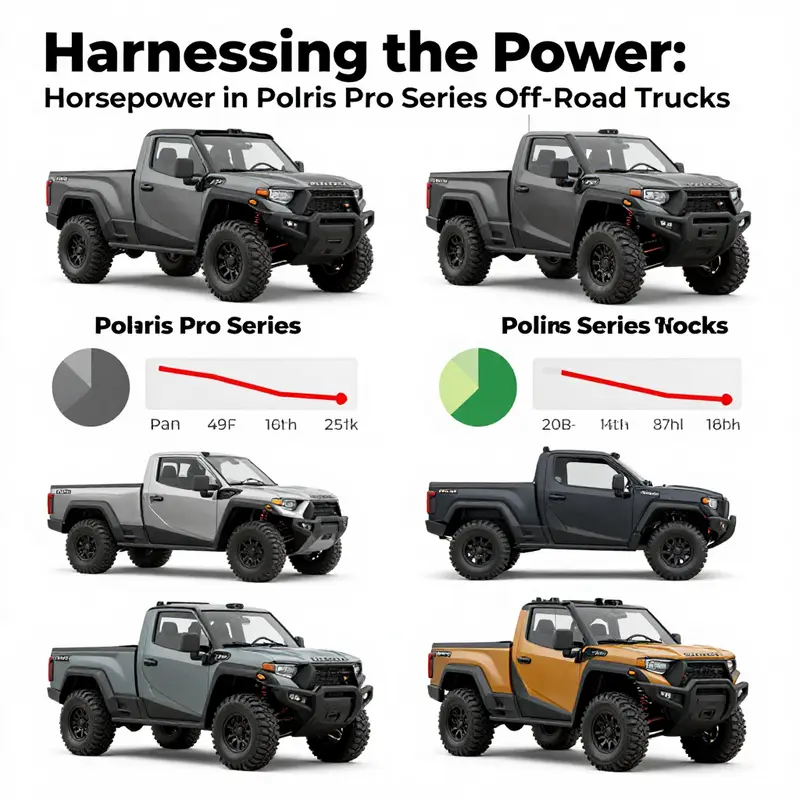
Horsepower in the realm of Pro Series off‑road trucks—those rugged RC machines built for mud, dust, and abrupt ascents—is less a single number than a spectrum. The term itself tugs at a simple idea: more power means more speed, more acceleration, more punch when the tires bite into a steep grade or a sand ribbon. Yet for these high‑performance rigs, horsepower is not a fixed badge stamped on every chassis. It ebbs and flows with motor design, battery capacity, and how efficiently the drivetrain couples energy to torque. This is especially true in the Pro Series context, where different configurations exist not as different brands but as distinct approaches to delivering power under demanding off‑road conditions. What you gain in one setup may be offset by weight, heat, or aerodynamic drag in another. The conversation about horsepower, therefore, starts not with a single peak figure but with a careful read of watts, motor layout, and the way those watts translate into torque and traction across shifting terrain. In practice, horsepower becomes a practical shorthand for comparing how well a given configuration can handle a climb, a turn, or a sprint across a dry track that morphs into a washboard, a dune field, or a slick clay line in the blink of an eye.
To ground the discussion, consider the basic unit: watts. In the RC world, continuous power output from the motor is a decisive factor. When you translate watts into horsepower, you step into a room where efficiency and cooling set the ceiling. For the most common high‑performance single‑motor arrangements in this category, the power band sits in the neighborhood of roughly 2,500 watts. That raw figure yields an approximate horsepower of about 3.3 hp, a respectable figure that emphasizes torque and low‑speed pulling power over top speed. The emphasis here is not merely raw wattage but the kind of torque that can bite into rough terrain. A single, high‑torque motor of this class is tuned for climbing capability, for lugging through thick mud, and for delivering precision throttle response that helps a driver thread a line with confidence when the surface underfoot keeps trying to break contact.
As you scale up to mid‑range power systems, the picture shifts in two meaningful ways. First, the motor package grows more capable, and second, the overall weight of the truck—plus the energy store it carries—begins to matter more than in a lighter classroom. A 3,000‑watt setup, for example, brings a horsepower estimate near 4.0 hp. That increment may appear modest, but it changes the way the truck accelerates on dirt and sand. It manifests as quicker surge off the line, smoother mid‑range throttle response when the surface offers varying grip, and a more confident sprint along a straight, fast section where traction remains reliable. In practical terms, a mid‑range system can feel markedly more responsive on a dirt track with a mix of loose sections and compacted corners, where the driver’s timing and throttle control are continually shaping the balance between yield and aggression. The chassis that pairs with this level of power tends to lean toward a lighter approach—materials chosen for strength with a focus on agility—so the vehicle remains nimble enough to exploit the added punch without becoming a unwieldy handful in tight turns.
Pushing toward the high‑end spectrum introduces a different set of engineering challenges and opportunities. A combined output exceeding 4,000 watts translates to a horsepower equivalent in the neighborhood of about 5.4 hp when you account for efficiency losses and the fact that the energy ship is not a stationary lab instrument but a fielded machine that must shed heat and cope with real‑world load. Dual‑motor configurations underpin this tier, enabling a torque reserve that rivals that of full‑size off‑road machines in certain conditions. The dual setup distributes drive across more contact patches, which matters when the surface changes its character from hard pack to loose gravel to slick clay. In racing and competitive environments, this translates into tighter corner exit control, greater hold in aggressive off‑camber sections, and an ability to maintain a higher pace across varied terrain without hitting a power‑limiter sting from overheating ESCs or motors. The tradeoffs, of course, appear in energy density and thermal management. A high‑power, dual‑motor arrangement demands robust cooling and intelligent energy management to sustain peak performance through the entire run. Without effective cooling and efficient power regulation, those 4,000‑plus watts can turn into rapid heat build‑up, throttling, and a loss of top‑end tempo as the battery temperature climbs. In this sense, horsepower becomes a balance rather than a peak; the real challenge is preserving torque delivery and throttle linearity while the machine sips through the battery and sheds heat through carefully engineered ventilation paths.
Manufacturers in this Pro Series space rarely publish horsepower in a conventional consumer‑vehicle sense. Instead, they present the power story through motor wattage, gear ratios, and the continuous performance envelope of the drivetrain. The numbers above—roughly 3.3 hp for a 2,500‑watt single‑motor configuration, about 4.0 hp for a 3,000‑watt setup, and roughly 5.4 hp for a high‑end, dual‑motor system—are best understood as horsepower equivalents. They translate watts into a familiar metric while acknowledging that the real force delivered to the ground depends on how efficiently that electrical energy is converted into mechanical work. The stage on which this conversion plays out is a rolling equation—weight, contact patch size, surface material, and throttle discipline all matter as much as the raw power figure. A lighter chassis can exploit a given wattage more aggressively, while a heavier one might need more torque to maintain momentum. The same wattage in two different trucks can feel like entirely different performances due to the complex physics of grip and inertia.
One consequence of this dynamic is that a model’s year or revision can shift the feel of its power profile without a dramatic change in the nominal wattage. Small improvements in motor design, battery chemistry, or ESC control loops can yield cleaner throttle response, better current management, and more effective cooling. In practice, this means that a newer bike‑like chassis with the same nominal wattage often climbs more confidently or accelerates more smoothly than an older counterpart, precisely because its electronics and thermal systems run cooler and more efficiently. The upshot is that horsepower, when discussed in this context, is a living attribute rather than a single static label. It is a conversation about how energy is delivered and how that energy translates into traction under a moving, weighty load across an evolving playground of off‑road terrains.
In the end, the practical takeaway is simple yet nuanced. If you measure performance purely by the wattage on a spec sheet, you will miss the story. If you measure it by how quickly a truck can accelerate from a standstill, how confidently it can mount a grade, and how well it can sustain speed through mixed terrain, you begin to glimpse the real value of the horsepower narrative in Pro Series off‑road trucks. The highest‑powered setup is not always the one that wins on a given course; it is the configuration that consistently converts watts into usable, controllable traction where grip is scarce and demands are high. And because the landscape of programming, batteries, and motors continues to evolve, those who chase the next edge often find that the most satisfying gains come not from chasing a single number but from understanding how the number changes under heat, load, and wind. For enthusiasts who want to explore the broader implications of high‑power, high‑demand systems, there is a growing ecosystem around power delivery and charging infrastructure that extends beyond the RC track. See the discussion on electric‑truck charging infrastructure for insight into how power systems are being designed to meet demanding performance needs across moving platforms. electric-fire-truck-charging-infrastructure.
As a final lens, the horsepower conversation in Pro Series off‑road trucks invites a broader appreciation of what power actually does in a mobile, challenging environment. It is not merely about speed; it is about instantaneous torque, manageable heat, consistent performance through variable traction, and the ability to sustain a demanding pace across a course that keeps evolving under the tires. The answer to “how much horsepower?” thus emerges as a composite, rooted in motor wattage yet clarified by the realities of thermal management, weight effects, and the driver’s skill. Those factors together determine whether a given Pro Series configuration feels like a nimble, precise tool for conquering rough terrain or a high‑powered device that needs careful handling to avoid spinning wheels and wasted energy. For readers seeking a deeper, more community‑driven perspective on how horsepower is discussed and debated among enthusiasts, a comprehensive forum discussion offers a broader range of experiential data and interpretation that complements the technical estimates presented here. External resource: https://www.rctech.net/forum/pro-series-off-road-trucks-performance-comparison/678901-pro-series-x1-r2-v3-horsepower-analysis/.
Power in the Rough: What Drives Horsepower in Pro Series Off-Road Trucks
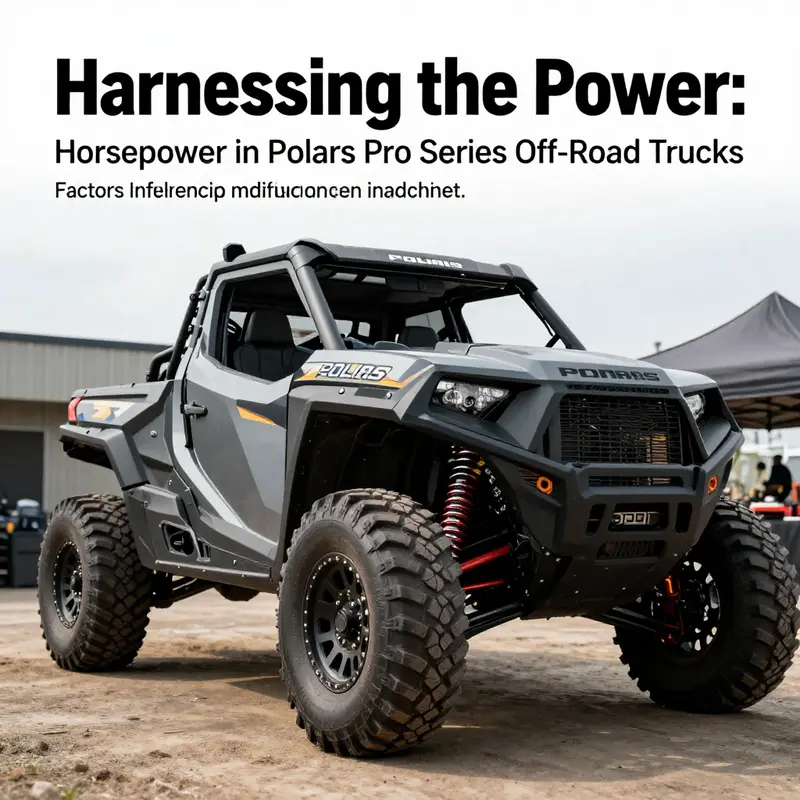
Horsepower in Pro Series off-road trucks is a number that matters, yet it’s seldom static. When you push a vehicle into rock-strewn gullies, sand washes, or tight switchbacks, the power you feel comes not from a single component but from a carefully choreographed ensemble. The figure you see on a spec sheet—whether it sits around a hundred or more horsepower—emerges from a complex balance of engine design, induction, exhaust flow, fuel delivery, and how the machine sheds heat under stress. In one note from the Pro Series family, the engine displacement sits around nine hundred cubic centimeters and can deliver roughly one hundred ten horsepower under typical operating conditions. That ballpark gives a sense of the kind of punch these machines bring, but the exact number is a product of the combination of design choices, tune, and the environment in which the vehicle operates. To understand why horsepower can vary even within a single family of trucks, it helps to look at the levers engineers pull to convert fuel into forward momentum and how those levers interact with the realities of off-road terrain, weight, and the demands of precision handling.
The most fundamental driver is engine displacement and configuration. The size of the engine sets the ceiling for how much air and fuel can be combusted each cycle, which in turn defines the potential horsepower. In practical terms, larger engines tend to afford higher peak power, especially when paired with modern intake and exhaust strategies. But horsepower doesn’t rise in a straight line with displacement alone. The configuration—the arrangement of cylinders and how they fire—shapes the engine’s torque curve, its responsiveness, and how efficiently it can sustain power as the RPMs climb into the range where off-road performance truly matters. Off-road trucks rarely rely on high-rev thrills alone; instead, they demand a broad, usable band of torque that can pull a heavy chassis through mud, over rocks, or up a steep incline. The result is a power profile that prioritizes usable grunt at lower and mid-range RPMs, ensuring that a driver can keep traction where it counts most.
Turbocharging or other forms of forced induction further complicate the horsepower narrative in Pro Series machines. By forcing more air into the combustion chamber, turbochargers raise the density of the charge and let the engine burn more fuel for greater output. The gains are especially meaningful in environments where air is thinner or temperatures swing where power tends to fall off. A well-integrated turbo system boosts horsepower while managing heat, throttle response, and reliability—factors that matter when a machine is driven hard through a day of racing or a long, unforgiving trail. In the same breath, a well-tuned turbo setup can widen the engine’s effective operating range, helping maintain high power through the accelerative bursts that define off-road driving, rather than delivering a steep but short-lived spike of peak power. The rest of the exhaust and intake plumbing works to preserve that advantage; the flow of exhaust gases must be efficient enough to avoid bottlenecks that sap horsepower before it ever reaches the drivetrain.
Exhaust efficiency itself is a notable constraint on the raw power an engine can produce. A clean, well-designed exhaust system reduces backpressure and helps the engine expel spent combustion gases quickly. This is not a cosmetic detail; it translates directly into the engine’s ability to gulp air and fuel at high speed and high loads. In off-road duty, where engine cycles are frequent and the throttle position can demand rapid shifts in power, a streamlined exhaust path supports higher sustained horsepower and better throttle feel. The same principle applies to the intake side: air must reach the cylinders with minimal impedance. Intake geometry, filters, and even manifold design contribute to the rate at which an engine can breathe, particularly when the vehicle is fighting through dust and debris or negotiating tall dunes where the demand for air surges mid-run.
Fuel delivery systems complete another crucial piece of the horsepower puzzle. Direct injection versus port fuel injection each offer trade-offs in efficiency, throttle response, and peak power. A modern fuel system that meters fuel precisely to match air inputs can extract more horsepower from the same displacement by improving combustion efficiency. In the rough-and-tumble world of Pro Series machines, reliable fuel delivery means the engine can perform consistently across a range of temperatures and altitudes, and under the duress of long sessions where heat soak can otherwise erode performance. The chemistry of combustion—the timing, the air-fuel ratio, the ignition strategy—tells the engine when to “go,” and every improvement in delivery translates to tighter control over horsepower delivery.
Beyond the engine itself, the weight-to-power ratio looms large. A given horsepower number only translates into real-world speed and acceleration when the vehicle’s mass is considered. Reducing weight, without sacrificing rigidity or durability, raises the effective horsepower by increasing the power available per unit of mass. Materials science contributes here—metals and composites with high strength-to-weight ratios allow chassis and body panels that are lighter yet capable of withstanding the brutal knocks of off-road travel. Aerodynamics, though often a secondary concern in high-speed, short-track environments, still plays a role in heat management and air resistance. A streamlined silhouette and smart cooling paths reduce drag and help retain engine power in heat-heavy conditions, ensuring that horsepower remains accessible when conditions threaten to sap it away through temperature rise or air-induced friction.
Even with the best of designs, environmental factors exact a toll on horsepower. Altitude, ambient temperature, and the nature of the terrain all modulate how much power actually makes it to the wheels. In dusty, high-temperature environments, the intake air is less dense and heat soak rises, nudging horsepower downward. In short, a clean lab figure rarely survives intact in the real world; what matters is the horsepower curve—the engine’s ability to deliver power across the specific RPM range demanded by the driver while the vehicle negotiates obstacles, climbs grades, or bursts from a standstill with traction at the tires. The Pro Series approach balances peak power with practical, on-the-ground performance by emphasizing a broad torque peak, reliable turbo behavior, and robust cooling, so the horsepower isn’t squandered in corners or stalls but translates into momentum when the driver needs it most.
Owners and builders also influence horsepower through choice and tuning. Aftermarket components and software calibrations can widen the envelope of power, but they also invite heat and reliability considerations. Increasing performance often means the engine, turbo, exhaust, and cooling systems must work harder and for longer periods, which can alter maintenance schedules and component lifespans. In this light, horsepower becomes not merely a static number but a dynamic outcome of how the vehicle is used, how well it is maintained, and how its systems are tuned to work in harmony. The takeaway is simple: horsepower in Pro Series off-road trucks reflects an integrated design philosophy as much as a single number. The ecosystem of displacement, induction, exhaust flow, fuel delivery, weight management, heat control, and environmental adaptation all converge to determine not just how fast a truck can go, but how effectively it can sustain power through the toughest terrain.
For readers who want a deeper dive into engine fundamentals that underpin these considerations, a broader look at diesel and other powertrain principles can be enlightening. Mastering Diesel Mechanics offers approachable context on how fundamental aspects like compression, lubrication, and heat management influence performance. While it speaks to a different domain, the underlying physics—how energy is converted from fuel to motion and how heat is managed under load—are the same threads that connect every horsepower figure seen in the Pro Series lineup. This awareness helps demystify the numbers and makes clear why a given horsepower rating can be a snapshot rather than a fixed truth, especially once a machine is unloaded for a day of serious off-road work or loaded with gear for a demanding expedition.
Ultimately, riders and engineers alike approach horsepower as a practical resource to be managed rather than a static badge to be worn. The grand challenge in the Pro Series is to harmonize maximum power with controllability, durability, and consistency across conditions. That means honoring the core levers—displacement, induction, exhaust, and fuel delivery—while recognizing the weight, heat, and terrain that shape real-world performance. When all these elements align, horsepower emerges as a reliable ally rather than a fleeting peak. For anyone charting a path through the dunes, hills, and rock gardens, the lesson is clear: horsepower is a product of thoughtful design, precise engineering, and disciplined operation. It is the result of how a machine breathes, how it sheds heat, how it weighs its own momentum, and how it stays reliable while delivering power where and when it matters most.
External reading provides a wider frame on these dynamics, offering perspective from broader performance analyses that extend beyond any single model line. For a general exploration of how high-performance powertrains balance output with efficiency and reliability, see a comprehensive motorsport powertrain review. The comparison helps place Pro Series horsepower in a wider context, illustrating how engineers across segments navigate the same core constraints to deliver usable power on demanding terrain.
Beyond Horsepower: The Performance Equation in Pro Series Off-Road Trucks
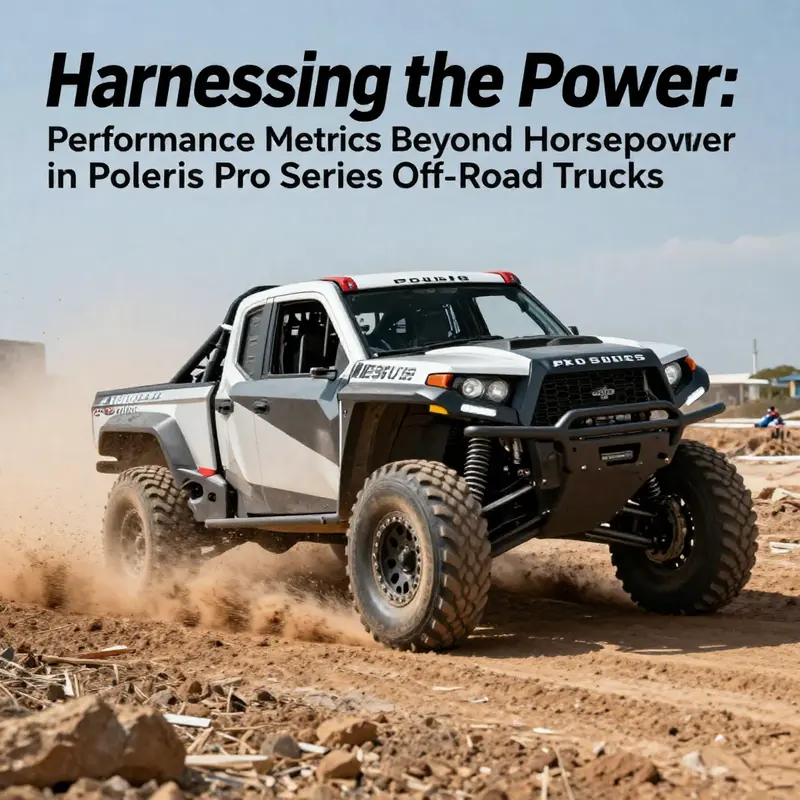
Horsepower often serves as the first figure people notice when assessing a pro-series off-road truck. Yet in the harsh realities of rugged terrain, sand, mud, rock faces, and timed operations, raw power is only one part of a larger equation. The most capable machines in this category balance power with a suite of performance metrics that together determine how well they translate that power into real-world ability. In practice, a truck can claim high horsepower on a spec sheet and still feel hesitant on a steep climb if the rest of its systems aren’t tuned for the demands of off-road work. The true story of performance, then, unfolds not in the single number but in how torque, drivetrain, chassis resilience, braking, and hydraulic efficiency interact under pressure. Those interactions become a practical measure of whether a machine can persist through long days, demanding terrain, and repetitive load cycles without faltering.
Torque, for instance, is the immediate translator of horsepower into usable force. It is the engine’s ability to rotate the wheels against resistance, and it governs how quickly a truck can first surge from a standstill, how well it maintains momentum on loose surfaces, and how effectively it negotiates rock steps or muddy inclines. In off-road conditions, where traction can change from moment to moment, torque is less about peak numbers and more about the steadiness of delivery. A high-torque profile with a broad, flat curve makes low-speed acceleration predictable and controllable, which matters when drivers must modulate throttle to prevent wheel spin or to keep RPMs within a range that preserves drivetrain integrity. This everyday utility of torque often matters more than a flashy peak horsepower figure, because real-world performance hinges on how the engine’s power is felt at the wheels when the ground is unpredictable.
Drivetrain configuration stands as the next crucial pillar. In the most capable pro-series trucks, traction and stability are engineered through deliberate choices about how drive power is distributed. A 6×4 arrangement might deliver confidence on stable, firm surfaces and handle loads efficiently, while a 6×6 setup can unlock traction when one or more wheels lose grip. The extra axle and distributed torque help maintain forward momentum across uneven terrain, slow steep descents with control, and provide redundancy in the face of tough obstacles. Beyond the count of axles, the way torque is split between axles, the presence of locking differentials, and the responsiveness of electronic traction aids all contribute to how effectively a truck translates horsepower into forward motion. In practice, the most capable platforms are those with a drivetrain tuned to preserve momentum on slippery surfaces, inject torque where it is needed, and resist abrupt yaw moments that can upset chassis alignment on rocky or rutted paths.
The chassis and suspension system embody the other half of the practical performance picture. A robust frame and an adaptive suspension are not merely about soaking up hits; they are about preserving tire contact with the ground, a constant factor in traction, braking, and steering control. A well-engineered suspension offers a balance between compliance and stiffness: it must absorb rough landings and big bumps without letting the wheels lose contact, yet it should not be so soft that chassis geometry collapses under heavy loading. The result is predictable handling that a driver can count on when negotiating whoop sections, rutted trails, or extraction scenarios in which timing and positioning matter as much as power. A durable chassis resists the fatigue that comes from long hours in punitive environments, maintaining alignment and ensuring that steering inputs translate cleanly into motion rather than into wandering or sluggish response.
Braking systems in heavy, purpose-built off-road trucks often go beyond what most people expect from lighter vehicles. High-load operations, quick deceleration on steep descents, and dynamic weight transfer during climbs place exceptional demands on brakes. Advanced braking systems—whether they incorporate multi-channel cooling, heavy-duty rotors, reinforced calipers, or even air-assisted components in larger configurations—play a decisive role in safety and control. The ability to modulate speed cleanly, without fading or abrupt pedal feel changes, allows drivers to manage line selection, throttle application, and speed in transitions that require precision rather than brute force. In the most challenging environments, effective braking is as much about system robustness as it is about raw stopping power; it ensures that drivers can maintain momentum where desired and reduce risk when a sudden obstacle requires swift, controlled deceleration.
A set of hydraulic mechanisms adds another dimension to performance, especially in operations where time is of the essence. Hydraulic tipping systems, for example, must deliver reliable, repeatable performance under heavy loads and across variable terrains. In mining or large-scale construction contexts, fast and dependable load dumping or load transfer translates directly into productivity. The hydraulic systems must function smoothly even after hours of exposure to dust, vibration, and thermal cycling. When these elements operate in concert with the drivetrain, suspension, and braking, the result is a truck that can sustain throughput without compromising safety or component longevity. This integrated reliability is often the deciding factor in how a fleet owner gauges the value of horsepower. It is not simply how much power the engine can produce, but how consistently the vehicle can harness and deploy that power when the ground underfoot is changing untrackable and the next task demands rapid response.
Because off-road trucks in this class are frequently customized or spec’d for particular tasks, there is ample room for variation in how performance manifests. A truck tuned for maximum raw speed on a dry, open course will behave differently from one set up for heavy-duty towing, rock crawling, or long-haul duty cycles across rough terrain. Even within a single model family, owners may alter gearing, suspension geometry, or tire choice to emphasize specific strengths. In the field, this means that horsepower remains a guide rather than the sole predictor. It also underscores why a comprehensive approach to performance analysis matters: what truly matters is the ability to deliver power precisely where the driver needs it, when the terrain demands it, while maintaining control and reducing the risk of mechanical stress.
To appreciate how these pieces fit together, consider the kind of operational context that defines pro-series off-road trucks. In many demanding settings, a vehicle operates under load for extended periods, traversing varied surfaces and negotiating obstacles that test every subsystem. The torque curve must remain usable as the vehicle climbs steep grades, while the drivetrain and traction aids must preserve forward motion across slick, uneven ground. The suspension must dampen the impact of rough terrain without letting the chassis misbehave, and the brakes must cope with repeated descents and rapid decelerations without fading. The hydraulic components must respond quickly to operator input, delivering predictable tipping or loading cycles when time is critical. In such environments, horsepower alone cannot guarantee performance; the synergy of systems determines whether a truck can meet a schedule, avoid breakdowns, and sustain productivity over the long haul.
For readers seeking a deeper technical lens on how these performance metrics are engineered in modern heavy off-road platforms, it helps to consult broader engineering analyses that explore how torque, hydraulics, and chassis design interplay beyond simple power ratings. In practice, those analyses emphasize the holistic design philosophy that underpins any serious off-road truck. They remind us that assessing capability requires looking at how weight distribution, surface interaction, and energy management converge with the engine’s output. This perspective clarifies why official specifications often present a range of figures for torque, gearing options, and braking performance, rather than a single, all-encompassing number for capability. It also explains why real-world testing—on graded hills, through mud, and over rough surfaces—remains the most reliable teacher for understanding truly how a pro-series truck behaves under load.
For readers who want to connect these ideas with practical maintenance and reliability considerations, there is value in exploring trusted technical resources that break down diesel performance and system durability in a clear, actionable way. A detailed guide on diesel mechanics, for instance, can illuminate how routine care, component wear, and preventative maintenance influence the longevity of power delivery, torque consistency, and hydraulic performance. Mastering Diesel Mechanics: A Step-by-Step Path to Success provides a useful framework for thinking about how maintenance choices affect the overall performance equation in heavy off-road platforms. The takeaway is straightforward: keeping the mechanical systems in harmony is essential to translating horsepower into reliable, real-world capability.
From a strategic perspective, owners and operators should weigh horsepower as part of a broader performance profile. They should evaluate how torque curves align with drive-train characteristics, how the suspension supports tire contact under load, and how braking and hydraulic systems respond in the conditions they will encounter most often. In other words, horsepower is a starting point, but the end-to-end performance picture is built on the interplay of several critical subsystems operating in concert. This holistic view helps fleet managers and drivers set realistic expectations, plan maintenance, and select configurations that balance power with durability and control. It also informs how to interpret official specifications, field tests, and real-world feedback from operators who repeatedly push these machines to corners of performance that the marketing sheets cannot fully capture.
For practitioners, the practical takeaway is simple: power matters, but it must be matched with the right drivetrain, chassis robustness, braking discipline, and hydraulic reliability to deliver a vehicle that can do the job day after day. When these elements align, a pro-series off-road truck demonstrates what it is designed to do—convert raw engine output into controlled, purposeful performance that stands up to the harshness and tempo of professional workloads. In that sense, horsepower is the gateway to capability, while the rest of the performance equation determines whether that capability translates into efficiency, safety, and sustained productivity across the toughest environments. As with any complex machine, the true measure of value lies not in the peak rating but in how well all systems work together when the going gets tough. External resources can provide additional perspectives on how broader performance metrics are engineered and validated in heavy-duty trucks, offering a broader frame for understanding the intricate balance between power and resilience in pro-series off-road platforms. https://www.howousa.com/used-tipper-trucks-guide
Raising the Bar: Future Horsepower Trends in Pro Series Off-Road Trucks
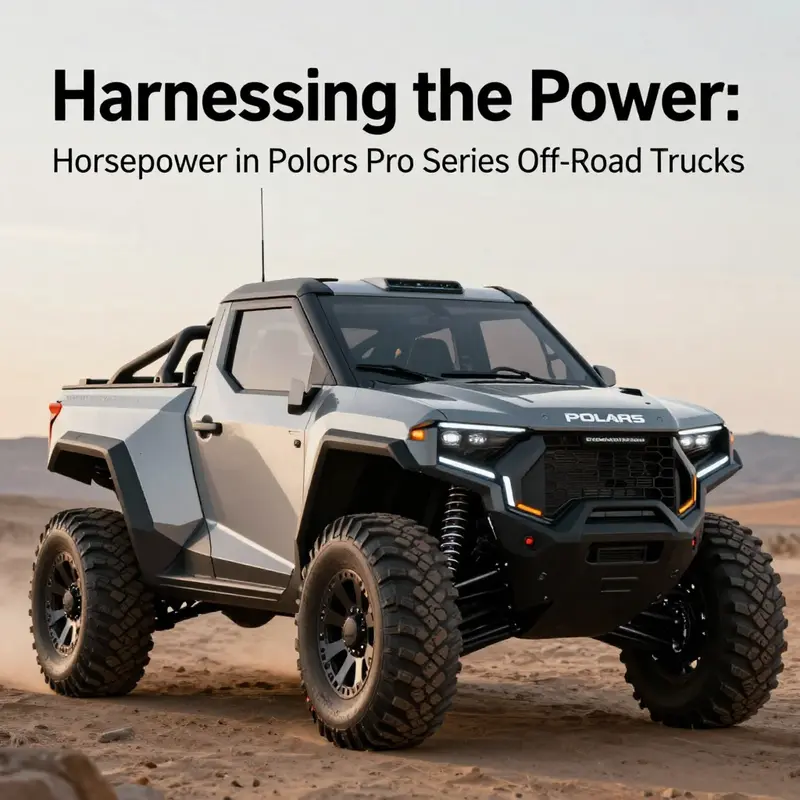
Horsepower in Pro Series off-road trucks serves as a key signal of capability, but it is not the whole story. The current landscape shows a spectrum rather than a single peak. A flagship model in this category commonly hinges on a compact, high-revving engine around 900cc that delivers roughly 110 horsepower on a well-tuned setup. Yet this figure is not a universal truth across the lineup or the years. Some configurations emphasize lighter weight and aerodynamic efficiency, trading some top-end power for nimble handling and lower fatigue in long, brutal climbs. Others push for more aggressive torque curves to tackle steep, rocky grades and fast, loose surfaces. The result is a wide range of horsepower outputs tied to the intended use, whether it is pure speed across open dirt, rock crawling with controlled throttle, or utility-duty versatility in demanding terrain. In practice, horsepower is only part of the equation; the real story unfolds in how that power is delivered, managed, and sustained while navigating the unpredictable moods of off-road conditions. The interplay between engine displacement, gearing, torque, cooling, and drive systems means that two nearly identical horsepower numbers can feel very different in the dirt. This is why enthusiasts and teams pay close attention to the whole powertrain package, not just a single horsepower metric, and why manufacturer literature stresses the full package of torque curves, heat management, and traction controls as much as the raw horsepower rating.
The diversity within the Pro Series reflects a broader truth about off-road performance: propulsion is only as valuable as the traction and endurance that translate that propulsion into forward motion. A 110-horsepower figure is impressive on paper, but it becomes meaningful only when the vehicle can sustain demand over hours of rough terrain, sudden sprints, and the kind of sustained climbs that test cooling and driveline integrity. Weight optimization plays a decisive role here. A lighter chassis with clever weight distribution will feel punchier, enabling more responsive throttle input and a quicker perceived acceleration even if the engine ends up producing a similar horsepower figure to a heavier cousin. Conversely, a heavier model may pair a slightly higher horsepower rating with advanced torque management and smarter gearing to preserve agility. In both cases, the practical result for the driver is momentum—how quickly you regain speed after a deep rut, how confidently the truck handles a steep side hill, and how well the drivetrain keeps pace with the terrain’s changing demands. Enthusiasts often discover that horsepower alone does not determine winning grip; the combination of torque delivery, torque-to-weight ratio, and the reliability of cooling and lubrication systems under stress shapes the actual performance envelope.
Looking ahead, the future of horsepower in Pro Series off-road trucks is increasingly characterized by a deliberate push toward more power without sacrificing durability or efficiency. The trajectory points to higher peak outputs on flagship configurations, but with smarter torque delivery that preserves grip and traction through varied surfaces. In practice, this means broader use of multi-mode power management that adapts to terrain, grip level, and throttle intent in real time. Drivers can expect engines to deliver stronger torque at low RPM ranges for climbing and negotiating loose substrates, while still providing clean, stable power at higher RPMs for sprinting across flatter sections. The trend is not simply more force; it is more usable force, available when it matters most and distributed with precision to prevent wheel spin and energy waste. As manufacturers push the envelope, heat rejection and cooling efficiency become non-negotiable priorities. Extended power applications in hot, rugged environments demand robust radiators, improved air paths, and better thermal materials so that horsepower does not dwindle after a few high-intensity runs. The industry recognizes that without dependable cooling, peak power quickly degrades into a practical midrange at best, and an underperforming experience at worst. In this sense, the horsepower race is evolving into a race for power integrity under real-world stress, a shift that benefits teams who value consistency as much as raw numbers.
Electrification is a central pillar of the coming era. Hybrid and full-electric powertrains are emerging as viable, even transformative, options for high-performance off-road applications. Instant torque, silent low-speed operation, and the potential for regenerative power during descents or braking cycles present compelling case studies for future Pro Series platforms. The advantage is not merely in peak horsepower, but in the ability to maintain sustained performance over long, technical routes where reliability and controllable torque matter more than short bursts of raw power. Electrified architectures also open new avenues for power management, including terrain-adaptive torque distribution, predictive cooling based on duty cycle data, and smarter battery thermal strategies designed to keep performance steady in extreme conditions. It is not just about replacing an internal combustion engine with a battery pack; it is about rethinking the powertrain as a smart, integrated system where energy density, weight, and thermal behavior are balanced with drive torque, chassis dynamics, and control software.
The broader industry context hints at a leadership lesson for Pro Series enthusiasts: the future horsepower story will be told as much by electronics and software as by the engine itself. Advanced driver-assistance and performance-management tools will filter real-time data into throttle response, traction control, and suspension damping, giving a driver more precise influence over how power translates into forward motion. A terrain-aware control unit can adjust throttle mapping, torque distribution, and even steering assist depending on whether the truck is negotiating a slick shale, a jagged rock face, or a sandy long-run. In practice, this means buyers will encounter more tunable options directly from the factory—different drive modes for rock crawling, desert sprinting, or mixed-terrain endurance—each tuned to optimize the available horsepower for the specific challenge. The customization ecosystem will also reflect that horsepower is a moving target subject to owner preferences and local conditions. A build designed for aggressive hill climbs might emphasize instant torque and a broad torque window, while a desert racer could prioritize sustained high RPM power delivery and cooling reserves. And because aftermarket modifications will continue to influence wheel horsepower and drivetrain performance, the ongoing dialogue between factory design and user modification will shape how horsepower is perceived and utilized in the field.
For readers who want a glimpse into how electrification and advanced powertrains are reshaping heavy-duty off-road technology, the broader shift is worth watching. Industry narratives increasingly point toward a future where power is part of a holistic system rather than a single specification. The lesson translates to the Pro Series as well: horsepower remains a critical metric, but its value is amplified when paired with intelligent management, reliable cooling, and a willing acceptance of new powertrains that can deliver consistent performance under the harshest conditions. In this evolving landscape, engineers and drivers alike are learning to interpret power not simply as a peak number to chase, but as a dependable rhythm that adapts to the terrain, the pace, and the mission at hand. The practical upshot for enthusiasts is clear: expect more capable, more durable, and more controllable power that feels responsive and predictable, even as the horsepower ceiling rises. As the ecosystem matures, a holistic approach to performance—where horsepower is harmonized with torque, efficiency, and intelligent controls—will define how Pro Series off-road trucks conquer the next frontier of extreme terrain.
As electrification and smarter powertrains become more mainstream, even the most traditional metrics may shift in meaning. Power output measured at the crank will be complemented by power delivered at the wheels, a factor that reveals the real-world effectiveness of gearing, tires, and drive configuration. The interplay between engine size, drivetrain architecture, and traction becomes a dynamic performance loop rather than a static specification. For readers seeking a tangible takeaway, the future horsepower story is less about chasing higher numbers in isolation and more about designing systems that convert those numbers into reliable, repeatable performance across the entire course of a race or a long, rugged expedition. In this sense, horsepower will continue to be a central, highly visible talking point, but it will be framed by a broader understanding of how power is managed, protected, and deployed in real-world off-road operations. The chapter ahead will build on this premise, linking current specifications to emerging technologies and the evolving expectations of drivers who demand both speed and stability in equal measure. For a broader context on how electrified powertrains are transforming power management in heavy-duty vehicles, see Volvo’s electric construction equipment revolution.
External resource: https://www.offroadpower.com/trends-2025-pro-series-trucks
Final thoughts
Horsepower, while a cornerstone of off-road performance, represents an intricate blend of engineering, design, and innovation within the Polaris Pro Series. Understanding the horsepower variances among models, the influence of external factors, and the holistic performance metrics empowers off-road enthusiasts to make informed choices tailored to their adventurous spirits. As we venture into the future, the evolving trends in horsepower ratings promise to further enhance these formidable vehicles, ensuring that Polaris remains at the forefront of off-road excellence.