
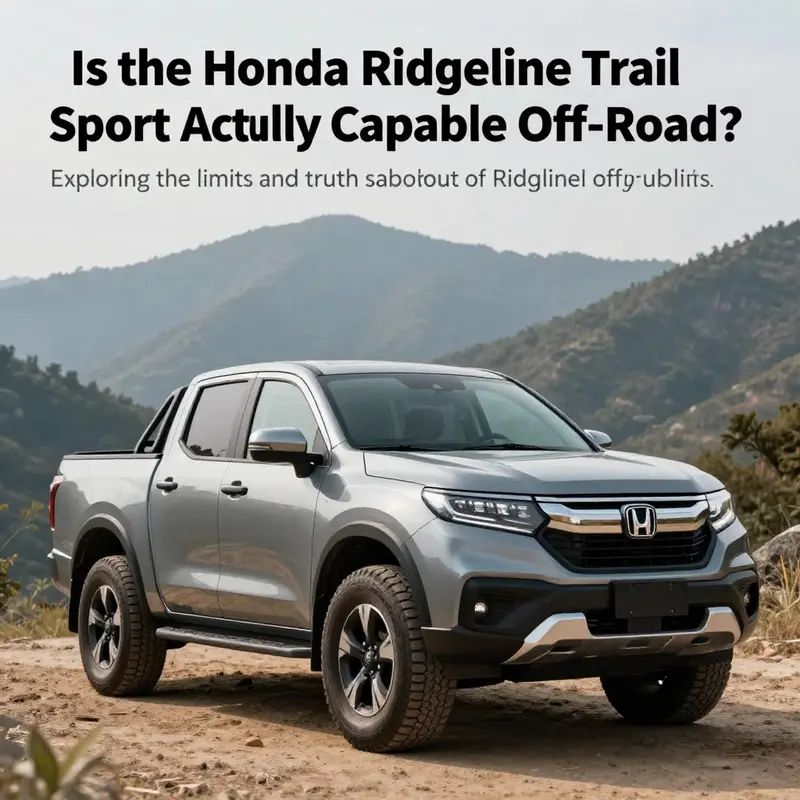
The Honda Ridgeline Trail Sport has positioned itself in the market as a truck ready for mild off-road adventures. However, the core question remains: Is it indeed a good truck for serious off-roading? For off-road enthusiasts, adventurers, and those who demand rugged capabilities, this inquiry is critical. With an exploration of notable limitations, design focus, marketing representations, and alternative off-road vehicles, we dissect the true nature of the Ridgeline’s performance beyond the pavement. Each chapter delves into the essence of an off-road vehicle and how the Ridgeline measures up against its peers.
Comfort Over Conquest: The Off-Road Limits of a Midsize Pickup
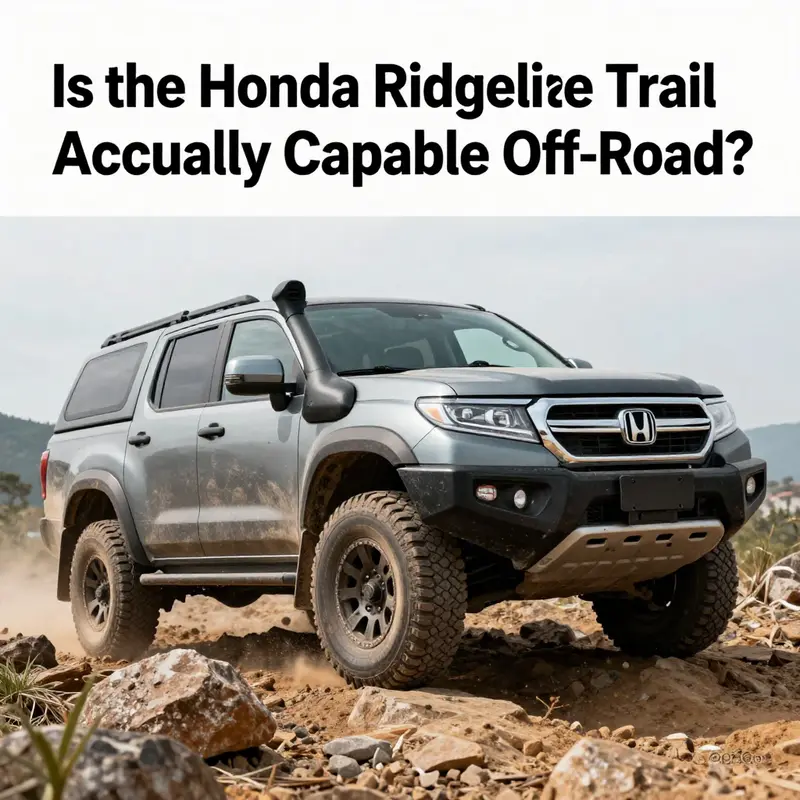
When considering whether this midsize pickup can double as a serious off-road machine, the short answer is that it excels at comfort and daily usability but falls short on rugged terrain. It prioritizes ride quality, noise isolation, and cargo practicality over extreme terrain mastery. The drivetrain options do not include a true low-range transfer case or mechanical locking differentials, which limits crawling ability and predictability on rocks, mud, or steep grades. Torque management can help, but it cannot substitute for low gearing or lockers. Ground clearance around 8.7 inches is respectable for a midsize truck but becomes a bottleneck on large obstacles, where approach and departure angles matter. The unibody construction and independent suspension favor on-road comfort and predictable handling but reduce the articulation and durability needed for sustained off-road abuse. In practice, the truck is well-suited for light dirt roads, forest service routes, and everyday use, but it is not a go-anywhere backcountry conqueror. For serious off-road adventures, a body-on-frame chassis, true low-range gearing, and locking capability are more appropriate, even if you sacrifice some ride comfort and refinement on pavement. The conclusion: manage expectations, recognize the built-in limits, and plan trips that stay within light-to-moderate off-road conditions.
null
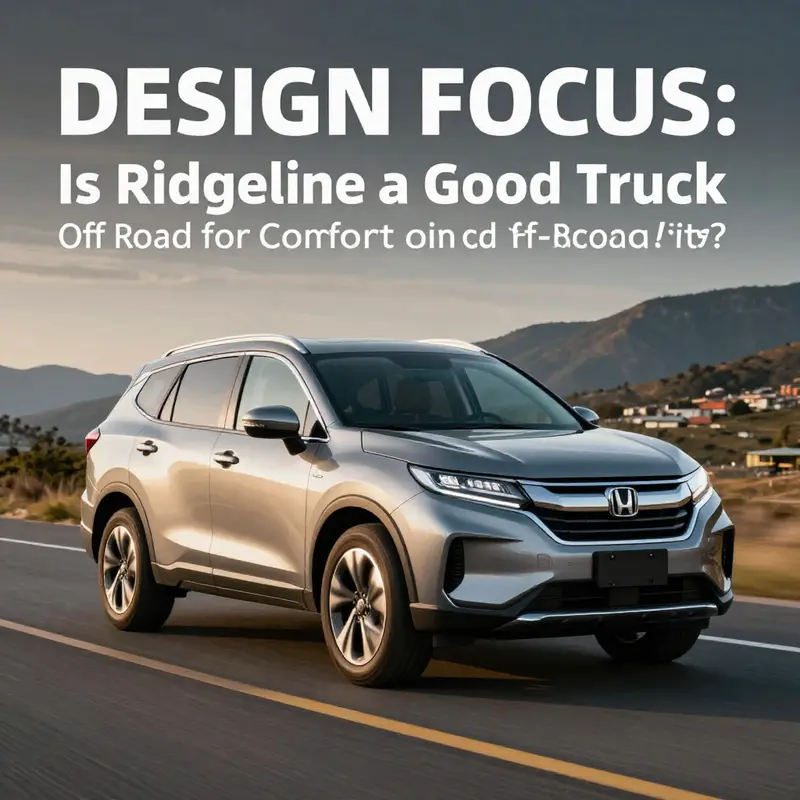
null
Is the Ridgeline Trail Sport Truly Off-Road Ready? Reassessing Its Capabilities
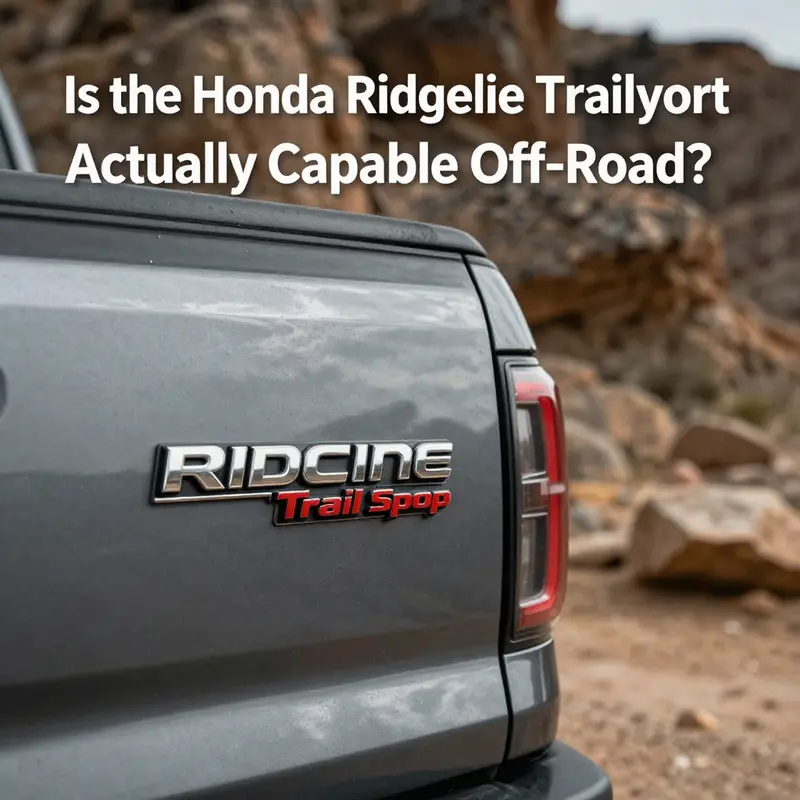
Is the Ridgeline Trail Sport genuinely off-road capable, or is it best described as a comfortable daily driver with light adventure potential? The answer lies in its engineering choices that shape performance beyond showroom marketing. The Trail Sport uses a unibody construction rather than a traditional body-on-frame chassis. That design prioritizes ride quality and efficiency on paved roads, but it also constrains the level of torsional rigidity and suspension articulation available on rough trails. In practical terms, a ladder-frame setup is often favored for resisting twist under heavy loads and supporting more aggressive suspension geometry. The Ridgeline’s unibody approach tends to favor a softer, more compliant ride over the uncompromising rigidity some hardcore trails demand.
Another key factor is the absence of a low-range gearbox. Low-range gearing multiplies torque and provides precise control at slow speeds when negotiating rocks, roots, or steep grades. The Trail Sport’s drivetrain is tuned for smoothness and efficiency rather than crawl-control precision. Without a dedicated low-range, and with a set of electronic aids, the truck can feel capable on light dirt and gravel but struggles to deliver the deliberate torque management required on tougher terrain. The lack of a mechanical differential locker compounds this limitation: it can rely on traction aids and the tires’ grip, but on cross-axle obstacles or deeply rut-filled sections, real lockers provide a measurable advantage.
Ground clearance and suspension behavior further define the Trail Sport’s role. With roughly 8.7 inches (about 220 millimeters) of ground clearance, it clears many forest-service roads and moderate obstacles, but it cannot match purpose-built off-road models whose approach, departure, and breakover angles are engineered for steep climbs and rock gardens. The Ridgeline’s independent rear suspension prioritizes ride comfort and payload distribution on pavement, trading some axle articulation and flex for everyday refinement. In real-world trails, that translates to confident handling on smooth dirt but limited ability to flex and traverse technical obstacles that demand a solid rear axle and longer travel.
Taken together, the Trail Sport excels as a comfortable, versatile daily driver that can dabble in light off-road excursions. It is not a tool for frequent, technical off-roading or long-duration expeditions. Buyers should align expectations: you can enjoy forest roads and gentle dirt paths with confidence, but for genuine off-road challenges that demand low-range control, lockers, and maximum articulation, a different chassis, gearing, and locking options are the more reliable path.
Beyond Comfort: Serious Off-Road Alternatives That Surpass the Unibody Pickup
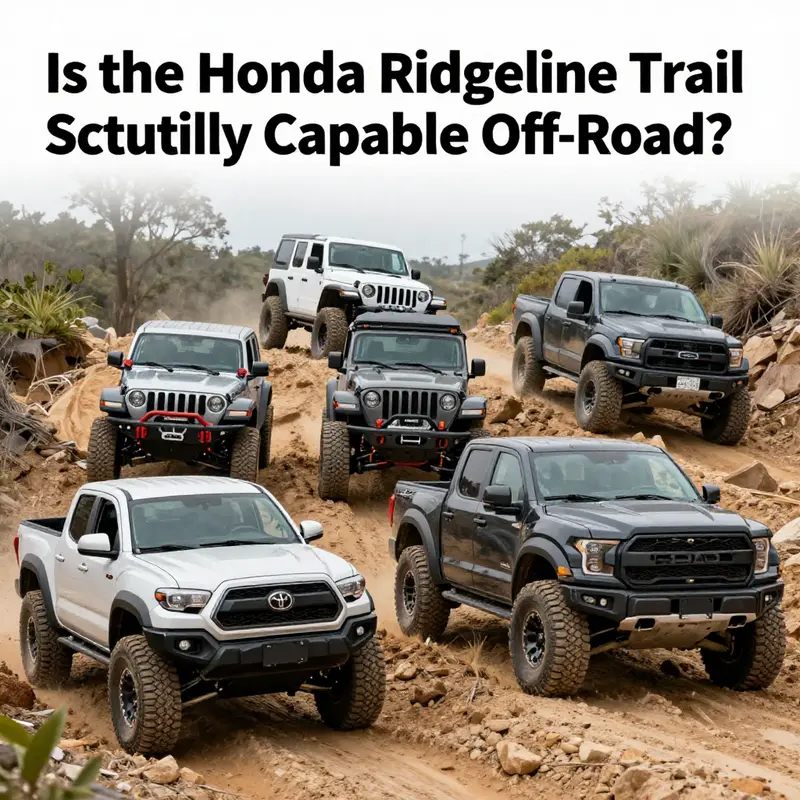
The chapter begins by acknowledging the argument that a comfort-focused, unibody pickup—the kind that blends car-like manners with the practicality of a small truck—can be excellent for daily life and light trails. Yet when the road turns to rock and sand, the same design choices that make this type of truck agreeable on the highway start to show their limits. The important distinction here is not a single feature, but a cluster of engineering decisions that determine whether a vehicle can survive, let alone thrive, on demanding terrain. A true off-road tool tends to rely on a ladder-frame chassis that can absorb and distribute brutal stresses, a low-range gear that multiplies torque at crawl speeds, mechanical locking differentials that ensure both axles can deliver traction when grip is scarce, and ground clearance paired with proven suspension travel that keeps the belly high and the underbody protected. In the case of the unibody pickup under discussion, while it may corner with precision and glide over modest dirt with ease, it lacks several of these core capabilities. It is not built to go deep into environments where surfaces shift unpredictably underfoot, where wheels must slip, bite, and hold on in sequence. Its ride is tuned for comfort, not for enduring the punishment of rocky ledges, steep troughs, and sand whoops that eat into the armor of lesser platforms.
A practical way to frame the comparison is to think in terms of architecture first. A ladder-frame chassis is purposely rigid and heavy, but that rigidity matters because it acts like a backbone when the wheels experience abrupt and asymmetric loads. When a rock or a stump grabs one wheel, the frame needs to resist twisting and transfer the impact through a stable structure. Independent front suspension can be a boon for on-road ride and general travel, yet it often sacrifices the straight-line durability and predictable articulation that a solid front axle can deliver on rough terrain. The unibody approach, by contrast, distributes loads across a welded shell and a network of panels, cuts weight by using a single, integrated structure, and favors on-road dynamics. For serious off-road work, that integration becomes a liability when the terrain demands a deliberate, slow, and rugged approach.
Then there is the matter of gearing. Low-range capability is not a luxury; it is the difference between maintaining traction at crawl speed and losing momentum on the most challenging surfaces. The ability to select a lower gear ratio ensures that a driver can apply consistent torque without simply spinning wheels in place. It also makes it possible to control descent and climb angles with precision, rather than relying on electronic aids to compensate for a lack of gearing. Without a dedicated low-range, a vehicle is cast more toward momentum and tires than toward controlled progress, which places limits on what the driver can accomplish on muddy climbs or rocky ascents where finesse matters as much as torque.
Power distribution is another critical factor. Mechanical locking differentials lock the axle shafts together so that power is shared evenly when one wheel loses traction. Electronic aids can help, but they cannot replace the confidence and predictability of a true mechanical locker when the grip is vanishing. In a vehicle that lacks this kind of locker, a slip at one wheel can cascade into a stuck situation, especially on uneven ground or when the surface density changes from dust to shale to scree. The upshot is that even with sophisticated traction control and electronic aids, the absence of a mechanical differential lock design can hamper progress in truly difficult conditions. The unibody platform, as used for the model under consideration, typically relies on selective torque distribution and stability control rather than an outright mechanical lock on either axle. The result is a vehicle that handles well on pleasant dirt roads but yields less confidence when the going gets gnarly.
Then there is the matter of ground clearance and approach angles. A figure around eight and a half inches of clearance sounds reasonable for a light-truck package, but in off-road terms that’s merely a foothold in a line of more capable machines. If the geometry of the underbody and the angles at which the vehicle meets the terrain are not generous, the risk to the center of gravity, the fuel tank, and the bottom panels rises quickly. Approach angle, departure angle, and breakover angle—these are not flashy metrics; they translate directly into how a vehicle can approach a rock ledge, how it can clear a trough, and how it will handle a downward slope without letting the chassis kiss the rock. When a truck is designed with a tastefully comfortable ride, those angles often become conservative to preserve ride smoothness. That trade-off is a vital part of why one cannot simply transplant highway manners into a rock garden.
The suspension philosophy matters, too. Independent suspension, while excellent for comfort and handling on paved surfaces, can limit articulation in some off-road scenarios. A robust, long-travel suspension with a more planful articulation strategy—often paired with a solid front axle or a reinforced rear setup—gives the wheels more freedom to maintain contact with uneven ground. That contact matters; it’s how the wheels find grip as the terrain shifts under them. In short, ride refinement and on-road predictability are not the same as off-road resilience. The balance is not impossible to strike, but it requires a platform that was designed from the ground up with extreme environments in mind, not one that leans toward light-duty dirt handling and the everyday comfort of a crossover-inspired pickup.
Against that backdrop, what does it mean to consider alternatives? It means looking at vehicles built around a more rugged architecture and loaded with features that truly matter on rough terrain. A typical representative of this class uses a ladder-frame chassis with a proven, durable front and rear suspension, a selectable low-range gearing system, and, crucially, mechanical locking differentials or other architectures that guarantee traction on slippery surfaces. These platforms often offer higher ground clearance, plus stronger axles designed to tolerate abuse. They are engineered to withstand long trips into remote areas, where maintenance, spare parts, and reliable performance in harsh climates become as important as raw power. The broader point is simple: when the terrain stiffens, the vehicle must be built to endure, not merely to impress with comfort on the highway.
That leads to a more nuanced view of what “off-road capability” means in practical terms. For some buyers, off-road adventures are occasional and light—forest service roads, gravel tracks, or a muddy forest floor after a rainstorm. For others, off-roading is a core part of life, a means of work, exploration, or rescue in remote settings. The former can be satisfied with a well-equipped, comfortable platform that can handle mild challenges without jarring the daily commute. The latter requires something much more robust: a chassis and drivetrain that can absorb punishment, navigate obstinate terrain, and do so with consistent reliability when it matters most. The unibody pickup under discussion does deliver everyday utility and dependable reliability, which are essential traits for many buyers. Yet, the same attributes that make it a convenient daily driver also explain why it struggles to meet the standards demanded by serious off-road work. In short, the vehicle’s strengths are aligned with a different mission, and the mission matters when the trail points up into the mountains or across a rocky wash.
If we pivot from the structural critique to a broader market reality, the pattern becomes clearer. A true off-road platform relies on a few non-negotiables that live outside the realm of comfort-oriented design: a ladder-frame chassis, a low gear, mechanical locking, and ample articulation paired with robust protection for the underbody and drivetrain. It’s not that the unibody pickup cannot be adapted; it’s that it would require a level of modification that often removes it from its original comfort sweet spot and moves it into a different category—one where the trade-offs are less about daily drive quality and more about the ability to perform in the harshest environments. This is the central tension facing buyers trying to balance everyday practicality with weekend adventure. For many, the right choice isn’t to chase the most extreme capability but to understand the specific demands of their typical terrain and to select a platform that aligns with those demands without turning every trip into a negotiation with inherent limitations.
The conversation about alternatives is not purely academic. Some buyers gravitate toward a class of vehicles designed to be both workhorses and explorers. These are trucks built around the needs of people who cross deserts, navigate remote trails, and carry equipment into rugged locations. They share a common thread: strength in the core chassis, a drivetrain that can be tuned for traction in difficult surfaces, and the resilience to withstand the kind of wear that would leave a lighter, comfort-focused truck sidelined. While this description sounds straightforward, the practical reality is more nuanced. People who value every mile of asphalt as a comfortable ride will not be drawn to something that prioritizes off-road capability at the expense of ride quality or daily usability. Conversely, those who rely on their vehicle to reach remote sites will often accept a louder exhaust note, stiffer ride, and heavier maintenance cadence in exchange for the confidence to claw through rough terrain.
In this light, the comparison matters more than ever. It is not about picking a single champion that beats all others in every scenario. It is about matching an off-road platform to the realities of the user’s environment. The ladder-frame family of trucks offers the kind of architecture that thrives when the going gets tough. They come with a suite of features designed for extreme terrain, including robust underbody protection, capable suspensions, and a configuration that makes it possible to choose between a variety of gearing and locking options. The more adventure-focused or expedition-ready variants within this class expand the capabilities further, offering multi-terrain throttle response, advanced traction controls calibrated for slippery rock or steep sand, and ample room for fuel, water, or cargo. Yet these are not vehicles that excel purely on pavement; their hard-earned strength is a trait that reveals itself when the pavement ends and the trail begins.
For readers who want to dive deeper into the mechanical upkeep that supports rugged platforms, there is a resource that lays out step-by-step guidance on diesel systems, maintenance routines, and the kind of preventive care that keeps a serious off-road travel plan viable over the long term. See Mastering Diesel Mechanics for a practical, hands-on path to keep a capable, heavy-duty chassis in top condition on demanding trips. Mastering Diesel Mechanics
Of course, not every journey into off-road territory requires the harshest tool available. For those who want a nuanced balance between capability and daily livability, there is a class of trucks that blends rugged geometry with more forgiving ride characteristics. These platforms typically offer higher ground clearance and revised suspension tuning while preserving more civilized on-road manners. The advantages include longer-range comfort, better highway efficiency, and more straightforward maintenance schedules. The trade-offs often involve less extreme suspension travel and fewer lockers or selectable low-range options, but they still provide meaningful capability for larger backcountry excursions or service work that pushes beyond daily commutes. In the end, the decision hinges on the user’s terrain profile, the frequency and severity of off-road use, and the willingness to accept compromises in comfort and efficiency for the sake of capability.
For readers who crave external validation and additional context about how these capabilities stack up in real-world environments, an external technical guide offers a rigorous perspective on how rugged, purpose-built platforms perform when pushed to the limits. This resource delves into chassis design, drive configurations, and the practical outcomes of choosing one architecture over another in demanding climates and terrains. External reference: https://www.autocar.co.uk/car-review/toyota/hilux-4×4-guide-composition-structure-and-performance-engineers-2026-01-20
In sum, the unibody pickup reviewed here remains an excellent daily driver and a capable light-trail companion. It excels in reliability, predictable handling, and efficiency, making it a strong choice for a broad cohort of buyers who prize practicality and comfort. However, when the goal shifts toward serious off-roading, the engineering fundamentals matter more than the badge or the trim. A ladder-frame chassis paired with low-range gear, mechanical locking differentials, and robust suspension is simply better suited to the kind of terrain most enthusiasts would classify as truly challenging. The distinction is not about a single performance metric but about a system-level philosophy that influences how a vehicle behaves through a rock garden, across a rut-filled wash, or up a slick, steep incline. The choice, then, becomes a question of personal mission: will your off-road adventures demand the most stubborn, reliable, and predictable performance a platform can offer, or will they revolve around the comfort and efficiency that make long road trips feel effortless? Either path can be rewarding, but the decision should align with the environments you actually plan to navigate, the distance you intend to cover, and the kind of mechanical resilience you expect your vehicle to deliver when the trail becomes the only reliable road forward.
Final thoughts
Ultimately, while the Honda Ridgeline Trail Sport offers some features that appeal to light users and urban adventurers, it lacks the robust components required for serious off-roading. Its unibody design, absence of low-range gearing, and limited ground clearance render it unsuitable for challenging terrains. It serves well as an everyday vehicle but falls short for those seeking true off-road capability. For serious off-road enthusiasts, alternatives like the Toyota Tacoma TRD Off-Road or Jeep Wrangler Rubicon present far superior choices for rugged adventures. Choose wisely to ensure your vehicle meets the challenges of the wild.