
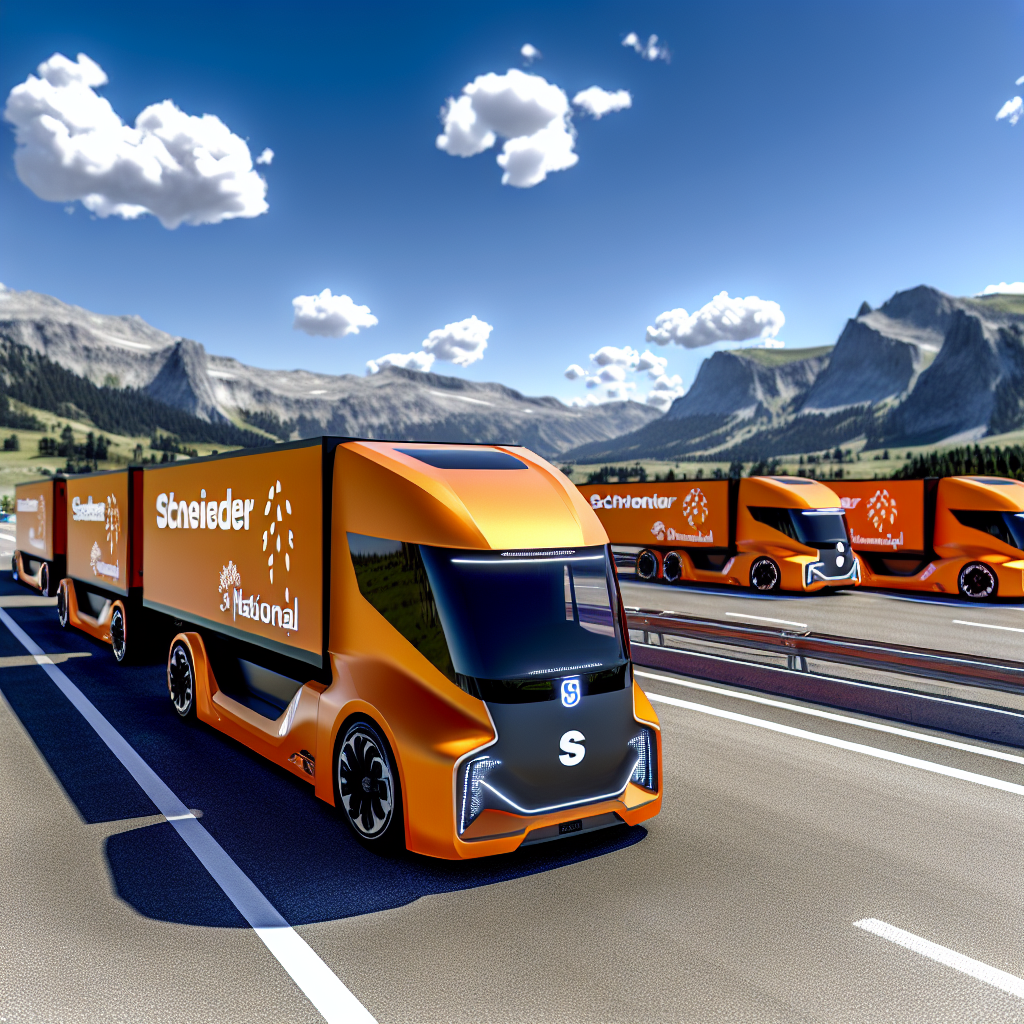
In an era where environmental challenges demand immediate attention, Schneider National is leading the charge with a remarkable milestone: surpassing 6 million zero-emission miles with their electric truck fleet. This incredible achievement not only underscores their commitment to sustainability but also exemplifies the innovative spirit that drives the transportation industry towards a greener future. By reducing carbon emissions by an astounding 20 million pounds, Schneider’s fleet is making significant strides in combating climate change, equivalent to removing over 2,100 gasoline-powered passenger vehicles from the roads for an entire year.
As one of North America’s largest electric truck fleets, the company operates nearly 100 Freightliner eCascadias, showcasing the potential of battery electric vehicles (BEVs) in the logistics and shipping sectors. Schneider’s dedication to harnessing electric vehicle technology marks a pivotal moment in the journey toward sustainable transportation. This commitment is further highlighted by their recent partnership with PepsiCo, where they became the first third-party carrier to haul zero-emission shipments while traveling over 31,000 miles in just a few months. With each mile traveled, Schneider National is setting new standards in logistics, blending efficiency with environmental responsibility.
Schneider has cut 20 million pounds of CO2 emissions. This is like taking more than 2,100 gasoline cars off the road for a year. This shows how much Schneider’s electric trucks can help the environment.
Schneider’s use of electric trucks shows that they care about the environment. By working with companies like PepsiCo, they are encouraging other businesses to use electric trucks too. Their efforts can inspire others in the trucking industry.
| Metric | Schneider Electric Fleet | Traditional Diesel Fleet |
|---|---|---|
| Zero-Emission Miles | 6 million | 0 miles |
| CO2 Reduction | 20 million pounds | Approx. 223,000 pounds CO2/year per truck |
| Number of Vehicles Operated | Nearly 100 | Varies (depends on fleet size) |
This table presents a clear visual comparison of the sustainability metrics between Schneider’s electric fleet and traditional diesel fleets, emphasizing the significant advantages of electric trucks in achieving zero-emission goals and reducing carbon footprints.
As a leader in sustainable transportation solutions, Schneider National operates a fleet of nearly 100 Freightliner eCascadias that are at the forefront of zero-emission trucking. This fleet is designed to minimize environmental impact while maintaining operational efficiency, aligning with the company’s commitment to sustainability.
Charging Infrastructure
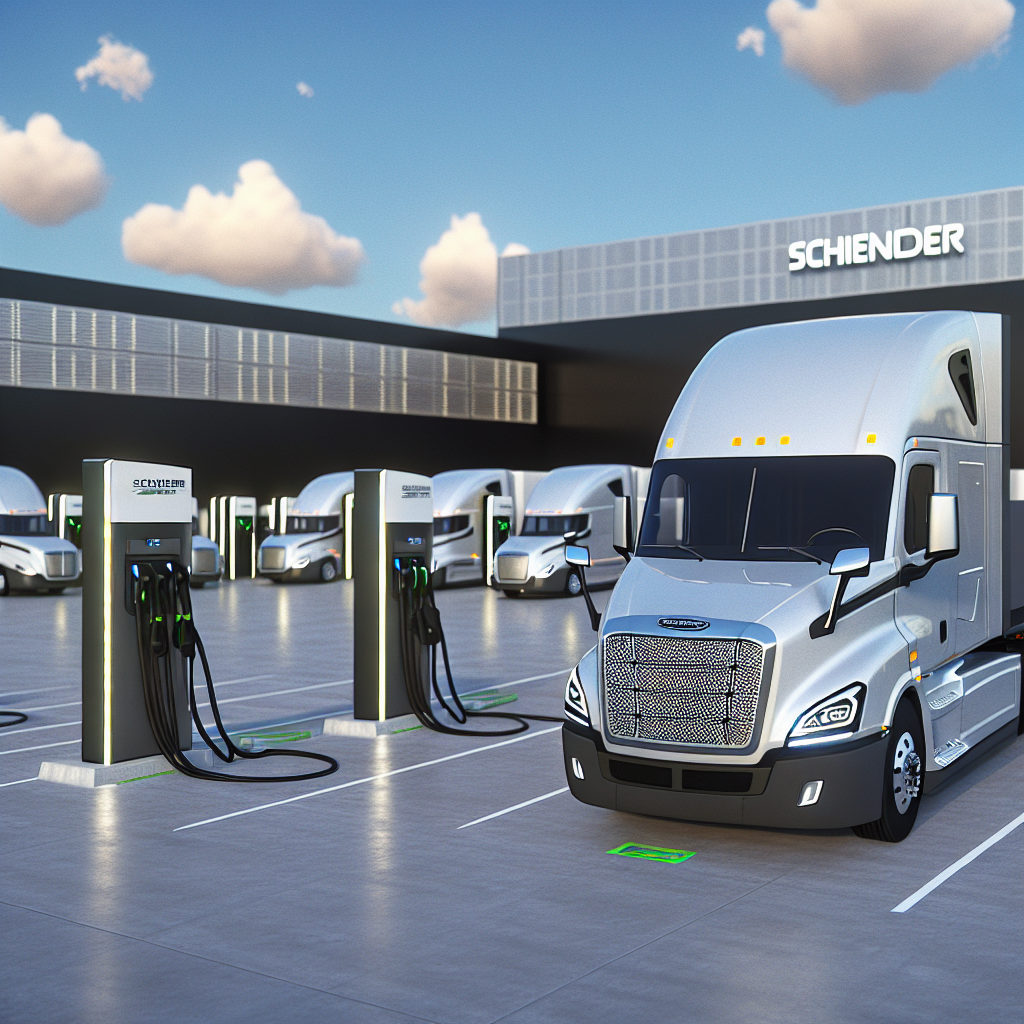
Schneider has invested significantly in charging infrastructure to support their electric fleet. A noteworthy facility is the South El Monte Charging Depot, which was inaugurated in June 2023. This state-of-the-art site spans over 22,000 square feet and can accommodate 32 trucks simultaneously, featuring 16 dual-corded 350 kW dispensers that enable optimal charging performance. The eCascadias at this depot can reach 80% charge within just 90 minutes, ensuring minimal downtime and maximizing uptime for deliveries.
The creation of this charging facility was supported by initiatives such as the Joint Electric Truck Scaling Initiative (JETSI), aimed at promoting the use of electric trucks across California.
Logistics Management
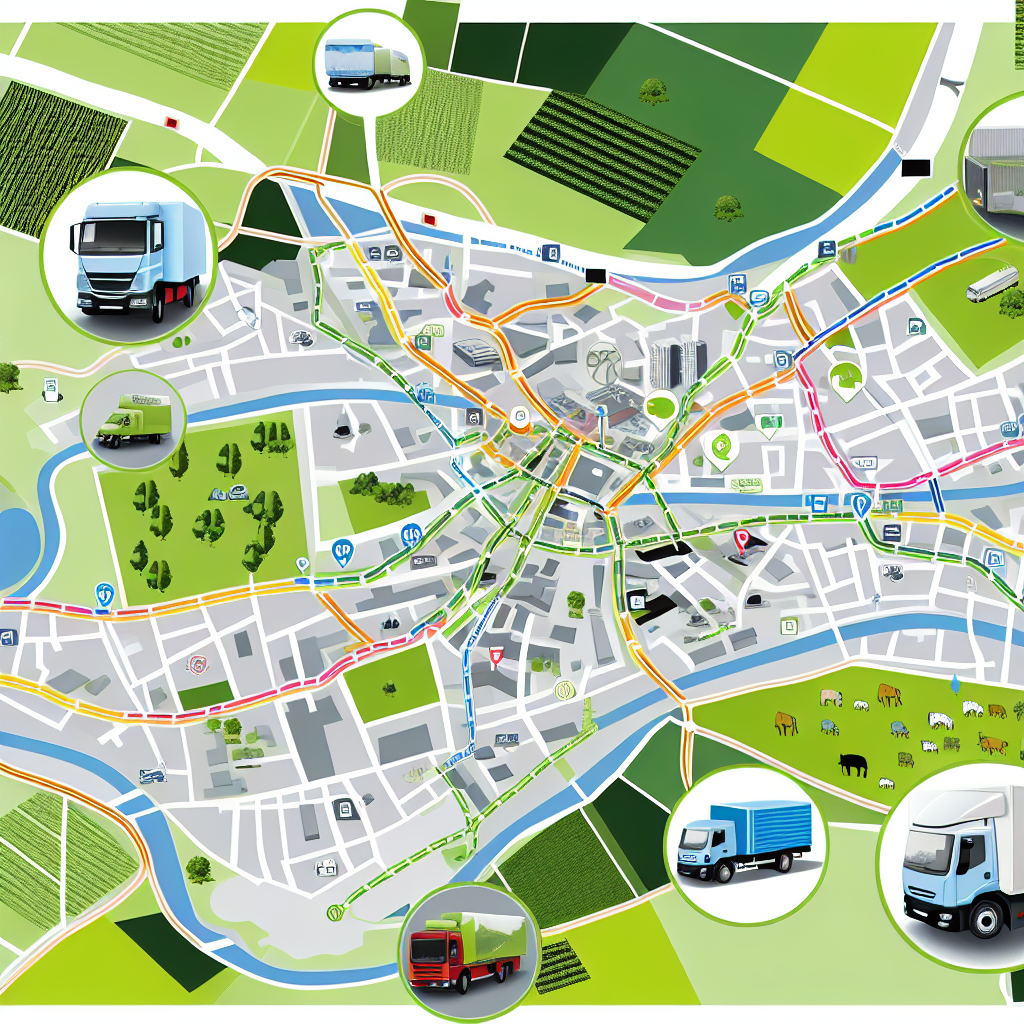
The logistics of operating this electric fleet involve careful planning around the trucks’ operational range, which typically spans around 220 miles per charge. Schneider strategically established its charging depot in the Los Angeles metro area, facilitating effective route optimization and ensuring that drivers can easily charge their trucks while making deliveries to customers within a 50-mile radius.
By collaborating with major clients like Frito-Lay North America and Goodyear, Schneider leverages its electric trucks’ capabilities to meet corporate sustainability goals while addressing increasing demands for eco-friendly logistics solutions.
Conclusion
Through these carefully designed operational strategies, Schneider National exemplifies how electric vehicles can be efficiently integrated into logistics, paving the way for a more sustainable future in transportation.
Summary of Schneider’s Partnerships and Milestones in Zero-Emission Trucking
Schneider National has made significant strides in zero-emission trucking, particularly through its partnership with PepsiCo and other companies, achieving notable milestones that advance sustainability goals in transportation.
Partnership with PepsiCo:
-
First Zero-Emission Shipments:
In April 2023, Schneider became the first third-party carrier to transport zero-emission shipments for PepsiCo globally. This collaboration involved nearly 800 shipments for PepsiCo’s Frito-Lay North America division using Schneider’s battery electric vehicle (BEV) fleet in Southern California. Source -
Recognition for Sustainability Efforts:
Schneider’s commitment to sustainable transportation earned it the PepsiCo Asset Sustainability Carrier of the Year award for three consecutive years, from 2022 to 2024. This recognition highlights Schneider’s role in supporting PepsiCo’s environmental objectives. Source
Milestones in Electric Trucking:
-
One Million Zero-Emission Miles:
By November 2023, Schneider’s BEV fleet surpassed one million zero-emission miles, marking a significant achievement in reducing carbon emissions. Source -
Six Million Zero-Emission Miles:
By December 2024, Schneider’s BEV fleet had exceeded six million zero-emission miles, resulting in a reduction of approximately 20 million pounds of carbon dioxide emissions. Source
Impact on Sustainability Goals:
-
Emission Reductions:
Schneider’s BEV operations have significantly contributed to reducing carbon emissions. For instance, the six million zero-emission miles achieved by December 2024 equate to removing over 2,100 gas-powered passenger vehicles from the road for a year. Source -
Infrastructure Development:
To support its electric fleet, Schneider established a large-scale charging depot at its South El Monte Operations Center in California. This facility features 16 dual-corded dispensers, allowing 32 trucks to charge simultaneously, with each vehicle achieving an 80% charge in approximately 90 minutes. Source
Through these initiatives, Schneider National demonstrates a strong commitment to advancing zero-emission trucking and supporting sustainability goals in the transportation industry. The focus on partnerships in zero-emission trucking highlights the critical role that collaborative efforts between companies can play in achieving sustainability goals. Schneider National’s work with PepsiCo not only represents a commitment to utilizing electric trucks but signifies a broader movement towards sustainable logistics. Such partnerships facilitate knowledge sharing, investment in necessary infrastructure, and the alignment of business objectives with environmental goals. By partnering, both companies can leverage their respective strengths to push the envelope on emissions reduction and set a precedent for industry transformation.
As we reflect on Schneider National’s remarkable achievements in sustainable transportation, it becomes increasingly clear that their commitment to innovation and environmental responsibility is not just a corporate strategy but a vital necessity for the future of logistics. By surpassing 6 million zero-emission miles with their electric fleet and cutting down 20 million pounds of carbon emissions, Schneider is leading by example, demonstrating how the transportation industry can embrace green technologies to combat climate change. This unwavering focus on sustainability sets a benchmark for others to follow and inspires a collective movement towards a greener economy. The need for continuous progress in green technology is paramount, as we strive to create a future that prioritizes sustainability and preserves our planet for generations to come. Schneider’s leadership and forward-thinking initiatives are paving the way for a cleaner, healthier world, emphasizing that sustainable practices in transportation are not merely aspirational but achievable realities. As they move forward, Schneider will undoubtedly continue to influence the freight industry, showcasing the potential and benefits of electric vehicles in reshaping our approach to logistics and environmental stewardship.
Conclusion
As we reflect on Schneider National’s remarkable achievements in sustainable transportation, it becomes increasingly clear that their commitment to innovation and environmental responsibility is not just a corporate strategy but a vital necessity for the future of logistics. By surpassing 6 million zero-emission miles with their electric fleet and cutting down 20 million pounds of carbon emissions, Schneider is leading by example, demonstrating how the transportation industry can embrace green technologies to combat climate change. This unwavering focus on sustainability sets a benchmark for others to follow and inspires a collective movement towards a greener economy. The need for continuous progress in green technology is paramount, as we strive to create a future that prioritizes sustainability and preserves our planet for generations to come. Schneider’s leadership and forward-thinking initiatives are paving the way for a cleaner, healthier world, emphasizing that sustainable practices in transportation are not merely aspirational but achievable realities. As they move forward, Schneider will undoubtedly continue to influence the freight industry, showcasing the potential and benefits of electric vehicle technology in reshaping our approach to logistics and environmental stewardship.
The global adoption of electric trucks in the freight industry has witnessed remarkable growth, reflecting a significant trend towards sustainable transportation. Key data and trends illustrate the rapid acceptance of electric vehicle (EV) technology across various regions and its implications for companies like Schneider National.
Global Adoption Trends
- China’s Rapid Transition: According to reports, electric heavy truck sales in China skyrocketed by 175% year-on-year in the first half of 2025, making up about 25% of all new truck sales. This surge is largely fueled by government incentives and an expanding charging infrastructure, thus markedly decreasing diesel consumption. (reuters.com)
- European Market Expansion: In Europe, over 10,000 electric trucks were sold in 2024 alone, continuing a two-year trend of significant growth. Countries such as Germany, Sweden, and the Netherlands lead the market, supported by strict emissions regulations and generous government incentives. (iea.org)
- United States Developments: The United States has recorded a gradual increase in electric truck adoption, with over 1,700 electric trucks sold in 2024, surpassing the combined sales from 2015 to 2022. This growth is propelled by tax credits and strategic grants aimed at advancing zero-emission vehicles. (iea.org)
Market Projections
- The electric truck market is on track to grow at a compound annual growth rate (CAGR) exceeding 20% through 2030, driven by rapid advancements in technology and an increasing influx of sustainable transportation solutions. (zipdo.co)
- By 2028, it is projected that electric vehicles will comprise 50% of heavy truck sales in China, a significant leap from the 10% average in 2024. (reuters.com)
Barriers to Adoption
Despite these promising trends, challenges such as limited charging infrastructure and higher upfront costs compared to diesel trucks remain. However, ongoing advancements in battery technology along with supportive policies are expected to alleviate these barriers in the near future. (automotive-fleet.com)
Conclusion
Schneider National’s investment in electric trucks aligns seamlessly with the burgeoning trend towards sustainability in freight transportation, reflecting an awareness of corporate responsibility and consumer demand for greener logistics solutions. The surge in electric truck sales reinforces the timeliness of Schneider’s commitment to its zero-emission fleet, positioning the company as a leader in the transition towards environmentally responsible freight transportation. Furthermore, by adopting electric vehicle technology ahead of competitors, Schneider enhances its operational efficiency and strengthens its reputation in a market increasingly oriented towards sustainability.
User Adoption Trends in Electric Trucks
The global adoption of electric trucks in the freight industry has witnessed remarkable growth, reflecting a significant trend towards sustainable transportation. Key data illustrates the rapid acceptance of electric vehicle (EV) technology across various regions, with implications for companies like Schneider National.
Global Adoption Trends
- China’s Rapid Transition: According to reports, electric heavy truck sales in China skyrocketed by 175% year-on-year in the first half of 2025, making up about 25% of all new truck sales. This surge is largely fueled by government incentives and an expanding charging infrastructure, thus markedly decreasing diesel consumption. (reuters.com)
- European Market Expansion: In Europe, over 10,000 electric trucks were sold in 2024 alone, continuing a two-year trend of significant growth. Countries such as Germany, Sweden, and the Netherlands lead the market, supported by strict emissions regulations and generous government incentives. (iea.org)
- United States Developments: The United States has recorded a gradual increase in electric truck adoption, with over 1,700 electric trucks sold in 2024, surpassing the combined sales from 2015 to 2022. This growth is propelled by tax credits and strategic grants aimed at advancing zero-emission vehicles. (iea.org)
Market Projections
- The electric truck market is on track to grow at a compound annual growth rate (CAGR) exceeding 20% through 2030, driven by rapid advancements in technology and an increasing influx of sustainable transportation solutions. (zipdo.co)
- By 2028, it is projected that electric vehicles will comprise 50% of heavy truck sales in China, a significant leap from the 10% average in 2024. (reuters.com)
Barriers to Adoption
Despite these promising trends, challenges such as limited charging infrastructure and higher upfront costs compared to diesel trucks remain. However, ongoing advancements in battery technology along with supportive policies are expected to alleviate these barriers in the near future. (automotive-fleet.com)
Conclusion
Schneider National’s investment in electric trucks aligns seamlessly with the burgeoning trend towards sustainability in freight transportation, reflecting an awareness of corporate responsibility and consumer demand for greener logistics solutions. The surge in electric truck sales reinforces the timeliness of Schneider’s commitment to its zero-emission fleet, positioning the company as a leader in the transition towards environmentally responsible freight transportation. Furthermore, by adopting electric vehicle technology ahead of competitors, Schneider enhances its operational efficiency and strengthens its reputation in a market increasingly oriented towards sustainability.
Future Outlook for Schneider’s Fleet and Electric Truck Technology
Speculating on the future outlook for Schneider’s fleet and electric truck technology requires considering several factors, including current trends in electric vehicle technology, the regulatory landscape, and potential advancements. Schneider National has already established a strong foundation with over 6 million zero-emission miles, showcasing their leadership in the electric trucking space.
Future Growth Potential
- Expansion of Electric Fleets: Other companies may follow Schneider’s model, leading to an overall increase in electric truck deployments, especially as advancements in battery technology continue to improve range and efficiency.
- Investment in Research and Development: Schneider will likely continue investing in R&D for electric vehicles which can enhance battery life, reduce charging times, and increase the payload capacity of electric trucks.
- Cost Reductions: As battery manufacturing scales and technology improves, the upfront costs of electric trucks are expected to decrease, making them an increasingly viable option for more fleet operators.
- Broader Adoption of Autonomous Technologies: Integrating autonomous technologies with electric trucks could revolutionize logistics, leading to greater efficiencies and safety in operations.
Regulatory Support Needed
- Incentives and Subsidies: For the electric truck market to flourish, governments will need to continue providing incentives for electric truck purchases, similar to the tax credits and grants currently available. This would encourage more companies to transition to electric fleets.
- Charging Infrastructure Development: Significant investment in charging infrastructure will be critical. Schneider’s initiative to establish its South El Monte Charging Depot sets an example, but expanded infrastructure will be needed nationwide to support the growing electric truck fleet.
- Emissions Standards: Stronger emissions regulations at both state and federal levels could push more logistics companies to adopt electric trucks to comply with new standards. This could further accelerate the transition to zero-emission transportation.
Conclusion
In summary, Schneider’s current success as a leader in electric trucking largely sets the stage for future growth in this domain. By continuing to innovate and seeking regulatory support, the company can significantly enhance not only its own fleet but potentially influence the entire industry towards sustainable practices.
The environmental benefits highlighted in the previous section offer a promising glimpse into the transformative potential of electric truck technology. Schneider National’s achievements in cutting carbon dioxide emissions exemplify the profound impact of their electric fleet. Now, this narrative seamlessly transitions into a quantitative exploration of fleet performance metrics.
Understanding the operational efficiency of Schneider’s electric trucks compared to traditional diesel vehicles is essential to contextualize their impact. By examining performance metrics, we gain valuable insights into how these electric trucks not only contribute to sustainability goals but also prove economically viable for logistics and freight operations moving forward. With this vital information at hand, we can evaluate Schneider’s progress in optimizing their fleet and leading the charge toward electrified transportation solutions.
Outbound Links for Credibility
To bolster the credibility of Schneider National’s achievements in zero-emission trucking and the broader context of electric truck adoption, we can include the following outbound links to reputable sources:
- Schneider National’s achievement of surpassing six million zero-emission miles, along with details on their reduction of approximately 20 million pounds of carbon dioxide emissions: Schneider Company News
- Earlier milestones of Schneider achieving one million zero-emission miles: Schneider Company News
- Review of emissions reduction, corporate responsibility, and sustainability targets by Schneider: The Trucker
- Insights on the global electric truck market trends and electric vehicle adoption: Globewire
- Discussion on operational cost savings and environmental impact of electric trucks: Markets and Markets
- Comprehensive reports detailing the challenges and benefits of electric truck adoption: MDPI
These links can serve as valuable resources for readers interested in credible statistics and insights related to electric trucks, Schneider’s initiatives, and the logistics industry’s ongoing transformation toward sustainability.