

Setting your truck up for off-road excursions isn’t just about rugged terrain; it’s about enhancing the very foundation of your vehicle. Whether you’re a seasoned off-road enthusiast, an adventurous racer, or a rural landowner needing reliable off-road capabilities, understanding how to properly configure your truck is essential. This guide dissects each critical element essential for an effective off-road setup—from choosing the right platform and systematically upgrading the suspension to enhancing ground clearance and modifying the powertrain. With the right off-road tires, you not only increase traction but also elevate your entire off-roading experience. Every chapter builds upon solidifying your understanding of how to transform a standard truck into a versatile off-road champion.
Foundations for the Trail: Selecting a Robust Platform as the Bedrock of Off-Road Readiness

Choosing the right truck platform for off-roading is the quiet hinge on which every expedition spins toward success. It’s not the flash of a bigger tire or the thrill of a new locker; it’s the structural promise that your vehicle will survive the trail, return you home, and still handle the next bend with confidence. As Mark Reynolds, an Overland Expedition Leader and Mechanical Engineer, emphasizes, \”Reliability in off-roading means your vehicle starts every time, handles what you throw at it, and gets you home—even when everything else goes wrong.\” That belief anchors this chapter: the platform is the foundation, and a solid foundation makes every other upgrade possible with less risk and more return.\n\nThe first force shaping platform choice is structural design and load-bearing capacity. A true off-road platform distributes stress across the chassis so that heavy loads, washboard roads, and rock gardens don’t concentrate force into a single weak point. Look for reinforced internal frameworks and bracing that spread load through multiple paths, rather than a thin shell that can buckle under uneven terrain. Material choices matter, too. Thicker gauge tubing and robust paneling translate into longevity when exposed to abrasion, heat, and moisture. In practice, this means favoring designs that use thicker tubing—think a few millimeters of wall thickness—and sturdy panels that resist denting and corrosion. Secure anchoring is another non-negotiable: platforms should attach to the vehicle in a way that minimizes vibration and loosening, ideally through multi-point clamping or direct, rigid bolt-through mounting to the frame. These details aren’t about flashy appearances; they’re about keeping a mission intact when fatigue and terrain push components to their limits.\n\nHeight and ground clearance enter the conversation early because they govern how a platform interacts with the world you’ll meet on the trail. A high platform can swallow ground clearance and limit approach angles, yet a platform that sits too low risks scraping on rocks, ruts, and unexpected dips. The ideal is a low-profile solution that preserves the truck’s original geometry enough to pass through tight trails while still offering enough space for gear beneath and around the cargo area. When the platform’s height is managed well, it helps maintain the vehicle’s crawl ability and momentum through challenging sections, rather than forcing slow, deliberate work around every obstacle. This is not a fantasy of perpetual perfection; it is a careful balancing act where every additional millimeter of height or every extra centimeter of clearance must justify itself with real-world benefits in ground contact, approach angles, and the ability to keep moving forward without stalling.\n\nAirflow efficiency is a subtler, but equally important, factor. The path of least resistance around a boxy add-on might seem trivial, yet wind forces accumulate over long trips and hot days. Platforms that are shaped with aerodynamics in mind—curved edges, front-cut contours, or integrated spoilers—help reduce drag and wind noise. The result isn’t just a quieter cabin; it’s improved fuel efficiency and reduced driver fatigue on extended journeys. The goal is not to chase a sleek silhouette but to harmonize the platform with the truck’s existing silhouette so that the combination remains stable at highway speeds and predictable in gusty conditions. Thoughtful airflow considerations can also help control heat buildup around mounting points and electronics, which pays dividends in reliability.\n\nTo remain adaptable for evolving missions, modular compatibility stands out as a practical virtue. Off-road platforms that are designed to accept future upgrades—rooftop tents, side storage, auxiliary lighting arrays, or solar panels—offer ongoing value. The ability to add or swap components without a full teardown saves time and money and makes it easier to tailor the vehicle to a given expedition or season. A well-planned modular approach also supports maintenance cycles: you can swap out or upgrade modules without disrupting the core structure, keeping the base platform intact while you refresh gear. In the broader sense, modularity is a hedge against regret, ensuring that the platform can grow with your ambitions rather than forcing a premature rebuild when your plans change.\n\nEase of installation and maintenance further separates a durable platform from a decorative one. A platform that is straightforward to install, remove, or inspect—ideally operable by a single person with common tools—reduces downtime and the temptation to improvise with makeshift solutions on the trail. Surface finishes that resist dirt, rust, and abrasion simplify cleaning after a muddy day and extend service intervals. Long-term value rests on a platform’s ability to endure the test of miles and seasons without relentless maintenance cycles, and that depends as much on thoughtful hardware selection as on quality engineering and reliable warranty coverage. A practical buyer weighs not just the upfront cost but the cost per mile of ownership, recognizing that durable design pays off through fewer repairs and less downtime when the season’s next trip calls.\n\nIn the decision process, the questions you ask should reflect both current needs and future curiosity. Does the platform offer sufficient load ratings for your anticipated gear and towing or payload requirements? Are the mounting points compatible with the truck’s frame and aftermarket accessories you plan to carry? Is there a clear path for upgrading components without sacrificing integrity or adding excessive weight that could upset balance or handling? These inquiries, while technical, translate into tangible safety and reliability gains on rugged terrain. And while the platform is a foundation, it is also a platform for skillful execution. The driver’s judgment, situational awareness, and consistent maintenance become the second layer of reliability that completes the circle.\n\nA practical thread runs through this analysis: the platform should feel like a natural extension of the truck, not an awkward add-on that forces you to adjust your driving or gear choices. As you imagine your next trip, picture the cargo area as a base of operations rather than a cluttered obstacle. A strong, low-profile, modular, and well-finished platform gives you predictable center of gravity, easier loading and unloading, and a mounting system that behaves under stress rather than buckling. This is where design meets discipline: the platform embodies both engineering rigor and expeditionary pragmatism, aligning your truck’s capabilities with the terrain you intend to conquer.\n\nTo ground these concepts in hands-on practicality, consider resources that emphasize maintainability and reliability in the broader context of vehicle performance. For further reading on related mechanical discipline, seek practical guidance on diesel systems and field maintenance to deepen your understanding. This kind of resource reinforces the idea that a robust platform is most effective when it sits on a solid mechanical foundation and when the operator can diagnose and address issues with confidence in the field.\n\nAs you weigh options, keep in mind that the best platform choice isn’t the one with the flashiest bells and whistles but the one that makes every downstream upgrade more feasible, safer, and more enjoyable. The right platform respects the truck’s original design language while providing a stable, adaptable, and approachable base for off-road adventures. The trail rewards foresight; the platform you choose acts as your anchor, your workshop, and your guarantee that the miles to come will be navigable, predictable, and ready for the next turn. For official standards and certification benchmarks that transcend individual preferences, consult ORVSI platform-certification guidelines, which outline testing protocols and criteria for aftermarket accessories and configurations: https://www.orvsi.org/offroad-platform-certification
Suspension as the Silent Enabler: Upgrading for Off-Road Mastery
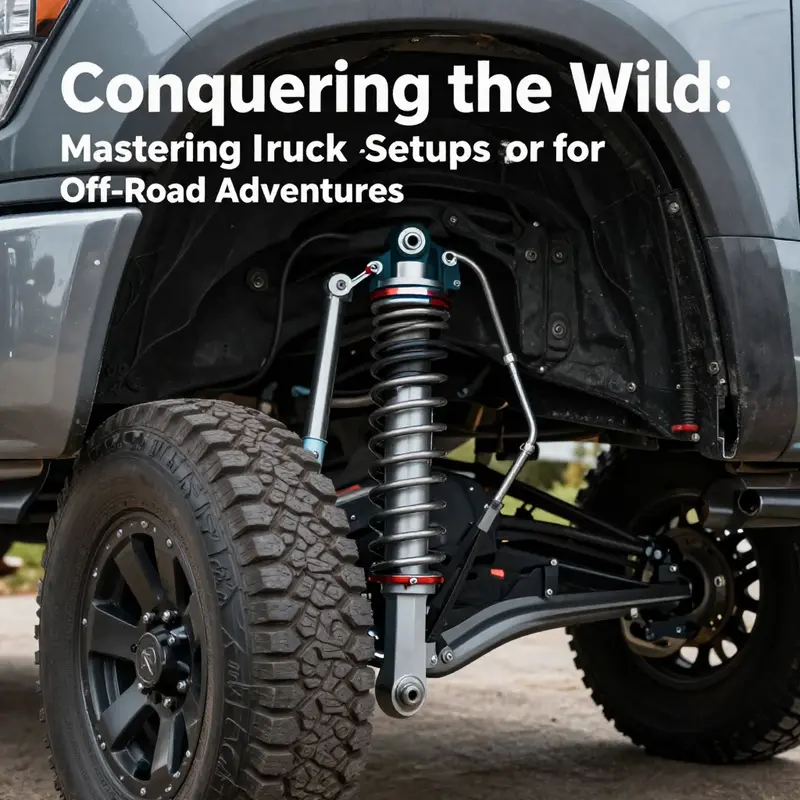
The suspension of a truck is more than a ride comfort system; it is the quiet enabler of innovation, the hardware that translates power into traction, control, and confidence when terrain refuses to be polite. In the larger mission of turning a stock pickup into a capable off-road machine, the suspension upgrade forms the hinge between what a truck can carry and where it can go. The core objective is straightforward yet nuanced: increase ground contact, improve wheel articulation, and tame the rough rhythm of uneven surfaces without sacrificing daily drivability or safety. To achieve this, one begins with a clear understanding of the terrain you intend to conquer and the loads you expect to carry. A successful upgrade respects the compromises involved. A taller stance can grant crucial clearance, but it can also shift weight, alter steering geometry, and raise the center of gravity. The right approach balances the gains in off-road capability with predictable on-road behavior, predictable steering, and manageable wear on other components. In practice, this means choosing a suspension system that can be tuned to the vehicle’s weight, axle geometry, and intended use, then aligning and testing it under realistic conditions before venturing into truly challenging landscapes. The process rewards patient planning as much as it rewards bold equipment choice, because the suspension is both the platform and the governor for the truck’s off-road life.
The first pillar in this upgrade is the shock absorbers themselves. Upgrading to high-performance units—whether gas-charged, adjustable, or automatically adjusting—translates into more consistent damping, better heat handling, and sharper control when the trail is unpredictable. Gas-charged options, which minimize foaming under heavy loads, help prevent fade on long, rough drives. Adjustable shocks let you tailor damping stiffness to the terrain or to the tire setup you’re running on a given day, easing the mismatch that often arises when a truck is used for both highway cruising and rocky footholds. The goal is not to over-stiffen the ride but to maintain tire contact through the ruts and whoops, so that every inch of wheel can grip without the suspension buckling under load. A well-matched shock setup works in concert with the rest of the system to keep the vehicle planted, predictable, and ready for the next obstacle. As you refine dampers, you should also anticipate heat buildup and consider a cooling path or deferring extreme downhill runs that would overheat components. This is where the concept of a holistic system becomes essential: shocks alone cannot compensate for inadequate springs or misaligned geometry.
Ride height is the next critical decision. Lift kits come in several flavors, and the choice hinges on the intended mix of rock crawling, mudding, sand, and highway duty. At one end, conservative lifts provide modest gains in clearance and approach angles without dramatically altering steering feel. At the other end, more aggressive kits offer greater ground clearance and leverage for larger tires, but they demand careful attention to steering geometry, axle articulation, and speed-sensitive handling. Some options employ longer springs and new control arms to restore alignment after a dose of lift, while others rely on air suspension to adjust height dynamically. The latter can add versatility—the ability to rise for rough terrain and lower for highway efficiency—but it also introduces complexity and maintenance considerations. A practical sweet spot is often a lift around two inches, paired with high-clearance bumpers and reinforced control arms, designed to preserve geometry and steering feedback. The key is to ensure that the added height does not amplify bump steer or cause excessive camber wear at the wheels. The visual appeal of a higher stance should never eclipse the subtleties of how the truck steers and stops on a real trail.
Tires carry the obvious relationship with suspension: larger tires boost ground clearance and can transform traction but also alter rolling resistance, gearing, and suspension loading. Upgrading tires must be paired with corresponding enhancements to the ride height and the suspension’s ability to control the greater unsprung mass. Large, rugged tires demand stronger, more responsive suspension components, including reinforced control arms and dedicated sway-bar configurations to maintain stability as weight shifts across the axle during climbs or deep ruts. Likewise, the change in tire footprint will influence braking and acceleration, so it is prudent to reassess wheel bearings, drum or rotor heat, and brake performance after a tire upgrade. In tandem with tires, lightening the unsprung mass through wheels designed for off-road use can yield meaningful gains in acceleration, steering response, and braking efficiency. Lighter wheels reduce the inertia the suspension must manage, making the system’s job easier and the overall vehicle more predictable when negotiating uneven ground.
Suspension geometry itself deserves careful attention. The interplay of camber, caster, and, where applicable, kingpin geometry shapes how the front wheels contact the terrain and respond to steering inputs. Subtle adjustments here can reduce wandering on sloped surfaces and improve cornering precision on uneven tracks. Maintaining correct geometry also preserves tire contact patches and wear patterns, extending tire life and preserving grip across varied terrains. The process often involves precision alignment after installation, followed by field testing that gently probes the truck’s reaction to transitions from smooth dirt roads to jagged sections. The alignment task is not a one-off event; it is part of ongoing maintenance as components settle, wear, or experience changes in load during towing or heavy overlanding trips. A well-tuned geometry setup produces predictable steering with minimal tramlining, even when the trail demands abrupt changes in direction or when the vehicle droops into a rut.
Wheels play a supportive but meaningful role in this ecosystem. Replacing heavy factory wheels with lighter, sturdy aftermarket options can lower the unsprung mass, a lever that improves suspension responsiveness and braking bite. Lighter wheels allow the suspension to react more quickly to terrain irregularities, delivering more immediate feedback to the driver and reducing the tendency for the vehicle to hop over obstacles. This improvement, however, must be balanced against the need for durability and rock protection. The correct combination of wheel diameter, width, and beadlock readiness contributes to a stable footprint on off-road surfaces and helps prevent tire bead loosening in low-pressure situations commonly used for mud or rock crawling.
For trucks that regularly carry heavy payloads or trailer rigs, additional supports such as auxiliary leaf springs or spring helpers can be deployed to prevent sag under load while preserving critical ground clearance and ride height. These accessories are not merely about lifting the vehicle; they are about preserving ride quality and tire contact when the truck is dragging gear into a convoy of obstacles or towing a dense load over a washboard section of trail. The optimal path here is to integrate these supports with the rest of the suspension’s geometry so that they work in harmony with the shocks, springs, and control arms rather than fighting for space or overcorrecting under load.
Beyond components, the installed system must be tuned through proper alignment and careful testing. After any substantial upgrade, a thorough alignment is essential to restore predictable steering, minimize tire wear, and ensure that suspension travel is not impeded by contact with frame members or body mounts. A test drive—the kind that starts with smooth asphalt and gradually moves to gravel, then dirt—helps identify issues such as stiffness, binding, or poor articulation. If the vehicle exhibits excessive body roll or erratic behavior when crossing a cross-axle during a slow crawl, further adjustments to dampers, ride height, or sway-bar linkage may be required. This iterative process is not a sign of failure but of refinement, a sign that the truck’s new bones are learning to cooperate with the terrain and the driver’s touch. The driver’s role in this equation remains crucial: no matter how thorough the hardware, the operator must read terrain, select lines, and modulate throttle and steering with a tempered, anticipatory approach.
As you build toward a capable off-road platform, it can be helpful to consider the broader knowledge that surrounds heavy drivetrain work and chassis tuning. For example, there is a wealth of practical insight into how diesel-powered platforms respond to reinforced suspension, how heat management interacts with long-travel configurations, and how the interplay between chassis rigidity and suspension movement shapes handling on rough surfaces. For readers who want to deepen that mechanical literacy, resources such as Mastering diesel mechanics offer structured guidance that complements hands-on upgrades. This kind of learning supports safer experimentation and helps ensure that the truck remains reliable across miles of demanding terrain.
In the end, upgrading the suspension is not a single moment of install and forget. It is a progression of decisions that begins with a clear aim—more clearance, better articulation, and controlled damping—and evolves through careful component matching, precise geometry work, and thoughtful testing. The reward is a truck that communicates with the ground in a way that is direct yet controlled, capable of traversing a wider range of surfaces with confidence and fewer surprises. The driver, armed with improved feedback and more predictable handling, can push farther into the backcountry, secure in the knowledge that the suspension was built not just for speed or flash but for durability, balance, and safety across the long hours behind the wheel. For further reading on how suspension upgrades fit into a complete off-road build, an external overview is available here: https://www.offroadmagazine.com/2026/02/suspension-upgrades-for-off-roading-explained/.
Raising the Horizon: Practical Ways to Boost Ground Clearance and Angles for Off-Roading

Ground clearance and the angles at which a truck meets the ground are not decorative details; they define the vehicle’s capability to tackle rock gardens, rutted paths, and soft surfaces without inviting chassis scrapes or sudden, momentum-killing stumbles. When you step away from smooth pavement and into rough terrain, the goal is simple but exacting: reduce the risk that underbody components meet obstacles at an awkward angle, and keep the front and rear pitches from turning a manageable climb into a stall. This requires a thoughtful blend of hardware changes and careful planning, because every modification to raise clearance or alter an angle has ripple effects through handling, weight distribution, and drivetrain behavior. The essence of a successful setup lies in balancing the gain in ground clearance with the realities of ride quality, steering geometry, and reliability over long, demanding trips. A well-considered approach starts with understanding how each modification shifts the truck’s relationship to the ground and how that translates into real-world performance.
Lift kits are the most visible and often the most impactful route to higher clearance. By raising the vehicle, they directly increase the space between the undercarriage and the terrain, allowing larger tires to be mounted and reducing the chance of bottoming out on rock ledges or soft berms. The gain in clearance also unlocks room for bigger tires, which in turn improves flotation in mud or deep sand. Yet lifts are not free. They alter suspension geometry, affect steering axis, and can raise the center of gravity, which changes handling characteristics and rollover risk. Proper selection means matching lift height to intended use, ensuring that the additional leverage does not compromise component angles or cause drive-line binding. After installation, a precise alignment and a check of control-arm angles, track width, and caster become essential steps to preserve predictable steering and safe suspension travel. The goal is to keep the wheels in positive camber and maintain adequate bump-stop engagement so that articulation remains controlled rather than abrupt.
Beyond the height itself, heavy‑duty suspension components play a critical role in maintaining ride quality and handling as clearance increases. Upgrading springs and shocks to stronger, more progressive designs helps the chassis ride smoothly over rough surfaces and maintains tire contact over irregular terrain. Longer travel suspension can be advantageous, allowing more wheel articulation to keep grip when one wheel is perched on a rock while the opposite wheel still maintains traction. This is not simply about absorbing bumps; it is about preserving the vehicle’s ability to maintain forward momentum across a diverse obstacle course. With higher clearance, the suspension must work harder to keep wheels in contact with the ground, so the tuning of damping rates and rebound is essential. A well‑matched system preserves a controlled, stable ride, reduces wheel hop, and helps the driver maintain line of sight and steering input through challenging sections. When paired with a lift, the correct balance of travel and stiffness keeps the axle more aligned with the terrain, reducing the risk of binding at extreme angles.
Tire choice stands as the second pillar of improved through-ability. Wider tires with lower air pressures create a larger contact patch, which distributes weight more evenly on soft or uneven surfaces and helps prevent the tires from digging in. That flotation translates to better traction on mud, sand, and loose gravel, while the broader footprint can help the truck traverse small obstacles without pinching a tire into a sharp edge. However, larger tires also increase rotating mass and affect gearing, acceleration, and braking performance. They can rub against fenders or suspension components if not properly cleared, and in some installations, wheel offset must be adjusted to maintain adequate clearances between the tire and the vehicle’s body or suspension. Lower tire pressures improve grip but demand careful monitoring to avoid pinch flats or bead failures, especially on rocky terrain. The objective is to tune tire size and pressure to the terrain mix you expect to encounter, ensuring the tire footprint supports stability without introducing new points of interference.
Protective and structural upgrades reinforce the gains from lifting and tire changes. Skid plates shield critical underbody components—oil pan, transmission, and differentials—from rocks, stumps, and other unforgiving obstacles. Reinforced bumpers contribute to the vehicle’s resilience when the approach and departure angles become aggressive, offering a buffer against contact with obstacles at higher angles and providing a mounting point for recovery hardware. While skid plates and reinforced bumpers do not directly raise clearance, they extend the truck’s effective through-ability by preserving essential components after contact and reducing the likelihood of a costly failure that could end a trail run. The combined effect of higher clearance and better protection is a broader envelope of terrain that can be tackled with confidence.
An alternative or complement to suspension lifts is a body lift, which raises the body of the vehicle relative to the frame. This approach can provide additional ground clearance without altering suspension geometry, offering a simpler and often less expensive path to bigger tires. Yet body lifts carry their own caveats: driveline and steering angles can change in ways that lead to driveshaft vibrations or binding, and the faux increase in clearance may mask the need to address other undercarriage protections. In practice, many builders use body lifts to gain moderate clearance alongside a separate, well‑matched suspension lift; this combination can deliver the objective of more elevation while preserving predictable handling. Achieving harmonious results requires careful attention to the interfaces where body, frame, and axles meet, along with proper checkups of steering and suspension travel limits.
All these options speak to a central idea: increasing ground clearance and improving approach and departure angles is not simply about adding height. It is about maintaining or improving articulation, protecting critical components, and preserving the truck’s ability to respond to steering and throttle inputs in a predictable, controllable manner. This is where planning and measurement come into play. Before committing to any modification, a practical reassessment of the vehicle’s baseline geometry is invaluable. One must consider the tire diameter and tread pattern that will occupy the wheel wells, the potential impact on fender clearance, and how increased ride height affects steering angle and CV joint geometry. It is also wise to model the new bump-stop positions, to ensure there is enough travel for both suspension and articulation without the risk of hard bottoming. In practice, the driver should test the rig on varied terrain at moderate speeds, paying close attention to anything that indicates misalignment or contact with the body at maximum steering angles or compression.
Integrating off‑road performance with everyday usability requires balancing the mechanical with the behavioral. The richer suspension travel that accompanies a higher ride height should be matched by a disciplined driving style that respects the new geometry. Off‑road modes and traction aids can help, but they do not replace situational awareness and prudent throttle control. The driver should anticipate how the truck behaves when encountering a ledge or a sudden rock face, coordinating throttle with steering input to maintain momentum without stalling. It helps to study the terrain beforehand, noting potential pinch points, the width of the path, and the likely line that preserves the largest margin for error. A well-rounded approach treats the vehicle as an integrated system: the chassis geometry, the suspension’s dynamic response, the tire footprint, and the protective hardware all contribute to a cohesive capability rather than isolated improvements.
For readers seeking deeper mechanical grounding, especially on the physics of ride height, geometry, and the implications of heavier axles or longer control arms, a detailed exploration of diesel‑mechanic fundamentals can be illuminating. You can explore foundational concepts in Mastering diesel mechanics: your step-by-step path to success. Mastering diesel mechanics: your step-by-step path to success.
As you chart a path toward greater ground clearance and more favorable angles, it is wise to anchor decisions in rider safety and reliability. Skid plates and reinforced bumpers are not mere accessories; they are safeguards that extend the vehicle’s operational life on rough trails. The changes discussed—lift height, suspension tuning, tire choice, and protective gear—also interact with the truck’s weight distribution, steering geometry, and drive system dynamics. They require thoughtful sequencing: start with a solid base platform, select a lift height that suits the vehicle’s drivetrain and steering geometry, verify clearance with the largest intended tire, and then tune the suspension to maintain controlled articulation. Finally, re-check after road testing and trail testing to confirm that all clearances remain adequate through full suspension travel and steering lock. In this way, shifting from a capable street vehicle to a capable off-road machine becomes a deliberate, measured evolution rather than a set of ad hoc changes.
The road ahead for through-ability is as much about foresight as it is about parts. With careful planning, the truck can negotiate steep approaches, granite ledges, and sandy flats with a confidence that comes from knowing the geometry has been engineered to work as a cohesive system. The path to higher ground clearance and smarter angles is not just about adding height; it is about preserving balance, protecting vital systems, and giving the driver the tools to stay in command when the terrain tests the vehicle’s limits. For the next step, a practical discussion on how tires integrate with the raised stance and how to calibrate a truck’s weight distribution for rugged terrain will deepen the conversation and sharpen practical execution on the trail. To learn more about general engineering considerations and standards that underpin these decisions, refer to SAE International for authoritative guidance on automotive engineering standards and best practices. https://www.sae.org
Rugged Heartbeat: Engineering a Powertrain for Serious Off-Road Trucking

At its core, the powertrain is the rugged heartbeat of any off-road truck. It must not only survive the abuse of uneven terrain and dusty environments but actively enable traction and control across a spectrum of challenges. A robust installation starts with a mechanical architecture built for rigidity and durability: reinforced transmission able to withstand abrupt torque, heavy-duty driveshafts that resist twisting through rock gardens, and differential systems with locking capabilities to deliver power to the wheel with traction. Mounting brackets must be ironclad, and the drivetrain must be aligned with the frame to minimize vibrations that fatigue components. Yet hardware alone does not guarantee success; the powertrain also hinges on a smart, integrated control backbone that translates driver intent into predictable action. Throttle-by-wire eliminates the drag of mechanical linkages and allows the ECU to shape torque delivery for grip and stability, while brake-by-wire can modulate braking force during slow, technical sections to avoid wheel lock and loss of steering. In more advanced layouts, steer-by-wire demonstrates how electronic steering, coupled with stability algorithms, can preserve steering feel while adding safeguards against abrupt yaw changes on slick surfaces. Together, these systems create a dynamic relationship between the vehicle and terrain, where the driver’s intent is met with measured, reliable response rather than raw mechanical punch. In practice, the powertrain choice—whether a conventional internal combustion setup or an electric propulsion system—must be harmonized with a drivetrain capable of delivering torque at the wheels without overheating or creeping into instability. A traditional, high-torque configuration relies on a well-mated multi-speed transmission, a drivetrain with low-range capability for crawls, and a transfer strategy that maintains power to both axles as terrain demands. Robust gearing and reinforced internals resist wear when sections of the trail demand constant slow movement, and the design must ensure lubrication remains stable under spray and grit. The driveshafts and differentials, sized for high torque and large articulation, are tuned to rotate smoothly through high travel without binding. The chassis and mounting strategy play a crucial role here: rigid mounts capably bear the engine’s torque pulses while protective guards shield vital components from rocks and debris, and they do so without choking up serviceability. The aim is to create a tightly coupled system in which each piece reinforces the others, so that when a wheel drops into a rut or the truck needs to scramble up a ledge, the powertrain remains predictable and controllable. Electric off-roading expands the conversation by introducing near-instant torque delivery and the need for thermal and energy management that respects range. An electric motor responds with immediate twist, which makes traction control and tire choice even more critical. Battery cooling becomes a central facet of the powertrain envelope, because sustained climbs and deep sand draw heat into the pack. Designers respond by integrating robust cooling loops, thermal shields, and motor placement that reduces thermal load. Controlling torque with precision, managing regenerative braking, and balancing energy use under changing load and terrain elevation demand advanced control algorithms that can reallocate power on the fly while preserving stability and range. The common thread remains intact: you build a rugged physical platform and couple it with a responsive, intelligent control system so the vehicle remains stable and predictable, even when the trail throws unusual disturbances at it. Durability and longevity come from more than raw strength; they come from intelligent packaging and maintenance discipline. Component selection focuses on strength-to-weight balance and long-haul reliability, while the cooling system is sized to handle heat during sustained climbs and rough country; lubrication paths are routed to minimize drag and allow quick inspection after a day on the rocks. Mounting geometry is chosen to minimize fatigue under vibration, yet it must still permit access for service and replacement if a component wears faster than expected. In the field, a robust powertrain teaches the driver to approach obstacles with care: read the trail ahead, respect wheel placement, and use electronic aids to enhance control rather than chase raw momentum. The system thrives when the operator reads the trail ahead, anticipates wheel slip, and uses electronic aids as allies rather than crutches. It is in this synergy between human skill and engineered resilience that the off-road truck truly comes alive. For readers seeking practical context and inspiration, consider a resource that translates powertrain fundamentals into off-road practice. A guide such as the mastering-diesel-mechanics-your-step-by-step-path-to-success offers stepwise insight into torque management, component durability, and maintenance strategies that transfer to the field. It serves as a reminder that even the most robust installation benefits from disciplined upkeep and inspection routines. On the academic side, the study Design of Powertrain of an Off-Road Racing Vehicle provides a rigorous treatment of a high-performance, durable powertrain designed to withstand extreme terrain and competitive environments. The study reinforces how modern powertrain architectures fuse mechanical fortitude with intelligent control to deliver traction, stability, and energy management under load. External reference: https://www.researchgate.net/publication/354689721DesignofPowertrainofanOff-RoadRacingVehicle In sum, a robust powertrain installation for off-roading trucks is a synthesis of heavy-duty mechanical engineering and adaptive electronic control. It requires careful selection and integration of transmission, driveshafts, and differentials; robust mounting and protection; and a coherent electronic architecture that translates driver input into precise, stable motion over rough terrain. When these elements are aligned, the powertrain becomes not merely a component but a reliable partner that empowers the driver to push farther, climb higher, and emerge on the other side with confidence. The chapter ties into the broader guide by anchoring the vehicle’s capability to its heart—a drivetrain that can deliver traction with stability, efficiency, and durability across varied terrains. This holistic approach also anticipates service realities: simple diagnostics, modular replacements, and standardized fasteners reduce downtime after a day on the trail. The right powertrain foundation also supports future upgrades, whether you’re adding more aggressive tires, upgrading cooling, or migrating toward a hybrid or fully electric setup. In the end, the powertrain is not a flashy upgrade but the quiet backbone that keeps moving when others pause. For readers seeking practical context and inspiration, consider a resource that translates powertrain fundamentals into off-road practice. A guide such as the mastering-diesel-mechanics-your-step-by-step-path-to-success offers stepwise insight into torque management, component durability, and maintenance strategies that transfer to the field. It serves as a reminder that even the most robust installation benefits from disciplined upkeep and inspection routines. On the academic side, the study Design of Powertrain of an Off-Road Racing Vehicle provides a rigorous treatment of a high-performance, durable powertrain designed to withstand extreme terrain and competitive environments. The study reinforces how modern powertrain architectures fuse mechanical fortitude with intelligent control to deliver traction, stability, and energy management under load. External reference: https://www.researchgate.net/publication/354689721DesignofPowertrainofanOff-RoadRacingVehicle
Traction by Design: Mastering Off-Road Tire Selection for Real-World Truck Readiness

Traction is the heartbeat of off-roading. It governs how a truck translates torque into forward motion, how it steers through unpredictable ground, and how safely it carries the driver and any gear through mud, rocks, sand, or water. The tire, more than any other single component, determines that traction. It is the interface between vehicle and terrain, the only contact patch that touches the world and bears the truck’s weight, load, and momentum. Because off-roading presents such diverse challenges, tire choice cannot be an afterthought. It must be integrated into the broader philosophy of how you set up a truck for rugged terrain, from suspension travel to gearing, and from protection features to driving technique. In practice, the tire decision should be a thoughtful alignment of terrain expectations, vehicle configuration, and personal risk tolerance, all aimed at maintaining control when the road disappears under the chassis.
There are distinct tire families engineered to excel in different environments, and understanding their core strengths helps you tune a truck to the trail you intend to conquer. Mud tires, with their aggressive tread voids and deep basins, are built to shed soft, sticky material quickly while resisting punctures from hidden hazards like roots or sharp debris. They are designed to bite into slick, mucky surfaces and push a path through wet conditions by maintaining a series of biting contact points. They excel when the ground is soft and waterlogged, where traction depends on the tire’s ability to maintain grip while shedding mud. Yet even a tire purpose-built for mud has limits. In deep, dry sand or swampy conditions where flotation matters, a mud-biased design can lose traction because the tread pattern concentrates pressure in concentrated areas rather than distributing it across a broad footprint. Roads and highways also wear such tires faster, since the treads are optimized for grip off-road rather than wear resistance on pavement. The reality is that no single tire type dominates every scenario; the smart approach is to match the tire to the majority of terrain you expect and be prepared to adapt when plans change.
Rock tires enter the discussion with a different set of priorities. When the route involves sharp, jagged obstacles, the tire’s shoulders and sidewalls bear the brunt of the load. Reinforced compounds and robust sidewall construction become critical, as punctures and cuts are common adversaries on stony trails. The tread patterns on rock-focused tires are designed to grip irregular surfaces, clutching at protrusions and maintaining traction even when the surface is uneven or broken. This durability translates into a higher confidence factor on technical rock ledges and rough climbs. However, the trade-offs can include stiffer ride quality and increased on-road noise, as well as slightly reduced efficiency on smooth pavement. Rock-oriented designs therefore suit adventurers who plan to push the limits of terrain and are willing to compromise comfort and on-road manners in exchange for protection and reliability on the trail.
Versatile options attempt to balance the extremes. All-terrain and mixed-surface tires aim to offer acceptable performance both on pavement and off. For many drivers who chase overlanding adventures—camping trips that mix road travel with light trail work—these tires provide a practical compromise. They typically deliver predictable handling, durable construction, and sufficient tread to cope with a broad set of environments. The key with versatile tires is to choose a pattern and compound that align with your most frequent conditions while accepting that peak performance in any single arena may not be achieved. This approach suits trucks that spend significant time on dirt roads, gravel, and light trails, as well as those who want reasonable efficiency and comfort for daily driving.
Beyond the tread pattern, the compound composition, sidewall design, and tire size interact in meaningful ways with the rest of the truck’s setup. A larger-diameter tire can improve ground clearance and approach angles, but it also alters gearing, speedometer readings, and unsprung weight. Heavier, stiffer tires can blunt acceleration and increase rolling resistance, affecting fuel economy and braking dynamics. Conversely, too small a tire reduces ground clearance and may limit the truck’s ability to absorb impacts and maintain traction over rough terrain. The prudent path is to balance tire size with suspension travel, chassis clearance, and drivetrain capabilities. Where a vehicle already features long-travel suspension and a robust four-wheel-drive system, larger, more aggressive tires can be employed to maximize articulation and obstacle clearance. In tighter, more technical courses, a more modest size and a flexible, puncture-resistant tire may deliver a smoother, more controllable ride without compromising protection.
Tire construction also matters for durability and reliability on endurance treks. Off-road tires should feature reinforced sidewalls to resist cuts and punctures, particularly when traversing rocky grades or tree-root strewn trails. A tire built to withstand brutal conditions reduces the risk of deflation, which in turn helps maintain steering control and momentum through obstacles. On sloped or slick sections, properly designed tires maintain traction by keeping the contact patch contacting the ground without folding under load. Selecting a tire with a robust carcass helps prevent blowouts or bead failures when the trail requires a high angle of attack or significant articulation. At the same time, a tire should not be so stiff that it transmits every rock to the chassis, trading comfort for brute strength. The ideal tire is a harmonized system: tread that bites, sidewalls that resist damage, and a casing that supports the weight and power of the truck across a spectrum of terrains.
Tire pressure strategy also plays a central role in maximizing traction. Lowering pressure can increase the contact patch, improving grip on loose surfaces like sand or mud. However, too low a pressure invites pinch flats and reduces stability on hard surfaces. The rule of thumb is simple: adapt pressure to the terrain and the tire’s load, and do so carefully. In mud and soft sands, a modest drop can unlock flotation; in rocky terrain, pressure must be higher to protect the sidewalls from puncture and to maintain steering control. This is where the practice of dynamic adaptation becomes essential—the tire choice informs how far you can push inflation or deflation without compromising safety or performance, and the vehicle’s suspension, weight distribution, and drive system determine how those changes manifest on the trail.
Another layer to consider is how tires interact with protection features and the vehicle’s drivetrain. For instance, a truck equipped with robust skid plates and reinforced bumpers benefits from the added resilience of appropriate tires, because protection reduces the risk of undercarriage damage that would otherwise force an unscheduled return from the trail. In terms of electronics and driving aids, tire choice pairs with traction control, electronic stability programs, and wheel-slip management to create a cohesive system that helps the driver maintain control in demanding conditions. The driver remains the decisive factor, but the tire is the critical tool that translates intention into controlled motion. Tires should be checked regularly for tread wear, sidewall damage, and proper inflation, and drivers should remain prepared to adapt their strategy to shifting conditions—the terrain you planned for may evolve as the day progresses.
In practice, selecting tires means weighing terrain forecasts against vehicle capabilities and personal risk tolerance. For some crews, a mud-oriented tire with strong sidewall protection will deliver the best balance of grip and resilience on wet, soft trails. For others, a rock-dedicated tire may prove essential on itineraries featuring exposed ledges and sharp gravel. For many, a versatile tire is the sensible compromise for mixed routes, long days, and the need to cover both highways and backroads with reasonable efficiency. Whichever path you choose, the tires you mount set expectations for what your truck can do and how safely it can do it. The goal is not simply to conquer the trail but to do so with predictable handling, manageable braking, and reliable recovery options if a leg of the journey becomes more technical than anticipated. As you integrate tire choices into your broader off-road setup—suspension tuning, gear selection, protection features, and driver training—you create a cohesive capability that keeps you moving forward when the surface is anything but predictable.
For readers seeking a deeper dive into tire design, materials standards, and application guidelines, a comprehensive external resource offers detailed insights into tire construction and performance metrics. This external reference complements the practical guidance in this chapter and helps readers make informed decisions about tire selection that align with their truck’s build and their off-road ambitions. For additional reading, see the detailed guide on off-road tire features and standards at the linked resource below.
External resource for further reading: https://www.lakesea.com/inside-lakesea-mudster-off-road-tires-key-features-material-standards-and-application-guidelines/
Final thoughts
Equipping your truck for off-roading is an intricate process that involves strategic modification and enhancement across various systems. From the very platform of the vehicle to the robust installation of a powerful drivetrain and specialized tires, every upgrade plays a pivotal role in ensuring you can conquer unchartered terrains. Embracing these guidelines not only positions your truck to perform but also enriches your adventurous spirit. As you embark on your off-road journey, remember that preparation and respect for the wild will always yield the most satisfying rewards.