
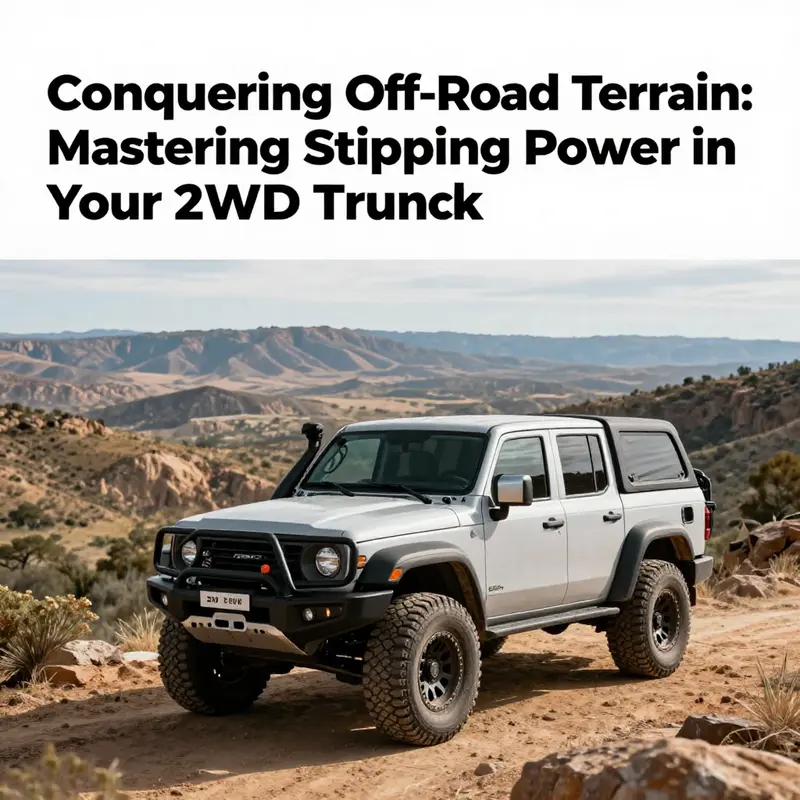
For off-road enthusiasts and rugged adventurers, navigating challenging terrain is not just about speed—it’s about control, stability, and safety. Whether you’re traversing rocky hillsides or muddy trails, the ability to stop effectively in your 2WD truck can mean the difference between a thrilling adventure and a precarious situation. In this comprehensive guide, we explore how to enhance your 2WD truck’s off-road stopping performance. From upgrading your braking system to improving vehicle stability and driver feedback, our insights cover every aspect that contributes to safe and effective stopping. You’ll learn advanced techniques and practical modifications from brake upgrades to ensuring optimal tire pressure. Join us as we dive deep into the essential steps every off-road racer and landowner should take to boost their confidence and safety when stopping on rough terrain.
Brake Upgrades That Make a 2WD Truck Stop Confidently Off-Road
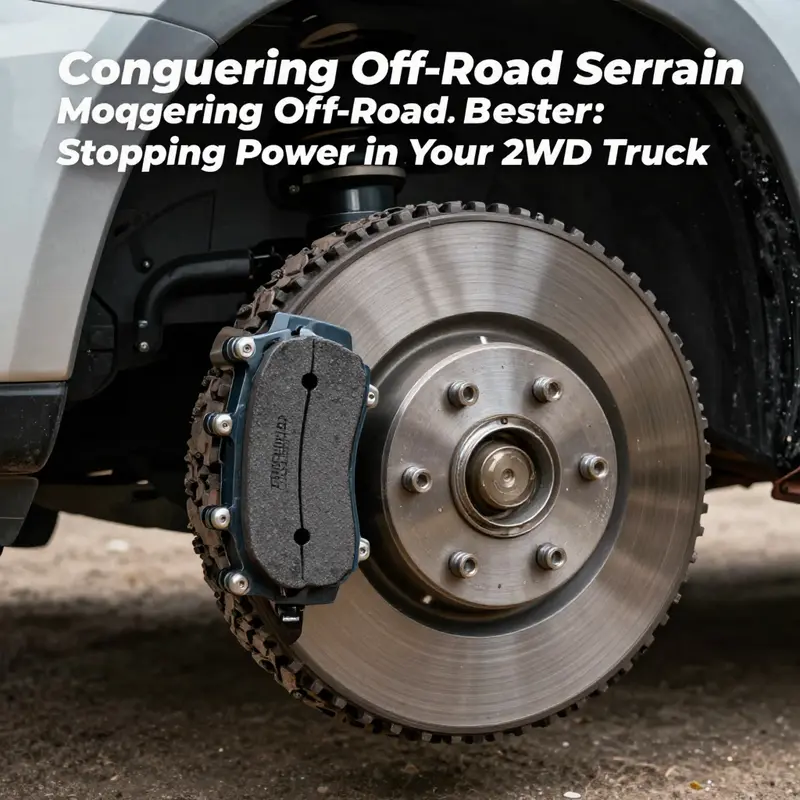
Brake Upgrades That Make a 2WD Truck Stop Confidently Off-Road
When your two-wheel-drive truck leaves the pavement, the demands on its brakes change. Added gear, larger tires, lift kits, and tougher bumpers increase rotating mass and overall weight. Uneven terrain, steep descents, and repeated slow maneuvers keep brakes in use at low speeds and variable temperatures. For predictable stopping off-road, a holistic upgrade of the braking system is essential. This chapter walks through the practical changes to prioritize, the trade-offs each brings, and how to combine hardware upgrades with setup and technique for the best results.
Start by accepting the core truth: improved stopping comes from matching braking power to the altered dynamics of an off-road truck. Bigger rotors, stronger calipers, and better pads only deliver when the rest of the vehicle helps keep tires planted. Suspension tuning and correct tire pressure feed the brakes the traction they need. Upgrades should therefore be planned as a system, not as isolated parts.
Brake pads are the foundation. Off-road driving often involves slow-speed descents, rock crawling, and repeated hill holds. Many high-performance pads excel at high temperatures but lose bite when cool. For off-road use, choose friction materials formulated to provide consistent grip across a wide temperature range. These compounds keep initial bite strong at low speeds. Expect more dust and a slightly firmer initial pedal feel with aggressive off-road compounds. That is a normal trade-off for better control on rough ground.
Rotors play a dual role: they provide surface area for friction and help shed heat. Larger diameter rotors increase leverage and reduce the load per square inch. Slotted or specifically designed surface patterns help clear mud, sand, and debris from the pad contact area. Cross-drilled rotors manage gas and water during very wet conditions but can be more vulnerable to cracking under extreme cycles. Choose rotors designed for heavy-duty use that emphasize durability alongside cooling.
Calipers hold the pads against the rotors. Upgrading to multi-piston calipers improves pad contact and even pressure distribution. This change refines pedal feel and increases available clamping force without requiring excessive pedal effort. When paired with larger rotors, upgraded calipers turn a marginal system into one capable of repeated, controlled stops. Remember that heavier calipers add unsprung weight; the benefit must outweigh the handling cost. A skilled installer will ensure piston sizes are matched to master cylinder output for predictable pressure.
Brake lines are an often-overlooked upgrade with outsized benefits. Replacing flexible rubber lines with stainless-braided lines limits expansion under pressure. That reduction in expansion translates to a firmer, more immediate pedal feel. On uneven terrain, where modulated inputs are vital, a firm pedal helps you judge exactly how much braking force is being applied. Alongside braided lines, use high-quality fittings and maintain line routing to avoid rubbing or heat exposure.
Heat management matters even off-road. Slow, repeated braking can heat rotors and fade pads. Also, extended descents increase rotor temperature. Installing ducting or simple shields to direct airflow at the calipers and rotors improves cooling. On trucks that see prolonged off-road use, consider auxiliary cooling elements where practical. These do not need to be elaborate; focused ducting and heat-resistant shields can make a measurable difference in sustained braking performance.
The hydraulic side of the system needs attention. Brake fluid absorbs moisture over time, lowering its boiling point and increasing fade risk. Regular fluid changes, to the schedule appropriate for heavy off-road use, preserve system integrity. Bleeding and flushing the system under the right conditions eliminates trapped air pockets that degrade pedal feel. If you are comfortable with hands-on work, follow proven procedures for bench bleeding and road bleeding. Otherwise, enlist a competent mechanic. If you want to expand your mechanical skills, see this guide on mastering diesel mechanics for practical tips and shop-level procedures: mastering diesel mechanics.
Matching the brake bias to vehicle behavior is crucial. Two-wheel drive trucks typically have a front-biased system. When off-road, weight transfer during climbs or when towing can alter that balance. If the rear locks before the front under light loads, you may need an adjustable proportioning valve. Conversely, heavy loads can demand more rear braking force to maintain stability. An adjustable valve lets you tune bias to expected loads and terrain. When ABS is present, understand how it interacts with changes in bias. ABS systems can compensate for wheel slip but are not a substitute for proper mechanical balance.
Suspension and chassis stiffness influence braking more than many owners realize. A truck that pitches, dives, or rolls under braking will lift tires and lose traction. Stiffening certain suspension elements or fine-tuning shock valving keeps tires in contact with rough ground. Anti-roll devices reduce body lean, keeping weight more evenly distributed across the axle. When the wheels stay planted, upgraded brakes have the traction they need to work effectively.
Tire choice and pressure are part of the braking equation. Lowering tire pressure increases contact area and improves grip on soft surfaces. But softer sidewalls can increase braking distances on hard surfaces and change pedal feedback. Learn the pressure ranges for the terrains you frequent. Combine tire setup with brake upgrades to match the expected traction. Remember that off-road tires can generate more heat and wear on rotors, so check components more frequently.
Installation flow matters. Swap pads and rotors in matched sets whenever possible. Replace hardware like wear clips and shims during a pad change. Torque specifications must be followed to prevent warping or component failure. After installation, perform a series of brake bedding cycles. Bedding helps transfer a uniform layer of friction material onto the rotors. This process stabilizes friction characteristics and reduces the risk of uneven rotor deposits that cause vibration.
There are trade-offs to accept. More aggressive compounds abrade rotors faster. Larger rotors and calipers add unsprung mass, which slightly alters steering feel. Slotted or patterned rotors may produce more noise under certain conditions. Each change should be evaluated for its net effect on your typical off-road use. Aim for balanced upgrades instead of maximum numbers.
Preventive maintenance extends the value of upgrades. Inspect pad thickness, rotor condition, and line integrity after demanding outings. Clean caliper slides and check for seized hardware. Flush brake fluid according to the intensity of use. Keep a modest toolkit onboard to address minor issues in the field, such as replacing a loose brake hose clamp or tightening a caliper bolt.
Finally, technique and system upgrades work together. Practice controlled, progressive braking on representative terrain. Use short, measured bursts for steep descents rather than prolonged, heavy pressure. Learn how your truck responds under various loads and pressures. With experience, you will anticipate the truck’s behavior and use the upgraded components to their best effect.
Upgrading the braking system for off-road use is not about chasing the biggest parts available. It’s about matching friction material, hydraulic integrity, cooling, and vehicle setup to real-world conditions. When you upgrade thoughtfully, a 2WD truck can stop with a confidence once reserved for four-wheel-drive rigs. That confidence keeps you safe, reduces component wear, and lets you focus on reading terrain instead of worrying about whether you can stop.
For a deeper technical evaluation of brake systems tailored to heavy off-road use, refer to this comprehensive guide from Off-Road.com: https://www.off-road.com/4×4-articles/brake-upgrades-for-off-road-trucks/.
Stability First: Mastering Off-Road Stopping for 2WD Trucks on Rough Terrain
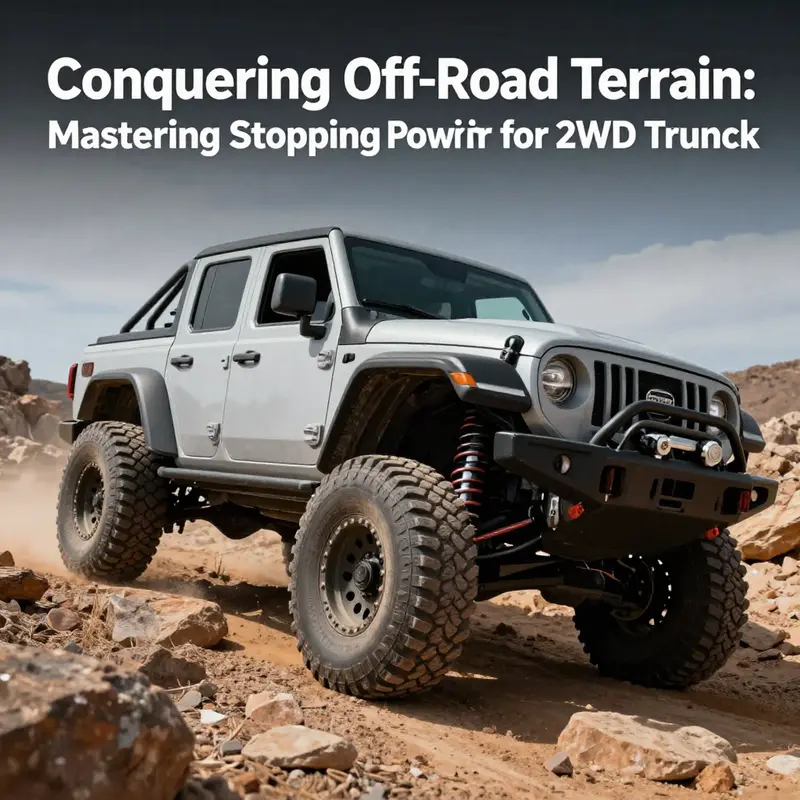
Stopping a two-wheel-drive pickup in off-road conditions is not a single adjustment but a careful orchestration of braking, suspension, tires, and driver input. The goal is predictability: to decelerate smoothly without diving, yawing, or losing steering control on uneven or loose ground. On rough terrain, weight transfer, tire grip, and brake modulation determine whether you stop on your intended line. The path to better off-road stopping begins with the brakes, but it cannot end there. A chassis that stays planted, tires that bite into the surface, and driver awareness that reads terrain are all part of the equation.
First, upgrade the braking system to reduce fade, maintain pedal feel, and provide confident stopping on long descents. High-friction pads and rotors, reliable hydraulic lines, and adequate caliper size all matter. Steel-braided lines reduce pedal mush and improve feedback. Larger rotors improve cooling and stopping power, especially under repeated braking on rough ground.
But hardware is only part of the story. A stiffer, better-tuned chassis helps the wheels stay in contact with the ground so that the tires can grip instead of skipping. An anti-roll bar can limit body lean in uneven terrain, preserving steering geometry. Proper suspension tuning also controls weight transfer so that tires load more evenly, shortening stopping distances on loose surfaces when braking is introduced.
Electronic aids can aid stability without turning a 2WD into a 4WD. An off-road mode in electronic stability control can allow for controlled slip while preventing a dangerous drift. Hill Descent Control or its equivalent, when calibrated for a 2WD, helps manage brake pressure down steep grades, reducing driver fatigue.
Tire management matters, too. Adjusting tire pressures to match terrain can increase contact patch on soft ground but may affect braking on firmer surfaces. The driver should pair tire setup with smooth, progressive braking and throttle modulation to keep the vehicle on a predictable path.
Finally, driver feedback and awareness are essential. Adaptive displays, throttle/brake feedback, and up-to-date lighting and camera systems help the driver anticipate terrain changes and brake decisions. The combination of upgraded brakes, a tuned chassis, and smart electronics gives a 2WD on rough terrain the feel of a more capable vehicle without pretending it has permanent four-wheel traction.
For further context on how drivetrain and off-road setup influence stopping performance, see related discussions such as the piece on mastering diesel mechanics. Mastering Diesel Mechanics.
Sharper Stops, Safer Drives: Enhancing Driver Feedback and Safety for a 2WD Truck Off-Road
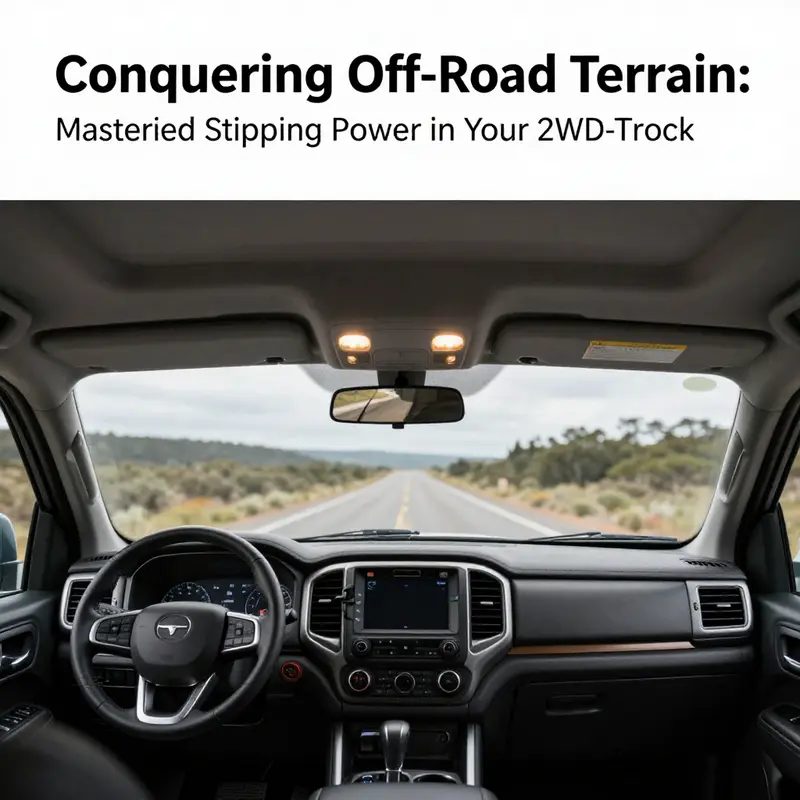
Driver Feedback and Safety for Stopping a 2WD Truck Off-Road
Stopping a two-wheel drive truck off-road is less about brute force and more about rhythm, preparation, and reliable feedback. The drivetrain limits traction, but you can offset that with disciplined braking technique, thoughtful vehicle preparation, and recovery planning that improves safety and confidence. This chapter focuses on the human-vehicle loop: how the driver senses what the truck is doing, how the truck communicates its limits, and how simple preparations keep a stop from turning into a real problem.
Begin with the feel of braking underfoot. On firm surfaces, pedal feel is consistent and intuitive. Off-road, feedback degrades: the pedal may feel softer, modulation is harder, and wheel slip can occur without obvious cues. To compensate, refine your inputs. On loose or uneven ground, use light, intermittent braking rather than a single heavy application. Short, controlled pulse braking keeps the rolling resistance predictable and prevents wheels from locking and digging in. When a wheel locks, the truck can slide in unpredictable ways. Small pulses let you find the threshold of grip and hold the vehicle on the line you intend.
If your truck has an anti-lock braking system, use it properly. ABS is designed to allow full braking effort while preventing wheel lock-up. When engaged, press the pedal firmly and maintain steady pressure. If the system pulses under your foot, that vibration is deliberate feedback indicating ABS is active. Do not pump the brakes; doing so defeats the system’s modulation and increases stopping distances. In contrast, for trucks without ABS, a more tactile, feathered approach is necessary: apply pressure, sense the onset of lock, and ease off just enough to regain rotation. In all cases, practice these techniques in a safe, open area to build a reliable internal model of how your truck responds to different surfaces.
Visibility is a core part of driver feedback and the most direct way to improve safety. Clear sightlines let you detect obstacles early and choose a spot to stop with confidence. Keep windows, mirrors, and the windshield clean and free of obstructions. Use auxiliary illumination to extend reaction time when light is poor; well-aimed lights reveal changes in terrain and hazards sooner, giving you more time to decelerate smoothly. A rearview camera or a multi-angle camera system enhances spatial awareness when reversing or braking into tight spaces. These tools are especially helpful when the ground behind is uneven or when low-contrast obstacles are present. Reliable visual information reduces guesswork and lowers the chance of abrupt braking that leads to loss of traction.
Tire contact with the ground is the single most important factor for stopping. Adjust tire pressure for terrain to maximize the contact patch, but understand the trade-offs. Lowering pressure on soft ground increases grip and improves the vehicle’s ability to slow without digging in. However, softer tires change steering feel and braking distance; expect more squirm and a slower return of the wheel to center. Learn the pressures that suit your usual terrain and carry an inflator and gauge to restore pressure before and after difficult sections. This small habit ensures consistent feedback from the steering and braking systems and prevents surprises when you need to stop.
Vehicle preparation beyond tires also enhances driver cues. Ensure your brake system is maintained and predictable. A firm pedal offers clear signals about pressure and modulation. Upgraded lines that resist expansion under load give a direct pedal response and steady stopping power across repeated maneuvers. Upgrading pads and rotors to materials suited for heat and friction keeps performance consistent on long descents. When braking feels different after repeated use, you can trust that the change is due to terrain or load, not component fatigue.
Suspension settings influence how weight transfers under deceleration. A loose or overly soft setup lets the truck pitch and roll, which dulls feedback and invites instability. Stiffer springs and performance dampers keep the tires in contact with the ground and provide clearer cues through the steering wheel and seat. An anti-roll device reduces body lean during braking and cornering, helping you predict scrub and maintain the chosen line. These changes sharpen the information you receive as a driver, making it easier to react proportionally and safely.
Recovery aids are not a luxury; they are a component of safe stopping strategy. Carry traction boards or a compact recovery jack that allow you to create bite under a slipping wheel. If a stop causes the truck to sink or spin, quick deployment of traction aids prevents a brief slip from becoming a stuck vehicle requiring a complex recovery. Keep a set of sturdy wheel chocks or use natural terrain features to block movement when parked on slopes. On an incline, always set the parking brake and place chocks under the downhill wheels immediately after stopping. These small steps preserve a safe state and eliminate the risk of slow, unnoticed sliding that can lead to rollovers or block rescue routes.
Plan where you will stop. When possible, choose level, firm ground with a clear escape route. If you must stop on a slope, aim to orient the truck so the downhill side is clear and the nose points slightly uphill. This reduces the tendency to roll forward or tuck the front into soft ground. Avoid stopping on the crown of a rut or directly over soft patches where the truck might settle. If you expect to remain stopped, turn wheels away from the hazard and apply ample parking restraint. If you carry cargo, secure it before stopping; shifting loads can change weight distribution and braking behavior without warning.
Training and teamwork amplify equipment gains. Regular driver practice builds muscle memory for off-road braking and recovery procedures. Establish crew protocols so passengers know to stay clear of recovery operations and to hold communication devices ready. If you manage a group or fleet, invest in skills development. Teaching drivers to read terrain, to modulate braking for specific surfaces, and to use recovery tools reduces the likelihood of a stop escalating into a rescue. For programs focused on safe operations and training, consider resources that emphasize people-centric approaches to fleet safety and capability like the invest in people strategies used in professional operations (see resource on investing in people for fleet success: https://dirtantrucks.com/invest-in-people-key-to-fleet-management-success/).
Practice scenarios with recovery tools so deployment becomes routine. Place traction boards under a spinning wheel, use a recovery jack when you need to lift a wheel free of a rut, and rehearse chocking procedures on small slopes. These rehearsals shorten reaction time and limit mistakes when a real stop becomes delicate. Keep recovery gear accessible and stowed so it is easy to reach from the cab or a short walk away. Label or organize the kit logically so you or a teammate can find the right tool without delay.
Finally, treat each stop as an information exchange. Your senses, the truck’s feedback, and the environment each contribute data that guide your next move. Read the smell of overheated brakes, the sound of a tire scraping, and the feel of the steering. Learn the thresholds where grip transitions to slip on the surfaces you frequent. This practiced attention lets you anticipate rather than react. Combine sensible vehicle upgrades, dedicated recovery gear, and disciplined technique, and a 2WD truck will stop far more predictably than its drivetrain implies.
Relevant community experience supports these points. Practical advice on making a two-wheel drive truck more capable in the dirt, including the value of recovery aids and careful technique, can be found here: https://www.team-bhp.com/forum/4×4-vehicles/109573-how-make-2wd-more-capable-offroad-conditions.html
By cultivating clear visual cues, reliable pedal feel, appropriate tire management, and practiced recovery procedures, drivers tighten the feedback loop between themselves and the truck. The result is safer, more controlled stops that preserve momentum, prevent entrapment, and keep the vehicle and crew ready to move on.
Stopping with Confidence: Integrated Upgrades and Techniques for a 2WD Truck in Rugged Off-Road Terrain
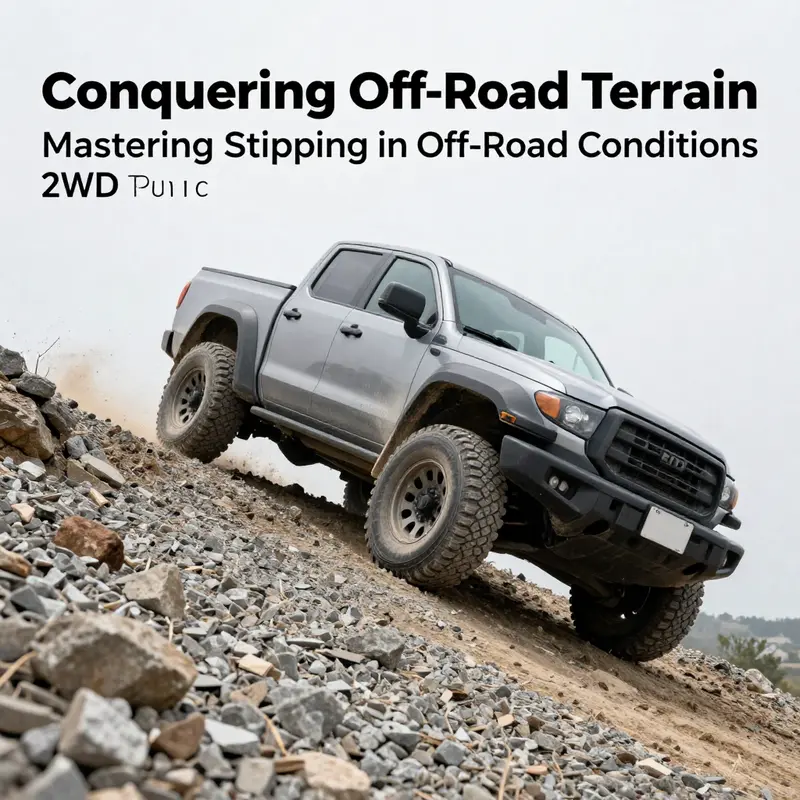
Stopping a 2WD pickup in rugged off-road conditions tests more than raw horsepower or grip. It tests your ability to read terrain, modulate control, and pair hardware with technique so that the vehicle responds predictably rather than reacting with surprise. In many ways, the challenge is not just the terrain but the way the truck behaves as weight shifts, tires bite into unfamiliar ground, and braking forces travel through a chassis that isn’t tuned for four wheels driven from the front or rear. The path to safer, more predictable stopping starts with a careful blend of braking system upgrades and chassis stabilization, then flows into driver technique and situational awareness. When you bring these elements together, a 2WD truck can stop with a level of confidence that mirrors more capable off-road setups, even if the drivetrain remains two-wheel driven.
Crucially, braking performance on loose or uneven surfaces hinges on how heat is managed, how the system responds to pressure, and how the wheels maintain traction during deceleration. Upgrading the braking system is not merely about buying larger components; it is about creating a braking environment that can sustain repeated deceleration without fading, especially on long downhill runs or when you’re negotiating a rough, rock-strewn slope. High-friction brake pads, selected for heat resistance and stable performance across a wide temperature range, help prevent fade as the brakes heat up during extended descents. When paired with rotors designed to shed heat efficiently, this combination keeps the braking surface cooler and more uniform, reducing the risk of grabby, inconsistent pedal feel as the terrain shifts under the tires. The choice between ceramic-like compounds and semi-metallic formulations comes down to a balance: longer pad life and quieter operation with ceramics, or higher initial bite and strength under extreme heat with semi-metallics. Either way, the goal is steady, repeatable stops rather than a single hard bite that becomes unpredictable after a few miles of rough terrain.
Equally important are the lines that carry hydraulic pressure from the master cylinder to the calipers. Rubber hoses allow a degree of expansion under high pressure, especially when the system heats up, which can soften the brake pedal and undermine precise modulation. Replacing these with steel-braided lines minimizes expansion, delivering a firmer, more linear feel to the pedal and a more predictable response when you’ve got to modulate braking at the edge of traction on a rock-strewn trail. This seemingly small change matters more in off-road driving than many realize, because precise pedal feel translates directly into smoother weight transfer and better tire contact with irregular ground. If the vehicle carries a heavier load or if you frequently engage in extended braking on rough grades, larger front calipers and rotors can provide more pad surface area to absorb heat and more rotor volume to dissipate it. The objective is not simply stopping power but controlled power—where you can command deceleration with intent and without surprise, even when the ground beneath the tires shifts from soil to sand to broken shale in a single turn.
Yet power on the feet must be matched by stability in the chassis. A stiffened suspension is not a luxury but a foundation for reliable stopping authority. A soft, yielding suspension tends to let the rear end squirm and the front end bounce as brake force is applied, which can unsettle steering and magnify the risk of wheel hop or loss of traction. Reinforcing the chassis with stiffer springs or performance dampers helps keep the tires planted, so braking forces don’t translate into unpredictable pitch or roll. An anti-roll bar is another crucial addition, particularly for moves that involve braking while cornering on uneven ground. By reducing body roll, the sway bar enhances steering feedback and keeps the tires in contact with the surface where they can do the most work. The net effect is a more linear deceleration profile, where the front and rear axles share the load in a balanced way, rather than the truck leaning into a turn and destabilizing under braking.
Tire pressure, often treated as a mere setup detail, plays a central role in how you stop off-road. Lowering tire pressure increases the contact patch on soft ground, improving grip and allowing the tires to mold to the terrain rather than skate across it. But lowering pressure changes handling in other directions, including braking distance. The learner’s mindset here is to experiment in safe zones, understanding how traction improves on loose surfaces as pressure drops, and how this interacts with braking technique. After a day of off-road work, you’ll know precisely where your stopping distance changes with tire pressure and terrain, and you’ll adjust your approach accordingly. The integration of tire pressure strategy with braking and suspension work creates a cohesive system in which each component supports the others, rather than existing in isolation.
Driver feedback and safety advance beyond mechanical upgrades. Enhanced visibility is a quiet force multiplier in off-road stopping. Powerful auxiliary lighting helps you spot the line of advance and any obstacles well ahead of your braking point. Even in daylight, a clear line of sight matters when you’re decoding a trail’s braking demands or deciding whether you should carry more speed into a descent or coast to a stop in a safe, flat area. The ability to see the terrain, the grooves and ruts, and any hidden rocks informs your deceleration plan. Equally valuable is a backup camera or 360-degree view system that reveals what lurks behind and to the sides when you maneuver in tight spots or back into a clearing. These tools do not replace good braking or good driving technique, but they paint a fuller picture of the stopping opportunity and help you choose a safer path.
Technique is the other half of the equation. Engine braking deserves pride of place in any approach to controlled deceleration on a 2WD truck. Descending steep grades, you can drift the vehicle toward a managed stop without loading the braking system with heat. The concept is simple: let the engine do some of the work before your foot touches the pedal. On loose surfaces, however, the temptation to rely heavily on the brakes can be perilous. The terrain’s variability—sand that wants to slide, gravel that channels underfoot, mud that wants to trap wheels—means you should avoid abrupt, heavy braking. Instead, practice a deliberate cadence of light, controlled braking, sometimes called point braking, where you progressively reduce speed and let tire friction do the heavy lifting. The aim is to keep the vehicle’s mass moving smoothly, with the tires maintaining grip and avoiding wheel lock-up. This approach becomes easier as the braking system maintains stable pedal feel and as the suspension keeps the wheels in contact with the ground.
Low-range gearing is another tool that deserves consideration for stopping in rugged terrain. When you need precise control at low speeds, especially on steep or rocky sections, engaging a low-range setting can multiply torque and make deceleration more predictable. This is not about crawling at walking pace for every situation; it is about having options that let you modulate speed across a spectrum of terrain. The right gearing choice, together with the upgraded brakes and stabilized chassis, allows you to traverse a descent with a smooth deceleration curve rather than a brake-bite-and-surge pattern that unsettles the vehicle.
Where to pause and stop is almost as important as how you stop. The research emphasizes seeking stable, flat areas free from hidden dangers—rocks, deep ruts, or sudden drops. Stopping on a smooth, predictable surface reduces the risk of the vehicle slipping or settling into a hazard while you’re decelerating. It is a simple principle with a profound safety payoff: the moment you must halt to assess the next section, you want a ground you can trust to keep the vehicle settled and responsive as you resume control.
Putting all of this together means recognizing that more capable off-road stopping for a 2WD truck comes from a holistic approach. Hardware upgrades improve the car’s physical ability to stop, while suspension and tire choices shape how that stopping power translates to real-world control. Driver technique ties it all together: a practiced engine brake, careful modulation of the brake under loose ground, and strategic use of low-range gearing when needed. The path to safer off-road stopping isn’t a single bolt or a single technique; it is a careful, integrated process that respects the terrain’s demands and the vehicle’s limitations.
For readers seeking a broader framework that complements these ideas, consider the resource on improving 2WD off-road capability. It offers a complementary perspective that expands on preparation, strategy, and technique in a practical, field-tested context. If you’re curious to explore more, see mastering-diesel-mechanics-your-step-by-step-path-to-success. This internal reference provides a useful touchpoint for understanding how maintenance and mechanical reliability underpin the stopping performance described here. And for a broader sense of how experienced builders and drivers approach these challenges, an external perspective is available at the following resource, which consolidates best practices from a wide community of off-road enthusiasts: https://www.team-bhp.com/forum/4×4-technical/108593-best-practices-improving-2wd-off-road-capability.html.
Final thoughts
Mastering off-road stopping performance in a 2WD truck means equipping yourself with the right knowledge and modifications. By upgrading your braking system, enhancing stability, and improving driver feedback, you can confidently navigate any terrain. Remember, every road less traveled poses unique challenges, but with a well-prepared truck and the right stopping techniques, you’ll conquer any obstacle. Embrace the adventure, respect the landscape, and maximize both your safety and the joy of off-road driving.