
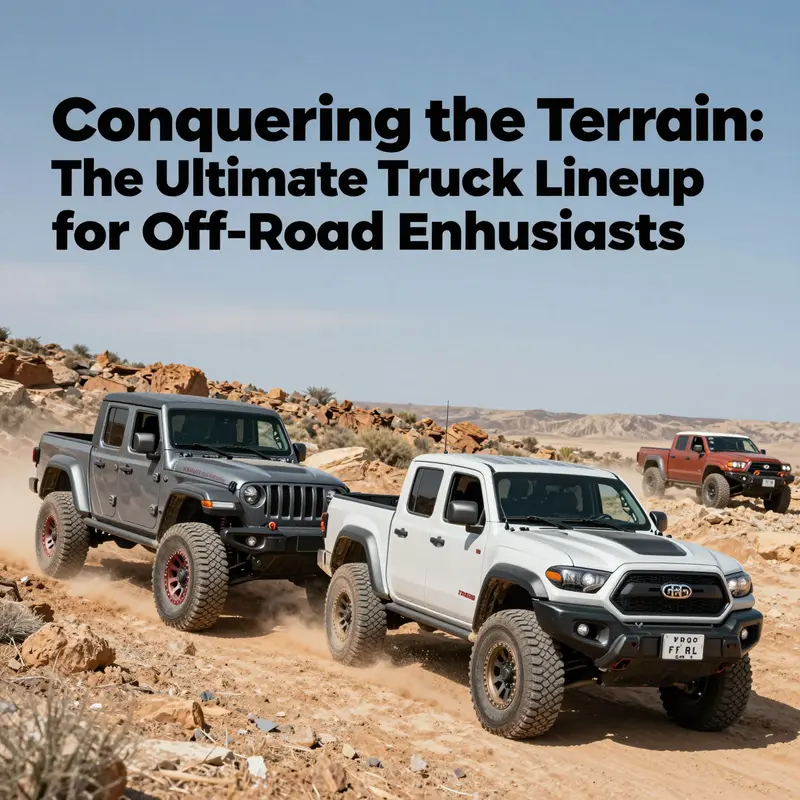
For those who crave the thrill of the wild and the robustness of capable machinery, the year 2026 promises an exhilarating lineup in the world of off-road trucks. With various models entering the market, two stand tall—the Jeep Gladiator, a testament to unyielding adventure, and the Toyota Tacoma TRD Off-Road, known for its outstanding balance of agility and power. From the mountains to muddy trails, these trucks offer unmatched performance, innovative technology, and rugged durability. In the following sections, we’ll delve into their exceptional features, explore rival models, and gaze into future trends that are set to redefine off-roading as we know it.
The Jeep Gladiator: Unmatched Capability and Open-Air Prowess in the Modern Off-Road Truck Lineup
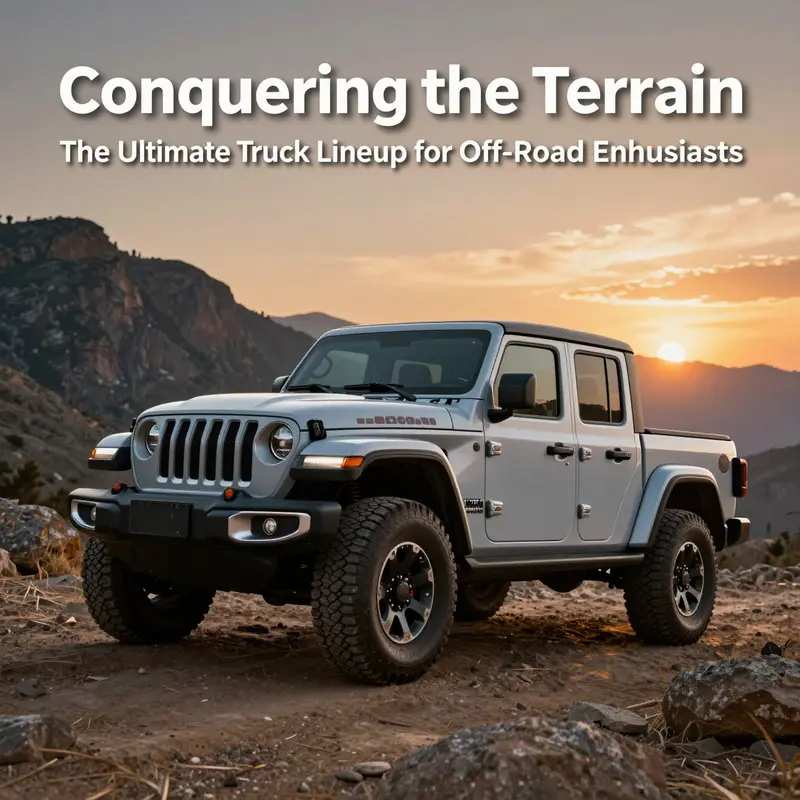
From the moment you lay eyes on the Gladiator, its rugged silhouette signals a different kind of off-road promise. This is a truck that wears its battle-readiness on its sleeve, a marriage of Jeep’s legendary trail pedigree with the practical demands of a pickup bed. In 2026, the top tier of off-roading trucks isn’t just about raw power; it’s about a cohesive package that can handle the roughest trails while still delivering everyday usability. The Gladiator embodies that balance. Its frame and four-wheel-drive architecture are designed to absorb rock gardens, switchbacks, and mud baths with a confidence that can feel almost tactile. It isn’t merely a vehicle for adventure; it’s a platform for adventure that remains grounded in real-world practicality, with a bed that invites hauling gear, recovery gear, and all the essentials a day on the trail can demand. When you push past the glossy marketing and into the dirt-and-gravel reality of off-road exploration, the Gladiator’s essence becomes clear: capability does not have to be compromised by comfort, and ruggedness does not have to come at the expense of daily driveability.
Under the hood, the Gladiator offers a choice of powertrains that emphasise both performance and reliability. The standard engine option, a robust 3.6L Pentastar V6, delivers a healthy 285 horsepower and 260 lb-ft of torque. This is not merely a number on a spec sheet; it’s the heartbeat that powers confident climbs, controlled side-slides across loose terrain, and the ability to maintain momentum on steep grades. The V6’s broad torque curve translates into predictable responses as you tiptoe over rock faces or power through rutted dirt roads, where torque at low revs matters almost as much as peak horsepower. For those who prize fuel efficiency without sacrificing towing capacity or off-road bravura, the Gladiator also offers a 2.0L Turbocharged Inline-4 (eTorque) option. With 270 horsepower and 295 lb-ft of torque, this engine is built to reduce fuel consumption on long highway stints and windy backroads, while still delivering the snap and surge you expect when you turn into a rough trail. Compatibility with both an 8-speed automatic transmission and a 6-speed manual transmission further enhances the Gladiator’s appeal, providing a spectrum of driving experiences—from the smooth, predictable shifts of modern automatics to the direct, connected feel of a manual for trail work and rock crawling. The choice between automatic and manual, in this case, isn’t merely about preference; it’s a decision about how much you want to engage with the vehicle as you navigate the terrain. The manual option, in particular, offers an old-school tactile glue that makes the act of negotiating a rocky slope through a tight, twisty section feel purposeful and intimately controlled.
The Gladiator’s off-road chops extend beyond the engine room. Its four-wheel-drive system is designed to deliver traction where it matters most, whether you’re negotiating a scree-covered incline or a muddy traverse that would overwhelm a lesser setup. The combination of a strong frame and capable suspension translates into a chassis that remains composed on uneven ground, allowing the tires to stay in contact with the terrain and the driver to read the surface with less guesswork. This translates into practical advantages on real trails: fewer sporadic wheel lifts, more predictable steering feedback, and a greater sense of control when momentum must be conserved for a tight turn or a stubborn obstacle. It’s the kind of steadiness that lets a driver breathe a little easier and push a little further, knowing the system won’t suddenly betray them when the trail gets rougher.
Inside, the Gladiator mirrors the same philosophy: purpose-built technology designed to aid the driver without intruding on the experience. The interior features a sizable 12.3-inch Uconnect screen that serves as the nerve center for navigation, vehicle settings, and trail-focused information. The screen isn’t simply there to dazzle; it’s laid out to be legible in bright sun and to respond quickly when a rock-crawling line needs plotting or a mud route requires real-time changes in the terrain modes. The inclusion of a TrailCam system is a nod to practical off-road navigation. When you’re inches from a meadow of hidden ruts or a rocky drop-off, a camera feed that helps you pick a clean line becomes not a luxury but a necessity. It’s the kind of feature that reduces guesswork, shortens the learning curve for rough terrain, and fosters a higher degree of confidence for drivers who want to push the envelope without taking unnecessary risks.
Adventure, however, is not the Gladiator’s only calling card. The design is intentionally adaptable, with features that elevate the open-air experience to a practical level. Removable doors and a removable roof enable a more immersive journey into the outdoors, inviting the kind of wind-in-the-face exhilaration that transforms a simple dirt road into a sensory memory. This openness isn’t about novelty; it’s a tactile reminder that capable off-roading can coexist with a sense of freedom that is rare in most utility-focused vehicles. The Gladiator’s bed remains a functional extension of the cabin, offering space for recovery gear, spare parts, and tools for longer expeditions. It’s a reminder that a vehicle built to conquer the backcountry should still be capable of carrying the essentials for the everyday tasks that balance life on the road with life in the wild.
In addition to the familiar gasoline powertrains, the Gladiator’s strategy for 2026 includes options that broaden its appeal to a wider spectrum of off-road enthusiasts. The possibility of a hybridized future in the form of a PHEV 4xe version points toward near-silent, efficient off-roading. Here the vehicle can glide through certain sections with electric assist, reducing noise on the trail and providing a cleaner footprint in sensitive environments while still offering the torque and throttle response needed to negotiate challenging terrain. Not every trail demands brute force; some demand finesse and the ability to conserve energy over a long day of exploration. The Gladiator’s evolving powertrain strategy reflects a broader trend in off-roading: capability is not tied to a single powertrain, but to a system that can adapt to the demands of the terrain, the preferences of the driver, and the ecological realities of modern adventure travel. And for those who want to keep a closer eye on how such capabilities translate into real-world performance, there is a practical path into the mechanical literature—see Mastering Diesel Mechanics for deeper context on how power and efficiency are engineered at the drivetrain level.
The Gladiator’s place in the 2026 top lineup isn’t solely about spec sheets. It’s about the story of a vehicle that refuses to retreat when the road ends. On trails that carves out a niche for a vehicle equal parts mud-slinger and practical workhorse, the Gladiator’s combination of a sturdy frame, a versatile engine lineup, and an interior that remains usable when the boots are muddy stands out. It invites a driver to move beyond the stereotype of off-road as a weekend pastime and into a more integrated lifestyle where a truck can be a capable companion through a weekend in the backcountry and a weekday routine run to the hardware store. The result is a vehicle that feels less like a specialized tool and more like a reliable partner that adapts to the rhythm of its user’s life, a trait that resonates with the broader question at the heart of this article: what makes a top off-roading lineup truly top? In the Gladiator’s case, the answer is a blend of heritage, versatility, and forward-looking technology that keeps pace with the evolving expectations of off-road enthusiasts.
To place this in the broader context of the off-road truck landscape, the Gladiator sits alongside capable peers that have defined the mid-size and full-size categories for years. Yet the Gladiator’s unique combination of features—open-air versatility, a choice of robust engines, a modern cockpit, and a camera-assisted approach to line selection—gives it a distinct edge in the mid-size space. The result is a driving experience that isn’t merely about power or glamour; it’s about the confidence that comes from knowing you have the tools to tackle whatever the trail throws at you while maintaining a sense of control and comfort that makes the journey as important as the destination. For readers who want a more hands-on look at how these technologies translate to on-trail performance, the internal exploration of mechanical systems offers a rewarding path forward, with practical insights that can be carried into other vehicles in the lineup as well.
As the chapter moves toward the next chapter in this exploration, the Gladiator’s story remains a touchstone for what a top off-roading truck can be: a vehicle that respects the terrain, invites exploration, and ensures that the driver stays engaged rather than overwhelmed. It’s not just about conquering mud or conquering rocks; it’s about redefining what a pickup can be when its heart is tuned for endurance, its brains are wired for trail-readiness, and its spirit is unafraid to shed a few doors and a roof to taste the wind on a long, unpaved day. The Gladiator thus helps set the benchmark not by shouting louder than the crowd, but by performing more consistently in the conditions that matter most to off-roaders—the ones where traction, durability, and driver feedback matter most, and where every mile on the trail writes another line in the vehicle’s evolving legend.
For readers seeking a deeper, more technical dive into the horsepower and torque figures that power this capability, the Gladiator’s engine options and transmission pairings reinforce a theme that recurs across the top of the off-road segment: flexibility matters as much as raw output. The 3.6L V6 and the 2.0L turbocharged inline-4 offer distinct personalities—one more linear and enduring, the other more immediate and spirited—yet both are tuned to deliver predictable, repeatable performance on a weekend trail or a weekday job site. The aspect of open-air driving, while a thrilling draw, also enhances the driver’s perception of vehicle balance and suspension compliance as they navigate the unpredictable surface textures of real off-road routes. In the end, the Gladiator wears its capability like a badge of practical respectability, signaling to enthusiasts and casual buyers alike that this truck isn’t merely a showpiece but a true, do-it-all tool for those who prize off-road competence as a daily advantage, not merely a seasonal luxury.
External reference for practical specifications and updates can be found on the Jeep Gladiator Official Page, which provides the latest on available powertrains, trim levels, and technology packages as the model line continues to evolve. Jeep Gladiator Official Page
null
null
Beyond the Leaders: Competing Models that Shape Off-Road Truck Capability in 2026
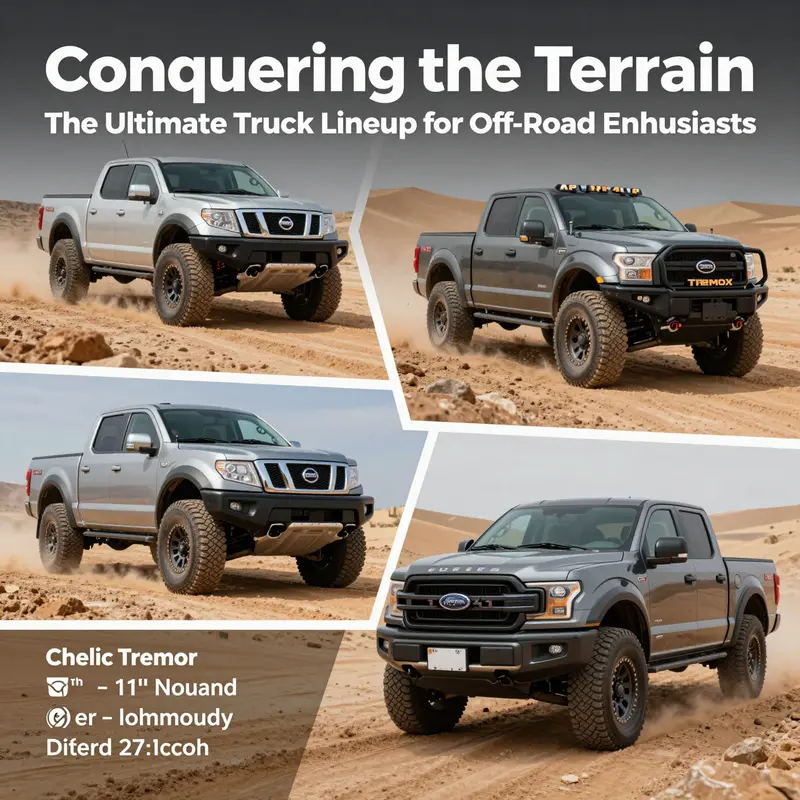
The broader ecosystem of off-road trucks in 2026 expands far beyond the two front-runners most enthusiasts discuss around campfires and trail backups. While the Jeep Gladiator and the Toyota Tacoma TRD Off-Road anchor the field with a blend of nimble size and proven rock-crawling capability, a wider world of contenders illustrates the diverse demands that off-road driving imposes. These competing models span purpose-built rally machines, heavy-duty work trucks, and electric platforms designed for construction sites and remote operations. Taken together, they reveal how off-roading is both a test of driver skill and a test of engineering philosophy. The first layer of this extended landscape comes from purpose-built heavy-haul and rally-inspired designs. Models such as the Powerstar and the Trakker, developed for punishing environments, embody a lineage of endurance that traces its roots to endurance racing and heavy industrial service. In Dakar-style conditions, these trucks are not mere transports; they are rolling laboratories. The Powerstar, refined for Australian terrain, emphasizes a robust drivetrain and chassis designed to absorb corrugations and savage washouts with minimal drama. The Trakker follows suit with a modular configuration that prioritizes reliability in quarry lanes and construction corridors where rock faces and clay pits demand both traction and payload durability. Their twin emphasis on reliability and adaptability makes them icons in niches where rugged performance translates directly into uptime and mission success. In discussing these machines, it is impossible to ignore the scale and the payload might they marshal. They are not light-footed explorers; they are workhorses meant to haul, tow, and traverse with predictability over long shifts and across rough surfaces. This is an essential distinction from the sportier, more nimble offerings that thrill enthusiasts at trailheads. When you look at the engineering philosophy behind these heavy-duty trucks, you see a careful balance between horsepower, torque, weight distribution, and brake resilience. Their powertrain choices lean toward torque-rich designs capable of pulling heavy loads while maintaining control on steep grades and irregular terrain. The chassis tends to be heavier, with reinforced frames that tolerate abuse and vibrations without fracturing. The suspension system—whether it uses heavy-duty leaf springs or adaptive coil configurations—must smooth out the worst bumps while preserving enough wheel travel to prevent jamming on rocks. These traits are not about sprinting up a trail but about enduring the course with confidence and a guarantee of return. The practical implications for off-road users go beyond raw capability. A truck that can shell out 210 horsepower and, more importantly, sustain torque through harsh offsets translates into worksite reliability. It means operators can count on predictable responses when negotiating rutted trails or mud-laden roads under load. It also means maintenance crews can plan parts inventories around common wear points, knowing that the platform is designed to endure long duty cycles in punishing environments. The presence of left-hand-drive configurations in many of these global-market models reflects a strategic decision to court international fleets and export markets. The engineering teams optimize for a broad baseline of compliance and global parts availability, so that a truck assembled in a single region can still be serviced midway around the world. This international compatibility, paired with rugged design, makes these models attractive to operators who run fleets across multiple continents. They are not the flashiest performers in the eyes of a weekend warrior, but they deliver the kind of reliability that fuels long-term operation and fleet efficiency. The second thread in this landscape is the electric pivot unfolding across industrial off-road trucks. Electric off-road platforms are not necessarily replacing diesel-drenched workhorses overnight; they are expanding the toolkit available to site managers and fleet operators. The zero-emission promise and reduced noise footprint are particularly appealing on environmentally sensitive sites or in cities with strict dust and air quality mandates. These machines offer a different kind of torque delivery: rapid, quiet, and remarkably consistent at low speeds, which translates into smooth starts on slippery grades and precise control during delicate operations. The tradeoffs revolve around energy density, charging infrastructure, and payload budgets. Battery weight can erode payload capacity, while charging downtime can limit duty cycles on remote sites. Yet as battery technology advances and on-site charging becomes more ubiquitous, electric off-road trucks start to close the gap with traditional diesel platforms in scenarios ranging from quarrying to large-scale mining. For operators, the evolution of electric options widens the decision matrix. It is no longer a simple choice between “diesel or electric”; it is a calculation of total cost of ownership, including maintenance costs, fuel price exposure, and the utility of silent operation on sensitive jobsites. This shift mirrors broader trends in heavy equipment, a field where electrification has begun to redefine what is practical on the roughest workdays. The third leg of the competing-models tripod involves the military and government-adapted off-road trucks. These platforms prioritize survivability, resilience, and redundancy. They are engineered to endure extreme temperatures, rock impacts, and long endurance runs under load. The materials used in their construction—high-strength alloys, reinforced chassis components, and protective enclosures—are chosen to maximize survivability in remote theaters and harsh climates. While these machines are not typically bought by civilian fleets, their design lessons filter into consumer and commercial segments. They emphasize modularity, ease of maintenance, and the ability to field spares quickly in austere environments. The lessons of this sector ripple into the civilian market by informing more robust chassis concepts, surprise-proof wiring harnesses, and simplified preventive maintenance rituals. Across these categories, a recurring theme is the drive to extend capability without sacrificing reliability. The Dakar Rally, cited by many as the ultimate proving ground, illustrates how endurance and reliability carry as much weight as outright speed. The brutal courses and the unpredictable weather of desert and rock confront vehicles and crews with the same demands that a remote worksite presents. This is why an extended-off-road truck segment can remain relevant and resilient even as consumer preferences skew toward sportier, lighter machines. For enthusiasts, the contrast between the gladiator’s open-air exhilaration and the Powerstar’s and Trakker’s field-tested sturdiness offers a spectrum of off-road experience. Each vehicle serves a different mandate, and both are essential to understanding the entire landscape. The conversation about top off-road performance in 2026 benefits from recognizing how the competing models push the boundaries of what is possible. They remind us that off-roading is not simply a test of grip and wheel travel. It is a test of how trucks manage power, weight, and terrain over hours or days. In a practical sense, fleet operators and individual buyers weigh these traits against their use case. A weekend warrior might prize the nimbleness and removable doors of a lighter, more agile model. A contractor running a remote mine site might value the uninterrupted torque and payload flexibility of a heavy-duty 4×4 or 6×6. An site manager tasked with reducing emissions may lean into electric solutions that still deliver dependable performance. The broader market also benefits from the cross-pollination of ideas among these categories. The improvisational intelligence gained from rally-style endurance testing can inform suspension ideas and cooling strategies that eventually trickle down to consumer-grade off-roaders. Likewise, the industrial and military sectors push the envelope on durability that trickles into more mainstream platforms. This exchange keeps the top lineup—still anchored by the Gladiator and the Tacoma—under constant evolution. It helps explain why enthusiasts encounter constant refinements in chassis, drivetrains, and electronics as new models and refreshes roll out. A final dimension to consider is the role of information and resource sharing in shaping decisions. The Dakar Rally community, for instance, offers real-world data on reliability under extreme stress. Operators can glean insights about serviceability, field maintenance, and spare-parts logistics from the event’s reporting and technical briefs. These inputs inform decisions about whether a given heavy-duty truck is suitable for a long-term, off-grid operation or if a particular electric model can sustain a full shift with limited downtime. For readers who want to connect the theoretical and practical aspects of these competing models with broader industry currents, a glance at the electrification trajectory in general vehicle engineering provides useful context. The transition toward electrified platforms is not exclusive to small, consumer-oriented vehicles; it is a global pattern across all heavy-duty segments. In the off-road truck space, it signals a broader shift toward sustainable site management and reduced lifecycle costs, an evolution that can redefine what is considered acceptable performance on the most demanding trails. The field’s diversity is also a reminder that the conversation about “the top lineup for off-roading” should be nuanced. The best choice depends on the job, the terrain, and the fleet’s strategic priorities. If trail performance and open-air enjoyment are the aim, the Gladiator and Tacoma continue to offer an iconic blend of capability and personality. If uptime, payload, and extreme toughness matter most, the Powerstar and Trakker serve as exemplars of endurance. If quiet operation and site-specific compliance are priorities, electric off-road trucks become increasingly compelling. If resilience in the harshest conditions is the criterion, military-grade platforms demonstrate the upper bounds of durability. The knowledge base grows as engineers and operators learn from the Dakar Rally, from mining seams to desert highways, and from the research labs to the construction sites. It is a dynamic ecosystem where each contender contributes to a more capable and versatile off-road experience. For readers seeking a tangible link to a broader movement that touches on the electrification and construction-truck themes discussed here, a broader industry retrospective on electrification in heavy equipment offers valuable context. See the Volvo electric construction equipment revolution for a perspective on how electrification is reshaping heavy platforms, turning the same core ideas of torque, durability, and control into new, cleaner forms.
Riding the Edge: How Electrification, Connectivity, and Smarter Suspensions Will Define Off-Road Truck Lineups
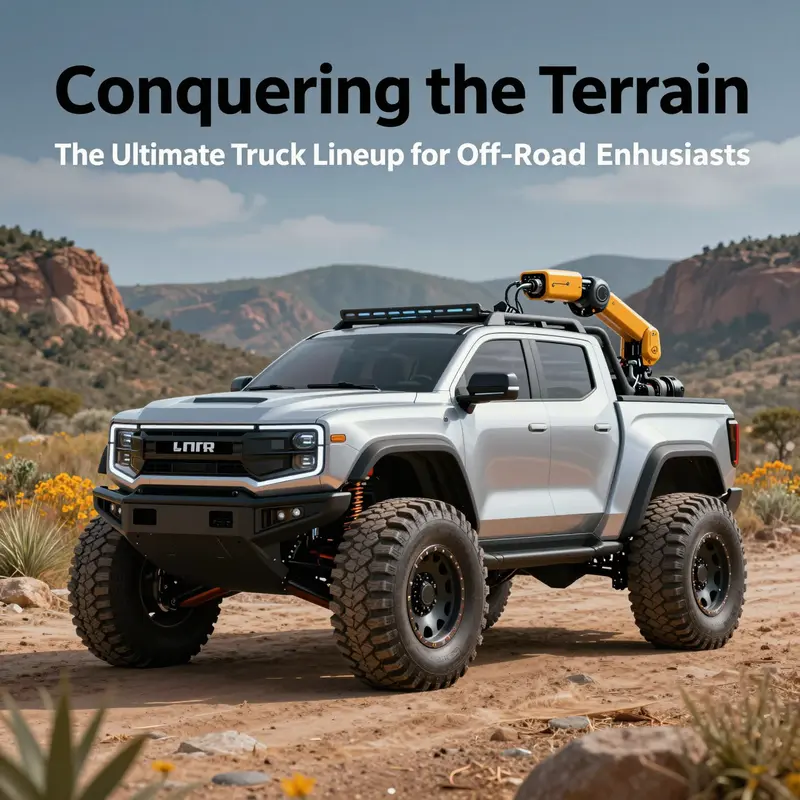
The landscape of off-road trucks in the near future is less about choosing between one or two standout machines and more about how those machines will evolve to blend capability, efficiency, and intelligence. The current leaders in the field have already demonstrated that a truck can be designed to endure the harshest terrain while still delivering daily practicality and modern connectivity. What makes these trajectories compelling is not just raw torque or ground clearance, but how powertrains, chassis, and software converge to create a machine that can traverse rock-strewn passes by day and handle a long highway stretch by night with equal poise. Looking ahead, the next generation of off-road trucks will be shaped by a handful of core developments: electrification and hybridization as a path to cleaner power without surrendering torque or reliability; sophisticated driver-assistance systems that reduce fatigue and increase safety in challenging environments; enhanced connectivity and telematics that turn trucks into data-driven partners rather than simple machines; intelligent suspension and drive-system adaptations that tailor performance to terrain and speed; and aerodynamics and lightweight construction that stretch every kilowatt and every mile while preserving rugged durability. In a sense, these trends are less about flashy features and more about a cohesive philosophy: build machines that sense where they are, anticipate what’s coming next, and adapt in real time to deliver the most capable, efficient, and comfortable ride possible, whether navigating a rocky pass or a remote job site.
Electrification sits at the center of this shift, not as a distant option but as an accelerating reality that informs every design decision. Even as fully electric off-road trucks are still arriving in stages, the industry is embracing hybrid systems and 48-volt mild-hybrid architectures as steady stepping stones. These configurations can dramatically improve fuel efficiency and reduce emissions during creeping climbs, traversing washouts, and idling at trailheads without sacrificing the low-end torque that helps tame rough terrain. The logic is practical: electric or hybrid powertrains deliver torque instantly, smooth the throttle response on uneven surfaces, and can enable features like regenerative braking for more controlled descents. The broader lesson from adjacent segments is clear—electrification is not a gimmick but a foundational capability that will determine range, reliability, and total cost of ownership across the next generation.
The more immediate off-road implication is the way hybridization can be paired with rugged durability and workaday practicality. The design challenge is to integrate high energy density batteries or 48-volt systems into chassis layouts that still offer generous approach and departure angles, robust underbody protection, and the ability to shed weight where it matters most. A hybrid powertrain must work in concert with a transmission, a transfer case, and a suspension that can leverage regenerative modes without compromising wheel travel or articulation. In practice, this means engineers are exploring modular electrical architectures that can support plug-in capability where appropriate, while preserving the reliability of proven diesel or gasoline powertrains for extreme terrain or extended remote runs. The result is a family of trucks that can switch seamlessly between efficient cruising and brutal, obstacle-strewn climbs, all without forcing the driver to compromise safety or capability.
To illustrate how these ideas translate into real-world capability, consider how advanced driver-assistance systems are evolving alongside powertrain refinements. Modern off-road trucks are increasingly equipped with intelligent safety packages that extend beyond highway-centric features. Expect adaptive cruise controls that function at low speeds for long, rugged backroads, lane-keeping assist that remains accurate over rutted surfaces, and automated emergency braking that can react to sudden obstacles hidden in dust or behind rock ledges. In the off-road context, ADAS becomes a drafting partner for the driver, providing timely reminders, helping to maintain momentum on technical sections, and reducing the physical toll of long, demanding expeditions. A 360-degree camera system, while common in urban trucks, becomes a critical navigation aid here, stitching together multiple views to reduce blind spots when negotiating hairpin turns or selectively clipping across a narrow spine of rock. The value of ADAS in off-roading isn’t just about convenience; it’s about safety, reliability, and the confidence to press further into terrain that tests both man and machine.
Connectivity and telematics are the other side of the coin. The modern off-road truck is a workshop on wheels, a mobile data hub that gathers information from dozens of sensors and transmits it to the cloud for predictive maintenance and fleet optimization. Real-time health monitoring means you can anticipate a component’s life cycle and schedule service during a planned stop rather than at the worst possible moment. Route optimization tools can factor terrain type, fuel strategy, and battery state of charge, enabling more efficient planning for multi-day expeditions where conditions change as quickly as weather patterns. Remote diagnostics can alert a technician to a potential issue before it becomes a roadside event, while telematics provide actionable insights into tire wear, coolant temperatures, and suspension health. Together, electrification, ADAS, and connectivity begin to redefine not only what a truck can do, but how effectively you can plan, execute, and recover from challenging journeys.
A thread that ties these technologies together is the evolution of the suspension and drive system. The next-generation off-road platform will feature intelligent suspension capable of adjusting ground clearance, damping, and axle articulation in real time. Think of a system that can sense speed, grip, and the terrain ahead, then automatically optimize clearance to protect underbody components while preserving wheel travel when the surface demands it. And beyond just adjusting the ride height, modern drive configurations will be able to switch between different axle layouts or traction modes to maximize grip on loose surfaces or rock. This isn’t mere novelty—the capability to reconfigure drive dynamics on the fly can dramatically improve the efficiency and safety of long, technical treks. It also broadens the envelope of what a single truck can accomplish, enabling it to adapt to a wide spectrum of tasks, from desert crossings to limestone stair-steps without requiring a different vehicle or extensive modifications.
Lightweight materials and refined aerodynamics complete the package. In the off-road world, reducing mass in nonessential places or redistributing weight to improve stability translates directly to better climbing ability and shorter braking distances on steep descents. The quest for weight savings doesn’t come at the expense of durability; instead, engineers are leaning into stronger, lighter composites and high-strength aluminum or carbon-fiber components where feasible. At the same time, making the cab and its interfaces sleeker—smoothing lines, concealing wheel arches, and refining chassis profiles—helps to reduce aerodynamic drag, which matters for efficiency during long hauls between trailheads or remote work sites. The effect is cumulative: a lighter, more efficient truck that can still absorb the abuse of off-road travel without compromising occupant comfort or safety.
Another quality that cannot be ignored is the ongoing focus on user experience. The interior of modern off-road trucks is becoming a sanctuary where rugged capability meets refined comfort. Expect premium sound systems, sophisticated climate control, and supportive seating that reduces fatigue on extended journeys. Ergonomics will be tailored to the realities of off-road use, with controls positioned to be reachable when stance and terrain demand a shift in weight or posture. In practice, this means fewer distractions and more mental bandwidth available for the driver to assess terrain, plan lines, and adjust strategy as conditions evolve. Comfort here isn’t a luxury; it’s a practical enabler of longer, safer, and more confident expeditions across difficult landscapes.
If we connect these threads back to the broader market, several patterns emerge. First, electrification and hybridization will continue to push into the mid- and full-size pickup segments, not as a niche, but as a core capability. Second, intelligent systems—in the form of ADAS, connectivity, and predictive maintenance—will become standard expectations, not add-ons. Third, the suspension, drive-system versatility, and lightweight construction will be the levers that translate power into traction while preserving range and durability. Taken together, these elements will shape how manufacturers conceive, engineer, and price future off-road trucks. The result will be a lineup that offers not only raw capability but also smart, connected, and sustainable performance that customers can trust across a spectrum of environments.
For readers curious about how these trends align with cross-industry electrification efforts, the evolution of heavy equipment in other sectors offers a useful mirror. The electric-construction and large-vehicle space demonstrates how blended powertrains can deliver torque-rich performance without sacrificing efficiency, while advanced chassis and suspension concepts developed for heavy applications often migrate to on-road and off-road trucks in meaningful ways. This cross-pollination underlines a simple truth: the next generation of off-road trucks will ride on broader advancements in electrification, autonomy, and intelligent systems that are already reshaping the way heavy-duty machines operate on job sites and beyond. The trajectory is clear—future trucks will be smarter, more capable in rugged terrain, more efficient on the highway, and more attuned to the needs of drivers who demand both performance and reliability in the most demanding conditions.
To explore a broader spectrum of electrification and how it reshapes construction and transportation infrastructure, see the discussion on Volvo’s electric construction equipment revolution. This example from adjacent sectors helps illustrate how the same design philosophies—lighter materials, energy-efficient powertrains, and smarter control systems—are being tuned to suit the off-road world as well. Volvo electric construction equipment revolution.
For a deeper, global market perspective on high-performance trucks and the propulsion technologies driving their evolution, refer to the comprehensive analysis available at the external resource: https://www.bazheshi.com/report/73981. It provides context on how electrification, performance demands, and regulatory pressures are converging to shape the next wave of trucks across various regions and industries.
Final thoughts
As we look toward the horizons of 2026, the off-roading landscape reveals a thrilling convergence of power, performance, and innovative technology, led by stalwarts like the Jeep Gladiator and the Toyota Tacoma TRD Off-Road. These vehicles are not just trucks; they are gateways to adventure, crafted for those who dare to tread where others retreat. From unrivaled capabilities to seamless integrations of modern technology, these models embody the essence of escapade essential for every off-roading enthusiast. Embrace the journey ahead; the wild terrain awaits!