

For those who live for the thrill of off-road adventures, the right truck can make all the difference. The Toyota Tacoma, specifically the TRD Off-Road model, has built a solid reputation among off-road enthusiasts, racers, and rural landowners alike. Its blend of power, sophisticated engineering, and durability elevate it above mere utility vehicles; it becomes a reliable partner on every adventure. This exploration delves into critical aspects of the Tacoma: from its off-road capabilities and powertrain performance to an examination of its suspension system, advanced features, and long-term reliability. Each chapter builds a comprehensive picture to help you determine whether this truck deserves a spot in your arsenal of adventure-ready machines.
Trail-Tested Balance: Evaluating the Toyota Tacoma’s Off-Road Capability for Real-World Adventure

Choosing a mid-size pickup for off-road exploration means seeking a thoughtful balance between rugged capability and everyday practicality. The Toyota Tacoma TRD Off-Road embodies that balance in a way that resonates with weekend warriors and seasoned overlanders alike. Its off-road prowess isn’t pitched as an extreme, single-use performance flag; instead it represents a cohesive philosophy: build a truck that can tackle demanding terrain without demanding constant repairs or upgrades. In practice, that philosophy shows up in several core areas that work together to create a vehicle you can trust when the trail grows unpredictable and the miles between trailheads stretch longer than your last can of fuel. The result is a truck that feels purpose-built for off-road days but not burdened by compromises that sometimes accompany extreme machines. This is the essence of its appeal: the Tacoma isn’t simply a vehicle that can go off-road; it’s a machine designed to be reliable while doing so, which matters as much as raw capability when negotiating loose rock, mud, or steep, rutted grades far from the nearest repair shop.
At the heart of its off-road character is a powertrain that translates intent into movement with a steady, confident response. The 2026 model pairs a 2.4-liter turbocharged four-cylinder engine delivering 278 horsepower with an 8-speed automatic transmission, a combination that provides strong, linear power through the rev range. For those who want more, the i-FORCE MAX hybrid option raises peak output to 326 horsepower, injecting an extra measure of torque that proves especially useful when negotiating abrupt climbs or slithering stretches of shale. Crucially, the base engine’s ability to run on regular 92-octane fuel broadens practical accessibility if you’re venturing into remote areas where premium fuels aren’t available. That practicality matters because it reduces the logistics burden that often accompanies serious off-road trips, where every mile could tilt toward resource planning rather than pure exploration. The engine’s torque delivery is well suited to slow, controlled progress over obstacles, avoiding the need for frantic throttle inputs when you’re perched on an uncertain slope or trying to ease through a patch of sand.
Yet power on its own does not define off-road capability. The Tacoma TRD Off-Road builds its competence around a suspension system that emphasizes control at varying speeds and in diverse conditions. Standard 2.5-inch Fox internal bypass shocks with three-stage damping give the chassis a refined ability to soak up fast, whoop-filled sections and respond with composure to slow, technical sections that require precise wheel placement. Ground clearance is generous for a mid-size truck, at roughly 10.6 inches, which translates into a lower likelihood of bottoming out on rocks and corrugations while also enabling more composure on steep ledges. The approach, departure, and breakover angles—33.8, 25.7, and 23.5 degrees respectively—further illustrate a design intent aimed at traversing uneven terrain rather than merely surviving it. This geometry helps the vehicle maintain climbing capability and traction when the surface changes abruptly, which is a common reality on many trails that force you to reassess your line in real time.
The hardware that arrives with the TRD Off-Road is not just for show; it is functional and integrated. A mechanical rear locking differential is standard, a real game-changer in situations where one wheel might spin freely. When traction is scarce, the lock sends torque to the wheel with grip, dramatically increasing the chance of forward movement in mud, sand, or jagged rock. In addition, a disconnectable front anti-sway bar gives the front suspension extra travel during extreme articulation, allowing the front tires to maintain better contact with uneven surfaces. This combination of front-end travel and rear-axle traction creates a versatile baseline for a broad swath of terrain, from muddy trails and sandy washes to rocky ledges. The advantage is not simply in raw capability during a single obstacle, but in the consistency of grip and control across a day’s worth of varied challenges.
Equally important is what sits above and around that mechanical core. The Tacoma TRD Off-Road comes equipped with heavy-duty protection that speaks to its mission as a trail companion, not a showroom sample. Aluminum engine skid plates shield the undercarriage from sharp rocks and debris, a feature that can make the difference between a smooth ascent and a costly repair stop. Tow hooks—front and rear—add practical redundancy for recovery scenarios, a reality of off-road travel where you sometimes need an assist to extract the truck itself or help others in the group. The tire and wheel package rounds out the protection and capability: 33-inch all-terrain tires paired with bead-lock compatible wheels provide solid traction while offering a margin of safety against punctures in rugged environments. Wide fenders complement the tire size, offering additional protection from debris while contributing to a rugged, ready-for-action appearance that aligns with the vehicle’s intended use.
Inside, the emphasis remains on function and reliability. The cabin favors tangible controls and a straightforward layout, designed to stay usable under the conditions you’re most likely to encounter on the trail. A large 14-inch touchscreen anchors the interface, but the experience isn’t about digital glitz—rather, it’s about intuitive access to essential features, including modern connectivity like wireless Apple CarPlay and Android Auto. Toyota Safety Sense 3.0 adds a suite of driver-assistance features that can prove especially beneficial when navigating unfamiliar routes or variable weather, injecting an extra layer of confidence without encouraging complacency. The interior design, with its practical switches and well-placed storage, supports the reality of off-road life where durability and ease of use take precedence over luxury.
The overall package is further anchored by a reputation for reliability that has long defined Toyota’s approach to engineering. The Tacoma has earned praise for its durability and long-term dependability, qualities that are indispensable when half-planned adventures spill into longer-than-expected trips. This reliability is not a passive attribute; it actively shapes the ownership experience, reducing the likelihood of unplanned downtime in remote locations and enabling owners to focus more on the journey and less on the vehicle’s temperament. The combination of mechanical toughness, proven durability, and a design that prioritizes steady, repeatable performance makes the Tacoma TRD Off-Road a compelling choice for drivers who want to tackle challenging terrain without surrendering everyday practicality.
Of course, there are trade-offs to consider. In the hierarchy of off-road specialization, some machines tuned for extreme rock crawling might surpass the Tacoma’s capabilities in the most demanding, rock-stacked environments. The Tacoma, however, excels in a different category: the intersection of capability, reliability, and everyday usability. It’s the type of truck that can handle a weekend trip into the mountains and still function as a reliable daily driver, a quality that holds significant value for owners who see exploration as a lifestyle rather than a one-off event. Its powertrain options, including the turbocharged base engine and the performance-boosting hybrid variant, offer a spectrum of performance that can be tailored to different kinds of adventures, whether you prize immediacy of response or fuel efficiency and long-run capability.
For those who value peace of mind as much as terrain conquering, the 2026 Tacoma TRD Off-Road presents a coherent, practical proposition. It translates a robust off-road hardware suite into a broader narrative of dependable exploration—one where the vehicle serves as a steady partner rather than a dramatic spectacle. Its design acknowledges the realities of off-road life: the terrain is variable, the weather can turn, and the best days on a trail are those where you can stay focused on the path rather than fretting about the vehicle’s conditions. In that sense, the Tacoma’s off-road capability is not just about what it can climb or crawl over; it’s about what it enables you to experience and how reliably it does so, day after day and mile after mile. The result is a vehicle that invites you to explore further, knowing that your truck has your back when the trail grows rough and the map grows uncertain. For many enthusiasts, that combination—capability married to dependability—maps closely to what they want from a truck built to shoulder the burden of adventure without turning life into an endless mechanical checklist. In that light, the Tacoma TRD Off-Road stands out as a well-rounded partner for serious adventurers who still value everyday practicality and lasting peace of mind on every mile of the trail.
External resource: For official specifications and details beyond the narrative, see the Toyota Tacoma page. https://www.toyota.com/tacoma
Turbocharged Heart, Steady Will: How Engine Design Shapes Off-Road Confidence in a Mid-Size Trail Partner
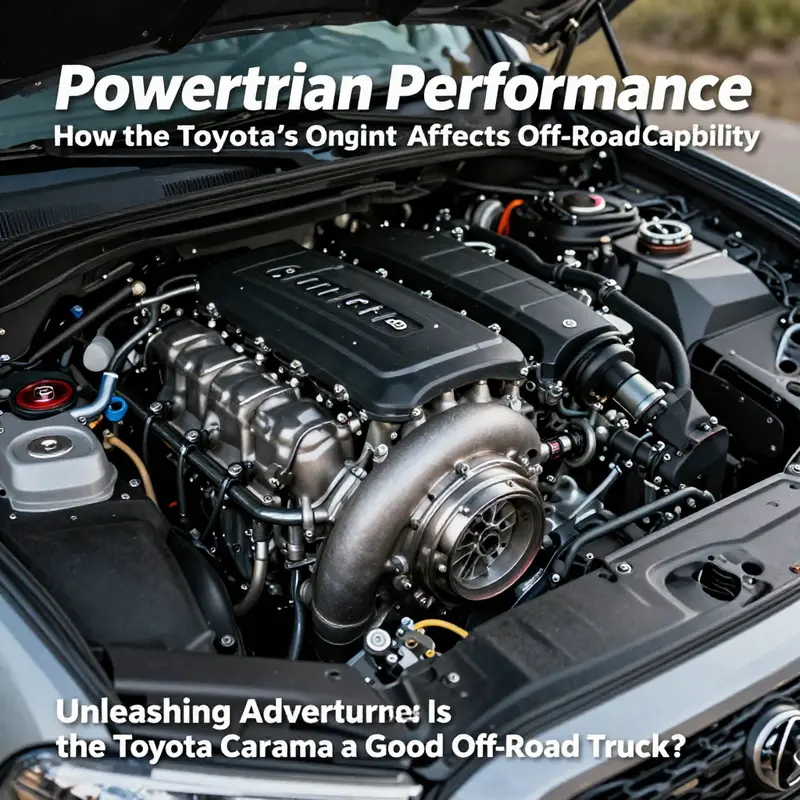
The engine that powers a capable off-road mid-size pickup is less about speed and more about stubborn, dependable momentum. In rough terrain, where rocks grab the undercarriage or ruts demand constant throttle, the powertrain must deliver immediate, predictable response and sustainable pull from low revs. The turbocharged four-cylinder at the core of this kind of truck is designed to do exactly that: open the throttle with a measured, linear punch that keeps you moving when the trail packs mud, sand, or gravel beneath the tires. In practical terms, this means power is available where it matters most—at low and mid RPM—so you can crawl up a ledge, crest a rock garden, or back out of a slick trench without chasing the engine with the pedal. The engine’s configuration isn’t chosen to chase peak horsepower numbers; it’s tuned to deliver reliable, controllable thrust through the kind of terrain that tests a driver’s nerve and a vehicle’s durability. In a world where many modern engines chase high-rev magic, the mid-size off-road pickup leans toward a different kind of capability: a robust, steady heart that keeps the vehicle grounded, even when traction is scarce and the road ahead looks unpredictable.
That heartbeat is a 2.4-liter turbocharged engine that produces 278 horsepower in its base form, with a hybrid variant offering a higher peak output in exchange for more complex power management. The emphasis, again, is not raw speed but a well-timed surge of power that arrives exactly when the wheels need it. The torque curve, while not endlessly flashy on paper, reads as a practical map for off-road progress. It’s the kind of torque that doesn’t disappear when you dip into a deep rut or begin a slow, deliberate climb. It’s the torque you feel in your hands as the throttle is pressed and the tires bite, a moment of connection between driver intent and machine response that translates into confidence on loose rock and steep grades. The powertrain’s personality—smooth, deliberate, and forgiving—lets the driver focus on line choice, balance, and wheel placement rather than chasing engine speed or hunting for a gear.
The eight-speed automatic transmission that teams with this engine is equally important. Its shifts are tuned for off-road realities, prioritizing engine speed and throttle position over aggressive, city-tuned shifts. On steep climbs, the system holds gears when you need torque, then shifts decisively under load to keep the engine from falling into a trough of power loss. This is not a transmission that hunts for the next gear when you’re fighting for traction; it stays with you, maintaining a predictable tempo that makes it easier to modulate weight transfer and wheel contact with the ground. The result is a powertrain that feels less like a weight on the accelerator and more like a reliable partner in the cab. You aren’t chasing horsepower; you’re managing momentum with a throttle map designed to respond instantly to varied terrain and changing grip. That kind of responsiveness can turn a challenging trail into a series of manageable steps, where each obstacle becomes a problem you solve rather than a situation that overwhelms your vehicle.
Fuel practicality also plays a meaningful role in off-road reliability. The engine’s ability to run on regular 92-octane fuel adds a pragmatic layer to ownership. When you’re miles from the nearest fuel stop, you don’t want to worry about chasing premium grade or expensive additives. The design philosophy behind this choice is simple: keep the truck usable in real-world expeditions where fuel quality and availability vary. That reliability extends beyond the pump. The engine’s architecture favors durability and long-term resilience—traits that matter as soon as you load camping gear, water containers, and recovery gear into the bed and begin your weekend escape into rougher backcountry. The powertrain’s robustness is part of the broader, no-nonsense engineering approach that has earned the mid-size pickup its reputation for durability and consistent performance. It isn’t glamorous in the way a high-strung race engine is, but it’s a performance profile you can trust when the trail throws you a curveball.
Where the engine’s character truly shines is in how it cooperates with the rest of the vehicle’s off-road toolkit. On approach to a slick ledge, you may need a steady stream of torque at modest throttle to maintain grip, while the drivetrain’s control systems keep you from overworking any single tire. This is where the integration of power delivery with traction-enhancing hardware matters: a mechanical rear locking differential ensures that when one wheel loses traction due to an obstacle or tension, power is redistributed to the wheel with grip. The front suspension’s ability to travel—facilitated by the disconnectable front anti-sway bar—works in concert with the engine’s torque output to keep tire contact patches planted on uneven ground. Heavy-duty protection, including underbody plates and rugged tires, protects the powertrain from punctures and debris, letting the driver maintain momentum without worrying about every rock you encounter. In practice, this means the powertrain isn’t just about raw numbers; it’s about a coordinated system where torque, transmission strategy, and traction hardware combine to create a confident, controllable experience on trails that demand precision and resilience.
Reliability is not an afterthought in this setup. The brand’s engineering philosophy emphasizes durability and predictable performance, qualities that become tangible as soon as you begin a long session of off-road driving. The powertrain is designed to endure the vibrations, heat, and shocks that come with crossing rough terrain, while its electronic and mechanical components are selected for longevity over the more fragile, highly computerized alternatives that sometimes dominate urban-focused performance. This emphasis matters in the backcountry, where a vehicle that breaks down can transform a planned weekend into a logistical headache. The habit of robust construction—paired with a proven powertrain that remains calm under load—gives drivers the sense that their truck is a partner for the long haul, not just a weekend warrior. The result is a practical, no-nonsense off-road truck whose heart remains steady even when the trail tests patience and grip.
All of these traits—the turbocharged engine’s low-end responsiveness, the eight-speed transmission’s terrain-tuned logic, the powertrain’s fuel flexibility, and the broad, integrated off-road hardware—converge to form a balanced package. It’s not the most extreme machine for ultra-technical rock crawling, but it excels where many mid-size contenders stumble: it blends capability with reliability, utility with confidence, and performance with practicality. For weekend adventurers who want to keep their plans flexible, and for overlanders who value a vehicle that can adapt from a sandy wash to a muddy trail without drama, this powertrain philosophy delivers a compelling case. In the end, the engine isn’t merely a source of go-fast potential; it is the engine of adventure, turning distant trails into reachable destinations and keeping the journey itself enjoyable rather than a struggle to avoid stalling or overheating.
For those seeking a deeper, more technical breakdown of how the powertrain interacts with the full off-road package, see the official specifications. This resource provides the granular details that help prospective buyers understand how the engine, transmission, and traction systems work together to create reliable off-road performance on a mid-size pickup. official specs
Trail-Tuned Suspension and Clearance: How a Well-Engineered Chassis Powers Real-World Off-Roading
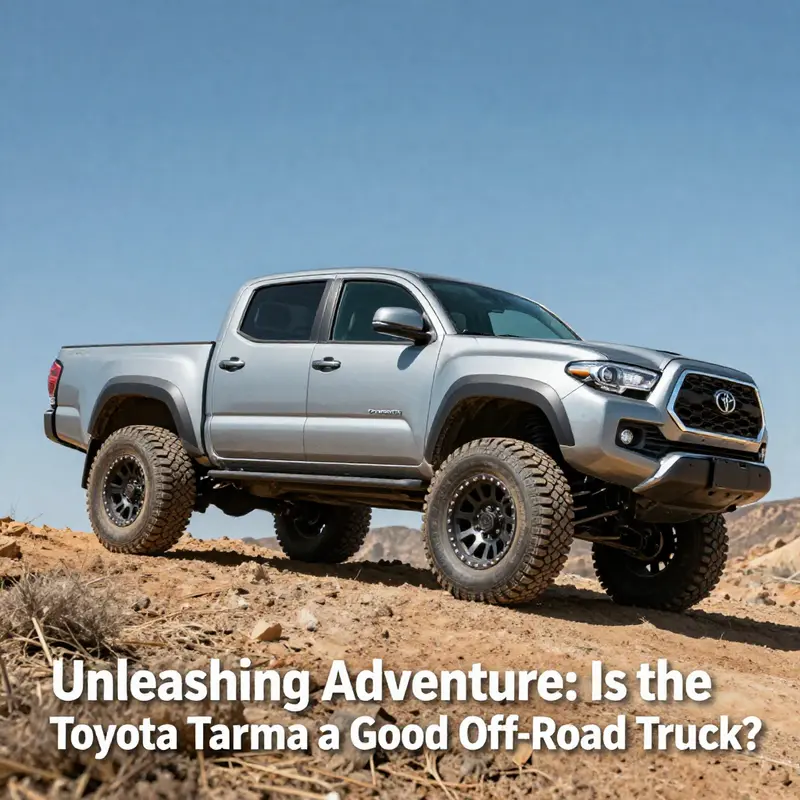
The ability of a mid-size pickup to traverse rough terrain hinges on more than raw horsepower or fancy electronics. It rests on how a vehicle’s chassis absorbs impacts, preserves traction, and keeps its underbelly out of trouble as soon as the trail turns rough. In this light, the suspension system and ground clearance emerge as the chapter’s most dependable protagonists. They determine not only what obstacles a truck can clear, but also how confidently a driver can pace through rutted sections, raked ledges, or a line of sharp switchbacks. The model most readers encounter in this conversation is engineered to deliver a rare balance: it can ride smoothly on pavement while offering serious capability when the road becomes a trail. Its foundation is a suspension tuned for a practical compromise, paired with ground clearance that keeps the front end light and the drivetrain protected, even when the trail throws a handful of boulders or a sea of mud its way.
The heart of the system is a sophisticated suspension setup designed to keep tires in contact with uneven ground while controlling body movement through varied terrain. In the 2026 iteration, the standard off-road package benefits from a robust, purpose-built arrangement that includes a specialized shock system. The shocks, tuned for both high-speed rough-road corrugation and slow-speed, technical rock crawling, use a three-stage damping approach that helps the vehicle respond predictably to sudden hits and gradual dips alike. This kind of damping is crucial on long dirt roads where rocks aren’t a worry but washboard terrain continuously challenges the chassis. The result is a sense of planted control that remains steady when the trail demands fine line management, rather than a choppy, unsettled ride that magnifies every bump. The same setup also preserves body geometry that keeps the tires in contact more consistently across varied angles, which translates directly to traction.
Beyond the suspension hardware itself, ground clearance matters as the canvas on which all other off-road calculations are drawn. The chassis provides a practical floor height that balances approach angles, breakover geometry, and departure capabilities. The numbers are not merely abstract specs; they influence real-world behavior. A generous clearance lets the truck slide over rocks without the undercarriage meeting the terrain first. It also widens the corridor through which the truck can maneuver, letting the driver choose lines with less fear of getting hung up. In the right trim, the truck clears obstacles that would stall a lesser setup, while still staying within a driving range that minimizes fatigue and preserves on-road manners when the trail ends and the highway begins.
A key on-trail advantage comes from optimally tuned angles. The approach, breakover, and departure angles work together to keep the ridge lines and rock faces from catching the bumper or the underbody. On a well-balanced mid-size pickup, those angles are carefully set to offer respectful clearance without creating a boat-like feel on straight, open roads. The improved geometry, combined with the higher ride height, reduces the frequency with which a driver must pick a delicate line in tricky terrain. This is where the suspension’s capability and the tire choice converge to produce predictable, confidence-building traction. The truck’s ability to handle deep ruts, uneven rock faces, and steep grades is reinforced by a tire package designed for off-road grip, puncture resistance, and predictable behavior in loose or muddy soils. When paired with the structural protection that guards the underbody, tires can be deployed to their full potential without inviting avoidable damage.
Of course, suspension and clearance do not work in a vacuum. The chassis is supported by a suite of off-road hardware that widens the practical envelope in which the suspension can operate. A mechanical rear locking differential is a standout feature in traction-challenged situations. When one wheel loses grip, the lock forces power to the wheel with grip, enabling the truck to push forward where a conventional differential would stall. This capability matters more than most casual observers realize, because it allows the suspension to exploit the trade between articulation and traction without surrendering momentum. A front anti-sway bar that can disconnect is another instructive example. In extreme off-road circumstances, disabling front sway bar movement increases wheel travel, helping the front tires maintain contact with the terrain. This pairing of locking differential and enhanced travel is the kind of practical, not flashy, engineering that translates into real-world capability on the trail.
The system’s durability is reinforced by protective components designed to stand up to rock, sand, and debris. Factory-installed skid plates shield the engine and critical components in potential impact zones, while front and rear tow hooks provide essential recovery points in tough recovery situations. The tire package, commonly 33-inch all-terrain tires with bead-lock compatible wheels, is chosen with an emphasis on grip and durability, not just on-road comfort. This careful combination of suspension tuning, protective hardware, and tire strategy creates a chassis that can absorb and dissipate energy from rough terrain without losing control. It’s this synergistic effect—clearance enabling line selection, suspension dampening preserving wheel contact, and protective hardware preventing catastrophic damage—that explains why this mid-size pickup has earned a reputation for practical off-road reliability.
Where the discussion often heads next is the question of upgrades. A significant portion of enthusiasts considers lifts as a straightforward route to more clearance. Mood boards and forum anecdotes often show a spectrum of lift options—ranging from modest two-inch lifts to more dramatic three- and six-inch packages. The benefits are tangible: greater ground clearance, larger tires, and an improved approach to big obstacles. Yet the trade-offs are equally real. A higher center of gravity changes the vehicle’s dynamic stability, increasing the potential for rollover if the driver pushes beyond safe limits. Suspension geometry also shifts with larger lifts, which can affect ride quality, steering feedback, and braking response on pavement. In practical terms, owners who opt for more extreme lift scenarios frequently need additional work—alignment adjustments, brake-line management, and perhaps even chassis bracing—to preserve predictable handling. The takeaway is simple: aftermarket upgrades unlock capability, but they demand careful planning and a willingness to recalibrate for the street as well as the trail.
For readers seeking a deeper mechanical primer, consider exploring a more technical resource that outlines how these systems work together in diesel-powered platforms as well. It provides a broader framework for understanding suspension articulation, weight distribution, and driveline geometry. Mastering Diesel Mechanics offers a thorough, practical look at how mechanical systems interact—an instructive complement to the real-world, on-trail notes discussed here. The point isn’t to push one path over another but to highlight how well-tuned suspension, protective hardware, and reliable driveline elements converge to deliver off-road capability that is more than the sum of its parts.
In a wider sense, the suspension design and ground clearance discussed here reflect more than just a single truck’s capabilities. They illustrate a broader philosophy in modern off-road engineering: the most successful setups are those that minimize complexity while maximizing predictable, repeatable performance. The chassis’s behavior under load—how it compresses, how it rebounds, and how it maintains tire contact through irregular terrain—ultimately determines whether a vehicle feels confident or tentative when the trail narrows, when the mud thickens, or when the rock face rises steeply. The balance between controlled travel and robust protection is not about chasing the most extreme specs; it is about providing a durable, day-in, day-out partner for those who use their trucks as travel instruments as much as exploration tools. When this balance exists, the off-road experience remains controlled rather than chaotic, and that is what many drivers value most in a capable mid-size pickup.
For readers who want to compare this chassis approach with official data, the recommended path is to review the manufacturer’s specifications and consider how each figure translates to real-world behavior. The relationship between ground clearance, approach geometry, and suspensory damping is visible in the real world on trails that demand line-testing and momentum control. In short, suspension and clearance are not showpieces; they are the quiet enablers of confidence, enabling a driver to focus on technique and route choice rather than fearing the next obstacle. The result is a truck that feels capable and dependable on day one and maintains that character across years of moderate and serious use. The evidence from the trail is consistent with the narrative: the combination of well-calibrated suspension, protective hardware, and a reputation for reliability makes this mid-size pickup a compelling off-road partner for weekend adventures and longer overland missions alike.
External resource: For official specifications, see the manufacturer’s technical pages detailing the vehicle’s capabilities and measurements. https://www.toyota.com/tacoma/specs/
Rugged Reliability on Every Trail: Why the Tacoma TRD Off-Road Stands as a True Off-Road Partner

The allure of a mid-size pickup for off-road work and weekend exploration rests on capability plus dependability. In this sense, the Tacoma TRD Off-Road is not a showpiece but a workhorse designed to perform when the trail demands it. The model blends a well-tuned powertrain with a chassis engineered for rough terrain, then adds rugged hardware and a durable interior that can endure long stretches of remote travel. For many enthusiasts and seasoned overlanders alike, that balance—where capability does not outstrip reliability—defines a good off-road truck. The Tacoma in this configuration does not chase headlines with extreme, race-inspired specifications; it emphasizes practical, reliable competence. Its strength lies in steady, controllable power, predictable traction, and a toughness that remains reassuring when the trail heads into mud, rock, or sand.
Power and tractability form the backbone of any credible off-road experience. The standard 2.4-liter turbocharged inline-four produces 278 horsepower, ample for a confident, linear acceleration profile across varied terrains. The upper trims with the i-FORCE MAX hybrid system push total output to about 326 horsepower, delivering quicker throttle response on steep grades and uneven terrain. The 8-speed automatic transmission is tuned for smooth, purposeful shifts, keeping the engine in its sweet spot for highway cruising and slow rock crawling. An important practical note for buyers in remote areas is the ability to run on regular 92-octane fuel, avoiding premium blends and adding convenience when refueling options are scarce.
The chassis and suspension are where power finds its rhythm on rough surfaces. Fox internal bypass shocks provide 2.5 inches of wheel travel with three-stage damping, smoothing high-speed washboard and slow rock crawling alike. Ground clearance is about 27 centimeters (10.6 inches), offering room to maneuver before underbody contact becomes an issue. Approach, departure, and breakover angles of 33.8°, 25.7°, and 23.5° respectively round out the capability envelope for common obstacles, helping the driver maintain momentum rather than getting hung up.
A mechanical rear limited-slip differential helps distribute power when a wheel loses traction, while a disconnectable front anti-roll bar increases articulation for extreme off-road situations. Protective and practical components add further value: aluminum engine skid plates, dual tow hooks for recovery, and 33-inch all-terrain tires mounted on bead-lock compatible wheels. These features create a package that remains practical in less-than-ideal weather and terrain, not just on a perfect day.
Protection is a cornerstone of the Tacoma TRD Off-Road. Rugged hardware—skid plates, sturdy tow hooks, and a roof-rack-ready design—supports a life spent on the move. Inside, practicality and reliability rule the cabin, with a 14-inch touchscreen, wireless Apple CarPlay and Android Auto, and Toyota Safety Sense 3.0 providing a helpful safety net without replacing a driver’s judgment. The result is a dependable partner that can handle a wide range of adventures without requiring constant tinkering or frequent repairs. Toyota’s durability reputation underpins the model’s story, offering confidence that the vehicle will endure miles of rough road between service stops.
Ultimately, the Tacoma TRD Off-Road stands as a measured, balanced choice for weekend explorations and extended overland trips alike. It is not the most extreme machine in its class, but it is a credible, trail-bred partner that invites you to explore with confidence. For readers curious about how connected services blend with rugged trucks, the Toyota ChargeMinder ecosystem adds a practical layer to trail-ready mobility. Learn more about that ecosystem here: Toyota ChargeMinder app. External resources and official specifications can be found on Toyota’s Tacoma TRD Off-Road page for complete information and visuals that align with the performance described above.
Endurance on the Trail: How the Tacoma Holds Up Under Real-World Off-Road Strain
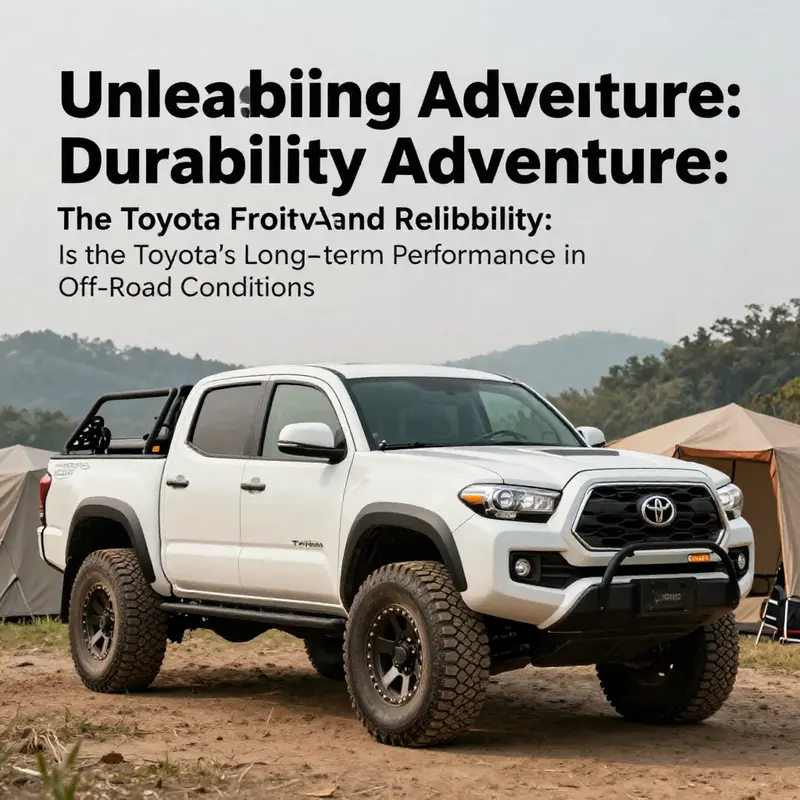
Durability in off-road conditions isn’t about flashy features or bragging rights; it’s the quiet, stubborn backbone that lets a truck remain trustworthy when the trail throws everything it has at it. In that sense, the Toyota Tacoma—especially in TRD Off-Road form—has earned a long-standing reputation that goes beyond initial specifications. What matters most to serious off-roaders and weekend adventurers alike is a combination of robust hardware, proven engineering, and a design ethic that favors reliability over short-term novelty. The result is a vehicle that can endure years of gnarly trails, mud, rock, and exposure to the elements without turning into a maintenance headache. This durability is not a marketing line. It’s reflected in the way the truck behaves after thousands of miles of rough terrain, and it shows up in owner anecdotes about long-term service and confidence when conditions grow unpredictable.
Central to this durability is the suspension system, which anchors the Tacoma’s off-road capability and long-term resilience. The front suspension is an independent setup, typically a double wishbone or MacPherson strut arrangement depending on the exact year and trim. This arrangement provides precise steering control and dependable damping, translating rough ground into manageable feedback rather than jarring instability. The rear suspension uses a solid axle with leaf springs, a design that has earned its stripes in hard use for decades because of its straightforward load distribution and proven toughness. These components are built with hardened steel, corrosion-resistant coatings, and durable rubber bushings designed to endure years of exposure to rocks, mud, and extreme temperatures. Real-world durability stories back this up—owners repeatedly report that even after 200,000 miles, the ride remains predictable and the truck remains quiet and responsive on rough surfaces, a testament to how the fundamental chassis can absorb abuse without losing its character.
The chassis itself is engineered with toughness in mind. Reinforced frame rails and strategic spot-welding help prevent flex and cracking under stress, a feature that matters when the trail demands sustained torque, repetitive flex, and occasional high-load impacts. This approach reduces the likelihood of fatigue failures that can plague lighter, more optimized-but-fragile designs. In practice, that translates to long-term reliability in challenging environments where the right combination of strength and restraint prevents minor misalignments from cascading into costly repairs. The powertrain, too, is part of the story of durability. The 2.4-liter turbocharged engine, delivering 278 horsepower, is designed to deliver reliable performance while running on regular 92-octane fuel—a practical advantage when fuel quality and availability vary on remote expeditions. The engine’s substantial low-end torque supports creeping over obstacles or climbing steep grades without demanding constant throttle finessing. When equipped with the i-FORCE MAX hybrid system, output rises further—offering up to around 326 horsepower—while keeping the drivetrain simple enough to be trusted in off-grid conditions. An eight-speed automatic transmission acts as the steady intermediary, providing smooth shifts and durable gear engagement with an emphasis on linear power delivery rather than abrupt, torque-spiking behavior that could unsettle traction in uneven terrain.
These mechanical foundations are complemented by a thoughtful suite of off-road hardware that reinforces durability precisely where off-road life tends to be harshest. A rear mechanical locking differential is a genuine traction enabler. When one wheel loses grip, the lock directs power to the wheel with traction, turning potential stalling moments into controlled progress. This is especially valuable when the trail demands careful negotiation through mud, loose rock, or soft soil where a single spinning wheel can mean getting stuck. The front suspension benefits from a disconnectable anti-sway bar, which increases front travel during extreme maneuvers. In practice, that extra wheel travel helps maintain tire contact with uneven ground, reducing the likelihood of rockers or chassis rubbing and lowering the chance of sudden loss of control when the going gets rough. Protective hardware is another area where durability shines. Factory-installed aluminum engine skid plates guard the undercarriage against rocks and debris, while front and rear tow hooks provide ready-made recovery points in case of trouble. The 33-inch all-terrain tires, paired with bead-lock compatible wheels, deliver not only grip but robustness against puncture-prone terrains. All of these features come together to create a package designed not just for performance but for survivability when the trail tests a truck’s endurance at its most basic level.
The durability narrative wouldn’t be complete without addressing the long-term reliability that owners repeatedly highlight. The Tacoma has earned a loyal following in part because of its reputation for reliability and a straightforward, “no-nonsense” engineering philosophy. This means fewer electronic gremlins that could fail far from the nearest dealership, especially on extended trips where a fault could strand you miles from civilization. The chassis and powertrain interact in a way that emphasizes dependability over complexity. A truck built with hard-wearing components and conservative electronics is less prone to surprises on the road and on the trail, a distinction that matters when the plan is to keep moving even as weather, terrain, and loads change. The result is a vehicle that not only handles the day’s challenge but does so with a level of predictable performance that provides real comfort when the route grows long and the terrain grows brutal.
This combination of durability and reliability explains why the Tacoma remains a favorite among weekend adventurers and serious overlanders alike. Its strength lies less in “track-ready” extremes and more in the steady, repeatable performance that trail after trail requires. The truck’s ability to maintain structural integrity while absorbing the story of miles of rocky descents and muddy climbs is a reminder that durability isn’t a single feature; it’s a system-level outcome born from careful material choices, robust joinery, and a philosophy that favors dependable engineering over flashy upgrades. This is why many owners describe their Tacoma as a partner that stays the course, rather than a high-risk tool that can waver at the first sign of trouble. The sentiment is practical and unsentimental: this is a vehicle designed to go places, do so consistently, and return home ready for the next expedition.
In the broader conversation about off-road capability and daily practicality, durability becomes a kind of currency. The Tacoma earns it over time not by winning every dashed-off test, but by delivering steady, repeatable results year after year. It stands out because its durability translates into real-world confidence. You don’t have to micro-manage every drive or carry a heavy toolkit just to keep moving. The engineering choices—from suspension to frame, from powertrain to protection plates—work in concert to reduce failure points and to simplify maintenance in rugged environments. That simplicity matters as much as raw capability when you’re wheeling through remote areas, towing gear across uneven ground, or sleeping in a roadside bivouac while rain drums on the roof. And it matters to the people who live with their trucks for long stretches, choosing a vehicle that can be trusted not only to perform but to endure.
For readers who want to explore a broader picture of Toyota’s ecosystem and how reliability is supported with connected systems and ongoing updates, a related resource is toyota-chargeminder-app. While it’s not a direct off-road feature, it reflects a broader design philosophy that values integrated, dependable technology alongside rugged hardware. This chapter’s focus remains on how those core mechanical and structural choices come together to form a durable platform that stands up to the demands of real-world trails. The resonance of that approach is clear when you consider how the Tacoma’s durability translates into meaningful ownership experiences: fewer surprises, more miles of trail, and a vehicle that can be trusted to keep moving when the terrain tests your limits.
For readers seeking official specifications and performance data that ground these observations in manufacturer data, the 2026 Tacoma TRD Off-Road page provides the concrete numbers behind the narrative: 2.4-liter turbocharged engine delivering 278 horsepower (326 horsepower with the i-FORCE MAX hybrid), an 8-speed automatic transmission, substantial ground clearance around 10.6 inches, and favorable approach, departure, and breakover angles that enable confident negotiation of obstacles. The combination of ground clearance, suspension travel, and standard off-road hardware reinforces the message that durability is not just about surviving a rocky trail; it’s about maintaining control, traction, and reliability throughout the journey. Official specifications and performance data are available here: https://www.toyota.com/trucks/tacoma/2026-trd-off-road.
Final thoughts
In the realm of off-road trucks, the Toyota Tacoma TRD Off-Road stands tall as a formidable contender. Its exceptional off-road capabilities, driven by a robust powertrain, advanced suspension, and practical features, ensure a thrilling experience for adventurers. Combined with Toyota’s renowned reliability and durability, this truck doesn’t just promise performance but delivers it, making it a trusted choice for those looking to tackle challenging terrains. Whether you’re scaling mountainous trails or exploring remote farmland, the Toyota Tacoma is a worthy investment for anyone who demands reliability and capability in their off-road vehicle.