
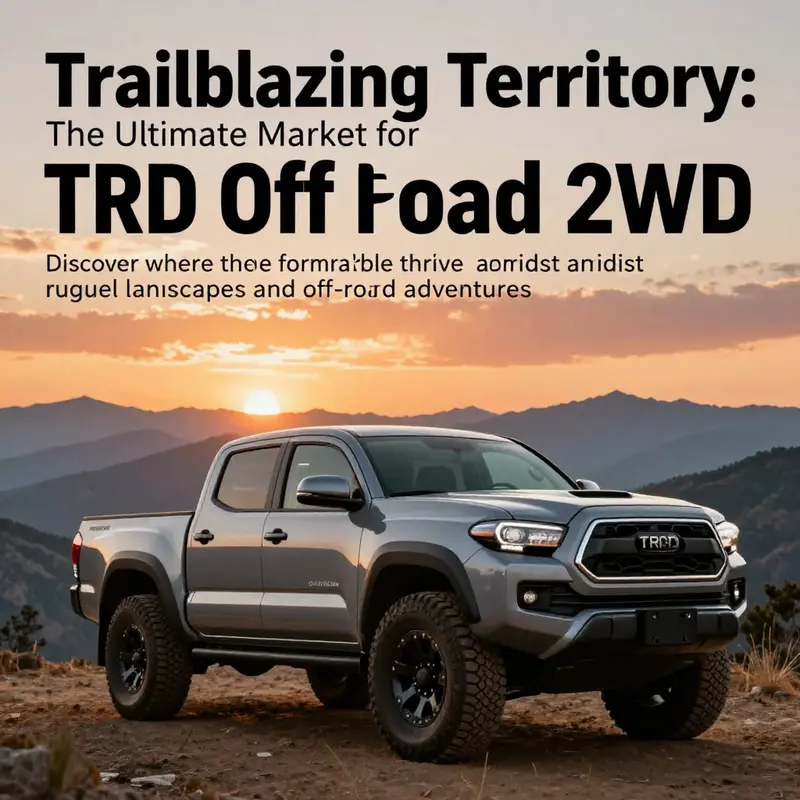
In the vast realm of off-roading, few vehicles command the same respect and admiration as the Toyota Tacoma TRD Off Road 2WD trucks. Renowned for their robust performance, these trucks are not merely tools; they are companions for adventure, capable of navigating treacherous terrains and tackling obstacles head-on. As off-road enthusiasts and adventurers pour into the mountains of Colorado or the deserts of California, the demand for these trucks skyrockets. Each chapter of this article will delve deeper into the factors fueling this phenomenon, starting with an exploration of geographical sales hotspots, followed by an analysis of market dynamics, and culminating with a look at the cultural trends that shape off-road communities.
Regional Currents: Tracing Where Rugged Off-Road 2WD Pickups Sell the Most
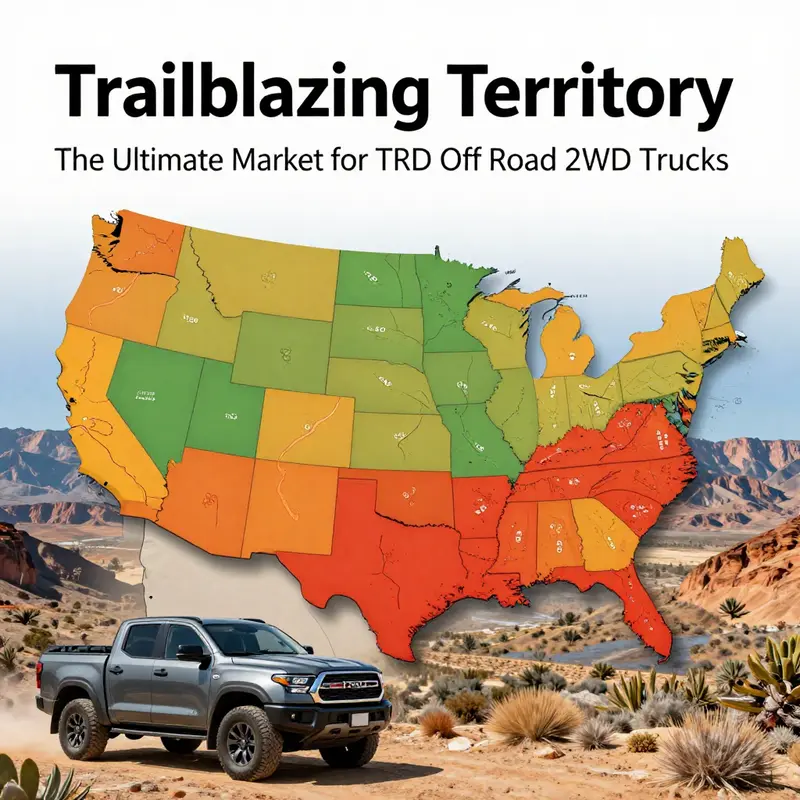
The story of where rugged off road two wheel drive pickups find their strongest resonance begins with the land itself. In places where desert light bleaches the horizon, where mountain trails wind through pine and shale, and where the rhythm of outdoor life dictates weekend plans, a particular kind of utility and grit becomes more than a preference. It becomes a pragmatic philosophy: a vehicle that can carry gear, navigate rough tracks, and still function as a dependable daily driver. The American Southwest, with its expansive deserts, high desert plateaus, and long stretches of open road, stands as a compelling case study in regional demand. States such as Arizona, Nevada, and California share not only similar climates and terrains but also a culture of outdoor exploration and independent mobility. In adjacent states where canyons, mesas, and forested ridges appear in quick succession, the appeal broadens to include parts of Texas, Utah, and Colorado. The geography matters as much as the lifestyle, and that is why the market response in these zones tends to be distinct from markets that emphasize urban convenience and highway efficiency alone.
The essentials of the landscape shape the sales narrative in subtle but lasting ways. In the Southwest, a considerable portion of off road use happens on trails that require a light touch on power delivery, good throttle modulation, and the ability to manage variable traction. A 2WD chassis with a purpose built off road package can deliver enough capability for the kind of recreational driving that draws people toward weekend adventures and seasonal trips to remote spots. Buyers in these regions often prioritize a rugged suspension, protective underbody protection, and tires that can strike a balance between on road comfort and off road resilience. They may not require four wheel drive for every outing, but they still want a platform that feels confident when the route turns rough. That preference translates into strong regional demand for a model line that offers off road oriented engineering as part of a turnkey package, rather than requiring the buyer to source aftermarket upgrades.
The connection between terrain and buyer choice shows up in the distribution of demand patterns. In metropolitan areas that sit near major off road trail systems, the concentration of sales tends to be higher. The Mojave region in California, the canyon country around Moab in Utah, and the mountain corridors that sweep through Colorado are notable magnets. These hubs represent more than just trailheads; they are communities where outdoor identity, work-life balance, and the practical realities of owning a capable pickup converge. In these markets, the appeal rests not only on the truck’s ability to tackle rough surfaces but also on its overall reliability and durability. This is a class of vehicle that can double as a work tool for remote sites and a daily driver that handles urban streets with ease. The value proposition, in other words, blends capability with practicality, a combination that resonates in regions where the seasonality of outdoor activities introduces frequent demand for rugged, reliable transport.
The core features that drive interest in this segment are not new, but their prominence is reinforced by the way they are packaged. An off road tuned suspension, robust underbody protection, and terrain adaptive controls are especially appealing to buyers who value predictability. The ability to switch driving modes to suit dirt, sand, gravel, or rocky surfaces reduces the mental load of venturing into less predictable environments. An electronically controlled rear differential lock and durable off road tires further reinforce traction when asphalt gives way to dust and scree. In markets where weather and terrain can present sudden challenges, these features become a form of assurance that a vehicle can be relied upon to perform when it matters most. Buyers in these regions are often practical optimists: they want a vehicle that can transport gear and people to remote trailheads while still delivering a ride that does not alienate family members during daily use.
Within this framework, consumer preferences begin to diverge from the classic expectation that only four wheel drive equals capability. The data show that many enthusiasts and professionals in these areas value a 2WD configuration endowed with a factory off road package more than a bare 4WD baseline. They appreciate the sprint from launch to highway speed, the confident handling on rough surfaces, and the peace of mind that comes with factory tuned enhancements meant for off road use. The result is a market where the perception of readiness is as important as the actual mechanical capability. A vehicle that arrives from the factory with skid plates, upgraded shocks, and specialized tires is appealing precisely because it reduces the friction of turning a showroom model into a ready to use adventure machine. In markets with abundant outdoor recreation, that turnkey capability lowers the barrier to entry for buyers who want to hit the trail without waiting for after market modifications, and this speed to readiness translates into faster decision making and, ultimately, stronger sales momentum.
In this landscape, the interplay between geography, culture, and vehicle configuration shapes not only who buys but how they use the vehicle. The Southwest, with its long stretch of dry roads and rugged backcountry, has a consumer base that embraces the idea of a vehicle designed to handle both the daily grind and weekend explorations. The 2WD variant with an off road package becomes, for many buyers, a single solution that can tackle a day at the worksite and a day on the trail without requiring multiple vehicles or heavy aftermarket investment. This practicality is deeply resonant in regions where outdoor life and work responsibilities intersect, and it helps explain why certain metropolitan markets along the rim of the desert and the mountains exhibit higher sales density than others.
From a pricing and availability perspective, the regional dynamics feed into the broader market narrative. In the United States, the market has been characterized by growing demand for vehicles that are ready to perform out of the box. Buyers in high demand regions look for factory-backed off road enhancements that can justify the premium with tangible performance advantages. The appeal lies in the consolidation of parts, labor, and warranty into a single purchase, reducing the total cost of ownership when compared to a time consuming aftermarket build. In the context of regional markets, this translates into stability in demand, as shoppers in these areas perceive greater value when the vehicle arrives with a curated set of capabilities rather than a long list of add ons to be installed after purchase. The regional lift in demand then feeds back into price expectations and dealer incentives, which in turn reinforces the attractiveness of purchasing in these markets rather than elsewhere.
For readers who want a tangible reference to the maintenance realities behind this market dynamic, an exploration of factory level maintenance guidance can be insightful. A practical path to understanding how these vehicles perform in diverse climates is to engage with resources that discuss diesel and gasoline engine fundamentals, drivetrain behavior, and chassis wear in rugged operating conditions. See Mastering Diesel Mechanics: Your Step-by-Step Path to Success for a detailed look at how maintenance practices intersect with performance in demanding environments. This resource provides background on the kinds of upkeep considerations that a regional buyer might anticipate when adopting a rugged off road capable pickup. Mastering Diesel Mechanics: Your Step-by-Step Path to Success
As the market has evolved through 2023 to 2025, the sales trajectory for the off road tuned two wheel drive pickup has shown robust growth. Market analyses indicate a clear uptick in volumes, reflecting a combination of factory improvements and a consumer trend toward ready to use, adventure ready trucks. The growth has been roughly in the high single digits to low teens in year over year terms across the national market, and within the region most closely tied to the desert and mountain recreational ecosystems the growth has tended to be stronger still. In this context, the regional concentration of sales is not merely a function of consumer appetite but also of the marketing and inventory strategies that retailers deploy in and around off road corridors. Dealers in these areas tend to keep higher portions of their inventory oriented toward the rugged variants that speak directly to the needs of the regional customer base. The net effect is a feedback loop: stronger regional demand supports more targeted marketing and availability, which in turn sustains or enhances regional sales momentum.
The pricing picture in this regional context often includes incentives that acknowledge the premium nature of the off road equipped variant while also recognizing the entry point for buyers who want to be prepared for both daily civic life and weekend exploration. In some cycles, promotional outcomes may include notable deals on the latest model year, including substantial dealer incentives designed to move inventory ahead of the next generation. Such incentives, while not universal, have been observed in certain market segments and can influence the purchase decision by reducing the effective cost of ownership for buyers who value turnkey off road capability. For readers who want to check current pricing, inventory, and any available incentives, official dealership networks and automotive marketplaces provide the best sources of up to date information. The goal for buyers in these markets is straightforward: minimize friction and maximize readiness for the next backcountry excursion while maintaining a comfortable daily driving experience.
The regional story is not just about the desert landscapes; it is also about the communities and the local ecosystems that sustain a culture of outdoor pursuit. Regional clubs, outdoor retailers, and trail organizations contribute to a shared sense of identity that aligns with the vehicle’s characteristics. The result is a market that behaves like a community more than a merely transactional space. When a buyer drives into a market that values off road ready capability, they encounter a network of dealerships and service centers that understand the lifestyle, know the trails, and can support the vehicle through its life on the road and off it. This kind of ecosystem reinforces loyalty and repeat purchases, helping to explain why clusters of sales appear near key recreational corridors and why the overall regional demand can outpace more general market segments.
From a broader perspective, these dynamics illustrate a principle for vehicle makers and marketers: regional demand can be a stronger driver of product configuration and brand messaging than national averages. The regions that emphasize rugged capability and weekend adventure contribute disproportionately to the sales of off road tuned two wheel drive pickups. That strength informs how such vehicles are specified, how dealers present them, and how marketing teams craft campaigns that speak to the local lifestyle. The Southwest, with its desert and canyon backdrops, its national parks and public lands, and its long tradition of outdoor entrepreneurship, thus emerges as a pivotal market. It is a place where the blend of capability, reliability, and turnkey readiness aligns with consumer expectations about what a pickup should do beyond city streets.
For researchers and industry observers, these regional patterns offer a reminder that product success cannot be divorced from place. The physical terrain, climate realities, and cultural affinity for exploration together shape what buyers want and how they use their vehicles. In turn, the regional demand shapes the next generation of product features, warranty commitments, and even dealer incentives. A model that arrives with factory aligned off road enhancements becomes more than a configuration option; it becomes a strategic mirror of regional preferences. In markets where outdoor recreation is woven into daily life, a rugged yet approachable pickup is not a niche purchase but a sensible tool for broad-based tasks and adventures alike. The interplay of land and lifestyle, thus, holds a steady sway over where these trucks sell the most and how they are bought, owned, and valued in the long run.
If readers want to examine this topic through a wider lens, external market analyses from established industry researchers can provide additional context on how regional demand aligns with national trends. For example, market analytics sites offer insights into how consumer confidence, fuel prices, and macroeconomic conditions interact with regional buying habits to shape the pickup segment. Such resources help place the regional story within the larger market dynamics and offer a fuller picture of where the demand for rugged off road two wheel drive pickups is strongest and why those markets behave the way they do. In the end, the regional narrative is about more than sales numbers. It is about people, landscapes, and the practical ways in which a single vehicle type becomes a trusted partner in work, travel, and recreation across diverse parts of the country.
External resource: For additional market analyses and regional insights, see industry coverage at https://www.jdpower.com. This external reference provides broader context on how regional preferences influence vehicle choice and how analysts interpret shifts in demand across different parts of the country.
Rugged Terrain, Regional Demand: Mapping Where TRD Off Road 2WD Tacoma Sells the Most
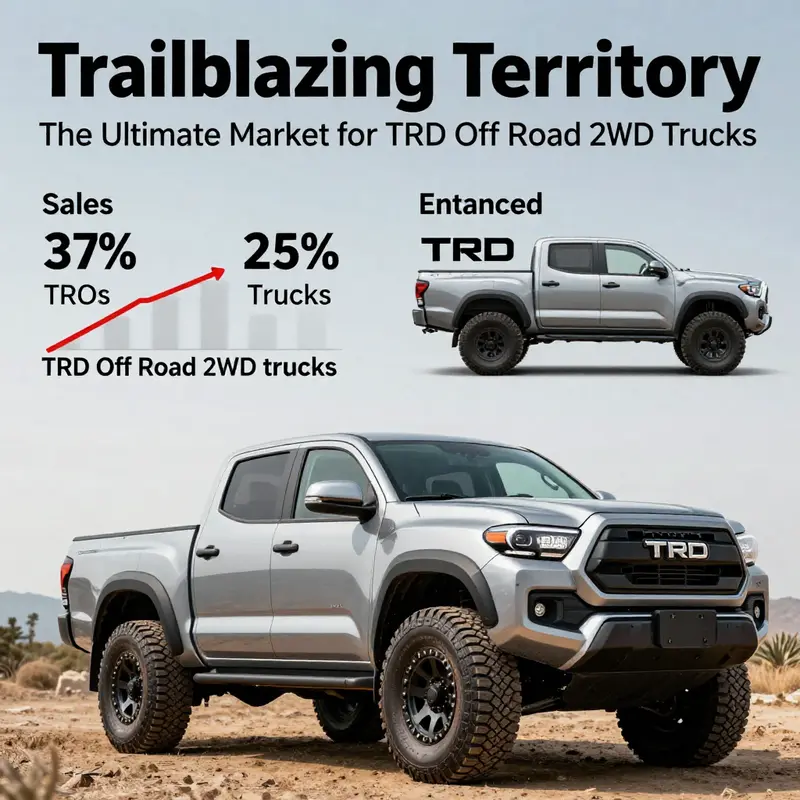
The question of where TRD Off Road 2WD trucks sell the most invites a broader look at how regional landscapes shape vehicle choice. It isn’t solely a matter of price or horsepower; it is about the daily balance buyers strike between urban convenience and weekend adventure. In markets where trails, deserts, and rocky back roads are part of life, the TRD Off Road 2WD configuration resonates as a practical yet aspirational solution. It offers a rugged appearance and engineered upgrades that hint at capability without demanding the full commitment of a four-wheel-drive system. The result is a sales pattern that clusters in the Western states—California, Colorado, Arizona, Nevada, and Oregon—while extending into other outdoor-minded regions such as Texas and Idaho. The geography of demand mirrors the geography of terrain: places where off-road miles accumulate not just on weekends, but in the way residents live, work, and move around their communities.
Across the Western United States, the appeal of a two-wheel-drive pickup wearing the TRD Off Road badge rests on two intertwined incentives. First, there is enhanced off-road performance that closes the gap between a standard 2WD and a traditional 4WD. The package upgrades the heavy-duty suspension with Bilstein shocks, tightens the chassis with reinforced front differential hardware, and broadens the stabilization system. On winding desert lanes, long grades through the mountains, or single-track spur roads that cut through public lands, these upgrades translate into more controlled articulation and more confident handling. They are not a license to launch into rock gardens, but they do promise safer, more stable progress across surfaces that would challenge a stock 2WD pickup. In regions where the roads can shift from pavement to dirt with little notice, such capability is a meaningful everyday advantage rather than a niche feature.
Second, there is the practical equation of fuel efficiency and ownership costs. Compared with 4WD rivals within the same family, the 2WD variant benefits from a lighter drivetrain and reduced mechanical resistance, which typically translates into better real-world fuel economy. For households that juggle daily commuting with weekend trips, this translates into tangible savings at the pump and lower long-term maintenance costs. Those savings accumulate into a compelling life-cycle story: a truck that looks ready for the trail without the ongoing premium of a fully equipped 4WD counterpart. The market therefore tends to reward a balance—enough off-road hardware to satisfy the curiosity of an outdoor-minded buyer while preserving the efficiency and affordability that make a pickup practical for daily use.
In practice, this combination has produced a distinct regional pattern. The West’s rugged topography and its strong outdoor culture create a natural cohort of buyers who value a truck that looks capable and performs capably, even when the road is more than a little uncertain. In California and Nevada, you will find metro areas that are gateways to desert exploration and desert-adjacent recreation. The Mojave and the open spaces beyond it become a yardstick for what owners want from their daily driver and their weekend ride. In Colorado and Utah, the Rocky Mountain highway system blends with backcountry trails to produce buyers who want a vehicle that can handle a long drive to a trailhead, a morning commute through high-elevation wet weather, and a Saturday run to a trail system after a snowfall. Oregon’s mix of coast ranges, high desert, and forested landscapes contributes to a similar demand profile, albeit with a different seasonal rhythm—more rain, more mud, and a consistent desire for resilience in weather-impacted conditions.
Market analysis also highlights the way proximity to off-road trail systems concentrates demand. The highest concentrations of TRD Off Road 2WD Tacoma sales appear in metropolitan areas that serve as access points to iconic outdoor destinations such as the Mojave Desert, Moab’s red rock country, and the Rocky Mountains. These markets are not just about the trails themselves; they are places where the lifestyle narrative around outdoor work and recreation is visible in auto shows, dealership footprints, and local media. Buyers there often weigh the vehicle as much by its aesthetics—the rugged, capable look that signals the right kind of lifestyle—as by its on-paper specifications. The TRD Off Road 2WD’s visual language, its stance, and its badges serve as a signal in itself, a marker that you belong to a community that prizes terrain-savvy hardware without paying for the additional weight of a full-time 4WD system.
From a consumer behavior perspective, the 2WD TRD Off Road package has found traction with enthusiasts who crave the thrill of light, familiar trails without the overhead of a constant four-wheel-drive setup. They are often professionals who commute long distances, families who need reliable daily transport, and weekend warriors who value a truck that can transform from a practical family vehicle into a capable exploration platform on Saturdays. This blend—reliability, efficiency, and the promise of adventure—resonates when the road stretches from city grid to dirt track. The sales narrative becomes a story of compromise in the best possible sense: you trade some ultimate capability for more everyday utility, lower purchase price, and a lower ongoing cost of ownership, all while preserving the badge and the off-road character that buyers want to signal.
Brand loyalty and reputation play no small role in these patterns. Toyota’s longstanding reliability reputation translates into strong resale value and a durable mid-size pickup platform. For buyers who are new to off-roading, the thirst for an authentic off-road look paired with a credible, well-engineered suspension upgrade is particularly appealing. In markets where outdoor culture is deeply rooted, the Tacoma in TRD Off Road trim is often seen not just as a truck, but as a vehicle that can keep pace with a dynamic lifestyle. Dealers in these regions report steady interest in TRD Off Road 2WD variants, with customers frequently citing the combination of a rugged appearance and sensible operating costs as the decisive factor.
Of course, the geographic narrative is not purely aspirational. In many parts of these markets, real-world driving conditions demand a vehicle that can handle rural roads, seasonal weather, and variable maintenance challenges. The TRD Off Road 2WD’s suspension upgrades and reinforced hardware help address the rougher surfaces typical of long country drives and remote trails. The package’s larger-diameter stabilizer bars and heightened chassis stiffness contribute to a comfort equation that matters on repeated commutes and long drives alike. For buyers who routinely navigate uneven pavement, pothole-strewn city streets, or damp mountain passes, that balance between firmness and ride quality translates into a credible overall ownership experience.
The sales dynamics in these markets also reflect a practical calculus about the vehicle’s value proposition. A TRD Off Road 2WD Tacoma can deliver exterior styling that communicates capability, along with a practical interior that supports day-to-day use. This combination makes it attractive to buyers who value the “look” of capability but are mindful of the vehicle’s total cost of ownership. The result is a steady, if not explosive, sales cadence in outdoor-oriented urban cores, coupled with higher-than-average interest in used-truck markets where the TRD Off Road 2WD helps maintain strong resale value over time. Buyers see a long-term investment: a truck that remains relevant as their outdoor activities evolve and as their daily routines demand efficiency and comfort.
To understand how these forces play out in real numbers, consider the way analysts track regional sales concentration. The pattern points to clusters around large outdoor recreation corridors and near gateway cities that offer access to trail systems. In California, for instance, the influence of the Mojave and desert parks translates into a steady demand for the 2WD TRD Off Road variant in both coastal-adjacent markets and inland metro areas. Colorado’s population centers are connected to mountain passes and high-altitude trails, where even moderate off-road ability translates into meaningful everyday utility. Arizona’s open landscapes and wide rural networks create a marketplace that values reliable performance in dry conditions and occasional sand-swept experiences. Nevada, with its desert expanses, sees buyers who appreciate independent capability and a strong sense of adventure. Oregon’s rain, mud, and forest roads add another layer of appeal for a truck tuned to handle variable weather and rugged terrain.
Beyond the Western corridor, markets like Texas and Idaho illustrate the wider spread of interest in the TRD Off Road 2WD package. In Texas, the sheer diversity of terrain—from urban centers to wide-open rural routes—encourages a pragmatic buyer who wants the look and capability of an off-road truck without taking on the added cost of four-wheel drive when it isn’t required year-round. Idaho’s terrain and outdoor culture draw buyers who rely on the truck for both work and recreation, including access to forests, rivers, and backcountry camps. In each case, the common thread is a desire for a capable vehicle that remains efficient, affordable, and resoundingly practical for everyday life while still projecting the rugged, outdoorsy identity that many buyers want.
This regional portrait has implications for how the market is served and how dealers position the truck. In high-demand areas, showrooms and test-drive routes that emphasize the TRD Off Road package’s upgraded suspension and braking performance can help potential buyers feel the difference before they buy. Demonstrating how the suspension translates into more confident handling on uneven pavement or mild off-road environments can convert curiosity into a firm purchase. Marketing messaging that ties the vehicle to real-world trips—trailhead drives, weekend camping, or rural commuting—tends to resonate more deeply than abstract performance numbers. In addition, the 2WD formulation’s economic advantages—lower upfront cost and lower lifetime operating costs—are powerful selling points for buyers who weigh price against capability.
From a dealer operations perspective, the regional distribution strategy benefits from aligning inventory with local outdoor infrastructure. Regions with established trail networks, national or state parks, and dense outdoor recreation calendars create a natural feedback loop. People buy a truck because they want to do certain kinds of activities; they then reinforce the demand by sharing experiences in local communities, social channels, and outdoors-related clubs. The resulting word-of-mouth creates a self-reinforcing pattern: more visibility for a rugged, capable two-wheel-drive truck in the areas where the terrain and culture demand it. The TRD Off Road 2WD’s ability to deliver both on the highway and on a moderate off-road route helps sustain this cycle, ensuring that the vehicle remains relevant in markets where the outdoor life is a core component of daily life.
In sum, the geographic distribution of TRD Off Road 2WD Tacoma sales reflects a pragmatic blend of landscape, lifestyle, and economic calculus. The West’s varied terrain, the density of outdoor enthusiasts in metropolitan hubs near trail networks, and the broader appeal to buyers who want off-road capability with improved fuel economy together explain why these trucks find their strongest markets in California, Colorado, Arizona, Nevada, and Oregon, with meaningful traction in Texas and Idaho as well. The narrative is not simply about where people drive; it is about where people live their outdoor lives and how a pickup can be a dependable partner in those everyday adventures. For buyers, dealers, and marketers, that geography matters as much as any performance spec, because it defines the moments when the truck is not just a vehicle, but an enabler of a lifestyle that blends work, play, and exploration in a seamless arc.
As a nod to the broader ecosystem that supports owner engagement, consider how digital tools and brand ecosystems reinforce this regional appeal. Owners who value trail-ready capability often invest in apps and services that help plan outdoor activities, locate fuel-efficient routes, and maintain the vehicle’s readiness for weekend expeditions. For a glimpse into how mobile tools are integrated into the ownership experience, one relevant resource explores Toyota’s connected-app approach and related owner-support features. Toyota ChargeMinder app offers a sense of how digital platforms accompany a rugged, adventure-ready vehicle, reinforcing the sense that the ownership experience goes beyond the showroom and into the everyday life of outdoor-minded drivers.
Finally, the external reference that anchors these regional insights to official specifications can be found on the manufacturer’s site. For those seeking the precise, current specifications of the TRD Off Road 2WD Tacoma, including suspension tuning, braking upgrades, axle details, and tire fitment, consult the official specs page. Official documentation provides the authoritative baseline for the upgrades that give this 2WD model its distinctive blend of capability and efficiency. The link below points to the formal specifications you’d typically review when evaluating a TRD Off Road 2WD purchase:
External resource: https://www.toyota.com/trucks/tacoma/trim-specs/trd-off-road-2wd/
In sum, the regional story here is clear. The TRD Off Road 2WD Tacoma finds its strongest traction where outdoor culture and practical ownership intersect. It appeals to buyers who want a capable, efficient truck that signals a rugged lifestyle without the full weight and cost of a 4WD system. The markets that lean into deserts, mountains, and expansive rural road networks—along with the nearby urban centers that enable weekend adventure—form the core of the truck’s most robust sales. The narrative continues to evolve as consumer preferences shift toward vehicles that balance capability, efficiency, and the everyday reliability that defines a trusted brand. The result is a market that remains responsive to the dual demands of daily life and weekend exploration, with the TRD Off Road 2WD offering a thoughtful, well-engineered answer to that duality.
Trails, Towns, and Two-Wheel Drive: How Outdoor Culture Shapes the Market for Off-Road Ready Pickups
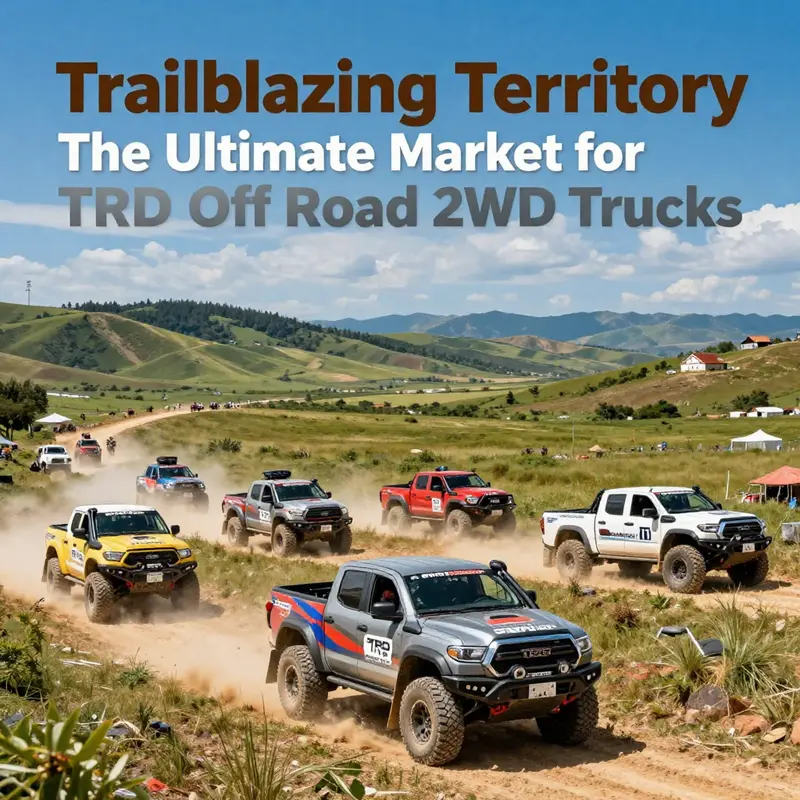
Off-roading has migrated from a gravel-streaked hobby to a mainstream cultural current that threads itself through daily life, weekend escapes, and the way people think about what a truck can be. The appeal isn’t only about tackling rocks or crawling over dunes; it’s about a lifestyle that prizes resilience, adaptability, and a sense of independence. In this evolving landscape, a practical, capable pickup with enhanced off-road ability but without the full heft of four-wheel drive has found a strong niche. The appeal is not merely in the terrain it can conquer but in the everyday utility it preserves. The result is a buying pattern that blends rugged capability with weekday practicality, a mix that resonates in markets where trailheads sit near urban centers and where outdoor recreation informs both identity and spending.
The market dynamics behind these vehicles hinge on a quiet but persistent cultural shift: adventure is increasingly a routine, not a rare escape. People want a vehicle that can handle rough backroads and snow-packed lanes yet still deliver comfort on the daily commute or a trip to the grocery store. This balance matters. A vehicle designed for off-road work and weekend exploration, yet light on price and maintenance, opens the door for first-time buyers to dip a toe into the sport and for seasoned enthusiasts to expand their toy box without overextending. The off-road trim that underpins this approach embodies that philosophy. It includes upgraded suspension and reinforced components, larger tires, and traction systems that provide confidence on rock-strewn grades while remaining friendly to pavement driving. The feature set signals a clear message to customers: you don’t have to choose between capability and reliability; you can have both.
Geography plays a central role in where these models find their strongest buyers. The Western states, with their rugged ranges, desert plateaus, and network of backcountry trails, are natural incubators for off-road culture. California’s foothills, Colorado’s climbs, Arizona’s arid routes, Nevada’s desert corridors, and Oregon’s forest tracks form a continuum where weekend escape becomes a routine possibility rather than a rare weekend away. The physical environment isn’t simply backdrop; it shapes daily life. It defines what buyers expect from a vehicle and how they use it. In these regions, the off-road capable two-wheel-drive variant is particularly appealing. It offers the ruggedness needed to tackle dirt roads and slick washouts while preserving the manageable size, fuel economy, and reduced complexity that urban or suburban drivers often prefer.
Industry analysts have consistently observed that the highest concentrations of sales cluster near major off-road trail systems and outdoor recreation ecosystems. Markets around the Mojave Desert, the Moab area, and the Rocky Mountain corridors illustrate this pattern vividly. The proximity to trail networks matters because it converts interest into action: people who discover an experiential value in these routes are more inclined to translate that value into a vehicle purchase that promises reliability, capability, and a degree of freedom on weekends. The urban density around these regions further fuels demand, as it provides immediate access to dealers, service, and a social milieu that reinforces the lifestyle narrative. In practical terms, buyers in these markets look for a vehicle that can serve as a daily driver yet be ready for a spontaneous two- or three-day off-road escape whenever the trail air calls.
Beyond geography, income dynamics and lifestyle priorities shape who buys. The profile tends to favor practical buyers who value a durable, versatile platform over pure, high-end luxury. These households often balance multiple priorities—home ownership, outdoor recreation, and education or family budgets—and they prize a vehicle that requires a reasonable upfront investment with predictable ownership costs. A lower price point variant with enhanced off-road capability satisfies these multipoint demands better than a higher-cost, full-fat 4WD alternative. This is the heart of what makes the off-road trim appealing to a broader audience: it translates an adventurous impulse into a practical, affordable reality. It’s an invitation to explore, not a license to overspend.
Communities around off-road culture have grown into distinctive ecosystems that amplify interest and engagement. YouTube channels, social feeds, and dedicated forums are filled with trail reports, build diaries, and overlanding narratives that showcase real-world experiences. These digital spaces do more than entertain; they supply a continuous flow of inspiration, practical tips, and social validation. For a potential buyer, the decision to purchase becomes less about a single performance spec and more about joining a shared practice—reliability, versatility, and the possibility of future adventures that come with a robust, capable platform.
The design philosophy of the off-road ready two-wheel-drive pickup is tightly aligned with this cultural shift. Automakers respond to consumer demand by balancing capability with everyday usability. The upgraded suspension and frame reinforcement enable better articulation on rough terrain while keeping ride quality acceptable on paved roads. Larger tires improve traction and ground clearance without the need for a full four-wheel-drive system, offering confidence in light off-road use and in adverse weather conditions. Traction control and related technologies augment safety and confidence when traversing loose gravel, mud, or uneven surfaces. The result is a product that delivers on the promise of adventure while remaining approachable for first-time off-roaders and practical enough for daily life. The long-term value proposition—durability, lower maintenance costs, and the ability to preserve resale value—adds another layer of appeal.
For many buyers, the purchase is as much about lifestyle signaling as it is about capability. A vehicle that clearly communicates readiness for rugged terrain while not demanding a specialized driver’s lifestyle helps bridge the gap between outdoor enthusiasts and urban residents. It becomes a symbol of a broader identity—the confident explorer who can adapt to shifting conditions, set up camp in a desert wash just as easily as they can handle a long highway commute. This symbolic layer matters because it shapes what buyers expect from marketing and dealership experiences. It also shapes how they talk about the vehicle with friends and on social media, fueling a positive feedback loop that sustains demand over time.
In market terms, the data tends to show steady year-over-year growth in regions with strong outdoor recreation cultures. The attraction isn’t about spectacle; it’s about a durable, multi-use vehicle that supports a flexible life. This explains why the same model can attract a broad spectrum of buyers—from young professionals starting their outdoor hobbies to families who value weekend trips and home improvement projects alike. The common thread is a belief that a vehicle can be more than a tool for transportation; it can be a companion for exploration and an enabler of a more expansive lifestyle. The resulting sales pattern mirrors this mindset, with higher volumes in places where the outdoors are woven into daily life.
As buyer preferences evolve, automakers are paying attention to the subtle shifts that accompany them. The emergence of the off-road ready two-wheel-drive variant embodies an important strategic decision: provide enough capability to satisfy enthusiasts while preserving the ease of ownership and everyday usability that appeals to newcomers. This balancing act helps explain why the model finds a receptive audience in Western markets and in states with strong outdoor and adventure cultures, including those with expansive public lands, diverse climates, and robust outdoor infrastructure.
The communities surrounding these vehicles—gear shops, trail-running groups, outdoor outfitters, and even digital content creators—help keep the conversation alive. They frame the vehicle not just as a purchase but as a doorway to shared experiences, to social validation through trail successes and overland trips, and to practical knowledge about maintenance and preparation. The cumulative effect of these communities is a reinforcing cycle: more stories, more trust, more inquiries, more test drives, and ultimately more sales. In this sense, the market for off-road ready two-wheel-drive pickups is as much about culture as it is about engineering.
Looking ahead, the trajectory of these trends suggests continued growth in regions that combine outdoor access with dense population centers. As trail networks expand, as weather patterns push more people toward outdoor activities, and as digital communities deepen their influence on how people choose vehicles, more buyers will seek the same balance of ruggedness and reliability. The automaker’s strategy of offering capable, affordable off-road options in a form that remains practical for daily use should help sustain demand in established markets while gradually opening doors in other regions where outdoor life is expanding. The story of where these trucks sell the most is, at its core, a story about where adventure is becoming a standard expectation rather than an occasional escape.
For readers interested in the broader context of off-road culture and its influence on vehicle trends, a useful overview can be found in industry perspectives that emphasize the connection between consumer communities and product design. This alignment between culture, product development, and purchasing behavior helps explain why a seemingly niche vehicle can achieve widespread appeal when it speaks to a real and growing lifestyle.
To explore related practicalities, consider resources that connect daily driving with adventure-ready capabilities, and discover how modern fleets and personal mobility intersect with outdoor activity. For more on how connected tools support off-road readiness, see the resource about the Chargeminder app. Chargeminder app.
External resource for further context on off-road culture and vehicle trends: https://www.motortrnd.com/
Final thoughts
As we navigate through the rugged trails and vast landscapes that define the markets for TRD Off Road 2WD trucks, it’s evident that these machines are more than just a mode of transportation—they embody a lifestyle. From the mountainous terrains of Colorado to the sandy expanses of California, the unwavering demand for these trucks illustrates their critical role in the off-roading community. The landscape of off-roading continues to evolve, shaped by cultural trends and market dynamics. More than a mere vehicle, the Tacoma TRD Off Road 2WD represents adventure itself, urging enthusiasts to explore, conquer, and enjoy the great outdoors. In understanding these regions and trends, we discover not only where these trucks sell best, but also the spirit of camaraderie and adventure they inspire.