
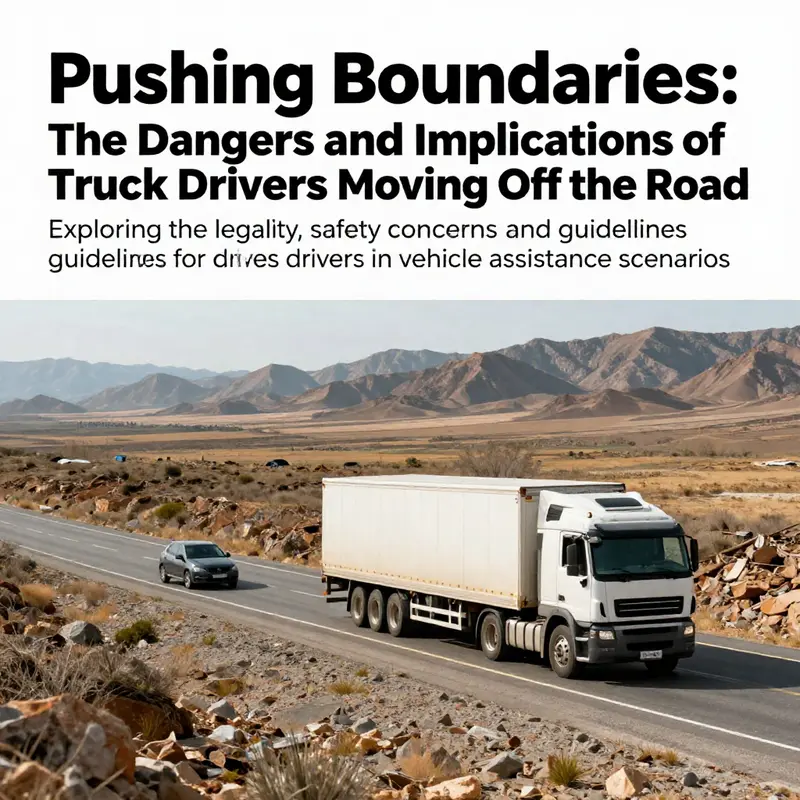
When contemplating the rugged terrain of off-roading and the potential encounters with stranded vehicles, an important question arises: can a truck driver push a car off the road? The answer is layered with complexity, involving legal ramifications as well as safety considerations. For off-road enthusiasts, rural landowners, and adventurers alike, understanding these intricacies is vital for responsible driving. This article will delve into the legality and safety concerns surrounding this activity, professional guidelines for truck drivers when faced with stranded vehicles, and the specific circumstances where such actions may be justified. Whether you’re out in the wild or navigating rural roads, this information is essential for ensuring both your safety and that of others on the road.
Heavy Limits on a Heavy Road: The Legal and Safety Boundaries of a Truck Pushing a Car Off the Road
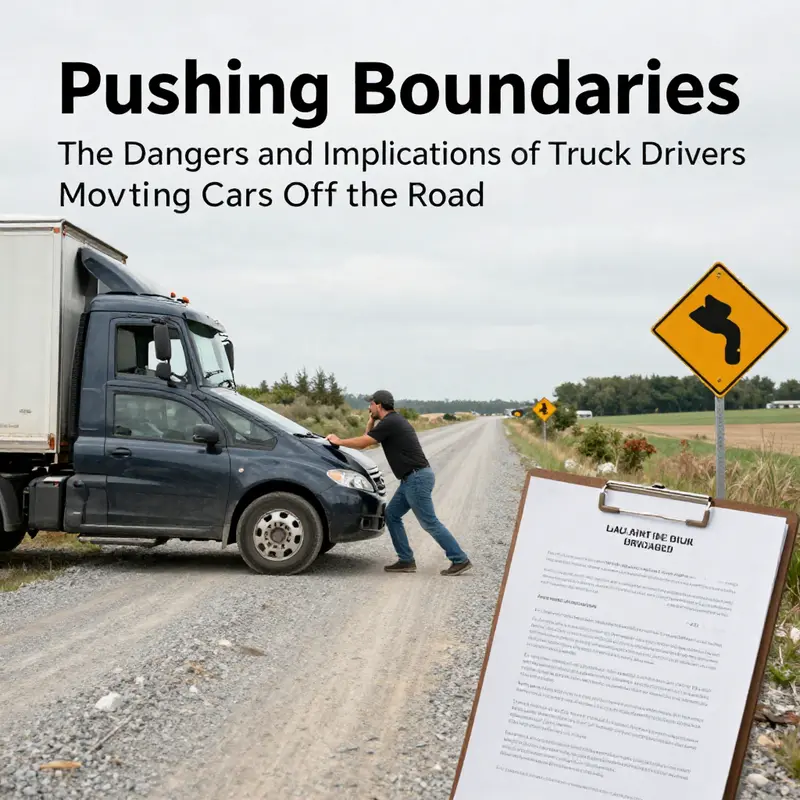
The question that gnaws at anxious drivers and bystanders alike is simple to state, and harder to answer without a reminder of the road’s real physics and the law. Can a truck driver push a car off the road? The short answer is no in practice, and yes, the attempt would provoke a cascade of dangers and legal consequences. The longer truth is that the act sits at the crossroads of weight, momentum, visibility, and judgment. A truck is a moving mass with enormous kinetic energy. A car is a lighter, but still vulnerable, object that can respond unpredictably to contact. When those two forces meet in the same lanes, the outcome is rarely controlled, often catastrophic, and almost always unlawful. In this sense, the impulse to clear a traffic obstruction with a push is not just risky; it runs counter to the core responsibilities that govern professional driving. The road, after all, is a shared space, and safety depends on restraint, not force. The possibility of moving a vehicle off the road through manual contact is not a sanctioned technique. It is not taught in standard safety courses or in the operating manuals of responsible fleets. It runs against the principle that drivers must keep their vehicles under control and act as stewards of other road users, not as improvised weapons. Yet the scenario remains a frequent source of headlines and a kernel of anxiety on congested highways, where even well-meaning attempts to “clear the way” can escalate into collisions or worse. The nuance here is not about intent; it is about the consequences that follow any attempt to muzzle a vehicle with a larger vehicle. The safer, legally sound response has always been to pause, communicate, and call for help, rather than to try to solve a problem with power. This is more than a cautionary stance. It is a recognition that the legal system and the safety system align behind a single principle: avoid endangering others in the pursuit of a quick fix. The road will still be there in moments when it is safe to act; until then, patience and proper authorities are the only reliable tools. The framework for this understanding begins with the law and extends to the ethics of driving in a shared space. If you look at the broader landscape, many jurisdictions treat deliberate attempts to shove another vehicle off the road as reckless, dangerous driving. In some cases, it can amount to assault with a deadly weapon when harm follows. In other contexts, it can be charged as vehicular manslaughter if it ends in death. The consequences are not hypothetical. They are real, with civil liabilities that can multiply quickly, as well as potential criminal charges that hinge on the specific acts and outcomes. The legal case against such behavior is built on the same bedrock as the safety case: the road is not a launchpad for retribution or a battlefield. It is a place where certainty, predictability, and accountability protect everyone. The serious nature of these outcomes is not just an abstract risk. It is reinforced by the guidance of national safety authorities. In the United States, federal and state traffic laws interact with the duties of professional drivers to operate their vehicles with caution, to maintain control, and to avoid endangering others. The federal framework is complemented by state statutes that spell out reckless driving, endangering conduct, and related offenses. The practical implication for a truck driver is simple: pushing another car off the road is not a legitimate technique for clearing traffic. It is not an approved method of incident response. Instead, drivers are trained to slow and stop in a controlled manner, to use hazard signals, to assess the scene, and, when necessary, to deploy the appropriate authorities or roadside assistance. The idea that a heavy truck could safely displace a vehicle during a tense moment belongs to the realm of cinematic fantasy, not real‑world procedure. The walls of legality are reinforced by the long record of road safety research that emphasizes predictable behavior, adequate following distances, and the avoidance of any action that elevates risk. The National Highway Traffic Safety Administration, among other authorities, has consistently stressed that any action endangering other drivers or pedestrians violates safety regulations. The practical takeaway is clear: if a car sits obstructing traffic, the safest course is to slow, create space, alert others, and contact trained responders. The legality of any alternate path—like attempting to push a car off the road—sits in a gray area that ultimately collapses under the weight of risk. The physics of what happens when two vehicles collide under even mild conditions is instructive. A truck’s weight, often tens of thousands of pounds, creates an enormous amount of momentum. Even a minor contact with a smaller vehicle can produce unpredictable steering effects. The car behind the stuck vehicle can be damaged by a shifting line of travel. The truck driver cannot easily anticipate how the other vehicle will respond to pressure, friction, or a sudden push from a rear or side angle. If the obstructing car is in motion, a push could flip the equation from a stubborn obstacle into a multi‑vehicle pileup. If the car is stationary, a push could initiate a chain reaction that pulls bystanders into the danger zone, or cause the car to roll into lanes of traffic. The risk isn’t merely that the car will be moved to an unsafe place; it is that the act itself could destabilize other vehicles, surprise drivers, or trap pedestrians or roadside workers in harm’s way. In the same breath, any attempt to “solve” the problem with force might be misread as aggression, amplifying tensions and inviting further dangerous actions. The social dynamics on the road often escalate in moments of stress. A bystander might interpret a push as an attack or a display of power, which can drive other drivers to react unpredictably. The driver’s intent may be noble in the moment, but the consequences can be tragic. That tension underscores the ethical principle ruling professional driving: actions must minimize risk to others, even if the obstruction seems unjust or frustrating. The professional driver’s training is designed to reinforce that principle. It emphasizes controlling the vehicle, communicating clearly with other road users, and coordinating with dispatch or roadside assistance to resolve the situation without taking unlawful or unsafe shortcuts. This is where operational policy and real‑world practice converge. When a truck encounters a car that has broken down or is blocking a lane, the driver’s first responsibility is to slow, assess, and decide whether the safest option is to stop with warning signals and wait for help. If the obstruction poses an imminent hazard, the driver can take steps to reduce risk within the boundaries of safe driving. But those steps do not include pushing the other vehicle. Instead, the recommended tactic is to establish a safe perimeter, warn approaching traffic, and wait for police or tow services to clear the scene. The decision to call for help is not a sign of weakness or indecision. It is a sign of professional judgment and an understanding of the limits of one’s vehicle and one’s authority on the road. The data and guidelines that underpin this judgment are consistent across professional fleets and safety organizations. They insist that one driver’s attempt to exert force against another vehicle could quickly cross into criminal or civil liability. They underscore that the road is governed by rules designed to prevent harm, not to enable expedient but dangerous fixes. The lessons here extend beyond the specifics of a single incident. They inform the broader culture of professional driving, where restraint, communication, and cooperation with law enforcement and roadside services are seen as the most responsible tools in the toolbox. For truck drivers, this means cultivating a mindset that prioritizes safety over convenience, and legality over improvisation. It means recognizing that pushing a car is not merely a violation of a rule; it is an invitation to risk that no professional should accept. It also means acknowledging that the public’s trust in truck drivers rests on predictable behavior. People on the road rely on trucks to behave like controlled, deliberate machines, not like improvised agents of force. In practice, this translates into clear protocols. Slow down early, create a wide buffer, and communicate intentions to other drivers. Use hazard lights and, if possible, place reflecting triangles or other warning devices. If you must, move only as far as your safety permits and never at the expense of other travelers. None of these steps require forcing another vehicle. They require patience, a measured approach, and a willingness to involve the appropriate authorities. The rationale behind these protocols is not just about avoiding lawsuits or penalties. It is about a social contract that expects road users to act with care for strangers they may never meet. With a long enough timeline, you see that the same discipline that keeps a driver within speed limits also keeps that driver from crossing lines that could put others at risk. The one lesson that emerges with undeniable clarity is this: professional drivers are trained to avoid using their vehicles as weapons against other road users. They learn to interpret scenes, to manage risk, and to defer to authorities who have the tools and authority to clear obstructions safely. A vehicle’s roadworthiness, its braking capability, its trailer articulation, and the driver’s judgment all come into play. But none of these technical assets justify a push that could unleash unforeseen consequences. In this sense, the question about legality becomes a proxy for a larger truth about driving culture. The road demands restraint more than bravado. The job demands caution more than shortcut fixes. The ethical obligation is to protect life and limb, not to win a tense moment. It is helpful to anchor this discussion with a broader safety lens. The world of road safety is built on a mosaic of evidence about what works and what does not. Crash studies, forensic analyses, and professional guidelines converge on a simple conclusion: visibility, communication, speed, and deliberate action reduce risk far more reliably than attempts to manipulate a situation with force. To understand how this translates on the ground, consider a driver who encounters a stalled or obstructing vehicle. A prudent response unfolds in layers. The first layer is risk assessment: how close is the obstruction to other lanes? How fast is the traffic moving? What is the weather? The second layer is communication: using lights, signals, and radio to alert others. The third layer is containment: creating space, slowing gradually, and guiding traffic with the help of authorities or roadside assistance. The final layer is removal: once a safe clearing is arranged, only then does the scene get resolved by the appropriate professionals. In short, the right answer to the original question is not a technique but a course of action designed to preserve life. The road has a history of turning improvisation into tragedy. By contrast, the route that professional drivers follow is a route of restraint, patience, and lawful conduct. It is a route that protects not only the driver behind the wheel but everyone who shares the highway. For readers who want to connect these ideas to practical learning, consider how this guidance translates into daily operations. Heavy trucks do not gain their safety margins by brute strength. They gain them through training, disciplined procedures, and a culture that favors prevention over reaction. This is why many fleets emphasize safe‑driving programs, incident response plans, and clear escalation paths to dispatch and law enforcement. It is why drivers are encouraged to stay informed about the latest road safety guidelines, to participate in refresher courses, and to practice de‑escalation in tense moments. The legal landscape compounds this message. Laws evolve, but the core principle remains: the road is not a stage for punitive acts. It is the shared space where one driver’s mistake can reverberate across a community. The consequences of pushing a car off the road—physically, legally, and ethically—are too severe to justify any claimed convenience. When the urge to act arises, the best instinct is to resist. Then call the right people. The public has a right to expect that trucks will be predictable, not loud, not forceful, and never used as a tool to clear a lane by intimidation. The result is a safer highway system overall. For readers looking to deepen their understanding, a useful lens is the crash safety discourse that compares how different vehicles behave in controlled tests and real incidents. Such sources reinforce that restraint and predictability trump impulsive force. This perspective should not be read as fear or caution alone; it is a practical framework for better decision making under pressure. It invites drivers to translate safety research into on‑the‑ground actions. It invites dispatchers to design response protocols that minimize risk to everyone involved. And it invites policymakers to align enforcement with the shared goal of protecting life rather than enabling risky improvisation. In the end, the road tests the clarity of one’s judgment more than the strength of one’s vehicle. A truck’s power is a tool for moving freight, not for manipulating other vehicles. The professional standard is to harness that power with care, to listen to the scene, and to act only in ways that reduce harm. Pushing a car off the road fails every test of safety, legality, and ethics. It is the opposite of responsible driving. Industry, law, and public safety converge on the same conclusion: when faced with an obstruction, the right move is to slow, signal, call for help, and wait for trained responders. The chapter you’ve read is not merely a caveat; it is a compact guide to upholding trust on the highway. It ties together the physics of heavy vehicles with the law that governs road use and with the everyday ethics of being a professional driver. It is a reminder that the road belongs to all of us, and the safest path forward is the one that keeps everyone out of harm’s way. For those who want to explore a related safety perspective in more depth, you can review crash safety discussions that highlight how restraint translates into better outcomes in real crises. IIHS crash test results: Tesla vs Ford.
External resource for safety guidance: National Highway Traffic Safety Administration. https://www.nhtsa.gov/vehicle-safety-and-traffic-laws
null
null
Power and Prudence on the Road: The Real Boundaries of Truck Drivers Assisting Disabled Vehicles
Can a truck driver push a car off the road? The instinctive answer might invoke a simple glimpse of physics: a massive truck behind a much lighter car could, in theory, apply a force that nudges the car out of a lane. But the practical reality is far more complex. The act of trying to move another vehicle while operating a commercial truck carries steep risks and often runs afoul of the law. This chapter does not merely repeat that caution; it places it inside a framework of professional guidelines, safety imperatives, and the everyday realities of highway work. It asks not what a vehicle might do under ideal conditions, but what a responsible driver should do when faced with an obstruction that blocks traffic, endangers others, or strains the patience of a line of vehicles crawling toward a distant exit. In that sense, the discussion moves from a theoretical scenario to a lived code of conduct that governs daily decisions on the road.
Professional truck drivers enter their workdays with a clear understanding of boundaries and responsibilities. The moment a car stalls in a travel lane or another vehicle breaks down in a traffic corridor, the priority shifts from power and momentum to assessment and restraint. The first step is situational awareness: evaluate the environment, road conditions, lighting, weather, traffic density, and the proximity of other heavy equipment or cargo. The goal is not to prove a vehicle’s mechanical prowess but to ensure the driver and the cargo remain secure while reducing risk for bystanders. This emphasis on situational assessment is not abstract theory; it is a core component of driver training and company protocols. It recognizes that even seemingly simple actions can cascade into serious consequences if anything about the scene is misunderstood or underestimated.
A key aspect of professional decision-making is verification of identity, particularly when assistance is requested by someone in a remote or risky area. In real-world roadside contexts, emotions often run high. A driver can be approached by a person who claims to be stranded or in need of immediate help. Before offering any form of aid, many operators are trained to confirm who is asking for help, why they’re asking, and whether the request aligns with established safety and liability considerations. This is not merely a courtesy; it’s a guardrail designed to prevent risky or fraudulent situations that could put a driver and their load at risk. It also helps to protect the driver from misinterpretations if an incident later becomes a matter of insurance claims or legal scrutiny.
Safety, of course, is the central axis around which all professional guidelines rotate. When a truck driver considers extending help, the primary question is whether the action can be taken with no compromise to personal safety or that of others on the road. This includes an awareness of the truck’s own limits—mass, stopping distance, blind spots, and the potential for cargo shifting if weight is disturbed. Beyond mechanical considerations, safety also encompasses the mental and physical capacity to perform any intervention without fatigue or distraction. Any choice that might inadvertently place the driver or passengers at risk is typically rejected, even if it could marginally aid another motorist. In practice, this means drivers are urged to err on the side of caution, leaning toward noninvasive forms of assistance when possible, such as activating hazard lights, placing warning devices, or contacting the appropriate authorities.
Company policy and professional standards further shape what can and cannot be done in the field. Most fleets provide explicit guidance about roadside situations, including limits on what constitutes acceptable assistance. The guidelines commonly advise drivers to avoid actions that require towing unless they are specifically trained and equipped to perform that task safely. Even then, towing is treated as a specialized operation that demands appropriate hardware, correct rigging, and formal retraining. In short, while a truck may be capable of more than just slow coasting, the official stance often restricts actions to basic, noninvasive help. The overarching objective is to reduce liability, preserve the vehicle and cargo, and protect all road users from unintended harm. This framework helps ensure that when a driver does offer help, they do so within a controlled, predictable, and legally defensible boundary.
When considering any form of roadside assistance, many drivers are reminded to follow a measured sequence: assess, verify, and only then act within clearly defined limits. This approach aligns with what is described in professional resources and safety organizations. First comes assessment—are there hazards such as moving traffic, leaking fuel, or unstable surfaces? If the environment is too risky, halting further action and seeking help becomes the prudent path. Second comes verification—who is requesting aid, and is the request reasonable and legitimate? Third comes action—if any assistance is offered, it should be limited to tasks that do not pose excessive risk, be compatible with company policy, and adhere to training and available tools. The core message is rarely about raw force or dramatic demonstrations of power; it is about disciplined, risk-aware behavior that keeps people safe.
One core guideline that the field continuously reinforces is the avoidance of towing unless the driver is equipped and trained for it. This is not a ban on all forms of help, but a reminder that towing is a specialized operation with its own set of hazards. Without the proper gear—such as rated tow points, winches, winch lines, breakaway devices, and a clear understanding of weight distribution—the attempt to move a disabled vehicle can quickly become a liability disaster. When basic, safer forms of assistance can be offered, they should be the default option. That often means helping to secure the scene, communicating with dispatch or roadside services, or aiding in simple, nonmechanical tasks like enabling hazard lights and directing traffic away from danger. In this sense, professional guidelines convert the instinct to assist into a structured, safer response that serves everyone along the chain of road safety and responsibility.
To ground these considerations in practical reality, many drivers rely on a network of official guidance resources. The Federal Motor Carrier Safety Administration (FMCSA) regulations, for instance, outline responsibilities and best practices for commercial drivers in roadside scenarios. Adherence to these guidelines helps protect the driver, their cargo, and other road users. In addition to government guidance, industry associations such as the American Trucking Associations (ATA) provide safety recommendations and procedures for handling breakdowns and assisting others responsibly. These resources emphasize prevention, clear communication, and orderly responses that minimize disruption while preserving safety margins.
Documentation and communication also play a critical role in how assistance is handled and later reviewed. Recording details such as the time, location, and nature of the assistance is not merely bureaucratic; it can influence insurance claims, law enforcement reports, and any subsequent investigations. Proper documentation helps establish that the driver acted within policy, followed lawful procedures, and kept the incident from escalating into a more dangerous situation. The emphasis on clear communication extends to interactions with law enforcement and roadside assistance providers. When a scene is safe enough for contact with authorities, precise, concise information about the obstruction, the steps taken, and any observed hazards can facilitate a quicker, safer resolution for everyone involved.
In emergency contexts, the lowest-risk option may be to defer action to trained professionals who have the equipment and training to manage hazardous roadside incidents. This can include fire and rescue services or other emergency responders, depending on the severity of the obstruction or the risk of a collision. The emphasis here is not on heroic improvisation but on controlled, coordinated action that aligns with established protocols. NHTSA’s guidance underscores the importance of clear communication, situational awareness, and adherence to safety standards when dealing with emergencies on or near the highway. The overarching theme is that good professional practice is about safe stewardship of the road, even when instinct would push toward immediate, forceful action.
All of these considerations also speak to the broader question of what constitutes responsible help. It is a common misperception that the most helpful thing a driver can do is to “fix it” themselves by moving a vehicle out of the lane. In reality, the safer, more responsible course is often to stabilize the scene, warn other drivers, and escalate the situation to the right authorities or roadside support. Where possible, drivers can offer basic, nonintrusive aid—such as ensuring hazard lights are visible, placing warning triangles where appropriate (where legal and safe), and providing information to dispatch about the location and the status of the obstruction. Even these seemingly modest acts are part of a larger framework that prioritizes safety, legal compliance, and responsible driving culture.
The question of whether a truck driver should push a car off the road, therefore, reveals more about professional methodology than about the sheer force of a truck. The answer is filtered through a lens of risk assessment, liability awareness, and company policy. It is also informed by a pragmatic understanding of vehicle dynamics and the limits of human judgment in complex traffic environments. The widely endorsed stance is clear: do not use a heavy vehicle as a makeshift tow device in ordinary roadside situations. If danger is imminent and the driver is trained and equipped for specialized response, such actions may be contemplated under strict controls; otherwise, the safest option is to seek professional roadside assistance and to keep the scene secure until help arrives. This approach preserves safety for all road users and upholds a professional standard that defines modern trucking.
For readers who want to explore the mechanics behind the caution, there is value in studying how engine power, traction, and weight distribution interact in real-world driving. Understanding these aspects can illuminate why a heavy vehicle’s momentum does not translate into a simple, safe push for another car. The physics of friction, tire grip, and achievable accelerations on varied road surfaces makes the scenario fall far short of a reliable solution. More importantly, this awareness supports the broader argument that safety and legality should guide action, not the impulse to demonstrate power.
As a practical reminder, drivers who need to expand their knowledge beyond everyday practice can consult materials like Mastering Diesel Mechanics: Your Step-by-Step Path to Success, which offers a deeper dive into how trucks and their subsystems operate under different conditions. Mastering Diesel Mechanics: Your Step-by-Step Path to Success. This kind of resource helps cultivate the judgment necessary to distinguish between a scenario where an intervention might be technically possible and one where it would be irresponsible or unsafe. It is a reminder that expertise and prudence often go hand in hand on the road, and that professional identity is built not on brute force but on disciplined, well-reasoned action.
In closing, the capability of a truck to influence another vehicle should not be mistaken for an entitlement to intervene at will. The professional guidelines that govern truck drivers—assessing the scene, verifying requests, prioritizing safety, following company protocols, recognizing limitations on assistance, and relying on emergency and roadside resources—create a structured, protective framework. This framework preserves life and property, maintains the integrity of the cargo, and supports a culture of safety that underpins all responsible road transportation. The road is a shared space, and responsibility in that space is the hallmark of a modern, professional trucking operation. In that sense, the question is answered not by the potential for force but by the discipline to act safely, legally, and compassionately when confronted with a disabled vehicle in the path of a moving stream of traffic. For readers curious about the practical implications of these guidelines in real-world operations, veteran drivers, dispatchers, and safety officers continually reinforce the message: push comes not to power, but to prudence.
External resource for authoritative guidance: For authoritative guidance, see FMCSA regulations at https://www.fmcsa.dot.gov
End of the Road: Why There Are No Safe Moments for a Truck Driver Pushing a Car Off the Road
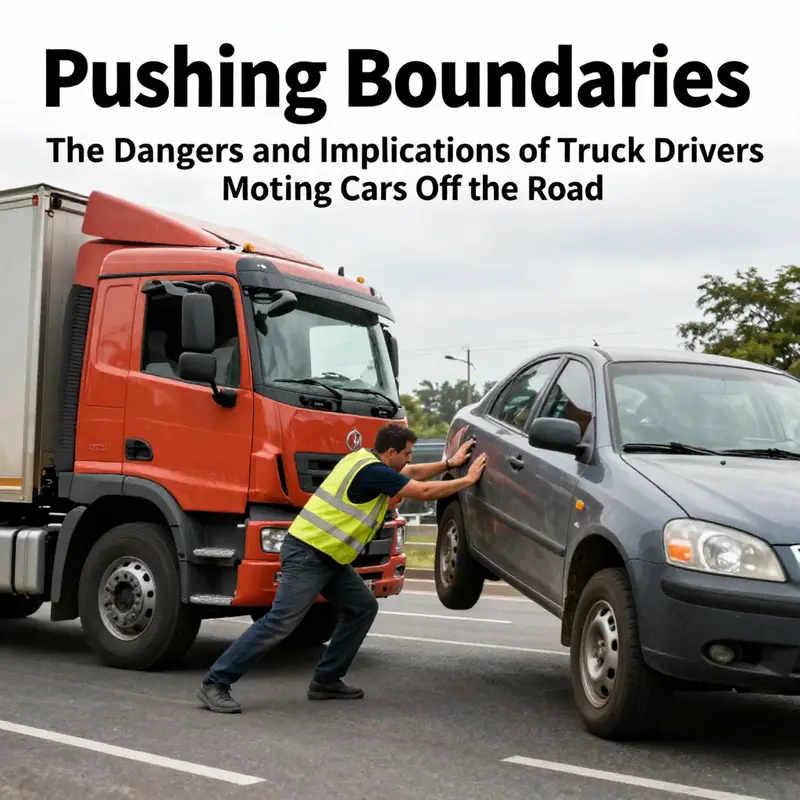
On the highway, a car stalled in the flow of traffic can create a scene that begs for a quick fix. A truck driver, accustomed to large, powerful machines, might be tempted to intervene in hopes of restoring movement and preserving safety for others. Yet the reality is more complicated than a simple push could ever be. The short answer, grounded in safety, law, and professional practice, is that there are essentially no legitimate, safe, and legal moments for a truck driver to push a car off the road. The longer answer involves understanding the physics of mass and momentum, the potential for catastrophic consequences, and the policies that govern professional driving. In emergencies, the best course is not improvisation with brute force but disciplined action: pulling over with care, activating hazards, protecting the scene, and calling the right responders. This approach protects the driver, the occupants of the obstructing vehicle, and everyone sharing the road, and it aligns with the standards set by transportation authorities that regulate large vehicles.
The instinct to push may come from a place of urgency, but physics makes it a perilous gamble. A typical tractor-trailer can weigh in the range of 40 tons when fully loaded, while a passenger car sits around one to two tons. Even if the car appears stationary, its wheels can settle into ruts or deform under uneven ground, and a sudden shove can cause unpredictable wheel slip. A push from behind or from the side risks transferring momentum into the cabin of the obstructing vehicle, endangering occupants who are often already in a vulnerable position. The truck’s enormous mass does not guarantee a controlled or clean movement of the other vehicle. Instead, what often results is a loss of steering control, a transfer of kinetic energy to nearby objects, or a shudder that destabilizes adjacent traffic. The momentum involved can suddenly throw cars into other lanes, trigger swerves, or provoke a chain reaction of impacts that multiplies risk exponentially.
Beyond the physical peril, there is a strong legal and ethical frame that discourages any attempt to physically move another vehicle. Truck drivers are trained to operate heavy machines with a primary focus on safety, not forceful intervention in other drivers’ problems. Pushing another vehicle off the road would be considered beyond the scope of standard driving procedures and could expose the driver and the carrier to liability, criminal charges, or even loss of a commercial driver’s license (CDL). In most jurisdictions, local laws and federal regulations place explicit limits on using a commercial vehicle to move or manipulate vehicles, particularly when such actions could cause injury. The risk profile changes drastically when people are inside the obstructing vehicle; the potential for harm to occupants dramatically increases. This is not a theoretical hazard but a practical, often catastrophic risk that professionals learn to avoid.
When an obstruction occurs, the prudent, legally compliant path is straightforward in its steps and strict in its avoidance of improvisation. The moment a truck driver recognizes a hazard ahead—whether a stalled car blocking a lane, a collision, or debris on the roadway—the responsible action is to slow safely, pull over to the shoulder or a safe pull-off, and activate hazard signals. The aim is to create space for traffic to pass and to reduce exposure to downstream hazards. It is essential to assess the scene from a safe distance before proceeding with any action. Occupants of the stalled vehicle may be distressed or injured; responders should have clear access and a stable environment to work in. The driver should avoid approaching the obstructing vehicle from the rear if possible and should never attempt to make physical contact to move it. Such contact can place the truck driver, the occupants of the other vehicle, and nearby drivers at immediate risk.
In those moments of decision, the role of professional responders becomes critical. If the obstruction is widespread or presents a genuine threat to traffic safety, law enforcement or emergency services may be required to manage the scene, perform traffic control, and determine the safest way to restore movement. In rare cases where authorized personnel determine that moving a vehicle is necessary to avert a broader disaster, only trained professionals equipped with the appropriate tools and safeguards perform the operation. This is not a task that falls within the routine duties of a truck driver, a fact that underscores the broader safety culture within the trucking industry. The idea that a driver could or should physically push a car off the road simply does not align with how safety is designed to be practiced on busy highways and interstates.
The legal and regulatory landscape reinforces this stance. Driving guidelines issued by national and regional authorities emphasize safety, hazard recognition, and appropriate responses to emergencies. The Federal Motor Carrier Safety Administration (FMCSA) provides guidance on safe driving practices and the responsibilities of commercial drivers in emergencies. While the FMCSA database is broad, the core message remains consistent: do not engage in activities that endanger others, and rely on trained professionals to perform any action beyond standard driving skills. The driver’s training, the company’s safety policies, and the broader legal framework collectively discourage any attempt to push a car or otherwise alter another vehicle’s position on the road. This framework is designed to limit liability, reduce risk, and ensure a consistent, predictable response to roadside hazards.
What does a driver do instead? The most reliable, safe, and legally sound approach is to stop, signal danger, and call for assistance. The sequence is simple and highly effective when done correctly: as soon as a hazard is detected, the driver should reduce speed gradually, signal to others, and decelerate to a safe, controlled stop well away from the obstruction. The hazard lights should be activated to alert following traffic. If space allows, the vehicle should be pulled onto the shoulder or onto a turnout where it will not impede moving traffic. The driver should maintain a safe distance from the obstruction and keep occupants inside unless there is a clear, immediate danger that requires leaving the vehicle. After stopping, the driver should call roadside assistance or emergency services, depending on the severity of the situation. If there are injuries or immediate danger, calling emergency services is paramount. In calmer cases, roadside assistance or the carrier’s safety department can coordinate a tow or repair service. This approach minimizes risk, preserves life, and adheres to the safety-first mindset that defines modern trucking.
The idea that a driver could or should push a car off the road ricochets against both the practicalities of road safety and the culture of professional responsibility. Vehicle mass, the unpredictable behavior of a stalled car, and the momentum of a heavy truck create a high-probability recipe for unintended consequences. A push might move a car only a few inches, but that infinitesimal change does not necessarily translate into safer traffic flow. In many cases, it could trap the obstructing car into a worse position or cause it to slip into another lane at a critical moment. The potential for a multi-vehicle collision grows as soon as a powerful force is applied to a nearby object in motion. These are not risks that a prudent operator is willing to assume, especially when safer alternatives exist. The responsibility lies as much with decision-makers at the fleet and company levels as with the individual driver. Fleet policies that promote controlled responses, clear communication, and rapid coordination with support services are essential for reducing risk on the road.
From a broader perspective, the topic touches on the delicate balance between individual action and collective safety on shared infrastructure. A truck driver is trained to operate a machine that can save lives and prevent greater harm, but that training does not include instructions to physically reposition other vehicles. Instead, it emphasizes hazard mitigation, communication, and collaboration with authorities. In practice, this means knowing when to delay action, when to create space, and when to call for help. It also means recognizing the value of a well-designed support network—dispatch systems, maintenance teams, and public safety responders—that can respond with precision and authority when a roadway obstruction appears. In this light, the chapter’s central question is reframed from a test of brute force to a test of judgment, restraint, and adherence to established protocols that safeguard lives and property.
To underscore the practical side of this, consider the role of fleet management and dispatch in safety planning. Modern trucking operations increasingly rely on coordinated responses to incidents, with real-time communication that can dispatch a tow, direct traffic control, or summon roadside assistance efficiently. The presence of robust dispatch solutions helps ensure that drivers are not left improvising in dangerous situations but are guided toward the recommended, legally compliant course of action. The idea is straightforward: when a vehicle becomes an obstacle, the responder with the right tools and authority takes charge to resolve the hazard in a controlled manner. Even as a driver might feel compelled to act, the safest and most responsible course is to defer to trained professionals and to rely on established procedures. For those who want to explore how fleet coordination supports safety decisions, see a discussion on dispatch software for fleet management through the broader industry literature and resources such as the guidance available here dispatch software for fleet management.
The cautionary lesson of this topic is not a refusal to help others in distress but a commitment to help in the right way. It is about recognizing the limits of one’s role and the boundaries of lawful action. It is about trusting that professional responders, with the benefit of training and equipment, can move a vehicle safely when necessary, and only under controlled conditions. It is about understanding that a truck driver’s authority is bounded by law and policy, and that safety is built through restraint, communication, and timely, properly coordinated actions rather than force. In this sense, the emergency response spectrum is narrow: pull over safely, alert others, call for help, and let specialists step in when there is a risk to life. That is the core principle that guides drivers, carriers, and safety officers alike.
For readers who want to verify the formal guidance that shapes these decisions, the Federal Motor Carrier Safety Administration (FMCSA) website provides official, up-to-date information on safe driving practices and emergency procedures. While the FMCSA covers a wide range of topics, its core safety ethos applies directly to this scenario: do not engage in risky maneuvers with directly obstructing vehicles, and rely on trained responders when action is required. The official guidance helps explain why a driver’s best action in an emergency is restraint, communication, and rapid escalation to appropriate authorities rather than physical intervention with another vehicle. The emphasis is always on preserving life and preventing harm, which is why pushing a car off the road remains outside the permissible scope of a truck driver’s duties.
In sum, the scenario of a truck driver pushing a car off the road is not supported by safety principles, legal standards, or professional best practices. The correct response in emergencies is to stop safely, protect the scene, notify authorities, and allow trained responders to manage the situation. This approach minimizes risk, preserves life, and aligns with the responsibilities of drivers, carriers, and the broader transportation system. Understanding these boundaries helps drivers perform their essential duties without exposing themselves or others to unnecessary danger. As the roadways continue to demand vigilance and discipline, the real measure of a responsible truck operator is not the willingness to apply brute force, but the commitment to safety-first processes that keep traffic moving without casting the safety net of professionals aside. For further context on how modern fleets integrate safety-focused responses through technology and policy, one can explore related topics on fleet management and safety practices, such as dispatch software for fleet management, which supports a coordinated, professional response to roadway hazards.
External resource for further reading: https://www.fmcsa.dot.gov
Final thoughts
Navigating the complex interplay of legality, safety, and professional guidelines surrounding the act of a truck driver pushing a car off the road reveals critical insights for off-road enthusiasts and rural adventurers. While it may seem like a straightforward solution in certain scenarios, the associated risks and legal implications must not be overlooked. Understanding when and how to act responsibly while ensuring all parties’ safety is paramount. By adhering to professional guidelines and recognizing the limits of such actions, drivers can contribute to safer road experiences for everyone involved.