
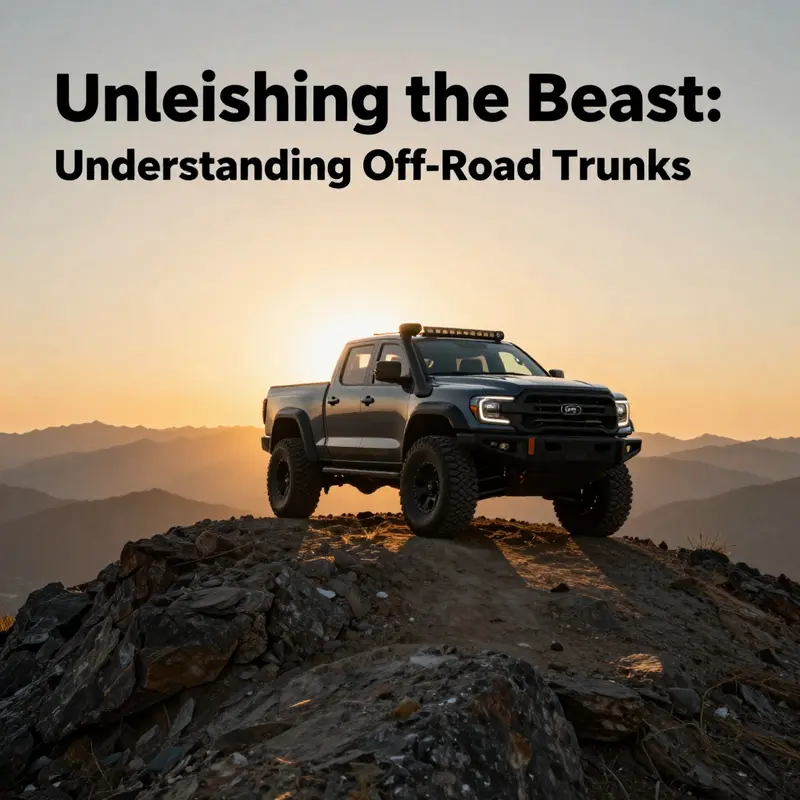
The thrill of conquering uncharted terrain ignites a passion shared by off-road enthusiasts, adventurers, and racers alike. As vehicles built to navigate the most formidable landscapes, off-road trucks epitomize the spirit of discovery and adventure. This exploration delves deep into what off-road trucks mean, uncovering their engineering marvels, their vital roles in various industries, and the undeniable allure they hold in popular culture. Each chapter serves as a gateway to understanding these rugged vehicles, revealing how they are constructed to tackle extreme environments, the diverse applications they serve, and their rising prominence in recreational activities. Furthermore, we’ll compare off-road trucks to other vehicle types, emphasizing their unique attributes that set them apart. Join us as we embark on this journey across rugged terrain and uncover the essence of off-road trucks.
Beyond Pavement: Defining Off-Road Trucks and Their Terrain-Ready Purpose
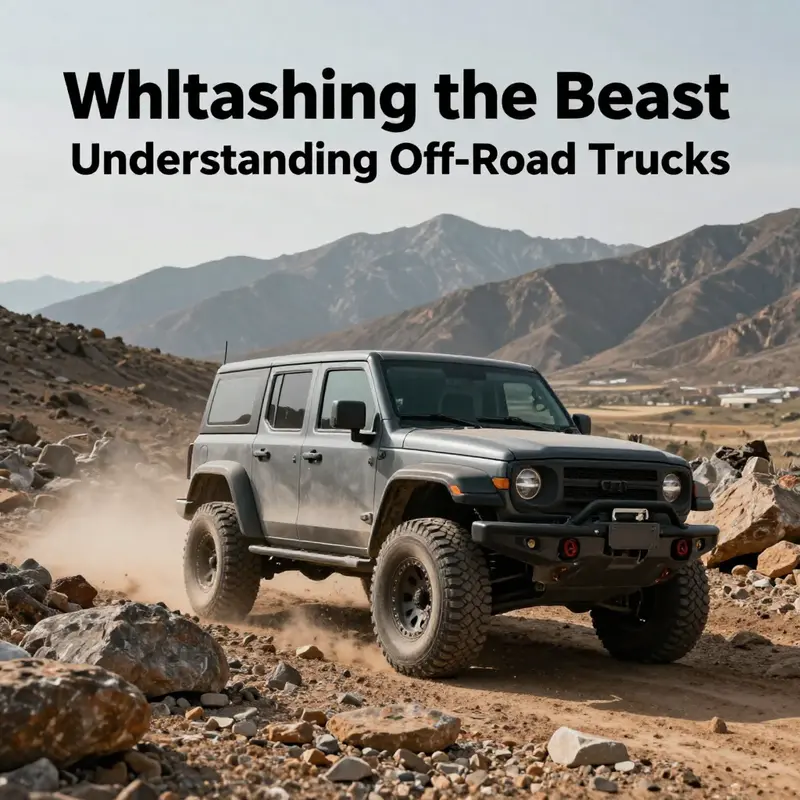
Off-road trucks occupy a space where rugged purpose meets engineered resilience. They are not ordinary pickups; they are machines designed to operate where the road disappears and the terrain thickens into mud, sand, rock, or snow. The term “off-road” means simply “away from paved roads,” but applied to trucks, it signals a specific set of expectations: robustness, traction, and reliability under strain. The essence of an off-road truck is not just its ability to move over rough ground but to do so under conditions that would stifle or ruin a standard vehicle. In practical terms, this means a vehicle capable of maintaining momentum when grip is scarce, an ability that grows from a deliberate alignment of drive systems, chassis integrity, and tire technology with the realities of hostile environments.
At the core of this category is a drive configuration that preserves traction when surfaces refuse to cooperate. Most off-road trucks employ all-wheel drive or multi-axle arrangements, with power distributed to multiple wheels so that speed is less important than grip. The common expectation is that every wheel has a fighting chance to contribute, whether crawling through a sticky swamp, climbing a loose scree slope, or fording a wash of icy mud. Beyond the drive layout, a generous ground clearance keeps the undercarriage intact as rocks, logs, and uneven mounds are encountered. It is not merely about clearing obstacles; it is about preventing the vehicle from being trapped by its own geometry.
The suspension system in an off-road truck is another defining feature. Long-travel, heavy-duty suspension absorbs the irregularities of the terrain, converting what would otherwise be jarring impacts into manageable motion. This is how a truck preserves control at slow speeds on jagged surfaces and maintains stability when the terrain suddenly shifts under a tire. The chassis and frame are reinforced to withstand persistent stress, with materials chosen for rigidity and fatigue resistance. A reinforced backbone, often paired with protective armor or skid plates, helps shield critical components from damage in the same way that a safety helmet protects a rider. In the rough, durability translates into fewer surprises and lower extraction costs when a vehicle demands field repair.
The drivetrain also includes features that maximize grip rather than speed. Differential locks are common because when one wheel begins to spin freely, power is redirected to the wheel with more resistance, preserving forward motion. This capability is a lifeline on chalky soil, in deep mud, or across uneven grips that would leave a conventional differential spinning in place. Coupled with high-torque engines—traditionally diesel for their robustness at low speeds—these trucks are engineered to pull heavy loads up slopes and through obstacles where horsepower alone would not suffice. The emphasis is on torque delivery at low rpm, where traction is made or broken in the muck and among the rocks.
Tire technology also plays a crucial role. Aggressive tread patterns, compound durability, and sidewall protection are tailored to the demands of off-road terrain. Tires must bite into loose surfaces while resisting punctures from sharp objects and rock edges. In some configurations, tires are paired with adjustable ride heights or deflection systems that help the vehicle find an optimal stance for the task at hand. The wheel and tire package is not a cosmetic flourish; it is the interface through which the vehicle negotiates the first contact with the ground and the most immediate limit of its capabilities.
The line between a purpose-built off-road truck and a heavily modified utility vehicle is often a matter of emphasis. Some configurations lean toward extreme mobility in remote landscapes, prioritizing ground clearance and suspension travel over payload; others emphasize hauling capacity and durability for industrial tasks across rough job sites. In either case, the objective remains the same: to sustain progress where conventional road-going trucks would stall. This balance among drivetrain sophistication, structural strength, and tire performance explains why off-road trucks are indispensable in settings where access is the whole challenge, not merely the arrival at a destination.
The applications of off-road trucks extend across a wide spectrum of sectors. In military operations, these vehicles provide logistical mobility in harsh terrain where roads do not exist or are compromised. In mining and quarrying, heavy-duty trucks navigate remote bench faces and uneven paths to move ore, equipment, and personnel between work areas. The oil and gas industry relies on rugged transport to reach drilling and maintenance sites that sit far from paved routes. Construction and infrastructure projects frequently require moving heavy loads to isolated sites, often where temporary roads are improvised from the terrain itself. Beyond industrial use, off-road trucks enable scientists and explorers to reach wilderness regions for research, conservation, and fieldwork. For adventurous minds, they unlock experiences like overlanding, desert trekking, and challenge events that test both machine and operator.
This breadth of use shapes a distinctive engineering philosophy. Engineers design for reliability and serviceability as much as for raw capability. Components are chosen not only for their strength but for their maintainability in harsh environments, with easier access to filters, lubricants, and fasteners critical when crews operate far from conventional repair shops. The design process accounts for heat management, because strenuous work in remote settings often happens in climates that demand robust cooling. Fuel systems are built to tolerate contamination and to deliver stable performance when operating at low engine speeds in dusty, muddy, or sandy conditions. The result is a vehicle that can endure long days of hard work with limited downtime, a quality that translates into real-world readiness and lower total cost of ownership over time.
The cultural image of off-road trucks in popular imagination—relegated to rugged endurance and survival scenarios—belies a more nuanced practical purpose. These machines are not merely brute forces; they are finely tuned tools shaped by terrain physics. Each feature from suspension geometry to differential design serves a specific objective: to keep the vehicle moving, to keep the crew safe inside, and to protect the mission from terrain-induced failure. In professional settings, this translates into predictable behavior under stress. In recreational contexts, it translates into confidence to push limits while maintaining control and safety. The same fundamental principles govern both ends of the spectrum: traction, clearance, durability, and controllability when the world erupts into roughness.
Maintenance, too, is a critical thread woven through the life of an off-road truck. In the field, technicians focus on safeguarding seals, keeping cooling systems unblocked, and ensuring fluids remain within optimal operating ranges. The diesel engine’s rugged simplicity becomes a virtue here, offering a known set of wear points and consumables that teams can track with basic tools and systematic procedures. Operators learn to respect the terrain by reading it—anticipating mud thickness, rock formations, and slope angles—so that preventive checks preempt breakdowns. The operator’s role is not merely control; it is stewardship of the machine’s durability, a rhythm of checks and adjustments that keeps the truck ready for the next demanding pull or climb.
To illustrate how the industry threads these design choices into practical knowledge, consider the maintenance and drivetrain fundamentals that underpin success in the harshest environments. The engine and drivetrain demand durable maintenance, a topic explored in depth in mastering-diesel-mechanics-your-step-by-step-path-to-success. This resource emphasizes how robust diesel systems deliver the torque and longevity essential for slow, deliberate work in challenging terrain. It is a reminder that the capabilities of an off-road truck are not only about pure power but about the reliability of every subassembly under sustained stress. A disciplined maintenance mindset ensures that the truck remains ready to respond when the terrain asks for a decisive move, whether that move is a patient crawl over a boulder field or a rapid rate climb in loose soil.
As technology advances, off-road trucks incorporate increasingly sophisticated systems that enhance control without sacrificing the simplicity that makes them dependable in the field. Electronic traction control, adaptable suspension tuning, and intelligent cooling strategies help the vehicle respond to shifting grip, while secure chassis layouts protect occupants and vital components from impacts. Yet these enhancements never diminish the essential truth: on rough ground, the traction of a vehicle comes from the harmonious interaction of power, grip, geometry, and the ground beneath. The best trucks in this class are those that maintain momentum without sacrificing predictability, offering operators a sense of command even when the surface itself seems to resist every attempt to move forward.
In sum, an off-road truck is defined not by a single feature but by a coherent philosophy: build for the terrain, equip for reliability, and train for resilience. The vehicle becomes a tool for moving people and material through environments that test every aspect of design. It embodies a practical approach to mobility where the challenge is not merely speed but the capacity to endure, recover, and continue the journey when the road ends. This is why off-road trucks remain essential across industries and compelling for enthusiasts who seek to explore the limits of what a machine can endure when the pavement ends and the real work begins. For readers who want to dive deeper into a particular configuration and its rationale on multi-axle platforms, the related chassis-focused overview provides a broader technical lens on how more wheels can translate into more traction and stability on unforgiving terrain. The discussion should, however, always return to the core question: what does off-road truck mean? It means a purpose-built response to life beyond the road, where terrain dictates the terms of motion and human ingenuity turns constraint into capability.
External resource: For a deeper technical overview of multi-axle off-road chassis and their performance characteristics, see All About 6×6 Off Road Truck Chassis: Specifications, Performance, and Common Industrial Applications at https://www.offroadtrucks.com/6×6-off-road-truck-chassis/.
Beyond the Paved Path: Engineering Principles That Power Off-Road Trucks
When people ask what an off-road truck truly means, they are often thinking of bigger tires or brighter mud-splattered paint. The reality runs deeper. An off-road truck is a purpose-built instrument for mobility where the ground itself resists movement. It is not merely a rugged car with enhanced grip; it is a carefully integrated system designed to persevere in deserts, forests, snowfields, and remote work sites. The meaning of off-road, applied to trucks, centers on reliability under adverse conditions. It is about moving people, equipment, and payload through environments that would stall or damage conventional vehicles. The design language of these machines speaks to a philosophy: optimize clearance, traction, strength, and endurance, while preserving the ability to operate where infrastructure disappears. In this sense, off-road trucks are less about speed and more about perseverance, compute-assisted judgment, and modular resilience.
From the chassis to the drivetrain, every choice communicates a single objective: keep the vehicle moving when the terrain refuses to cooperate. High ground clearance lifts the undercarriage above rocks, ruts, and hidden roots, reducing the chances of a critical impact that could halt a mission. A body-on-frame construction provides a robust backbone that can withstand the repetitive stresses of rough terrain and allow for field adjustments and repairs when access to a full workshop is limited. The drivetrain—whether four wheels or six—ensures that power remains available even when grip is uneven, a condition common in mud, loose soil, or snow. In such settings, distributing torque across multiple axles helps prevent a single wheel from digging in, keeping fast progress possible where a standard sedan would bog down.
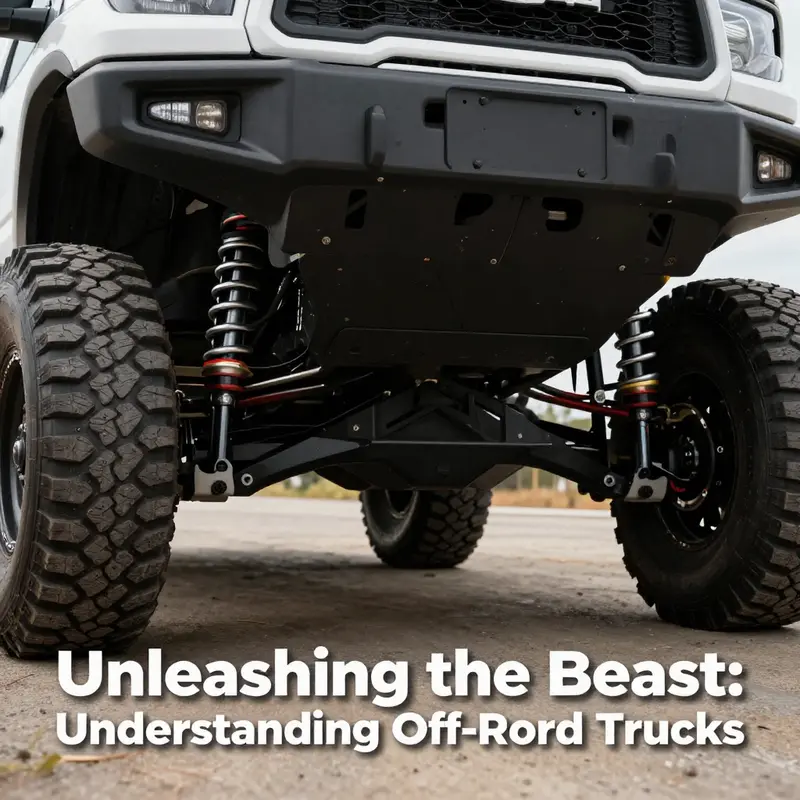
The suspension system is another essential pillar. Off-road trucks rely on long-travel shocks, reinforced control arms, and often heavy-duty springs to absorb the jolts of a rugged route. The goal is not just comfort, though comfort matters for long missions; it is tire contact with the ground. When a wheel can stay in contact with the surface, traction is no longer a guess but a consistent, controllable thing. Paired with robust tires that feature deep, aggressive tread patterns and durable compounds, the vehicle gains traction on sand, mud, gravel, or rocky terrain. The tires themselves become a selective advantage, not merely a fashion statement.
In mission-driven contexts, the frame and body can be more than a shell. Military and industrial variants often incorporate reinforced armor or protective features that shield occupants and critical components from damage in hostile environments. The emphasis here is on survivability and survivability without sacrificing mobility. A high-output engine, typically a diesel in rugged work trucks, provides the torque heavy loads demand at low to moderate RPMs. This is crucial for climbing grades, towing, or hauling when the terrain resists forward motion. A matching transmission and transfer case are designed to maintain that torque through harsh conditions, while also offering redundancy and ease of maintenance in the field.
Yet the engineering story is not only about raw strength. Off-road trucks embody the principle of system integration. Engineers treat the truck as a network of interdependent subsystems—powertrain, cooling, steering, braking, electrical, and optional terrain-management aids—that must work in concert. Difficulty on the trail often arises from the mismatch between systems, not a single weak link. For example, a powerful engine is of little use if cooling cannot keep temperatures in check during continuous climbs in heat. Similarly, traction devices must synchronize with suspension and steering to maintain precise control on uneven surfaces. This layered compatibility is achieved through modular design, standardized interfaces, and attention to maintenance in field conditions.
Every feature in an off-road truck is a deliberate response to real-world constraints. Approach and departure angles, for instance, are not mere geometry trivia; they set the vehicle’s ability to attack obstacles without striking the bumper or rear. A generous breakover angle helps prevent the undercarriage from catching on the peak of a crest. Terrain, weather, and load all shift the optimal geometry, so some modern setups offer adjustable height systems. In rocky canyons or soft dunes, the driver may lift or lower the body to preserve clearance while preserving stability and center of gravity. The interplay between ride height, weight distribution, and chassis geometry becomes a key design discipline, balancing capability with predictable handling.
The tires, of course, deserve their own section of reverence. Not all off-road trucks go to war with oversized rubber, but those that do rely on tires capable of withstanding punctures, resisting cuts, and maintaining grip across a spectrum of surfaces. The tire choice is not simply about diameter; it is about compound resilience, tread design, and the durability of sidewalls against rocks and stumps. For adversarial or remote environments, tires must be robust enough to sustain long operations between changes, while still delivering predictable steering responses. In practice, the best trucks use tires that align with the terrain plans—desert, forest, mud, or snow—while leaving room for quick field changes if the route shifts.
Inside the cabin, the engineering philosophy emphasizes communications, reliability, and reduced maintenance burdens. Control layouts favor intuitive operation, especially when technicians must work with gloved hands under harsh weather. Dash layouts emphasize critical information: engine temperature, transmission status, differential engagement, and traction modes. If armor or protection is present, the interior respects its protective intent without burying essential diagnostics behind opaque barriers. The electrical system needs redundancy and rugged wiring routes to survive vibration, moisture, and impacts. In some configurations, the drivetrain is reinforced to tolerate sustained heavy duty use, while the cooling system uses enhanced radiators, higher-capacity fans, and, where necessary, air-to-water intercoolers to manage heat under load.
Alongside these core features, optional systems exist to tailor performance for the terrain. Modern off-road platforms can incorporate adaptive suspensions that adjust ride height in response to terrain sensing, while electronic terrain-management modules optimize throttle response, transmission behavior, and, where applicable, differential locking for multiple surfaces. These technologies are not about luxury; they are about predictable, confident control when the next obstacle could arrive at any moment. The vehicle becomes a partner to the driver, offering feedback through the steering, the ride, and the cadence of the power delivery, rather than leaving the operator to guess how the machine will behave.
The result is a vehicle that remains mobile where others stall, a trait that is valuable in mining camps, forestry operations, construction sites, and, yes, recreational expeditions. In these contexts, the truck must meet a variety of demands: payload capacity, fuel efficiency under heavy load, simple field maintenance, and compatibility with modular attachments such as winches, cargo racks, or recovery gear. The modular approach to design helps fleets adapt to different missions without a full rebuild. A single chassis can accept a winch kit, a different bumper, or an armor module, all while preserving core reliability. This modular philosophy echoes a broader engineering truth: robustness emerges from the ability to reconfigure without breaking the system.
For readers curious about the engine’s inner craft, a deeper dive into diesel fundamentals can illuminate how torque and power are balanced across a tough drivetrain. See mastering-diesel-mechanics-your-step-by-step-path-to-success for a detailed exploration of diesel architecture and maintenance. The link is a doorway to understanding how a reliable powertrain sustains operation through long hours of rugged terrain.
In sum, an off-road truck is not defined by spectacle or sheer speed. It is defined by an integrative, resilient engineering program that anticipates terrain, weather, and load, and builds around them. It blends high ground clearance, a durable frame, 4×4 or multi-axle traction, a robust suspension, specialized tires, and protective or modular features to deliver mobility where ordinary vehicles falter. Its true meaning lies in the quiet promise it makes to the operator: continue moving, even when the ground insists otherwise. That promise is the core of what off-road trucks mean in practice, and the design thinking that sustains it becomes clearer when we compare field performance to laboratory measurements—and when we recognize that every component exists to keep the vehicle moving through uncertainty.
External resource that informs this broader picture of rugged vehicle design and capability can be found here: https://www.oshkoshdefense.com/
Beyond the Paved Line: The Industrial Reality and Reach of Off-Road Trucks
An off-road truck is not a mere variant of a highway tractor or a heavy pickup. It is a purpose-built machine engineered to operate where standard road-going vehicles struggle or fail. The term itself—off-road—points to terrain far from the smooth, predictable surfaces of city streets and highways. In industrial settings, this translates to an enduring design philosophy: durability, high ground clearance, and a drivetrain capable of delivering torque and traction where soil, mud, or rock dominate the landscape. The chassis is reinforced to withstand constant vibration, the suspension is tuned to absorb shocks from irregular ground, and the tires are selected for bite rather than vanity. In practice, these trucks are optimized for a relentless cycle of climbs, rough descents, and long hours in remote locations, where the success of a project depends on keeping material moving despite the geography. To businesses and crews, the question is not just what the truck can do on a test stand, but how it holds up over weeks of operation across a mine face, a logging trail, or a disaster zone.
The core features that define off-road trucks extend beyond raw horsepower. They are about resilience, controllability, and the ability to deliver payload where the environment tries to resist you. A reinforced chassis provides the backbone necessary to tolerate heavy-duty use, while a high torque engine delivers the pull required to haul steep grades and negotiate uneven surfaces. The best examples of these vehicles combine an advanced suspension system with a robust four-wheel-drive or all-wheel-drive setup, ensuring traction on wet clay, sand, or packed rock. The drivetrain is designed to transfer power smoothly to all wheels, minimizing wheel slip while maximizing the ability to maintain speed through rough terrain. Heavy-duty tires with deep treads are not just for grip; they are a critical interface between machine and ground, shaping how a truck regains movement after a rut or rutting.
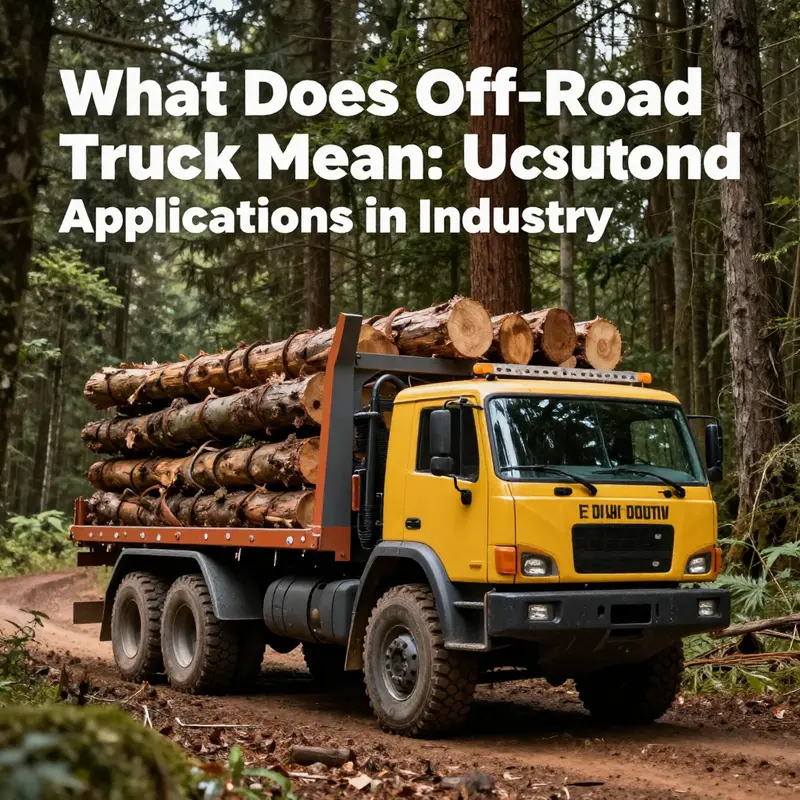
The industrial footprint of off-road trucks becomes clearest when we look at their primary applications. In mining operations, they are the arteries that move ore, rock, and overburden from extraction sites to processing plants or refuse dumps. Open-pit environments demand trucks with long endurance, high payload capacity, and stability on uneven ground. In large-scale civil construction, they ferry soil, gravel, and debris across unfinished landscapes, crossing slopes and soft ground where conventional trucks would bog down. Forestry work relies on trucks that can traverse narrow, muddy, or rocky trails to bring timber from extraction zones to mills, where every minute spent navigating rough terrain translates into either more productivity or wasted opportunity. In military and tactical logistics, off-road trucks prioritize survivability and cross-country mobility, capable of delivering essential equipment and supplies across terrain that would hinder lighter vehicles. Remote energy operations—oil fields, gas sites, or wind and solar projects in challenging locales—depend on these trucks to move fuel, gear, and crews where infrastructure is sparse or non-existent. And in moments of crisis, emergency response and disaster relief hinge on off-road platforms that can reach communities cut off by floods, landslides, or wind damage, delivering aid and enabling evacuation where normal traffic cannot reach.
Within these contexts, the functional repertoire of an off-road truck grows to include more than just power and traction. A heavy-duty payload configuration is common, with bodies tailored to the material being carried—dump beds for spoil, box bodies for equipment, or flatbeds for rapid, versatile deployments. The ability to convert or adapt the truck for specific tasks—whether it be a bulk material carrier, a water trailer, or a crane-ready chassis—speaks to the versatility that makes off-road trucks central to many industrial fleets. In some settings, differential locks and advanced traction aids push the margins between getting stuck and moving forward, especially when surface conditions shift from loose gravel to compacted rock. The cooling and fuel systems are likewise engineered for endurance, avoiding overheating in prolonged climbs or slow, heavy-duty tasks under a desert sun or arctic chill. Together, these features create a machine that can maintain productivity when terrain levels the playing field against standard vehicles.
The maintenance realities behind such capability are as critical as the engineering itself. Remote locations mean limited access to spare parts and skilled technicians, so off-road trucks emphasize reliability and ease of service. This is where knowledge of diesel powertrains becomes a strategic asset on the shop floor. For teams seeking deeper guidance on keeping heavy engines with stubborn torque and long service intervals in peak condition, resources that walk through diesel mechanics step by step are invaluable. Mastering diesel mechanics—your step-by-step path to success offers a practical framework for technicians to diagnose common failures, optimize fuel systems, and extend service intervals without compromising performance. The integration of diagnostic routines, lubrication strategies, and preventive maintenance schedules into daily workflows helps ensure that the truck remains a dependable workhorse rather than a recurrent source of downtime.
Safety, too, is a central pillar. Operating in remote or hazardous environments places a premium on stable handling, clear visibility, and predictable braking on varied surfaces. Operators must be trained to read terrain, anticipate ground conditions, and manage payloads on slopes and uneven ground. The vehicle’s stability systems, even when designed primarily for rugged service, contribute to safer operations by maintaining a predictable response when weight shifts during cornering or braking. As fleets diversify—moving from traditional diesel to hybridized or electrified drivelines in some contexts—the core principle remains: the vehicle must deliver a reliable, controlled performance under stress, with maintenance, safety, and endurance built into its very architecture.
Beyond the technical design, the industrial reach of off-road trucks shapes how projects are planned and executed. Their capabilities influence the sequencing of work, the layout of access roads and haul routes, and the allocation of crews to maximize uptime. In mining, for instance, the choice of a truck is entwined with the mine’s ore grade, the proximity of the processing facility, and the need to move material during limited weather windows. In construction, the same decision weighs on site access, slope stability, and the presence of temporary bridges or pathways across uneven ground. In forestry, the terrain dictates lane width and turning geometry, which in turn informs how fleets are staged and how maintenance depots are positioned within reach of remote work areas. The military and emergency response uses add a further layer of logistical planning, where the priority is resilient mobility and rapid redeployment in changing field conditions. In oil and gas or other remote energy operations, the allowance for long duty cycles and robust cooling systems mirrors the harsh climates and long shifts that define those sites.
Taken together, these threads illuminate a single point: an off-road truck means more than a vehicle that can leave the road. It represents a strategic asset for industries that must operate in unyielding landscapes. The vehicle is a platform for productivity, a safety-critical partner for crews, and a portable solution that can be reconfigured to meet a spectrum of demanding tasks. It is, in short, industrial machinery that moves with purpose through terrain that would otherwise slow or stop progress. The meaning of off-road in this sense transcends the literal absence of pavement; it embodies resilience, adaptability, and the practical ingenuity that keeps essential operations moving when the ground itself challenges the plan.
External reference: For more detailed technical specifications and broader context on off-road truck chassis and performance, see https://www.schlochinc.com/off-road-truck-chassis-specifications/.
Off-Road Truck Meaning Revisited: Terrain Mastery, Recreation, and Cultural Echoes
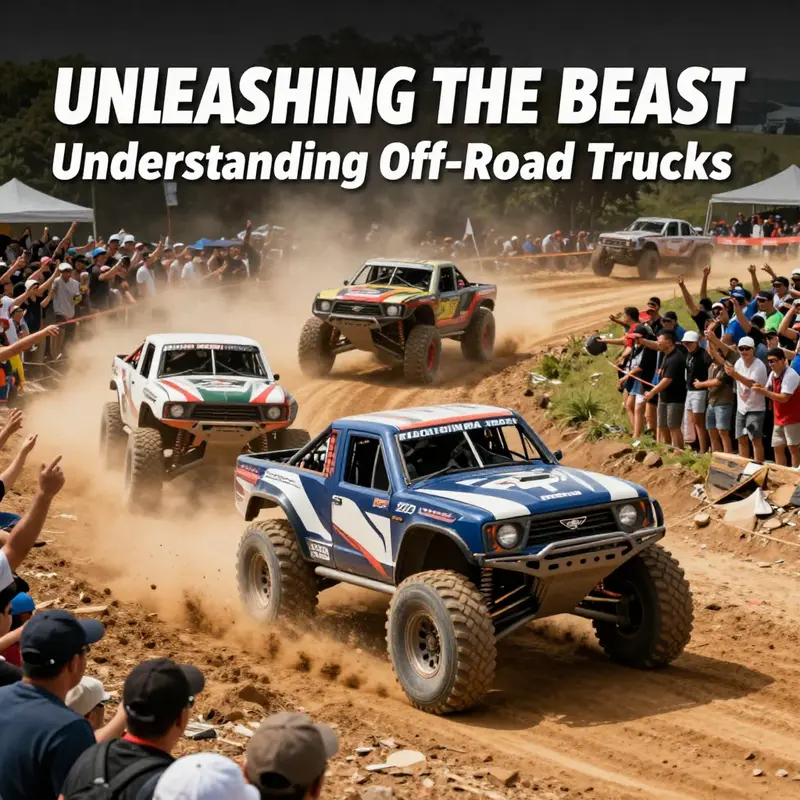
An off-road truck is not merely a larger pickup with rugged tires. It is a purpose-built instrument designed to perform where asphalt ends and the earth offers its own rules. The core idea is straightforward: a vehicle whose abilities are measured not by on-road speed or luxury but by how predictably it can manage mud, sand, rock, snow, and dense brush. This is a vehicle that embraces the unknown and advances with confidence when ordinary trucks would falter. In practical terms, an off-road truck combines durability with a willingness to be battered by terrain and then continue onward. It is the product of a design philosophy that prioritizes reliability in the face of impact, heat, moisture, and variable loads. The result is a machine that feels at home in a forest trail as much as it does edging along a wind-swept desert wash or crawling a boulder field at a patient pace. The meaning of off-road in this context is not a mere adjective for rough roads; it is a declaration about capability, resilience, and the confidence to push beyond the predictable path.
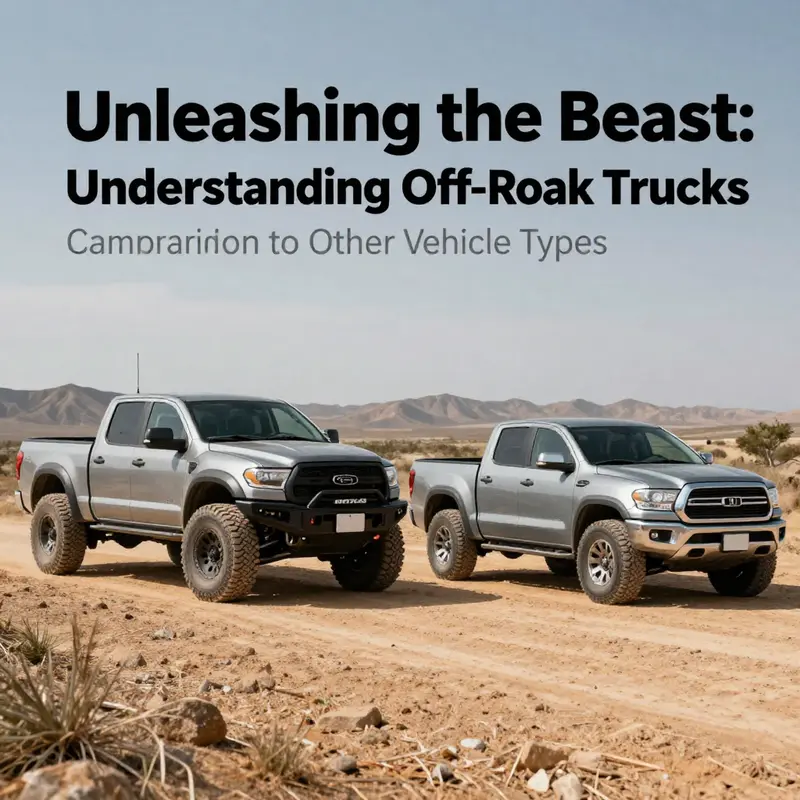
At the heart of an off-road truck lies a set of engineering decisions that work together to create what users experience as controllable power on unruly ground. The chassis is reinforced to resist flex and fracturing under load, a trait that becomes obvious when the tires bite into a steep climb or the suspension cycles through a rough transition. Oversized tires with deep, textured treads do more than look capable; they measure traction on uneven surfaces and provide a larger contact patch to counter slip in slick mud or loose scree. The suspension system, often adjustable and robust, is tuned to absorb impacts without transferring every jolt into the cabin. High ground clearance plays a crucial role too, letting the truck clear rocks and ruts without the undercarriage becoming a liability rather than a shield. And beneath the body, a drivetrain that can include four-wheel or all-wheel drive with locking differentials gives the driver predictable grip when torque is most needed. These elements are not mere features; they are the practical language of terrain mastery, a conversation the truck has with the ground it confronts.
Beyond the straightforward mechanical logic, an off-road truck embodies a broader ethos. It is built to endure, to protect its occupants and its own systems under heavy use. Water-resistant seals, reinforced panels, and protected cooling lines are not cosmetic touches but vital redundancies that allow sustained operation in harsh environments. The mental model of the driver shifts as well. Confidence comes from knowing the machine will absorb abuse and still keep its composure. That trust is earned in the way the vehicle negotiates a steep, irregular pass, how it maintains momentum through a muddy rut, and how the steering remains precise when the tires are fighting for traction. This sense of control under challenging conditions is what gives off-road trucks their distinctive appeal. They are tools for exploration as well as machines of calculation, where torque, clearance, weight distribution, and traction work in concert to turn a difficult section into a negotiable chore.
In recreational settings, these machines unlock experiences that standard trucks simply cannot offer. Adventure driving lets a driver push toward remote landscapes where road infrastructure disappears and scenery alone marks the route. Rock crawling invites deliberate, low-speed progress over jagged surfaces, a test of line choice and throttle modulation rather than raw speed. Trail riding channels the joy of navigation through winding, off-grid corridors, where a switchback or a berm can redefine the entire outing. Desert racing emphasizes the interplay between speed and control on loose sand, rewarding momentum but demanding wheel-tap precision to avoid getting bogged down. And when the day ends, many enthusiasts use their off-road rigs as practical bases for camping and campcraft, benefiting from the extra capability to reach secluded campsites that standard vehicles cannot reach. The allure rests not only in the thrill of challenge but in the freedom that comes from knowing the landscape is navigable on one’s own terms.
An important practical note about these vehicles is their balance between speed and capability. While off-road trucks can traverse long distances, their top speeds are typically modest compared to highway-bound rivals. The design priority is torque and controlled power delivery rather than outright performance on paved straights. This characteristic is not a shortcoming; it reflects the reality that the most demanding parts of off-road travel occur at low to moderate speeds where traction, steering feedback, and suspension control are tested anew with every obstacle. The experience is about predictability and resilience: the vehicle remains composed through washboards, tight turns, and water crossings, and the driver maintains the sense that progress is a matter of line, throttle, and pace rather than raw acceleration.
The cultural footprint of off-road trucks is multifaceted. In industrial contexts, these trucks support activities such as mining, forestry, and construction where terrain is a daily adversary and the work demands relentless reliability. In the world of enthusiasts, the practice becomes a rite of passage: a tangible connection to landscapes that demand respect and a test of technical skill. The symbolism attached to these machines is rich. They stand for freedom—the possibility of moving through wild places that few other vehicles can access. They suggest rugged individualism, a conviction that tenacity and clever engineering can outpace rough terrain. They also celebrate mechanical prowess—the idea that human ingenuity, expressed through a thoughtfully engineered chassis and powertrain, can convert wild ground into a navigable space.
For many hobbyists, the appeal also lies in the craftsmanship involved. The choice of tires, the tuning of dampers, and the refinement of weight distribution are acts of practical creativity. Even the color of a protective skid plate or the finish of a reinforced bumper becomes part of a narrative about durability and readiness. In this context, off-road trucks function as a bridge between the practical demands of work and the imaginative pull of exploration. They symbolize a mindset: that one can prepare for the unexpected, adapt to it, and emerge on the other side with new terrain conquered as a personal achievement.
As with any robust machine culture, there are parallel worlds that reflect and extend the core concept. Remote-controlled off-road trucks, scaled-down surrogates that mimic full-size capabilities, give hobbyists a way to experiment with suspension tuning and control schemes in a more accessible format. These smaller variants offer a laboratory for testing grip, articulation, and balance without exposing wearers to the risks of real-world terrain. They also reveal how the same engineering principles translate across scales, reinforcing the idea that the off-road truck is as much a concept as a vehicle. For readers who crave a deeper dive into the mechanical foundations behind these machines, the practice of design and maintenance is described in resources that cover diesel mechanics, chassis reinforcement, and terrain-tuned power management. See the guide on mastering diesel mechanics for a detailed exploration of how engineers approach strength, reliability, and efficiency in rugged powertrains.
When we step back to consider the bigger picture, the off-road truck stands as a hybrid of work ethic, adventure, and cultural storytelling. It is a tool of necessity in some contexts and a passport to exploration in others. It connects the utilitarian demands of remote job sites with the celebratory rituals of weekend trail riders. It carries the weight of those who rely on it for survival in unforgiving environments and the imagination of those who view the vehicle as a canvas for personal expression. The same machine that helps a crew reach a logging site or a mine shift can also carry a family into a secluded canyon, away from crowds and noise, toward a horizon painted with possibility. In both cases, the vehicle embodies a practical fidelity to terrain and a symbolic fidelity to freedom. The off-road truck is thus not merely a category of vehicle; it is a lens through which we understand how humans negotiate the landscape and, in doing so, reveal something about ourselves—the desire to move beyond the familiar, armed with engineering that makes the journey possible.
External resource for enthusiasts seeking a broader, more tactile perspective on off-road and RC variants: https://www.rctech.net/forums/off-road-trucks-rc-130/ showcases how scaled models mirror real-world capability and offer a sandbox for testing concepts before applying them to full-scale builds. For a deeper, technically focused read on the practical mechanics behind these machines, consider the diesel-mechanics guide linked above, which anchors the discussion in real-world maintenance and customization approaches.
null
null
Final thoughts
In our journey through the rugged world of off-road trucks, we’ve seen how these vehicles are not just machines but symbols of exploration and adventure. From their expert engineering designed to withstand harsh environments to their versatile applications across various industries, off-road trucks embody resilience and adaptability. Whether tearing through mud in a racing competition or facilitating essential tasks in forestry and agriculture, their role is vital in many realms. Moreover, their cultural significance resonates in popular media, captivating enthusiasts and adventurers alike. As enthusiasts and participants in this exciting world, understanding the nuances of off-road trucks enriches the experiences shared on and off the beaten path.