
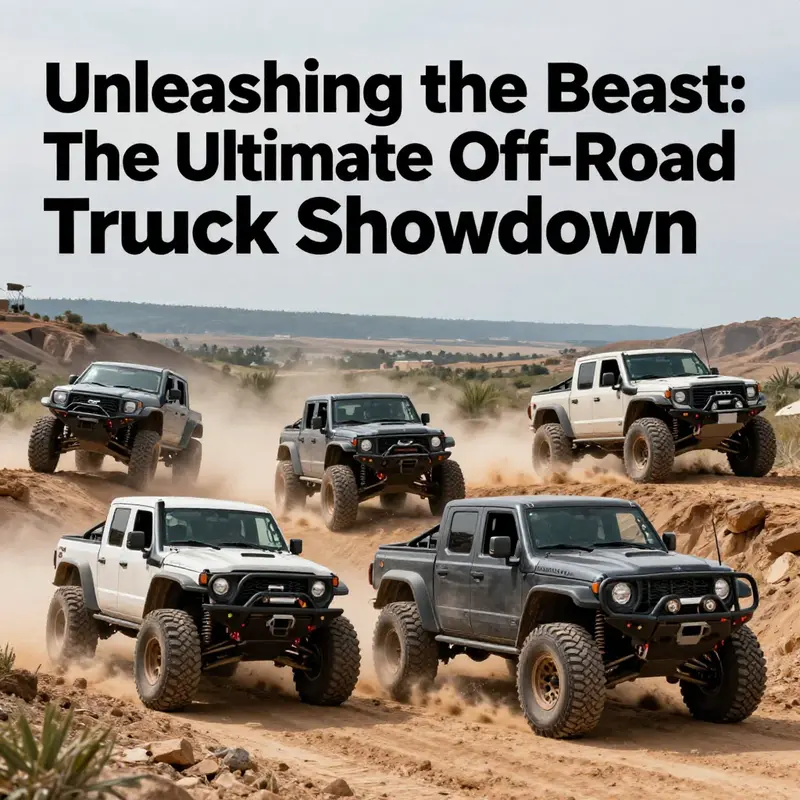
Off-roading is more than a pastime; it’s a lifestyle fueled by adventure, freedom, and the thrill of conquering the untamed wilderness. For enthusiasts, the truck isn’t just a vehicle—it’s a trusted companion that must deliver unmatched performance on and off the beaten path. As the demand for rugged, capable trucks surges, selecting the right model becomes paramount. This article dives deep into four titans of the off-road world: the Ford F-150 Raptor, Ram 1500 TRX, Jeep Wrangler Rubicon 4xe, and Toyota Land Cruiser 300. Each chapter elucidates their unique strengths, revealing which truck reigns supreme in different facets of off-road performance. Whether you’re an off-road racing fan, a rural landowner, or just someone who thrives on adventure, this exploration will guide you to the perfect off-road beast tailored to your needs.
Raptor on the Rise: How Ford Set the Off-Road Benchmark in a World of Tunnel-vision Performance

The Ford F-150 Raptor isn’t merely a high-performance pickup built for off-road abuse; it is a statement about what a production truck can endure and still remain a practical, all-weather companion. Across the desert stages that demand everything from endurance to split-second handling, the Raptor has carved out a position that few rivals can match. It is not just a vehicle for conquest at speed; it is a carefully engineered system designed to translate race-proven DNA into everyday capability. To understand why this truck is treated as a benchmark, one must trace how its engineers weave power, chassis rigidity, suspension intelligence, and terrain-specific control into a single, coherent experience. What started as a bold answer to a niche demand has evolved into a standard by which off-road trucks are measured, tested, and, crucially, emulated.
Powertrain is the first language the Raptor speaks. In the 2025–2026 window, the entry point is a 3.5-liter EcoBoost V6 twin-turbo that delivers a robust cadence of performance—around 410 horsepower and roughly 507 pound-feet of torque, with a 10-speed automatic ensuring that response time stays crisp across the entire rev range. This combination—turbocharged torque mapped to a tall, flexible torque curve—translates into both confident rock crawling and exhilarating dune sprinting. The transmission’s wide ratio spread keeps the engine in its sweet spot whether the truck is rolling over slick granite or punching up a sandy crest. And there is a practical edge to this power: the Raptor is designed to run on regular 92-octane fuel, making track-proven performance accessible without chasing exotic fuels.
To those who push the idea of ultimate speed under rugged conditions, Ford also offered, in a limited form, a more extreme power option—the 5.2-liter supercharged V8 that can crest the 700-horsepower barrier. It is not the standard heart of the Raptor, but it marks a philosophy: when you demand peak pace on rough terrain, you can reach beyond conventional expectations while maintaining the same chassis and control logic that define the production model. The result is a vehicle that can pace the fastest desert runs while still delivering a stable, predictable ride on a rocky track or a muddy trail. The engine’s ample torque is readily available, a crucial feature when negotiating rock ledges or climbing out of deep trenches where throttle response must be immediate and unwavering.
Underneath the body shell, the Raptor’s chassis is a study in structural discipline. It rides on a full-box frame crafted from high-strength steel and reinforced with aluminum components to balance rigidity and mass. This isn’t cosmetic weight reduction; it’s a calculated approach to dampen the consequences of big impacts while preserving the precise steering and suspension feel that the truck demands when the going gets severe. The suspension system is equally purposeful. Long-travel, five-link rear coil springs paired with Fox shocks—standard on the Raptor—form a bridge between the performance track and the trail. These are not merely tuned for soft landings; they are adaptive, electronically controlled damping devices that respond to terrain at speed. The “Live Valve” technology adjusts damping in real time to filter harsh impacts, keeping the truck planted when it should be, yet allowing significant articulation when negotiating jagged obstacles or whoops on a desert road.
The tire package is equally integral to the Raptor’s character. The 35-inch all-terrain BFGoodrich KO2 tires are more than just large rubber; they are a platform for traction across sand, rock, and mud. The contact patch and sidewall geometry are chosen to balance floatation in dunes and grip on rock slabs, enabling a driver to deliver power with confidence rather than fear. Ground clearance is generous, contributing to the ability to approach ruts and take-off angles with less risk of underside contact. Combine this with a relatively wide stance and a low, stable center of gravity for a vehicle of this size, and you can see why the Raptor approaches a rough trail with the composure of a well-schooled rally vehicle rather than a brute with a big appetite for cracks in the terrain.
A defining feature of the Raptor’s off-road capabilities is the Terrain Management System. The seven modes—Sand, Rock, Mud, Trail, Sport, Wet, and Tow—are more than marketing labels. Each mode recalibrates the throttle map, the transmission behavior, the stability control algorithms, and the torque split to suit the surface. On Sand, for instance, throttle response is gentler to prevent wheel spin and to leverage the tires’ float on a soft surface. In Rock mode, the system prioritizes traction at low speed and engages the rear differential lock to ensure every wheel contributes to forward momentum. Trail Control, essentially a low-speed cruise control for tricky sections, helps a driver maintain a steady pace through challenging terrain while hands and eyes stay focused on line choice. A front-wheel trajectory guide packaged into the 360-degree camera system assists in narrow passes and over terrain with tight radii. It is practical technology designed to reduce the cognitive load on the driver when the trail becomes a choreography of line choices and throttle nuances.
Inside, the Raptor mirrors its exterior fortitude with a cabin that respects the realities of off-road use. The interior materials blend rugged durability with the premium feel expected of a modern pickup. The seating is supportive for long stints on rough surfaces, while the dual-screen infotainment system provides the driver with essential real-time feedback on suspension travel, tire pressures, and drive-mode selection. It is a space designed not for showroom drama but for real-world expeditions—whether a desert crossing, a canyon traverse, or a weekend overlanding trip where the road disappears and the track begins. The payload area remains usable for camping gear, adventure equipment, or a weekend’s worth of thirst-quenching supplies, underscoring that the Raptor is as capable as it is capable of being a daily driver that wears its ruggedness with quiet confidence.
The Raptor’s performance credentials aren’t built on conjecture alone. The model lineage carries a race-proven DNA that has been validated over time in demanding desert environments. Desert stages require a blend of power, durability, and speed control that few production trucks can maintain without offensive or defensive compromises. The Baja 1000, the signature proving ground for off-road prowess, has featured the Raptor in scenarios where the road punishes weaknesses and rewards those who maintain composure at pace. The adaptation of race-derived suspension tuning into the production product is a rare capability, and when a truck’s engineers can pull that off, it creates a benchmark that others measure themselves against. It is not merely about how fast the truck can accelerate; it is about how consistently it can deliver momentum through harsh terrain, how well it can absorb impact without sacrificing control, and how effectively the vehicle communicates with the driver to enable precise, deliberate line selection.
From a driving experience perspective, the Raptor embodies the idea that off-road performance and on-road civility do not have to be mutually exclusive. The high-speed stability at modest highway speeds, the predictable steering feel, and the tolerable cabin noise levels are not afterthoughts; they are essential to a vehicle that must function as a daily driver when not being pushed to the edges of its capability. This duality—race-bred performance with genuine touring practicality—sets the Raptor apart. It is the reason why enthusiasts, expedition planners, and even municipal fleets that require a capable off-road platform in a relatively compact footprint consider this truck a reference point. It is a vehicle that does not pretend off-road is a separate universe. It invites the challenge, then delivers with a sense of procedural mastery that makes the user feel that success is less a gamble and more a carefully engineered outcome.
As part of its broader argument, the Raptor also prompts a broader reflection on what “best off-road” should mean. Some drivers prioritize raw horsepower above all else; others chase luxury and refinement as a means to extend time away from civilization. Still others seek the most advanced off-road automation, where the vehicle makes a majority of the decisions on rough ground. The Raptor excels across these axes without surrendering the essential character of a driver’s truck. It offers authentic, race-inspired capability, but its systems remain accessible and interpretable, never indulging in digital mystique that can alienate the operator. It provides a baseline that is manageable, reliable, and true to the ethos of a true off-road truck: the vehicle should enable the driver to explore more, in more places, with fewer compromises. In that sense, the Raptor does not merely define an expectation; it defines what is possible when performance engineering meets practical utility.
Looking outward to the broader field—where rivals push their own engineering boundaries—the Raptor still feels like the standard by which the rest are judged. The Ram 1500 TRX may chase raw speed and loud, exuberant power, boasting a 702-horsepower supercharged V8 and aggressive suspension tuning; the Jeep Wrangler Rubicon 4xe blends rugged heritage with a hybrid impulse for efficiency; the Toyota Land Cruiser 300 offers durability and long-range confidence. Yet the Ford remains the easiest truck to translate into a capable, versatile off-road partner for most drivers. It grants you the thrill of a track-tested platform without forcing you to abandon everyday practicality. The result is a vehicle that not only performs on the trail but also carries the elements of a well-rounded life—camping, towing, family duties—into the same week without forcing a compromise.
In a sense, the Raptor’s greatness does not hinge on its ability to outdo every other truck at every moment. It hinges on its ability to deliver a coherent, repeatable, and exhilarating experience across a spectrum of off-road conditions while preserving enough civility for day-to-day use. It is this combination of race-informed engineering and production practicality that makes the Raptor a benchmark. It shows what a leading manufacturer can do when it treats off-road as a legitimate design brief rather than as a niche hobby. The Raptor doesn’t merely climb over obstacles; it communicates, with every chassis setting, that the trail is navigable, the line is identifiable, and the path ahead is clear. As a result, it remains the top pick for those seeking a truck that can conquer the most demanding terrain and still be comfortable to drive along a highway on the way back home.
For readers who want to explore related safety and performance perspectives, you can explore industry-tested evaluations that compare Ford’s performance with other automakers’ offerings, such as the IIHS crash-test analyses referenced in this discussion. These analyses provide a broader context for how a brand’s engineering choices translate into real-world safety. See the discussion here: IIHS crash-test results: Tesla vs Ford.
In sum, the F-150 Raptor is more than a high-performance off-road pickup. It is a benchmark that has grown through judgment, testing, and a relentless pursuit of capability without surrendering daily usability. It embodies the principle that a truck can be both a legitimate desert racer and a reliable partner for weekend adventures. It invites a broader conversation about what readers want from an off-road truck and why the Raptor remains the touchstone around which all future developments will be measured. If your aim is to dominate tough trails with a blend of power, control, and practical utility, the Raptor stays a compelling, credible choice—the standard against which every other off-road truck is judged. And for readers willing to take the longer view, it remains a vehicle that reminds us that great engineering is not only about power but about the harmony of power, control, and purpose on every mile of the journey.
External resource: https://www.ford.com/trucks/f-150-raptor/
Power Meets Ruggedness: Reimagining Off-Road Performance in a 2027 High-Performance Pickup
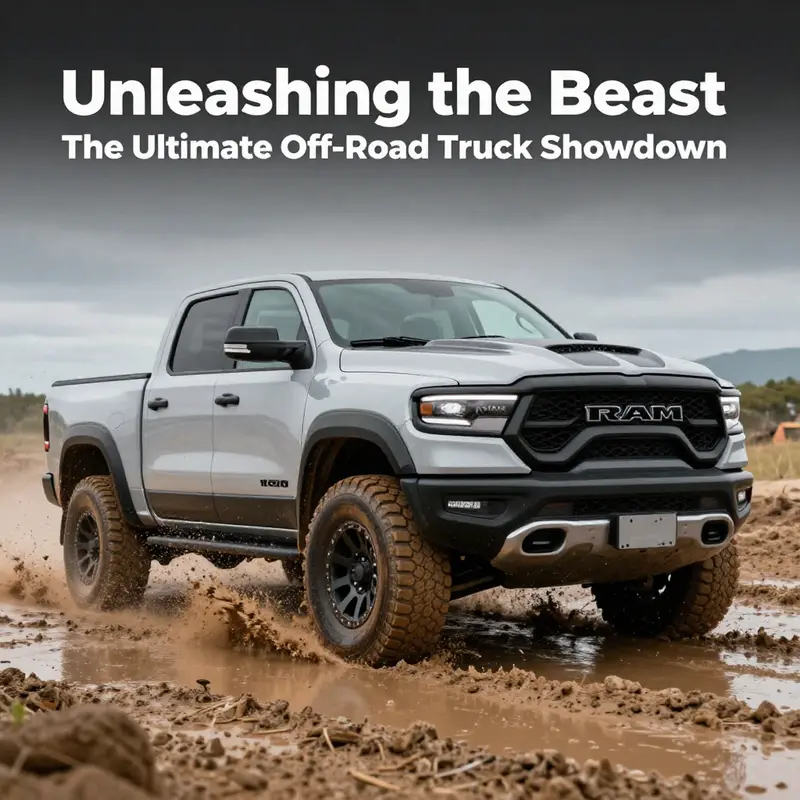
The return of a certain class of high-performance off-road pickup signals more than just a rush of horsepower. It marks a rethinking of how power, durability, and desert-running pedigree can coexist with daily usability. In the 2027 model year, a trail-ready beacon pushes the envelope by pairing an overhauled, supercharged V8 powertrain with a chassis and suspension tuned for the most demanding terrain. It isn’t merely about raw numbers; it’s about how those numbers translate into controlled, confident motion over sand, rock, and scree, while still delivering a civilized, highway-suited demeanor when the road stretches out before you. What makes this machine stand out is not a single feature but the orchestration of many systems, all calibrated to one purpose: to move you from trailhead to horizon with a sense of certainty born from engineering that respects both performance and endurance.
Under the hood lies a purpose-built powertrain that redefines what a gasoline-powered pickup can do in extreme environments. The engine block has grown more ambitious, boasting a supercharged V8 layout that spools up with a roar forged in the spirit of desert racing. The rotation of the compressor is tuned to deliver peak torque at impressively low revs, which matters when a climb begins long before you reach the crest, or when you’re crawling over loose shale near an embankment. The result is a staggering peak horsepower and torque that bluntly rivals some of the most famous performance cars, yet it remains usable in the real world—able to deliver immediate grunt when you need it and to finesse throttle response when precision matters. A modern, responsive eight-speed automatic transmission channels that power to the wheels through a full-time active transfer case, granting the driver six distinct driving modes designed to adapt to the terrain with minimal input. The Baja mode, in particular, is more than a marketing flourish; it tames throttle sensitivity and modulates torque distribution to favor rear-wheel drive on loose surfaces, allowing the truck to maintain momentum across dunes or sandy trails where grip is ephemeral and landmarks are few. It is this kind of deliberate tuning that elevates the machine above mere horsepower; it translates speed into traction and traction into confidence.
Beyond power, the chassis and suspension system form the backbone of its off-road capability. Designers chose forged aluminum control arms for strength without adding excessive weight, a choice that pays dividends in steering feel and suspension geometry when negotiating whoops, ridgelines, or a rock garden that threatens to upset line selection. The suspension itself uses advanced dampers with remote reservoirs to prevent heat-induced fade during long desert sprints, a detail most drivers won’t notice at first glance but that becomes evident after hours of hard use. Ground clearance is generous, and the suspension travel numbers give the driver the freedom to maintain momentum over obstacles that would stall a lesser machine. The tires are oversized, grabbing grip on mixed surfaces while remaining manageable on fire-soft sand or slick clay, and the wheel and tire package balance ruggedness with on-road manners. All of this is tied together by a drive system that can automatically adjust the distribution of power between the front and rear axles, allowing the truck to shed or load torque where it’s most needed. On the technical level, it’s an elegant symphony of weight transfer, suspension articulation, and traction control that translates raw capability into composure.
The experience behind the wheel reveals a vehicle that can be both brutal in a controlled environment and surprisingly refined on the highway. The acceleration is breathtaking for a pickup of this scale, with a sprint to sixty that arrives in a fraction of the time you’d expect given its size and mission. The top speed, while not the primary target, still lands at a level that keeps it competitive among performance sedans under the right conditions, a reminder that the line between a desert-goer and a road-going performer is a thin one here. The steering offers precise input without feeling artificial, a byproduct of careful steering-rack tuning and chassis stiffness that keeps the truck from feeling top-heavy or vague in off-camber transitions. The braking system remains predictable and strong, with fade resistance that inspires confidence when a long downhill section becomes the next obstacle to conquer. Inside, the cabin speaks to a balance between utility and luxury. A large central touchscreen dominates the layout, flanked by a digital instrument cluster that presents critical information in a crisp, legible format. Materials in contact areas are robust and comfortable, chosen to withstand the realities of mud-splashed drives and sand-filled mornings. It’s not a showpiece of refinement alone; it’s a practical space designed for the realities of expeditions and gnarly trail miles, with seating that supports long days behind the wheel and thoughtful storage for essentials like recovery gear, navigation aids, and water—items that become necessities when the days stretch into what feel like remote horizons.
A practical note on maintenance and reliability accompanies the powertrain story. The engineering team has placed emphasis on thermal management, engine breathing, and drivetrain durability, understanding that the demand of extreme terrain tests every component. The intake and cooling paths have been optimized to keep intake temperatures in check while the vehicle is climbing, accelerating hard, or holding a line on a steep grade. This matters because keeping the system cool maintains power delivery and reduces the risk of premature wear during extended sessions far from service facilities. For those who like to dive into the mechanical details, a solid knowledge base exists for enthusiasts who want to understand how such systems behave under load. A link to a trusted technical resource on diesel fundamentals can offer broader context on the kinds of mechanical principles that govern any high-performance powerplant, including the one in this pickup. It’s a reminder that while the configuration is specialized, the underlying physics—air, fuel, compression, and exhaust—remain universal across the spectrum of rugged trucks. See Mastering Diesel Mechanics: A Step-by-Step Path to Success for a deeper dive into those concepts. Within the vehicle’s own ecosystem, maintenance intervals, fluid choices, and service guidance are designed to keep this machine performing well beyond the typical expectation for a daily-use pickup, especially when it’s pushed to its limits on remote trails.
On the topic of endurance, the 2027 model makes a case for reliability in real-world overland use. Desert runs, mountain passes, and multi-day expeditions demand not only speed but also durability, predictable performance, and a robust transmission. The engineers have prioritized the balance between harsh-terrain capability and comfort, recognizing that long days in the saddle test both the vehicle and the operator. Even when degradation might seem inevitable after repeated exposure to sand and heat, the architecture shows resilience, with structural elements designed to resist flex and fatigue while maintaining alignment and geometry across evolving terrain. The result is not a fragile showcase of raw power but a mature, capable tool that can be counted on when the objective is to navigate forbidding landscapes and return with the crew and gear intact. In this sense, the vehicle embodies a philosophy that performance is most meaningful when it travels with purpose and stays reliable under pressure.
From a practical perspective, this pickup’s ownership experience is about more than the moment of domination on a dune or a rocky approach. It’s about the long arc—how a machine that can sprint through a dune field can also serve as a dependable platform for exploration, recovery work, or challenging expeditions. The six-drive-mode system is a core enabler here, automatically adapting to conditions that might otherwise require a crew of spotters and multiple vehicles. Auto mode offers a natural, seamless blend of torque and traction for everyday driving, while Sport tightens throttle mapping and shock damping for more aggressive behavior on a closed course or a fast, winding road. Snow, Mud, and Tow provide targeted settings for slippery surfaces or for hauling and recovery tasks, ensuring that the truck remains controllable across a broad spectrum of environments. The Baja mode is the crown jewel for the desert enthusiast, enabling a torque bias and throttle response that helps sustain high speeds on soft surfaces while preserving control when the terrain becomes irregular. In short, this is a vehicle engineered to translate a lofty performance brief into practical off-road dominance, without sacrificing the everyday realities of driving on paved roads. The result is a new benchmark for what a production pickup can be when engineers prioritize the fusion of power, control, and endurance over mere speed.
For readers who want to explore the mechanical literacy behind such machines, there is a practical resource that explores diesel fundamentals and how a robust powertrain can be optimized for longevity and reliability. Mastering Diesel Mechanics: A Step-by-Step Path to Success offers insights that illuminate not only how supercharged gasoline engines behave under load, but also how similar principles apply across a broad range of powertrains. This kind of cross-cut context helps frame the TRX’s capabilities as part of a broader engineering ethos that values efficiency of motion, heat management, and durable construction over sheer novelty. It’s a reminder that the best off-road trucks, regardless of brand, derive their strength from a well-considered balance of performance, resilience, and practical design choices. The same mindset underpins the overall argument for what makes a truck excel off the pavement: power that arrives in a controlled fashion, chassis geometry that places traction where it’s most needed, and a feature set that keeps the driver empowered without becoming a hindrance in the field.
In the end, the question of which truck is best off road hinges on what the driver needs most: raw, unfiltered power that can sprint across harsh terrain; or a balanced blend of speed, comfort, and reliability for long-range expeditions. The 2027 high-performance pickup leans decisively toward the first category, setting a new standard for power and ruggedness that commands respect on the trail and confidence on the highway. Its aggressive stance, purposeful styling, and the audible certainty of its engine note promise an experience that feels purpose-built for conquering the unknown. Yet even as it asserts its dominance in power, it does not forget the practical realities of real-world use—the heavy-duty chassis, the strategic suspension tuning, and the interior baked with thoughtful technology that keeps the operator in command for hours on end. That combination—power that can be controlled, ruggedness that remains reliable, and a driver-centric approach to everyday usability—defines the modern off-road pickup era. For readers compiling a shortlist of contenders or simply dreaming about the next expedition vehicle, this chapter underscores a truth: the best off-road truck is not a single statement of speed, nor a fortress of chassis alone. It’s an integrated system where horsepower, suspension, steering feedback, and human factors align to deliver a vehicle that can transform challenging landscapes into navigable routes and, in the process, redefine what it means to drive off the beaten path. External reference: https://www.autoweek.com/news/a1234567890/ram-1500-trx-2027-model-year-launch/
Heritage Meets Hybrid: The Rugged Plug-In That Reframes Off-Road Choice
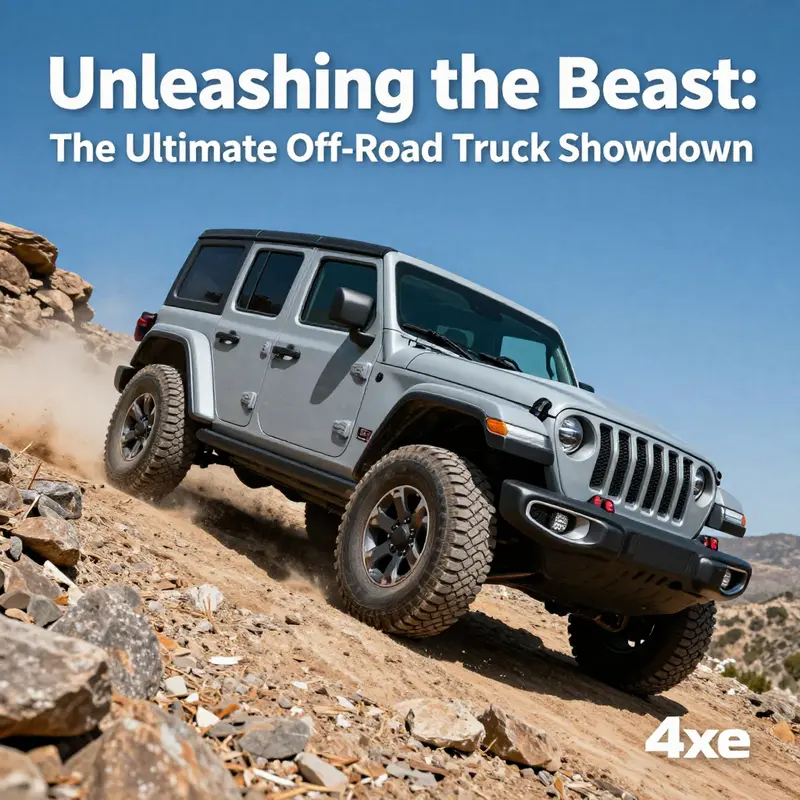
The classic, ladder-frame off-roader reimagined as a plug-in hybrid presents a rare blend of tradition and technology. For drivers choosing what truck is best off road, this kind of vehicle answers a complex set of demands: crawl over rock gardens, ford streams, whisper through campsites, and still deliver usable electric power for remote living. It keeps the familiar geometry and heavy-duty hardware fans expect, while adding an electrified powertrain that reshapes how you plan trips, manage noise, and think about fuel use.
Under the sheetmetal sits a compact turbocharged engine married to a dual-motor hybrid system. Together they produce strong peak power and, more importantly for off-roaders, abundant low-end torque. That torque profile matters: crawling over ledges, re-accelerating on loose surfaces, and powering through mud all benefit more from instant grunt than from high-rpm horsepower. The hybrid system fills the gap precisely where internal-combustion engines are weakest, giving you a near-instant surge of torque at low speeds without hunting for gears. An eight-speed automatic transmission smooths shifts and keeps the engine where it can be most efficient.
The part-time four-wheel-drive architecture remains true to the vehicle’s roots. A proven transfer case and selectable low-range gearing provide mechanical advantage for technical trails. Add electronic locking differentials and a sway-bar disconnect, and you get both traction and articulation. The locking diffs force wheel speed parity when traction is lost, while disconnecting the sway bar frees up axle movement. This combination lets the chassis conform to uneven terrain without inducing torso-tilting roll, which is essential for maintaining traction and rider comfort when lines get ugly.
Ground clearance and approach geometry are also engineered with intent. A high approach angle allows the front bumper to kiss steep ledges less often. Underbody protection and skid plates guard the transfer case, fuel tank, and battery pack when the route gets rough. Water fording capability is notable, too, with sealed electricals and elevated air intakes that let the vehicle traverse deeper streams than most electrified crossovers can manage. For expeditioners, that water capability reduces route planning stress and keeps options open on remote trails.
Driving experience changes in useful ways with a plug-in hybrid layout. At low speeds, you can move in nearly silent electric-only mode. This quietness matters beyond comfort: it reduces wildlife disturbance on remote drives and makes campsite approaches less intrusive. The electric mode also enables precise throttle control when negotiating delicate obstacles. The immediate torque from the motors lets you feather power without combustion lag, which helps prevent wheelspin and maintain traction on slick rock and loose gravel.
Efficiency improvements are tangible. When operated sensibly, the combined fuel consumption numbers drop considerably compared with a pure internal-combustion sibling. Regenerative braking recovers energy during descents and repetitive braking, which is particularly helpful on technical routes where stop-start action is frequent. That reclaimed energy extends the electric reserve, and in turn it reduces refueling needs during long backcountry stints. For longer overland trips, the hybrid setup means fewer fuel stops in remote regions, and that convenience can be as important as raw capability.
Practicality takes a leap forward through onboard power capabilities. The vehicle includes exportable AC power from its battery system, with enough wattage to run camp appliances, power tools, or mobile offices. You can operate cooking equipment, lighting, and media without a separate generator. For professional users, those outlets support fieldwork that would otherwise require noisy generators. In one charge state, the system can run a high-wattage device for several hours, and when the battery dips below a set threshold, the engine can act as an onboard generator to sustain continued power output.
That exportable energy also factors into emergency scenarios. At a roadside stop, you can power inflators, communications gear, and medical devices. The architecture supports both convenience and resilience, turning the truck into a mobile basecamp. For users who value multi-day remote stays, the ability to recharge camera batteries, charge drones, or maintain refrigeration without extra fuel adds a new dimension to off-road utility.
Safety and durability are central, but the electrified platform introduces new concerns. High-energy battery systems require robust thermal management and crash protection. There have been industry recalls for other electrified commercial vehicles tied to thermal risks, which underscores the need for cautious evaluation. Owners should be aware of recall resolution history and the manufacturer’s software and hardware updates addressing battery safety. For background reading on recent electrified vehicle safety incidents and recalls, see orange-ev-husk-e-recall-safety-concerns. Regular maintenance of cooling systems and adherence to service advisories help mitigate thermal risk.
Weight distribution changes with the battery pack. Batteries add mass, but much of that weight sits low in the chassis. That lowers the center of gravity and, in many cases, improves roll resistance. The trade-off is overall heft: the increased curb weight can affect payload and towing. When fully loaded with expedition gear, occupants, and aftermarket modifications, pay attention to gross vehicle rating limits. The hybrid’s added torque compensates somewhat, but braking distances and suspension loads will change. Upgrading brake components and suspension hardware is a common step for serious expedition builds.
Charging logistics matter. Short electric ranges make the plug-in hybrid most effective as a short-hop electric vehicle and a long-trip hybrid. For daily driving and short trailhead runs, you can operate largely on battery power. For extended overland runs, plan for either opportunistic charging at destination points or rely on the engine to maintain battery charge. Portable solar arrays paired with the exportable AC outlets create an efficient ecosystem for sustained off-grid operation. When planning a trip, consider the availability of charging infrastructure near your routes, and remember that most remote trails lack public EV chargers.
Off-road customization and aftermarket support are alive and well with this platform. Lift kits, long-travel suspensions, skid-plate options, and axle reinforcements are all available from specialists. Some builders even reprogram engine and hybrid control strategies to better suit dedicated trail use. However, keep in mind that extensive modifications can affect warranty coverage and thermal management of the battery pack. Work with vendors that understand hybrid-specific requirements to avoid unforeseen complications.
Towing and hauling deserve focused consideration. The hybrid layout delivers strong torque that helps initial acceleration with heavy trailers. But overall towing capacity may differ from traditional V8-powered trucks. Trailer weight, tongue load, and aerodynamic drag interact with the vehicle’s fuel consumption profile. If you intend to tow heavy loads on long trips, verify official towing limits and consider the impact of battery and cargo weight on payload capacity. For many recreational users, the trade-off favors the hybrid’s versatility rather than raw towing numbers.
The hybridized classic off-roader is a unique tool for a broad user base. For drivers prioritizing raw speed, a performance-focused truck still has its place. For those seeking a balanced package of durability, eco-consciousness, and practical campsite power, the plug-in option delivers. It also suits owners who value silent approaches, precise low-speed control, and a reduced fuel burden on long trips. In markets with stringent emissions rules, the hybrid model also keeps access to restricted zones where higher-emission vehicles face limitations.
Real-world owners report diverse benefits. Urban drivers appreciate the silent, emissions-free commute. Trail riders value the low-speed torque and differential locks. Overlanders praise the integrated power export and its dependability in remote settings. Concerns focus on weight, complexity, and, in some cases, the long-term availability of specialized parts in remote service areas. Those trade-offs inform whether this type of vehicle is the right choice for your off-road role.
Selecting the best off-road truck comes down to mission. If your priority is technical crawling, remote expedition autonomy, and modern efficiency, the plug-in hybrid that follows the classic off-road blueprint deserves serious consideration. It maintains the mechanical features that make rugged trucks effective, while offering modern efficiencies that change how you plan trips. Think in terms of capability, not just output numbers: torque delivery, drivetrain logic, underbody protection, and onboard power change daily usability.
The hybrid classic reframes expectations. It demonstrates that electrification can enhance off-road competence rather than diminish it. For people questioning what truck is best off road, this model compels a nuanced answer. It shows that heritage and innovation can coexist, and that the best choice may be the vehicle that balances old-school toughness with new-school efficiency. For more technical details from the manufacturer, see the official page: https://www.jeep.com/vehicles/wrangler/rubicon-4xe.html
Land Cruiser 300: Enduring Reliability and Comfort for Serious Off-Road Expeditions
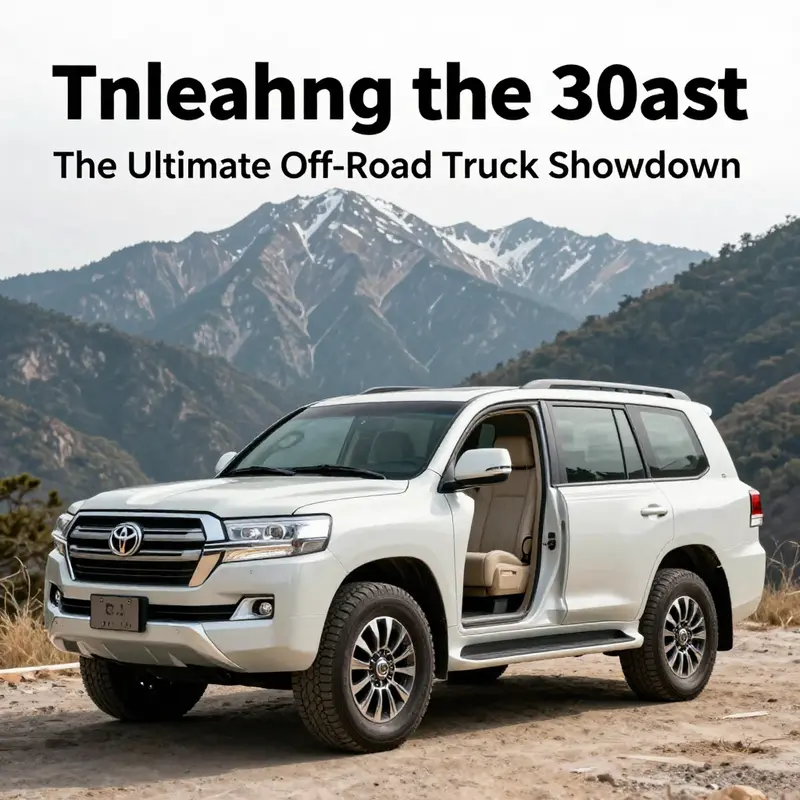
When readers ask what truck is best off road, a response hinges as much on reliability and daily livability as on raw torque and hill-descent prowess. The Land Cruiser 300 embodies a philosophy that prizes endurance, calm assurance, and the kind of comfort that makes long, rugged journeys feel almost routine. It is a vehicle designed not merely to survive remote trails but to transform them into predictable chapters of adventure. In this chapter, we explore how the 300’s architecture—built around proven reliability, thoughtful refinement, and a robust array of off-road technologies—positions it as a compelling option for explorers who demand both capability and creature comforts on extended expeditions. The story is not just about how far the truck can go, but how far a driver can go knowing the machine will support every mile with steadiness and ease.
Central to the Land Cruiser 300’s reputation is its unyielding practicality. Toyota’s engineering approach here emphasizes a body-on-frame design that has earned trust across decades of demanding trips. This is a platform that thrives on repetition and distant horizons, a trait that resonates with overlanding enthusiasts who routinely stray from paved roads. The vehicle’s robust construction isn’t flashy; instead it underpins a calm confidence. Drivers don’t hear themselves constantly worrying about components or replacement parts miles from civilization because the engineering intent is to withstand the kind of wear and tear that would wear down lesser machines. Toyota’s global service network amplifies this peace of mind, ensuring that, even far from home, support is accessible and predictable. Reliability, in other words, isn’t a marketing tag here—it is the essence of the ownership experience on the LC 300.
The powertrain lineup further reinforces the vehicle’s dual mandate: on one hand, a capable highway cruiser, and on the other, a workhorse suited to rocky climbs and long, slow ascents through desert grades. For petrol enthusiasts, the 3.5-liter twin-turbo V6 offers robust acceleration and ample top-end power that makes highway cruising feel effortless, a crucial factor when you’re balancing mileage with miles of rough terrain. On the diesel side, the 3.3-liter twin-turbo V6 provides substantial low-end torque—a valuable asset when you’re negotiating steep grades or slow, technical rock crawling where torque at low rpm matters more than outright speed. Both engines feed a smooth 10-speed Direct Shift automatic transmission, which helps the truck tailor its response to the terrain without abrupt shifts or hesitation. The result is a vehicle that feels composed whether you’re crossing a tundra, navigating a dune field, or slowly negotiating a rutted trail.
What makes these powertrains genuinely complementary is the way the chassis controls translates into confident, measured progress. The LC 300’s suspension system—paired with Toyota’s KDSS, or Kinetic Dynamic Suspension System in some markets—manages suspension stiffness and articulation so the body remains stable while wheels maintain contact with uneven surfaces. KDSS is particularly valuable on off-road routes that demand wheel travel and body control at the same time. It helps keep the tires planted on obstacles and maintains lines through uneven terrain, reducing the tug-of-war between body sway and wheel articulation. Add in the vehicle’s five-mode Multi-Terrain Select system—the sequence of Rock, Sand, Mud, Deep Snow, and a general mode—and drivers can tailor traction and throttle response to the kind of ground they encounter. In practice, selecting Rock mode tightens traction control thresholds and optimizes the throttle map to keep the engine from stalling in cross-axle situations, while Sand and Mud modes adjust throttle response and torque distribution to maintain forward momentum without sudden wheel spin.
The Land Cruiser 300’s off-road aptitude isn’t just about torque and modes; it’s also about how the vehicle negotiates the space around it. Approach and departure angles are engineered to handle steeper obstacles without scrapes, which matters when the trail dumps the truck into a rock overlook or a steep entry into a wash. Where some SUVs trade off ground clearance for on-road comfort, the LC 300 balances both, ensuring that the frame remains clear of rocks and the underbody remains protected. This balance is essential for long expeditions where the road will be less than ideal for days on end. The result is a vehicle that feels predictable and composed in situations where other rigs might feel unsettled or hesitant. The ability to maintain speed and control across mixed-terrain surfaces translates into fewer fatigue-inducing moments for the driver, a subtle but meaningful factor on multi-day trips where fatigue is a real hazard.
Inside, the Land Cruiser 300 continues its tradition of prioritizing comfort without compromising rugged practicality. The interior is designed for long-haul travel, with premium materials that resist the wear and tear of daily use while offering a sense of refinement that makes the vehicle a legitimate long-distance cruiser. Space is ample across three rows, which broadens the range of travelers who can join an expedition without forcing choices about who gets to ride in back. The cabin remains quiet at highway speeds, thanks to targeted insulation and thoughtful seal design, which helps reduce fatigue on extended drives. In a vehicle built for long miles and open horizons, a quiet cabin becomes a crucial asset, letting occupants converse more easily, listen to music, and enjoy a sense of stillness after the day’s rougher terrain has been left behind.
Toyota’s attention to creature comforts doesn’t end with the obvious. A head-up display keeps essential information in the driver’s line of sight, reducing gaze shifts and helping maintain concentration on the trail ahead. Wireless smartphone charging keeps devices powered without clutter on the cabin surfaces, while a premium audio experience—embodied in a 14-speaker JBL system—is a welcome companion for when the route demands a soundtrack to match the landscape. If the journey is a family affair, rear-seat entertainment options provide a welcome distraction for younger travelers between trail breaks, while the cabin’s climate control remains attentive enough to tolerate the difference in temperatures between a sun-drenched desert and a shaded canyon.
For those who value modern convenience, the LC 300 offers practical features that make expedition life easier. A hands-free tailgate simplifies loading and unloading in tight campsites or on uneven terrain, a small but meaningful improvement when your hands are full of gear. A 360-degree camera provides confidence when navigating tight campsites or rock-strewn approaches, enabling precise maneuvering in marginal spaces where a misstep could translate into damage or delays. The infotainment system is designed to be intuitive, with a layout that minimizes learning curves in the middle of a remote stretch. In scenarios where distance and isolation test a vehicle’s capabilities, such well-integrated features can be as important as the engine’s torque curve because they reduce the cognitive load on the driver and increase the probability of success on demanding routes.
With the LC 300, the safety envelope reinforces the vehicle’s expedition-readiness. Toyota Safety Sense is comprehensive, packaging adaptive cruise control with full-speed radar, pedestrian detection, and lane-keeping assist as standard. Blind-spot monitoring and intelligent parking assistance further extend the vehicle’s capability to operate safely in complex environments where visibility can be constrained by the terrain, weather, or the presence of other travelers. In the context of off-road journeys, where the pace is deliberate and the risks are concentrated in unpredictable areas, this suite serves as a valuable co-pilot. It supports the driver in maintaining a steady, unhurried tempo through challenging stretches, a quality that can be just as critical as torque when the road becomes a rough teacher.
All of these attributes—the engine options, the dynamic suspension, the terrain-select modes, the careful interior design, and the safety suite—converge to give the Land Cruiser 300 a very particular kind of off-road personality. It is not the most aggressive or the fastest in any one metric, but it excels at the combination of steadiness, comfort, and reliability that matters on long, remote trips where conditions shift, and fatigue becomes a factor. The vehicle is not a thrill machine; it is a trustworthy companion that makes the adventure itself feel possible, even inevitable. For many travelers, this reliability anchors the decision to commit to a long overland route, particularly when the plan includes uncertain road conditions, rougher trails, and the possibility of delays. In those moments, a truck that can be trusted to deliver consistent performance—across asphalt, gravel, mud, and rock—becomes not just a vehicle but a strategic choice for the journey ahead.
As a practical note for road trippers and adventurers who like to think ahead, features such as the Toyota ChargeMinder app can be a meaningful addition to the wilderness toolkit. While the LC 300 is not primarily an electric vehicle, the broader ecosystem of energy management tools and vehicle-to-device integration can simplify long trips that blend on-road speed with off-road resilience. This kind of digital integration helps ensure that power resources are managed efficiently, freeing the driver to focus on the terrain rather than the battery meter. For more on how such tools integrate with Toyota’s broader philosophy of connected adventure, you can explore content that examines how the brand’s apps support overland planning and energy management. Toyota ChargeMinder app
The LC 300’s blend of durability, comfort, and intelligent technology culminates in a vehicle that invites explorers to extend their horizons without compromising safety or everyday practicality. It does not pretend that the off-road world will be painless, but it promises that the vehicle will make the trip feel controllable, not precarious. In that sense, the Land Cruiser 300 is less about conquering terrain in a way that shouts accomplishment and more about transforming each remote mile into a chapter of measured progress. An expedition can be lengthy, sometimes arduous, but with this truck, the journey itself becomes a more confident, more enjoyable proposition. The vehicle’s design language—quiet refinement, mechanical resilience, and a clear emphasis on reliability—speaks to travelers who want to see more of the world while maintaining the standard of comfort that makes life on the road sustainable.
For readers seeking a deeper, more granular analysis of the LC 300’s capabilities and trade-offs, external perspectives can provide additional texture to the picture. A well-regarded review from Team-BHP offers a thorough breakdown of pros and cons that complements the hands-on impressions described here. It situates the LC 300 within a broader landscape of capable off-road platforms and highlights aspects that may be especially relevant to owners planning lengthy expeditions or remote-travel budgets. External resource: https://www.team-bhp.com/ (Team-BHP: Toyota Land Cruiser LC300 review).
Final thoughts
Choosing the best off-road truck involves understanding what you, as an adventurer, need from your vehicle—be it performance, ruggedness, comfort, or efficiency. The Ford F-150 Raptor stands out for unmatched off-road performance and speed, while the Ram 1500 TRX provides incredible power for extreme conditions. Classic off-road heritage and hybrid efficiency come together in the Jeep Wrangler Rubicon 4xe, while the Toyota Land Cruiser 300 excels in long-distance reliability and comfort. Ultimately, your ideal off-road warriors are waiting to accompany you on your next adventure, ready to tackle whatever trail lies ahead.