

As off-road enthusiasts and adventurers venture into rugged terrains, understanding the operational limits of truck drivers is crucial. The intertwined relationship between regulations and driver wellbeing not only influences off-road adventures but also impacts safety and efficiency in all transport-related activities. The Federal Motor Carrier Safety Administration (FMCSA) sets these regulations, dictating when drivers should get off the road to prevent accidents. Each chapter will delve into specific aspects of these regulations, highlighting the importance of proper adherence for safety when navigating the great outdoors.
When the Road Calls Time: How Hours of Service Rules Shape the Moment a Truck Driver Should Stop
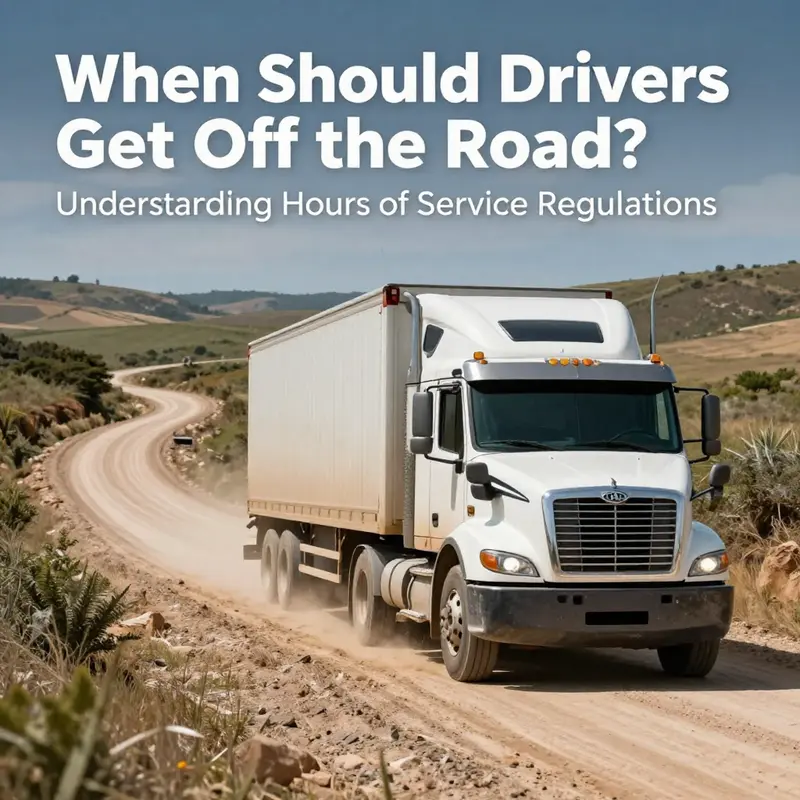
Fatigue is not a feeling that fades with a quick coffee or a longer nap. It is a physiological state that accumulates with each mile, each stop-and-go maneuver, and each late-night shift that bleeds into the dawn. In the trucking world, safety practitioners and drivers alike recognize fatigue as a silent hazard with the potential to turn a routine delivery into a catastrophe. The structure designed to counter this hazard sits in the Hours of Service (HOS) regulations established by the Federal Motor Carrier Safety Administration (FMCSA). These rules are not arbitrary guidelines but a carefully balanced framework meant to preserve alertness, ensure predictable rest, and create a predictable rhythm for road operations that reduces fatigue-related risk. The purpose behind HOS is not to micromanage every minute of a driver’s day but to embed rest opportunities into the life cycle of a trip, so rest and drive periods align with human sleep-wake biology. The practical effect on a driver’s decision-making is clear: when any limit is reached—whether it’s the driving hours within a 14-hour window, the total hours worked in a week, or the length of a continuous on-duty period—the road’s call to stop becomes not a suggestion but a safety imperative.
To understand when to get off the road, it helps to begin with the core limits and the logic behind them. The central rule centers on driving time within a single day. Drivers are limited to 11 hours of driving within a 14-hour window. The window starts when they first report for duty, and it includes all time spent working, not just time behind the wheel. This means time spent loading or unloading, securing cargo, or completing paperwork counts toward the 14-hour span. Once a driver hits that 11-hour driving mark, the only viable path forward to continue operating legally is to stop and take a break. The next duty period cannot begin until a sufficient rest has occurred, which the regulation defines as a minimum of 10 consecutive hours off-duty. In plain terms: drive up to 11 hours, then rest for at least 10 hours before resuming.
The 11-hour cap within a 14-hour day is sometimes framed as a balance between productivity and safety. It recognizes that a trucker’s day is not a single action but a sequence of tasks that may extend the time from the first duty report to the end of the shift. Loading, route planning, pre-trip inspections, and even small delays along the route can consume time but do not reset the clock. The design forces a built-in pause that mimics the body’s need for rest after a stretch of sustained attention, a stage where cognitive sharpness tends to wane and reaction times loosen. The 10-hour off-duty period is the mechanism that guarantees that sleep opportunity, allowing the driver to recover before the cycle begins again. Moreover, the rule’s structure subtly nudges fleet managers and drivers toward routes and schedules that respect circadian biology. If a trip can be planned to avoid the late-night pull, or if a night break can be placed to align with natural sleep windows, the overall fatigue load on the driver diminishes.
Another crucial guardrail is the 15-hour consecutive on-duty limit. A driver cannot drive after 15 consecutive hours on duty unless a 34-hour restart is completed. This rule acknowledges that the cumulative effect of long days can erode situational awareness and decision quality, even if a driver never exceeds the 11-hour daily driving limit. The 15-hour limit incorporates the reality that on-duty duties beyond driving still demand attention and can erode alertness, prompting a mandatory extended rest. When drivers do reach this 15-hour ceiling, they must either end the current duty period or pause with a restart to reset the cycle. The restart is not simply a break; it is a reset mechanism that clears the daily clock and allows a fresh start for the next driving window.
The 34-hour restart is a distinctive component of FMCSA’s framework. It is a long rest period intended to re-align the driver’s schedule with a more normal sleep pattern. The restart can be taken at any time, but it must include two periods of rest between 1 a.m. and 5 a.m. This sleep-friendly component is designed to account for the body’s natural propensity for nighttime sleep, creating a practical opportunity for the driver to obtain restorative rest during the window when sleep is most biologically beneficial. The restart’s two-night requirement is one of the more pragmatic features of the rule, acknowledging that daytime naps rarely compensate for the depth and continuity of sleep that a stretch through the night affords. In practice, those two early-morning hours rarely come as a surprise; they are the product of real-world rhythms in which night shifts, long-haul spans, and cross-time-zone travel frequently converge.
Beyond the daily rhythm, the FMCSA also imposes a weekly cap: a driver may not exceed 60 hours in seven days or 70 hours in eight consecutive days, depending on the carrier’s schedule and cycle. Once a driver has reached that weekly limit, the clock must be reset with a 34-hour restart before any new work can begin. The weekly limit reflects the understanding that fatigue accumulates not just in a single day but across multiple days of sustained driving, waiting on docks, loading and unloading performances, and time spent in traffic. The 34-hour restart is a robust remedy for this cumulative fatigue, a long hiatus that rebalances the body’s need for deep sleep and the mind’s need to recover from the stressors of continuous operation. When these weekly limits are approached, the decision to stop for a longer rest becomes not only a compliance measure but a practical safety strategy. Planning for a restart in the midst of a long-haul route can be the difference between a safe arrival and a fatigue-related incident.
All these regulations apply to commercial motor vehicles (CMVs) weighing more than 10,000 pounds, including most tractor-trailers and large delivery trucks. This threshold is a baseline that recognizes the greater performance demands, duty cycles, and exposure associated with heavier vehicles on crowded highways. The safety calculus is straightforward: heavier trucks carry greater risk when fatigued, and the regulatory framework is calibrated to reduce that risk by structuring rest opportunities around the typical loads and routes that such vehicles encounter.
Compliance is not merely a legal obligation; it is a driver-safety imperative. The penalties for violations can be significant, ranging from fines to more severe consequences like suspension of operating authority. In practice, many fleets rely on electronic logging devices (ELDs) to monitor hours and ensure that drivers do not inadvertently exceed the limits. ELDs convert time spent driving and on duty into a precise ledger that is difficult to dispute, turning the HOS rules from a memory-based discipline into a data-driven one. For the driver, this means fewer disputes at roadside checks and a clearer path to plan a safe stop that aligns with the regulatory framework. For carriers, it means a structured compliance program that can be audited and improved over time.
The practical upshot of these rules is clear: drivers should get off the road as soon as any limit is in sight. If the clock shows nearing the end of the 11-hour driving window, or if the 14-hour daily limit is almost exhausted, or if the 15-hour on-duty limit is close to being reached, the prudent decision is to stop for a rest. When a driver reaches the weekly threshold, the only responsible choice is to pause for the 34-hour restart before resuming. This approach prioritizes safety over speed and protects not just the driver but the public sharing the road. It also reframes what it means to “make a deadline” in trucking. A deadline achieved through fatigue is not a safe deadline at all, and the consequences extend beyond a single trip to affect overall safety culture, future scheduling, and the trust customers place in a carrier’s reliability.
To make sense of this in everyday terms, consider a typical long-haul scenario. A driver begins a shift just after sunrise, anticipating a day that will include a mix of highway miles, urban detours, and a few mandatory stops for inspection and documentation. Within the first eight hours of the shift, the driver must schedule and take a 30-minute break. This pause is essential, not merely a formality, because the first eight hours of work count toward the 14-hour window and the 11-hour driving limit. If the route pushes into a late afternoon, with hours left on the clock but the driving window almost spent, the driver has to make a strategic choice about continuing to drive or stopping to rest. If the plan involves a second shift or a night segment, the driver must ensure enough time remains to complete the necessary restart windows and avoid triggering the 15-hour cap. These decisions are rarely straightforward because road conditions, weather, and customer expectations can pressure a driver to push beyond safe limits. Yet the rules are explicit: safety comes first, and when in doubt, a pause is the wiser choice.
From a fleet-management perspective, the HOS framework shapes more than individual trips. It influences dispatch decisions, route planning, and even maintenance cycles. The dispatcher’s job is to align customer service with safe operation, balancing delivery windows with rest opportunities. This is where modern fleet tools come into play. A robust dispatch platform can monitor each driver’s clock in real time, highlight when a driver nears a limit, and help planners propose alternative routes or layovers that preserve on-time performance without compromising safety. The integration of compliance into the planning process reduces last-minute scrambles and data-collection headaches at the end of a workweek. For teams focused on continuous improvement, the data generated by compliant operations reveals patterns—times of day or week with high noncompliance risk, routes that consistently require extended rests, and opportunities to adjust schedules to better fit fatigue management.
To keep the discussion grounded in practical action, consider how a driver might incorporate these rules into a week that includes a cross-country run. The 60/70-hour weekly limit serves as the ultimate early warning system. Once that ceiling is approached, the driver should not continue operating without a 34-hour restart. Planning ahead becomes a critical skill. A driver and a fleet planner might map out a plan that includes a predictable restart window after a set number of days on the road. They may also program the route to place a significant rest at a location with comfortable sleeping accommodations or near a preferred staging area that allows for a stress-free restart. These strategies rely on accurate hour-tracking, timely rest opportunities, and clear communication about where and when a restart can occur. In practice, this means more than just compliance—it means safer, more predictable operations that reduce the risk of fatigue-driven errors and improve overall road safety.
An important nuance concerns the timing of the restart itself. The 34-hour restart can be taken at any time, but the inclusion of two periods between 1 a.m. and 5 a.m. is a deliberate design choice. It acknowledges the importance of overnight sleep and the physiological benefits of sleep achieved during those hours. When a restart includes those early-morning sleep windows, the driver often returns to the road with a clearer head and more consistent circadian alignment. This is not a magical cure for fatigue, but it is a practical mechanism for restoring alertness that mirrors the natural human sleep-wake cycle. Carriers that recognize this nuance can structure layovers to maximize the restorative value of the restart, choosing rest stops with comfortable sleeping environments and minimizing unnecessary disruptions during those two critical early-morning hours. The net effect is a more reliable return to service and a reduction in fatigue-related risk on subsequent legs of the journey.
Of course, all these considerations hinge on accurate clocking and honest reporting. The FMCSA rules rely on precise time accounting. While technology has made this easier than ever, the human factor remains central. Drivers must be honest about their on-duty status, their driving time, and the time spent away from the seat. Misreporting hours, whether intentional or due to misinterpretation, defeats the safety purpose of HOS and can lead to penalties and safety escalations. Education about the rules is a constant need across the organization, from new drivers learning the basics to long-tenured veterans who must stay current with regulatory updates and any changes to the restart provisions or weekly limits. Continuous training and accessible reference materials help ensure everyone understands not only what the rules are but why they exist and how to apply them to real-world driving decisions.
If there were one overarching takeaway about when to get off the road under HOS, it would be this: stop at the first reliable opportunity to return to a safe, rested state. Whether that moment arises because the 11-hour driving maximum is approached, the 14-hour window is nearly exhausted, the 15-hour on-duty threshold is looming, or the weekly total hits a hard cap, the most responsible choice is to disengage from driving and pursue the rest that the regulations require. The likelihood of improved performance and reduced risk increases with every responsibly timed pause. In a system built to protect lives, the safest moment to continue driving is the moment after a genuine rest, not before.
From a broader perspective, the HOS framework reflects a larger industry commitment to safety, not merely regulatory compliance. It embodies a culture of caution that recognizes the real consequences of fatigue behind the wheel. It encourages drivers to cultivate sleep quality, plan for rests as carefully as they plan for routes, and partner with fleets that treat rest as a strategic asset rather than a nuisance. For drivers, it means recognizing that endurance has limits and that the road offers countless opportunities to complete a task safely if one is willing to pause when the clock dictates. For fleets, it means creating systems that support safe decision-making—reserving time and space for rest, equipping drivers with reliable logs, and fostering a safety-first mindset that permeates daily operations. In the end, the question of when to get off the road is not a single answer but a pattern of decisions guided by clear limits, rigorous planning, and a shared understanding that safety must come first, every mile, every day.
For readers who want to explore the regulatory framework in its entirety, FMCSA provides official guidance and updates on Hours of Service. Engaging with the source material helps ensure that local practices align with national standards and that drivers, managers, and safety professionals operate with the most current information. As fatigue science evolves and the logistics landscape changes, the underlying principle remains simple: effective fatigue management is foundational to road safety and to the reliability of trucking operations. Keeping the road safe for all users means recognizing when the clock says stop and responding with a deliberate, compliant pause rather than a stubborn push to press through fatigue. This is not about slowing down the economy; it is about sustaining it through safer, smarter, and more predictable driving practices.
Internal link for practical tooling: for fleet teams seeking to integrate compliance into daily operations, consider the role of dispatch software in managing hours of service. A modern platform can help planners visualize driver clocks, alert when limits are approaching, and propose compliant layovers that fit delivery commitments. Such tools support a safety-forward approach without sacrificing efficiency, helping teams maintain a steady rhythm that respects resting requirements and customer needs. dispatch software for fleet management.
External resource for further detail: for authoritative guidance, refer to FMCSA’s Hours of Service regulations. FMCSA Hours of Service regulations.
When Should Truck Drivers Get Off the Road: Reading Fatigue Signals, Regulatory Triggers, and the Quiet Art of Stopping Safely

The question of when a truck driver should get off the road is not answered by a single line in a regulation book or by a mechanical calculation of hours. It is answered by a careful, ongoing reading of fatigue signals, an understanding of the rules, and a commitment to safety that overrides deadlines and dispatch pressures. Fatigue is not a momentary lapse; it is a progressive state that erodes reaction time, judgment, and situational awareness. The moment a driver recognizes that fatigue has begun to undermine those faculties is the moment to consider stopping for rest. This impulse is both personal and regulatory, a convergence of lived experience on the road and the formal standards designed to safeguard every vehicle that shares the pavement. The Federal Motor Carrier Safety Administration (FMCSA) lays out clear limits that structure a driver’s work and rest; the practical art lies in translating those limits into timely, intelligent decisions before danger escalates. The core rules—driving hours capped at 11 within a 14-hour window, weekly work limits of 60 or 70 hours depending on the cycle, and mandatory resets after 34 hours—serve as guardrails, not as triggers for a last-minute sprint. They are there to prevent the moment when fatigue becomes unrecoverable, when a driver’s blink rate slows, a road sign looms larger than it should, and a routine stop becomes a critical judgment call rather than a break of convenience. The road does not forgive delays, but safe driving does reward advance preparation and disciplined self-management. Within this framework, the decision to exit the roadway is both an ethical stance and a technical decision. It is ethical because it prioritizes human life, the safety of other motorists, and the integrity of the cargo over punctuality. It is technical because it rests on measurable fatigue cues and proven rules that help drivers compartmentalize risk, plan effectively, and recover before fatigue compounds into error. The FMCSA’s Hours of Service (HOS) rules exist to codify this balance. They set a structure that helps drivers manage the rhythm of work and rest, but they do not strip away the driver’s own judgment. The driver is still the one who must decide when a stretch of highway becomes too risky to continue, even if the clock has not yet hit its limit. This is a chapter about that judgment, the quiet art of stopping safely when fatigue or compromised performance begins to creep in. It is a chapter about a culture that treats rest—not as a luxury but as a strategic safety maneuver—as a routine, nonnegotiable component of a professional life behind the wheel. In practice, the policy is simple: if fatigue impairs vigilance, if concentration wavers, if reaction time slows markedly, or if a driver senses a creeping sense of tunnel vision or drifting from lane center, the road should be left behind. The operator who allows a delay in this moment is not merely bending rules; they are inviting misjudgment, which can translate into a split-second mistake with potentially tragic consequences. Yet fatigue is not only a matter of black-and-white signs or clock faces. It is a signal pattern that can emerge even when a driver has not yet hit the legal threshold. The 11-hour driving limit within a 14-hour work window, for example, is a cap that enforces endurance management rather than an invitation to endure until the last mile. The rule exists to discourage the accumulation of micro-sleeps, the kind of unintentional nod that can happen after a long day of steering, monitoring gauges, and managing the complex logistics that keep a truck moving. When fatigue begins to erode alertness, it is often more accurate to think in terms of degraded performance than in terms of whether the clock still permits another hour of driving. A driver might legally be able to stretch into a 12th or 13th hour of duty, but if the brain is signaling that it cannot process the environment quickly and accurately, the prudent choice is to park, reset, and start again with fresh attention. The rules themselves acknowledge this reality by requiring a 30-minute break after eight consecutive hours of driving and a 10-hour off-duty period before the next shift begins. This break is designed to interrupt the cumulative drift toward fatigue, to break the sequence of mental load that builds when a driver remains in motion, and to reallocate the body’s energy toward recovery and clarity. The break must be taken away from the vehicle, emphasizing a physical boundary between duty and rest. The necessity of this break is not merely a procedural checkbox; it is a cognitive reset that reduces sleep pressure, lowers stress hormones, and redistributes the neural resources needed for safe driving. In the days and weeks that follow, the same principles apply at the weekly level. The 60- or 70-hour weekly cap, depending on the chosen cycle, ensures that the body does not accumulate a deficit that cannot be repaid within a reasonable rest period. A continuous, unrepaired pattern of overtime erodes reaction time and decision-making under fatigue, creating a dangerous loop: more driving leads to poorer performance, which leads to more risk, which in turn jeopardizes the entire operation. The reset requirement—34 consecutive hours off—acts as a major recovery window. It allows the body to balance circadian rhythms, replenish glycogen stores, and clear cognitive fog. This reset is not just a pause; it is a full recalibration of the driver’s physiology and mental state, which then supports safer decision-making when the wheels begin turning again. The practical reality of these rules is that drivers must plan with a forward-looking mindset rather than respond purely to the clock. Planning requires a willingness to adjust routes, schedules, and expectations so that rest periods are available in accessible, legal forms. The decision to stop is often a function of location and context as much as it is of time. An illuminated rest area, a safe parking zone, or a designated truck stop can become a sanctuary that preserves both safety and continuity of service. The best planners are those who anticipate fatigue and design their trips to minimize the risk of pushing the envelope. They build in buffers for weather, traffic, and unforeseen delays, and they maintain a mindset that rest is a productive investment rather than a cost to be minimized. This is where technology enters in a practical, human-centered way. Modern fleet operations increasingly rely on intelligent dispatching and real-time data to help drivers and managers maintain safety margins without sacrificing efficiency. The right dispatching philosophy can help balance drive time with rest opportunities, align loads with appropriate rest facilities, and reduce the temptation to push beyond safe limits. For those who want to explore the mechanics of this approach, the discussion around the advantages of fleet dispatching software provides a clear roadmap for leveraging technology to safeguard driver health and road safety. Advantages of Fleet Dispatching Software offers a concise lens on how digital tools can help planners design rest into daily routes, flag when a driver is approaching a break window, and route trips to incorporate regulated rest periods without compromising service levels. By integrating these tools with FMCSA guidelines, fleets create a safety net that respects both the science of fatigue and the realities of supply chains. But even the most advanced software cannot replicate the human dimension of fatigue. The driver remains the ultimate arbiter of safety. A supervisor can remind a driver of the rules, a dashboard can highlight upcoming break opportunities, and a planner can adjust an itinerary, but the final call rests with the person behind the wheel. The driver’s self-awareness—recognizing the early signs of fatigue, acknowledging the limits of focus, and choosing to stop when necessary—is the most reliable safeguard on the road. This self-awareness is cultivated through ongoing education, realistic expectations from employers, and an organizational culture that treats rest as a performance driver rather than a sign of weakness. When fatigue signs appear—yawning, heavy eyes, drift toward the lane, slower reaction times, micro-sleeps in the periphery of attention—the best practice is to reduce velocity or stop. A halt in movement becomes a strategic decision rather than a failure. It preserves the integrity of the driver, the vehicle, and the cargo, and it preserves momentum in a safer way. The thinking behind the HOS framework aligns with a broader philosophy of professional trucking: safety and reliability are the preconditions of success. Punctual deliveries are important, but they are not worth risking a life or a vehicle. In the end, the question is not only how long a driver can stay on the road, but how responsibly they choose to disembark when conditions demand rest. While the clock may compel a return to duty after a reset, the road’s independent judgments—the driver’s perceptual acuity, the vehicle’s handling, the cargo’s stability, and the other road users’ behavior—remain the ultimate arbiters of when it is prudent to stop. The FMCSA rules provide the scaffolding, the safety culture provides the heartbeat, and the driver’s judgment provides the execution. Together they define a professional standard in which getting off the road at the right moment is not an interruption to service but a disciplined investment in safety and reliability. It is a practice that respects the science of fatigue, the letters of the law, and the realities of long-haul operation. In this sense, the moment to exit becomes as important as the moment to enter. It is the threshold between risk and resilience, a boundary line that separates the ordinary from the extraordinary discipline that defines a responsible trucking professional. For those seeking to deepen their understanding or to implement a more fatigue-conscious approach, the FMCSA’s Hours of Service guidelines serve as a primary compass. They are not meant to trap drivers in rigid schedules but to empower them with a structure that aligns human limits with road safety. As the landscape of trucking evolves—with evolving traffic patterns, changing load profiles, and the emergence of new technologies—the core principle remains unchanged: the road demands respect, and rest is an essential instrument of safety, not a sign of weakness. If fatigue is detected or anticipated, the safest action is to disengage from driving and to restore readiness before returning to the road. The few minutes spent in a rest area can prevent hours of regret on a quiet stretch of highway. For many, stopping is a professional decision that reflects maturity, responsibility, and care for others—an affirmation that safety is the first cargo carried on every trip. For those seeking official guidance beyond personal judgment and company practice, the FMCSA Hours of Service resource remains the definitive reference. It is the governing framework that shapes how fleets operate, how drivers pace themselves, and how the driving public can trust that heavy vehicles move with predictable safety margins. Official guidance is available at https://www.fmcsa.dot.gov/hours-service. The point is not to chase a perfect adherence to a clock, but to align actions with the fundamental priority of safety. In a world where time is money and schedules are tight, choosing to stop at the right moment is a sign of professional mastery, not a concession. The road rewards those who learn to read fatigue early, plan rest opportunities, and exercise disciplined judgment. It rewards those who refuse to confuse busyness with safety and who recognize that the right time to get off the road is often the time when their own perception confirms that staying on the road would be the greater risk. This is not a mere policy summary. It is a lived practice that protects lives, sustains livelihoods, and preserves the integrity of the driving profession for years to come.
Pull Over with Purpose: Mastering the Moment to Get Off the Road Through Fatigue, Weather, and Hours-of-Service Rules
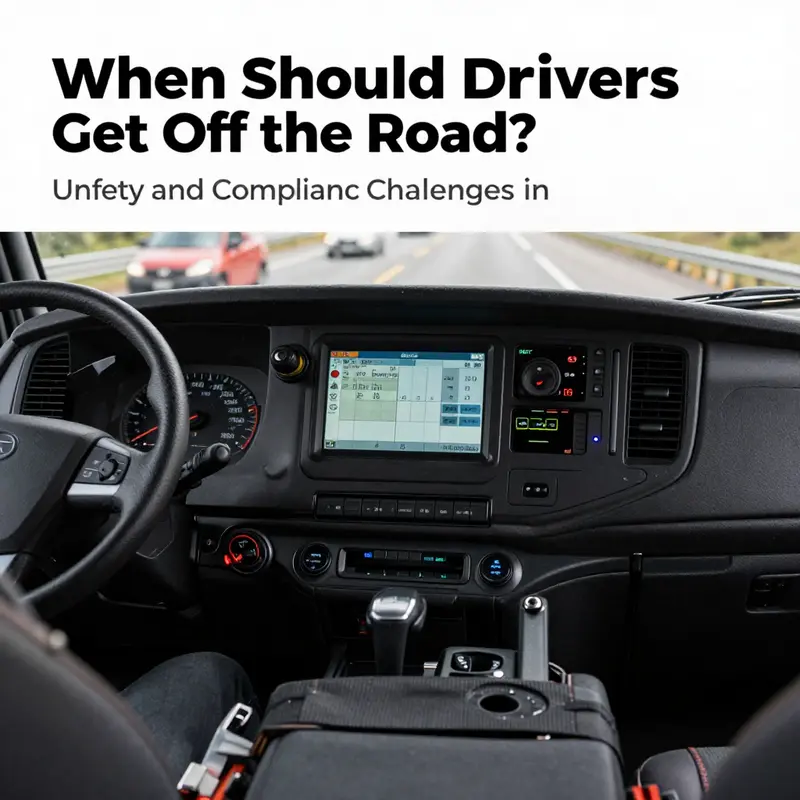
Every long-haul journey begins with a promise to arrive safely, a commitment forged in the cockpit of a truck cab where pressure builds from miles and minutes alike. The decision to leave the road is not a sign of weakness or failure; it is a deliberate act of stewardship, a choice to prioritize lives over deadlines. For professional drivers, the line between momentum and safety is drawn not only by road conditions but by a set of rules designed to fight fatigue and human error. The question, then, is not simply whether to pull over, but when and how to pull over in a way that preserves safety and keeps the mission intact. In the hierarchy of decisions that steer a driver’s day, fatigue, weather, and regulatory limits sit at the top as independent gauges that warn when the next mile should be traveled in air instead of asphalt. The driving rules—the Hours-of-Service (HOS) framework established by the Federal Motor Carrier Safety Administration (FMCSA)—provide a structured backbone for these decisions. They tell a driver when driving time ends, when rest begins, and how a restart can reset the clock. They also emphasize that the risks of fatigue grow not linearly but exponentially as a crew pushes past safe thresholds. The practical implication of these rules is straightforward: a driver should get off the road before fatigue erodes reaction time, judgment, and situational awareness. They should exit the highway when the clock signals a limit in driving time, when the workweek has stretched to an edge, or when the day has extended into an exhausted stretch of on-duty time with no adequate break ahead. But the rationale behind the rules runs deeper than compliance. It rests on a simple, relentlessly true observation: fatigue is a factor in most serious crashes, and fatigue is mitigated by predictable breaks, adequate sleep, and honest self-assessment in the cab. The challenge for drivers and fleets is translating that understanding into real-world behavior that withstands the pressure of tight schedules, unpredictable delays, and the cognitive load of constant decision-making on the road. When to exit becomes a decision to exit with purpose, guided by three interlocking factors: personal condition, environmental conditions, and regulatory limits. The personal condition factor is the most intimate. Fatigue is not a single sensation but a cascade of signals—slowed reaction time, lingering eyelid heaviness, micro-sleeps at the wheel, lapses in attention—that accumulate when a shift extends beyond the driver’s safe cognitive and physical capacity. Illness, pain, or the effect of medications can tilt the balance, altering heart rate, perception, or alertness. In those moments, continuing to drive is not merely risky; it is a contest against one’s own biology. A driver who notices persistent yawning, drifting lanes, or heavy eyelids has already begun the process of losing some degree of control. The only responsible response is to stop at a safe location and address the root cause—rest, medical attention if needed, or a plan adjustment that reduces the immediate risk. It is not trite to say that rest is not a luxury but a technique. The FMCSA rules are not a punitive framework; they are a practical toolkit built to reduce the chances of a crash born of fatigue. The environmental factor is the second axis of this decision-making. Weather can escalate a routine pull-over into a strategic maneuver. Heavy rain, fog, snow, or ice degrade visibility and fuel the danger of a sudden stop. Wet pavement reduces tire grip, increasing stopping distance and increasing the likelihood of a collision with a slower vehicle, a fixed object, or a vehicle in a lane-change maneuver. In these circumstances, the right response is often straightforward: reduce speed, increase following distance, and seek a safe, well-lit place to wait out the weather. The choice to pull off is not a sign of weakness but a prudent risk-management decision that honors the constraint imposed by the environment. Even in the absence of severe weather, low visibility and limited lighting conditions demand heightened vigilance. The utility of reflective gear, proper lighting on the vehicle, and a calm, deliberate exit from the road can make a critical difference in a low-visibility pull-over. The third axis—the regulatory axis—frames the limit beyond which continuing to drive becomes not only unsafe but unlawful. The FMCSA’s Hours-of-Service rules create a composite ceiling on driving time within a given cycle, driven by the practical need to ensure rest and recovery. The core points are well known but worth recalling in a moment of decision. A CMV driver may drive for up to 11 hours in a 14-hour work period, starting from the moment they report for duty. The 14-hour window is a rolling frame that embeds all job duties—driving, loading, unloading, and related tasks—within a single day, and once the 11-hour driving limit is reached, the vehicle must stop until a new sequence begins with an appropriate break. This structure ensures that the driver cannot mechanically extend a road trip through fatigue or a busy schedule. In addition to daily limits, there are weekly and restart requirements. A driver may not drive after reaching 60 hours in seven consecutive days or 70 hours in eight consecutive days—whichever cycle applies to their schedule. After hitting that threshold, they must rest for at least 34 consecutive hours before starting a new cycle. Then there is the 30-minute break that must occur within the first eight hours of a duty period when driving is taking place, a provision designed to ensure a moment of rest early in the driving window. Finally, there is the 15-hour on-duty limit. If a driver remains on duty and the clock reaches 15 consecutive hours without at least a 10-hour off-duty period, the driver must stop, even if the clock has not yet hit the driving-time limit for the day. Taken together, these rules form a structured map that helps drivers plan not just routes, but the rhythms of their day. They are not simply constraints; they are a safety architecture. They make it possible for a driver to anticipate when the next break is necessary and to act before fatigue or environmental hazards overwhelm the driver’s capacity to manage the road safely. The consequence of ignoring these limits is real and severe: higher crash risk, reduced decision accuracy, and a greater likelihood of injuries to drivers and others on the road. The decision to get off the road should be made before the tipping point, when the driver still can regain clarity and control with a well-timed rest. This is especially important for drivers who are faced with a sequence of delays, detours, or heavy loads that compress the available time for rest. A disciplined approach to the HOS framework can prevent a compounding cycle in which fatigue is pushed forward by deadlines and then met again with a rush to complete a load. The decision to exit must be a proactive one, not a reactive reaction to the clock. It means building into the day a cadence of rest that anticipates problems, not merely responding to them after they arise. In practice, this means several quiet, practical habits that align with the rules and the realities of the road. First, monitor bodily signals with honesty. If the eyelids feel heavier than usual, if the attention to the road wavers at a critical moment, or if a driver feels a creeping sense of fogginess, it is time to seek a safe place to stop. A parking area with adequate lighting, a wide shoulder, or a rest area with ample space is ideal. The goal is to pull over into a zone that minimizes risk, provides a chance to reset, and offers a plan for the next leg of the journey. Second, plan ahead. Day-to-day trips should include buffer time for unforeseen events like heavy traffic, mechanical issues, or weather-induced slowdowns. A realistic plan that accounts for rest opportunities will reduce the temptation to push beyond safe limits. Third, leverage the rule-based cadence to decide when to stop. The 11-in-14-hour rule should be treated not as a ceiling to test but as a signal to re-route, re-stage, or take a break earlier in the window if fatigue or weather demands. A well-structured schedule that respects the rest period and the restart requirements helps keep a driver compliant and safe. Fourth, communicate clearly. If a driver must take an unscheduled break, it is essential to document it, inform dispatch, and adjust the plan so that the load can be managed without pressuring the driver to exceed limits or drive in unsafe conditions. The culture of safety flourishes when drivers feel supported by their teams to make the right choice, even when a shipment seems time-sensitive. The tension between speed and safety does not disappear with experience; it diversifies. Seasoned drivers learn to interpret the signals that they cannot outpace fatigue, that some delays are beyond control, and that the proper response is to shift gears in favor of safety. In addition to fatigue and weather, there is a fourth dimension that sometimes enters the decision to stop: visibility and the practical realities of exit routes. Though not always central to the mental calculus of a trip, visibility concerns remind drivers that the world beyond the windshield matters. Reflective gear, proper lighting, and safe egress are not merely niceties; they are protective measures for those who must leave a vehicle on the roadside. In low-light conditions, a driver who must step out risks missteps that can lead to falls or injuries, or violations of safety protocols if the vehicle remains in traffic. While these details may appear tangential to the core rules, they reflect the broader safety culture that governs professional driving. The regulatory framework does not exist in a vacuum; it is designed to support drivers in contexts that include weather, daylight, traffic conditions, and the unavoidable friction of real-world operation. The guidelines are a practical language for talking about when to stop and where to stop, so that a driver can act decisively and safely without second-guessing in the moment. The integration of these ideas into daily practice is aided by the use of disciplined habits and familiar routines. Some fleets implement checklists that remind drivers of the HOS limits before departure and at key milestones during a trip. Others deploy dispatch tools that provide real-time alerts ahead of a limit, enabling proactive planning for rest or re-routing. A thoughtful approach to dispatch and fleet management recognizes that a driver’s safety margin is a critical asset—one that reduces risk while maintaining service levels. For drivers who are new to long hauls, the learning curve can be steep. The rules are precise, and the consequences of noncompliance are serious. It is tempting to treat the HOS clock as a flexible deadline; it is not. The clock is a safety device. Treat it with respect, and it becomes a reliable ally that helps you arrive in one piece, on schedule, and with the capacity to perform at your best upon arrival. This mindset—seeing the clock as a tool, not as a foe—transforms the act of stopping from a punitive interruption into a strategic decision that preserves health, cargo integrity, and public safety. The decision to exit the road, then, is not a single moment but a sequence of moments—moments of self-awareness, judgment under changing weather, and adherence to a regulatory framework designed to protect life. It is about recognizing that safety is a continuous conversation between the driver, the vehicle, the environment, and the rules that govern operation. When drivers internalize this conversation, stopping at the right time becomes an expected, even routine, part of a professional career. In this sense, getting off the road is not a failure of speed or efficiency; it is a disciplined choice that upholds the core responsibilities of the job. The road will be there when the driver is rested, alert, and able to perform at the highest level. The journey can resume with confidence when those conditions are in place. This perspective reframes fatigue and regulatory compliance as integral components of professional competence rather than obstacles to be navigated at all costs. It invites drivers to trust the process, to trust the rest, and to trust the institutions that have built these rules in the first place. For fleets, the implication is equally clear: invest in systems and culture that reinforce safe stopping as a standard operating procedure. Encourage open communication about fatigue, weather, and legitimate reasons to pause. Build routes and schedules that accommodate rest without sacrificing supply chain reliability. This is not a passive compliance exercise; it is an active commitment to people’s safety, including the drivers themselves, the other road users, and the communities that rely on steady, predictable transportation. The decision to get off the road is ultimately a decision to keep moving forward—toward safer roads, toward stronger families, and toward a trucking industry that treats safety as non-negotiable. Within the everyday rhythms of highway travel, this choice should be a normal part of the job, supported by clear rules, practical tools, and a culture that celebrates prudent decisions as signs of professionalism rather than interruptions to productivity. By embracing fatigue awareness, weather-related prudence, and the disciplined application of Hours-of-Service rules, drivers can navigate the delicate balance between efficiency and safety. The consequences of that balance are measured not in miles alone but in the lives saved and the trust earned on every trip. For those who manage fleets or teach best practices to new drivers, the message is consistent: safety is built from predictable rests, smart planning, and the willingness to step off the road when the clock, the body, or the weather says so. A well-tuned safety culture recognizes the inevitability of delays and the value of rest, not as a luxury but as a critical phase of the journey that enables a safer return to the road and a safer arrival at the destination. In the end, the act of getting off the road is a responsible, strategic choice that honors the mission, protects lives, and sustains the very system that keeps goods moving across a complex and demanding landscape. The road will wait; the driver’s safety cannot. Internal link note: for drivers and planners seeking practical ways to weave safety into daily routing and compliance practices, consider exploring dispatch and fleet-management practices that integrate rule-based alerts and rest planning at the organizational level, such as those described in this resource. dispatch software and fleet management. External resource: FMCSA Hours-of-Service guidance provides the formal framework and latest updates to these limits and restart requirements, and it remains the definitive reference for legal compliance and safe operation on the road. External resource: https://www.fmcsa.dot.gov/hours-service
Final thoughts
Understanding when truck drivers should get off the road is paramount for ensuring both their safety and that of every road user. Through the lens of hours-of-service regulations, the necessity of rest breaks, and the myriad challenges drivers face, it’s clear that adherence to these rules is not merely a legal formality but a critical safety measure. For avid adventurers and rural landowners, recognizing these regulations can enhance your journeys and interactions with truck drivers, respecting their limits while promoting a safer driving environment.