
Every off-road enthusiast and rugged adventurer knows the thrill that comes with navigating the unpredictable terrains of nature. As the guardians of reliable delivery, UPS employs a rigorous set of protocols to ensure safety, reflecting that same adventurous spirit while prioritizing safety. This article delves into the crucial moments when UPS decides to pull its trucks off the road, navigating through chapters that explore severe weather conditions, maintenance protocols, peak delivery seasons, and the multifaceted factors influencing these decisions. Understanding these aspects reveals the delicate balance of urgency and safety, shedding light on what it means to be a responsible carrier in the modern age.
Weather as a Fork in the Road: How UPS Decides When Trucks Are Pulled from the Road
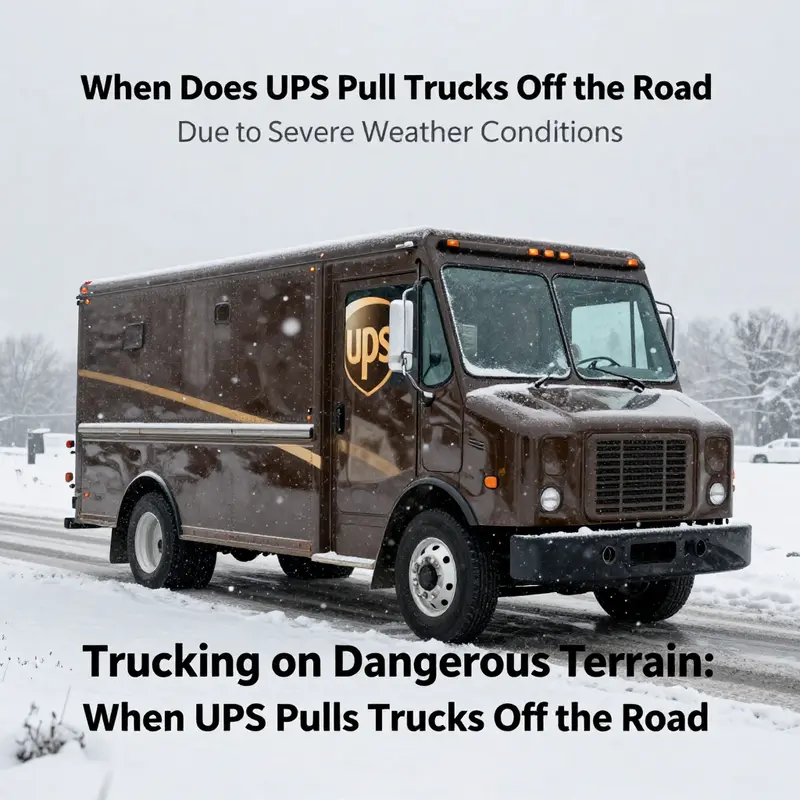
When winter wind roars across highway overpasses and a coastline flickers with the sting of a coming hurricane, drivers and dispatchers face a choice that blends science, safety, and a stubborn commitment to service. The decision to pull UPS trucks off the road is not a single moment of hesitation but a measured response to real-time conditions, local realities, and the practical limits of vigilance. It hinges on safety first, but it also reflects an intricate balancing act that keeps a vast network from tipping into chaos. In the field, the weather is not a single factor but a chorus of signals—snowdrifts that hide lane markings, black ice that saps traction, wind gusts that slam against high-profile tanelettes, and flooding that swallows roadbeds. In the face of such signals, the company leans on a framework that prioritizes driver safety, preserves the integrity of packages, and protects the broader network from cascading failures. The official Service Alerts page acknowledges that severe weather, natural disasters, and other conditions beyond our control can occasionally delay or disrupt our UPS services, a blunt reminder that the outside world can disrupt even the most carefully choreographed timetable. The consequences are rarely simple. A single closed road can reroute a truck into a time sink, while a string of closures may force the temporary halt of an entire corridor of deliveries. In practice, the decision rests with local operations managers who weigh weather data, road conditions, law-enforced advisories, and the operational needs of their sites. The result is not a blanket policy but a case-by-case judgment that leaves room for regional nuance and rapid adjustment as the weather evolves.
To understand why a truck might be pulled, it helps to imagine the decision as a series of guardrails that keep the operation from tipping into unsafe or unsustainable territory. The first guardrail is driver safety. When road conditions threaten field visibility, traction, or the ability to stop within a reasonable distance, the risk to the driver becomes the controlling factor. The second guardrail is package integrity. Unpredictable delays can jeopardize the condition of high-value or time-sensitive shipments, especially those requiring specific temperature ranges or secure handling. The third guardrail is operational feasibility. Even if a single truck can navigate a hazardous stretch, the broader logistics network—distribution centers, transfer points, and feeder routes—must also be able to function in a coordinated way. If the chain cannot guarantee predictable service, it becomes prudent to pause movement to avoid creating an unreliable delivery experience for customers who depend on timely arrivals.
The thresholds that trigger a halt are deliberately not published in real time. The publicly shared posture emphasizes that decisions are made locally and dynamically, reflecting the immediate conditions on the ground. This lack of a universal dial tone—no one-size-fits-all number for snow depth, wind speed, or flood stage—allows managers to respond to microclimates and local infrastructure realities. A blizzard can paralyze one metro area while a neighboring region remains passable, depending on road maintenance, salt usage, and the timing of precipitation. A hurricane may batter coastal corridors differently as it interacts with inland weather patterns and state transportation restrictions. In the background, weather data, traffic reports, and road-closure feeds are all feeding a live picture that managers use to decide whether it is prudent to keep trucks moving or to pull them back to safer ground.
Safety is not a momentary concern but a continuing discipline. Drivers are trained for adverse conditions and equipped with protocols that govern when and how to proceed or retreat. In clear terms, if a route involves routes with known high-risk segments—bridges with ice accumulation, steep grades where chain control is necessary, or corridors notorious for wind shear—the likelihood of a temporary pull increases. When a pull happens, it is not just the driver who is affected. Dispatch needs to rework schedules, reallocate resources, and sometimes reconfigure the order of pickups and deliveries. The operation may reroute trucks to safer approaches, or hold certain loads at distribution centers to prevent a build-up of risk along a fragile path. The emphasis is on preserving the long arc of reliability rather than chasing a day-by-day punctuality that could quickly erode under the pressure of a stubborn weather system.
Operation managers also weigh the longer arc of demand and volume, particularly during peak seasons when volumes spike and route density tightens. In a period like the holiday rush, the temptation to push through weather-related disruptions is strong, but the same risk calculus applies. Traffic patterns, staffing availability, and the capacity of local hubs to stage, sort, and load without compromising safety all factor in. If the weather is forecast to deteriorate over a corridor, managers may decide to suspend ground operations in the affected region for a window, effectively creating a controlled pause that reduces the chance of chaotic backlogs or failed pickups. In such cases, a deliberate rerouting strategy emerges. Trucks that would ordinarily converge on a given distribution center might be redirected to other facilities, or certain deliveries might be shifted to the next day. The goal is not merely to stop but to stop in a way that minimizes downstream disruptions when conditions improve.
The human element behind this calculus deserves careful attention. Local operations managers are intimately familiar with the roads, the drivers, and the peculiarities of their communities. They monitor not only official advisories but also weather updates from meteorological sources and road condition feeds from state and municipal transportation agencies. They know which routes tend to freeze first, which corridors become treacherous as dusk falls, and which distribution centers have the capacity to hold and sort while conditions are unfavorable. Their decisions are informed by a blend of empirical data and experiential judgment earned from years of managing fleets through storms, floods, and polar blasts. This is not a personal instinct masquerading as policy; it is the product of a layered risk assessment that translates weather data into practical, on-the-ground actions. In practice, a manager might decide to pause a region’s ground operations for a few hours, then monitor road conditions as the storm progresses, ready to extend or lift the pause in response to the evolving picture. The ability to adapt quickly depends on clear lines of communication with drivers and with the broader network that must absorb the ripple effects of a temporary halt.
An often overlooked facet of these decisions is the interplay between ground operations and other modes of transportation within the same network. While a snowstorm or hurricane can compel the suspension of ground movement in affected areas, air and inland services can still be viable alternatives under certain constraints. This is not to suggest a simple substitution, but rather to acknowledge that the logistics ecosystem is multi-layered. If ground routes are blocked or deemed unsafe, UPS and similar carriers may temporarily reallocate resources toward retention, consolidation, or even the prioritization of higher-value or time-critical shipments through available air corridors or expedited options where feasible. Such adjustments require rapid coordination with flight manifests, hub staffing, and the sequencing of linehaul movements—an orchestration that relies on robust dispatch software and real-time visibility across the network. In this sense, the decision to pull trucks is also a decision to protect the integrity of the entire system, preventing a cascade of delays that could ripple outward to thousands of customers.
Within this frame, the communication of service status becomes essential. Customers and business partners depend on transparent, timely updates so that expectations can align with what is technically possible on the ground. When conditions force a pause, the communications shift from promises about exact delivery times to assurances about safety and the quality of service under challenging circumstances. The official posture emphasizes that severe weather and other disruptive factors can delay services, and this is precisely why service alerts exist in the first place. These alerts are not merely a public relations instrument; they are a practical tool that helps everyone—from small business operators to large supply chains—understand the reality of the moment and adjust plans accordingly. For customers waiting on packages, the message is most useful when it is specific about rough timelines, affected regions, and the likelihood of re-routing or rescheduling pickups. For shippers and freight planners, it is a cue to re-run delivery windows, recalibrate inventory expectations, and coordinate with end recipients about potential delays.
The practical impact on day-to-day operations is sometimes subtle and sometimes pronounced. A temporary halt in one region can ripple into a buildup of packages at nearby hubs, which then requires careful management of sorting capacity once operations resume. There can be a backlog of pickups to clear, a re-prioritization of routes, and a renewed emphasis on accurate tracking and visibility to keep customers informed. These adjustments are not arbitrary; they reflect a disciplined approach to maintaining reliability in the face of uncertainty. They also illustrate why a single weather event can feel like a test of the entire system’s resilience. The chapter of the day, for drivers, dispatchers, and customers alike, is written not only in snowbanks and flood lines but in the choreography of resource allocation, the humility to pause when necessary, and the readiness to accelerate again when the weather allows.
To connect these structural considerations to the hands-on experience of the people who keep the network moving, it helps to look at how modern operations integrate technology and human judgment. Dispatch software and fleet-management tools provide the backbone for route optimization, load sequencing, and capacity planning. They enable real-time reallocation of vehicles, dynamic rescheduling of pickups, and rapid identification of alternate routes that minimize exposure to risk while maintaining a credible promise to customers. The importance of these tools grows in weather-affected periods, when every minute counts and the margin for error narrows. For practitioners who want to understand the practical link between weather-driven pauses and the day-to-day flow of goods, exploring how dispatch systems interact with weather feeds offers a concrete lens on the problem. See how modern dispatch software supports fleet management and route adaptation as weather changes and the network evolves. dispatch software and fleet management.
From a customer-service perspective, the decision to pull or hold trucks is rarely a decision taken in isolation. It sits at the intersection of safety, reliability, and responsibility. The network is designed to absorb short-lived interruptions, but prolonged closures threaten the credibility of a carrier’s commitment to delivery windows. Therefore, the operational playbook emphasizes staged resumption: once conditions improve, the system does not instantly rush all trucks back onto every road. Instead, it often reactivates segments in a controlled sequence, verifying road conditions, re-opening hubs, and re-allocating drivers to ensure a smooth ramp back to full velocity without triggering new bottlenecks. In this way, the chapter on weather-driven suspensions is really a chapter about resilience. It is about how a large, diverse logistics operation keeps its promises by listening to the environment, respecting the limits of human and mechanical systems, and maintaining a flexible posture that can pivot quickly when the weather shifts.
The broader lesson is not simply about weather but about how organizations manage risk in real time. Weather is the most visible driver of pause, but the same logic applies to other disruptions—maintenance needs, unexpected mechanical issues, or sudden surges in demand that exceed capacity. The takeaway for readers is clear: when weather dictates that travel is unsafe, the most responsible course is often to pull back, regroup, and re-plan rather than to press forward into danger or degrade service quality. The decision to pull trucks off the road is a case study in operational prudence, a practical application of risk assessment, and a reminder that reliability rests on the discipline to delay a delivery in order to protect all the moving parts that carry it.
For further context on how weather-driven decisions align with broader fleet-management practices, consider the role of dispatch and route optimization within the logistics ecosystem. The ongoing shift toward more integrated and intelligent fleet-management approaches shows how weather intelligence can be translated into concrete actions at scale. As fleets expand in size and sophistication, the interplay between weather data, driver safety protocols, and adaptive routing becomes even more crucial. In such an environment, the ability to pause, reroute, and re-schedule is not a weakness but a strategic capability that preserves overall service quality and customer trust. In the end, the weather will always have a say in logistics, but it does not own the story. The people, processes, and technology that sit behind the scenes are what keep the chapters turning, even when the weather seems intent on writing a different narrative.
For those seeking the most current details on whether operations are affected by weather in a given region, the official UPS Service Alerts page remains the authoritative source for real-time updates and region-specific notices. External resource: https://www.ups.com/us/en/services/service-alerts.page
Off the Road, On Course to Safety: The Quiet Calculations Behind When UPS Leaves Trucks on the Side
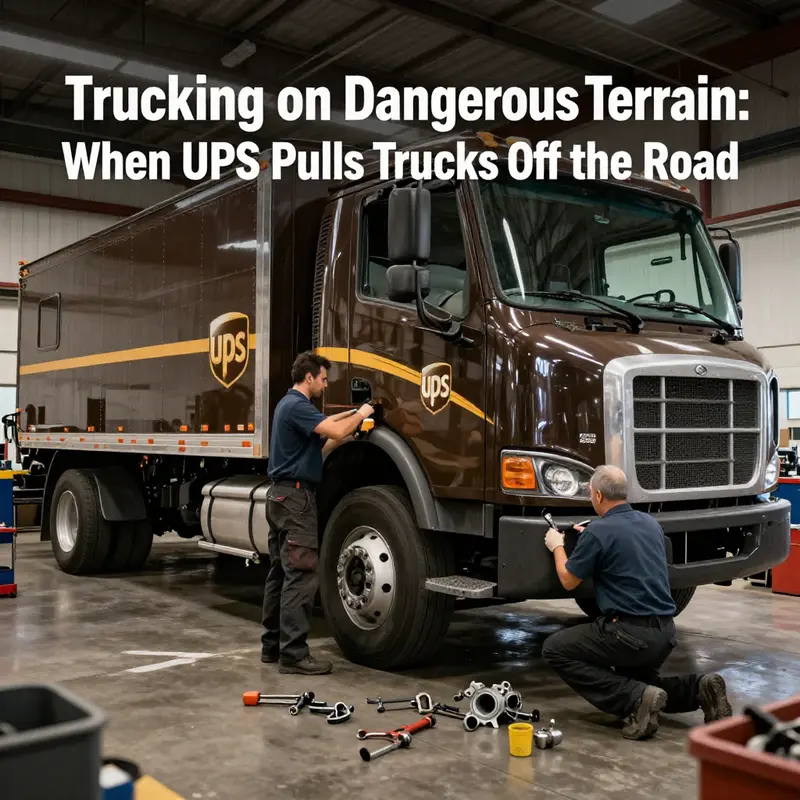
On any given day, the road is a proving ground for speed, timing, and judgment. But when the weather turns cruel or a mechanical whisper turns into a shout, the routine of a delivery fleet becomes a study in restraint. The question of when UPS pulls trucks off the road is not answered by a single rule or a single moment. It is a composite decision built from weather data, vehicle health, driver input, and the way a dispatch system balances speed with safety. In this chapter we look beyond the headlines to the day-to-day reality of fleet management in a company that depends on the punctuality of thousands of trucks while placing equal emphasis on the safety of every driver and the public on the roads they share. The answers lie in both the obvious signs of danger and the quiet, methodical checks that happen long before a storm reaches peak intensity or a tire pressure light flickers to life.
The most immediate triggers for taking a truck off the road are weather-related hazards that reduce visibility, grip, and overall control. Severe snowstorms, blizzards, hurricane-force winds, or ice-laden highways create conditions that simply exceed the risk threshold for safe operation. In those moments, the math becomes straightforward: if the forecast or current conditions raise the chance of a crash or an incident, the cautious choice is to deactivate the vehicle from active service and reallocate parcels to other routes or modes of transport that can proceed more safely. The operational word here is safety, not speed. Yet safety itself is not a single static state; it is a continuum that shifts as conditions evolve, and the fleet must be able to adapt in real time. Dispatch centers and weather desks work together to monitor conditions corridor by corridor, mile by mile, with a readiness to redirect and slow down the pace if the risk grows.
But weather is only one facet of the broader decision framework. Another critical factor is the health of the vehicle itself. The discussion here is not about one-off incidents, but about a culture of proactive care that keeps most trucks out on the road and reduces the probability of breakdowns that derail deliveries and endanger drivers. UPS, like many large operators, embraces a maintenance philosophy that blends routine checks with rapid response to anomalies. Vehicles are regularly inspected as part of daily workflows. During these inspections, technicians and drivers listen for unusual noises, watch for warning lights, and feel for changes in performance. Any abnormal signal—whether it is a rattling undercarriage, a faint misfire from the engine, a soft braking pedal, or a warning light that lingers after a system self-check—can be a red flag. When such a flag appears, the next steps are not ceremonial. The truck is pulled from service for a closer inspection, and if necessary, repairs are performed before the vehicle returns to duty. This is not a punitive measure but a risk management tool designed to prevent a small fault from becoming a major roadside failure.
The maintenance cadence itself is deliberate and predictable. A fleet of this size cannot survive on ad hoc fixes or last-minute scrambles. Instead, there is a preventive maintenance regime that targets key components with disciplined intervals. The quoting language in industry practice—every 10,000 miles or every 6 months—presents itself as a practical guide for when routine service should occur. Trucks are routinely pulled from service for preventive maintenance at these schedules, even in the absence of visible or audible issues. The rationale is simple: small inefficiencies or creeping wear can accumulate, and addressing them before they escalate is cheaper, safer, and more reliable in the long run. The routine PMs cover a broad spectrum of subsystems, from the engine and transmission to the brakes, tires, and electrical systems. The maintenance ecosystem involves not only the mechanical integrity of the truck but also the reliability of safety systems, such as traction control, ABS, and emergency communications that keep a vehicle aligned with the rest of the fleet and the schedule it is expected to honor.
This dual emphasis—reactive removal when a fault is detected and proactive removal as a preventive measure—creates a layered discipline that allows UPS to maintain a high level of service while never compromising on safety. The decision to pull a vehicle is rarely an abstract calculation. It is a procedural outcome of checks performed at multiple levels of the organization, with clear criteria that drivers, technicians, and dispatchers all understand. When a mechanical failure threatens to delay delivery, the company’s policy is to adjust plans and re-route the workflow so that the customer experience remains as seamless as possible. In practice, this means temporarily redirecting a package to another truck in the same region, prioritizing other routes with favorable conditions, or using alternate transportation methods where feasible. The aim is not to punish the vehicle but to protect the integrity of the entire chain—from the driver at the wheel to the customer awaiting a parcel in a window of time that matters to them.
The logic of maintenance and safety is embedded in the day-to-day operations of the fleet and has a broader implication for how the public perceives UPS during periods of strain. When a snowstorm blankets a corridor, the instinct to protect drivers comes first, even if it means delaying certain deliveries. This is not a confession of weakness but a demonstration of disciplined risk management. The longer-term payoff is a reduction in roadside incidents, fewer trips that must be canceled due to preventable failures, and a fleet that remains reliable focus for customers who expect timely, predictable service. In other words, pulling a truck does not simply preserve the day’s schedule; it preserves the reliability of the entire service ecosystem over time. The practice aligns with a philosophy of responsible stewardship: keeping people safe, keeping equipment in peak condition, and keeping the operation aligned with the larger mission of dependable, efficient service.
To deepen the roots of this chapter in real-world practice, it helps to illuminate the way decisions are documented and communicated across the organization. The operational workflow begins with frontline observations: a driver who notices a vibration, a mechanic who detects a leak, a sensor that reports a deviation beyond nominal bands. These signals enter the dispatch-maintenance loop, where trained eyes and ears interpret the data, assess the risk, and decide whether the truck should continue to carry its load or be temporarily removed from service. The process is a collaborative dance across roles and locations, shaped by the familiar constraints of time, distance, and resource availability. Decisions are made on a case-by-case basis, with local conditions guiding the exact calculus. A corridor may be clear in one city while the adjacent one experiences sleet and slick roads. In such a scenario, the right move is to safeguard the most vulnerable links in the chain while preserving the integrity of those unaffected by the weather pattern.
The detailed results driving these practices emphasize three interconnected modes of truck removal from service. First, immediate removal happens the moment a critical fault is detected. This is the most safety-centric posture, designed to prevent any escalation that could threaten a driver, a parcel, or other road users. Second, maintenance-driven removal follows a proactive plan. Preventive maintenance is not a preventive myth; it is a grounded, schedule-driven program that targets the most vulnerable parts of the truck and sustains the fleet’s health over time. Third, removal during routine inspections is a natural byproduct of ongoing checks. Routine inspection cycles are not an afterthought; they are a core mechanism for catching potential issues before they disrupt service. The three modes work in concert, allowing UPS to balance its twin obligations: keep parcels moving and keep drivers safe.
The practical translation of these policies into daily operations can be seen in the resilience of the network during peak periods. For instance, during the holiday rush, when volumes surge and conditions may vary across regions, the maintenance and safety protocols become even more critical. The same standards that apply in mild conditions apply with equal rigor in challenging weather or high-demand windows. If a truck encounters a fault that could lead to a delivery delay, the system optimizes around the fault rather than forcing a schedule that jeopardizes reliability. This is not a surrender to disruption but a disciplined strategy that uses redundancy, rerouting, and real-time decision-making to sustain service levels without compromising safety.
From the perspective of the person behind the wheel, the policy translates into a clear, consistent message: drive within the bounds of safety, and report potential issues early. The driver is empowered to slow the route, pause, or seek maintenance support if anything feels off. The dispatcher, in turn, has the latitude to reprioritize packages, reallocate assets, and adjust the network to reflect current conditions. The collective outcome is a system that remains adaptable, rather than brittle, in the face of unpredictable weather and mechanical wear.
For readers who want a practical touchstone on maintenance philosophy and the hands-on craft that keeps fleets in top condition, one can think of maintenance as a living body of knowledge that evolves with experience and evidence. The core idea is to prevent the small from becoming large. The routine PM intervals set a schedule for care; the routine inspections create a monitoring system for ongoing health; the immediate removals protect against unforeseen faults becoming catastrophes. This triad is what keeps the fleet nimble, reliable, and safe, even as the world outside turns hostile. The result is a governance of risk that does not seek to eliminate all uncertainty but to reduce it to an acceptable, controllable level. In the end, the question of when to pull a truck off the road is answered not just by the rules on a page but by the lived experience of maintenance technicians, drivers, and dispatchers who navigate the same roads, repeatedly, under different skies.
For readers seeking a deeper dive into the maintenance craft itself, one path is to explore resources that unpack the mechanics behind reliable fleet operation. A practical guide worth considering is Mastering Diesel Mechanics: Your Step-by-Step Path to Success, which offers hands-on context about diagnosing and addressing mechanical issues before they derail a route. Mastering Diesel Mechanics: Your Step-by-Step Path to Success provides a complementary lens to the policy discussions here. While the specifics of a single carrier’s procedures will differ, the underlying discipline—listen for warning signs, act on them promptly, and design maintenance around predictability and safety—transcends brands and fleets.
In this chapter, the interplay between weather, maintenance, and operational discipline reveals why UPS leaves trucks on the shoulder only when safety demands it and why it commits to preemptive care to keep them on the road when the odds favor progress. The decision to pull a vehicle is never a simple yes or no; it is a careful calibration of risk across time, distance, and capability. It is a practice that assumes the road will surprise you and that the fleet must be ready to meet that surprise with preparation, not panic. The more we understand these decisions, the more we appreciate how a well-managed fleet preserves the arc of a customer’s expectation and the integrity of the people who keep the wheels turning every day.
External reference: For more on UPS’s vehicle maintenance practices, see https://www.ups.com/us/en/about/our-company/sustainability.page
Beyond the Shutdown Myth: How UPS Keeps Trucks Rolling Through Peak Delivery Seasons
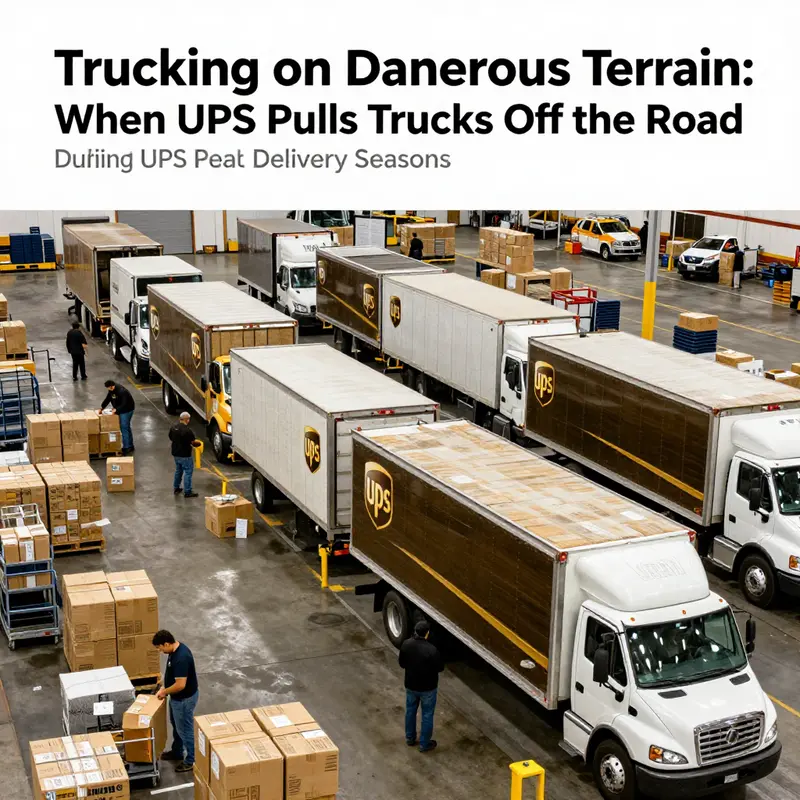
When the calendar tilts toward the holiday period, a reader might expect every parcel carrier to batten down the hatches and pare back on operations. In some industries, that instinct makes sense. In the world of package logistics, however, the peak season tends to reveal the opposite: a relentless push to keep every truck moving and every route illuminated with certainty. The question “When does UPS pull trucks off the road during peak delivery seasons?” yields a nuanced answer that sits at the intersection of demand forecasting, workforce orchestration, and a network designed to absorb volatility rather than retreat from it. The core truth is simple and striking at once: during peak demand, UPS generally does not pull trucks off the road. Instead, the company mobilizes a carefully choreographed surge in capacity, coordination, and execution that aims to preserve service levels even as volumes surge beyond the ordinary.
That approach rests on fundamental principles that are easy to overlook in a digest of headlines. Decisions about routing, scheduling, and fleet deployment are not blanket policies dictated by the calendar. They are case-by-case judgments rooted in local conditions, weather realities, infrastructure constraints, and the dynamic needs of customers. Peak season amplifies these factors, but it does not invert them. If a storm or a regional disruption makes a specific corridor unsafe, the system can still pull levers that reduce risk without pulling trucks from service across the board. The emphasis is on resilience, not retreat. This distinction matters because it shows up in the way UPS retools its operations to handle a surge in parcels with the same or greater reliability that customers expect in slower periods.
One of the most visible signs of this resilience is the expansion of the workforce rather than its contraction. During peak periods, UPS intensifies operations by adding hands to the load rather than asking fewer people to shoulder it. The work force swells as assortments of roles broaden, with teams stepping beyond their typical boundaries to ensure that deliveries move. A notable example is the UPS Ready Team—a cadre of specialists who extend their traditional remit to ensure that the network remains aligned with demand, carriers, and last-mile partners. This isn’t a temporary escalation of risk-taking; it is a deliberate increase in capability. The goal is to minimize bottlenecks and maximize throughput, so that even as the number of stops per route climbs, the probability of on-time delivery remains high. The Ready Team and similar groups act as a connective tissue that links the planning room to the curb, translating schedules into soles on sidewalks and doors opening to eager recipients.
A second pillar of peak-season continuity is the explicit adjustment of delivery schedules rather than a blanket reduction in operations. Express and Express Plus services may encounter extended timelines, not as concessions but as calibrated allowances designed to absorb the realities of heavy volumes and urban traffic congestion. Customers accustomed to rapid, clockwork delivery during ordinary weeks may experience longer windows, but the system’s integrity stays intact. The objective is not to rush parcels through the network at the expense of reliability; it is to ensure that every parcel finds a path through a network designed to absorb extraordinary demands. This approach is coupled with a keen eye on the network’s flexibility. Schedules can be stretched or compressed in response to observed patterns, and the network can reallocate capacity—sorting facilities, transportation lanes, and even the sequence of pickups and drop-offs—to preserve the overall service level. It is a study in disciplined adaptability rather than a permission slip for stallouts.
Technology and equipment play enabling roles in this story of keeping trucks rolling. In recent years, logistics operators have increasingly leaned on diversified fleets and smart equipment to meet demand with greater predictability. During peak seasons, UPS may rely on a broader set of resources, including medium-duty electric trucks designed for payloads in the 2- to 6-ton range. Electrified or not, however, these vehicles are selected for their reliability and efficiency under heavy use. The choice of equipment is guided by the task at hand: shorter first-mile legs with consistent weight, or longer line-haul segments with dynamic stop patterns. The 2- to 6-ton class offers a balance of maneuverability and payload that can improve fuel efficiency, reduce maintenance demands, and streamline scheduling in a busy urban landscape where space and time are at a premium. The broader takeaway is not just about what gets deployed, but how it fits into an integrated network strategy that is designed to absorb surges rather than fracture under pressure.
Stories from the field corroborate this operating philosophy. In 2018, for example, a broader airlift capacity challenge arose when MD-11 assets were temporarily grounded due to circumstances beyond the ground network. The UPS network did not retreat; it adapted. The company redesigned routes, rerouted some flows, and leaned on ground-based resources more intensively to keep the throughput steady. The outcome was not a dramatic reduction in service but a reallocation of capacity—an equilibrium that allowed the system to continue operating at or near full capacity despite constraints elsewhere. The incident illustrates a core principle of peak-season operations: vulnerability exists, but so does the capacity to compensate. The response is not a retreat from operations but a recalibration that preserves the integrity of service for customers who depend on timely delivery.
All of this, of course, unfolds within a broader context of risk management and customer expectations. Peak season inevitably brings weather volatility, traffic congestion, and local disruptions. The decision to keep trucks on the road hinges on a careful risk-benefit calculus. If the risk to drivers and the safety of the public exceed the anticipated benefit to on-time delivery, alternative approaches may be invoked. Even then, the default posture is not to pull trucks for the sake of saving a few minutes on a route but to re-route, reschedule, or re-sequence to protect safety and consistency. The operational playbooks that support this logic rely heavily on data: real-time traffic feeds, weather intelligence, and historical patterns that inform probability-based decisions. The objective remains simple in its framing and ambitious in its execution: to preserve service levels when demand spikes without compromising safety and reliability.
In practice, the peak-season arc is closely tied to how a carrier communicates with customers and how it coordinates with its broader ecosystem of partners. The emphasis on service levels means that customers experience predictable windows, even if those windows stretch slightly as the calendar fills with parcels. The scheduling discipline is part of a broader communications discipline. When a customer places a shipment, the expectation is not merely “it will arrive” but “here is the expected delivery window, even if it shifts.” This emphasis on predictability within variability helps to sustain trust and reduce the social and logistical friction that can accompany peak-season pulses. It also explains why a policy of retreat—pulling trucks off the road—rarely appears in official communications about peak-season operations. The network’s design incentives continuity and reliability at scale, rather than the simplification of minimizing risk by reducing road presence.
To ground these qualitative observations in current practice, readers can consult the official platform that publishes seasonal delivery schedules. These updates crystallize the operational choices described above into a formal timetable that reflects the company’s commitment to meeting demand while honoring safety and reliability. The public-facing cadence of peak-season planning demonstrates how the organization translates a philosophy of resilience into concrete actions—an alignment of schedules, routes, and workforce that turns potential chaos into coordinated throughput. This alignment is not a one-off adjustment; it is a sustained capability that the organization builds and tunes year after year.
For those who want to explore the mechanics behind this orchestration, one thread runs through the narrative: the central role of dispatch and fleet management software in aligning all moving parts. The modern peak-season operation depends on robust software ecosystems that can model demand, optimize routes, and flag conflicts before they arise. In-house teams and partner networks rely on these systems to translate strategy into action on every street, alley, and curb. The practical takeaway for readers is that the question of whether UPS pulls trucks off the road during peak seasons is less about a single decision and more about a complex, adaptive system that coordinates people, vehicles, and time with surprising precision. To understand how dispatch and fleet-management capabilities contribute to this dynamic, consider the broader landscape of software-enabled coordination and the role it plays in keeping shipments on track. Learn more about dispatch software and fleet management through resources that explore how technology supports logistical resilience and operational efficiency. dispatch software and fleet management.
In the end, the peak-season posture is less about heat and pressure and more about disciplined capacity management. It rests on a triad: an expanded, multifaceted workforce that can adapt to shifting patterns; a flexible scheduling discipline that accepts longer windows when needed; and an equipment mix designed to balance reliability, efficiency, and throughput. Weather and road conditions will always test that balance, but the policy remains clear—keep the system moving whenever it is safe to do so, and optimize the means by which it moves when volumes crest. This is the core logic that underpins the operational reality many customers experience during the most demanding weeks of the year: peak season is a test of coordination, not a license to retreat.
For readers seeking the most accurate, up-to-date information about UPS’s peak-season operational changes, the official updates from the company provide the authoritative frame. The peak-season delivery schedules are published to guide shippers and recipients through the seasonal cadence and to set expectations about how services may shift during periods of heightened demand. External resource: https://www.ups.com/estimateshipment?loc=en_US&lang=en®ion=US
When the Road Turns Dangerous: A Calculated Pause Behind UPS’s Decision to Pull Trucks Off the Road
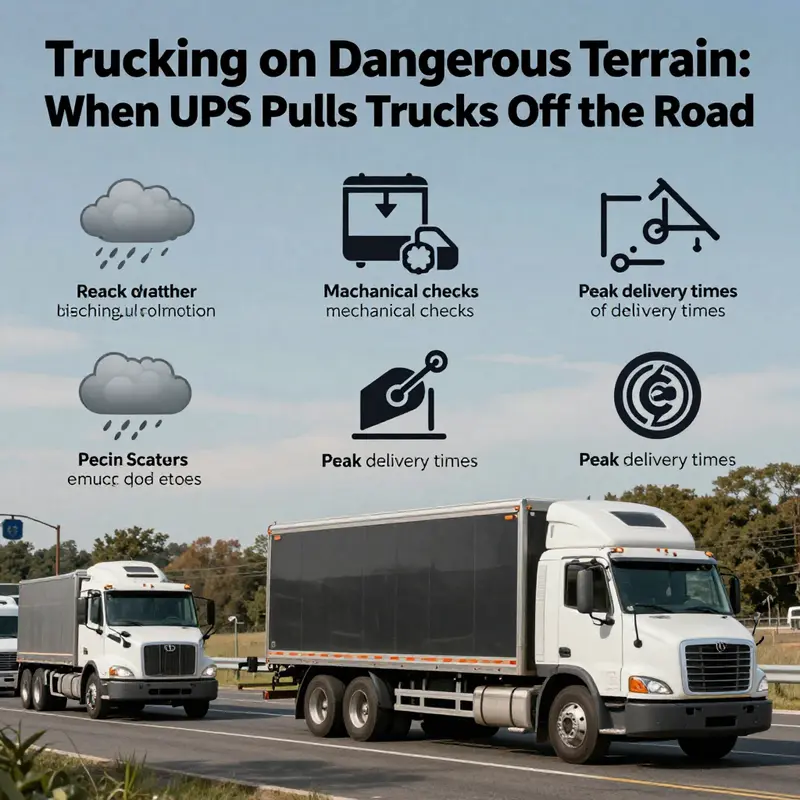
The road can turn from predictable to peril in a heartbeat, and in transportation, risk management becomes as essential as route planning. For a company that moves millions of packages across vast geographies, the moment a street becomes unsafe is not a moment for hesitation but a decision anchored in safety, science, and sound judgment. The question, “When does UPS pull trucks off the road?” functions like a litmus test for how a modern, safety-forward logistics operation translates weather patterns, human factors, and regulatory obligations into clear, enforceable action. What unfolds behind that pause is a quiet choreography of checks, balances, and thresholds that aim to protect drivers, preserve the integrity of the fleet, and keep service levels within reasonable bounds. The decision is never monolithic. It is the product of many inputs, weighed in real time, and applied at the regional level where conditions and road statuses differ as widely as the landscapes themselves. It begins with the simplest, most tangible element on a day-to-day basis: the vehicle itself and the people who operate it.
A critical precept guides the entire process: the truck is safe to operate only if it is mechanically sound and fit to perform. Maintenance and safety inspections sit at the top of the hierarchy. A pre-trip inspection may reveal a brake system concern, a tire with abnormal wear, a leak, or a faulty light—conditions that would render the vehicle unfit for service. In such moments, the truck is pulled from the road immediately, and arrangements are made to replace it with a safe alternative. This is not a punitive withdrawal but a safety-driven interruption that preserves the integrity of the fleet and, more important, reduces the risk of a breakdown at a critical point in a route. The emphasis on immediate action when a defect is detected mirrors the company’s adherence to federal regulations and internal standards that prioritize safe operation above all else. The discipline around maintenance creates a foundation that makes other safety decisions possible. It is the quiet infrastructure that allows the system to breathe when factors outside the immediate wheel well come into play.
Linking the physical health of the machine to the health of the driver is the next layer of the equation. Driver fitness for duty is a non-negotiable criterion. If a driver appears fatigued, acutely ill, or visibly distressed, or if signs of impairment emerge, the driver may be pulled from duty. The policy reflects a broader regulatory framework that governs hours of service and fitness for duty, but it also embodies a humane approach to a job that requires sustained attention, quick decision-making, and precise motor control. Fatigue, even in seemingly minor form, can degrade reaction times, reduce situational awareness, and increase the likelihood of errors. In practice, supervisors track subtle cues—slowed responsiveness, yawning, or difficulty sustaining attention—and, when present, they act to remove the driver from the vehicle. The aim is not to penalize the worker but to safeguard both the person and the public. This human-centered dimension sits in conversation with the mechanical checks, creating a safety net that covers both sides of the same street.
Technology introduces a third, increasingly influential layer: real-time monitoring and telematics data. Modern fleets are outfitted with sensors and software that translate miles, maneuvers, and engine health into actionable intelligence. Data points such as harsh braking, rapid acceleration, excessive speeding, erratic steering, and even distracted driving detected through onboard cameras can trigger alerts. Prolonged idling or unusual routing patterns can prompt a supervisor to intervene. When a pattern of unsafe behavior emerges, the truck can be taken off the road not as punishment but as a corrective measure. The driver may receive retraining, coaching, or medical clearance checks, depending on the nature of the data and any accompanying events. The emphasis here is continuous improvement, a recognition that risk can be managed through timely intervention and targeted support rather than by waiting for a crisis to occur. The telematics framework thus acts as a bridge between immediate, local conditions and the broader safety culture that guides the entire operation.
Weather and road conditions supply another essential input, one that often dominates the equation during the winter months or the early hurricane season. Severe weather is a wildcard that requires a blend of forecasting, on-the-ground scouting, and regional judgment. The decision to pull trucks off the road during snowstorms, ice events, flooding, or hurricane-like conditions rests on the regional leadership’s assessment of forecasts, real-time reports, and the practical realities of road safety. It is not a one-size-fits-all decree but a calculated response that weighs the risk of travel against the expectation of timely deliveries. In such moments, the policy becomes one of prioritizing safety over the schedule. The company understands that service delays can ripple through a network, but the dangers posed by slick surfaces, limited visibility, and compromised traction demand a precautionary pause. This is where the art of logistics meets the science of weather forecasting: the plan rewrites itself in response to the changing weather, with the overarching aim of preventing accidents rather than accepting them as a cost of business.
Incidents and near-misses provide the fifth pillar of decision-making. When a truck is involved in a collision, or when a near-miss is reported, the vehicle typically enters a hold pattern while the incident is reviewed. The consequences extend beyond the accident itself. Investigations may reveal contributing factors such as mechanical issues, fatigue, or environmental hazards. The driver may undergo additional training, medical evaluation, or a reassessment of hours and duties. A near-miss report can trigger a proactive pull from service even when no damage has occurred, because it identifies latent risks before they become real harm. The ability to act swiftly in response to such reports underscores a safety culture that treats every event as a learning opportunity and every risk as a problem that can be mitigated with the right resources and attention.
Lastly, there is the guardrail of regulatory compliance with Hours of Service (HOS). The DOT’s framework is not merely a bureaucratic constraint; it is an operational constraint with real-world implications. If a driver is nearing or has exceeded the legally permitted driving hours, the truck is pulled from service to prevent fatigue-related incidents. This rule functions as a hard boundary, ensuring that even the most efficient or motivated driver cannot push beyond a threshold that would endanger the driver and others on the road. It also requires a dynamic flow of planning within the fleet—dispatchers and supervisors must continuously adjust schedules, routes, and driver assignments to stay within legal limits while still meeting customer expectations as much as possible. The HOS framework anchors the dynamic decisions about weather, incidents, and telematics to a non-negotiable safety baseline and demonstrates how policy translates into practical, human-centered action on the ground.
Taken together, these factors create a decision ecosystem that is both resilient and adaptable. The process is inherently case-by-case because no single factor operates in isolation. A tarnished tire or a fatigued driver is not automatically grounds for a road closure if the weather is favorable and the route remains navigable. Conversely, even a well-maintained vehicle with a rested driver can be pulled from service when a regional forecast points to treacherous conditions and the road network risks becoming impassable. The ultimate goal remains constant: protect life, protect equipment, and maintain the integrity of the network so service can resume as soon as it is safe to do so. This is a dynamic equilibrium, a perpetual negotiation between risk management and customer commitments, and it relies on a disciplined, data-informed framework that can adapt to shifting conditions without sacrificing core values.
In practice, the safety decision also reflects the broader ecosystem in which UPS operates. It is not solely about what happens inside a single cab or at a single depot. It hinges on the coordination of yards, maintenance facilities, call centers, and routing centers that collectively move the system from a state of readiness to a state of safety. When a truck is pulled, a cascade of supportive actions follows: a replacement vehicle is assigned, alternate routes are prepared, and communication with customers is framed to explain a delay without compromising trust. The organization communicates that safety is a shared responsibility, not a corporate preference. The readiness to pause, to adjust, and to reroute demonstrates a commitment to doing the right thing rather than the easy thing when conditions demand it. The result is a fleet that, at times, looks smaller on the roads than one might expect, yet is actually stronger in its capacity to deliver later, once the conditions permit.
This safety-based approach also carries implications for the tools that enable such decisions. The dispatch software and fleet management platforms that serve as the nervous system of modern logistics are designed to assimilate maintenance records, driver health metrics, telematics signals, weather feeds, and incident reports into a coherent operational picture. The interface is not a black box; it is a transparent decision framework that allows supervisors to see, in near real time, which trucks are in service, which are held, and why. It enables rapid reallocation of assets, dynamic rescheduling, and proactive communication with customers about delays. In this sense, technology does not replace judgment; it amplifies it—providing the data-backed confidence that the pause is warranted and the path forward, once conditions improve, is clear. For professionals who manage the rhythm of a national network, such tools are indispensable, letting them balance the competing demands of safety, reliability, and customer service in a complex, fast-moving environment.
This integrated approach, with its emphasis on safety above all, does not come without its own set of challenges. The pause can stretch delivery windows and create friction with customers who depend on tight schedules. It requires careful messaging, a transparent explanation of why a pause was necessary, and a credible plan for accelerating service once conditions permit. It also tests the organization’s contingency planning—how quickly can a replacement vehicle be dispatched, how efficiently can routes be recalibrated, and how effectively can drivers be supported through retraining or rest periods? Yet in the long arc of risk management, these short-term effects are a small price to pay for the broader payoff: fewer accidents, fewer injuries, and a fleet that remains capable of performing when the conditions once again permit safe, steady operation. The authority to pause is, in the end, a statement of responsibility and an investment in the resilience of the entire network.
If one looks beneath the surface at these decisions, a more subtle truth emerges: UPS’s practice of pulling trucks off the road is less about punishment for past mistakes and more about a forward-looking discipline. It is a habit of prevention, reinforced by a culture that treats safety as a shared pledge rather than a corporate policy. It recognizes that the road is an unpredictable partner and that the only dependable way to maintain service fidelity is to respect that unpredictability and respond with deliberate care. The result is a system that favors safety as a prerequisite for efficiency, a principle that, when applied consistently, reduces the likelihood of costly disruption, protects workers, and preserves the network’s ability to deliver on its promises when the weather clears and the traffic resumes its normal cadence.
In the broader conversation about fleet safety and operational excellence, this chapter’s themes echo a familiar pattern: the best answers come from integrating people, machines, and data into a single, coherent process. Maintenance checks anchor the physical safety of the vehicle. Driver fitness completes the human safety equation. Telematics and real-time monitoring translate behavior and performance into timely interventions. Weather and road conditions test the system’s adaptability. Incidents and near-misses sharpen learning and accountability. Hours-of-Service rules provide a hard boundary that protects workers and the public. And all of these elements are coordinated through dispatch and fleet-management tools that turn complex information into clear, actionable decisions. The chapter you’ve read traces how these layers interact in the real world, showing not just when trucks are pulled off the road, but why those pauses matter—how they prevent tragedy, preserve assets, and ultimately support the long arc of dependable service that customers rely on every day.
For readers who want to explore how broader fleet-management practices intersect with safety decisions, consider looking into resources on dispatch software and fleet management. A practical example lies in the platforms that help teams coordinate across yards and routes, ensuring that a paused vehicle can be replaced and rerouted with minimal disruption. This is a reminder that the safety pause is not a passive moment but an active, collaborative process that engages people, processes, and technology in equal measure. It is through that collaboration that UPS and its partners can honor both safety and service in equal measure, even when the road ahead looks uncertain.
External resource: For more on UPS safety policies and the company’s approach to safety and sustainability, see https://www.ups.com
Final thoughts
Trucking is not merely an occupation; it’s an embodiment of responsibility and safety—a lesson that applies across all terrains. For UPS, the choice to pull trucks off the road during severe weather, for maintenance issues, or during peak delivery seasons is a commitment to safeguarding both their personnel and the communities they service. Each decision reflects a deep understanding of risk management, balancing the urgency of delivery with the intrinsic value of safety. As off-road enthusiasts know, adventure comes with risk, and recognizing when to hold back can be just as critical as pursuing the thrill.