
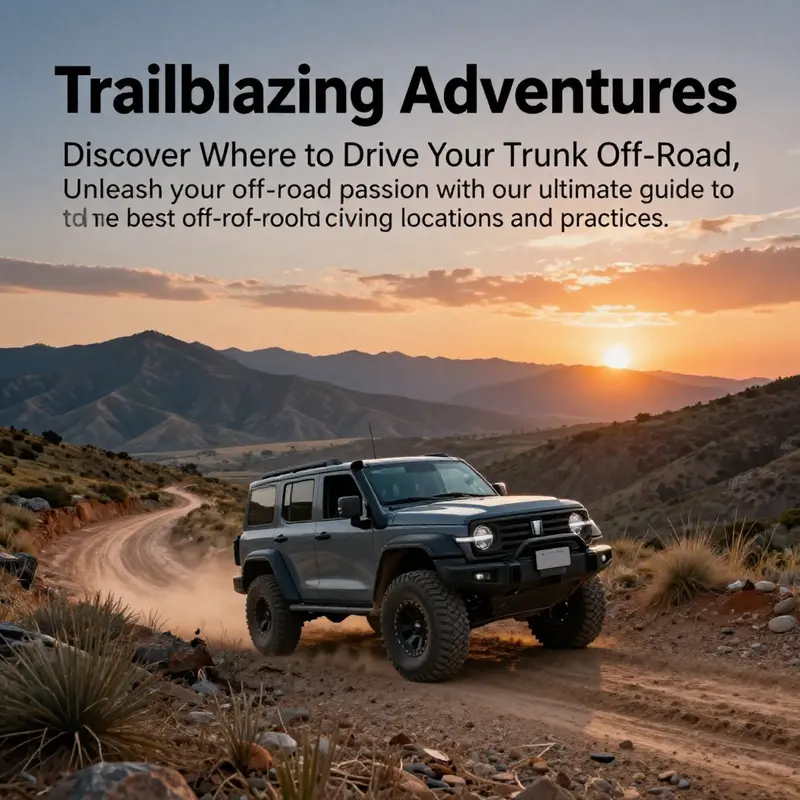
For the adventurous spirits drawn to the rugged terrain and untamed landscapes, off-road driving represents more than just a hobby—it’s a lifestyle choice. The thrill of gripping the wheel as your truck tackles rocky hillsides and winding trails ignites a sense of freedom that only off-road enthusiasts understand. However, with this pursuit of adventure comes the responsibility to drive within designated areas, ensuring both legal compliance and environmental preservation. In this guide, we will explore some of the best designated off-road parks and trails, discuss the benefits of joining off-road clubs, unveil private facilities that offer tailored experiences, highlight crucial legal considerations, and share best practices for responsible driving. Each chapter is infused with insider tips to help you embark on your off-road journey with confidence, skill, and respect for nature.
Where Full-Size Trucks Roam Legally: Designated Off-Road Parks and Trails
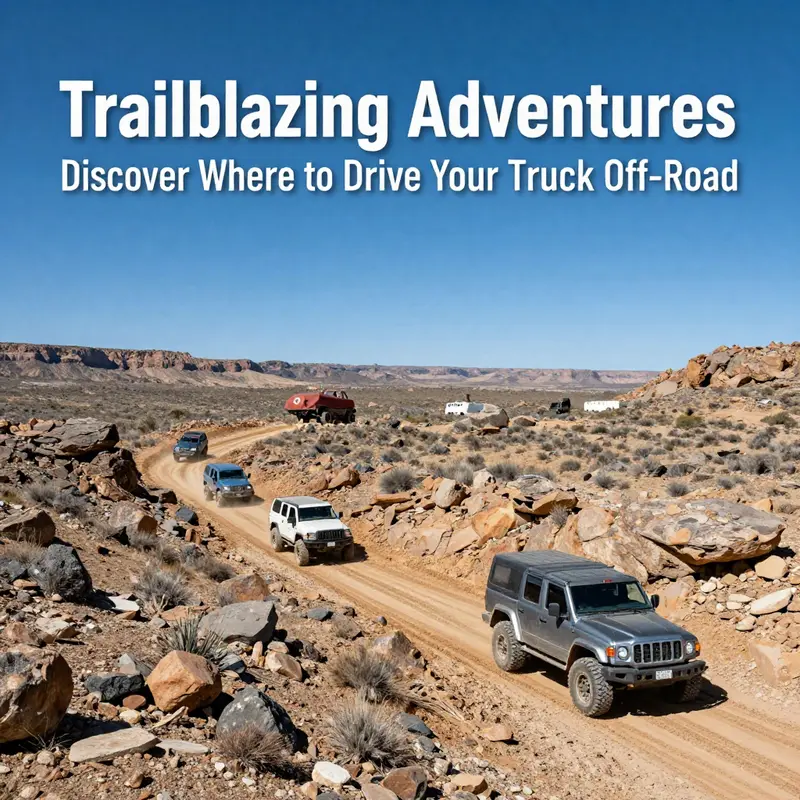
The lure of off-road trucking is clear. A big truck moving through rough terrain feels rugged, capable, and oddly liberating. Yet the thrill should come with a quiet confidence that you are driving within limits set to protect people, ecosystems, and the machines themselves. This chapter focuses on designated off-road parks and trails. These are the sanctioned spaces built and managed for full-size trucks and other larger vehicles. They offer predictable sand, rock, and dirt, as well as enforced rules that keep the experience safe and legal. If you want to explore without the constant worry of trespassing or fines, designated parks and trails are where most responsible truck owners start their off-road journeys. They are not a loophole or backdoor; they are the clearly marked routes that balance adventure with stewardship. The key is to understand what makes these spaces different from informal detours off public roads and private property. In designated areas, access is granted through formal pathways, signage, and established use patterns. The terrain is maintained to a degree that reduces unexpected hazards. The rules are designed to minimize environmental impact while maximizing safety for drivers, hikers, and wildlife alike. As you read, picture a map where the trails are color-coded by difficulty, the gates are staffed during peak times, and the staff know most of the common missteps beginners make. The feeling is less of a free-for-all and more of a guided exploration, with room for you to test your truck’s capabilities within a controlled framework.
Finding these places is a process of careful research and cross-checking. Official state and national park websites frequently publish lists of Off-Road Vehicle ORV areas. These pages are more than marketing; they are repositories of current rules, seasonal closures, and safety recommendations. The parks themselves often publish maps that show where you can legally drive a large truck, where you must refrain from venturing off-trail, and which routes require permits or day-use passes. Because trails can change with weather, erosion, and wildlife considerations, the official pages offer the most reliable information in real time. Alongside government portals, respected associations exist to help you navigate the community of off-road drivers with a safety-first mindset. The 4-Wheel Drive Association and the Off-Road Business Association are two organizations that help foster sanctioned trail access and provide guidance on gear, training, and etiquette. They can be a bridge between individual excitement and organized, safe participation in the sport. Joining a club or attending sanctioned events often opens doors to areas that are not advertised to casual visitors. When you participate in these structured activities, you gain access to experienced volunteers who know the trails, the seasonal hazards, and the best driving techniques for your truck. A more informal, yet valuable, avenue is private off-road facilities. These parks are run by landowners who maintain the terrain, monitor the safety features, and enforce quiet hours and environmental restrictions. For beginners, they are an excellent way to test your truck’s clearance, traction, and recovery gear under the watch of staff who can intervene if you push too far. The common thread across all these spaces is the explicit emphasis on safety.
If you are new to off-road adventures in a full-size truck, treat designated parks as an opportunity to learn the practical limits of your vehicle. Do not rush to the hardest trail on your first visit. Start on green or easy-rated routes, observe how other drivers approach obstacles, and note how your truck handles at different speeds and angles. The rules you will encounter are seldom arbitrary. They aim to prevent rollovers, protect fragile habitats, and minimize noise disturbances that can disrupt wildlife and neighboring communities. You will encounter speed limits, quiet hours, and warnings about sensitive habitats. You’ll also learn to stay on designated trails. The moment you veer off-trail, you risk legal penalties and environmental damage, which defeats the purpose of a responsible outdoor experience. Respect for the land means planning ahead: bring a back-up plan if a trail is closed, a weather contingency if rain makes a route dangerous, and a recovery kit ready for sand, mud, or rocky sections. The point is not to conquer every obstacle but to enjoy what the park offers while leaving no trace for future visitors.
Preparation is a meaningful discipline here. Begin with the basics of vehicle readiness. Your truck should be equipped for rugged terrain. This includes a robust suspension tuned for heavy loads, off-road tires with appropriate tread depth, and a reliable means of recovery. A winch—when used correctly—can be a lifeline in a remote park, but only with proper training and adherence to safety procedures. Recovery gear such as traction boards, heavy-duty recovery straps, shackles, and a sturdy tow hook should be in every truck’s kit. A basic repair kit and spare parts for common failures associated with off-road driving are also prudent. The idea is to keep momentum when you encounter a challenging patch and to avoid becoming stranded miles from help. Meanwhile, you should check fluid levels, inspect the undercarriage for sand or debris, and ensure that your lights, brakes, and steering respond as expected before you set out. In addition to mechanical readiness, consider comfort and safety for the occupants. A well-stocked first-aid kit, water, breathable clothing layers for temperature swings, and a GPS device or map are essential. The weather in desert plateaus, forested hills, or canyon corridors can shift rapidly; a chill in the air or a sudden heat spike can change the risk profile of a route in an afternoon. These moments reinforce the need for thorough planning. The professional voice behind safe off-road driving emphasizes not only how your truck performs but how you manage risk. You should always tell someone your plan, including your route and expected return time. In a designated park, the park staff may ask you to log your trip or register for a particular trail if required. A little administrative effort goes a long way toward creating a safe, enjoyable experience for everyone.
As you contemplate the practicalities, you may find it helpful to connect with the broader knowledge base around vehicle maintenance and off-road skills. There is a robust literature that covers the steps of diagnosing and repairing common diesel and gasoline engine faults in rough terrain. For those who want to translate this knowledge into actionable practice on the trail, a helpful resource is the article titled Mastering Diesel Mechanics: Your Step-by-Step Path to Success. It provides a clear framework for diagnosing issues under field conditions and performing essential repairs with limited tools. While you will not be performing major rebuilds on the trail, a solid understanding of basic engine behavior helps you recognize trouble early and organize a safe, pragmatic response. This sort of preparatory knowledge is the quiet backbone of confidence when you are navigating a new park or trail with a full-size truck. The connection between in-the-field capability and responsible exploration is tight. When you know what your machine can and cannot do, you can choose routes that match your skill set and your vehicle’s limits. That alignment reduces the likelihood of getting stuck, of causing damage to soil and vegetation, and of interrupting the experience for others.
It is important to contextualize the resource landscape. Official sources such as national and state park portals provide the most authoritative guidance on where a full-size truck can legally operate. Beyond that, professional networks and clubs offer practical tips on route selection, safe driving techniques, and group etiquette. The combination of formal rules and community knowledge creates a supportive ecosystem for off-road driving. In practice, this means you should approach each designated park or trail with a plan and a mindset of respect. Stay on paths marked by signage, obey all posted regulations, and keep noise to reasonable levels so you do not disturb wildlife or other park users. If you encounter wildlife, give it space and slow down. If you come across hikers or mountain bikers on a shared trail, yield to pedestrians and communicate clearly to maintain a safe flow of traffic. In short, designated parks and trails are not merely a sandbox for heavy trucks; they are shared spaces that require disciplined driving, thoughtful preparation, and a willingness to learn from the community of riders who came before you. By treating these spaces with care, you ensure that the option to drive your truck off road remains viable for others, for future generations, and for the landscape itself.
For reliable, up-to-date information on legal off-road locations near you, visit the official sources and associations mentioned earlier. A practical starting point is to explore the government-hosted pages that catalog Off-Highway Vehicle areas and vehicle use areas on public lands. These listings will guide your planning and help you identify appropriate destinations that match the size and capability of your truck. If you want a consolidated pointer to broader trail networks and sanctioned areas across regions, you can consult the resource that aggregates approved trails and driving guidelines for North America. This consolidated resource brings together the best practices and the latest restrictions so you can plan accordingly. As you prepare, keep in mind that the most rewarding off-road experiences are built on patience, preparation, and respect for the land.
External reference: https://www.blm.gov/programs/recreation/off-highway-vehicles
null

null
Private Grounds, Real Trails: Mastering Your Truck at Private Off-Road Parks
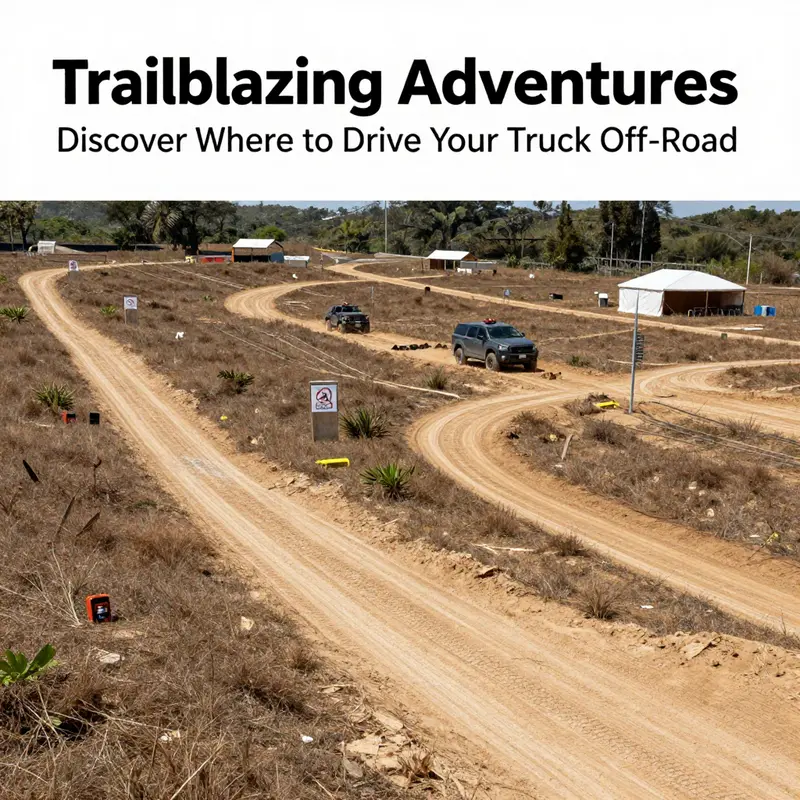
Private off-road facilities offer a controlled, legal, and purpose-built stage for truck enthusiasts to push their machines, test their limits, and tune their skills without the uncertainties that often come with public lands. These parks are designed to provide a safe, well-maintained environment that respects both the driver and the terrain. When you slide your rig onto a designated course or a carefully laid-out obstacle, you are stepping into a space that prioritizes predictable conditions, trained staff, and clear rules. That combination helps you learn precise throttle control, proper line choice, and prudent recovery practices, all while keeping wear and tear on your truck within reasonable bounds. The contrast with open, wild landscapes is stark. In the private setting, you can experiment with suspension articulation, wheel travel, tire pressures, and approach angles, knowing the risks are managed and the consequences of mistakes are finite rather than unpredictable.
The terrain varieties found in these facilities are intentional. You might encounter mud pits that test your traction and momentum, rock crawls that demand patience and precise steering, sand sections that challenge weight transfer and momentum management, steep inclines that test grip and braking, and water crossings that require careful planning and dry-ramming decisions. Each setting offers a different teacher for your truck and your driving habits. The value here isn’t simply getting from point A to point B; it’s about understanding how your vehicle responds to friction, inertia, and ground contact under controlled conditions. You can practice how to read a surface before committing power, how to ease into a crest so front wheels bite instead of skipping, and how to recover confidently when a wheel drops into a rut that is deeper than it looks.
Beyond the terrain, private parks usually come equipped with amenities and services that make a day out practical and enjoyable. On-site mechanics can provide quick diagnostics or repairs, an in-sight technician can help you interpret wheel travel limits or steering bind during crawls, and staff often offer training sessions or guided runs for beginners or aspiring competition drivers. Fuel stations, clean restrooms, and shaded rest areas reduce the friction of planning a full day away from home. Some facilities even offer rental equipment, such as winches, recovery straps, or portable traction aids, so you can experiment with tools you might not own yet without committing to a large upfront purchase. This practical infrastructure matters because it shifts the focus from gear procurement to learning and safe operation. When you know you have reliable support nearby, you’re more willing to push your limits thoughtfully rather than fearfully.
For many drivers, the social dimension of private parks is a meaningful part of the experience. You’ll meet fellow enthusiasts who share the same curiosity and curiosity-driven risk tolerance. Organized weekend trail rides, informal crawls, and occasional small competitions create a sense of community without the pressure or intensity of a full race-day atmosphere. The environment is often welcoming to newcomers who come with questions and a willingness to learn. Instructors and seasoned participants can offer feedback that translates directly to how you drive on rougher surfaces later, whether you’re tackling a challenging incline or negotiating rock steps that reveal the fine line between momentum and a rollover risk. The sense of camaraderie can be as valuable as the technical lessons, because it reinforces a mindset of respect—for the vehicle, for the land, and for the people sharing the space.
Choosing the right private facility is a mix of honesty about your skill level and a careful look at what each park offers. Some parks emphasize rugged, obstacle-rich terrain designed to test even experienced drivers, while others structure their courses to help beginners build fundamentals in a forgiving setting. It’s wise to research the park’s layout, the variety of obstacles, and the typical weather conditions you’ll encounter during your planned visit. You should also check the surrounding rules about vehicle modifications, fuel storage, and environmental stewardship. Responsible driving at private parks means staying on marked trails, not placing tires on ungraded ground that could erode soil or disturb sensitive vegetation, and packing out what you bring in. A well-run facility will outline in advance what is permitted on its courses, what equipment is required, and how to handle common recovery scenarios so you can plan accordingly before you ever strap in.
The operational model behind these parks often blends education with entertainment. Some parks host guided runs that pair newer drivers with more experienced crawlers, creating a structured path for skill progression. Others host periodic events that blend trail challenges with vehicle shows, presenting opportunities to compare aftermarket setups and tune-schemes in a practical, hands-on way. Even without a formal program, the option to book a time slot for personal practice with staff nearby can be a significant advantage. It gives you an opportunity to discuss your braking performance on slick rock, test different tire pressures on varied surfaces, or learn how to approach a concrete-lined wash that can mimic the drainage channels found in desert wash setups.
Notable private facilities often become reference points for enthusiasts who want predictability and safety built into the experience. In some regions, there are parks known for their extensive trail networks and a broad range of obstacles that are suitable for families seeking a controlled introduction to off-road driving. Others are celebrated for tougher terrain that appeals to more experienced drivers who want to calibrate a vehicle’s lift, gearing, and articulation in a supervised setting. The best parks maintain a balance: challenging enough to push personal boundaries, but anchored by professional staff, standardized safety procedures, and well-maintained access routes. For families or beginners, a park that emphasizes safety training and gradual progression can be the difference between a one-off thrill and a lasting interest in off-road driving.
As you plan a visit, it’s important to consider the practical steps that keep the day smooth and enjoyable. Confirm the park’s hours, access rules, and any prerequisites such as a basic safety briefing or a vehicle inspection. If your truck is newly modified or if you’re trying a new capability, you may want to schedule a pre-visit consult with staff to review how the modifications influence your approach angles, clutch engagement, or throttle response on specific obstacles. When you arrive, take a few minutes to walk the course or observe a guided run. This observation period can reveal subtle changes in grip that aren’t obvious from a static walk-around. You’ll also want to have your recovery gear ready and reviewed before you need it: a winch, rated shackles, a recovery strap, a high-llow jack, and at least one helper who understands safe winching practices. The discipline of preparation pays dividends when you’re facing a steep, slick, or loose section where a single misstep could compromise your momentum or damage sensitive components.
For those who want a longer-term pathway into off-road mastery, private facilities can serve as a stepping-stone toward more ambitious adventures. The competence you gain in controlled settings translates well to wilderness exploration, where the terrain can be harsher and the consequences of inexperience greater. In many cases, parks encourage ongoing learning through structured progression—beginner passes that emphasize fundamentals, then more advanced passes that focus on line choice, recovery planning, and vehicle restraint strategies. When combined with a mindset of environmental respect and community responsibility, private parks become catalysts for safer, more capable driving—and for a broader culture of responsible off-road recreation.
If you’re considering a visit, keep in mind that the private route is not a substitute for outdoor ethics but a complement to them. It’s a place to practice and refine, to compare different tire types and suspension setups, to experiment with sway bar engagement and air-down techniques, and to understand how your truck communicates through the chassis under load. The insights you gain there can inform decisions about future upgrades or field deployments in harsher environments. And while the immediate goal may be the thrill of conquering obstacles, the enduring payoff is measured in smoother handling, better control, and a deeper respect for the land you’re enjoying. In short, private off-road facilities offer a structured, supportive, and legally compliant avenue to advance your driving, protect your investment, and fuel your passion for the sport.
For more detailed information about private off-road locations, see the resource below. It consolidates guides, user reviews, and practical information about access, pricing, required permits, and vehicle restrictions, helping you plan with confidence and clarity.
👉 https://www.offroad.com/private-off-road-facilities/
Legal Terrain: Rules, Rights, and Responsibilities for Off-Road Truck Driving
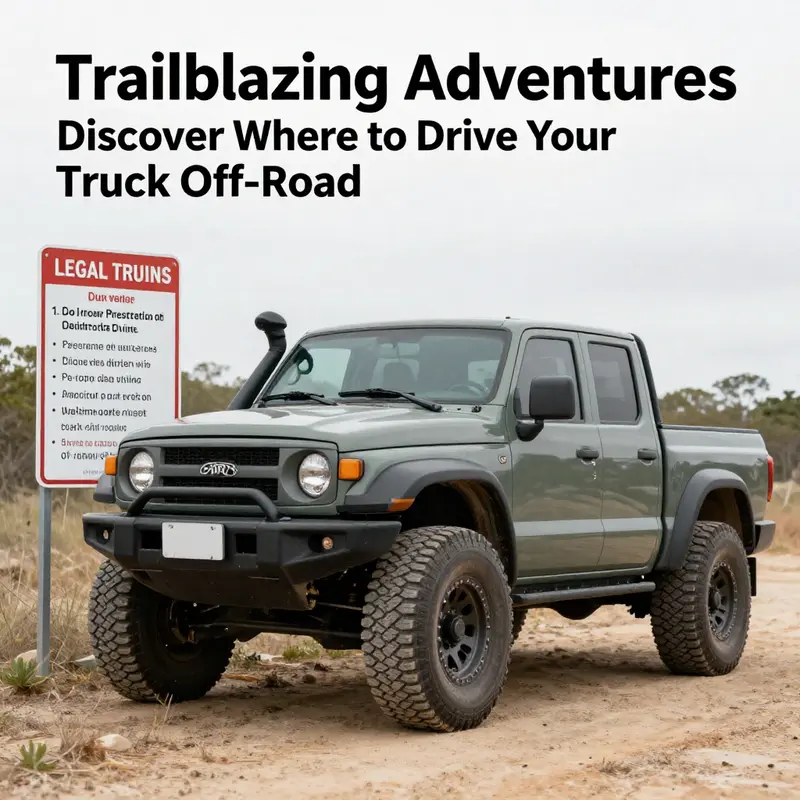
Taking a truck off pavement demands more than a sturdy bumper and capable tires. It requires a careful reading of the legal terrain that governs where you can drive, what you can modify, and how you behave once you are in the wild. The thrill of off-road travel comes with responsibilities that protect other road users, preserve natural areas, and shield you from avoidable penalties. This chapter threads together the core legal realities you must understand before you turn the key and point your tires toward uncharted ground. It is not a cautionary tale meant to dampen enthusiasm, but a practical map that helps you stay within the lines while you push your truck’s limits in a controlled, respectful way. When you approach off-road driving with that mindset, you are more likely to enjoy longer, safer experiences and avoid the costly consequences of misadventure on public land or private property.
A foundational distinction guides every decision you will make when planning an off-road excursion: where you are allowed to operate a truck off road. The simplest, most reliable path to legality is to use designated off-road parks or trails. These spaces are purpose-built to accommodate a range of vehicles, from stock trucks to heavily modified beasts, with terrain that is prepared, monitored, and managed to minimize environmental impact. They also typically enforce safety rules, set speed limits, require appropriate safety gear, and provide guidance on how to interact with other users. If you are new to off-road driving, a managed facility can be a gentler introduction to the sport and a place to test your truck’s capabilities under supervised conditions. For drivers seeking curated routes and up-to-date driving guidelines across North America, there are trusted resources that catalog approved trails, permissions, and best practices. You can begin with the broader catalog of official routes and guidelines, which streamlines planning and helps you avoid wandering into restricted areas.
Beyond formal parks and trails, private off-road facilities offer another legitimate avenue for experience. These are landholders who operate fee-based parks with maintained terrain and safety measures. They are especially valuable for beginners or those exploring a vehicle’s limits in a controlled environment. Access to these spaces is typically granted through a straightforward agreement that spells out what kind of driving is allowed, what the vehicle must bring in terms of equipment, and what conduct is expected. Whether you choose a public park, a private facility, or a sanctioned club event, the common thread is a clear permission to drive off the public road system within defined boundaries. A robust practical habit is to verify any such facility’s rules well before your arrival and to carry documentation that confirms you are driving in a permitted space.
Engaging with the right community can also enhance your safety and your legal standing. Off-road clubs and associations organize events, sanctioned trails, and guided runs. They frequently provide access to additional resources, training, and experienced mentors who can help you tune your truck for off-road work and understand the nuances of local terrain. If you join a recognized club, you gain more than camaraderie; you gain an informed network that takes seriously the responsibilities that come with off-road driving. The presence of knowledgeable guides reduces the risk of damage to your vehicle and to the landscape you are traversing. You also gain a built-in mechanism for staying compliant with evolving rules and for learning from peers who have faced similar legal questions on the trail.
A critical facet of legality centers on the vehicle itself. Modern off-road capable trucks come with dedicated drive modes and mechanical features designed to boost performance on uneven ground. These features are often described as off-road drive modes, and while they enable safer navigation of rough terrain, they are not a license to ignore rules. Modes that optimize suspension, traction, or differential behavior are designed for controlled settings like private property or sanctioned trails. Using such settings on public roads can be illegal and unsafe. The risk is not merely theoretical. In many jurisdictions, operating a modified or off-road capable vehicle on public roads without proper authorization, or in a way that alters the vehicle’s compliance with noise, emissions, or safety standards, can lead to traffic citations, vehicle impoundment, or further penalties. This is especially true if the vehicle’s modifications affect braking performance, steering response, or stability in everyday traffic. The moral here is not to fear innovation but to align it with situational awareness and legal boundaries. The same logic applies to the mechanics of the truck: even superior traction devices and locking differentials, while valuable off-road, do not excuse driving on streets where your changes would affect street-legal compliance.
The regulatory landscape extends beyond vehicle performance into the realm of local statutes. Many jurisdictions maintain explicit rules about how and where you may operate even a road-legal vehicle when you leave pavement. These statutes can cover a spectrum of concerns, from permissible environments and routes to restrictions on noise, emissions, and vehicle modifications that affect public safety and welfare. It is why drivers are urged to verify local laws before each outing. A road-legal truck in a given jurisdiction may become an instrument of liability if you fail to observe noise limits or emissions requirements, or if a modification contravenes the local code. The practical takeaway is straightforward: always know the local rules before you turn onto a trail. If you carry out a modification, document its compliance with applicable standards and be prepared to demonstrate that you are adherent to the jurisdiction’s expectations when asked by authorities.
Durable, long-standing guidance emphasizes seeking clarity from official sources. The Department of Motor Vehicles or its equivalent in your region is a natural starting point for understanding the regulatory framework governing off-road vehicle use. In parallel, the Federal motor vehicle safety standards provide a nationwide baseline of safety expectations for vehicle operation. These standards set the floor for general vehicle safety and for rules related to vehicle modifications that could affect on-road performance. The enforcement of these standards, however, varies by locality and context. The takeaway is practical and measured: use official, primary sources to confirm what is permissible in your area, and avoid assuming that road-legal status on one street translates to universal permission for all off-road activities.
A consequential consequence of off-road driving that deserves attention is warranty coverage. Manufacturers typically reserve the right to limit or deny warranty support for damage arising from off-road use. This is not a mere footnote; it can be financially consequential. If the truck sustains damage during off-road operation, you may face substantial repair costs that the warranty will not cover. This reality underscores the importance of operating within the guidelines, conducting pre-trip inspections, and staying within the capabilities of both the vehicle and the terrain. It also reinforces a prudent practice: treat off-road exploration as a careful investment in learning and experience rather than a test of endurance that could jeopardize your active coverage and future reliability.
With all these factors in view, how should a responsible driver proceed? First, consult the authoritative bodies that govern vehicle use—your state or national DMV—and, where appropriate, the federal safety standards agency. Second, favor destinations and events where access is explicitly granted and where terrain management, safety oversight, and environmental stewardship are integral parts of the experience. Third, equip your vehicle not for show but for resilience—build a program around robust tires, a reliable winch, and a suspension that can absorb unexpected jolts, while understanding that equipment alone cannot substitute for legal and environmental compliance. Fourth, practice environmental stewardship with a light footprint: stay on designated paths, avoid disturbing wildlife, and be mindful of soil compaction and vegetation damage. These steps aren’t just about avoiding penalties; they are about sustaining the very landscapes that make off-roading compelling in the first place.
As you plan, bring your curiosity about legality into your decision process alongside curiosity about the terrain. You should be prepared to adapt your route if you encounter restrictions or protected zones. The growing catalog of sanctioned trails and clubs also means there is a community standard that respects both safety and conservation. A single misstep—driving on a closed trail, spinning tires in ecologically sensitive areas, or ignoring local noise rules—can ripple into fines, vehicle seizure, or even liability for damages arising from an accident. The goal is to enjoy the experience while staying within bounds so you can return, learn, and share your story with others who are equally mindful of the legal and ethical implications of off-road truck travel.
For planning and safety, a practical approach is to consult trusted trail resources that compile legal, safe, and current guidance on where you can drive. These resources summarize permissions, terrain expectations, and the etiquette that makes off-road driving a constructive activity rather than a dangerous one. When you source information, look for indications of whether a site focuses on private land access, designated public trails, or organized events. If you are unsure, contact the governing authorities or the landowner to confirm the status of the route before you proceed. This habit protects you and protects the environment you intend to enjoy. In keeping with best practices, remember to keep a copy of permission or entry rules in your vehicle and to travel with a buddy whenever you can. Travel in groups is safer and often more compliant because etiquette and oversight are reinforced by peers.
In closing, the legal framework surrounding off-road truck driving is not a restriction to creativity; it is a boundary that enables freedom within a predictable, safe system. When you respect designated spaces, verify local statutes, and align your vehicle’s capabilities with appropriate use, you sustain a practice that benefits you, other drivers, and the landscapes you explore. The intersection of enjoyment, safety, and legality is navigable, but it requires diligence, preparation, and a willingness to adjust plans in light of laws and environmental stewardship. As you venture from trailhead to trailhead, carry with you the discipline to choose lawful routes, to drive within your vehicle’s and the terrain’s limits, and to engage with the off-road community as stewards as well as enthusiasts. For those who want a reliable starting point on where to find approved trails and driving guidelines, a concise directory of official routes can be a helpful companion on your planning journey. This approach keeps the experience exciting while ensuring you stay within the boundaries that protect you and the spaces you visit.
External resource: https://www.transportation.gov/vehicle-safety/federal-motor-vehicle-safety-standards
Trailcraft Without Compromise: Best Practices for Responsible Off-Road Truck Driving

Off-road driving with a pickup or light truck invites a powerful blend of capability and responsibility. The thrill of traversing uneven terrain, the sense of achievement after a careful turn through rocks or rutted dirt, and the satisfaction of doing it legally and ethically all hinge on one core idea: preparedness. Responsible off-road driving is not a pairing of risk and reward but a discipline that respects laws, protects the environment, and sustains access to trails for future drivers. To practice that discipline, you begin long before you roll onto the trail. You start with a plan grounded in local regulations, designated routes, and an honest assessment of your vehicle and your own limits. In many places, off-road access is limited to specific parks or trails that maintain safety standards and environmental protections. The choice to use those spaces is both prudent and respectful, ensuring that wildlife and fragile ecosystems endure while you enjoy the challenge of the terrain. Before you head out, check the rules for the area you intend to visit, and verify any seasonal restrictions, permit requirements, or closures. This is not a hurdle, but a safeguard for you and for the places you want to explore. A reliable source of up-to-date information on legal, designated locations can guide your planning and reduce the guesswork that can turn an adventure into a complication.
Preparation is the practical hinge on which safety swings. A meticulous pre-trip inspection anchors that preparation. You should begin with the basics: fluids and levels, lights and signals, brakes, and steering. Engine oil, coolant, brake fluid, and windshield washer fluid deserve a quick check, and you should verify that all belts and hoses show no signs of wear. The tires deserve special attention. Off-road tires should have adequate tread depth and no bulges or cuts that could expose you to a puncture in the middle of a challenging stretch. Tire pressure is not a fixed value; it shifts with terrain. On loose sand you may want lower pressures to increase footprint and flotation, while rocky grades may require a stiffer setup to protect the sidewalls and keep the bead intact. The goal is traction without compromising the structure of the tire or the risk of a blowout. A moment spent evaluating the suspension, steering linkage, and the battery or electrical systems—especially in electric or hybrid trucks—pays back with reliability on rugged paths.
Beyond the vehicle, you carry awareness: maps, a route plan, and contingency options. Even with a reputable vehicle, recovery gear is essential. Pack a shovel, a sturdy winch, and recovery straps rated for your vehicle’s weight. A portable air compressor helps you manage tire pressures as you transition from pavement to dirt and back again. A basic know-how bracket matters just as much as the tools. Knowing how to use a winch, how to set proper straps, and how to anchor equipment safely reduces the risk of further damage or personal injury. Self-recovery is the backbone of independent exploration, but you should never rely on guesswork. If you can, partner with a companion who shares the responsibility of spotting, planning, and communicating. The moment you feel uncertain, it’s wise to pause and reassess rather than push through exhaustion or overconfidence.
Terrain awareness is a study in adaptation. Different surfaces demand different approaches. Mud can grip or swallow, while sandstone may crumble under pressure. Hardpack demands speed control and careful steering, whereas soft soil rewards gradual throttle inputs and consistent momentum. The tires, the load on the vehicle, and the center of gravity all combine to influence traction. When you choose a line, you avoid the temptation to “win” the obstacle by forcing your way through. Respect for the trail means choosing routes that minimize rutting, preserve watercourses, and reduce the chance of becoming stuck in a way that harms the environment or requires a rescue that endangers others on the trail. In this sense, off-road driving becomes a dialogue with the landscape rather than a conquest of it.
Modern trucks often come equipped with systems that can aid this dialogue in safe, responsible ways. You should learn how to use these features judiciously, keeping in mind that off-road capabilities are designed for off-road conditions only. Suspension adjustments and traction technologies can improve grip on uneven surfaces, but they are not free passes for careless speed or reckless behavior. Understanding when to engage or disengage traction aids, how to modulate braking on slick grades, and how to maintain controlled steering in tight passages are all part of the responsible driver’s skill set. When it comes to locking differentials and similar aids, the rule is simple: only engage them when the terrain clearly necessitates enhanced traction. Misusing these features can wear drivetrain components, damage trails, and increase the risk of rollovers or loss of control. The same caution applies to any mode that alters vehicle dynamics. Off-road modes are powerful, but they alter handling in ways that can be inappropriate on public roads. Use them where they were intended, and return to standard settings when you rejoin paved surfaces.
Environmental stewardship travels hand in hand with mechanical prudence. Trail etiquette matters because it shapes the future of outdoor access. Stay on designated trails to protect sensitive soils, plant communities, and wildlife corridors. Avoid disturbing wildlife, and never feed or approach animals. Pack out what you pack in, including scraps, packaging, and even disposable gloves. Waste removal is part of respect for the environment and other trail users. If a trail is closed or conditions are unsafe, honor the decision. Weather can metamorphose a straightforward run into a hazard, so you should monitor forecasts and be prepared to turn around rather than press on when storms, flash floods, or dense fog reduce visibility and raise risk. Local regulations and posted signs are not decorative; they are practical guardrails for safety and conservation. Saying no to a risky line is not a failure of adventure but a commitment to responsible exploration.
Safety is inseparable from planning. You should never travel alone without a communication plan and a means to call for help if the terrain or your vehicle becomes compromised. Share your route and expected return time with a friend or family member, and carry a basic first-aid kit. Adequate lighting for night travel, a spare battery or power bank for electronics, and a reliable means of navigation help keep you prepared for unexpected twists in the day. If you encounter a difficult obstacle, slow your pace, reassess your options, and consider turning back rather than taking a risk that could escalate quickly. These decisions—slow, deliberate, and informed—are not minor caveats; they are the core of safe off-road driving. They protect you and your passengers, but they also preserve the trails for others who will follow.
As you integrate these practices, you gradually build a more sophisticated approach to off-road driving that respects both the vehicle you pilot and the landscape you explore. The goal is not to master the terrain by force but to understand it well enough to negotiate it with confidence, restraint, and care. In that spirit, you can take pride in your competence without compromising the places you love to drive. For a practical angle on how mechanical readiness underpins safe off-road adventures, you might explore resources dedicated to comprehensive vehicle maintenance, such as Mastering Diesel Mechanics: Your Step-by-Step Path to Success. This perspective centers maintenance as groundwork for responsible exploration, ensuring you can respond to surprises without compromising safety or the environment.
The journey toward responsible off-road truck driving is a continuous learning process. It benefits from sharing experiences with other enthusiasts, staying informed about trail conditions, and embracing a mindset that safety and stewardship come first. By blending meticulous preparation with disciplined technique, you honor the equipment that enables you to explore and the landscapes that invite you to learn more. In the end, responsible off-roading is less about conquering obstacles and more about choosing the right obstacles, the right lines, and the right time to pause and regroup. It is a conversation with the trail, one you keep listening to as you move forward.
External resource: https://www.tesla.com/support/vehicles/off-road-driving
Final thoughts
The journey of an off-road enthusiast is as exhilarating as it is rewarding. Understanding where to legally and responsibly drive your truck off-road not only enhances your adventure but also preserves the natural beauty that fuels our passion. By frequenting designated off-road parks, engaging with clubs, and adhering to legal requirements and best practices, you ensure a sustainable future for off-road driving. So, gear up and hit the trails, while keeping the spirit of adventure alive and thriving for generations to come.