
For off-road enthusiasts and adventurers, finding the perfect place to take your truck off-roading is an exhilarating quest. Whether you’re a fan of rock crawling, traversing rugged terrain, or simply exploring scenic landscapes, the U.S. boasts a plethora of destinations where your truck can unleash its full potential. In this guide, we’ll delve into five premier locations: Moab, Utah, famed for its bone-rattling trails; Olympic National Park, which offers breathtaking views alongside challenging paths; the Great Smoky Mountains National Park, where nature’s beauty meets off-road thrills; Virginia’s Buckingham Trails, a hidden gem for the passionate driver; and we will wrap up with essential preparations to make your off-roading experience not only thrilling but also safe.
Moab Unleashed: Navigating the Iconic Red-Rock Frontier for Your Off-Road Truck Adventure
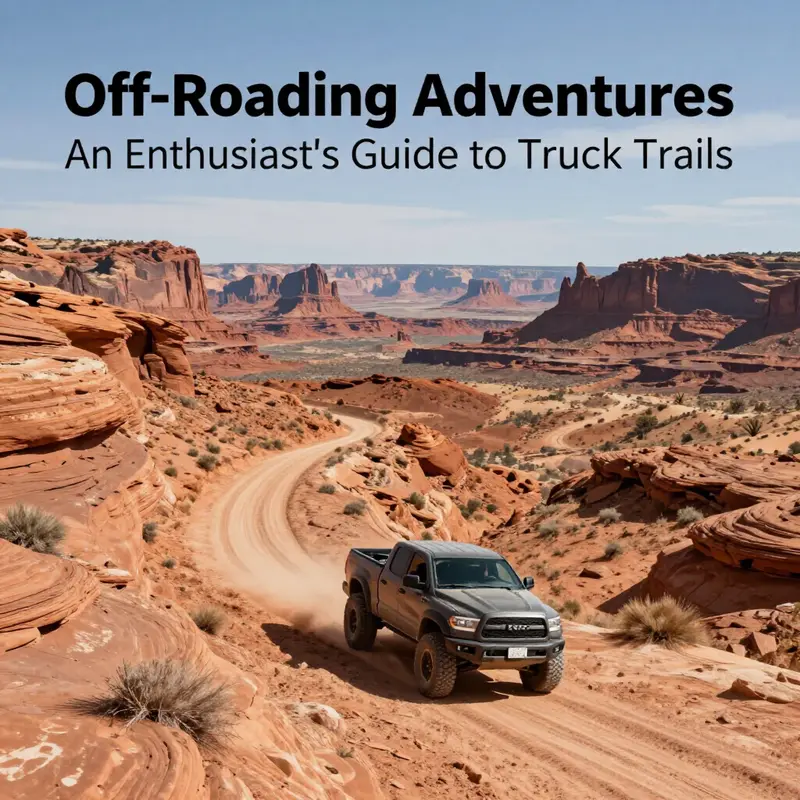
Moab, Utah sits at the heart of a landscape that tests both vehicle and driver, a place where the desert light renders every rut and rock seam as a character in a grand, evolving story. This is a destination that has become synonymous with the spirit of truck off-roading: deep, unhurried immersion in terrain that rewards patience, line choice, and attention to the terrain under the tires. The trails here are not mere routes; they are conversations with stone and sand, with a geology that has been sculpted by wind, water, and time into features that demand respect and precise vehicle control. For many enthusiasts, Moab represents the apex of off-road experience—a fusion of technical challenge and awe-inspiring scenery. Trails like Slickrock and Fins and Things have become almost legendary because they balance the thrill of off-road technique with the stark beauty of the desert that surrounds them. The Slickrock Trail, in particular, invites a careful, deliberate approach: the surface is a mosaic of rounded sandstone that rewards momentum and tire placement, while the views to the La Sal Mountains remind you that you are navigating a landscape carved by millions of years of erosion. This is not a place to rush through. It is a place to study the line, read the rock, and let the vehicle tell you when a wheel is where it should be so the track remains true and the ride remains controlled.
What makes Moab especially compelling is how the natural world shapes the rules of the road. The red rock formations glow with a heat that can buffet a vehicle’s cooling system and reveal delicate microhabitats to anyone willing to slow down and observe. The desert’s openness also demands careful planning. The climate is harsh and dry, but the terrain can be surprisingly unforgiving after rainfall, when arid washes turn into flash floods with little warning. That combination—majestic isolation and sudden weather shifts—creates a need for preparation that extends far beyond bringing a spare tire. It means checking maps, understanding where you are on the trail, and knowing how to retreat if the conditions change. In Moab, navigation is as much about reading the sky and the wind as it is about following a ribbon of dirt.
Setting out from town with a plan is part of the ritual. The official voice of the land is clear: the area is managed by the Bureau of Land Management, which maintains trail maps, safety guidelines, and route restrictions to keep the landscape intact while offering a rich set of possibilities for four-wheel drive enthusiasts. You’ll want to consult official sources for current access rules and any seasonal restrictions. The same practical discipline that you bring to a demanding climb on Slickrock should also govern how you approach the surrounding network of trails. Dry weather is typically best for these routes, but conditions can shift rapidly, and flash floods can appear in arid washes after rain. The prudent driver respects these realities and plans accordingly. In practice, that means checking forecasted weather, reviewing recent trail reports, and carrying reliable navigation tools so you never lose the thread of your chosen route.
The preparation that makes Moab possible also has a moral core. Responsible recreation is not a slogan but a set of habits you carry in your pack and in your mind. Pack out what you bring in, stay on designated routes, and avoid creating new scars on fragile rock surfaces. The desert’s beauty is a fragile gift; it rewards those who leave the smallest possible footprint. And because Moab’s trails can be demanding, your mindset matters as much as your vehicle’s capability. A well-prepared driver is not just someone who can tackle a steep ascent but someone who knows how to adapt when the rock suddenly feels slick or when a line transitions from rock to deep sand. This kind of adaptability is what turns a good day into a great one, allowing you to appreciate the landscape without compromising safety or the health of the trail system.
If you’re looking to build a solid foundation before you head into Moab’s backcountry, a practical starting point is understanding the mechanical side of your truck. A reliable vehicle is the baseline of any serious off-road outing. A strong knowledge of diesel or gasoline systems—how the engine breathes, how the fuel and cooling systems interact under load, and how to recognize the early signs of trouble—can save you a lot of trouble far from civilization. A structured approach to diesel or gasoline maintenance, and the ability to perform basic field repairs, can be a real game changer when you’re navigating a remote stretch of red rock. For drivers who want to anchor their preparation in a tested framework, there is a comprehensive guide that walks you through the essentials and then advances into more complex considerations. Mastering diesel mechanics, for instance, offers a step-by-step path to success that can bolster your confidence on long rides and in tougher terrain. It’s not a substitute for local knowledge or proper safety gear, but it does provide a reliable pillar of competence that supports the broader off-road experience. If you’re curious, you can explore that resource here: Mastering Diesel Mechanics: Your Step-by-Step Path to Success.
The practical realities of Moab’s trails also unfold in the small, quiet moments—things that seasoned explorers notice and newcomers eventually learn. The balance of air, heat, and traction makes tire contact every turn a decision, not a reflex. The vehicle’s approach to a rock ledge becomes a dialogue with the terrain, where tire placement, throttle modulation, and steering input converge in a few seconds that feel longer than a heartbeat. A driver learns to read subtle cues: the texture of the sandstone, how a crusted ridge may offer a hold, where a hidden line might thread between two boulders. And because the landscape invites contemplation, many visitors find themselves lingering at viewpoints, letting the scale of the desert settle into memory as much as the physical exertion of the ride. There is a timeless rhythm to Moab’s trails—one that invites a patient approach, careful line selection, and a deep respect for the desert’s power and precision.
Of course, experienced drivers know that a great day in Moab doesn’t happen by accident. It happens through informed choices and the humility to adjust plans when conditions demand it. The Bureau of Land Management’s guidance and Moab Field Office resources are not just bureaucratic safety nets; they are practical tools that help you map out your day, minimize risk, and leave room for the unexpected without compromising safety. Trail maps, current access information, and safety advisories are all part of the planning map you should carry in your vehicle’s glovebox or on your navigation device. While the excitement of tackling a famous route like Slickrock can be strong, your best day often comes from starting with a simpler line, learning the vehicle’s responses to the rock, and building up to longer, more challenging sections as weather, visibility, and confidence permit.
Moab’s reputation as an iconic off-road destination is earned not just by its reputations, but by the quality of the experience—the sense of vastness, the quiet solitude punctuated by the engine’s growing vibration, and the quiet camaraderie that arises when a driver spots a fellow traveler navigating a line with grace. The desert has a way of revealing character, and those who listen to it learn a little more about their own: how they react under pressure, how they adapt to changing conditions, and how carefully they balance ambition with responsibility. For someone planning a first trip or a return visit, Moab is less about conquering a particular obstacle and more about expanding how you read the land, how you prepare your vehicle, and how you interact with the environment so that you can enjoy long-term access to these remarkable trails.
As you map out your itinerary, remember that the best Moab days often blend a measured pace with moments of bold, deliberate movement. It’s not about rushing to the end of a trail but savoring the journey, learning the vehicle’s limits, and keeping a mindful eye on the landscape you are driving through. The desert asks for discipline, not bravado, and rewards it with views that stay with you long after you’ve rolled back into town. For those who invest in preparation—mechanical knowledge, a reliable navigation plan, and a commitment to Leave No Trace—the Moab experience can become a lasting memory of how a truck, a driver, and a landscape come together in a moment of shared respect and adventure. And when the sun sinks behind the La Sal Mountains, you’ll understand why Moab isn’t just a destination but a rite of passage for those who answer the call of the red rock frontier.
External resource for planning and safety: For official safety guidelines, trail status, and access information, consult the BLM Moab Field Office at https://www.blm.gov/wo/st/en/prog/moab.html.
Between Canopy and Cascade: Off-Roading Through Olympic National Park’s Rugged Backcountry
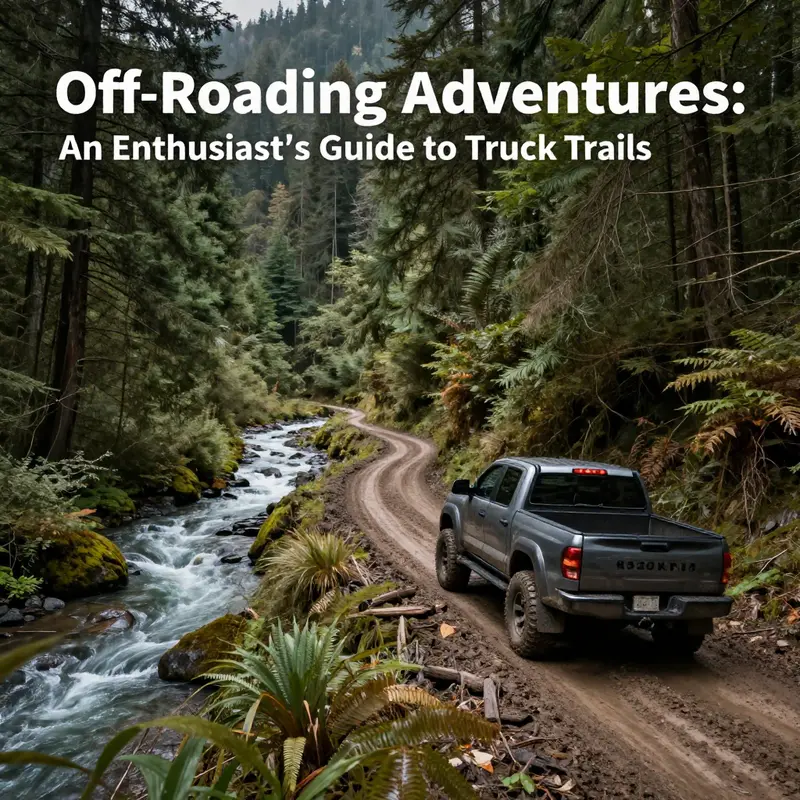
Olympic National Park unfolds like a living map of contrasts, where moss-draped giants rise above fast-running rivers and alpine meadows echo with the quiet of high winds. It is within this mosaic that off-roading finds a distinct edge: a network of forest roads and two-track spurs that thread through old-growth stands, across streams, and toward the remote fringes where solitude becomes part of the journey. The North Fork Road and its wandering side lanes offer access not to polished overlooks or manicured trails, but to backcountry corridors where the terrain treats a vehicle as a partner rather than a trophy. Here the drive is less about conquering a designated route and more about reading the land—pondering grip, slope, rock, and water, and letting the truck follow the line your eyes choose as you inch along through pine needles, slick clay, and the occasional washout. The appeal is pristine and intimate: a chance to leave crowded trailheads behind and to wake in the morning to the sound of river and wind, with dispersed camping opportunities tucked along primitive corridors that feel almost like a private expedition rather than a park crawl. But that intimacy comes with responsibility. Olympic’s backcountry paths are not built for speed or show; they reward patient hands, careful navigation, and respect for the landscape that sustains them. In this setting, a conceptual shift often happens first. The vehicle that looks rugged in a showroom can feel very different once its wheels tuck into a rutted rut or its front tires cling to a slick rock face. The calm confidence that comes from confident aesthetics may fade once you meet the reality of a steep, crumbly incline or a river crossing that demands precise line choice. It is not that the sport is out of reach; it is that it requires honest assessment of your truck’s capabilities and your own, and a plan that honors safety above bravado. In this light, Olympic’s backcountry is a proving ground for preparation as much as for ambition, a place where the journey begins with mapping, permits, and a mindset tuned to limits and possibilities alike. The backcountry routes here are often primitive. They run through stands of cedar and spruce, over narrow bridges, and alongside occasional culverts that reveal the temperamental watercourses feeding the park’s rivers. There are spur roads that turn into faint two-tracks, where GPS may drift and a compass can become your best ally. This is the kind of terrain where good planning translates into good fortune: a route that keeps you out of trouble, a water source that doesn’t require clever improvisation to reach, and a campsite that remains quiet enough to hear the night birds and the distant logs shifting in the wind. For anyone considering such a trip, the first check should be road conditions and seasonal access. Weather in the Olympic region can swing quickly from mild to challenging, and a road that was passable in late spring can become washed out after a heavy rain or early snowfall. Permits or special-use guidelines may apply for backcountry camping, and it is essential to confirm what is required before you head out. The park’s backcountry character also means you must be intentional about where you drive and camp. The aim is to minimize impact while maximizing the experience, and that means staying on the route, avoiding shortcuts that erode soil and scar root systems, and leaving the forest as you found it for others to enjoy. The Leave No Trace principles aren’t mere advice in this setting; they are practical safeguards that protect both the environment and the experience. The backcountry roads, while offering the freedom to explore, also compound the need for reliable equipment and preparation. A well-kept recovery kit becomes more than a precaution; it is a lifeline in a place where a stalled vehicle may sit unseen for hours. A sturdy, weather-appropriate recovery strap, a winch or traction aids, and basic repair tools are prudent companions on any expedition through the park’s backroads. Even more critical is communications readiness. A radio or satellite messenger ensures you can summon aid if weather closes the route or if someone branches off the primary line of travel and misreads a landmark. Fuel planning becomes equally important in these remote corridors; there are few opportunities to refuel once you leave the main access points, so carrying a spare, along with extra water and food for a longer-than-expected stay, helps maintain safety and calm if a delay arises. It is tempting to view such trips as tests of endurance or bravado, but the most sustainable approach is to regard the backcountry as a weekend classroom. The lessons learned here come not from conquering a hill, but from reading surface conditions, choosing the correct line on a rocky stretch, and adjusting plans when a weather front rolls in. Vehicle capability is essential, but it should be measured against the real constraints of the environment. Modern vehicles can be mistaken for universal solutions when their exterior styling suggests ruggedness, yet the actual design—how the suspension articulates, how the drivetrain distributes torque, and how ground clearance interacts with the park’s natural features—will tell a more honest story. In a landscape where every mile deepens the sense of isolation, the risk of overreaching a vehicle’s limit is not merely a mechanical concern; it is a safety and conservation matter. This is why trip planning in Olympic’s backcountry stresses slow, deliberate progress—checking the map, reconciling the route with the topography, and allowing for contingencies that keep you in sync with the land rather than forcing it to yield to an unfinished plan. The experiential reward, when the road narrows to a trench and then opens onto a high-flung river bend or a wind-swept viewpoint, is profound. The sense of place—where stream carved basalt, evergreen forests, and alpine air converge—becomes the true payoff. Yet the payoff is best realized when you approach the park as a guest with a stewardship obligation. Permit requirements, if applicable, should be sorted well before departure, and exit routes should be pre-scouted to avoid churning new ruts in sensitive soils. Forest roads and two-track spurs can lead to dispersed camping sites that are both remote and delicate; choosing a site with minimal impact on vegetation and wildlife ensures that future visitors can experience the same sense of discovery. Ultimately, Olympic National Park’s backcountry for off-roading is a reminder that the best adventures happen when preparation, respect, and curiosity align. You are not merely driving through scenery; you are moving through a living system that rewards restraint and responsible conduct. The experience can be transformative not because of the obstacle conquered, but because of the quiet clarity found when you read the land with patience and humility. For travelers who carry this mindset, the road becomes less about a destination and more about the practice of navigating with intention, a practice that keeps the park’s rugged elegance accessible for generations to come. To deepen planning and safety, consult official guidance on road conditions and backcountry access when you’re formulating your itinerary and packing list. For the most current information on recreation and access in Olympic National Park, you can refer to the park’s official pages and plans here: https://www.nps.gov/olym/planyourvisit/recreation-access.htm
Trails of Respect: Navigating Off-Road Ambitions Around the Great Smoky Mountains
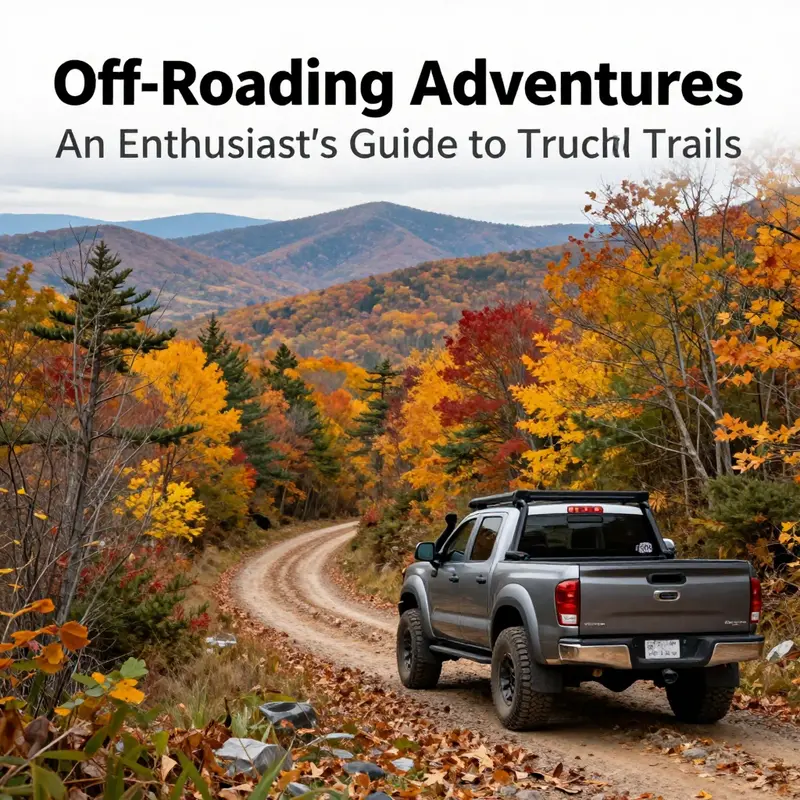
The urge to carve a line through untouched terrain is a shared thread among truck enthusiasts and outdoor lovers alike. When that impulse brushes up against the awe-inspiring landscape of the Great Smoky Mountains, it raises an essential question: where can a trail-ready truck really go without crossing a line that protects both the land and your safety? The Smokies, famed for their mist-topped ridges and dense, ancient forests, are a sanctuary for hikers, wildlife, and photographers. They are not, however, a playground for unregulated off-road driving. Within the park’s boundaries, off-road truck driving or vehicle exploration on non-designated routes is strictly prohibited. The park’s mission centers on preserving natural and cultural resources, and the landscape simply cannot bear the footprint that random wheeling would impose. This is not a refusal to ride; it is a call to choose your adventures with care, so you can still satisfy the craving for dirt under tires while honoring the land that makes the experience meaningful in the first place.
The practical upshot is clear: plan your off-road ambitions around the park’s rules. The Smokies preserve over 800 miles of hiking trails and maintain scenic drives that showcase the region’s beauty without requiring vehicle traversal off the established road network. The Roaring Fork Motor Nature Trail and Newfound Gap Road offer well-maintained routes that are open to passenger vehicles and provide access to breathtaking overlooks, stream crossings, and forest scenery. These roads are designed for slower speeds, careful driving, and a respect for the delicate balance that sustains the park’s ecosystems. They remind us that the adventure here is not about conquering miles at high speed, but about experiencing a landscape that rewards patience, observation, and responsible travel.
For those with a deeper itch for off-road thrills, the Smokies also point toward measured alternatives nearby. In the towns surrounding the park, local operators offer guided off-road experiences on private property or on trails that have been approved for such use. These experiences are crafted to deliver the adrenaline of rough terrain while complying with conservation policies and landowner agreements. By choosing a guided tour in the surrounding area, you gain access to trained guides, mapped routes, and safety protocols that reduce risk for both participants and the land. The emphasis shifts from improvisation on fragile soils to a structured, educational excursion that respects moisture in the soil, erosion patterns on steep grades, and vulnerable plant communities. It’s the balance between thrill and stewardship—the kind of balance that turns a good ride into a responsible one.
If you plan a day that threads the park’s boundaries with its surrounding communities, a few practical considerations become part of the roadmap. Start with the weather and the season. Mountain weather is famously variable; a sunny morning can become a rain-soaked afternoon, with temperatures dropping at higher elevations and rock surfaces turning slick. Check the official sources for current conditions and any temporary closures due to wildlife activity, weather hazards, or maintenance. A reliable route map is essential, not only to stay on approved corridors but also to help you avoid delicate habitats that can be damaged by misdirected wheels or off-camber maneuvers. In this regard, the park service and partner agencies offer resources that help you plan with confidence rather than bravado.
Equipment and vehicle readiness are simple but indispensable parts of a successful Smokies excursion. Even on paved or well-graded scenic roads, you should be prepared for sudden changes in weather, road surface, and traction. A basic recovery kit, a reliable means of communication, and a basic toolset for minor on-trail repairs can make a substantial difference if you encounter a hiccup on a remote stretch near these mountains. While you won’t be wheeling through the park itself, you may still encounter gravel or shale sections along park-adjacent routes, where a careful approach and a cautious pace protect both tires and the road shoulder. In short, the rule of thumb remains the same: drive with intention, stay on designated surfaces, and leave no trace behind.
Beyond gear and maps, a broader mindset is essential. The Smokies’ dual identity as a national park and a living, breathing ecosystem means every vehicle move has consequences. Your plan should include a clear understanding of what is legally permitted, what requires a permit, and what is simply off-limits to motorized traffic. Local operators often provide pre-trip briefings that cover environmental considerations, safety practices, and the boundaries of private-property access near the park. If your heart is set on the tactile feel of rough terrain, those guided experiences give you the rush you crave within a framework that protects soil stability, stream banks, and the flora that thrives in the understory. It’s not a compromise; it’s a smarter path to the same thrill, pursued with respect for the land that makes the Smokies a legend in the first place.
As you shape your itinerary, consider how you’ll reconcile the pull of back-country exploration with the discipline of conservation. While the Smokies set strict boundaries for off-road driving inside their borders, the surrounding communities invite you to expand your horizons in ways that still honor the landscape you came to experience. Guided tours on private land or on approved trails offer a legitimate outlet for the off-road itch without compromising the park’s protections. In planning, you’ll likely consult a mix of official sources, local clubs, and experienced drivers who know the region’s exact permissions and seasonal access. These conversations and consultations can become part of the adventure themselves, enriching your understanding of how to tread more lightly, yet still explore with confidence.
For readers who are looking to deepen their mechanical readiness while traveling through or around the Smokies, there is practical value in building a knowledge base that travels with the truck. A solid foundation in mechanical fundamentals—tire condition, steering alignment, brake system integrity, and fuel system health—can prevent routine problems from becoming detours. If you ever want to broaden that skill set, you can explore more about the fundamentals of diesel mechanics and the step-by-step paths to success through resources that focus on durable, real-world learning. Mastering Diesel Mechanics: Your Step-by-Step Path to Success offers a structured approach to getting the most from your vehicle in demanding environments. While not specific to any one region, the principles translate into better pre-trip checks, safer driving decisions, and a greater appreciation for a vehicle’s capabilities and limits. This kind of knowledge becomes especially valuable when you’re navigating mountain roads, where even a small mechanical hiccup can create a ripple effect through a day’s plans.
For those who want to access official information and stay aligned with regulatory requirements, the National Park Service is the primary source of truth for Great Smoky Mountains regulations and permitted activities. Their pages outline the rules in clear terms and point readers toward the proper channels for permits and advisories. It’s a resource that complements the on-the-ground guidance you receive from local operators and seasoned drivers. The combination of park policy, local access options, and personal preparedness forms a robust framework for pursuing off-road curiosity without compromising the integrity of one of the country’s most treasured landscapes.
In this light, the Smokies become less a destination for reckless miles and more a case study in disciplined adventure. The mountains invite you to slow down, read the terrain, and choose a route that respects both the land and your vehicle. When you blend scenic, motor-friendly routes with nearby guided experiences, you honor the park’s mission while still satisfying the urge to explore. It is a reminder that the best off-road journeys emerge not from pushing limits at every turn, but from knowing where to push—and where to pause—for the sake of the land you’re grateful to traverse.
External resources can ground your planning and ensure you’re aligned with official guidelines. For official regulations and permitted activities, consult the National Park Service page dedicated to the Great Smoky Mountains National Park. This resource provides current rules, seasonal advisories, and links to authorized access areas around the park. By pairing that information with local offerings and a well-rounded preparation routine, you can craft an off-road experience that is exciting, safe, and responsible. And as you gather maps, weather forecasts, and route ideas, remember that the Smokies reward patience and care. The landscape gives you vistas that linger in memory long after you’ve parked the rig and stepped into the cedar-scented air of a misty morning.
External resource: https://www.nps.gov/grsm/index.htm
Buckingham’s Hidden Trails: A Quiet Gateway to Virginia Off-Roading
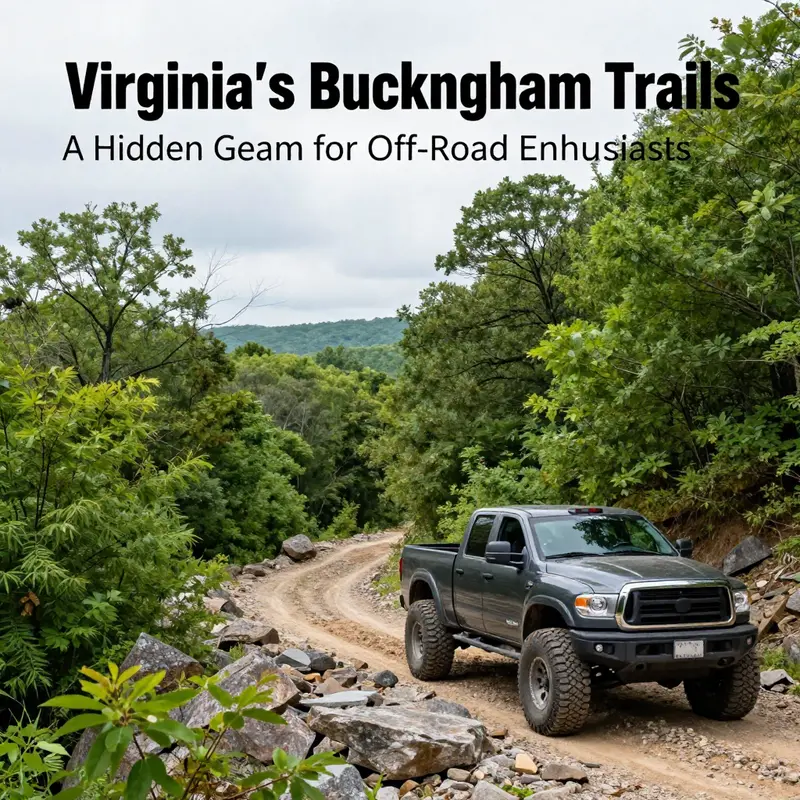
Buckingham County sits like a quiet hinge between Virginia’s storied mountain ranges and the gentler, rolling farmlands that drift toward the James River. To an observer, the land might look unremarkable, but to a truck owner with a nose for dirt and a sense of curiosity, Buckingham offers a different kind of appeal. It is not the glossy epic trailhead you read about in glossy magazines, nor the crowded park where crowds pile into one narrow lane. Instead, it is a land of subtle challenges and wide horizons, where the road grades relax into the woods and the forest seems to hush beneath the weight of the tires. This is a place where off-roading becomes a conversation with terrain rather than a race against it, a place where your truck’s capabilities are matched to the landscape rather than pressed to prove themselves. For many drivers, Buckingham’s hidden trails are the beginning of a more deliberate, thoughtful kind of adventure that respects both the vehicle and the land it traverses.
The county’s terrain offers a distinctive blend of forested lanes, firebreaks, and old logging roads that snake through pine and hardwood. These are not the kind of routes that demand aggressive speed or high-risk stunts; instead, they reward a steady, patient approach. The dirt roads and lesser-known trails here are ideal for four-wheel-drive enthusiasts who want to test grip and ground clearance without venturing into legally complex or heavily regulated zones. The opportunities extend beyond simple mileage; they invite a deeper appreciation of the landscape—low-water crossings after a spring rain, rutted sections where careful wheel placement matters, and the way a hill climb reveals your truck’s low-end torque and stability on loose soil. It’s the kind of setting where a well-prepared driver can gain confidence through controlled, methodical progression rather than through adrenaline-fueled runs.
A centerpiece of Buckingham’s off-road allure is its proximity to the Appalachian Trail as it threads through southern parts of the county. This juxtaposition—quiet dirt tracks alongside a legendary footpath that draws hikers from around the world—highlights an important truth about responsible off-roading: you are sharing this land with other visitors who have come to sample its natural beauty in very different ways. That dynamic calls for courtesy, situational awareness, and clear boundaries. It also underscores the need to stay on established routes and to respect the soil and vegetation, so that future trips remain possible for everyone who seeks a similar experience. For those who enjoy the view as much as the drive, Buckingham’s overlook points and meadow edges offer a chance to pause, listen to the wind in the pines, and let the landscape reset your bearings after a long stretch of technical terrain.
Beyond the dirt lanes, Buckingham hosts pockets of scenic contrast that broaden the appeal of a day behind the wheel. The Mount Pleasant National Scenic Area, found within the county’s borders, provides expansive vistas and a tapestry of old-growth forest dynamics that remind visitors why Virginia’s outdoors have endured as a shared resource. It’s not a theme park—it’s a landscape that invites slow, patient exploration. These areas enhance the sense of discovery that makes off-roading in Buckingham feel less about conquest and more about discovery—about the way light filters through high-canopy branches, the way a creek slows your progress, the way a distant ridge line hints at more terrain to explore on a future outing. The beauty of such places is that they reward restraint and careful planning. The best routes are not those that demand raw power alone, but those that reward good judgment and attention to shifting ground conditions.
For the truck owner, Buckingham’s trails also pose practical considerations that are worth keeping in mind before you head out. Vehicle readiness takes on a different meaning in this county: you’re often far from paved stretches, and the terrain can surprise you with slick clay on a warm day or rocky ledges that demand precise steering and momentum control. A reliable recovery kit becomes a practical lifeline rather than a marketing prop, and a well-equipped toolkit—including basic repair supplies, a tire repair kit, and a compact air compressor—helps you stay in control when a tight bend or a stubborn rut blocks progress. Although Buckingham’s routes are typically forgiving, the absence of cell service in some sectors makes a companion or a planned meeting point essential. A sturdy, charged radio or a satellite communication device can transform what might be a challenging solo ride into a confident, connected journey.
Planning a Buckingham excursion also means embracing a framework of responsible access. There are no universal permits that blanket the county for off-road driving, but land managers in the region emphasize adherence to designated routes and seasonal access guidelines. The U.S. Forest Service and state agencies maintain current trail conditions and access rules, and the most important step you can take is to verify conditions before you go. Weather in the region can shift quickly, and a sudden rain can transform dirt into a slippery surface that tests traction and control. Seasonal restrictions may apply in some forested corridors, especially after heavy rainfall when soil compaction and rut formation can degrade sensitive habitats. Before you set out, check official sources for the latest guidance on trail openings, closures, or alterations to the route network. This practice preserves the land’s integrity and ensures that Buckingham remains a viable playground for future explorers.
The social aspect of exploring Buckingham’s hidden trails should not be underestimated. Local off-road clubs, land managers, and neighboring landowners often serve as informal guides to the best routes and the seasonal nuances of the region. Engaging with these communities can yield practical tips about where the dirt roads wind through denser stands of timber, where a particularly scenic turnout sits beneath a stand of loblolly pines, or where you might encounter a seasonal closure that isn’t obvious from a map. Such conversations can also connect you with a broader network of people who share a respect for safety and environmental stewardship. Because Buckingham is not a well-marketed destination, the knowledge you gain from locals often includes details you won’t find in a guidebook: the best time of year to approach a certain ridge trail, the likely conditions after a wet spell, or a quiet lane that leads to a hidden overlook without disturbing nearby wildlife.
When you plan a Buckingham excursion, think about a loop that minimizes backtracking and preserves the sense of solitude that makes the county appealing. A thoughtful route might begin on a broad road that opens into a narrower track, followed by a gentle descent into a fir and hardwood corridor. A long, steady climb can culminate in a vista that invites a snack break, a short rest, and then a cautious return by a different corridor to complete the loop. The goal is to leave each site in as good or better condition than you found it: pack out what you pack in, avoid straying into wet meadows that are slow to recover, and avoid creating new trails with your drives. This approach—slow, deliberate, and respectful—ensures Buckingham remains a place where a driver can grow in skill and humility at the same time.
For readers who want a broader frame of reference, Buckingham’s terrain sits within a landscape that has long attracted hikers, riders, and drivers who appreciate a slower pace and a deeper connection to place. The Appalachian Trail’s southern stretch in this region is a reminder that long-distance trails and backcountry roads can coexist in a shared realm of natural beauty. In practice, this means acknowledging other visitors’ experiences and choosing routes that harmonize with the land’s visual and ecological fabric rather than overpower it. It also means recognizing that the real reward of Buckingham’s hidden trails lies not in the length of the drive but in the quality of the moments—the way the forest quiets your engine as you round a bend, the way the air smells after a rain, and the sense that you have added a small, respectful chapter to a larger story about Virginia’s outdoors.
External resource: For a broader geographic context about how the Appalachian region shapes outdoor access and land use, you can explore the Appalachian Trail Geography page, which offers maps, regional notes, and current information about land management in the area: Appalachian Trail Geography.
null
null
Final thoughts
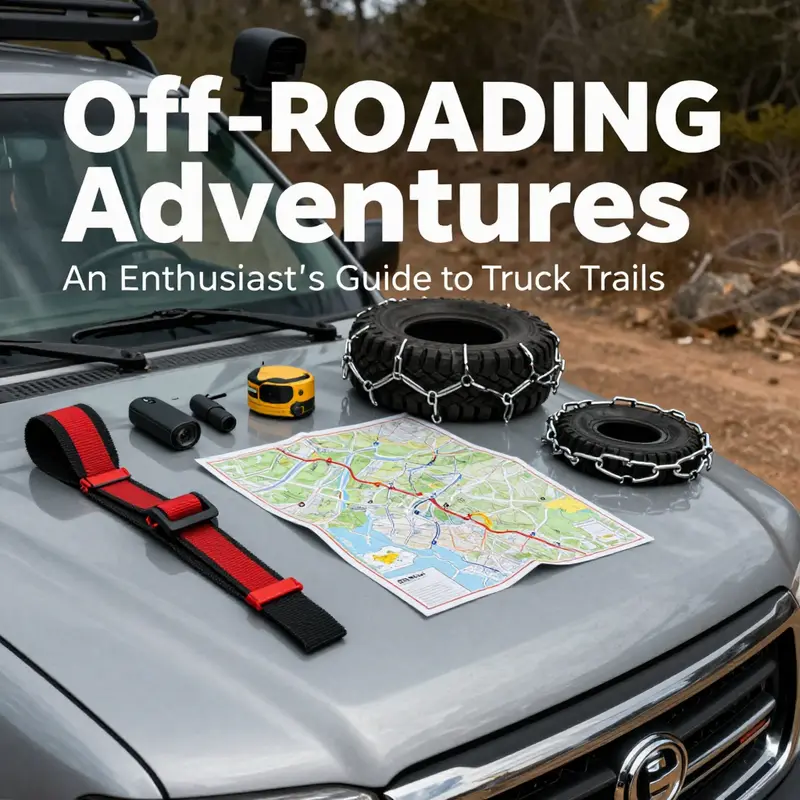
Off-roading isn’t just about the destination; it’s about the journey, the thrill of adventure, and the bonds formed with fellow enthusiasts along the way. From the breathtaking vistas of Moab and Olympic National Park to the lesser-known Buckingham Trails in Virginia, adventurous spirits can find the perfect playground for their trucks. As you prepare for your next excursion, remember the importance of proper equipment and knowledge of the trails. With the right preparations, you can conquer any terrain and enjoy unparalleled experiences in the great outdoors.