

Iowa is a hidden gem for off-road enthusiasts, offering a plethora of trails and parks that cater to truck adventurers. Whether you’re a local or just passing through, the state’s diverse landscapes promise an exhilarating experience. In this guide, we’ll delve into the top locations where you can unleash your truck’s potential. Each chapter highlights distinct regions like Cedar Falls, the expansive Prairie Lakes Recreation Area, and the diverse Hawkeye State ATV Trails, ensuring you find the perfect spot to kick up some dirt and satisfy your adventurous spirit.
Cedar Falls and Beyond: A Trucker’s Guide to Iowa’s Off-Road Trails
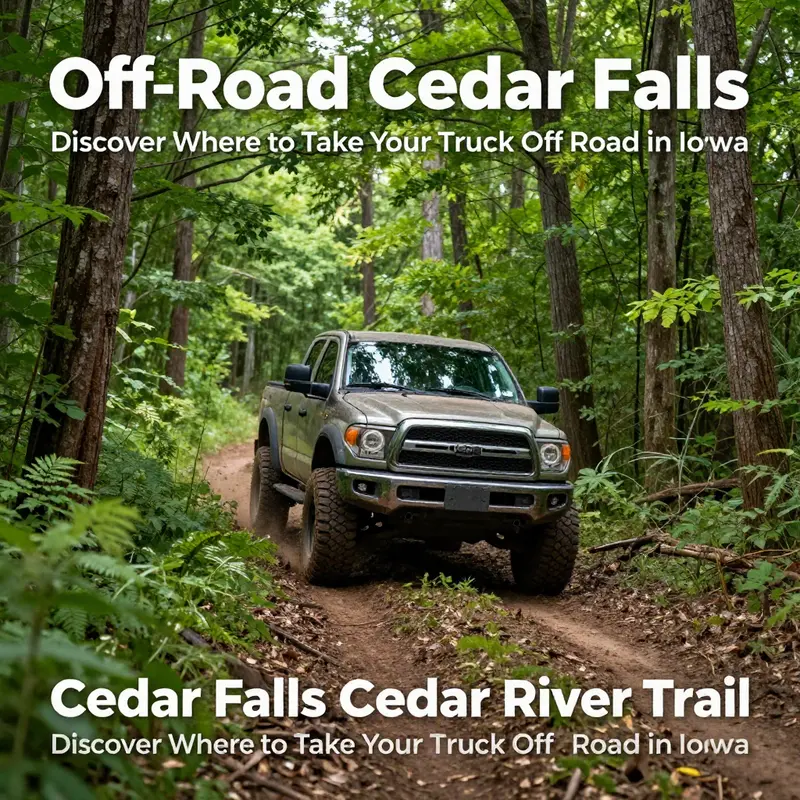
Cedar Falls sits at a practical crossroads for anyone curious about taking a truck off the pavement in Iowa. The city itself is a gateway to culture, family-friendly destinations, and nature pockets that feel a little more serene than the bustle of larger urban centers. Yet when you start to map the routes for a true off‑road outing—where the road ends and the dirt, gravel, or mud begins—the city becomes less about the driving you might imagine on a mapped highway and more about the choices you make to reach places where legal, designated routes exist, and where the landscape can offer a real test for a truck and its pilot. This chapter threads together the Cedar Falls context with the broader Iowa framework for off‑road driving. It shows how a driver can plan responsibly, seek out the legal trails, and respect both the land and the laws that govern motorized access in the Hawkeye State. The journey begins with Cedar Falls’ pressing reality: within the city limits, dedicated off‑roading opportunities are limited and tightly regulated in order to preserve natural landscapes and ensure safety for all visitors. The trails that do exist nearby are often part of larger regional or state systems, or they live behind the doors of private parks that curate experiences for drivers who want to push tires into grippy earth, churn through mud, or navigate obstacle courses designed to test endurance and skill. The contrast between the city’s family‑friendly attractions and the more rugged, permissions‑required experiences a driver seeks lays the groundwork for a thoughtful approach to Iowa off‑roading that balances adventure with legality and accountability.
To understand where you can legally take a truck off road in and around Cedar Falls, it helps to widen the lens beyond the city boundaries. The most important element is recognizing that off‑road operation on public roads is not permitted, and on private land you must have explicit permission. These basics shape every plan, from the initial research phase to the moment you roll into a designated park or trailhead. For many drivers, the safest path to an authentic off‑road experience is to start with state‑supported or privately managed sites that maintain clear rules, maps, and supervision. In central and western Iowa, a network of options exists that cater to trucks, ATVs, and UTVs, each with its own rhythm, terrain, and required credentials. The Cedar Falls region serves as a learning ground for how to navigate those options while honoring the land and the regulations that govern it.
A practical first step is acknowledging the landscape and the types of access Iowa allows. Within and near Cedar Falls, you won’t find a dense web of public land designated specifically for truck off‑roading the way you might find in other states with broader motorized land use. Instead, you’ll encounter a mix of designated ATV/UTV trails, large state recreation areas that offer motorized routes, and private parks that provide controlled environments for hard‑charging experiences. The Cedar River Recreational Area near Cedar Falls, for instance, still presents its charm as a natural corridor for hikers, rowers, and cyclists. Its off‑road use is not the primary identity of the area, and access for motorized vehicles may require permits, advance checks, or may be restricted to certain zones or times. The underlying message here is not discouragement; it is clarity. The land around Cedar Falls rewards planning, patience, and a willingness to seek out the right venues rather than relying on opportunistic access.
That is precisely where nearby regions and larger state structures come into view. If you’re determined to ride a truck off the pavement, the broader Iowa framework presents several viable channels. Prairie Lakes Recreation Area, located in the western part of the state near Crawford County, is a prime example of a large, multi‑use park that accommodates a variety of outdoor activities, including designated off‑road routes. These routes are crafted to handle trucks and other motorized platforms while preserving the surrounding ecosystem. The park’s visitor center serves as a practical starting point for obtaining maps and permit information, and it offers a gateway to understanding the rules that govern where and when you can operate in the park. In this sense, Prairie Lakes functions as a bridge between the Cedar Falls microcosm and the wider Iowa off‑road map, showing what a thoughtful, licensed, and respectful approach looks like when you leave the city behind and venture into land that has been set aside for such recreation.
Beyond the park boundaries, Iowa’s network of designated trails stretches across counties and communities, creating a tapestry of opportunities and constraints that require careful navigation. The Hawkeye State ATV Trails stretch across more than 400 miles and traverse several counties, including Black Hawk, Linn, and Hardin. These routes are precisely what many enthusiasts seek: long, continuous experiences that weave through diverse terrain. They are usually maintained by state agencies or local associations, with ongoing efforts to patrol, repair, and map the routes so that off‑road users know where to ride legally and what risks to anticipate. The Iowa Department of Natural Resources (DNR) hosts an ATV/UTV Trail Finder tool on its official site to locate the nearest legal routes. This resource is essential for anyone who begins to link Cedar Falls to a statewide or regional trail network, because it translates a desire for adventure into a concrete plan grounded in current regulations and open trails.
Some of the most practical options for a Cedar Falls resident or visitor who wants to get out on the dirt are not found in sprawling state facilities alone. Iowa also features private off‑road parks that curate specific experiences. Buckeye Off‑Road Park in West Branch and Raven Ridge Off‑Road Park in Marshalltown are two examples of venues where drivers can engage with a controlled environment designed for trucks and other off‑road vehicles. These parks often present obstacle courses, sand pits, mud features, and steep climbs that are precisely the kind of physical tests that make off‑roading appealing. Reservations and entry fees are typical, and the experience is built around safety, progression, and the chance to push a vehicle’s limits in a way that public lands commonly do not allow. While private parks demand planning and a budget, they also provide the predictability of a managed setting: maps, staff, defined boundaries, and a focus on safety that benefits newcomers and seasoned drivers alike. In many ways, they become the most reliable option for someone who wants a robust off‑road session without the uncertainties that can come with untracked or unregulated ground.
The route from Cedar Falls to these kinds of experiences—whether a state park with a defined trail system or a private park with level‑set challenges—can be simple to plot but requires disciplined attention. The first component is to secure permission and understand the local rules. Iowa’s legal framework emphasizes access rights, safety requirements, and registration norms for motorized vehicles. Vehicles used for off‑road purposes need to be properly registered and plated in Iowa, with current licenses that reflect the vehicle’s use. Wearing seat belts and avoiding impairment by substances are baseline safety expectations on any off‑road excursion. Moreover, before you set out, confirm access with the park management or landowners and verify that your planned route is indeed open for the type and class of vehicle you intend to operate. This due diligence helps prevent conflicts, protects the environment, and ensures that your adventure doesn’t become a legal or safety liability.
A more detailed map of the options comes from recognizing the different landscapes you’ll encounter. In central Iowa and along corridors that connect to Cedar Falls, you’ll find a mix of forested tracts, open prairie pockets, and river corridors that shape the off‑road experience. The topography influences not only how the truck handles the surface but also how you prepare. For instance, sand pits and clay features common to some private parks create soft ground that can demand tire selection, weight distribution, and careful throttle control. Mud pits require a different touch, with the approach to maintain momentum without getting stuck, while steep hills call for steady speed management and appropriate hill‑climb techniques. Each environment teaches a different facet of off‑road driving, and each reinforces the idea that preparation and restraint are the most reliable guides in the field.
You may also find value in the more formal infrastructure Iowa offers for off‑road recreation. A robust network of designated ATV/UTV trails exists across multiple counties, with maintained routes that are not only legal but also documented. This is crucial because it allows drivers to plan itineraries that maximize reliability and safety. The DNR’s Trail Finder tool is a practical way to begin building a day‑trip or weekend‑long plan. It helps you identify routes that are compatible with the size and capabilities of your truck, estimates the distance, and highlights any permit requirements or seasonal restrictions. While Cedar Falls itself may not host a dense set of off‑road trails, the broader Iowa framework makes a trip feasible and enjoyable when planned with a clear sense of where you’re allowed to drive and what you’ll encounter along the way.
Alongside public lands, privately run parks provide another crucial dimension to the Cedar Falls experience. These venues are not simply playgrounds; they are carefully laid out landscapes designed to balance challenge and safety. The obstacle courses and mud or sand features are built with a driver’s learning curve in mind, allowing you to test control, braking, and throttle response on a safe, contained course. The lessons learned in these controlled environments often translate back to better decision‑making when you later encounter more natural, less predictable terrains in state forests or prairie landscapes. A trip that begins with Cedar Falls’ modest, near‑urban surroundings can easily evolve into a broader Iowa off‑road itinerary that blends private park sessions with strategic days at state recreation areas. The key is to treat the day as a progression: start with a well‑defined park experience, then expand to multiple venues along a planned route that respects private land access, trail rules, and seasonal variations.
To craft a credible, sustainable plan, a driver should also examine the role of local conservation groups and landowners who may allow off‑road vehicle use on selected properties. These opportunities often require direct communication and specific permissions, and they can exist as a complementary layer to the formal routes provided by state agencies and private parks. The overarching ethic remains consistent: operate only within legal, designated areas, and secure the permissions necessary to protect both the landscape and the driver. When Cedar Falls is the starting point, the most reliable path to a satisfying off‑road experience typically follows a pattern: identify a legal target (state park route, designated ATV/UTV trail, or private park), arrange access with a responsible party, confirm vehicle compliance, and prepare for a day that balances excitement with respect for the land and the rules that preserve it for future visitors.
For those who want to see how the Cedar Falls area connects to the broader trail system, a few practical anchors help make the planning process concrete. Start with the idea that off‑roading in Iowa is not a free‑for‑all; it relies on permission, designated routes, and a culture of safety and stewardship. The Cedar River corridor offers recreation possibilities, yet it is not a free‑ranging machine‑gun of access for trucks. Springbrook State Park and other nearby natural areas underscore a recurring theme in Iowa: the best off‑road experiences are those where access has been granted with clear expectations, where the landowner or managing agency has invested in maintaining trails, signage, and boundaries. The Prairie Lakes Recreation Area, with its dedicated routes and visitor information, is a microcosm of that approach—an example of how a large park system can accommodate motorized recreation while protecting sensitive ecosystems and neighboring communities. Likewise, the Hawkeye Trails and the private parks exemplify two parallel paths to the same goal: turning a vehicle into a controlled instrument of exploration that respects the terrain, the community, and the law.
From a practical standpoint, Cedar Falls can serve as a hub of inspiration and a starting point for mapping an Iowa off‑roading itinerary. The city’s proximity to public lands means you can drive a reasonable distance and arrive at a place where your truck can do the work it was built to do, under clear rules and within the boundaries that keep everyone safe. The experience is not about reckless driving or chasing adrenaline at the expense of the landscape. It is about recognizing the value of access that is earned and maintained through permits, registrations, and cooperation with land managers. It is about building a trip that respects the science of traction, terrain, and weather. It is about cultivating a habit of planning that can turn Cedar Falls from a modest weekend base into a launchpad for a broader, more authentic Iowa off‑road experience.
Finally, the landscape of options in Iowa invites a simple philosophical takeaway: the most authentic off‑road driving in this state is less about conquering the land than about navigating a network of legal routes with responsibility and curiosity. Cedar Falls remains a starting point, not a destination. The surrounding parks and private venues offer the actual stages where a truck and driver can learn, test, and enjoy the sport within a safe, regulated framework. If you approach your adventures with a clear understanding of the trails, the permits, and the necessary gear, you’ll find that the journey from Cedar Falls into Iowa’s broader off‑road country is not just feasible; it is a rewarding pattern of exploration that respects the land and the people who steward it. And when in doubt, turn to the official resources that map the official trails and provide license information, ensuring your day remains lawful, enjoyable, and safe. For official regulations and trail maps, consult the Iowa DNR ATV/UTV resources for maps, regulations, and license applications for all authorized off‑road routes: https://www.iowadnr.gov/Recreation/ATV-UTV.
Prairie Lakes Off-Road: Planning a Legal, Safe, and Thrilling Truck Adventure in Iowa
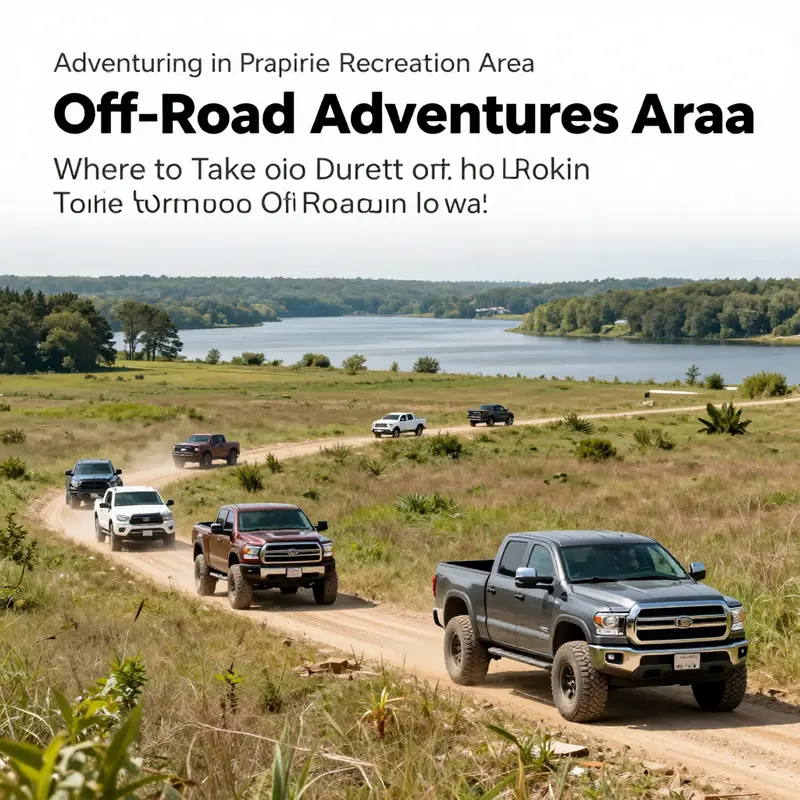
The Prairie Lakes Recreation Area in western Iowa offers more than scenic prairies and quiet fishing spots; it provides a structured, legal place to take your truck off road and explore unpaved terrain without guessing at access or risk. To make the most of a trip here you need more than a map: you need an approach that blends respect for regulations, careful vehicle preparation, an awareness of trail types, and practical on-the-ground decision making. This chapter guides you through what to expect, how to prepare, and how to enjoy off-roading at Prairie Lakes while staying legal and safe.
Prairie Lakes sits within a mix of state-managed lands and multiuse corridors. Trails range from gentle farm-track stretches to purpose-built routes that handle rugged driving. The park itself and surrounding DNR-managed spaces designate specific corridors for off-highway vehicles. That means your best bet is to plan on using marked off-road trails, authorized access points, and any designated staging areas. Off-roading outside those zones risks trespass citations and potential damage to sensitive habitats. Before you drive a single mile, check the current DNR rules for Prairie Lakes and nearby parcels. Conditions change seasonally; wet spring fields and winter thaw make some routes unsafe and closed.
A sensible plan begins with permits and registration. Iowa law requires registration and proper licensing for many off-highway vehicles, and some areas require an access permit or trail pass. If you’re running a truck modified for off-road travel, treat it like any other off-highway vehicle: confirm registration status, carry any required placards, and buy day or annual permits if needed. The park visitor center and the DNR provide maps and the latest permitted-use lists. Even where ATVs and UTVs are explicitly accommodated, full-size trucks may be restricted to certain wider routes or staging areas. A quick call or email to the park staff clarifies permitted vehicle classes and avoids surprises when you arrive.
Vehicle preparation cannot be overstated. Off-road use exposes a truck to hazards that rarely appear on pavement: rocks, ruts, deep mud, sand washes, and steep grades. Before you head to Prairie Lakes, walk through a simple checklist. Inspect tires for adequate tread and correct pressure for off-road loads. Loose sand and mud both invite lower pressures for better traction; know what pressure range your tires and wheels tolerate. Confirm that your spare is in good shape and properly mounted. Secure recovery gear: a rated tow strap, D-shackles, a shovel, and at least one traction aid such as sand ladders or a traction board. A proper jack and a basic toolkit pay for themselves. Fluids matter: check engine oil, coolant, transmission fluid, and differential fluids. If you plan prolonged trail use, consider carrying extra oil and a coolant top-up. A portable air compressor or a way to rapidly re-inflate tires after airing down is a small investment that adds a lot of flexibility.
Pack for self-sufficiency. At Prairie Lakes you will often be beyond immediate roadside services. Carry two gallons of water per person for a day excursion, plus a basic first aid kit. Bring navigation tools beyond your phone: a physical trail map, a compass, and a vehicle GPS if you have one. Cell service can be spotty in remote areas. A paper map from the DNR or a downloaded offline map reduces the risk of getting lost. Finally, dress for changeable weather and protect electronics from dust and moisture; a small dry bag is helpful.
Understanding trail types helps you match your truck to the route. Prairie Lakes and the surrounding areas offer a mix: former rail-trail corridors, primitive gravel backroads, and designated off-road routes intended for motorized recreation. The Praeri Rail Trail is a rail-trail conversion that runs across several towns and is primarily non-motorized. While it’s scenic for walking and biking, it is not the right place to take a truck except where specifically allowed. Instead, look for DNR-designated routes and staging areas listed on official maps. These routes often have wider corridors, engineered drainage, and surfaces designed to support motorized traffic. Where trails are narrow, rocky, or have fragile vegetation, stay on maintained track and avoid cutting switchbacks or widening the trail.
Season and weather will determine exactly what routes are open and how they ride. Spring thaw brings soft soils that are easily damaged and that can trap vehicles. Many DNR areas enact soft-ground closures until soils firm up. Summer heats harden sandy stretches but can also bake ruts into wheel tracks that increase wear on tires and suspension. Fall can be ideal: soils firm, visibility is good, and fewer people are at the park. Winter gives a different experience if seasonal access is allowed; packed snow can open routes that are otherwise soft, but ice and hidden obstacles add risk. Always check the current trail status with the Prairie Lakes office before heading out.
Driving technique on mixed surfaces matters as much as equipment. When approaching loose or uneven ground, use low-range gearing to maintain steady power while avoiding tire spin. Momentum is your friend on soft sand, but excessive speed can cause you to bury the vehicle. On rocky sections, scan the line ahead and steer each tire around large obstacles when possible. Where ruts are deep, keep a smooth throttle and avoid abrupt steering inputs that might allow the vehicle to twist and damage the undercarriage. If you need to exit a rut, use traction boards or call for a polite recovery from a companion vehicle. Always carry extra caution when crossing small streams or eroded gullies—depth and bottom composition vary widely.
Trail etiquette preserves the experience for everyone. Keep to designated trails and staging areas, and do not create new lines or widen the trail. Pack out what you pack in; trash left behind draws wildlife in unnatural patterns and degrades the area. Yield to non-motorized users where rules require it, and slow to a safe speed when passing hikers or cyclists. Reduce noise where possible; some parks restrict loud exhaust systems to minimize disturbance to wildlife and other visitors. Avoid driving through wet meadows and fields that show vegetation stress. If you come across damage caused by previous vehicles, report it to park staff. Reporting helps managers prioritize repairs and consider improved infrastructure or closures as needed.
If you’re new to off-roading with a truck, consider traveling with a more experienced partner. Shared expertise helps when navigating tricky obstacles or making recovery decisions. A buddy also increases safety in the event of mechanical failure. If you go alone, tell someone your planned route and expected return time. Mark your vehicle with clear contact information or leave a note at the visitor station. The extra communication steps cost little but can prove invaluable.
Respecting wildlife and habitat is central to the DNR’s land management mission. Prairie Lakes contains wetland pockets, nesting areas, and native prairie patches that are protected for conservation. Many of these ecosystems are fragile and recover slowly after disturbance. Stay on designated tracks, especially during breeding and nesting seasons. Some areas may be seasonally closed to protect habitat; these are not optional. Avoid off-trail detours that can crush plants or expose soil to erosion. If you encounter wildlife, slow down and give animals space. Never feed wild animals; human food disrupts natural diets and behaviors.
Private off-road parks and commercial courses near Prairie Lakes offer an alternative when you want an intentionally rugged experience. Those venues often provide purpose-built obstacles, mud pits, and supervised layouts where trucks can be pushed further than on conservation lands. If you want to practice specific driving skills—steep climbs, side slopes, or deep mud—consider booking time at a private facility rather than risking damage on public land. Private operations usually require reservations and fees. They also provide recovery support and sometimes rental rigs if you want to try off-roading without modifying your own truck.
Speaking of modifications, approach upgrades with balance. Heavy-duty bumpers, skid plates, and reinforced recovery points add protection. Lift kits increase ground clearance but change center of gravity; pair them with appropriate suspension tuning and alignment. Tire size and compound should match the terrain you expect to encounter. Overbuilding a vehicle can add weight, increase fuel use, and transfer wear to driveline components. Keep modifications functional and professionally installed. A well-balanced truck that is lightly modified for the intended terrain often outperforms an overbuilt machine in the long run.
Maintenance after each day of trail use pays dividends. Clean undercarriage mud and debris from radiators and brake components. Inspect suspension mounts, control arms, and skid plates for fractures or loose bolts. Lubricate grease fittings, and check for fluid leaks that hard closing roads expose. Reset tire pressures for highway travel before you leave the park. Simple post-trip checks reduce the risk of a breakdown on the way home and lengthen the life of your truck.
Legal compliance in Iowa is straightforward when you follow posted rules and use official resources. The state DNR lists permitted routes, trail conditions, and registration requirements. They also provide safety resources and links to local off-road clubs that help maintain trails. If you plan to explore beyond Prairie Lakes into nearby DNR parcels, take time to confirm access because management varies by parcel. Some adjacent properties are open only to ATVs and UTVs, while others permit full-size vehicles on specific routes.
If you’re interested in developing skills beyond basic trail driving, local clubs and training providers offer driver education and recovery technique courses. These sessions teach safe winch use, proper vehicle recovery, and mechanical troubleshooting in remote settings. Many clubs also coordinate workdays to help maintain trails and staging areas. Participation strengthens the off-roading community and demonstrates responsible stewardship to land managers.
Finally, take time to savor the landscape. Off-roading at Prairie Lakes is not purely about testing vehicle limits; it is an opportunity to experience the mosaic of prairie, wetlands, and open sky unique to this part of Iowa. Plan for occasional stops to photograph the scene, enjoy a short walk away from the noise of the truck, and learn a bit about local ecology. A respectful approach—legal access, careful driving, proper vehicle preparation, and attention to safety—keeps these lands open for everyone.
For authoritative, up-to-date information on permitted off-road vehicle use, trail maps, and registration requirements for Prairie Lakes and other Iowa DNR properties, consult the Iowa Department of Natural Resources: https://www.iowadnr.gov/Recreation/ATV-UTV
For hands-on maintenance guidance to keep your truck ready for off-road use, consider practical technical resources that cover basic diesel and mechanical skills, which are particularly useful for owners who prepare and maintain trucks for rugged terrain: https://dirtantrucks.com/mastering-diesel-mechanics-your-step-by-step-path-to-success/
By planning, preparing, and practicing responsible behavior, your off-road trip to Prairie Lakes can be both thrilling and sustainable. Respect the land, check the rules, equip your vehicle, and leave no trace—your follow-up visits and the visits of others will benefit from the care you show today.
Hawkeye Trails Unlocked: Navigating Iowa’s Legal Off-Road Routes for Trucks
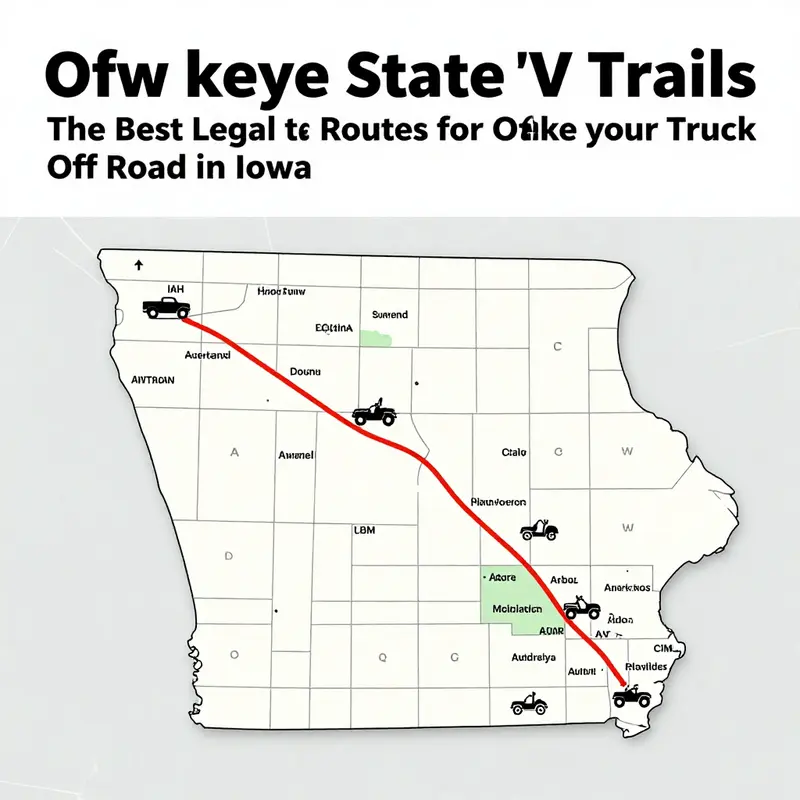
When you think of Iowa, you might picture endless cornfields and quiet backroads. But the Hawkeye State also offers a surprisingly robust network of legal, well-maintained off-road corridors that invite trucks and other off-road vehicles to explore beyond paved surfaces. This chapter delves into what makes Iowa a compelling destination for off-road adventures, how to find and follow the legal routes, and what to expect as you plan a ride that respects the land, other users, and state regulations. It’s a narrative about the places you can go, the rules that keep you safe, and the mindset that keeps Iowa’s trails pristine for generations of riders to come.
Iowa’s off-road landscape is not a single park or a handful of trails but a sprawling matrix of designated paths, layered with public oversight and private stewardship. The state, well known for its farmed horizons, actually supports more than three thousand miles of designated ATV trails. These routes are not random dirt tracks but carefully mapped corridors managed by the Iowa Department of Natural Resources (DNR) in collaboration with local trail associations and private landowners. The scale of this system offers a surprising variety of scenery and riding experiences. You can encounter rolling farmland that gives way to wooded corridors, then open river valleys where the wind slowly shapes the landscape. The diversity isn’t just a backdrop; it’s a feature that makes Iowa’s trail network appealing to truck enthusiasts who want to mix power with scenery, challenge with control, and solitude with the occasional wildlife sighting.
Among the most notable trail systems are the Hawkeye Trail and the Cedar River Trail. The Hawkeye Trail stretches more than 120 miles across central and eastern Iowa, weaving through a tapestry of terrains that challenge riders without overwhelming them. It’s a corridor that rewards steady throttle control and a respectful footprint, where your route is as much about reading the land as it is about navigating your vehicle. The Cedar River Trail, with its access to the Cedar Rapids region, offers natural scenery that underscores why people come to Iowa for off-road experiences—quiet mornings along river bluffs, the scent of damp earth after a rain, and the rhythm of tires on dirt that feels both liberating and deliberate. These trails aren’t isolated destinations; they’re parts of a living network that connects towns, parks, and private lands in a way that emphasizes responsibility and shared enjoyment.
Access to these routes comes with a framework designed to balance freedom with accountability. Off-road operation in Iowa is legal only within designated areas. It is illegal to operate on public roads with an off-road vehicle unless local ordinances specifically permit it, and private land requires explicit permission from the landowner. This is not a technicality but a central principle that preserves ecosystems, protects property rights, and keeps the experience enjoyable for everyone involved. The state’s approach is straightforward: stay on the designated trails, respect private land boundaries, and comply with the rules of the road that apply to off-road use as a whole. That means your truck must be registered and display a valid decal, and you must operate with the same sense of responsibility you’d bring to any other powered vehicle on public land.
If you’re new to Iowa’s denser network of routes, the starting point is the DNR’s official ATV/UTV resources. The DNR maintains maps, trail status, and license information that help you plan a ride that aligns with current conditions and legal requirements. Before you head out, a quick review of current trail conditions is essential. Weather can influence trail surfaces quickly; what seems solid in late spring may become slick or rutted after a rain. The DNR site provides updates on closures and maintenance so you don’t wind up on a closed stretch or a section that requires detours. Planning around conditions is not just about avoiding frustration; it’s about preserving the trails for others and minimizing wear on the landscape.
Riders who envision a full day or weekend of trail exploration should also map out amenities and logistics. Trailheads commonly offer parking spaces, restrooms, and printed or digital maps. These features reduce the guesswork and help you pace your trip, so you can enjoy the ride without scrambling for basics in the middle of a long forested stretch or along a river valley. The practical realities of Iowa’s trails—long distances, varied terrain, and occasionally remote segments—make preparation a virtue rather than a cautious hesitation. A well-planned ride respects both the terrain and the people who share the landscape with you: hikers, cyclists, anglers, and others who come to enjoy the outdoors with different expectations.
A major pillar of planning concerns regulations and safety. Operators on Iowa’s designated ATV and UTV trails must be at least 16 years old and carry a valid driver’s license or learner’s permit. Helmets are required, which reflects a broader emphasis on head protection given the potential severity of off-road crashes. It’s also important to note that operating ATVs on public roads is prohibited unless a local ordinance specifically allows it, and all machines must be properly registered with the state and display a valid decal. These requirements are not mere legal formalities; they create a baseline of safety and accountability that makes the entire network more reliable for everyone who uses it.
Beyond the legal framework, safety and compliance hinge on a mindset of respect and responsibility. The best way to ensure a smooth, enjoyable ride is to stay informed about trail-specific regulations, adhere to posted speed limits and user guidelines, and avoid disturbing wildlife or damaging habitat. This means you should stay on the established tracks, anticipate other users, and adjust speed on narrow or rocky sections where visibility is limited. It also means being mindful of quiet hours, parking etiquette, and leave-no-trace principles that preserve the land for future trips and future riders. The social contract among trail users is as important as the rules themselves because it sustains a community around off-road recreation that is capable of negotiating conflicts and sharing the space respectfully.
For riders who want a curated experience with predictable access, the state’s designated trails and private off-road parks provide reliable options. Private parks, such as those located in West Branch and Marshalltown, offer controlled environments with obstacle courses, sand pits, mud pits, and steep hills that are tailor-made for trucks and other off-road vehicles. These venues typically require advance reservations and entry fees, underscoring the level of stewardship and management they receive from park operators. While private parks can be excellent venues for practicing technique and testing limits in a safe setting, they are complements to, not replacements for, the broad, publicly accessible network of designated trails. The public trails connect communities and showcase the state’s natural beauty, while private parks offer concentrated experiences where safety protocols and controlled environments help riders push boundaries with a safety margin that public trails cannot always guarantee.
Planning a trip to Iowa’s off-road network also means acknowledging the seasonal rhythm of the state’s landscapes. Late spring through early fall is typically the most favorable window for trail riding. Drier soils and milder temperatures create surfaces that are more predictable and less punishing on machinery. Of course, weather can swing quickly, as it does in the Midwest, so a flexible itinerary is a practical approach. Being able to adapt to changing conditions—whether by swapping a long river valley ride for a shaded woodland loop or by rescheduling a start time to catch cooler morning air—helps you maintain safety and enjoyment without compromising the experience.
In practical terms, your ride begins with a plan that balances ambition with prudence. If you’re drawn to the Hawkeye Trail’s breadth, prepare for the subtle shifts in terrain you’ll encounter as you cross county lines and different landscapes. Each segment may present a distinct texture—the compact dust of dry days, the soft tread that comes after a light rain, or the rutted lanes where careful throttle control and line selection determine your momentum and traction. The Cedar River Trail near Cedar Rapids offers a different flavor: quieter banks, mixed habitats, and the sense of navigating a living corridor where the river’s presence is a constant reminder of the land’s moisture and vitality. These elements are not just backdrops; they shape your riding technique and the choices you make about when to push and when to ease off to conserve the surface and your equipment.
Riders planning dual-purpose trips that combine trail exploration with logistical errands in nearby towns will appreciate the accessibility of trailheads and the proximity to services. The trail network’s integration with local communities means you’re never that far from fuel, food, or gear upgrades, should you need them. The presence of amenities at trailheads—parking, restrooms, clear maps, and orientation materials—helps you build a cadence for the day. It allows you to pace your ride so you can savor the experience without the pressure of running an endless, unscheduled route. In many cases, these access points also serve as information hubs where you can confirm current conditions, obtain permit details, and verify any recent changes to trail statuses. The result is a more confident, streamlined outing that respects the land and respects the community that supports these trails.
The broader takeaway for anyone considering Iowa’s legal off-road routes is simple: start with official, designated trails or private parks, and treat the land with the same care you’d expect from others who share the spaces you love. The legal route is not a barrier; it is the framework that ensures you can enjoy the ride while preserving the landscape for future riders. A practical mindset—check conditions, secure proper registration, wear protective gear, and observe all local regs—will serve you well whether you’re in the heartland’s rolling farmland or along a scenic river valley. When you combine this mindset with a well-planned route, the result is a satisfying, safe, and responsible off-road experience that highlights Iowa’s unique blend of rugged terrain and wide-open skies.
As you map your next expedition, consider how the Hawkeye State’s off-road network can fit your goals. Do you want a long, scenic ride that threads through multiple counties, or are you seeking a shorter, more intense workout for your truck’s capabilities? Are you drawn to river valleys where the terrain changes with the water’s edge, or to wooded segments that test your steering and braking on roots and rocks? The truth is you can craft a day that satisfies both curiosity and capability, all while staying within the boundaries that protect public safety and environmental integrity. With the right planning, your Iowa off-road journey can be both thrilling and thoughtful—a testament to the way speed, scenery, and stewardship can coexist in a single landscape.
To bring this plan to life, make the DNR your primary resource. Their ATV/UTV Trail Finder and trail maps give you the latest on where you can ride legally, what the conditions are, and what permits are required. Combine that with a check-in at one of the park offices or private parks for the latest guidance and, if needed, a reserved space or guided route. The priority is to ride within the law and to treat every mile as a chance to appreciate the land and its quiet chapters—where the road ends and the trail begins, and where responsibility marks the boundary between a memorable ride and a regrettable one. In short, Iowa’s Hawkeye Trails Unlocked are not just about speed and soil; they are about disciplined exploration, shared spaces, and a culture of care that makes every off-road outing something you’ll want to repeat, responsibly.
External resource: To learn more about official trails, maps, and licensing, visit the Iowa Department of Natural Resources ATV/UTV Trails page: https://www.iowadnr.gov/Outdoor-Activities/ATV-UTV
Final thoughts
Iowa offers a unique and diverse range of options for off-road enthusiasts looking to embark on thrilling adventures. From the picturesque trails of Cedar Falls to the expansive acreage of Prairie Lakes Recreation Area and the designated ATV trails crisscrossing the state, there’s no shortage of excited exploration to be had. As you plan your next off-road journey, ensure you comply with local regulations and protocols for a safe and exhilarating experience. Gear up, hit the trails, and make unforgettable memories as you discover the rugged beauty of Iowa.