
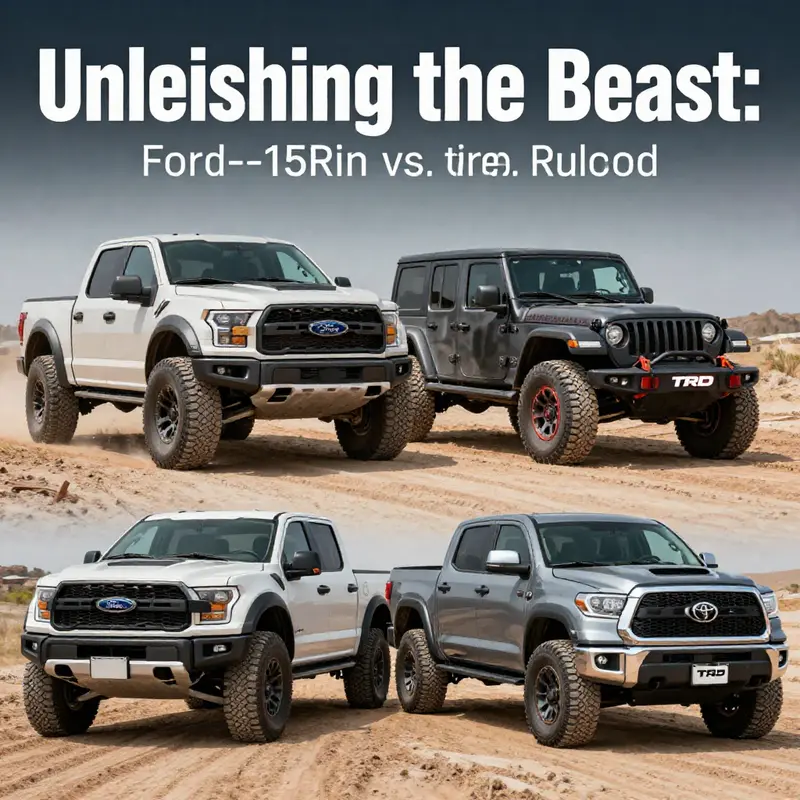
Off-road enthusiasts, adventurers, and rural landowners know that the right truck can make all the difference in tackling challenging terrains. With vehicles like the Ford F-150 Raptor, Jeep Wrangler Rubicon, and Toyota Tundra TRD Pro leading the charge, understanding which truck excels in off-road capabilities is crucial. Each of these rugged machines brings its strengths to the table, making an informed decision essential for anyone looking to conquer the wild. The upcoming chapters will dissect their comparative off-road performance, delve into the specialized features that enhance their capabilities, and evaluate how these trucks adapt to diverse terrains, ultimately revealing which stands as the supreme off-road contender.
Rugged Trails, Real Tests: A Deep Dive into Off-Road Mastery Across Heavy-Duty and Rock-Ready Pickups
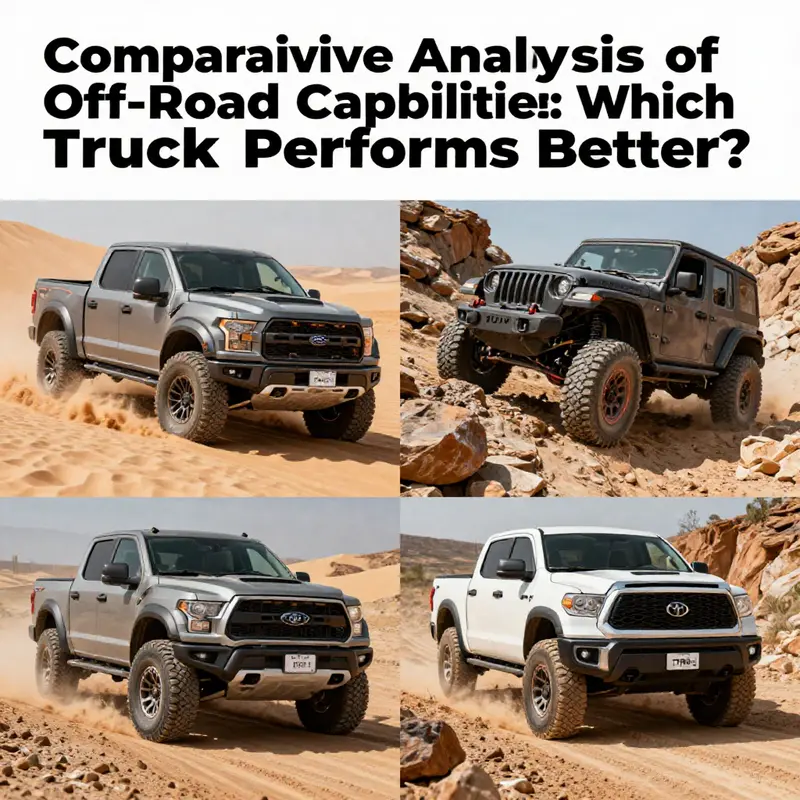
Off-road capability is less a single spec and more a balance of architecture, purpose, and habit. When drivers point a pickup toward a stretch of gnarly dirt, rock, or mud, they invite a conversation between chassis rigidity, suspension travel, drivetrain philosophy, and the sort of protection that keeps critical bits intact when the terrain bites back. The landscape of capability stretches beyond a linear comparison of numbers. It unfolds in a narrative where geometry meets grip, where force meets control, and where the vehicle’s design intent meets the driver’s philosophy of risk and reward. In this chapter, we explore that landscape with attention to how different truck archetypes approach extreme terrain, and we consider the practical implications for a buyer sizing up an off-road future. The question isn’t merely which model is fastest on a dirt road; it is which configuration delivers predictable, confident traction when the path grows uncertain and the obstacles multiply. In that sense, the comparison is a story of purpose as much as performance, and the best choice depends on the terrain that matters most to the owner.
A central thread in off-road capability is the body-on-frame chassis paired with a robust, dedicated drivetrain. Traditional 4×4 double-cab trucks, built to survive the harshest environments, are designed with a full-time or selectable four-wheel-drive system, a frame that resists flex and torsion, and a philosophy that prioritizes strength over on-road lightness. These machines typically feature advanced locking differentials, which synchronize wheel rotation on each axle to force traction through stubborn patches of mud, rock, or sand. They also often include crawl control, a driver-aid that holds vehicle speed and throttle input at controlled levels to coax progress over steep or uncertain obstacles. The net effect is a platform that communicates directly with the road or trail—one that refuses to surrender grip even when the surface refuses to cooperate. These traits, taken together, create a chassis that translates raw terrain into predictable motion. The underbody protection, reinforced framing, and the attention given to grip across varied surfaces are the hallmarks of a design tuned for extreme conditions. When a remote work site, a cross-country expedition, or a long, technically challenging trail is on the itinerary, these trucks step into a different category of capability, one defined by durability, traction, and the confidence that comes from knowing the truck can be counted on when the going gets unforgiving.
To understand why this class stands out in extreme scenarios, it helps to contrast it with other common configurations. All-wheel-drive double-cab trucks, for instance, bring benefits that matter in daily life and mixed-terrain roading: smoother ride quality, better fuel efficiency, and a more car-like sense of poise on the highway. They excel when the route blends paved segments with light off-road detours, or when the surface changes quickly and the driver wants a forgiving, predictable experience. The price of that versatility is often lighter ground clearance, less suspension articulation, and a chassis architecture that prioritizes on-road comfort over heavy-duty articulation. In the rough, the unibody design that keeps weight down and ride smoothness up can also limit the amount of wheel travel and approach control available for rock gardens or deep ruts. The difference isn’t merely about speed; it’s about how much obstacle the truck can negotiate without losing momentum or control. When the terrain shifts from gravel to shale, the AWD dual-cab’s strengths become clear, but its limitations in terms of rugged, unpredictable surfaces are equally clear. It is not that these trucks cannot handle tough trails, but their engineering language is not optimized for the most demanding segments of off-road work.
Then there are the utility-focused models—the workhorses designed for payload, towing, and pragmatic functionality. They may offer robust frames and surprising traction, but their lack of specialized off-road systems and rugged chassis can become apparent when the track transitions from dirt to rock. In the harshest environments, the absence of features like heavy-duty locking differentials, crawl modes, or reinforced skids can translate into slower, more cautious progress. The same logic applies to heavy-class trucks whose purpose is heavy haul at the jobsite rather than delicate negotiation of a rocky ledge. These are capable in their own right for what they were designed to do, but their strengths sit in different domains than those demanded by extreme off-road adventures. The upshot is that capability is multi-faceted, and the best match depends on the kind of off-roading a driver intends to do most often.
Within that spectrum, the traditional 4×4 double-cab archetype often emerges as the preferred choice for environments where the surface is unpredictable and the obstacles are unyielding. Its strengths—exceptional traction across diverse terrains, substantial underbody protection, and advanced locking mechanisms that can force wheels to rotate in unison—address the core principles of off-road mastery: grip, control, and durable protection. The ability to crawl through a rock garden with lockable differentials engaged and a managed throttle, while the vehicle’s frame and skid plates absorb impacts, is a compelling combination for those who plan to push the vehicle toward its limits rather than the road. Crawl control, in particular, shows up as a strategic asset in environments where the surface texture changes minute by minute, and the truck must maintain a deliberate, measured pace to avoid upsetting balance or wheel slip. In such contexts, the chassis behaves like a platform rather than a mere collection of parts, and the operator’s confidence grows from knowing the vehicle’s architecture is aligned with the demands of the terrain.
Yet context matters. A vehicle designed with speed and travel across varied terrain in mind can also be exceptionally capable, if not more specialized, in certain conditions. A higher-performance, desert-capable pickup—one tuned to maintain traction and stability across sandy, fast-moving surfaces—might deliver superior momentum where the trail is wide and altered by wind, dust, and heat. The suspension philosophy in these machines leans toward long travel and more aggressive damping, a setup that can handle the fast rhythms of rough trails while still offering enough control to keep the ride from turning violent at the edge of traction. The driver who prioritizes speed over slow, methodical rock navigation will benefit from such tuning, provided the terrain remains within the model’s design envelope and the driver respects the limits. The rub is that this kind of capability, impressive as it is on open throughways, tends to require careful calibration for when the road tilts toward a hidden rut or a concealed rock shelf. In short, there is a spectrum of capability, and the center of gravity for “best” off-road performance shifts with the terrain and the mission.
What emerges from this nuanced view is not a simple verdict but a layered answer. For the most demanding off-road applications—adventure-trail exploration, remote expeditions, or long hauls through rugged work environments—the traditional 4×4 double-cab remains unmatched by virtue of its architectural emphasis on strength, traction, and durability. Its mechanical elements—locking diffs, crawl modes, reinforced frames, and robust underbody protection—form a holistic package that translates into superior performance when the path refuses to forgive. In such conditions, the architecture and the driver’s command of it matter more than the latest refinement in ride comfort or highway manners. On the other hand, for drivers whose needs center on rock crawling and extreme articulation, a specialized trail-oriented model may still claim a leading position in capability. The 4:1 low-range gearing and lockable differentials that unlock patience and progress on boulder-strewn terrain are the driving forces behind that leader’s strength. While these attributes are shared across multiple off-road archetypes, the emphasis on slow-speed control and obstacle negotiation is where the rock-crawling specialist truly shines.
Ultimately, the question—Which truck offers better off-road capabilities?—underscores a larger truth about these machines. Capability is not a single metric but a narrative of intent and application. The most capable choice is the one whose architectural priorities match the terrain and the mission. For the deepest, most challenging trails that demand unwavering traction and protection, the traditional 4×4 double-cab configuration delivers a level of grip and resilience that is hard to match. It is here that the engineering philosophy of strength and redundancy pays off in tangible, measurable ways. For those who prize rock crawling and extreme articulation, a specialized, trail-ready platform remains unbeatable, because its development begins with the premise that terrain will demand slow, precise, and deliberate movement. And for everyday mix-terrains—paved roads with occasional rough sections or mixed rural applications—the AWD double-cab offers balance: comfort, efficiency, and reasonable capability without stepping into the harsher demands of extreme off-roading.
In this sense, the best answer is not a single name but a carefully aligned decision based on the terrain’s character and the owner’s willingness to invest in the specific capabilities that terrain requires. A seasoned off-road enthusiast will likely prioritize a platform designed for the most demanding trials—one that offers the strongest combination of grip, protection, and control when the trail tightens and the surface hardens. A traveler who expects to cross rough country only occasionally, or who wants a daily driver that remains practical at the curb, will likely prefer a setup that blends off-road competence with highway manners and efficiency. The beauty of the landscape lies in this diversity: capability is a spectrum, and each point on that spectrum has meaning when aligned with the driver’s environment and ambitions. For some, that means embracing a traditional, rugged architecture with features tailored to extreme terrain; for others, it means selecting a well-rounded, high-utility model that can carry gear, people, and payload with comparable poise on day-to-day roads.
The discussion, then, circles back to one practical takeaway. If your mission is to tackle the most challenging, remote trails with confidence and minimal compromise, the rugged, heavy-duty 4×4 double-cab paradigm stands as the benchmark for extreme capability. Its design philosophy—uncompromised grip, durable protection, and a drivetrain that can survive the harshest environments—creates a platform that refuses to yield under pressure. If, however, your focus centers on frequent rock navigation, the predictable, controlled movement demanded by rock gardens, and a preference for slow, deliberate pace, a trail-focused configuration remains the definitive choice for that kind of work. These are not mutually exclusive paths; they are different routes through the same landscape of capability, each demanding a different compromise. As the terrain changes, so too does the preferred architecture, and the most compelling option is the one that stays true to the terrain’s demands while providing the operator with the control, predictability, and confidence to move forward.
For readers who want to dive deeper into the technical dimensions that influence maintenance and longevity—an important piece of the off-road equation—consider this resource as a practical complement to the broader discussion: mastering-diesel-mechanics-your-step-by-step-path-to-success. It offers a thorough look at how meticulous maintenance underpins reliability in rugged conditions, which in turn sustains performance when the trail turns unforgiving.
As with any thoughtful gear choice, the decision rests on a clear-eyed assessment of terrain, duty cycle, and the driver’s tolerance for compromise. The off-road landscape rewards those who recognize that a durable chassis and a well-muned drivetrain are not luxuries but prerequisites. The most capable truck, in the end, is the one that remains predictable and controlled when the path grows treacherous, and that predictability is earned through a design that respects the terrain’s demands as firmly as the driver’s skill.
External reference for further nuance on highway-to-trail dynamics and a technical breakdown of a contemporary desert-capable pickup can be found here: https://www.caranddriver.com/trucks/reviews/a42853637/2025-ford-ranger-4×4-double-cab-review/}
Engineering the Edge: How Specialized Off-Road Features Shape Truck Performance
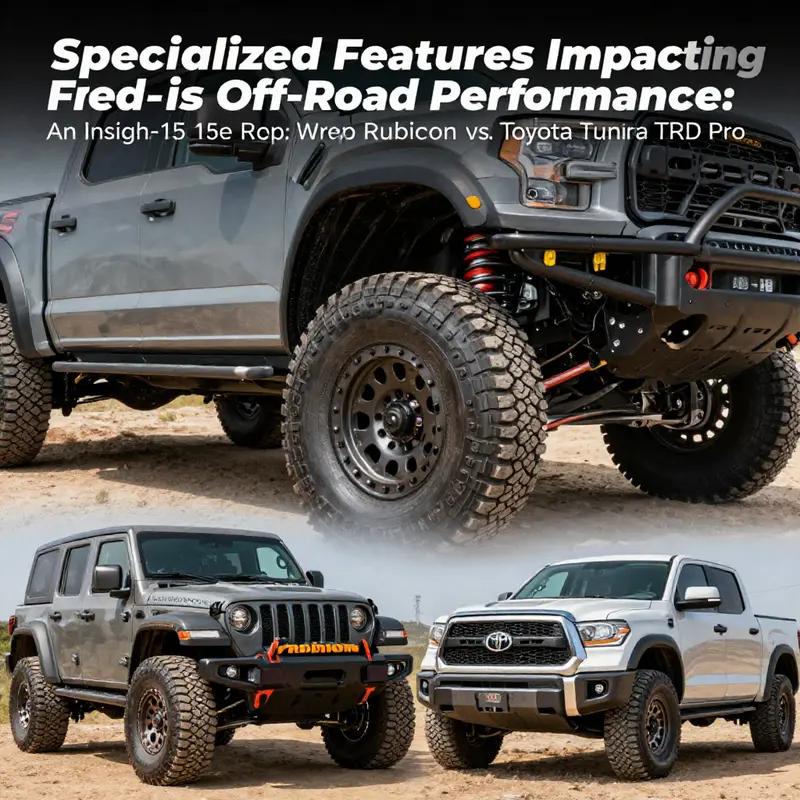
Specialized features are not garnish on a truck; they are the core design language that shapes how a vehicle behaves when the terrain refuses to yield. In the realm of off-road capability, the difference between getting stuck and making steady progress often hinges on how a truck’s engineering translates raw power into controlled motion across uneven ground. This is where a holistic approach to traction, suspension adaptability, and driver control comes to the fore. Rather than focusing solely on horsepower, the discussion centers on how advanced suspension architectures, intelligent traction systems, and terrain-aware control algorithms collaborate to sustain momentum, protect the chassis, and keep the wheels glued to the surface. It is this integrated approach that often separates a capable trail ranger from a vehicle that merely looks the part on a showroom floor.
At the heart of off-road performance lies the suspension, a system that must cope with large, rapid changes in ground level while preserving ride comfort and steering fidelity. Modern designs increasingly rely on long-travel configurations and adaptive controls that respond to ground irregularities in real time. A notable concept is the automated adjustment of suspension stiffness and coupling to maximize wheel articulation when the terrain tries to throw the wheel away from contact with the ground. This kind of adaptive behavior, sometimes implemented through advanced cross-linking and selective dampers, ensures that each wheel remains connected to the terrain long enough to generate traction. The result is not just a smoother ride, but a more predictable platform from which a driver can make precise decisions about throttle, braking, and steering on surfaces that range from loose sand to jagged rock.
To translate that adaptability into traction, manufacturers increasingly deploy a suite of systems designed to manage torque and braking at the level of individual wheels. Think of a trio of technologies that work in concert: electronic controls that monitor wheel slip, differential arrangements that can lock up responsively, and computer-assisted braking that modulates power so that momentum is retained without overwhelming a single tire. When a vehicle encounters a steep slope or a slick rock garden, these systems act almost invisibly, distributing grip where it is needed most and preventing a single wheel from becoming a liability. The upshot is a vehicle that can maintain a steady climb or deliberate crawl without the driver needing to micromanage throttle input in the moment of greatest demand.
Among the features that exemplify this integrated approach is a suspension system that can automatically adjust its stance to preserve contact with the ground. By tuning stiffness and travel in response to terrain feedback, such a setup allows the front and rear axles to articulate independently while maintaining a cohesive overall platform geometry. That independence is pivotal when negotiating rocky steps or trench-like ruts where one corner of the truck must rise or drop without causing undue rotation of the entire frame. The ability to adapt on the fly reduces the risk of losing traction or pitching the vehicle in ways that complicate recovery. It also helps keep the center of gravity predictable, which in turn sharpens steering feel and reduces the chance of rollover on extreme transitions.
Equally important are the wheel- and brake-management strategies that accompany these suspension tricks. Techniques that control power delivery and braking to each wheel help the truck maintain a manageable forward rate while the terrain dictates slow, controlled progress. This is crucial on loose gravel and soft sand, where simply feeding more throttle can bury the tires and spin you in place. A calibrated system can recognize when a wheel is losing grip and reallocate torque to the wheels with traction, or modulate braking to prevent a wheel from starving momentum entirely. In practice, that means a climb or descent feels deliberate rather than abrupt, and the driver gains confidence as traction becomes more predictable under different surfaces.
A key frontier in off-road engineering is the intelligent management of terrain-specific challenges. Drivers face sand that sinks, mud that clings, rocks that bite, and dirt that shifts beneath the tires. To conquer these varied obstacles, engineers have designed controls that can automatically tailor the vehicle’s response to the terrain category selected by the driver or by the system’s own sensing. In some setups, drivers can choose from drive modes that calibrate throttle response, transmission shift points, and braking thresholds for rock crawling, mud, sand, or snow. In others, the system interprets the ground conditions and makes real-time adjustments to optimize traction without requiring constant driver intervention. The objective is not merely to survive a tough trail but to do so with a margin of safety and a cadence that preserves momentum, enabling the vehicle to overcome obstacles that would stall a less capable machine.
This integrated, terrain-aware approach is widely studied and tested in professional journals that bridge the gap between engineering theory and field performance. The October 2025 edition of a respected industry publication delves into the latest engineering principles and performance data behind these specialized features. The issue offers detailed analyses of how engineered traction, suspension adaptability, and driver-assist technologies come together to deliver exceptional off-road results under demanding conditions. For engineers, enthusiasts, and anyone curious about the future of off-road vehicle design, the edition provides a valuable synthesis of theory, test results, and practical implications. External readers interested in the broader technical conversation can consult that resource for a deeper dive into the cutting-edge developments driving today’s off-road capable trucks.
The practical implications of these systems extend beyond the trail. Because the specialized features are designed to cooperate, not compete, they shape how a truck handles various ground challenges with a more balanced dynamic. On steep, uneven grades, the combination of adaptive suspension and per-wheel torque management reduces the likelihood of wheel spin and tire lift, which can destabilize a climb. On rock-strewn trails, the same combination helps maintain consistent wheel contact and control, allowing the driver to choose a careful line through terrain that would otherwise force a stop-and-go approach or require a risky maneuver. On soft soil, the ability to modulate braking and engine power per wheel helps keep the vehicle moving, reducing the need for momentum-killing wheel spin that can bury the truck deeper. In short, the engineering philosophy behind these features is to turn off-road variety from an obstacle course into a controlled negotiation, where momentum, grip, and control are preserved across a spectrum of conditions.
The concept of an integrated system is complemented by a design ethos that prioritizes durability and reliability under harsh conditions. A rugged frame, reinforced skid plates, and protective underbody components work in concert with the adaptive technology to ensure that the vehicle can endure the punishment of extreme terrain without sustaining compromise that would force a retreat from the trail. When the ground shifts or a cornering line becomes treacherous, these structural elements are not afterthoughts; they are the necessary framework that lets the advanced control systems do their job without being overwhelmed by rocks, stumps, or abrasive surfaces. In practice, drivers can reap the benefits of both the soft, articulate responsiveness of the suspension and the hard, protective reality of the chassis, resulting in a vehicle that remains stable while delivering meaningful traction and progress on rough ground.
Of course, all of these enhancements come with trade-offs. The addition of adaptive suspension, per-wheel control, and terrain-based modes adds weight and complexity. It often means higher maintenance demands and potentially higher repair costs if a system malfunctions or wears beyond the expected life cycle. There is also the consideration that a vehicle built to excel in extreme off-road scenarios may compromise on-road dynamics, fuel efficiency, or payload-sensitivities in ways that a more conventional setup would not. Consequently, the question remains subtle: when evaluating which truck offers better off-road capability, one must consider not only the specialist features themselves but how well they are integrated with the rest of the vehicle’s design, how reliably they function under real-world stress, and how the driver can leverage them without introducing new risks.
In that sense, the most capable off-road trucks are those that present a coherent system rather than a collection of impressive parts. The driver’s ability to exploit features like automated suspension articulation, per-wheel traction control, and terrain-selective controls depends on the reliability and intuitive interaction of those systems. A well-integrated package allows the operator to focus on line choice, speed consistency, and recovery planning rather than constantly managing wheelspin or brake balance. The result is not only better obstacle negotiation but more predictable behavior when venturing into uncharted trails where the terrain can change abruptly and without warning. This is where engineering becomes a practical art: it is the discipline of making advanced features feel like inherent capabilities rather than add-ons that require heroic driver effort to coax meaningful performance out of them.
Market offerings reflect this philosophy, with some configurations leaning toward ultimate rock-crawling capability and others toward broad, cross-terrain versatility. Each approach emphasizes different aspects of the same fundamental principles: traction, suspension travel, ground clearance, and driver control. A truck designed to excel in extreme rock work emphasizes lockable differentials, highly articulated suspensions, and precise low-speed control. A trail-focused machine may prioritize balanced suspension tuning, moderate travel, and an adaptable control suite that helps the driver negotiate mixed terrain without demanding excessive throttle finesse. The common thread is a shared commitment to maintaining momentum, protecting the drivetrain, and enabling safe, deliberate progression through challenging environments. In practice, that means a vehicle’s effectiveness on the trail is less about a single standout feature and more about how the features work together to create a coherent, confident experience for the driver.
At the same time, it is worth acknowledging that knowledge plays a critical role. Learning how to use these features effectively—how to select a terrain mode, how to modulate throttle on a mud or sand surface, how to read the vehicle’s feedback through the pedals and the seat—transforms engineering into skill. This is where even the most sophisticated hardware becomes meaningful through the driver’s judgment and timing. For those who want to understand the broader engineering logic behind these capabilities, practitioners and enthusiasts alike often consult specialized technical literature, which provides deeper explanations of how adaptive suspension, per-wheel torque management, and terrain-aware braking are implemented in modern trucks. For a practical, experience-based perspective, consider exploring additional resources that combine mechanical insight with hands-on guidance.
To connect these ideas with a broader technical conversation, consider the internal resource linked here, which examines how diesel-powered platforms and mechanical systems come together to yield resilient off-road performance (mastering-diesel-mechanics-your-step-by-step-path-to-success). The link offers a perspective on how fundamental mechanical discipline complements advanced electronic controls, reinforcing the notion that excellent off-road capability emerges from a well-balanced blend of robust hardware and intelligent software. The synergy between drive-train robustness and adaptive control systems is a recurring theme in professional discussions about off-road engineering and is echoed in the detailed analyses found in contemporary trade publications.
Ultimately, readers seeking to assess which truck family offers superior off-road capability should weigh how specialized features translate into real-world results. It is not enough to catalog a feature set; one must ask how the features interact under the variability of terrain, how intuitive the driver experience remains under stress, and how the vehicle’s structure supports or limits the performance envelope claimed by engineers. The best off-road trucks, in this view, are those that present a coherent capability story: a combination of adaptive suspension that preserves wheel contact, automated traction and braking that keep momentum from stalling, and a chassis and protection package that stand up to the punishment of rough trails. When those elements align, the vehicle does not simply perform on paper. It performs in the wild, where translation of design into momentum is the true test of engineering.
External resources and ongoing industry analysis continue to illuminate the path forward. For readers who want to explore the latest design philosophies and performance data that inform these capabilities, the October 2025 issue of an industry journal offers a comprehensive overview, including analyses of how specialized off-road features are engineered to deliver exceptional results under demanding conditions. This resource helps connect the practical realities of maneuvering through challenging terrain with the underlying engineering principles that make such maneuvering possible. External readers can consult the journal at https://www.sciencedirect.com/journal/truck-and-off-highway-engineering to explore the breadth of current research and field-tested insights that inform how trucks push the boundaries of off-road performance.
In sum, specialized off-road features—when thoughtfully integrated with durable structure, proven reliability, and a driver-centric control philosophy—define the edge in off-road performance. The engineering choices behind suspension adaptability, per-wheel traction management, and terrain-aware controls determine how smoothly and confidently a vehicle can tackle the toughest trails. The more cohesive the integration, the more the driver can rely on the system to manage grip, weight transfer, and momentum, converting rugged terrain into a navigable, even rhythmic, challenge rather than a brutal test of endurance. This is the essence of off-road capability: not a single trick, but a well-calibrated ensemble that makes the trail predictable enough to be conquered, and dynamic enough to be enjoyed.
Terrain Mastery on Four Wheels: Modern Trucks and Diverse Terrains
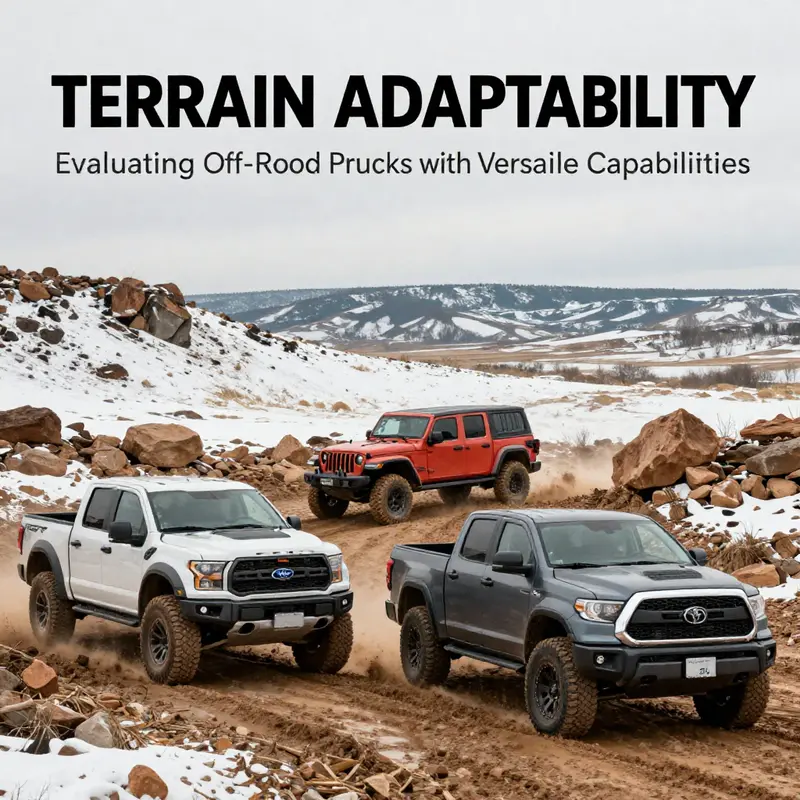
Terrain adaptability is more than a single feature. It is the result of how a vehicle combines suspension, traction, and control into a coherent system. In varied landscapes such as sand, mud, rock, and ice, the right balance of travel, ground clearance, and torque delivery keeps momentum without sacrificing stability. The most capable trucks sense ground conditions and adjust in real time so that steering and braking remain predictable even as the surface changes beneath the tires. The goal is consistent grip and safe handling rather than peak numbers on a spec sheet.
Suspension systems with ample travel and real time adjustability let the driver tailor the geometry to the ground. Adaptive dampers, variable spring rates, and height adjustable modes expand the envelope of capability, allowing higher ride height for obstacles or lower height for stability on steep slopes. Front and rear travel keeps tires in contact with uneven surfaces, reducing wheel lift and maintaining traction during articulation.
Drivetrain versatility is the other pillar. selectable drive modes, low range gearing, and electronic traction aids help transfer power where it is most needed. Lockable differentials front and rear provide redundancy in grip when one wheel finds traction and the other does not. Traction management works with stability control to preserve a safe line through changing terrain and to prevent torque from overwhelming the surface.
Chassis durability and protective packages are essential when the ground turns hostile. A reinforced frame and skid plates shield critical components as suspension moves through harsh obstacles. Tires matter most in translating suspension motion into grip, with tread patterns and sidewall designs chosen to balance puncture resistance and compliance under load.
Intelligence plays a growing role. Adaptive suspensions and electronic control systems interpret surface texture, slope, and wheel slip to select the most appropriate mode. The vehicle may adjust damping, ride height, and torque delivery on the fly, or suggest routes that minimize risk. In more advanced setups, data from sensors feeds navigation aids to plan safer trajectories through mixed terrain.
Beyond hardware, real world use cases show how terrain adaptability translates into practical benefits. Overlanding, work site mobility, and expedition planning rely on predictable performance across surfaces, not just one ideal condition. Versatility means you can cross a meadow, climb a gravel road, and descend a rock face with confidence and control.
Taken together, terrain adaptability is a property of balance. A truck that combines high travel suspension, a robust frame, smart traction, and real time control delivers momentum, steerability, and durability across evolving ground. Trade offs in weight and cost exist, but the trend is toward more capable and more predictable off road performance. The most capable platform for a given mission is the one aligned with the terrain profile it is meant to conquer.
Final thoughts
When it comes to off-road capabilities, choosing the right truck is essential for both performance and enjoyment. The Ford F-150 Raptor reigns high with its powerful engine and race-inspired engineering, ideal for speed and rugged endurance. The Jeep Wrangler Rubicon shines in rock crawling and tricky terrains thanks to its specialized gearing and locking differentials. Meanwhile, the Toyota Tundra TRD Pro strikes a balance that appeals to those desiring rugged performance without sacrificing daily driveability. Depending on your off-road needs, any of these trucks could be the right choice. However, understanding their unique strengths will help you make an informed decision that will lead you to your next adventure.