
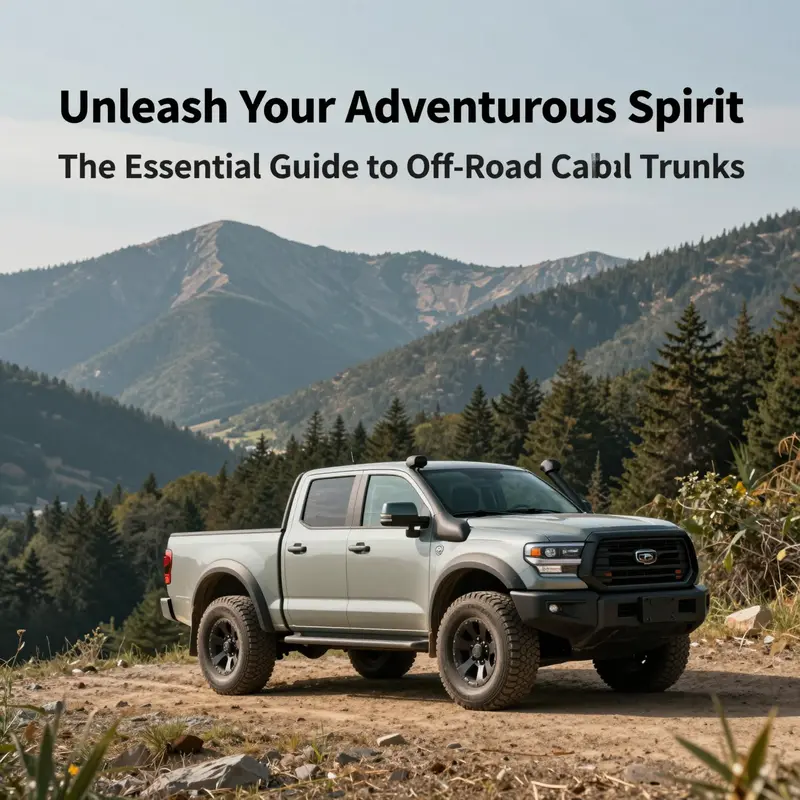
For those who refuse to be tethered by civilization’s limits, an off-road capable truck becomes a vital companion in life’s grand adventure. Whether you’re an avid adventurer, a rural landowner, or a customization enthusiast, the call of the wild beckons as you ponder the versatility and ruggedness of these machines. With unmatched terrain capability, unyielding reliability in harsh conditions, enhanced safety, and confidence, the practical utility offered by these trucks transforms mundane chores or weekend excursions into epic adventures. Each chapter you delve into serves not only as an exploration of why these trucks are essential but as a celebration of the lifestyle they facilitate.
null
null
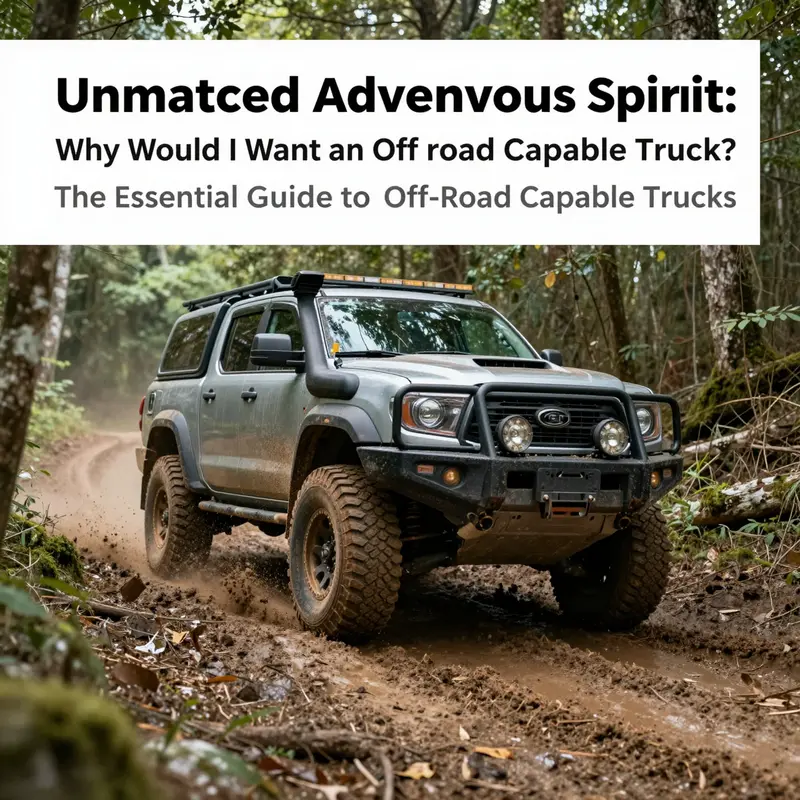
Relentless Reliability on Rough Ground: Turning Harsh Conditions into Opportunity with an Off-Road Capable Truck
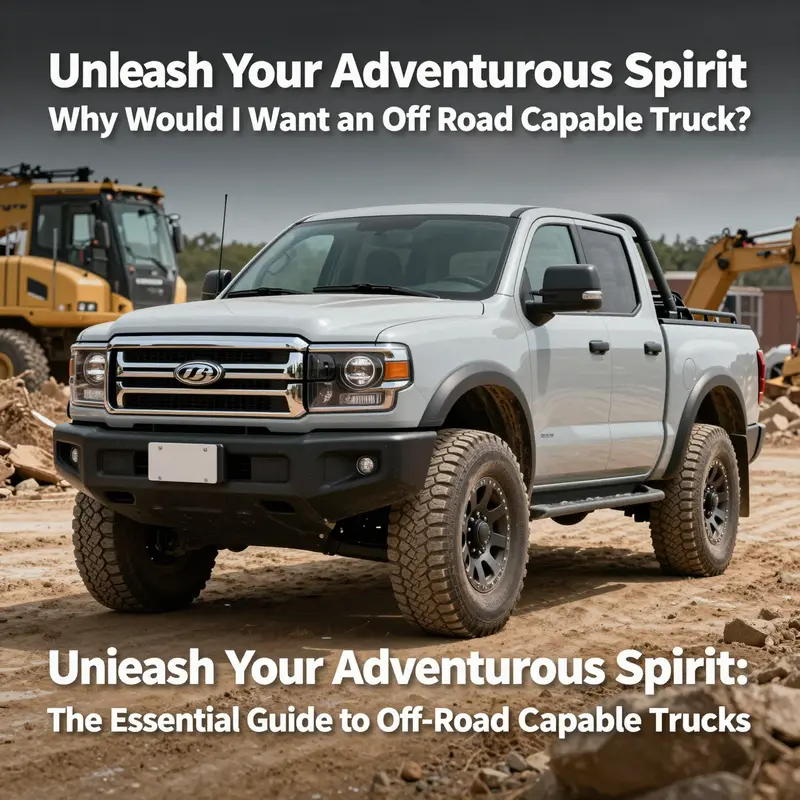
When the pavement ends and the landscape reveals its true character, reliability stops being a convenience and becomes a lifeline. An off-road capable truck is not merely a vehicle designed for trails; it is a deliberate instrument built to keep moving when conditions threaten to derail the plan. The beauty of such a truck lies in the quiet confidence it exudes even before the engine roars to life. You learn to trust that it will start when you need it most, that it can sustain performance under the strain of steep climbs and uneven terrain, and that it will navigate the unknown with a steadiness you can count on. This is not about bravado. It’s about engineering resilience that translates into real-world outcomes: fewer delays, safer passages, and a greater willingness to push beyond familiar routes because the risk is manageable rather than paralyzing.
At the core of this reliability is a philosophy of rugged construction. Off-road trucks typically rely on a body-on-frame architecture, a design choice that prioritizes structural rigidity and durability over the sleeker, lighter unibody approach found in some road-oriented vehicles. The result is a chassis that can endure the twisting, jarring forces of rocky trails and the heavy loads that come with work in remote locations. When you haul equipment, timber, or supplies into the backcountry, you want a platform that won’t flex or fatigue under stress. The difference is not merely theoretical; it translates into fewer micro-cracks, less wear on critical joints, and a vehicle that maintains alignment and performance after long days of demanding work.
High ground clearance is another quiet hero of reliability. With clearance often surpassing two hundred millimeters, the undercarriage remains protected from rocks, roots, and hidden ruts that would topple a conventional car. But clearance alone isn’t enough. The geometry of approach and departure angles matters just as much. On capable trucks, large angles—think well over 30 degrees in both front and rear—allow the vehicle to meet obstacles head-on and disengage without the kind of balance-shifting strikes that can strand a vehicle. Paired with a substantial wading depth, often hundreds of millimeters, these trucks can ford streams and shallow riverbeds without stalling, abandoning you to wade back to camp with a soggy sense of accomplishment rather than a roadside repair bill.
The drivetrain architecture further cements reliability in rough environments. Four-wheel drive is more than a badge; it’s a system tuned for predictable power delivery. Modern implementations offer a mix of traditional, selectable modes and intelligent, adaptive AWD that can adjust traction distribution in real time. A common setup includes a manual transfer case with selectable high and low ranges—2H for two-wheel drive on easy surfaces, 4H for tough-but-pressing terrain, and 4L for serious altitude and slope work where torque is king. The low-range gearing multiplies torque, turning steep ascents and slick gradients into sequences of controlled, deliberate progress. In at least one well-understood configuration, the torque multiplication can reach a factor around 2.5, giving a hillside climb a fighting chance when momentum is not an option. The result is a vehicle that can pull through mud, clutch in or torque-on-demand through rocks, without a sudden loss of grip or an abrupt stall.
Tireless reliability also depends on how the drivetrain handles power to individual wheels. Differential locks—whether integrated at the axle or as an optional locking mechanism—turn potential wheel spin into real traction. In the most challenging moments, when one wheel floats and the other is planted, a differential lock can transfer torque across the axle in a way that a standard differential simply cannot. This is not about winning speed contests; it’s about maintaining momentum when straight-line traction is a myth. It is easy to underestimate how important that capability is when you’re facing a cross-axle obstacle or a single-wheel lift scenario in an environment where failure translates to long, costly recoveries. A locked differential becomes a quiet promise to the driver: if you can see the obstacle, you can get past it.
Terrain modes complement the mechanical heart of the truck. Sand, mud, snow, and rock each demand a different approach to throttle response, torque distribution, and wheel slip thresholds. The optimal system translates a driver’s intent into precise control with just the right balance of stability and grip. Add a steady, low-speed cruise control option to minimize driver fatigue and you have a vehicle that behaves consistently in long, slow ascents or persistent off-road sections. In such contexts, reliability isn’t about temporary advantage; it’s about sustaining capability over hours of demanding driving and through the unpredictability of changing surfaces.
Yet reliability is not solely a function of hardware. It emerges from the integration of durable components with thoughtful, field-tested design choices. Modern off-road trucks show that practical reliability doesn’t require sacrificing efficiency or daily usability. Diesel powertrains, for example, can deliver strong low-end torque ideal for climbing without abusing the engine at high revs. This is a marriage of capability and efficiency, where the vehicle is built to endure long distances between refuels and days spent off the beaten track. Diesel variants typically provide the kind of robustness road users often overlook in the rustle of city traffic: steady torque, high miles-per-gallon when loaded, and a resilience that emerges after hundreds of thousands of miles with proper maintenance. In the context of reliability, this is not a niche advantage; it is a fundamental permission slip to explore, work, and live beyond the safety line drawn by paved roads.
The social and lifestyle implications of this reliability deserve attention, too. Owning an off-road capable truck reframes your relationship with travel. It invites a mindset—one that values independence, preparedness, and the confidence that comes with a tool capable of solving problems in real time. When you’re out in the field, your truck is not a luxury; it is a partner that helps you stay on schedule, complete critical tasks, and protect your crew and equipment from delays that could escalate into safety concerns. The ability to move through harsh environments with assurance touches professional life as well as personal adventures. A truck that can handle the roughest days is a vehicle that reduces the friction between planning and execution, turning difficult terrain into a domain of opportunity rather than a barrier to progress.
This is where the practical value of reliability threads into broader considerations. Cargo capacity, bed protection, and towing capabilities are not flashy features; they are the practical you-win-the-day attributes of reliability. A robust bed protects and carries bulky items like lumber, outdoor gear, or tools without fear of deformation or damage to the cargo. The ability to tow—whether a trailer, a boat, or a lightweight camper—extends the truck’s usefulness from job site to remote sensory-satisfying adventures. For professionals in construction, farming, or forestry, the combination of substantial load capacity, dependable traction, and off-road capability becomes essential. You might be working on a project with a difficult access point, or you might be making a multi-night field deployment. In either case, the truck’s ability to carry more, tow more, and get through more without drama compounds its value, turning a single tool into a versatile platform for a life built around mobility and work without compromise.
The long-term value of reliability also rests on durability. Brands with a reputation for off-road prowess tend to be recognized for longevity and solid resale value. A well-maintained, purpose-built truck can serve you across a span of years and miles that justify the investment if you weigh the total cost of ownership against the alternative of frequent replacements or incremental upgrades. The appeal here is not simply the immediate capability but the cumulative payoff: fewer repairs, fewer downtimes, and a vehicle you can count on from season to season, year after year. This durability becomes part of a larger narrative about independence. When you know a vehicle is capable of enduring the test of time and distance, you gain more than practicality—you gain a degree of confidence that changes how you plan your life. You begin to anticipate possibilities rather than obstacles, to map routes through rough country the way others map city streets, and to view a weekend trip or an urgent job as a solvable challenge rather than a risk you might avoid.
All of these elements contribute to a central idea: choosing an off-road capable truck isn’t about acquiring a specialized toy. It’s choosing a tool that returns value through reliability. It’s a commitment to a way of moving through the world that respects tough conditions rather than avoiding them. It signals a readiness to go further, stay longer, and come back safer. The sense of resilience these vehicles cultivate is not born from bravado but from the quiet certainty that, when push comes to shove, you and your truck share the same design ethic: endure, perform, and keep you moving.
For readers who want to look under the hood of this reliability and understand the mechanics in a more practical way, there is a resource that digs into the fundamentals of diesel power and the step-by-step practices that sustain high-mileage, off-road capability. Mastering diesel mechanics: your step-by-step path to success offers a practical framework for understanding how robust powertrains and disciplined maintenance support reliability in harsh conditions. This guide reinforces the idea that reliability is earned through knowledge and care as much as through heavy copper and steel. You can explore it here: Mastering Diesel Mechanics: Your Step-by-Step Path to Success.
As the terrain grows more challenging, the appeal of off-road capability shifts from a simple thrill to a dependable way of life. The promise is not that every trail will be conquered, but that you will be prepared to meet the trail with calm competence, to adapt to the terrain without surrender, and to return with the work done and the story intact. In this light, reliability is the quiet engine of freedom—the means by which the map expands and the road becomes less of a limitation and more of a doorway. When you weigh the decision to invest in an off-road capable truck, you are weighing not just features or aesthetics but the value of a tested, trusted companion that stands between you and the unpredictability of the outside world. It is, in essence, a decision to embrace opportunity, not just endure risk.
External resource: for a broader industry perspective on the value and practicality of tough, reliable off-road trucks, see this thoughtful assessment from AutoTrader UK: https://www.autotrader.co.uk/vehicle-finder/article/why-you-should-consider-a-tough-reliable-off-road-truck
Beyond the Trail: Safety, Confidence, and Independence in an Off-Road Capable Truck
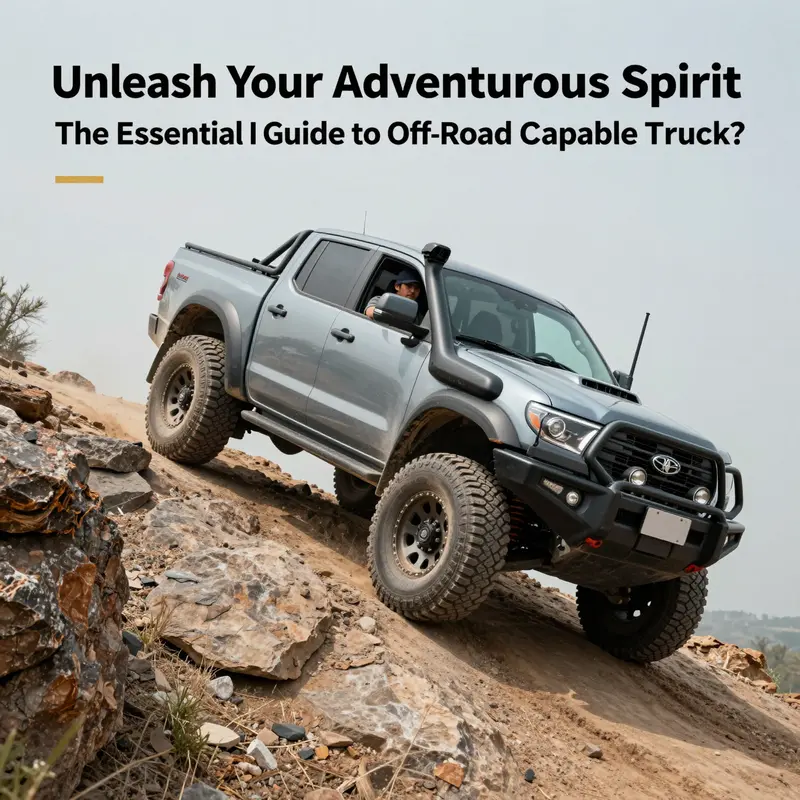
When people consider why they might want an off-road capable truck, the conversation often centers on adventure, durability, and the ability to reach places others can’t. Yet beneath the rush of wild terrain lies a core benefit that matters in every mile: safety. An off-road capable truck isn’t just a vehicle built to conquer rocks and mud; it’s a platform engineered to elevate driver control, reduce risk, and foster a sense of psychological security that stretches well beyond rough tracks. The design language, technology, and evolving engineering philosophy converge to create a vehicle that feels sturdier, more predictable, and more capable of absorbing the unexpected, whether parked at a trailhead or stopping short on a rain-slickened highway.
A central pillar of this safety proposition is the architecture of the chassis itself. In many off-road capable trucks, the chassis is body-on-frame—a non-load-bearing construction that groups the frame and the body as separate, robust entities designed to endure torsional forces, impacts, and heavy payloads. This separation, combined with a purpose-built frame, translates into superior crash energy management when misfortune strikes and helps protect occupants in rollovers or severe collisions. It isn’t merely about brute strength; it’s about how the structure responds when the vehicle is pushed to its limits or when the terrain throws a stubborn obstacle into the path. The result is a sense of resilience that passengers can feel, even before the vehicle encounters danger.
Beyond the framework of the vehicle lies a suite of traction technologies that actively participate in safety. Modern off-road capable trucks bring advanced all-terrain traction systems that adjust torque distribution, apply braking selectively, and modulate engine response to preserve grip on mud, snow, sand, or gravel. Electronic locking differentials, when deployed, prevent wheel spin and ensure energy is directed to the wheel with traction, rather than the wheel that’s free to slide. Traction control systems complement this by recognizing loss of grip early and intervening with calibrated brake pressure and throttle response. Adaptive suspensions further contribute by smoothing out irregularities in the surface and maintaining tire contact with the ground, which is crucial for predictability. Taken together, these features reduce the cognitive load on the driver and transform a tense moment into a controlled progression.
The psychological dimension of safety in an off-road capable truck cannot be overstated. Sitting higher than most passenger cars, these trucks yield a commanding view of the road and its surroundings. This elevated vantage point improves forward sightlines and allows for earlier recognition of hazards, debris, wildlife, sudden curves, or changes in surface texture. That early warning translates into more options for deceleration and maneuvering, which in turn reduces the likelihood of abrupt evasive actions that could lead to a loss of control. A growing body of highway safety research suggests that the higher seating position associated with many trucks contributes to improved awareness and safer driving behavior.
An off-road capable truck also carries an emotional safety net that resonates with people who want to feel prepared for the unknown. In a culture that increasingly depends on contingency plans, a truck with real off-road capability becomes a tangible symbol of preparedness. The sense that you can respond to a road closure, an unexpected flood, a fallen tree, or simply an unpaved alternative path without feeling stranded offers a form of resilience that contributes to a calmer disposition behind the wheel. The practical reality that these vehicles often integrate payload capacities, towing abilities, and cargo protection ensures essential equipment remains secure and accessible, even on rough terrain. The practical and emotional strands weave together to form a broader sense of independence.
Safety in this context extends to everyday driving as well as remote missions. The same features that help you negotiate a snow-dusted trail or a rain-swollen dirt road can provide tangible benefits on urban streets. Predictable handling, strong braking performance, and consistent grip contribute to safer cornering, lane changes, and adherence to braking distances in less-than-ideal conditions. In heavy rain, for example, a vehicle with robust traction control and well-calibrated brake systems can maintain stability while reducing the chance of hydroplaning. The reliability of the locking differential and the vehicle’s ability to maintain traction at the point of contact with the ground becomes the difference between confidence and hesitation.
In discussing safety, it would be remiss not to acknowledge the human element—the driver’s decision-making, awareness, and expectations. The most sophisticated drivetrain and the strongest frame cannot compensate for fatigue, distraction, or overconfidence. Yet the very design choices that give a truck its off-road character also encourage responsible driving. When a vehicle is built to handle rough terrain and unpredictable surfaces, it tends to invite a more deliberate driving style: slower throttle input on loose fills, sharper steering on undulating grades, and a readiness to rely on measured braking rather than abrupt stops. This mind-set, cultivated by the vehicle’s capabilities, can translate into safer habits on regular roads.
The chain of safety benefits also intersects with practical work and lifestyle needs. For professionals working in construction, agriculture, forestry, or logistics, the safety of a dependable platform becomes an asset with broad implications. A truck that can traverse rough access roads to deliver materials, tow a necessary trailer, or carry bulky equipment to a remote site under adverse weather conditions minimizes downtime and reduces the risk of delays that propagate through projects. In emergency scenarios, the ability to reach a location when standard routes fail—a property of true off-road capability—can be life-supporting for those who respond to crises in rural or disaster-prone areas. The confidence that comes from such capability extends to weekend adventures and family outings as well.
As these lines of safety and independence interweave, it’s clear that the appeal of an off-road capable truck transcends mere ruggedness. It rests in the way the vehicle shapes perception and action under pressure. The combination of a strong frame, advanced traction and control systems, elevated visibility, and an accompanying psychological readiness forms a comprehensive safety ecosystem. It equips drivers not just to survive challenging environments but to anticipate, adapt, and recover from them with poise. The chapter you’re reading does not pretend that any vehicle makes fear disappear. It does, however, argue that the design ethos behind these trucks makes fear more manageable, turning daunting landscapes into opportunities for controlled exploration. The peace of mind that comes with this arrangement is not a luxury; it’s a practical outcome of thoughtful engineering that recognizes safety as a function of both hardware and human behavior.
To connect these ideas to real-world reading and research, consider a respected automotive analysis that emphasizes the safety advantages of body-on-frame trucks in off-road contexts. The discussion on energy absorption and the structural integrity of such designs complements the narrative above, highlighting how the vehicle’s architecture underpins both crumple-zone performance and occupant protection when the unexpected occurs. For readers seeking to expand their understanding of how safety features function in the field, a concise exploration of crash-test results and real-world performance can be enlightening. A quick, practical touchstone is to view a focused comparison of crash-test outcomes and vehicle behavior in high-stress scenarios, such as this resource: IIHS crash-test results. This link offers a succinct lens on how modern safety systems contribute to driver confidence and occupant protection in demanding conditions, reinforcing the broader theme that safety in off-road capable trucks is a comprehensive, multi-layered achievement rather than a single feature.
Ultimately, choosing an off-road capable truck equates to choosing preparedness, reliability, and self-reliance without surrendering everyday practicality. It’s a decision grounded in tangible engineering advantages, supported by a driver’s evolving sense of control when confronted with uncertain roads and weather. It’s a decision that recognizes safety as not merely the absence of danger but the presence of capable tools, tested systems, and the confidence to act decisively in the face of the unknown. And while the trail may call in a demanding voice, the driver’s response—anchored by a robust, thoughtfully designed vehicle—offers a steady, predictable cadence that turns risk into a manageable and even meaningful part of the journey.
Beyond the Trail: Everyday Utility and Unshakable Reliability of an Off-Road Capable Truck
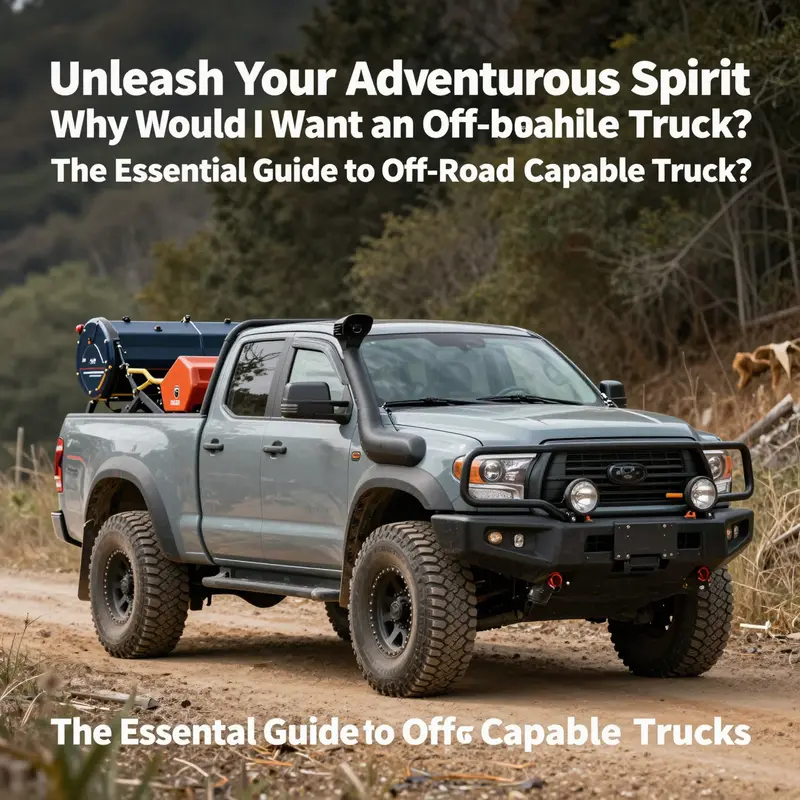
The appeal of off-road capability often lands first on the sensory side of things—a suspension that soaks up ruts, engines that roar with authority, and the thrill of a turnout where ordinary cars turn back. But the most compelling case for an off-road capable truck is not its ability to conquer novelty terrain alone; it’s the way that capability folds into a broad, dependable utility that reshapes daily life. When a vehicle is designed to handle mud, snow, and sand with composure, it naturally becomes a partner for those who juggle unpredictable schedules, remote work sites, and the weather’s whims. The result is a kind of mechanical resilience that extends far beyond the dirt path and into the rhythms of everyday existence.
In rural landscapes where paved routes are scarce and seasonal conditions swing between frost, flood, and floodplain mud, the practical value of elevated ground clearance and a robust four-wheel-drive system becomes immediately tangible. You don’t just own a truck you own a lifeline. The high clearance helps you avoid getting stuck in shallow floods or soft shoulder trails, while a durable chassis and drivetrain reduce the odds that a sudden navigation challenge spirals into a setback. Reliability in such environments isn’t about bravado; it’s about predictable performance when every other option might fail. You can keep a workday alive even when the weather refuses to cooperate, and that reliability translates into tangible outcomes—access to a remote job site, a medical facility that isn’t connected by highway, or a supply run that keeps a farm or a small operation humming. In this sense, the off-road truck becomes less a toy and more a critical tool—an adaptable platform built to bridge distance and uncertainty.
Even in suburbs and small towns where the pavement is the norm, the utility of this class of vehicle remains robust. The elevated driving position offers increased visibility, a practical safety advantage in dense traffic and during inclement weather. This isn’t a flashy perk; it translates to better anticipation of hazards, a clearer line of sight when navigating construction zones, and a heightened sense of command during storm-driven commutes. The vehicle’s strength then becomes a pragmatic asset: it can tow boats or trailers, haul lumber or large appliances, and transport bulky gear without demanding daily compromises. The interior, if spacious, often doubles as a flexible space for gear, pets, and family adventures. When you consider a weekend camping trip before you even leave town, the cargo capacity and the interior layout begin to feel less like luxuries and more like essentials for a certain lifestyle—one that values preparedness and versatility as much as speed or style.
This practicality threads into a broader, increasingly relevant trend: the growing demand for a single vehicle that can perform double duty as a workhorse and as a daily driver. For homeowners, contractors, and weekend explorers alike, the ability to move heavy materials, transport tools, or carry off-season gear without renting or coordinating multiple vehicles saves both time and money. It’s the combination of a rugged frame with a well-thought-out bed, reinforced tie-downs, and an efficient payload that makes a meaningful difference. The bed is not merely a storage space; it’s a controlled environment for transporting construction materials, landscaping supplies, or large outdoor equipment. In many designs, the bed’s durability and protection enhance security and longevity, encouraging frequent use rather than sparing it for rare occasions. The practical implications extend to towing, too. A powerful, well-balanced truck can trail a trailer, boat, or camper with confidence, reducing the friction of planning long weekends or professional relocations. This isn’t about conqueror fantasies; it’s about tangible, repeatable capability that reduces the friction of real-life tasks.
Modern off-road trucks also reflect advancements that improve daily usability without sacrificing rugged credibility. Traction control systems, differential locks, and drive-mode selections tuned for sand, rock, mud, or snow provide the tools to maintain control when the terrain is unpredictable. These features enable a driver to stay composed in adverse conditions, turning potentially anxious moments into predictable, manageable tasks. The safety benefit here is not simply a fear reduction; it’s about preserving momentum toward goals—getting to a job site on schedule, delivering essential supplies during a storm, or simply ensuring a family road trip remains on track despite a sudden change in the forecast. The sense of confidence that comes with being able to handle unexpected obstacles can be priceless in both professional contexts and personal adventures.
Beyond safety and reliability, the practical edge of an off-road capable truck lies in its enduring value. These vehicles are engineered for longevity, with robust chassis design and heavy-duty powertrains that resist the wear and tear of frequent, demanding use. A truck built for off-road realities typically carries a higher resale value because the core attributes—durability, load capacity, and proven performance under harsh conditions—are highly sought after in both rural buyers and urban converts who dream of year-round versatility. This durability translates into a kind of long-term economics that isn’t captured by monthly payments or sticker price. Over the life of the vehicle, the combination of reliability and practicality can make it a surprisingly economical choice, especially for those who prioritize function and resilience over novelty.
The driving experience itself also reinforces the chapter’s central message: the daily workload of a capable truck is sometimes more about choreography than spectacle. A well-tuned four-wheel-drive system, paired with a capable suspension, makes fatigue less likely during long days that involve repetitive loading, unloading, and navigating rough surfaces. The vehicle becomes a partner that absorbs bumps, negotiates awkward angles, and maintains a stable platform for the work at hand. In a sense, the off-road capability translates into a calmer, more focused routine—one where the driver can allocate mental energy to the task rather than the vehicle’s performance. This is important for people who balance physical labor with precision work, like carpentry, landscaping, or maintenance tasks that require steady hands and steady progress.
As a narrative thread, the practical utility of an off-road capable truck is inseparable from the lifestyle it supports. The same features that enable it to forge through a muddy trail empower weekend warriors to venture farther into nature, and empower professionals to broaden their service area. A truck that can reach dispersed campsites, remote work sites, or isolated farms becomes not only a vehicle but a portable workshop, a mobile command center, and a dependable partner for life’s contingencies. The shift from “I need this for fun” to “I rely on this for daily life” marks a meaningful transition. It reframes the vehicle as an adaptable system designed to protect time, reduce risk, and expand opportunity. In this light, the off-road truck ceases to be a niche choice and becomes a practical platform for a broader, more resilient way of living.
To readers evaluating the everyday worth of such a vehicle, the question of utility begins with a simple test: what tasks do I perform regularly that my current car cannot support? If the answer reads like a list of real-life constraints—reliable access to home, work, or care during adverse conditions; the need to transport bulky loads or heavy equipment; the requirement to tow or haul with confidence; the desire for a safer, higher driving position—then the case for an off-road capable truck becomes compelling. It’s not about dressing up a vehicle for a hobby; it’s about equipping a life with a dependable, flexible tool that rises to a wide range of demands. In this context, practical utility is less a feature set and more a philosophy: a commitment to preparedness, adaptability, and enduring performance.
For those who want to dig deeper into how modern engines and chassis systems can be maintained and optimized for long-term value, there are practical guides that illuminate the nuts and bolts of diesel power and front-end durability. A focused look at diesel mechanics, with a step-by-step path to mastery, offers a grounded perspective on how to care for the heart of a capable truck. Mastering Diesel Mechanics can serve as a practical companion for owners who want to maximize reliability and minimize downtime, reinforcing the idea that off-road capability is not a one-time purchase but an ongoing stewardship.
In sum, an off-road capable truck is not merely an instrument for exploration. It is a versatile, resilient tool built to integrate with a range of life circumstances—from rural frontiers to bustling suburbs—and to expand the horizon of what is possible within daily routines. Its practicality emerges in the quiet, repetitive moments: the steady climb over a gravel drive, the careful tilt of a heavy load into a bed, the controlled descent into a muddy lane on a storm-drenched day. These are the everyday tests that prove a vehicle’s true worth. And over time, the combination of reliability, safety, load capacity, and adaptability proves that the off-road truck, far from being a specialized niche, has a central role to play in a life that values independence, preparedness, and the ability to respond as conditions demand.
External resource: Car and Driver analysis
Final thoughts
Owning an off-road capable truck transcends mere convenience; it embodies a lifestyle full of exploration and resilience. From navigating uncharted territories to hauling loads through mud and snow, these vehicles empower their owners to tackle challenges head-on, ensuring that adventures await in every corner of the wild. It serves not only the utilitarian needs of professionals but champions the thrill of exploration for adventurers. Investing in an off-road capable truck means investing in freedom, safety, and practical utility that effortlessly blends into any journey you undertake.