

When it comes to off-road adventures, the power and reliability of diesel trucks have not only become legendary but also a source of endless debate among enthusiasts. The question often arises: will off-road diesel actually hurt my truck? Understanding how driving habits, emission systems, and cooling system demands interact with your vehicle is crucial for any off-road lover looking to expand their adventures without compromising engine integrity. In this exploration, we’ll delve into each of these aspects, revealing how to best navigate the terrain while maintaining your truck’s performance and longevity.
Off-Road Diesel, Driving Habits, and Long-Term Wear: What Really Affects Your Truck

Understanding how fuel choice and driving behavior interact with wear patterns is the key to knowing whether off-road diesel will hurt your truck. The straightforward answer is nuanced. Off-road diesel itself is not a magic destroyer, but using the wrong fuel, combined with unsuitable driving habits and neglected maintenance, creates conditions that accelerate wear and invite costly repairs. This chapter connects the dots between fuel composition, modern diesel engine design, and the everyday behaviors that shape long-term durability.
Modern diesel powertrains are engineered around a specific fuel chemistry and regulatory environment. On-road diesel contains additives for cetane rating, lubricity, and sometimes detergents that protect high-pressure fuel pumps and precision injectors. Off-road diesel, commonly dyed and tax-exempt, typically lacks those proprietary additives. That difference matters because the high pressures and tight tolerances inside contemporary injection systems leave little margin for a less-lubricating, lower-performance fuel. Over time, a fuel with reduced lubricity increases micro-wear in the pump and injectors. That wear shows up as reduced injection precision, diminished fuel atomization, and ultimately worse combustion—lower efficiency, more soot, and higher stress on exhaust aftertreatment systems.
Driving habits shape how those mechanical realities translate into damage. Consider two identical trucks: one used for steady, long-haul runs at moderate load; the other used for frequent short trips with abrupt accelerations and heavy idling. Both might run the same fuel, but their operational profiles produce different thermal cycles, soot loads, and mechanical stress. Short, urban trips prevent modern diesel emission hardware—particularly diesel particulate filters (DPFs) and selective catalytic reduction (SCR) systems—from reaching and maintaining the temperatures needed for proper regeneration and aftertreatment function. When regeneration fails or is incomplete, soot and particulates build up. That increases backpressure, reduces engine efficiency, and transfers heat and stress to the exhaust manifold and turbocharger.
Now layer in off-road diesel. Without additives, combustion can be a touch dirtier. That means more soot generation per combustion cycle. In a vehicle that already struggles to complete DPF regen because of city use, the extra soot pushes the system toward earlier clogging. Once the exhaust aftertreatment is compromised, the engine control unit may alter fueling and timing in attempts to protect components, but those compensations can reduce performance and place additional strain on the engine and turbocharger. Over months, this cascade accelerates wear in ways that are subtle at first—slower throttle response, slightly higher fuel consumption, faint smoke under load—but become expensive later: injector replacement, DPF cleaning or replacement, and turbocharger overhauls.
Another mechanical vector where off-road diesel can hurt is fuel pump longevity. Modern common-rail pumps rely on the boundary lubrication of the fuel to protect moving parts under extreme pressures. Reduced lubricity shifts the load to metal surfaces, causing wear patterns that eventually change the pump’s delivery curve. That results in inconsistent fueling, which not only harms fuel economy but increases combustion instability and stresses rods and bearings through increased vibration and uneven cylinder pressures. The fuel filter can also trap different types of contaminants. While filters are designed to capture particulates, a fuel lacking certain detergents may allow varnish or deposits to form, clogging filters more quickly and starving the engine at higher demands.
Legal consequences are another form of damage—financial and administrative rather than mechanical. Off-road diesel is dyed and intended for non-taxed applications. Using it in a road-registered vehicle draws fines and penalties if discovered. Enforcement can include inspection of fuel samples for dye and tax records. That legal risk often isn’t top of mind when someone fills up in a pinch, but it compounds the potential cost of a poor fuel choice. The presence of dye in a tank could trigger not just fines, but inspections that uncover other compliance issues, leading to broader consequences.
Beyond the specific harms tied to off-road diesel, driving style itself is a major determinant of longevity. Aggressive, stop-and-go city driving, characterized by frequent heavy throttle inputs and rapid braking, places different loads on the drivetrain than patient, steady-state driving. Each time a diesel engine sees a hard lugging event—low RPM, high load—the turbocharger and exhaust temperatures spike. If such events are common, elevated thermal cycles weaken cylinder liners, gaskets, and turbos faster than gentler usage. Long idle sessions, another typical urban behavior, are deceptively harmful. Idling prevents the engine from reaching its optimal operating temperature needed to evaporate accumulated blow-by and moisture. Over long periods, condensation and soot accumulate in the oil, degrading its lubricating properties and increasing wear on bearings and cam lobes.
Maintenance frequency must match the reality of how the truck is driven. If your truck spends most of its time towing, climbing steep grades, or crawling off-road, oil change intervals, fuel filter changes, and inspections of the cooling system should be more frequent than the baseline schedule. Using the right oil and changing it on schedule removes soot and contaminants that directly harm the engine. If off-road diesel has been used, err on the side of earlier service because the fuel’s different chemistry can accelerate buildup in oil and filters.
Cooling system performance is another critical area. Off-road conditions often mean slow speeds with sustained high loads—low airflow, high heat. The cooling system must be in top shape to avoid overheating, which rapidly degrades head gaskets, warps cylinder heads, and shortens engine life. Radiator condition, coolant concentration, fan operation, and thermostat function all require attention. Poor coolant condition combined with hard off-road duty is a recipe for catastrophic engine damage.
Turbos deserve special mention. They sit at the interface of intake air and exhaust heat and are vulnerable to both soot-laden oils and extreme thermal cycling. Poor fuel or infrequent oil changes leads to deposits that choke the turbo bearings and seals. Aggressive shifts from very hot operation to hard shutdown—common after finishing a rough trail and immediately turning off the engine—impede oil flow and cool-down, increasing bearing wear. A simple habit change—mild idling for a short period to allow turbos to cool—helps significantly.
Understanding the trade-offs around off-road diesel also depends on vehicle design. Older, mechanically-injected engines tolerate fuel variability better. Newer, electronically-controlled common-rail systems tolerate less. If your truck has advanced emissions hardware, any deviation from the recommended fuel increases the chance of problems. The safest path is to use the fuel the manufacturer specifies for on-road use. If off-road duty is the primary mission and the vehicle is registered as non-highway equipment, then the economics of using dyed diesel can make sense. But mixing responsibilities—most driving on public roads, occasional off-road use—aligns poorly with dyed fuel and invites both mechanical and legal risk.
When drivers wonder whether off-road diesel will ‘hurt’ a truck, they often conflate immediate catastrophic failure with slow cumulative wear. Off-road diesel seldom causes instant destruction. More commonly it shortens the useful life of fuel system components, complicates emission system performance, and increases the frequency of repairs. That slow erosion shows up in the wallet before it shows up on the odometer as a major repair bill.
Behavioral fixes mitigate much of the risk. Prioritize stable RPM operation and avoid excessive lugging. Plan routes that allow for occasional higher-speed, higher-load operation to help DPF regeneration when appropriate and legal. If much of your driving is short hops, consider supplementing your driving with periodic longer runs at highway speeds to permit aftertreatment systems to reach regen temperatures. Adopt the habit of letting the engine idle briefly after a hard off-road session to spool down the turbo and stabilize temperatures. Follow the maintenance schedule more aggressively under hard duty. Use oils with the manufacturer-recommended viscosity and soot-handling capability. Replace fuel and oil filters more frequently, and do not hesitate to flush or service the DPF early if you notice increased backpressure, performance loss, or frequent regen cycles.
Fuel sourcing matters. Some suppliers offer a dyed diesel blend treated to match the lubricity of on-road fuel, but supply chains and labeling vary; relying on proper documentation and receipts is essential. If you suspect dyed diesel has entered your tank accidentally, topping off with treated on-road diesel and scheduling an inspection is prudent. When mixing fuels, be cautious: diluting dyed diesel with on-road diesel reduces the legal risk of detection less than you might expect, and it does not immediately restore any lost additive protection. Mechanical effect scales with concentration and time; a one-time short exposure is less harmful than continuous use, but repeated use compounds wear.
Finally, consider the whole life-cycle cost equation. Diesel engines are prized for their torque and longevity when properly cared for. Using the proper fuel, aligning driving habits with the engine’s needs, and keeping maintenance current preserves that longevity. Cheaper fuel is rarely cheaper when it increases the frequency of expensive components like injectors, pumps, DPF units, or turbos. Legal risk further increases the hidden cost. For owners who regularly perform tough off-road work where dyed diesel use is legitimate, maintaining separate fleets or proper registration avoids confusion and compliance problems.
For readers who want a deeper technical dive on diesel fuel types and their intended applications, the U.S. Department of Energy provides a clear overview of the differences in diesel fuels and their uses: https://www.energy.gov/eere/vehicles/articles/diesel-fuel-types-and-their-uses.
If you want practical, hands-on guidance for maintaining a diesel-powered truck under heavy or variable use, resources focused on diesel mechanics and preventative service are invaluable. One helpful internal resource with actionable maintenance steps and system explanations is a guide to mastering diesel mechanics and routine work: https://dirtantrucks.com/mastering-diesel-mechanics-your-step-by-step-path-to-success/.
In short, off-road diesel can accelerate wear and invite legal trouble when used in an on-road truck. The degree of harm depends on the truck’s design, how often the fuel is used, the driving patterns it sees, and how strictly maintenance intervals are observed. Address the human factors—driving habits and upkeep—first. They are the levers you control most easily and they often make the largest difference in how your truck ages, regardless of fuel. Keep fuel choices aligned with the vehicle’s registration and intended use, and maintain a disciplined service routine to protect high-cost components and preserve the life and performance of your diesel truck.
Why Using Off‑Road Diesel Can Undermine Your Truck’s Emission Hardware
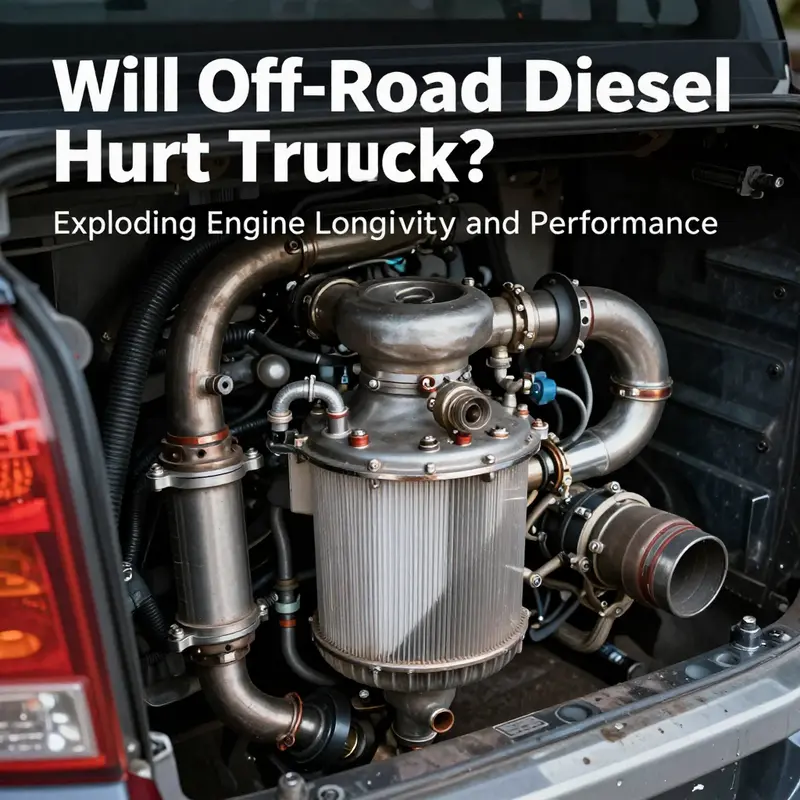
Will off‑road diesel hurt my truck? When the question centers on emission systems, the short, cautious answer is: yes—if you use off‑road diesel in a vehicle designed for on‑road service, you risk accelerated wear, clogged emissions hardware, legal trouble, and costly repairs. That outcome is not inevitable, but the chemistry, additives, and regulatory intent behind off‑road fuel make it a poor match for modern on‑road diesel engines. In practical terms, the danger is not some sudden catastrophic failure; it is a steady erosion of the systems that keep a diesel truck running cleanly, efficiently, and legally.
Most modern diesel trucks rely on a chain of finely tuned components to meet emissions targets while protecting engine performance. Fuel injectors, combustion chambers, the exhaust aftertreatment stack, and electronic controls are calibrated together. On‑road diesel is formulated and treated with specific additives to keep injectors clean, maintain lubricity, and ensure predictable combustion. Off‑road diesel, often dyed to indicate tax status and intended for equipment like tractors or construction machines, is missing some of those additives. It may deliver the same basic energy per gallon, but it does not offer the detergency and precise chemical balance that modern emission systems expect. Over time, that mismatch matters.
One of the most immediate consequences of using off‑road diesel in an on‑road truck is increased soot and deposits. Detergent additives in on‑road fuel help control carbon buildup on injectors, intake valves, and in the combustion chamber. Without those cleaners, combustion can become dirtier. Dirty injectors spray less uniformly. Uneven fuel distribution raises particulate formation. The vehicle’s Diesel Particulate Filter (DPF) was designed to trap a predictable load of soot and then regenerate under certain conditions. When soot generation increases because of low‑detergent fuel or poor combustion, regeneration cycles occur more frequently. That sounds harmless but repeated or premature regenerations strain the DPF and related sensors. Filters can load up faster than the system can burn the soot off, leading to partial blockages, performance losses, or forced regeneration events that cost fuel and wear exhaust components.
The Selective Catalytic Reduction (SCR) system, which reduces NOx emissions, also expects stable exhaust chemistry. Higher soot loads interfere with catalyst efficiency and may contaminate the SCR substrate over time. If off‑road fuel raises particulate levels or alters exhaust temperature profiles, SCR dosing strategies can falter. Inefficient SCR function triggers diagnostic trouble codes and may lead to emission control lamp warnings, limp modes, or engine derating—in other words, the truck will intentionally reduce power to prevent damage or to meet emission thresholds. That reduced performance is a clear sign that the emission control chain is no longer operating as intended.
An Exhaust Gas Recirculation (EGR) system is particularly sensitive to dirty combustion. The EGR returns a controlled portion of exhaust gas to the intake to lower combustion temperatures and reduce NOx formation. When exhaust carries more particulate and soot because of inferior fuel, these deposits build up in the EGR cooler and valves. Blocked EGR passages reduce the system’s effectiveness, leading to higher soot and NOx levels and requiring cleaning or replacement. Cleaning an EGR cooler or replacing an EGR valve is far costlier than the price difference between on‑road and off‑road diesel.
The fuel system itself sees consequences. Low lubricity or absent additives can accelerate wear in high‑pressure fuel pumps and injectors. Contemporary common‑rail systems operate at very high pressures and rely on fine tolerances. If the fuel offers insufficient lubrication or allows varnish and deposit formation, the fuel pump and injector tips suffer. That wear can manifest as poor idle, reduced fuel economy, and increased emissions. Repairing or replacing high‑pressure pumps and injectors is expensive and time consuming.
A second, nontechnical but equally important dimension is legality. Off‑road diesel is dyed and taxed differently because it is intended for non‑road equipment. Using it in a road‑registered truck is illegal in many jurisdictions and enforced strictly. Regulatory agencies have tools to detect misuse, from roadside inspections to remote sensing. Fines and penalties can be significant, and in some cases officials can require removal and remediation of fuel systems or invoice for back taxes. So the risks are both mechanical and regulatory: you pay either in parts and labor, or in fines and remediation—or both.
Beyond the immediate mechanical and legal risks, there are practical driving and maintenance implications. A truck that repeatedly suffers from premature DPF loading or EGR fouling must either be driven differently or maintained more often. Short trips, stop‑and‑go traffic, and low‑load operation prevent DPFs from reaching temperatures needed for passive regeneration. Those conditions already challenge emissions systems even with the correct fuel. Add off‑road diesel into that equation and the system is pushed past its design envelope. Owners may try to compensate by driving at highway speeds periodically to burn off soot, but that is not a foolproof remedy. If injectors are dirty, combustion remains suboptimal, and the exhaust chemistry still works against the DPF and catalyst.
For fleets and operators who rely on predictability, the cumulative effect is the worst outcome. Unplanned downtime from forced regeneration failures, DPF replacement, or SCR issues interrupts schedules and increases operating cost. Diagnostic time rises. Technicians must trace codes and often find secondary damage—sensors coated with soot, wiring harnesses affected by heat from unplanned regeneration events, or turbocharger fouling. Each repair can uncover another hidden cost. Preventing these chain reactions is far easier and less expensive than resolving them.
If you suspect off‑road diesel has been introduced into your truck, taking prompt, informed action can prevent long‑term harm. Begin by not driving the vehicle long distances if possible; minimizing operation limits further contamination. Consult a qualified technician to assess fuel quality and fuel system condition. The recommended corrective action typically includes draining the contaminated fuel from the tank, cleaning or replacing fuel filters, and inspecting injectors and the high‑pressure pump. In cases where contamination has already caused excess soot, a forced DPF regeneration and a careful diagnostic of the SCR and EGR systems are necessary. The sooner these steps occur, the less likely you are to face irreversible damage.
Regular maintenance practices matter even more when you operate in mixed environments—off‑road use followed by on‑road driving, or vice versa. Follow the manufacturer’s service intervals for oil and filter changes; those intervals are calculated with the expectation of on‑road fuel chemistry. Use only on‑road diesel in trucks designed for highway use. For owners interested in learning more about maintaining diesel systems and troubleshooting the issues that arise when fuels or conditions deviate from ideal, consult professional guides and training resources that cover diesel mechanics fundamentals and best practices. A useful resource for owners and technicians is the comprehensive guide to diesel systems maintenance available at the link titled “Mastering Diesel Mechanics: Your Step‑by‑Step Path to Success” which outlines preventive steps and diagnostic workflows to avoid costly issues.
Preventive strategies extend beyond fuel choice. Fuel conditioning and additive use can help when onboard systems detect marginal issues, but they cannot fully compensate for using the wrong fuel type. If additives are considered, they should be compatible with the engine and aftertreatment design and, preferably, recommended by the vehicle manufacturer. Monitoring onboard diagnostics is crucial; modern trucks provide fault codes and indicators that give early warning of abnormal DPF backpressure, SCR efficiency drops, or EGR position anomalies. Addressing those codes promptly prevents a cascade of problems. Similarly, recordkeeping for fuel purchases and service events creates an audit trail that proves compliance with fuel regulations and helps trace problems quickly when they arise.
It is also worth acknowledging contexts where off‑road diesel is appropriate and safe: in true off‑road equipment that lacks the same emission control hardware or where the machinery is exempt from on‑road fuel standards. The issue arises when that fuel crosses into vehicles built and certified for highway emissions compliance. The manufacturing tolerances and legal framework make on‑road trucks incompatible with a fuel stream that omits required additives and tax status. Treating the two fuel supplies as interchangeable is a false economy.
Consider the cost calculus in practical terms. The immediate saving from cheaper off‑road diesel may appear attractive, especially for high‑consumption vehicles. But the cost of replacing injectors, repairing or swapping a DPF, and addressing SCR contamination quickly eclipses fuel savings. Factor in potential fines for misuse and the indirect cost of downtime, and the apparent savings reverse into a loss. In addition, resale value suffers if provenance and service history reflect noncompliant fuel use and repeated emission system repairs. Prospective buyers and inspectors notice such histories.
Finally, think of emissions hardware as an investment in regulatory compliance and engine longevity. The DPF, SCR, and EGR systems were added because of environmental regulations, but they also protect engine internals by controlling soot and combustion temperatures. Using the right fuel preserves that value. Clear fuel selection, disciplined maintenance, and sensible driving patterns are the practical mix that prevents harm. When deviations happen, swift diagnosis and remediation reduce long‑term damage.
For owners and fleet managers, the bottom line is straightforward: do not use off‑road diesel in on‑road trucks. The technical risks to injectors, DPFs, EGRs, and SCR catalysts are real and cumulative. The legal exposure is real as well. Follow manufacturer guidance, maintain the fuel system, and address any signs of abnormal regeneration, reduced fuel economy, or diagnostic codes quickly. If contamination occurs, drain and flush the system and inspect the aftertreatment components before heavy use resumes.
For readers seeking authoritative, regulatory context on why on‑road diesel matters and how emission control systems are governed, refer to detailed guidance from the Environmental Protection Agency on diesel fuel standards and emissions control. That resource explains the regulatory distinctions between fuel types and the expectations for emission system performance: https://www.epa.gov/vehicles/diesel-fuel-and-emissions-control
How Off-Road Diesel Affects Your Truck’s Cooling System and What To Watch For
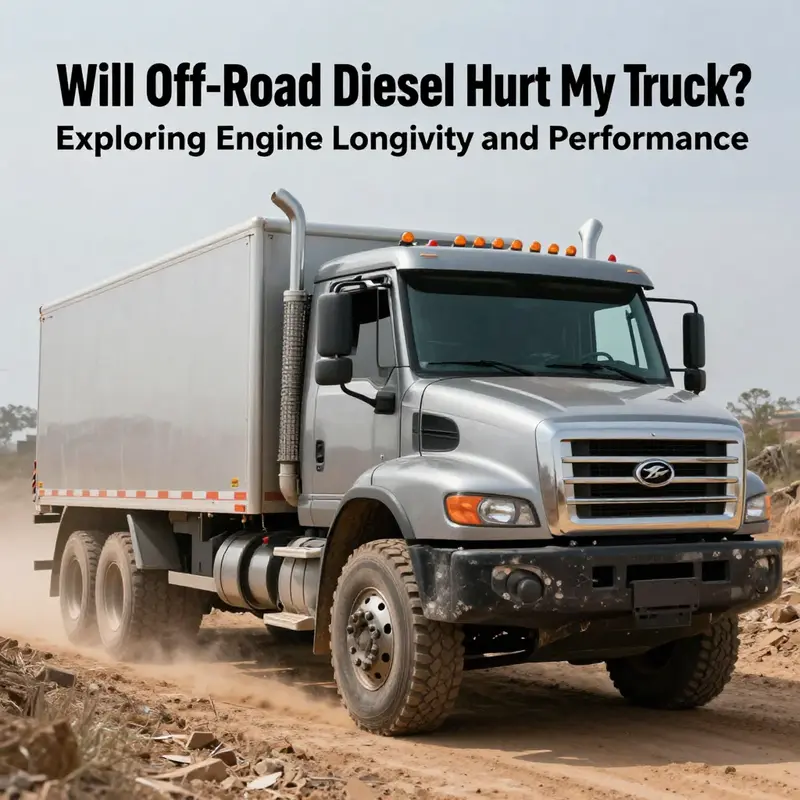
Cooling Demands When Using Off-Road Diesel — a practical look at risks and realities
When truck owners ask whether off-road diesel will hurt their vehicle, attention quickly turns to engines and fuel systems. Equally important, yet less discussed, is the cooling system. Cooling systems manage heat from combustion, friction, and accessory loads. They respond to engine demand, not to fuel labels. That makes them resilient. Still, second-order effects from using off-road diesel can raise cooling demand and accelerate wear. This chapter explains how and why, so you can decide with confidence.
Modern cooling systems are designed to handle specified heat loads. Radiators, fans, water pumps, hoses, thermostats, and coolant all work together. They remove heat produced during combustion and from mechanical losses. Fuel type alone does not directly alter radiator metallurgy or coolant chemistry. Off-road diesel and on-road diesel share the same basic hydrocarbon makeup. Their combustion energy per gallon is essentially comparable. So, under normal conditions, off-road diesel does not chemically attack or clog cooling passages.
The real issue is indirect. Use of off-road diesel can change how the engine runs. Changes in combustion quality, additive content, and contaminant levels can alter exhaust temperatures, combustion efficiency, and deposit formation. Those changes can cause the engine to run hotter or in a more variable temperature range. The cooling system must then work harder and longer to control temperatures. Over time, that increased duty cycle can accelerate component fatigue.
Start with what off-road diesel usually lacks. Some on-road fuels include lubricity and detergent additives formulated for high-pressure fuel systems. Off-road grades are typically produced to meet different tax and regulatory categories. They may omit or reduce certain additives. The immediate effect appears first in the fuel system. Injectors and pumps may see increased wear without those lubricity agents. Wear changes spray patterns and pressures.
Altered spray patterns change combustion. Uneven atomization and late or incomplete combustion raise cylinder temperatures locally. Those hot spots transmit heat to the head, block, and coolant jacket. The thermostat and radiator must dissipate more heat per cycle. That pushes coolant temperatures higher for longer periods. A cooling fan may run more frequently. A water pump may cycle under heavier loads. The result is higher average stress on belts, bearings, and seals.
Second, contaminants and moisture in poorly stored or non-spec fuels can cause incomplete combustion. That often leads to soot and carbon buildup in combustion chambers and exhaust passages. Carbon acts like an insulator on combustion surfaces. It traps heat at the chamber wall and raises metal temperatures. Persistent carbon also contributes to hotter exhaust gas temperatures. Hotter exhaust gas transfers more heat into the turbocharger and exhaust manifold. Those components then radiate heat to adjacent engine parts and to the cooling system.
Third, if off-road diesel leads to increased soot and particulate generation, exhaust after-treatment systems may struggle. Modern on-road diesel trucks use particulate traps and catalytic devices. If those systems are clogged or operate inefficiently because of unusual soot loads, backpressure rises. Higher backpressure raises combustion temperatures and engine load. A truck with significant backpressure runs hotter and puts continuous strain on the cooling system.
It is important to separate legal and mechanical considerations. Using off-road diesel where prohibited can result in fines, insurance problems, and legal exposure. Those consequences matter because they can remove access to dealer support and warranty coverage. Without warranty support, owners may delay necessary repairs. Deferred repairs multiply thermal stress risks. From a thermal standpoint, the most tangible danger is not a single fill-up, but extended use of off-road diesel that leads to increased deposits, component wear, and higher operating temperatures.
Practical evidence supports this chain. Trucks that run clean, well-formulated fuel maintain consistent combustion. Their cooling systems run within design windows. Trucks with contaminated or additive-poor fuel show earlier thermostat cycling, higher average coolant temperatures, and more frequent cooling fan engagement. These symptoms do not prove that off-road diesel chemically attacks the cooling system. They do show how fuel quality affects heat generation and dissipation.
So what should a truck owner watch for? First, monitor temperature behavior. Short, frequent spikes in engine coolant temperature are a warning. They indicate localized hot spots or intermittent cooling duty. A steadily rising baseline coolant temperature is also a concern. Some modern engines will show a single high-temperature event in dash alerts. Do not ignore repeated events. They signal that cooling demand sometimes outstrips system capacity.
Second, observe exhaust color and smoke behavior. Increased black smoke or heavy particulate plumes point to incomplete combustion. That tends to increase thermal load. Third, check for visible soot around exhaust manifolds, turbo housings, and EGR plumbing. Soot deposits accumulate heat and reduce the ability of metal parts to shed heat to the atmosphere.
Fourth, follow scheduled maintenance more strictly when fuel quality is suspect. Change engine oil and fuel filters on or ahead of schedule. Contaminants in the fuel degrade oil life faster. Fresh oil and clean filters help to manage frictional heat. They also ensure the cooling system is not asked to compensate for lubrication deficits.
Fifth, test coolant condition and concentration more often. Coolant does more than transfer heat. It prevents corrosion, maintains boiling point, and protects seals. Contaminated fuel indirectly speeds corrosion by increasing operating temperatures. Higher temperatures accelerate coolant breakdown and accelerate electrochemical reactions. Regularly test coolant pH and inhibitor levels. Replace coolant based on condition, not just mileage.
Another practical point concerns thermal control components. Thermostats, electric fans, and fan clutches react to engine heat. When combustion quality degrades, thermostats may open earlier or remain open longer to manage higher heat. Electric fans may run more often. These components have finite lifespans. Running at higher duty cycles shortens those lives. That may lead to premature fan clutch failure, worn bearings in electric fans, or warped fan blades. While the cooling circuit itself remains intact, the accessories that move coolant and air can fail sooner.
Hoses and belts deserve attention too. Elevated coolant temperatures and prolonged stress increase hose aging. Rubber hoses become brittle faster when under thermal strain. Belts that drive water pumps and fans experience higher loads and wear. Replacing these consumables earlier can prevent sudden failures that would otherwise strand a vehicle in hot conditions.
Turbocharged engines highlight another pathway of risk. A turbo concentrates heat in the exhaust and compressor housings. If off-road diesel drives incomplete combustion and higher soot loads, the turbo receives hotter and dirtier gases. That increases bearing temperatures and exhaust housing heat soak. A hot, degraded turbo will transfer heat into the intake and surrounding engine bay. The cooling system then has to compensate for an extra thermal source within the engine compartment. That is a reliable multiplier of cooling demand.
Proper fuel filtration and good storage practices counter many of these issues. Using high-quality filters removes water and particulates before they reach injectors. Keeping fuel tanks clean and draining water separators minimizes combustion problems. If you ever consider off-road diesel, treat it with the same filtration and handling care you would any diesel you intend to run long term.
There is a simple hierarchy of risk management. At the base, use legal, on-road diesel whenever possible. It reduces regulatory risk and usually includes beneficial additives. Next, if off-road diesel is unavoidable, limit its use to short periods and ensure superior filtration. Run a fuel additive formulated to restore lubricity and detergency where allowed. Keep oil change intervals tight and monitor coolant condition more frequently. Finally, be vigilant for early signs of thermal stress and correct them promptly.
Operators who habitually use off-road diesel face a greater long-term maintenance bill than those who do not. That bill often comes in the form of fuel system repairs, increased injector service, and earlier replacement of cooling accessories. The cooling system core—radiator and pump—rarely fails from fuel chemistry alone. Yet the accessories and the engine itself may age faster, producing situations where the cooling system is forced into continuous high-load duty.
Consider also mission profiles. Trucks used for towing, heavy hauling, or mountainous driving already push cooling systems harder. If off-road diesel worsens combustion efficiency even slightly, the added thermal load can push the system beyond safe margins. Conversely, light-duty trucks operated at steady highway speeds generate stable heat loads. These conditions reduce the chance that fuel-induced combustion issues will overwhelm cooling capacity. That is why context matters as much as fuel type.
Practical maintenance steps reduce risk at low cost. Replace air filters regularly. Clean or replace fuel filters as needed. Use a high-quality coolant mix and maintain its concentration. Inspect hoses, clamps, and belts for heat-related wear. Keep the radiator free of debris and ensure the fan shroud is intact. Test thermostats and fan operation so you catch failures before they drive temperatures into risky ranges.
Finally, use monitoring, not guesswork. Many modern trucks include temperature logs and event histories. Review those logs when you suspect fuel issues. Professional shops can perform combustion analysis and fuel system health checks. They can inspect injectors, measure spray patterns, and run exhaust gas temperature diagnostics. Those tests reveal whether off-road diesel has materially affected combustion and cooling demand.
To summarize the thermal picture in practical terms: off-road diesel does not chemically attack cooling systems. But it can alter combustion and increase temperature exposure. Over time, that causes accessory wear and raises maintenance needs. The cooling system will usually perform its job, but at higher cost and with shorter component life if issues go unaddressed. The sensible approach is to avoid off-road diesel for road use, or to use it only with rigorous filtration, additive correction where permitted, and tightened maintenance.
For owners seeking deeper technical grounding on how cooling components manage airflow and heat, reputable technical references describe fan operation and radiator performance in detail. One clear resource explains how a diesel cooling fan draws ambient air through the radiator core to accelerate heat dissipation. See that explanation for a focused look at airflow roles in cooling systems: https://www.jlmech.com/what-is-the-cooling-system-of-a-diesel-engine/.
If you want hands-on guidance for maintaining diesel systems under variable fuel quality, practical mechanic guides cover step-by-step procedures. Those resources help you prioritize inspections and maintenance when fuel quality is uncertain. For more structured learning on diesel mechanics and maintenance best practices, consider a practical course aimed at diesel technicians to build confidence in diagnostics and preventive care. A good course will show you how to spot early cooling stress indicators and how to address them so your truck remains reliable.
In short, off-road diesel does not directly corrode or clog your radiator. It does, however, increase the odds that your engine will run hotter or less cleanly. That amplified heat load stresses cooling accessories and shortens maintenance intervals. With proper handling, filtration, and watchful maintenance, you can manage those risks. Without those measures, the cooling system will likely survive, but your engine, injectors, fans, and hoses may demand attention sooner than you expect.
Final thoughts
In summary, off-road diesel trucks are resilient machines built for extreme conditions, but their longevity is heavily influenced by how they are used and maintained. By adopting mindful driving habits, understanding the specific challenges of emission systems, and ensuring robust cooling systems, truck enthusiasts can keep their diesel engines running optimally through any terrain. Embrace the adventure, but always prioritize your truck’s performance—your vehicle will thank you for it in miles to come.