
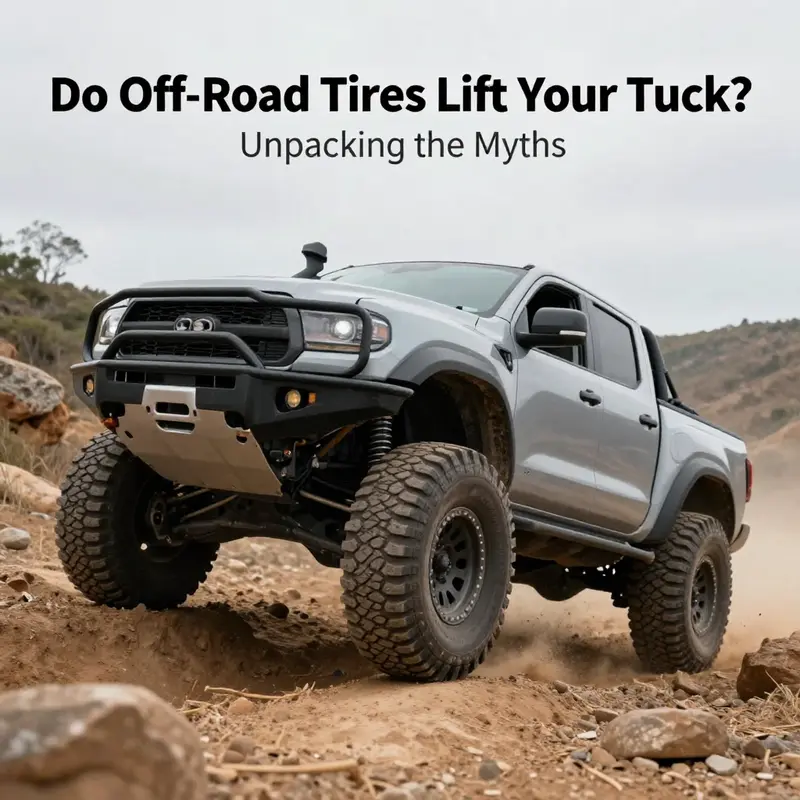
For off-road enthusiasts and adventurers, understanding the nuances of vehicle modifications is essential. Among these modifications, tire choice stands out as both a performance upgrade and a cosmetic choice. A common myth that circulates in off-road circles is that off-road tires lift trucks. While it’s true that larger tires can create an illusion of height, the reality is more complex. This article dives deep into this topic, exploring the basics of tire size and vehicle height, the relationship between increased tire diameter and ground clearance, and how off-road tires differ from suspension lift kits. Each chapter builds upon the last, empowering truck owners and off-road racing fans with the knowledge needed to make informed decisions.
The Impact of Tire Size on Truck Elevation: Unraveling the Myths of Off-Road Tires
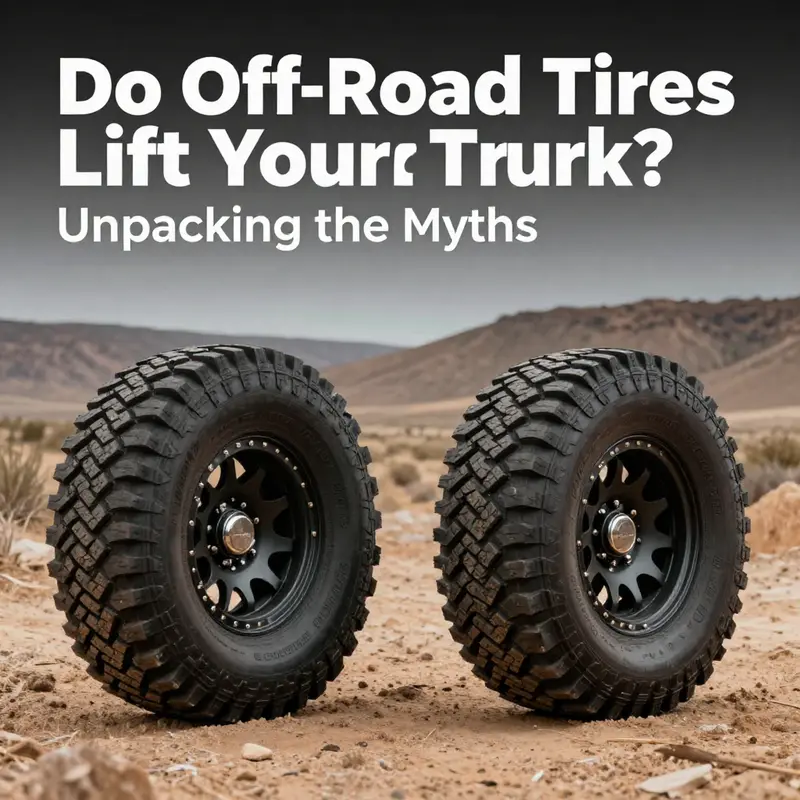
When discussing off-road tires and their impact on truck elevation, a common misconception arises: the belief that these tires inherently lift a truck higher off the ground. While it is true that off-road tires provide improved traction, durability, and overall performance on treacherous terrains like mud, rocks, and sand, they do not increase the truck’s height in the same way as a suspension lift kit. Instead, the perceived height increase often stems from the larger size of the tires themselves. To understand the relationship between tire size and vehicle clearance, it’s crucial to delve into how tire dimensions influence the overall geometry of a vehicle.
Off-road tires, by nature, are designed to handle difficult conditions rather than to elevate a vehicle’s stance. When upgrading from standard tires to larger ones—say, moving from a 265/70R17 to a 315/70R17—the first noticeable effect is an increase in overall diameter. This increase affects the vehicle’s ride height and ground clearance to some degree, given that a larger tire raises the center of gravity of the vehicle. For instance, if the overall diameter of a tire increases by three inches, the truck’s body effectively gains about one and a half additional inches of clearance, as only half of the increased diameter contributes to lifting the chassis above ground.
However, this adjustment in height is not due to a mechanical lifting of the suspension; it’s simply a change in the tire’s rolling diameter. Therefore, while installing larger off-road tires can create the impression of a higher truck, it is not akin to the structural elevation provided by a suspension modification or a lift kit. This distinction is pivotal for anyone looking to enhance their vehicle for off-road adventures while maintaining safety and functionality.
Furthermore, the installation of larger tires can introduce new challenges, particularly if the suspension system is not modified in tandem. Without proper upgrades, those larger tires may encounter rubbing issues against the fenders or suspension components during turns or over uneven terrain. This can not only compromise performance but also lead to significant damage over time.
To fully reap the benefits of larger off-road tires, along with the enhanced aesthetics and ground clearance they provide, many truck owners opt for a corresponding lift system; this could be a leveling kit or a comprehensive suspension lift. These modifications work in harmony to ensure that the larger tires don’t merely sit in their wheel wells but are effectively supported and able to perform optimally during off-road excursions.
When considering the transition to off-road tires, it’s also essential to account for the impact on various vehicle parameters. Increasing the tire size can influence speedometer accuracy, steering alignment, and overall handling of the truck. These adjustments can result in a vehicle’s responses changing significantly during operation, and if not accounted for, this can transform into a safety hazard. Hence, for off-road enthusiasts, it becomes imperative to assess not only tire size but also how these changes correlate with the existing suspension system to avoid compromising the vehicle’s integrity.
In summary, while off-road tires elevate vehicles to a certain extent, this elevation is incidental to their size rather than a result of direct mechanical enhancements. To achieve a true lift that withstands the rigors of off-road driving, implementing a well-matched suspension lift system alongside tire upgrades is essential. With proper consideration and modification, truck owners can enjoy phenomenal off-road capabilities and enhanced aesthetics without sacrificing safety or performance. Ultimately, understanding the dynamics of tire size and its implications on vehicle height can empower owners in making informed decisions about their off-road setups, ensuring their trucks are ready for any terrain they may encounter.
For additional insights into optimizing vehicle performance for off-road conditions, you can explore related topics such as the importance of proper truck modifications to enhance your truck’s compatibility with off-road tires and other upgrades.
With these considerations in mind, embarking on an off-road journey with the right setup will not only make for an exhilarating experience but also ensure that your truck performs optimally in any condition. As the world of off-roading continues to grow, it’s important for enthusiasts to stay informed and prepared, combining the right tires with appropriate lifting solutions for the ultimate driving experience.
Ground Clearance and Off-Road Tires: Do Bigger Tires Actually Lift the Truck?
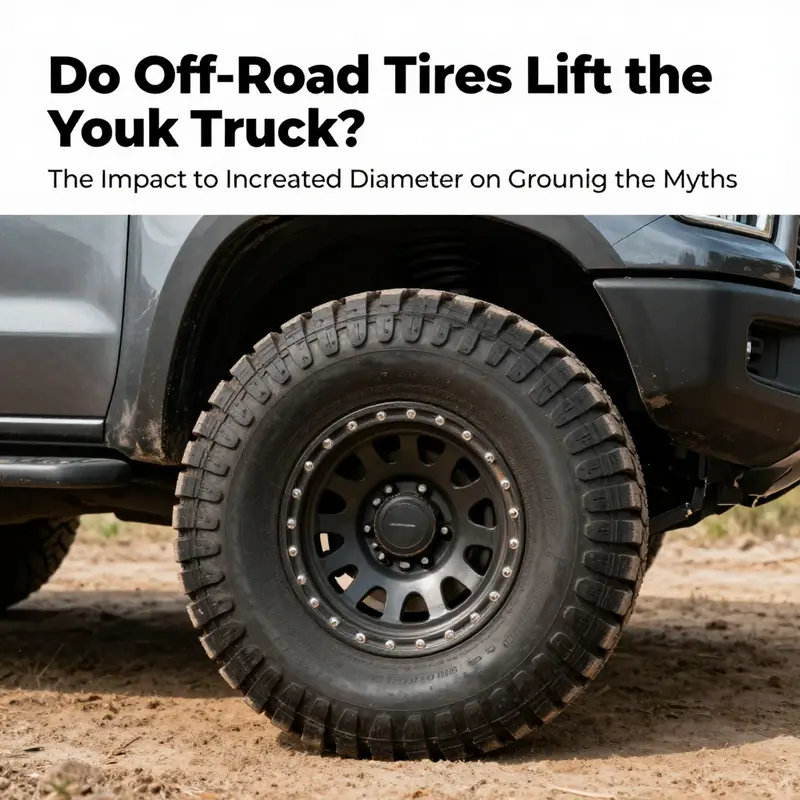
Ground clearance is the vertical distance between the lowest point of a vehicle’s undercarriage and the ground. When you install larger off-road tires, the rolling diameter increases, which can raise the axle height and thus the amount of clearance you have over obstacles. But this is not the same as a suspension lift, which physically moves the frame higher relative to the ground. The distinction matters for approach angles, departure angles, and overall handling on rough terrain.
For example, upgrading from 30-inch tires to 33-inch tires commonly adds about 1.0 to 1.5 inches of ground clearance in many setups, depending on wheel size, wheel well geometry, and how the suspension compresses. Going to 35-inch tires can yield around 2.0 to 2.5 inches of added clearance in some trucks, but the exact amount varies and larger tires may rub against fenders or suspension components when turning or traversing uneven terrain. In short, size alone can raise the bottom of the vehicle, but it does not elevate the chassis or suspension components themselves.
True lifted capability: leveling and suspension lifts
If your goal is genuine extra clearance and improved off-road capability, a true suspension lift or a leveling kit is often required. A leveling kit increases the front height to even out the stance, while a full suspension lift raises the entire frame and allows for larger tires with reduced rubbing. These modifications alter geometry and ride characteristics and typically require alignment checks and potential drivetrain adjustments.
Practical considerations
- Tire size affects speedometer accuracy, gearing, and fuel economy. Recalibration is usually necessary after a tire upgrade.
- Bigger tires can change steering effort and steering response, and may require fender trimming or lift components to prevent rubbing.
- Always verify compatibility with your vehicle, including wheel offset, backspacing, and load ratings.
In sum, larger off-road tires increase ground clearance via the tires’ bigger diameter, but they do not constitute a true suspension lift. For engineers and off-road enthusiasts, the best approach to increasing clearance and capability is to plan the combination of tire size, leveling or lift, and proper component compatibility. For more context, see resources such as Car and Driver’s discussion on ground clearance: https://www.caranddriver.com/4×4/a46789272/what-is-ground-clearance-and-why-does-it-matter/
The Myth of Lift: Understanding the Role of Off-Road Tires Versus Suspension Lift Kits
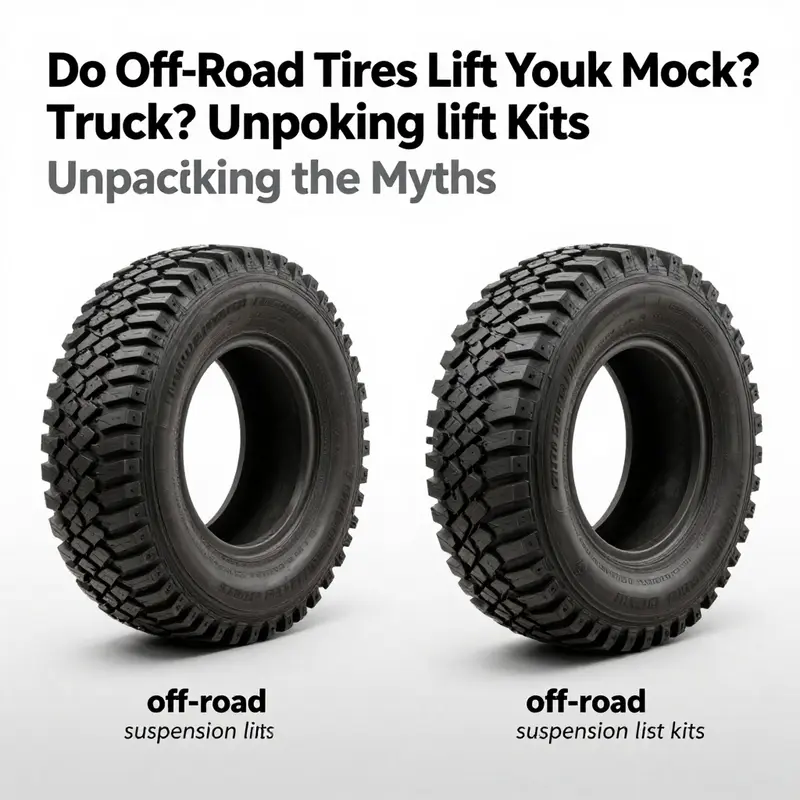
When delving into the world of off-road vehicles, enthusiasts often grapple with numerous upgrades that can enhance performance and aesthetics. Among these discussions, one question frequently surfaces: Do off-road tires lift the truck more? At first glance, the larger, more aggressive off-road tires certainly give the visual impression of a lifted truck. Their imposing presence on a vehicle’s stance can lead many to believe they tackle the task of elevating ride height. However, it’s vital to unpack this misconception and reveal the true function of off-road tires compared to suspension lift kits.
Off-road tires are primarily crafted for improved traction and durability on challenging terrains such as mud, rocks, and sand. These tires feature a rugged design with enhanced tread patterns and reinforced sidewalls that are crucial for maintaining control in less-than-ideal conditions. While it is true that off-road tires generally come in larger diameters than standard passenger tires, the real impact on a vehicle’s height isn’t as straightforward as simply bolting on bigger tires.
The act of switching from stock tires to larger off-road variants does incrementally raise the vehicle. For instance, when replacing standard 30-inch tires with 35-inch off-road tires, the increase in diameter results in an added lift of about 2.5 inches due to the larger tire wrapping over the wheel well. This slight height increase can contribute to improved ground clearance, enabling better navigation over rocks and other road obstacles. However, this apparent lift is not a product of a mechanical suspension adjustment but rather a consequence of tire size.
In contrast, suspension lift kits perform an entirely different function. These systems modify the vehicle’s suspension geometry directly. By raising the frame or repositioning the axles, suspension lift kits can yield significant increases in ride height, resulting in enhanced ground clearance and the opportunity to run even larger tires without encountering complications such as rubbing or clearance issues. While the tires might visually enhance the experience, they do not possess the mechanical authority to alter suspension geometry or overall vehicle height through simple installation.
It’s worth noting that while off-road tires can enhance a vehicle’s capabilities, they can also lead to unintended issues if adequate adjustments are not made when applying larger tires. An increase in tire diameter can affect crucial vehicle functions. For example, it can throw off speedometer accuracy—leading to incorrect speed readings—impact steering alignment, and alter handling characteristics, which raises potential safety concerns.
Thus, when contemplating the possibility of achieving substantial lift and improved off-road capabilities, one should consider a holistic approach, combining the investment in off-road tires with an appropriate suspension lift kit. This combination ensures that the vehicle not only looks good but also performs well on the trails.
For a vehicle owner aiming for maximum performance and capability on rugged terrains, relying solely on larger tires would be an incomplete solution. The perfect marriage of upgraded tires and a comprehensive suspension lift allows for the transformation of the vehicle into a true off-road machine. It integrates the capability to tackle difficult routes while maintaining safe driving dynamics that come with proper mechanical adjustments.
Moreover, the pursuit of visual impact should not compromise practical access to performance enhancements. A well-thought-out suspension lift plan is vital. The suspension setup that a driver chooses plays a prominent role in defining their vehicle’s off-road prowess, handling characteristics, and overall comfort.
Choosing to upgrade your truck is more than just aesthetic; it’s about enhancing functionality. Experienced professionals in the field are well-acquainted with the optimal tire-and-lift combinations that provide superior off-road performance, reliability, and safety. With adequate preparation and knowledgeable support, drivers can achieve their off-roading aspirations and truly benefit from both larger tires and a fitted suspension system tailored for their specific needs.
While new trends in tire technology continuously emerge, the relationship between off-road tires and suspension kits remains clear. As one embarks on enhancing their vehicle for rugged use, understanding these distinctions fosters sensible decision-making that enhances both aesthetics and performance while avoiding the pitfalls of mismatched components. For those invested in off-road adventures, enhancing your vehicle is about a balanced perspective—where tire size meets the technical accuracy of a well-designed suspension system. Incorporating both allows you to harness a vehicle that not only stands tall but also delivers impressive off-road performance.
For further reading on how tire and lift combinations can change your vehicle dynamics, consider exploring this insightful analysis from Car and Driver.
Elevation Through Modification: How Off-Road Tires Influence Truck Height and Performance
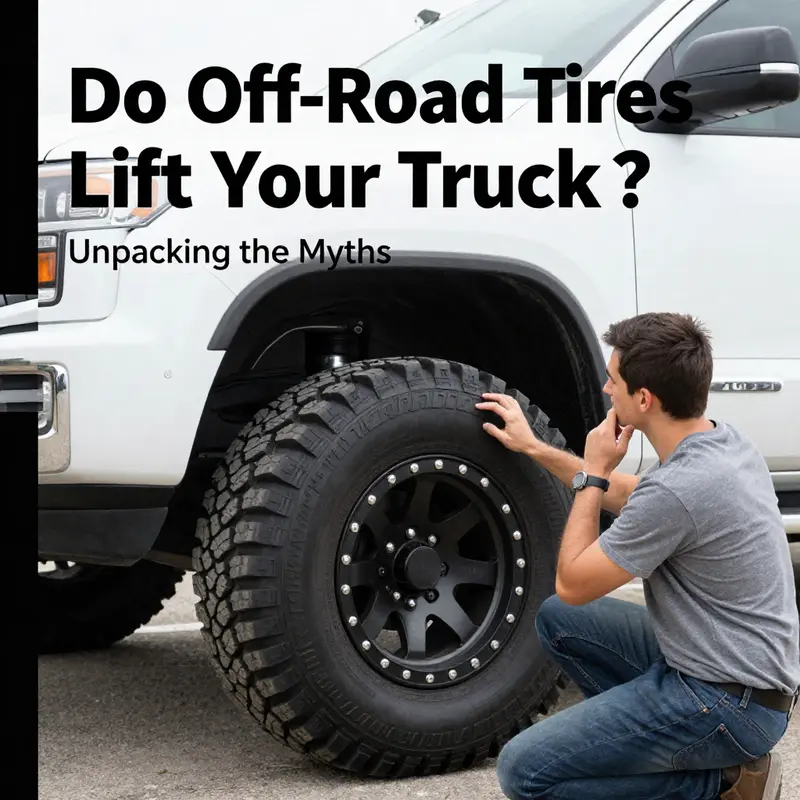
Off-road tires can raise a truck’s stance primarily through their larger diameter rather than an actual lifting mechanism. They increase ground clearance and can affect approach and departure angles, enhancing off-road capability. However, simply changing tires may cause rubbing, gearing changes, and altered steering feel if the suspension is not adjusted. Upgrading to a proper lift kit or adjusting suspension components can help maintain alignment, prevent tire rub, and preserve handling. A lift modifies the suspension to increase clearance, while proper tire choice and alignment ensure safe and predictable performance. When selecting tires, consider gearing, payload, and intended terrain; larger tires can improve capability but are not substitutes for a comprehensive lift. For enthusiasts seeking genuine height and performance, combine the tires with a suitable suspension lift and professional alignment to maximize safety and capability on rugged terrain.
Final thoughts
In conclusion, off-road tires do not inherently lift your truck in the same way that a suspension lift kit would. Their primary function revolves around enhancing traction and durability while navigating difficult terrains. However, going larger with tire size does have its implications on vehicle height, giving the perception of a lifted truck. Understanding these nuances ensures that off-road racers, enthusiasts, and rural landowners can make effectively informed decisions when modifying their vehicles. Ultimately, consider what you desire most—true lift through suspension alterations or the advantages of increased tire size—and equip your ride accordingly for your next adventure.