
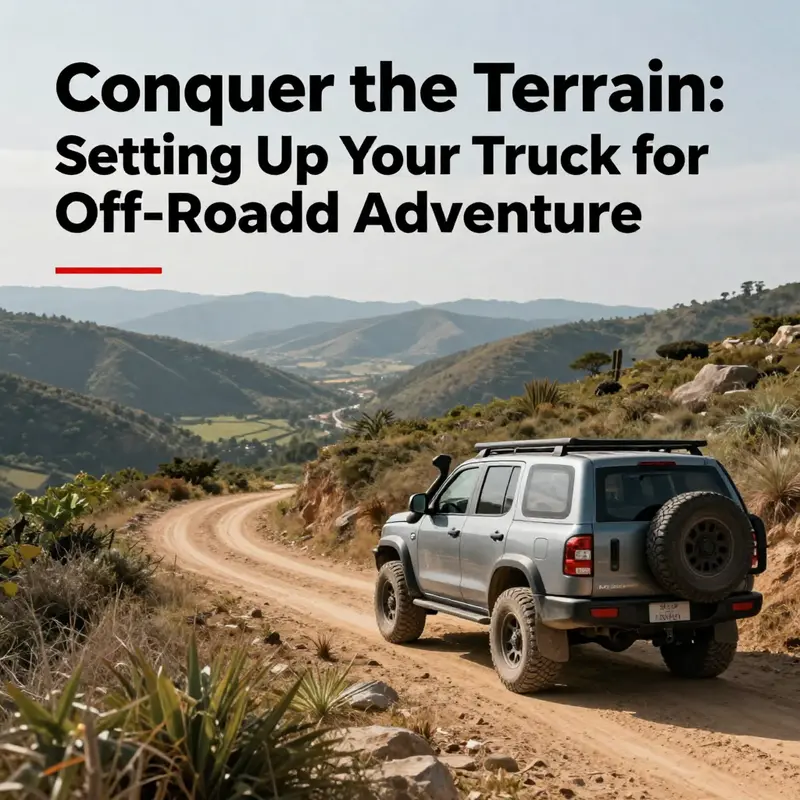
For the rugged enthusiast and adrenaline-seeking adventurer, setting up your truck for off-roading isn’t just a mechanical undertaking; it’s a rite of passage. Whether you’re tearing through sandy deserts, tackling rocky mountain trails, or exploring expansive rural lands, your vehicle’s capabilities and your driving prowess are paramount. This comprehensive guide delves into assessing your truck’s capabilities, selecting the best customized equipment, gathering essential safety gear, mastering driving techniques, and seeking professional support to ensure your truck can withstand the harshest environments. With these insights, you will turn your truck into an indomitable off-roading machine ready to face every trail with confidence.
Unlocking Off-Road Potential: A Comprehensive Assessment of Your Truck’s Capabilities

When it comes to off-roading, not all trucks are created equal. The first step in setting up your vehicle for rugged adventures is to thoroughly assess its capabilities. This evaluation goes beyond mere aesthetics; it dives deep into the technical aspects of your truck that dictate how well it can handle various terrains, from rocky mountain roads to sandy dunes. Factors like ground clearance, approach angles, departure angles, and breakover angles are crucial in determining whether your truck can tackle the challenges ahead without sustaining damage.
Through-Terrain Capabilities
To begin with, the geometric parameters of your truck—ground clearance, approach angle, departure angle, and breakover angle—are paramount. Ground clearance is the distance between the ground and the lowest point of your vehicle’s undercarriage. A higher ground clearance decreases the risk of hitting obstacles like rocks and logs, which could damage critical components of your truck. Vehicles designed for serious off-road use, such as the Jeep Wrangler and Land Rover Defender, offer impressive ground clearance, along with approach and departure angles exceeding 30° and 25°, respectively. These angles are vital because they indicate how steep a hill or incline your truck can ascend or descend without becoming stuck or risking damage to the front or rear.
The breakover angle, often overlooked, measures how sharply your vehicle can navigate between two points without grounding its underside. A well-designed off-road vehicle should have a breakover angle that allows it to traverse uneven terrain without trouble. By understanding these aspects, you can ascertain if your truck is engineered for off-road adventures or is merely a city commuter with a rugged look.
Evaluating the Powertrain
Once you have a grasp of your truck’s geometric strengths, shift your focus to the powertrain. A robust powertrain delivers the torque necessary for overcoming obstacles, climbing steep inclines, and moving through tricky mud or deep sand. In particular, diesel engines are favored by off-roading enthusiasts for their superior low-end torque. Torque is essential for off-road driving, as it gives your vehicle the strength needed to surge through challenging surfaces without faltering.
Furthermore, the configuration of your truck’s drivetrain is crucial. A four-wheel drive (4WD) system can significantly enhance your vehicle’s traction and stability. You might encounter three types of 4WD: part-time, full-time, and on-demand. Part-time 4WD is often the most versatile, allowing the driver to manually lock the differentials based on the terrain, thereby maximizing traction when needed. Full-time 4WD, on the other hand, provides constant power to all wheels, which is beneficial when navigating varied surfaces. Meanwhile, on-demand 4WD systems offer fuel savings by engaging only when traction is compromised, striking a balance between efficiency and performance.
Understanding the Suspension System
The next essential factor in your truck’s off-road evaluation is its suspension system. Long suspension travel is key for maintaining tire contact with the ground during uneven terrain traversals. While independent suspensions offer enhanced comfort during normal road use, solid axle suspensions are more preferred in off-road conditions due to their durability and ability to handle heavy loads. Modern advancements also allow for height-adjustable suspension systems, adding greater adaptability to traverse various obstacles.
Tire Performance
Another critical aspect of off-road performance is the tire and wheel setup. Off-road tires are specifically designed with deep and aggressive tread patterns optimized for gripping various surfaces like mud, sand, rocks, and snow. These tires also tend to be puncture-resistant, allowing for better durability during your adventures. Proper management of tire pressure is vital; lowering the tire pressure can increase the surface contact area, which significantly boosts traction on softer terrain, like sand or muddy paths. Maintaining the right tire pressure is not merely a luxury; it can make the difference between conquering an obstacle and getting stuck.
Protection and Structural Reinforcement
Additionally, as you evaluate your truck’s capabilities for off-roading, consider its protective measures. A combination of high ground clearance and reinforced undercarriages with skid plates helps to shield vulnerable components, like the oil pan and transmission, from damage due to rocks and other debris encountered on trails. Features such as electronic differential locks can ensure that both wheels on an axle rotate at the same speed, which is crucial when one wheel begins to lose traction on uneven surfaces. The security afforded by these protective features cannot be underestimated—for peace of mind during expeditions, they are indispensable.
Real-World Testing
While technical specifications provide a solid foundation for assessment, the true test of a truck’s off-road capabilities comes from real-world trials. Engage your truck in a variety of off-road conditions: sandy dunes, rocky trails, muddy tracks, steep inclines, and even water crossings. These tests will provide invaluable insights into how well your truck performs and what modifications might be necessary to maximize its off-road potential. Through experiences gained in diverse environments, you will identify areas where your truck excels and others where enhancements could be beneficial.
An effective off-road vehicle is more than just its specifications; it’s also about how well those features work together to provide an enjoyable and safe driving experience in challenging conditions. By investing time and effort into evaluating your truck’s capabilities, you set the foundation for a successful off-roading adventure.
For detailed technical evaluations and methodologies related to off-roading, you can refer to additional resources such as Off Road Magazine. Keeping your truck’s potential at the forefront of your mind will ensure you’re well-prepared for whatever the trail has to offer.
Transforming Your Truck: The Power of Customized Off-Road Upgrades
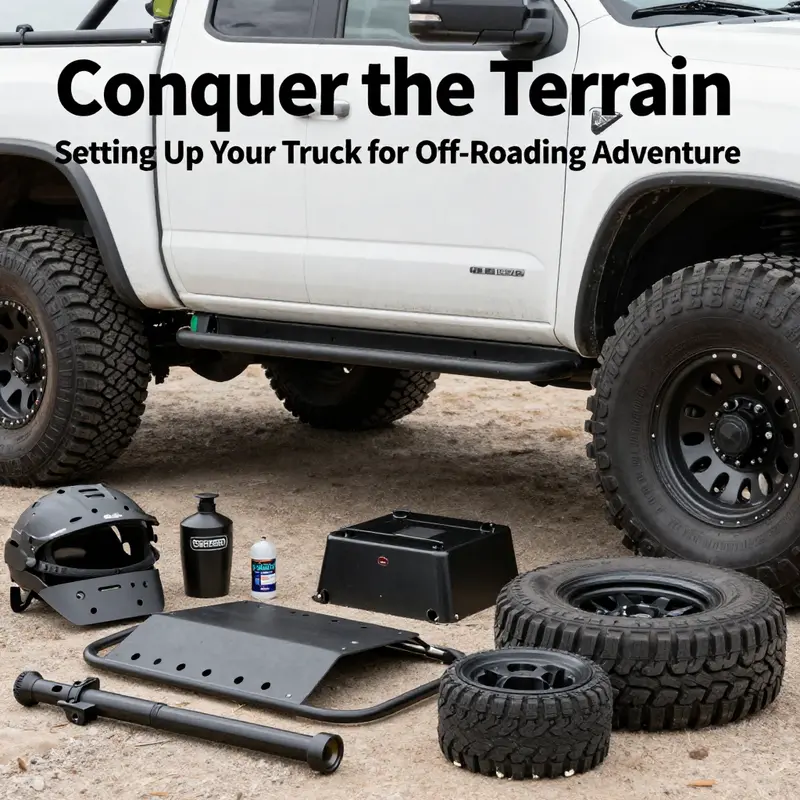
When it comes to transforming your truck into a capable off-road machine, the process involves a series of strategic modifications designed to enhance performance, durability, and safety in challenging terrains. Among these modifications, two critical pillars stand out: the selection of appropriate tires and wheels, coupled with a fortified suspension system. These upgrades not only set the foundation for future enhancements but also define the overall capability of your vehicle in off-road situations.
The first step in your customization journey is the tire and wheel selection. Tires are the only point of contact between your vehicle and the ground, making their choice crucial for off-road performance. Professional-grade off-road tires—like the BFGoodrich KO2 or Michelin LTX A/T2—deliver superior traction on mud, sand, and rocky surfaces thanks to their deep tread patterns and robust rubber compounds. Upgrading your wheels to durable options like ARB 16×15″ alloy rims not only improves stability but also enhances handling during extreme maneuvers—a critical factor when navigating rough terrains.
Once you’ve secured the right tires, the next logical step is to focus on suspension system enhancement. High-performance components, such as Fox 2.0 Performance Series shocks and King Suspension springs, will significantly increase your truck’s ground clearance. This enhancement allows your vehicle to tackle uneven terrain without bottoming out, while also improving wheel articulation—an essential feature that ensures your tires maintain contact with the ground under all conditions. If you seek even greater capability, consider the installation of a lift kit, typically ranging from 2 to 4 inches. This alteration not only improves approach, departure, and breakover angles but also greatly reduces the risk of damaging the undercarriage.
While tackling formidable terrains, it’s imperative to protect your vehicle’s vital components; hence, protective armor is a must-have. Heavy-duty front and rear bumpers, skid plates, and side steps can safeguard crucial elements like the engine and transmission from impacts with unexpected obstacles—like rocks or tree branches. Brands specializing in rugged automotive gear offer purpose-built solutions that deliver both structural reinforcement and versatile mounting points for additional accessories, such as lights and recovery tools.
As you begin to aggressively explore off-road challenges, you’ll quickly discover that visibility is paramount, especially in low-light conditions. This brings us to the importance of upgrading the lighting system. Adding high-intensity LED auxiliary lights—like those in the KC HiLiTES 30” Pro Series Light Bars—not only enhances your field of view after sundown but also significantly increases safety while traversing darker paths. Furthermore, incorporating a snorkel or air intake system allows your engine to draw in clean air from above the hood, which is crucial during deep water crossings or when navigating flooded trails.
Next, let’s delve into enhancing the powertrain. To optimize your truck’s capability, modifications to the intake and exhaust systems can yield significant benefits. For example, replacing the stock air filter with a high-flow “dome” air cleaner can increase airflow considerably. Additionally, installing a performance exhaust system minimizes backpressure and improves engine breathing. For extreme off-roading conditions, consider adding a mechanical or electronic limited-slip differential (LSD), such as an ARB Air Locker, which effectively channels power to the wheel with grip, improving traction significantly when one or more wheels lose contact with the ground.
However, undertaking such extensive upgrades can be daunting, especially for the novice enthusiast. It’s vital to approach vehicle modifications with careful planning based on intended use, terrain type, and budget limitations. The guidance of experienced off-road specialists can help streamline the process, ensuring that each component is not only compatible but also maximized for performance. When high-quality, proven parts are used, your truck will not only be capable of handling off-road excursions but also maintain safety and reliability on the trail. Automotive experts frequently note, “The best off-road trucks aren’t built overnight—they’re engineered over time through thoughtful upgrades.”
Lastly, let’s not forget the importance of having the right safety and recovery gear at your disposal. Even the most prepared off-roader can encounter unforeseen circumstances. Stocking your truck with essential tools is crucial for managing common challenges like getting stuck in mud or sand. A recovery rope rated at 4-6 times your vehicle’s fully loaded weight is essential. When selecting your rope, it’s advisable to choose nylon for general use due to its elasticity, or polyester for rocky terrains, which offers better wear resistance. To enhance your safety, swap traditional metal U-bolts for synthetic fiber soft shackles. These not only reduce the potential for injury from snapping, but they also float should you need to use them in water.
Including safety measures such as a cable flag can further elevate your recovery preparedness. This simple addition—attaching a professional-grade flag weighing 1.5kg to your recovery rope—serves as an essential warning signal and can catch your rope if it breaks, mitigating secondary injuries.
To summarize, upgrading your truck with customized off-road equipment is a journey that requires thoughtful consideration and strategic planning. By focusing on sound modifications to tires, suspension systems, protective gear, and powertrains, you transform your vehicle into a formidable off-road contender. As you navigate this exciting path of customization, let your preferences and the challenges you seek guide your decisions. For those eager to embrace their off-road ambitions, partnering with established companies specializing in robust vehicle modifications will ensure your truck evolves into a reliable companion for any adventure.
🔗 For detailed technical specifications and real-world test results on popular off-road upgrades, visit Car and Driver’s Off-Road Testing Hub.
Equipping for Adventure: Essential Safety and Recovery Gear for Off-Roading Your Truck
When embarking on an off-road journey, ensuring that your truck is outfitted with the right safety and recovery gear is critical to navigating unpredictable conditions and effectively managing possible emergencies. Properly equipping your vehicle can spell the difference between a slight inconvenience and a perilous situation. Selecting appropriate gear is not just a matter of convenience; it’s a lifesaving decision that supports a safe adventure in the wild.
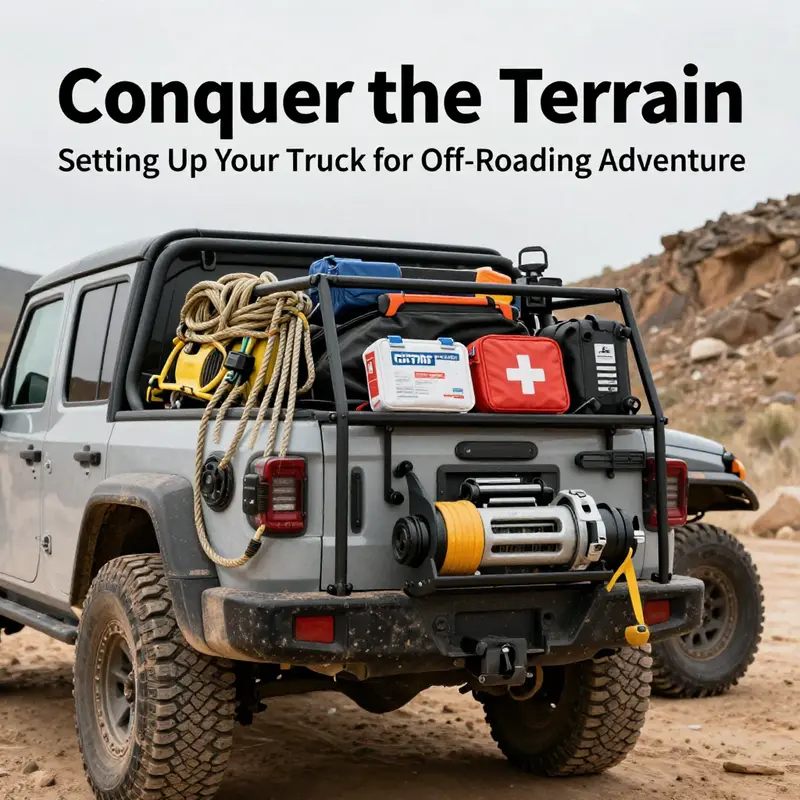
One indispensable piece of equipment is the high-lift jack. In rugged terrains where standard jacks may falter, high-lift jacks excel due to their mechanical advantage and robust design. They allow you to lift your truck safely during tire changes or recovery operations, providing the stability necessary to navigate the complexities of off-road difficulties. High-lift jacks are engineered to manage significant loads, making them essential for those unexpected breakdowns in rocky or muddy environments.
In conjunction with high-lift jacks, carrying recovery straps is equally vital. These durable synthetic tow straps are designed with a slight stretch, absorbing shock better than traditional chains or bungee cords. This quality not only enhances their ability to recover a stuck vehicle but also prevents sudden failures that could lead to injury or further complications. When pulling a truck from mud, sand, or snow, recovery straps can make the process smoother, ensuring that you can assist a fellow adventurer or rescue your own vehicle with confidence.
Another valuable tool in any off-roader’s kit is a recovery board or traction aid. These devices improve traction when traversing soft surfaces such as sand or loose gravel. Products on the market range from carpet-like mats to portable winch plates, capable of providing the necessary grip that allows your truck’s tires to regain traction and advance without getting bogged down. Having these aids can be the difference between continuing on your path or stalling your adventure and risking being stranded.
Accidents can happen even to the most prepared off-road enthusiasts, which is why a comprehensive first-aid kit tailored for outdoor use should always be ready at hand. A well-equipped first-aid kit contains supplies for treating injuries such as cuts, burns, fractures, and allergic reactions. Additionally, incorporating a personal locator beacon (PLB) or satellite communicator, like the Garmin inReach, can prove invaluable in emergencies, allowing you to send distress signals from remote areas that lack cell service, thus providing an extra layer of safety for your off-road excursions.
Furthermore, ensuring your truck is adequately equipped for tire maintenance is essential for off-road performance. This includes carrying a spare tire, a wheel lug wrench, and a tire pressure gauge, along with a portable air compressor. Maintaining proper tire inflation is a critical factor that significantly enhances your off-road driving experience, maximizing traction and handling on various terrains. The ability to make quick repairs on the trail not only bolsters safety but keeps your adventure moving forward.
To maintain an organized off-road setup, it is crucial to secure all the gear within the truck’s bed or cargo area. An effective storage method ensures equipment is easily accessible when needed, preventing frantic searches that could waste valuable time during an emergency. Completing a checklist before heading out allows you to verify that all necessary items are accounted for—making it an essential practice for every trip.
The interplay between safety gear and the skills developed throughout the driving experience cannot be overstated. Equipping your truck with essential tools plays a critical role in building confidence and capability on diverse terrains. In remote areas, it’s advantageous to be self-sufficient, using the recovery gear not just as equipment but as part of a broader strategy that prepares you for any scenario.
In terms of practical application, using the recovery gear involves mastering certain techniques that coincide with your gear selection. For instance, when deploying a high-lift jack, always position it on a firm base, and never exceed its rated capacity. Such practices are crucial to prevent accidents and ensure longevity of your equipment. Similarly, understanding the characteristics of your recovery straps and boards allows you to use them effectively in varying conditions—such as adjusting techniques based on the kind of terrain you are traversing. A careful, deliberate approach promotes safety and efficacy.
In conclusion, choosing the right gear is a proactive step towards a safer, more enjoyable off-road experience. Your truck transforms into a capable companion, ready to tackle natural obstacles, navigate rugged trails, and embrace the unforeseen challenges of the wild. By investing in quality gear and learning how to utilize it effectively, you empower yourself to explore the great outdoors with confidence and ease. Each item contributes not only to your capability on the road but also to your overall safety, ensuring adventures remain thrilling yet secure. As you set out on your off-roading journey, remember that your greatest resilience comes not just from being prepared, but from being equipped to face the wilderness ahead.
Mastering Off-Road Driving Techniques: Navigating Challenges with Skill and Precision

Mastering driving techniques for off-roading your truck is essential for those who seek adventure beyond the paved roads. When navigating rugged terrain, your skills determine not only the enjoyment of your off-road experience but also your safety. In this chapter, we will explore the vital techniques that every off-road driver should master, blending vehicle dynamics understanding with practical skills.
One of the first aspects to grasp is the proper use of off-road driving modes. Most modern trucks come equipped with specialized off-road settings designed to enhance traction, control, and handling in various challenging conditions—be it mud, sand, or steep inclines. Engaging this feature optimizes the vehicle’s performance by adjusting throttle response and shifting behavior. However, it’s imperative to remember that this mode is intended solely for off-road scenarios; using it on public roads can lead to a compromised driving experience.
To get the most from this feature, familiarizing yourself with the off-road app found in your vehicle’s settings can be immensely beneficial. This app offers real-time adjustments, enabling you to adapt to changing terrain conditions, ensuring optimal performance when it matters the most.
Next, steering precision plays a crucial role in off-road driving. The nature of off-road paths—often uneven and narrow—demands precise handling. To navigate effectively, one must master timing, angle, and pressure applied to the steering wheel. Good timing allows you to anticipate turns and obstacles, guiding your truck smoothly without abrupt movements that could lead to loss of control. The correct steering angle helps maintain stability through tight trails, while careful pressure application prevents oversteering or understeering, which can easily happen on rough surfaces.
Moreover, how you manage acceleration and braking is just as vital. In slippery conditions such as mud or snow, gradual throttle application is key. Sudden acceleration can cause your wheels to spin unnecessarily, making it harder to gain traction. Similarly, when it comes to braking, the goal is to be gentle yet timely. Abrupt stops might throw the truck off balance, risking instability and control loss. Getting these elements right is fundamental, as they directly influence how smoothly and safely you traverse through obstacles.
Mastering these techniques isn’t just about theory; they need to be practiced in real-world scenarios. Watching professional off-road drivers, such as those featured in tutorial videos, demonstrates these skills in action and highlights the importance of reflexes and decision-making when faced with challenges like deep mud or river crossings. Seeing these techniques applied in real time reinforces your understanding and inspires confidence.
As you begin your journey into off-road driving, starting with lower difficulty trails builds foundational skills without overwhelming you. Once you gain a sufficient level of comfort, gradually increasing the challenge level will develop your abilities and understanding of your truck’s capabilities. Always make sure to adhere to the low-range four-wheel drive (4L) setting on steep inclines—engaging this mode allows for greater torque control, thereby assisting in maintaining momentum without forcing the engine.
Driving in mud and sand presents its own set of challenges. In these conditions, using high-range four-wheel drive (4H) can often help, as it adapts the power to better suit slick surfaces, encouraging a steady, slow pace to prevent wheelspin. Remember, during such challenging terrain, patience is as important as speed. Mastering how to manage your speed in off-road environments can make all the difference.
For those who wish to enhance their skills further, modern technology provides great resources. Applications that offer immersive 3D simulations can serve as excellent training tools. Available on platforms like the Apple App Store, these apps allow you to practice everything from complex route navigation to hill climbs. They simulate the feeling of high-stakes environments, building up your confidence and muscle memory well before facing physical terrain.
To conclude this exploration of off-road driving techniques, remember that success in off-roading lies in the interplay of vehicle performance and your driving finesse. Factory-integrated systems, combined with a disciplined application of driving techniques, lead to safer and more enjoyable outdoor experiences. As you continue to hone your skills, you’ll gain the ability to navigate through challenging terrains with increased confidence and expertise. Armed with this understanding, you are well on your way to transforming your truck into an off-road powerhouse, ready to tackle every adventure that comes your way.
Expert Guidance: Professional Support and Installation for Your Off-Road Truck Setup
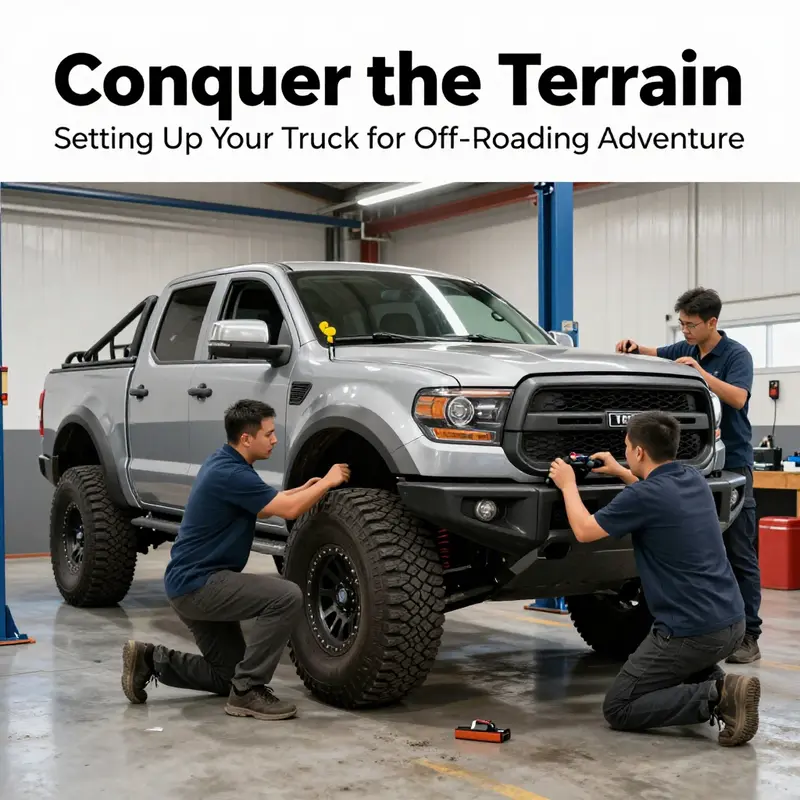
Setting up your truck for off-roading is an exciting journey that transforms your vehicle into a rugged beast ready to tackle the wilderness. However, embarking on this expedition requires more than just enthusiasm—it demands expertise. Professional support and installation play a pivotal role in this process, helping you harness the full potential of your off-road vehicle while ensuring safety and performance. This chapter dives into how you can effectively navigate through professional services tailored for off-roading, from selecting the right specialists to understanding the importance of installation.
When considering modifications for off-roading, the first step is frequently to assess whether your vehicle requires upgrades. This is where professionals come in. Local off-road specialty shops are often your best allies. They typically offer an array of services, from initial consultations to adding state-of-the-art equipment, ensuring each component fits perfectly and works harmoniously with your vehicle. Such shops often have technicians who are passionate off-road enthusiasts themselves, bringing a depth of knowledge that extends far beyond traditional mechanics.
In addition to specialty shops, leveraging the services of dealership service centers can also yield significant benefits, especially if you own a truck model like a Ford F-150 or Toyota Land Cruiser. These centers understand the nuances of your specific vehicle better than most and can provide installation services designed to comply with warranties and manufacturer standards. They’re particularly useful if you’re looking to implement modifications that require adherence to specific safety regulations, as any installation that interferes with a vehicle’s standard systems could void warranties or lead to performance issues.
An essential component of your off-roading setup involves connecting with knowledgeable communities, particularly online forums. Platforms such as Reddit’s r/OffRoad or dedicated sites like 4x4Wire foster vibrant communities where enthusiasts share insights about local services. These connections can lead to valuable recommendations for reliable shops, as well as advice on which modifications will best suit the terrains you plan to conquer. Engaging in these discussions not only broadens your understanding of vehicle modifications but also allows you to gain first-hand accounts of what works best in various environments.
While tapping into community wisdom, don’t overlook the manufacturer’s official resources. Many top brands provide comprehensive support via their websites, offering valuable insights into recommended modifications. This resource can guide you through selecting equipment or kits specifically engineered for your make and model. It’s vital to understand what modifications will preserve the integrity and performance of your vehicle. Resources provided by manufacturers can help ensure that your selected upgrades will lead to successful adventures without compromising automotive standards.
Now, onto the specifics of installation. While it can be tempting to dive into DIY modifications, there are compelling reasons to opt for professional installation—safety being paramount. Proper installation is crucial, particularly for complex systems like lift kits, winches, and specialized transmissions. Each component often necessitates precise alignment and calibration, and professional installation guarantees these are handled with accuracy. A misalignment or improper installation can lead to issues ranging from poor handling to damage during off-road excursions.
When you engage with a professional team, they usually commence by conducting a thorough analysis of your vehicle based on your intended off-road application. This involves assessing ground clearance, suspension components, and drivetrain compatibility. For instance, if you’re focusing on rock crawling, a different setup will be recommended compared to set-ups intended for desert adventures. This tailored approach is critical as it significantly enhances your truck’s performance and your overall safety.
Many professional services utilize tech-savvy tools for customization, including 3D design software, which visualizes how proposed modifications will fit and function. By approaching installation this way, you can visualize the end result before any physical changes occur, mitigating the risk of unexpected issues. This forward-thinking method ensures that every installation is not only aesthetically appealing but also mechanically sound.
Moreover, there is immense value in utilizing parts that have undergone rigorous testing. Professional installations are typically carried out using components recognized for their durability under extreme conditions. The materials, whether they are high-strength steel roll cages or specialized air intakes, are designed specifically for off-road challenges, ensuring that your modifications will withstand the rigors of adventure.
Post-installation processes are equally essential. After the modifications are complete, reputable shops conduct thorough inspections, including performance tests, and always recommend a follow-up alignment check. These steps ensure that your vehicle is not just ready for off-roading but energetically compliant with safety standards. Think of it as an extra layer of reassurance, giving you peace of mind before you hit the open trails.
Ultimately, the journey to transforming your truck for off-roading involvement is far more enriching with professional support. By equipping your vehicle with the right components and ensuring they are precisely installed, you unlock a level of adventure that is both exhilarating and safe. While sharing tips from experience can be helpful, nothing substitutes for sound advice and professional attention—particularly when navigating complex modifications. With your truck optimized, you are now poised for memorable excursions through the rugged and unpaved paths that nature offers, allowing you to explore with confidence in your vehicle’s enhancement.
As you stand at the ready for your next adventure, it’s essential to appreciate that the most powerful off-road tool isn’t always the one with the highest specs—it’s the one that has been cared for by the right experts. So connect with local specialists, engage with fellow enthusiasts, and trust the process of professional enhancements to ensure that your truck isn’t just vehicle—it’s a gateway to adventure.
For more insights into finding the best installation services for your truck modifications, check out community recommendations on off-road forums. This shared knowledge can help guide you toward the right choices that fit your off-road objectives.
Final thoughts
Setting up your truck for off-roading transcends mere modifications; it’s about unlocking your vehicle’s full potential and maximizing your adventures. Assessing your truck’s capabilities, enhancing its functionality with custom upgrades, equipping it with safety gear, mastering essential skills, and seeking professional support are all integral steps in powerhouse preparation. When your truck is fully outfitted, you will be ready to face any terrain with unmatched confidence, ensuring that every off-road adventure is not just a journey, but an exhilarating experience. Gear up, hit the trails, and let your truck be the vessel that carries you through the wild.