

Building the ultimate off-road truck is more than a hobby; it’s a passion that fuels the heart of every adventurer and racing enthusiast. This guide delves deep into the intricate world of truck modifications, revealing how foundational elements, powertrain enhancements, survival-focused utility upgrades, and tire considerations coalesce into a single, formidable machine. Each chapter celebrates the grit required to build a robust off-road vehicle, perfect for conquering rugged landscapes and connecting with nature. Whether you are a seasoned racer, a landowner needing practical utility, or someone who thrives on off-road adventures, this comprehensive breakdown serves as your roadmap to forging a truck that showcases your resolve and meets your every trail challenge.
Building the Backbone: The Critical Role of Chassis and Suspension in Your Ultimate Off-Road Truck
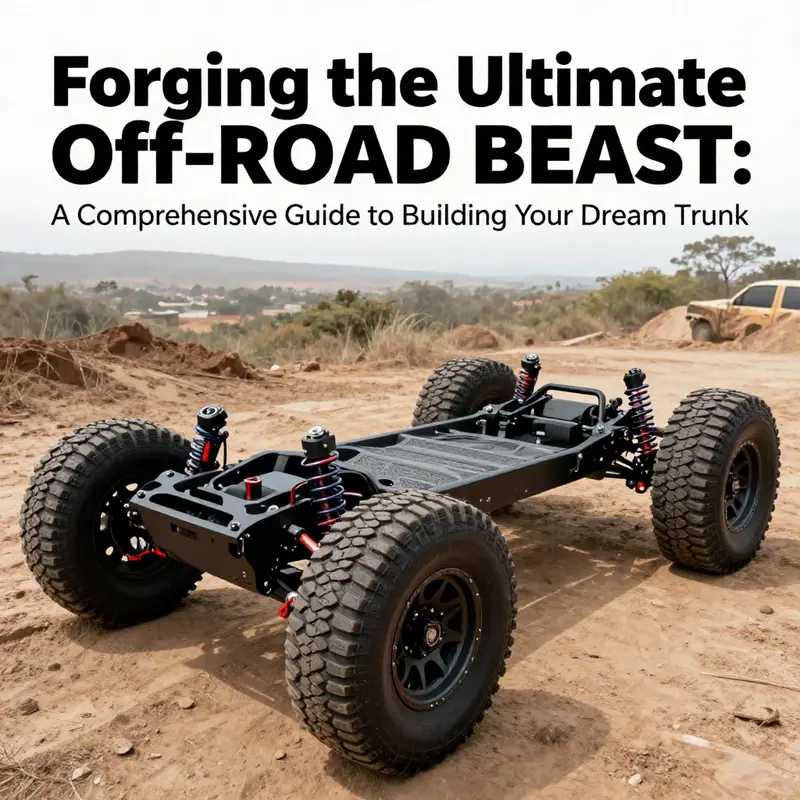
When venturing off the beaten path, whether on rocky trails, muddy landscapes, or steep inclines, the one aspect that dictates a truck’s performance is its foundational chassis and suspension system. These two components work in conjunction to form the backbone of a vehicle, ensuring it is not only resilient but capable of navigating some of the most challenging terrains with ease. A well-designed chassis serves as the structural framework that holds the truck together while enduring the immense loads and stresses that arise during off-road adventures.
At the heart of an off-road truck’s performance lies a sturdy chassis—typically, a non-load-bearing body-on-frame design. This configuration, commonly found in vehicles like the Ford Ranger Wildtrak or Jeep Wrangler, is essential for preserving strength and rigidity. It ensures that the truck can absorb shocks and stresses from uneven surfaces without bending or flexing, which can lead to long-term damage or catastrophic failure.
The development of an effective chassis requires meticulous attention, including rigorous static and dynamic strength assessments. These evaluations confirm the frame’s ability to endure complex loading patterns depicted by off-road driving dynamics. Key technical considerations include fatigue resistance, torsional stiffness, and overall structural durability. A strong chassis guarantees that the truck can withstand the forces encountered when traversing obstacles, thereby enhancing safety and overall capability.
Once the chassis is established, the next essential component is the suspension system. This is not just a collection of springs and shock absorbers; it is the heart of the off-road experience that determines how a truck reacts to the terrain under it. The true purpose of an advanced suspension system is to absorb shocks while maintaining ideal tire contact with the ground, providing stability for both driver and cargo.
A long-travel suspension setup is particularly beneficial for enhancing wheel travel, which ensures that during large bumps and drops, the tires remain engaged with the surface, thus maintaining traction. Components like coil-over shocks or leaf springs from reputable manufacturers significantly increase the off-road capability. Brands like FOX or King Shocks have long been recognized for their performance, allowing enthusiasts to maximize the articulation of their setup.
Furthermore, elevating a truck with a 2-4 inch lift kit fundamentally transforms its ability to conquer various obstacles in the wild. This elevation increases the approach, departure, and breakover angles, drastically reducing the risk of the undercarriage scraping against rocks or roots. However, this modification should progress with careful considerations regarding alignment, and driveline angle adjustments must be made to avoid performance issues such as vibrations at higher speeds.
In off-roading, reinforced axles and differentials are critical. Stock axles frequently fail to endure the strenuous demands of larger tires and enhanced torque outputs. Replacing them with heavy-duty units like a Dana 60 axle or a Currie axle can make a significant difference. Additionally, an aftermarket differential housing equipped with robust gears ensures long-term reliability. A proper balance between these components promotes a seamless interaction between power and durability, ultimately improving the vehicle’s off-road performance.
However, the integration of these systems is crucial. Sheltering a powerful engine without a reliable chassis and suspension system is futile. Every component must work synergistically to maximize performance, ensuring that your truck not only performs well on trails but also remains safe under the most strenuous conditions.
While excellent chassis and suspension components provide the necessary framework for off-road capabilities, they do so in concert with an optimized powertrain and drivetrain. The increase in size and weight from durability enhancements means the truck requires additional power for superior maneuverability across an extensive array of terrains.
Enhancing performance through engine tuning plays a pivotal role in achieving the desired outcome. Tweaking the engine’s ECU (Engine Control Unit) can yield increased low-end torque and improved throttle response essential for executing sharp inclines or extracting the truck from ruts. For those seeking monumental gains, a supercharger or turbocharger could be the next step, albeit with the necessity of planned cooling and drivetrain reinforcements to manage the added stress.
An advanced four-wheel-drive system is non-negotiable in building an ultimate off-road truck. A manual part-time 4×4 transfer case assists in engaging all four wheels only when needed to save fuel and reduce excessive wear on the drivetrain. Locking differentials are essential; they allow both wheels on the same axle to spin together even when one wheel loses traction, a safeguard that can prove critical when faced with sticky situations, effectively maximizing power delivery.
Additionally, changing the final drive ratio in the rear differential compensates for increased tire size. Larger tires, while enhancing grip and traction, often lead to reduced gear ratios, making acceleration sluggish and low-speed control challenging. Optimizing the gear ratio brings back your truck’s initial capability to pull itself through tough conditions effectively.
Protection is another critical category that can significantly affect an off-road truck’s performance. This means setting up comprehensive body armor that secures the vehicle against the unforgiving elements of nature. Heavy-duty steel bumpers—integrated with winches—work as shields for the frame, radiator, and lights, safeguarding these essential components from unanticipated impacts. Incorporating side steps and reinforced fender flares diminishes body damage from stone chips and rocks, a common enemy when traversing rough terrains.
In addition to bolstering the chassis with protective enhancements, adding skid plates to shield the critical components underneath the vehicle—such as the engine, transmission, transfer case, and fuel tank—ensures that sharp rocks and uneven surfaces pose no threats of catastrophic damage. Such protective measures not only prevent physical harm but also augment confidence while maneuvering through hazardous landscapes.
Equipping the truck with essential accessories—like a high-lift winch mounted on the front bumper—provides a formidable means for self-recovery in difficult scenarios. Another critical feature, a snorkel, ensures the engine can breathe clean air during deep water crossings by drawing intake from above the hood rather than close to the ground, significantly decreasing hydrolock risks. A portable air compressor for on-the-fly tire pressure adjustments is another must-have; deflating tires for loose surfaces like sand or mud enhances traction, while reinflating them before hitting the highway boosts fuel efficiency and safety.
Lastly, the tires and wheels serve as the only direct interface between the truck and the ground, emphasizing their critical role in all off-road applications. Upgrading to larger and more aggressive tires (37 inches or more) can dramatically influence performance. For all-around performance, choosing all-terrain tires allows a balance of off-road capability and on-road comfort. Alternatively, mud-terrain tires excel in challenging conditions, providing superior traction at the cost of comfort on paved surfaces.
Pairing the tires with strong yet lightweight wheels is equally important. Opting for forged aluminum wheels helps to withstand impacts while maintaining a low unsprung mass, which consequently improves ride quality and handling during rigorous off-road maneuvers.
Building the ultimate off-road truck is an intricate, well-planned venture that entails meticulous selection and integration of each component—from a robust chassis and advanced suspension to powerful drivetrains and protective utilities. Each upgrade must serve a unified purpose, ensuring the complete system harmonizes to transform an average truck into a true off-road powerhouse ready to conquer any rugged terrain.
For an in-depth analysis of chassis strength, check out the peer-reviewed study on the Strength Analysis of an Off-Road Lorry Frame, which addresses core principles outlined in this discussion, informing potential builders how to establish a sound foundation for their vehicles.
Mastering the Heart: Powertrain and Drivetrain Essentials for Your Off-Road Truck
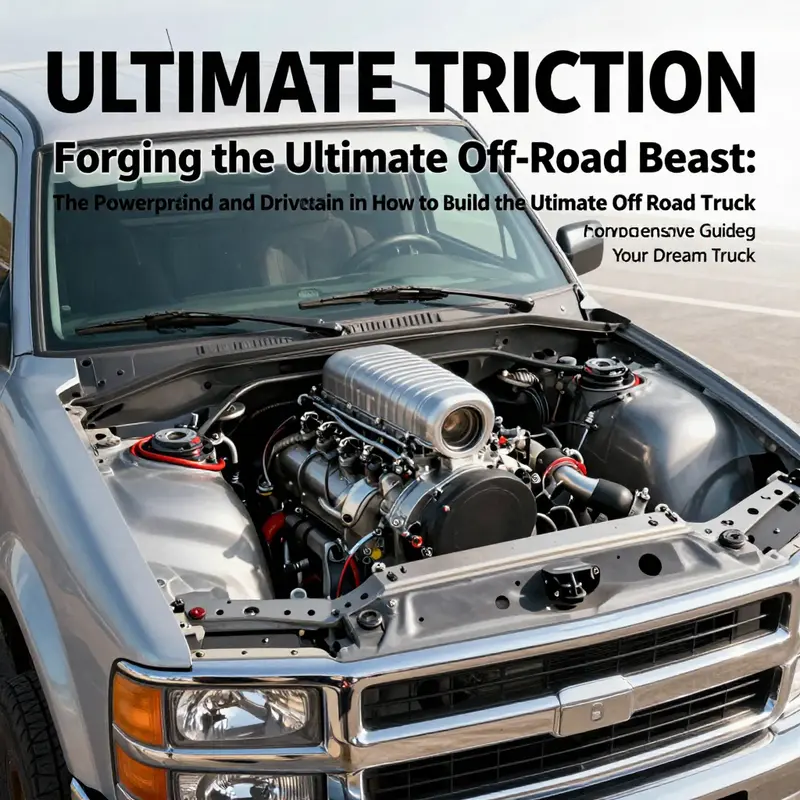
The powertrain and drivetrain form the very heart of your ultimate off-road truck, intricately woven into the fabric of its ability to tackle the wildest of terrains. When you embark on building an exceptional vehicle designed to navigate mountains, crawl through rocks, or traverse swamps, ensuring that these critical systems deliver not just power, but raw, usable torque is essential. Every component must harmonize to allow the truck to climb, pull, and traverse challenging environments with confidence.
Powertrain Fundamentals
To create an off-road truck that can handle the rigors of extreme terrain, one must begin with a robust powertrain. This assembly includes the engine, transmission, and all associated parts, designed specifically to yield high horsepower while emphasizing torque at lower RPMs. This is no small feat; off-roading demands that your vehicle maintain traction and momentum despite shifting terrains, and it relies on the dynamic capabilities of its powertrain.
Engine Selection
When selecting an engine, consider options that offer solid low-end torque output. Modern high-output diesel engines have surged in popularity among off-road enthusiasts for their ability to deliver substantial torque that remains consistent even at lower RPMs. Alternatively, many have found success with heavily modified gasoline V8s, which also boast an impressive torque curve and can be tailored to produce even more power with the right upgrades.
Optimal engine performance also requires integrating advanced technology. Components like aftermarket cold air intakes and performance exhaust systems can improve airflow, enabling the engine to function more efficiently and produce higher power outputs. Superchargers or turbochargers can further enhance performance but necessitate careful consideration regarding cooling systems and potential upgrades to the drivetrain to handle the added stress.
Transmission Complexity
The transmission is equally critical to your off-road truck’s capabilities. Heavy-duty automatics such as the Allison 1000 are favored for their strength and reliability under heavy load, while manual transmissions, like the Getrag 325, provide drivers with greater control. The right transmission must be able to handle the increased load that comes from larger tires and enhanced torque demands. Furthermore, the transmission must effectively distribute power to the wheels, particularly when in challenging or multidirectional driving scenarios.
Drivetrain Dynamics
Once you’ve established a powerful powertrain, it’s time to explore the drivetrain, which encompasses the transfer case, axles, driveshafts, differentials, and wheels. Every aspect of the drivetrain must work cohesively to maximize traction, handling, and overall mechanical efficiency.
Transfer Case Insights
A well-designed transfer case is paramount for off-roading. Opting for a dual-range transfer case allows you to shift between high and low gears, making it easier to traverse uneven surfaces. In low-range gearing, the torque multiplication is significant, allowing for delicate control while crawling over obstacles or through deep mud. This feature is vital for making your truck versatile in various off-road environments.
Importance of Differentials
When venturing off the beaten path, the necessity for efficient power distribution becomes glaringly apparent. Locking differentials, both front and rear, ensure that both wheels on an axle receive equal torque. This feature is crucial when navigating uneven terrain or in situations where one wheel may lose traction—without a locking differential, you’ll often find one wheel spinning uselessly while the other remains stationary, leaving you stuck and frustrated.
Axles and their Role
Of equal importance to the drivetrain’s performance are high-strength axles that can withstand the demanding forces encountered during off-roading. Forged axles offer superior durability, and upgrading to reinforced differential housings will contribute to long-term reliability. Coupled with advanced suspension systems—like long-travel coilovers or leaf springs designed for extended wheel travel—the axle setup must maximize articulation, ensuring that all four tires maintain contact with the ground, thus optimizing traction and stability.
Harnessing advanced technology can also enhance the drivetrain’s overall performance. Adjustable control arms or upgraded sway bars can improve handling, ensuring that while negotiating rough landscapes, your truck remains stable and secure.
The Intersection of Power and Efficiency
As you address these combinations of elements in your powertrain and drivetrain, remember that a holistic approach is paramount. Every component must seamlessly integrate, creating a system that not only delivers significant power but does so intelligently, distributing that power effectively across various surfaces. This synergy is what enables off-road trucks to function as cohesive units, capable of incredible feats in demanding conditions.
Moreover, efficient tuning of the powertrain and drivetrain can lead to enhanced fuel economy—a desirable trait when you’re a long way from the nearest refueling station. The ability to maximize performance while being conscience of consumption factors in an important way into the overall design philosophy for an ultimate off-road vehicle.
As you set out on this journey of designing the ultimate off-road truck, continually refer back to this correlation between the powertrain and drivetrain. One inspiring piece for those looking for deeper insights into upgrading powertrains and drivetrains can be found at Off-Road.com. This resource provides step-by-step guidance to equip your truck with the elements necessary to tackle any wild adventure.
In conclusion, your off-road truck deserves a powertrain and drivetrain that don’t just work; they must excel under pressure. Every component, from the engine choice to the transfer case configuration, plays a critical role in sculpting a vehicle ready to face the toughest challenges with grit and determination. Each element you choose and implement will define the experience you have on the trails and how effectively your truck can respond to the challenges it faces.
Armored Resilience: Building an Off-Road Truck for Extreme Conditions

When embarking on the journey to create the ultimate off-road truck, one must recognize that survival in the harshest environments is not merely a secondary thought, but rather the pinnacle of design considerations. Whether facing torrential downpours, blistering heat, or sub-zero temperatures, the off-road vehicle should be equipped to withstand—and thrive in—all weather conditions. A well-designed truck becomes a reliable companion in remote and rugged terrains, balancing essential protection features with functional utility.
At the heart of any resilient off-road truck lies a robust chassis. This crucial framework must be engineered to handle the rigors of off-road challenges without succumbing to structural failure. A body-on-frame construction provides the necessary strength and shock absorption. For instance, upgrading to a reinforced chassis capable of withstanding massive forces ensures that the truck will endure grueling conditions while maintaining its integrity. High-performance suspension systems, particularly long-travel options, enhance the vehicle’s ability to traverse over uneven grounds with maximum comfort and traction, crucial for the unpredictable paths that off-road adventures often entail.
As the truck must operate in various environmental conditions, the electrical systems installed within the vehicle must be sealed and impervious to moisture. Avoiding potential electrical failures in soggy conditions is critical, making waterproof connectors and fuses a priority. In extreme cases where traditional power sources are unavailable, integrating high-capacity power storage solutions—like rugged portable power stations—becomes indispensable. These power stations must feature durable, water-resistant enclosures, enabling the operation of essential devices, such as communication tools, navigation systems, and even medical equipment, while off-grid.
In terms of maintaining a comfortable cabin environment during extreme temperatures, climate control and effective insulation systems are necessary. For expeditions into freezing conditions, additional heating systems can be life-saving, providing warmth when it matters most. Conversely, in desert-like climates, effective ventilation solutions can make the difference between a tolerable journey and an unbearable one. Creating a habitable space within the rig means understanding the climates you will encounter and designing accordingly.
Beyond basic protection from the elements, the utility features of the truck can revolutionize its functionality. Implementing a modular design allows for increased adaptability. Removable tool racks can transform the vehicle into a mobile workshop, and an expandable cargo bed can be invaluable for carrying camping gear, emergency supplies, or unexpected finds. In the face of unforeseen circumstances, integrated emergency shelters can provide refuge, significantly enhancing the truck’s survival capabilities.
Smart monitoring systems also play a role in optimizing performance. Integrating GPS-enabled control units that detect real-time environmental conditions—such as temperature or terrain slope—empowers the driver with actionable insights. This capability allows for proactive decision-making, helping to anticipate hazards and navigate with confidence.
A well-rounded setup prioritizes both mechanical resilience and intelligent technology. Numerous field evaluations indicate that trucks that adeptly combine these elements outperform those relying solely on physical strength. The pathway to building a capable off-road truck lies in creating a coherent design where mechanics and technology work in harmony rather than as separate entities.
To truly armor against the brutal realities of the wild, installing comprehensive body armor is essential. Front and rear steel bumpers should be equipped with integrated winches, providing robust protection for critical components like the radiator and frame rails. Meanwhile, reinforced side steps and fender flares can shield areas vulnerable to rock damage and debris strikes. Furthermore, deploying protection plates beneath the truck—covering vital components like the engine, transmission, and fuel tank—helps to prevent catastrophic failures from sharp rocks and other obstacles.
This multifaceted approach to protection extends to the choice of tires and wheels. As the sole point of contact with the ground, the right tires can make a monumental difference in the performance of an off-road vehicle. Selecting larger, aggressive tires—37 inches or more—provides superior grip. All-terrain options deliver a balance of on-road comfort and off-road capability, while mud terrain alternatives thrive in deep muck but tend to compromise comfort on the highway. The choice of wheels should focus on strength and weight; rugged, forged aluminum options stand out as suitable candidates, reducing unsprung mass and improving handling while ensuring the wheels can withstand impacts.
Finally, the incorporation of a high-lift winch, like those from trusted brands, is not just a luxury but a necessity for self-recovery. Tying this functionality into the overall utility of the vehicle adds a layer of practicality essential for exploration beyond civilization’s reach. Having snorkels for deep water crossings and a portable air compressor for quick adjustments to tire pressure are further considerations that enhance the truck’s capability.
In consideration of field-tested experiences, it’s abundantly clear that a vehicle engineered for severe conditions demands meticulous planning and precise execution. Every component—from armor plating to electrical systems and climate controls—should be selected with an eye toward ensuring not just survival, but an exceptional performance in the wild. This dedicated design philosophy transforms a standard pickup into an adventurer’s dream, ready to tackle any challenge nature may throw its way. With a methodical, informed approach to each upgrade, you can build an off-road truck that isn’t merely a vehicle, but a reliable partner in the wilderness.
For insights into maintaining power systems within off-road vehicles, consider this detailed comparison of portable power stations where durability and performance standards are tested under extreme conditions.
Maximizing Traction: The Essential Role of Tires and Wheels in Your Ultimate Off-Road Truck
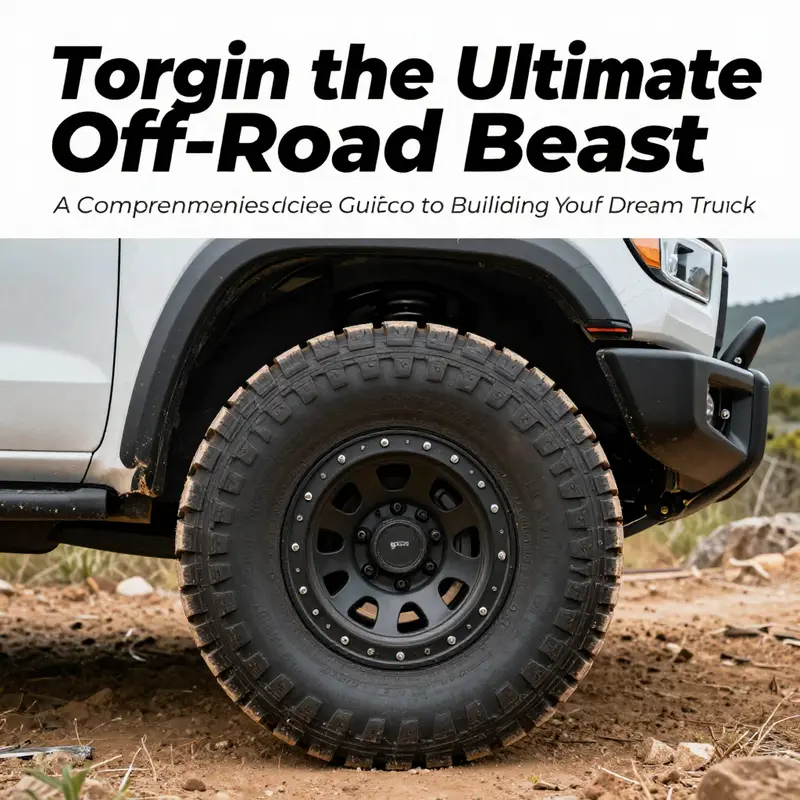
When embarking on the journey to build the ultimate off-road truck, one cannot overlook the paramount significance of tires and wheels. These components are not merely enhancements or afterthoughts; they represent the critical interface between your vehicle and the rugged terrain it is designed to conquer. Choosing the right combination of tires and wheels affects traction, durability, performance, and overall capability in extreme conditions.
Tire Selection
The selection of tires is one of the most crucial steps in your off-road truck build. Tires must match the specific driving environments you intend to tackle, whether navigating desert dunes, rocky trails, or muddy wetlands. Typically, off-roaders favor larger tires, with sizes such as 37 inches or even greater. These provide a larger footprint, enhancing contact with diverse surfaces and improving stability.
One of the more versatile options in tire types is the all-terrain (AT) tire. A well-regarded choice is the all-terrain tire, as it balances off-road capability with on-road comfort, making it ideal for those who split driving time between city streets and backcountry trails. They excel in a variety of conditions, allowing for smooth driving while offering sufficient grip for moderate off-road challenges.
However, if your adventures take you deep into severe conditions—such as rocky climbs or through heavy mud—a dedicated mud-terrain (MT) tire is the better option. While these tires offer superior grip, they sacrifice on-road smoothness and can produce additional noise, making them less suited for regular street driving.
The world of tire technology is rapidly advancing. For example, innovations such as the “brush-soil mechanics fusion” tire model are breaking new ground by enhancing the interaction between the tire and deformable terrains. This advanced design employs optimized tread patterns and materials, ensuring better weight distribution, reducing slippage, and ultimately improving traction on unstable surfaces.
Wheel Selection
Selecting the right wheels is as important as choosing the proper tires. Like tires, wheels need to fit both the vehicle’s suspension setup and the intended use. A few key factors deserve attention when choosing wheels.
First, consider the width of the wheel. Wider wheels create a larger contact patch between the tire and the ground, which can improve traction but may also affect steering and handling. Similarly, the wheel’s offset—its distance from the centerline—can influence stability. An improper offset could lead to handling issues, or could cause tires to rub on the vehicle’s suspension or body when under load or in a turn.
Spoke design is another critical element; various designs can contribute to the strength and weight of the wheel. Lighter wheels made of forged aluminum can enhance acceleration and improve braking response, whereas heavier steel options might be more durable but can negatively affect overall performance due to the increased unsprung weight.
For those serious about off-roading, it’s crucial to invest in premium wheels from reputable manufacturers. They not only hold the tires but also enhance braking efficiency, steering response, and overall safety, especially under the demanding conditions encountered during off-road adventures.
Performance Considerations
Once you have selected high-quality tires and wheels, the interaction between these components and the truck’s chassis, drivetrain, and suspension come into play. For maximum off-road prowess, pairing aggressive off-road tires with rugged, purpose-built wheels guarantees that every element of your truck works together cohesively. This synergy ensures the vehicle can withstand shocks and stresses encountered while traversing rough terrain while providing the necessary traction to navigate incline and decline.
Moreover, optimizing gear ratios to match larger tires will rectify issues of sluggish acceleration and poor control that can arise from the increased resistance generated by oversized tires. An understanding of how larger tires affect the overall performance is crucial—requiring careful calibration of the drivetrain to ensure the off-road truck performs effectively.
Regrettably, great performance doesn’t just happen. After buying an excellent set of wheels and tires, time should be spent on maintenance to get the maximum lifespan from your investment. Regular inspections for wear or damage and wheel balancing will maximize safety and performance when you’re out on the trail.
In the sphere of off-road modifications, it’s easy to overlook tires and wheels, yet they deserve a prominent place on your checklist when preparing for a new build. Given that they are the only contact points with the ground, their importance cannot be overstated. The right combination of tires and wheels not only enhances performance but can ultimately be pivotal in determining the truck’s ability to conquer even the most challenging terrains.
For those eager to explore the latest advancements in tire and wheel technology, consider seeking out reputable suppliers who specialize in high-performance off-road products. One such resource is Best Truck and Bus Tire and Top High Quality Tire, which can guide you in selecting tires and wheels optimized for your specific off-road requirements.
Final thoughts
The journey to build your ultimate off-road truck culminates in a meticulous fusion of powerful components, strategic modifications, and unwavering passion. Each chapter of this guide illuminates critical elements, ensuring your truck is not just a machine but an endurance-ready vehicle built to tackle the unknown. From the robust chassis and thoughtfully engineered powertrain to protective enhancements and essential tires, every decision you make ensures a seamless experience on the wildest trails. Embrace the adventure; your perfect off-road companion awaits, equipped to turn every challenge into triumph.