
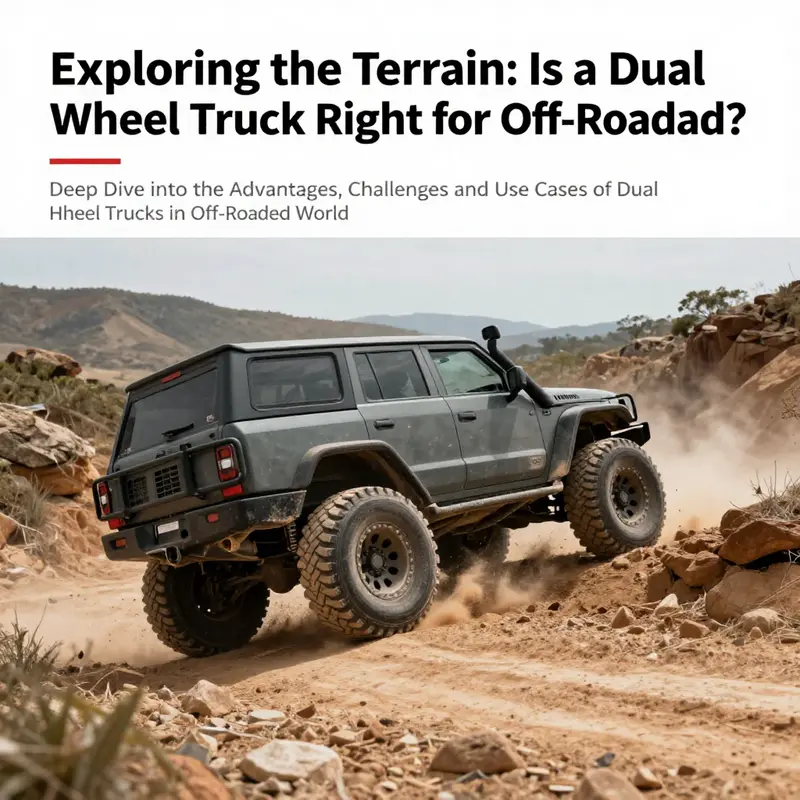
Off-roading is not just a hobby; it’s a passion that drives adventurers into uncharted territories and rugged landscapes. The type of vehicle you choose can make or break your experience in the wild. Here, we examine the dual-wheel truck—an option that offers unique advantages for off-road enthusiasts. This article will explore its benefits in load distribution and traction, the challenges it brings in maneuverability and maintenance, and a comparative analysis with single-wheel trucks. We’ll conclude with practical applications, highlighting when and where dual-wheel trucks shine in off-roading scenarios.
Dual-Wheel Advantage: How Tandem Axles Elevate Off-Road Performance and Versatility
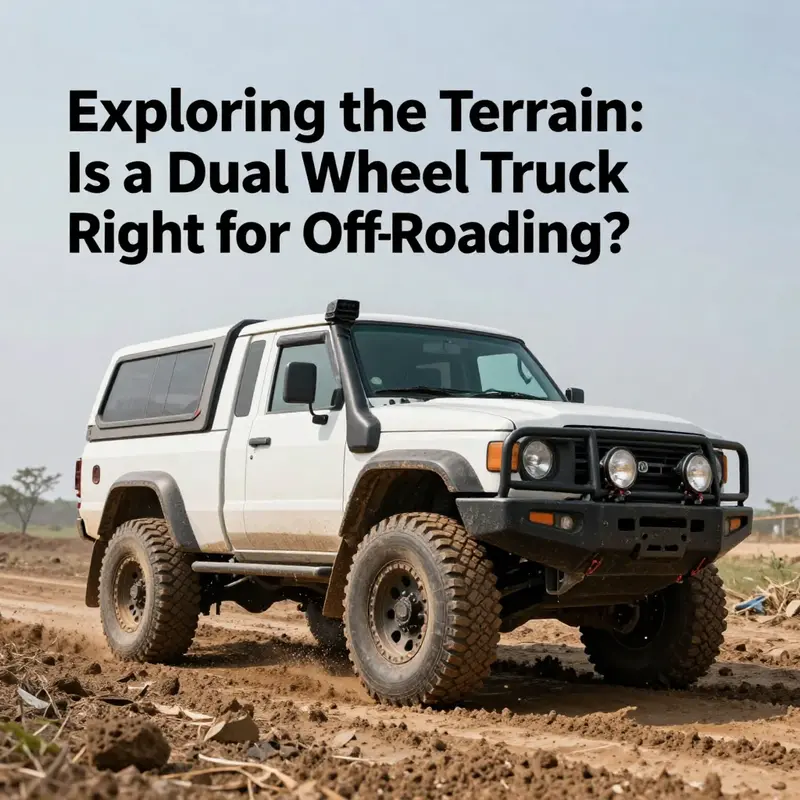
The question of whether a dual-wheel truck is good for off-roading asks for more than a simple yes or no. It invites a closer look at how weight, traction, and chassis design interact when the world drops away from paved surfaces. A dual-wheel setup, where two wheels share an axle on each side, redefines how a truck behaves when the going gets rough. It isn’t a one-size-fits-all solution, but when used with intent, the tandem-axle philosophy can transform soft-ground travel, heavy hauling, and uneven terrain into a more predictable and manageable challenge. In practice, the benefits emerge most clearly where the terrain tests the truck’s ability to spread load without sinking, where traction is scarce, and where stability matters as the ride climbs steeper or crosses more exposed rock. The broader takeaway is that the dual-wheel configuration acts as a framework for off-roading performance, one that prioritizes weight distribution, ground contact, and the capacity to carry substantial gear into the field, rather than a universal upgrade for every trail or every user.
Enhanced traction and stability form the core of this framework. By placing two tires on each side of the axle, the vehicle distributes its weight more evenly across a larger ground footprint. That distribution translates into lower ground pressure, which matters most on surfaces where the soil or substrate can support only a limited load before yielding. Mud can become a suction, snow can hide the track, and sand can swallow a vehicle if the weight concentrates in too few contact patches. In those contexts, the dually design acts as a buffer, allowing the tires to work together rather than competing for grip. When one wheel encounters a slick patch or a hollow, the other still shares the burden, helping to preserve momentum rather than leaving the truck to flail in place. In practice, this translates to reduced risk of bogging down and a steadier line through a rutted or sandy corridor where a lighter, single-wheel setup might struggle to regain traction.
Stability, another pillar of the dual-wheel advantage, becomes especially valuable on unpredictable off-road terrain. The wider track width that accompanies the extra tire pair broadens the vehicle’s stance, which in turn reduces the likelihood of sudden lateral yaw on uneven ground. A truck that can maintain a stable trajectory through a sequence of ledges, rocks, or rooty sections is less prone to wheel-hop and less reactive to sudden changes in surface bite. This stability isn’t about lifting the truck above obstacles; it’s about keeping the chassis aligned with the driver’s intent so that throttle, brake, and steering inputs translate into predictable movement. The payoff is a more controlled ascent or descent, where the driver can focus on line choice and speed management rather than fighting an unstable platform.
A third dimension of advantage lies in the dual wheels’ payload and towing capacity. Off-road expeditions, work missions, or recovery operations often require hauling heavy gear, spare parts, water, and long lengths of cable or rope. The dually arrangement is designed to shoulder heavier loads with greater confidence, which means longer trips in wilderness or remote job sites without sacrificing reliability. When a vehicle needs to pull a heavy trailer or carry a robust assortment of equipment, the added tire surface and the improved weight distribution help the truck maintain stable ride characteristics while under load. This is not merely about raw capacity; it is about the ability to maintain control and forward momentum when the vehicle’s weight is at the edge of its on-paper numbers. In those scenarios, the dual-wheel configuration helps keep the mission on track, even when terrain demands more from the drivetrain and suspension than a lighter setup can safely deliver.
Durability and design features reinforce these practical benefits. The modern dually platform often emphasizes robust construction and thoughtful materials. Forged aluminum alloys are commonly used for wheels because they balance strength with weight savings, an important consideration when the vehicle carries heavy payloads or travels long distances off-road. Corrosion resistance is another practical concern in varying climates, so finishes that resist the harsh effects of mud, water, and road salt help extend wheel life without requiring constant maintenance. A radial spoke design—something you’ll hear discussed in performance-focused wheel concepts—contributes to both structural integrity and aerodynamic efficiency. This combination can subtly influence stability at higher speeds, especially on extended stretches of rough terrain where airflow and wheel rigidity matter. A well-executed dual-wheel setup also embraces adjustable configurations for ET (offset) and PCD (bolt pattern). That adaptability broadens compatibility with a range of 4×4 pickup models and reduces the need for expensive, model-specific substitutions. Beyond the wheels themselves, safety certifications such as DOT and ISO play a role in reassuring drivers that the components meet established standards for reliability in both on-road and off-road contexts. The cumulative effect is a system designed to remain durable under harsh conditions while maintaining a level of predictable performance that helps a driver read the trail rather than fight the truck.
The practical implications extend into the day-to-day realities of off-road driving. With dual wheels, you can approach soft terrain with a different mindset. Rather than picking a narrow line that might threaten suspension bottoming or wheel-lift, you gain more latitude to select a path that preserves momentum and avoids prolonged bogs. When negotiating rocky sections, the broader footprint helps maintain traction across a wider variety of rock faces, ledges, and shale edges. You do not gain invincibility, but you gain a margin of safety in terms of traction and line choice, especially for drivers operating in unpredictable weather or remote environments where recovery options may be limited. The combination of improved weight distribution and enhanced stability also contributes to a more confident driving style. A driver who understands how weight shifts as the terrain changes can modulate throttle input and braking to keep the vehicle’s balance consistent. That cognitive edge—knowing that the tires are working in unison rather than against each other—can translate into smoother climbs, steadier traverses, and fewer moments of hesitation on the trail.
Yet no technical configuration comes without trade-offs, and the dual-wheel arrangement is no exception. The obvious consequence is increased overall weight and a wider footprint. The extra width can complicate navigation through tight trails and crowded campgrounds, and the extra mass can affect fuel economy and acceleration. Maneuvering in tight switchbacks or negotiating narrow forest lanes requires more careful steering inputs and a broader turning radius. In some environments, the extra weight translates into greater scrubbing of tires during tight maneuvers, potentially increasing wear if the driver is not deliberate about line choice and speed. Tire pressure management, too, becomes more complex with four tires per side rather than two. Balanced pressures across the paired tires are important to maximize grip and prevent uneven wear, so drivers must be attentive to inflation, particularly after changing terrain or loading configurations. The availability of dual-wheel versions remains more common in heavier pickup segments and commercial-duty vehicles, which means off-road enthusiasts seeking a lighter, nimble setup may need to weigh their needs against market realities and vehicle compatibility.
This balance between capability and agility shapes when a dual-wheel truck makes sense. For trips where you anticipate soft ground—deep mud, loose sand, or snow-rich slopes—a dually can provide tangible advantages in traction, stability, and payload. The ability to carry spare equipment, carry water for long excursions, or tow a trailer loaded with camp essentials makes a heavy-duty chassis appealing for expedition-style adventures. In contrast, for extreme technical trails that demand rapid turns, precise line selection, and quick maneuvering around obstacles, the advantages can be outweighed by the drawbacks of width and weight. In those contexts, a lighter, nimble setup with a high-clearance suspension and aggressive tires might offer more margin for error and speed. The decision is less about a grand universal truth and more about aligning the vehicle’s capabilities with the driver’s priorities, terrain, and mission profile. A dual-wheel truck is not a universal upgrade for off-roading; it is a specialized tool that excels when the job calls for sustained load-carrying capacity, consistent traction, and a degree of stability that can be difficult to achieve on soft or uneven surfaces without a paired set of wheels bearing the burden.
For readers seeking a deeper mechanical lens on how these systems function—how weight distribution translates into grip, or how tire interaction changes as the vehicle leans into a rock face—you can explore a focused, technical resource that delves into the mechanics behind heavy-drivetrain concepts. Mastering Diesel Mechanics: Your Step-by-Step Path to Success offers a thorough walkthrough of core concepts that underpin not just dual-wheel configurations, but broader diesel-powered propulsion and suspension strategies. This reference helps connect the practical off-road observations with the underlying engineering choices, showing how a driver’s choices on inflation, load, and line interact with the truck’s ledger of capabilities and limitations.
In addition to internal explorations of design principles, it is useful to consider the broader ecosystem of off-road knowledge and learning. When planning a trip or evaluating a build, the driver benefits from understanding how the vehicle’s components behave under load and how terrain interacts with that load. A dual-wheel truck shifts the baseline expectations for what is possible on soft ground and how much payload can be carried without compromising control. It also invites a disciplined approach to maintenance, because keeping tire pressures balanced across multiple tires, inspecting wheel hardware for signs of stress, and monitoring suspension wear becomes more critical as the system grows more capable. This is not merely a matter of pride in the vehicle’s rugged appearance. It is about sustaining the reliability that off-road travel depends on, especially when the trail stretches beyond the nearest service center and the days blur into nights of campfire stories and shared wheel-talk.
For those who want to see how the concept translates into real-world application without getting lost in theory, the practical takeaway remains consistent: a dual-wheel truck shines when the job demands reliable load-carrying, solid traction in variable ground conditions, and a stable platform that can absorb the shocks of a long, rough ride. It is not the default choice for every trail, nor is it a gadget that solves every problem on every surface. But when the terrain calls for more ground contact, more weight handling, and more predictability in how the vehicle behaves under load, the tandem axle arrangement offers a compelling path forward. The key is to align the vehicle’s configuration with the terrain you expect to encounter, the gear you plan to carry, and the level of maneuverability you’re willing to trade for increased stability and payload.
External resource for further details and context can be explored here: https://www.alibaba.com/product-detail/NNX-Forced-Dual-Truck-Wheels-16-22-Inch1600579388577.html?spm=a2700.galleryofferlist.po110.117.5c6b2a7dZrBtHg&productId=1600579388577
Beyond Brute Strength: Real-World Challenges of Dual-Wheel Trucks for Off-Roading
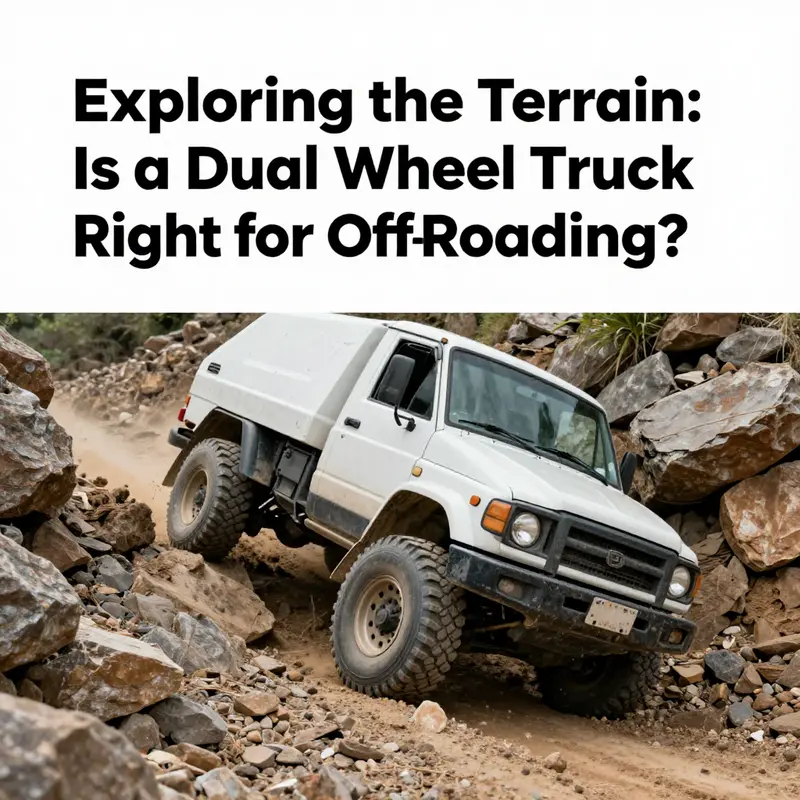
Dual-wheel trucks promise robust payload capacity and flotation on soft ground, but off-road performance hinges on geometry, articulation, and driver control. The extra width can improve stability on open terrain yet hinder maneuvering in tight trails and near obstacles.
The primary constraint is turning radius. A broader footprint increases the risk of side-scraping on rocks, stumps, or fence lines and makes line choices less forgiving.
Ground clearance and suspension travel may suffer as eight tires share the load, limiting each wheel’s ability to articulate over rocks or ruts.
Tire management is more complex, requiring careful deflation and inflation strategies across eight tires and raising the odds that a puncture will destabilize the vehicle.
Steering feel can become heavy and less precise in tight sections, demanding more planning and possibly spotters.
Fuel economy and mechanical complexity rise with the added tires, hubs, and braking assemblies, and maintenance becomes more critical in remote expeditions.
Nevertheless, dual wheels fit some roles: heavy-duty recoveries, soft-ground hauling, and missions where steady flotation and even load distribution are decisive. For agility-focused adventures, a single-wheel, long-travel setup with purpose-built tires often offers better responsiveness. The choice depends on mission profile, terrain, and risk tolerance.
Beyond the Track Width: A Thoughtful Look at Dual-Wheel Trucks for Off-Road Endurance
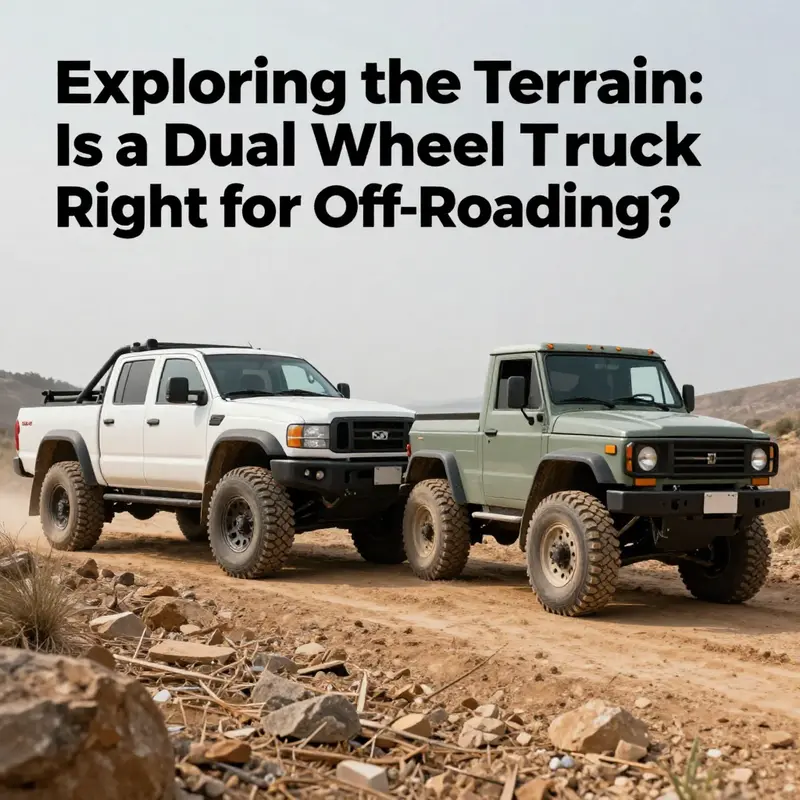
Off-roading tests more than just engine and tires; it measures how a vehicle manages weight, traction, and the willingness of its chassis to work with the terrain rather than against it. The topic of whether a dual-wheel, or what many call a “dually,” truck is good for off-roading sits at an intersection of practicality and possibility. On one hand, the extra tire surface can translate to steadier footing on soft ground and the ability to haul gear or tow equipment into remote landscapes. On the other hand, the realities of real-world trails—narrow gates, tight switchbacks, and exposed ledges—often reward agility and simplicity more than sheer load capacity. Reading the terrain through that lens helps explain why a dual-wheel setup can be a blessing in some scenarios and a cumbersome anchor in others. It is this duality, this ambivalence between stability and nimbleness, that makes the topic worth exploring in a single, flowing narrative rather than as a patchwork of isolated pros and cons. The most immediate benefit of dual wheels comes from how weight is distributed across the ground. When two tires share a single footprint on each end of the axle rather than one, the combined contact area grows. In theory, ground pressure drops, and that drop matters where the ground is soft or uneven. Mud, wet sand, snow, or a slick bed of clay can transform from an obstacle into a manageable surface when the vehicle’s weight is spread over more area. In practical terms, that means less tendency to sink and, crucially, a more forgiving interface between tire and terrain. The consequence isn’t automatic suction on mud lawns; it’s more like a buffer that keeps the vehicle from becoming a magnet to every soft spot on the trail. For long haul trips into remote backcountry, or for work tasks that require moving heavy loads into the field, that load distribution becomes a strategic advantage. It helps the truck carry more without the tires each digging an independent path through the substrate, which can reduce the risk of getting stuck. Traction is closely linked to that same footprint expansion, but it deserves its own focus. When multiple contact points exist, the drivetrain can rely on the geometry of the rear axle as a whole to maintain grip. In conditions where one wheel starts to spin or loses traction, the other wheel on the same axle can still contribute to motion, smoothing the overall response of the vehicle. The increased traction is particularly noticeable on soft, uneven surfaces where a single wheel might break contact momentarily and allow the truck to bury itself; two tires sharing the load can preserve traction more effectively, providing a better chance to continue the forward progress with less abrupt wheel spin. The result is a more predictable low-speed crawl over rough terrain, a factor many off-roaders value when negotiating rutted trails or sand patches where one misstep can escalate into a stall or a stuck situation. Stability follows, and it is one of the more tangible, perceptible benefits on uneven surfaces. A wider track width—an outcome of dual wheels—translates to enhanced lateral stability. When a vehicle encounters rock gardens, ditch edges, or side slopes, the increased baseline width helps prevent a dramatic roll or a sudden lean that could unsettle the driver or push the vehicle off line. This isn’t to say dual wheels turn off all risk; it simply means the margin of safety on the same terrain is improved. For crews that routinely operate in creeksides, on shoreline flats, or across open but rutted farms or construction sites, that steadiness under load can be the difference between a successful crossing and a lengthy recovery. The payload capacity that dual-wheel configurations are designed to handle also supports the practical reality that off-road work often involves carrying equipment, spare parts, fuel, and recovery gear. The ability to move a heavier kit to the field without compromising stability is a pragmatic advantage when time and access matter. Yet every apparent strength comes with a counterweight. The same dual-wheel setup that broadens the footprint also broadens the vehicle’s overall width. In the tight, variable world of off-road trails, width translates into reduced maneuverability. Docking into a narrow canyon, threading through a dense forest, or sliding past overhanging obstacles can require precise steering and, occasionally, a wider turning radius than a lighter, single-wheel configuration would demand. The extra width compounds a second, more subtle challenge: weight. A dual-wheel rear axle adds mass to the unsprung portion of the suspension, increasing the inertia the system must contend with when encountering sudden changes in terrain. That extra mass can blunt suspension responsiveness, reducing the crispness of wheel travel and potentially dulling rebound control while absorbing jolts from rocks or ruts. In practice, the upshot is a trade-off: more stability and payload against less agility and quicker steering inputs, especially on narrow, technical routes where a seasoned driver will need to place tires precisely on pebbles or ledges rather than rely on a broad, forgiving path. Coupled with those physical realities is the nuance of tire management. Dual-wheel setups require careful pairing and inflation discipline. When you run two tires side by side on each wheel, the process of maintaining balanced pressure across all tires becomes more complex. Off-road environments demand tire pressure adjustments—lowering pressure to maximize surface contact on soft ground and then re-inflating for highway or rock-laden segments. With duals, a misstep in pressure balance can yield uneven wear, less effective contact patch dynamics, and uneven braking characteristics at the axle. The complexity isn’t merely about more tires; it’s about harmonizing the front-to-rear, inside-to-outside pressure to preserve stable handling and predictable steering feel. For the average off-roader who spends a weekend in the woods or deserts, this added layer of management can become a recurring maintenance task that demands attention, time, and a reliable gauge or system to monitor pressure and temperature. Maintenance and durability present a third axis of the decision. The mechanical complexity of a dual-wheel rear axle means more components to service. There are more tire beads to seat, more potential leakage points to check, and a greater chance of debris collecting in crevices that are harder to wipe clean in field conditions. The brake system benefits from improved heat distribution in some configurations, but the flip side is that brake access and service intervals can become more demanding when the vehicle is used in harsh environments. Dirt, mud, and sand can accumulate in the space between dual tires and adjacent components, complicating routine brake inspections or maintenance tasks that otherwise would be straightforward on a single-wheel setup. Those realities matter most for serious off-road crews, where vehicles spend long stretches in remote areas with limited workshop time and where the cost of downtime compounds the cost of ownership. Availability is another practical constraint. Dual-wheel configurations are more prevalent on heavy-duty, work-bound trucks rather than lightweight, recreational off-roaders. The bulk, weight, and width can place these rigs in a category where specialized licenses, wider road etiquette, or stricter permitting come into play in certain regions. For hobbyists who crave nimble trails and tight, technical sections, the dual-wheel format may simply not align with the typical trailer setup, ground clearance strategy, or the common aftermarket upgrades that aim to maximize agility. In these contexts, enthusiasts often gravitate toward single-wheel platforms with reinforced suspensions, improved articulation, and tire choices that deliver a strong blend of traction, clearance, and a forgiving steering feel. It is not a binary verdict—each trail and each haul can tilt the decision toward one configuration or the other—but the practical reality is that the dual-wheel advantage shines when the mission emphasizes load and soft-ground resilience, while agility and compact maneuvering tend to favor singles. The terrain itself ultimately frames the calculus. Soft grounds like mud and wet sand, where the risk of sinking dominates, can be where dual wheels show their true value. The larger contact area and enhanced load spread help sustain forward momentum where a single tire would risk digging too deeply. On rocky sections, dual wheels can contribute to steadier driving over irregular surfaces by distributing stress more evenly across the axle. Yet when the trail narrows, or when quick turns and tight line selections are needed to clear a rock field without dragging doors or fenders, the broader footprint can become a liability. The driver’s experience matters here almost as much as the configuration itself. A skilled operator who understands the interplay between tire pressure, ground texture, and vehicle geometry can often compensate for the inherent constraints of any setup. In practice, the best outcomes come from matching the vehicle to the mission: heavy-truck work in remote locations with a predictable, slower pace versus fast, technical, recreational runs where nimble handling is paramount. From a design perspective, what matters most is how the axle and suspension are engineered to work as a system. The decision to implement dual wheels sits within a broader set of considerations: axle strength, brake cooling, steering calibration, and how the suspension cycles through rough terrain. If a dual-wheel rear axle is paired with a thoughtfully tuned high-clearance suspension and a robust steering geometry, the vehicle can deliver a surprisingly capable off-road experience for workloads where payload is nonnegotiable. Without those supporting systems, the dual-wheel advantage can quickly erode under fatigue, heat, and steering wander. The takeaway is that dual wheels are not a panacea for all off-road challenges; they are a strategic option that, when paired with the right chassis, can extend capability in the right situations while imposing constraints in others. So how should a prospective owner approach this decision without getting bogged down in a catalog of specifications? Start with a clear picture of the typical mission profile. If you routinely haul heavy gear into remote sites, tow substantial loads, or operate on surfaces that routinely threaten ground engagement, a dual-wheel arrangement can be a practical safeguard that reduces the risk of immobilization. If your adventures are defined by narrow trail descents, delicate line choices, and quick transitions between different terrain types, the lighter, single-wheel configuration becomes a more natural ally that emphasizes responsiveness and efficiency. The best choice will also hinge on the level of maintenance you are prepared to commit to, the availability of service infrastructure near your work zones, and the kinds of aftermarket or factory support you expect for things like steering geometry, brake cooling, and suspension tunability. In this light, the dual-wheel-versus-single-wheel discussion becomes less about a universal verdict and more about a thoughtful alignment of capability with context. If you prioritize load capacity and stable traction on soft surfaces, you may find the dual-wheel route compelling. If you prize agility, fuel efficiency, and ease of maintenance for recreational exploration, the single-wheel path often delivers more consistent rewards. The balance you strike should reflect not only the gear you carry or the trailers you pull but also the terrain you most often encounter and the kind of driving discipline you bring to that terrain. When framed this way, the question of whether a dual-wheel truck is good for off-roading transforms from a yes-or-no judgment into a careful, scenario-driven assessment that respects both the physics of footprint and the pragmatics of real-world use. For readers who want to dive deeper into the practical mechanics behind maintaining and optimizing trucks in tough environments, there is a wealth of hands-on guidance that emphasizes fundamental principles—proper lubrication, timely brake inspections, and disciplined tire management. To explore those maintenance fundamentals in greater depth, see the hands-on guide linked here: Mastering diesel mechanics. By pairing solid mechanical understanding with a clear mission profile, you can tailor your vehicle choice to the work you intend to do and the trails you intend to conquer, rather than letting the decision be dictated by marketing claims or abstract performance figures. In this sense, the dual-wheel option becomes a deliberate tool in your off-road toolkit—one that shines when the terrain and the task align—and a complexity to be managed when the opposite is true. As you chart your path, keep in mind that there is value in considering the broader ecosystem around the vehicle. The right trailer setup, tire selection, and suspension tuning can amplify or dampen the inherent benefits of any wheel configuration. A well-chosen set of tires with appropriate beadlock features, paired with an adaptive suspension system and a driver who understands weight transfer on uneven ground, can unlock a surprising degree of capability in a dual-wheel platform. Alternatively, for those who operate in environments where visibility, stealth, and concise travel are prized, the simplicity and lightness of a single-wheel setup may be the practical best choice. Either way, the ultimate test remains the same: can the truck bring you to your destination with the load you’re carrying, through the terrain you expect to meet, and with a margin of safety that respects your own limits as a driver? The answer, as with most off-road questions, lies not in a single feature but in the careful orchestration of weight, traction, stability, and the choice of terrain you are willing to challenge. External resource for additional context: https://www.alibaba.com/product-detail/NNX-Forged-Dual-Truck-Wheels-16-22-Inch_1600475389558.html
Into the Soft and Rugged: Real-World Use Cases for Dual-Wheel Trucks in Off-Roading
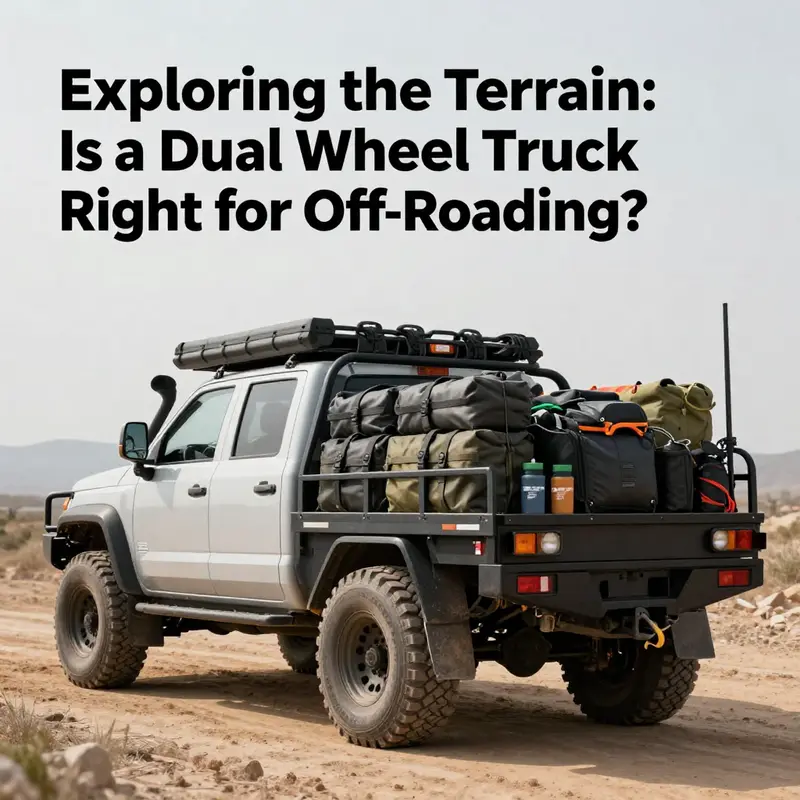
When people first consider a dual-wheel, or duallie, build for off-roading, they picture greater payloads and bigger tires creeping through mud. The reality is more nuanced, and that nuance is what makes the topic worth exploring in depth. A dual rear-wheel setup shifts the vehicle’s capabilities in meaningful ways, not just in how much you can haul but in how the truck interacts with the ground underfoot. The practical value of this configuration shows up most clearly in environments where ground conditions swing from firm to soft in a heartbeat and where reliability under load is as important as raw traction. The dual wheels, working in tandem on each axle, share the weight and the contact patch with the terrain. That sharing matters because ground pressure drops as the load is distributed across more contact points. The consequence is a wider flotation on soft ground—mud, sand, powdery snow, or a crusty layer over rock. Flotation, in turn, reduces the risk of bogging down and becoming immobilized, which is exactly the kind of scenario many off-roaders face when venturing into remote camps or remote work sites where recovery options are limited. In practical terms, you can think of duallies as a built-in flotation aid that also doubles as a stability feature when the route involves undulating ground, rutted trails, or simply a long, exposed cross-country drive where the vehicle will be a base camp and a supply carrier rather than a nimble, ultra-light explorer.
The traction dynamics on a dual-wheel rear axle are subtly different from a single-wheel setup. In soft terrain, a wider footprint helps two things. First, it broadens the contact area so the same amount of weight presses down over more inches of tire, which lowers the contact pressure per square inch. Second, with two tires per side, there are more opportunities for grip if one tire spins or loses traction. The result is a smoother transfer of power to the ground and a decreased likelihood that a single tire will bury itself while the others lose grip. This is especially valuable when driving with heavy gear in tow or when maintaining forward progress on a slope where traction can zigzag between patches of grip and mud. It’s not a magic trick; the physics are straightforward, but the practical outcome is a higher threshold for getting stuck and a greater chance of maintaining momentum on challenging terrain.
Weight distribution ties into another essential factor: stability. Off-road trails are notorious for lateral forces from rock faces, side slopes, and the unpredictable rhythm of a track damaged by rain. A wider track width, afforded by dual rear wheels, can reduce the risk of tipping when negotiating side slopes or crossing through a tight tunnel of trees where a single-wheel setup might feel more precarious. In this sense, the dual-wheel arrangement serves not only as a platform for payloads but as a reliability feature for the driver navigating exposure, where a misjudgment in line or traction could turn a quick crossing into a difficult recovery. It’s a practical safeguard that matters when you’re far from assistance and depend on your vehicle to be a mobile base camp rather than a one-off tool.
Of course, there are trade-offs. A dual-wheel configuration adds mass, often more width, and components that require careful management. The sheer mass can affect maneuverability in tight brush, steep switchbacks, or narrow trail passages where every inch of width matters. Tight turns demand more space, and the additional width can complicate navigation around obstacles, especially on older or poorly maintained trails. The complexity of tire maintenance increases as well. With more tires in play, keeping tire pressures balanced and aligned becomes a larger scheduling and calibration task. Under heavy load, variations in inflation can create uneven tire wear or, in extreme cases, uneven heat buildup. Those are not theoretical concerns; they’re practical realities that can influence a trip’s success, especially on long expeditions where the vehicle operates in a high-stress, remote environment.
From a functional standpoint, the dual-wheel advantage is most pronounced in scenarios that blend heavy payloads with difficult ground. Overlanding trips that stretch into remote regions often require a mobile workshop, spare parts, recovery gear, and a substantial quantity of provisions. The dual rear wheels enable the truck to carry more gear without pushing the limits of every tire’s load rating. In the field, that additional payload capacity translates into fewer compromises about what you bring along and more certainty that you can handle contingencies without making a second trip. For crews tasked with long-distance hauls, this translates into real-time efficiency: fewer visits to a fuel stop for resupply, fewer returns to base for equipment, and less downtime due to mechanical concerns that could have been avoided with a more robust payload capability.
Yet, the equipment’s purpose defines its practicality. In environments where trails demand agile handling—technical rock crawls, tight timbered sections, or areas with abrupt angle changes—the advantages of dual wheels begin to wane against the need for precise steering and rapid, repeatable maneuvering. A single, high-clearance setup with an advanced suspension can feel lighter on the foot and react quicker to sudden changes in terrain. In these cases, the dual wheels might feel like a boat anchor, adding inertia that hinders the nimble control required to navigate a tight switchback or to weave through a debris-filled lane. It’s not that duallies cannot do these tasks; it’s that their efficiency in doing them is often lower than a purpose-built, lighter, more agile alternative. This is a crucial distinction for enthusiasts who pursue the most technical, rapid routes rather than the broad, endurance-focused adventures.
The decision, then, becomes a question of mission profile. If your objectives center on carrying heavy gear for long periods, traversing variable ground, or towing substantial loads across uncertain terrain, a duallie can be a sensible choice. The car’s ability to float on soft surfaces and to distribute weight across more ground contact is a tangible advantage in those scenarios. In contrast, if your goal is to conquer highly technical trails where every inch of clearance and steering responsiveness counts, a lighter, single-wheel setup with tuned suspension and aggressive tires might deliver more consistent performance. This does not negate the practical usefulness of dual rear wheels; it simply clarifies that the strongest fit depends on the terrain mix you expect to encounter and the type of expedition you plan to undertake.
To optimize a duallie for off-road use, several practical considerations deserve attention before you head into the backcountry. Tire pressure strategy becomes more nuanced. You’ll want to balance the benefits of flotation and traction against the risk of overheating or uneven wear across the two tires on each side. A tire pressure management plan tailored to the load, terrain, and climate can make the difference between steady progress and a stubborn stuck. This is where education and preparation play a critical role. A driver who understands how to adjust pressures for mud, sand, or snow will make the most of the dual-wheel platform while minimizing risk. Simultaneously, the vehicle’s chassis and suspension should be tuned to accommodate the increased mass and the broader footprint. Moderate lift, a robust leaf or coil spring arrangement, and careful alignment help ensure that the tires remain in contact with the ground where it matters most, rather than skimming over terrain with unnecessary bounce or instability.
Alongside the mechanical and dynamic considerations lies maintenance. More tires mean more inspection points—from tread wear and balance to heat buildup and brake line routing across a wider platform. It’s essential to perform regular checks and ensure the braking system can handle the additional mass without compromising stopping distances in slick or uneven conditions. In practice, this means a disciplined maintenance routine that accounts for the heavier axle load and the increased possibility of tire-induced heat rise in long, low-speed climbs through mud or sand. A driver who approaches maintenance with a methodical mindset will find the duallie more of a reliable utility than a liability on a tough course.
The discussion would be incomplete without acknowledging how this configuration fits into broader fleet and expedition planning. For professionals who deploy these vehicles in remote work environments or emergency services, the duallie’s ability to carry heavier payloads can translate into more capable field operations. You can imagine a scenario where a truck serves as a mobile workshop, sewing equipment and spare parts into a single, roadworthy expedition vehicle. In those cases, the dual wheels aren’t just about traction; they are about ensuring the vehicle can function as a stand-alone platform, capable of supporting operations for days at a time with fewer interruptions. The trade-off remains the need for greater planning around access routes, parking constraints, and potential hazards that a wider and heavier vehicle presents in environments with limited space or narrow trails.
For readers who want a deeper, hands-on look at how robust, multi-wheel drive systems translate into real-world off-road performance, there is value in studying practical maintenance and operation principles. For a primer on the broader mechanical foundations that support this kind of vehicle, see Mastering Diesel Mechanics: Your Step-by-Step Path to Success. While the topic here focuses on dual wheels, a solid grasp of engine health, drivetrain behavior, and routine maintenance pays dividends when you push a heavy, wide vehicle through rough terrain.
Ultimately, the best use-case for a dual-wheel truck in off-roading hinges on the mission’s priorities. If the aim is to maximize flotation, load-bearing capability, and stable progress across a mixed terrain portfolio—mud, sand, snow, and rocky patches—the duallie is a practical workhorse. It offers confidence, reduces the likelihood of getting stuck, and ensures you can carry the tools and supplies necessary for extended ventures. If agility, precision, and rapid traversal of highly technical trails are your core goals, you may be better served by a lighter, more nimble configuration that emphasizes suspension travel, tire contact, and steering finesse.
As with any gear choice for off-roading, the best answer comes from aligning vehicle configuration with your typical terrain, anticipated loads, and the realities of remote exploration. The dual-wheel layout is not a universal cure for every trail, but it is a robust, capable platform for specific kinds of journeys—those that demand maximum payload capability, enhanced flotation on soft ground, and a steady, controlled presence on uneven surfaces. When planned thoughtfully and maintained diligently, a duallie can transform a long, challenging expedition into a more predictable and manageable pursuit, letting the driver focus more on navigation and less on the fear of getting stuck. In the end, the choice rests with how you prioritize payload, terrain variety, and the level of reliability you require on a journey that might take you far from any paved road and any repair shop.
External resource: https://www.youtube.com/watch?v=5uZk0VX6q7A
Final thoughts
In the world of off-roading, choosing the right vehicle is crucial for enhancing your adventure. A dual-wheel truck presents significant advantages such as improved load distribution, enhanced traction, and stability on tough terrains. However, it’s essential to weigh these benefits against the challenges of weight and maneuverability. For dedicated adventurers and landowners looking to transport heavy cargo through unforgiving landscapes, a dual-wheel rig can be a game-changer. Ultimately, the best choice lies in your specific off-road needs and objectives.