

Adventure awaits as you prepare your truck to tackle the great outdoors. Whether you’re navigating rocky trails or cruising through muddy patches, off-road readiness is crucial for every enthusiast. This guide details key enhancements across various vehicle aspects, ensuring optimal performance and safety. From elevating clearance and stability to preparing for emergencies, each chapter will equip you with the knowledge needed to conquer diverse terrains with confidence.
Raising Ground, Gaining Control: Building Throughput and Stability for an Off‑Road Ready Truck

When a truck meets rough terrain, two forces determine its success: throughput and stability. Throughput is the vehicle’s ability to advance, maintain momentum, and overcome obstacles with minimal risk of stalling or damage. Stability is the driver’s control over the machine as it traverses uneven surfaces, steep grades, and unpredictable traction. The most effective off‑road build treats these as a single, integrated objective rather than a set of isolated upgrades. A truck becomes capable not because any one part is extraordinary, but because the suspension, chassis, power delivery, and protective systems work in concert to keep movement smooth, predictable, and safe.
The cornerstone of this approach is the suspension, which translates jagged terrain into manageable motion. Upgrading to a high‑performance suspension kit that increases travel and articulation is not a luxury; it is a necessity for preserving ground clearance and preventing bottoming out on rocks, ruts, or stubborn stumps. In practical terms, this often means substantial lift and longer travel, with components designed to tolerate the abuse of rock crawls and deep ruts. The goal is not merely taller tires but more meaningful travel and a chassis that can flex with the terrain rather than fight it. In many setups, this translates to a lift that yields a few inches of additional clearance and a suspension system designed to keep the wheels in contact with the ground as the body tilts and leans during climbs and descents. Portal‑style axles can further improve clearance by relocating the axle geometry, letting the wheel clear obstacles while the chassis remains at a manageable height. The exact numbers vary by truck and terrain, but the principle is consistent: more ground clearance paired with controlled articulation reduces the risk of slamming into obstacles and provides a longer, steadier contact patch for traction.
Coupled with travel is the critical issue of approach and departure angles. Off‑road challenges begin long before a wheel reaches a rock. If the front or rear overhangs are excessive, a shallow approach or departure angle will cause bumper or underbody components to strike, halting progress and inviting damage. A thoughtful geometry balance—shorter overhangs, a compact steering setup, and carefully chosen suspension components—improves the ability to crest ledges or descend steep lines without scraping. This is not about sacrificing ride quality on the highway but about designing for the frontier where every inch of clearance matters.
Torque, traction, and the drivetrain are the second axis in this performance triangle. A robust 4WD system with the ability to distribute torque where it’s needed is essential for mud, snow, rock, or sand. The ideal configuration offers either a full‑time or a selectable part‑time 4WD with locking differentials that can be engaged when grip is scarce. When a wheel finds traction, the differential can be locked to force the engine’s torque toward the wheel with grip, preventing wasteful spinning. In loose terrain, the combination of lockers and low‑range gearing allows a driver to maintain momentum with controlled, deliberate inputs rather than brute force. This approach minimizes wheel spin, preserves momentum over rough patches, and reduces the chance of getting stuck in soft ground or a rock‑studded trench.
But even a capable drivetrain needs a chassis that can handle the load and a suspension that keeps tires planted. Strengthening the frame and adding underbody protection are not cosmetic upgrades; they are preventative measures that improve torsional rigidity and safeguard vital components during aggressive traversal. A reinforced frame resists twisting under load, while skid plates guard the oil pan, transmission, and differential from rocks and debris. Front and rear bumpers with integrated recovery points and mounts for auxiliary gear provide both protection and practicality when recovery becomes necessary. In the same vein, stabilizing features such as anti‑sway bars and track bar kits reduce body roll on uneven surfaces, increasing predictability through corners and over ruts. These elements contribute to a truck that behaves more like a rigid, well‑controlled platform than a suspension that sags and lurches under load.
Traction and power delivery are the third pillar, and here the tire choice matters as much as the powertrain. Off‑road tires with aggressive tread patterns are essential for grip on mud, sand, gravel, and rock. The tires should be paired with robust wheels that tolerate the rigors of extreme terrain and permit safe operation at lower pressures when needed. Larger, lower‑pressure tires increase the contact patch and reduce sinkage in soft terrain, but they also require careful tuning of wheel size and suspension travel to avoid rubbing and handling issues at higher speeds.
Power enhancements can give a truck the required torque and response to negotiate challenging sections. A higher‑output intake and exhaust system, paired with forced induction such as a turbocharger or a supercharger, can dramatically improve throttle response and hill climbing ability. It is important to note that these modifications must be complemented by reliable tuning and cooling strategies to preserve engine health and reliability in demanding environments. The aim is balanced power: enough throttle response to overcome traction losses without inviting overheating or detonation on long climbs.
Beyond raw power, the drivetrain should be matched with stability technologies that help the truck behave predictably in dynamic conditions. Electronic stability systems, when present, monitor vehicle yaw, roll, and lateral acceleration. They can modulate braking force and, if equipped, coordinate torque distribution across wheels to maintain line and control. Torque vectoring systems, which direct power to individual wheels, can be particularly beneficial when traction shifts from one corner to another in slippery or uneven terrain. While these technologies are powerful, they are aides, not substitutes for skilled handling. A driver who understands how to use low‑range gears, engage differentials, and manage throttle input remains the key to translating capability into success on the trail.
The practical pathway to realizing this potential is a careful sequence of upgrades and refinements. Start with the suspension and ground clearance, ensuring that articulation and approach angles are appropriate for the intended trails. Then evaluate the chassis integrity and protection—frame reinforcements, skid plates, and robust bumpers—because a solid platform makes every other upgrade more effective. Toward traction, upgrade tires and wheels with attention to how they interact with the suspension, and consider powertrain enhancements that improve throttle response and climb capability without compromising reliability. Throughout, emphasize a measured approach: upgrades should be compatible with one another, and each should serve the broader goal of stability under adverse conditions, not just higher speeds or bigger wheels.
For readers seeking a deeper dive into the mechanics behind engine performance and reliability, a practical reference is available that breaks down diesel powertrain concepts in a step‑by‑step fashion. Mastering Diesel Mechanics: A Step‑by‑Step Guide offers a grounded perspective on how to approach powertrain upgrades with an eye toward durability and controllable power delivery. While the focus here is on a broad, hands‑on understanding of how upgrades interact, this resource can be a valuable companion for those who want to drill into the engineering details behind the tweaks described above.
Protection and recovery gear round out the setup. Underbody protection, armor, and reinforced bumpers help absorb impacts that would otherwise transfer energy to the chassis and drivetrain. A reliable winch, recovery boards, snatch straps, a shovel, and a robust tool kit enable safe, rapid extrication from difficult spots. A well‑planned lighting system—high‑mounted lamps for night navigation and work lights for recovery—improves visibility and safety after dark. And always, always carry a spare tire, basic tools, a first‑aid kit, a fire extinguisher, water, and a dependable means of comms, especially when venturing into remote areas where cell service fades away.
Finally, driver training and mental preparedness tie everything together. Practice is essential, and it should emphasize controlled steering and throttle on loose surfaces, careful use of engine braking on descents, and the discipline to engage low‑range gear and differential locks only when needed. Staying alert, scanning ahead, and avoiding fatigue are non‑negotiable habits for anyone who intends to push a truck beyond paved roads. The most meticulously prepared vehicle still relies on a focused and capable driver. After modifying a truck, testing its performance under controlled conditions at a professional off‑road facility is highly recommended. This step validates how the integration of suspension, drivetrain, protection, and tires translates into real‑world capability—across climbs, mud, water, and uneven turns.
As you lay out the plan for your build, remember that the objective is not to chase the highest number on a spec sheet. It is to achieve a coherent blend of clearance, traction, and control that keeps the truck moving efficiently through variable terrain while keeping the occupants safe. By prioritizing the synergy of suspension travel, frame integrity, and intelligent power delivery, you create a machine that can handle terrain with confidence rather than surrender to it. The trail rewards careful preparation and disciplined driving, and the results, in the form of steady progress and fewer recoveries, speak for themselves. For many enthusiasts, this integrated approach is what transforms a capable daily driver into a dependable off‑road partner—one that can maintain momentum, protect its undercarriage, and deliver the thrill of progress across the world’s toughest backroads.
External resource for broader context and field‑tested techniques: https://www.4x4australia.com.au
Solid Ground, Steel Backbone: How Reinforcing the Chassis and Upgrading the Suspension Transforms a Daily Driver into an Off-Road Beast
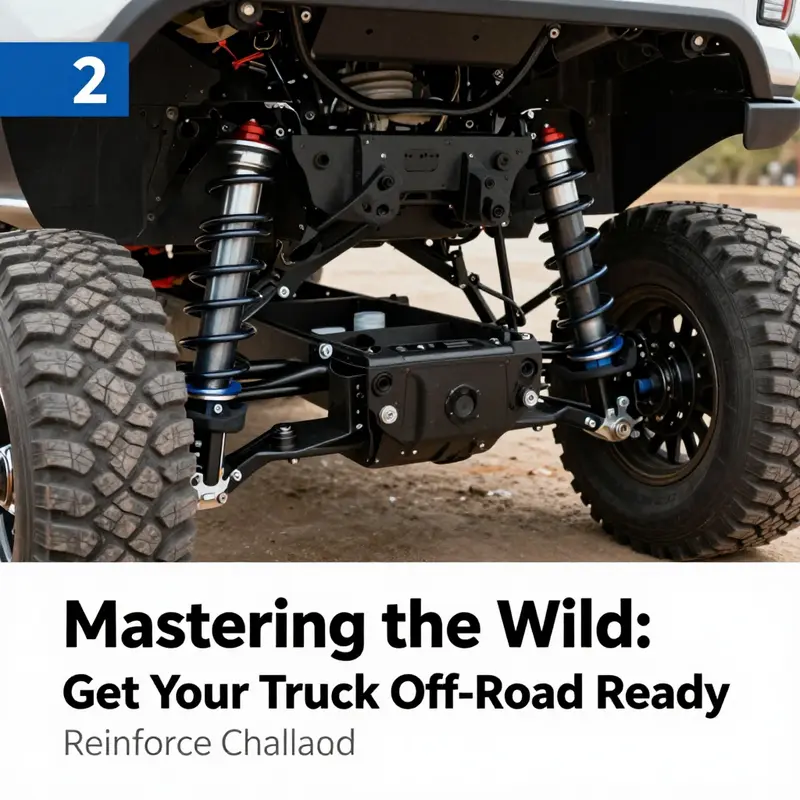
The chassis is the quiet engine of confidence in an off-road truck. It is not the flash of armor or the gloss of new tires, but the hidden, unmissable truth that every rock, root, or rutted rut will test. Reinforcing the chassis and upgrading the suspension are not merely upgrades; they are an engineering commitment to durability, steering accuracy when the surface changes its mind, and predictable handling when the trail twists. In practice, the work begins with a clear picture of the kind of terrain you intend to conquer and the loads you expect to carry, but the mindset it cultivates is universal: you build a rigid, well-supported platform, then let the terrain reveal whether your setup is enough or needs refinement. The goal is not to chase stock-like comfort on rough trails but to create a foundation that keeps components aligned, preserves geometry under load, and yields dependable performance from the moment you climb out of the trailhead lights and into the unknown.
Chassis reinforcement begins with protecting the backbone. Skid plates are more than a shield for the oil pan and transfer case; they are a plan for minimizing the gnawing effects of hidden rocks, hidden stumps, and unexpected debris. Professional, high-strength skid plates—typically 3 to 5 millimeters thick steel or high-strength aluminum—do more than guard vital organs. They serve as a sacrificial layer that absorbs and distributes impacts, reducing the risk of torsional twist that can throw suspension geometry out of alignment. When you couple skid plates with additional bracing on the frame rails, you create a more rigid, less forgiving structure. The result is not a ride that feels stiffer for the sake of stiffness, but a chassis that maintains straight lines under torque, resists yaw and flex during jounces, and preserves steering feel when the ground changes speed without notice.
Differential and driveshaft protection is the next logical layer. Hard terrain is not kind to exposed shafts and cased gears. Protective covers and guards brief the driver on a different kind of risk—the risk of a sudden, catastrophic underbody impact that could bend a driveshaft or puncture a differential. These guards become a trusted partner when the trail throws obstacles that would otherwise bend or sheer critical components. The effect is not merely in preventing damage but in maintaining driveability: when a wheel drops into a rut or climbs a rock ledge, the truck remains controllable rather than fighting a warped axle or a mangled drive shaft. It is a quiet but real form of safety for both the vehicle and its passengers, reinforcing the idea that preparation is as much about preventing failures as it is about enabling triumphs on the trail.
If the chassis is the backbone, the suspension is the muscles that translate the terrain into controlled motion. Stock suspensions are designed for a blend of highway comfort and predictable everyday use. They are tuned to accommodate a broad range of normal loads, but that universality comes at the expense of specialized off-road demands. Upgrading to heavy-duty components—whether coilovers, monotube shocks, or long-travel springs—transforms how the vehicle behaves when the road becomes a canvas of unpredictable dips and high-speed undulations. The shift is not only higher ride height; it is more meaningful damping control, better bottoming resistance, and improved traction across a profile of surfaces. Long-travel setups extend wheel travel, which improves breakover angles and keeps tires planted on uneven ground rather than allowing the wheel to hang in midair over a rock shelf. The result is a practical, testable improvement: more consistent contact with the ground, less body roll, and a more linear response to throttle and steering input when the surface abruptly changes its mind.
There is a rising sophistication in suspension technology that is worth acknowledging. Air suspension, when paired with adaptive damping controls, allows the vehicle to switch between on-road comfort and off-road capability in an instant. A system that can raise for a rocky approach yet lower for highway efficiency offers the best of both worlds. In the most advanced configurations, continuous damping control or active suspension streams real-time data from road feedback into the dampers, adjusting spring rate and ride height on the fly. This is not a gimmick but a practical approach to a shifting problem: how to keep the center of gravity steady and the tires in contact with the terrain as the surface changes from gravel to clay to waterlogged mud. The practical effect on off-road handling is profound. Traction is more predictable, body roll is attenuated, and the vehicle remains composed through changes in the slope or in the transition from a climb to a descent.
Upgrading the suspension also means paying attention to the interplay with vehicle weight and payload. A higher ride height improves ground clearance, but it also raises the center of gravity, which can affect stability if the chassis and springs are not properly matched to the new geometry. This is where careful component selection matters. The goal is to maintain a balanced ride that can absorb large impacts without transferring too much energy to the occupants or to fast-changing steering loads. It means choosing springs and dampers with a compatible spring rate, rebound characteristics, and a scheme that resists bottoming out without becoming harsh over whoops and ruts. It also means ensuring that track bar and anti-sway components are upgraded to preserve axle alignment and reduce wandering on uneven surfaces. The result is a system that can articulate with the terrain rather than fight it, delivering a sense of control that is essential when driving through rough country or stepping down into a gully where momentum must be controlled with precision.
For those who relish the concept of adaptability, modern suspension systems offer a way to tune the truck for the day’s mission. A driver can choose a softer configuration for a long, sandy trail and switch to a stiffer, more reactive setting when rocks demand greater stiffness in the chassis. This kind of versatility is especially valuable when the route is dynamic—where conditions shift with weather, time of day, or the evolving shape of the trail. The deeper virtue of a well-chosen suspension upgrade is consistency. A predictable ride with consistent damping means you can push your limits with confidence, knowing that the vehicle’s response to throttle, steering, and braking will be repeatable. When you couple O.E.-based geometry with reinforced mounting points and upgraded fasteners, you preserve alignment and component life, which minimizes maintenance costs and downtime in remote locations.
A practical note comes in how you approach installation and tuning. Radical changes deserve careful calibration and, ideally, a test session in a controlled environment. After any major modification, the literature and practitioners alike recommend staging a test under real-world conditions before taking the truck into more challenging terrain. You want to verify climb angles, breakover thresholds, and how the suspension settles under load in a controlled setting. The aim is not to chase a peak figure on a spec sheet but to confirm that the vehicle handles the full spectrum of expected demands—uniformly and safely. This is the essence of turning a capable truck into a trustworthy off-road instrument rather than a high-risk project that could reveal weaknesses under stress. A well-tuned chassis and suspension framework also makes subsequent steps—like selecting protective gear, recovery equipment, and drive system enhancements—more effective because the fundamentals are already dialed in.
As you push the envelope, the evidence of a robust chassis and tuned suspension is felt not only in performance but in peace of mind. The trail feels manageable, the steering stays centered, and the vehicle responds with a familiar, reassuring cadence. You notice the difference when the track pings a dip or a ledge and you can maintain momentum with minimal fear of mechanical compromise. The process is iterative: reinforce, tune, test, and refine. It is an approach that respects both the land you traverse and the vehicle that carries you. And while the improvements may appear to be substantial, they are best viewed as an integrated system rather than a patchwork of parts. For readers seeking a deeper, more systematic grounding in the broader maintenance and powertrain reliability that underpins these upgrades, see Mastering-Diesel-Mechanics: A Step-by-Step Path to Success. This resource offers a framework for understanding how upgrades interact with the engine and transmission, with practical steps that align with building a reliable, off-road-ready platform.
In this way, reinforcing the chassis and upgrading the suspension become inseparable from the larger goal of making a truck that can meet the demands of real terrain without surrendering control or safety. It is not about chasing the latest trend in aftermarket parts but about building a durable, predictable platform that can handle the rough, the steep, and the uncertain. It is about respecting the trail enough to prepare for it with intention and care, ensuring that as you lift the truck and stretch its reach, you also lower the risk of compromise on the far side of a ridge or a water crossing. The journey begins with a solid foundation and grows into a confident capability that remains with you long after you roll back onto familiar pavement. And when the plan is this clear, your next steps—whether they involve protective upgrades, traction enhancements, or recovery gear—fit naturally into the same disciplined approach that turned an ordinary pickup into a trusted off-road companion.
External reference: https://www.deepal.com/g318-offroad-performance/
From Grip to Go: Mastering Traction and Power for an Off-Road Ready Truck

Traction is the quiet engine of off‑road capability. It turns perceived risk into predictable progress, keeps momentum on terrain that won’t yield, and determines whether a climb ends in triumph or a stall. In off‑road work, power without grip is noise; grip without controlled power is wheel spin. The path to an off‑road ready truck lies in a deliberate, integrated approach that aligns how the tire meets the ground with how the drivetrain delivers that ground contact, while the engine modulates what happens next. This is not about chasing the loudest upgrade or the flashiest component. It is about weaving tires, wheels, differential behavior, power delivery, and suspension into a single, harmonious system. When one element falters, the whole machine suffers; when they work together, obstacles become navigable sections of trail.
To begin with, traction starts at the tire. A capable off‑road vehicle hinges on a tire that can bite into mud, sand, gravel, and rock while maintaining a stable footprint as terrain changes under load. The foundation is simple in concept yet profound in practice: select tires with purpose‑built tread patterns designed for off‑road grip rather than highway efficiency. Beyond tread, the tire’s contact patch matters as much as the tread depth. A larger patch can distribute weight more evenly across uneven surfaces, reducing the risk of pinching or slipping on loose ground. Equally important is wheel integrity. Off‑road wheels must withstand impacts, allow bead seating for varied pressures, and fit within the vehicle’s geometry so that tire movement does not interfere with suspension components. Alongside these choices, a tire management strategy becomes essential. A reliable, terrain‑appropriate tire pressure plan—whether through a portable air system or a compact inflator with a gauge—lets you adjust for sand when floatation is needed, mud for flotation, or rock for precise control. The goal is not to run at the same pressure everywhere; it is to tailor the footprint to the obstacle, preserving sidewall integrity while maximizing traction. In practical terms, this means lowering pressures on soft surfaces to expand the contact patch when safe to do so, and returning to higher pressures on hard, sharp terrain to protect the tire and improve steering response. The logic is straightforward: grip increases when more of the tire is in contact with the ground, and that contact is controllable through deliberate tire pressure decisions.
On the chassis side, the way power is delivered to the wheels must be coordinated with the tire’s capabilities. An efficient traction strategy hinges on a drivetrain that can distribute torque where it matters most. Lockable differential s, whether front, rear, or both, ensure that power is not squandered by a single wheel losing contact with the ground. A properly configured system will automatically favor the wheel with grip, while allowing a degree of slip to preserve steering control when one wheel encounters a slick patch. The practical upshot is a more predictable climb, more reliable rock traversal, and fewer moments where momentum is lost to wheel spin. It’s not only about having lockers, but knowing when to engage them and how to pair them with throttle inputs to avoid wheel chatter or drive‑line windups. In addition to lockers, attention to driveshaft strength, constant‑velocity joints, and the transfer case can prevent failures that would otherwise halt a trip deep in rough terrain. A robust drivetrain is the backbone of controlled power delivery, ensuring that torque remains available when it is most needed, rather than being absorbed by drivetrain flex or misalignment.
But traction without power is just anticipation without execution. The power delivery system must be calibrated to support controlled, confidence‑inspiring progress over obstacles. Engine performance gains, when pursued responsibly, should emphasize reliability and smooth torque across a broad RPM range rather than single‑event peak horsepower. This can involve strategies such as optimizing intake and exhaust flow, improving exhaust scavenging, and refining air delivery to the engine. When combined with a thoughtful tune, these measures help the engine respond quickly to subtle throttle inputs, reducing the tendency to surge or lug at critical moments. A more open intake path and a freer exhaust can lower exhaust gas temperatures under heavy load, which helps preserve engine integrity on long, arduous ascents. Where allowed by the vehicle’s architecture and local regulations, boosting power through forced induction—whether via a turbocharger or supercharger—can raise peak torque and keep the engine in its sweetest operating window during climbs and deep‑surfaces. The key is moderation and control: more power buys you leverage, but only if you can channel it without overwhelming the tires or the chassis. To maintain reliability, follow up any power addition with careful tuning and, where possible, post‑modulus diagnostics to confirm that fueling, ignition, and airflow remain balanced under load. A well‑tuned system not only extracts more usable power but does so with predictable response, which is essential when navigating uncertain surfaces.
The interplay between power and traction also hinges on reinforcing the mechanical skeleton that carries the extra load and torque. A stronger drivetrain, including a reinforced transfer case, upgraded driveshafts, and robust constant‑velocity joints, provides a platform that can endure the daily abuse of rock gardens, rutted trails, and deep mud without succumbing to fatigue. Heavier‑duty components keep the system aligned under torsional stress and prevent flex that could rob traction at an inopportune moment. Suspension tuning that complements increased ground clearance is vital, too: longer travel shocks paired with springs that can absorb impulsive impacts keep tires pressed to the ground rather than bouncing free, which helps maintain steering control and keeps the contact patch active on rough surfaces. The result is a coordinated rise in suspension travel, chassis rigidity, and drivetrain resilience that allows power to be applied with intention rather than fear. When this balance is achieved, the truck can approach the obstacle with a predictable line, apply power smoothly as the terrain allows, and ride out the peak without losing traction at the hinge moment.
This integrated approach should be tested under controlled conditions before taking the rig into more demanding settings. A professional off‑road facility provides the kind of real‑world feedback that workshop benches cannot replicate. Such testing evaluates how well the tires seat, how the locker behavior influences wheel spin, how the powertrain responds to varying loads, and how the suspension maintains contact across a range of obstacles. The exercise is not about chasing a single performance metric, but about refining the harmony between grip, power, and control. And as you refine this harmony, remember that knowledge is as critical as hardware. A practical, well‑reviewed guide on diesel mechanics offers a step‑by‑step path to understanding how the core systems interact and how best to maintain them under off‑road stress. For readers who want to deepen this understanding, a detailed resource exists: Mastering Diesel Mechanics: Your Step‑by‑Step Path to Success. This reference points to fundamentals and procedures that keep the powertrain coherent as you push toward more aggressive traction strategies. The goal remains constant: convert potential energy into controlled movement, with the tires honoring the ground and the chassis matching the terrain to your will.
In practice, the mindset matters as much as the hardware. Drive with an eye toward the trail rather than the dashboard. Approach each obstacle with a deliberate line, use engine braking to control descent, and modulate throttle to maintain tire engagement with the surface. Learn to harness momentum without chasing it, and let the terrain guide your speed rather than forcing a risky compromise. Maintain situational awareness, anticipate changes in surface texture, and adapt your tire pressures in response to mud, sand, or rock. With a system‑level view—tires and wheels first, followed by lockers, power delivery, and chassis reinforcement—the truck becomes more than a sum of parts. It becomes a tool that translates terrain into progress, allowing you to traverse longer, more challenging routes with confidence rather than compromise. This is how traction and power become a reliable companionship on every trail, forming the backbone of a truly off‑road ready vehicle that can endure, adapt, and conquer.
External resource: https://www.offroadxtreme.com/tech/choosing-off-road-tires
Fortify and Equip: Protective and Utility Upgrades for a Bulletproof Off-Road Truck

A truck that refuses to quit in the backcountry is built as much from what you shield as what you carry. Protective and utility upgrades form the core of a reliable off-road rig, turning a capable everyday vehicle into a resilient expedition machine. While upgrades to suspension, gearing, and tires unlock the dream of conquering rough terrain, it is the armor you add and the tools you mount that keep you moving when the trail tightens and the environment tests your patience. The philosophy here is straightforward: protect the vital heart of the vehicle, extend its practical reach, and ensure you can survive, recover, and press on when things go unexpectedly sideways. In the long arc of a trail day, these choices translate into fewer broken parts, faster recoveries, and more time enjoying the experience rather than nursing a limp back to camp.
Protective upgrades begin with a clear recognition of what rough trails can do to a truck’s most exposed components. The front and rear bumpers, in particular, serve more than cosmetic purposes. A robust bumper can deflect and absorb impacts from rocks, stumps, or branches, and it creates solid mounting points for recovery gear and additional lighting. The best protective setup accepts that you will encounter obstacles at unpredictable angles; the bumper design should offer solid approach and departure protection while maintaining ground clearance where it matters most. Grille guards, when integrated into the front-end protection, help shield the radiator and condenser from errant debris on tight trails. They’re a shield against branches and brush that can bend fins and restrict cooling in the heat of a long climb. In the same breath, underbody protection becomes non-negotiable on truthfully rugged routes. Skid plates—typically a few millimeters thick and made from steel or aluminum alloy—provide a shield for the oil pan, transmission, transfer case, and differentials. The value of these plates becomes most evident after a few miles of abrasive rock or a sting of unexpected obstacles that would otherwise leave a dented sump or dented pride.
The undercarriage isn’t the only critical zone. Side impact protection and rock sliders extend the truck’s life on trails where the sides of the vehicle are as likely to meet the obstacle as the front. Rock sliders, which double as steps for access, act as a buffer that can prevent door and frame damage when the trail narrows to a crawl and the wheel climbs over protrusions. They also provide a practical advantage by preserving the bodywork when the truck has to slide along a rock face or a rut while a driver attempts to regain control. In combination, these protective elements reduce the odds of a dramatic failure that would end a run early and force a weary drive back to civilization rather than a true backcountry victory.
Beyond defense, protective upgrades should be complemented by thoughtfully chosen recovery and visibility aids. A well-mounted winch is more than a luxury; it is a lifeline for self-rescue and helping others in remote areas where traction is scarce and cell service is nonexistent. The winch should be sized to handle the typical recovery scenarios you expect to encounter, with robust mounting, a capable line, and a control setup that keeps the operator at a safe distance during heavy use. Recovery gear such as snatch straps, recovery boards, and a sturdy anchor system complete the toolkit. The idea is not to rely on a single device but to cultivate a reliable, repeatable recovery workflow that you can execute without improvisation when the trail chooses to test your planning and nerve at once. The importance of visibility cannot be overstated in off-road conditions. Upgraded auxiliary lighting—think high-intensity spotlights and driving lights—extends your safe operating window after dusk and improves your ability to scan rough trails, identify obstacles, and read the lay of the land ahead of your wheel path.
In parallel with protection and recovery, the utility side of upgrades focuses on practicalities that make you faster and safer on the trail. A tire-pressure monitoring system (TPMS) becomes a crucial ally when you adjust tire pressures to optimize traction on sand, mud, or rocky trails. Being able to monitor each tire in real time helps prevent failures caused by under- or over-inflation and ensures you can adjust pressure with confidence rather than guesswork. Storage solutions also play a critical role in keeping gear accessible and secure. Roof racks, cargo boxes, or modular drawers provide organization for spare tires, tools, water, food, and emergency supplies. A well-planned layout reduces the time you spend rummaging through the cargo area and frees your attention to focus on the terrain ahead.
Lighting upgrades extend far beyond mere illumination. A robust lighting array improves the ability to identify trail markers, read the surface texture of the ground, and spot hazards at a distance. In addition to glare-free off-road lighting, consider mounting locations that maximize visibility without compromising approach angles or adding unnecessary weight to the vehicle’s balance. The intended outcome is not simply brighter light, but smarter, safer navigation under diverse weather and terrain conditions. The right lighting plan can alter how far you can push a line and how late you can explore the map without compromising safety.
The relationship between protective and utility upgrades is symbiotic. Strong protection reduces the risk of catastrophic damage that may strand you on the trail, while practical tools and systems ensure you can deal with complications quickly and effectively. To that end, the chapter’s advice translates into a tested, real-world approach: invest in a capable guard system and a robust protection layer, then build out a flexible toolkit for recovery, illumination, and organization. The aim is not to chase the latest gadgetry but to create a durable, functional platform that supports the degree of exploration you seek. A well-executed combination of these upgrades also supports future improvements in other areas, such as chassis reinforcement or drivetrain enhancements. When you know your protection and utility backbone is solid, you can plan higher-risk increments in lift, wheel travel, or torque if your goals include more ambitious terrain.
An often overlooked but essential consideration is how these upgrades interact with maintenance and reliability. Protective plates and heavy bumpers can alter heat dissipation patterns and airflow around critical components like the radiator and steering gear. It’s important to verify that the added mass and new airflow paths don’t create unintended heat build-ups in extreme conditions. Professional installation or at least a thorough, well-documented DIY process helps ensure the changes stay within safe tolerances. Regular inspection of brackets, mounts, and anchor points is equally important. Vibration and flex can fatigue attachment hardware, so periodic checks become a core part of your trail routine. In that sense, protective and utility upgrades aren’t a one-and-done enhancement; they require ongoing attention to preserve the vehicle’s integrity over many miles of challenging terrain.
For those who want to deepen their practical understanding, there is a broader body of mechanical knowledge that supports these decisions. You can explore how to keep the engine and powertrain in peak condition as you push performance, maintaining a balance between reliability and capability. See this resource for a deeper dive into diesel engine fundamentals and maintenance, which complements the protective and utility upgrades by ensuring your core propulsion system remains dependable when the trail demands it most. mastering diesel mechanics.
As you map your build, remember that the goal is not to overbuild for the sake of it, but to create a coherent system where protection, recovery, lighting, air management, and storage work in harmony. The most successful setups are those that respect the constraints of the vehicle, the demands of the terrain, and the realities of long-distance travel. Start with a solid shield for the undercarriage and the sides, then add a dependable recovery plan and a practical storage and lighting strategy. By tightening these threads together, you turn your truck into a platform that can handle deep mud, rocky gullies, or remote washes with confidence rather than hesitation.
If you’re documenting this journey for future expeditions or sharing lessons with fellow enthusiasts, consider how your choices ripple through the rest of the build. The protective and utility upgrades you select will influence everything from weight distribution and center of gravity to fuel efficiency and the ease of future upgrades. Therefore, approach each modification with both a practical mindset and a long-term vision. A careful, well-planned plan reduces the risk of regrets on the trail and heightens the chance you’ll return from every trip with stories rather than repairs. The trail rewards preparation, and the rig that is thoughtfully fortified and equipped is the one that climbs higher, navigates more confidently, and comes home safer.
External resource: 4×4 Australia – Off Road Truck Modifications. https://www.4x4australia.com.au/off-road-truck-modifications/
Emergency Readiness: How to Prepare Your Truck and Crew for Off-Road Adventures
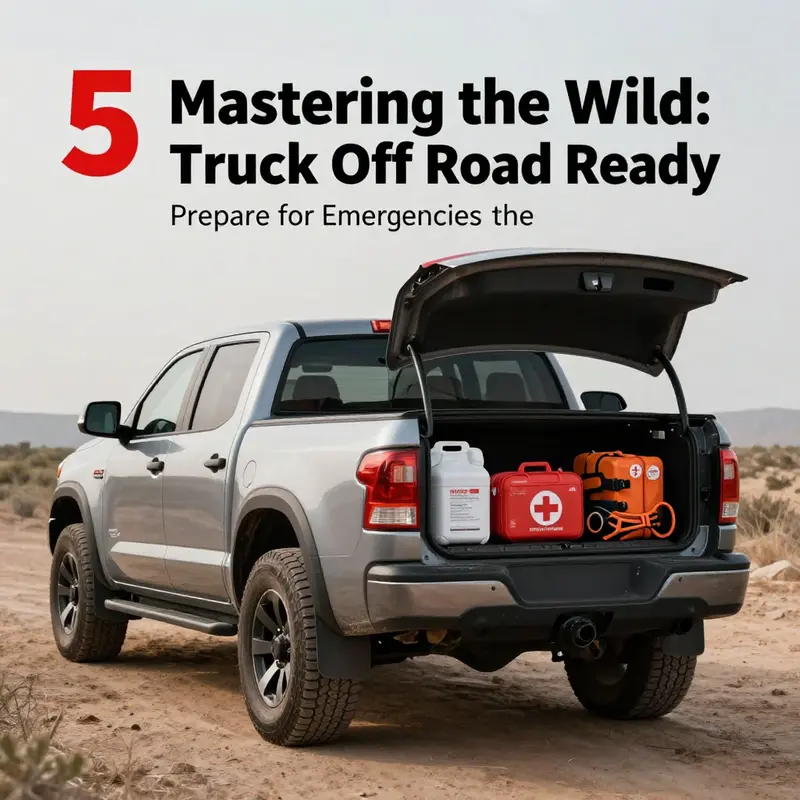
Emergency readiness on the trail is not a separate add-on to your off-road build; it is the practical intersection where rugged capability meets the reality of remote terrain. A truck that can crawl over obstacles or climb a grade loses its value the moment a simple breakdown leaves you stranded without a plan. The best off-road rigs are not just about horsepower or suspension travel; they are about how they respond when things go wrong and how quickly they can return to the route or call for help. In this light, preparation becomes a full-spectrum discipline that threads maintenance, equipment, supplies, and decision-making into a single, recoverable system. You start with the basics of vehicle health, because a failing component on a lonely track is not a test you want to take. A thorough pre-trip inspection should read like a medical checkup: look for leaks under the engine and transmission, verify that the fluids are at correct levels, and confirm that the brakes feel firm and predictable with no vibration or grabbing. The tires deserve the same deliberate attention, since off-road terrain punishes misadjustment and underinflation more than smooth pavement ever will. Check tread wear, sidewall integrity, and inflation targets that match terrain expectations; a tire that is underinflated in rocky or sandy environments can heat up and fail just when you need grip the most. The suspension, too, must be evaluated for wear that could flex into a dangerous failure under load. In this regard, you are not servicing a single trip; you are maintaining a moving system whose stiffness and geometry directly influence control and braking response on unpredictable ground. When maintenance is addressed with discipline, it paves the way for the next layer of readiness: emergency gear. An off-road kit should be organized but flexible enough to adapt to a range of scenarios. A compact first-aid kit becomes a lifesaver if you or a companion experiences cuts, sprains, or dehydration far from medical help. A reliable flashlight with spare batteries and a compact multi-tool offer immediate assistance for simple repairs or signaling for help after dusk. A fire extinguisher appropriate for common vehicle fires should be accessible without climbing into the cab or rummaging through gear. In the same breath, a plan for communication must be integrated into the kit. A satellite messenger or a long-range radio can bridge the missing cell signal, turning a potential dead end into an actionable plan. The message is clear: you are not merely carrying tools; you are deploying a strategy that turns unknown risk into manageable risk, the difference between a page in a manual and a real survival outcome. In this framework, the tools you choose should emphasize self-reliance without drifting into vanity. A robust winch may seem like a luxury until you find yourself deep in mud or snow where self-recovery becomes your only practical option. Recovery gear should also include boards or mats that bite into dirt or rock, a heavy tow strap or chain, and a snatch rope that can handle the loads involved while minimizing the risk of slippage or recoil. These items must be complemented by a plan for using them safely, including wearering gloves, a clear signaling method, and a rule to never stand between the vehicle and the line under load. The preparation picture would be incomplete without addressing fuel, water, and sustenance. Carrying extra fuel in jerry cans is prudent where range anxiety could strand you far from civilization, but you should store it safely and ventilate appropriately to prevent fumes from accumulating. Water is not optional, even on short jaunts, and you should estimate the minimum per person per day for hydration plus some extra for emergencies. Non-perishable food supplies provide energy during longer rescues or searches; a compact camping stove or a portable heater can be a lifesaver if you are stranded overnight, provided you follow safety guidelines for ventilation and fire risk. In parallel with physical supplies, you must plan for environmental exposure. A space blanket or compact bivy can guard against hypothermia in sudden weather changes, while a lightweight shelter or tarp allows you to control the bivouac situation should weather turn unfavorable. A satellite communicator, even if your primary means of contact fails, can be the single device that ensures you can send alerts or receive rescue instructions when terrain isolates you from the grid. Navigation tools remain indispensable. A detailed map and a traditional compass serve as an immutable backup to your GPS, and a preloaded route with known safe exit points reduces the terror of a wrong turn. The core idea is redundancy. The more layers you add, the more likely you are to find a viable path back to safety, whether through self-rescue, local help, or a combination of both. Any plan, even the most robust, benefits from rehearsal, and this is where practice becomes essential. Skills training should emphasize controlled steering and throttle on loose surfaces, the use of engine braking on descents, and the disciplined selection of low-range gears and differential locks. These techniques are not mere trivia; they are the practical mechanics of staying in control when traction is compromised. A mental discipline underpins all of this: stay alert, scan ahead, anticipate obstacles, and avoid complacency. Fatigue is an invisible hazard that erodes judgment, increases reaction time, and compounds the risk of miscalculations on difficult terrain. Regular rest, hydration, and a conservative approach to risk are as important as any gadget in the vehicle. The value of checks and practice grows when you understand that many emergencies do not require heroic action but rather well-executed, methodical responses. A key principle is to test modifications in realistic settings before taking them into remote locations. After any major alteration to drivetrain, suspension, or recovery systems, an evaluation at a professional off-road facility helps confirm that the changes behave as intended under climbing and traversing, water crossings, mud, and uneven ground. This disciplined approach to validation turns potential failure points into predictable behavior, which in turn reduces the chances of off-road mishaps turning into long, uncertain recoveries. Within this framework, maintenance, gear, and training come together not as isolated checklists but as a single, integrated habit. The practical takeaway is simple: run a thorough pre-trip, equip for a spectrum of contingencies, and train with intent. When you combine a dependable baseline of vehicle health with robust emergency gear and a clear plan for use, you create a system that can absorb the shock of the unexpected and still deliver you home. For anyone seeking further grounding in maintenance fundamentals as part of this continuum, consider studying Mastering Diesel Mechanics: A Step-by-Step Path to Success. It provides a rigorous perspective on keeping propulsion and supporting systems in peak condition, which underpins every other element of off-road readiness. While the specifics of terrain will always surprise you, the underlying discipline—systematic checks, thoughtful gearing of tools to tasks, and rehearsed responses—will not. In that sense, emergency readiness is not a separate precaution but an operational philosophy that informs every mile beyond the trailhead. For readers who want to explore the broader landscape of safety and preparedness, the Adventure Journal article on off-road truck safety and emergency preparedness offers a thorough, real-world perspective on how these principles play out in challenging environments. It is a reminder that preparedness multiplies the joy of exploration by reducing the risk of catastrophe, and it keeps the narrative of your adventures from ending in regret rather than in the stories you tell at the campfire. The trail rewards those who plan with clarity, train with purpose, and carry a willingness to adapt when the unexpected arrives, because in off-road travel, preparedness is the act that keeps momentum alive and safety in reach. For a taste of how these ideas translate into practice, you can consult the linked resource and then reflect on how your own setup aligns with the recommended best practices. In the end, your truck’s emergency readiness is a measure of responsibility as much as capability, a testament to prudent preparation that respects both the vehicle and the journey it enables. External reference: https://www.adventurejournal.com/off-road-truck-prep-emergency-safety/
Final thoughts
With the right modifications and emergency preparations, your truck can become a formidable off-road vehicle ready to tackle any terrain. Embracing the adventure requires not only top-notch upgrades but also foresight in preparing for unexpected challenges. Whether you’re a weekend warrior or a dedicated off-road racer, making your truck off-road ready marks your commitment to exploration and adventure. Equip your vehicle wisely, and let your journeys carve unforgettable memories on the trails ahead.