

For those who live for adventure, the thrill of off-roading is unparalleled. In Off-Road Online, mastering rugged terrains and racing through mud can lead to a need for powerful trucks. Yet, if you’re looking to get behind the wheel without emptying your wallet, understanding how to procure a free truck is essential. This article delves into various aspects, including temporary promotions and special events that may offer opportunities for free trucks, the vital role of social media channels in discovering giveaways, and leveraging in-game notifications for limited-time offers. Get ready to explore how you can embark on your off-road journey without the upfront costs.
Timing the Trail: How Promotions Shape the Quest for a Free Truck in Off-Road Online
Promotions rarely arrive as free-wheeling miracles in the world of online off-road experiences. They arrive instead as carefully timed blips on the radar of players who know where to look and how to act when the signal comes. In the context of Off-Road Online, the promise of a free truck can feel almost mythical for players who start from a budget of in-game currency or real-money purchases. Yet the reality is more nuanced. Promotions, if they surface at all, tend to be ephemeral, sometimes tied to seasonal celebrations or community milestones. They rely on a developer’s calendar as much as a player’s perseverance, and they reward those who stay alert and engaged rather than those who stumble upon a rumor and sprint toward it. The chapter you’re reading isn’t a manual for shortcuts. Instead, it traces how legitimate promotional events have historically behaved, how to recognize them when they appear, and how to place yourself in a position to benefit without crossing lines that would undermine the integrity of the game or the security of your account.
The first truth to anchor on is simple: there is no guaranteed path to a free truck in Off-Road Online through ordinary play alone. The term “free” in this space usually means a vehicle gifted as a limited-time reward, a codes-based promotion, or a prize drawn from participation in a promotional event. It does not imply a standing offering that applies year-round or to every player. The reasons for this are practical as well as strategic. Free vehicles disrupt the balance of the game, affecting economy, progression, and competition. Developers therefore reserve these moments for curated events that reward players who contribute to the community, engage with promotional channels, and participate in time-limited activities that promote the game and its ecosystem.
Where the real opportunity lies is in understanding the rhythm of these promotions. In many titles within this space, major giveaways cluster around anniversaries, seasonal updates, or cross-promotions with community partners. The cadence is predictable enough that thoughtful players can prepare: they monitor official channels, join discussions in trusted communities, and clear attention to in-game notifications so that they do not miss fleeting windows. In practice, this means subscribing to the game’s official pages, enabling push notifications if available, and routinely checking the in-game news feed. It means recognizing that a post from a developer or a community manager about a “limited-time event” or a “special drop” is likely to be the signal you’ve been waiting for, not a rumor to be doubted or dismissed.
The social media ecosystem around the game plays a pivotal role here. Official channels are the most reliable sources of truth. A well-timed post can announce a weekend-long event, a trailer-based scavenger hunt, or a login-code giveaway that unlocks one or more vehicles. The authenticity of these offers rests on the issuer’s verified accounts and the clarity of the terms. If a post asks you to visit an anonymous external site, or if the terms are unclear about eligibility, it’s a warning sign to slow down and verify through official routes. The legitimate offers are transparent about eligibility, duration, and how to redeem, often including a dedicated landing page or in-game prompt that explains exactly what players must do to participate. When you encounter anything less precise, expect risk rather than reward.
Participation, in this context, is less about a single heroic act and more about consistent engagement. A player who tracks the event’s progression, completes related tasks, and adheres to the rules has a better shot at earning a vehicle. Tasks might include completing specific challenges, logging in on multiple days, sharing a post to a social feed, or forming a team to tackle a co-op objective. The value of such tasks isn’t just the potential receipt of a truck; it’s the sense of progression and community that accompanies the event. Even if the grand prize isn’t a truck for you, the pathways created by these events often yield other rewards—skins, temporary boosts, or currency—that keep the game feeling fresh and motivating. The key is to approach each promotional window with a plan: identify the start and end times, understand the required actions, and allocate a small, non-disruptive block of time to complete the tasks with intention rather than speed.
A critical aspect of this planning is budgeting your time and your expectations. The reality for most players is that such promotions are temporary and sometimes small in scope. A two-truck drop, if it exists, may require hours of cooperative play, meticulous timing, or luck of the draw in a public event. It’s essential to set realistic goals. If a truck feels like a distant dream, frame your aim as maximizing the opportunity that the event represents: learn how the system works, build familiarity with the event’s mechanics, and prepare your account for future opportunities. This mindset turns a potentially frustrating chase into a constructive cycle of learning and participation. It also reduces the temptation to cut corners or pursue uncertain schemes that promise a free vehicle but risk account security or breach terms.
The mechanics of how a free vehicle is delivered often reveal the intent behind the promotion. Sometimes a vehicle code is distributed to participants via a streaming session or a live countdown on the official site. Other times, a random draw from eligible participants occurs, with winners announced in a dedicated news post or a live stream. In both cases, the process is designed to be fair and auditable, with clear instructions about redemption in the game’s stores or through a sanctioned portal. This transparency matters because it protects players from scams. The temptation to share credentials, to click on suspicious links, or to enter accounts on unofficial pages is real and dangerous. A legitimate promotion will never ask for your password, never require you to install third-party software, and never promise guaranteed results in exchange for a short-term sacrifice of security. If any red flags appear, the prudent choice is to disengage and report the posting to the official channels rather than trying to salvage a supposed shortcut.
Even when the offers prove elusive, the lessons from these moments are valuable. They teach patience, strategic play, and the importance of community-driven knowledge. They show how the game’s ecosystem uses events to revitalize interest, encourage participation across platforms, and reward players who invest in the experience rather than those who chase a single, ill-advised shortcut. This is not a treatise on exploitation. It is a guide to alignment—aligning your expectations with the game’s design, aligning your time with events you can reasonably complete, and aligning your online habits with trusted sources that have earned the community’s trust through consistency and clarity.
To become adept at spotting and leveraging legitimate opportunities, you’ll want a simple, repeatable flow. First, establish a routine check-in with the game’s official channels—website, social pages, and in-game notifications. Second, build a small, neutral task list for each event: verify eligibility, note the event window, and list the actions you can reasonably complete without sacrificing other activities you value. Third, engage with the community in a constructive way. Ask questions in official forums, share your experiences in moderation, and help others discern legitimate offers from noise. The presence of a healthy, informed community is itself a signal of legitimacy; when thousands of players discuss the event in a coordinated way, it’s more likely that a real opportunity is behind the posts rather than a misleading meme or scam.
As you navigate these dynamics, consider the broader context of what a free truck represents. It’s not merely a prize; it’s a catalyst that can shift a player’s relationship with the game. A truck unlocked through a legitimate promotion can alter your in-game economy, your progression pace, and the way you approach future content. It can also serve as a bridge to new gameplay experiences—new terrain types, new challenges, or new cooperative possibilities that you might not have explored otherwise. The chapter’s larger question remains: how do you maximize the chance of benefiting from promotions while maintaining integrity and enjoying the core experience of Off-Road Online? The answer lies in disciplined participation, informed skepticism of dubious offers, and a willingness to engage with the game’s evolving ecosystem rather than chase a single, elusive windfall.
When I speak of the “promotion window,” I’m not invoking a mystic arc so rare that only the lucky few glimpse it. I’m describing a practical pattern you can learn to recognize. The window typically opens with an announcement that is meant to be seen by a wide audience. It closes when the event ends or when the reward pool is exhausted. In between, there are usually steps—check a landing page, complete a challenge, log in on consecutive days, or share a post to unlock the next stage. The shape of these steps matters: if they’re too punitive or opaque, the odds that the offer is legitimate drop quickly. If they are straightforward, well-documented, and symmetric across platforms, you have a reliable path to participate without risking your account or your peace of mind. The balance is delicate, but within reach for a patient, methodical player.
For those who crave a practical synthesis, here is a compact ethos you can adopt. Treat any free-truck offer as a rare event and prepare accordingly. Keep your accounts secure and your expectations calibrated. Prioritize events that have transparent rules and verifiable redemption processes. Don’t invest more time than you can spare without diminishing the enjoyment you already receive from the game. If you do encounter a legitimate opportunity, approach it with deliberate intention: allocate the time, follow the steps precisely, and verify your rewards in the game’s store or through official confirmations. If you miss a window, don’t chase past events. Instead, pivot your attention to future promotions and to the ongoing life of the game—new updates, new challenges, new community content. The momentum of the game itself can offer ongoing rewards, even when the prize you hoped for remains out of reach for another cycle.
A final layer of realism helps ground expectations. The appeal of a free truck can be enticing precisely because it offers a shortcut around the grind. But the value of a game like Off-Road Online lies not in one prize but in the ongoing process of exploration, skill-building, and communal discovery. When promotions occur, they should add to the experience, not define it. The sensible path is to integrate promotional participation into your broader play pattern—treat it as an optional enhancement, not the sole objective. In truth, the most satisfying outcomes emerge from the satisfaction of mastering terrain, optimizing routes, and collaborating with others to complete ambitious tasks. If a free truck arrives as part of that journey, it becomes a natural dividend of your engagement. If not, the time spent learning, planning, and sharing remains a dividend in itself.
To close the loop, it’s helpful to imagine a future where promotions become a little more predictable, a little more navigable for players who invest thought into the process. As the game’s community continues to grow and as developers refine how they present events, the alignment between player effort and reward can become more transparent. That’s the best-case scenario: a smooth, well-signaled promotion calendar that rewards quality participation and fosters a sense of shared achievement. In the meantime, you can improve your own readiness by treating every promotional moment as a learning opportunity—about the game’s economy, about the best ways to organize your in-game progress, and about how to communicate effectively with the community and the developers. The road to a free truck, when it exists, is less a sprint and more a disciplined, enlightened expedition—a journey that teaches you to discern legitimate opportunities, manage your time, and savor the rewarding process of exploration itself.
If you’re looking to place a practical, industry-relevant anchor on this conversation, consider how the broader logistics and fleet-management mindset can inform your in-game decisions. The discipline of tracking promotions, validating offers, and coordinating participation mirrors the operational planning you would apply in any serious fleet operation. For instance, when you think about how promotions could intersect with real-world fleet management challenges, you can see parallels in how teams coordinate updates, balance risk, and optimize resource allocation. This cross-cutting perspective helps keep expectations grounded and makes the journey toward any potential reward more coherent within the game’s larger ecosystem. For readers who want to connect this game-focused promotion mindset to practical fleet-management thinking, a related resource covers how dispatch and fleet planning tools shape efficiency and decision-making in real-world contexts. In this spirit, you can explore a practical overview of dispatch software for fleet management.
dispatch software for fleet management
As you move forward, keep the flame of curiosity alive, but temper it with a steady dose of skepticism. The allure of a free truck can be compelling, yet the healthiest approach remains balanced. Focus on enjoying the game’s core experiences—the terrain, the physics, the teamwork, and the strategic choices that define your path through the landscapes. When a legitimate promotional moment appears, you’ll already be primed to participate with confidence and a clear understanding of what you stand to gain and what you must safeguard. The trail to a potential prize is not a straight line but a winding road that rewards patience, prudence, and a willingness to learn from every twist and turn along the way. In sum, promotions exist to enliven the game and to reward engaged players. They are not guaranteed, not universal, and not a substitute for genuine skill and commitment. Yet they can be meaningful milestones when they arrive, especially for players who have prepared themselves to recognize and seize the moment without sacrificing the integrity of the experience. This is the spirit you can carry forward as you navigate future events, track official announcements, and participate in the broader community that makes Off-Road Online a living, evolving world.
External resource context: for perspective on how updates and anniversary-driven promotions have functioned within related titles and ecosystems, you can consult case studies or comparable events in other games that have used anniversary DLCs or community campaigns to distribute rewards. External reference: https://www.epicgames.com/store/en-US/p/snowrunner-anniversary-dlc
Riding the Edge: Leveraging Official Social Channels to Find Free Truck Opportunities in Off-Road Online
In the world of Off-Road Online, the dream of a free truck is a lure that pulls players toward the glow of official channels rather than the cluttered alleys of rumor and third‑party hype. The reality is simple and unsentimental: there is no universal, guaranteed pathway to snag a truck for free through legitimate play. What you can count on are time‑bound opportunities that surface through the game’s own ecosystem—promotions, trials, codes, and events that are announced and administered by the people who built the world you’re racing through. The catch is that these opportunities are rare, fleeting, and highly dependent on staying connected to the channels the developers control. If you want to position yourself to seize a legitimate free‑truck moment, the first principle is to treat official social channels, the official website, and sanctioned promotions as your primary map, not a rumor mill or a forum thread. Those official channels are not merely broadcast platforms; they are the entry points into limited offers, community programs, and test‑drive opportunities that can tilt the balance in a game where resource management often decides who wins the trail and who retires early from the mud and dust.
The logic behind this focus is straightforward. Game developers run a tight loop of engagement: inform players about new events, invite participation, collect feedback, and reward participation with in‑game assets or codes that can be redeemed for vehicles or vehicle access. In practice, this means scrolling through a company’s official posts, subscribing to push notifications from the game’s channels, and joining the official communities where announcements drop first. These are not promises of perpetual free vehicles, but rather the legitimate portals through which a responsible player might gain temporary access, a discount, or a code that reduces the cost of a truck or unlocks a test‑drive option. It is in these moments that players who otherwise rely on in‑game currency or real‑money purchases can find a legitimate, time‑limited route to move closer to a truck they would otherwise covet.
To translate this into actionable behavior, begin with the most trustworthy anchors: the game’s official accounts on social media and the game’s own site. A well‑run promotion often opens with a post or a banner that signals a window of opportunity—perhaps a weekend event, a celebration milestone, or a partner promotion that extends free access to a specific model for a short period. The posts will also outline how to participate, what conditions apply, and how to redeem any codes. The crucial detail is timing. These offers are engineered to create urgency; they disappear as quickly as they appear. If you miss the window, you might find yourself waiting weeks or months for another chance. The lesson here is not to chase every flashy headline but to cultivate a disciplined habit: check the official channels at regular intervals, keep your in‑game wallet ready for the moment a promotion drops, and set up alerts so you do not overlook a micro‑window when a free truck might surface.
In this space, a practical strategy unfolds. First, identify the flagship channels where the game’s developers publish updates. These platforms are the most reliable conduit for legitimate opportunities and for notices about test drives, trial programs, or codes that could reduce or offset the cost of a truck in the game’s economy. Second, participate actively in any sanctioned events. Even if the primary reward is not a full free truck, some events grant temporary access to a vehicle, exclusive skins, or credits that can be exchanged toward a purchase in the game’s store. Third, when a promotion is announced, read the terms with care. Some offers require you to complete a task—such as providing feedback, logging a certain number of hours in a license–style mode, or sharing a post within your network. Others may require you to sign up for a newsletter or join a dedicated in‑game club. These steps are not mere bureaucratic hoops; they are the gatekeepers that separate legitimate access from opportunistic scams that copycat the look of official notices.
The caution here is essential. The same channels that host legitimate promotions can be spoofed by unscrupulous actors who want to harvest accounts or deliver counterfeit codes. Never share your login credentials, never install third‑party software from unverified sources, and never trust a code delivered outside the game’s official redemption portal. A legitimate path will always direct you to redeem through the game’s own interface or through clearly official partner sites that are linked from the game’s verified channels. This is how you protect your progress and keep your pursuit of a free truck on a straight, legitimate track. The discipline of verification—cross‑checking a post on the official site with the game’s in‑client notices and with the brand’s verified social accounts—becomes your best defense and your most reliable compass.
A core component of this approach is the culture of community and dialogue that developers cultivate through official channels. When a promotion is underway, the commentary is often as meaningful as the prize itself. Feedback loops exist for a reason: they help the developers tune balance, confirm the legitimacy of the offer, and mitigate misuse. This creates a virtuous circle. You engage, you observe how the system rewards engagement, you learn the etiquette and the expectations of the program, and you adjust your behavior accordingly. In practice, this means being a constructive participant in official conversations, offering useful feedback about the test‑drive experience, and sharing legitimate insights about how a particular vehicle feels on the trail. The more consistently you show up, the more likely you are to be noticed when a limited‑time opportunity surfaces, and the more likely you are to become part of a community tier that gets early warnings for upcoming promotions.
The research landscape around these opportunities notes a few practical patterns that players can lean into. Brand channels are not merely about promotion; they often host test‑drive opportunities and exclusive programs designed to foster trust and long‑term relationships with players who engage responsibly and constructively. A common thread across platforms is the presence of exclusive promotions, cash rebates, or government‑backed incentives, which are often carried through on official portals or partner pages. While these incentives do not guarantee a free vehicle, they can meaningfully reduce the cost or shorten the path to ownership within the game’s economy. The emphasis on cash rebates and subsidies is a reminder that the real world sometimes intersects with the virtual one, offering players a sense of realism about what it takes to secure a high‑value asset, even in a fictional environment. The broader takeaway is that legitimate access to vehicles—whether through a free trial, a discounted rate, or a code—embeds itself in the reliability of official digital channels rather than in whispers or random giveaways.
A point worth repeating, with clarity, is that any credible route to free truck access within Off‑Road Online is anchored in the official, verifiable ecosystem. This is why the user journey begins with the brand’s social pages and the game’s own site, and extends to official apps and digital platforms that host the promotion. The digital environment rewards patience and preparedness. If you monitor the right channels, you hear the early whispers of an event, you prepare your accounts and your wallet, and you position yourself to act as soon as the window opens. If you miss a window, you do not despair; you simply shift attention to the next announced event, understanding that the cadence of opportunities is irregular, but not impossible to anticipate for those who stay alert.
In the spirit of practical mentorship, consider the idea that there is a valuable knowledge anchor that can help you navigate these promotions with more confidence. Technical literacy in vehicle testing and maintenance, while seemingly distant from promotions, actually enhances your credibility in the eyes of the developers and the community. A player who can articulate the handling, performance, and potential maintenance needs of a vehicle, even within a game, signals genuine interest and reliability to the official channels. For readers who want to deepen this understanding, there is a resource that frames the underlying mechanics of vehicle systems in a way that translates well to the Off‑Road Online context. See the resource titled Mastering Diesel Mechanics: Your Step‑by‑Step Path to Success, which offers a practical lens on how a real‑world mechanic translates to skilled play in vehicle simulations. Following this path helps you speak the same language as the developers and testers and positions you as a thoughtful participant in any vehicle‑related program the brand might offer. Mastering Diesel Mechanics: Your Step-by-Step Path to Success
As you balance patience with proactive participation, you also cultivate a longer arc of understanding about how these programs operate. The existence of a test‑drive concept implies a staged involvement, where a player can gain temporary vehicle access and gather firsthand impressions before a purchase decision. This is not a universal guarantee of a free truck, but it is a legitimate pathway to reduce risk and cost while exploring the vehicle’s capabilities in the context of the game’s environment. The more you integrate into the official ecosystem, the more opportunities you learn about, and the more you align yourself with a workflow that makes legitimate access feasible when a window opens. In a world of limited resources and finite opportunities, that alignment is valuable in its own right. It catalyzes a sense of agency that does not rely on luck alone but on disciplined engagement with the channels that actually matter.
The practical takeaway, then, is twofold. First, treat official channels with the respect and attentiveness they deserve. They are the only reliable source of legitimate opportunities and they are the most trustworthy path to a potential free‑truck moment. Second, cultivate a habit of responsible participation. Engage, provide feedback, and follow up on promotions through the correct channels. Keep your expectations grounded in the understanding that these offers are limited in scope and duration, and that the game’s economy and balance are designed to reward thoughtful participation rather than reckless pursuit. If you approach the process with patience, credibility, and a willingness to engage with the community, you will maximize your chances of catching a legitimate opportunity when it arises.
As you navigate this terrain, you can also broaden your horizons by reading about related practices in other sectors of the automotive and transport ecosystem. While the details differ, the underlying pattern remains: official partnerships, time‑bound trials, and well‑publicized promotional codes are how brands extend value to engaged participants. The same logic that governs real‑world promotions—trust, transparency, and verifiable channels—governs these in‑game opportunities. By embracing this approach, you not only improve your odds of accessing a free truck within Off‑Road Online; you also gain a more nuanced understanding of how virtual economies mirror legitimate practices in the broader automotive world. For readers who want to explore practical mechanics beyond the scope of the game, the linked resource above provides a focused lens on the technical competencies that can inform and enrich your in‑game decisions.
External resource for broader context, and to see how official programs operate in the real world: https://www.pcauto.com.cn/
Alerts as Gateways: Navigating In-Game Notifications on the Quest for a Free Truck in the Off-Road Online Title
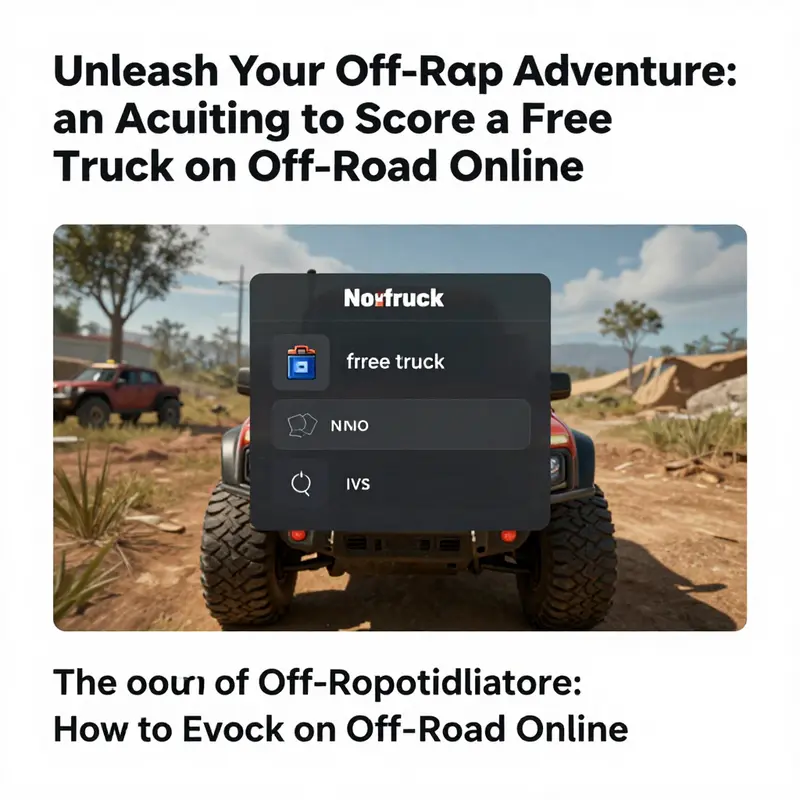
The first thing to recognize is that the promise of a free truck is rarely a straightforward transaction. The game and its developers rarely offer a bare, unconditional gift of a vehicle to every player who happens to log in on a given day. Instead, notifications operate like invitations to take part in a broader promotional ecosystem. They signal a limited-time window, a set of tasks, or a code that unlocks access to a vehicle for a defined period or under certain conditions. In practice, this means the typical notification is an invitation to engage more deeply with the game’s ecosystem rather than a direct transfer of ownership. For a player who has spent time in this genre, that distinction matters. It reframes a potential windfall as a structured opportunity: a chance to contribute to the game’s ongoing events, to experiment with new vehicle configurations, and to learn the lay of the land before any real decision about spending or investment is required.
To read these notifications well, you must understand their architecture. The message might arrive as a banner that appears during loading screens, a banner-ad style overlay that sits atop the current screen, or a persistent header that remains until dismissed. It can show a countdown, a checklist, or a simple instruction: log in during the event window, complete specific challenges, or input a promotional code. The tasks baked into the notification can be as varied as the terrain in the game. They may request you complete a certain number of races, achieve podium finishes on diverse maps, or participate in a limited-time challenge that tests your handling and speed under fatigue. Some promotions hinge on social engagement: sharing a post, inviting a friend, or joining a dedicated event channel. Others depend on in-game currency thresholds or progress in a seasonal track. In any case, the notification’s cadence—the moment you see it, the moment you act on it, the moment you complete the task—creates a micro-arc in your play session, and that arc can be as compelling as the core racing itself.
This is where the psychology of scarcity and opportunity comes into play. The countdown imbues urgency; the visible goal makes the path feel concrete. Players often experience a mild cognitive bias: the feeling that if they don’t act now, they will miss a rare chance to offset purchases or to get something they value for free. Developers have learned to wield that bias with care. A well-timed notification can re-activate dormant players and re-engage those who have drifted away, all without a player ever needing to part with real-world money. But this is a double-edged sword. The same mechanism can push players toward overcommitting, chasing every new banner and every limited-time challenge, potentially undermining long-term enjoyment if the rewards do not justify the effort or if the event turns out to be less generous than it appeared.
Inside the notification framework, there is a subtle, often overlooked, economic logic. The “free” vehicle is rarely granted without some form of exchange, whether explicit or implicit. Sometimes the exchange is the labor of completing a handful of tasks with a reasonable time requirement. Sometimes it’s the exchange of attention and engagement—watching an in-game trailer, signing up for a newsletter, or consuming a microcontent piece to unlock the next step. In other cases, the invitation to obtain a free vehicle exists as a gateway to a broader monetization strategy: the same event might seed a promotional campaign that introduces a new cosmetic, a temporary access period, or a discounted bundle that includes currency. Players who recognize this broader frame can approach notifications with a more strategic mindset. They can decide which events are worth expending energy on, which tasks align with their playstyle, and how the potential reward fits into their broader goals for customization, performance on trails, or garage variety.
A critical truth that emerges from observing these patterns is that the ecosystem rewards sustained participation more than sporadic bursts. An alert that arrives during a quiet period, offering a straightforward, limited objective, can be far more valuable to a player who has built a rhythm around consistent logging in, daily challenges, and week-to-week progression. Conversely, a single, high-stakes event that promises a marquee vehicle may be alluring, but it may also require a level of commitment—or in-game currency expenditure—that runs counter to a player’s preferences or budget. This is not a moral judgment about what a player should do; it is a practical acknowledgment of how promos are designed to be consumed and how the best players calibrate their involvement. In this sense, the notification becomes less about a guaranteed windfall and more about a disciplined approach to opportunities that maximize value over a season or an entire campaign.
In practice, the most reliable path to a potential free truck remains rooted in official channels. The game’s creators and publishers typically funnel information about promotions through a combination of in-game notices, official social accounts, and the game’s own announcements page. The consistency of these channels matters. When a notification arrives that is endorsed by these sources and is consistent with the game’s current event calendar, it carries a level of legitimacy that is crucial for players to trust. In the absence of canonical confirmation, there is always a risk of misinterpretation, phishing attempts, or clutter from unofficial third-party promotions. The safest approach is to treat any alert that promises a vehicle as a prompt to consult the game’s official channels, verify the event details, and confirm the terms before engaging any external links or codes. This discipline protects players from scams and ensures that participation remains a positive, enjoyable part of the game rather than a distraction that leads to frustration or, worse, security risks.
The narrative of in-game notifications also intersects with the broader realities of the game’s economy. Vehicles in this kind of title are rarely distributed as pure benevolence; they function as leverage within a dynamic balance of earn-and-spend mechanics. The occasional free truck, when it appears, is typically woven into a larger tapestry: a limited-time collection of tasks that allows players to demonstrate skill, speed, and perseverance while nudging them toward further engagement. The free truck may serve as a reward that unlocks new performance attributes or new customization options that the player can use to tackle more challenging terrain. It may also act as a taster for a more expansive promotional arc, one that nudges the player from free access to paid upgrades, skins, or other enhancements. Understanding this orchestration helps players appreciate that even a seemingly simple “free truck” offer is part of a larger mechanism designed to sustain the game’s community, entice longer sessions, and maintain a healthy in-game economy.
Given these dynamics, what should a thoughtful player do when a notification appears? Start with a calm, methodical approach. Read the terms carefully. Check the event window, the required actions, and any regional restrictions. Note whether the reward is a temporary access, a permanent unlock, or a limited-time loaner vehicle. Ask questions internally: Does completing this task align with my playing style? Do I have the time to invest in the required activities without sacrificing my enjoyment of other game modes? If the answer is yes, proceed with a plan. Block out the window on your calendar, set reminders, and map the tasks to your usual routines, such as daily login streaks or routine grind sessions. If the answer is no, consider skipping the event gracefully. There will always be another promotion, another banner, another opportunity in the future, and it is far more satisfying to play with a sense of agency rather than a sense of urgency that leads to regrettable decisions later.
The social texture around notifications is another dimension worth considering. Communities often coalesce around events, sharing tips, codes, and strategies for efficient completion. These conversations can be a valuable resource, especially for players returning after a long break or those who are navigating a new map or vehicle class. Still, there is a caveat: the social sphere can also spread rumors or misinformation. It is easy to misinterpret a teaser video or a short post and misread the requirements of a promotion. The best antidote is to anchor all interpretations to the game’s official announcements and to verify any claim through the game’s own interface or official social channels. In a world where a single misleading post can derail a day’s play, disciplined skepticism serves as a companion to curiosity. By combining official confirmation with careful community cross-checking, players can participate confidently and protect themselves from scams or misrepresentations.
A final layer to understand is the long arc of value. A free truck offer, when it exists, is rarely a pure financial windfall. Its value is often multi-dimensional: it may expand your garage’s versatility, reduce the time needed to access a certain class of trails, or simply serve as a testbed for how a new vehicle performs across varied landscapes. Even if the truck becomes a temporary loaner, the experience you gain by using it can inform your approach to customization, gearing, and race strategy long after the event ends. In other words, the benefit of these notifications is not always in the physical asset itself but in the experiential knowledge and the gameplay leverage they provide. This perspective helps shift the focus from the pursuit of a single free reward to the broader goal of becoming a more capable, informed, and flexible player who makes deliberate choices about how to spend time, energy, and, when needed, currency.
For readers who want to translate these insights into practical action, the following stance tends to yield the most consistent satisfaction: keep a low cognitive load by prioritizing official promotions, maintain a light touch with every new banner, and cultivate a routine that aligns with your own play preferences. If you enjoy a steady cadence of small challenges, look for notifications that promise quick wins and easy wins without overwhelming your schedule. If you relish occasional long hauls and complex tasks, reserve your energy for events that offer richer rewards but may demand more time. In either case, adopt a mindset that treats each notification as an invitation rather than a demand, and you will preserve your enjoyment while maximizing the odds of walking away with a worthwhile outcome—whether that outcome is a free vehicle, a deepened skill set, or simply a broader understanding of how the game’s promotional calendar interlocks with your own gaming rhythms.
It is also worth placing these patterns in a broader context. The existence of promotions and notifications mirrors the broader evolution of free-to-play online ecosystems. In many titles, the lure of a no-cost asset is part of a larger ecosystem designed to convert engagement into value over time. Players who study this logic can better navigate the spaces between “free” and “earned,” recognizing when a promotion truly serves their interests and when it is primarily a hook for in-game purchasing. The skill, then, is not merely chasing a free truck; it is cultivating a relationship with the game’s promotion calendar that respects both personal time and personal limits, while still remaining open to opportunities that genuinely expand the play experience.
If you ever feel uncertain about the legitimacy of a notification or the terms of a promoted offer, pause and verify through the game’s own channels. The official announcements page and the game’s support resources are the safest places to ground your understanding. The small, disciplined steps of verification protect you from potential scams and ensure that your play remains enjoyable rather than compromised by misleading incentives. In the end, the notifications you encounter will still be the same: a signal of an opportunity within a dynamic virtual world. How you interpret and respond to that signal will define your experience, more than any single reward ever could.
For readers seeking a broader frame of reference on how free-to-play ecosystems use promotional prompts and how players navigate them across different titles, a helpful comparative resource is available here: Top Free Games on Microsoft Store. This external perspective helps situate the off-road online title within a wider landscape of promotions, codes, and limited-time events that shape player behavior across platforms and genres. Engaging with this broader context can sharpen your intuition about what makes promotions feel fair, rewarding, and genuinely worth your time.
As this chapter closes, the central takeaway remains clear: in-game notifications are not a guarantee of a free truck, but they are reliable indicators of active development, ongoing engagement strategies, and evolving play patterns. Treat them as guided opportunities—time-bound, task-based, and often tied to the health of the game’s community. Maintain a measured approach, stay aligned with official sources, and you’ll find that the quest for a free truck becomes less about chasing a single myth and more about cultivating a savvy, enjoyable relationship with a living digital environment.
External reference for broader context: Top Free Games on Microsoft Store.
Final thoughts
Navigating the rugged landscapes of Off-Road Online doesn’t always require heavy investments. With the right strategies, including participating in promotions and events, keeping an eagle eye on social media channels, and staying alert to in-game notifications, you can strategically position yourself to acquire a free truck. These opportunities might not always be available, but by being proactive and engaged with the game community, you increase your chances of driving away in a new ride without opening your wallet. So gear up, stay connected, and seize those chances to fuel your off-road adventures!