
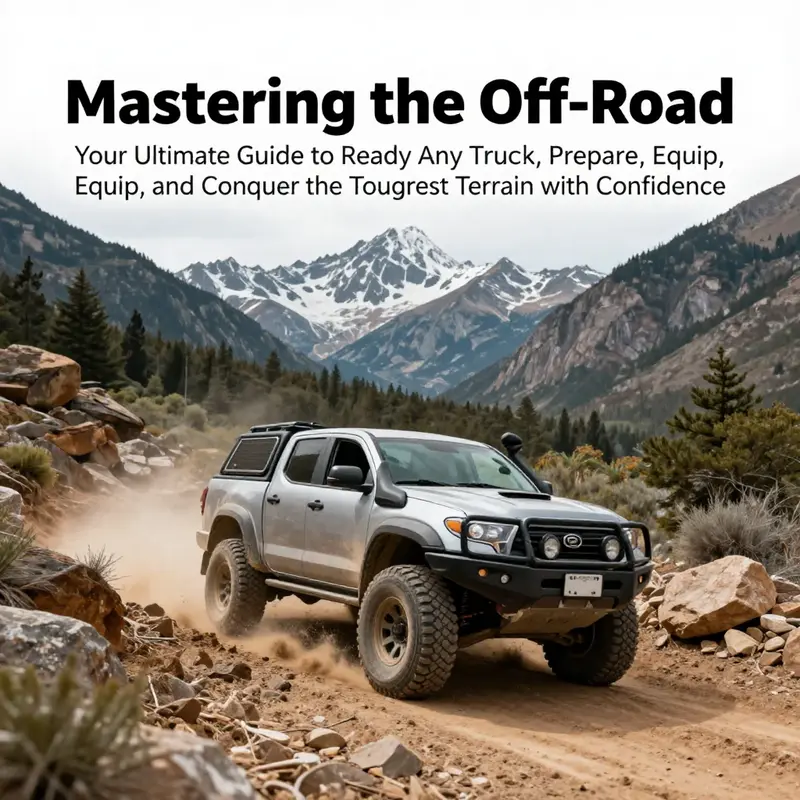
Mastering the off-road experience starts well before you tackle rugged trails. Whether you’re an adventurer seeking wild landscapes or a professional vying for victory in off-road racing, preparing your truck is a critical step to your success. This guide captures the essential mechanics of vehicle preparation, indispensable gear, strategic route planning, proficient driving techniques, and the mindset necessary for any off-road journey. As you traverse through each chapter, you’ll gain comprehensive insights to enhance your off-road adventures, ensuring your truck is always trail-ready.
Trail-Ready from the Ground Up: Comprehensive Vehicle Checks That Make Any Truck Off-Road Ready
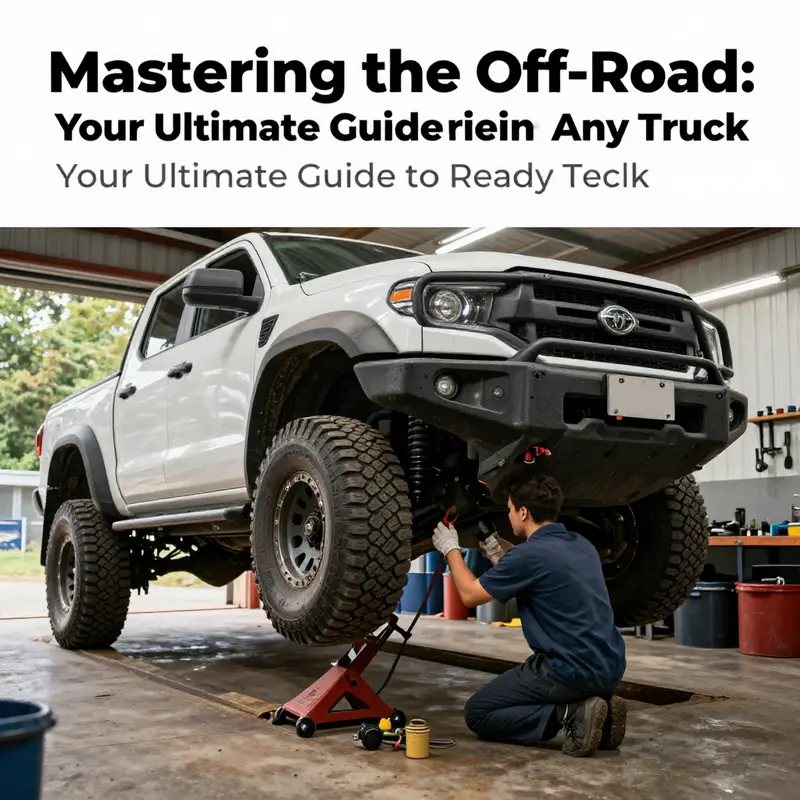
Choosing to take a truck into harsh, uneven terrain demands more than fuel and a willingness to push through. It requires a deliberate, ground-up approach to vehicle health that translates into calm, capable handling the moment you roll onto a trail. This chapter threads together the checks that separate an anxious, risk-prone excursion from a trail that feels almost predictable. The fundamental truth is simple: when every system communicates in good order, your truck becomes an extension of your judgment, not a problem to be solved mid-climb or mid-river. Start with the tires, the one element that touches the ground, and let the rest of the checks follow in a logical, steady sequence that respects the terrain you expect to encounter. The goal is not to replace skill but to ensure reliability, prevent surprises, and empower you to manage the trail with intention rather than improvisation.
Tires are the first line of defense and the most perceptive barometer of readiness. Worn tread robs you of traction just when you need it most, especially on loose surfaces or when negotiating rocks and ruts. A minimum tread depth of about 1.6 millimeters is a practical threshold, but off-road realities often demand more nuance. If you intend to explore sandy or loose substrates, you’ll want to adjust tire pressure to broaden the contact patch. Lowering pressure can dramatically improve grip by increasing the footprint, yet it comes with the caveat that you must reinflate before highway driving to protect the tire sidewalls and the wheel. The guidance here is subtler than a single number; for sandy trails, you may drop the pressure to roughly half of your standard on-road value, while on rocky, point-loaded terrain you may opt for a modest increase to resist puncture risk and bead detachment. While lowering pressure, be mindful of the need to inspect for embedded debris, cuts, or bulges in the sidewalls—any sign of structural damage is a red flag and demands replacement before continuing. Always carry a spare tire in good condition, along with a complete toolkit: a jack, lug wrench, and the appropriate cam or lug tools. The spare is not just a backup; it is a practical guarantee that a single failure does not derail the entire outing.
Beyond the tires, the braking system should be a quiet, confident partner in the trail. Replace brake pads well before they reach the wear limit, using a practical threshold of around 3 millimeters for replacement. Warped rotors or grooves reveal themselves as vibrations or pulsing braking behavior; these symptoms deserve inspection and correction. Brake fluid deserves a periodic check—old, contaminated fluid compromises stopping power, a risk you should never accept on a rough descent or a steep approach. Before you depart, perform a controlled test of the emergency braking system to ensure the vehicle stops cleanly and pulls no directionally adverse. The goal is to detect inconsistencies that would only become apparent under stress, not after you’ve committed to a line choice on the trail.
The suspension, often overlooked, carries the load of terrain with quiet resilience when it is sound. Look for oil leaks on shocks, and test the rebound by pressing down on each corner of the vehicle. A slow or inconsistent return signals worn or failing damping. Inspect control arms, ball joints, tie rods, and bushings for any looseness or signs of wear that could degrade handling or cause premature tire wear. Misalignment is more than an alignment issue; it translates directly into unpredictable steering response and increased susceptibility to hazards on uneven surfaces. If anything feels amiss during a feel test, address it before pressing deeper into the backcountry.
Engine and drivetrain health culminate in a reliable, consistent powertrain capable of endurance on long, demanding expeditions. Start with the basics: oil level and color reveal how the engine has fared over time and through rough terrain. Dark, dirty oil might indicate wear or accelerated contamination, so consider a change according to mileage, terrain intensity, and manufacturer guidance. Coolant should be at the correct level with no leaks; a cooling system that loses fluid can overheat quickly in rocky canyons or slow, steep climbs. Transmission and transfer case fluids deserve equal attention: verify levels, check for signs of leakage or contamination, and confirm that shifting and four-wheel-drive engagement remain smooth and reliable. For those planning substantial off-road trips, a full service or an oil change before departure can be a prudent investment, particularly if the vehicle has accumulated significant miles or seen heavy use in rough conditions. The engine’s health is the bedrock on which every other precaution rests, and neglect here quickly multiplies risk on the trail.
The electrical system often becomes the invisible hinge between preparation and performance. A battery voltage above about 12.4 volts at rest indicates a healthy state; clean and tight terminals reduce the chance of parasitic drains or odd voltage drops during a cold start on a remote pass. Test all exterior and interior lights—headlights, fogs, brake lights, turn signals—and ensure that any accessories you depend on in the field, from a winch to a GPS, are ready to function. Electrical reliability matters when you’re out of sight of help, especially when you’re counting on signaling, navigation, and emergency communication gear. A well-tuned electrical system reduces the chance that a single, simple failure snowballs into a more serious predicament.
Protective undercarriage measures are the quiet safeguard that keeps you from cascading damage in the rocks and roots. Skid plates and shielding are not about luxury; they are a pragmatic shield for vital components such as the oil pan, fuel tank, and transfer case. A solid undertray reduces the risk of puncture, crack, or fracture in the most unpredictable terrains. If you are running a vehicle without robust protection, consider upgrading those undersides before you attempt serious trails. A protective approach to the bottom of the truck is both preventive and efficient, saving time and expense that otherwise comes from repairs in the field.
The checklist does not end with the mechanicals. The broader preparation ecosystem includes a careful assessment of recovery gear, spare parts, and the readiness of auxiliary systems that ensure you can handle the unexpected without escalating risk. A practical, tidy approach to your toolbox is essential: spare fuses, spark plugs, a solid jack, a lug wrench, and a set of sturdy tow straps or a winch cable. A portable air compressor lets you re-adjust tire pressures to suit terrain and emergency storage supplies ensure you can survive a delayed return due to weather or terrain.
If you want to deepen this mechanical discipline, you can explore more detailed, practical maintenance methodologies that apply specifically to diesel-powered rigs and other propulsion systems. For instance, the practical strategies outlined in Mastering Diesel Mechanics: A Step-by-Step Path offer approach-and-execute guidance that complements the routine checks described here, helping you translate knowledge into reliable, repeatable behavior on the trail. This kind of resource can be especially valuable when you are tasked with maintaining a high-mileage truck that regularly encounters rough environments, giving you a framework to address wear and unexpected stress before it becomes a failure.
To close the loop, consider how this mechanical discipline intersects with your route and driving strategy. A roadbook that captures mileage, anticipated conditions, and exit points becomes a living document you consult repeatedly during the trip. It anchors your knowledge in real-world decision-making and prevents you from treating pre-trip checks as a one-off ritual. Crew discipline matters too: never roll out alone, as some hazards are best managed with another hand and another vehicle, especially when winch or recovery might be required. The principle holds that the highest-performing teams are those that blend meticulous checks with conservative, calculated risk management. With every component inspected and every system validated, you convert potential trouble into a solvable puzzle you face with calm, measured actions rather than improvisation.
In practice, this means you approach the trail with an old, reliable rhythm: assess and verify, adjust where needed, and confirm everything is ready for the terrain you expect. You calibrate tire pressures to the ground truth you’ve learned from recent trips, you confirm braking response on a test run, you verify the suspension’s behavior on a corrugated surface, and you ensure the engine and drivetrain respond without hesitation to a firm throttle or a steady climb. You cycle through electrical checks alongside lighting and accessory readiness, then you perform a quick undercarriage scan to ensure protection is intact. If all is well, you load your recovery gear, secure spare parts, and set out with confidence grounded in a consistent preparation process. This approach does not promise perfection on every trail, but it does promise a predictable, manageable encounter with the terrain—one that respects risk and rewards preparation.
For readers who want a compact, practical reminder of core maintenance principles, the idea is simple: treat checks as a baseline habit, not a checklist you complete and forget. The trail favors crews that integrate routine maintenance into their planning, that treat small issues as signals rather than annoyances, and that understand the terrain’s demand will escalate if the vehicle’s baseline condition is weak. When you pair this mechanical discipline with thoughtful route planning, responsible group travel, and a grounded driver mindset that prioritizes alertness and fatigue management, your truck becomes an instrument of control rather than a potential source of friction on the trail.
Internal link: For a deeper dive into more durable maintenance strategies, see Mastering Diesel Mechanics: A Step-by-Step Path. This reference can help you translate the high-level concepts of vehicle readiness into a concrete, repeatable maintenance routine that supports long-term reliability on demanding off-road expeditions.
External reference: https://www.caranddriver.com/features/a592387/the-truth-about-off-road-tire-pressure/
Gear, Grit, and Ground Clearance: The Essential Toolkit That Transforms Any Truck into an Off-Road Ready Machine
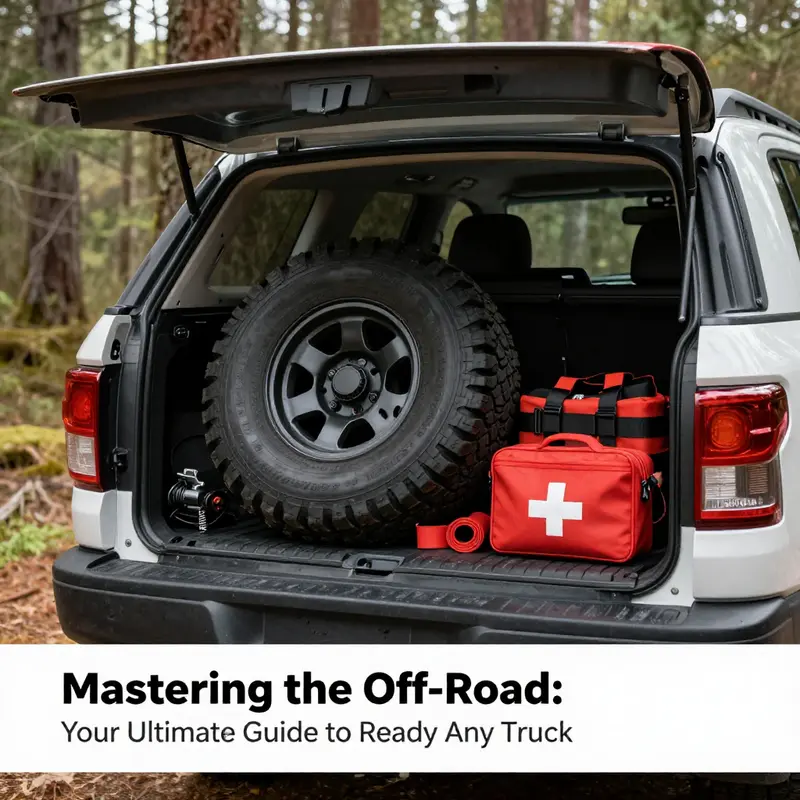
When you load a truck for off-roading, you’re deploying a carefully balanced mix of gear, strategy, and mindset that keeps the journey safe, predictable, and rewarding. The right gear reduces risk, enhances capability, and lowers the chances that a small mistake becomes a costly setback. The specifics live in the details—the tires you trust, the protection you install, the way you carry recovery gear, and how you prepare for the unknowns that trail dust and weather hurl at you. Essential off-road equipment should feel like a natural extension of the truck’s purpose, not an add-on on a shopping list.
First, the tires sit at the heart of any off-road build. High-performance tires deliver traction where highway rubbers falter. Their tread patterns bite into mud, crawl over rocks, and grip loose gravel with confidence that street tires cannot match. A thoughtful setup considers tire type and how you run them on the trail. You’ll likely run lower pressures in sandy or soft terrain to increase the contact patch and improve flotation, yet you must reinflate for highway sections to preserve tire life and fuel efficiency. The aim is stable, deliberate progress rather than frantic wheel spin. Tire choice guides your approach to obstacle negotiation and informs suspension and weight distribution.
Suspension is the second pillar that supports every other decision on the trail. Upgraded shocks and springs unlock articulation, allowing wheels to independently find traction over irregular surfaces. Lift kits or enhanced systems create the margin you need to avoid bottoming out. More travel means more control, but it also demands recalibrated driving habits. Gentle steering inputs and careful throttle modulation become more critical as wheel travel expands. A well-matched suspension works with your tires to deliver control for slow, deliberate progress rather than reckless speed. The goal is to let the truck settle into its suspension with each obstacle, not crash over it.
Locking differentials, when engaged, provide the kind of confidence that only predictable power delivery can offer. In loose or uneven terrain, they ensure torque is not wasted on a wheel that lacks traction. The difference can be dramatic on steep approaches, muddy climbs, or slick rock trails. Installing or configuring a reliable differential lock is a decision that ripples through your driving technique. You’ll learn to trust the system as you work with engine braking and low-range gearing to maintain crawl speed through sections that demand precision. The mechanical elegance of a properly locked system lies in its reliability and the way it turns uncertain surfaces into predictable math.
Beyond the core drivetrain and tread, recovery equipment becomes the backbone of off-road readiness. A winch is a lifeline when you misjudge a trench or get bogged down. A well-chosen winch should be robust enough to handle the vehicle’s weight. Complementing the winch are recovery straps, traction boards, and a sturdy, purpose-built shovel. Traction boards transform a spinning wheel into a firm anchor that can drive you out. Portable air compressors help you readjust tire pressure on the fly, a small but powerful lever in regaining momentum. The recovery kit, assembled with foresight, becomes an insurance policy against being stranded where help is far away.
Protection and durability are central to the equipment narrative. Skid plates shield the underbelly from rocks and debris. Interior and exterior enhancements, such as rugged seat covers and durable mounting points, keep the truck functional after rough use. Off-road lighting extends your visibility window into the dark, where the absence of light can turn a simple obstacle into a miscalculated mistake. It’s safety, not vanity. When you can see the terrain clearly, you can choose a safer line and minimize vehicle stress.
Electrical and auxiliary systems deserve attention as well. A reliable battery, clean terminals, and solid connections ensure that lights, winches, and navigation devices perform when you need them most. The electronics plan includes a GPS, a satellite communicator, a two-way radio, and a powerful light bar without voltage sag. Navigation should be offline-capable with maps and a dependable compass. In remote canyons where cell service evaporates, a printed map in a protective sleeve with a back-up GPS device is indispensable.
The interior deserves care too. Durable interior upgrades improve comfort and reliability on long trips. A roll bar or reinforced supports add protection and help manage cabin layout when the vehicle is tilted. Durable interior fabrics resist grime, and a dash-mounted GPS with offline maps reduces reliance on fragile signals. A well-thought-out storage plan keeps recovery gear, tools, and spare parts within easy reach yet neatly stowed, so the cabin remains calm and balanced on steep descents. The objective is to maintain a calm center of gravity, clear vision, and a rhythm you can sustain mile after mile.
Having the right gear is only half the equation. The other half is the discipline to maintain it, test it, and rotate it as conditions demand. Regular pre-trip checks keep tire pressures, fluid levels, and brake health in good order. A simple routine—tire inspection, fluid top-offs, brake response test, and an evaluation of the recovery kit’s condition—will catch wear and potential failures before they interrupt your journey. The mindset is proactive, respectful of the terrain and the vehicle’s limits, expanding your capability as a driver. You learn to read the ground, anticipate traction failures, and stay patient. The trail rewards preparation, patience, and adaptation.
In practice, this gear becomes a choreography. You choose tires that balance wear resistance and suppleness, select suspension that matches load and travel speed, decide on locking differentials for when traction is compromised, assemble a compact yet capable recovery kit, reinforce the undercarriage, and optimize lighting so you can maintain situational awareness at night. You outfit the interior with durability and order, so you stay focused on the trail instead of clutter. Readiness is a discipline—a balance between vehicle limits and ambition, between self-sufficiency and crew safety, and between speed and control. This balance defines an off-road capable truck.
Charting Safe Trails: Route Planning That Fits Any Truck for Off-Roading
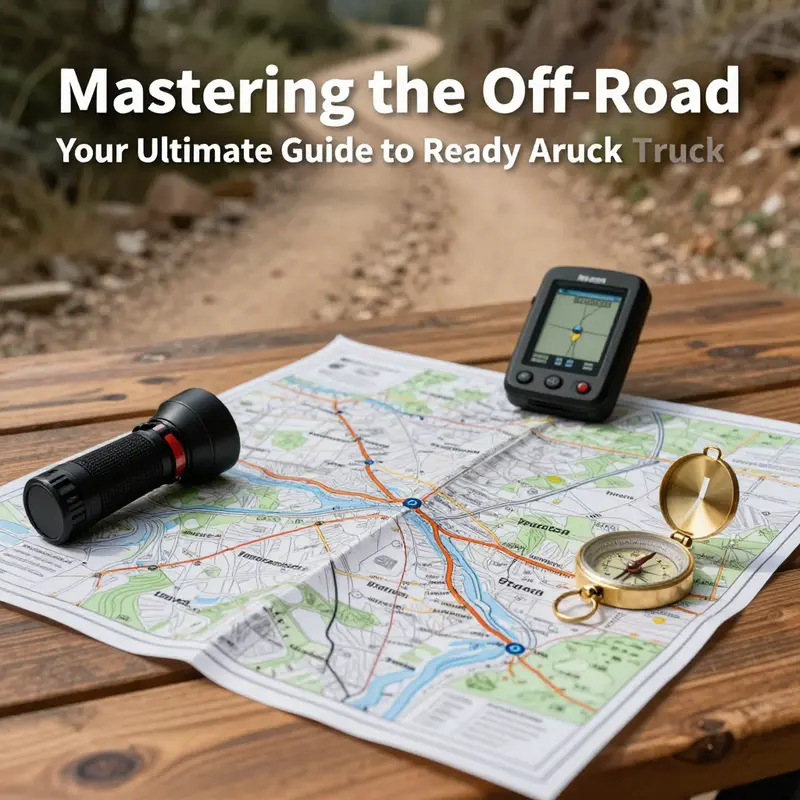
Planning a successful off-road sortie starts long before the first key turn. It begins with a clear understanding that the route you choose must align with your truck’s capabilities, the terrain you expect, and the conditions you’ll face. A thoughtful route plan is the backbone of safety, efficiency, and enjoyment. It functions like a living document that you update as new information comes in from maps, reports from other drivers, and weather briefings. When done well, it keeps you from chasing trouble, minimizes the chance of getting stuck, and preserves your vehicle so you can return with stories, not a breakdown diary.
The core of effective route planning lies in reading terrain through maps and digital tools that offer topographic detail, elevation profiles, and known hazards. Detailed maps enable you to gauge the difficulty of a trail not by bravado but by measurable features: the grade of climbs, the severity of descents, the frequency and size of rocks, and the likelihood of mud or loose sand. Modern mapping and GPS apps can reveal elevation changes, potential hazards such as river crossings or squeeze points, and the proximity to exits if conditions worsen. The lesson here is practical humility: a route that looks inviting on a screen can become arduous when you’re on it, with a limited margin for error. Consequently, you should study multiple sources and cross-check local conditions before you commit.
Alongside terrain, you must account for local regulations and land-use policies. Some areas require permits, others restrict access to certain vehicles or times of year. Regulations can change with the seasons or after weather events, so a plan that ignores these rules is not a plan at all. This is why a roadbook—an organized, written outline of the planned mileage, estimated time, key waypoints, hazards, and safe exit points—becomes indispensable. A roadbook anchors the trip in reality and gives everyone a shared frame of reference. It isn’t a rigid script but a flexible guide that can be adapted if river levels rise, a trail is closed, or a navigational cue reveals a better alternative.
Communication is not a luxury in this context; it is a safety instrument. Before departure, share your itinerary and planned checkpoints with someone who is not along for the ride. Include departure time, expected return, and contact details. In remote areas, where cell service may vanish, a dependable communication setup matters as much as your maps. A satellite-enabled device or beacon can bridge the gap when lines go quiet. In a convoy, establish clear roles: a lead vehicle that navigates, a second vehicle to carry extra recovery gear and spare supplies, and a designated point for regrouping and check-ins. The discipline of communication extends to the way you handle group dispersion on technical sections. Sticking to a cadence—one or two vehicles ahead, one person maintaining a dedicated lookout—keeps everyone aligned and lowers risk.
All route planning must reckon with the vehicle you’ve chosen and the terrain you expect to encounter. Your tires, suspension, and drivetrain become active partners in the journey, not afterthoughts. A route that leans on soft surfaces or uneven rock requires a different strategy than a clean, hard-packed path. You should anticipate these needs in advance: choose trails that your truck can handle, or identify nearby alternates if conditions deteriorate. Part of that anticipation involves a mindset about tire strategy. When the terrain is soft—sand, slick mud, or loose soil—reducing inflation can improve flotation and traction, but you must reflate before hitting pavement or harsher surfaces. The goal here is to balance traction and handling, avoiding excessive wheel spin or heat buildup in the brakes and differentials. This balancing act becomes an essential thread in the route-planning tapestry because it directly affects how fast you can safely traverse a given obstacle while preserving mechanical integrity.
No plan is complete without contingency routes. River crossings, steep ascents, or sections known for washouts demand pre-identified bailouts. A well-constructed plan includes at least one alternative path that bypasses the most challenging segments, along with a realistic assessment of fuel, water, and food needs for extended detours. The route should also spell out where you can safely exit the backcountry and reconnect with a paved route or a known refuge if weather or vehicle issues demand it. The careful inclusion of exit points is a mark of prudent planning and a safeguard against escalating risk, especially when you’re traveling in a group where one vehicle’s problem can become another’s burden.
Weather is the ever-present variable that can transform a straightforward route into a sequence of urgent decisions. The forecast should inform not only whether you go but when you return. Weather in off-road environments is mercurial: a sunny morning can morph into a sudden downpour that turns a dirt road into a slick, scouring flow. Even with a solid roadbook, you must stay vigilant for signs of weather shifts—darkening clouds, changing wind patterns, or rapidly rising water levels in a dry creek bed. The best route plan acknowledges this by including a time buffer, realistic turnaround points, and a plan to halt or reroute if visibility or traction deteriorates. If storms threaten, adjust your schedule to minimize exposure and avoid riskier trails that flood or erode under rain, and seek higher ground rather than pressing forward into uncertain conditions.
The actual act of driving through the planned route benefits from a steady, deliberate approach. The plan should implicitly encourage you to maintain low speeds and smooth inputs to stay in control on variable surfaces. A good route plan anticipates the engine’s and the tires’ behavior by aligning gear selection and braking with the terrain you expect. For instance, on dusty firmer surfaces with loose perimeters, you’ll be tempted to press harder for momentum, but the plan should remind you that gradual inputs and a longer momentum window reduce wheel spin and preserve stability. The plan also recognizes how vehicle spacing matters. Close-together convoy movement can amplify risk if one vehicle stalls, so a prudent spacing with regular check-ins helps ensure that a misstep by one truck doesn’t cascade into a cascade of complications for others.
An often-overlook but essential aspect of route planning is environmental stewardship. You will move through ecosystems that deserve respect. Your roadbook should include Leave No Trace principles, including proper waste disposal, minimal disturbance to wildlife, and clearly marked trash containment. This ethic should accompany you on every leg of the journey, shaping decisions about where to camp, how to manage light and noise, and how to respond to sensitive habitats along your route. If you encounter a trail closure or a fragile area, the plan should accommodate a redirection that minimizes impact while protecting your crew from getting stranded. The discipline of responsible planning—integrating regulations, environmental considerations, and vehicle preparation—transforms a simple trail into a mindful expedition rather than a test of bravado.
Before you head out, run a quick verification against the plan. In the morning, confirm tires are in acceptable condition and inflated within the range appropriate for your anticipated terrain. Check brakes, fluids, and electrical systems, but also confirm that the recovery gear is stowed in a way that makes sense for the planned sections. Even the most thorough route can fail if a single loose end is left dangling. The preparation routine should include a final read-through of the roadbook, a confirmation of waypoint coordinates, and a fresh update on weather and any local advisories. When you’re on the trail, keep the roadbook on a stable, accessible surface and refer to it only as needed to maintain momentum and reduce distractions. The objective is a calm rhythm: drive, assess, adapt, repeat.
Ultimately, route planning for off-roading is not a single skill but an integrative practice. It blends map literacy with practical knowledge of vehicle capability, environmental ethics, risk management, and crew coordination. It asks you to foresee obstacles rather than react to them, to communicate clearly with teammates, and to respect the land you traverse. It challenges you to balance patience with decisiveness, to know when to press on and when to turn away from a trail that no longer serves safety or enjoyment. When done well, your route plan becomes a reliable compass—rooted in data, informed by experience, and guided by common sense. And it leaves you with the confidence that whatever trail you choose, you’re prepared to handle what lies ahead, while preserving the vehicle and the landscape for the next adventure.
For those seeking deeper, practical methods to augment route planning and safety, broader guidance is available from established off-road resources that focus on safe traversal, recovery procedures, and terrain-aware driving techniques. A comprehensive external resource offers step-by-step tactics and professional insights that complement the approach outlined here. You can consult that broader guidance at Off-Road.com: https://www.offroad.com/
Trailcraft Essentials: Mastering Off-Road Driving in a Ready-for-Action Truck

Preparation and mindset are the foundation of confident off road driving. A truck that is mechanically sound and a driver who understands terrain form a system that can adapt to rocks, mud, and water. With proper prep, the vehicle becomes predictable and the driver can focus on line choice and throttle control. The first rule is to know your limits and to respect the terrain you are about to tackle. Pre-trip checks, proper recovery gear, and ensuring fluids are up to par set the stage for a smooth day on the trail. When you step into the cab, settle into a calm, deliberate rhythm that you can repeat on every obstacle.
Speed control and throttle discipline are the first skills. On rough surfaces, slow and steady progress keeps tires in contact with the ground and reduces the chance of a spin. Let the line dictate your pace rather than forcing momentum. A light touch on the throttle and smooth steering inputs prevent upset through rocks and ruts, while engine braking on descents helps manage speed without overusing the brakes.
Gear and technique. Use the correct transfer case setting to maximize traction without overloading the drivetrain. Engage 4WD or differential lock only when needed, and be ready to disengage once traction returns. Low range on steep climbs and descents provides torque control and helps you read the surface before committing.
Terrain reading and line selection. Scan ahead for slick patches, hidden washouts, and water crossings. Choose a path that preserves tire contact and minimizes harsh steering input. If you must retreat to take a better angle, do so with purpose rather than panic.
Traction management and tire pressure. Adjust tire pressure to suit the surface. Softer for sand and mud, firmer for rock and hard ground. Always check bead seating and reinflate before resuming on firmer ground. A well maintained tire and a measured throttle are your friends on any obstacle.
Recovery, safety, and teamwork. Know how to recover safely with boards, a winch, or a traction mat. Keep the crew safe and communicate clearly about planned actions and signals. In a group, spacing and a shared plan reduce risk and keep everyone moving together.
Conclusion. With practice you develop intuitive feel for the vehicle and terrain, turning a challenging trail into a controlled, repeatable skill. A well prepared truck and a disciplined driver are a powerful combination that lets you explore with confidence rather than fear.
null

null
Final thoughts
As you’ve journeyed through this guide, you’ve uncovered the key components that prepare any truck for the challenges of off-roading. From essential vehicle checks to critical equipment, strategic route planning, advanced driving techniques, and the strong driver mindset, these facets all interconnect to create a robust off-road experience. Each preparation step not only enhances your truck’s performance but also boosts your confidence in navigating wild landscapes. Embrace these insights as you gear up for your next adventure—conquer the trails and enjoy the ride!